



Jocelyn Bell Burnell: The Astrophysicist Who Discovered Pulsars
Jocelyn Bell Burnell is a name synonymous with one of the most significant discoveries in modern astronomy. Her identification of the first radio pulsars in 1967 revolutionized our understanding of the universe and opened new avenues in astrophysics. Despite her groundbreaking work, Bell Burnell's story is also one of resilience and advocacy, as she navigated a field where recognition was not always fairly distributed.
The Early Life and Education of Jocelyn Bell Burnell
Born in Northern Ireland in 1943, Jocelyn Bell Burnell showed an early aptitude for science. Her parents encouraged her curiosity, and she excelled in physics at school. She pursued her undergraduate studies at the University of Glasgow, where she earned a Bachelor of Science degree in 1965. Her passion for physics led her to the University of Cambridge, where she began her doctoral work in radio astronomy.
Building the Radio Telescope
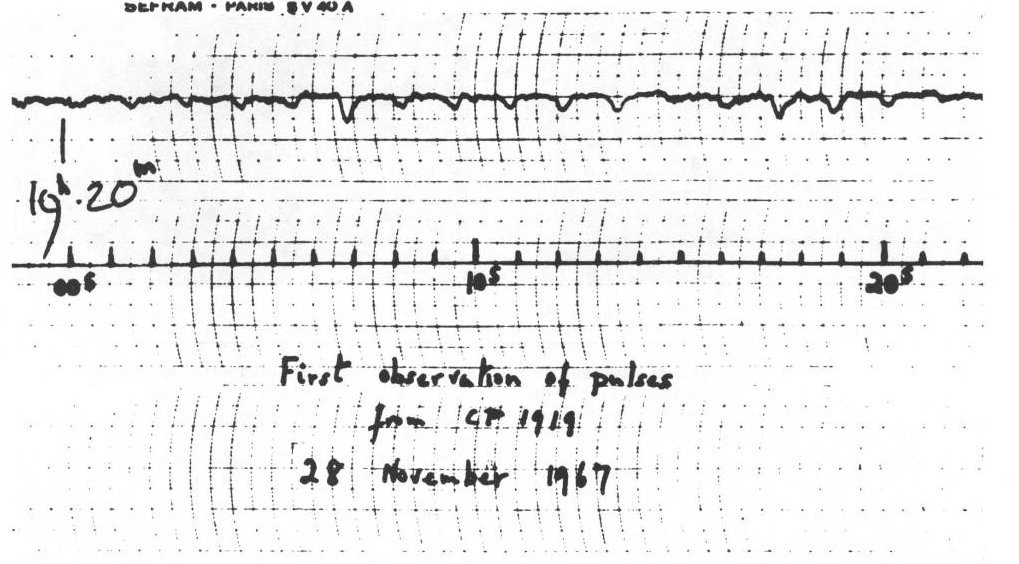
At Cambridge, Bell Burnell joined a team led by Antony Hewish, who was studying quasars. She played a crucial role in constructing an 81.5-MHz radio telescope, a massive structure designed to detect radio signals from distant celestial objects. The telescope produced vast amounts of data, recorded on long paper charts that needed meticulous analysis.
The Discovery of Pulsars
In November 1967, while reviewing the chart recordings, Bell Burnell noticed an unusual pattern—a series of highly regular radio pulses. This anomaly, initially nicknamed LGM-1 (Little Green Men-1), was later identified as the first pulsar, now known as PSR B1919+21. Her discovery was published in the journal Nature in 1968, marking a pivotal moment in astronomy.
The Scientific Impact of Pulsars
The discovery of pulsars had profound implications for astrophysics. These rapidly rotating neutron stars emit beams of radio waves, which can be detected as pulses when they sweep across Earth. Pulsars have since become essential tools for testing general relativity, studying the equation of state of dense matter, and even aiding in the search for gravitational waves.
Pulsars as Cosmic Lighthouses
Pulsars are often referred to as "cosmic lighthouses" due to their precise and regular pulses. This regularity makes them invaluable for precision timing and navigation. Scientists use pulsar timing arrays to detect low-frequency gravitational waves, a field that continues to expand with new radio facilities and technological advancements.
Contributions to Fundamental Physics
The study of pulsars has also provided insights into fundamental physics. For instance, binary pulsar systems have been used to test Einstein's theory of general relativity with remarkable accuracy. Additionally, pulsars offer a unique window into the extreme conditions within neutron stars, helping scientists understand the behavior of matter at densities far beyond what can be replicated on Earth.
The Nobel Prize Omission and Later Honors
Despite her pivotal role in the discovery of pulsars, Jocelyn Bell Burnell was not included in the 1974 Nobel Prize in Physics, which was awarded to her supervisor Antony Hewish and Martin Ryle. This omission has been a subject of debate and discussion, highlighting issues of recognition and gender bias in science.
Public Reflections and Advocacy
Bell Burnell has publicly reflected on the Nobel Prize omission, expressing understanding for the decision given her student status at the time. However, she has also been a vocal advocate for diversity and inclusion in science, using her platform to promote equity and support underrepresented groups in STEM fields.
Major Awards and Recognitions
Over the years, Bell Burnell has received numerous honors and awards for her contributions to science. These include being made a Dame Commander of the Order of the British Empire (DBE), election to prestigious learned societies, and the 2018 Special Breakthrough Prize in Fundamental Physics. She has also been recognized with medals from various astronomical societies, cementing her legacy as a pioneering astrophysicist.
Current Positions and Public Engagement
In recent years, Jocelyn Bell Burnell has continued to be an active figure in the scientific community. She holds visiting and honorary academic positions, such as her role as a visiting academic at Mansfield College, University of Oxford. She is also a sought-after speaker, delivering major lectures and public talks that inspire the next generation of scientists.
Promoting Diversity and Inclusion
Bell Burnell's advocacy for diversity and inclusion in science is a significant aspect of her current work. She has directed portions of her prize money towards postgraduate scholarships for underrepresented students in physics, demonstrating her commitment to fostering a more inclusive scientific community.
Philanthropic Efforts
One of her most notable philanthropic actions was the use of her 2018 Breakthrough Prize funds to establish scholarships for underrepresented students. This initiative has provided opportunities for many young scientists to pursue their academic and research goals, furthering Bell Burnell's impact on the field.
Conclusion
Jocelyn Bell Burnell's discovery of pulsars has left an indelible mark on astronomy and astrophysics. Her story is not only one of scientific achievement but also of resilience, advocacy, and a commitment to equity in science. As we continue to explore the mysteries of the universe, her contributions serve as a reminder of the importance of recognition, diversity, and the relentless pursuit of knowledge.
The Discovery Process: How Jocelyn Bell Burnell Found Pulsars
The discovery of pulsars was not an overnight achievement but the result of meticulous work and keen observation. At Cambridge, Bell Burnell was part of a team building a radio telescope designed to study quasars. The telescope operated at 81.5 MHz and produced extensive chart recordings that required careful analysis.
Analyzing Chart Recordings
The telescope generated vast amounts of data, recorded on long paper charts. Bell Burnell was responsible for inspecting these charts, a task that involved reviewing thousands of meters of paper. Her attention to detail was crucial, as she had to identify any anomalies or patterns that could indicate new celestial phenomena.
The Moment of Discovery
In November 1967, Bell Burnell noticed an unusual pattern on the charts—a series of highly regular radio pulses. This anomaly, initially nicknamed LGM-1 (Little Green Men-1), was later confirmed as the first pulsar, now known as PSR B1919+21. The discovery was published in the journal Nature in 1968, marking a significant milestone in astronomy.
The Scientific Impact of Pulsars
The discovery of pulsars had far-reaching implications for astrophysics. These rapidly rotating neutron stars emit beams of radio waves, which can be detected as pulses when they sweep across Earth. Pulsars have since become essential tools for testing general relativity, studying the equation of state of dense matter, and even aiding in the search for gravitational waves.
Pulsars as Cosmic Lighthouses
Pulsars are often referred to as "cosmic lighthouses" due to their precise and regular pulses. This regularity makes them invaluable for precision timing and navigation. Scientists use pulsar timing arrays to detect low-frequency gravitational waves, a field that continues to expand with new radio facilities and technological advancements.
Contributions to Fundamental Physics
The study of pulsars has also provided insights into fundamental physics. For instance, binary pulsar systems have been used to test Einstein's theory of general relativity with remarkable accuracy. Additionally, pulsars offer a unique window into the extreme conditions within neutron stars, helping scientists understand the behavior of matter at densities far beyond what can be replicated on Earth.
The Nobel Prize Omission and Later Honors
Despite her pivotal role in the discovery of pulsars, Jocelyn Bell Burnell was not included in the 1974 Nobel Prize in Physics, which was awarded to her supervisor Antony Hewish and Martin Ryle. This omission has been a subject of debate and discussion, highlighting issues of recognition and gender bias in science.
Public Reflections and Advocacy
Bell Burnell has publicly reflected on the Nobel Prize omission, expressing understanding for the decision given her student status at the time. However, she has also been a vocal advocate for diversity and inclusion in science, using her platform to promote equity and support underrepresented groups in STEM fields.
Major Awards and Recognitions
Over the years, Bell Burnell has received numerous honors and awards for her contributions to science. These include being made a Dame Commander of the Order of the British Empire (DBE), election to prestigious learned societies, and the 2018 Special Breakthrough Prize in Fundamental Physics. She has also been recognized with medals from various astronomical societies, cementing her legacy as a pioneering astrophysicist.
Current Positions and Public Engagement
In recent years, Jocelyn Bell Burnell has continued to be an active figure in the scientific community. She holds visiting and honorary academic positions, such as her role as a visiting academic at Mansfield College, University of Oxford. She is also a sought-after speaker, delivering major lectures and public talks that inspire the next generation of scientists.
Promoting Diversity and Inclusion
Bell Burnell's advocacy for diversity and inclusion in science is a significant aspect of her current work. She has directed portions of her prize money towards postgraduate scholarships for underrepresented students in physics, demonstrating her commitment to fostering a more inclusive scientific community.
Philanthropic Efforts
One of her most notable philanthropic actions was the use of her 2018 Breakthrough Prize funds to establish scholarships for underrepresented students. This initiative has provided opportunities for many young scientists to pursue their academic and research goals, furthering Bell Burnell's impact on the field.
The Legacy of Jocelyn Bell Burnell
Jocelyn Bell Burnell's discovery of pulsars has left an indelible mark on astronomy and astrophysics. As we continue to explore the mysteries of the universe, her contributions serve as a reminder of the importance of recognition, diversity, and the relentless pursuit of knowledge.
Inspiring Future Generations
Bell Burnell's work and advocacy have inspired countless individuals to pursue careers in science. Her story is a testament to the power of curiosity, perseverance, and the impact that one person can have on the scientific community and beyond.
Continued Research and Discoveries
The field of pulsar research remains vibrant, with ongoing studies focusing on precision timing arrays, searches for millisecond pulsars, and multiwavelength observations. These efforts continue to build on the foundation laid by Bell Burnell's discovery, pushing the boundaries of our understanding of the universe.
Key Statistics and Data
The discovery of pulsars has had a profound impact on astronomy, leading to numerous advancements and a deeper understanding of the universe. Here are some key statistics and data points that highlight the significance of Bell Burnell's work:
- Over 3,000 pulsars have been cataloged since the first discovery in 1967.
- The original radio telescope operated at 81.5 MHz and produced chart recordings measured in tens to hundreds of meters of paper per observing run.
- Pulsar research underpins major collaborative experiments such as the International Pulsar Timing Array.
The Impact of Pulsar Research
The study of pulsars has led to significant advancements in various fields of astrophysics. Some of the key areas of impact include:
- Testing general relativity through observations of binary pulsar systems.
- Probing the interiors of neutron stars and the equation of state of dense matter.
- Providing precision timing for timekeeping and navigation.
- Searching for low-frequency gravitational waves via pulsar timing arrays.
Conclusion
Jocelyn Bell Burnell's discovery of pulsars has revolutionized our understanding of the universe and opened new avenues in astrophysics. Her story is a testament to the power of curiosity, perseverance, and the impact that one person can have on the scientific community and beyond. As we continue to explore the mysteries of the universe, her contributions serve as a reminder of the importance of recognition, diversity, and the relentless pursuit of knowledge.
The Future of Pulsar Research
The discovery of pulsars by Jocelyn Bell Burnell has paved the way for decades of groundbreaking research, and the field continues to evolve. Modern astronomy leverages pulsars to explore some of the most profound questions in physics and cosmology. Current trends in pulsar science are shaping our understanding of the universe in exciting new ways.
Advancements in Pulsar Timing Arrays
Pulsar timing arrays are among the most promising tools for detecting nanohertz gravitational waves. By monitoring the precise arrival times of pulses from an array of pulsars, scientists can detect minute distortions in spacetime caused by gravitational waves. This method is complementary to projects like LIGO and has the potential to reveal new insights into the universe’s structure and evolution.
New Surveys and Discoveries
The next generation of radio telescopes, such as the Square Kilometre Array (SKA) and the Chinese Five-hundred-meter Aperture Spherical Telescope (FAST), are expanding the search for pulsars. These facilities will survey the sky with unprecedented sensitivity, likely discovering thousands of new pulsars. Key areas of focus include:
- Millisecond pulsars for use as precision cosmic clocks.
- High-energy pulsar wind nebulae studied across radio, X-ray, and gamma-ray wavelengths.
- Pulsar populations in globular clusters and the Magellanic Clouds to probe star formation histories.
Multiwavelength and Multimessage Astronomy
Pulsars are now studied across the electromagnetic spectrum, from radio to gamma rays, and even through neutrino and gravitational wave channels. This multi-messenger approach is transforming our ability to interpret pulsar behavior and their roles in astrophysical processes. For example, the Fermi Gamma-ray Space Telescope has identified numerous gamma-ray pulsars, revealing new details about emission mechanisms.
Bell Burnell’s Legacy in Science Education
Beyond her scientific achievements, Jocelyn Bell Burnell has dedicated significant effort to fostering diversity and inclusion in science. Her advocacy has had a lasting impact on education and public engagement, inspiring future generations of scientists.
Scholarships and Financial Support
In 2018, Bell Burnell directed a portion of her Breakthrough Prize winnings to establish postgraduate scholarships for underrepresented students in physics. This initiative has provided critical funding for talented individuals from marginalized backgrounds, helping to address historical inequities in STEM fields.
Public Outreach and Inspiration
Bell Burnell is a celebrated public speaker, regularly delivering lectures at universities, conferences, and schools. Her talks emphasize the importance of curiosity, perseverance, and accessibility in science. She often highlights her own experiences to encourage young people, especially women and minorities, to pursue careers in astrophysics.
Advocacy for Gender Equity
Throughout her career, Bell Burnell has been a vocal advocate for gender equity in science. She has challenged institutional biases and promoted policies that support equal opportunities for all researchers. Her advocacy has contributed to broader discussions about recognition, mentorship, and fair credit in academic science.
Conclusion: Summarizing Her Contributions
Jocelyn Bell Burnell’s work has left an indelible legacy in both astrophysics and science education. Her discovery of the first pulsar reshaped our understanding of neutron stars and the dynamic universe. Despite being overlooked for a Nobel Prize, her later honors—including the DBE and the Breakthrough Prize—have affirmed her status as a scientific pioneer.
Key Takeaways
- Jocelyn Bell Burnell discovered the first pulsar in 1967, revolutionizing astrophysics.
- Her omission from the 1974 Nobel Prize sparked ongoing debates about recognition in science.
- She has received numerous awards, including the DBE and the 2018 Breakthrough Prize.
- Bell Burnell is a leading advocate for diversity and inclusion in STEM fields.
“Science is about discovery, but it’s also about making space for others to discover.” — Jocelyn Bell Burnell
As pulsar research continues to unlock new mysteries, Bell Burnell’s contributions remain a cornerstone of modern astronomy. Her insistence on equity and opportunity ensures that future generations will inherit a more inclusive scientific community. In tracing the pulses of distant stars, she also lit a path for countless individuals to pursue the cosmos—proving that great discoveries are most powerful when shared.










Comments