
.jpg)
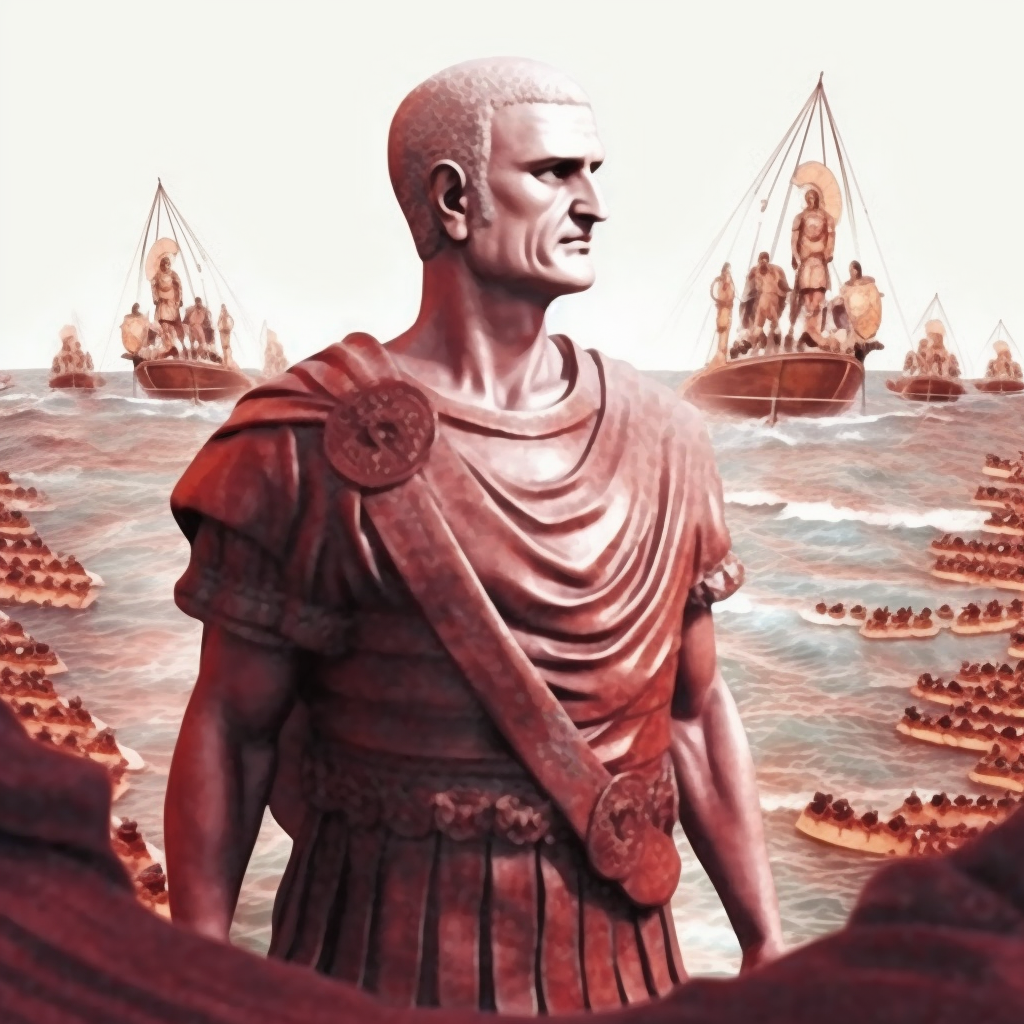
Gaius Duilius: The Architect of Roman Naval Might
Introduction
The annals of ancient history are marked by figures whose achievements have altered the course of civilizations. Among such distinguished personalities stands Gaius Duilius, who played a crucial role in transitioning Rome from a nascent republic struggling against powerful foes into a burgeoning Mediterranean power. While the exploits of generals like Julius Caesar and Hannibal are well-remembered, Duilius's contributions, particularly his maritime innovations, remain underappreciated by many. This article seeks to delve into the life and achievements of Gaius Duilius, shedding light on how he helped lay the cornerstone for Rome's eventual naval supremacy.
The Historical Context: Rome in the First Punic War
The backdrop of Duilius's rise is the First Punic War, a 23-year conflict between Rome and Carthage from 264 to 241 BC. This war marked the first major armed contest between these two powerful ancient states vying for control over the Mediterranean. Carthage, with its superior naval prowess and wealth, had primarily dominated this expansive sea. The rising Roman Republic, primarily a terrestrial power with scant naval experience, found itself at a significant disadvantage during the early periods of the war.
Rome's strengths locked them to the Italian peninsula, rich with soldiers but, until Duilius's era, quite bereft of navy-grade timber and shipbuilding expertise. With Carthage's fortified cities and naval bases spread across Sicily and North Africa exerting firm control over Mediterranean waters, Rome’s ambitions appeared a daunting task. These challenges set the stage for Duilius's critical involvement in redefining naval warfare.
The Rise of Gaius Duilius
Little is known about the early life of Gaius Duilius, but what is evident is his emergence as a formidable naval commander during this challenging period for Rome. In 260 BC, he was appointed as a consul following the Roman tradition of electing two consuls annually to lead the republic. His tenure coincided with Rome's urgent need to develop a credible naval force to counter Carthaginian dominance.
Assigning Duilius this task marked a turning point in Roman naval history. His appointment was not just about command; it evoked a broader strategic vision to equalize the uneven playing field. It was under his leadership that the Roman Republic made significant strides in structuring a navy capable of standing toe-to-toe with the vaunted seafaring experience of Carthage.
Revolutionizing Naval Warfare: The Invention of the Corvus
Gaius Duilius's most significant contribution to Rome's military successes lies in his innovation of the "corvus"—a boarding device designed to offset Carthage's superior seamanship with Rome's prowess in infantry combat. The corvus was essentially a boarding bridge equipped with a spike capable of locking onto an enemy vessel, thus transforming naval engagements into battles resembling more terrestrial encounters where the disciplined Roman legions stood a better chance.
This ingenious contraption allowed Roman soldiers to leverage their strengths by boarding enemy ships, effectively neutralizing the Carthaginians' advantages. The implementation of the corvus not only facilitated Rome’s learning curve in naval engagements but also dramatically altered the dynamics of ancient maritime warfare. This innovation demonstrated Duilius's strategic thinking and his ability to adapt Roman martial strengths to new arenas of conflict.
The Battle of Mylae: A Decisive Victory
Armed with the corvus and a newfound naval strategy, Gaius Duilius led Rome to its first significant naval victory at the Battle of Mylae in 260 BC. In this clash, Rome's nascent navy faced a formidable Carthaginian fleet. Despite Roman inexperience, the corvus became a pivotal factor in the battle's outcome. As the two fleets met, the Roman ships, equipped with this cutting-edge technology, seized the initiative by closing the distance to their foes and engaging in hand-to-hand combat.
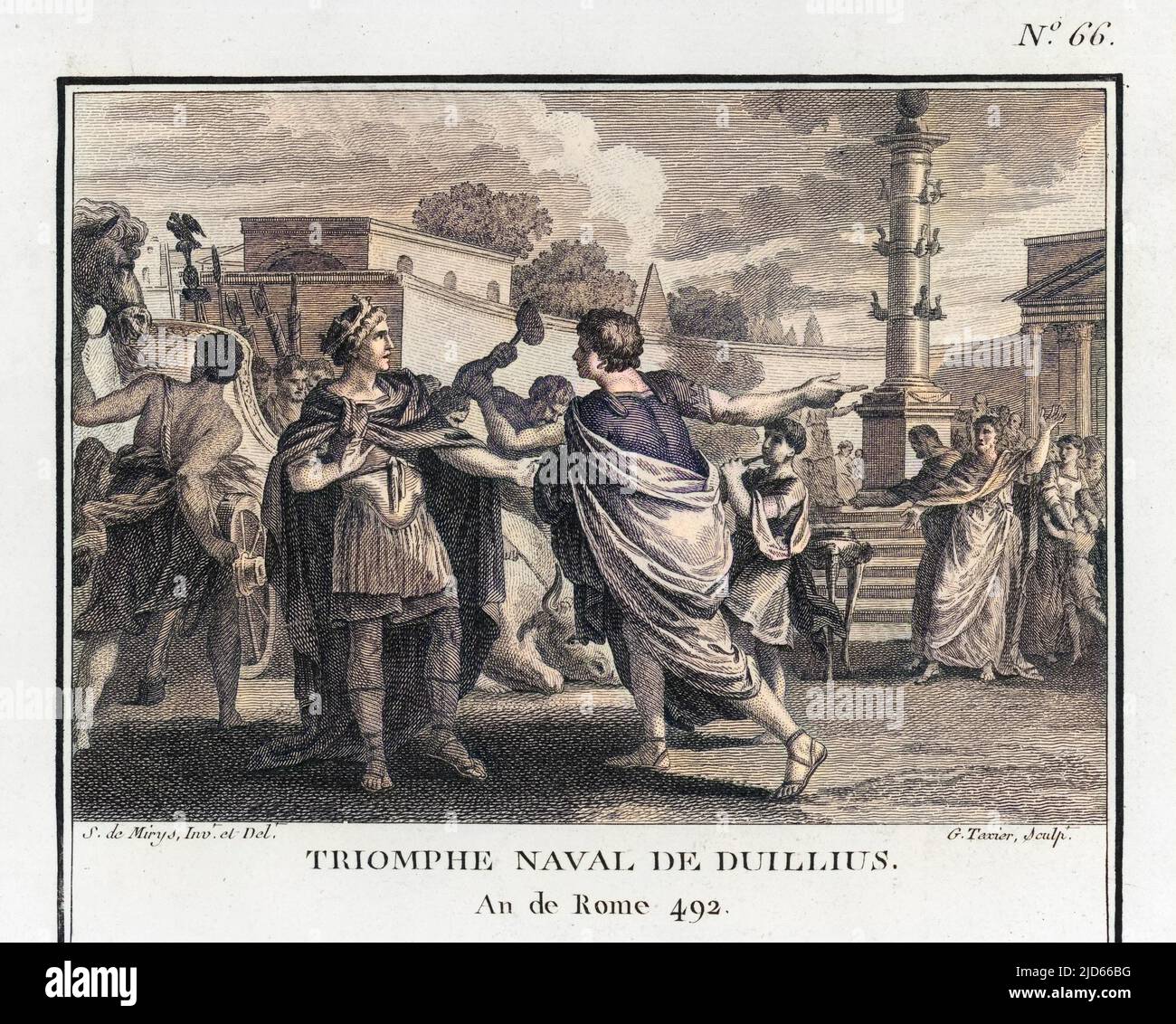
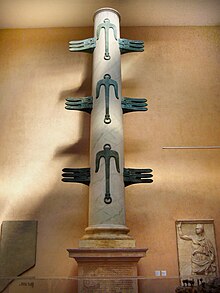
The victory at Mylae was not merely a tactical triumph; it signified a psychological breakthrough for Rome, bolstering the morale of the Roman people and their allies. Gaius Duilius became a celebrated hero, his name etched in the annals of Roman military history. The Roman Senate would later commemorate his achievements with a rostral column, adorned with prows of the captured Carthaginian ships, standing as a tribute to his groundbreaking success.
The battle's outcome not only demonstrated the effectiveness of Duilius's innovative strategy but also marked the beginning of a change in the balance of power in the Mediterranean. It provided Rome the much-needed validation that it could challenge Carthage's naval supremacy and further fueled its ambitions for maritime dominance.
Legacy and Impact
Duilius's undeniable contributions did not just partake in charting the course of wartime events but effectively altered Rome's strategic outlook. The profound influence of the corvus extended beyond its immediate use, serving as a symbol of Roman ingenuity and tactical adaptability. Rome's evolving seafaring capabilities, initiated under Duilius's command, would become a foundation for their future naval conquests and imperial expansions.
Yet, as Rome's war machine upgraded and moved past the reliance on devices like the corvus in later conflicts, including the subsequent Punic Wars, Duilius's pioneering efforts remained emblematic of an epoch of transformation.
Gaius Duilius exemplifies how innovation and calculated adaptation can shift a seemingly insurmountable challenge into a realm of possibility. His contributions would ripple through history; the lessons in ingenuity and strategic foresight today continue to offer valuable insights into leadership and military doctrine. As the rest of Duilius's storied life and the eventual conclusion of the First Punic War unfold, their significance in shaping the Roman ethos further solidifies his status as a stalwart of ancient military history.
Challenges Beyond the Seas
Following the decisive victory at the Battle of Mylae, Gaius Duilius's military success extended beyond tactical innovations. As his reputation grew, Duilius's strategic mindset became increasingly crucial to Rome's wider objectives in the First Punic War. However, the road ahead was fraught with challenges. Rome's newfound confidence required continuous adaptation, not only to sustain naval victories but also to withstand the unpredictable nature of prolonged conflicts and evolving enemy strategies.
Despite its early success, the Roman navy frequently struggled with the challenges of sustaining a protracted maritime war. Nature did not always favor their enterprise; Roman fleets, though more proficient than before, suffered substantial losses due to storms—a testament to the unpredictable perils of seafaring in the ancient world. These losses served as a humbling reminder of the steep learning curve the Romans faced as they transitioned from land-focused warfare to establishing a credible naval presence.
Institutional Changes and Military Tactics
Under Duilius’s influence, the Roman military began to incorporate more intricate organizational changes, reflecting the evolving tactical necessities of the time. Adaptation was not limited to inventions like the corvus but extended to how Rome planned and executed campaigns. Realizing the importance of effective supply lines, naval bases, and proper communication across their growing maritime expanse, Rome began laying the groundwork for an integrated approach to military logistics.
The Romans started utilizing Sicily not just as a battlefield but as a strategic base, using its resources to support military campaigns, laying the groundwork for what would become an essential Roman stronghold. This pivot not only ensured Rome's capability to project power over the Mediterranean but also highlighted their understanding of sustainable military operations, a trait that fueled their expansionist ambitions.
The Diplomatic and Political Landscape
While military leadership is essential in times of war, diplomacy carries its own weight in shaping geopolitical landscapes. Gaius Duilius, already proven on the battlefield, also became an instrumental figure in navigating Rome's nascent navy through the complex web of alliances and enmities that defined Sicilian and Mediterranean politics.
The Carthaginians, understanding the shift in Roman naval capabilities, did not stand idly by. Instead, they sought to strengthen their position, both diplomatically and militarily. Duilius and other Roman leaders recognized that securing support from non-aligned polities across the region could help to tip the balance further in their favor. Rome's growing naval strength allowed them to exercise more significant influence in the ongoing geopolitical chess game in the Mediterranean.
In the face of such challenges, Rome’s diplomatic actions also began to reflect a moderate alignment of power relationships. While direct confrontation was inevitable, establishing diplomatic networks provided Rome with valuable intelligence and strategic advantages. This foresight in foreign relations would become further pronounced in subsequent decades, as seen in its later dealings during the Second Punic War against a battle-hardened Hannibal.
Recognition and Honors
Duilius's accomplishments were not only celebrated in military circles but also gained widespread recognition in Roman civic life. His victories and the honor he brought to Rome were immortalized through monuments and other commemorations. The Senate’s decision to erect a rostral column in his honor was not merely a personal award; it epitomized the collective triumph of Roman innovation and martial tenacity.
This column was strategically placed in the Roman Forum, the epicenter of Roman political life, serving as a daily reminder to the people and Senate of what could be achieved through strategic insight and determination. It symbolized both a commemoration of past victories and an inspiration for future generations to continue Rome’s march to supremacy.
Gaius Duilius himself became a personification of Roman virtues—taking risks, adapting, and demonstrating resilience in the face of formidable adversaries. His leadership style and successes laid pathways for others to follow, setting precedents for future consuls and military leaders in the ever-evolving mission to expand Roman influence.
Aftermath and Continuing Influence
Duilius’s später years remain less documented in comparison to the bright annotations of his military successes, but the legacy of his contributions left indelible marks on the Roman state. The adaptations and transformations orchestrated under his leadership and their subsequent influence resonated well into Rome's future as both a republic and an empire.
The lessons learned from these early naval engagements would shape Roman military doctrine for centuries. The precedence of integrating innovation with tried-and-true martial practices became a hallmark of Roman military strategy. As later Roman navies evolved, moving beyond the corvus to more sophisticated naval tactics, they remained grounded in the understanding that adaptability and innovation were critical to maintaining their hegemony.
Duilius’s story is a testament to the transformative power of strategic ingenuity, a realization that would serve the Roman Republic well as it faced other ambitious foes. His ability to redefine warfare at sea demonstrated the pragmatic and forward-thinking nature of Roman warfare, qualities that would remain integral to Rome's identity as an enduring empire. As we further explore the concluding chapters of the First Punic War, Duilius's actions provide essential context for understanding the initial steps of Rome's ascent to Mediterranean dominance.
The Conclusion of the First Punic War
As the First Punic War dragged on, the tides of conflict ebbed and flowed with no immediate victor in sight. However, the groundwork laid by Gaius Duilius and his naval innovations continued to provide Rome with the strategic leverage needed to contest Carthage's maritime dominance. The war was transforming into a grueling test of endurance and adaptability, requiring both sides to continually reassess their strategies.
Carthage, though initially retaining its naval superiority, found itself increasingly challenged by Rome's persistence and newfound maritime capabilities. Over the course of the war, Rome's determined adherence to its naval objectives allowed it to slowly chip away at Carthage's advantages, leading to the critical victories that paved the way for the war's conclusion. These successes were built upon the early strategic foundations established by leaders like Duilius, whose innovations had opened up new avenues for Roman success.
The eventual Roman victory in the First Punic War in 241 BC marked the beginning of a crucial shift in Mediterranean power dynamics. The terms of peace were harsh for Carthage, requiring them to cede control of Sicily—the first of Rome’s overseas territories—and pay a substantial indemnity. This victory was a stepping stone for what would become a period of aggressive Roman expansion and consolidation.
Long-Term Impact of Gaius Duilius's Innovations
Gaius Duilius’s contributions during this foundational conflict ensured that his legacy would endure far beyond his own time. Although the corvus was eventually phased out as Roman naval strategies evolved, its initial implementation marked a decisive point in military history, showcasing the importance of innovation in overcoming strategic deficiencies.
Rome's experience in the First Punic War, enriched by Duilius’s impact, enhanced Roman thinking on both naval and combined-arms warfare. The lessons learned spurred subsequent Roman developments in military engineering, shipbuilding, and logistics. The principles of adaptation that Duilius so effectively applied became a template that future Roman generals and tacticians adapted across different theaters of war.
His work directly influenced Rome's subsequent naval engagements, including those in the Second Punic War, where superior logistics and an effective navy played critical roles against Hannibal. This continued evolution underscored Rome's ability to synthesise past experiences, adapt to changing circumstances, and meet the demands of an ever-expanding sphere of influence.
Historical Reflection on Gaius Duilius
In many ways, Gaius Duilius embodies the quintessential Roman military commander: innovative, resourceful, and grounded in the realities of wartime pragmatism. While later Roman leaders like Scipio Africanus and Julius Caesar would overshadow earlier figures in some historical narratives, the strategic groundwork laid by Duilius proved indispensable for later triumphs.
Interestingly, Duilius’s military achievements have also opened discussions around how societies can innovate to overcome considerable disadvantages. His application of the corvus is often cited as an early example of how technology and creative thinking can grant an edge even against formidable opponents—a lesson very much relevant in modern military and strategic thinking.
The historical documentation of Duilius's life is more fragmented than that of other prominent Roman figures, leaving some aspects of his personal and political life open to speculation. Nonetheless, the enduring symbols of his success, like the rostral column and his celebrated naval victory, remain fixtures within the broader Roman historical context.
Duilius: A Symbol Beyond Victory
As a symbol of Rome's ability to adapt and overcome, Gaius Duilius has transcended the specifics of his time, becoming a broader emblem of strategic ingenuity. In modern discussions, whether in academic circles or military strategy workshops, his name invokes the importance of leveraging strengths, compensating for weaknesses, and the value inherent in innovative problem-solving.
The commemoration of Duilius through his monuments and the Roman cultural memory was not just an acknowledgment of his wartime successes but also an embodiment of Roman ideals at a crucial junction in their history—the transition from local power to an expansive empire.
In conclusion, Gaius Duilius’s legacy is a cornerstone in the Roman historical narrative, one that illustrates the potential reaches of human creativity under the pressures of formidable challenges. His story continues to serve as an insightful case study into the profound impacts that innovation and adaptable strategies can have, reverberating through time as a testament to the age-old adage that necessity is, indeed, the mother of invention. As Rome rose to dominate the Mediterranean and beyond, it is figures like Duilius who are remembered for laying the first stones upon which the foundations of an empire were built.














Comments