Henri Poincaré: The Father of Modern Mathematics
Introduction to Henri Poincaré
Henri Poincaré, born in 1854 in Nancy, France, is often referred to as the "father of modern mathematics." His profound contributions span across a variety of fields, including the theory of differential equations, topology, and chaos theory. His work has had a lasting impact on both theoretical and applied sciences, making him a pivotal figure in the 20th-century scientific landscape.
Early Life and Education
Henri Poincaré was born on April 29, 1854, in Nancy. His family was distinguished: his father, Léon Poincaré, was a professor of medicine at the University of Nancy. At a young age, Poincaré showed great promise in mathematics, but he was also fascinated by literature and philosophy. He attended the Lycée Louis-le-Grand in Paris from 1869 to 1872, where his mathematical talent was recognized by his teacher Jacques Hadamard. Poincaré entered the École Polytechnique in 1872 and later studied at the École des Mines for his engineering degree.
Academic Career and Research
In 1879, Poincaré received his doctorate in mathematics from the Faculty of Sciences at the University of Paris. His doctoral dissertation was titled "Sur la solution du problème de trois corps," which dealt with the three-body problem in celestial mechanics. This work laid the foundation for his future research. In 1881, he was appointed to a teaching position at the University of Paris, and in 1886, he became a professor of theoretical astronomy at the University of Paris and the Sorbonne.
The Three-Body Problem and Beyond
One of Poincaré's most significant contributions was his work on the three-body problem. This problem challenges mathematicians to predict the motion of three celestial bodies under their mutual gravitational attraction. The complexity of the problem had puzzled mathematicians for centuries. Poincaré's analysis of the problem in his doctoral dissertation revealed the limitations of analytical methods in solving such problems. While he could not find a general solution, he did discover that the problem could lead to chaotic behavior in the universe. This insight was crucial in the development of chaos theory decades later.
Poincaré's Theorem and the Poincaré Conjecture
In his work "Les Méthodes nouvelles de la mécanique céleste," published in four volumes between 1892 and 1896, Poincaré outlined a new approach to solving the n-body problem, introducing what is now known as Poincaré's Theorem. This theorem highlights the inherent complexity and unpredictability of certain systems, challenging the traditional views of determinism in physics. Poincaré's methods also led to the development of new areas of mathematics, such as topology, where he made groundbreaking contributions.
Topology and Its Impact
Topology is the study of qualitative properties of space that are preserved under continuous deformations, such as stretching and bending. One of Poincaré's most famous contributions to topology is known as the Poincaré Conjecture. In 1904, he posed the conjecture that every simply connected, closed 3-manifold is homeomorphic to the 3-sphere. This conjecture remained unproven for many years and was one of the Clay Mathematics Institute's seven Millennium Prize Problems, each carrying a prize of one million dollars. The conjecture was finally solved by Grigori Perelman in 2003, making it a significant achievement in the field of mathematics.
Chaos Theory and Dynamical Systems
Building on his work with the three-body problem, Poincaré explored the concept of chaos, which refers to the highly sensitive dependence on initial conditions in complex systems. His findings in this area laid the groundwork for modern chaos theory. The Poincaré map is a powerful tool in the study of dynamical systems, and it allows one to visualize the behavior of a system over time. Poincaré's work in this field has influenced not only mathematics but also physics, meteorology, and engineering.
Mathematical Writings and Publications
Throughout his career, Poincaré wrote numerous articles and books, which were widely read and influential. His writings are known for their clarity and rigor, making complex concepts accessible to a broader audience. Some of his notable works include "Les Méthodes nouvelles de la mécanique céleste," "Science and Method," and "Calcul des probabilités." These publications helped to disseminate his ideas and furthered the development of mathematics and science.
Legacy and Recognition
Henri Poincaré's legacy extends far beyond his contributions to mathematics. His work has had a profound influence on various scientific disciplines, and he is remembered as a visionary and a pioneer. The Henri Poincaré Institute in Paris, a mathematics and physics research center, is named in his honor to preserve his legacy and continue his groundbreaking research. Poincaré was also a member of the Académie des Sciences, where he served as its secretary for many years.
Conclusion
Henri Poincaré's contributions to mathematics and science are vast and varied. His work on the three-body problem, his development of topology, and his pioneering research in chaos theory have made him a legend in the scientific community. Despite the challenges he faced in his lifetime, Poincaré's legacy remains a testament to his intellect and vision. His ideas continue to inspire new generations of mathematicians and scientists, making him a true icon in the realm of modern science.
Interdisciplinary Influence and Personal Life
While Poincaré is primarily recognized for his contributions to mathematics, his interdisciplinary influence extended into other fields such as physics, philosophy, and science education. He collaborated with physicist Henri Becquerel on problems related to radiation and electromagnetism, and his insights had significant implications for the emerging field of quantum physics. Poincaré's ability to integrate different branches of science and mathematics underscored his holistic approach to understanding the universe.
Despite his prolific output of scholarly work, Poincaré's personal life was marked by tragedy and hardship. His marriage to Louise Pollalis in 1881 brought him joy, though the couple's relationship was characterized by periods of separation due to Poincaré's extensive travel for academic conferences and meetings. Tragically, Louise died from appendicitis in 1910, and Poincaré's grief was profound. Despite his personal struggles, he continued to produce groundbreaking research and write insightful essays until his untimely death.
Nobel Prizes and Honors
Throughout his career, Poincaré received numerous honors and recognitions for his contributions to mathematics and science. Although he never won a Nobel Prize, his extensive body of work was acknowledged through various accolades, including the Prix Poncelet from the French Academy of Sciences. Despite the lack of a formal award from the Nobel Committee, Poincaré's influence was so profound that he remains one of the most celebrated figures in the history of science.
Scientific Communication and Public Engagement
Poincaré was a skilled communicator and believed in the importance of accessible scientific dialogue. His ability to explain complex mathematical concepts in clear, concise language made him a respected public intellectual. He contributed regularly to popular science journals and wrote extensively on topics ranging from the nature of mathematics to the philosophical implications of his discoveries. His book "Science and Hypothesis" (1902) and "The Value of Science" (1905) remain seminal texts in the philosophy of science.
Education Reforms and Pedagogical Innovations
In recognition of his commitment to education, Poincaré became involved in the reform of the French education system. He advocated for the integration of practical applications in mathematics education and emphasized the importance of rigorous problem-solving skills. His pedagogical innovations influenced teaching methodologies and curricula in schools and universities, fostering a more engaged and comprehensive mathematical education.
Collaborations and Scientific Networks
Henri Poincaré was not a solitary thinker; he maintained active collaborations with leading scientists and academics of his time. He corresponded extensively with figures such as Hermann Minkowski, Albert Einstein, and Émile Borel, engaging in discussions that pushed the boundaries of knowledge. His network of scientific collaborators and the exchange of ideas among them contributed significantly to the advancement of mathematical and physical sciences during the late 19th and early 20th centuries.
Challenges and Controversies
Despite his monumental achievements, Poincaré faced some criticism and controversies during his career. Some of his contemporaries debated the validity of his work, particularly regarding the nature of space and time. However, these criticisms ultimately strengthened his resolve and fueled his dedication to scientific inquiry. His resilience in the face of skepticism is a testament to his determination and intellectual fortitude.
Impact on Future Generations
Poincaré's legacy lies not only in his specific contributions but in the broader cultural and intellectual climate he helped to shape. His work paved the way for the development of modern mathematical and physical theories, inspiring countless scientists and mathematicians who followed in his footsteps. The Henri Poincaré Institute in Paris continues to serve as a place of cutting-edge research, ensuring that his ideas and methods remain relevant and influential in contemporary science.
Conclusion
In summary, Henri Poincaré's contributions to mathematics, science, and education have left an indelible mark on human knowledge. His innovative methods, interdisciplinary vision, and enduring influence continue to resonate in modern scientific discourse. Poincaré's legacy serves as a reminder of the transformative power of intellectual curiosity and the interconnectedness of diverse fields of study.
Legacy and Modern Applications
The legacy of Henri Poincaré extends far beyond the theoretical constructs he introduced. His work on the three-body problem and his analysis of the three-dimensional manifolds have modern applications in fields ranging from astrophysics to computer science. The Poincaré map, for instance, is widely used in the study of complex dynamical systems, including weather patterns and electronic circuits. His insights into chaos theory have become crucial for understanding unpredictable behaviors in various natural and technological systems.
One of the most direct modern applications of Poincaré’s work is in the field of topological data analysis (TDA). TDA is a relatively new field that leverages topological concepts to analyze and visualize data. Researchers use TDA to extract meaningful information from large and complex datasets, such as those found in neuroscience, biology, and engineering. Poincaré’s foundational work in topology provides the theoretical framework for these advanced techniques.
Education and Popularization of Science
Poincaré's contributions to education and popularization of science are equally noteworthy. His books and articles not only contributed to the advancement of scientific knowledge but also helped to popularize complex concepts among a broader audience. His ability to explain mathematical concepts in a way that was both rigorous and accessible made him a role model for educators and scientists. The legacy of his pedagogical approach continues to influence educational practices worldwide, emphasizing the importance of clear and engaging communication in scientific education.
Modern Research and Continuation of His Work
Researchers today are still inspired and guided by Poincaré's work. His emphasis on the importance of rigorous problem-solving and innovative mathematical techniques continues to be a guiding principle in mathematical research. The Henri Poincaré Institute in Paris, named in his honor, remains a hub for cutting-edge research in mathematics and theoretical physics. The institute not only fosters new research but also organizes international conferences and workshops, continuing Poincaré's legacy of interdisciplinary collaboration and global scientific discourse.
Impact on Society and Culture
The impact of Henri Poincaré extends beyond the scientific community into society and culture at large. His work has influenced not only scientific thought but also the broader cultural discourse on the nature of the universe and human understanding. Poincaré's emphasis on the interconnectedness and complexity of natural phenomena resonates with contemporary discussions on sustainability, environmental science, and the complexity of social systems.
The Poincaré Institute at the University of Strasbourg also serves as a testament to his enduring legacy. This institute brings together mathematicians, physicists, and engineers to address contemporary challenges in science and technology. The institute's research encompasses a wide range of areas, including mathematical physics, computational mathematics, and applied mathematics, all of which are significantly influenced by Poincaré's original contributions.
Conclusion
In conclusion, the legacy of Henri Poincaré is multifaceted and far-reaching. His contributions to mathematics, science, and education have not only shaped the landscape of modern scientific research but have also influenced broader cultural and social debates. The ongoing relevance of his work in diverse fields underscores the enduring impact of his ideas on our understanding of the universe and our place within it. As we continue to explore and innovate, Poincaré remains a beacon of intellectual excellence and a testament to the power of human curiosity and ingenuity.
Henri Poincaré's legacy continues to inspire and guide us in our quest for knowledge and understanding of the world around us.



Henri Cartan: A Pioneering Mathematician’s Legacy
Introduction to Henri Cartan
Henri Paul Cartan was a monumental figure in the realm of mathematics, whose lifetime of contributions shaped the field in numerous ways. Born on July 8, 1904, in Nancy, France, Cartan belonged to a family deeply rooted in the mathematical sciences, which influenced his trajectory from an early age. His father, Élie Cartan, was a prominent mathematician as well, best known for his work in the theory of Lie groups. Henri Cartan’s career spanned much of the 20th century, a period during which he left an indelible mark on the world of mathematics and beyond.
Academic Beginnings
Cartan's academic journey began at the Lycée Montaigne in Paris, and he later attended the prestigious École Normale Supérieure (ENS) where he graduated in 1928. While at ENS, Cartan's passion for mathematics was further ignited through rigorous studies and interactions with some of the most brilliant minds of the time. He obtained his Doctorate under the guidance of Paul Montel, a respected figure in the field, which paved the way for his future groundbreaking research.
Within his early academic years, Cartan became particularly interested in complex analysis, where he began to explore function theory and topological concepts. His profound curiosity for solving complex mathematical problems guided him towards a lifetime of exploration and discovery.
Pioneering Contributions
Henri Cartan’s work is most noted for its substantial contributions to several areas within mathematics, including algebraic topology, homological algebra, and complex analysis. Perhaps one of his most influential early works was his exploration into the theory of sheaves and cohomology, which laid foundational groundwork for future developments in these fields. Sheaf theory, in particular, became a core component of modern mathematical thought, allowing for new conceptual approaches to understanding complex structures.
Algebraic Topology
In algebraic topology, Cartan’s research expanded upon concepts such as homotopy and homology, which offered new perspectives and tools for mathematicians exploring the properties of spaces. His development of the Cartan–Eilenberg approach, in collaboration with Samuel Eilenberg, introduced a systematic framework for homological algebra that became central to many mathematical operations and investigations. This collaboration was pivotal as it provided not just new ideas but also introduced terminology and methodologies that have been integrated into broader mathematical applications.
Complex Analysis
Henri Cartan's influence in complex analysis was equally significant. His work on analytic functions of several complex variables was pioneering, expanding upon the broader understanding of how these functions interact and their underlying structures. This work extended the theory from a single complex variable to multiple variables, creating a new and enriched framework for analysis. His contributions to this field were documented in several influential papers and monographs, which continue to inform research and discovery in mathematics today.
Teaching and Mentorship: Impact Beyond Research
Cartan was not only an eminent researcher but also an exceptional educator. Throughout his career, he was dedicated to teaching and mentoring the next generation of mathematicians. His tenures at the University of Strasbourg and the University of Paris marked him as a beloved professor whose lectures were noted for their clarity and depth. Cartan possessed a unique ability to communicate complex mathematical ideas in an accessible manner, making him an inspiring figure to his students. His role as a founding member of the Bourbaki Group also underscored his passion for mathematical education, as this collective aimed to reformulate and rigorously present a unified body of mathematical knowledge.
The Bourbaki seminars, heavily influenced by his teachings, were central to disseminating new ideas and methodologies in mathematics. Cartan's commitment to education helped nurture a generation of mathematicians who would go on to make their own substantial contributions to the field.
Advocacy and Ethics
Cartan’s influence extended beyond mathematics into social advocacy. During his lifetime, he was a proponent of ethical responsibility among scientists and intellectuals, championing freedom of thought and the importance of international collaboration. His active participation in various educational reforms and his commitment to foster an environment of intellectual exchange were indicative of his belief that science should be accessible and serve broader societal progress.
Henri Cartan’s legacy is marked by his countless contributions to mathematics, both in abstract theoretical frameworks and through his nurturing of intellectual discourse and education. His work continues to inspire mathematicians and students worldwide, ensuring his indelible mark on the scientific community.
Henri Cartan and the Bourbaki Group
One of the most intriguing aspects of Henri Cartan’s career was his involvement with the Bourbaki Group, a collective of predominantly French mathematicians who came together to reshape the presentation of mathematical principles in the mid-20th century. The group, shrouded in mystery and known for its unique practices, adopted the pseudonym Nicolas Bourbaki, using it as a single author for their publications.
The goal of the Bourbaki Group was ambitious: to reformulate mathematics to provide a coherent, axiomatic framework that would serve as a comprehensive reference for mathematicians around the world. This effort led to the publication of the influential book series "Éléments de Mathématique," which covered various branches of pure mathematics in a systematic and rigorous manner. Cartan's contributions to this endeavor underscore his commitment to advancing mathematical knowledge and education.
Participating in Bourbaki meetings involved intense discussions, debates, and revisions as the members were dedicated to achieving rigor and clarity. Cartan played a central role in these activities, leveraging his extensive expertise and insights across different mathematical domains. Although the Bourbaki Group emphasized the collective nature of their work, the contributions of individuals like Cartan were instrumental in shaping the group's output and legacy.
Complexity and Rigour: The Cartan Seminar
Henri Cartan’s impact on mathematics was not limited to his theoretical contributions. He also pioneered what became known as the "Cartan Seminar," a series of influential seminars held at the École Normale Supérieure. These seminars began in the late 1940s and continued into the 1960s, reflecting Cartan’s dynamic approach to mathematical discourse.
The seminars became legendary for their intellectual depth and rigor, attracting leading mathematicians from France and beyond who were eager to delve into cutting-edge topics. They became a key platform for the exchange of groundbreaking ideas and discoveries, often involving discussions on complex algebraic and topological theories. Participants regarded these gatherings as pivotal in their academic growth and exposure to innovative concepts.
Cartan's seminars often explored themes in algebraic topology and homological algebra, featuring emerging techniques and theories. These discussions helped spawn new directions in research, laying a foundation for numerous mathematical endeavors. Through these gatherings, Cartan fostered an environment that encouraged deep exploration and collaboration, which was instrumental in the evolution of modern mathematics.
International Influence and Recognition
Henri Cartan's legacy is also measured by his global influence. During his lifetime, he engaged with mathematicians from around the world and contributed to the advancement of international mathematical partnerships. His scholarly work was widely recognized and celebrated, resulting in numerous accolades and honors from academic institutions and scientific societies globally.
In 1976, Cartan received the inaugural Leroy P. Steele Prize from the American Mathematical Society, which acknowledged his monumental contributions to mathematics, particularly in the areas of algebraic topology and homological algebra. This prestigious award underscored the lasting impact of Cartan's work on contemporary mathematical thought and practice.
Moreover, Cartan was deeply committed to fostering international collaboration in the scientific community. He was involved with the International Mathematical Union (IMU), where he advocated for cooperation and communication among mathematicians worldwide. This dedication reinforced his belief in the importance of sharing knowledge across borders to promote scientific advancement and education.
Henri Cartan’s Philosophy of Mathematics
Beyond his technical contributions, Henri Cartan was guided by a distinct philosophy of mathematics that embraced a balance between abstraction and application. He was a staunch advocate for mathematical clarity and rigor, a commitment that permeated both his work and his teachings. Cartan believed that the power of mathematics lay in its ability to unveil the underlying structures of the universe, bridging disparate ideas and fostering a deeper understanding of complex concepts.
He also emphasized the importance of intuition in mathematical discovery, advocating for a harmonious relationship between intuitive thought and formal reasoning. This perspective was central to his educational philosophy, which encouraged students to develop their reasoning skills alongside their understanding of formal mathematics.
Cartan's approach to mathematics reflected a deep respect for both tradition and innovation, striving to build upon established knowledge while remaining open to new ideas and perspectives. His legacy is a testament to the enduring significance of integrating these elements within the mathematical sciences.
Conclusion of the Second Part
Henri Cartan's life and work exemplify the profound impact one individual can have on the world of mathematics. Through his groundbreaking contributions, mentorship, and philosophical insights, he has left an indelible legacy that continues to influence modern mathematical thought and practice. His endeavors with the Bourbaki Group, transformative seminars, and advocacy for international collaboration have cemented his role as a pivotal figure in the scientific community. As his theories and teachings continue to inspire new generations, Cartan's dedication to advancing mathematical knowledge lives on, enriching both academia and society at large.
Henri Cartan’s Later Years and Continued Influence
As Henri Cartan entered the later stages of his career, his influence in mathematics and education remained undiminished. He continued to be an active member of the global mathematical community, attending conferences, advising students, and contributing his insights on emerging areas of research. His appetite for discovery and learning never waned, and he remained intellectually engaged up until his final years.
Cartan’s later works were marked by a reflective understanding of his previous achievements while simultaneously pushing the boundaries of mathematical exploration. Although he retired from formal academia in 1969, his mentorship and collaboration with younger mathematicians persisted, ensuring the continuation of his intellectual legacy. He became a symbol of dedication to the mathematical sciences, embodying the role of a sage whose experiences and accomplishments guided new generations.
Legacy in Mathematical Literature
One enduring component of Henri Cartan’s contribution lies in his substantial body of published work. His writings, which include numerous research papers, monographs, and textbooks, are regarded as seminal readings in mathematics. They cover various aspects of algebra, topology, and complex analysis, serving as vital references for students and researchers alike.
Cartan’s books, such as "Homological Algebra," co-authored with Samuel Eilenberg, remain staples in the curriculum of many mathematics programs around the world. These texts do not merely convey mathematical principles; they reflect Cartan’s pedagogical philosophy, emphasizing clarity, depth, and logical reasoning. His ability to elucidate intricate concepts with precision and insight has ensured that his works continue to be influential long after their initial publication.
Moreover, Cartan’s meticulous approach in preparing Bourbaki publications contributed to setting a high standard in mathematical literature. His role in this collaborative endeavor showcased his commitment to producing works that are as intellectually rigorous as they are comprehensive.
Impact Beyond Mathematics: Humanitarian Efforts
In addition to his academic contributions, Henri Cartan was actively involved in humanitarian efforts, reflecting his belief in the broader social responsibilities of scientists. Throughout his life, Cartan advocated for the freedom of thought and academic freedom—principles he held in high regard, given the tumultuous periods he lived through, including World War II and the Cold War.
Cartan's support extended to social justice causes, where he promoted collaboration and dialogue between scientists from different backgrounds and political systems. His involvement in commissions and organizations that aimed to improve educational and scientific collaboration showcased his vision for a world where knowledge could transcend borders and political ideologies.
Among his noteworthy contributions was his role in the International Federation of Scientific Workers, where he worked to foster peace and understanding through scientific collaboration. His advocacy efforts underscored how the pursuit of scientific excellence and humanitarian ideals could go hand in hand.
Honoring Henri Cartan: Awards and Recognition
Throughout his lifetime and posthumously, Henri Cartan received numerous awards and honors recognizing his contributions to mathematics. Besides the Leroy P. Steele Prize, Cartan was elected to several prestigious academies, including the Académie des Sciences in France and the Royal Society in London. These accolades were a testament to his exceptional career and the respect he garnered in the scientific community.
Cartan was also named a Chevalier de la Légion d'Honneur in France, one of the nation’s highest civilian honors. This recognition was not only a reflection of his scientific accomplishments but also of his dedication to fostering a spirit of collaboration and academic integrity.
Personal Legacy and Reflection
Henri Cartan's personal legacy is characterized by an enduring commitment to the pursuit of knowledge and the sharing of that knowledge with others. He demonstrated a relentless curiosity and an ability to inspire those around him through both his teachings and his scientific inquiries. His life’s work continues to serve as a source of motivation for mathematicians, embodying a passion for discovery and innovation.
Those who knew him remember Cartan as a man of warmth and humility, embodying the virtues of a true academician. His influence extended beyond his professional accomplishments, as he exhibited a genuine interest in empowering others and promoting intellectual exploration.
Cartan's passing in August 2008 marked the end of a remarkable era in mathematics, yet his influence persists through the students he mentored, the collaborations he initiated, and the vast array of knowledge he left behind.
Conclusion
The legacy of Henri Cartan is one of monumental impact, enveloping a breadth of mathematical innovation and inspiring a rich culture of learning and collaboration. His contributions to algebraic topology, homological algebra, and complex analysis have left an indelible mark on the field. Meanwhile, his efforts in education and international cooperation reflect a vision for the role of mathematics that extends beyond the pages of academia.
Cartan’s remarkable career serves as a reminder of the transformative power of passion, perseverance, and intellectual rigor. It invites current and future generations to build upon his legacy, continuing to explore and expand the boundaries of mathematical understanding. In remembering Henri Cartan, we celebrate not just a distinguished mathematician, but a lifelong advocate for the unity of scientific and humanitarian ideals.
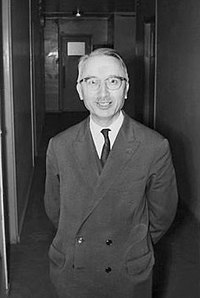

Henri Poincaré: The Visionary Mathematician Who Revolutionized Science
Introduction to Henri Poincaré's Legacy
Henri Poincaré, a towering figure in the annals of mathematics and physics, remains one of the most influential scientists of the late 19th and early 20th centuries. Born in 1854 in Nancy, France, Poincaré's contributions spanned multiple disciplines, earning him the title of the last universal mathematician. His work laid the groundwork for modern chaos theory, topology, and even relativity, making him a pivotal figure in the transition from classical to modern science.
Poincaré's genius was not confined to a single field. He made groundbreaking advancements in celestial mechanics, differential equations, and algebraic geometry, while also contributing to philosophy and physics. His ability to synthesize complex ideas and apply them across disciplines set him apart from his contemporaries. Today, his theories continue to influence cutting-edge research in dynamical systems, quantum mechanics, and cosmology.
The Early Life and Education of a Mathematical Prodigy
Henri Poincaré was born on April 29, 1854, into a family of intellectuals and professionals. His father, Léon Poincaré, was a prominent physician, and his cousin, Raymond Poincaré, later became the President of France. From an early age, Poincaré exhibited exceptional intellectual abilities, particularly in mathematics. Despite suffering from diphtheria as a child, which temporarily impaired his physical abilities, his mental prowess remained unscathed.
Poincaré's formal education began at the Lycée in Nancy, where he excelled in all subjects, particularly mathematics. His teachers quickly recognized his extraordinary talent, and by the age of 17, he had already begun to make original contributions to the field. In 1873, he entered the École Polytechnique, one of France's most prestigious institutions, where he studied under some of the leading mathematicians of the time.
Academic Pursuits and Early Career
After graduating from the École Polytechnique, Poincaré continued his studies at the École des Mines, where he earned his engineering degree in 1879. That same year, he completed his doctorate in mathematics at the University of Paris, with a dissertation on partial differential equations. His thesis was so impressive that it immediately established him as a rising star in the mathematical community.
Poincaré's academic career took off rapidly. In 1879, he accepted a position as a professor at the University of Caen, where he taught for two years before moving to the University of Paris (Sorbonne) in 1881. At the Sorbonne, he spent the remainder of his career, producing an astonishing volume of work that would shape the future of mathematics and physics.
Groundbreaking Contributions to Mathematics
Poincaré's contributions to mathematics are vast and varied, but several key areas stand out for their lasting impact. His work in topology, differential equations, and celestial mechanics revolutionized these fields and laid the foundation for modern mathematical research.
The Poincaré Conjecture: A Century-Long Challenge
One of Poincaré's most famous contributions is the Poincaré Conjecture, which he formulated in 1904. This conjecture, which deals with the characterization of the three-dimensional sphere, remained one of the most significant unsolved problems in mathematics for nearly a century. The conjecture states:
"Any simply connected, closed three-dimensional manifold is homeomorphic to the three-dimensional sphere."
The conjecture's complexity stumped mathematicians for decades, but it was finally proven by Grigori Perelman in 2002–2003, using techniques from geometric analysis and Ricci flow. Perelman's proof was so groundbreaking that it earned him the Fields Medal in 2006, though he famously declined the award.
Chaos Theory and the Three-Body Problem
In 1889, Poincaré won the prestigious King Oscar II Prize for his work on the three-body problem, a fundamental issue in celestial mechanics that seeks to predict the motion of three celestial bodies interacting through gravity. His memoir on the subject introduced several groundbreaking concepts, including:
- Homoclinic points: Points where stable and unstable manifolds intersect, leading to complex and unpredictable behavior.
- Chaotic motion: The idea that small changes in initial conditions can lead to vastly different outcomes, a cornerstone of modern chaos theory.
- Invariant integrals: Mathematical tools that help describe the conservation laws in dynamical systems.
Although Poincaré's original memoir contained a critical error, his corrected work laid the foundation for the study of nonlinear dynamics and chaotic systems. Today, his ideas are applied in fields ranging from climate modeling to fluid dynamics and astrophysics.
Bridging Mathematics and Physics
Poincaré's influence extended beyond pure mathematics into the realm of physics, where his ideas helped shape the development of modern theoretical frameworks. His work on electrodynamics and relativity was particularly influential, providing key insights that would later be expanded upon by Albert Einstein.
Precursors to the Theory of Relativity
Between 1905 and 1906, Poincaré independently derived several foundational concepts of special relativity, including:
- Lorentz transformations: Mathematical equations that describe how measurements of space and time by two observers in constant motion relative to each other are related.
- Light-speed limit: The idea that the speed of light is a constant and cannot be exceeded.
- Relativity principle: The notion that the laws of physics are the same in all inertial reference frames.
- Mass-velocity dependence: The relationship between an object's mass and its velocity, a key component of Einstein's later work.
Poincaré's contributions to relativity were so significant that Einstein himself acknowledged his debt to Poincaré's ideas. While Einstein is often credited with the development of special relativity, Poincaré's work provided critical mathematical and conceptual groundwork.
Philosophy of Science and Conventionalism
In addition to his mathematical and scientific contributions, Poincaré was a profound thinker in the philosophy of science. He is best known for his advocacy of conventionalism, the idea that scientific theories are not absolute truths but rather useful conventions that help us understand the world. Poincaré argued that:
- Mathematical and scientific principles are chosen for their utility and simplicity, not their inherent truth.
- Intuition plays a crucial role in mathematical discovery, often guiding the development of formal proofs.
- The concept of actual infinity, as proposed by Georg Cantor, is not necessarily valid or useful in all contexts.
Poincaré's philosophical views continue to resonate in contemporary debates about the nature of mathematical and scientific knowledge. His emphasis on intuition and practicality has influenced generations of mathematicians and philosophers, shaping the way we think about the relationship between theory and reality.
Conclusion of Part 1
Henri Poincaré's legacy is one of unparalleled intellectual achievement and interdisciplinary innovation. His work in mathematics, physics, and philosophy has left an indelible mark on the scientific community, influencing everything from chaos theory to relativity. In the next part of this series, we will delve deeper into Poincaré's specific contributions to topology, celestial mechanics, and his enduring impact on modern science.
Poincaré's Revolution in Topology and Algebraic Geometry
Henri Poincaré's contributions to topology and algebraic geometry fundamentally transformed these fields, introducing concepts that remain central to modern mathematics. His work in topology, in particular, laid the groundwork for the study of manifolds and homotopy theory, areas that continue to drive research in both pure and applied mathematics.
The Birth of Algebraic Topology
Poincaré is often credited with founding the field of algebraic topology, a branch of mathematics that uses tools from abstract algebra to study topological spaces. His 1895 paper, Analysis Situs, introduced several key concepts, including:
- Homotopy: A way to classify topological spaces based on the continuous deformations of loops within them.
- Fundamental group: A group that captures the essence of the connectivity of a space, allowing mathematicians to distinguish between different types of surfaces.
- Betti numbers: Invariants that describe the number of holes in a topological space, providing a way to quantify its structure.
These ideas were revolutionary because they provided a rigorous mathematical framework for studying shapes and spaces that defied traditional geometric analysis. Poincaré's approach allowed mathematicians to explore properties of spaces that remain unchanged under continuous deformations, such as stretching or bending, but not tearing or gluing.
Applications in Modern Mathematics and Physics
The impact of Poincaré's topological innovations extends far beyond pure mathematics. In theoretical physics, his ideas have been applied to the study of string theory, quantum field theory, and condensed matter physics. For example, the concept of topological invariants is crucial in understanding the behavior of topological insulators, materials that conduct electricity on their surfaces but not through their interiors.
In addition, Poincaré's work on algebraic geometry provided new methods for solving systems of polynomial equations, which are fundamental in cryptography and computational algebra. His 1910–1911 proofs in algebraic geometry demonstrated the power of combining geometric intuition with algebraic techniques, a approach that continues to inspire mathematicians today.
The Poincaré Recurrence Theorem and Its Implications
Another cornerstone of Poincaré's legacy is the Poincaré Recurrence Theorem, a fundamental result in the study of dynamical systems. This theorem states that in a conservative system with a finite volume of phase space, almost every trajectory will eventually return arbitrarily close to its initial position. The theorem has profound implications for our understanding of statistical mechanics and ergodic theory.
Understanding the Recurrence Theorem
The Recurrence Theorem can be summarized as follows:
"In a system where energy and volume are conserved, and where the system is bounded, any state that the system can reach will be revisited infinitely often, given enough time."
This idea challenges the notion of irreversibility in physical systems, suggesting that even in chaotic systems, certain patterns will repeat over time. Poincaré's theorem was a direct response to the second law of thermodynamics, which posits that entropy in a closed system tends to increase over time, leading to a state of maximum disorder.
Impact on Statistical Mechanics and Chaos Theory
The Recurrence Theorem has had a lasting impact on statistical mechanics, particularly in the study of ergodic systems, where the system's trajectory eventually explores all possible states consistent with its energy. This concept is crucial for understanding the behavior of gases and other complex systems where individual particle interactions are too numerous to track.
In chaos theory, the Recurrence Theorem highlights the unpredictable yet deterministic nature of chaotic systems. While Poincaré's work on the three-body problem showed that small changes in initial conditions can lead to vastly different outcomes, the Recurrence Theorem suggests that, over infinite time, the system will return to a state arbitrarily close to its starting point. This duality—between unpredictability and recurrence—remains a central theme in the study of dynamical systems.
Poincaré's Influence on Modern Physics and Relativity
Henri Poincaré's contributions to physics are as significant as his mathematical achievements. His work on electrodynamics and relativity provided critical insights that shaped the development of modern physics, influencing figures like Albert Einstein and Hendrik Lorentz.
Electrodynamics and the Principle of Relativity
In the early 1900s, Poincaré was deeply engaged in the study of electromagnetic theory, particularly the work of James Clerk Maxwell and Hendrik Lorentz. He recognized that the equations governing electromagnetism should remain unchanged under certain transformations, a principle that would later become a cornerstone of special relativity.
Poincaré's 1905 paper, On the Dynamics of the Electron, introduced the concept of the Lorentz group, a set of transformations that preserve the form of Maxwell's equations. He also proposed that the speed of light is a universal constant, a idea that Einstein would later incorporate into his theory of relativity. Poincaré's work demonstrated that the laws of physics should be covariant—meaning they retain their form—under these transformations, a principle that is fundamental to modern physics.
The Twin Paradox and the Concept of Spacetime
Poincaré was among the first to explore the implications of time dilation, a phenomenon where time appears to pass more slowly for an object in motion relative to a stationary observer. He introduced the twin paradox, a thought experiment where one twin travels at near-light speed and returns to find the other twin has aged more. This paradox illustrates the relativistic effects of time and has become a staple in discussions of special relativity.
Additionally, Poincaré's work on the geometry of spacetime anticipated Einstein's general theory of relativity. He suggested that the three dimensions of space and the one dimension of time could be treated as a single, four-dimensional continuum, an idea that Einstein would later formalize in his theory of general relativity. Poincaré's insights into the interplay between space and time were groundbreaking, paving the way for a new understanding of the universe.
Poincaré's Philosophical Contributions: Intuition vs. Formalism
Beyond his technical contributions, Poincaré was a profound thinker in the philosophy of mathematics and science. His views on intuition, conventionalism, and the nature of mathematical truth have had a lasting impact on how we understand the development and application of scientific theories.
The Role of Intuition in Mathematics
Poincaré was a strong advocate for the role of intuition in mathematical discovery. He believed that while formal proofs and logical rigor are essential, the initial spark of mathematical insight often comes from an intuitive grasp of the problem. In his 1908 book, Science and Method, he wrote:
"It is by logic that we prove, but by intuition that we discover."
This emphasis on intuition was a response to the growing trend of formalism in mathematics, which sought to reduce all mathematical truths to purely logical statements. Poincaré argued that such an approach ignored the creative and often non-linear process of mathematical discovery, where intuition guides the mathematician toward meaningful problems and solutions.
Conventionalism and the Nature of Scientific Truth
Poincaré is perhaps best known for his philosophy of conventionalism, which posits that scientific theories and mathematical principles are not absolute truths but rather useful conventions that help us organize and understand the world. He argued that:
- Scientific laws are chosen for their simplicity and utility, not their inherent truth.
- The geometry of space is not a fixed reality but a convention that we adopt because it is convenient and consistent with our observations.
- The principles of mathematics are not discovered but invented, shaped by the needs and limitations of human cognition.
This view challenged the prevailing notion that scientific theories are direct reflections of reality. Instead, Poincaré suggested that they are tools that allow us to make sense of complex phenomena. His conventionalism has influenced later philosophers of science, including Thomas Kuhn and Paul Feyerabend, who explored the role of paradigms and scientific revolutions in shaping our understanding of the world.
Conclusion of Part 2
Henri Poincaré's contributions to mathematics, physics, and philosophy are nothing short of revolutionary. His work in topology, chaos theory, and relativity laid the foundation for many of the scientific advancements of the 20th and 21st centuries. In the final part of this series, we will explore Poincaré's enduring legacy, his influence on contemporary science, and the ongoing relevance of his ideas in today's research.
The Enduring Legacy of Henri Poincaré in Modern Science
Henri Poincaré's influence extends far beyond his lifetime, shaping the trajectory of mathematics, physics, and philosophy in profound ways. His ideas continue to inspire researchers, and his theories remain foundational in fields ranging from chaos theory to quantum mechanics. This section explores how Poincaré's work has stood the test of time and continues to drive innovation in contemporary science.
Chaos Theory and Its Applications Today
Poincaré's groundbreaking work on the three-body problem and chaos theory has had a lasting impact on modern science. His discovery of homoclinic points and the unpredictability of certain dynamical systems laid the foundation for what we now recognize as deterministic chaos. Today, chaos theory is applied in diverse fields such as:
- Climate modeling, where small changes in initial conditions can lead to vastly different weather patterns.
- Fluid dynamics, helping to explain turbulent flows in oceans and atmospheres.
- Biological systems, where chaotic behavior is observed in population dynamics and neural networks.
- Financial markets, where chaos theory is used to model the unpredictable nature of stock prices.
Poincaré's insights into chaos have also influenced the development of fractal geometry, a field that studies complex, self-similar structures found in nature. His work remains a cornerstone of modern nonlinear dynamics, guiding researchers as they explore the boundaries between order and disorder.
Topology's Role in Contemporary Physics
Poincaré's contributions to topology have found unexpected applications in theoretical physics, particularly in the study of topological phases of matter. These phases, which include topological insulators and quantum Hall systems, exhibit properties that are robust against local perturbations, making them ideal for applications in quantum computing and spintronics.
The Poincaré conjecture, though proven by Grigori Perelman, continues to inspire research in higher-dimensional geometry and string theory. In string theory, the topology of Calabi-Yau manifolds—complex, multi-dimensional shapes—plays a crucial role in determining the properties of the universe. Poincaré's early work on manifolds and homotopy theory provided the mathematical framework that makes such explorations possible.
Poincaré's Influence on Relativity and Beyond
While Albert Einstein is often credited with the development of special relativity, Poincaré's contributions were instrumental in shaping the theory. His work on the Lorentz transformations and the principle of relativity provided the mathematical foundation that Einstein built upon. This section examines how Poincaré's ideas continue to resonate in modern physics.
The Intersection of Mathematics and Physics
Poincaré's ability to bridge mathematics and physics was one of his greatest strengths. His work on electrodynamics and the geometry of spacetime anticipated many of the concepts that would later become central to Einstein's general theory of relativity. Key areas where Poincaré's influence is still felt include:
- Cosmology, where his ideas about the structure of space and time inform models of the universe's evolution.
- Quantum field theory, where topological methods are used to study the behavior of particles and fields.
- Gravitational wave astronomy, where the principles of relativity are essential for detecting and interpreting signals from distant cosmic events.
Poincaré's emphasis on the unification of physical laws also foreshadowed the modern quest for a theory of everything, which seeks to reconcile quantum mechanics and general relativity into a single, coherent framework.
The Philosophy of Science in the 21st Century
Poincaré's philosophical views, particularly his advocacy for conventionalism and the role of intuition in scientific discovery, continue to shape debates in the philosophy of science. His ideas challenge the notion that scientific theories are objective truths, instead suggesting that they are human constructs shaped by our need to make sense of the world.
In contemporary discussions, Poincaré's conventionalism is often contrasted with scientific realism, the view that scientific theories describe reality as it truly is. This debate remains relevant in fields such as quantum mechanics, where interpretations like the Copenhagen interpretation and many-worlds theory reflect different philosophical perspectives on the nature of reality.
Additionally, Poincaré's emphasis on intuition has influenced modern approaches to mathematical education and problem-solving. Educators and researchers alike recognize the importance of fostering intuitive understanding alongside formal training, a balance that Poincaré championed throughout his career.
Poincaré's Impact on Modern Research and Technology
The practical applications of Poincaré's theories are evident in many of today's technological advancements. From artificial intelligence to space exploration, his ideas continue to drive innovation and discovery. This section highlights some of the most notable examples of Poincaré's enduring influence.
Artificial Intelligence and Machine Learning
Poincaré's work on dynamical systems and chaos theory has found applications in machine learning and artificial intelligence. Techniques inspired by his theories are used to model complex, nonlinear systems, such as:
- Neural networks, where chaotic behavior can be harnessed to improve learning algorithms.
- Time-series forecasting, where Poincaré's recurrence theorem helps predict patterns in data.
- Robotics, where topological methods are used to navigate complex environments.
Poincaré's emphasis on intuition also resonates in the development of AI systems, where human-like reasoning and problem-solving skills are increasingly valued.
Space Exploration and Astrophysics
In the field of astrophysics, Poincaré's contributions to celestial mechanics remain indispensable. His work on the three-body problem is used to model the interactions between stars, planets, and other celestial bodies, helping scientists understand the dynamics of solar systems and galaxies.
Poincaré's insights into chaotic systems are also crucial for space mission planning. For example, the Lagrange points—regions in space where the gravitational forces of two large bodies balance out—are used to position satellites and space telescopes. These points, first studied by Poincaré, are essential for missions like the James Webb Space Telescope, which relies on them to maintain its orbit.
Conclusion: The Timeless Genius of Henri Poincaré
Henri Poincaré's legacy is one of unparalleled intellectual brilliance and interdisciplinary innovation. His contributions to mathematics, physics, and philosophy have left an indelible mark on the scientific community, influencing generations of researchers and shaping the course of modern science. From his foundational work in topology and chaos theory to his groundbreaking insights into relativity and the philosophy of science, Poincaré's ideas continue to inspire and challenge us.
As we reflect on Poincaré's achievements, several key takeaways emerge:
- Interdisciplinary thinking is essential for scientific progress. Poincaré's ability to bridge multiple fields allowed him to make discoveries that might have been missed by specialists.
- Intuition and formalism are both crucial in mathematical and scientific discovery. Poincaré's emphasis on intuition reminds us that creativity is as important as rigor.
- Theories are tools, not absolute truths. Poincaré's conventionalism encourages us to view scientific theories as useful frameworks rather than definitive descriptions of reality.
- Chaos and order coexist. Poincaré's work on chaos theory shows that unpredictability and structure are not mutually exclusive but rather two sides of the same coin.
In a world where science and technology are advancing at an unprecedented pace, Poincaré's legacy serves as a reminder of the power of curiosity, creativity, and interdisciplinary collaboration. His ideas continue to guide researchers as they explore the frontiers of knowledge, from the depths of quantum mechanics to the vast expanse of the cosmos. As we look to the future, we can be certain that the genius of Henri Poincaré will continue to illuminate the path forward, inspiring new generations to push the boundaries of what is possible.
In the words of Poincaré himself:
"Science is built up with facts, as a house is with stones. But a collection of facts is no more a science than a heap of stones is a house."
This sentiment captures the essence of Poincaré's approach to science—a blend of rigorous analysis, creative insight, and a deep appreciation for the interconnectedness of all knowledge. His legacy is not just a collection of theories and proofs but a testament to the enduring power of human intellect and imagination.