JWST Discovers Bizarre Exoplanet With a Diamond Atmosphere
The James Webb Space Telescope (JWST) has peeled back the layers of a truly alien world, revealing an atmospheric cosmic mystery that defies expectations. The telescope has scrutinized an exoplanet designated PSR J2322-2650b, uncovering a bizarre, helium- and carbon-dominated atmosphere where soot clouds may rain diamonds. This bizarre exoplanet atmosphere challenges all existing models of planetary science.
Orbiting a rapidly spinning neutron star, this world represents an entirely new class of celestial body. Its extreme environment and bizarre atmospheric composition have left astronomers both stunned and intrigued, promising to rewrite textbooks on planet formation and evolution.
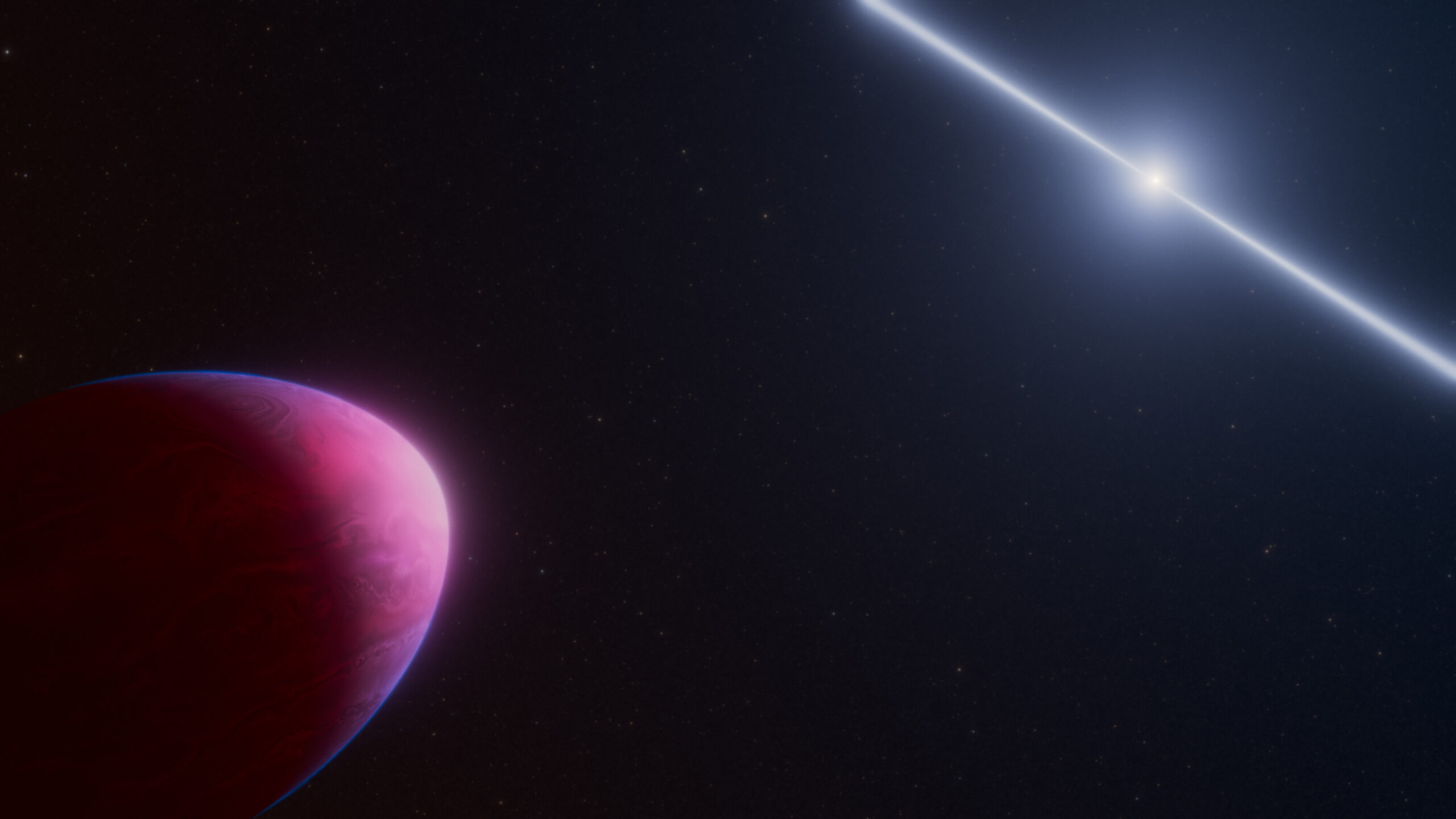
A World of Cosmic Extremes: The Lemon-Shaped Planet
The planet PSR J2322-2650b is a denizen of a cosmic extreme. It exists in a "black widow" star system, named for the spider that consumes its mate. Here, the host is a pulsar—a super-dense, rapidly spinning neutron star—that bathes its companion in deadly radiation and stellar winds.
The Physics of Distortion
The gravitational forces at play are immense. With a mass roughly equivalent to Jupiter but an orbital period of just 7.8 hours, the planet is stretched and squeezed. This relentless tidal force distorts the world into a unique, lemon-like shape, a stark visual representation of the violent system it calls home.
Initial data prompted researchers' surprise, with co-author Peter Gao stating, "What the heck is this?" as the atmosphere defies proximity-heat expectations for carbon-rich worlds.
This environment blurs the line between a traditional planet and a low-mass stellar companion. The discovery pushes the boundaries of what astronomers classify as a planet and opens a new window into the resilience of celestial bodies.
Unraveling the Bizarre Exoplanet Atmosphere
The true shock came from JWST's mid-infrared instruments. Instead of finding common molecules like water vapor, methane, or carbon dioxide, the data told a different story. The atmospheric composition of PSR J2322-2650b is dominated by helium and features molecular carbon in the forms of C2 and C3.
Soot Clouds and Diamond Rain
High in this alien sky, clouds of soot—pure carbon particles—drift. Deeper within the atmosphere, under immense pressure, these carbon particles are theorized to condense into something extraordinary: diamonds. This potential for diamond rain creates a picture of an atmosphere unlike any other previously observed in the cosmos.
This finding is particularly puzzling because heat from a nearby star typically breaks apart carbon molecules. The persistence of molecular carbon (C2 and C3) in this searing environment is a key part of the mystery that scientists are now racing to solve.
JWST: The Key to Unlocking Alien Skies
This landmark discovery underscores the revolutionary power of the James Webb Space Telescope. Launched in 2021, JWST was designed with the explicit goal of studying the atmospheres of distant worlds. Its suite of infrared cameras and spectrometers can detect the chemical fingerprints of gases billions of miles away.
Beyond Hot Jupiters
Prior to JWST, atmospheric studies were largely confined to hot Jupiters—gas giants orbiting close to sun-like stars. JWST has dramatically expanded that frontier. It can now analyze the atmospheres of smaller rocky planets and worlds in extreme environments, like those orbiting pulsars.
- Mid-Infrared Capability: JWST's MIRI instrument detects heat signatures, crucial for identifying molecules like carbon.
- Unprecedented Sensitivity: It can detect faint atmospheric signals that previous telescopes like Hubble could not.
- Chemical Fingerprinting: The telescope splits light into spectra, revealing the exact gases present.
The detection of this bizarre exoplanet atmosphere is a direct result of these advanced technological capabilities. It marks a new chapter in exoplanet science, where the truly unusual and unexpected becomes the focus of discovery.
A Puzzling Origin Story
How does such a planet form? The presence of a helium and carbon atmosphere around a world orbiting a neutron star poses a severe challenge to planetary formation models. A leading hypothesis, proposed by researcher Roger Romani of Stanford University, involves a process of cosmic distillation.
The Crystallization Theory
The theory suggests the planet cooled after its formation, causing its interior materials to crystallize. Pure carbon crystals, being buoyant, could have risen through the atmosphere like clumps of fat in a cooling soup. This could explain the abundance of carbon in the upper layers. However, a major unresolved issue is the apparent separation of oxygen and nitrogen from this process.
Scientists emphasize the puzzle's value, with Romani noting excitement in pursuing such atmospheric "weirdness."
This formation puzzle highlights how discoveries from JWST exoplanet studies are not just providing answers but are actively generating new, fundamental questions about the diversity of worlds in our galaxy. The mystery of PSR J2322-2650b's origin is now a driving force for new theoretical models.
The Carbon Conundrum: Defying Planetary Expectations
The atmospheric profile of PSR J2322-2650b is not just unusual; it is theoretically problematic. In standard planetary science, a world so close to a heat source—even a pulsar—should have its atmospheric chemistry driven by thermal equilibrium. The detection of molecular carbon (C2 and C3) directly upends this expectation.
Where Are the Expected Molecules?
Astronomers expected to find common carbon-bearing molecules like carbon monoxide (CO) or methane (CH4). The intense environment should have broken the stronger carbon-carbon bonds in C2 and C3, favoring bonds with hydrogen or oxygen instead. Their persistent presence suggests either a continuous source replenishing them or a chemical environment so exotic that standard rules do not apply.
This is the first such carbon-helium atmosphere detected, contrasting with typical hot Jupiters where heat dissociates carbon compounds.
The dominance of helium adds another layer of complexity. Helium is a noble gas, largely unreactive, and its prevalence indicates an atmosphere that is both primordial and heavily processed. This bizarre exoplanet atmosphere forces a reevaluation of photochemical and thermal models for worlds in extreme radiation fields.
Detailed Properties of a Cosmic Oddity
The statistical data for PSR J2322-2650b paints a portrait of a true astrophysical outlier. The numbers, derived from JWST's precise measurements, provide the concrete foundation for the ongoing cosmic mystery.
- Mass and Orbit: The planet holds a mass approximately equivalent to Jupiter, yet it orbits its host in a mere 7.8 hours. This incredible speed is a direct result of the pulsar's immense gravity.
- Atmospheric Makeup: Helium is the dominant gas, with significant spectral signatures from diatomic and triatomic carbon molecules (C2, C3). Notably absent are the common markers for water or hydrocarbons.
- Physical Deformation: Tidal forces from the much more massive neutron star have stretched the planet into a pronounced, lemon-like shape, a static testament to the dynamic forces at play.
- Host Star: The planet orbits PSR J2322-2650, a rapidly spinning neutron star that emits beams of radiation, classifying it as a pulsar within a black widow binary system.
These properties collectively define a new category of exoplanet. They are not simply "hot Jupiters" in a strange neighborhood; they are fundamentally different in composition, formation, and evolution.
The "Black Widow" System: A Hostile Home
To understand the planet, one must understand its lethal stellar neighborhood. The "black widow" pulsar system is one of the most hostile environments in the galaxy. The pulsar, the ultra-dense remnant of a supernova, spins rapidly and emits intense beams of high-energy radiation and powerful winds of charged particles.
Evaporation and Ablation
In such systems, the pulsar's energy slowly evaporates and ablates its companion. For PSR J2322-2650b, this means its atmosphere is under constant bombardment. This relentless assault could be stripping away lighter elements, potentially explaining the high concentration of heavier helium and the sooty carbon.
The very existence of this world raises a profound question: Is it the remnant core of a once-larger star that has been stripped down by the pulsar? Or did it form from the debris of the supernova that created the neutron star itself? The bizarre atmospheric composition may hold the forensic clues to this origins mystery.
JWST's Role in Atmospheric Archeology
The discovery was made possible by the James Webb Space Telescope's unparalleled sensitivity in the mid-infrared range. JWST did not directly "see" the planet; instead, it used the transmission spectroscopy technique. As the planet transited its host star, starlight filtered through its atmospheric layers.
Decoding the Infrared Signature
JWST's instruments captured this filtered light and spread it into a spectrum—a chemical barcode. Specific wavelengths were absorbed by atoms and molecules in the planet's atmosphere, creating tell-tale dips in the spectrum. The distinct signatures of helium and molecular carbon were etched into this data, revealing the atmospheric secrets.
JWST's mid-infrared capabilities enabled detection of these exotic signatures, building on its role in exoplanet atmosphere studies since 2022.
This technique transforms JWST into a tool for interstellar atmospheric archeology. By reading these spectral barcodes, astronomers can not only identify chemicals but also infer temperature, pressure, and even weather patterns on worlds light-years away. PSR J2322-2650b represents one of the most complex and puzzling barcodes decoded to date.
Broader Implications for Exoplanet Science
The detection of this lemon-shaped world with a diamond-showering atmosphere is not an isolated curiosity. It signals a broader trend in exoplanet science propelled by JWST: the discovery of worlds that defy simple classification and challenge our theoretical frameworks.
The Rise of "Hybrid" Worlds
PSR J2322-2650b is a prime example of a "weird" hybrid that straddles categories. It has the mass of a gas giant but orbits a dead star. It possesses an atmosphere with primordial helium yet is laced with complex carbon molecules. These hybrids force scientists to expand their definitions and consider more complex formation and evolution pathways.
Other recent JWST findings contribute to this trend, such as studying clinging atmospheres on small rocky planets and searching for potential biosignatures like dimethyl sulfide on ocean worlds. The telescope is revealing a galactic menagerie far more diverse than our own solar system suggested.
- Formation Models Challenged: Standard core-accretion and disk instability models do not easily produce a carbon-helium world around a pulsar.
- Atmospheric Science Expanded: New chemical and physical processes, like diamond condensation in soot clouds, must be incorporated into models.
- Planetary Survival: The planet's existence shows worlds can endure in environments previously thought to be completely sterilizing.
This discovery underscores that planetary systems are capable of outcomes far beyond our current imagination. As JWST continues its mission, more such rule-breaking worlds are certain to be found, each adding a new piece to the grand puzzle of cosmic evolution.
Future Observations and Unresolved Mysteries
The discovery of PSR J2322-2650b is not the end of the story; it is the provocative beginning of a new investigative chapter. Astronomers have already planned extensive follow-up observations with JWST to probe deeper into the planet's atmospheric cosmic mystery. The primary goals are to map the carbon distribution and search for other trace elements.
Key Questions for Upcoming Research
Several pressing questions drive the next phase of study. Researchers aim to determine the vertical structure of the atmosphere: Are the soot clouds uniform, or do they form in distinct bands? Is the diamond rain hypothesis physically viable under the inferred pressures? Furthermore, scientists desperately seek to find where the oxygen and nitrogen have gone, a missing-piece problem central to the formation puzzle.
Ongoing follow-up is planned for PSR J2322-2650b to resolve carbon distribution mysteries.
Additional observation time will also help characterize the pulsar's interaction with the planet's atmosphere more precisely. Measuring the rate of atmospheric stripping could provide a timeline for the planet's evolution and eventual fate in this violent system.
The Big Picture: JWST's Transformative Legacy
The investigation of this bizarre exoplanet atmosphere exemplifies the transformative impact of the James Webb Space Telescope. Since beginning science operations in 2022, JWST has fundamentally shifted exoplanet science from mere detection to detailed characterization.
A New Era of Atmospheric Science
JWST's contributions extend far beyond this one pulsar planet. It is examining the clinging atmospheres of small rocky planets orbiting M-dwarf stars, searching for chemical biosignatures on potentially habitable worlds, and analyzing the weather patterns on hot gas giants. Each study adds a crucial data point to our understanding of planetary diversity.
- Democratizing Atmosphere Studies: JWST allows for the atmospheric characterization of smaller, Earth-sized planets, not just gas giants.
- Identifying Biosignature Gases: The telescope can search for potential signs of life, such as dimethyl sulfide, in the atmospheres of ocean worlds.
- Revealing Complex Chemistry: From carbon dioxide in rocky planet atmospheres to silicate clouds on hot worlds, JWST reveals an astonishing chemical tapestry.
The discovery of PSR J2322-2650b sits firmly within this legacy of revelation. It proves that JWST is the essential tool for uncovering the universe's most exotic and unexpected phenomena, pushing human knowledge into frontiers once only imagined in theoretical papers.
Challenges in Detecting Rocky Planet Atmospheres
While JWST excels at studying gas giants and larger worlds, the search for atmospheres around Earth-like rocky planets presents a greater challenge. These planets have thinner, smaller atmospheric envelopes whose signals are incredibly faint, even for JWST's powerful instruments.
The Path Forward for Habitability Studies
Despite the challenges, progress is being made. Astronomers are optimistic that with careful target selection and substantial telescope time, JWST can begin to probe the atmospheres of the most promising rocky exoplanets. The focus is on worlds orbiting calm, small M-dwarf stars, where the atmospheric signal is relatively stronger during transits.
The techniques and data analysis methods being refined on bizarre worlds like PSR J2322-2650b directly inform this more delicate work. Understanding how to extract subtle signals from noise is a transferable skill, bringing the goal of detecting a habitable, Earth-like atmosphere closer to reality.
Conclusion: Embracing the Cosmic Mystery
The discovery of the lemon-shaped exoplanet with a helium and carbon atmosphere is a landmark event in modern astronomy. It underscores a fundamental truth: the universe is far stranger and more creative than our models often predict. This bizarre exoplanet atmosphere is not an error in the data but a feature of cosmic reality, challenging scientists to think more broadly.
Key Takeaways from the Discovery
The investigation of PSR J2322-2650b has yielded several critical insights that will guide future research:
- Diversity Beyond Imagination: Planetary systems can produce outcomes, like carbon-helium atmospheres around pulsars, that defy conventional categories and formation stories.
- JWST as a Discovery Engine: The James Webb Space Telescope is the premier instrument for unveiling the detailed properties of exoplanets, especially those in extreme environments.
- Atmospheric Processes are Key: Understanding exotic atmospheric chemistry, from soot clouds to potential diamond rain, is crucial for interpreting the history and nature of distant worlds.
- The Value of "Weirdness": Anomalous discoveries like this one are not distractions; they are precious opportunities to break new scientific ground and revise our understanding of physics and chemistry under extreme conditions.
This cosmic mystery, born from the brilliant data of JWST, reminds us that exploration is driven by both answers and questions. The baffling atmosphere of PSR J2322-2650b does not represent a dead end but a signpost pointing toward new, unexplored territories in planetary science.
As JWST continues its mission, each new observation will build upon this foundation. The telescope will peer deeper into the atmospheres of other exotic worlds, search for hints of life, and undoubtedly find more celestial oddities that prompt astronomers to ask, once again, "What the heck is this?" In that question lies the thrilling, unending pursuit of knowledge, driving humanity's quest to understand our place in a wonderfully strange and diverse cosmos.

JWST Perc le Mystère des Trous Noirs Précoces
Le télescope spatial James Webb (JWST) a levé le voile sur l’un des plus grands mystères de l’astronomie moderne : l’existence de trous noirs supermassifs dans l’univers très jeune. Ces colosses cosmiques, pesant des millions de fois la masse de notre Soleil, ont été repérés alors que l’univers avait à peine quelques centaines de millions d’années. Leurs masses démesurées, par rapport à leurs galaxies hôtes, défient toutes les théories de formation classiques et ouvrent un nouveau chapitre dans notre compréhension de la naissance des structures cosmiques.
Le Défi Cosmique des Trous Noirs Précoces
La présence de ces objets extrêmes si tôt dans l’histoire de l’univers représente un défi de taille pour les scientifiques. Selon les modèles traditionnels, la croissance d’un trou noir supermassif prendrait plusieurs milliards d’années, par accrétion lente de matière ou par fusions successives de trous noirs stellaires. Cependant, les observations du JWST prouvent que ces monstres cosmiques ont atteint des masses considérables en un temps record, moins d’un milliard d’années après le Big Bang. Ce décalage entre les observations et les prédictions constitue un véritable mystère cosmique à résoudre.
Les données révèlent des cas où la masse du trou noir central dépasse de loin celle de toutes les étoiles de sa galaxie hôte. Cette disproportion surprenante force les astronomes à envisager des mécanismes de formation beaucoup plus rapides et exotiques, comme l’effondrement direct d’immenses nuages de gaz primordiaux ou la naissance d’étoiles monstrueuses de plusieurs milliers de masses solaires, dont l’effondrement final donnerait directement naissance à un trou noir massif.
L'Énigme de la Croissance Ultra-Rapide
Comment un objet peut-il accumuler une masse d’un million de soleils en quelques centaines de millions d’années seulement ? C’est la question centrale qui anime la recherche actuelle. Les scénarios conventionnels peinent à expliquer une croissance aussi vertigineuse. Les observations du JWST pointent vers une phase d’accrétion et d’expansion extrêmement violente et efficace, possiblement alimentée par des réserves de gaz denses et froids disponibles dans l’univers primitif.
Les chercheurs notent que ces trous noirs précoces grandissent plus vite que leurs galaxies hôtes, un phénomène qui révolutionne notre vision de la coévolution galaxies - trous noirs.
Les Découvertes Marquantes du JWST
Depuis son déploiement, le JWST a multiplié les découvertes révolutionnaires concernant les premiers âges de l’univers. Sa sensibilité sans précédent dans l’infrarouge lui permet de voir au travers des nuages de poussière et de détecter la lumière étirée des objets les plus distants, remontant à l’époque de la réionisation.
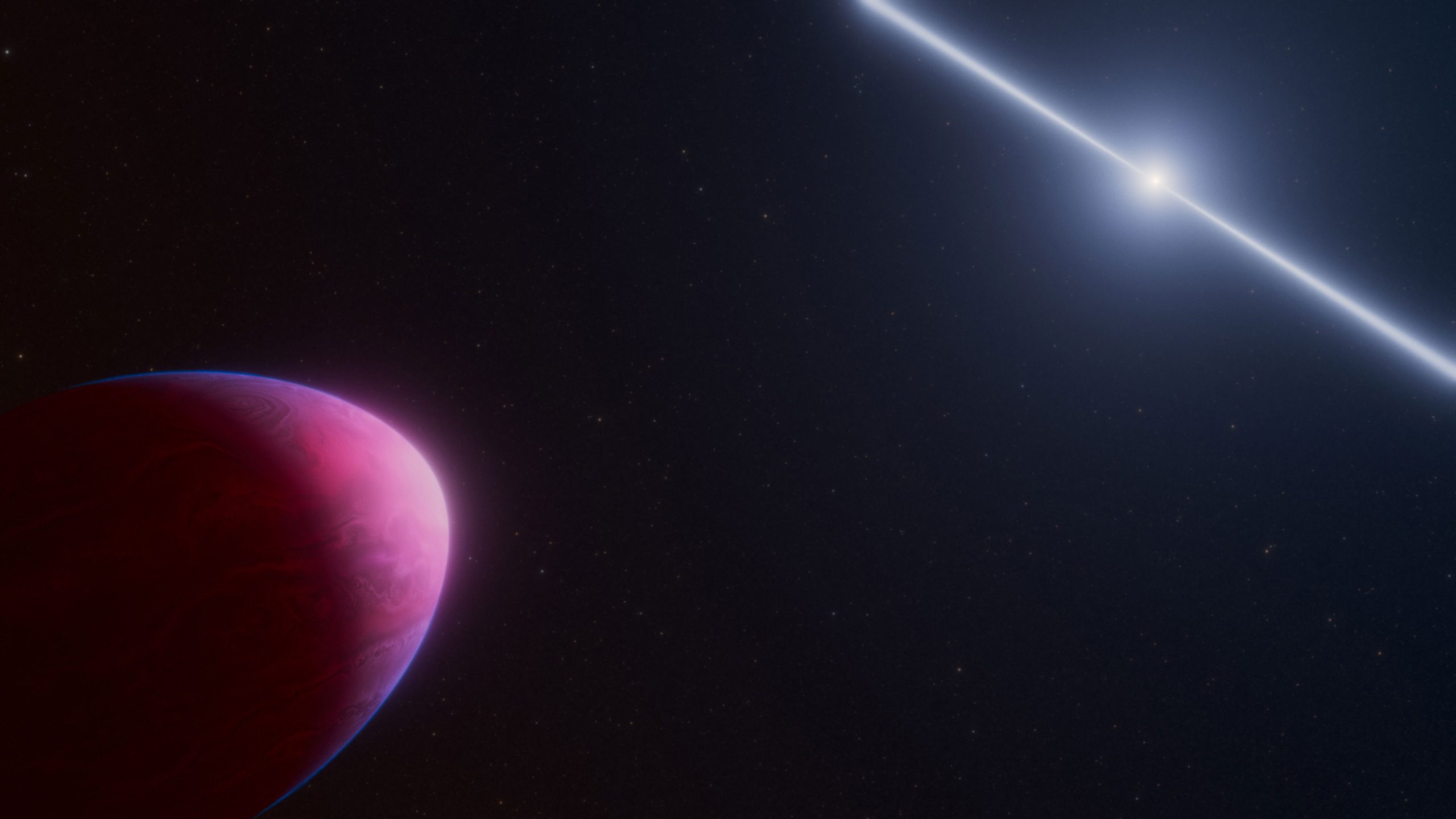
La Galaxie "Infini" : un Témoin Direct
En juillet 2025, des astronomes utilisant le JWST ont annoncé une découverte fascinante. Ils ont observé une galaxie, surnommée la « Galaxie Infini » en raison de sa forme particulière (∞), abritant un trou noir d’environ 1 million de masses solaires. L’hypothèse privilégiée pour expliquer sa formation est un effondrement direct d’un nuage de gaz lors d’une collision entre deux galaxies discoïdales.
Cette observation est cruciale car elle fournit un scénario concret et observable pour la formation rapide de trous noirs massifs sans passer par la phase d’étoile classique. Les données spectroscopiques ont permis de confirmer la présence de trois noyaux galactiques actifs dans ce système, deux dans les régions externes et un au centre, indiquant une activité intense et simultanée de trous noirs supermassifs.
- Mécanisme : Effondrement direct d’un nuage gazeux géant.
- Masse estimée : ~1 million de masses solaires.
- Contexte : Collision de galaxies discoïdales.
- Signature : Gaz ionisé étendu confirmant la position centrale du trou noir.
CANUCS-LRD-z8.6 : un Fossile de l'Aube Cosmique
Le 19 novembre 2025, une autre découverte majeure a été confirmée. Le JWST a étudié la galaxie CANUCS-LRD-z8.6, observée à un redshift z=8.6, ce qui signifie que nous la voyons telle qu’elle était seulement 570 millions d’années après le Big Bang. Cette galaxie abrite un trou noir supermassif en pleine croissance active, dont la masse est surdimensionnée par rapport à la masse totale des étoiles de sa galaxie hôte.
Cette disproportion flagrante est la preuve la plus directe à ce jour d’une croissance extrêmement rapide des trous noirs dans le jeune univers. Les spectres obtenus par le JWST montrent des signatures claires d’accrétion de matière, impossibles à détecter avec les télescopes précédents. CANUCS-LRD-z8.6 fait partie d’une classe énigmatique de petites galaxies distantes qui pourraient être les ancêtres des quasars lumineux observés à des époques plus récentes.
À un redshift de z=8.6, cette galaxie nous renvoie à une époque où l’univers n’avait que 4% de son âge actuel, offrant une fenêtre unique sur les premiers stades de la formation des structures cosmiques.
Les Mécanismes de Formation Alternatifs
Face aux limites des modèles classiques, les astronomes développent des théories alternatives pour expliquer la genèse de ces géants précoces. Les observations du JWST viennent étayer ces scénarios longtemps considérés comme marginaux.
L'Effondrement Direct des Nuages de Gaz
Ce scénario propose qu’en certains endroits de l’univers primitif, d’immenses nuages de gaz primordial, principalement composés d’hydrogène et d’hélium, se sont effondrés directement sous leur propre gravité sans former d’étoiles de manière significative. Cet effondrement cataclysmique créerait directement un trou noir de masse intermédiaire, qui servirait ensuite de « graine » pour un futur trou noir supermassif. La découverte dans la Galaxie Infini est une preuve observationnelle forte en faveur de ce mécanisme.
Les conditions requises pour un tel effondrement sont extrêmes : un environnement pauvre en métaux, dépourvu de la catalyse nécessaire à la fragmentation et à la formation stellaire classique, et un flux de rayonnement ultraviolet intense pour maintenir le gaz à une température élevée et éviter sa fragmentation.
Les Étoiles Monstrueuses Primordiales
Une autre voie possible passe par la formation d’« étoiles monstrueuses » ou étoiles de population III. Ces premières étoiles de l’univers, nées dans un milieu non pollué par les éléments lourds, pourraient avoir atteint des masses phénoménales, de l’ordre de plusieurs centaines à plusieurs milliers de masses solaires. Leur durée de vie serait très brève, et leur effondrement en fin de vie produirait directement un trou noir massif.
Bien que ces étoiles n’aient jamais été observées directement, leurs signatures potentielles sont activement recherchées dans les données du JWST. Elles représentent le chaînon manquant plausible entre l’univers primordial et les trous noirs supermassifs précoces que nous détectons aujourd’hui.
- Graines massives : Formation d’un trou noir de plusieurs centaines de masses solaires.
- Accrétion rapide : Croissance exponentielle dans un environnement gazeux dense.
- Fusions : Assemblage par collisions avec d’autres trous noirs dans les jeunes galaxies.
China's Tianwen II Mission Targets Asteroid Kamo'oalewa in 2026
China is preparing to launch its ambitious Tianwen II mission in 2025, with the goal of returning samples from the enigmatic near-Earth asteroid 469219 Kamo'oalewa by 2026. This landmark venture aims to unlock the cosmic secrets of a small, fast-spinning space rock that may actually be a lost fragment of the Earth's own Moon. The mission represents a significant leap in planetary exploration and could fundamentally reshape our understanding of the solar system's dynamic history.
The Tianwen-2 mission will collect samples from Earth's most stable quasi-satellite, a celestial body that has orbited in tandem with our planet for possibly millions of years.
Building on the resounding success of China's Chang'e lunar sample-return missions, Tianwen II is poised to tackle the unique challenges of a near-Earth object (NEO) sample return. By retrieving pristine material from Kamo'oalewa, scientists hope to definitively answer one of astronomy's most captivating recent questions: Are we looking at a captured asteroid, or a piece of the Moon itself?
The Target: Asteroid 469219 Kamo'oalewa Unveiled
First discovered in 2016 by the Pan-STARRS1 telescope in Hawaii, Kamo'oalewa is no ordinary asteroid. Its name, of Hawaiian origin meaning "the oscillating celestial fragment," hints at its unusual relationship with Earth. Unlike true satellites like the Moon, it is a quasi-satellite, meaning it orbits the Sun while appearing to dance around Earth.
A Quasi-Satellite With Lunar Ties
The orbit of Kamo'oalewa is synchronized with Earth's, creating a celestial waltz that has remained stable for an extraordinarily long time. It is currently considered Earth's most stable known quasi-satellite. This long-term, co-orbital relationship makes it a prime target for study, as it offers a relatively accessible piece of deep space history.
Recent spectroscopic analysis has provided the most compelling clue to its origin. The asteroid's light signature shows a remarkable match to samples of space-weathered lunar silicates returned by the Apollo 14 mission and the Soviet Luna 24 lander. This spectral reddening, caused by prolonged exposure to micrometeorite bombardment and solar wind, suggests a surface with a story deeply connected to our nearest neighbor.
A Physical Profile of an Enigma
Kamo'oalewa presents a challenging target due to its small size and rapid motion. Current estimates place its elongated diameter between 40 and 100 meters, with refined models suggesting 41 to 58 meters. For comparison, it is roughly the size of a large commercial aircraft.
Its most dizzying characteristic is its rotation period. The asteroid completes a full spin approximately every 28 to 30 minutes. This rapid rotation, combined with its low gravity, creates a surface environment of shallow regolith likely composed of fine grains and dust. This dynamic presents a significant navigational and sampling challenge for the Tianwen II spacecraft.
The asteroid belongs to the Apollo group of near-Earth objects and makes its closest approach to Earth at a distance of about 14.4 million kilometers. Its orbital inclination of about 8 degrees relative to the ecliptic plane is typical for NEOs, yet its precise dance with Earth remains a fascinating orbital curiosity.
China's Tianwen II Mission: Objectives and Timeline
The Tianwen II mission, also styled as Tianwen-2, is a cornerstone of China's expanding planetary exploration program. Following the lunar successes of Chang'e 5 and 6, this mission turns its focus to the more complex kinematics of an asteroid intercept, sample collection, and return journey.
Mission Architecture and Key Goals
The primary objective is clear: to rendezvous with asteroid Kamo'oalewa, collect a surface sample, and return that material safely to Earth for detailed laboratory analysis. The scientific payoff promises to be immense. Key mission goals include:
- Confirming the hypothesized lunar origin of Kamo'oalewa through direct physical and chemical analysis.
- Understanding the impact processes that can eject material from a planetary body like the Moon.
- Studying the composition and space weathering effects on a small, airless body over millions of years.
- Advancing China's deep-space navigation, autonomous rendezvous, and sample-return technologies for future missions to Mars and other asteroids.
The 2025 Launch and 2026 Arrival
Current mission planning, based on reports from 2023 and 2024, targets a launch window in May 2025. Following a cruise phase, the spacecraft is scheduled to arrive at the asteroid in 2026. This timeline sets the stage for a historic encounter with one of Earth's most intriguing celestial companions.
The mission will build directly on the technologies proven by Chang'e-5, but must adapt to the unique profile of Kamo'oalewa. The spacecraft must execute a precise rendezvous with a fast-rotating, small target, then deploy a sampling mechanism capable of gathering material from its uncertain surface structure—all autonomously millions of kilometers from Earth.
The Lunar Ejecta Hypothesis: A Fragment from the Far Side
The leading scientific hypothesis, bolstered by recent studies, posits that Kamo'oalewa is a fragment ejected from the Moon during a massive impact event. This theory has gained substantial traction, transforming the mission from an asteroid sample return into a potential deep-space lunar sample return.
Linking to the Giordano Bruno Crater
In 2024, sophisticated impact simulations provided a startlingly specific potential source: the Giordano Bruno crater. This 22-kilometer-wide crater on the far side of the Moon's highlands is estimated to be relatively young, between 1 and 10 million years old. The simulations suggest that an impactor approximately 1.6 kilometers wide could have ejected debris at just the right velocity to escape the Moon's gravity.
The impact modeling shows viable pathways for lunar material to reach stable Earth-co-orbital space, despite significant dynamical barriers, making the Giordano Bruno crater a prime suspect.
Material ejected from the trailing hemisphere of the Moon during such an impact could achieve escape velocity with just a small extra boost. Over millennia, this debris could have migrated into the stable quasi-satellite resonance that Kamo'oalewa occupies today.
Implications for Solar System Science
Confirming a lunar origin would have profound implications. It would prove that lunar impact ejecta can become stable, independent near-Earth objects. This revelation would suggest that a certain, previously unknown proportion of the NEO population might not be asteroids from the main belt, but rather fragments from planetary collisions.
This knowledge directly impacts planetary defense models. Understanding the composition, strength, and origin of NEOs like Kamo'oalewa is crucial for assessing the threat they may pose and for designing potential deflection strategies, as demonstrated by missions like NASA's DART and the upcoming ESA Hera mission.
The Tianwen II samples would provide a pristine, dated fragment of a specific lunar impact event, offering an unprecedented look into the thermodynamics and dynamics of a major crater-forming collision.
Technological Challenges of Sampling a Fast-Spinning Asteroid
The Tianwen II mission is an extraordinary feat of engineering precisely because its target, Kamo'oalewa, is an extraordinary celestial body. Its rapid 28-minute rotation period and small size create a sampling scenario unlike any attempted before. China's spacecraft must execute a delicate dance of autonomous navigation and precision mechanics far from Earth.
Autonomous Navigation and Rendezvous
Due to the significant communication delay between Earth and the asteroid, the spacecraft must perform its final approach and sampling sequence almost entirely autonomously. It must use onboard sensors and processors to map the asteroid's irregular shape, assess potential hazards, and select a safe sampling site in real-time.
The low gravity environment adds another layer of complexity. The spacecraft cannot simply "land" in a traditional sense. It will likely need to perform a gentle touch-and-go maneuver, making contact with the surface for just seconds to activate its sampling mechanism before pushing off to avoid being caught in the asteroid's weak gravitational pull.
Successfully collecting a sample from a body rotating once every half-hour requires unprecedented precision in autonomous guidance, navigation, and control systems.
Sampling Mechanism Design
The sampling system itself must be robust yet delicate. Based on experience from Chang'e-5, it may involve a combination of techniques. Given the expected shallow regolith, a scoop or brush mechanism could gather surface dust. Alternatively, a projectile might be fired to stir up material for collection.
Key design considerations include:
- Securing fine-grained regolith in a low-gravity, fast-spinning environment.
- Ensuring the sample collector does not simply push the asteroid away upon contact.
- Contaminant mitigation to preserve the pristine scientific value of the asteroid material.
- Sealing the sample in a secure, airtight return capsule for the journey back to Earth.
Overcoming these challenges will provide invaluable technological heritage for future Chinese missions to even more distant small bodies, including comets and main-belt asteroids.
Scientific Payoff: What the Samples Could Reveal
The sealed sample return capsule, upon its parachute-assisted landing on Earth, will be transported to specialized curation facilities. There, scientists will begin the painstaking process of analyzing what may be the first verified sample of lunar material ejected into independent solar orbit. The potential discoveries span multiple disciplines.
Confirming the Lunar Origin
The most fundamental question is one of provenance. Laboratory analysis will look for definitive signatures that link the material unmistakably to the Moon. Scientists will examine the sample's:
- Isotopic ratios of oxygen, titanium, and other elements, which act as a fingerprint unique to the Moon.
- Mineralogical composition, comparing it directly to Apollo and Luna samples.
- Evidence of shock metamorphism from the giant impact that presumably blasted it free.
A confirmed lunar origin would instantly make Kamo'oalewa one of the most scientifically valuable rocks ever studied. It would represent a known piece of the Moon's crust from a specific location (potentially the Giordano Bruno crater) and a known ejection event, providing a perfect "ground truth" for impact models.
Decoding Space Weathering and Impact History
Beyond origin, the samples will act as a time capsule recording millions of years of exposure to the raw space environment. As a small, unprotected object, Kamo'oalewa has been bombarded by micrometeorites and irradiated by solar wind and cosmic rays.
Studying the degree of space weathering on its surface grains will help calibrate models used to date surfaces on airless bodies throughout the solar system. Furthermore, if it is confirmed lunar ejecta, its age could pin down the formation date of the Giordano Bruno crater with much greater accuracy than current remote estimates of 1-10 million years.
Implications for Near-Earth Object Populations
The Tianwen II mission has the potential to revolutionize our census of near-Earth objects. If Kamo'oalewa is lunar, it raises a provocative question: how many other small NEOs are also planetary ejecta rather than asteroids from the main belt?
A confirmed lunar origin would suggest a previously unrecognized population of lunar fragments in near-Earth space, altering our statistical understanding of impact hazards.
This insight is critical for planetary defense. The physical composition and structural integrity of a monolithic rock from the asteroid belt differ from a rubble-pile fragment of a planetary surface. Understanding what NEOs are made of is essential for developing effective deflection strategies should one be found on a collision course with Earth.
The Global Context of Asteroid Exploration
China's Tianwen II mission is launching into a new era of international asteroid science and sample return. It joins a prestigious fleet of missions that are collectively demystifying these primitive building blocks of the solar system.
Learning from Predecessors: Hayabusa2 and OSIRIS-REx
While Tianwen II is pioneering in its target choice, it builds upon the legacy of Japan's Hayabusa2 and NASA's OSIRIS-REx missions. Hayabusa2 returned samples from the carbonaceous asteroid Ryugu in 2020, revealing a wealth of organic compounds. OSIRIS-REx successfully collected a sample from asteroid Bennu, which was delivered to Earth in 2023.
However, Kamo'oalewa presents a stark contrast to these previous targets:
- Ryugu and Bennu are relatively large, dark, carbon-rich bodies believed to be primitive.
- Kamo'oalewa is tiny, silicate-rich, and potentially evolved, representing a completely different class of object with a possible planetary origin story.
The technological lessons from touch-and-go sampling on Bennu and Ryugu will inform the Tianwen II team, but the unique rotational dynamics of their target require novel solutions.
Contributing to Planetary Defense Knowledge
The study of near-Earth objects is no longer purely an academic pursuit. The successful kinetic impact of NASA's DART mission on asteroid Dimorphos in 2022 proved we can alter an asteroid's trajectory. The upcoming ESA Hera mission will visit Dimorphos to study the crater and assess the deflection effect in detail.
In this global effort, understanding the physical composition and structure of different NEO types is paramount. Data from Tianwen II on the density, cohesion, and mineralogy of Kamo'oalewa will feed directly into planetary defense models. If it is a consolidated lunar rock, it would respond to an impactor differently than the rubble-pile structures of Bennu or Ryugu.
A New Chapter in China's Deep Space Ambitions
Tianwen II is a critical stepping stone in China's methodical plan for solar system exploration. Following the Tianwen-1 Mars orbiter and rover mission, and the Chang'e lunar program, this mission demonstrates an expanding capability set. It tests the deep-space navigation, sample acquisition, and high-speed Earth return technologies essential for even more ambitious future goals.
These goals reportedly include a Mars sample return mission in the 2030s and potential voyages to Jupiter and its moons. Each successful mission builds the confidence and technical portfolio necessary to undertake these profound journeys. The samples from Kamo'oalewa will not only answer immediate scientific questions but also pave the way for China's future as a leading spacefaring nation.
Potential Discoveries and Unanswered Questions
The pristine material sealed within the Tianwen II sample return capsule holds the potential to rewrite textbooks. While the mission's primary goal is to test the lunar ejecta hypothesis, the samples will be scrutinized for a myriad of other secrets. The investigation will proceed from the macroscopic to the atomic level, seeking answers to fundamental questions about our solar system's history.
Unraveling the Story of Giordano Bruno Crater
If the lunar origin is confirmed, scientists will have, for the first time, a piece of a specific, dated lunar crater. They can analyze the sample's shock features and crystallization age to determine the precise conditions of the impact that created Giordano Bruno. This data will provide a ground-truth calibration point for crater chronology models used across the Moon and other terrestrial planets.
The sample could reveal the thermal and pressure history of the impact event itself. By studying how minerals were altered or melted, researchers can infer the energy and angle of the impactor. This information is crucial for understanding the mechanics of large collisions, which have shaped the surfaces of all rocky planets.
A confirmed Giordano Bruno fragment would act as a "Rosetta Stone" for interpreting the history of lunar and planetary impacts across the solar system.
Searching for a Terrestrial Origin
While the lunar hypothesis is leading, a fascinating alternative exists: could Kamo'oalewa be a fragment of Earth? The dynamics of ejecting material from Earth are more challenging due to its thicker atmosphere and stronger gravity, but not impossible for very large, ancient impacts. The samples will be meticulously checked for isotopic signatures unique to Earth, a discovery that would be equally revolutionary.
Finding terrestrial material would imply that impacts can launch viable rocks into stable interplanetary orbits, raising the tantalizing possibility of natural panspermia within the inner solar system. It would also mean that pieces of our own planet's ancient crust could be orbiting the Sun, waiting to be discovered.
Assessing Resource Potential
Beyond pure science, the mission will assess the resource potential of near-Earth objects. Kamo'oalewa's silicate-rich composition, if lunar, means it could contain materials similar to the Moon's crust, including potentially useful minerals and oxygen locked within its rocks.
Understanding the mechanical properties of such a body—how its regolith behaves, how it holds together—is essential for future in-situ resource utilization (ISRU) concepts. Whether for fueling deep-space missions or constructing infrastructure, characterizing these small bodies is a key step in humanity's long-term spacefaring future.
The Broader Impact on Astronomy and Planetary Science
The success of Tianwen II will reverberate far beyond the specific analysis of its samples. It will influence observational strategies, theoretical models, and the future direction of international space exploration for decades to come.
Redefining the Quasi-Satellite Population
Kamo'oalewa is one of only five known Earth quasi-satellites. Confirming its origin as lunar ejecta would immediately prompt a reassessment of the others. Astronomers would intensify spectroscopic studies of objects like 2023 FW13 (another Earth quasi-satellite) to search for similar lunar signatures.
This could lead to a new sub-classification of NEOs: planetary ejecta co-orbitals. It would also spur dynamicists to refine models of how material ejected from the Moon or other planets can be captured into stable resonant orbits, providing a clearer picture of the post-impact life of debris in the inner solar system.
Informing Future Mission Targets
The techniques proven by Tianwen II—approaching, characterizing, and sampling a fast-rotating, small body—will directly enable a new generation of missions. Both NASA and ESA are considering missions to other quasi-satellites or fast-rotating asteroids.
The data on Kamo'oalewa's surface properties will help engineers design more effective sampling mechanisms and navigation sensors. Furthermore, if a significant proportion of NEOs are found to be planetary ejecta, it could shift mission priorities toward these bodies as they offer a way to sample planetary crusts without the cost of landing on the planets themselves.
Enhancing Planetary Defense Strategies
The mission's findings will have a direct and practical application in protecting Earth. Planetary defense relies on knowing the enemy. The structure and composition of an asteroid determine how it would respond to a kinetic impactor like DART.
A consolidated lunar fragment would behave very differently than a rubble-pile asteroid like Bennu. Understanding the density, internal strength, and porosity of objects like Kamo'oalewa adds a crucial data point to our defensive models, helping to tailor deflection strategies for different types of threats.
Conclusion: A Mission of Profound Significance
The Tianwen II mission to asteroid Kamo'oalewa represents a confluence of cutting-edge engineering, bold scientific inquiry, and strategic vision. Set to launch in 2025 and return its precious cargo in 2026, it is not merely a sample return mission; it is a voyage to answer a fundamental question about our place in the cosmos.
Key Takeaways and Anticipated Outcomes
As the world awaits the mission's launch, the potential outcomes solidify its historical importance. The key anticipated results include:
- Definitively determining the origin of Earth's most stable quasi-satellite, resolving the lunar ejecta mystery.
- Providing the first-ever pristine sample of material from a specific, young lunar impact crater, revolutionizing impact science.
- Demonstrating and advancing critical technologies for autonomous NEO rendezvous and sampling, enabling more ambitious deep-space exploration.
- Refining our understanding of the near-Earth object population and its sources, with direct implications for planetary defense.
- Establishing China as a leading power in the complex and prestigious field of deep-space sample return.
The Final Frontier of Sample Science
When the sample canister finally lands on Earth, the real work begins. International teams of scientists will likely collaborate, as they did with Apollo, Hayabusa2, and OSIRIS-REx samples, to extract every possible datum. They will peer into the atomic structure of the grains, searching for stories of violent impacts, eons of space weathering, and a journey that may have begun on the familiar surface of our Moon.
The Tianwen II mission to Kamo'oalewa transcends national programs; it is a human endeavor to understand the connected history of our celestial neighborhood.
Whether it confirms a lunar origin or reveals a surprising new truth, the mission will undoubtedly alter our perception of the solar system's dynamism. It underscores a profound reality: the planets are not isolated worlds. They exchange material, and fragments of one world can find a temporary home orbiting another. Tianwen II is our emissary to retrieve a piece of that shared history, promising to unlock secrets of asteroids, the Moon, and the very processes that shape our solar system.


El Hubble Descubre el Disco Protoplanetario Más Gigante
El Telescopio Espacial Hubble de la NASA ha realizado un descubrimiento asombroso que desafía nuestra comprensión del cosmos. Ha fotografiado el disco protoplanetario más grande jamás observado, una gigantesca guardería planetaria que se extiende cientos de miles de millones de millas. Este hallazgo, anunciado a finales de 2025, ofrece una ventana sin precedentes a los tumultuosos procesos que dan origen a nuevos mundos.
Catalogado como IRAS 23077+6707 y apodado cariñosamente "Dracula's Chivito", este colosal disco se encuentra a unos 1.000 años luz de la Tierra. Su inmenso tamaño, aproximadamente 40 veces el diámetro de nuestro Sistema Solar, lo convierte en un laboratorio natural único para estudiar la formación planetaria en condiciones extremas.
"La imagen del Hubble revela una estructura caótica y turbulenta, con filamentos de material que se extienden lejos del plano principal del disco, algo nunca visto a esta escala", destaca el comunicado del Instituto de Ciencia del Telescopio Espacial (STScI).
¿Qué es un Disco Protoplanetario? La Cuna de los Planetas
Para comprender la magnitud de este descubrimiento, es esencial definir qué son estas estructuras cósmicas. Un disco protoplanetario es una nube aplanada y giratoria de gas y polvo que rodea a una estrella joven. Es, en esencia, la materia prima a partir de la cual se forman los planetas, desde pequeños asteroides hasta gigantes gaseosos.
Estos discos son los lugares donde el polvo cósmico se aglomera, formando planetesimales que, mediante colisiones y acreción, eventualmente dan lugar a planetas enteros. Nuestro propio Sistema Solar nació de un disco similar hace más de 4.500 millones de años. Observar estos discos en otras estrellas nos permite viajar en el tiempo y presenciar nuestros orígenes.
La Visión de Kant y las Guarderías Planetarias Modernas
La idea de que los planetas se forman a partir de discos rotantes no es nueva. Hace casi 300 años, el filósofo Immanuel Kant propuso su hipótesis nebular, sugiriendo que el Sistema Solar se originó de una nube giratoria de gas y polvo. El descubrimiento del Hubble valida empíricamente esta visión filosófica, confirmando la ubicuidad de estas "guarderías planetarias" en toda la galaxia.
Sin embargo, lo que hace especial a IRAS 23077+6707 no es solo su existencia, sino sus dimensiones y la complejidad de su estructura. Su descubrimiento marca un hito histórico en la astronomía observacional, permitiendo a los científicos estudiar fenómenos de formación planetaria a una escala monumental.
Dracula's Chivito: Características de un Gigante Cósmico
El apodo "Dracula's Chivito" combina humor y descriptividad, haciendo referencia a la forma de hamburguesa o sándwich que presenta el disco cuando se observa casi de canto. Las imágenes de alta resolución del Hubble han permitido caracterizarlo con un detalle sin precedentes.
Las dimensiones de este disco son verdaderamente asombrosas. Para ponerlo en perspectiva, consideremos algunos datos clave:
- Diámetro del Disco: Aproximadamente 400 mil millones de millas. Esto es comparable a 40 veces el diámetro de la órbita de Plutón en nuestro Sistema Solar.
- Distancia a la Tierra: Unos 1.000 años luz, ubicado en nuestra galaxia, la Vía Láctea.
- Inclinación: Visto casi de canto desde nuestra perspectiva, lo que revela claramente su estructura de disco grueso y oscuro en el centro.
- Morfología: Muestra un entorno excepcionalmente caótico y turbulento, con "wisps" o hilillos de material que se extienden muy por encima y por debajo del plano principal.
El disco IRAS 23077+6707 es, con diferencia, el más grande y uno de los más turbulentos jamás fotografiados. Sus características desafían algunos modelos de formación planetaria que asumen entornos más estables y ordenados.
Un Entorno de Formación Planetaria Caótico
Lo más revelador de las observaciones del Hubble no es solo el tamaño, sino la dinámica interna del disco. La presencia de extensos filamentos y estructuras irregulares sugiere procesos violentos y colisiones en curso. Esta turbulencia es un ingrediente clave que los astrónomos ahora deben incorporar en sus modelos teóricos.
Este entorno caótico podría acelerar o dificultar la formación de planetas, generando zonas de intensa actividad donde los bloques de construcción planetaria chocan y se fusionan. Estudiar esta turbulencia es fundamental para entender por qué algunos sistemas planetarios son compactos, como el nuestro, y otros podrían estar mucho más dispersos.
El Legado del Hubble: Explorando Sistemas Planetarios en Formación
Este descubrimiento no ocurre en el vacío. Es parte de un legado de contribuciones del Telescopio Espacial Hubble a la ciencia de los discos protoplanetarios y la formación planetaria. Durante décadas, el Hubble ha sido nuestra ventana privilegiada a estos procesos distantes.
Observaciones previas ya habían sentado las bases. Por ejemplo, en el sistema de la brillante estrella Fomalhaut, el Hubble logró detectar evidencia directa de colisiones entre planetesimales. Los datos sugirieron la presencia de una nube de polvo proveniente de la colisión de objetos de unos 60 kilómetros de diámetro, dentro de un cinturón que podría albergar hasta 300 millones de cuerpos similares.
El hallazgo de "Dracula's Chivito" representa la culminación de estas investigaciones, llevándolas a una escala superior. Confirma que los procesos dinámicos y violentos observados en Fomalhaut y otros sistemas no son la excepción, sino posiblemente la regla en las grandes guarderías planetarias de la galaxia.
Implicaciones para la Búsqueda de Exoplanetas y Astrobiología
¿Por qué es tan importante estudiar un disco tan lejano y gigantesco? La respuesta tiene ramificaciones profundas. Comprender la formación planetaria en diferentes entornos nos ayuda a predecir qué tipos de sistemas planetarios son comunes y cuáles son raros.
Esto, a su vez, es crucial para la astrobiología y la búsqueda de vida más allá de la Tierra. Las condiciones en las que se forman los planetas rocosos influyen directamente en su composición, presencia de agua, y potencial para albergar ingredientes de la vida. Un disco gigante y turbulento como este podría dar lugar a una gran variedad de mundos, expandiendo las posibilidades de habitabilidad en la galaxia.

O Telescópio Subaru: Revelando os Segredos do Cosmos
O Telescópio Subaru, um dos maiores observatórios ópticos do mundo, tem sido um instrumento fundamental para desvendar os mistérios do universo. Localizado no alto do Mauna Kea, no Havaí, este gigante da astronomia opera com um espelho primário monolítico de 8,2 metros. Desde sua inauguração, suas descobertas revolucionaram nossa compreensão de tudo, desde exoplanetas até a energia escura.
O Que é o Telescópio Subaru?
Operado pelo Observatório Astronômico Nacional do Japão (NAOJ), o Subaru é um telescópio de classe 8m que começou suas operações científicas em 1999. Seu nome, Subaru, que significa "Plêiades" em japonês, foi escolhido por meio de um concurso público, refletindo a missão nacional por trás desse projeto colossal. A localização no Mauna Kea é estratégica, oferecendo condições atmosféricas excepcionais para observações de alta precisão.
Uma das características mais impressionantes do Subaru é a sua óptica adaptativa. Este sistema avançado corrige em tempo real as distorções causadas pela atmosfera da Terra, permitindo que o telescópio capture imagens com uma clareza comparable à dos telescópios espaciais. Essa tecnologia é crucial para estudos detalhados de objetos fracos e distantes.
Características Técnicas Principais
- Espelho Primário: Monolítico de 8,2 metros de diâmetro, um dos maiores do mundo quando foi construído.
- Sensibilidade: Capacidade de captação de luz um milhão de vezes superior ao olho humano.
- Tecnologia: Sistemas de óptica adaptativa de última geração para imagens ultra-nítidas.
- Instrumentação: Equipado com uma série de câmeras e espectrógrafos de alto desempenho.
Descobertas Revolucionárias do Telescópio Subaru
O Telescópio Subaru tem um histórico impressionante de contribuições para a astronomia. Suas observações têm sido essenciais em áreas de fronteira da ciência, fornecendo dados que desafiam e refinam nossos modelos cosmológicos. A sua capacidade de observar grandes áreas do céu com profundidade e detalhe sem precedentes o torna uma ferramenta única.
O Programa OASIS, utilizando o Telescópio Subaru, já revelou descobertas extraordinárias, incluindo o planeta gigante HIP 54515 b e a anã marrom HIP 71618 B, localizados a centenas de anos-luz da Terra.
Investigando a Matéria e Energia Escura
Um dos grandes focos do Subaru tem sido o estudo da matéria escura e da energia escura, componentes que compõem a maior parte do universo mas que permanecem profundamente misteriosos. Através de levantamentos de galáxias distantes, o telescópio ajuda os astrônomos a mapear a distribuição da matéria escura e a entender a aceleração da expansão do cosmos.
Instrumentos como a Hyper Suprime-Cam (HSC) são peças-chave nessa investigação. A HSC possui um campo de visão extremamente amplo, permitindo imagear uma vasta quantidade de galáxias em cada exposição. Esses dados são vitais para criar mapas detalhados da estrutura em larga escala do universo.
O Prime Focus Spectrograph (PFS): Uma Nova Era
Uma das atualizações mais significativas para o Subaru é o Prime Focus Spectrograph (PFS). Este instrumento revolucionário é capaz de observar 2.400 objetos celestes simultaneamente. Desenvolvido por uma colaboração internacional de universidades e empresas de quatro continentes, o PFS representa um salto tecnológico sem precedentes.
- Capacidade Multivariada: 2.400 fibras ópticas permitem a análise espectroscópica de milhares de estrelas ou galáxias de uma só vez.
- Campo de Visão: Cobre uma área do céu equivalente a várias luas cheias.
- Objetivos Científicos: Compreender a origem do universo, a natureza da energia escura e a evolução das galáxias.
Esta capacidade coloca o Telescópio Subaru na vanguarda da nova geração de astronomia, onde a ciência de grandes volumes de dados é fundamental. O PFS permitirá estudos estatísticos poderosos que eram impossíveis até agora.
A Caça por Exoplanetas e a Busca por Vida
O telescópio é uma ferramenta poderosa na busca por exoplanetas, especialmente aqueles que podem abrigar condições semelhantes à Terra. A sua óptica adaptativa é particularmente eficaz para detectar planetas gigantes gasosos e até candidatos mais promissores.
Em 23 de maio de 2024, uma confirmação importante foi anunciada: um exoplaneta similar à Terra ou Vênus, inicialmente detectado pelo satélite TESS da NASA, foi confirmado usando os instrumentos avançados do Subaru. Esta descoberta abre portas para futuros estudos atmosféricos que podem, um dia, identificar assinaturas de vida.
Um Mundo Cor-de-Rosa e Outras Maravilhas
As capacidades do Subaru também levaram à descoberta de um planeta gigante cor-de-rosa localizado fora da órbita solar. Este mundo peculiar, imageado diretamente pelo telescópio, oferece uma visão rara da diversidade de planetas que existem em nossa galáxia.
Além disso, o programa OASIS tem se mostrado fructífero na identificação de objetos subestelares, como anãs marrons, que são consideradas "estrelas fracassadas". O estudo destes objetos ajuda os cientistas a entender os limites da formação estelar e planetária.
Desvendando os Limites do Sistema Solar
A atuação do Telescópio Subaru vai muito além da observação de estrelas e galáxias distantes. Ele também é uma ferramenta essencial para explorar os confins do nosso próprio sistema solar. Projetos dedicados utilizam sua potência para caçar objetos pequenos e extremamente fracos que orbitam o Sol a grandes distâncias, revelando pistas sobre a nossa história planetária.
Um dos achados mais significativos nessa área foi o fóssil espacial 2023KQ14, identificado pelo projeto FOSSIL II entre março e agosto de 2023. Este objeto, classificado como um sednoide, é um dos poucos corpos celestes conhecidos que orbita o Sol muito além de Plutão. Sua descoberta tem implicações profundas para a nossa compreensão da estrutura do sistema solar externo.
O Mistério do Planeta Nove e os Sednoides
Os sednoides são objetos transnetunianos com órbitas extremamente alongadas e distantes. A existência do 2023KQ14, o quarto sednoide conhecido, oferece dados cruciais para uma das maiores discussões da astronomia moderna: a possível existência de um Planeta Nove. Esta hipótese sugere que um planeta massivo e ainda não observado poderia estar influenciando as órbitas de alguns desses objetos distantes.
A órbita peculiarmente desalinhada do 2023KQ14 pode reduzir a probabilidade da existência do Planeta Nove, sugerindo que suas características foram moldadas por eventos gravitacionais antigos no sistema solar externo.
As observações do Subaru permitem aos astrônomos refinar os modelos que explicam a formação e evolução do nosso sistema. Cada novo objeto descoberto nos confins gelados age como uma peça de um quebra-cabeça cósmico, ajudando-nos a distinguir entre diferentes cenários para a infância do nosso sistema planetário.
A Óptica Adaptativa: O Superpoder do Subaru
A nitidez das imagens captadas pelo Telescópio Subaru é um dos seus maiores trunfos, e isso se deve principalmente ao seu sofisticado sistema de óptica adaptativa (AO). Esta tecnologia é o que permite ao telescópio rivalizar com observatórios no espaço, superando um dos maiores obstáculos da astronomia terrestre: a turbulência atmosférica.
O sistema funciona medindo constantemente as distorções causadas pela atmosfera da Terra usando uma estrela de referência brilhante ou um laser de estrela guia artificial. Em seguida, um espelho secundário deformável ajusta sua forma centenas de vezes por segundo para cancelar essas distorções. O resultado são imagens incrivelmente nítidas que revelam detalhes antes invisíveis.
Aplicações Práticas da Tecnologia Avançada
A eficácia da óptica adaptativa ficou evidente com as primeiras descobertas do programa OASIS. Foi esta tecnologia que permitiu a detecção direta do planeta gigante HIP 54515 b e da anã marrom HIP 71618 B. Sem a capacidade de corrigir o "brilho" da estrela hospedeira, estes objetos companheiros teriam permanecido ocultos.
- Imagens Diretas de Exoplanetas: Permite fotografar planetas diretamente, bloqueando a luz ofuscante de sua estrela.
- Estudos de Discos Protoplanetários: Revela estruturas finas em discos de poeira e gás onde planetas estão se formando.
- Precisão em Navegação Espacial: A tecnologia desenvolvida para a AO tem aplicações em outras áreas, incluindo comunicações e imageamento médico.
Além disso, a anã marrom HIP 71618 B descoberta pelo Subaru servirá como um alvo de testes crucial para o coronógrafo do Telescópio Espacial Roman da NASA, previsto para lançamento em 2027. Esta colaboração internacional demonstra como as capacidades do Subaru estão moldando o futuro da exploração espacial.
Colaboração Internacional e Ciência de Ponta
O Telescópio Subaru não é apenas uma conquista japonesa, mas um empreendimento verdadeiramente global. A ciência que ele produz é fruto de vastas colaborações internacionais que reúnem os melhores cérebros e recursos do mundo. Esta rede de cooperação é fundamental para realizar projetos ambiciosos que nenhum país ou instituição poderia realizar sozinho.
O desenvolvimento do Prime Focus Spectrograph (PFS) é um exemplo perfeito deste espírito colaborativo. Este instrumento revolucionário foi construído por uma parceria que inclui universidades e empresas do Japão, Estados Unidos, Brasil, França, Alemanha e Taiwan, entre outros. Esse esforço conjunto em quatro continentes maximiza a expertise e divide os custos de projetos de alta complexidade.
Integração com Missões Espaciais
O papel do Subaru é complementar, e não competir, com os telescópios espaciais. Ele atua em sinergia com missões como o TESS (Transiting Exoplanet Survey Satellite) da NASA e o futuro Telescópio Espacial Roman. Enquanto o TESS varre o céu inteiro para encontrar candidatos a exoplanetas através do método de trânsito, o Subaru usa seu poder de imageamento e espectroscopia para confirmar e caracterizar esses mundos distantes.
- TESS + Subaru: O TESS identifica a diminuição no brilho de uma estrela; o Subaru confirma se é um planeta e determina sua massa.
- Roman + Subaru: O coronógrafo do Roman precisará de alvos conhecidos para calibrar sua tecnologia; o Subaru descobre e caracteriza esses alvos.
- Dados Públicos: Muitos dos dados do Subaru são disponibilizados para a comunidade astronômica mundial, fomentando descobertas em cadeia.
Esta abordagem integrada permite que a astronomia avance de forma mais rápida e eficaz. O Telescópio Subaru se consolida assim como um pilar da infraestrutura astronômica global, essencial para a próxima década de descobertas. A sua localização privilegiada, combinada com sua instrumentação de ponta e suas parcerias internacionais, garante sua posição na vanguarda da ciência.
O Legado e o Futuro do Telescópio Subaru
Desde sua inauguração, o Telescópio Subaru tem construído um legado impressionante de descobertas que redefiniram fronteiras astronômicas. Com mais de duas décadas de operação científica, ele demonstrou uma notável capacidade de se reinventar através de atualizações de instrumentos e programas de observação inovadores. Este compromisso com a evolução tecnológica garante que ele permaneça competitivo mesmo com o surgimento de novos observatórios.
O investimento contínuo em instrumentação, como a instalação do Prime Focus Spectrograph (PFS) e o uso constante da Hyper Suprime-Cam (HSC), assegura que o Subaru continuará a ser uma ferramenta vital para a astronomia do século XXI. A sua filosofia de ciência aberta e colaboração internacional maximiza o retorno científico de cada noite de observação, beneficiando pesquisadores de todo o globo.
Tendências Atuais em Pesquisa Astronômica
As linhas de pesquisa no Subaru estão alinhadas com as questões mais prementes da cosmologia e da astrofísica moderna. A ênfase atual inclui a busca por exoplanetas potencialmente habitáveis, o mapeamento detalhado da energia escura e da matéria escura, e a exploração dos primeiros estágios da formação galáctica. Cada uma dessas áreas se beneficia diretamente das capacidades únicas do telescópio.
- Exoplanetas Habitáveis: A combinação de óptica adaptativa e espectroscopia de alta resolução permite estudar as atmosferas de exoplanetas rochosos, procurando por bioassinaturas.
- Estrutura em Larga Escala do Universo: Levantamentos como o do PFS e da HSC mapearão milhões de galáxias, traçando a distribuição da matéria escura e a história da expansão cósmica.
- Arqueologia Galáctica: Ao observar estrelas antigas na Via Láctea e em galáxias próximas, o Subaru ajuda a reconstruir a história de formação e fusão de nossa galáxia.
Projetos de longo prazo, como o FOSSIL II para objetos do sistema solar externo e o OASIS para sistemas planetários próximos, exemplificam a abordagem estratégica do observatório. Esses programas não só produzem ciência de ponta, mas também preparam o terreno para futuras missões espaciais, estabelecendo alvos prioritários e refinando as técnicas de observação.
O Impacto do Subaru na Cultura Científica
O Telescópio Subaru transcende sua função como um instrumento científico para se tornar um símbolo de excelência e colaboração internacional. Ele representa um dos maiores investimentos do Japão na ciência fundamental e demonstra a capacidade da humanidade de construir máquinas extraordinárias para responder perguntas fundamentais sobre nossa origem e lugar no cosmos.
As imagens espetaculares produzidas pelo telescópio, desde nebulosas coloridas até as primeiras imagens diretas de exoplanetas, têm um poder educativo e inspirador imenso. Elas são usadas em salas de aula, museus e documentários em todo o mundo, despertando o interesse pela astronomia em novas gerações. O próprio nome, ligado às Plêiades, cria uma ponte poética entre o conhecimento antigo e a tecnologia de ponta.
A capacidade do Telescópio Subaru de observar 2.400 objetos simultaneamente com o PFS não é apenas um feito técnico; é um salto filosófico que nos permite ver o universo não como uma coleção de pontos isolados, mas como um tecido interconectado a ser estudado em sua totalidade.
Estatísticas que Definem uma Era
Os números associados ao Subaru contam a história de seu impacto. O seu espelho primário de 8,2 metros foi um dos maiores do mundo em sua inauguração e segue sendo uma maravilha da engenharia. A atualização para o PFS multiplicou exponencialmente sua produtividade, permitindo a observação de 2.400 objetos por vez. A descoberta do quarto sednoide conhecido amplia nossa visão do sistema solar.
Talvez a estatística mais importante seja menos tangível: o número de artigos científicos publicados, teses de doutorado defendidas e novas perguntas formuladas graças aos dados deste telescópio. Esse é o verdadeiro legado do Subaru – ele não apenas fornece respostas, mas também e principalmente, amplia os horizontes do que ainda não sabemos.
Conclusão: Uma Janela Inigualável para o Universo
O Telescópio Subaru consolidou-se como uma das ferramentas mais versáteis e produtivas da astronomia moderna. Sua combinação única de um espelho grande, localização privilegiada no Mauna Kea, e instrumentação de última geração, especialmente seus sistemas de óptica adaptativa, o colocam na vanguarda da pesquisa em múltiplas frentes. Das frias fronteiras do sistema solar, com seus sednoides misteriosos, aos berçários estelares e galáxias nos confins do tempo, o Subaru oferece uma visão sem paralelos.
As descobertas recentes – como o planeta potencialmente similar à Terra, o gigante cor-de-rosa, os objetos do programa OASIS e o fóssil espacial 2023KQ14 – são apenas o prelúdio. Com o Prime Focus Spectrograph (PFS) totalmente operacional e em sinergia com missões espaciais como o Roman e o TESS, o telescópio está prestes a embarcar em sua fase mais produtiva. Ele está perfeitamente posicionado para abordar questões fundamentais sobre a natureza da matéria escura, a história da formação galáctica e a possível habitabilidade de outros mundos.
O futuro do Telescópio Subaru é tão promissor quanto seu passado é glorioso. Como um monumento à curiosidade humana e à cooperação internacional, ele continuará a expandir os limites do conhecimento. Cada nova imagem, cada espectro analisado, cada objeto descoberto nos confins gelados do sistema solar ou nas profundezas do tempo cósmico, reforça seu papel como uma janela inigualável para o universo. Nas próximas décadas, ele permanecerá essencial para desvendar os segredos que o cosmos ainda guarda, inspirando tanto cientistas quanto o público em geral com a beleza e a complexidade do espaço que nos cerca.
Em conclusão, o Telescópio Subaru, com sua localização privilegiada e tecnologia avançada, tem sido uma ferramenta essencial para expandir os horizontes da astronomia moderna. Suas contribuições fundamentais nos convidam a continuar contemplando os mistérios que o cosmos ainda guarda.
.png.1f2a47a94d49da0b6b4fe99f51118780.png)


Understanding Near Earth Objects: Threats and Opportunities
The cosmos is filled with celestial wanderers, but few capture our attention like Near Earth Objects (NEOs). These small bodies from the Solar System have orbits that bring them into Earth's cosmic neighborhood, presenting both a risk of collision and a world of scientific opportunity. This comprehensive guide explores what NEOs are, how we track them, and why they are crucial to our planetary defense and future in space. Our journey begins with a fundamental definition and a look at humanity's efforts to understand these fascinating objects.
What Are Near Earth Objects (NEOs)?
A Near Earth Object is scientifically defined as an asteroid, comet, or large meteoroid whose path around the Sun brings its closest point, or perihelion, within 1.3 astronomical units (AU). This orbital characteristic means NEOs have the potential for close approaches to our planet. They are distinct from planets, moons, and human-made satellites. Their sizes can range from a few meters to tens of kilometers in diameter, making their study and classification vitally important.
The IAU Definition and Orbital Mechanics
The International Astronomical Union (IAU) classifies objects based on their solar orbit proximity, not necessarily their current distance from Earth. The gravitational pull of planets, including Earth, can perturb these orbits over time. This sometimes leads to a NEO being temporarily captured as a "mini-moon" or, more critically, nudged onto a potential collision course.
This dynamic nature of NEO orbits is precisely why continuous monitoring is essential. An object not considered a threat today could have its trajectory altered by gravitational interactions in the future. Understanding these orbital mechanics forms the bedrock of all planetary defense strategies and scientific missions targeting these bodies.
Why NEOs Matter: Risk and Reward
NEOs present a profound dual narrative for humanity. Historically, impacts from these objects have played a role in shaping Earth's geological and biological evolution. Today, the focus is on preventing a future catastrophe while unlocking their scientific and economic potential. They are accessible targets for spacecraft, requiring less energy to reach than the Moon in some cases, which makes them prime candidates for research and resource utilization.
The Collision Risk and Planetary Defense
The most pressing reason to study NEOs is the planetary defense imperative. A collision with a large object could have regional or global consequences. NASA's mandate, supported by international efforts, is to catalog at least 90% of all NEOs larger than one kilometer in diameter. As of recent estimates, approximately 800 of these potentially catastrophic objects have been detected, with around 200 remaining undiscovered.
Global sky surveys, like NASA's Spaceguard, have made significant progress. However, a coverage gap of approximately 30% of the sky remains unsurveyed, a challenge being addressed by new telescope deployments, including facilities in Australia.
Scientific and Resource Utilization Opportunities
Beyond the risk, NEOs are time capsules from the early Solar System. Studying their composition can reveal secrets about the formation of planets and the origin of water and organic materials on Earth. Furthermore, their accessibility makes them intriguing targets for future in-situ resource utilization (ISRU). Metals, water ice, and other volatiles found on some asteroids could one day fuel deep-space exploration and off-world industries.
Recent and Historic Close Approaches
Our planet is regularly visited by NEOs passing safely by. Tracking these close approaches is critical for refining orbital models and improving our detection capabilities. These events range from distant passes to remarkably close shaves that sharpen our focus on planetary defense.
Record-Holding Close Encounters
Some approaches stand out in the observational record. For instance, the closest detected approach without impact occurred on October 30, 2025, by asteroid 2025 UC11, which passed a mere ~6,600 km from Earth's center, or about 237 km above the planet's surface.
Other notable historic close calls include:
- 2020 VT4: Passed within approximately 383 km in November 2020.
- 2004 FU162: Came within roughly 6,500 km in March 2004.
The Case of Asteroid Apophis
One of the most famous NEOs is asteroid 99942 Apophis. This ~390-meter-wide object will make a series of notable close passes to Earth in 2029, 2035, and 2036. Extensive observation has allowed scientists to confidently rule out any impact risk for at least the next century, a conclusion confirmed in late 2021. These passes will provide an unprecedented opportunity for scientific observation.
Global Monitoring and Coordination Efforts
Defending Earth from potential asteroid impacts is a global endeavor. No single nation has the resources or geographic vantage points to monitor the entire sky continuously. Therefore, international collaboration is the cornerstone of effective NEO detection and tracking.
NASA's Leading Role and PDCO
The United States National Aeronautics and Space Administration (NASA) plays a leading global role. Its Planetary Defense Coordination Office (PDCO) manages U.S. efforts and issues regular updates on close approaches and defense planning. A December 3, 2025, update from the PDCO detailed ongoing NEO observations and preparedness efforts, with monthly updates continuing through the year.
NASA also manages the NEO Observations Program, which funds astronomical surveys to find, track, and characterize NEOs. This program is vital for determining their sizes, shapes, compositions, and orbits with high precision.
The European Union's NEO Initiatives
Under its Space Situational Awareness (SSA) program, the European Union runs a dedicated NEO segment. This initiative focuses on mapping European capabilities, networking observation facilities, building comprehensive NEO catalogs, and studying potential deflection missions. The program holds annual workshops, such as one in November 2023 focusing on size estimation and emergency preparedness awareness.
The global focus is increasingly on enhancing coordination for detection, monitoring, and rapid response protocols. This includes improving the preparedness of emergency management agencies worldwide for a potential NEO impact scenario, even as immediate threats remain absent.
NASA's Planetary Defense Strategy and Key Missions
NASA's approach to planetary defense is multi-faceted, focusing on detection, tracking, and characterization of NEOs. The ultimate goal is to find potentially hazardous objects with enough lead time to mount a deflection mission if necessary. This strategy relies heavily on ground-based telescope surveys, space-based observatories, and kinetic impactor technology demonstrations. These coordinated efforts aim to protect Earth from a catastrophic impact.
The DART Mission: A Landmark Test
A cornerstone of modern planetary defense was the Double Asteroid Redirection Test (DART) mission. In September 2022, NASA intentionally crashed the DART spacecraft into the small moonlet Dimorphos, which orbits the larger asteroid Didymos. This was the world's first full-scale test of a kinetic impactor as a method for deflecting an asteroid. The mission was a resounding success, altering Dimorphos's orbit and proving that humanity can potentially change the trajectory of a celestial body.
The DART mission demonstrated that a kinetic impactor could meaningfully change an asteroid's path. This provides a viable, if not primary, method for defending the planet against smaller, yet still dangerous, NEOs.
Finding and Tracking Potentially Hazardous Objects
Before any deflection can be planned, scientists must locate and track NEOs. NASA collaborates with observatories worldwide to scan the skies. Key facilities include the Catalina Sky Survey, Pan-STARRS in Hawaii, and NEOWISE, a space telescope that uses infrared sensors to detect asteroids. The data collected feeds into the Center for Near-Earth Object Studies (CNEOS) at JPL, which calculates orbits and predicts future close approaches with high precision.
The focus is not only on large, kilometer-sized objects. Increasingly, the community is concentrating on smaller NEOs, which are more numerous and harder to detect. A 20 to 30-meter asteroid could cause significant regional damage if it impacted a populated area, making their discovery and tracking a critical priority for global security.
The Science of NEO Characterization
To properly assess the threat—and opportunity—posed by a NEO, scientists must move beyond simply tracking its path. They must characterize its physical properties. This involves determining its size, shape, composition, rotation, and surface features. Characterization informs both the potential damage from an impact and the strategy for a deflection mission, should one be required.
Determining Size, Composition, and Structure
Size is a primary factor in risk assessment. Scientists use optical and radar observations to estimate an object's diameter. Radar, from facilities like NASA's Goldstone Deep Space Communications Complex, can create detailed shape models. Composition is determined by analyzing the light reflected from the NEO's surface, a technique called spectroscopy. An object could be a loose rubble pile or a solid metallic body, a distinction that dramatically influences how it might respond to a deflection attempt.
- Rubble Pile Asteroids: Common and loosely bound by gravity, making them absorbent to impacts but potentially harder to predict.
- Metallic or Solid Bodies: Dense and sturdy, requiring different deflection strategies due to their structural integrity.
- Icy Comet Nuclei: Contain volatile materials; a close pass to the Sun can cause outgassing that unpredictably alters their orbit.
The Role of Space-Based Infrared Observation
Optical telescopes can struggle with dark asteroids that reflect little sunlight. This is where infrared observation becomes invaluable. An object's thermal emission in the infrared spectrum allows scientists to accurately measure its size and albedo (reflectivity). The now-retired WISE telescope and its reactivated NEOWISE mission have been instrumental in this effort, discovering and characterizing tens of thousands of NEOs.
Future missions, like NASA's NEO Surveyor, are being developed specifically for this purpose. This dedicated space telescope is designed to accelerate the discovery of NEOs, particularly those that are hard to spot from Earth's surface. It aims to find the majority of objects large enough to cause regional damage within the next decade.
International Collaboration and Policy Frameworks
Planetary defense transcends national borders. An impact threat could emerge from any direction in the sky and affect any region on Earth. Consequently, a robust international framework for collaboration is essential. Organizations like the United Nations Office for Outer Space Affairs (UNOOSA) and the International Asteroid Warning Network (IAWN) play pivotal roles in coordinating global efforts, standardizing data sharing, and developing response protocols.
The International Asteroid Warning Network (IAWN)
IAWN is a virtual network of observatories and research institutions worldwide. Its mandate is to coordinate the detection, tracking, and characterization of potentially hazardous NEOs. When a new threat is identified, IAWN members pool their observational data to independently verify findings and generate a unified, credible assessment for the world's space agencies and governments. This prevents confusion and ensures a consistent message during a potential crisis.
UN COPUOS and the Planetary Defense Guidelines
The United Nations Committee on the Peaceful Uses of Outer Space (COPUOS) has been a key forum for developing the international legal and policy landscape for planetary defense. Through its Action Team on Near-Earth Objects, the UN has endorsed a set of high-level international response procedures. These guidelines outline steps for communication, mission planning, and public messaging in the event a credible impact threat is identified.
The global community recognizes that while the probability of a large impact in our lifetime is low, the potential consequences are extraordinarily high. This drives continued investment in monitoring and preparedness, even in the absence of an immediate threat.
The Future of NEO Exploration and Utilization
While planetary defense is a primary driver, the future of NEOs is not defined solely by risk. These objects are also stepping stones for human exploration and potential sources of valuable resources. Both government space agencies and private companies are increasingly looking at NEOs as destinations for scientific discovery and economic activity.
NASA's OSIRIS-REx and JAXA's Hayabusa2 Missions
Recent missions have demonstrated our ability to not just visit, but to intimately sample NEOs. Japan's Hayabusa2 mission returned samples from asteroid Ryugu in 2020. NASA's OSIRIS-REx mission successfully collected a sample from asteroid Bennu and returned it to Earth in 2023. The analysis of these pristine materials is revolutionizing our understanding of the early Solar System and the building blocks of life.
These missions also provide critical engineering knowledge for operating in the microgravity environment of a small body. This knowledge is directly applicable to future asteroid deflection missions and commercial ventures aimed at in-situ resource utilization.
In-Situ Resource Utilization (ISRU) Prospects
Some NEOs, particularly certain types of asteroids, are rich in resources like water ice, metals (iron, nickel, cobalt), and rare-earth elements. Water is perhaps the most immediately valuable, as it can be split into hydrogen and oxygen to make rocket fuel. This concept, known as space resource utilization, could enable a sustainable human presence in deep space by creating off-Earth supply chains.
- Water for Propellant: Turning asteroid water into fuel could make spacecraft refueling depots in cislunar space a reality.
- Metals for Construction: Iron and nickel could be used for building structures in space, avoiding the enormous cost of launching materials from Earth.
- Scientific and Commercial Missions: Future missions will likely blend exploration goals with technology demonstrations for mining and processing.
The path forward requires continued advancement in detection technology, international diplomacy, and mission capabilities. As our ability to find and visit these objects improves, so too does our capacity to protect our planet and extend our economic sphere into the Solar System.
Planetary Defense: Capabilities and Limitations
Humanity's planetary defense capabilities have advanced dramatically in recent years, moving from passive observation to active defense testing. However, significant limitations and gaps remain in our planetary shield. The core challenge lies not only in deflecting an asteroid but in finding them with sufficient lead time. Current technology provides a toolbox of potential deflection methods, each with its own ideal use case depending on the size of the threat and the warning time available.
Deflection Techniques Beyond Kinetic Impact
While NASA's DART mission validated the kinetic impactor technique, it is not the only option for altering an asteroid's path. Scientists and engineers have proposed several other methods, each suitable for different scenarios. The choice of technique depends on factors like the object's size, composition, orbit, and how far in advance we detect it.
- Gravity Tractor: A spacecraft would fly alongside a NEO for an extended period, using its own minuscule gravitational pull to slowly alter the object's trajectory over years or decades. This is a gentle, controlled method suitable for longer lead times.
- Ion Beam Shepherd: Similar in effect to a gravity tractor, this method would involve directing a beam of ions from a spacecraft at the asteroid's surface, providing a small but continuous thrust to change its orbit.
- Focused Solar Energy: Using large mirrors or lenses to concentrate sunlight onto a small spot on the asteroid, this method would vaporize surface material. The ejected plume would act like a rocket jet, gradually pushing the asteroid.
- Nuclear Explosion: A last-resort option for short-warning threats or very large objects. A standoff nuclear detonation near the asteroid would vaporize part of its surface, creating a thrust. This method carries political and debris-related complications.
The Critical Importance of Early Detection
All deflection methods share one absolute requirement: time. A kinetic impactor like DART requires years of advance warning to launch a mission and for the small orbital change to accumulate enough to miss Earth. A gravity tractor might require decades. This underscores the paramount importance of survey and detection programs. Finding objects years or even centuries before a potential impact is the single most effective defense strategy.
Early detection is the most cost-effective and reliable form of planetary defense. Investing in next-generation sky surveys like NEO Surveyor is an investment in granting future generations the time they need to act.
The current gap in sky coverage, estimated at around 30%, represents a blind spot where unknown objects could approach. Filling this gap with ground- and space-based telescopes is a top priority for the global planetary defense community. Without comprehensive detection, even the most advanced deflection technology is useless.
Public Awareness and Emergency Preparedness
Planetary defense is not solely a scientific or engineering challenge; it is also a critical communication and emergency management issue. Developing clear protocols for public communication and inter-agency coordination is essential to prevent panic and ensure an orderly response if a credible threat is identified. The work done by the International Asteroid Warning Network (IAWN) and the UN is foundational to this effort.
Risk Communication and Avoiding Misinformation
In an age of instant information and social media, the accurate communication of impact risks is vital. A small probability of impact can be sensationalized, leading to public fear. Space agencies and the IAWN have worked to establish trusted communication channels and standardized impact probability scales, like the Torino Impact Hazard Scale. This scale, ranging from 0 (no hazard) to 10 (certain collision with global catastrophe), helps contextualize risk for policymakers and the public.
Transparency is key. Agencies like NASA and ESA regularly publish their close-approach data and risk assessments online. This open data policy allows independent verification and builds public trust. It also prevents a single unverified claim from creating a crisis.
Coordinating International Emergency Response
If a NEO were predicted to impact Earth, the response would require unprecedented international coordination. The affected region would need evacuation planning, disaster resource mobilization, and possibly global humanitarian support. Organizations like the United Nations Office for Outer Space Affairs (UNOOSA) and the United Nations Office for Disaster Risk Reduction (UNDRR) would play central roles in facilitating this coordination.
National emergency management agencies are increasingly incorporating asteroid impact scenarios into their training exercises. These tabletop simulations help identify gaps in communication, decision-making processes, and logistical planning for a low-probability but high-consequence event.
The Ongoing Search: Current Programs and Future Projects
The work of finding and tracking NEOs never stops. A global network of telescopes operates every clear night, scanning the skies for new objects and refining the orbits of known ones. This work is supported by a combination of government-funded surveys, academic institutions, and a growing number of amateur astronomers.
NASA's NEO Observations Program and NEO Surveyor
The cornerstone of the U.S. effort is NASA's NEO Observations Program. It funds key survey telescopes like the Catalina Sky Survey and Pan-STARRS, as well as radar capabilities at Goldstone and Arecibo. Its most ambitious upcoming project is the NEO Surveyor mission. This infrared space telescope is specifically designed to find NEOs that are difficult for ground-based observatories to spot, particularly those that approach Earth from the direction of the Sun.
NEO Surveyor's goal is to find at least two-thirds of the undiscovered NEOs larger than 140 meters within its first five years of operation. Achieving this would significantly increase our planetary defense readiness and fulfill a U.S. Congressional mandate to catalog these potentially hazardous objects.
European and Global Contributions
Europe's contribution is coordinated through the European Space Agency's (ESA) Space Situational Awareness (SSA) program. The ESA's Flyeye telescope network is being developed to provide a wide-field view of the sky, perfect for spotting new NEOs. The European Union's NEO segment also funds research into deflection missions and maintains its own risk assessment catalogs.
Other nations are also enhancing their capabilities. Japan, with its proven expertise from the Hayabusa missions, continues to be a leader. Countries like China and India are also incorporating NEO detection into their national space programs. This global proliferation of capability makes the sky-watching network more resilient and comprehensive.
Conclusion: Vigilance for Protection and Discovery
The study of Near Earth Objects sits at a fascinating crossroads of science, security, and exploration. They are remnants of our Solar System's birth, potential threats to our future, and possibly the resource keys to unlocking deep space. Our relationship with NEOs has evolved from one of passive observation to active management and planned interaction.
The key takeaways from our current understanding are clear:
- Detection is Paramount: The first and most important step in planetary defense is finding potentially hazardous objects with as much lead time as possible.
- International Collaboration is Non-Negotiable: This global challenge requires shared data, coordinated observation, and unified response planning.
- Deflection is Proven: The DART mission demonstrated that we possess a viable technological tool to change an asteroid's course.
- Characterization Informs Action: Understanding a NEO's size, composition, and structure is essential for both assessing its threat and planning a deflection.
- The Future is Dual-Purpose: Missions to NEOs will increasingly blend planetary defense objectives with scientific discovery and resource prospecting.
While no known NEO poses a significant threat of impact for at least the next century, continued vigilance is essential. The universe is dynamic, and orbits can change. The ongoing programs led by NASA, ESA, and international partners represent a proactive investment in our planet's safety. This work ensures that humanity will not go the way of the dinosaurs, victims of a cosmic impact they could not foresee or prevent. Instead, by watching the skies and developing the tools to respond, we secure our place as a species that can not only understand its cosmic environment but also shape its own destiny within it.




Konstantin Tsiolkovsky: The Father of Space Exploration
Introduction to Konstantin Tsiolkovsky
Konstantin Eduardovich Tsiolkovsky is a name synonymous with the dawn of space exploration. Born in 1857 in Russia, Tsiolkovsky is celebrated as one of the founding fathers of modern rocketry and astronautics. His groundbreaking theoretical work laid the foundation for many of the technologies and concepts that define space travel today.
Early Life and Challenges
Tsiolkovsky's journey into the realm of science and space exploration was not without its challenges. Born in the small town of Izhevskoye, Russia, he faced significant obstacles from an early age. A bout of scarlet fever at the age of ten left him with severe hearing loss, which isolated him from his peers and made traditional education difficult. Despite these setbacks, Tsiolkovsky's curiosity and determination drove him to become an autodidact, teaching himself advanced mathematics and physics.
Autodidact and Educator
Tsiolkovsky's self-education was remarkable. He spent countless hours in libraries, absorbing knowledge from books and scientific journals. His passion for learning eventually led him to a career in education, where he worked as a schoolteacher in Ryazan, Russia. This period of his life was crucial, as it allowed him to refine his ideas and develop his theories on space exploration.
Theoretical Contributions to Rocketry
Tsiolkovsky's most significant contributions to the field of astronautics came from his theoretical work. He is best known for deriving the Tsiolkovsky rocket equation, a mathematical formula that describes the motion of vehicles that follow the rocket principle. This equation, first published in his 1903 work "Exploration of Cosmic Space by Means of Reaction Devices," is fundamental to the design and operation of modern rockets.
The Tsiolkovsky Rocket Equation
The Tsiolkovsky rocket equation is a cornerstone of rocket science. It establishes the relationship between the change in velocity of a rocket and the effective exhaust velocity of the propellant. The equation is given by:
Δv = v_e * ln(m0/m1)
Where:
- Δv is the change in velocity.
- v_e is the effective exhaust velocity.
- m0 is the initial mass of the rocket.
- m1 is the final mass of the rocket.
This equation is essential for understanding how rockets achieve the velocities necessary for space travel. It highlights the importance of exhaust velocity and the mass ratio in determining the performance of a rocket.
Multistage Rockets and Liquid Propellants
In addition to the rocket equation, Tsiolkovsky proposed several other innovative concepts. He was one of the first to suggest the use of multistage rockets, which are now a standard in space exploration. Multistage rockets allow for the shedding of unnecessary mass during flight, thereby increasing efficiency and enabling higher velocities.
Tsiolkovsky also advocated for the use of liquid propellants in rockets. Unlike solid propellants, liquid propellants offer greater control over thrust and can be more efficient. This idea was revolutionary at the time and has since become a fundamental aspect of rocket design.
Visionary Concepts for Space Exploration
Tsiolkovsky's vision extended far beyond the technical aspects of rocketry. He envisioned a future where humanity could explore and colonize space. His ideas included space stations, airlocks, and closed ecological life-support systems, all of which are crucial for long-term space habitation.
Space Stations and Airlocks
Tsiolkovsky's concept of space stations was groundbreaking. He envisioned large, rotating structures that could provide artificial gravity and serve as hubs for scientific research and space exploration. These stations would be equipped with airlocks, allowing astronauts to safely enter and exit the station without compromising the internal environment.
Closed Ecological Life-Support Systems
Another innovative idea proposed by Tsiolkovsky was the development of closed ecological life-support systems. These systems would enable astronauts to live and work in space for extended periods by recycling air, water, and waste. This concept is essential for the long-term sustainability of space missions and the eventual colonization of other planets.
Legacy and Recognition
Tsiolkovsky's contributions to the field of astronautics have been widely recognized and celebrated. His theoretical work has influenced generations of scientists and engineers, shaping the course of space exploration. Today, his legacy is honored through various museums, institutions, and commemorative events.
Museums and Institutions
Several museums and institutions are dedicated to preserving and promoting Tsiolkovsky's legacy. The Konstantin E. Tsiolkovsky State Museum of the History of Cosmonautics in Kaluga, Russia, is one such institution. It houses a vast collection of artifacts, documents, and exhibits related to Tsiolkovsky's life and work, providing visitors with a comprehensive overview of his contributions to space exploration.
Commemorative Events and Anniversaries
Tsiolkovsky's birth and death anniversaries are often marked by commemorative events and exhibitions. These events serve to highlight his achievements and inspire future generations of scientists and engineers. In 2017, the 160th anniversary of his birth was celebrated with various activities, including lectures, exhibitions, and the publication of new books and articles about his life and work.
Conclusion of Part 1
In this first part of our exploration of Konstantin Tsiolkovsky's life and work, we have delved into his early challenges, theoretical contributions, and visionary concepts. His groundbreaking ideas and relentless pursuit of knowledge have left an indelible mark on the field of astronautics. In the next part, we will continue our journey by examining his publications, the intellectual and scientific context of his work, and his influence on contemporary rocket science.
Publications and Intellectual Output
Konstantin Tsiolkovsky was a prolific writer, producing an impressive body of work that spanned both technical and popular science. Over his lifetime, he authored approximately 400 to 500 writings, including technical papers, essays, and science fiction works. His publications played a crucial role in popularizing the concept of space exploration and laying the theoretical groundwork for modern rocketry.
Key Publications and Essays
Among Tsiolkovsky's most notable works is his 1903 paper, "Exploration of Cosmic Space by Means of Reaction Devices." This seminal work introduced the Tsiolkovsky rocket equation and outlined the principles of rocket propulsion. Other significant publications include:
- "Free Space" (1883) – One of his earliest works, exploring the possibilities of space travel.
- "The Investigation of World Spaces by Reactive Devices" (1911-1912) – A series of articles expanding on his earlier theories.
- "The Future of Earth and Mankind" – A philosophical and scientific exploration of humanity's potential in space.
These works not only advanced the scientific understanding of rocketry but also inspired a generation of scientists and engineers to pursue space exploration.
Science Fiction and Popular Writing
In addition to his technical writings, Tsiolkovsky was a pioneer in science fiction. His stories often blended scientific accuracy with imaginative visions of the future, making complex concepts accessible to a broader audience. Some of his notable science fiction works include:
- "On the Moon" – A tale of lunar exploration and colonization.
- "Dream of Earth and Sky" – A story that envisioning humanity's expansion into the cosmos.
- "Outside the Earth" – A narrative exploring life beyond our planet.
These stories not only entertained but also educated readers about the possibilities of space travel, helping to cultivate public interest in astronautics.
Intellectual and Scientific Context
Tsiolkovsky's work did not emerge in isolation. It was shaped by the intellectual and scientific environment of his time, as well as his personal circumstances. Understanding this context provides deeper insight into his contributions and the challenges he faced.
Autodidact and Isolation
Tsiolkovsky's deafness and his location in rural Russia limited his access to scientific networks and resources. Despite these challenges, he managed to stay abreast of contemporary scientific developments through self-study and correspondence. His isolation, while a hindrance, also allowed him the freedom to develop his ideas without the constraints of conventional thinking.
Scientific Influences and Contemporaries
Tsiolkovsky's work was influenced by the scientific discoveries and theories of his time. He drew inspiration from the laws of physics, particularly Newton's laws of motion, and the emerging field of aerodynamics. His contemporaries, such as Robert H. Goddard in the United States and Hermann Oberth in Germany, were also making significant strides in rocketry. Together, these pioneers laid the foundation for modern space exploration.
While Tsiolkovsky, Goddard, and Oberth worked independently, their collective contributions were instrumental in advancing the field of astronautics. Tsiolkovsky's theoretical work complemented the experimental efforts of Goddard and Oberth, creating a comprehensive framework for rocket science.
Political and Implementation Context
The political and economic climate of Tsiolkovsky's time presented both opportunities and challenges for his work. The late 19th and early 20th centuries were marked by significant political upheaval in Russia, which impacted the development and implementation of his ideas.
Imperial and Early Soviet Russia
During the latter part of the 19th century, Russia was under the rule of the Romanov dynasty. The political and economic instability of the time made it difficult for Tsiolkovsky to secure funding and support for his experimental work. Despite these challenges, he continued to develop his theories and publish his findings.
The Russian Revolution of 1917 and the subsequent establishment of the Soviet Union brought new opportunities. The Soviet government, recognizing the potential of Tsiolkovsky's work, began to provide more support for scientific research and development. This shift allowed his ideas to gain broader recognition and influence.
Experimental Follow-Up and Practical Applications
While Tsiolkovsky's theoretical work was groundbreaking, the practical implementation of his ideas was limited during his lifetime. The political and economic constraints of Imperial and early Soviet Russia hindered the development of experimental rocketry. However, his theories laid the groundwork for future advancements.
In the years following Tsiolkovsky's death in 1935, his ideas were taken up by a new generation of scientists and engineers. The development of liquid-fueled rockets, multistage designs, and space stations all owe a debt to his pioneering work. The Soviet space program, in particular, drew heavily on his theories, leading to significant achievements such as the launch of Sputnik and the first human spaceflight by Yuri Gagarin.
Tsiolkovsky's Influence on Contemporary Rocket Science
Tsiolkovsky's contributions to rocket science have had a lasting impact on the field. His theoretical work continues to influence contemporary research and development, shaping the way we approach space exploration.
Theoretical Foundations
The Tsiolkovsky rocket equation remains a fundamental principle in rocket design. It is taught in engineering programs worldwide and is used to calculate the performance of modern rockets. His concepts of multistage rockets and liquid propellants are now standard in the industry, enabling the efficient and powerful rockets that drive space exploration today.
Space Stations and Long-Term Habitation
Tsiolkovsky's vision of space stations and closed ecological life-support systems has also come to fruition. The International Space Station (ISS) is a testament to his ideas, serving as a hub for scientific research and international cooperation. Advances in life-support technology continue to be inspired by his work, making long-term space habitation a reality.
Inspiration for Future Generations
Beyond his technical contributions, Tsiolkovsky's life and work serve as an inspiration to future generations of scientists and engineers. His story of overcoming personal and professional challenges to achieve greatness resonates with many. Educational programs and museums dedicated to his legacy ensure that his ideas and achievements continue to inspire and educate.
Conclusion of Part 2
In this second part of our exploration of Konstantin Tsiolkovsky's life and work, we have delved into his prolific publications, the intellectual and scientific context of his time, and the political challenges he faced. His groundbreaking theories and visionary concepts have left an indelible mark on the field of astronautics, influencing both contemporary rocket science and future generations of explorers. In the final part, we will conclude our journey by examining his enduring legacy, the commemoration of his achievements, and his impact on space policy and culture.
Commemoration and Historical Scholarship
The legacy of Konstantin Tsiolkovsky is preserved and celebrated through ongoing historical scholarship and museum exhibitions. His contributions to astronautics continue to be studied and revered, ensuring that his impact on space exploration is never forgotten.
Museums and Exhibitions
One of the most significant tributes to Tsiolkovsky is the Konstantin E. Tsiolkovsky State Museum of the History of Cosmonautics in Kaluga, Russia. This museum houses an extensive collection of artifacts, documents, and interactive exhibits that chronicle his life and work. Visitors can explore:
- Original manuscripts and personal belongings of Tsiolkovsky.
- Models of rockets and space stations based on his designs.
- Exhibits on the history of cosmonautics, highlighting his foundational role.
Additionally, space history organizations worldwide, such as the National Space Museum in the United States and the European Space Agency's historical archives, feature exhibits and educational programs dedicated to Tsiolkovsky's contributions.
Digitization and Translations
Efforts to digitize and translate Tsiolkovsky's works have made his ideas more accessible to a global audience. Many of his original Russian texts have been translated into English and other languages, allowing scholars and enthusiasts worldwide to study his theories. Online archives and digital libraries, such as those maintained by NASA and the Russian Academy of Sciences, provide open access to his publications, ensuring that his intellectual legacy endures.
Tsiolkovsky's Influence on Space Policy and Culture
Tsiolkovsky's visionary ideas have not only shaped the technical aspects of space exploration but have also influenced space policy and culture. His concepts of space colonization and long-term human presence in space continue to inspire discussions and initiatives in these areas.
Space Colonization and Life-Support Systems
Tsiolkovsky's ideas about space colonization and closed ecological life-support systems have had a profound impact on modern space policy. His theories on sustainable living in space have informed the design of life-support systems used in the International Space Station (ISS) and are crucial for future missions to Mars and beyond. Concepts such as:
- Recycling air and water in closed environments.
- Growing food in space through hydroponics and aeroponics.
- Creating artificial gravity in rotating space stations.
are all rooted in Tsiolkovsky's early work. These ideas are now central to planning for long-duration space missions and the eventual establishment of human colonies on other planets.
Philosophical and Cultural Impact
Beyond his technical contributions, Tsiolkovsky's philosophical views on humanity's future in space have influenced cultural and academic discussions. He believed that space exploration was not just a scientific endeavor but a necessary step for the survival and evolution of humanity. This perspective has resonated with many thinkers and has been reflected in:
- Science fiction literature and films, which often depict space colonization and interstellar travel.
- Academic debates on the ethical and practical aspects of space exploration.
- Public enthusiasm and support for space programs worldwide.
Tsiolkovsky's vision of a future where humanity extends its presence beyond Earth continues to inspire both scientific research and popular imagination.
Recent Developments and Anniversaries
Although Tsiolkovsky passed away in 1935, his legacy continues to be celebrated through various anniversaries, exhibitions, and scholarly activities. These events serve to honor his achievements and to educate new generations about his contributions to space exploration.
Anniversaries and Celebrations
Significant anniversaries of Tsiolkovsky's birth and death are marked by events and publications that highlight his life and work. For example:
- In 2017, the 160th anniversary of his birth was celebrated with international conferences, special exhibitions, and the release of new books and documentaries about his contributions.
- In 2020, the 85th anniversary of his death was commemorated with virtual events and online discussions, making his legacy accessible to a global audience during the COVID-19 pandemic.
These anniversaries provide opportunities for scholars, engineers, and the public to reflect on Tsiolkovsky's enduring impact on space science.
Scholarly Research and Publications
Historical scholarship on Tsiolkovsky continues to evolve, with researchers exploring new aspects of his work and its influence on modern astronautics. Recent studies have focused on:
- The dissemination of his ideas and their reception in different countries.
- The interplay between his scientific theories and his philosophical views on humanity's future.
- The practical applications of his concepts in contemporary space missions.
These research efforts ensure that Tsiolkovsky's contributions are understood within their historical context and appreciated for their ongoing relevance.
Key Takeaways and Lasting Impact
The life and work of Konstantin Tsiolkovsky offer several key takeaways that highlight his enduring impact on space exploration:
- Theoretical Foundations: His derivation of the Tsiolkovsky rocket equation and concepts like multistage rockets and liquid propellants remain fundamental to modern rocketry.
- Visionary Concepts: Ideas such as space stations, airlocks, and closed life-support systems have been realized in contemporary space missions.
- Inspiration and Education: His prolific writings, both technical and popular, have inspired generations of scientists, engineers, and space enthusiasts.
- Cultural Influence: Tsiolkovsky's philosophical views on space colonization continue to shape discussions on the future of humanity in space.
Conclusion: The Enduring Legacy of Konstantin Tsiolkovsky
Konstantin Tsiolkovsky's journey from a self-taught schoolteacher in rural Russia to a pioneering theorist of space exploration is a testament to the power of curiosity and determination. His groundbreaking work laid the theoretical foundations for modern rocketry and astronautics, influencing generations of scientists and engineers. From the Tsiolkovsky rocket equation to his visionary concepts of space stations and life-support systems, his ideas have shaped the course of space exploration.
Today, Tsiolkovsky's legacy is celebrated through museums, scholarly research, and commemorative events that ensure his contributions are remembered and appreciated. His vision of humanity's future in space continues to inspire both scientific advancements and cultural discussions, making him a timeless figure in the history of space exploration.
As we look to the future of space travel, from missions to Mars to the establishment of lunar colonies, we owe a debt of gratitude to Konstantin Tsiolkovsky. His theories and dreams have not only made these endeavors possible but have also ignited the imagination of countless individuals who dare to reach for the stars. In the words of Tsiolkovsky himself, "Earth is the cradle of humanity, but one cannot live in a cradle forever." This sentiment captures the essence of his life's work and his enduring legacy as the father of space exploration.