Évariste Galois: Mathematisches Genie und tragischer Held
Évariste Galois war ein französisches mathematisches Genie, dessen bahnbrechende Arbeiten die moderne Algebra begründeten. Sein Leben war geprägt von persönlichen Tragödien und politischen Wirren, die in einem tödlichen Duell mit nur 20 Jahren endeten. Dennoch hinterließ er mit der Galoistheorie ein Vermächtnis, das die Mathematik bis heute prägt.
Das kurze Leben eines mathematischen Revolutionärs
Évariste Galois wurde am 25. Oktober 1811 in Bourg-la-Reine bei Paris geboren. Sein Vater, Nicolas-Gabriel Galois, diente als Bürgermeister der kleinen Gemeinde. Die Familie lebte in einer politisch turbulenten Zeit der Restauration nach Napoleon Bonaparte.
Die frühen Jahre von Galois waren von familiären Schicksalsschlägen überschattet. Sein Vater beging 1829 Selbstmord, nachdem er in politische Intrigen verwickelt worden war. Dieser Verlust stürzte den jungen Évariste in eine tiefe Krise und prägte seine rebellische Haltung.
Ausbildung und erste mathematische Erfolge
Galois besuchte das renommierte Collège Louis-le-Grand in Paris, wo sein außergewöhnliches Talent früh erkannt wurde. Bereits mit 17 Jahren veröffentlichte er seine erste mathematische Arbeit über Kettenbrüche. Sein mathematischer Geist entwickelte sich rasant, doch seine akademische Laufbahn verlief alles andere als glatt.
Zweimal scheiterte er an der Aufnahmeprüfung der Eliteuniversität École polytechnique, was ihn zutiefst frustrierte. Stattdessen studierte er an der École normale supérieure, wo er seine revolutionären Ideen zur Gleichungstheorie weiterentwickelte.
Die Geburt der Galoistheorie
Galois' größte Leistung war die Entwicklung der nach ihm benannten Galoistheorie. Dieser innovative Ansatz revolutionierte das Verständnis algebraischer Gleichungen grundlegend. Seine Arbeit lieferte nicht nur elegante Beweise, sondern schuf völlig neue mathematische Konzepte.
Die Galoistheorie untersucht die Symmetrien von Polynomgleichungen durch die Zuordnung von Gruppen zu Polynomen. Diese abstrakte Betrachtungsweise ermöglichte tiefe Einsichten in die Lösbarkeit von Gleichungen.
Der Beweis der Unlösbarkeit höherer Gleichungen
Eine der bedeutendsten Entdeckungen von Galois war der rigorose Beweis, dass algebraische Gleichungen fünften oder höheren Grades keine allgemeine Lösungsformel in Radikalen besitzen. Damit bestätigte und erweiterte er die Arbeiten von Niels Henrik Abel und Paolo Ruffini.
Sein Lösbarkeitskriterium charakterisiert genau, welche Gleichungen durch Radikale auflösbar sind. Dieser Durchbruch markierte einen Wendepunkt in der Entwicklung der modernen Algebra.
In der Nacht vor seinem tödlichen Duell schrieb Galois hastig seine wichtigsten mathematischen Ideen nieder, um sein wissenschaftliches Erbe zu sichern.
Politisches Engagement und Verfolgung
Neben seiner mathematischen Arbeit war Galois auch politisch aktiv. Als überzeugter Republikaner engagierte er sich in der Julirevolution von 1830. Seine radikalen politischen Ansichten brachten ihn wiederholt in Konflikt mit den Behörden.
Wegen seiner politischen Aktivitäten wurde Galois zweimal inhaftiert, zuletzt für neun Monate von Juli 1831 bis April 1832. Selbst im Gefängnis setzte er seine mathematischen Forschungen fort und entwickelte seine Theorien weiter.
Die Ablehnung durch die wissenschaftliche Establishment
Die Académie des Sciences lehnte Galois' Manuskripte mehrfach ab – teils wegen ihrer mangelnden Verständlichkeit, teils weil sie als zu revolutionär galten. Diese Zurückweisungen verstärkten seine Frustration mit dem etablierten Wissenschaftsbetrieb.
Augustin-Louis Cauchy, einer der führenden Mathematiker seiner Zeit, verlor sogar eines von Galois' eingereichten Manuskripten. Diese Erfahrungen prägten Galois' zynische Haltung gegenüber der akademischen Welt.
Das tragische Ende eines jungen Genies
Am 31. Mai 1832 erlag Galois im Alter von nur 20 Jahren den Verletzungen aus einem Duell. Die genauen Umstände des Duells bleiben bis heute rätselhaft. Mögliche Gründe reichen von unglücklicher Liebe bis zu politischen Intrigen.
Am Vorabend des Duells schrieb Galois in einem berühmt gewordenen Brief an seinen Freund Auguste Chevalier seine letzten mathematischen Einsichten nieder. Diese "Testamentsschrift" sicherte seine Unsterblichkeit in der Mathematik.
- 25. Oktober 1811: Geburt in Bourg-la-Reine
- 1829: Erste Veröffentlichung mathematischer Arbeiten
- 1830: Politisches Engagement in der Julirevolution
- 1831-1832: Inhaftierung wegen politischer Aktivitäten
- 31. Mai 1832: Tod nach einem Duell
Obwohl Galois nur 20 Jahre alt wurde, hinterließ er ein mathematisches Vermächtnis, das die Algebra für immer verändern sollte. Seine Ideen waren ihrer Zeit so weit voraus, dass ihre volle Bedeutung erst Jahre nach seinem Tod erkannt wurde.
Mathematische Schlüsselkonzepte und Innovationen
Galois führte mehrere bahnbrechende Konzepte in die Mathematik ein, die heute fundamental sind. Die Galoistheorie verbindet Gruppentheorie mit Körpertheorie und bietet ein mächtiges Werkzeug zur Untersuchung von Polynomgleichungen.
Seine Arbeit legte den Grundstein für viele moderne mathematische Disziplinen. Besonders bedeutsam war die Einführung der Galoiskörper (auch endliche Körper oder GF(q) genannt), die heute in vielen Anwendungen crucial sind.
Die Bedeutung der Gruppentheorie
Galois erkannte als einer der Ersten die fundamentale Bedeutung von Gruppen in der Mathematik. Seine Zuordnung von Gruppen zu Polynomen ermöglichte eine systematische Klassifikation von Gleichungen nach ihrer Lösbarkeit.
Dieser Ansatz revolutionierte nicht nur die Algebra, sondern beeinflusste später auch andere Bereiche der Mathematik und Physik. Die Gruppentheorie wurde zu einem unverzichtbaren Werkzeug in der modernen Mathematik.
Die Tragik seines kurzen Lebens und die Größe seines mathematischen Vermächtnisses machen Évariste Galois zu einer der faszinierendsten Figuren der Wissenschaftsgeschichte. Sein Werk bleibt bis heute aktuell und inspirierend für Mathematiker weltweit.
Die wissenschaftliche Anerkennung nach Galois' Tod
Die Bedeutung von Galois' Werk wurde zu seinen Lebzeiten kaum erkannt. Erst Jahre nach seinem frühen Tod begann die mathematische Gemeinschaft die Tiefe seiner Entdeckungen zu verstehen. Der französische Mathematiker Joseph Liouville spielte eine Schlüsselrolle bei der postumen Veröffentlichung seiner Arbeiten.
1846 veröffentlichte Liouville Galois' gesammelte Schriften im Journal de Mathématiques Pures et Appliquées. Diese Veröffentlichung markierte den Beginn der internationalen Anerkennung für das mathematische Genie. Die Fachwelt erkannte allmählich die revolutionäre Natur seiner Ideen.
Die Rezeption durch zeitgenössische Mathematiker
Anfangs stießen Galois' abstrakte Konzepte auf Skepsis und Unverständnis. Seine Verwendung von Gruppen war seiner Zeit so weit voraus, dass selbst erfahrene Mathematiker Schwierigkeiten hatten, seine Argumentation zu folgen. Dies änderte sich erst mit der Entwicklung der abstrakten Algebra im späten 19. Jahrhundert.
Mathematiker wie Camille Jordan und später Emmy Noether erkannten die volle Tragweite von Galois' Arbeit. Sie entwickelten seine Ideen weiter und integrierten sie in das Fundament der modernen Mathematik.
"Galois hatte die Gabe, die tiefsten Probleme der Algebra mit einer Klarheit und Kühnheit anzupacken, die bewundernswert ist." - Joseph Liouville
Die Galoistheorie: Grundlagen und Prinzipien
Die Galoistheorie stellt eine tiefgründige Verbindung zwischen Körpertheorie und Gruppentheorie her. Sie untersucht Symmetrien von algebraischen Gleichungen durch die Analyse von Körpererweiterungen. Dieser elegante Ansatz löst fundamentale Probleme der Algebra.
Das zentrale Konzept ist die Galoisgruppe, die die Symmetrien einer Körpererweiterung beschreibt. Je einfacher die Gruppenstruktur, desto einfacher ist die zugrunde liegende Gleichung lösbar. Diese Erkenntnis revolutionierte das Verständnis algebraischer Gleichungen.
Das Haupttheorem der Galoistheorie
Das Haupttheorem der Galoistheorie stellt eine Bijektion zwischen Zwischenkörpern einer Galoiserweiterung und Untergruppen der Galoisgruppe her. Dieser fundamentale Satz ermöglicht die Übersetzung algebraischer Probleme in gruppentheoretische Fragestellungen.
Die Eleganz dieses Ansatzes liegt in der Reduktion komplexer algebraischer Probleme auf die Untersuchung von Gruppenstrukturen. Dies eröffnete völlig neue Perspektiven in der Gleichungstheorie und darüber hinaus.
Anwendungen auf Polynomgleichungen
Galois' Theorie liefert ein effektives Kriterium für die Lösbarkeit von Gleichungen durch Radikale. Eine Gleichung ist genau dann durch Radikale lösbar, wenn ihre Galoisgruppe auflösbar ist. Dies klärte endgültig das jahrhundertealte Problem der Lösbarkeit von Gleichungen.
Der Beweis der Unlösbarkeit der allgemeinen Gleichung fünften Grades war eine der spektakulärsten Anwendungen dieser Theorie. Galois zeigte, dass die Galoisgruppe der allgemeinen Gleichung n-ten Grades für n ≥ 5 die volle symmetrische Gruppe ist.
Moderne Anwendungen der Galoistheorie
Die Bedeutung der Galoistheorie beschränkt sich nicht auf die reine Mathematik. Ihre Konzepte finden heute breite Anwendung in verschiedenen wissenschaftlichen Disziplinen. Besonders bedeutsam sind ihre Beiträge zur modernen Kryptographie und Kodierungstheorie.
In der Quanteninformatik spielen Galois-Körper eine wichtige Rolle bei Fehlerkorrekturverfahren. Die Theorie endlicher Körper, die auf Galois' Arbeit basiert, ist fundamental für viele digitale Technologien.
Anwendungen in der Kryptographie
Endliche Körper (Galois-Körper) bilden die Grundlage vieler moderner Verschlüsselungsverfahren. Algorithmen wie der Advanced Encryption Standard (AES) nutzen Operationen in GF(2^8). Diese Anwendung sichert heute milliardenfach täglich digitale Kommunikation.
Die Sicherheit vieler kryptographischer Protokolle basiert auf der Schwierigkeit diskreter Logarithmenprobleme in endlichen Körpern. Galois' Pionierarbeit lieferte damit unintendiert die mathematische Grundlage für die digitale Sicherheit des 21. Jahrhunderts.
- Verschlüsselungsalgorithmen: AES, Diffie-Hellman, elliptische Kurven-Kryptographie
- Fehlerkorrektur-Codes: Reed-Solomon-Codes in CDs, DVDs und QR-Codes
- Digitale Signaturen: RSA und andere Public-Key-Verfahren
Beiträge zur Zahlentheorie
Die Galoistheorie revolutionierte auch die algebraische Zahlentheorie. Das Konzept der Galois-Darstellungen spielt eine zentrale Rolle im Beweis des Großen Fermatschen Satzes durch Andrew Wiles. Diese Darstellungen verbinden Zahlentheorie mit Analysis und Geometrie.
In der arithmetischen Geometrie ermöglicht die Galoistheorie tiefe Einsichten in die Struktur algebraischer Varietäten über Zahlkörpern. Diese Verbindung zwischen Algebra und Geometrie erweist sich als äußerst fruchtbar für moderne mathematische Forschung.
Galois' Einfluss auf die moderne Mathematik
Galois' Ideen legten den Grundstein für die Entwicklung der abstrakten Algebra im 20. Jahrhundert. Seine Betonung struktureller Eigenschaften anstelle konkreter Berechnungen ebnete den Weg für einen neuen mathematischen Stil. Dieser strukturelle Ansatz prägt die moderne Mathematik bis heute.
Die Konzepte der Gruppentheorie, die Galois einführte, wurden zu einem universellen Werkzeug in der Mathematik. Von der Topologie bis zur Quantenphysik finden Gruppen Anwendung in den verschiedensten Disziplinen.
Die Entwicklung der algebraischen Strukturen
Galois' Arbeit inspirierte die systematische Untersuchung algebraischer Strukturen wie Gruppen, Ringe und Körper. Diese Strukturen bilden heute das Fundament der modernen Algebra. Mathematiker wie David Hilbert und Emmy Noether entwickelten diesen Ansatz weiter.
Die axiomatische Methode, die Galois implizit anwandte, wurde zum Standard in der modernen Mathematik. Sein Fokus auf abstrakte Symmetrien statt konkreter Lösungen eröffnete neue Perspektiven.
Einfluss auf die mathematische Physik
Die von Galois begründete Gruppentheorie erwies sich als essentiell für die moderne Physik. In der Quantenmechanik beschreiben Gruppen Symmetrien von Elementarteilchen. Die Klassifikation elementarer Teilchen basiert auf Darstellungstheorie von Lie-Gruppen.
Auch in der Festkörperphysik spielen Raumgruppen eine cruciale Rolle bei der Beschreibung kristalliner Strukturen. Galois' Erbe reicht damit weit über die reine Mathematik hinaus.
Die Galoistheorie stellt eines der schönsten Beispiele dar, wie abstrakte mathematische Konzepte unerwartete praktische Anwendungen finden können.
Die anhaltende Relevanz von Galois' Werk zeigt sich in zahlreichen aktuellen Forschungsgebieten. Von der arithmetischen Geometrie bis zur topologischen Gruppentheorie inspiriert sein Denken weiterhin neue mathematische Entwicklungen.
Das kulturelle Erbe und die Rezeption von Galois
Das Leben und Werk von Évariste Galois hat zahlreiche Künstler, Schriftsteller und Filmemacher inspiriert. Seine dramatische Lebensgeschichte mit ihrem tragischen Ende fasziniert bis heute. Mehrere Biografien und Romane wurden über das mathematische Wunderkind veröffentlicht.
Im Jahr 2011, zum 200. Geburtstag von Galois, fanden weltweit Gedenkveranstaltungen und Konferenzen statt. Mathematiker würdigten sein Erbe mit speziellen Publikationen und Vorträgen. Diese Aktivitäten unterstreichen die anhaltende Bedeutung seines Werkes.
Galois in Literatur und Populärkultur
Autoren wie Leopold Infeld und Jean-Pierre Gauthier widmeten Galois biografische Romane. Diese Werke popularisieren sein Leben für ein breiteres Publikum. Selbst in Science-Fiction und Theaterstücken tauchen Referenzen zu seinem Werk auf.
Podcasts und Dokumentationen beleuchten regelmäßig sein faszinierendes Schicksal. Formate wie "Geschichten aus der Mathematik" machen seine komplexen Ideen einer breiten Öffentlichkeit zugänglich. Diese populärwissenschaftliche Aufarbeitung sichert sein Andenken.
Aktuelle Forschung auf Basis von Galois' Werk
Die Galoistheorie bleibt ein aktives Forschungsgebiet in der modernen Mathematik. Zahlreiche Mathematiker arbeiten an Verallgemeinerungen und Erweiterungen seiner ursprünglichen Ideen. Besonders die inverse Galoistheorie stellt ein wichtiges aktuelles Forschungsfeld dar.
Dieses Gebiet untersucht, welche Gruppen als Galoisgruppen über gegebenen Zahlkörpern realisiert werden können. Das Problem ist trotz jahrzehntelanger Forschung noch nicht vollständig gelöst. Es verbindet Zahlentheorie mit Gruppentheorie auf tiefgründige Weise.
Fortschritte in der arithmetischen Geometrie
Moderne Forschungsrichtungen wie die arithmetische Geometrie bauen direkt auf Galois' Ideen auf. Die Galois-Kohomologie spielt eine zentrale Rolle beim Studium algebraischer Varietäten. Diese Verbindung zwischen Algebra und Geometrie erweist sich als äußerst fruchtbar.
Forscher untersuchen Galois-Darstellungen, um tiefe arithmetische Eigenschaften zu verstehen. Der Beweis der Modularitätsvermutung durch Andrew Wiles nutzte solche Darstellungen wesentlich. Dies zeigt die anhaltende Relevanz von Galois' Ansätzen.
Anwendungen in der Informatik
In der Theoretischen Informatik finden Galois-Verbindungen Anwendung in der Ordnungstheorie. Diese Konzepte helfen bei der Formalisierung von Abstraktionen in Programmen. Galois' Ideen inspirieren sogar Forschung in künstlicher Intelligenz.
Die Untersuchung von Symmetriegruppen hilft beim Verständnis von Transformationsinvarianten in maschinellem Lernen. Diese unerwarteten Anwendungen zeigen die Universalität von Galois' mathematischem Denken.
"Galois' Genie lag in seiner Fähigkeit, die Essenz mathematischer Probleme zu erkennen und durch Abstraktion zu lösen." - Moderne Mathematikhistoriker
Die pädagogische Bedeutung von Galois' Werk
Die Galoistheorie bildet heute einen zentralen Bestandteil des Mathematikstudiums an Universitäten weltweit. Sie wird typischerweise in Fortgeschrittenenkursen zur Algebra unterrichtet. Das Verständnis dieser Theorie gilt als Meilenstein in der mathematischen Ausbildung.
Lehrbücher zur Algebra widmen Galois' Werk umfangreiche Kapitel. Seine eleganten Beweise und konzeptionellen Durchbrüche dienen als Lehrbeispiele mathematischer Kreativität. Studierende lernen an seiner Arbeit das Denken in Strukturen.
Vermittlung in Schulen und Hochschulen
Auch in der Schulmathematik finden Elemente der Galoistheorie Erwähnung. Die Unlösbarkeit der Gleichungen fünften Grades fasziniert begabte Schüler. Didaktische Aufbereitungen machen seine Ideen für junge Mathematiker zugänglich.
An vielen Universitäten werden spezielle Seminare zu Galois' Leben und Werk angeboten. Diese Kurse verbinden mathematische Inhalte mit wissenschaftshistorischen Betrachtungen. Sie zeigen die menschliche Seite der Mathematik.
- Bachelorstudiengänge: Einführung in die Galoistheorie im dritten Jahr
- Masterprogramme: Vertiefte Behandlung mit modernen Anwendungen
- Promotionsforschung: Spezialisierung auf aktuelle Forschungsfragen
Zukunftsaussichten und Entwicklungspotential
Die Forschung auf Basis von Galois' Werk zeigt keine Anzeichen einer Verlangsamung. Im Gegenteil: Neue Verbindungen zu anderen mathematischen Gebieten werden ständig entdeckt. Die Langlands-Programm stellt eine tiefgründige Verallgemeinerung der Galoistheorie dar.
Dieses ambitionierte Forschungsprogramm verbindet Zahlentheorie mit Darstellungstheorie. Es zählt zu den bedeutendsten ungelösten Problemen der modernen Mathematik. Galois' Ideen bilden hierfür das konzeptionelle Fundament.
Quantencomputing und neue Anwendungen
Im Bereich des Quantencomputing könnten Galois-Körper neue Anwendungen finden. Quantenalgorithmen für diskrete Logarithmen in endlichen Körpern sind ein aktives Forschungsgebiet. Diese Arbeiten könnten die Kryptographie revolutionieren.
Die Untersuchung von Galois-Darstellungen in quantenmechanischen Systemen eröffnet neue Perspektiven. Solche interdisziplinären Ansätze zeigen das Potential von Galois' Erbe für zukünftige Entdeckungen.
Das Vermächtnis eines mathematischen Genies
Évariste Galois hinterließ trotz seines kurzen Lebens ein unvergessliches Vermächtnis. Seine revolutionären Ideen veränderten die Mathematik grundlegend und öffneten Türen zu neuen Forschungsgebieten. Die Galoistheorie gehört zu den tiefgründigsten und elegantesten Konstruktionen der Mathematik.
Sein Leben steht beispielhaft für die Kraft mathematischer Intuition und den Wert wissenschaftlicher Unabhängigkeit. Trotz zahlreicher Rückschläge verfolgte er unbeirrt seine visionären Ideen. Diese Beharrlichkeit inspiriert Mathematiker bis heute.
Die zeitlose Bedeutung seiner Arbeit
Galois' Werk demonstriert die Schönheit und Effektivität abstrakten Denkens. Seine Fähigkeit, komplexe Probleme durch strukturelle Analyse zu lösen, bleibt vorbildhaft. Diese methodische Innovation prägte die gesamte spätere Mathematik.
Die Universalität seiner Ansätze zeigt sich in den vielfältigen Anwendungen seiner Theorie. Von der Kryptographie bis zur Teilchenphysik finden seine Konzepte Verwendung. Diese Breite der Anwendungen ist bemerkenswert.
"In der Geschichte der Mathematik gibt es wenige Figuren, deren Werk so nachhaltig und vielfältig gewirkt hat wie das von Évariste Galois." - Mathematics Today
Zusammenfassung und abschließende Betrachtung
Das Leben und Werk von Évariste Galois vereint tragische Elemente mit mathematischer Genialität in einzigartiger Weise. Sein kurzes Leben von nur 20 Jahren reichte aus, um die Algebra für immer zu verändern. Die Galoistheorie stellt einen Meilenstein in der Geschichte der Mathematik dar.
Seine konzeptionellen Durchbrüche legten den Grundstein für die moderne Algebra und beeinflussten zahlreiche andere Gebiete. Die anhaltende Relevanz seiner Arbeit zeigt sich in aktueller Forschung und praktischen Anwendungen.
Hauptleistungen im Überblick
- Begründung der Galoistheorie als Verbindung von Gruppen- und Körpertheorie
- Rigoroser Beweis der Unlösbarkeit allgemeiner Gleichungen fünften und höheren Grades
- Entwicklung des Lösbarkeitskriteriums für polynomiale Gleichungen
- Einführung fundamentaler Konzepte wie Galoisgruppe und Galois-Körper
- Inspiration für moderne Forschungsgebiete wie Kryptographie und Quantencomputing
Évariste Galois bleibt eine Ikone der Mathematik, deren Werk Generationen von Wissenschaftlern inspiriert hat. Seine Geschichte erinnert daran, dass wissenschaftlicher Fortschritt oft von unkonventionellem Denken und persönlichem Mut abhängt. Trotz seines tragischen Endes lebt sein mathematisches Erbe weiter und entwickelt sich ständig weiter.
Die Faszination für sein Werk und sein Schicksal wird auch in Zukunft ungebrochen bleiben. Neue Generationen von Mathematikern werden an seinen Ideen anknüpfen und sie in unerwartete Richtungen weiterentwickeln. Das Vermächtnis von Galois ist damit nicht nur historisch bedeutsam, sondern lebendig und zukunftsweisend.
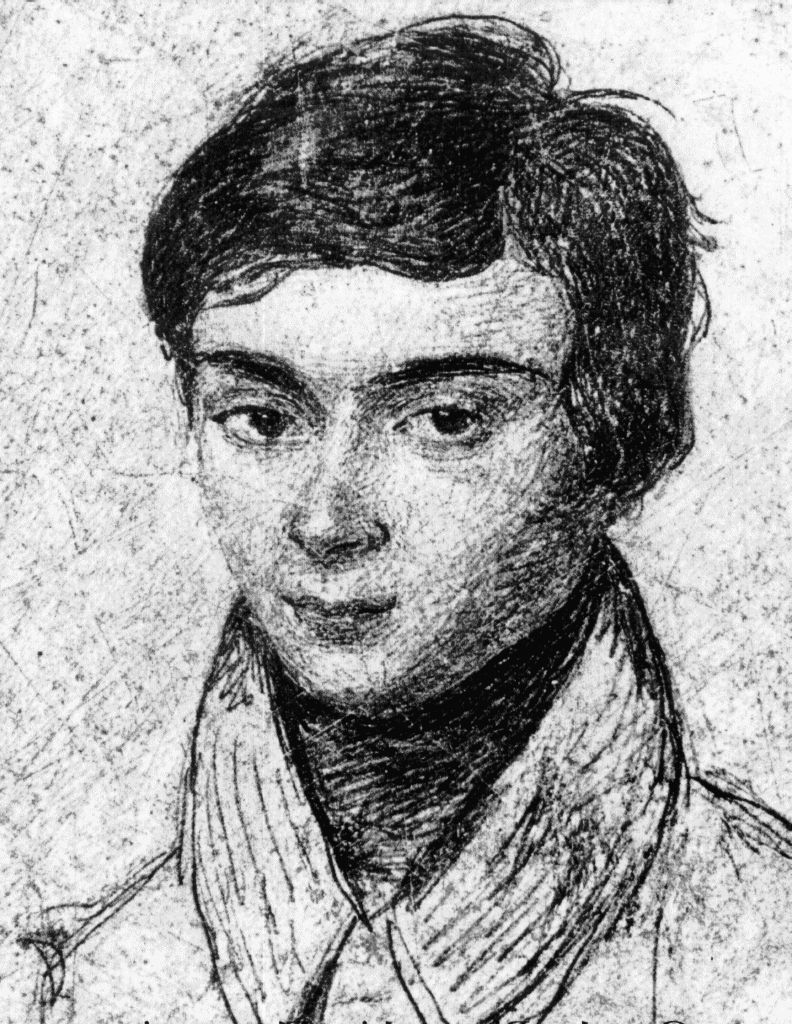
Gaston Julia: Pioneer of Fractals and Julia Sets
The remarkable legacy of Gaston Julia, a French-Algerian mathematician, is fundamentally linked to the beautiful complexity of fractals. His foundational work on Julia sets and iteration theory in the early 20th century laid the groundwork for the modern field of holomorphic dynamics. Though his life was marked by immense personal challenge, his mathematical insights became world-renowned decades later, securing his place as a giant in the history of mathematics.
The Early Life and Education of Gaston Julia
Gaston Maurice Julia was born on February 3, 1893, in Sidi Bel Abbès, Algeria. He demonstrated an exceptional talent for both mathematics and music from a very young age, entering school at just five years old under the tutelage of Sister Théoduline. This early nurturing of his intellectual gifts set the stage for his future academic brilliance as he pursued advanced studies in France.
Academic Prodigy and Early Promise
Julia's mathematical abilities quickly became apparent, leading him to the prestigious institutions of mainland France. His potential was recognized by leading mathematicians of the era. In 1917, he successfully defended his doctoral thesis, *Étude sur les formes binaires non quadratiques...*, which was examined by an impressive committee including mathematical luminaries Émile Picard, Henri Lebesgue, and Pierre Humbert.
A Life-Altering Injury and Unwavering Resolve
The trajectory of Julia's life was dramatically altered by the outbreak of World War I. Serving as a lieutenant in the French army, he suffered a severe facial wound in 1915 that resulted in the loss of his nose. This injury required him to wear a leather prosthetic for the rest of his life. Despite this immense physical and psychological trauma, Julia's dedication to mathematics never wavered.
Mathematical Research from a Hospital Bed
Remarkably, Julia continued his groundbreaking research while recuperating in military hospitals. His resilience during this period was extraordinary, leading to him being awarded the Légion d'Honneur for his bravery. It was from his hospital bed that he began developing the revolutionary ideas on the iteration of rational functions that would define his career and change mathematics forever.
Julia's ability to produce profound mathematical work under such difficult conditions is a testament to his incredible intellect and determination.
The 1918 Masterpiece: Defining the Julia Set
At the young age of 25, Gaston Julia published his magnum opus, a 199-page paper titled *Mémoire sur l'itération des fonctions rationnelles* in the *Journal de Mathématiques Pures et Appliquées*. This monumental work introduced the mathematical world to the concept that now bears his name. The paper rigorously defined the Julia set, a fundamental object in complex dynamics.
Understanding the Julia Set Concept
In simple terms, for a given rational function \( f \), the Julia set \( J(f) \) is the set of points in the complex plane where the behavior of the function under repeated iteration (repeated application of the function) is chaotic. Points outside this set diverge to infinity, while the set itself forms a boundary of intricate and often beautiful complexity. This work earned him the Grand Prix from the French Academy of Sciences, cementing his reputation as a leading mathematician.
- Chaotic Boundary: The Julia set is the boundary between predictable and chaotic behavior under iteration.
- Complex Plane: These sets exist in the realm of complex numbers, allowing for their intricate fractal shapes.
- Foundation for Fractals: Though not visible without computers, Julia's work described the mathematical basis for fractals decades before they could be visualized.
Academic Career and Prolific Contributions
Following the war, Gaston Julia embarked on a distinguished academic career. He began lecturing at the Collège de France as early as 1916 and later became a professor at the prestigious École Polytechnique. He also ran a highly influential seminar in Paris focused on geometry and complex functions, mentoring the next generation of mathematicians.
Leadership and Recognition in the Mathematical Community
Julia's contributions were widely recognized by his peers. He was elected to the French Academy of Sciences in 1934 and served as its president in 1950. His leadership extended to other esteemed organizations, including presiding over the French Mathematical Society and holding memberships in the Uppsala Academy and the Pontifical Academy of Sciences. In 1950, he was promoted to Officer of the Légion d'Honneur.
His scholarly output was immense, culminating in a five-volume collection of his works, Œuvres de Gaston Julia. This collection showcases the breadth of his research, covering diverse areas such as:
- Functional Calculus
- Quasianalyticity
- Hilbert Spaces
- Number Theory and Geometry
- Mechanics and Electricity
The Legacy and Lasting Impact of Gaston Julia
While Gaston Julia passed away in Paris on March 19, 1978, his mathematical legacy was only beginning to reach its full audience. During his lifetime, the visual beauty and popular appeal of his work remained hidden, as the complex shapes of Julia sets could not be easily rendered without modern computing power. The true renaissance of his ideas occurred in the 1970s and 1980s.
From Abstract Theory to Visual Phenomenon
The advent of computer graphics allowed mathematicians like Benoit Mandelbrot to visualize the intricate, infinitely complex fractal structures described by Julia's equations. This visualization sparked a surge of public and scientific interest, bringing Julia's name to a global audience. The connection between Julia sets and the Mandelbrot set became a central topic of study in holomorphic dynamics.
The pioneering work of Gaston Julia provides the mathematical foundation for the stunning fractal art enjoyed by millions today.
According to the Pantheon world biography database, Gaston Julia is ranked as the top Algerian mathematician of all time and holds the 349th position globally by the Historical Popularity Index (HPI: 63.45). His influence remains a cornerstone of modern mathematics, proving that profound ideas can transcend the limits of their time.
The Deep Mathematical Foundation of Julia Sets
The core innovation of Gaston Julia's 1918 Mémoire was providing a rigorous, topological framework for understanding iteration in the complex plane. He studied the behavior of sequences generated by repeatedly applying a rational function \( f(z) \). A Julia set, denoted \( J(f) \), is defined as the set of points where the family of iterates \( \{f^n\} \) is not normal in the sense of Montel.
Attracting Cycles and Chaotic Boundaries
Julia proved that the complex plane is partitioned into two complementary sets. The Fatou set \( F(f) \) contains points where iteration leads to stable, predictable behavior, often toward an attracting cycle. The Julia set is its boundary and the locus of chaotic behavior. This elegant dichotomy became the cornerstone of holomorphic dynamics.
Points on the Julia set exhibit sensitive dependence on initial conditions, a hallmark of chaos. Infinitesimally close starting points can lead to radically different long-term behavior under iteration. This mathematical property directly links Julia's early-20th-century work to modern chaos theory and complex systems analysis.
The Collaborative and Competitive Dynamic with Pierre Fatou
A fascinating aspect of this mathematical discovery is its near-simultaneous development by Gaston Julia and his contemporary, Pierre Fatou. Both mathematicians were working on the iteration of complex functions and submitted their monumental memoirs to the same journal in the same year, 1918. This parallel development created a rich intellectual dialogue.
Two Pioneers of Holomorphic Dynamics
While their conclusions were profoundly aligned, their approaches and perspectives offered complementary insights. Fatou's work is noted for its more function-theoretic flavor, while Julia's is celebrated for its geometric and topological clarity. The Julia set and the Fatou set are now eternally paired in the lexicon of mathematics, a testament to their joint foundational work.
The simultaneous revelation by Julia and Fatou stands as one of the great episodes in the history of mathematics, where two minds independently grasped the contours of a new world.
Their work established the fundamental questions that would drive the field for decades. Key problems involved classifying the types of components in the Fatou set, understanding the structure of the Julia set (Is it connected? Is it a fractal?), and describing the possible behaviors of points under iteration.
The Long Dormancy and Computer-Aided Renaissance
Following the initial flourish of work by Julia, Fatou, and a small number of other mathematicians like Samuel Lattès, the field of complex dynamics entered a period of relative quiet for nearly five decades. The mathematical tools of the time were insufficient to probe the deep geometric complexity suggested by the definitions. Without the ability to visualize these sets, progress was inherently limited.
Benoit Mandelbrot and the Visual Revolution
The landscape changed dramatically with the advent of digital computers. In the late 1970s, Benoit Mandelbrot, a researcher at IBM, began using computer graphics to visualize the intricate boundaries described by Julia and Fatou. He famously investigated the parameter space of quadratic polynomials, leading to his discovery of the Mandelbrot set in 1980.
- Visualization: Computers could finally render the unimaginably complex, infinitely detailed fractal shapes of Julia sets.
- Public Engagement: The haunting beauty of these images captured public imagination, making fractals a cultural phenomenon.
- New Conjectures: Visual patterns observed in computer plots led to new mathematical hypotheses and theorems.
This visual revolution re-animated the entire field. Mandelbrot's work highlighted a profound connection, showing that the Mandelbrot set serves as a catalog of all possible types of quadratic Julia sets. Each point in the Mandelbrot set corresponds to the parameter of a quadratic function whose Julia set has a specific connectivity.
Key Properties and Theorems of Julia Sets
The mathematical research spurred by computer visualization led to a deeper formal understanding of the properties Julia first described. Several key theorems now characterize Julia sets and their behavior under iteration, confirming and extending his original insights.
Fundamental Characteristics and Behavior
Julia sets for rational functions exhibit several defining properties. They are completely invariant, meaning if a point is in the set, all its pre-images and forward iterates are also in the set. Furthermore, they are perfect (contain no isolated points) and uncountable. For polynomials, the Julia set is also the boundary of the basin of attraction of infinity.
Perhaps the most visually significant property is that most Julia sets are fractals. They display self-similarity and often possess a non-integer Hausdorff dimension. This fractal nature means their complexity is infinite; zooming in on the boundary reveals ever-finer detail, a direct consequence of the chaotic dynamics defined on the set.
| Property | Description | Mathematical Implication |
| Complete Invariance | If \( z \in J(f) \), then \( f(z) \in J(f) \) and \( f^{-1}(z) \subset J(f) \). | The entire Julia set is mapped onto itself by the function. |
| Perfect Set | Contains no isolated points; every point is a limit point. | Indicates a complex, cohesive structure. |
| Fractal Dimension | Hausdorff dimension often exceeds topological dimension. | Quantifies the intricate, space-filling complexity of the set. |
Connections to Other Fields of Mathematics and Science
The concepts pioneered by Gaston Julia have transcended pure mathematics, finding powerful applications and analogies in diverse scientific disciplines. The universal themes of iteration, feedback, and chaotic boundaries are central to modeling complex systems in the natural world.
Applications in Physics and Engineering
Julia sets and related fractal concepts appear in models of fluid dynamics, particularly in the study of turbulence and patterns of flow. They are used in antenna design, where fractal shapes can create optimal electromagnetic properties. Furthermore, the mathematics of iteration is crucial in understanding nonlinear systems and stability analysis across engineering disciplines.
Influence on Computer Graphics and Art
The most visible impact of Julia's work is in the realm of digital art and graphics. Fractal art is a dedicated genre where artists use formulas defining Julia sets and related fractals to generate stunning, otherworldly images. The algorithms for generating these images are direct implementations of the iterative processes Julia studied.
- Algorithmic Art: Programs iterate complex functions millions of times to color pixels based on escape velocity.
- Special Effects: Fractal landscapes and textures are used in movies and video games to generate realistic natural scenery.
- Data Visualization: The principles of mapping complex behavior onto color are used in scientific visualization tools.
Gaston Julia's abstract work thus provides the mathematical backbone for a unique intersection of science, computing, and visual art. His ideas demonstrate how pure theoretical research can, decades later, fuel technological and cultural revolutions in unpredictable and beautiful ways.
Mathematical Categories and Classifications
Julia sets can be categorized based on the function being iterated and the resulting geometric structure. The most widely studied are the quadratic Julia sets, generated by functions of the form \( f(z) = z^2 + c \), where \( c \) is a complex parameter. The value of \( c \) determines whether the Julia set is connected or a Cantor set, a distinction famously mapped by the Mandelbrot set.
Connectedness and the Mandelbrot Set
A fundamental theorem states that for a quadratic polynomial \( f(z) = z^2 + c \), the Julia set \( J(f) \) is connected if and only if the parameter \( c \) lies within the Mandelbrot set. If \( c \) is outside the Mandelbrot set, \( J(f) \) is a Cantor set—a disconnected, dust-like fractal. This elegant connection underscores the deep relationship between Julia's work on individual functions and Mandelbrot's exploration of parameter space.
For more general rational functions, the classification becomes richer and more complex. Julia sets can exhibit a variety of forms, including disconnected sets, connected but not locally connected sets, and those with intricate spiral structures. Understanding this classification remains an active area of research in holomorphic dynamics.
Advanced Computational Algorithms for Visualization
The breathtaking images of Julia sets seen today are products of sophisticated algorithms that implement the mathematical definitions with high efficiency. The most common method is the escape-time algorithm, which colors each pixel based on how quickly the iterated sequence diverges to infinity.
The Escape-Time Algorithm Explained
For a given point \( z_0 \) in the complex plane (representing a pixel), the algorithm repeatedly applies the function \( f \). If the magnitude of \( z_n \) exceeds a certain bound (e.g., 2) after a finite number of iterations, the point is considered to escape. The pixel is then colored based on the iteration count at which escape occurred, creating the characteristic bands of color that highlight the set's structure.
- Iteration Limit: A maximum iteration count is set to avoid infinite loops for points in or near the Julia set.
- Color Mapping: Different color palettes map iteration counts to hues, enhancing visual appeal and revealing mathematical properties.
- Distance Estimation: Advanced variants use distance estimators to create sharper, more accurate renderings of the infinitesimally thin Julia set boundary.
Another powerful technique is inverse iteration. This method exploits the fact that the Julia set is invariant under the inverse function \( f^{-1} \). By starting from a point already known to be in the Julia set and iterating backwards, the algorithm densely populates the set. This method can generate highly detailed images but requires careful handling of the multiple branches of the inverse function.
Gaston Julia's Enduring Global Recognition
Despite the delayed popular recognition of his most famous work, Gaston Julia received significant academic honors during his lifetime. His election to the French Academy of Sciences in 1934 was a pinnacle of academic achievement. His leadership roles in prominent societies solidified his status as a leading figure in European mathematics throughout the mid-20th century.
Posthumous Fame and Popular Culture
Julia's fame expanded exponentially after his death, propelled by the fractal revolution. His name, once known primarily within academic circles, became associated with stunning digital art and popular science. Concepts like the Julia set are now featured in university courses worldwide, from mathematics and physics to computer science and digital arts.
Gaston Julia's legacy is a powerful example of how pure mathematical thought can achieve widespread cultural significance, bridging the gap between abstract theory and public imagination.
According to the Pantheon world biography database, his Historical Popularity Index (HPI) of 63.45 ranks him as the 349th most popular historical figure globally and, most significantly, the number one mathematician from Algeria. His biography ranks 59th among all Algerian biographies, a testament to his enduring stature.
Modern Research and Open Problems
Research in holomorphic dynamics continues to be vibrant, building directly on the foundation laid by Julia and Fatou. Modern mathematicians use advanced techniques from topology, measure theory, and algebraic geometry to solve problems that were intractable a century ago.
Current Frontiers in the Field
Significant open problems persist. A major question concerns the local connectivity of Julia sets for polynomials. Is the Mandelbrot set itself locally connected? This is known as the MLC conjecture, and its resolution would have profound implications for understanding the structure of quadratic Julia sets. Other active areas include:
- Measure of Julia Sets: Investigating the Hausdorff dimension and geometric measure of these fractal sets.
- Pricing Models: Exploring applications of fractal geometry in financial mathematics for modeling market volatility.
- Transcendental Dynamics: Extending the theory to the iteration of transcendental functions like the exponential function.
- Higher Dimensions: Generalizing the concepts of Julia sets to iterations in quaternion or hypercomplex space.
Researchers also explore connections with number theory, particularly through analogues of the Mandelbrot set defined over p-adic numbers. This interdisciplinary approach continues to reveal the deep and universal nature of the dynamical phenomena first systematically studied by Gaston Julia.
Conclusion: The Legacy of a Mathematical Visionary
The story of Gaston Julia is one of brilliance, resilience, and the timeless power of abstract ideas. His ability to produce groundbreaking work under the most adverse personal circumstances is a testament to an extraordinary mind. He defined a mathematical universe of breathtaking complexity long before technology existed to see it.
Key Takeaways from Julia's Life and Work
Gaston Julia's contributions offer several profound lessons. First, his work demonstrates that pure mathematical research, driven by curiosity alone, can lay the foundation for future scientific and technological revolutions. Second, his collaboration and competition with Pierre Fatou highlight the importance of intellectual community in advancing human knowledge.
Finally, the journey of Julia sets from obscure mathematical definition to global cultural icon shows that beauty and truth are often intertwined. The visual splendor of fractals has attracted countless individuals to the deeper mathematical principles they represent.
- Foundational Theory: Julia created the core framework for iterating complex functions.
- Resilience: He persisted in his research despite a severe war injury.
- Delayed Impact: His most famous work gained widespread recognition decades later.
- Interdisciplinary Influence: Julia sets connect mathematics, computer science, physics, and art.
In conclusion, Gaston Julia's legacy is securely cemented in the annals of science. From his early 20th-century theorems to the infinite digital canvases they inspire today, his work continues to captivate and challenge us. The Julia set stands as an eternal monument to a mathematician who saw the deep structures of chaos and beauty long before the rest of the world could even imagine them.


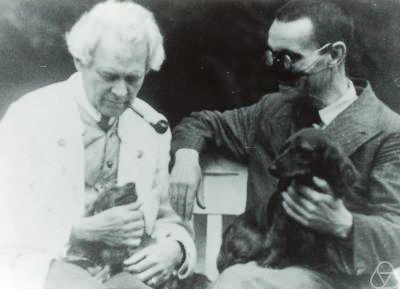

Exploring the Symbol of a Mathematical Visionary
The intriguing phrase Zak-Antamar-H-Symbolh-enos-Ma8hmatikoy-Oramatisth invites a deep dive into the world of mathematical notation and its visionaries. This phrase translates from Greek as "Zak-Antamar: The Symbol of a Mathematical Visionary," suggesting a focus on the powerful intersection of mathematical symbols and the thinkers who revolutionize them. While not a widely recognized proper name, the concept serves as a perfect lens to examine how symbolic innovation has fundamentally shaped mathematical progress. This article explores the history, significance, and future of the symbols that underpin mathematical thought.
The Foundational Role of Mathematical Symbols
Mathematical symbols are the fundamental building blocks for expressing complex ideas with precision and clarity. A mathematical symbol is a grapheme used to represent objects, operations, or relations. Without a standardized glossary of mathematical symbols, the global collaboration that defines modern mathematics would be impossible. These symbols form a universal language, allowing ideas discovered in one part of the world to be seamlessly shared, challenged, and built upon by scholars everywhere.
How Symbols Transform Mathematical Thought
The history of mathematics is filled with examples where a new notation convention catalyzed an entire field. The adoption of symbolic algebra in the 16th and 17th centuries, pioneered by mathematicians like François Viète, freed mathematics from verbose descriptions. This allowed for the manipulation of abstract equations and paved the way for calculus. The notation we use today is not static; it evolves within subfields like category theory to express increasingly abstract concepts.
Notation is convention-driven—symbols acquire meaning by community use. This collective agreement is what makes mathematics a truly cumulative science.
Historical Visionaries and Their Symbolic Legacies
While the name Zak Antamar may not appear in historical records, many true visionaries have left an indelible mark through their use of symbols. Figures like Évariste Galois introduced notations for group theory that unlocked the solvability of polynomial equations. Emmy Noether's work in abstract algebra relied on and advanced symbolic clarity, influencing countless physicists and mathematicians. Their legacies demonstrate how a mathematical visionary often creates or refines the symbolic toolkit for future generations.
The impact is profound. Srinivasa Ramanujan, with his intuitive and sometimes unconventional notation, produced thousands of groundbreaking theorems. The development of function notation by Leonhard Euler provided a framework for analysis that is still used today. These pioneers did not just discover new truths; they forged the symbols needed to convey them, much like the concept embodied in our central phrase.
The Digital Evolution of Mathematical Notation
A major modern trend is the digitization and standardization of mathematical symbols. The Unicode Standard and MathML are critical to this evolution. They ensure that specialized symbols render correctly across all digital platforms, from academic papers to educational websites.
- Unicode Expansion: Ongoing updates to Unicode continuously add mathematical characters, preserving historical symbols and enabling new notations.
- Web Accessibility: MathML allows complex equations to be displayed and read by screen readers, making mathematics more accessible.
- LaTeX Packages: The development of new LaTeX packages allows researchers to easily typeset cutting-edge symbolic notation in their publications.
Cross-Cultural Perspectives on Mathematical Symbols
The idea of a mathematical visionary's symbol also extends across cultures. While Western mathematics heavily employs Greek and Latin letters, other traditions have developed rich, localized notation systems. For instance, Modern Arabic mathematical notation adapts core concepts to Arabic script and right-to-left layout. This localization is crucial for pedagogy and demonstrates that the conceptual meaning of a symbol can transcend its graphical form.
This cultural dimension highlights an important truth. The essence of a mathematical idea is separate from the symbol used to denote it. A community's choice of notation—whether using Greek letters or Arabic script—serves the needs of its learners and practitioners. The visionary aspect lies in creating systems that effectively communicate profound ideas within a specific cultural and linguistic context.
Educational Tools and Symbol Literacy
A rise in educational content underscores the public hunger for understanding mathematical symbols. Numerous YouTube channels, mobile apps, and online glossaries are dedicated to explaining symbols to students and enthusiasts. This aligns with the spirit of a mathematical visionary as an educator who demystifies complex notation. These resources bridge the gap between abstract symbolism and intuitive understanding, which is the first step toward future innovation.
Authoritative, aggregated quantitative data on symbol usage across papers or curricula are scarce, but the proliferation of educational media clearly indicates high demand for this knowledge.
As we conclude this first part, we have established the critical importance of symbols in mathematics. We have seen their historical power, their digital evolution, and their cultural variations. In the next section, we will delve deeper into specific symbol classes, analyze the process of symbolic innovation, and further explore the profile of a true mathematical visionary.
Decoding the Classes of Mathematical Symbols
To understand the legacy of a mathematical visionary, one must first master the language they speak: the diverse classes of symbols. The glossary of mathematical symbols is vast, but it can be organized into functional categories. These categories include operators, relations, constants, and variables. Each class serves a distinct purpose in constructing the logical sentences that form mathematical proofs and theories.
Operators, like + (addition) and ∫ (integration), denote actions to be performed. Relation symbols, such as = (equals) and > (greater than), specify how entities compare. The power of these symbols lies in their universal recognition. A mathematician in any country instantly understands the statement “π > 3”. This universality is the bedrock upon which global mathematical research is built.
Specialized Notation in Advanced Fields
As mathematics advances into specialized domains, so too does its symbolic notation. Fields like category theory and homotopy type theory have developed intricate suites of symbols. These symbols, like arrows (→, ⇒) and diagrams, are not merely shorthand. They are essential tools for visualizing and manipulating highly abstract structures that are difficult to convey in words alone.
- Diagrammatic Reasoning: Complex commutative diagrams use arrows and objects to encapsulate relationships that would require pages of text.
- Type Theory Symbols: Notations like Π (product type) and Σ (sum type) in type theory provide a formal language for computation and logic.
- Algebraic Geometry: Schemes and sheaves rely on layered notation that has evolved to capture intricate geometric and algebraic data simultaneously.
The Process of Symbolic Innovation and Adoption
How does a new symbol enter the mathematical lexicon? The journey from a visionary's idea to widespread convention is rarely straightforward. Unlike a formal language with a governing body, mathematical notation evolves organically through community use and publication. A researcher might introduce a new symbol in a groundbreaking paper. Its adoption hinges on utility, clarity, and the influence of its proponent.
No single global authority changes symbol meaning frequently; developments are driven by notation conventions in subfields and digital standards.
The process is exemplified by historical cases. Gottfried Leibniz's notation for calculus (dx, ∫) competed with Isaac Newton's fluxions. Leibniz's more suggestive symbols ultimately prevailed in most of the world due to their intuitive power. This shows that a successful symbolic innovation often feels natural and reveals underlying structure, a hallmark of visionary thinking.
Challenges in Standardizing New Symbols
In the modern era, standardizing a new symbol faces unique challenges and opportunities. Digital publishing and computational mathematics require symbols to be machine-readable. Therefore, widespread adoption often depends on inclusion in key standards.
- Unicode Consortium: A new symbol ideally needs a Unicode code point for digital representation across operating systems and fonts.
- LaTeX Community: A dedicated LaTeX package or macro can popularize a symbol within academic publishing.
- Software Implementation: Support in major computer algebra systems (e.g., Mathematica, SageMath) lends credibility and utility to new notation.
Profiles in Visionary Symbolism: Beyond the Mainstream
The concept of a Zak-Antamar-H-Symbolh-enos-Ma8hmatikoy-Oramatisth invites us to look beyond the most famous names. History is filled with thinkers whose symbolic contributions were pivotal yet sometimes overlooked. George Boole's algebraic symbols for logic (∧, ∨) laid the foundation for the digital age. John Conway's notation for surreal numbers and game theory created entire new fields of study.
These visionaries share a common trait: they saw the need for a new language to describe newly discovered landscapes of thought. Their symbols acted as keys, unlocking doors for others to follow. Their work underscores that the creation of effective notation is itself a profound mathematical act, inseparable from the discovery process.
The Intersection of Notation and Mathematical Visualization
For a true mathematical visionary, symbols are not just logical tools; they are vessels for visualization. The way symbols are arranged on a page can illuminate structure and suggest new pathways. The evolution of notation for tensors, for example, from cumbersome index-laden expressions to more diagrammatic "birdtrack" notations, directly aids intuition. This visual dimension is crucial for fostering the insights that drive mathematics forward.
Modern tools amplify this. Software that dynamically links symbolic expressions to graphical representations allows students and researchers to "see" the meaning behind the symbols. This bridges the gap between abstract formalism and geometric intuition, a gap that visionary notation has always sought to close.
Case Study: The Localization of Symbols in Education
A powerful example of symbolic adaptation is found in Modern Arabic mathematical notation. This system adapts the core framework of Western mathematical symbols to the Arabic script and a right-to-left presentation. It is a testament to the principle that the conceptual meaning of a mathematical idea can be conveyed through different symbolic forms.
This localization has significant pedagogical impact. Students learn foundational concepts like algebra and calculus using notation that aligns with their native reading direction and script. Studies suggest this can reduce cognitive load and improve comprehension. It demonstrates how a community of educators can act as collective visionaries, tailoring the symbolic language of mathematics to serve their learners better.
Educational localization shows how symbols' appearance and directionality affect pedagogy, ensuring mathematical literacy is accessible across linguistic barriers.
Statistics and Data on Symbol Usage
While centralized, authoritative statistics on global symbol usage are scarce, analysis of large digital corpora like the arXiv preprint server provides insights. Such analyses can track the rise of specific notations within subfields. For instance, the use of the tensor product symbol (⊗) has seen a marked increase in physics and computer science papers over the last two decades, reflecting the growth of quantum information and applied category theory.
- Corpus Analysis: Researchers use text-mining on large collections of papers to infer notation trends.
- Citation Networks: The spread of a new symbol can sometimes be mapped through the citation network of influential papers that introduced it.
- Educational Metrics: Textbook revisions and standardized curriculum changes offer another lens on which symbols are deemed essential for learners.
As we have seen, the world of mathematical symbols is dynamic, culturally sensitive, and deeply tied to innovation. The visionary, whether an individual like the enigmatic "Zak Antamar" or a collective of educators, plays the crucial role of a linguist, crafting the words for new ideas. In the final part, we will look toward the future, examining emerging trends in symbolic communication and the enduring quest for the perfect notation.
The Future of Mathematical Notation and Symbols
The trajectory of mathematical symbols points toward greater digital integration, accessibility, and perhaps even artificial intelligence-assisted innovation. The ongoing work of the Unicode Consortium and the World Wide Web Consortium (W3C) on standards like MathML 4 ensures that the digital representation of mathematics will keep pace with its conceptual growth. This future is not just about preserving old symbols but creating an ecosystem where new notations can flourish and be shared instantly across the globe.
Emerging fields like quantum computing and data science are already demanding new symbolic conventions. The need to represent quantum circuits, complex data structures, and machine learning architectures will inevitably lead to symbolic innovation. The next generation of mathematical visionaries will be those who can devise notations that are both computationally tractable and intuitively clear for human researchers. Their symbols will become the blueprints for future discoveries.
Artificial Intelligence and Symbolic Generation
A provocative frontier is the role of artificial intelligence in notation. Could AI systems analyze mathematical structures and suggest optimal symbolic representations? Research into automated theorem proving and symbolic computation already touches on this area. An AI might propose a novel notation that minimizes cognitive load or maximizes the reveal of hidden patterns, acting as a collaborative partner in the visionary process.
- Pattern Recognition: AI could identify repetitive, complex expressions in proofs and suggest a consolidating symbol.
- Accessibility Tools: AI-powered systems could dynamically translate between different notational systems (e.g., Western to Arabic notation) in real-time for learners.
- Historical Analysis: Machine learning could map the evolution of symbols, predicting which new notations have the highest chance of adoption based on historical trends.
The Enduring Quest for the "Perfect" Symbol
Underlying the history and future of notation is a deep, almost philosophical quest: the search for a symbol that perfectly encapsulates an idea. This is the core of the Zak-Antamar-H-Symbolh-enos-Ma8hmatikoy-Oramatisth concept. A perfect symbol is elegant, memorable, and suggestive of its meaning and properties. It becomes so natural that mathematicians forget it was ever invented. The integral sign ∫ elegantly suggests summation, and the equals sign = represents balance with perfect simplicity.
The creative leap often comes from notation that clarifies structure, turning opaque complexity into navigable terrain.
This quest is never-ending because mathematics itself is never-ending. Each new abstraction, from sheaves to ∞-categories, challenges the community to find its visual and symbolic voice. The success of a notation can even be measured by how it enables further discovery. Good notation does not just describe; it inspires and guides the imagination toward new theorems and connections.
The Human Element in Symbolic Choice
Despite trends toward standardization and digitization, the choice of symbols remains a deeply human, sometimes even aesthetic, decision. Individual mathematicians and research communities develop notational preferences and styles. These personal touches are part of the culture of mathematics. The enduring lesson from figures like Euler or Ramanujan is that personal intuition often guides the creation of the most powerful and lasting symbols.
Synthesizing the Vision: Symbols as the DNA of Mathematics
Our exploration of the theme suggested by Zak-Antamar-H-Symbolh-enos-Ma8hmatikoy-Oramatisth reveals a fundamental truth. Mathematical symbols are not mere abbreviations. They are the very DNA of mathematical thought. They carry the genetic instructions for logic, structure, and creativity. A visionary, in this context, is a geneticist, splicing and crafting new strands of this DNA to give birth to new fields of intellectual inquiry.
The story of mathematical notation is a story of human progress. It mirrors our journey from clay tablets and verbose rhetoric to digital manuscripts and global collaboration. Each symbol added to the global glossary represents a victory for clarity over confusion, for shared understanding over isolated insight. It is a collective project spanning centuries and cultures.
Key Takeaways for Learners and Practitioners
Whether you are a student, an educator, or a practicing researcher, engaging deeply with mathematical symbols is essential. Here are the critical lessons from our journey:
- Symbols are Tools for Thought: Mastering notation is not rote learning; it is learning to think in the language of mathematics.
- Notation Evolves: Be open to new symbols and conventions, especially in advanced fields; they are signposts of progress.
- Context is Crucial: Always consider the cultural and historical context of a symbol, from Greek letters to localized educational notation.
- The Digital Future is Now: Engage with standards like LaTeX and MathML to communicate your own mathematical ideas effectively in the modern world.
Conclusion: The Legacy of the Mathematical Visionary
In conclusion, the enigmatic phrase that guided this article serves as a powerful metaphor. The symbol of a mathematical visionary is more than a character on a page. It is a catalyst, a bridge, and a legacy. From the historical giants who gave us our foundational notation to the unnamed educators adapting symbols for their classrooms, visionaries understand that the medium is intimately tied to the message.
The future of mathematics depends on this continued symbolic innovation. As we tackle problems of increasing complexity in climate science, medicine, and fundamental physics, we will need new languages to describe new realities. The next great mathematical visionary might be working right now, struggling to express a revolutionary idea. Their breakthrough may come not just in a new theorem, but in the very symbol they choose to represent it—a symbol that, in time, will become obvious and indispensable to us all.
The search for the perfect symbol, the quest to be a Ma8hmatikoy Oramatisth, is ultimately the search for perfect understanding. It is a journey without a final destination, but each step forward—each new, clever, or beautifully simple symbol adopted by the community—enlarges the realm of human knowledge and connects us more deeply to the logical structure of the universe.