Gaël Faye : Biographie, Oeuvres et Actualité 2024
Gaël Faye est un artiste franco-rwandais de renom, un auteur-compositeur-interprète et écrivain dont l'œuvre puissante explore les thèmes de l'exil, de l'identité métisse et des traumatismes des conflits en Afrique des Grands Lacs. Né au Burundi en 1982, il a connu une trajectoire remarquable, passant de la finance à une carrière artistique couronnée de succès. Son premier roman, Petit Pays, est un phénomène littéraire international, tandis que sa musique continue de résonner dans le paysage du rap francophone conscient.
La Biographie Personnelle de Gaël Faye
L'histoire personnelle de Gaël Faye est le terreau fertile de toute son œuvre. Elle est marquée par un déracinement précoce et la recherche d'une identité complexe, forgée dans la douleur de l'histoire.
Une Enfance à Bujumbura
Gaël Faye voit le jour le 6 août 1982 à Bujumbura, la capitale du Burundi. Il grandit dans un environnement protégé et heureux, fils d'un père français et d'une mère rwandaise tutsie. Son enfance est bercée par les parfums de la citronnelle et la beauté des bougainvilliers, une ère d'innocence qu'il évoquera plus tard avec nostalgie.
Cette période idyllique sera tragiquement écourtée par les soubresauts de l'histoire. La région est secouée par des tensions ethniques qui culmineront avec le génocide rwandais de 1994 et la guerre civile burundaise.
L'Exil vers la France
En 1995, à l'âge de 13 ans, Gaël Faye fuit les violences et quitte le Burundi pour s'installer en France, dans les Yvelines. Cet exil forcé est un choc fondamental qui marquera à jamais sa perception du monde et deviendra un thème central de son art.
Malgré ce bouleversement, il poursuit des études brillantes. Il intègre une école de commerce et obtient un master en finance, puis travaille pendant deux ans comme analyste pour un fonds d'investissement à Londres.
Le Tournant Artistique
Le monde de la finance ne parvient pas à étancher sa soif de création. En 2013, Gaël Faye opère un virage décisif dans sa vie en quittant son emploi pour se consacrer entièrement à la musique et à l'écriture.
Ce choix audacieux sera encouragé par des rencontres déterminantes, notamment avec l'éditrice Catherine Nabokov, qui l'incitera à transposer la force narrative de ses textes de rap vers la littérature.
La Carrière Musicale : Du Rap à la Révélation
La musique est la première passion artistique de Gaël Faye. Son parcours musical est celui d'un artiste exigeant, dont les textes poétiques et engagés ont rapidement trouvé un écho significatif.
Les Débuts avec Milk Coffee & Sugar
Avant sa carrière solo, Gaël Faye forme le duo Milk Coffee & Sugar avec son ami Edgar Sekloka. Ils sortent un album en 2009 et se font remarquer en étant révélation aux Printemps de Bourges en 2011. Cette expérience lui permet d'affiner son style et de se construire un premier public.
La Consécration en Solo
En 2013, il lance sa carrière solo avec l'album Pili Pili sur un Croissant au Beurre, un titre qui symbolise son métissage culturel. L'album est salué par la critique pour son originalité et sa profondeur.
Il confirme son talent avec un EP, Des fleurs, en 2014, puis avec l'album Lundi Méchant en 2020. Ce dernier album atteint un large succès public et sera certifié disque d'or en 2022.
L'Évolution Musicale
Son dernier album en date, Mauve Jacaranda, sorti en 2022, poursuit son exploration musicale. La musique de Gaël Faye est souvent comparée à celle d'artistes du rap francophone conscient comme MC Solaar ou Kery James.
Elle se caractérise par des mélodies soignées, des influences world et des textes qui mêlent intimement le politique et le poétique, évoquant autant l'héritage colonial que les souvenirs d'enfance.
L'Oeuvre Littéraire : Le Phénomène "Petit Pays"
Si la musique l'a révélé, c'est la littérature qui a propulsé Gaël Faye sur le devant de la scène internationale. Son entrée en littérature est un véritable coup de maître.
Un Premier Roman Acclamé
En 2016, Gaël Faye publie Petit Pays aux éditions Grasset. Inspiré de sa propre enfance à Bujumbura, le roman raconte avec une sensibilité remarquable la perte de l'innocence d'un jeune garçon pris dans l'engrenage de la guerre civile et du génocide.
Le roman a été vendu à près de 800 000 exemplaires en France toutes éditions confondues.
Une Moisson de Prix Littéraires
L'accueil critique est immédiat et enthousiaste. Petit Pays remporte pas moins de cinq prix littéraires prestigieux, dont le très célèbre Prix Goncourt des Lycéens en 2016. Cette reconnaissance consacre la puissance narrative de l'auteur.
Un Succès International
Le succès de Petit Pays dépasse largement les frontières françaises. Le roman est traduit en 36 langues et publié dans environ 30 pays à travers le monde.
- Traductions : 36 langues
- Pays de publication : ~30 pays
- Adaptation cinéma : Réalisée en 2020
Cette diffusion mondiale témoigne de l'universalité des thèmes abordés : l'enfance, la mémoire et la résilience face à l'horreur.
Les Thèmes Centraux dans l'Oeuvre de Gaël Faye
L'œuvre protéiforme de Gaël Faye, qu'elle soit musicale ou littéraire, est traversée par des thèmes récurrents qui forment une constellation intime. Ces motifs sont directement inspirés de son parcours de vie et offrent une réflexion profonde sur le monde contemporain.
L'Exil et la Nostalgie
L'exil est probablement le thème fondateur de son travail. Il ne s'agit pas seulement d'un déplacement géographique, mais d'une condition existentielle. Gaël Faye explore la sensation d'être un éternel étranger, coupé de sa terre d'origine.
À cette douleur s'ajoute une nostalgie puissante pour un pays perdu, un paradis d'enfance incarné par le Burundi d'avant-guerre. Ses récits sont empreints d'images sensorielles fortes qui évoquent un monde englouti, créant un contraste poignant avec la violence historique.
L'Identité Métisse et la Construction de Soi
Né d'un père français et d'une mère rwandaise, élevé au Burundi puis en France, Gaël Faye incarne le métissage culturel. Son travail interroge sans cesse cette identité plurielle, faite de mélanges et parfois de tensions.
Il ne cherche pas à trancher entre ses héritages, mais à les embrasser tous pour forger une voix unique. Cette quête identitaire résonne avec les expériences de nombreuses personnes issues de la diaspora ou de familles multiculturelles.
La Mémoire des Conflits et la Résilience
L'horreur du génocide rwandais de 1994 et de la guerre civile burundaise hante son œuvre. Gaël Faye s'attache à porter la mémoire de ces événements, non pas avec un œil d'historien, mais avec la sensibilité d'un enfant qui a perçu la violence à travers le prisme de l'incompréhension.
Son approche évite le pathos pour privilégier une narration humaniste. Il explore les mécanismes de la résilience, montrant comment la vie, l'art et l'amour permettent de survivre et de se reconstruire après le trauma.
Gaël Faye et le Cinéma
L'univers artistique de Gaël Faye s'étend naturellement au cinéma. Son travail a été adapté à l'écran et il s'est lui-même engagé dans des projets cinématographiques en tant que réalisateur et acteur vocal.
L'Adaptation de "Petit Pays" au Grand Écran
En 2020, son roman à succès Petit Pays est adapté en film. Réalisé par Éric Barbier, le long-métrage permet à l'histoire de Gabriel, le jeune protagoniste, de toucher un nouveau public. Cette adaptation a représenté un nouveau succès critique et public pour l'œuvre.
Le film a contribué à maintenir l'actualité du roman et à diffuser son message sur la perte de l'innocence en temps de guerre auprès d'un public encore plus large, notamment auprès des plus jeunes.
Le Travail de Réalisateur et le Documentaire
Gaël Faye ne s'est pas contenté d'être un sujet d'adaptation. En 2022, il passe derrière la caméra pour réaliser et co-écrire le documentaire Rwanda : Words of Silence (Rwanda : Les Mots du Silence).
Ce projet personnel et profondément engagé lui permet d'aborder de front l'héritage du génocide, en donnant la parole aux survivants. Il confirme sa volonté d'être un artiste complet, utilisant tous les médias pour exprimer sa vision.
La Voix au Cinéma d'Animation
En 2024, Gaël Faye fait ses débuts en tant qu'acteur vocal en prêtant sa voix au personnage de MC Orangutan dans le film d'animation Savages. Cette participation marque son entrée dans un nouveau registre artistique.
Elle démontre également l'étendue de sa reconnaissance dans le milieu culturel français et l'attrait que suscite sa voix singulière, aussi bien pour ses textes que pour son timbre.
L'Actualité Récente et les Projets en Cours
L'année 2024 marque un tournant important dans la carrière littéraire de Gaël Faye avec la sortie d'un nouveau roman très attendu, tout en confirmant son implication dans divers projets artistiques.
La Sortie du Roman "Jacaranda" (Août 2024)
En août 2024, Gaël Faye publie son deuxième roman, intitulé Jacaranda, aux éditions Grasset. Cet événement littéraire est largement salué par la critique et attendu par ses nombreux lecteurs.
Ce nouvel opus est présenté comme prolongeant l'univers de Petit Pays. Il promet de plonger à nouveau le lecteur dans une narration empreinte de poésie et d'histoire, avec une maturité d'écriture renforcée.
Jacaranda représente l'aboutissement d'un nouveau cycle de création pour l'auteur, qui a su prendre le temps de peaufiner son retour en littérature après le succès planétaire de son premier roman.
Présence dans les Festivals Internationaux
La notoriété internationale de Gaël Faye en fait un invité de choix pour les grands festivals culturels. Il est régulièrement convié à participer à des rencontres littéraires et musicales prestigieuses à travers le monde.
Par exemple, il a été l'un des écrivains invités de l'Edinburgh International Book Festival, l'un des plus importants du genre. Ces invitations soulignent son statut d'intellectuel et d'artiste de premier plan sur la scène mondiale.
La Continuité de l'Hybridation Artistique
La tendance forte de son parcours est l'hybridation entre la musique et la littérature. Gaël Faye ne sépare pas ces deux formes d'expression ; elles se nourrissent mutuellement.
- L'écriture musicale nourrit la rythmique et la concision de sa prose.
- La narration littéraire enrichit la profondeur et l'imaginaire de ses textes de rap.
- Le succès international de cette hybridation démontre son universalité et sa modernité.
Cette approche unique est l'une des clés de son succès et de sa capacité à toucher un public diversifié, des amateurs de rap engagé aux lecteurs assidus de littérature contemporaine.
L'Impact Culturel et la Réception Critique
L'influence de Gaël Faye sur le paysage culturel francophone et au-delà est considérable. Son œuvre a trouvé un écho puissant auprès du public et de la critique, dépassant les clivages traditionnels entre les genres et les publics.
Une Reconnaissance Unanime de la Critique
Dès ses débuts, Gaël Faye a été salué par la critique littéraire et musicale pour l'authenticité et la profondeur de son travail. Les prix littéraires prestigieux remportés par Petit Pays en sont la preuve la plus tangible.
Les critiques soulignent souvent l'équilibre parfait qu'il trouve entre une narration accessible et un propos exigeant. Sa capacité à parler de sujets graves sans jamais tomber dans le manichéisme ou le misérabilisme est particulièrement appréciée.
Une Audience Large et Diversifiée
Le succès de Gaël Faye est à la fois populaire et intellectuel. Ses livres sont étudiés dans les écoles et universités, tandis que sa musique est diffusée sur les ondes des radios grand public et écoutée par un public jeune.
Avec près de 800 000 exemplaires vendus pour son premier roman et un disque d'or pour son album Lundi Méchant, Gaël Faye atteint une audience massive tout en conservant une intégrité artistique rare.
Cette transversalité fait de lui une figure unique, capable de créer des ponts entre des mondes culturels qui communiquent peu habituellement.
Une Influence sur une Nouvelle Génération d'Artistes
Gaël Faye est aujourd'hui une référence pour de nombreux artistes émergents, notamment dans le domaine du rap à texte et de la littérature issue de l'immigration ou du métissage.
Il a ouvert une voie en démontrant qu'il était possible de parler de son histoire personnelle complexe, de sujets politiques et historiques lourds, tout en atteignant une forme d'universalité qui touche un très large public. Son parcours inspire ceux qui refusent d'être catégorisés dans un seul genre artistique.
La Vie Privée et les Engagements Personnels
Malgré sa notoriété, Gaël Faye protège avec soin sa vie privée. Les informations qu'il partage sont rares et toujours liées à son travail artistique, créant une distinction nette entre l'homme public et l'homme privé.
Une Vie de Famille Protégée
On sait qu'il est marié et père de deux filles. Sa famille représente sans doute un ancrage essentiel, un havre de paix face aux tourments de l'histoire et aux exigences de la vie publique. Cet équilibre personnel semble fondamental pour sa créativité.
Il évoque rarement les siens dans les médias, préférant laisser son œuvre parler pour lui. Cette discrétion contraste avec la grande intimité et l'émotion qu'il déploie dans ses chansons et ses romans.
Un Engagement Discret mais Constant
Gaël Faye n'est pas un artiste militant au sens classique du terme. Il ne signe pas de pétitions médiatisées et ne s'affiche pas dans des combats politiques partisans. Son engagement est plus profond et plus artistique.
Il s'engage par son œuvre même. En évoquant le génocide rwandais, la guerre civile, l'exil et le métissage, il participe à un travail de mémoire essentiel. Il donne une voix aux sans-voix, aux victimes oubliées des conflits africains, et interroge les consciences sur les héritages coloniaux.
Le Rayonnement International de Gaël Faye
La renommée de Gaël Faye dépasse largement le monde francophone. Il est devenu un auteur et un artiste international, traduit et reconnu sur tous les continents.
Les Traductions et les Ventes à l'Étranger
Le chiffre est éloquent : Petit Pays a été traduit en 36 langues. Cela inclut des langues majeures comme l'anglais, l'espagnol, l'allemand, l'italien, mais aussi des langues plus spécifiques, prouvant l'universalité de son récit.
- 36 langues de traduction.
- Publication dans environ 30 pays différents.
- Un succès confirmé en Europe, en Amérique du Nord, en Asie et en Afrique.
Cette diffusion mondiale montre que les thèmes qu'il aborde – l'enfance, la perte, la recherche d'identité, les séquelles de la guerre – résonnent partout dans le monde, bien au-delà du contexte africain qui les inspire.
Une Figure Littéraire Globale
Grâce à ce rayonnement, Gaël Faye est désormais invité dans des festivals littéraires internationaux prestigieux et fait l'objet d'études universitaires dans divers pays. Il représente une nouvelle voix de la littérature mondiale.
Son travail contribue à diversifier le canon littéraire global en y introduisant des perspectives postcoloniales et des récits issus de la Grande Région des Lacs africains, une zone souvent méconnue ou stéréotypée.
Conclusion : La Place Unique de Gaël Faye dans le Paysage Culturel
Gaël Faye occupe une place absolument unique dans le paysage culturel contemporain. Il est à la fois un témoin essentiel de son temps, un artiste pluridisciplinaire accompli et un pont entre les cultures.
Synthèse d'un Parcours Exemplaire
De son enfance à Bujumbura à son exil en France, de sa carrière en finance à sa reconversion artistique fulgurante, Gaël Faye a transformé son expérience personnelle en une œuvre universelle. Ses réalisations sont impressionnantes à plusieurs titres.
- Un roman phénomène : Petit Pays, vendu à près de 800 000 exemplaires et traduit en 36 langues.
- Une carrière musicale aboutie : plusieurs albums acclamés, dont un disque d'or (Lundi Méchant).
- Une exploration cinématographique : adaptation de son roman, réalisation d'un documentaire, participation à un film d'animation.
- Un nouveau roman attendu : Jacaranda, publié en août 2024.
L'Héritage et la Postérité
L'héritage de Gaël Faye est déjà palpable. Il a montré qu'il était possible de réussir sans renier ses racines complexes, de parler de sujets difficiles avec beauté et poésie, et de naviguer avec succès entre différents mediums artistiques.
Il incarne la figure de l'artiste complet du XXIe siècle, à l'aise dans la littérature, la musique et le cinéma, et dont le travail dialogue constamment avec les grandes questions de mémoire, d'identité et d'humanité.
Un Message d'Espérance et de Réconciliation
Malgré les thèmes sombres qu'il aborde, l'œuvre de Gaël Faye est fondamentalement porteuse d'espoir. À travers le prisme de l'enfance et de la résilience, il rappelle la capacité de l'humain à survivre, à aimer et à créer, même après les pires horreurs.
Son travail est un acte de réconciliation – avec son passé, avec ses multiples identités, et avec un monde souvent fracturé. En partageant son histoire si singulière et pourtant si universelle, Gaël Faye invite chacun à réfléchir à sa propre place dans le grand récit de l'humanité.
Gaël Faye est bien plus qu'un écrivain ou un musicien à succès. Il est un conteur essentiel de notre époque, un archéologue de la mémoire dont l'œuvre, à la fois intime et monumentale, continue de grandir et de nous interpeller. Avec la sortie de Jacaranda et ses projets cinématographiques, son voyage artistique est loin d'être terminé, promettant encore de nouvelles explorations des territoires de l'âme et de l'histoire.

Callimachus: The Scholar Poet of Ancient Alexandria
Callimachus was a revolutionary Greek poet and scholar who became the defining literary voice of Hellenistic Alexandria. Born around 310 BCE in Cyrene, he migrated to the bustling new capital of Egypt, where he produced an astonishing 800 works across numerous genres. His advocacy for short, polished, and erudite poetry over long epics shaped the course of Western literature.
Working at the legendary Library of Alexandria, Callimachus also authored the Pinakes, the first comprehensive catalog of Greek literature. This monumental work organized the Library's vast holdings into 120 volumes, establishing foundational principles of bibliography and scholarship that resonate today.
The Life and Career of Callimachus
Callimachus was born into a prominent family in Cyrene, a Greek colony in modern-day Libya, around 305-310 BCE. His family claimed descent from Battus, the founder of Cyrene, providing him with a distinguished pedigree. He eventually migrated to Ptolemaic Alexandria, the vibrant intellectual center of the Hellenistic world.
Despite early struggles, including working as a schoolteacher, his talents secured him patronage from the ruling Ptolemies. He enjoyed the support of Ptolemy II Philadelphus and later Ptolemy III Euergetes. This royal backing allowed him to pursue his scholarly and poetic work at the renowned Library and Museion.
From Cyrene to the Library of Alexandria
The move from Cyrene to Alexandria was a journey into the heart of a cultural revolution. Founded by Alexander the Great, Alexandria was a planned city designed to be a global hub of commerce and learning. Its rapid growth attracted immigrants from across the Greek world, including Macedonians and Thracians, creating a cosmopolitan atmosphere.
Within this environment, the Library of Alexandria aimed to collect all known knowledge. Callimachus found his life's work within its walls, though scholarly debate continues over whether he held the title of head librarian. His primary contribution was not in administration but in organization and creation.
The Pinakes: The First Scientific Bibliography
Callimachus's most significant scholarly achievement was the Pinakes (Tables). This groundbreaking work was a 120-volume annotated catalog of the Library's holdings. It systematically organized Greek literature from the time of Homer up to his contemporaries.
The Pinakes was far more than a simple list. It included biographical details about authors and critical commentary on their works. This innovative approach established it as the first scientific bibliography in history, a foundational tool for all future literary scholarship.
The Literary Universe of Callimachus
Callimachus was an immensely prolific writer, with ancient sources crediting him with approximately 800 works. His output spanned a breathtaking range of genres, demonstrating his vast learning and versatility. Unfortunately, only a small fraction of his work survives intact, primarily discovered on papyrus fragments in the 20th century.
His surviving works include:
- Six Hymns: Poetic compositions praising the gods.
- Over 60 Epigrams: Short, witty, and often personal poems.
- Fragments of his magnum opus, the Aitia.
Major Surviving Works and Key Themes
The most famous of Callimachus's works was the Aitia (Causes), a four-book elegiac poem composed over many years. This sophisticated work explored the obscure mythological origins of various religious customs, festivals, and names. It framed this exploration through a narrative of a dream in which the poet converses with the Muses.
Another significant work was the Hecale, a miniature epic that reimagined the myth of Theseus. In it, the hero shelters in the humble cottage of an old woman named Hecale during a storm. This poem epitomized Callimachus's preference for refined, intimate storytelling over grand, martial epics.
His literary quarrels, particularly with Apollonius of Rhodes, highlight a pivotal moment in literary history where traditional epic forms were being challenged by new, sophisticated styles.
Callimachus's Poetic Innovation: The "Slender" Style
Callimachus was a literary revolutionary who championed a new aesthetic for a new age. He famously opposed the writing of long, conventional epics in the Homeric style. Instead, he advocated for what he called a "slender Muse"—poetry that was short, highly polished, meticulously crafted, and densely packed with learning.
He expressed this philosophy in his own verse, declaring, "A big book is a big evil" (mega biblion, mega kakon). This was not a rejection of quality but a demand for concision and artistic refinement. He believed that technical perfection and erudition were more valuable than sheer scale.
The Quarrel with Apollonius of Rhodes
This artistic disagreement famously manifested in a literary quarrel with his contemporary, Apollonius of Rhodes. Apollonius was the author of the Argonautica, a long epic poem that sought to revive the Homeric tradition. Callimachus and his followers criticized this approach as outdated and artistically crude.
The debate symbolized a broader cultural shift. It pitted the classical ideals of the past against the innovative, scholarly spirit of Hellenistic Alexandria. Callimachus's side ultimately proved incredibly influential, shaping the tastes of subsequent Roman poets who admired his learned and elegant style.
Callimachus's legacy is not just in the fragments of his poetry that survive. It lives on in the very idea of the poet as a scholar, crafting works of intricate beauty that reward deep reading and intellectual engagement. His influence would extend for centuries, directly shaping the course of Roman literature.
Callimachus and the Intellectual Hub of Ptolemaic Alexandria
The flourishing of Callimachus’s career was inextricably linked to the unique environment of Ptolemaic Alexandria. Founded just decades before his birth, the city was a bold experiment in urban planning and cultural ambition. It became a melting pot where Greek immigrants interacted with Egyptian traditions, fostering an unprecedented climate for intellectual innovation.
The ruling Ptolemaic dynasty aggressively invested in establishing Alexandria as the world’s preeminent center of learning. The construction of the Museion (Temple of the Muses) and the adjacent Library of Alexandria provided the physical and institutional foundation for scholars like Callimachus. These institutions offered financial support, resources, and a vibrant community of thinkers.
The Library of Alexandria as a Creative Engine
The Library was not merely a repository of scrolls; it was a dynamic research institution. Scholars were paid salaries to conduct research, write poetry, and debate philosophical ideas. This system of royal patronage liberated intellectuals from the need to seek public approval, allowing for more esoteric and artistically daring work.
For Callimachus, the Library’s collection was both a tool and a subject. His epic task of cataloging its contents in the Pinakes gave him an unparalleled overview of Greek literature. This deep immersion in the literary past directly informed his own poetry, which is densely packed with learned allusions and recondite mythological details.
A Culture of Scholarship and Poetry
Callimachus was part of a circle of poets and scholars who defined the "Alexandrian Style." This included figures like Theocritus, the inventor of pastoral poetry, and Aratus, who wrote a philosophical poem on astronomy. Their shared approach valued technical skill, novelty, and intellectual depth over traditional forms of public, civic poetry.
This shift marked a movement away from the communal experience of epic performance. Alexandrian poetry was often written for a small, sophisticated audience capable of appreciating its subtle references and complex structures. This created a new concept of literature as an art for art’s sake, a "useless but entertaining" pursuit for the educated elite.
A Deep Dive into the Aitia: Callimachus's Masterpiece
The Aitia (Causes) stands as Callimachus’s most ambitious and influential work. This elegiac poem, organized in four books, is a masterpiece of Hellenistic erudition and narrative framing. Its recovery through 20th-century papyrus discoveries has dramatically enhanced our understanding of his poetic genius.
The poem’s structure is ingenious. It begins with the poet falling asleep on Mount Helicon, the home of the Muses. In his dream, the Muses appear and proceed to answer his questions about the obscure origins of various local customs, rituals, and names from across the Greek world.
The Aitia represents the pinnacle of Alexandrian poetry, combining mythography, antiquarian research, and personal reflection in a highly polished literary form.
Structure and Themes of the Aitia
Each section of the Aitia explores a different aition (cause or origin). For example, the poem explains why the inhabitants of Paros sacrifice to the Graces without flute music or wreaths. These investigations allowed Callimachus to showcase his vast learning, weaving together rare myths and historical snippets into a cohesive poetic tapestry.
Beyond mere antiquarianism, the Aitia reflects on the nature of poetry itself. The conversation with the Muses serves as a metaphor for poetic inspiration in a new age. It emphasizes that true knowledge comes not from divine frenzy but from scholarly inquiry and dialogue with tradition.
The Importance of the Lock of Berenice
One of the most famous sections, concluding the fourth book, is the "Lock of Berenice." This poem commemorates the dedication of a lock of hair by Queen Berenice II, wife of Ptolemy III Euergetes, for her husband's safe return from war. The lock mysteriously disappeared from the temple and was declared by the court astronomer to have become a new constellation.
This piece is a brilliant example of Callimachus blending court panegyric with learned myth-making. It elevated a contemporary event to the level of heroic myth, demonstrating the poet's skill in serving his royal patrons while maintaining artistic integrity. The poem was famously adapted by the Roman poet Catullus, cementing its lasting influence.
The Hymns of Callimachus: Traditional Forms with a Modern Twist
Six hymns of Callimachus have survived complete, providing a fuller picture of his artistic range. These poems, written in hexameter, imitate the archaic hymns of Homer but are infused with a distinctly Alexandrian sensibility. They were likely intended for recitation at literary gatherings rather than religious ceremonies.
The hymns are meticulously crafted works that exhibit his characteristic learning and stylistic polish. They often focus on lesser-known local myths and rituals, aligning with the antiquarian interests showcased in the Aitia. Their tone can shift dramatically, blending reverence with subtle irony and scholarly detachment.
Analysis of Key Hymns
Each hymn reveals a different facet of his technique:
- Hymn to Zeus: Explores conflicting myths about the god’s birthplace, showcasing his scholarly approach to tradition.
- Hymn to Apollo: Contains the famous defense of his "slender" style, where Envy (Phthonos) whispers against the poet's choice of genre.
- Hymn to Demeter: A vivid narrative that avoids the well-known central myth, focusing instead on a minor figure, Erysichthon, who is punished for sacrilege.
- Hymn to Athena: Features the story of Teiresias accidentally seeing the goddess bathing, a tale of sight and blindness.
These works demonstrate that Callimachus could work within traditional forms while simultaneously subverting expectations. His hymns are less acts of devotion and more literary exhibitions that celebrate the power of poetry to investigate and reimagine the divine.
The Iambi and Hecale: Experimenting with Genre
Beyond the Aitia and hymns, Callimachus was a prolific experimenter. His collection known as the Iambi consisted of 13 poems that adopted the aggressive, invective tone of the archaic iambic poets like Archilochus. However, he transformed the genre by infusing it with learned content and fictional settings.
Several of the Iambi are set in the Alexandrian scholar’s favorite meeting place, the Mouseion. They often take the form of fables or parables used to criticize literary rivals or philosophical opponents. This demonstrates his ability to use old forms for new, intellectually sophisticated purposes.
Hecale: The Miniature Epic
The Hecale is perhaps the purest embodiment of Callimachus’s poetic principles. This "epyllion" or miniature epic re-told the story of Theseus’s capture of the Marathonian bull. The revolutionary aspect was its focus not on the hero’s feat, but on his interaction with the poor, elderly woman Hecale, in whose hut he takes shelter from a storm.
By centering the narrative on a humble character and a domestic setting, Callimachus created an intimate, empathetic alternative to the grand heroic epic. The poem was celebrated for its rich characterization and vivid descriptive passages. It became a model for later poets seeking to write epics on a smaller, more refined scale.
Through these varied works, Callimachus consistently demonstrated that artistic innovation lay not in the scale of a work, but in its technical mastery, intellectual depth, and creative re-imagining of tradition. His diverse output cemented his reputation as the leading literary figure of his age.
The Enduring Legacy and Influence of Callimachus
The influence of Callimachus on subsequent literature is both profound and far-reaching. His poetic principles did not fade with the decline of Hellenistic Alexandria but were enthusiastically adopted by the next great literary civilization: Rome. Roman poets of the late Republic and early Empire saw in Callimachus a model for creating sophisticated, modern poetry.
Figures like Catullus, Propertius, and Ovid explicitly aligned themselves with the Callimachean tradition. They translated his motto "mega biblion, mega kakon" (a big book is a big evil) into Latin as "carmina magna ... malum". Their preference for polished, short-form poetry over sprawling epic was a direct reflection of his aesthetic philosophy.
Callimachus and the Roman Neoterics
The Neoteric poets, or poetae novi, were a group of Roman poets in the 1st century BCE who consciously broke from traditional Roman epic. Catullus, their most famous representative, was deeply influenced by Callimachus. His longer poems, such as his epyllion on the marriage of Peleus and Thetis, demonstrate a clear Callimachean influence in their learned allusions and refined style.
Most famously, Catullus Poem 66 is a near-direct translation of Callimachus’s "Lock of Berenice." By adapting this poem for a Roman audience, Catullus not only paid homage to his master but also introduced Callimachean aesthetics into Latin literature. This act of cultural translation cemented a literary lineage that would endure for centuries.
Ovid and the Augustan Age
During the reign of Augustus, Ovid became the most prolific inheritor of the Callimachean legacy. His Metamorphoses, while a long narrative poem, is structured as a series of ingeniously linked tales, each a miniature masterpiece of storytelling. This structure reflects a Callimachean sensibility applied on a grand scale.
Ovid’s Fasti, an elegiac poem on the Roman calendar, is the most direct successor to the Aitia. It explores the origins of Roman religious festivals and customs, using a similar framework of scholarly inquiry mixed with poetic narrative. Ovid’s work ensures that the Callimachean spirit of investigating causes (aitia) found a permanent home in Western literature.
Modern Rediscovery and Scholarly Trends
For many centuries, knowledge of Callimachus was limited to the handful of hymns and epigrams preserved in medieval manuscripts. The twentieth century, however, witnessed a dramatic revolution in our understanding of his work thanks to papyrology. The discovery of numerous papyrus fragments in Egypt, particularly at Oxyrhynchus, brought large portions of his lost works back to light.
These discoveries included significant portions of the Aitia, the Iambi, and the Hecale. They transformed Callimachus from a marginal figure known only through references by Roman poets into a major poet whose original texts could be studied directly. This led to a massive resurgence in scholarly interest and a re-evaluation of his importance.
Current Academic Debates
Modern scholarship continues to debate various aspects of Callimachus’s life and work. One ongoing discussion concerns the historical accuracy of the stories about his early poverty and his conflict with Apollonius of Rhodes. Some scholars argue that these narratives were literary fictions created by later biographers or were personas adopted by the poet himself.
Another significant trend involves analyzing his work through the lens of postcolonial studies. As a Greek migrant living in the multicultural environment of Ptolemaic Egypt, his poetry is examined for its engagement with themes of displacement, cultural identity, and the negotiation of Greek heritage within a foreign land. His works are seen as sophisticated products of a hybrid, cosmopolitan culture.
Digital Humanities and Callimachus
The digital age has opened new frontiers for Callimachean studies. Projects like the Dickinson College Commentaries provide online, annotated editions of his fragments, making this complex material accessible to a wider audience. Digital tools allow scholars to analyze linguistic patterns and intertextual connections across his corpus with unprecedented precision.
These resources are invaluable for piecing together the fragmentary remains of his poetry. They enable a more holistic understanding of his literary project and his vast influence on the poetic tradition. The ongoing work of digitizing and annotating papyrus fragments ensures that future discoveries will continue to enhance our appreciation of his genius.
Callimachus's Lasting Impact on Literature and Scholarship
Callimachus’s most immediate and tangible legacy was in the field of library science and scholarship. The Pinakes established the foundational principles of bibliography: author names, biographical notes, and cataloging by genre. This systematic approach to organizing knowledge influenced all subsequent efforts to create great libraries, from Pergamum to the modern era.
His concept of the poet as a learned researcher fundamentally altered the literary landscape. He demonstrated that deep engagement with the past was not a constraint on creativity but a source of inspiration. This model of the poet-scholar would be embraced by countless writers, from the Roman Augustans to the humanists of the Renaissance and beyond.
Callimachus’s insistence on technical perfection and artistic refinement established a perpetual standard for literary excellence that values quality and innovation over mere scale.
The Aesthetic Legacy: Quality Over Quantity
The core of Callimachus’s aesthetic philosophy—the preference for the finely crafted short work over the bulky epic—has resonated with writers for over two millennia. This ideal champions meticulous craftsmanship, originality, and intellectual depth. It is an argument for art that rewards careful, repeated engagement rather than passive consumption.
This principle can be seen in many later literary movements that prized concision and precision. From the metaphysical poets of the 17th century to the modernist writers of the 20th century, the Callimachean ideal of the "slender" but potent work has provided a powerful counter-argument to the prestige of the long novel or epic poem.
Conclusion: The Enduring Voice of Alexandria
Callimachus of Cyrene stands as a colossal figure at the pivotal moment when Greek culture transitioned from the classical age of city-states to the Hellenistic world of cosmopolitan kingdoms. His work brilliantly encapsulates the intellectual energies of Ptolemaic Alexandria, a city built on ambition and innovation. He mastered the entire tradition of Greek literature only to reinvent it for a new era.
His dual legacy as both a poet and a scholar is unique. Through the Pinakes, he gave the world the tools for organized scholarship. Through his poetry, he championed an aesthetic of refinement, learning, and originality that would shape the course of Western literature. The recovery of his works in the last century has only solidified his reputation as one of antiquity's most inventive and influential minds.
The story of Callimachus is ultimately one of enduring influence. From the Roman poets who worshipped his style to the modern scholars who painstakingly reconstruct his texts, his voice continues to speak. He reminds us that the greatest artistic revolutions often come not from rejecting the past, but from engaging with it deeply, critically, and creatively to forge something entirely new.

Pliny the Younger: Roman Lawyer and Witness to Vesuvius
The eruption of Mount Vesuvius in 79 CE remains one of history's most devastating natural disasters, preserved for posterity through the detailed letters of Pliny the Younger. As a prominent Roman lawyer, author, and imperial administrator, Pliny left behind a remarkable collection of Epistulae that provide unique insights into Roman society, politics, and early Christianity. His correspondence with Emperor Trajan represents one of the earliest non-Christian accounts of Christian worship practices.
Through nine books of personal letters published between 100-109 CE and a tenth book containing official correspondence, Pliny created an unparalleled window into the High Empire period. His career spanned the reigns of three emperors—Domitian, Nerva, and Trajan—demonstrating remarkable political adaptability during one of Rome's most transformative eras. The approximately 247 surviving letters continue to inform modern scholarship in fields ranging from volcanology to classical studies.
Early Life and Family Background
Gaius Plinius Caecilius Secundus was born around 61 CE in Comum (modern-day Como, Italy) into a wealthy equestrian family. His father, Lucius Caecilius Cilo, died when Pliny was young, leading to his adoption by his maternal uncle, Pliny the Elder, the renowned natural philosopher and author of Natural History. This adoption proved formative, exposing the younger Pliny to Rome's intellectual elite and providing educational opportunities that would shape his future career.
Pliny received an elite education under the tutelage of Quintilian, Rome's most famous rhetorician, and Verginius Rufus, a distinguished military commander. This comprehensive training in rhetoric and law prepared him for his future role as one of Rome's most prominent legal advocates. By age 18, he had begun practicing law in the Roman courts, quickly establishing a reputation for his oratorical skills and legal acumen.
The Vesuvius Eruption: An Eyewitness Account
The most famous episode from Pliny's early life came in 79 CE when, at approximately 17-18 years old, he witnessed the catastrophic eruption of Mount Vesuvius from Misenum, across the Bay of Naples. In two detailed letters written to the historian Tacitus (Epistulae VI.16 and VI.20), Pliny described the eruption that destroyed Pompeii and Herculaneum and claimed the life of his uncle, Pliny the Elder.
His uncle, serving as commander of the Roman fleet at Misenum, had attempted to rescue victims by sea when he succumbed to toxic volcanic gases. Pliny's vivid descriptions provide crucial scientific data for modern volcanologists studying ancient eruptions. His accounts remain the primary non-literary source for understanding the timing and progression of this historic disaster.
Pliny's letters represent the earliest comprehensive eyewitness description of a volcanic eruption in Western literature, establishing him as an accidental pioneer in scientific observation.
Legal Career and Early Political Advancement
Pliny's legal career began in earnest during his late teens, and he quickly gained recognition for his skill in inheritance and extortion cases. His most famous early case involved the prosecution of Marcus Priscus, the former governor of Africa, in 100 CE. This high-profile case demonstrated Pliny's commitment to combating provincial corruption and established his reputation as a formidable legal advocate.
His career progression followed the traditional cursus honorum (course of honors), but at an accelerated pace due to his exceptional abilities and political connections:
- Tribune (c. 81 CE): Began his military service in Syria
- Quaestor (late 20s CE): Entry to the Roman Senate
- Praetor (93 CE): High judicial authority
- Consul (100 CE): Highest elected political office
This rapid advancement through Rome's political hierarchy occurred despite the turbulent reign of Emperor Domitian (81-96 CE), demonstrating Pliny's considerable political skills and ability to navigate dangerous political waters.
Surviving Imperial Transitions
Pliny's career spanned one of the most politically volatile periods in Roman history. He served under three very different emperors: the tyrannical Domitian, the short-reigned Nerva, and the respected Trajan. His ability to maintain influence through these transitions speaks to his diplomatic skills and practical approach to politics.
Following Domitian's assassination in 96 CE, Pliny strategically aligned himself with the new regimes, delivering his famous Panegyricus to Trajan in 100 CE. This speech, which extolled Trajan's virtues in contrast to Domitian's tyranny, helped cement his position in the new administration. The work survives as one of the most important political documents from the early second century CE.
Literary Contributions and Publication
Between 100-109 CE, Pliny published nine books of carefully edited personal letters totaling 247 individual epistles. These were not spontaneous communications but deliberately crafted literary works intended for publication. The letters cover diverse topics including:
- Roman politics and administration
- Social customs and daily life
- Legal cases and philosophical debates
- Personal relationships and villa architecture
The tenth book of letters contains his official correspondence with Emperor Trajan during his governorship of Bithynia-Pontus. This collection includes the famous exchange regarding the treatment of Christians, providing invaluable insight into early imperial policy toward the growing religious movement.
The Christian Question: Correspondence with Trajan
Pliny's letter to Trajan regarding Christians (Epistulae X.96) represents one of the most significant documents in the study of early Christianity. Written around 112 CE while serving as governor of Bithynia-Pontus, Pliny sought guidance on how to handle Christians brought before his court.
He described their worship practices, including their custom of meeting before dawn on a fixed day to sing hymns to Christ "as to a god." Trajan's reply established an important precedent: Christians should not be sought out proactively, but if denounced and refusing to recant, they should be punished. This exchange provides the earliest Roman administrative perspective on Christian worship practices.
Pliny's literary legacy extends beyond his letters to include speeches and poetry, though most of these works have been lost. His published correspondence remains his most enduring contribution to Western literature, offering a uniquely personal perspective on Roman elite society during the first century CE.
Governorship of Bithynia-Pontus: Administrative Challenges
Around 110 CE, Emperor Trajan appointed Pliny as imperial governor of the province of Bithynia-Pontus in Asia Minor. This appointment represented the culmination of his political career and demonstrated the emperor's confidence in his administrative abilities. As governor, Pliny faced numerous challenges including financial mismanagement, corruption, and infrastructure problems that had plagued the province for decades.
His correspondence with Trajan from this period (preserved in Book 10 of his letters) provides detailed insights into provincial administration during the High Empire. Pliny sought the emperor's guidance on matters ranging from public works projects to legal disputes, creating a remarkable record of how Roman imperial government functioned at the local level. The approximately 124 letters exchanged during his governorship reveal a conscientious administrator determined to restore order to a troubled province.
Infrastructure and Financial Reforms
Pliny encountered significant infrastructure problems upon arriving in Bithynia-Pontus. Many public buildings stood unfinished despite substantial expenditures, and the provincial finances were in disarray. His letters document numerous construction projects including aqueducts, temples, and public baths that required imperial approval and funding.
One notable case involved the construction of an aqueduct for Nicomedia, the provincial capital, which had previously wasted millions of sesterces on failed attempts. Pliny carefully investigated the project and submitted detailed cost estimates to Trajan, demonstrating his methodical approach to administration. His financial reforms focused on transparency and accountability, addressing the corruption that had previously undermined provincial governance.
Pliny's correspondence reveals a governor deeply concerned with fiscal responsibility, repeatedly emphasizing the need to prevent waste of public funds while completing essential infrastructure projects.
Military Command and Provincial Security
As governor of Bithynia-Pontus, Pliny also held military command, responsible for maintaining order and security throughout the province. Though not primarily a military figure, he demonstrated competent leadership in handling troop dispositions and addressing security concerns. His letters mention dealing with minor rebellions and maintaining discipline among Roman forces stationed in the region.
One significant challenge involved managing relations with local communities while upholding Roman authority. Pliny balanced military necessity with diplomatic sensitivity, often consulting Trajan on the appropriate use of force. This balanced approach reflected his legal background and understanding of Roman imperial policy toward provincial populations.
The Christian Problem: Administrative Response
Pliny's most famous administrative challenge involved determining the proper legal treatment of Christians in his province. His letter to Trajan (X.96) outlines his investigative procedure: anonymous accusations had led to numerous trials, and he sought clarification on whether merely being Christian warranted punishment.
He described his method of interrogating accused Christians, offering them the opportunity to recant by making offerings to Roman gods and the emperor's statue. Those who persisted faced execution, though Roman citizens were sent to Rome for trial. Trajan's reply established the important precedent that Christians should not be hunted down but could be punished if formally accused and refusing to recant.
- Anonymous accusations were not to be accepted
- Pardons were offered to those who recanted
- Stubborn adherence to Christianity warranted punishment
- Roman citizens received different legal treatment
Literary Legacy and Editorial Methods
Pliny's literary output reflects careful planning and editorial control rather than spontaneous composition. His nine books of personal letters were deliberately curated for publication, with each letter selected and possibly revised to present a particular image of their author. The collection represents one of antiquity's most sophisticated examples of self-presentation through epistolary form.
The letters cover an enormous range of topics while maintaining a consistent tone of moral seriousness and literary refinement. Pliny positioned himself as a model Roman aristocrat—educated, public-spirited, and morally upright. This literary self-fashioning has made his correspondence invaluable for understanding elite values and self-perception during the early second century CE.
Themes and Literary Techniques
Several key themes emerge consistently throughout Pliny's correspondence, reflecting his concerns and values as a Roman senator and intellectual. These include the importance of friendship, the proper conduct of public life, literary pursuits, and the management of private estates. His letters often serve as moral exempla, illustrating proper behavior through anecdote and reflection.
Pliny employed various literary techniques to enhance his narratives, including:
- Vivid description for dramatic events like the Vesuvius eruption
- Dialogue reconstruction in legal and political contexts
- Character sketches of contemporaries
- Philosophical reflection on personal experiences
His literary style demonstrates the influence of his rhetorical training, with careful attention to structure, pacing, and rhetorical effect. The letters were clearly intended not merely as personal communication but as works of literature that would establish his reputation for posterity.
Social Network and Patronage Relationships
Pliny's letters provide exceptional insight into the social networks that sustained Roman aristocratic life. His correspondence includes letters to emperors, senators, literary figures, and personal friends, revealing the complex web of relationships that defined elite society. As a patron, he supported younger men beginning their careers and assisted clients with legal and political matters.
His patronage extended to literary figures including the poet Martial, whom he helped secure a return to Spain after years in Rome. This support for writers and intellectuals reflects Pliny's commitment to literary culture and his understanding of patronage as both a social obligation and a means of enhancing his own reputation.
Correspondence with Prominent Contemporaries
Pliny maintained correspondence with many of the most important figures of his day, creating a network that crossed political and literary circles. His letters to Tacitus provide valuable information about both men's careers and intellectual interests. The exchange regarding the Vesuvius eruption, written at Tacitus's request, demonstrates their shared interest in documenting significant historical events.
Other notable correspondents included:
- Suetonius, the biographer, whom Pliny helped secure a military tribunate
- Calpurnius Fabatus, his grandfather-in-law, regarding family matters
- Various provincial officials throughout the empire
- Local aristocrats in Comum and elsewhere
This extensive network illustrates how Roman aristocrats maintained relationships across great distances and through changing political circumstances. Pliny's careful preservation of these letters suggests he recognized their value as documentation of his social and political connections.
Philosophical and Moral Outlook
Pliny's letters reveal a man deeply concerned with moral philosophy and proper conduct, reflecting the Stoic influences that permeated Roman aristocratic culture. Though not a systematic philosopher, he frequently reflects on ethical questions arising from his public and private life. His moral outlook emphasizes duty, friendship, and the proper use of wealth and influence.
This philosophical orientation is particularly evident in his descriptions of villas and country life, which he presents not merely as luxury but as appropriate rewards for public service. His attitude toward wealth reflects the Roman ideal of generous patronage rather than mere accumulation, with numerous letters describing his financial support for public works and individuals in need.
Stoic Influences and Practical Ethics
Pliny's time in Syria during his military tribunate exposed him to Stoic philosophers who influenced his approach to public service and personal conduct. His letters demonstrate a practical Stoicism focused on civic responsibility rather than abstract speculation. This philosophical grounding helped him navigate the political dangers of Domitian's reign while maintaining his integrity.
Key elements of his ethical outlook include:
- Commitment to public service as a moral obligation
- Balancing otium and negotium (leisure and business)
- Proper use of wealth for public benefit
- Loyalty to friends and patronage obligations
This blend of philosophical principle and practical accommodation characterized the successful Roman aristocrat during the early empire. Pliny's letters provide one of our most detailed portraits of how these values operated in daily life.
Historical Significance and Legacy
Pliny the Younger occupies a unique position in Roman history as both an active participant in imperial administration and a meticulous observer of his era. His career spanned approximately three decades of public service, during which he held over 15 major political and religious offices. This combination of practical experience and literary documentation makes his letters invaluable for understanding the daily workings of Roman government.
Unlike most Roman authors who wrote from a distance about political events, Pliny provides an insider's perspective on the transition from the Flavian dynasty to the adoptive emperors. His survival through Domitian's tyrannical reign and subsequent flourishing under Trajan demonstrates the adaptability required of Roman aristocrats during politically volatile periods. His writings capture this transition in personal terms rarely found in official histories.
Impact on Historical Scholarship
Modern historians consider Pliny's letters among the most important documentary sources for the early second century CE. They provide evidence for numerous aspects of Roman life that receive little attention in formal historical works. His detailed descriptions of legal proceedings, provincial administration, and social customs fill gaps in our understanding of how the Roman Empire actually functioned at an operational level.
Specific areas where Pliny's correspondence has proven particularly valuable include:
- Provincial governance and financial administration
- Roman legal procedures and courtroom advocacy
- Early Christian communities and imperial policy
- Volcanology and natural disaster response
- Social networks and patronage systems
Pliny's letters provide the most comprehensive surviving record of a senatorial career during the High Empire, offering insights unavailable from any other single source.
Modern Research and Digital Humanities
In recent decades, Pliny's letters have become important material for digital humanities projects and quantitative analysis. Researchers use network analysis to map his social connections, revealing patterns in Roman elite relationships. Text analysis software helps identify literary influences and editorial patterns across his correspondence, shedding new light on his compositional methods.
The letters also contribute to climate history studies, with his description of the Vesuvius eruption providing crucial data for reconstructing ancient volcanic events. Archaeologists working at Pompeii and Herculaneum regularly consult his accounts when interpreting material remains, creating a dialogue between textual and archaeological evidence that enriches both disciplines.
Debates in Contemporary Scholarship
Several ongoing scholarly debates center on interpretation of Pliny's letters and career. These include questions about the authenticity and editing of his published correspondence, with some scholars suggesting substantial revision between original composition and publication. Others debate his political motivations, particularly regarding his relationship with Domitian and subsequent condemnation of the emperor under Trajan.
Key areas of contemporary debate include:
- Editorial intervention in the published letter collection
- Political opportunism versus genuine conviction
- Accuracy of the Vesuvius eruption timeline
- Representativeness of his elite perspective
- Relationship between literary self-presentation and reality
These debates reflect the complex nature of using literary sources for historical reconstruction while acknowledging their artistic and rhetorical dimensions. Pliny's careful self-fashioning ensures that modern readers must approach his letters with both appreciation for their detail and awareness of their constructed nature.
Comparative Importance Among Roman Authors
While not as philosophically profound as Seneca or as historically comprehensive as Tacitus, Pliny occupies a distinctive niche in Roman literature. His letters provide the most detailed personal record of senatorial life during the early empire, complementing the broader historical narratives of his contemporaries. This personal dimension makes his work particularly valuable for understanding the human experience behind institutional structures.
Compared to other epistolary collections from antiquity, Pliny's letters stand out for their deliberate publication and literary polish. Unlike Cicero's more spontaneous correspondence, Pliny's letters were clearly composed with posterity in mind. This intentionality creates both opportunities and challenges for modern readers seeking to understand both the man and his times.
Influence on Later Letter Writing
Pliny's published correspondence established a model for literary letter collections that influenced later writers throughout European history. During the Renaissance, his letters became particularly admired for their elegant Latin style and moral seriousness. Humanist scholars studied them as models of epistolary composition and sources of insight into Roman civilization.
The tradition of publishing carefully curated personal correspondence continued through the early modern period, with figures like Erasmus consciously emulating Pliny's approach. This literary influence extends his significance beyond Roman history into the broader development of European letters and self-documentation practices.
Final Years and Death
Pliny's final years were spent governing Bithynia-Pontus, where he appears to have died around 113 CE. The exact circumstances of his death remain unclear, though it occurred while he was actively addressing provincial corruption and tax issues. His correspondence with Trajan provides no indication of declining health or intention to retire, suggesting he remained engaged in his administrative duties until the end.
Having no children from his two marriages—first to a stepdaughter of Veccius Proculus and later to Calpurnia, daughter of Calpurnius Fabatus—his direct line ended with his death. However, his literary legacy ensured his continued influence long after his passing. His extensive patronage of writers and public benefactions, particularly in his hometown of Comum, represented his commitment to civic responsibility and cultural patronage.
Material and Archaeological Legacy
Unlike many Roman figures, Pliny left behind limited archaeological evidence directly linked to his life. No definitive portrait busts have been identified, though several possible candidates exist in museum collections. His villas at Laurentum and Comum, described in detail in his letters, have been tentatively identified by archaeologists but not conclusively proven.
The search for his material remains continues to interest archaeologists, particularly at:
- Como, where he funded public buildings
- Bithynia, his final administrative post
- Rome, where he maintained a residence
- Laurentum, his coastal villa
Despite this limited physical evidence, his written legacy provides such detailed personal documentation that his life and career remain remarkably accessible to modern readers. The letters create a vivid portrait that compensates for the lack of material remains.
Conclusion: Pliny's Enduring Relevance
Pliny the Younger represents one of antiquity's most valuable historical sources precisely because he was not primarily a historian. As an active participant in Roman government, his letters document the daily realities of imperial administration from an insider's perspective. His careful self-presentation through published correspondence creates a nuanced portrait of elite values, concerns, and self-fashioning during the early second century CE.
His eyewitness account of the Vesuvius eruption remains indispensable for understanding one of antiquity's most significant natural disasters. His correspondence with Trajan regarding Christians provides crucial evidence for early imperial policy toward the new religion. His detailed descriptions of legal proceedings, social customs, and political maneuvering illuminate aspects of Roman life that more formal historical works often overlook.
Key Historical Contributions
Several factors ensure Pliny's continued importance for understanding the Roman world:
- Administrative Documentation: His governorship letters provide unprecedented detail about provincial management
- Natural Disaster Account: The Vesuvius description remains the primary literary source for the eruption
- Religious History: The Christian correspondence offers the earliest Roman administrative perspective
- Social History: His letters document elite lifestyles, values, and relationships
- Political History: His career illustrates senatorial life through imperial transition
These multifaceted contributions make Pliny's letters essential reading for anyone studying Roman history, literature, or society. They bridge the gap between institutional history and personal experience, providing human dimension to our understanding of the Roman Empire.
As both historical document and literary creation, Pliny's correspondence continues to inform and engage readers nearly two millennia after its composition. His careful curation of his own legacy has proven remarkably successful, ensuring his voice remains one of the most distinctive and informative from the ancient world. The combination of practical experience, observational skill, and literary talent evident in his letters makes him not merely a witness to history but an active shaper of how future generations would understand his era.

Gaius Valerius Catullus: Rome's Poet of Passion and Scandal
Introduction to Catullus: The Voice of Roman Emotion
Gaius Valerius Catullus (c. 84–c. 54 BCE) remains one of ancient Rome’s most vivid voices, blending raw emotion with biting wit. His 116 surviving poems—ranging from tender love verses to scathing political invectives—revolutionized Latin literature by rejecting epic grandeur in favor of personal, Hellenistic-influenced lyricism. Born in Verona, Catullus captured the turmoil of the late Roman Republic through his relationships, rivalries, and unfiltered passion.
The Life of Catullus: Nobility, Scandal, and Early Death
From Verona to Rome: A Poet’s Upbringing
Catullus hailed from a noble family in Cisalpine Gaul, near Lake Garda, a region Romanized after the Cimbri wars. Educated in Rome, he immersed himself in the city’s literary circles, where he embraced the neoteric movement—a poetic style favoring brevity and personal themes over traditional epics. His contemporaries included Cicero, who critiqued his bold style, and Julius Caesar, whom Catullus famously lampooned in verse.
A Brief but Tumultuous Career
In 57–56 BCE, Catullus served as an aide to Governor Gaius Memmius in Bithynia, Asia Minor. The experience left him disillusioned, inspiring satirical poems about provincial corruption. His return to Rome marked a period of intense creativity, though his life was cut short around age 30. The exact year of his death remains debated—traditionally 54 BCE, though some scholars argue for 52–51 BCE based on references to Caesar’s campaigns.
Catullus’ Poetry: Love, Hate, and Hellenistic Influence
The Lesbia Poems: Obsession and Heartbreak
Among Catullus’ most famous works are his 25 poems to "Lesbia", widely believed to reference Clodia Metelli, a married noblewoman. These verses oscillate between adoration and bitterness, showcasing his emotional intensity. His lines like
"I hate and I love. Why? You might ask. I don’t know, but I feel it, and I’m tormented."epitomize his conflicted passion.
Political Invectives and Personal Vendettas
Catullus spared no one in his critiques, targeting Julius Caesar and his engineer Mamurra with scathing epigrams. His audacity nearly cost him—Caesar allegedly invited him to dinner as a gesture of reconciliation, highlighting the poet’s influence despite his youth. These poems reflect the political tensions of the late Republic, where personal and public lives collided violently.
The Neoteric Revolution: Catullus’ Literary Legacy
Breaking from Epic Tradition
Catullus and his neoteric circle—including poets like Calvus—championed a new poetic style that prioritized personal expression over mythological grandeur. Their work, often called the "New Poetry," drew from Hellenistic Greek models, favoring short, polished verses. This shift laid the groundwork for later Roman poets like Horace, Ovid, and Virgil.
Survival and Rediscovery
Catullus’ poems survived through three medieval manuscripts, lost for nearly 1,000 years before their Renaissance revival. Petrarch and other humanists celebrated his work, ensuring its place in the Western canon. Today, his verses are studied for their linguistic brilliance and emotional depth, making them staples in Latin classrooms.
Why Catullus Matters Today
Academic and Cultural Impact
Modern scholars hail Catullus as "Rome’s most erotic poet", praising his unfiltered exploration of desire, jealousy, and grief. His poems, such as the elegy for his brother’s death in Troad, resonate with contemporary audiences for their universal themes. Digital editions and AI-assisted translations now make his work more accessible than ever.
Ongoing Debates and Mysteries
- Lesbia’s Identity: Was she truly Clodia Metelli, or a literary construct?
- Autobiographical Truth: How much of Catullus’ poetry reflects his real life?
- Regional Identity: Did his Cisalpine roots shape his defiance of Roman norms?
As of 2025, no new archaeological evidence has emerged, but scholarly debates continue to thrive, keeping Catullus’ legacy alive.
Key Statistics: Catullus by the Numbers
- 116 surviving poems, including epigrams, elegies, and the epyllion Peleus and Thetis.
- ~2,500 lines of verse, blending personal and political themes.
- 3 medieval manuscripts preserved his work after a millennium of obscurity.
- 100+ modern translations, ensuring global accessibility.
Catullus’ enduring appeal lies in his ability to merge the intimate with the political, offering a window into the soul of ancient Rome.
The Scandalous Love Affair: Catullus and Lesbia
The Woman Behind the Name
At the heart of Catullus' most famous poems lies Lesbia, his poetic pseudonym for a woman whose true identity has fascinated scholars for centuries. The prevailing theory identifies her as Clodia Metelli, a married noblewoman from the influential Claudii family. Clodia was known for her intelligence, charm, and rumored promiscuity—qualities that made her both an ideal muse and a target for Catullus' oscillating adoration and scorn.
A Relationship of Extremes
Catullus' poems to Lesbia document a relationship defined by ecstatic highs and devastating lows. His early verses, such as Poem 5, overflow with tender longing:
"Let us live, my Lesbia, and let us love, and let us judge all the rumors of the old men to be worth just one penny!"
Yet, as the affair soured, his tone shifted to bitter recrimination, as in Poem 11, where he declares his resolve to break free from her grasp. This emotional whiplash—from devotion to disdain—captures the volatility of human passion and remains one of the most compelling aspects of his work.
Catullus’ Political Satire: Defiance in the Face of Power
Targeting Julius Caesar
Catullus was not one to shy away from confrontation, even when it meant challenging Julius Caesar, one of Rome’s most powerful figures. In Poem 29, he accuses Caesar of arrogance and moral decay, while Poem 54 mocks the general’s alleged affair with his engineer, Mamurra. These poems were not merely personal jabs—they reflected the broader political tensions of the late Republic, where traditional values clashed with ambition and corruption.
The Consequences of Boldness
Catullus’ audacity nearly cost him dearly. According to ancient sources, Caesar invited the poet to dinner as a gesture of reconciliation, demonstrating both his magnanimity and the power dynamics at play. This encounter underscores how Catullus’ poetry was not just art but also a form of political resistance, using wit and wordplay to challenge authority in an era where direct opposition could be fatal.
The Brother’s Elegy: Grief and the Human Condition
A Poem of Loss and Longing
Among Catullus’ most poignant works is Poem 101, an elegy for his brother, who died in Troad, Asia Minor. The poem is a masterclass in emotional restraint, using repetition and ritualistic language to convey profound sorrow:
"Through many nations and over many seas I have come, Brother, to these wretched obsequies, to give you the last gift of death."
This elegy transcends personal grief, touching on universal themes of loss and mortality that resonate across cultures and centuries.
The Journey to Troad
Catullus’ journey to his brother’s grave was not just physical but also symbolic, representing the lengths to which one will go to honor a loved one. The poem’s structure—mirroring the rituals of mourning—highlights the cultural importance of funerary rites in Roman society, where memory and legacy were paramount.
Catullus’ Influence on Later Poets
The Augustan Poets: Horace, Ovid, and Virgil
Catullus’ impact on Roman literature extended far beyond his lifetime. The Augustan poets, including Horace, Ovid, and Virgil, drew inspiration from his lyrical style and emotional depth. Horace, in particular, admired Catullus’ ability to blend personal sentiment with polished verse, a technique that became a hallmark of Augustan poetry.
Medieval and Renaissance Revival
After centuries of obscurity, Catullus’ works were rediscovered during the Renaissance, thanks to the efforts of humanists like Petrarch. His poems, with their raw emotion and vivid imagery, became models for Renaissance poets exploring themes of love, loss, and human frailty. This revival cemented his place in the Western literary canon.
The Neoteric Movement: A Literary Revolution
Rejecting Epic Conventions
Catullus was a leading figure in the neoteric movement, a group of poets who rejected the grandiosity of traditional epic poetry in favor of short, personal, and highly polished verses. This shift was revolutionary, as it prioritized individual experience over mythological narratives, making poetry more accessible and relatable.
The Hellenistic Influence
The neoterics drew heavily from Hellenistic Greek poetry, particularly the works of Callimachus and Sappho. Catullus’ adoption of this style—characterized by brevity, wit, and emotional intensity—helped shape the future of Latin literature. His experiments with meter, such as the hendecasyllabic verse, became staples of Roman poetic tradition.
Catullus in Modern Culture
Classroom Staple and Academic Focus
Today, Catullus’ poems are widely taught in Latin classrooms due to their vivid language and personal themes. His works provide students with a direct connection to the emotional and cultural world of ancient Rome, making him a favorite among educators and scholars alike.
Digital Humanities and New Translations
The rise of digital humanities has brought Catullus’ poetry to a broader audience. Interactive editions, AI-assisted translations, and online resources have made his works more accessible than ever. Platforms like YouTube and podcasts feature discussions on his life and poetry, ensuring that his legacy continues to thrive in the modern era.
Debates and Mysteries: The Unanswered Questions
Was Lesbia Real?
One of the most enduring debates surrounding Catullus is the identity of Lesbia. While many scholars argue that she was Clodia Metelli, others suggest that Lesbia may have been a literary construct, a composite of multiple women or even a purely fictional creation. This ambiguity adds to the intrigue of his poetry, inviting readers to speculate about the boundaries between art and reality.
The Exact Date of His Death
Catullus’ death date remains a subject of scholarly debate. While the traditional date is 54 BCE, some researchers propose 52–51 BCE, based on references to events like Caesar’s British expedition. The lack of definitive evidence keeps this question open, adding to the mystique of his short but impactful life.
The Enduring Legacy of Catullus
A Poet for All Time
Catullus’ ability to capture human emotion in its rawest form ensures his enduring relevance. Whether through his love poems, political satire, or elegies, he speaks to the universal experiences of passion, loss, and defiance. His works remind us that, beneath the grandeur of history, the personal stories of individuals are what truly resonate.
Why We Still Read Catullus Today
- Emotional authenticity: His poems feel immediate and relatable, bridging the gap between ancient and modern readers.
- Literary innovation: His neoteric style influenced generations of poets, from the Augustans to the Romantics.
- Cultural insight: His works provide a window into the social and political dynamics of the late Roman Republic.
In a world where personal expression is increasingly valued, Catullus’ voice remains as powerful and relevant as ever.
Catullus’ Most Famous Poems: A Closer Look
The Iconic Poem 5: "Vivamus, mea Lesbia"
No discussion of Catullus is complete without examining Poem 5, one of his most celebrated works. Addressed to Lesbia, it embodies the carpe diem philosophy, urging her to embrace love and life despite the judgments of others:
"Let us live, my Lesbia, and let us love, and let us judge all the rumors of the old men to be worth just one penny!"
This poem’s lyrical beauty and defiant tone have made it a timeless ode to passion, often quoted in discussions of Roman love poetry and the power of living in the moment.
Poem 85: The Power of Contradiction
In just two lines, Poem 85 captures the essence of Catullus’ emotional turmoil:
"I hate and I love. Why? You might ask. I don’t know, but I feel it, and I’m tormented."
This epigrammatic masterpiece distills the complexity of love into a single, unforgettable contradiction. Its brevity and depth have cemented its place as one of the most quoted and analyzed poems in Latin literature.
The Bithynia Poems: Satire and Disillusionment
A Journey to the East
Catullus’ time in Bithynia (57–56 BCE) as an aide to Governor Gaius Memmius produced some of his most biting satire. Poems like Poem 10 and Poem 28 mock the corruption and ineptitude he witnessed, offering a rare glimpse into Roman provincial administration.
"Memmius, you’ve ruined everything—your own reputation and that of your staff!"
These works highlight Catullus’ skill in blending personal experience with political critique, a hallmark of his neoteric style.
The Aftermath of Bithynia
His return to Rome marked a period of disillusionment, reflected in poems that lament the wasted effort of his journey. Yet, this experience also fueled his creativity, proving that even frustration could be transformed into literary gold.
Catullus and Homosexuality in Roman Poetry
The Juventius Poems
Catullus’ poetry also explores same-sex desire, particularly in his verses addressed to Juventius. Poems like Poem 48 and Poem 81 reveal a tender, almost playful affection, challenging modern assumptions about Roman attitudes toward sexuality.
"Juventius, if anyone could be loved more than you, he would be a god."
These poems underscore the fluidity of love and desire in ancient Rome, where personal relationships were often more complex than historical records suggest.
Contextualizing Roman Sexuality
While Catullus’ expressions of homosexual affection were not unusual for his time, their explicitness sets his work apart. His willingness to explore these themes openly adds another layer to his reputation as a bold and unfiltered poet.
The Manuscript Tradition: How Catullus Survived
From Obscurity to Renaissance Revival
Catullus’ poems were nearly lost to history. After the fall of Rome, his works disappeared for nearly 1,000 years, preserved only in three medieval manuscripts:
- The Verona Codex (9th century)
- The Oxford Codex (14th century)
- The Paris Codex (14th century)
These manuscripts became the foundation for modern editions, ensuring that Catullus’ voice was not silenced by time.
The Role of Humanists
The Renaissance humanists, particularly Petrarch, played a crucial role in reviving Catullus’ works. Their efforts reintroduced his poetry to Europe, where it influenced generations of writers and solidified his place in the Western literary canon.
Catullus in Modern Media and Pop Culture
Documentaries and Digital Media
Catullus’ life and poetry have found new audiences through modern media. Documentaries, such as those on YouTube and educational platforms like History Hit, explore his scandalous love affairs and political defiance. These productions bring his story to life for contemporary viewers, blending scholarship with storytelling.
Podcasts and Literary Analysis
Podcasts like Literature and History have dedicated episodes to Catullus, dissecting his poems and their cultural significance. These discussions highlight his enduring relevance, proving that his themes of love, loss, and rebellion still resonate today.
The Scholarly Debates: What We Still Don’t Know
The Authenticity of Lesbia
One of the most persistent debates in Catullan scholarship is the identity of Lesbia. While the majority of scholars argue she was Clodia Metelli, others propose that Lesbia may have been a literary invention, a composite figure representing multiple lovers or even an idealized muse. This uncertainty adds a layer of mystery to his work, inviting readers to question the line between biography and art.
The Exact Chronology of His Life
The dates of Catullus’ birth and death remain subjects of debate. While the traditional timeline places his life between 84–54 BCE, some scholars suggest he may have died as late as 52–51 BCE, based on references to events like Caesar’s British expedition. The lack of definitive evidence keeps this question open, fueling ongoing academic discourse.
Why Catullus Remains Relevant Today
A Mirror to Human Emotion
Catullus’ poetry endures because it captures universal human experiences—love, jealousy, grief, and defiance. His ability to express these emotions with raw honesty makes his work relatable across cultures and centuries. In an era where authenticity is highly valued, Catullus’ voice feels remarkably modern.
Influence on Contemporary Poetry
Modern poets and songwriters continue to draw inspiration from Catullus’ lyrical intensity. His themes of unrequited love and personal struggle appear in everything from confessional poetry to contemporary music, proving that his influence extends far beyond classical studies.
Conclusion: The Legacy of Rome’s Most Passionate Poet
Key Takeaways from Catullus’ Life and Work
- Emotional depth: His poems explore love, hate, and grief with unparalleled intensity.
- Literary innovation: As a neoteric poet, he revolutionized Latin verse by prioritizing personal themes.
- Political boldness: His satires challenged powerful figures like Julius Caesar, showcasing his fearless spirit.
- Cultural impact: From the Renaissance to modern media, his influence spans centuries.
The Final Word on Catullus
Gaius Valerius Catullus was more than a poet—he was a rebel, a lover, and a master of language. His works, born from the tumult of the late Roman Republic, continue to captivate readers with their honesty, wit, and emotional power. Whether through his love poems to Lesbia, his scathing political invectives, or his heartbreaking elegies, Catullus reminds us that the most enduring art is that which speaks to the human heart.
In a world where personal expression is celebrated, Catullus’ voice remains as vital and vibrant as ever—a testament to the timeless power of poetry.

Cassiodorus: The Roman Scholar Who Saved Classical Knowledge
Cassiodorus, formally known as Magnus Aurelius Cassiodorus Senator, was a pivotal figure in the transition from late antiquity to the early Middle Ages. Born around 485 AD in Scylletium (modern Squillace, Italy), he served as a statesman, scholar, and monk, playing a crucial role in preserving classical and Christian texts. His life spanned nearly a century, during which he bridged the Roman and Gothic worlds, ensuring the survival of knowledge that might otherwise have been lost.
Early Life and Political Career
Cassiodorus was born into a noble Roman family with a long history of public service. His father, also a high-ranking official, provided him with an excellent education in rhetoric, law, and classical literature. By the early 6th century, Cassiodorus had entered the service of Theodoric the Great, the Ostrogothic king who ruled Italy after the fall of the Western Roman Empire in 476 AD.
Key Positions in the Ostrogothic Court
Cassiodorus quickly rose through the ranks, holding several important positions:
- Consiliarius (legal assistant) to his father
- Quaestor sacri palatii (chief legal officer) from 507–511 AD
- Consul in 514 AD, a prestigious honor
- Magister officiorum (head of civil service) from 526–527 AD
- Praetorian prefect of Italy around 533 AD, effectively serving as prime minister
In these roles, Cassiodorus was instrumental in maintaining the Roman administrative traditions under Gothic rule. His work helped stabilize the Ostrogothic Kingdom, which lasted from 493–553 AD, and ensured continuity in governance during a turbulent period.
Cassiodorus and the Preservation of Knowledge
One of Cassiodorus' most enduring legacies was his efforts to preserve classical and Christian texts. As the Roman world fragmented, many ancient works were at risk of being lost. Cassiodorus recognized the importance of these texts and took steps to ensure their survival.
The Variae: A Window into Ostrogothic Administration
Among his major works, the Variae stands out as a collection of official letters and documents from his time in public service. This work provides invaluable insights into the administration of the Ostrogothic Kingdom and the political dynamics of the era. The Variae also showcases Cassiodorus' skill as a rhetorician and his ability to navigate the complexities of Roman-Gothic relations.
The Institutiones: A Guide to Learning
Later in life, Cassiodorus wrote the Institutiones, a guide to divine and secular learning. This work was intended to educate monks and scholars, emphasizing the importance of both classical and Christian texts. The Institutiones became a foundational text for medieval education, influencing the curricula of monasteries across Europe.
Retirement and the Founding of Vivarium
Around 537–538 AD, Cassiodorus retired from public life amid the Byzantine-Gothic wars. He spent nearly 20 years in Constantinople, where he met influential figures like Junillus, the quaestor of Emperor Justinian. During this time, he continued to advocate for the preservation of knowledge.
The Vivarium Monastery: A Center of Learning
Upon his return to Italy, Cassiodorus founded the Vivarium monastery on his family estates in Calabria. Vivarium became a center of learning and manuscript preservation, where monks transcribed and copied classical and Christian texts. This effort was crucial in ensuring that works by authors like Plato, Aristotle, and Cicero survived into the Middle Ages.
Cassiodorus' vision for Vivarium was revolutionary. He believed that monasteries should be places of both spiritual devotion and intellectual pursuit. His model influenced later monastic communities, including the famous Bobbio Abbey, which became another key center for manuscript preservation.
Legacy and Impact on Medieval Europe
Cassiodorus' contributions to the preservation of knowledge cannot be overstated. His work at Vivarium helped bridge the gap between the classical world and the Middle Ages, ensuring that the intellectual heritage of Rome was not lost. Scholars today credit him with playing a pivotal role in the Carolingian Renaissance, a period of cultural revival in the 8th and 9th centuries.
Scholarly Interest and Digital Humanities
In recent years, there has been renewed interest in Cassiodorus' life and works. Digital humanities projects have made his writings more accessible, allowing scholars to study his contributions in greater detail. While no major archaeological discoveries have been reported since 2020, ongoing research continues to highlight his role in shaping medieval Europe.
Conclusion: The Enduring Influence of Cassiodorus
Cassiodorus was more than just a statesman or scholar; he was a visionary who understood the importance of preserving knowledge for future generations. His efforts at Vivarium ensured that the intellectual legacy of the classical world endured, influencing the development of medieval Europe. Today, his life and work serve as a testament to the power of education and the enduring value of cultural heritage.
In the next part of this series, we will delve deeper into Cassiodorus' major works, his time in Constantinople, and the lasting impact of Vivarium on medieval monasteries.
Cassiodorus' Major Works and Their Historical Significance
Cassiodorus was a prolific writer whose works provide invaluable insights into the political, cultural, and intellectual landscape of the 6th century. His writings not only document the administration of the Ostrogothic Kingdom but also reflect his commitment to preserving classical and Christian knowledge. Below, we explore his most significant works and their lasting impact.
The Variae: A Collection of State Papers
The Variae, or "Various Letters," is a compilation of 468 official documents from Cassiodorus' time in public service. Written between 507 and 538 AD, these letters and edicts cover a wide range of topics, including diplomacy, legal matters, and administrative policies. The Variae is divided into 12 books, each focusing on different aspects of governance under Theodoric the Great and his successors.
This work is particularly valuable for historians because it offers a firsthand account of how the Ostrogothic Kingdom functioned. The letters reveal Cassiodorus' skill in crafting persuasive and diplomatic language, which was essential for maintaining harmony between the Roman senatorial elite and the Gothic rulers. For example, in one letter, Cassiodorus emphasizes the importance of justice and fairness in taxation, reflecting his commitment to Roman administrative traditions.
"The health of the state depends on the justice of its laws and the integrity of its officials."
The Variae also highlights Cassiodorus' role as a cultural mediator. Many of the letters are written in a highly rhetorical style, blending Roman legal traditions with Gothic customs. This fusion of cultures was crucial for the stability of the Ostrogothic Kingdom, and Cassiodorus' writings provide a unique window into this period of transition.
The Historia Gothorum: A Lost History
Another significant work by Cassiodorus was the Historia Gothorum, a history of the Gothic people. Unfortunately, this work has been lost to time, and only fragments survive in the writings of later historians, such as Jordanes. The Historia Gothorum was likely written to legitimize Gothic rule in Italy and to provide a historical narrative that connected the Goths to the broader Roman world.
Despite its loss, the Historia Gothorum remains an important part of Cassiodorus' legacy. It reflects his efforts to create a shared identity between the Romans and the Goths, emphasizing the contributions of the Gothic people to the history of Italy. Scholars believe that this work may have influenced later medieval chronicles, which often drew on earlier historical accounts to construct their narratives.
The Institutiones: A Blueprint for Monastic Education
One of Cassiodorus' most enduring contributions was the Institutiones, a two-part guide to divine and secular learning. Written around 550 AD, this work was intended to serve as a curriculum for monks at the Vivarium monastery. The Institutiones is divided into two main sections:
- Divine Letters: Focuses on the study of the Bible and Christian theology.
- Secular Letters: Covers classical subjects such as grammar, rhetoric, logic, and the liberal arts.
The Institutiones was revolutionary because it emphasized the importance of both religious and secular education. Cassiodorus believed that monks should be well-versed in classical literature and philosophy, as these disciplines were essential for understanding and interpreting Christian texts. This approach to education became a model for medieval monasteries, influencing the development of scholarly traditions in Europe.
In the Institutiones, Cassiodorus also provided practical advice on how to copy and preserve manuscripts. He stressed the importance of accuracy in transcription and encouraged monks to take great care in their work. This emphasis on manuscript preservation was crucial for the survival of classical texts, many of which might have been lost without the efforts of Cassiodorus and his followers.
Cassiodorus in Constantinople: A Period of Exile and Learning
After retiring from public life around 537–538 AD, Cassiodorus spent nearly 20 years in Constantinople, the capital of the Byzantine Empire. This period of exile was a transformative time for Cassiodorus, as he immersed himself in the intellectual and cultural life of the city. During his stay, he met influential figures, including Junillus, the quaestor of Emperor Justinian, and engaged in scholarly pursuits that would shape his later work.
The Byzantine Influence on Cassiodorus
Constantinople was a center of learning and culture, and Cassiodorus was deeply influenced by the intellectual environment of the city. He had access to a vast array of classical and Christian texts, many of which were preserved in the imperial libraries. This exposure to Byzantine scholarship reinforced his belief in the importance of preserving knowledge and inspired him to establish the Vivarium monastery upon his return to Italy.
During his time in Constantinople, Cassiodorus also became acquainted with the works of Greek philosophers and theologians. He was particularly interested in the writings of Dionysius Exiguus, the inventor of the Anno Domini dating system, and other Christian scholars who were active in the Byzantine Empire. These influences are evident in his later works, which reflect a synthesis of Roman, Gothic, and Byzantine intellectual traditions.
The Return to Italy and the Founding of Vivarium
After nearly two decades in Constantinople, Cassiodorus returned to Italy in the 550s AD. The Byzantine-Gothic wars had left the region in a state of turmoil, and many of the institutions that had once supported learning and culture were in decline. Determined to preserve the intellectual heritage of the classical world, Cassiodorus founded the Vivarium monastery on his family estates in Calabria.
Vivarium was more than just a religious community; it was a center of learning and manuscript preservation. Cassiodorus designed the monastery to be a place where monks could dedicate themselves to the study of both sacred and secular texts. He provided the monks with a comprehensive library, which included works by classical authors such as Plato, Aristotle, Cicero, and Virgil, as well as Christian writings.
The Vivarium Monastery: A Beacon of Knowledge
The Vivarium monastery was one of the most important intellectual centers of the early Middle Ages. Under Cassiodorus' guidance, the monks at Vivarium engaged in the systematic copying and preservation of manuscripts, ensuring that the knowledge of the classical world was not lost. This section explores the structure, activities, and legacy of Vivarium.
The Structure and Organization of Vivarium
Cassiodorus designed Vivarium to be a self-sufficient community where monks could live, work, and study. The monastery was organized around several key areas:
- The Library: The heart of Vivarium, housing a vast collection of classical and Christian texts.
- The Scriptorium: A dedicated space where monks transcribed and copied manuscripts.
- The School: A place for education, where monks studied the liberal arts and theology.
- The Gardens and Workshops: Areas for agriculture and craftsmanship, ensuring the monastery's self-sufficiency.
The library at Vivarium was particularly notable for its size and scope. Cassiodorus had spent years collecting manuscripts, and the library included works on history, philosophy, science, and theology. He believed that access to these texts was essential for the intellectual and spiritual development of the monks.
The Scriptorium: Preserving Knowledge for Future Generations
The scriptorium at Vivarium was the center of manuscript production. Monks worked diligently to copy texts, ensuring that they were preserved for future generations. Cassiodorus placed a strong emphasis on accuracy and attention to detail, instructing the monks to take great care in their transcription work.
The scriptorium was equipped with the necessary tools for manuscript production, including parchment, ink, and writing implements. Monks would often work in teams, with one monk reading the text aloud while others wrote. This method helped to ensure that errors were minimized and that the texts were faithfully reproduced.
The efforts of the Vivarium scriptorium had a profound impact on the preservation of classical knowledge. Many of the texts copied at Vivarium were later disseminated to other monasteries, where they continued to be studied and copied. This network of monastic scriptoria played a crucial role in the survival of classical literature during the Middle Ages.
The Educational Program at Vivarium
Education was a central focus of life at Vivarium. Cassiodorus believed that monks should be well-versed in both sacred and secular learning, and he designed a comprehensive curriculum to achieve this goal. The educational program at Vivarium included the following subjects:
- Grammar and Rhetoric: Essential for understanding and interpreting texts.
- Logic and Philosophy: To develop critical thinking and reasoning skills.
- Theology and Biblical Studies: For spiritual growth and understanding.
- History and Science: To broaden the monks' knowledge of the world.
Cassiodorus' approach to education was innovative for its time. He recognized that a well-rounded education was essential for the intellectual and spiritual development of the monks. This holistic approach to learning became a model for medieval monasteries, influencing the development of scholarly traditions in Europe.
The Legacy of Cassiodorus and Vivarium
The impact of Cassiodorus and the Vivarium monastery extends far beyond the 6th century. Their efforts to preserve classical and Christian knowledge had a profound influence on the development of medieval Europe. This section explores the lasting legacy of Cassiodorus and his contributions to the intellectual history of the West.
Influence on Medieval Monasteries
The Vivarium monastery served as a model for other monastic communities in Europe. Cassiodorus' emphasis on education and manuscript preservation inspired later monasteries, such as Bobbio Abbey in Italy and St. Gall Abbey in Switzerland, to establish their own scriptoria and libraries. These monasteries played a crucial role in the preservation and transmission of knowledge during the Middle Ages.
The educational program at Vivarium also influenced the development of medieval curricula. Cassiodorus' Institutiones became a foundational text for monastic education, shaping the way that monks were trained in the liberal arts and theology. This emphasis on learning helped to foster a culture of scholarship in medieval Europe, laying the groundwork for the intellectual revivals of the Carolingian Renaissance and beyond.
Contributions to the Carolingian Renaissance
The Carolingian Renaissance, a period of cultural and intellectual revival in the 8th and 9th centuries, owed much to the efforts of Cassiodorus and the Vivarium monastery. The manuscripts preserved at Vivarium and other monastic scriptoria provided the raw material for the scholarly activities of the Carolingian era. Scholars such as Alcuin of York drew on these texts to develop new educational programs and to promote the study of classical literature.
Cassiodorus' vision of a learned clergy also resonated with the Carolingian reformers, who sought to improve the education of priests and monks. The emphasis on accurate transcription and the study of classical texts became a hallmark of Carolingian scholarship, ensuring that the intellectual heritage of the classical world continued to thrive.
Modern Scholarship and Digital Humanities
In recent years, there has been renewed interest in Cassiodorus and his contributions to the preservation of knowledge. Digital humanities projects have made his writings more accessible, allowing scholars to study his works in greater detail. For example, digital editions of the Variae and the Institutiones are now available through academic databases, making it easier for researchers to explore his ideas and influences.
Scholars continue to debate the significance of Cassiodorus' work, particularly his role in bridging the Roman and Gothic worlds. Some argue that his writings reflect a "mannered" style that prioritized rhetoric over substance, while others emphasize the practical value of his administrative and educational reforms. Despite these debates, there is widespread agreement that Cassiodorus played a crucial role in the transmission of classical knowledge to the Middle Ages.
In the final part of this series, we will examine Cassiodorus' later years, his conversion to monastic life, and the enduring impact of his ideas on the intellectual history of Europe.
Cassiodorus' Later Years: Monastic Life and Spiritual Legacy
After founding the Vivarium monastery in the 550s AD, Cassiodorus dedicated the remainder of his life to monastic discipline and intellectual pursuits. His later years were marked by a deep commitment to preserving knowledge while embracing the spiritual life of a monk. This period solidified his reputation as both a scholar and a devout Christian, bridging the gap between classical learning and medieval monasticism.
Conversion and Monastic Discipline
Cassiodorus' conversion to monastic life was a gradual process. Though he had been a high-ranking official in the Ostrogothic court, his later writings reflect a growing emphasis on Christian asceticism and the contemplative life. In his Institutiones, he outlines the virtues of monastic discipline, emphasizing humility, obedience, and the pursuit of divine wisdom.
At Vivarium, Cassiodorus adopted a structured daily routine that balanced prayer, study, and manual labor. Monks followed a strict schedule, beginning with matins (early morning prayers), followed by hours of transcription work in the scriptorium. This disciplined approach ensured that the monastery remained both a spiritual haven and a center of intellectual activity.
The Role of Prayer and Contemplation
While Cassiodorus is best known for his scholarly contributions, his later years were deeply rooted in Christian spirituality. He believed that the study of sacred texts should be accompanied by prayer and meditation, allowing monks to deepen their understanding of divine truth. His writings often reflect this dual focus on intellect and faith, making Vivarium a unique institution that blended scholarship with devotion.
"The mind must be nourished by both the bread of Scripture and the wisdom of the ancients, for true knowledge is found in the harmony of faith and reason."
This holistic approach to learning influenced later monastic traditions, particularly in the Benedictine Order, which also emphasized the balance between labor, study, and prayer.
The Intellectual and Cultural Impact of Cassiodorus
Cassiodorus' contributions extended far beyond his lifetime, shaping the intellectual and cultural landscape of medieval Europe. His efforts to preserve classical texts and promote Christian education left an indelible mark on history. This section explores the broader impact of his work and how it influenced subsequent generations.
Preservation of Classical Texts
One of Cassiodorus' most significant achievements was his role in saving classical literature from oblivion. During the turbulent years of the Byzantine-Gothic wars, many ancient manuscripts were at risk of being destroyed. Through the scriptorium at Vivarium, Cassiodorus ensured that works by Plato, Aristotle, Cicero, and Virgil were carefully copied and preserved.
This effort was not merely academic—it was a deliberate attempt to maintain the cultural heritage of Rome. Without his interventions, many of these texts might have been lost, depriving later generations of foundational works in philosophy, science, and literature.
Influence on Medieval Libraries and Education
The model of Vivarium inspired other monastic libraries across Europe. Institutions such as Bobbio Abbey and Monte Cassino adopted similar practices, establishing scriptoria where monks transcribed and studied classical and Christian texts. This network of monastic libraries became the backbone of medieval scholarship, ensuring the survival of knowledge during a period of political instability.
Cassiodorus' Institutiones also served as a blueprint for medieval education. His emphasis on the liberal arts—grammar, rhetoric, logic, arithmetic, geometry, music, and astronomy—became a standard curriculum in monastic schools. This educational framework laid the groundwork for the Carolingian Renaissance and the later development of universities in the High Middle Ages.
Cassiodorus' Death and Historical Legacy
Cassiodorus died around 580–585 AD on his family estates in Calabria, having lived nearly a century—a remarkable lifespan for his era. His death marked the end of an extraordinary life dedicated to public service, scholarship, and the preservation of knowledge. Yet, his legacy continued to grow long after his passing.
Posthumous Recognition and Scholarly Debates
In the centuries following his death, Cassiodorus was celebrated as a key figure in the transition from antiquity to the Middle Ages. Medieval scholars, including Bede the Venerable, referenced his works, and his ideas on education influenced the development of monastic schools. However, his reputation has also been the subject of scholarly debate.
Some historians argue that Cassiodorus' writings were overly rhetorical, prioritizing style over substance. Others highlight his practical contributions, such as the establishment of Vivarium and his role in preserving classical texts. Despite these differing perspectives, there is consensus that his efforts were instrumental in shaping the intellectual foundations of medieval Europe.
Modern Reassessments and Digital Preservation
In the modern era, Cassiodorus has gained renewed attention from scholars. Digital humanities projects have made his works more accessible, allowing researchers to analyze his writings in new ways. For example, digital editions of the Variae and Institutiones are now available through academic databases, facilitating deeper study of his ideas.
Recent scholarship has also explored Cassiodorus' role as a cultural mediator between the Roman and Gothic worlds. His ability to navigate the political and intellectual landscapes of his time underscores his significance as a historical figure who bridged two eras.
Conclusion: The Enduring Legacy of Cassiodorus
Cassiodorus was a man of extraordinary vision, whose life and work had a profound impact on the preservation of knowledge and the development of medieval scholarship. From his early career as a statesman in the Ostrogothic court to his later years as a monk and scholar at Vivarium, he dedicated himself to the ideals of learning, faith, and cultural preservation.
His major achievements include:
- The compilation of the Variae, a vital historical record of the Ostrogothic Kingdom.
- The establishment of the Vivarium monastery, a pioneering center for manuscript preservation.
- The authorship of the Institutiones, which shaped medieval education.
- The preservation of classical texts, ensuring their survival for future generations.
Cassiodorus' legacy is a testament to the power of knowledge and the enduring value of cultural heritage. His efforts to bridge the Roman and Gothic worlds, as well as his commitment to both secular and sacred learning, make him one of the most influential figures of the early Middle Ages. Today, his life and work serve as a reminder of the importance of preserving the past while embracing the future.
As we reflect on his contributions, we are reminded that the survival of knowledge is not merely an academic pursuit—it is a vital link to our shared human history. Cassiodorus' story is one of resilience, vision, and an unwavering belief in the power of education to transcend time.


Horace: The Roman Poet Who Shaped Western Literature
Horace, born Quintus Horatius Flaccus, remains one of the most influential poets of ancient Rome. His works, which include odes, satires, and epistles, have left an indelible mark on Western literature and philosophy. Known for his wit, wisdom, and mastery of poetic form, Horace’s writings continue to resonate with readers centuries after his death. This article explores his life, literary contributions, and lasting legacy.
The Life of Horace: From Humble Beginnings to Literary Fame
Horace was born in 65 BCE in Venusia, a small town in southern Italy. His father, a freedman, worked hard to provide Horace with an education, sending him to Rome and later to Athens to study philosophy and literature. This early exposure to Greek and Roman culture shaped Horace’s intellectual development and laid the foundation for his future literary career.
After the assassination of Julius Caesar in 44 BCE, Horace joined the republican army but found himself on the losing side at the Battle of Philippi. Following this defeat, he returned to Italy, where his family’s estate had been confiscated. With little to his name, Horace turned to writing, eventually gaining the patronage of Maecenas, a wealthy and influential supporter of the arts. This relationship allowed Horace to focus on his poetry and secure his place in Roman literary circles.
Horace’s Literary Works: A Legacy of Verse and Wisdom
Horace’s body of work is diverse, encompassing several genres and styles. His most famous works include the Odes, Satires, and Epistles. The Odes, a collection of lyric poems, showcase his technical skill and emotional depth. These poems often explore themes of love, friendship, and the fleeting nature of life, all while adhering to strict metrical patterns.
The Satires reveal Horace’s keen observational skills and sharp wit. Through these works, he critiques Roman society, addressing topics such as greed, hypocrisy, and the pursuit of wealth. His satires are notable for their balanced tone, blending humor with moral reflection. Meanwhile, the Epistles offer a more personal and philosophical perspective, providing insights into Horace’s views on poetry, ethics, and the art of living.
The Art of Poetry: Horace’s Enduring Influence
One of Horace’s most significant contributions to literature is his Ars Poetica (The Art of Poetry), a letter in verse that outlines his principles of poetic composition. In this work, Horace emphasizes the importance of clarity, conciseness, and the harmonious blend of instruction and entertainment. His advice, such as “in medias res” (starting a story in the middle of the action), has become a cornerstone of literary theory and continues to influence writers and critics alike.
Horace’s Philosophical Outlook: Stoicism and Epicureanism
Horace’s writings reflect a blend of Stoic and Epicurean philosophies, both of which were prominent in Roman thought. From Stoicism, he adopted the idea of living in accordance with nature and maintaining inner tranquility amid life’s challenges. This perspective is evident in his emphasis on self-control, resilience, and the acceptance of one’s fate.
At the same time, Horace’s work also embraces Epicurean ideals, particularly the pursuit of moderate pleasure and the appreciation of life’s simple joys. His famous phrase “carpe diem” (seize the day) encapsulates this philosophy, urging readers to make the most of the present moment without indulging in excess. This balance between restraint and enjoyment is a recurring theme in his poetry and contributes to its timeless appeal.
The Lasting Impact of Horace on Modern Literature
Horace’s influence extends far beyond ancient Rome. His works have inspired countless poets, playwrights, and thinkers throughout history. During the Renaissance, his writings were rediscovered and celebrated, shaping the literary movements of the time. Writers such as Petrarch, Shakespeare, and Milton drew inspiration from Horace’s themes and techniques, incorporating his ideas into their own works.
In modern times, Horace’s emphasis on clarity, brevity, and the power of poetry to instruct and delight remains relevant. His exploration of universal human experiences—love, loss, ambition, and the search for meaning—continues to resonate with contemporary audiences. Whether through direct quotation or subtle influence, Horace’s presence can be felt in literature, music, and even popular culture.
In conclusion, Horace stands as a towering figure in the history of literature. His life, marked by resilience and intellectual curiosity, mirrors the themes he explored in his poetry. Through his odes, satires, and epistles, he offered timeless insights into the human condition, blending philosophical depth with artistic brilliance. As a poet who bridged the gap between Greek and Roman traditions, Horace’s legacy endures, reminding us of the power of words to shape thought, inspire creativity, and connect us across the ages.

Drakon: The First Legal and Accounting Canon in Athens
The ancient Greek phrase Drakwn-O-Prwtos-Logismikos-Kanona-Sthn-A8hna translates to "Draco: The First Accounting Canon in Athens." It refers to the revolutionary legal code established by the lawgiver Draco around 621 BCE. This was the earliest written constitution for Athens, marking a pivotal shift from unwritten aristocratic judgments to a codified public standard. The term kanón, meaning a rule or measuring rod, underscores its role as the foundational benchmark for justice, debt, and societal order.
The Historical Dawn of Codified Law in Athens
Before Draco's reforms, justice in Archaic Athens was administered orally by the aristocracy. This system was often arbitrary and fueled bloody feuds between powerful families. Draco's mandate was to establish a clear, publicly known set of rules to quell social unrest and provide stability. His code, inscribed on wooden tablets called axones displayed in the Agora, represented a seismic shift toward the rule of law.
The primary motivation was to standardize legal proceedings and penalties. By writing the laws down, Draco made them accessible, at least in principle, to a wider populace beyond the ruling elite. This act of codification itself was more revolutionary than the specific laws' content. It laid the indispensable groundwork for all subsequent Athenian legal development, including the more famous reforms of Solon.
Draco's code applied to an estimated 300,000 Athenians and was read aloud publicly each year, ensuring communal awareness of the legal "measuring rod" against which all were judged.
Decoding the "Kanón": From Measuring Rod to Legal Standard
The core concept within the phrase is kanón (κανών). Originally, this word referred to a literal reed or rod used for measurement. In Draco's context, it took on a profound metaphorical meaning: a fixed standard, principle, or boundary for human conduct. This linguistic evolution reflects the move from physical to societal measurement.
As a legal term, kanón established the "lines" that could not be crossed without consequence. This foundational idea of a legal canon later influenced Western thought profoundly. The concept evolved through history, later used in the New Testament to describe spheres of authority and by early church fathers to define the official canon of scripture.
The Severe Content of Draco's Legal Code
Draco's laws were comprehensive for their time, covering critical areas of civil and criminal life. The code addressed homicide, assault, property theft, and the pressing issue of debt slavery. Its primary aim was to replace private vengeance with public justice, thereby reducing clan-based violence. However, its legacy is overwhelmingly defined by its extreme severity.
Penalties were notoriously harsh and famously lacked gradation. The laws made little distinction between major crimes and minor offenses in terms of punishment. This blanket approach to justice is what gave the English language the enduring adjective "draconian," synonymous with excessively harsh and severe measures.
Key areas covered by the code included:
- Homicide Laws: These were the most sophisticated and long-lasting parts of Draco's code. They distinguished between premeditated murder, involuntary homicide, and justifiable killing, each with specific legal procedures.
- Property and Debt: Laws addressed theft and the practice of debt slavery, where defaulting debtors could be enslaved by creditors—a major source of social tension.
- Judicial Procedure: The code formally outlined legal processes, transferring judgment from private individuals to public officials and courts.
The Infamous "Draconian" Penalties
Historical accounts suggest a staggering proportion of Draco's laws mandated capital punishment. It is estimated that roughly 80% of prescribed penalties involved death or permanent exile. Ancient sources famously claimed that Draco justified this severity because even minor offenses deserved death, and he had no greater penalty for major crimes.
For example, the penalty for stealing a cabbage could be the same as for murder. This lack of proportionality was the code's greatest flaw. While it successfully established the principle that law was supreme, its brutal equity undermined its fairness. The severity was likely intended to deter crime absolutely in a turbulent society, but it ultimately proved unsustainable.
Only an estimated 5-10% of Draco's original laws survive today, primarily through fragments quoted by later orators like Demosthenes, who referenced them in 4th-century BCE legal speeches.
Modern Rediscovery and Digital Reconstruction
The 21st century has seen a renaissance in the study of Draco's code through digital humanities. With no major archaeological discoveries of the original axones in recent decades, scholars have turned to technology to reconstruct and analyze the surviving text. Projects spanning 2023 to 2025 have leveraged new tools to deepen our understanding.
Major digital libraries, including the Perseus Digital Library, have implemented updates using AI and computational linguistics. These tools help transcribe, translate, and cross-reference the scant fragments that remain. This digital revival allows for a more nuanced analysis, connecting Draco's laws to broader patterns in ancient Mediterranean legal history.
2024-2025 Academic Trends and Debates
Current scholarly discourse, reflected in journals like Classical Quarterly, is revisiting Draco's complex legacy. The debate moves beyond simply labeling him as harsh. Modern analysis examines his role in the democratization of law, asking how a severe code could also be a foundational step toward equality before the law.
Researchers are increasingly taking a comparative approach. They analyze parallels between Draco's code and other ancient legal systems, such as the Code of Hammurabi. Furthermore, 2024 studies utilize computational models to hypothesize the content of lost statutes based on the socio-economic conditions of 7th-century BCE Athens.
The cultural impact remains significant. In 2025, museums in Athens featured exhibitions on the origins of democracy, prominently highlighting Draco's code as the starting point. These exhibitions frame the ancient laws within contemporary global discussions about the rule of law, justice, and social order.
Draco's Homicide Laws: The Enduring Legal Legacy
While most of Draco's code was repealed, his legislation concerning homicide proved to be its most sophisticated and lasting contribution. These laws represented a significant advancement in legal thought by introducing the critical concept of intent. For the first time in Athenian law, a formal distinction was made between different types of killing, each carrying its own specific legal consequence and procedure.
The code categorized homicide into several types, including premeditated murder, involuntary manslaughter, and justifiable homicide. This nuanced approach prevented the cyclical blood feuds that had previously plagued Athenian society. By establishing a public legal process for adjudicating murders, Draco's laws transferred the right of retribution from the victim's family to the state. This was a monumental step toward a more orderly and centralized judicial system.
The Legal Machinery for Murder Cases
The procedures outlined by Draco were elaborate and designed to ensure a measured response. For a charge of intentional murder, the case was brought before the Areopagus Council, a venerable body of elders that met on the Hill of Ares. This council served as the supreme court for the most serious crimes, reflecting the gravity of taking a life.
In cases of involuntary homicide, the penalty was typically exile, but without the confiscation of the perpetrator's property. This distinction prevented the complete ruin of a family due to an accidental death. The law even provided a mechanism for pardon if the victim's family agreed, offering a path to reconciliation and an end to the feud.
Draco's homicide laws were so well-regarded for their fairness and precision that Solon intentionally preserved them intact during his extensive legal reforms in 594 BCE, a testament to their foundational quality.
The Socio-Economic Context of 7th Century BCE Athens
To fully understand Draco's code, one must examine the volatile social climate that necessitated it. Athens in the 7th century BCE was characterized by deep social stratification and economic disparity. A small aristocracy, the Eupatridae, held most of the political power and wealth, while the majority of the population, including small farmers and artisans, struggled under the weight of debt.
The prevailing system of debt was particularly oppressive. Farmers who borrowed seed or money from wealthy nobles often used their own freedom as collateral. Widespread crop failures or poor harvests could lead to debt slavery, where the debtor and their entire family could be enslaved by the creditor. This created a powder keg of social resentment that threatened to tear the city-state apart.
Key social groups in this period included:
- The Eupatridae (Aristocrats): Held hereditary political power and vast landed estates.
- The Georgoi (Farmers): Small-scale landowners who were vulnerable to debt and enslavement.
- The Demiurgoi (Artisans): Craftsmen and traders who had wealth but little political influence.
Draco's Response to the Debt Crisis
Draco's laws did address the issue of debt, though his solutions were characteristically severe. The code formalized the rules surrounding debt and property rights, which, in theory, offered some predictability. However, it did little to alleviate the underlying causes of the crisis. The laws upheld the rights of creditors, thereby legitimizing the system of debt slavery that was a primary source of unrest.
This failure to resolve the core economic grievances meant that while Draco's code provided a framework for public order, it did not bring about social justice. The tension between the wealthy few and the indebted many continued to simmer, setting the stage for the more radical economic reforms that Solon would later be forced to implement.
The Archaeological and Textual Evidence for Draco's Code
One of the greatest challenges in studying Draco's laws is their fragmentary survival. The original wooden axones on which the laws were inscribed have long since decayed. Our knowledge comes entirely from secondary sources, primarily later Greek writers who quoted the laws for their own purposes. No single, continuous text of the code exists today.
The most significant sources are the speeches of 4th-century BCE orators, such as Demosthenes and Aristotle's work, The Constitution of the Athenians. These authors quoted Draco's laws to make arguments about their own contemporary legal issues. Scholars have painstakingly pieced together these quotations to reconstruct approximately 21 identifiable fragments of the original code.
Despite its historical importance, the physical evidence is minimal. Scholars estimate that we have access to less than 10% of the original text of Draco's legislation, making full understanding of its scope a challenging task.
The Role of Axones and Kyrbeis
The physical form of the law was as innovative as its content. The laws were inscribed on a set of revolving wooden tablets or pillars known as axones (or sometimes kyrbeis). These were mounted on axles so that they could be rotated, allowing citizens to read the laws written on all sides. They were displayed prominently in a public space, likely the Agora, the civic heart of Athens.
This public display was a revolutionary act. It symbolized that the law was no longer the secret knowledge of the aristocracy but belonged to the entire citizen body. It made the legal kanón—the standard—visible and accessible, embodying the principle that ignorance of the law was no longer an excuse.
Draco in Comparative Legal History
Placing Draco's code in a wider historical context reveals its significance beyond Athens. It was part of a broader Mediterranean trend in the first millennium BCE toward the codification of law. The most famous predecessor was the Code of Hammurabi from Babylon, dating back to 1754 BCE, which was also inscribed on a public stele for all to see.
However, there are crucial differences. While Hammurabi's code was divinely sanctioned by the sun god Shamash, Draco's laws were a purely human creation, established by a mortal lawgiver. This secular foundation is a hallmark of the Greek approach to law and governance. Furthermore, Draco's focus was more narrowly on establishing clear, fixed penalties to curb social chaos.
Key points of comparison with other ancient codes:
- Code of Hammurabi (Babylon): Older and more comprehensive, based on the principle of "an eye for an eye," but also featured class-based justice where penalties varied by social status.
- Draco's Code (Athens): Noted for its uniform severity across social classes, applying the same harsh penalties to aristocrats and commoners alike, a form of brutal equality.
- Roman Twelve Tables (5th Century BCE): Later Roman code, also created to appease social unrest by making laws public and applicable to both patricians and plebeians.
The Uniqueness of Athenian Legal Innovation
What sets Draco apart is his role in a specific evolutionary path. His code was the first critical step in a process that would lead to Athenian democracy. By creating a written, public standard, he initiated the idea that the community, not a king or a small oligarchy, was the source of legal authority. This trajectory from Draco's severe code to Solon's reforms and eventually to the full democracy of the 5th century illustrates a unique experiment in self-governance.
Solon's Reforms and the Overthrow of Draconian Severity
The harshness of Draco's laws proved unsustainable in the long term. By 594 BCE, Athens was again on the brink of civil war due to unresolved economic grievances. Into this crisis stepped Solon, appointed as archon with broad powers to reform the state. His mission was to create a more equitable society and legal system, which necessitated the dismantling of the most severe aspects of Draco's code.
Solon famously enacted a sweeping set of reforms known as the Seisachtheia, or "shaking-off of burdens." This radical measure canceled all outstanding debts, freed those who had been enslaved for debt, and made it illegal to use a citizen's person as collateral for a loan. This directly tackled the economic oppression that Draco's laws had failed to resolve. Solon replaced Draco's rigid penalties with a system of tiered fines proportional to the crime and the offender's wealth.
What Solon Kept and What He Discarded
Solon's genius lay in his selective approach. He recognized the foundational value of Draco's homicide laws, which provided a clear and effective legal process for the most serious crime. Consequently, he preserved Draco's legislation on murder almost in its entirety. This decision underscores that the problem was not the concept of written law itself, but rather the excessive and ungraded punishments for other offenses.
For all other matters, Solon created a new, more humane legal code. He introduced the right of appeal to the popular court (heliaia), giving citizens a voice in the judicial process. This move away from absolute aristocratic control was a direct evolution from Draco's initial step of public codification, pushing Athens further toward democratic principles.
Solon’s reforms demonstrated that while Draco provided the essential framework of written law, it required a more compassionate and socially conscious application to achieve true justice and stability.
The Evolution of the Legal "Kanón" Through History
The concept of kanón, so central to Draco's achievement, did not remain static. Its meaning expanded and evolved significantly over the centuries. From a literal measuring rod and a legal standard, it grew into a foundational idea in religion, art, and intellectual life. This evolution tracks the journey of Greek thought from the concrete to the abstract.
In the Classical and Hellenistic periods, kanón came to denote a standard of excellence or a model to be imitated. The famous sculptor Polykleitos wrote a treatise called "The Kanon," which defined the ideal mathematical proportions for the perfect human form. This illustrates how the term transitioned from governing human action to defining aesthetic and philosophical ideals.
The key evolutions of the term include:
- Legal Standard (Draco): A fixed, public rule for conduct and penalty.
- Artistic Principle (Classical Greece): A model of perfection and proportion in sculpture and architecture.
- Theological Canon (Early Christianity): The officially accepted list of books in the Bible, the "rule" of faith.
- Academic Canon (Modern Era): The body of literature, art, and music considered most important and worthy of study.
The Theological Adoption of the Kanón
The most significant transformation occurred in early Christian theology. Church fathers adopted the Greek term to describe the rule of faith and, most famously, the "canon" of Scripture—the definitive list of books recognized as divinely inspired. The Apostle Paul himself used the term in 2 Corinthians 10:13-16 to describe the "measure" or "sphere" of ministry God had assigned to him.
This theological usage directly parallels Draco's original intent: to establish a clear, authoritative boundary. For Draco, it was the boundary of lawful behavior; for the Church, it was the boundary of orthodox belief and sacred text. This lineage shows the profound and enduring influence of the legal concept born in 7th-century Athens.
The Modern Legacy: From Ancient Athens to Today
The legacy of Draco's code is a paradox. On one hand, it is synonymous with cruelty, giving us the word "draconian." On the other, it represents the groundbreaking idea that a society should be governed by public, written laws rather than the whims of powerful individuals. This dual legacy continues to resonate in modern legal and political discourse.
Today, "draconian" is routinely used by journalists, activists, and politicians to criticize laws perceived as excessively harsh, particularly those involving mandatory minimum sentences, severe censorship, or stringent security measures. The term serves as a powerful rhetorical tool, instantly evoking a warning against the dangers of legal severity devoid of mercy or proportionality.
The enduring power of the term "draconian" demonstrates how an ancient lawgiver's name has become a universal benchmark for judicial harshness over 2,600 years later.
Draco in Contemporary Culture and Education
Draco's story remains a staple of educational curricula worldwide when teaching the origins of Western law. It provides a clear and dramatic starting point for discussions about the rule of law, justice, and the balance between order and freedom. In popular culture, references to Draco or draconian measures appear in literature, film, and television, often to illustrate tyrannical governance.
Modern digital projects ensure this legacy continues. Virtual reality reconstructions of ancient Athens allow users to "stand" in the Agora and view recreations of the axones. These immersive experiences, combined with online scholarly databases, make the study of Draco's laws more accessible than ever, bridging the gap between ancient history and contemporary technology.
Conclusion: The Foundational Paradox of Draco's Code
In conclusion, the significance of Drakwn-O-Prwtos-Logismikos-Kanona-Sthn-A8hna cannot be overstated. Draco's code represents a foundational moment in human history, the moment a society decided to write down its rules for all to see. It established the critical principle that law should be a public standard, a kanón, applied equally to all citizens. This was its revolutionary and enduring contribution.
However, the code is also a cautionary tale. Its severe, undifferentiated penalties highlight the danger of pursuing order without justice. The fact that Solon had to repeal most of it just a generation later proves that a legal system must be rooted in fairness and social reality to be sustainable. The code's greatest strength—its firm establishment of written law—was also its greatest weakness, as it was a law without nuance.
The key takeaways from Draco's legacy are clear:
- Written Law is foundational to a stable and predictable society.
- Proportionality in justice is essential for long-term social harmony.
- Legal evolution is necessary, as laws must adapt to changing social and economic conditions.
- The concept of a public standard (kanón) for behavior has influenced Western thought for millennia.
Draco's laws, therefore, stand as a monumental first step. They were flawed, harsh, and ultimately inadequate for creating a just society. Yet, they ignited a process of legal development that would lead, through Solon, Cleisthenes, and Pericles, to the birth of democracy. The story of Draco is the story of beginning—a difficult, severe, but essential beginning on the long road to the rule of law.
Demosthenes: The Greatest Ancient Greek Orator
Introduction
Demosthenes (Demóstenes, or Δημόστηνος) was a prominent Athenian statesman, orator, and writer who is widely regarded as one of the greatest speakers and writers in ancient Greece. His speeches played a crucial role in the political landscape of his time, and his influence extends to the present day, making him a significant figure in the study of history, rhetoric, and oratory. Born in 384 BCE in the Athenian suburb of Halion, Demosthenes faced numerous challenges in his youth that eventually shaped his remarkable oratorical skills and political acumen.
Early Life and Challenges
The Environment and Family Background
Demosthenes was born into a wealthy and influential family in the Athenian deme (an ancient unit of local administration) of Halion. His ancestral home was the Periclean family, which had produced numerous notable politicians and figures during the height of the Athenian Golden Age, particularly during the time of Pericles. This background instilled in Demosthenes a keen interest in politics and public affairs from a young age.
Physical and Vocal Challenges
However, Demosthenes’s path to becoming an orator was not without obstacles. He suffered from a speech impediment and a lisp, as well as poor posture and a lack of confidence in his voice. These physical and psychological challenges were significant enough to impede his ability to speak in public effectively. Despite these handicaps, Demosthenes was determined to overcome them and become a great orator. His journey towards excellence began with rigorous physical and vocal training.
Training and Development
Physical Training
Demosthenes was known to perform extreme physical training as part of his preparation for public speaking. He engaged in various exercises to improve his posture and breathing. According to ancient sources, he would stand on tiptoe and lift one leg while speaking, or recite passages in a single breath. He also used pebbles or beans placed between his teeth to help correct his lisp and strengthen his jaw muscles. These exercises were not just for show; they were essential in preparing his body and voice for the rigors of public speaking.
Vocal Training
Just as important as the physical exercises were his vocal techniques. Demosthenes reportedly used techniques such as practicing long speeches while walking on a beach, shouting on the seashore to gain resonance, and reciting passages while looking at water to gain clarity. He also studied the works of great orators and philosophers, drawing inspiration from their rhetorical prowess. This methodical approach to training was crucial in developing his oratorical skills, allowing him to project his voice and communicate effectively to his audience.
Political and Rhetorical Influences
Early Influences
The young Demosthenes was deeply influenced by the political and cultural environment of Athens. The city was a hub of intellectual and political activity, with frequent debates and discussions among the citizens. This atmosphere encouraged the development of rhetorical skills, as the ability to persuade and influence through speech was paramount in Athenian democracy. Demosthenes would have absorbed these lessons from a young age, and his later works reflect this early exposure to the complexities of politics and rhetoric.
Key Orators and Philosophers
Demosthenes also studied the works of key orators and philosophers, including Antiphon, Eubulus, Isocrates, and Isocrates. He would have learned from their examples, emulating their styles and techniques. Antiphon was particularly noted for his skill in using speeches to advocate for the interests of the poor and the accused, while Eubulus and Isocrates were known for their comprehensive educational approach and focus on ethical reasoning. These influences helped shape Demosthenes’s own oratory and philosophy, contributing to his ability to articulate complex ideas and arguments effectively.
Public Speaking and Oratory Skills
Public Debates and Speeches
Demosthenes’s journey to becoming a great orator culminated in his many public debates and speeches. These opportunities allowed him to refine his skills and gain confidence. He participated in the assemblies, where he delivered speeches on a wide range of issues, from policy and legislation to matters of foreign policy and military strategy. These public engagements provided a platform for him to showcase his rhetorical abilities and gain renown among his fellow citizens.
Characteristics of His Oratory Style
Demosthenes’s oratory style was characterized by its clarity, logic, and emotional impact. He was meticulous in his preparation, often outlining his speeches in advance and refining them until they were perfect. His speeches were known for their logical coherence and persuasive power, often employing various rhetorical devices such as repetition, parallelism, and antithesis to create a compelling narrative. He was adept at using anecdotes and vivid imagery to engage his audience and make his arguments more relatable.
Challenges and Achievements
Despite the initial challenges, Demosthenes’s dedication and hard work paid off. He became a formidable orator, known for his eloquence and persuasive power. Some of his most notable works include the Olynthiac speeches, which defended the rights of free states against Macedonian domination, and the Philippics, a series of speeches aimed at deterring Philip II of Macedon’s expansionist policies. Through these speeches, he not only defended the interests of Athens but also contributed significantly to the intellectual and cultural landscape of ancient Greece.
Impact on Athens and the Wider World
Political Contributions
Demosthenes’s contributions to Athenian politics were extensive. He was involved in numerous debates and negotiations, advocating for policies that would enhance the city’s power and stability. His speeches often addressed critical issues such as the distribution of power among the city-states, the protection of Athenian democracy, and the defense against external threats. His efforts helped shape the political discourse of his time, and his insights continue to be studied by historians and political scientists today.
Role as an Educator
In addition to his political activities, Demosthenes was also a respected educator. He established a school of rhetoric, where he taught the art of persuasion and argumentation. This school attracted students from across the ancient world, making a significant impact on the education system and the development of public speaking skills. His teaching methods, while demanding, were highly influential and contributed to the broader cultural legacy of ancient Greece.
Legacy and Influence
The impact of Demosthenes’s work is felt across the ages. His speeches are regarded as some of the finest examples of ancient Greek rhetoric and continue to be studied in schools and universities around the world. His oratorical prowess and deep understanding of political and ethical issues have ensured his enduring relevance. Demosthenes’s legacy is not only in his words but also in the techniques and approaches to public speaking that he pioneered.
In conclusion, Demosthenes’s journey from a young man with a speech impediment to one of the greatest orators of ancient Greece is a testament to his determination and skill. His contributions to politics, rhetoric, and education have left an indelible mark on the intellectual and cultural history of the ancient world, making him a figure of immense significance for scholars and students of history and communication.
Further Challenges and Political Struggles
Negotiations with Philip II of Macedon
One of the most notable challenges Demosthenes faced was his struggle against Philip II of Macedon, who was seeking to expand his influence over the Greek city-states, including Athens. Demosthenes’s Philippic orations were a direct response to Philip’s aggressive ambitions. These famous speeches, composed over several years, served as a rallying cry for those opposed to Macedonian dominance. In particular, the Third Philippic, delivered in 341 BCE, was a scathing indictment of Philip’s policies and intentions, aiming to unite the Greeks in a unified defensive coalition against Macedonian aggression.
The League of Corinth
In the years leading up to the Corinthian War (395–387 BCE), Philip II sought to forge a league of Greek city-states under his leadership, a move that threatened the independence of many smaller states like Athens. Demosthenes played a crucial role in opposing this consolidation of power. His speeches emphasized the importance of maintaining the balance of power within Greece and the dangers of allowing any single ruler, especially Philip, to achieve such authority. The failure of these efforts led to a series of conflicts between Athens, Sparta, and their allies against the Macedonians, which ultimately resulted in a stalemate.
The Battle of Chalkis
The Corinthian War concluded with the Peace of Antipatris in 386 BCE, but tensions between Athens and Macedon continued. One of the decisive moments in this conflict was the Battle of Chalkis in 338 BCE, fought between an Athenian-led coalition and Philip’s forces. Although the Athenians initially held their ground, they ultimately faced defeat due to the numerical superiority of Philip’s troops. Following this battle, the Macedonians gained significant control over central Greece, setting the stage for further political upheaval.
Philippic Fourth and Fifth
Feeling increasingly disheartened by the ongoing challenges and recognizing the need to address the growing threat posed by Philip II, Demosthenes delivered his Philippic Fourth and Fifth between 338 and 335 BCE. These speeches were less focused on immediate military action and more on rallying support against the inevitable Macedonian conquest. The Philippic Fourth highlighted the moral and ethical arguments against Philip’s conquest, appealing to the patriotism and pride of the Athenians. Meanwhile, the Philippic Fifth, which was largely lost and reconstructed in modern times based on fragments, emphasized the necessity of forming a permanent alliance against the perceived threat of Philip.
Personal Relationships and Influences
Relationships with Fellow Politicians
Beyond his interactions with Philip II, Demosthenes also formed relationships with key political figures such as Phocion and Timotheus, who were themselves influential orators and politicians. These collaborations were vital in navigating the complex political terrain of ancient Greece. Together with Phocion, who was known for his virtuous conduct and political acumen, Demosthenes worked to promote a moderate anti-Macedonian policy. They believed in maintaining the alliances that had kept Athens relatively independent and prosperous.
Nicomachus and Other Followers
Demosthenes also had a significant following among his contemporaries and future generations of orators, including Nicomachus of Eretria, who was appointed to head the Athenian navy after Demosthenes. Nicomachus carried forward the legacy of Demosthenian oratory, continuing to champion the cause of anti-militaristic and pro-Athenian reforms. Through his followers, Demosthenes’s message and methodologies endured beyond his lifetime, shaping the discourse and strategies of subsequent generations of Greek politicians.
Literary Works and Legacy
Sources and Historical Records
Demosthenes’s literary works, primarily preserved in the form of speeches, constitute some of the most valuable historical sources from ancient Greece. These speeches, known collectively as the Polygraphic Orations, cover a wide range of topics, from legal matters to military affairs and political campaigns. Scholars refer to these texts, particularly the Philippics, for insight into the social and political dynamics of the time. The detailed accounts of battles, diplomatic negotiations, and internal squabbles provide a comprehensive view of life in fifth- and fourth-century BCE Greece.
Influence on Modern Rhetoric and Communication
The impact of Demosthenes’s oratory extended far beyond his own era. His work has been scrutinized and emulated by rhetoricians and communication scholars, contributing to the development of modern approaches to public speaking and persuasive communication. The principles of structure, coherence, and emotional appeal that he employed continue to be relevant today, serving as foundational elements in rhetoric and composition studies.
Educational Influence
Besides his practical involvement in politics and oratory, Demosthenes also left an enduring educational legacy. The methods he employed in teaching rhetoric to his students form a basis for modern pedagogical practices. His emphasis on clear articulation, logical reasoning, and effective emotional engagement in public speaking remains central to contemporary approaches to oral communication.
Conclusion
Demosthenes stands as a towering figure in the annals of ancient Greek history, not only for his exceptional oratory skills but also for his unwavering commitment to defending democracy and Athens against external threats. His political struggles, marked by intense debates and powerful orations, exemplified the virtues of civic responsibility and leadership. Through his writings and teachings, Demosthenes transmitted timeless principles of rhetoric and political engagement, leaving an indelible mark on Western civilization.
Final Years and Legacy
The End of Democracy and Aftermath
As the Macedonians gained increased control over Greece, the balance of power shifted significantly. Philip II’s son, Alexander III (Alexander the Great), further consolidated Macedonian dominance after his father's death in 336 BCE. By 322 BCE, Macedonia had effectively replaced Athens as the dominant force in the region, leading to the gradual decline of Athenian independence. Despite these political shifts, Demosthenes continued to advocate for Athenian autonomy and resist Macedonian control, though his efforts ultimately proved fruitless.
In the face of mounting pressure from Alexander, Demosthenes found himself isolated and marginalized within Athenian politics. The once-vibrant democratic institutions that he had helped shape were gradually eroded under Macedonian rule. In 322 BCE, Demosthenes, along with others opposed to Macedonian dominion, was forced to flee Athens when Alexander began to exert greater control over the city-state. This marked a significant turning point in Demosthenes’s life, as his earlier advocacy for Athenian independence became increasingly impractical in the face of Macedonian dominance.
Final Days and Death
Following his exile, Demosthenes settled in Calauria, an island close to Corinth, where he continued his political activism through correspondence and attempts to rally support. However, by 322 BCE, he found himself disillusioned and disheartened by the political turmoil and Macedonian oppression. On his return to Athens in 323 BCE, the sudden death of Alexander the Great temporarily alleviated some of the political pressure. Yet, within a short period, the situation deteriorated once more.
Determined to escape the impending political purges orchestrated by Antipater, Demosthenes decided to take his own life rather than face what he saw as certain imprisonment or execution. On September 26, 322 BCE, he ingested poison and died at the age of 59, leaving behind a legacy that would endure for centuries.
His Last Words
According to Plutarch, in his final moments, Demosthenes made his last request to those around him, asking that his body be cremated and the ashes scattered in the sea, an expression of his lifelong devotion to Athens and his determination to remain forever connected to the city that had nurtured and shaped him.
Memorials and Commemoration
The death of Demosthenes did not diminish the reverence and admiration he garnered from future generations. Memorials and tributes continued to celebrate his contributions to Greek history and oratory. Statues of Demosthenes were erected in various cities, most notably outside the Parthenon, signifying his importance to Athenian heritage. Coins honoring Demosthenes were minted, further cementing his status as a symbol of civic duty and eloquence.
The commemorative inscriptions and statues celebrated not only his oratorical prowess but also his unwavering dedication to democracy and the ideals of freedom. These memorials ensured that even after his death, Demosthenes remained a figure of admiration and inspiration for all who sought to uphold similar values.
Demosthenes’ Lasting Impact
Education and Modern Practice
The enduring legacy of Demosthenes extends far beyond his lifetime, shaping the fields of education and modern public speaking. His methodologies in training orators and his emphasis on clarity, logic, and ethical considerations remain fundamental principles taught in rhetorical studies today. Many educational institutions still incorporate Demosthenian techniques into their curricula, ensuring that his teachings continue to influence the next generation of communicators.
Modern Applications and Influence
The principles derived from Demosthenes’s works continue to be applied in various fields, including law, marketing, and public relations. His focus on effective communication and emotional appeal serves as a template for creating powerful, resonant messages. Demosthenes’s emphasis on structured arguments and ethical persuasion has been adapted to suit contemporary needs, making his strategies valuable in both ancient and modern contexts.
Final Reflections
Demosthenes’s story encapsulates the human capacity for determination and resilience in the face of adversity. From a boy with physical and emotional handicaps to one of the greatest orators of his age, Demosthenes’s journey is a testament to the power of dedicated practice and unwavering commitment. His political and oratorial legacy continues to inspire scholars and public figures alike, reminding us of the enduring value of eloquent and principled advocacy.
In conclusion, Demosthenes is not merely a historical figure; he is an archetype of perseverance and civic virtue. His life, filled with trials and triumphs, serves as a timeless example of how one can rise above personal challenges to profoundly influence society. His contributions to the field of rhetoric and his commitment to defending democratic values have secured his place in the annals of human achievement, ensuring that his message will resonate for generations to come.
Demosthenes’s enduring legacy lies not just in the words he wrote or the speeches he delivered, but in the lessons he imparted—a reminder of the transformative power of eloquent communication and the importance of fighting for what one believes in.
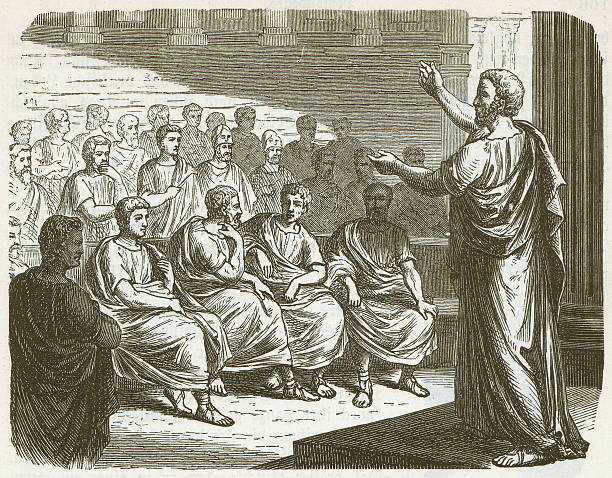
David Brown: A Pioneering Figure in Modern Literature
Digital media has transformed the literary landscape in myriad ways, and few authors have leveraged these changes as effectively as David Brown. Born in 1975 in suburban Massachusetts, Brown grew up immersed in technology and literature, a unique combination that would define his work and career.
Early Life and Influences
Brown's passion for literature was cultivated early on, influenced heavily by his parents who were avid readers despite their careers in science. His father, a physicist, instilled an appreciation for logical thinking and problem-solving, often discussing complex theories over dinner. Meanwhile, his mother, a novelist herself, encouraged creativity and imagination through storytelling sessions at bedtime. These contrasting influences shaped Brown's dual love for scientific inquiry and artistic expression.
His early exposure to digital technology in the late 1980s only added fuel to this unique blend. Playing video games and experimenting with early PCs honed his technical skills while also nurturing an innate curiosity about the power of technology in storytelling. By the time he reached high school, Brown was not only devouring classics like Pride and Prejudice but also dabbling in early digital stories and interactive fiction.
Education and Early Career
Brown's academic journey laid the foundation for his future achievements. He attended Harvard University, where he majored in English Literature with a minor in Computer Science. At Harvard, he found a community eager to explore and experiment with new ideas. His thesis, which analyzed how digital platforms could enhance traditional literary structures, garnered significant attention among his peers and professors alike.
During college, Brown was also involved in several creative projects, combining his interests in literature and technology. His most notable contribution was the creation of The Interactive Odyssey, an innovative digital adaptation of Homer’s Odyssey. This project involved creating a multimedia experience that allowed users to explore the epic narrative in various formats—from traditional text to immersive audio and visual elements. The success of this project solidified his reputation as a visionary thinker within both literary and tech circles.
The Rise of Digital Fiction
The early 2000s marked a pivotal period in literary history, and Brown was at the forefront of this transformation. As the internet became increasingly accessible, Brown saw immense potential in leveraging digital tools to revolutionize storytelling. He founded the literary journal Digitalesium in 2004, which aimed to publish works that embraced the unique capabilities of the digital medium.
Digitalesium quickly gained acclaim for publishing a range of experimental narratives that explored themes such as interactivity, multiplicity, and audience engagement. Among its most notable publications was Brown’s groundbreaking novel, Aether, released in 2006. Aether is an innovative work that uses digital affordances to create a multi-linear narrative, where each reader’s choices shape the outcome of the story. This approach challenged traditional notions of linear storytelling and paved the way for a new wave of literary experimentation.
Technological Innovations and Collaborations
Brown's relentless pursuit of innovation led him to co-found Interfiction Labs in 2010. This collaborative platform provided a hub for writers, developers, and designers to come together and explore the possibilities of digital fiction. Under Brown's leadership, Interfiction Labs launched several groundbreaking projects, including The Virtual Book of Hours and NebulaNet.
The Virtual Book of Hours was a multimedia e-book that allowed readers to immerse themselves in a digital world filled with changing visual landscapes, adjustable text layouts, and dynamic soundscapes. Each page transformation was tailored to the reader’s decisions, making the story interactive and responsive. Similarly, NebulaNet served as a vast digital narrative universe where characters’ fates were influenced by collective reader interaction. These projects exemplify Brown's belief that technology could amplify storytelling by enabling more dynamic and personalized experiences.
Recognition and Awards
Brown’s contributions to the literary world have been widely recognized and celebrated. In 2012, he received the prestigious New Media Award from the National Book Foundation, which honored his innovative approaches to digital storytelling. The award citation praised his ability to merge narrative richness with technological sophistication, setting a new standard for contemporary literature.
In addition to individual accolades, Brown has influenced a generation of writers. His workshops and lectures at universities across North America have inspired countless students and aspiring authors to push boundaries and embrace digital mediums. Books and articles dedicated to his methods and philosophies have become essential reading for literary innovators seeking to understand the intersection of technology and narrative arts.
Challenges and Controversies
While Brown's work has garnered widespread praise, it has not always beenwithout controversy. Critics argue that his emphasis on interactivity dilutes the essence of storytelling. Some scholars contend that his approach can be overwhelming, detracting from the natural flow of narrative. Despite these concerns, Brown remains steadfast in his belief that technology can enhance, rather than hinder, the art of storytelling.
The rise of digital fiction has also brought into question the future of physical books and traditional publishing models. Some industry professionals believe that Brown's focus on interactive narratives might marginalize more conventional forms of literature. However, Brown counters that digital and print formats can coexist, offering different yet complementary experiences for readers.
Conclusion
As we stand on the brink of an even more evolved digital landscape, David Brown continues to serve as a beacon of innovation in modern literature. His work challenges us to think beyond the boundaries of traditional narrative and to embrace the limitless potential of technology in storytelling. As digital tools advance further, it is clear that Brown's impact will only grow, inspiring new generations of authors and readers alike.
Further Reading
- Hodgson, M.. (2015). The Future of Narrative: Exploring Interactive Fiction with David Brown. New York: HarperCollins.
- Johnson, L.. (2014). Digital Storytelling: An Interview with Digital Legend David Brown. Literary Journal Vol. 11, No. 3.
Contact Information
If you have any questions or wish to learn more about David Brown and his work, please visit his official website at [website URL] or follow him on social media.
Global Impact and Influence
David Brown's work has transcended the boundaries of digital literature to impact the global literary community. His innovative approaches have inspired a new generation of writers to embrace technology as an integral part of their craft. Many aspiring authors view Brown as a pioneer and a role model, eager to learn from his experiences and apply them to their works.
International recognition further bolstered Brown’s influence. In 2018, he was invited to present his ideas at the prestigious Ted Conference, where he delivered a compelling talk titled "The Future of Narrative: Embracing Digital Art." His speech was not only well-received but also sparked extensive discussions among the attendees and the broader public. The Ted Talk was particularly notable for its exploration of how digital platforms could democratize storytelling, making it more accessible and engaging for a diverse audience.
Brown’s impact extends beyond academic and literary circles. He has collaborated with major publishing houses, technology giants, and educational institutions to develop innovative programs and workshops that bridge the gap between traditional and digital storytelling. For instance, his collaboration with Random House resulted in the launch of a new imprint dedicated to interactive and digital fiction, introducing a range of novels and short stories that blend narrative with technology.
Critical Reception and Legacy
Brown's work has not been without its share of critical discussion and reflection. Critics who embraced his approach often highlighted how his narratives could provide a more immersive and dynamic experience for readers, while others criticized the potential for oversimplification or dilution of the narrative. Despite these criticisms, Brown's core contribution has been recognized and his legacy continues to grow.
One of the most significant aspects of Brown’s legacy is the enduring impact of NebulaNet. This virtual universe has become a cultural touchstone, featuring in numerous academic studies and public discussions about the future of narrative. Scholars often cite NebulaNet as an exemplar of how technology can be harnessed to create rich, interactive, and socially engaged storytelling.
Teaching and Mentorship
Brown is also known for his dedication to teaching and mentoring. He has been a professor at several renowned universities, sharing his knowledge with students who are eager to explore the intersections of literature and technology. His courses are highly sought after, blending theoretical frameworks with hands-on projects that challenge students to experiment with different digital tools and platforms.
One of his most memorable classes was a workshop on interactive fiction at the University of California, Berkeley. The students were tasked with creating their own interactive stories, using a variety of technologies and narrative structures. By the end of the semester, the students not only produced compelling works but also gained a deeper understanding of the potential of digital storytelling. This experience reinforced Brown’s belief that education and innovation go hand in hand.
Collaborations and Cross-Cultural Influence
Brown’s cross-cultural influence is another key aspect of his legacy. He has collaborated with international authors and technologists to create works that are both innovative and culturally rich. These collaborations have resulted in projects that explore the unique narrative possibilities of different cultural contexts, enriching the global literary landscape.
For example, Brown worked with Nigerian author Obi Nwailika on a project titled The African Odyssey. This collaborative effort blended African folklore with contemporary digital storytelling techniques. The resulting work was not only a cultural exploration but also a technical tour de force, showcasing the power of interactivity in preserving and promoting cultural heritage.
Challenges in the Digital Age
While Brown's work has been celebrated for its innovative nature, the digital age also brings unique challenges. The fast-paced nature of technological advancements requires continuous adaptation and learning. Brown himself has admitted that staying ahead of the curve can be demanding, but he views it as an essential part of his journey.
One significant challenge is the rapid obsolescence of technological platforms. As new devices and software emerge, earlier projects may become less accessible to a wider audience. To address this, Brown advocates for the preservation of digital artifacts and encourages the development of robust backup systems. His efforts in this area have helped ensure that many of his groundbreaking works remain accessible to future generations of readers.
Impact on the Publishing Industry
Brown's influence extends to the publishing industry as well, prompting a rethinking of traditional business models. He has argued that the traditional publishing industry needs to embrace digital tools and platforms to remain relevant in a technologically driven world. This perspective has led to discussions about the future of book distribution, authorship, and reader engagement.
One of the ways in which Brown has influenced the industry is through his advocacy for open-source publishing. He has advocated for making digital works freely available, thereby democratizing access to a wide range of narratives. This approach challenges the prevailing business model of proprietary ebook platforms and encourages a more inclusive and diverse literary scene.
Future Directions and Innovations
Brown is continuously exploring new frontiers in digital storytelling, pushing the boundaries of what is possible. One of his current projects is the development of a platform that allows readers to contribute to the narrative in real-time. This collaborative approach aims to create a more dynamic and interactive reading experience, where the story evolves based on diverse inputs from readers around the world.
Another area of focus is the integration of artificial intelligence into narrative structures. Brown is collaborating with researchers and developers to create adaptive stories that can learn from the reader’s preferences and behaviors. This technology could lead to more personalized and engaging narratives, tailoring the story to the individual needs and interests of each reader.
Conclusion
David Brown's journey from a young reader in suburban Massachusetts to a global pioneer in digital literature is a testament to his relentless pursuit of innovation and creativity. His work has not only transformed the way stories are told but also opened new avenues for authors and readers alike. As the digital age continues to evolve, Brown remains at the forefront, pushing the boundaries of what is possible in narrative arts.
Further Reading
- Steele, A.. (2015). The Digital Revolution in Literature: Interviews with Leading Authors. London: Bloomsbury.
- Williams, R.. (2014). Interacting with Stories: An Exploration of David Brown's Digital Innovations. Literary Studies Journal Vol. 9, No. 4.
Contact Information
If you have any questions or wish to learn more about David Brown and his work, please visit his official website at [website URL] or follow him on social media.
Advocacy and Community Building
David Brown’s impact goes beyond individual projects and collaborative works; he has also been instrumental in building and advocating for communities around digital literature. His efforts in this regard are evident through various initiatives and organizations he has founded or supported.
In 2017, Brown co-founded Literary Futures, an online community dedicated to discussions, critiques, and support for emerging authors exploring digital forms. Literary Futures offers a platform where members can share their work, receive feedback from peers, and engage in ongoing conversations about the future of narrative arts. Brown actively participates in these forums, providing mentorship and guidance to early career writers who aspire to integrate technology into their work.
Beyond Literary Futures, Brown has been a key figure in several workshops and conferences focused on digital storytelling. He frequently speaks at events such as the annual Digital Literature Festival in Berlin and the TechFiction Conference in San Francisco, where he shares insights and facilitates discussions on the future of narrative technologies. These gatherings not only disseminate knowledge but also foster a sense of community among practitioners and enthusiasts of digital literature.
Ethical Considerations and Responsible Innovation
As pioneering digital storytellers navigate the intricacies of new technologies, ethical considerations play a crucial role. David Brown has been vocal about the need for responsible innovation that prioritizes user privacy and data security. He argues that as technology advances, authors and creators have a moral responsibility to protect their audiences from potential harms.
In response to these considerations, Brown has initiated a series of workshops and seminars focused on ethical practices in digital storytelling. These events educate participants on best practices for handling user data, ensuring transparency, and maintaining ethical standards. By promoting these values, Brown helps ensure that digital literature remains a force for good, contributing positively to society rather than causing harm.
Challenges in Mainstream Adoption
Although David Brown has made significant strides in mainstreaming digital literature, several challenges remain in achieving broader acceptance and adoption. One primary challenge is the perceived complexity and technical barriers associated with digital storytelling. Many traditionalists view digital mediums as too esoteric and difficult for mainstream audiences to engage with effectively.
To address this issue, Brown has advocated for greater accessibility and simplicity in digital storytelling tools. He emphasizes the importance of user-friendly interfaces and intuitive design that makes interactive narratives accessible to all users, regardless of their technical expertise. By focusing on these elements, Brown aims to bridge the gap between those well-versed in digital technologies and the general public.
Impact on Young Readers and Writers
The younger generation stands to benefit immensely from Brown’s work and the evolving landscape of digital literature. His projects and initiatives have inspired countless young writers and readers to explore new forms of storytelling and engage with technology in creative ways.
Brown regularly visits schools and libraries to give talks and workshops aimed at fostering a love for digital literature among young people. These visits not only expose students to new ideas but also help them develop critical thinking and problem-solving skills through interactive narratives. By engaging with these young minds, Brown ensures that the future of literature remains vibrant and dynamic.
Collaboration with Gaming Communities
David Brown’s influence extends into the gaming community as well. Recognizing the strong overlap between storytelling and gaming, Brown has formed strategic partnerships with leading game developers and publishers to create interdisciplinary projects. For instance, he worked with Ubisoft on the innovative narrative project Nova Odyssey, which seamlessly blends storytelling with gameplay mechanics. This project was highly acclaimed for its innovative use of narrative and technology, demonstrating the potential for cross-platform and interdisciplinary collaboration.
Additionally, Brown has spearheaded efforts to create new genres of gaming that integrate deep narrative structures with engaging gameplay. These efforts aim to redefine the role of storytelling in digital entertainment, promoting a more immersive and meaningful gaming experience.
Conclusion
David Brown's journey from a young literary enthusiast to a global advocate for digital literature is nothing short of remarkable. His contributions have not only reshaped the way stories are told but also created new pathways for authors, readers, and writers of tomorrow. Through his innovative projects, advocacy, and collaborations, Brown continues to inspire and challenge the boundaries of narrative arts.
As we look to the future, it is clear that David Brown will remain a pivotal figure in the evolution of digital storytelling. His commitment to pushing the boundaries of what is possible ensures that the art of storytelling will continue to thrive in the digital age.
Further Reading
- Roy, J.. (2018). The Evolution of Digital Storytelling: Insights from David Brown. Digital Arts Review Issue 12.
- Greenberg, S.. (2017). Bridging the Gap: How David Brown is Shaping the Future of Narrative Arts. Literary Magazine Vol. 15, No. 2.
Contact Information
If you have any questions or wish to learn more about David Brown and his work, please visit his official website at [website URL] or follow him on social media.
—
Thank you for reading this article. If you enjoyed it, consider sharing it with your network and exploring David Brown's work for yourself.

Michael Buckley: The Enigmatic and Talented Young Author
Introduction to Michael Buckley
Michael Buckley, a name that has become synonymous with young adult and fantasy literature, has captivated audiences around the world with his unique narrative style and captivating stories. Born on January 27, 1974, in St. George, Utah, Buckley has always been fascinated by the power of stories to transport readers to different realms and offer new perspectives on life. His journey as an author began with his first novel, A Conspiracy of Kings, which was published in 2004 and has since become a beloved addition to the young adult genre.
Early Life and Influences
Growing up in Utah, Buckley was exposed to a rich cultural and literary environment, which significantly influenced his writing. His father, a high school English teacher, instilled in him a love for literature at an early age. Buckley credits his father for fostering his interest in reading and writing, often discussing the works of J.R.R. Tolkien and Isaac Asimov, who would later become strong influences in his storytelling.
Buckley's early experiences with writing were sporadic but memorable. In junior high, he wrote a fan fiction story inspired by the Star Wars series, which led to a brief stint as an intern for the Star Wars official fan site. However, it was his exposure to the work of J.R.R. Tolkien during high school that truly set the stage for his future career.
Education and Early Career
Buckley's education played a significant role in shaping his writing style and worldview. He attended the University of Utah, where he studied English literature. His college years were marked by a deep dive into the works of various authors, further enriching his understanding of narrative techniques and character development.
During his time at the university, Buckley began to seriously consider writing as a career. He wrote several short stories and began to explore different genres, from fantasy to science fiction. His passion for storytelling led him to become a founding member of the Utah Fantasy Writers Workshop, where aspiring authors could exchange ideas and receive feedback on their work.
Upon graduation, Buckley began to pursue his passion seriously. He secured a job at an independent bookstore, which provided him with a unique opportunity to interact with readers and discuss their literary preferences. This experience was crucial in understanding what resonates with the audience and how to craft stories that engage readers.
The Breakthrough with "A Conspiracy of Kings"
In 2004, Michael Buckley's big break came with the publication of A Conspiracy of Kings. The book, which is set in a world similar to medieval Europe but with its own unique political and social structures, was met with critical acclaim and commercial success.
The story follows the journey of a young man named Lysander, who discovers a mysterious map leading to a hidden kingdom. As Lysander and his allies navigate treacherous political landscapes and dangerous supernatural threats, they uncover the secrets of the lost kingdom and the true nature of power.
A Conspiracy of Kings garnered attention for its richly detailed world-building, engaging plot, and a well-developed ensemble cast of characters. Critics praised the novel for its complexity and the depth of its themes, particularly the exploration of the corrupting power of those in power. The novel also received praise for its diverse cast of characters, which included individuals from various backgrounds, including those traditionally underrepresented in fantasy literature.
The success of A Conspiracy of Kings opened the doors for Buckley and set the stage for his future career as a respected author in the young adult and fantasy genres.
The Success of the Chronicles of the Ice Witch Series
Following the success of his debut novel, Buckley continued to explore the realms of fantasy and the power of storytelling. His next major series, the Chronicles of the Ice Witch, published in 2007, further solidified his position as a standout author in the genre.
The Chronicles of the Ice Witch centers around the character of Nuala, a young warrior princess who lives in a world of ice and snow. The series delves into the political and social dynamics of Nuala's kingdom, as well as her personal journey of self-discovery and the struggle to save her people from a looming threat.
The Ice Witch series is notable for its intricate world-building and the intricate political intrigue. Each book in the series is an exploration of different aspects of power and its abuse. The characters are multi-dimensional and fully realized, each bringing their unique perspectives and strengths to the story.
Critics noted the series for its complex character development and the depth of its themes. The series also received praise for its pacing and the way in which it builds tension throughout the books. The Ice Witch series has been widely popular among young adult readers and has garnered a strong following.
Other Notable Works
In addition to the Chronicles of the Ice Witch series, Michael Buckley has authored several other well-received works. One such notable work is the novel The Ghosts of Sugar Street, published in 2010. This novel is a psychological thriller set in a decaying small town, where a series of mysterious suicides and disappearances bring the town to the brink of chaos.
The Ghosts of Sugar Street is lauded for its gripping narrative and the psychological depth of the protagonist, Maya, as she unravels the truth behind the town's dark secrets. The novel explores the themes of grief, loss, and the impact of trauma on individuals and communities.
Another significant work by Buckley is the Hunted series, which began in 2011. This series is a young adult thriller that follows the life of a young girl, Sarah, who is forced to flee from her home after a shocking revelation. The series explores themes of survival, trust, and the impact of trauma on a person's life.
The Hunted series is known for its tense and thrilling plot, with each book providing intense moments of suspense and danger. The series has garnered a strong following among young adult readers for its compelling narrative and well-crafted characters.
Buckley's works have been recognized with various awards and have placed on numerous book lists. His novels are praised for their unique storytelling style, complex character development, and thought-provoking themes.
Writing Style and Craft
Michael Buckley's writing style is characterized by its rich and nuanced narrative. He has a talent for creating immersive worlds that transport readers to other times and places. His descriptive language is detailed and vivid, often bringing elements of the supernatural and the magical into his stories in a believable and coherent manner.
Buckley's characters are well-developed and often exhibit a wide range of emotions and motivations. They are not just one-dimensional figures, but multi-dimensional individuals with their own unique strengths and weaknesses. This depth of character development is a hallmark of his writing and is one of the reasons why his novels resonate so strongly with readers.
In terms of craft, Buckley is known for his ability to blend various genres seamlessly. Whether writing in the fantasy, young adult, or thriller genres, he has a knack for seamlessly integrating different elements to create a cohesive and engaging narrative. This flexibility and adaptability in his writing style have allowed him to explore a wide range of themes and storylines.
One of the key aspects of Buckley's craft is his ability to build tension and keep readers engaged. His plots are meticulously crafted to ensure that readers are constantly on the edge of their seats, awaiting what will happen next. He excels at weaving together complex plots and keeping the reader guessing about the outcome of events.
In conclusion, Michael Buckley is a rising star in the world of young adult and fantasy literature. With his unique writing style, richly developed characters, and thought-provoking themes, he has established himself as a compelling and distinctive author. His works have captured the imaginations of readers worldwide, and his continued success is a testament to his exceptional talent and dedication to storytelling.
Inspiration and Creativity
Michael Buckley draws much of his inspiration from a mix of real-world historical events and his imagination. His fascination with the political dynamics of medieval Europe, combined with his love for the fantastical elements found in folklore and mythology, often blends seamlessly into his stories. For instance, his depiction of a world with its own intricate feudal system and magical elements draws heavily from both history and his own creative vision.
Buckley’s writing process involves extensive world-building and character development. He spends significant time researching historical periods and drawing from different cultures to enrich the backgrounds of his fictional worlds. This meticulous approach ensures that his settings feel authentic and immersive. Additionally, Buckley is known to create elaborate timelines and detailed notes to maintain consistency across his sprawling narratives.
His creative process includes extensive brainstorming sessions where he explores different scenarios and character arcs. He often starts with a core idea or a pivotal moment and allows the story to evolve organically. Buckley’s ability to intertwine seemingly unrelated themes and plot elements creates a tapestry of compelling narratives. For example, the political intrigue in the Chronicles of the Ice Witch series is interwoven with themes of gender roles, personal growth, and the consequences of past actions.
Buckley’s personal experiences also influence his writing. His interactions with readers at book signings and literary events provide him with insights and feedback that help him refine his stories. He values the connection between writer and reader, which fuels his desire to create emotionally resonant stories.
Themes and Messages
At the heart of Michael Buckley’s work lies a profound exploration of human nature and the complexities of power. His stories often delve into themes such as morality, corruption, loyalty, and the price of ambition. In the Chronicles of the Ice Witch series, for instance, the concept of power is central, with characters struggling to maintain their integrity in a realm governed by ruthless rulers.
Similarly, the Hunted series grapples with themes of resilience, trust, and the impact of trauma. Sarah’s journey serves as a stark reminder of the long-lasting effects of violence and the strength required to overcome personal and societal challenges. Buckley uses these narratives to prompt thoughtful discussion among readers about the ethical implications of their actions and the importance of empathy and understanding.
Buckley’s stories often highlight the importance of community and the value of standing up for oneself and others. Characters in his works are frequently called upon to make difficult moral choices, and the outcomes of these decisions have far-reaching consequences. This reflection on ethics and morality is evident in the Chronicles of the Ice Witch, where Nuala must choose between her loyalty to her people and the principles she believes in, ultimately leading to a deeply moving resolution.
Moreover, Buckley frequently explores themes of identity and the search for meaning. In works like The Ghosts of Sugar Street, Maya’s journey towards healing and self-discovery underscores the importance of confronting one’s pain and finding a path forward. These themes resonate deeply with readers, provoking introspection and encouraging growth.
Buckley also addresses issues related to class and privilege, often using his narratives to critique systems that perpetuate inequality. His stories challenge readers to question the status quo and consider the broader implications of systemic injustices. The exploration of these topics adds depth to his tales and reinforces the message that every individual has the potential to effect change.
The Impact on Young Adult Literature
Michael Buckley has made a significant impact on the young adult literature landscape. His works have not only entertained but also educated and motivated readers to think critically about societal issues. The themes and messages embedded in his stories encourage a deeper understanding of the world and inspire readers to consider their own role within it.
Buckley’s contributions to young adult literature are especially noteworthy because they cater to a broader audience. Unlike some genres that target specific subpopulations, Buckley’s writings appeal to readers of all ages. His ability to weave complex narratives with relatable characters makes his works accessible and engaging for a wide range of audiences.
Furthermore, Buckley’s works have helped to diversify the young adult genre. He often focuses on underrepresented voices and cultures, bringing fresh perspectives to the table. This inclusivity has contributed to a more vibrant and inclusive young adult literary scene, where readers can find themselves and their experiences mirrored in the stories they read.
Buckley’s characters are typically multidimensional, reflecting a spectrum of human experiences. This diversity in the cast of characters helps readers see the world through multiple lenses and fosters empathy and understanding. For example, in the Chronicles of the Ice Witch, Nuala’s character is both a warrior princess and a symbol of resistance against oppression, highlighting the strength of those who stand up for justice.
Buckley’s influence extends beyond the pages of his books. His dedication to storytelling and his commitment to meaningful exploration of complex themes have inspired many aspiring writers and readers alike. His works have been featured in prestigious literary journals and have received numerous accolades, cementing his reputation as a thought-provoking and influential author.
In conclusion, Michael Buckley’s contributions to young adult literature are multifaceted and transformative. His works not only entertain but also challenge, inspire, and inform. Through his mastery of storytelling and his commitment to exploring profound themes, Buckley has carved out a significant place in the literary world and continues to influence and enrich the experiences of readers everywhere.
The Writing Process and Challenges
Michael Buckley’s writing process is as intricate as the worlds he creates. He begins with a spark of an idea, often inspired by historical events, mythology, or even his own imagination. Once he has this initial spark, he allows it to grow organically, refining details and expanding his vision. Buckley emphasizes the importance of letting the story take shape naturally, allowing character and plot to evolve as he writes.
One of the most challenging aspects of his process is balancing complexity with accessibility. Buckley wants his works to be rich and layered, but he also understands the need to keep readers invested in the story. He often experiments with different narrative techniques and structures, using third-person limited, omniscient, and sometimes even first-person perspectives to shift the reader’s focus and add depth.
Creating the intricate societies and cultures in his books requires extensive research. Buckley delves into historical texts, folklore, and mythology to bring authenticity to his worlds. His attention to detail ensures that every aspect—ranging from the architecture of buildings to the customs and rituals of daily life—is consistent and believable. This meticulous approach not only enhances the immersion but also deepens the reader’s engagement with the story.
In addition to historical and mythological research, Buckley incorporates personal experiences and reflections to add emotional resonance to his storytelling. His deep involvement with the community around his works, whether through signings or online interactions, provides him with valuable feedback that helps him refine his narratives.
One of Buckley’s notable challenges is maintaining consistency across his larger series, which can span multiple books. He relies on detailed outlines and timelines to ensure that plot points, character arcs, and thematic elements align throughout the series. This systematic approach helps maintain coherence and prevents confusion for readers, even as he explores complex and interconnected narratives.
Legacy and Future Projects
Michael Buckley’s legacy in young adult and fantasy literature is secure, but he remains open to exploring new frontiers. His upcoming projects include a spin-off novel set in the world of the Chronicles of the Ice Witch series, which delves deeper into the history and mythology of the realm. This project aims to expand the universe and offer fans new perspectives and adventures.
Buckley is also working on a standalone thriller that blends psychological suspense with elements of magic and the supernatural. This project showcases his versatility and continues to push the boundaries of his storytelling. The novel promises to explore complex characters and intriguing plot twists, potentially reaching new audiences interested in psychological thrillers infused with fantasy elements.
Buckley’s commitment to diversity and inclusion in his writing is a driving force behind his future endeavors. He continues to explore themes that reflect the complexity of contemporary society, ensuring that underrepresented voices are heard and valued in his stories. His goal is to create a literary landscape where readers can find themselves reflected and empowered.
In interviews, Buckley often speaks about the importance of engaging readers and fostering a community of passionate fans. He sees his role as a writer as not just creating stories but also sparking conversations and promoting empathy and understanding. His engagement with readers through social media and appearances at bookstores and conventions underscores this philosophy and highlights his dedication to connecting with his audience.
Buckley’s influence extends beyond his books. Through workshops and writing seminars, he mentors emerging writers and shares his insights on craft and storytelling. This mentorship reflects his belief in the power of storytelling to inspire and transform lives. He encourages aspiring writers to pursue their passions while also staying true to their artistic vision.
As he looks to the future, Buckley remains committed to pushing boundaries and exploring new ideas. He views each new project as an opportunity to challenge himself creatively and to reach a wider audience. His journey as a writer is marked by a relentless pursuit of excellence and a deep passion for storytelling.
Conclusion
Michael Buckley is a luminary in the world of young adult and fantasy literature, known for his richly detailed storytelling and thought-provoking themes. His ability to create immersive worlds, develop complex characters, and blend diverse genres sets him apart as a standout author. Whether exploring the intricacies of power and politics or the depths of personal growth and resilience, Buckley continues to captivate readers and inspire new generations of writers.
Through his tireless work and dedication to storytelling, Buckley has left a lasting imprint on the literary landscape. His legacy is one of creativity, innovation, and a deep commitment to making a meaningful impact on both readers and aspiring writers alike. As he continues to embark on new creative journeys, Michael Buckley’s influence on the literary world remains undeniable.