Zeno of Citium: Founder of Stoic Philosophy
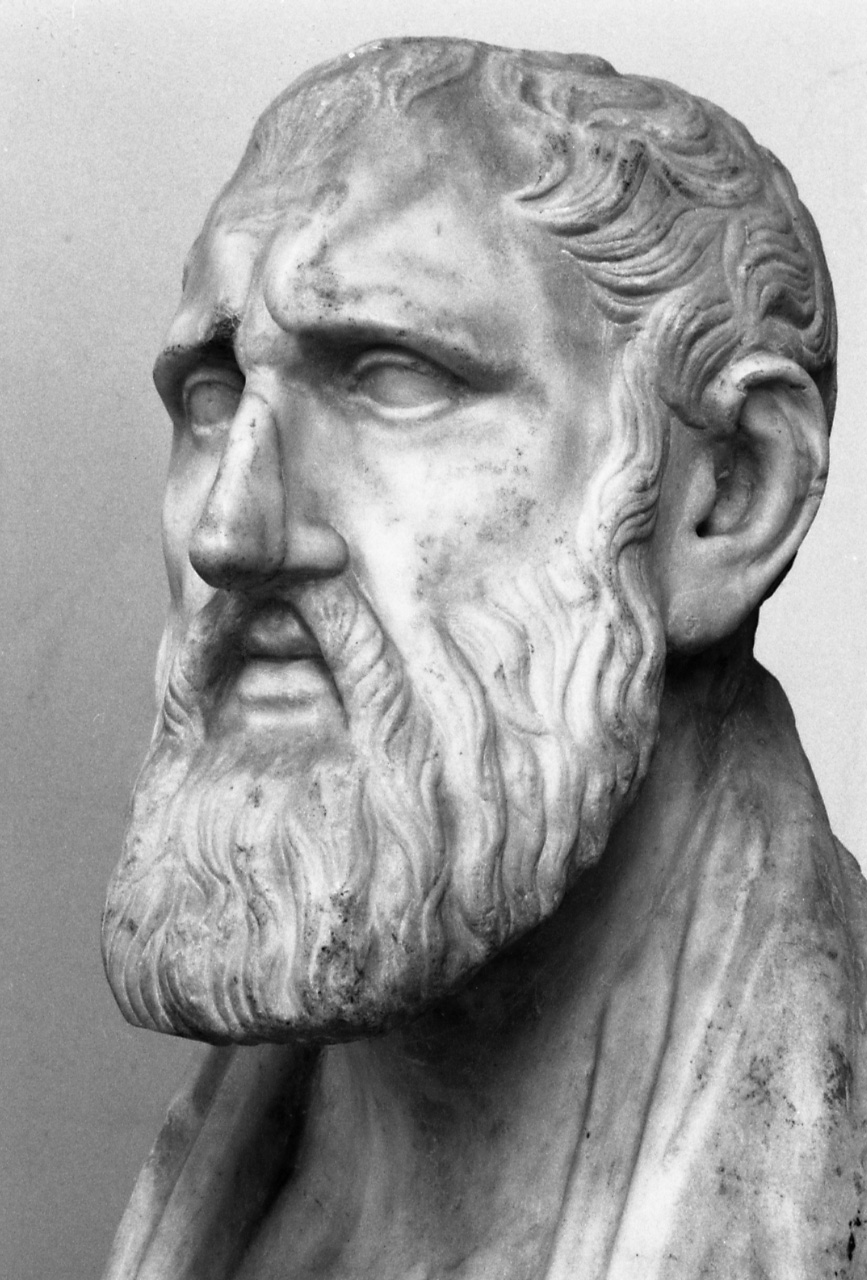
Zeno of Citium was the ancient Greek thinker who founded the Stoic school of philosophy in Athens. He taught that virtue is the only true good and that happiness comes from living in harmony with nature. His ideas have profoundly shaped Western thought and are experiencing a major modern revival.
The Life and Times of Zeno of Citium
Zeno was born around 334 BCE in Citium, a city on the island of Cyprus. His father was a merchant, and Zeno initially followed in his footsteps. This early career path would set the stage for a dramatic life change.
From Merchant to Philosopher
While trading goods like purple dye, Zeno suffered a shipwreck near Athens around 312 BCE. Stranded in the great philosophical center, he visited a bookseller. There, he read Xenophon's Memorabilia about Socrates. This chance event ignited his passion for philosophy.
He famously asked the bookseller where such men could be found. Just then, the Cynic philosopher Crates of Thebes walked by. The bookseller pointed and said, "Follow that man." Zeno did, abandoning his merchant life to study philosophy in Athens for the next 50 years.
Education and Influences
Zeno studied under several prominent philosophers. His primary teacher was the Cynic Crates of Thebes, who taught radical self-sufficiency and asceticism. Zeno also learned from Stilpo of Megara and Polemo, head of Plato's Academy.
These diverse influences—Cynic ethics, Megarian logic, and Academic thought—fused together in Zeno's mind. He would synthesize them into a new, comprehensive system.
From Crates, he took the focus on virtue and indifference to externals. From other schools, he adopted structured logic and physics. This blend became the foundation of Stoicism.
The Birth of Stoicism in Athens
After his studies, Zeno began teaching his own philosophy publicly. He chose a simple, public location: the Stoa Poikile, or "Painted Porch." This was a colonnade decorated with famous battle paintings.
Teaching at the Painted Porch
The Stoa was a covered walkway open to the Agora, Athens's main marketplace. By teaching here instead of a private garden, Zeno made philosophy accessible to all. His school took its name, Stoicism, from this location.
His followers were called Stoics, meaning "philosophers of the porch." This public setting reflected the practical, worldly focus of his teachings. He taught that philosophy was not for contemplation alone but for living well every day.
Core Principles of Early Stoicism
Zeno organized his philosophy into three interconnected parts: logic, physics, and ethics. He used a famous analogy to explain their relationship.
- Logic was like the protective wall of a garden.
- Physics was the fertile soil and trees.
- Ethics was the nourishing fruit the garden produced.
For Zeno, ethics was the ultimate goal, but logic and physics were necessary to support it. Logic provided clear thinking. Physics explained humanity's place in the universe. Together, they led to a virtuous life.
Zeno's Radical Philosophical Teachings
Zeno's system was built on the concept of the divine Logos. This is the rational, ordering principle that permeates the entire universe. Living in accordance with this Logos was the path to virtue and happiness.
Virtue as the Sole Good
The central tenet of Zeno's ethics was that virtue is the only true good. Everything else—health, wealth, reputation—he classified as "indifferents." They have no moral value in themselves.
He taught that these external things are not good or bad, but how we use them can be virtuous or vicious. A wise person uses them well, while a fool misuses them. This idea was radical in a world focused on honor, pleasure, and material success.
Happiness, or eudaimonia, comes solely from living a virtuous life in agreement with nature. Nothing else can truly contribute to a flourishing human existence.
The Concept of Living in Accordance with Nature
To "live in accordance with nature" meant two things for Zeno. First, live in harmony with human nature as a rational being. Second, live in harmony with Universal Nature, or the Logos.
This involves using reason to understand the world and our role in it. It also means accepting events outside our control. Our will should align with the rational order of the cosmos, not fight against it.
The Stages of Knowledge
Zeno illustrated the path to wisdom with a vivid hand gesture. He would hold his hand open, fingers outstretched, to represent an impression from the senses.
- Open Hand: A simple impression or perception.
- Partly Closed Hand: Assent given to that impression.
- Closed Fist: Comprehension, grasping the truth firmly.
- Hand Enclosed by Other Hand: Systematic knowledge, science (episteme).
This progression showed how raw perception could be refined into certain knowledge through active, rational engagement.
Zeno's Lost Works and Radical Republic
Tragically, none of Zeno's original writings survive intact. Ancient sources credit him with over 100 treatises. We know of them only through fragments quoted by later writers like Diogenes Laërtius and Cicero.
The Content of His Lost Treatises
His works covered all parts of his philosophy. Titles included On the Universe, On Signs, On the Soul, and On Duty. These formed the comprehensive Stoic curriculum for logic, physics, and ethics. Their loss makes reconstructing his exact thought a scholarly challenge.
Zeno's Controversial Republic
His most famous and radical work was the Republic (Politeia). Unlike Plato's work of the same name, Zeno's vision was strikingly egalitarian and controversial.
He described a utopian society governed by sages, not laws. In this ideal community, several traditional institutions would be abolished or transformed.
- No Temples or Courts: He saw built temples as unnecessary, as the whole universe is divine.
- Communal Living: Property and family units would be shared among virtuous citizens.
- Gender Equality: Men and women would have the same education and wear identical clothing.
- Universal Reason: Only the wise would be true citizens, bound by friendship and reason, not laws.
This vision was so radical that later Stoics downplayed it. It reflected Zeno's Cynic roots and his belief that conventional society was corrupt.
His Republic pushed the Stoic ideal of a cosmos without borders to its logical conclusion. It envisioned a world community of rational beings living in perfect harmony.
The Expansion and Legacy of Stoic Philosophy
Following Zeno's death, his students carried his teachings forward. The philosophy evolved but retained its core ethical principles. Stoicism would eventually become one of the most influential philosophies in the Roman world.
Zeno's Immediate Successors
Zeno's most important successor was Cleanthes of Assos, who led the Stoic school after him. Cleanthes was known for his diligence and preserved Zeno's original doctrines. He famously wrote the Hymn to Zeus, which beautifully expressed Stoic theology.
However, it was Chrysippus of Soli, the third head of the school, who truly systematized Stoicism. He defended the teachings against philosophical rivals and wrote hundreds of works. His contributions were so vital that it was said, "Without Chrysippus, there would have been no Stoa."
Stoicism's Journey to Rome
Stoicism reached Rome in the 2nd century BCE and found fertile ground. The Roman values of duty, discipline, and public service aligned perfectly with Stoic ethics. Prominent Romans adopted the philosophy, adapting it to their cultural context.
- Panaetius of Rhodes made Stoicism more practical and acceptable to Roman aristocrats.
- Posidonius expanded Stoic physics and traveled widely, influencing Roman intellectuals.
- Cicero, though not a Stoic, translated and popularized many Stoic concepts in Latin.
This Roman adaptation ensured Stoicism's survival and lasting influence. It became the philosophy of choice for many senators, emperors, and thinkers.
Stoic Ethics in Practice
The practical application of Stoic ethics formed the heart of Zeno's teaching. He provided a clear framework for navigating life's challenges with wisdom and resilience.
The Dichotomy of Control
A fundamental Stoic principle is distinguishing between what is and isn't in our power. Zeno taught that our volition—our choices, judgments, and desires—are within our control. External events, other people's opinions, and our bodies are not.
The chief task in life is simply this: to identify and separate matters so that I can say clearly to myself which are externals not under my control, and which have to do with the choices I actually control.
This distinction brings immense peace. By focusing only on what we can control—our responses—we avoid frustration and anxiety. This practical wisdom remains profoundly relevant today.
The Four Cardinal Virtues
Zeno identified four principal virtues that constitute excellence of character. These virtues guide all aspects of life and decision-making.
- Wisdom (Phronesis): Practical wisdom and good judgment in complex situations.
- Courage (Andreia): Moral and emotional strength in facing fear, uncertainty, and intimidation.
- Justice (Dikaiosyne): Fairness, honesty, and treating others with respect.
- Temperance (Sophrosyne): Self-control, moderation, and discipline over desires and impulses.
For Zeno, these virtues are interconnected. One cannot truly possess one without the others. They form an indivisible whole that defines a good character.
Managing Emotions Through Reason
Stoics are often misunderstood as suppressing emotions. Zeno actually taught the intelligent management of emotions through reason. He distinguished between healthy feelings (eupatheiai) and destructive passions (pathē).
Passions like rage, envy, or obsessive desire are irrational judgments that disturb the soul. The goal is not to become emotionless but to experience emotions that are proportional and appropriate to reality.
Through disciplined practice, a person can achieve apatheia—freedom from destructive passions. This state allows for clear thinking and virtuous action regardless of circumstances.
Zeno's Views on Physics and the Universe
Stoic physics provided the cosmological foundation for Zeno's ethics. He saw the universe as a single, living, rational organism pervaded by the divine Logos.
The Concept of the Logos
The Logos is the active, rational principle that structures and animates the cosmos. It is divine, material, and intelligent. Zeno identified it with both God and Nature.
Everything in the universe participates in this rational order. Human reason is a fragment of the universal Logos. This is why living according to reason means living in harmony with nature itself.
The universe itself is God and the universal outpouring of its soul. This divine reason is the law of nature, determinizing all that happens.
Materialism and Providence
Unlike Plato, Zeno was a thoroughgoing materialist. He believed that only bodies exist because only bodies can act or be acted upon. Even the soul and God were considered fine, fiery breath (pneuma).
This materialism was coupled with a belief in providence. The universe is not a random collection of atoms but a well-ordered whole directed by divine reason. Everything happens according to a rational plan, even if we cannot always perceive it.
The Cyclical Nature of the Cosmos
Zeno adopted a theory of eternal recurrence from earlier thinkers like Heraclitus. The universe undergoes endless cycles of creation and destruction. Each cycle begins with a primordial fire and ends in a cosmic conflagration (ekpyrōsis).
From this fire, a new identical universe emerges. This cycle repeats forever, governed by the same Logos. This belief reinforced the idea of an orderly, deterministic cosmos.
The Personal Character and Death of Zeno
Ancient sources consistently praise Zeno's personal integrity. He lived the principles he taught, embodying Stoic virtue in his daily life.
An Ascetic Lifestyle
Despite coming from a wealthy merchant family, Zeno lived with remarkable simplicity. He ate simple food, drank mostly water, and wore thin clothing. He avoided luxury and indulgence, believing they weakened character.
The Athenians recognized his exceptional temperance. They honored him with a golden crown and a public tomb for his virtuous life. This was a rare honor for a metic, a resident foreigner.
Anecdotes of His Character
Diogenes Laërtius records stories that illustrate Zeno's character. He was known for his sharp wit and concise speech. When a talkative young man was boasting, Zeno quipped, "Your ears have slid down and merged with your tongue."
He valued self-control above all. When a slave was found to have stolen something, Zeno had him whipped. The slave protested, "It was my fate to steal!" Zeno replied, "And it was your fate to be beaten." This story highlights his belief in responsibility within fate's framework.
The Stoic Death of Zeno
Zeno's death around 262 BCE at age 72 became a legendary example of Stoic principles. According to Diogenes Laërtius, he tripped and broke a toe while leaving his school.
Striking the ground, he quoted a line from Niobe: "I come of my own accord; why call me so urgently?" Interpreting this as a sign that his time had come, he held his breath until he died. This act demonstrated ultimate acceptance of nature's plan.
His death was seen as the ultimate embodiment of his philosophy—accepting fate willingly and meeting the end with rational composure.
The Historical Context of Hellenistic Philosophy
Zeno founded Stoicism during the turbulent Hellenistic Age. This period began with Alexander the Great's conquests and lasted until the rise of Rome.
Philosophy After Alexander
The collapse of the independent city-state (polis) created a philosophical crisis. Traditional Greek religion and politics offered less stability. People turned to philosophy for personal guidance and inner peace.
This shift explains why Hellenistic philosophies like Stoicism, Epicureanism, and Skepticism focused on individual happiness (eudaimonia). They offered practical recipes for living well in an unpredictable world.
Major Hellenistic Philosophical Schools
Stoicism emerged alongside other influential schools. Each offered a different path to tranquility.
- Epicureanism: Founded by Epicurus, it taught that pleasure (absence of pain) is the highest good.
- Skepticism: Founded by Pyrrho, it advocated withholding judgment to achieve peace of mind.
- Cynicism: A more radical asceticism that rejected social conventions entirely.
Stoicism stood out by combining systematic theory with practical ethics. It offered a comprehensive worldview that appealed to many seeking meaning.
Zeno's Unique Contribution
Zeno synthesized elements from these competing schools. He took the Cynic emphasis on virtue but added logical rigor and cosmological depth. This made Stoicism more intellectually respectable and sustainable than pure Cynicism.
His school lasted for nearly 500 years, far outliving its Hellenistic rivals. This longevity testifies to the power and adaptability of his original vision.
The Modern Revival of Stoic Philosophy
Stoicism has experienced a remarkable resurgence in the 21st and 21st centuries. This ancient philosophy now provides practical guidance for millions seeking resilience in a complex world. The principles Zeno taught are finding new relevance in psychology, leadership, and personal development.
Stoicism in Contemporary Psychology
Modern therapeutic approaches like Cognitive Behavioral Therapy (CBT) directly stem from Stoic principles. Psychologist Albert Ellis, the founder of Rational Emotive Behavior Therapy, explicitly credited Stoicism as a major influence. The core idea that our judgments about events—not the events themselves—cause our emotional distress is pure Stoicism.
Therapists now teach clients the Stoic dichotomy of control to manage anxiety and depression. By focusing energy only on what they can control—their thoughts and actions—people achieve greater mental peace. This practical application demonstrates the timeless wisdom of Zeno's teachings.
The Stoicism Movement Online
The internet has fueled Stoicism's modern popularity. Websites like the Daily Stoic and popular YouTube channels make these ancient ideas accessible. They frame Zeno's journey from shipwrecked merchant to philosopher as a powerful narrative of resilience and reinvention.
- Online Communities: Forums and social media groups provide support for practicing Stoics worldwide.
- Stoic Challenges: Many people undertake 30-day Stoic meditation or journaling challenges.
- Modern Authors: Writers like Ryan Holiday have sold millions of books interpreting Stoicism for today's audience.
Search interest in Stoicism has spiked over 300% since 2010, showing its growing appeal. This digital revival has introduced Zeno's philosophy to an audience he could never have imagined.
Zeno's Enduring Influence on Western Thought
While Zeno's original works are lost, his philosophical legacy profoundly shaped subsequent intellectual history. Stoic ideas permeate Western philosophy, political theory, and even religion.
Influence on Roman Law and Governance
Roman Stoics like Seneca, Epictetus, and Emperor Marcus Aurelius applied Zeno's principles to law and leadership. The concept of natural law—that just laws reflect universal reason—became central to Roman jurisprudence. This idea later influenced the development of international law and human rights.
The Stoic ideal of the cosmopolis, or world community, challenged narrow nationalism. It suggested that all rational beings share a common bond as citizens of the universe. This cosmopolitan vision remains influential in ethical and political thought today.
Stoicism and Early Christianity
Several Church Fathers found parallels between Stoicism and Christian teachings. The concept of the Logos in the Gospel of John echoes Stoic terminology. Early Christian writers admired Stoic ethics, particularly their emphasis on self-control, duty, and resilience.
Elements of Stoic philosophy were absorbed into Christian moral theology, particularly regarding virtue ethics and divine providence.
While Christianity rejected Stoic materialism and pantheism, it embraced much of its ethical framework. This synthesis helped shape Western moral consciousness for centuries.
Criticisms and Limitations of Zeno's Stoicism
Like any philosophical system, Stoicism has faced significant criticisms throughout history. Understanding these limitations provides a more balanced view of Zeno's legacy.
The Challenge of Emotional Suppression
Critics argue that Stoicism's ideal of apatheia (freedom from passion) can lead to emotional suppression. Some interpret it as advocating emotional coldness or detachment from human relationships. Modern psychology suggests that processing emotions healthily is more beneficial than suppressing them.
However, defenders note that Zeno distinguished between destructive passions and healthy feelings. The goal was rational management of emotions, not their elimination. This nuanced understanding addresses many criticisms of emotional suppression.
The Problem of Determinism
Stoic physics embraced a strong determinism, believing everything follows from the rational Logos. This creates tension with their emphasis on personal responsibility and virtue. If everything is fated, how can individuals be responsible for their choices?
The Stoics developed a sophisticated compatibilist position. They argued that our assent to impressions—our inner choice—remains free even within a determined universe. This philosophical puzzle continues to engage modern philosophers debating free will and determinism.
The Radicalism of Zeno's Republic
Zeno's vision of an ideal society was strikingly radical for its time. His proposals for gender equality, communal property, and abolition of traditional institutions were far ahead of their time. Later Stoics, particularly Roman adherents, moderated these views to fit their more conservative societies.
Some modern critics question whether such utopian thinking is practical or desirable. Others see it as an inspiring vision of human potential unleashed by wisdom and virtue.
Key Archaeological and Historical Research
Our knowledge of Zeno comes entirely from secondary sources, as no archaeological evidence of his life or original works has been found. Scholarship depends on careful analysis of later authors who quoted or discussed his philosophy.
Primary Sources for Zeno's Life and Thought
The most important source is Diogenes Laërtius's Lives and Opinions of Eminent Philosophers from the 3rd century CE. His biography of Zeno, while sometimes anecdotal, provides invaluable information. Other crucial sources include:
- Cicero: His philosophical works contain extensive discussions of Stoicism.
- Seneca: The Roman Stoic's letters and essays reflect Zeno's influence.
- Plutarch: His moral essays engage with Stoic doctrines.
- Early Christian writers: Clement of Alexandria and others debated Stoic ideas.
These sources must be read critically, as their authors had their own philosophical agendas. They often interpreted Zeno through later Stoic developments or their own criticisms.
Modern Scholarship on Zeno
Contemporary scholars continue to debate many aspects of Zeno's philosophy. Key areas of research include:
The relationship between early Stoicism and Cynicism remains particularly contested. Some see Zeno's system as a more systematic version of Cynic ethics. Others emphasize his original contributions, particularly in logic and physics.
Scholars also debate how much of later Stoicism accurately reflects Zeno's thought. The systematic works of Chrysippus so dominated the school that Zeno's original ideas may be partly obscured.
The Timeless Wisdom of Zeno's Teachings
Despite the passage of over 2,300 years, Zeno's core insights remain profoundly relevant. His philosophy offers practical guidance for navigating the challenges of modern life with wisdom and resilience.
Stoic Principles for Modern Living
Several Stoic practices have particular resonance today. The evening review—examining one's actions against Stoic principles—resembles modern journaling for self-improvement. The premeditation of evils (considering potential difficulties in advance) builds psychological resilience.
The Stoic emphasis on focusing on what you control provides an antidote to modern anxiety. In an age of information overload and constant change, this principle helps people conserve energy for meaningful action rather than worry about uncontrollable events.
Stoicism in Leadership and Business
Modern leaders increasingly turn to Stoicism for guidance. The philosophy's emphasis on virtue, resilience, and clear thinking applies powerfully to leadership challenges. Business leaders value its practical approach to handling pressure, making decisions, and maintaining integrity.
Stoic principles help leaders distinguish between essential priorities and distractions. The focus on character over outcomes encourages ethical leadership even in competitive environments. This application shows how Zeno's wisdom transcends its original context.
Conclusion: The Enduring Legacy of Zeno of Citium
Zeno of Citium created one of the most enduring and influential philosophies in Western history. From its founding in the Stoa Poikile to its modern revival, Stoicism has offered a compelling vision of human flourishing.
Key Contributions Summarized
Zeno's most significant contributions include establishing virtue as the sole good, developing the concept of living according to nature, and creating a comprehensive philosophical system integrating logic, physics, and ethics. His radical vision of human potential continues to inspire.
The practical wisdom of distinguishing between what we can and cannot control remains his most powerful insight. This principle, coupled with the cultivation of the cardinal virtues, provides a timeless framework for living well.
The Living Philosophy
Stoicism is unique among ancient philosophies in its continued practice as a way of life. Unlike systems studied only academically, people around the world actively apply Stoic principles to their daily challenges. This living tradition is the ultimate testament to Zeno's achievement.
Zeno taught that philosophy is not about clever arguments but about transforming how we live. His legacy is the ongoing pursuit of wisdom, courage, justice, and temperance across generations.
From a shipwrecked merchant to the founder of a school that would shape centuries of thought, Zeno's journey embodies the transformative power of philosophy. His teachings continue to guide those seeking to live with purpose, resilience, and virtue in an uncertain world. The porch where he taught may be gone, but the wisdom born there remains as relevant as ever.

Embracing the Essence of Solitude in Spirituality
The quest for spiritual fulfillment often evokes images of communal worship, shared rituals, and congregational prayer. However, nestled within the heart of spiritual tradition lies an equally significant, albeit quieter, companion: solitude. The practice of solitude has embroidered itself into the spiritual tapestry of numerous faiths, not as a thread of isolation, but as a strand of profound self-discovery and inner peace.
Historically, solitude has been venerated within the spheres of religion and spirituality. Monastic life, for instance, is one of the most prominent exemplars of solitude, where monks and nuns retreat from the cacophony of societal life to engage deeply with the divine. Within Christianity, the Desert Fathers—a group of early Christian hermits, ascetics, and monks—retired to the solitude of the wilderness to cultivate a closer relationship with God, setting a paradigm for Christian monasticism.
In Eastern traditions such as Buddhism and Hinduism, solitude is often seen as a vessel for enlightenment. Siddhartha Gautama, who became the Buddha, abandoned the luxuries of his princely life to seek truth in the solitude of the wilderness. His experience demonstrates the value placed upon solitary reflection and meditation as a path to spiritual awakening. Likewise, Hindu yogis and sages have journeyed into the quietude of the forest or mountains, embracing the concept of 'aranyaka'—life in the forest—as a phase for spiritual growth and understanding of the self.
Solitude in spirituality is not exclusive to monasticism or historical ascetics; it remains relevant in the contemporary narrative of personal faith. In a world saturated with constant noise and distraction, finding solitude—even if not physically isolating oneself—can be an act of resistance and self-preservation. It is within these quiet moments that individuals often report feeling a surge of spiritual clarity and connectedness.
This communion with the inner self can be profoundly constructive; the spiritual fruits of solitude are recounted across cultures and personal testimonies. People often articulate experiences of deep relaxation, heightened awareness, and a sense of being anchored in something greater than themselves. In solitude, one can sift through the superficial layers of daily existence, approaching a purer state of being that facilitates an encounter with the sacred.
Yet the path of solitude is not one of sheer serenity and light. It can also be a stage for wrestling with inner demons, confronting doubts, and navigating the complex landscape of one’s own soul. The allure of solitude in some religious paths, like Sufism—the mystical Islamic belief system—includes the concept of the 'dark night of the soul,' where the individual must face the abyss of nothingness to emerge spiritually reborn.
The pursuit of solitude, however, is not without its challenges in the modern context. The prevalence of technology and a culture that often equates alone time with loneliness or unproductivity can make the deliberate pursuit of solitude seem countercultural or daunting. Yet, therein lies the potency of its promise—the ability to disconnect in order to reconnect at a deeper level with oneself and the divine, according to one's beliefs.
In embracing solitude, individuals find their own unique way into the quiet. Whether it be through scheduled times of meditation, mindful walks, or even brief moments of stillness in a busy day, the cultivation of solitude is as diverse as the individuals who seek it.
[To be continued...][Continuation...]
The term "spiritual but not religious" (SBNR), an increasingly popular identifier, underscores a trend that aligns closely with the practice of solitude. Those who identify as SBNR often find traditional religious structures restrictive, instead seeking personal spiritual experiences that go beyond collective doctrines and communal practices. Solitude becomes a canvas upon which they paint their individualized spiritual journeys, free from the expectations of organized religion.
Moreover, technology, although often seen as an antagonist to solitude, can also be a facilitator. Digital detoxes and app-guided meditation are modern tools that people use to carve out oases of stillness in their lives. This paradox, where solitude is supported by the very devices that can impede it, reflects the complexity of modern spiritual practice. It also highlights the adaptability of solitude as a concept—its essence untethered from time, persisting even in the age of digital omnipresence.
The intersection of solitude and psychological well-being bears significant examination as well. Mental health professionals have begun to recognize the value of solitude for personal growth, stress reduction, and emotional balance. While excessive isolation can be detrimental, the intentional practice of solitude can provide a counterbalance to the pressures of social life, fostering resilience and a greater sense of individual purpose. The spiritual and psychological benefits, though they travel on parallel paths, often converge, together enriching the individual's overall sense of well-being.
Although the pursuit of solitude is a personal and varied experience, its spiritual profundity has not gone unnoticed by religious institutions. Some places of worship have started to integrate opportunities for personal reflection and solitary meditation into their communal activities. Retreats, quiet prayer spaces, and guidance on solitary spiritual practices are becoming more common, highlighting a recognition of the need for a balance between community and individual spiritual expressions.
Moreover, the role of nature in facilitating solitude and, by extension, spiritual experiences, is profound and has been a mainstay across religions. Nature offers an escape from the artificiality of human constructions, serving as the original sanctuary for those seeking solitude. The natural world's rhythms—dawn, dusk, the cycles of seasons—speak to the cyclical nature of life and offer a tangible connection to the idea of a greater power.
The spiritual journey through solitude necessarily includes grappling with the human fear of being alone, a subject that has been contemplated by theologians and philosophers alike. Yet, what emerges from solitude is not a narrative of fear, but rather one of transcendence. As individuals push past the discomfort of silence and aloneness, they discover an enriched sense of presence that transcends the need for constant external validation or stimuli.
Despite its benefits, the call of solitude is not heeded by all. The modern mantra of hustle culture and the fear of missing out (FOMO) often crowd out the whispering invitations to step back and engage inwardly. But for those who dare to quiet the noise, solitude stands as a timeless testament to the depth and breadth of the human spirit's capacity for self-discovery and connection to the ineffable mysteries of existence.
As the curtain falls on our exploration of solitude in spirituality, one is left to ponder the quiet power that awaits in stillness. Solitude, when embraced, is far more than a retreat from the world—it is a bold confrontation with the self, a nurturing ground for spiritual blossoming, and a bridge to the divine that resides within and beyond the confines of human understanding.
The beauty and profundity of solitude serve as an invitation to all, regardless of creed or conviction, to venture within and explore the sacred spaces of the self. It is there, in the silent depths, where the ultimate truths of one's spiritual narrative are waiting to be uncovered, contemplated, and celebrated.
[Article Concludes]