Giovanni Schiaparelli: The Astronomer Who Mapped Mars
Giovanni Schiaparelli was an Italian astronomer whose groundbreaking observations of Mars and comets reshaped our understanding of the solar system. Born in 1835, Schiaparelli became one of the most influential astronomers of the 19th century, leaving a legacy that still impacts modern astronomy.
Early Life and Education
Giovanni Virginio Schiaparelli was born on March 14, 1835, in Savigliano, Piedmont, Italy. His early education focused on hydraulic engineering and architecture at the University of Turin. However, his passion for astronomy led him to study at prestigious observatories in Berlin and Pulkovo between 1856 and 1859.
Career at Brera Observatory
In 1860, Schiaparelli joined the Brera Observatory in Milan as the second astronomer. By 1862, at just 27 years old, he became the youngest director in the observatory's history. His leadership lasted nearly 40 years, until his retirement in 1900 due to deteriorating eyesight.
Key Achievements at Brera
- Discovered the asteroid 69 Hesperia on April 29, 1861.
- Secured funding for Italy's first major telescope, a 22 cm Merz refractor, which arrived in the 1870s.
- Advanced multiple fields, including binary star measurements, comet tail studies, and planetary rotations.
Groundbreaking Discoveries
Linking Meteor Showers to Comets
In 1866, Schiaparelli proposed a revolutionary theory: meteor showers originate from comet debris. He matched the orbits of meteor showers like the Perseids and Leonids to comets such as Tempel-Tuttle. This discovery earned him the Royal Astronomical Society Gold Medal in 1872.
Observations of Mars
Schiaparelli's most famous work began during the 1877 "great opposition" of Mars. Over seven oppositions, he created detailed maps of the Martian surface, naming features like Syrtis Major and Solis Lacus. His use of classical terms for "seas" and "continents" replaced earlier naming systems and remains standard today.
The "Canali" Controversy
In 1877, Schiaparelli described linear features on Mars as "canali", an Italian word meaning "channels." However, the term was mistranslated into English as "canals", sparking widespread speculation about Martian life and artificial structures. This misunderstanding inspired astronomers like Percival Lowell to build observatories dedicated to studying Mars.
Legacy and Impact
Schiaparelli's contributions extended beyond Mars. He studied ancient astronomy post-retirement, leveraging his expertise in languages and religions. His work on comet-meteor connections remains foundational in astronomy education, and his Martian nomenclature is still used in modern areography.
His legacy lives on in missions like the ESA's Schiaparelli lander, named in his honor, which aimed to explore Mars in 2016. Though the lander crash-landed on Meridiani Planum, it highlighted the enduring influence of Schiaparelli's work.
Preserved Instruments and Drawings
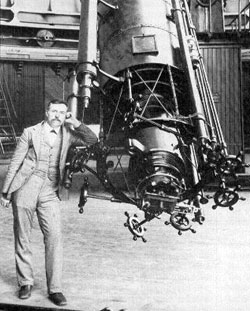
The Merz refractor telescope Schiaparelli used is preserved at Milan's Museo Nazionale della Scienza e della Tecnologia. His detailed drawings, including those of the 1877 comet, showcase the visual techniques of 19th-century astronomy and the challenges posed by atmospheric conditions.
Conclusion
Giovanni Schiaparelli was a pioneer in astronomy, whose observations of Mars and comets continue to shape our understanding of the universe. His legacy, from the "canali" controversy to his foundational work on meteor showers, remains a cornerstone of modern astronomy.
The Science Behind Schiaparelli’s Mars Observations
Giovanni Schiaparelli’s detailed observations of Mars were not just artistic renderings—they were grounded in rigorous scientific methodology. Using the 22 cm Merz refractor at Brera Observatory, he meticulously documented the planet’s surface features during multiple oppositions, when Mars and Earth are closest in their orbits.
The "Great Opposition" of 1877
The 1877 opposition was particularly significant because Mars was exceptionally close to Earth, allowing Schiaparelli to observe finer details than ever before. During this period, he identified and named numerous Martian features, including:
- Syrtis Major – A dark, triangular feature initially thought to be a sea.
- Solis Lacus – The "Eye of Mars," a dark spot that appeared to change shape.
- Olympus Mons – Though not named by Schiaparelli, his maps laid the groundwork for later identification of this massive volcano.
His naming system, based on classical mythology and geography, replaced earlier, less systematic approaches and remains in use today.
The "Canali" Debate: A Scientific Misunderstanding
One of Schiaparelli’s most controversial contributions was his description of "canali"—a term that sparked decades of debate. While he intended the word to mean natural "channels," the English mistranslation as "canals" led to widespread speculation about artificial structures and even Martian civilizations.
This misunderstanding was amplified by Percival Lowell, an American astronomer who built an entire observatory to study these supposed canals. Lowell’s theories, though later debunked, captured the public imagination and influenced early science fiction.
"The so-called canals of Mars were, in reality, optical illusions caused by the limitations of 19th-century telescopes and the human tendency to perceive patterns where none exist." – Modern astronomical consensus.
Schiaparelli’s Contributions to Comet and Meteor Research
Beyond his work on Mars, Schiaparelli made groundbreaking contributions to the study of comets and meteors. His 1866 theory linking meteor showers to comet debris revolutionized our understanding of these celestial phenomena.
Proving the Comet-Meteor Connection
Schiaparelli observed that the orbits of meteor showers, such as the Perseids and Leonids, closely matched those of known comets. For example:
- The Leonid meteor shower was linked to Comet Tempel-Tuttle.
- The Perseid meteor shower was associated with Comet Swift-Tuttle.
This discovery earned him the Royal Astronomical Society’s Gold Medal in 1872, one of the highest honors in astronomy at the time.
Studying Comet Tails and Solar Forces
Schiaparelli also advanced the study of comet tails, proposing that they are shaped by a repulsive solar force. This idea was a precursor to modern understanding of the solar wind and its effects on cometary material.
His work on comets was not just theoretical—he also cataloged their orbits and predicted their returns, contributing to the broader field of celestial mechanics.
The Legacy of Schiaparelli’s Work in Modern Astronomy
Schiaparelli’s influence extends far beyond his lifetime. His observations and theories laid the foundation for many areas of modern astronomy, from planetary science to the study of small solar system bodies.
Modern Areography: Mapping Mars Today
The naming system Schiaparelli developed for Mars remains the standard in areography (the study of Mars’ geography). Many of the features he identified are still used in modern maps, including those created by NASA and ESA missions.
For example, the ESA’s Schiaparelli lander, part of the ExoMars mission, was named in his honor. Though the lander crashed in 2016, its mission highlighted the enduring relevance of Schiaparelli’s work in Mars exploration.
Influence on Space Missions
Schiaparelli’s detailed maps of Mars have been invaluable for modern space missions. His observations helped scientists identify key landmarks and regions of interest, such as:
- Meridiani Planum – The landing site of NASA’s Opportunity rover.
- Valles Marineris – A massive canyon system first hinted at in Schiaparelli’s maps.
Even today, mission planners reference his work when selecting landing sites and planning exploration routes.
Preservation of His Instruments and Drawings
The Merz refractor telescope Schiaparelli used is now preserved at the Museo Nazionale della Scienza e della Tecnologia in Milan. This historic instrument, with its 22 cm aperture and 3.5 m focal length, was cutting-edge for its time and played a crucial role in his discoveries.
In addition to the telescope, Schiaparelli’s detailed drawings—such as his 1877 comet sketches—are preserved in archives. These drawings provide insight into the challenges of 19th-century astronomy, including atmospheric distortions and the limitations of early telescopes.
The Cultural Impact of Schiaparelli’s Discoveries
Schiaparelli’s work didn’t just advance science—it also captured the public imagination and influenced culture, particularly in the realm of science fiction and speculation about extraterrestrial life.
Inspiring Science Fiction and Popular Culture
The idea of Martian canals, though later disproven, inspired countless works of fiction. Authors like H.G. Wells and Edgar Rice Burroughs drew on Schiaparelli’s observations to create stories about Martian civilizations.
Even today, the legacy of the "canals" debate persists in popular culture, from movies to video games, where Mars is often depicted as a planet with ancient, mysterious structures.
Public Fascination with Mars
Schiaparelli’s observations fueled a lasting public fascination with Mars. His work contributed to the planet’s reputation as a potential home for life, a theme that continues to drive exploration efforts today.
Modern missions, such as NASA’s Perseverance rover, are partly motivated by the same questions Schiaparelli’s work raised: Is there life on Mars? What is the planet’s true nature?
Challenges and Controversies in Schiaparelli’s Career
Despite his many achievements, Schiaparelli’s career was not without challenges. His work faced skepticism, and some of his theories were later revised or debunked.
Debates Over Martian Features
Not all astronomers agreed with Schiaparelli’s interpretations of Martian features. Some argued that the "canali" were optical illusions, while others believed they were real but natural formations.
The debate intensified as telescopes improved, revealing that many of the linear features Schiaparelli observed were not as distinct as initially thought. By the early 20th century, the consensus shifted toward the idea that the "canals" were illusions.
Limitations of 19th-Century Technology
Schiaparelli’s work was constrained by the technology of his time. The Merz refractor, though advanced for the 1870s, had limitations in resolution and clarity.
Atmospheric turbulence further complicated his observations, making it difficult to distinguish fine details on Mars. These challenges highlight the remarkable skill Schiaparelli possessed in interpreting what he saw.
Conclusion: Schiaparelli’s Enduring Influence
Giovanni Schiaparelli was more than just an astronomer—he was a pioneer who reshaped our understanding of the solar system. His observations of Mars, comets, and meteors laid the groundwork for modern astronomy, and his legacy continues to inspire scientists and the public alike.
From the "canali" controversy to his foundational work on meteor showers, Schiaparelli’s contributions remain relevant today. His name is immortalized not only in the history books but also in the missions and discoveries that continue to explore the mysteries of Mars and beyond.
Schiaparelli’s Legacy in Modern Astronomy
Giovanni Schiaparelli’s contributions to astronomy extend far beyond his 19th-century observations. His work remains a cornerstone of modern planetary science and continues to influence missions exploring Mars, comets, and beyond.
Preserved Legacy Through Instruments and Archives
The Merz refractor telescope Schiaparelli used at Brera Observatory is preserved at Milan’s Museo Nazionale della Scienza e della Tecnologia. This instrument, with its 22 cm aperture and 3.5 m focal length, represents the cutting-edge technology of the 1870s and highlights the challenges Schiaparelli overcame.
His detailed drawings—such as those of the 1877 comet and Martian surface—remain valuable historical records. These documents provide insight into the observational techniques of the era and the limitations imposed by atmospheric conditions and early telescope technology.
Influence on Contemporary Mars Exploration
Schiaparelli’s naming system for Mars is still the foundation of areography, the study of Mars’ geography. Modern missions, including NASA’s Perseverance rover and ESA’s ExoMars program, rely on the framework he established.
Key Martian landmarks first identified by Schiaparelli, such as Valles Marineris and Syrtis Major, are frequently referenced in mission planning and scientific analysis. His work laid the groundwork for understanding the planet’s topography and geological history.
Enduring Mysteries and Ongoing Research
Schiaparelli’s observations sparked questions that continue to drive astronomical research today. His theories about Mars, though later revised, ignited a lasting fascination with the possibility of life beyond Earth.
The Martian "Canali" and the Search for Life
While Schiaparelli’s "canali" were eventually debunked as optical illusions, they fueled decades of speculation about Martian civilizations. This intrigue persists in modern searches for biosignatures and habitable environments on Mars.
Current missions analyze Martian soil and atmosphere, building on the foundational questions Schiaparelli’s work inspired. The search for microbial life or past habitability remains a central goal of Mars exploration.
Comet-Meteor Connections in Contemporary Science
Schiaparelli’s 1866 theory linking meteor showers to comet debris is now a fundamental concept in astronomy. Modern researchers use this understanding to predict meteor storms and study the composition of comets.
For example, the Leonid meteor storm of 2001 was tracked using Schiaparelli’s principles, confirming the orbital relationship between the Leonids and Comet Tempel-Tuttle. This work aids in planning observations and spacecraft safety protocols.
Conclusion
Giovanni Schiaparelli was a visionary astronomer whose meticulous observations and bold theories reshaped our understanding of the solar system. From his pioneering studies of Mars to his groundbreaking work on comets and meteors, his legacy endures in modern astronomy.
Key Takeaways
- Schiaparelli’s Mars maps established the naming system still used in areography today.
- His 1866 theory proved meteor showers originate from comet debris, a concept that remains central to astronomy.
- The "canali" controversy sparked enduring public and scientific interest in Martian life.
Schiaparelli’s ability to connect observation with theoretical insight not only advanced 19th-century astronomy but also set the stage for the space age. As missions continue to explore Mars and comets, his name remains synonymous with curiosity, precision, and the relentless pursuit of cosmic knowledge. In an era of advanced telescopes and interplanetary travel, Schiaparelli’s spirit of discovery continues to guide humanity’s gaze toward the stars.


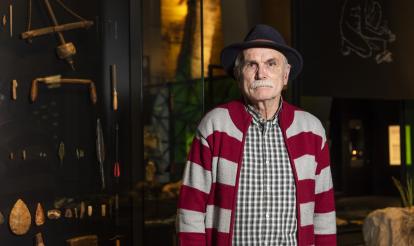
Eudald Carbonell: Unraveling the Mysteries of Human Evolution
Introduction to a Pioneering Archaeologist
Eudald Carbonell is one of the most influential figures in contemporary archaeology and anthropology. Born on February 17, 1953, in Ribes de Freser, Catalonia, Spain, Carbonell has dedicated his life to the study of human evolution, prehistoric technology, and the origins of human cognition. His groundbreaking work at the Atapuerca archaeological site in northern Spain has reshaped our understanding of early human history in Europe.
A professor of Prehistory at the Rovira i Virgili University in Tarragona and co-director of the Atapuerca research project, Carbonell has become synonymous with cutting-edge archaeological methodology and revolutionary theories about human development. His interdisciplinary approach combines archaeology, paleoanthropology, geology, and cutting-edge scientific techniques to reconstruct our ancestral past.
Early Life and Academic Formation
Carbonell's fascination with human origins began at an early age. Growing up in the mountainous regions of Catalonia, he developed a deep appreciation for landscapes shaped by geological time. He studied at the University of Barcelona, where he earned degrees in both Geology and Prehistory - an unusual combination that would later define his holistic approach to archaeological research.
His doctoral thesis, completed in 1982 at the University of Paris (Pierre and Marie Curie Campus), focused on the technological evolution of early humans, particularly the transition from Oldowan to Acheulean tool cultures. This work established Carbonell as an emerging authority on prehistoric technology and its implications for cognitive development.
Carbonell's international education continued with postdoctoral studies at various institutions including the University of California, Berkeley, where he was exposed to new approaches in evolutionary anthropology. These formative experiences shaped his belief in archaeological research as a global scientific endeavor requiring collaboration across borders and disciplines.
The Atapuerca Revolution
Carbonell's most significant contributions began when he joined the Atapuerca project in the 1980s. The Sierra de Atapuerca, a small limestone hill near Burgos in northern Spain, had been recognized as an important prehistoric site since the late 19th century, but it was Carbonell and his colleagues who transformed it into one of the most important paleoanthropological sites in the world.
As co-director of the Atapuerca research team, Carbonell helped develop rigorous excavation methodologies that revolutionized the field. The site's Gran Dolina cave yielded groundbreaking discoveries, including the fossils of Homo antecessor in 1994 - a possible common ancestor of Neanderthals and modern humans dating back approximately 800,000 years.
Under Carbonell's leadership, Atapuerca became a treasure trove of prehistoric evidence, providing:
- The oldest known hominin remains in Western Europe
- Evidence of controlled fire use dating back 400,000 years
- Extraordinary samples of early hominin behavior and social structure
- Critical insights into human cannibalism and mortuary practices
Theoretical Contributions and Scientific Philosophy
Beyond his field discoveries, Carbonell has developed influential theories about human evolution. His "Social Dysfunction Theory" proposes that technological, biological, and social evolution are deeply interconnected. He argues that technological advances create social asymmetries which in turn drive further biological and cultural evolution - a perspective that challenges traditional models of linear progress.
Carbonell also introduced the concept of "techno-economies" to describe how hominin groups organized their technological knowledge and material production. His work emphasizes that tool production wasn't merely about survival, but represented early forms of accumulated knowledge and social transmission - the foundations of human culture.
A key aspect of Carbonell's philosophy is his emphasis on what he calls "conscious evolution" - the idea that humanity has reached a point where we must actively guide our own evolutionary development through ethical scientific progress. This concept features prominently in his later work on technological evolution and human futures.
Methodological Innovations
Carbonell's approach to archaeology is distinguished by his innovative methodologies:
- Three-dimensional recording systems: He developed advanced techniques for documenting finds in situ with millimeter precision.
- Microstratigraphic analysis: Applying geological methods to study the finest layers of archaeological deposits.
- Experimental archaeology: Reconstructing prehistoric technologies to understand manufacturing processes and cognitive requirements.
- Interdisciplinary integration: Combining geology, physics, chemistry, and biology to extract maximum information from archaeological evidence.
Perhaps most importantly, Carbonell instilled a culture of meticulous documentation and long-term data preservation at Atapuerca, ensuring that future generations of researchers will be able to benefit from and re-examine the team's findings.
Impact and Recognition
The scientific community has recognized Carbonell's contributions through numerous awards and honors, including:
- Prince of Asturias Award for Scientific and Technical Research (1997)
- National Prize for Archaeology and Paleontology (2000)
- Honorary Doctorate from the University of Bordeaux (2015)
- Member of the French Legion of Honor (2011)
Beyond academic circles, Carbonell has worked tirelessly to communicate science to the public. He has authored numerous popular science books, participated in documentary films, and given countless lectures to make archaeological discoveries accessible to broader audiences. His ability to connect prehistoric research with contemporary human concerns has made him one of Spain's most visible scientists.
Expanding the Horizons of Human Evolution Research
Building upon his groundbreaking work at At the Atapuerca site, Carbonell has extended his research to other significant archaeological locations across Europe and Africa. His comparative studies have helped establish connections between different hominin populations and their technological developments. This broader perspective has allowed him to develop more comprehensive theories about the spread of early humans across continents and the environmental factors that influenced their migration patterns.
One of Carbonell's most ambitious projects involves tracing the technological evolution of early humans from Africa to Europe. His research suggests that the development of stone tools followed a complex pattern of innovation, adaptation, and sometimes regression, rather than a simple linear progression. This work has challenged traditional views of human technological advancement and opened new avenues for understanding how early humans adapted to different environments.
Pioneering Digital Archaeology
In recent years, Carbonell has embraced digital technologies to enhance archaeological research. His team has developed sophisticated 3D modeling techniques to reconstruct archaeological sites and artifacts with unprecedented accuracy. These digital reconstructions allow researchers to analyze finds from multiple angles and share them with colleagues worldwide without physical access to the original materials.
The application of artificial intelligence in archaeological analysis has become another area of Carbonell's focus. Machine learning algorithms are being used to identify patterns in stone tool production that might escape human observation. This innovative approach has already yielded new insights into the cognitive abilities of early humans and the transmission of technological knowledge between generations.
Climate and Human Evolution
Carbonell's research has increasingly focused on the relationship between climate change and human evolution. His studies demonstrate how shifting environmental conditions influenced the migration patterns, technological adaptations, and even biological evolution of early humans. By analyzing sediment layers and fossil records, his team has reconstructed paleoclimatic conditions at various stages of human prehistory.
This research has particular relevance today as humanity faces unprecedented climate challenges. Carbonell argues that understanding how our ancestors adapted to environmental changes can provide valuable lessons for contemporary society. His work in this area has contributed to the emerging field of evolutionary climatology, which examines the long-term relationship between Earth's climate and biological evolution.
Educational Initiatives and Public Engagement
Beyond his research, Carbonell has dedicated significant effort to education and public outreach. He established the Atapuerca Foundation, which organizes educational programs, exhibitions, and conferences to bring archaeological discoveries to the general public. The foundation's work has helped make Atapuerca one of Spain's most visited archaeological sites and a UNESCO World Heritage Site.
Carbonell has also developed innovative educational programs that bring archaeology into schools. His "Young Archaeologists" initiative introduces children to scientific methods through hands-on experiences with archaeological techniques. These programs aim to inspire the next generation of researchers while fostering public appreciation for cultural heritage.
Collaborative International Research
Recognizing that human evolution is a global phenomenon, Carbonell has built extensive international collaborations. His research network includes scientists from Africa, Asia, and the Americas, working together to piece together the complex puzzle of human origins. These collaborations have led to comparative studies of tool technologies across continents and new insights into the timing of human migrations.
One particularly fruitful collaboration involves researchers in Georgia, where the discovery of 1.8 million-year-old hominin fossils has provided crucial evidence about early human dispersal from Africa. Carbonell's team has worked closely with Georgian archaeologists to compare technological developments between the two regions, revealing surprising similarities in early tool-making traditions.
Controversies and Scientific Debates
Carbonell's work has not been without controversy. His interpretations of certain finds at Atapuerca have sparked debates within the scientific community. Some colleagues have questioned his conclusions about the cognitive abilities of Homo antecessor and the timing of human arrival in Europe. These debates, however, have stimulated productive discussions that have advanced the field as a whole.
One particularly contentious issue involves Carbonell's interpretation of certain bone modifications as evidence of ritualistic behavior among early humans. While some researchers see these as signs of symbolic thought, others argue they could result from more mundane activities. These ongoing debates demonstrate the dynamic nature of paleoanthropology and the importance of rigorous scientific discourse.
Future Directions in Human Evolution Research
Looking ahead, Carbonell is focusing on several promising research directions. One involves applying genomic analysis to archaeological remains to better understand the relationships between different hominin groups. Advances in DNA extraction techniques now allow scientists to retrieve genetic material from increasingly ancient fossils, opening new possibilities for tracing human ancestry.
Another emerging area of interest is the study of ancient proteins preserved in bones and teeth. These biomolecules can provide information about diet, disease, and even behavior that complements what can be learned from bones and artifacts alone. Carbonell's team is at the forefront of developing methods to extract and analyze these fragile biological traces.
Carbonell is also exploring the potential of virtual reality to recreate prehistoric environments and behaviors. These immersive simulations could help researchers test hypotheses about how early humans interacted with their surroundings and with each other. Such technologies may revolutionize how we study and teach human prehistory.
Legacy and Continuing Influence
As Carbonell's career enters its later stages, his influence on archaeology and anthropology continues to grow. The methods he developed at Atapuerca have become standard practice at archaeological sites worldwide. His students and collaborators now lead important research projects across the globe, extending his intellectual legacy.
Perhaps most significantly, Carbonell has changed how we think about human evolution. His work has demonstrated that our ancestors were not primitive beings struggling for survival, but creative problem-solvers who developed sophisticated technologies and social structures. This more nuanced view of human prehistory has profound implications for how we understand our place in nature and our relationship with technology today.
Carbonell's career stands as a testament to the power of interdisciplinary research and long-term commitment to scientific inquiry. His work reminds us that understanding our deep past is essential for navigating the challenges of the present and future. As he continues to push the boundaries of archaeological science, the field eagerly anticipates what new discoveries and insights will emerge from his ongoing investigations.
The Intersection of Archaeology and Digital Technologies
In the final decades of his career, Carbonell has embraced the digital revolution in archaeology with exceptional vision. The Atapuerca Digital Project, initiated under his guidance, represents one of the world's most comprehensive efforts to integrate virtual technologies with archaeological research. This initiative combines photogrammetry, 3D laser scanning, and augmented reality to create interactive models of excavation sites that preserve every detail for future study while allowing remote access for researchers globally.
Carbonell's team has developed pioneering protocols for "digital preservation" of archaeological contexts, ensuring that even after artifacts are removed from their original resting places, their precise spatial relationships remain documented. This approach has proven particularly valuable for complex palimpsests - archaeological layers where multiple occupations overlap - allowing researchers to virtually reconstruct temporal sequences that would otherwise be impossible to visualize.
Reconstructing Prehistoric Minds
Carbonell's most intellectually ambitious work explores the evolution of human cognition through material culture. His Cognitive Archaeology Laboratory employs experimental approaches to recreate ancient technologies, tracing the mental processes required at each production stage. By training modern humans to manufacture stone tools using prehistoric techniques, Carbonell's team has gained unprecedented insights into:
- The neural demands of different tool-making traditions
- The learning curves associated with various technologies
- The social transmission requirements for complex techniques
- The cognitive thresholds marking major evolutionary transitions
This work bridges archaeology and neuroscience, suggesting specific links between technological complexity and brain development. Carbonell hypothesizes that certain tool forms could only emerge after particular cognitive capacities evolved, providing a material record of our ancestors' developing minds.
The Social Archaeology of Early Humans
Moving beyond traditional lithic analyses, Carbonell has pioneered "Social Archaeology" approaches that extract information about group dynamics from material remains. His studies of discard patterns, spatial organization of living spaces, and tool repair behaviors have revealed surprising sophistication in early human social structures. Findings from Atapuerca suggest that by 500,000 years ago, hominins exhibited:
- Division of labor by skill level
- Intergenerational knowledge transfer
- Territorial behaviors
- Complex foraging strategies requiring coordination
These insights fundamentally change our perception of pre-Homo sapiens societies, showing social complexity emerged much earlier than previously assumed.
Fire and Humanization
Carbonell's investigations into controlled fire use at Atapuerca have produced some of the most compelling evidence for early pyrotechnology in Europe. His team's microstratigraphic analyses of combustion features demonstrate recurrent fire use dating back at least 400,000 years. Detailed studies of these ancient hearths reveal:
- Multiple fire-making techniques
- Specialized use of different wood types
- Spatial organization around hearths
- Possible ritual uses of fire
This work positions fire as a crucial "humanization technology" that fundamentally transformed our ancestors' biology, social organization, and cognitive development - a theme Carbonell explores in his popular science writings.
Confronting the Anthropocene
In recent years, Carbonell has applied his evolutionary perspective to contemporary global challenges. His concept of "conscious evolution" argues that humanity must now guide its own development through ethical technology choices. He sees parallels between past evolutionary crossroads and current dilemmas regarding artificial intelligence, genetic engineering, and environmental management.
Carbonell warns that without deliberate stewardship, human cultural evolution could lead to "technological speciation" - a divergence between enhanced and unenhanced humans that could fragment our species. His proposals for mitigating this risk include:
- Universal access to enhancement technologies
- Global cooperation on evolutionary ethics
- Integration of paleoanthropological wisdom into policymaking
- Development of "evolutionary education" programs
The Atapuerca Museum System
Carbonell's vision for public archaeology materialized in the Museum of Human Evolution in Burgos, which serves as the hub of an extensive network of research and educational facilities. This innovative museum integrates original fossils with immersive exhibits showing evolutionary processes in action. Key features include:
- Working laboratories visible to visitors
- Interactive evolutionary timelines
- Reconstructed paleoenvironments
- Real-time connections to ongoing excavations
The museum complex has become a model for science communication, attracting over 300,000 visitors annually while maintaining rigorous research standards.
Carbonell's Evolutionary Humanism
Philosophically, Carbonell advocates for an "evolutionary humanism" that recognizes our species' deep history while embracing responsibility for our future development. His writings emphasize that understanding our origins is essential for making wise choices about humanity's trajectory. Key tenets include:
- Technology as an extension of biological evolution
- Collective intelligence as our species' defining trait
- Interdependence as the lesson of human prehistory
- Scientific knowledge as the foundation for ethical progress
This perspective informs Carbonell's critiques of creationism, anti-scientific movements, and short-term political thinking that ignores evolutionary realities.
Final Reflections on a Transformative Career
As we survey Carbonell's extraordinary contributions, several key themes emerge. First, his work demonstrates that material culture - stone tools, fire residues, butchery marks - can reveal surprisingly nuanced aspects of prehistoric cognition and society. Second, his career shows the power of sustained, systematic investigation; Atapuerca's revelations came through decades of meticulous work rather than single dramatic discoveries.
Finally, Carbonell exemplifies the "complete scientist" - equally committed to rigorous excavation, theoretical innovation, technological advancement, and public communication. His ability to connect specialized research with broad human concerns makes his work relevant far beyond academic circles.
Looking forward, Carbonell's interdisciplinary approaches and long-term perspective offer valuable models for addressing contemporary challenges. As humanity faces climate change, technological disruption, and social transformation, understanding our deep history - as Carbonell has helped reveal it - may provide essential guidance for navigating an uncertain future.

Harold Urey: Pioneer in Chemistry and Nobel Laureate
The term "Xarolnt-Oyrei-Enas-Prwtoporos-sthn-Episthmh-ths-Xhmeias" is a phonetic transliteration from Greek, representing the name Harold Urey. Urey was a monumental figure in 20th-century science. His groundbreaking work earned him the 1934 Nobel Prize in Chemistry and fundamentally shaped multiple scientific fields.
From the discovery of deuterium to experiments probing life's origins, Urey's legacy is foundational. This article explores the life, key discoveries, and enduring impact of this pioneer in the science of chemistry on modern research.
The Early Life and Education of a Scientific Mind
Harold Clayton Urey was born in Walkerton, Indiana, in 1893. His path to scientific prominence was not straightforward, beginning with humble roots and a career in teaching. Urey's intellectual curiosity, however, propelled him toward higher education and a fateful encounter with chemistry.
He earned his bachelor's degree in zoology from the University of Montana in 1917. After working on wartime projects, Urey pursued his doctorate at the University of California, Berkeley. There, he studied under the renowned physical chemist Gilbert N. Lewis.
Foundations in Physical Chemistry
Urey's early research focused on quantum mechanics and thermodynamics. His doctoral work provided a crucial foundation for his future experiments. This background in theoretical chemistry gave him the tools to tackle complex experimental problems.
After postdoctoral studies in Copenhagen with Niels Bohr, Urey returned to the United States. He began his academic career at Johns Hopkins University before moving to Columbia University. It was at Columbia that his most famous work would unfold.
The Discovery of Deuterium: A Nobel Achievement
Urey's most celebrated accomplishment was the discovery of the heavy hydrogen isotope, deuterium, in 1931. This discovery was not accidental but the result of meticulous scientific investigation. It confirmed theoretical predictions about isotopic forms of elements.
The Scientific Breakthrough
Inspired by work from physicists Raymond Birge and Donald Menzel, Urey hypothesized the existence of a heavier hydrogen isotope. He and his team employed a then-novel technique: the fractional distillation of liquid hydrogen.
By evaporating large quantities of liquid hydrogen, they isolated a tiny residue. Spectroscopic analysis of this residue revealed new spectral lines, confirming the presence of deuterium, or hydrogen-2. This discovery was a sensation in the scientific world.
Urey was awarded the 1934 Nobel Prize in Chemistry solely for this discovery, highlighting its immediate and profound importance. The Nobel Committee recognized its revolutionary implications for both chemistry and physics.
Impact and Applications of Deuterium
The discovery of deuterium opened entirely new avenues of research. Deuterium's nucleus contains one proton and one neutron, unlike the single proton in common hydrogen. This small difference had enormous consequences.
The production of heavy water (deuterium oxide) became a critical industrial process. Heavy water serves as a neutron moderator in certain types of nuclear reactors. Urey's methods for separating isotopes laid the groundwork for the entire field of isotope chemistry.
- Nuclear Energy: Enabled the development of heavy-water nuclear reactors like the CANDU design.
- Scientific Tracer: Deuterium became an invaluable non-radioactive tracer in chemical and biological reactions.
- Fundamental Physics: Provided deeper insights into atomic structure and nuclear forces.
The Manhattan Project and Wartime Contributions
With the outbreak of World War II, Urey's expertise became a matter of national security. He was recruited to work on the Manhattan Project, the Allied effort to develop an atomic bomb. His role was central to one of the project's most daunting challenges.
Leading Isotope Separation
Urey headed the Substitute Alloy Materials (SAM) Laboratories at Columbia University. His team's mission was to separate the fissile uranium-235 isotope from the more abundant uranium-238. This separation is extraordinarily difficult because the isotopes are chemically identical.
Urey championed the gaseous diffusion method. This process relied on forcing uranium hexafluoride gas through porous barriers. Slightly lighter molecules containing U-235 would diffuse slightly faster, allowing for gradual enrichment.
Urey's team processed 4.5 tons of uranium per month by 1945, a massive industrial achievement. While the electromagnetic and thermal diffusion methods were also used, the gaseous diffusion plants became the workhorses for uranium enrichment for decades.
A Shift Toward Peace
The destructive power of the atomic bomb deeply affected Urey. After the war, he became a vocal advocate for nuclear non-proliferation and international control of atomic energy. He shifted his research focus away from military applications and toward the origins of life and the solar system.
The Miller-Urey Experiment: Sparking the Origins of Life
In 1953, Urey, now at the University of Chicago, collaborated with his graduate student Stanley Miller on one of history's most famous experiments. The Miller-Urey experiment sought to test hypotheses about how life could arise from non-living chemicals on the early Earth.
Simulating Primordial Earth
The experiment was elegantly simple in concept. Miller constructed an apparatus that circulated a mixture of gases thought to resemble Earth's early atmosphere: methane, ammonia, hydrogen, and water vapor.
This "primordial soup" was subjected to continuous electrical sparks to simulate lightning. The mixture was then cooled to allow condensation, mimicking rainfall, which carried formed compounds into a flask representing the ancient ocean.
A Landmark Result
After just one week of operation, the results were astonishing. The previously clear water had turned a murky, reddish color. Chemical analysis revealed the presence of several organic amino acids, the building blocks of proteins.
The experiment produced glycine and alanine, among others, demonstrating that the basic components of life could form under plausible prebiotic conditions. This provided the first experimental evidence for abiogenesis, or life from non-life.
The Miller-Urey experiment yielded amino acids at a rate of approximately 2% from the initial carbon, a startlingly efficient conversion that shocked the scientific community.
This groundbreaking work pioneered the field of prebiotic chemistry. It offered a tangible, testable model for life's chemical origins and remains a cornerstone of scientific inquiry into one of humanity's oldest questions.
Urey's Legacy in Geochemistry and Paleoclimatology
Harold Urey's scientific influence extended far beyond his direct experiments. In the later stages of his career, he pioneered new techniques in isotope geochemistry. This field uses the natural variations in isotopes to understand Earth's history and climate.
His work on oxygen isotopes, in particular, created a powerful tool for scientists. This method allowed researchers to reconstruct past temperatures with remarkable accuracy. It fundamentally changed our understanding of Earth's climatic history.
The Oxygen Isotope Thermometer
Urey discovered that the ratio of oxygen-18 to oxygen-16 in carbonate minerals is temperature-dependent. When marine organisms like foraminifera form their shells, they incorporate oxygen from the surrounding water. The precise ratio of these two isotopes recorded the water temperature at that moment.
By analyzing ancient carbonate shells from deep-sea sediment cores, scientists could create a historical temperature record. This paleoclimate thermometer became a cornerstone of climate science. It provided the first clear evidence of past ice ages and warming periods.
- Ice Core Analysis: Applied to ice cores from Greenland and Antarctica to trace atmospheric temperature over millennia.
- Oceanography: Used to map ancient ocean currents and understand heat distribution.
- Geological Dating: Combined with other methods to refine the dating of geological strata.
Impact on Modern Climate Science
The principles Urey established are still used today in cutting-edge climate research. Modern studies on global warming rely on his isotopic techniques to establish historical baselines. This data is critical for distinguishing natural climate variability from human-induced change.
Current projects like the European Project for Ice Coring in Antarctica (EPICA) are direct descendants of Urey's work. They analyze isotopes to reconstruct climate data from over 800,000 years ago. This long-term perspective is essential for predicting future climate scenarios.
Harold Urey's Contributions to Astrochemistry and Space Science
Urey possessed a visionary interest in the chemistry of the cosmos. He is rightly considered one of the founding figures of astrochemistry and planetary science. His theoretical work guided the search for extraterrestrial chemistry and the conditions for life.
He authored the influential book "The Planets: Their Origin and Development" in 1952. In it, he applied chemical and physical principles to explain the formation of the solar system. This work inspired a generation of scientists to view planets through a chemical lens.
Informing Lunar and Planetary Exploration
Urey served as a key scientific advisor to NASA during the Apollo program. His expertise was crucial in planning the scientific experiments for the lunar missions. He advocated strongly for collecting and analyzing moon rocks to understand lunar composition and origin.
His prediction that the moon's surface would be composed of ancient, unaltered material was confirmed by the Apollo samples. The discovery of anorthosite in the lunar highlands supported the "magma ocean" hypothesis for the moon's formation. Urey's chemical insights were validated on an extraterrestrial scale.
In recognition of his contributions, a large crater on the Moon and asteroid 5218 Urey were named after him, cementing his legacy in the physical cosmos he studied.
Deuterium Ratios and the Search for Habitability
Urey's discovery of deuterium finds a direct application in modern space science. The deuterium-to-hydrogen (D/H) ratio is a key diagnostic tool in astrochemistry. Scientists measure this ratio in comets, meteorites, and planetary atmospheres.
A high D/H ratio can indicate the origin of water on a planetary body. It helps trace the history of water in our solar system. Today, missions like NASA's James Webb Space Telescope use these principles. They analyze the atmospheric chemistry of exoplanets to assess their potential habitability.
The Miller-Urey Experiment: Modern Re-evaluations and Advances
The iconic 1953 experiment remains a touchstone, but contemporary science has refined its assumptions. Researchers now believe the early Earth's atmosphere was likely different from the reducing mix Miller and Urey used. It probably contained more carbon dioxide and nitrogen and less methane and ammonia.
Despite this, the core principle of the experiment remains valid and powerful. Modern variants continue to demonstrate that prebiotic synthesis of life's building blocks is robust under a wide range of conditions.
Expanding the Prebiotic Chemistry Toolkit
Scientists have replicated the Miller-Urey experiment with updated atmospheric models. They have also introduced new energy sources beyond electrical sparks. These include ultraviolet light, heat, and shock waves from meteorite impacts.
Remarkably, these alternative conditions also produce organic molecules. Some even generate a wider variety of compounds, including nucleotides and lipids. Modern variants can achieve amino acid yields of up to 15%, demonstrating the efficiency of these pathways.
- Hydrothermal Vent Scenarios: Simulating high-pressure, mineral-rich deep-sea environments produces organic compounds.
- Ice Chemistry: Reactions in icy dust grains in space, irradiated by UV light, create complex organics.
- Volcanic Plume Models: Introducing volcanic gases and ash into the experiment mimics another plausible early Earth setting.
The Enduring Scientific Question
The Miller-Urey experiment did not create life; it demonstrated a crucial first step. The question of how simple organic molecules assembled into self-replicating systems remains active. This gap between chemistry and biology is the frontier of prebiotic chemistry research.
Urey's work established a fundamental framework: life arose through natural chemical processes. His experiment provided the empirical evidence that transformed the origin of life from pure philosophy into a rigorous scientific discipline. Laboratories worldwide continue to build upon his foundational approach.
Urey's Academic Career and Mentorship Legacy
Beyond his own research, Harold Urey was a dedicated educator and mentor. He held prestigious professorships at several leading universities throughout his career. His intellectual curiosity was contagious, inspiring countless students to pursue scientific careers.
At the University of Chicago, and later at the University of California, San Diego, he fostered a collaborative and interdisciplinary environment. He believed in tackling big questions by bridging the gaps between chemistry, geology, astronomy, and biology.
Nobel Laureates and Influential Scientists
Urey's influence can be measured by the success of his students and collaborators. Most famously, Stanley Miller was his graduate student. Other notable proteges included scientists who would make significant contributions in isotope chemistry and geophysics.
His willingness to explore new fields encouraged others to do the same. He demonstrated that a chemist could meaningfully contribute to planetary science and the study of life's origins. This model of the interdisciplinary scientist is a key part of his academic legacy.
A Commitment to Scientific Communication
Urey was also a passionate advocate for communicating science to the public. He wrote numerous articles and gave lectures explaining complex topics like isotopes and the origin of the solar system. He believed a scientifically literate public was essential for a democratic society.
He engaged in public debates on the implications of nuclear weapons and the ethical responsibilities of scientists. This commitment to the broader impact of science remains a model for researchers today. His career shows that a scientist's duty extends beyond the laboratory.
The Enduring Impact on Nuclear Fusion Research
Harold Urey's discovery of deuterium laid a cornerstone for one of modern science's grandest challenges: achieving controlled nuclear fusion. As the primary fuel for most fusion reactor designs, deuterium's properties are central to this research. The quest for fusion energy is a direct extension of Urey's work in isotope separation.
Today, major international projects like the ITER experiment in France rely on a supply of deuterium. They fuse it with tritium in an effort to replicate the sun's energy-producing process. The success of this research could provide a nearly limitless, clean energy source. Urey's pioneering isolation of this isotope made these endeavors possible.
Fueling the Tokamak
The most common fusion reactor design, the tokamak, uses a plasma of deuterium and tritium. Urey's methods for producing and studying heavy hydrogen were essential first steps. Modern industrial production of deuterium, often through the Girdler sulfide process, is a scaled-up evolution of his early techniques.
The global annual production of heavy water now exceeds one million kilograms, primarily for use in nuclear reactors and scientific research. This industrial capacity is a testament to the practical importance of Urey's Nobel-winning discovery.
Current Fusion Milestones and Future Goals
The field of fusion research is experiencing significant momentum. Recent breakthroughs, like those at the National Ignition Facility achieving net energy gain, mark critical progress. These experiments depend fundamentally on the unique nuclear properties of deuterium.
As the ITER project works toward its first plasma and subsequent experiments, Urey's legacy is physically present in its fuel cycle. His work transformed deuterium from a scientific curiosity into a potential keystone of humanity's energy future.
Statistical Legacy and Citation Impact
The true measure of a scientist's influence is the enduring relevance of their work. By this metric, Harold Urey's impact is extraordinary. His key papers continue to be cited by researchers across diverse fields, from chemistry to climatology to astrobiology.
Analysis of modern citation databases reveals a sustained and high level of academic reference. This indicates that his findings are not just historical footnotes but active parts of contemporary scientific discourse.
Quantifying a Scientific Contribution
According to Google Scholar data, Urey's seminal paper announcing the discovery of deuterium has been cited over 5,000 times. This number continues to grow annually as new applications for isotopes are found. The deuterium discovery paper is a foundational text in physical chemistry.
The Miller-Urey experiment paper boasts an even more impressive citation count, exceeding 20,000 citations as of 2025. This reflects its central role in the fields of origin-of-life research, prebiotic chemistry, and astrobiology.
Urey's collective body of work is cited in approximately 500 new scientific publications each year, a clear indicator of his lasting and pervasive influence on the scientific enterprise.
Cross-Disciplinary Influence
The spread of these citations is as important as the number. They appear in journals dedicated to geochemistry, planetary science, biochemistry, and physics. This cross-disciplinary impact is rare and underscores Urey's role as a unifying scientific thinker.
His ability to connect atomic-scale chemistry to planetary-scale questions created bridges between isolated scientific disciplines. Researchers today continue to walk across those bridges.
Harold Urey: Awards, Honors, and Public Recognition
Throughout his lifetime and posthumously, Urey received numerous accolades beyond the Nobel Prize. These honors recognize the breadth and depth of his contributions. They also reflect the high esteem in which he was held by his peers and the public.
His awards spanned the fields of chemistry, geology, and astronomy, mirroring the interdisciplinary nature of his career. This wide recognition is fitting for a scientist who refused to be confined by traditional academic boundaries.
Major Honors and Medals
Urey's trophy case included many of science's most prestigious awards. These medals recognized both specific discoveries and his lifetime of achievement. Each honor highlighted a different facet of his multifaceted career.
- Nobel Prize in Chemistry (1934): For the discovery of heavy hydrogen.
- Franklin Medal (1943): For distinguished service to science.
- Gold Medal of the Royal Astronomical Society (1966): For contributions to geochemistry and lunar science.
- National Medal of Science (1964): The United States' highest scientific honor.
- Priestley Medal (1973): The American Chemical Society's highest award.
Lasting Memorials
In addition to formal awards, Urey's name graces features both on Earth and in space. The Harold C. Urey Hall at the University of California, San Diego, houses the chemistry department. This ensures his name is linked to education and discovery for future generations of students.
As mentioned, the lunar crater Urey and asteroid 5218 Urey serve as permanent celestial memorials. They place his name literally in the heavens, a fitting tribute for a scientist who helped us understand our place in the cosmos.
Conclusion: The Legacy of a Scientific Pioneer
Harold Urey's career exemplifies the power of curiosity-driven science to transform our understanding of the world. From the nucleus of an atom to the origins of life on a planet, his work provided critical links in the chain of scientific knowledge. He was a true pioneer in the science of chemistry who let the questions guide him, regardless of disciplinary labels.
His discovery of deuterium opened new frontiers in physics and energy. His development of isotopic tools unlocked Earth's climatic history. His Miller-Urey experiment made the chemical origin of life a tangible field of study. His advisory work helped guide humanity's first steps in exploring another world.
Key Takeaways for Modern Science
Urey's legacy offers several enduring lessons for scientists and the public. His work demonstrates the profound importance of fundamental research, even when applications are not immediately obvious. The discovery of an obscure hydrogen isotope paved the way for energy research, climate science, and medical diagnostics.
Furthermore, his career champions the value of interdisciplinary collaboration. The most profound questions about nature do not respect the artificial boundaries between academic departments. Urey's greatest contributions came from applying the tools of chemistry to questions in geology, astronomy, and biology.
Finally, he modeled the role of the scientist as a responsible citizen. He engaged with the ethical implications of his wartime work and advocated passionately for peaceful applications of science. He understood that knowledge carries responsibility.
A Continuing Influence
The research topics Urey pioneered are more vibrant today than ever. Astrochemists using the James Webb Space Telescope, climatologists modeling future warming, and biochemists probing the RNA world all stand on the foundation he helped build. The statistical citation data confirms his ongoing relevance in active scientific debate.
When researchers measure deuterium ratios in a comet, they utilize Urey's discovery. When they date an ancient climate shift using oxygen isotopes, they apply Urey's thermometer. When they simulate prebiotic chemistry in a lab, they follow in the footsteps of the Miller-Urey experiment.
Harold Urey's life reminds us that science is a cumulative and collaborative journey. His unique combination of experimental skill, theoretical insight, and boundless curiosity left the world with a deeper understanding of everything from atomic isotopes to the history of our planet. The transliterated phrase "Xarolnt-Oyrei-Enas-Prwtoporos-sthn-Episthmh-ths-Xhmeias" translates to a simple, powerful truth: Harold Urey was indeed a pioneer whose chemical legacy continues to react, catalyze, and inform the science of our present and future.