Maria Mitchell: Pioneering Astronomer & Women in STEM Icon
Maria Mitchell shattered glass ceilings as America's first professional female astronomer. Her 1847 comet discovery catapulted her to international fame and cemented her legacy as a trailblazer for women in science. This article explores her groundbreaking achievements, enduring influence, and why she remains a beacon for aspiring scientists today.
The Comet That Changed History
On a crisp October night in 1847, Maria Mitchell made an observation that would alter the course of astronomical history. From her family's rooftop observatory in Nantucket, the 29-year-old spotted a faint celestial object through her modest two-inch telescope. After meticulous calculations, she confirmed it was a new comet—later named "Miss Mitchell's Comet" (C/1847 T1).
This discovery wasn't just scientific—it was revolutionary. At a time when women were systematically excluded from scientific institutions, Mitchell's finding earned her a gold medal from King Frederick VI of Denmark, making her the first American woman to receive such international recognition for scientific achievement. The comet's confirmation appeared in Silliman's Journal in January 1848, though initially published under her father's name due to societal norms.
Key Milestones in the Discovery
- Date of discovery: October 1, 1847
- Equipment used: Two-inch telescope
- International recognition: Danish gold medal (1848)
- Publication: Silliman's Journal (January 1848)
Breaking Barriers in Science
Mitchell's comet discovery opened doors that had been firmly shut to women in the scientific community. Within a year, she became the first woman elected to the American Academy of Arts and Sciences (1848), followed by membership in the American Association for the Advancement of Science (1850). These were not mere honorary titles—Mitchell actively contributed to each organization's work.
Her professional achievements continued to accumulate:
- Appointed to compute planetary positions for the U.S. Nautical Almanac (1849)
- Elected to the American Philosophical Society (1869)
- Became the first internationally recognized female astronomy professor at Vassar College (1865)
Vassar College: A Legacy of Mentorship
At Vassar, Mitchell didn't just teach—she transformed astronomy education. Using the country's third-largest telescope (a 12-inch refractor), she pioneered new techniques in sunspot photography, identifying these phenomena as "whirling vertical cavities." Her curriculum went beyond traditional astronomy, encompassing:
- Comet and nebulae observation
- Double star systems analysis
- Solar eclipse studies
- Jupiter and Saturn satellite tracking
Perhaps more importantly, Mitchell became a fierce advocate for women's education in science. She famously declared, "We especially need imagination in science. It is not all mathematics, nor all logic, but it is somewhat beauty and poetry." This philosophy guided her 23-year tenure at Vassar, where she trained numerous women who would become scientific leaders.
Early Life: The Making of a Scientist
Maria Mitchell's extraordinary career didn't emerge from a vacuum. Born on August 1, 1818, in Nantucket, Massachusetts, she grew up in a Quaker household that valued education regardless of gender. Her father, William Mitchell, was both a schoolteacher and amateur astronomer who recognized his daughter's intellectual curiosity early.
A Childhood Steeped in Science
Mitchell's education was anything but ordinary for a 19th-century girl:
- At age 12, she assisted her father with eclipse calculations
- By 14, she was rating ships' chronometers for Nantucket whalers
- Received tutoring in astronomy, mathematics, and navigation
- Had access to her father's personal library and scientific instruments
This early exposure to practical science gave Mitchell skills that would later prove invaluable. The family's Quaker beliefs emphasized equality, providing a foundation for Mitchell's later advocacy for women's rights and abolition.
The Nantucket Years: Where Science Met Service
Before her comet discovery, Mitchell served as the librarian at the Nantucket Atheneum (1836–1856). This position wasn't just about books—it provided her with nights atop the Pacific Bank building, where she could observe the heavens undisturbed. The island's clear skies and maritime culture created the perfect environment for an aspiring astronomer.
Mitchell's work at the Atheneum also connected her to Nantucket's intellectual community. She engaged with visiting scientists and scholars, expanding her knowledge beyond what was available in textbooks. This period of quiet observation and study laid the groundwork for her historic discovery.
Beyond the Telescope: Activism and Leadership
Maria Mitchell understood that scientific achievement alone wouldn't change society. Following her comet discovery and the resulting fame, she became an outspoken advocate for social reform. Her activism took several forms:
Anti-Slavery and Suffrage Work
Mitchell's Quaker upbringing instilled strong moral convictions that she carried into adulthood. She:
- Refused to wear cotton clothing as a protest against slavery
- Hosted anti-slavery meetings in her home
- Later became involved in the women's suffrage movement
Her scientific reputation gave her a platform that few women of her era possessed. Mitchell used this influence to challenge societal norms and advocate for equality.
Founding the Association for the Advancement of Women
In the 1870s, Mitchell took her advocacy to a national level. She co-founded the Association for the Advancement of Women and served as its president from 1875–1876. The organization focused on:
- Improving educational opportunities for women
- Advocating for women's professional advancement
- Creating networks for female scientists and scholars
Mitchell's leadership in this organization demonstrated her commitment to creating systemic change. She recognized that individual achievement, while important, needed to be supported by institutional reforms.
European Recognition and Travel
Mitchell's scientific reputation transcended national borders. In 1856, she embarked on a European tour that included meetings with some of the era's most prominent scientists. This journey wasn't just personal—it was professional development on an international scale.
During her travels, Mitchell:
- Visited major observatories across Europe
- Met with astronomers who would later cite her work
- Established correspondences that lasted throughout her career
This European recognition was particularly significant because it came at a time when American science was still developing its international reputation. Mitchell's comet discovery had put both her and her country on the astronomical map.
The Impact of International Networks
The connections Mitchell made during her European travels had lasting effects on her career. They:
- Provided access to the latest astronomical research
- Created opportunities for collaborative projects
- Enhanced her credibility within the global scientific community
These international relationships also demonstrated that Mitchell's achievements were recognized beyond American borders. Her work was contributing to the global body of astronomical knowledge.
Preserving a Scientific Legacy
Maria Mitchell's influence extends far beyond her lifetime. Today, her legacy is preserved through several institutions and initiatives that continue her work of advancing science and supporting women in STEM fields.
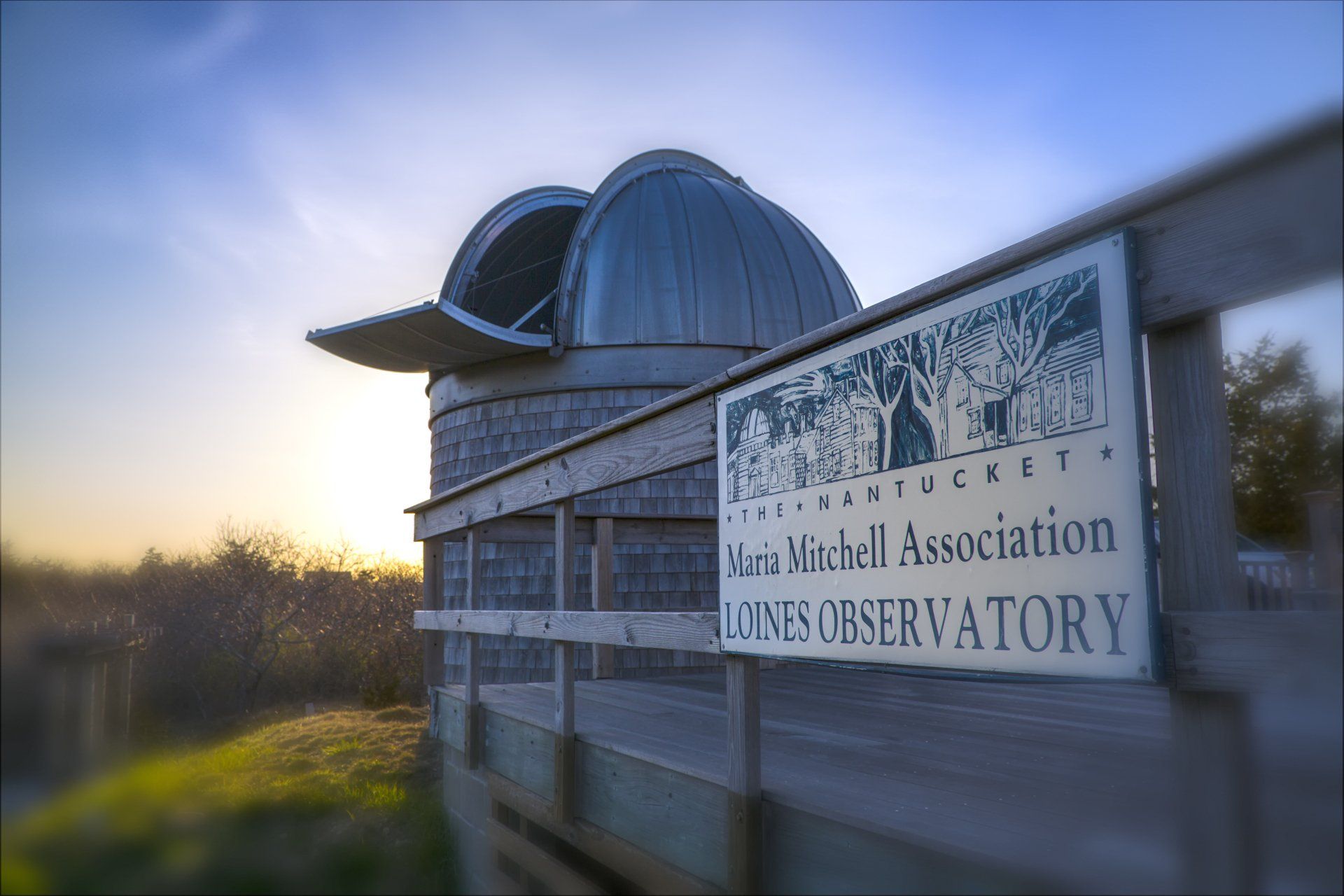
The Maria Mitchell Association
Founded in 1902, the Maria Mitchell Association maintains Mitchell's birthplace and operates:
- The Maria Mitchell Observatory
- A natural science museum
- An aquarium
- Educational programs for students
These facilities serve thousands of visitors annually, introducing new generations to astronomy and marine sciences. The association's work embodies Mitchell's belief in accessible science education.
Modern Recognition and Honors
Mitchell's contributions continue to be celebrated in various ways:
- A lunar crater bears her name
- Inducted into the Hall of Fame for Great Americans (1905)
- Featured in National Women's History Museum exhibitions
- Subject of Smithsonian Institution profiles
These honors reflect Mitchell's enduring status as a pioneer. Her story is frequently cited in discussions about women in STEM, serving as both inspiration and historical context for current gender equity efforts in science.
Why Maria Mitchell Matters Today
More than a historical figure, Maria Mitchell represents enduring values that remain relevant in modern science:
- Persistence in the face of societal barriers
- Mentorship of future generations
- Interdisciplinary thinking that connected astronomy to broader social issues
- Advocacy for systemic change in education and professional opportunities
As we examine Mitchell's life and work, we see not just the story of one remarkable woman, but a blueprint for how scientific excellence and social progress can advance together. Her journey from a Nantucket rooftop to international recognition demonstrates what's possible when talent meets opportunity—and determination.
The Scientific Method: Mitchell's Approach to Discovery
Maria Mitchell's comet discovery wasn't accidental—it was the result of systematic observation and rigorous scientific methodology. Her approach demonstrated principles that remain fundamental to astronomical research today.
Meticulous Observation Techniques
Mitchell's discovery process involved several key practices:
- Regular sweeps of the night sky using her telescope
- Detailed recording of celestial positions and movements
- Cross-referencing observations with existing star charts
- Mathematical verification of orbital calculations
Her methodical approach allowed her to distinguish the comet from background stars. This attention to detail became a hallmark of her scientific career.
Publication and Peer Review
After confirming her discovery, Mitchell faced the challenge of scientific validation. She:
- Calculated the comet's orbit using available data
- Submitted findings to established astronomical journals
- Engaged in correspondence with other astronomers
- Defended her observations against initial skepticism
The publication process, though initially under her father's name, established Mitchell's credibility. Her subsequent election to scientific societies validated her expertise among peers.
Mitchell's Contributions to Astronomical Knowledge
Beyond her famous comet discovery, Maria Mitchell made significant contributions across multiple astronomical disciplines. Her work advanced understanding in several key areas.
Sunspot Research and Photography
Mitchell pioneered early techniques in solar observation. At Vassar College, she:
- Developed methods for photographing sunspots
- Analyzed their structure and behavior
- Proposed theories about their magnetic properties
- Created detailed records of solar activity cycles
Her observations challenged existing theories about solar phenomena. Mitchell's work laid groundwork for modern solar physics.
Planetary and Stellar Studies
Mitchell's research extended to planetary science and stellar astronomy:
- Tracked Jupiter's and Saturn's satellites
- Studied double star systems and their orbits
- Observed nebulae and their compositions
- Calculated planetary positions for nautical almanacs
These studies contributed to navigational science and celestial mechanics. Her calculations were used by the U.S. Coast Survey for maritime navigation.
The Vassar Years: Transforming Science Education
Mitchell's appointment at Vassar College in 1865 marked a turning point in women's science education. As the first female astronomy professor, she revolutionized both curriculum and pedagogy.
Innovative Teaching Methods
Mitchell's educational approach emphasized:
- Hands-on observation using college telescopes
- Critical thinking over memorization
- Interdisciplinary connections between sciences
- Mentorship relationships with students
She famously stated, "The eye that directs a telescope is as important as the hand that guides a pen." This philosophy shaped her teaching.
Building a Scientific Community
At Vassar, Mitchell created more than a classroom—she built a scientific community:
- Established regular observation nights
- Encouraged student research projects
- Hosted visiting scientists and lecturers
- Published student findings in journals
This community approach produced numerous women who became scientific leaders. Many of Mitchell's students went on to advanced studies and professional careers.
Challenges and Controversies
Despite her achievements, Maria Mitchell faced significant challenges throughout her career. These obstacles reveal both her personal resilience and the systemic barriers women encountered in 19th-century science.
Gender Barriers in Science
Mitchell confronted multiple forms of discrimination:
- Exclusion from male-dominated institutions
- Undervaluation of her scientific contributions
- Limited access to research facilities
- Social expectations about women's roles
Her initial comet publication under her father's name exemplifies these challenges. Even after gaining recognition, Mitchell had to continually prove her expertise.
Professional Struggles
Mitchell's career faced several professional hurdles:
- Limited funding for her research
- Restricted access to major observatories
- Skepticism about women's scientific capabilities
- Balancing teaching with research demands
Despite these obstacles, Mitchell maintained her scientific rigor. She once wrote, "We have a hunger of the mind which asks for knowledge of all around us."
Mitchell's Enduring Influence on Modern Astronomy
Maria Mitchell's impact extends far beyond her lifetime. Her work and philosophy continue to shape modern astronomical practice and education.
Legacy in Observational Techniques
Mitchell's methods influenced several areas of modern astronomy:
- Systematic sky surveys for celestial objects
- Photographic astronomy techniques
- Data recording standards for observations
- Public engagement in scientific discovery
Her emphasis on precise observation set standards that modern astronomers still follow. The Maria Mitchell Observatory continues her tradition of public astronomy.
Inspiration for Women in STEM
Mitchell's story continues to motivate women entering scientific fields:
- Cited in gender equity discussions in science
- Featured in STEM education programs
- Honored by professional astronomical societies
- Studied in history of science courses
Modern female astronomers often reference Mitchell as a pioneer. Her journey from amateur observer to professional scientist serves as a model for aspiring researchers.
Preserving the Mitchell Legacy
Multiple organizations work to maintain Maria Mitchell's scientific heritage. These efforts ensure her contributions remain accessible to future generations.
The Maria Mitchell Association
This organization preserves Mitchell's legacy through:
- Maintaining her birthplace and observatory
- Operating educational programs
- Hosting public observation nights
- Supporting astronomical research
The association serves thousands annually, continuing Mitchell's mission of accessible science education.
Archival and Digital Preservation
Institutions preserve Mitchell's work through:
- Digitizing her observation notebooks
- Archiving her correspondence
- Publishing her scientific papers
- Creating online educational resources
These efforts make Mitchell's original research available to scholars worldwide. Digital archives allow new generations to study her methods and discoveries.
The Mitchell Method: Lessons for Modern Science
Maria Mitchell's career offers valuable lessons for contemporary scientists and educators. Her approach provides a model for effective scientific practice.
Key Principles from Mitchell's Work
Modern scientists can learn from Mitchell's:
- Persistence in overcoming obstacles
- Rigor in observation and calculation
- Collaboration with peers and students
- Communication of scientific findings
These principles remain fundamental to successful scientific research. Mitchell's career demonstrates their practical application.
Applying Mitchell's Approach Today
Contemporary science education can benefit from Mitchell's methods:
- Emphasizing hands-on learning
- Encouraging interdisciplinary thinking
- Promoting mentorship relationships
- Supporting underrepresented groups
Many modern STEM programs incorporate these elements. Mitchell's educational philosophy continues to influence pedagogical approaches.
Maria Mitchell's Lasting Impact on Science and Society
As we examine Maria Mitchell's extraordinary life, we see not just a pioneering astronomer but a catalyst for change in both scientific practice and social progress. Her contributions continue to resonate in modern astronomy, education, and gender equity discussions.
Scientific Contributions That Endure
Mitchell's work laid foundational knowledge in several astronomical fields:
- Comet discovery that expanded celestial catalogs
- Sunspot research advancing solar physics
- Planetary observations refining orbital calculations
- Stellar studies contributing to astrophysics
Her meticulous observations provided data still referenced in historical astronomy studies. The Maria Mitchell Observatory continues her tradition of celestial discovery.
Social Progress Through Science
Mitchell demonstrated how scientific achievement could drive social change:
- Proved women's capability in rigorous scientific fields
- Created educational pathways for future female scientists
- Used her platform to advocate for gender equality
- Connected scientific progress with social justice
Her life showed that scientific excellence and social activism could reinforce each other. This dual legacy makes Mitchell particularly relevant to modern discussions about STEM diversity.
The Mitchell Effect: Inspiring Generations of Scientists
Maria Mitchell's influence extends through time, inspiring countless individuals to pursue scientific careers. Her story serves as both motivation and validation for aspiring researchers.
Notable Scientists Inspired by Mitchell
Many prominent women in science cite Mitchell as an influence:
- Annie Jump Cannon - Astronomer and stellar classification pioneer
- Henrietta Swan Leavitt - Discoverer of the period-luminosity relationship
- Vera Rubin - Dark matter research pioneer
- Modern female astronomers continuing her observational traditions
These scientists followed Mitchell's path from early curiosity to professional achievement. Their careers demonstrate the lasting impact of her example.
Mitchell's Influence on Science Education
Mitchell's educational philosophy transformed how science is taught:
- Shift from passive learning to active observation
- Emphasis on critical thinking over memorization
- Integration of research into undergraduate education
- Mentorship as a core component of scientific training
Many modern STEM programs incorporate these principles. Mitchell's approach proved particularly effective for engaging underrepresented groups in science.
Honoring Maria Mitchell: Commemorations and Awards
Multiple institutions and programs continue to celebrate Mitchell's legacy. These honors ensure her contributions remain visible and influential.
Major Awards and Recognitions
Mitchell's achievements have been commemorated through:
- Lunar crater naming by the International Astronomical Union
- Hall of Fame induction (1905) as one of three women
- Maria Mitchell Observatory maintaining her research tradition
- Annual awards for women in astronomy
These honors reflect the enduring respect for Mitchell's contributions. They also serve as inspiration for current and future scientists.
Educational Programs and Scholarships
Numerous programs carry forward Mitchell's educational mission:
- Maria Mitchell Association summer internships
- Vassar College astronomy scholarships
- National science education initiatives
- STEM outreach programs for young women
These programs provide concrete pathways for students to follow in Mitchell's footsteps. They ensure her educational philosophy continues to shape scientific training.
Maria Mitchell in the Digital Age
Modern technology has amplified Mitchell's legacy, making her work accessible to global audiences. Digital platforms preserve and extend her scientific contributions.
Digital Archives and Resources
Online platforms now offer:
- Digitized observation notebooks from her research
- Interactive timelines of her discoveries
- Virtual observatory tours of her workspace
- Educational apps based on her methods
These digital resources allow students worldwide to study Mitchell's original work. They make her scientific process transparent and accessible.
Social Media and Public Engagement
Modern platforms continue Mitchell's tradition of public science:
- Twitter accounts sharing her quotes and discoveries
- YouTube channels explaining her methods
- Podcasts discussing her scientific contributions
- Virtual reality experiences of her observations
These digital engagements extend Mitchell's belief in accessible science. They bring her story to audiences she could never have reached during her lifetime.
Lessons from Mitchell's Life and Career
Maria Mitchell's journey offers valuable insights for scientists, educators, and advocates. Her experiences provide practical wisdom for navigating scientific careers.
Key Takeaways for Aspiring Scientists
Mitchell's career demonstrates important principles:
- Persistence in the face of obstacles
- Rigor in scientific methodology
- Curiosity as a driving force
- Mentorship as a professional responsibility
These qualities enabled Mitchell to overcome significant barriers. They remain essential for scientific success today.
Applications for Modern Science Education
Educators can learn from Mitchell's approach:
- Make science accessible to diverse students
- Emphasize hands-on learning experiences
- Encourage interdisciplinary connections
- Foster collaborative research environments
Mitchell's teaching methods proved particularly effective for engaging students from underrepresented groups. Her philosophy continues to inform effective STEM education.
Conclusion: The Enduring Star of American Science
Maria Mitchell's story is more than a historical account—it's a blueprint for scientific excellence and social progress. From her humble beginnings on a Nantucket rooftop to international recognition, Mitchell demonstrated how determination and curiosity could overcome even the most entrenched barriers.
Her scientific achievements—comet discovery, sunspot research, planetary observations—expanded humanity's understanding of the universe. Equally important, her educational innovations created pathways for future generations of scientists. Mitchell proved that scientific excellence and social advocacy could reinforce each other, creating lasting change.
Today, as we face new challenges in science and society, Maria Mitchell's example remains relevant. Her life shows that true discovery requires both looking through the telescope and seeing beyond the stars—to the potential of every mind eager to explore the universe.
In an era where women in STEM still face obstacles, Mitchell's journey reminds us that progress is possible. Her legacy continues to inspire those who, like her, dare to reach for the heavens while keeping their feet firmly planted in the work of making science accessible to all.