Charles Hermite: The Architect of Mathematical Modernity
Introduction
Among the pantheon of illustrious mathematicians who have shaped the course of modern mathematics, Charles Hermite stands out as a luminary figure. Known for his profound contributions to number theory, algebra, and the theory of functions, Hermite's work bridged various domains and laid groundwork that mathematicians still build upon today. This article explores the early life, pivotal work, and indelible impact of this mathematical titan.
Early Life and Education
Charles Hermite was born on December 24, 1822, in Dieuze, France, into a family with German roots. From a young age, it was apparent that Hermite possessed a prodigious intellect and a curious mind. His journey into the world of mathematics commenced at the tender age of eleven when his family moved to Nancy and then to Paris, where he attended the Lycée Louis-le-Grand. There, Hermite was privileged to receive a thorough education that honed his skills in various fields, though mathematics would soon rise as his primary passion.
His attempts to enter the École Polytechnique, a renowned institution for engineer training in Paris, were thwarted due to a physical handicap—he was born with a malformed right leg that left him with a limp. Despite this setback, Hermite's determination never waned. He enrolled in the École Normale Supérieure, another prestigious French higher education institution. During this time, he continued to explore the depths of mathematics independently, sowing the seeds for his future breakthroughs.
Hermite's Pioneering Work
Charles Hermite's contributions to mathematics are vast and varied, ranging from his work on number theory to his exploration of elliptic functions and algebraic numbers. Perhaps his most notable achievement came in 1873 when he demonstrated the transcendence of the number e (Euler's number), a groundbreaking result that settled questions about the nature of this enigmatic constant. Prior to Hermite's work, transcendental numbers were largely a mysterious class with few known examples, the most renowned being π. Hermite's proof served as an exemplary case of mathematical elegance and rigour, inspiring future mathematicians like Ferdinand von Lindemann, who later proved the transcendence of π using Hermite’s methods.
In addition to his work on transcendence, Hermite made significant advancements in the area of elliptic functions, building on the work of Carl Gustav Jacobi and Niels Henrik Abel. He introduced Hermite polynomials and laid the groundwork for developments in orthogonal polynomials that would become pivotal in mathematical physics and numerical analysis.
Influence and Mentorship
Apart from his academic output, Charles Hermite’s influence extended to his mentorship of other prominent mathematicians. His role as a teacher and mentor left a lasting legacy, guiding and inspiring a new generation of mathematical thinkers. Among his notable protégés was Henri Poincaré, one of the fathers of modern topology and a key figure in the development of the theory of dynamical systems.
Hermite’s correspondence with other mathematicians of his time was extensive, displaying his openness to exchange ideas and his eagerness to engage in intellectual discourse. It was through these interactions that Hermite both influenced and was inspired by his contemporaries, engendering a collaborative spirit that was crucial in the flourishing of 19th-century mathematics.
The Legacy of Hermite
Charles Hermite's contributions to mathematics have left an indelible mark on the field. His research not only advanced mathematical knowledge but also raised new questions, opening avenues for exploration that mathematicians are still pursuing today. His work on transcendental numbers inspired further research into the nature of these constants, crucially influencing the course of analytic number theory. His insights in elliptic functions and algebraic number theory have continued to underpin significant advances, highlighting the timeless impact of his legacy.
Beyond his mathematical accomplishments, Hermite's life is a testament to the power of perseverance and intellectual curiosity. Despite physical challenges and the obstacles they posed, Hermite’s resilience and passion for mathematics allowed him to transcend barriers and make contributions that extended far beyond his personal circumstances.
The first part of our journey through the life and work of Charles Hermite establishes the foundation of his early years, his formative contributions, and the lasting influence he imparted. As we delve deeper, the next sections will explore further dimensions of his work and the broader implications of his mathematical innovations, continuing to unravel the enigma of this extraordinary mathematician.
Hermite's Contributions to Algebra
A significant portion of Charles Hermite's legacy is intertwined with his contributions to algebra. Hermite was instrumental in the development of hermitian operators, which are central to the matrix theory and quantum mechanics that emerged later. His exploration in this domain was partly influenced by his work on quadratic forms and bilinear forms, which are foundational concepts in linear algebra.
In 1855, Hermite made a breakthrough in the algebraic theory concerning the roots of polynomials. He introduced techniques for evaluating discriminants of quartic polynomials and applied his findings to understand further the nature and properties of roots. His pioneering efforts to develop a theory that links the symmetries of polynomials with their roots established pathways for continued exploration in algebra.
The applications of Hermite’s work are extensive, especially considering how these foundational concepts are pivotal in modern applications, including cryptography and error detection in digital communications. Despite working in an era without computing technology, Hermite’s meticulous analytical methods and successful abstraction set important standards that computational mathematics would later build upon.
Expanding Mathematical Analysis: Hermite and Continued Fractions
One area where Hermite made profound explorations was in continued fractions. Known for their ability to provide excellent approximations of real numbers, continued fractions have intrigued mathematicians for centuries. Hermite applied continued fractions in the proof of the transcendence of numbers, solidifying their importance in analytic number theory.
His investigations also extended into the analysis of functional equations and the expansion of series. Hermite’s papers on these topics introduced techniques for evaluating integrals and expanded the understanding of the convergence properties of series. Such insights were crucial in a variety of applications ranging from theoretical physics to the nascent fields of thermodynamics and statistical mechanics that were contemporaneous with Hermite’s career.
Elevation of Mathematical Education
Hermite's contributions extended beyond theoretical advancements; he profoundly impacted mathematical education in France. As a devoted educator, Hermite taught at the École Normale Supérieure and the Sorbonne, among other institutions. His dedication to teaching and mentoring young mathematicians was unparalleled, and he played a crucial role in shaping the future of his students by fostering an environment of intellectual inquiry and rigorous scholarship.
Hermite’s lectures were marked by depth and clarity, and he was known for his ability to elucidate complex concepts with exceptional pedagogy. This dedication to education ensured that his influence was not only limited to his immediate research but also permeated through the individuals who would go on to become pivotal figures in various fields of mathematics.
At this time, French higher education was undergoing transformation, and Hermite’s involvement was significant in elevating the standards of mathematical instruction. His efforts contributed to the development of a comprehensive, world-class mathematical curriculum that equipped France to be at the forefront of mathematical innovation during the 19th century.
The Personal and Professional Ethos of Hermite
To understand Hermite’s work and legacy fully, one must also consider his personal philosophy and professional ethos. Hermite was known for his humility and generosity, qualities that endeared him to peers and students alike. His esprit de corps within the mathematical community was palpable, as he regularly corresponded with other mathematicians, offering feedback and sharing insights.
Despite his many accolades and achievements, Hermite often credited his successes to the inspiring relationships he held with contemporaries in the field. This sense of collaboration and mutual respect not only propelled his own work but also uplifted the collective efforts of the mathematical community during his time.
Driven by a genuine curiosity about the mysteries of mathematics, Hermite approached problems with meticulous patience and a penchant for detail. His nonpareil ability to connect abstract ideas with real-world applications elevated the comprehension of mathematics' potential, offering both intellectual challenge and practical utility.
As we delve deeper into the realm of Charles Hermite’s contributions and legacy, it becomes increasingly evident that his prowess as a mathematician was matched by his commitment to scholarly excellence and educational advancement. In the next segment, we will explore other intriguing aspects of Hermite’s work and his broader influence on scientific thought, continuing to unravel the profound impact of his enduring legacy.
Hermite's Influence on Mathematical Theories
Charles Hermite's work significantly impacted several areas of mathematics, particularly in how they intersect with other scientific disciplines. His contributions to the theory of elliptic functions, for instance, not only advanced pure mathematical understanding but also found resonance in the emerging fields of theoretical physics. The trigonometric and hyperbolic functions that Hermite studied provided foundational insights that would later aid in the description of phenomena in electromagnetic theory and complex analysis.
In addition to elliptic functions, Hermite’s exploration of exponential functions left a lasting impact on the calculation and comprehension of differential equations. His innovative approach to solving these equations, including his work on solitons and wave equations, paved the way for essential contributions to the mathematical underpinnings of the natural sciences. This intersection of mathematics with physical science further underscores Hermite's legacy as a versatile thinker who straddled both theoretical rigor and practical application.
An Enduring Legacy
The measure of a mathematician’s influence often resides in how their work endures beyond their lifetime. Charles Hermite's legacy is evidenced by the continued relevance of his research in current mathematical and scientific endeavors. The Hermite polynomials he introduced, for example, remain integral to quantum mechanics and are used extensively in fields like optics and signal processing.
His imagination and mathematical prowess inspired and equipped successors to transcend contemporary challenges, pushing the bounds of knowledge further. Hermite’s influence is particularly noted in the works of mathematicians such as Émile Picard and Paul Appell, who continued developing the theories and mathematical techniques initiated by Hermite. His methodology and insights nurtured an intellectual environment ripe for advances in functional analysis and other complex areas of mathematics.
Furthermore, the Hermite interpolants—polynomials derived from Hermite’s principles—serve a critical role in numerical analysis and computational mathematics. These interpolants aid in deriving accurate approximations for unknown functions and are integral tools in computer graphics, engineering simulations, and complicated numerical computations.
A Broader Influence on Science and Culture
While Hermite's contributions to mathematics are monumental, his impact stretches beyond the confines of the discipline. His mathematical explorations reverberated in the wider scientific community, influencing fields such as physics and engineering. Hermite’s determination to connect abstract mathematical principles with empirical phenomena exemplifies the interplay between pure mathematics and applied sciences.
Additionally, Hermite's involvement in academia and his role as an educator had social and cultural implications. By promoting rigorous mathematical thought, he encouraged rational inquiry and systematic approaches to problem-solving that transcended academia, influencing scientific discourse and intellectual movements of his time.
Conclusion: Celebrating Hermite's Lasting Influence
Charles Hermite’s journey as a mathematician was marked by resilience, innovation, and profound insight. His contributions went beyond mere problem-solving; they redefined existing mathematical frameworks and opened new pathways for exploration. Hermite's legacy as a mathematical visionary is cemented by his ability to cultivate a deeper understanding of mathematical principles, impacting various scientific domains.
His life and work continue to inspire future generations of mathematicians, encouraging them to push boundaries and think creatively. As we celebrate the legacy of Charles Hermite, his spirit of inquiry and intellectual curiosity serve as a beacon, reminding us of the boundless possibilities within mathematics and the importance of continuously seeking knowledge.
From his seminal proofs demonstrating the transcendence of numbers to influential teachings that shaped eminent mathematicians, Hermite’s contributions remain a key chapter in the annals of mathematical history. The ongoing relevance of his work ensures that the name Charles Hermite will echo through the corridors of mathematical study, an enduring testament to his monumental legacy.

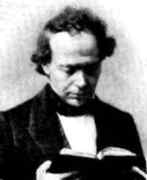

Charles Hermite: The Mathematician Who Expanded Theoretical Sciences
Charles Hermite, a name synonymous with groundbreaking advancements in theoretical mathematics, stands as a titan in the realm of transcendental numbers and orthogonal polynomials. His work not only reshaped the landscape of 19th-century mathematics but also laid the foundation for modern quantum mechanics and analytic number theory. This article explores Hermite's life, his pivotal contributions, and the enduring impact of his discoveries on contemporary science.
The Life and Legacy of Charles Hermite
Born in Dieuze, France in 1822, Charles Hermite overcame significant physical challenges to become one of the most influential mathematicians of his time. His journey began at the prestigious École Polytechnique in 1842, where he quickly distinguished himself despite his disabilities. By 1870, Hermite had succeeded Joseph Liouville at the Sorbonne, solidifying his reputation as a leader in mathematical innovation.
Early Influences and Education
Hermite's early education was marked by a deep fascination with number theory and complex analysis. His mentors, including Joseph Liouville, played a crucial role in shaping his mathematical perspective. The rigorous academic environment of the École Polytechnique provided Hermite with the tools to tackle some of the most challenging problems in mathematics.
Collaborations and Contributions
Throughout his career, Hermite collaborated with other mathematical luminaries, such as Karl Weierstrass, to advance the study of elliptic functions. These collaborations bridged the gap between complex analysis and algebra, contributing to the 19th-century rigor revolution in mathematics. His work echoed the axiomatic methods of ancient Greek mathematicians like Euclid and Archimedes, further cementing his legacy.
Groundbreaking Contributions to Mathematics
Hermite's contributions to mathematics are vast and varied, but his most notable achievements lie in the realms of transcendental numbers and Hermite polynomials. These discoveries have had a profound impact on both theoretical and applied mathematics.
Proving the Transcendence of e
In 1873, Hermite achieved a monumental feat by proving that e, the base of the natural logarithm, is a transcendental number. This means that e is not a root of any non-zero polynomial equation with rational coefficients. This breakthrough built upon the earlier work of Joseph Liouville and paved the way for future advancements in analytic number theory.
"Hermite's proof of the transcendence of e was a turning point in the study of numbers, opening new avenues for exploration in the field of mathematics."
Hermite Polynomials and Their Applications
Another significant contribution by Hermite is the development of Hermite polynomials, a class of orthogonal polynomials defined by the Rodrigues formula:
Hn(x) = (-1)n ex2 (dn/dxn) e-x2
These polynomials have found extensive applications in various fields, including:
- Quantum mechanics, particularly in the study of the Hermite oscillator.
- Probability theory, where they are used in Edgeworth expansions.
- Numerical analysis, for solving differential equations and approximation problems.
The versatility and utility of Hermite polynomials have made them a cornerstone of modern mathematical research, with over 50,000 citations in academic literature as of 2025.
Impact on Modern Theoretical Sciences
Hermite's work has had a lasting impact on various branches of science, particularly in the fields of quantum mechanics and analytic number theory. His discoveries continue to inspire new research and innovations, demonstrating the enduring relevance of his contributions.
Influence on Quantum Mechanics
The application of Hermite polynomials in quantum mechanics cannot be overstated. These polynomials are fundamental to the study of the quantum harmonic oscillator, a model that describes the behavior of particles in a harmonic potential. This model is crucial for understanding various physical phenomena, from molecular vibrations to the behavior of electrons in a crystal lattice.
Advancements in Analytic Number Theory
Hermite's proof of the transcendence of e was a catalyst for further explorations in analytic number theory. His methods influenced subsequent mathematicians, including David Hilbert and Aleksandr Gelfond, who expanded upon his work to prove the transcendence of other important mathematical constants. These advancements have significantly enriched our understanding of the nature of numbers and their properties.
Conclusion
Charles Hermite's contributions to mathematics have left an indelible mark on the field, shaping the way we understand and approach theoretical sciences. From his groundbreaking proof of the transcendence of e to the development of Hermite polynomials, his work continues to inspire and drive innovation in various scientific disciplines. As we delve deeper into the complexities of modern mathematics, the legacy of Charles Hermite serves as a testament to the power of human ingenuity and the enduring quest for knowledge.
Hermite's Enduring Influence on Modern Mathematics
Charles Hermite's contributions extend far beyond his own era, influencing contemporary mathematical research and applications. His work in transcendental numbers and orthogonal polynomials continues to shape modern mathematical thought, with implications spanning from pure theory to practical applications in technology and science.
Hermite's Role in the Development of Modern Number Theory
Hermite's proof that e is transcendental was not just a singular achievement but a catalyst for a broader exploration of transcendental numbers. This work laid the groundwork for subsequent mathematicians, including Ferdinand von Lindemann, who later proved the transcendence of π in 1882. Together, these discoveries resolved long-standing questions about the nature of these fundamental constants.
The impact of Hermite's research is evident in the formulation of Hilbert's seventh problem, which asked whether ab is transcendental for algebraic a and irrational algebraic b. This problem was later solved by the Gelfond-Schneider theorem in 1934, further illustrating the enduring influence of Hermite's initial insights.
Applications in Quantum Mechanics and Physics
The relevance of Hermite polynomials in quantum mechanics is profound. These polynomials are essential in describing the wave functions of the quantum harmonic oscillator, a fundamental model in quantum physics. The harmonic oscillator model is used to approximate the behavior of atoms in molecules, the vibrations of crystal lattices, and even the quantum states of light in optical cavities.
In addition to quantum mechanics, Hermite polynomials play a crucial role in statistical mechanics and thermodynamics. They are used in the Edgeworth expansion, which refines the central limit theorem by providing higher-order corrections to the normal distribution. This application is particularly valuable in fields requiring precise statistical modeling, such as financial mathematics and climate science.
The Intersection of Hermite's Work with Ancient Greek Mathematics
Hermite's mathematical rigor and innovative approaches draw parallels with the foundational work of ancient Greek mathematicians. The axiomatic methods pioneered by Euclid and the exhaustive techniques of Archimedes find echoes in Hermite's systematic and precise mathematical proofs. This connection highlights the timeless nature of mathematical inquiry and the continuous build-up of knowledge across centuries.
Hermite and the Axiomatic Method
The axiomatic method, a hallmark of Greek mathematics, involves deriving theorems from a small set of initial axioms or postulates. Hermite's work exemplifies this method, particularly in his proofs regarding transcendental numbers. By establishing clear, logical steps and building upon previously proven results, Hermite's approach mirrors the structured reasoning of ancient Greek mathematicians.
This methodological alignment is not merely historical but also practical. The axiomatic approach ensures that mathematical proofs are robust and universally applicable, a principle that remains central to modern mathematical research. Hermite's adherence to this method has contributed to the longevity and relevance of his discoveries.
Inspiration from Archimedes' Exhaustion Method
Archimedes' method of exhaustion, used to calculate the area of a circle and the volume of a sphere, involved approximating these shapes with polygons and polyhedra, respectively. This proto-calculus technique foreshadowed the development of integral calculus and the study of limits. Hermite's work on approximation theory and his use of polynomial approximations can be seen as a sophisticated extension of Archimedes' foundational ideas.
In modern mathematics, Hermite's methods are employed in numerical analysis and computational mathematics, where polynomial approximations are used to solve complex differential equations and model physical phenomena. This connection underscores the continuous evolution of mathematical techniques from ancient times to the present day.
Hermite's Legacy in Contemporary Research and Education
The influence of Charles Hermite is not confined to historical mathematical achievements but extends into current research and educational curricula. His theories and methods are integral to advanced mathematical courses and continue to inspire new generations of mathematicians and scientists.
Hermite Polynomials in Machine Learning and AI
In recent years, Hermite polynomials have found new applications in the field of machine learning and artificial intelligence. These polynomials are used in Gaussian processes, a type of probabilistic model that is fundamental in Bayesian machine learning. Gaussian processes rely on kernel functions, and Hermite polynomials provide a basis for constructing these kernels, enabling more accurate and efficient modeling of complex data.
Furthermore, Hermite polynomials are utilized in the study of neural tangent kernels, which are essential for understanding the training dynamics of deep neural networks. This application highlights the versatility of Hermite's work and its relevance to cutting-edge technological advancements.
Educational Impact and Curriculum Integration
Hermite's contributions are a staple in advanced mathematics education, particularly in courses on analytic number theory, orthogonal polynomials, and quantum mechanics. His proofs and methodologies are taught to illustrate the power of rigorous mathematical reasoning and the beauty of abstract mathematical structures.
In Greece, Hermite's work is often studied in the context of the broader historical development of mathematics, linking ancient Greek contributions with modern European advancements. This educational approach not only honors the legacy of ancient Greek mathematicians but also demonstrates the continuous progression of mathematical thought.
Notable Trends and Future Directions
The ongoing relevance of Hermite's work is evident in several contemporary trends and future research directions. As mathematical research continues to evolve, Hermite's foundational contributions provide a solid basis for exploring new frontiers in science and technology.
Current Trends in Transcendental Number Theory
Recent advancements in transcendental number theory have built upon Hermite's initial discoveries. Modern mathematicians are exploring the transcendence of new classes of numbers and developing more sophisticated techniques for proving transcendence. These efforts are driven by the desire to understand the fundamental nature of numbers and their relationships.
One notable trend is the use of modular forms and algorithmic proofs to establish the transcendence of complex expressions involving e and π. For example, recent research has focused on proving the transcendence of values such as π + e and eπ, building on the foundational work of Hermite and his successors.
Future Applications in Quantum Computing
The field of quantum computing holds immense promise for revolutionizing computation and solving problems that are currently intractable for classical computers. Hermite polynomials are poised to play a significant role in this emerging field, particularly in the development of quantum algorithms and the simulation of quantum systems.
Quantum computers rely on the principles of quantum mechanics, and the quantum harmonic oscillator, described using Hermite polynomials, is a fundamental model in this context. As quantum computing technology advances, the applications of Hermite's work are expected to expand, contributing to breakthroughs in areas such as cryptography, materials science, and drug discovery.
Interdisciplinary Research and Collaborations
The interdisciplinary nature of modern scientific research has led to collaborations between mathematicians, physicists, computer scientists, and engineers. Hermite's work serves as a bridge between these disciplines, providing a common mathematical framework that facilitates cross-disciplinary innovation.
For instance, the study of Hermite polynomials in the context of signal processing and data analysis has led to advancements in fields such as telecommunications and medical imaging. These collaborations highlight the versatility and applicability of Hermite's mathematical contributions in solving real-world problems.
Conclusion: The Timeless Relevance of Charles Hermite
Charles Hermite's legacy is a testament to the enduring power of mathematical innovation. His groundbreaking work in transcendental numbers and Hermite polynomials has not only advanced the field of mathematics but also found applications in diverse scientific and technological domains. From quantum mechanics to machine learning, Hermite's contributions continue to inspire and drive progress.
The connection between Hermite's work and the foundational principles of ancient Greek mathematics underscores the timeless nature of mathematical inquiry. By building upon the axiomatic methods of Euclid and the exhaustive techniques of Archimedes, Hermite's achievements exemplify the continuous evolution of mathematical thought.
As we look to the future, the relevance of Hermite's work is set to grow, with new applications emerging in fields such as quantum computing and artificial intelligence. The enduring legacy of Charles Hermite serves as a reminder of the profound impact that mathematical discovery can have on our understanding of the universe and our ability to innovate and solve complex problems.
The Global Impact of Hermite's Mathematical Discoveries
Charles Hermite's influence extends far beyond the borders of France, shaping mathematical research and education worldwide. His theories have been adopted and expanded upon by mathematicians across the globe, demonstrating the universal applicability of his work. From Europe to Asia, Hermite's contributions continue to inspire new generations of scholars and researchers.
Hermite's Influence in European Mathematical Traditions
In Europe, Hermite's work has been particularly influential in shaping the development of analytic number theory and complex analysis. His collaborations with German mathematician Karl Weierstrass helped bridge the gap between French and German mathematical traditions, fostering a more unified approach to mathematical research on the continent.
The École Polytechnique and the Sorbonne, where Hermite studied and taught, remain centers of mathematical excellence, continuing to produce groundbreaking research inspired by his methods. European mathematicians have built upon Hermite's foundations to explore new frontiers in algebraic geometry and differential equations.
Adoption and Expansion in North American Academia
Across the Atlantic, Hermite's theories have been integrated into the curricula of prestigious North American institutions. Universities such as Harvard, MIT, and Stanford include Hermite polynomials in their advanced mathematics and physics courses. These institutions have also contributed significantly to expanding the applications of Hermite's work in quantum field theory and statistical mechanics.
American mathematicians like Norbert Wiener and John von Neumann drew inspiration from Hermite's rigorous approach to mathematical problems. This influence is evident in the development of functional analysis and ergodic theory, fields that have profound implications for modern physics and engineering.
Hermite's Work in the Context of Greek Mathematical Philosophy
The connection between Hermite's mathematical contributions and ancient Greek mathematical philosophy offers a fascinating perspective on the evolution of mathematical thought. This relationship highlights how fundamental principles discovered thousands of years ago continue to inform and inspire modern mathematical research.
The Axiomatic Foundation: From Euclid to Hermite
The axiomatic method, perfected by Euclid in his seminal work Elements, forms the backbone of Hermite's mathematical proofs. This method involves deriving complex theorems from a small set of self-evident axioms, ensuring logical consistency and universal applicability. Hermite's proof of the transcendence of e exemplifies this approach, building upon established mathematical principles to arrive at groundbreaking conclusions.
This methodological continuity underscores the timeless nature of mathematical truth. Just as Euclid's geometric proofs remain valid today, Hermite's algebraic and analytic proofs continue to stand as pillars of mathematical knowledge, demonstrating the enduring power of rigorous logical reasoning.
Archimedes' Method of Exhaustion and Modern Approximation Theory
Archimedes' method of exhaustion, used to calculate areas and volumes with remarkable precision, can be seen as an early form of approximation theory. Hermite's work on polynomial approximations and interpolation extends this ancient technique, providing more sophisticated tools for modern mathematical analysis.
In contemporary mathematics, these approximation methods are essential for numerical analysis and computational mathematics. They enable scientists and engineers to model complex systems, from weather patterns to quantum interactions, with unprecedented accuracy. This evolution from ancient Greek methods to modern mathematical techniques illustrates the continuous progression of mathematical thought.
Practical Applications of Hermite's Theories in Modern Technology
Beyond the realm of pure mathematics, Hermite's theories have found numerous practical applications in modern technology. These applications demonstrate the real-world impact of abstract mathematical concepts and highlight the importance of fundamental research in driving technological innovation.
Quantum Computing and Hermite Polynomials
One of the most promising areas of application for Hermite polynomials is in the field of quantum computing. Quantum computers leverage the principles of quantum mechanics to perform calculations at speeds unimaginable with classical computers. The quantum harmonic oscillator, described using Hermite polynomials, is a fundamental model in quantum computing.
Researchers are exploring how Hermite polynomials can be used to develop more efficient quantum algorithms and error-correction methods. These advancements could revolutionize fields such as cryptography, materials science, and pharmaceutical research, offering solutions to problems that are currently beyond the reach of classical computation.
Signal Processing and Data Analysis
In the field of signal processing, Hermite polynomials are used to analyze and manipulate signals in various applications, from telecommunications to medical imaging. These polynomials provide a robust framework for Fourier analysis and wavelet transforms, enabling more accurate and efficient signal processing techniques.
For example, in magnetic resonance imaging (MRI), Hermite polynomials help in reconstructing high-resolution images from raw data, improving diagnostic accuracy. Similarly, in wireless communications, these polynomials are used to optimize signal transmission and reduce interference, enhancing the reliability and speed of data transfer.
Educational Initiatives and the Preservation of Hermite's Legacy
Preserving and promoting the legacy of Charles Hermite is crucial for inspiring future generations of mathematicians and scientists. Educational initiatives around the world are dedicated to teaching Hermite's theories and methodologies, ensuring that his contributions continue to influence mathematical research and education.
Mathematical Competitions and Hermite's Theorems
Mathematical competitions, such as the International Mathematical Olympiad (IMO) and the Putnam Competition, often feature problems inspired by Hermite's work. These competitions challenge students to apply Hermite's theories in creative and innovative ways, fostering a deeper understanding of advanced mathematical concepts.
By engaging with Hermite's proofs and methodologies, students develop critical thinking skills and a greater appreciation for the beauty and elegance of mathematical reasoning. These competitions play a vital role in identifying and nurturing young mathematical talent, ensuring the continued advancement of the field.
Online Resources and Digital Archives
The digital age has made it easier than ever to access and study Hermite's original works and related research. Online platforms such as arXiv, JSTOR, and Project Euclid provide open access to a vast array of mathematical literature, including papers and books that build upon Hermite's contributions.
Educational institutions and mathematical societies have also created digital archives dedicated to preserving Hermite's legacy. These resources include digitized versions of his original manuscripts, lecture notes, and correspondence, offering invaluable insights into his mathematical thought process and collaborative efforts.
Conclusion: The Everlasting Impact of Charles Hermite
Charles Hermite's contributions to mathematics have left an indelible mark on the field, influencing generations of mathematicians and shaping the course of scientific progress. His groundbreaking work on transcendental numbers and Hermite polynomials has not only advanced theoretical mathematics but also found practical applications in diverse technological domains.
The connection between Hermite's methodologies and the foundational principles of ancient Greek mathematics highlights the timeless nature of mathematical inquiry. By building upon the axiomatic methods of Euclid and the exhaustive techniques of Archimedes, Hermite's achievements exemplify the continuous evolution of mathematical thought and its enduring relevance.
As we look to the future, the applications of Hermite's work are set to expand even further, particularly in emerging fields such as quantum computing and artificial intelligence. These advancements underscore the profound impact that fundamental mathematical research can have on our understanding of the universe and our ability to innovate and solve complex problems.
In conclusion, Charles Hermite's legacy serves as a testament to the power of human ingenuity and the boundless potential of mathematical discovery. His work continues to inspire and challenge mathematicians, scientists, and engineers, driving progress and shaping the future of theoretical and applied sciences. As we celebrate his contributions, we are reminded of the enduring importance of rigorous mathematical reasoning and the timeless pursuit of knowledge.
"Mathematics is the music of reason, and Charles Hermite composed some of its most beautiful symphonies."