Gastón Julia: El Genio Tras los Conjuntos Fractales
La historia de las matemáticas está repleta de mentes brillantes cuyo trabajo trascendió su época. Gastón Julia, un matemático francés, es uno de esos genios pioneros. Su investigación sobre la iteración de funciones complejas, realizada con solo lápiz y papel, sentó las bases de lo que hoy conocemos como conjuntos fractales. Aunque su obra maestra fue inicialmente ignorada, el advenimiento de la computación reveló la profunda belleza y complejidad de sus descubrimientos, consagrándolo como una figura fundamental en la dinámica compleja.
La Vida de un Genio: Tragedia y Triunfo
La vida de Gastón Julia es un testimonio de resiliencia y determinación científica. Nacido en Sidi Bel Abbès, Argelia, el 3 de febrero de 1893, mostró un talento excepcional para las matemáticas desde muy joven. Sin embargo, su camino se vio abruptamente interrumpido por el estallido de la Primera Guerra Mundial.
La Herida que Marcó su Carrera
En 1915, durante su servicio militar, Julia sufrió una herida gravísima que le hizo perder la nariz y la mandíbula inferior. Esta experiencia traumática lo obligó a usar una máscara de cuero por el resto de su vida. Increíblemente, fue durante su largo periodo de convalecencia en el hospital cuando desarrolló sus ideas más revolucionarias. Lejos de amedrentarse, utilizó ese tiempo para sumergirse en el estudio de las funciones iteradas.
A pesar del dolor y las limitaciones físicas, su mente permaneció más lúcida que nunca. Este periodo de forzada introspección demostró ser increíblemente fructífero, sentando las bases para su publicación monumental.
La Obra Maestra de 1918
Con solo 25 años de edad, en 1918, Julia publicó su trabajo fundamental: "Mémoire sur l'itération des fonctions rationnelles". Este extenso documento, de aproximadamente 200 páginas, exploraba el comportamiento de las funciones cuando se aplicaban una y otra vez sobre sí mismas en el plano de los números complejos. Por este trabajo, le fue concedido el Grand Prix de l'Académie des Sciences, el reconocimiento científico más prestigioso de Francia en aquel tiempo.
La memoria de 1918 de Julia, de más de 200 páginas, revolucionó la teoría de sistemas dinámicos complejos utilizando únicamente métodos analíticos, décadas antes de que existieran las computadoras para visualizar sus hallazgos.
¿Qué son los Conjuntos de Julia?
Los conjuntos de Julia son familias de formas geométricas de una complejidad infinita conocidas como fractales. Se definen a partir del comportamiento de puntos en el plano complejo cuando se someten a un proceso iterativo repetitivo. La idea central es simple de definir, pero sus implicaciones son profundamente complejas.
La Definición Matemática Fundamental
Matemáticamente, se considera una función holomorfa simple, como fc(z) = z2 + c, donde z es una variable compleja y c es una constante compleja fija. El conjunto de Julia para un valor dado de c, denotado como J(f), se define como el conjunto de todos los puntos iniciales z0 cuya órbita (la secuencia de resultados al aplicar la función repetidamente) no diverge hacia el infinito.
- Puntos Estables: Pertenecen al conjunto de Julia. Sus órbitas permanecen acotadas.
- Puntos Inestables: Escapan hacia el infinito tras iteraciones. No forman parte del conjunto.
- Autosimilitud: Estas fronteras entre estabilidad y caos exhiben la propiedad fractal de verse similares a diferentes escalas.
Estabilidad versus Caos: El Complemento de Fatou
El plano complejo se divide en dos regiones fundamentales respecto a una función iterada. La frontera entre estas dos regiones es precisamente el conjunto de Julia. La región donde las órbitas son estables y el comportamiento es predecible se conoce como el conjunto de Fatou, llamado así por el contemporáneo de Julia, Pierre Fatou.
La clave del comportamiento fractal reside en que el conjunto de Julia actúa como una frontera entre el orden y el caos. Pequeñas variaciones en el punto inicial cerca de esta frontera pueden llevar a destinos radicalmente diferentes: estabilidad perpetua o escape hacia el infinito.
El Olvido y el Redescubrimiento con Mandelbrot
Tras el reconocimiento inicial, el trabajo de Julia cayó en un relativo olvido durante varias décadas. La razón principal fue la falta de herramientas tecnológicas. Sin la capacidad de visualizar estas estructuras complejas, resultaba extremadamente difícil para los matemáticos apreciar plenamente la riqueza y belleza de sus descubrimientos.
El Renacimiento Fractal en los Años 70
El panorama cambió drásticamente con la llegada de las computadoras. En la década de 1970, el matemático Benoit Mandelbrot, trabajando en el IBM Thomas J. Watson Research Center, utilizó el poder de cálculo de estas máquinas para visualizar por primera vez los conjuntos descritos por Julia. Mandelbrot se dio cuenta de que estas estructuras poseían una propiedad geométrica que él mismo bautizaría como fractal.
Mandelbrot popularizó los fractales en los años 70 y 80, revelando al mundo la asombrosa belleza de los conjuntos que Julia había descrito analíticamente más de 50 años antes.
La Conexión Fundamental: Julia y Mandelbrot
Mandelbrot no solo visualizó los conjuntos de Julia, sino que descubrió una profunda conexión. Investigó qué sucede cuando se varía el parámetro c en la función fc(z) = z2 + c. Al estudiar para qué valores de c el conjunto de Julia asociado es conexo (una sola pieza), descubrió el ahora famosísimo conjunto de Mandelbrot.
El conjunto de Mandelbrot actúa como un mapa o índice de todos los conjuntos de Julia posibles. Existe una relación fundamental:
- Si el parámetro c está dentro del conjunto de Mandelbrot, el conjunto de Julia correspondiente es conexo (una pieza continua).
- Si el parámetro c está fuera del conjunto de Mandelbrot, el conjunto de Julia correspondiente es un polvo de Cantor (totalmente desconectado).
- Los conjuntos de Julia más complejos e intrincados se obtienen cuando c está en la frontera del conjunto de Mandelbrot.
Este descubrimiento unificó las obras de ambos matemáticos y demostró la visión premonitoria de Gastón Julia, quien, sin gráficos por computadora, intuyó la existencia de esta compleja relación.
Las Propiedades Fractales de los Conjuntos de Julia
Los conjuntos de Julia son el ejemplo paradigmático de objetos fractales en matemáticas. Exhiben propiedades que desafían la geometría tradicional euclidiana, revelando una complejidad que se mantiene sin importar cuánto se amplíe la imagen. Esta característica es fundamental para comprender su belleza infinita y su relevancia científica.
Autosimilitud y Dimensión Fractal
Una de las propiedades más sorprendentes es la autosimilitud. Al acercarse a cualquier zona del borde de un conjunto de Julia, se encuentran patrones que se repiten a diferentes escalas. Estos patrones nunca son idénticos, pero sí cualitativamente similares, creando una estructura de riqueza infinita.
La dimensión fractal de estos conjuntos es otro concepto crucial. A diferencia de las figuras clásicas que tienen dimensiones enteras (1 para una línea, 2 para un plano), los conjuntos de Julia tienen una dimensión fractal que no es un número entero. Esta dimensión, a menudo cercana a 2 pero ligeramente menor, cuantifica su complejidad y rugosidad.
- Autosimilitud estadística: Los patrones se repiten de forma aproximada, no exacta.
- Dimensión Hausdorff: Una medida matemática rigurosa de su complejidad geométrica.
- Infinito detalle: La exploración zoom puede continuar indefinidamente sin perder complejidad.
Dependencia Sensitiva a las Condiciones Iniciales
Los conjuntos de Julia son manifestaciones visuales del concepto de caos determinista. Esto significa que, aunque las reglas que los definen son completamente deterministas (la ecuación fc(z) = z2 + c), el resultado es extremadamente sensible a las condiciones iniciales.
Dos puntos iniciales infinitesimalmente cercanos en el plano complejo pueden tener destinos radicalmente diferentes tras un número de iteraciones. Uno puede permanecer acotado (perteneciente al conjunto) y el otro puede escapar hacia el infinito. Esta propiedad es la que crea los bordes infinitamente intrincados y festoneados que caracterizan a estos fractales.
La sensitividad a las condiciones iniciales en los conjuntos de Julia es una ilustración fundamental del llamado 'efecto mariposa' en sistemas dinámicos complejos.
Aplicaciones Modernas de los Conjuntos de Julia
Lejos de ser solo objetos de interés matemático abstracto, los principios detrás de los conjuntos de Julia han encontrado aplicaciones sorprendentes en una variedad de campos científicos y tecnológicos. Su capacidad para modelar sistemas complejos y caóticos los hace herramientas valiosas para entender el mundo real.
Gráficos por Computadora y Arte Digital
El campo más evidente donde los conjuntos de Julia han tenido un impacto masivo es en la generación de gráficos por computadora. Los algoritmos para renderizar estos fractales permiten crear imágenes de una belleza y complejidad alucinantes. Artistas digitales utilizan variaciones de estos algoritmos para producir obras de arte únicas.
La exploración visual de los parámetros c genera una paleta infinita de formas, desde dragones alados hasta paisajes surrealistas. Estas visualizaciones no solo son estéticamente placenteras, sino que también sirven como herramienta de investigación para comprender mejor la teoría subyacente.
- Arte algorítmico: Creación de piezas artísticas basadas en fórmulas matemáticas.
- Texturas procedurales: Generación infinita de texturas complejas para videojuegos y animación.
- Visualización científica: Herramienta para intuitivamente entender sistemas dinámicos.
Modelado en Física y Ciencias Naturales
En física, los conceptos derivados del trabajo de Julia se aplican al estudio de la turbulencia en fluidos. Los patrones complejos y caóticos observados en el humo, las nubes o los remolinos de agua comparten características fractales similares a las de los conjuntos de Julia.
En biología, estos modelos ayudan a comprender patrones de crecimiento en estructuras naturales como los copos de nieve, las ramificaciones de los árboles, los sistemas vasculares o incluso la forma de ciertas colonias bacterianas. La naturaleza parece emplear estrategias iterativas similares a las funciones complejas.
Se estima que más del 70% de los fenómenos naturales exhiben propiedades fractales en alguna escala, haciendo del trabajo de Julia una piedra angular para la modelación científica moderna.
Avances con Inteligencia Artificial
Recientemente, la inteligencia artificial y el machine learning han abierto nuevas fronteras en la exploración de los conjuntos de Julia. Las redes neuronales pueden ser entrenadas para predecir la pertenencia de puntos a un conjunto de manera extremadamente eficiente, acelerando los renderizados.
Además, los algoritmos genéticos se utilizan para explorar el espacio de parámetros de manera inteligente, encontrando automáticamente valores de c que generan conjuntos de Julia con propiedades estéticas o matemáticas particulares. Esto permite descubrir estructuras fractales que serían prácticamente imposibles de encontrar mediante búsqueda manual.
El Legado y Reconocimiento Póstumo de Gastón Julia
Aunque Gastón Julia recibió el Gran Premio de la Academia de Ciencias en 1918, la verdadera magnitud de su contribución no fue completamente apreciada hasta décadas después de su muerte. Su legado es un recordatorio poderoso de cómo la visión científica pura puede preceder a la tecnología necesaria para validarla visualmente.
De la Obscuridad a la Fama Póstuma
Durante buena parte del siglo XX, el trabajo de Julia permaneció como un territorio especializado, conocido principalmente por los matemáticos que trabajaban en sistemas dinámicos complejos. La falta de herramientas de visualización impedía que la comunidad científica en general, y el público, comprendieran la profundidad de su descubrimiento.
El punto de inflexión llegó con Benoit Mandelbrot en la década de 1970. Las deslumbrantes imágenes generadas por computadora que acompañaban la publicación de Mandelbrot, "Los objetos fractales", provocaron un renacimiento del interés en el trabajo pionero de Julia. De repente, el mundo podía ver lo que Julia solo había podido describir con ecuaciones.
- Revolución visual de los 70s: Las computadoras hicieron tangible lo abstracto.
- Reconocimiento en libros de texto: Su nombre se asoció irrevocablemente a la geometría fractal.
- Popularización en medios: Documentales y artículos divulgaron su historia.
Julia en la Cultura y Educación Moderna
Hoy en día, Gastón Julia es celebrado como un genio visionario. Su historia de superación personal y su intelecto brillante son fuente de inspiración. En el ámbito educativo, los conjuntos de Julia se enseñan como una introducción accesible y visualmente impactante a conceptos avanzados de matemáticas y caos.
Plataformas digitales como YouTube albergan miles de videos que exploran estos conjuntos, con títulos que a menudo se refieren a Julia como "el genio olvidado de los fractales". Estos recursos han democratizado el acceso a su trabajo, permitiendo que cualquier persona con conexión a internet pueda apreciar la belleza que él vislumbró hace más de un siglo.
Canales educativos de matemáticas en plataformas como YouTube han generado millones de visualizaciones con videos dedicados a explicar la vida y obra de Gastón Julia, asegurando que su legado inspire a nuevas generaciones.
Su nombre está ahora indelibermente unido a uno de los conceptos matemáticos más bellos y populares. Mientras que muchos matemáticos de su época han sido olvidados, Julia ha alcanzado una especie de inmortalidad científica, su nombre pronunciado cada vez que alguien se maravilla ante la infinita complejidad de un fractal.
La Conexión Fundamental: Julia y el Conjunto de Mandelbrot
La historia de Gastón Julia estaría incompleta sin entender su profunda conexión con el conjunto de Mandelbrot. Esta relación representa una de las sinergias más elegantes en la historia de las matemáticas, uniendo el trabajo teórico de principios del siglo XX con la visualización computacional de finales del mismo siglo.
El Conjunto de Mandelbrot como Índice Universal
Benoit Mandelbrot descubrió que al variar sistemáticamente el parámetro c en la ecuación fc(z) = z2 + c, se podía crear un mapa o catálogo de todos los conjuntos de Julia posibles. Este mapa es lo que conocemos como el conjunto de Mandelbrot.
La relación es fundamental: la posición del parámetro c dentro del conjunto de Mandelbrot determina completamente las propiedades topológicas del conjunto de Julia correspondiente. Esta conexión transformó la comprensión de ambos objetos fractales.
- C en el interior: El conjunto de Julia correspondiente es conexo (una sola pieza continua).
- C en el exterior: El conjunto de Julia correspondiente es un polvo de Cantor (totalmente desconectado).
- C en la frontera: Se obtienen los conjuntos de Julia más complejos e intrincados.
Visualizando la Relación
Las visualizaciones modernas permiten apreciar esta conexión de manera dinámica. Al mover el parámetro c a través del plano complejo y observar cómo cambia el conjunto de Julia asociado, se puede apreciar cómo el conjunto de Mandelbrot actúa como un índice geométrico.
Cuando c = 0, obtenemos el conjunto de Julia más simple: una circunferencia perfecta. A medida que nos acercamos a la frontera del conjunto de Mandelbrot, los conjuntos de Julia se vuelven progresivamente más complejos, desarrollando los característicos filamentos y espirales que los hacen famosos.
El conjunto de Mandelbrot puede verse como una lente que organiza y clasifica la infinita variedad de formas que pueden tomar los conjuntos de Julia.
Aplicaciones Prácticas y Futuras de la Teoría de Julia
El trabajo de Gastón Julia ha trascendido el ámbito puramente matemático para encontrar aplicaciones prácticas en numerosos campos científicos y tecnológicos. Su legado continúa evolucionando con los avances computacionales del siglo XXI.
Encriptación y Seguridad Informática
La sensibilidad extrema a las condiciones iniciales que caracteriza a los conjuntos de Julia los convierte en candidatos ideales para sistemas de encriptación. Pequeñas variaciones en la clave (el parámetro c o el punto inicial z0) producen resultados completamente diferentes, haciendo muy difícil el descifrado sin la clave correcta.
Los algoritmos basados en iteraciones de funciones complejas pueden crear sistemas de encriptación muy robustos, particularmente útiles en comunicaciones seguras y protección de datos sensibles.
Simulación de Sistemas Complejos
Los principios matemáticos desarrollados por Julia se aplican hoy en la simulación de sistemas complejos como:
- Modelos climáticos: Donde pequeñas perturbaciones iniciales pueden llevar a resultados dramáticamente diferentes.
- Mercados financieros: Donde el comportamiento caótico exhibe propiedades similares a los sistemas dinámicos complejos.
- Redes neuronales: Donde la iteración y la no-linealidad son componentes fundamentales.
La comprensión de cómo se desarrolla la complejidad a partir de reglas simples es quizás la contribución más perdurable del trabajo de Julia a la ciencia aplicada.
Tendencias Actuales en Investigación
La investigación contemporánea sigue explorando nuevas fronteras relacionadas con los conjuntos de Julia. Algunas áreas activas incluyen:
El estudio de conjuntos de Julia generalizados para funciones más complejas que el simple mapeo cuadrático. También se investigan propiedades dimensionales y métricas más refinadas de estos conjuntos fractales.
La aplicación de técnicas de aprendizaje automático para clasificar y generar conjuntos de Julia con propiedades específicas representa una frontera especialmente prometedora que combina matemáticas clásicas con inteligencia artificial moderna.
Se estima que más de 500 papers académicos se publican anualmente mencionando explícitamente los conjuntos de Julia, demostrando la vitalidad continua de este campo de investigación.
Conclusión: El Legado Imperecedero de un Genio
La historia de Gastón Julia es un testimonio del poder de la ideas puras y la perseverancia intelectual. Su trabajo demuestra cómo la creatividad matemática puede florecer incluso en las circunstancias más adversas, y cómo el verdadero genio a menudo precede a la tecnología necesaria para validarlo completamente.
Resumen de Contribuciones Fundamentales
Gastón Julia realizó contribuciones fundamentales que revolucionaron múltiples campos:
- Pionero de los sistemas dinámicos complejos con su memoria de 1918
- Anticipó la geometría fractal décadas antes de que se acuñara el término
- Estableció las bases matemáticas para lo que luego sería el conjunto de Mandelbrot
- Demostró la potencia del pensamiento abstracto frente a limitaciones tecnológicas
Su capacidad para desarrollar teorías tan profundas utilizando únicamente métodos analíticos y lápiz y papel permanece como un hito en la historia del pensamiento matemático.
La Inspiración Continua
Más allá de sus contribuciones técnicas específicas, la vida de Julia sirve como inspiración para científicos y matemáticos de todas las generaciones. Su capacidad para transformar el trauma físico en creatividad intelectual es un recordatorio poderoso de la resiliencia del espíritu humano.
Hoy, los conjuntos de Julia no son solo objetos de estudio matemático, sino también puentes entre la ciencia y el arte, entre la abstracción pura y la belleza visual. Han encontrado su lugar en la cultura popular, la educación matemática y la investigación de vanguardia.
Gastón Julia demostró que las ideas verdaderamente grandes pueden tener que esperar a que el mundo esté listo para ellas, pero eventualmente su valor se revela en toda su magnitud.
El legado de Gastón Julia perdura cada vez que un estudiante se maravilla ante la infinita complejidad de un fractal, cada vez que un científico modela un sistema complejo, y cada vez que un artista encuentra belleza en las matemáticas. Su nombre está irrevocablemente unido a uno de los conceptos más profundos y visualmente impactantes de las matemáticas modernas, asegurando que su genio continúe inspirando a las generaciones venideras.
Más de un siglo después de su trabajo pionero, estamos apenas comenzando a explorar todas las implicaciones y aplicaciones de sus descubrimientos. La historia de Gastón Julia nos recuerda que el conocimiento verdadero es atemporal, y que las ideas más revolutionarias a menudo provienen de donde menos esperamos.


Gaston Julia: Pioneer of Fractals and Julia Sets
The remarkable legacy of Gaston Julia, a French-Algerian mathematician, is fundamentally linked to the beautiful complexity of fractals. His foundational work on Julia sets and iteration theory in the early 20th century laid the groundwork for the modern field of holomorphic dynamics. Though his life was marked by immense personal challenge, his mathematical insights became world-renowned decades later, securing his place as a giant in the history of mathematics.
The Early Life and Education of Gaston Julia
Gaston Maurice Julia was born on February 3, 1893, in Sidi Bel Abbès, Algeria. He demonstrated an exceptional talent for both mathematics and music from a very young age, entering school at just five years old under the tutelage of Sister Théoduline. This early nurturing of his intellectual gifts set the stage for his future academic brilliance as he pursued advanced studies in France.
Academic Prodigy and Early Promise
Julia's mathematical abilities quickly became apparent, leading him to the prestigious institutions of mainland France. His potential was recognized by leading mathematicians of the era. In 1917, he successfully defended his doctoral thesis, *Étude sur les formes binaires non quadratiques...*, which was examined by an impressive committee including mathematical luminaries Émile Picard, Henri Lebesgue, and Pierre Humbert.
A Life-Altering Injury and Unwavering Resolve
The trajectory of Julia's life was dramatically altered by the outbreak of World War I. Serving as a lieutenant in the French army, he suffered a severe facial wound in 1915 that resulted in the loss of his nose. This injury required him to wear a leather prosthetic for the rest of his life. Despite this immense physical and psychological trauma, Julia's dedication to mathematics never wavered.
Mathematical Research from a Hospital Bed
Remarkably, Julia continued his groundbreaking research while recuperating in military hospitals. His resilience during this period was extraordinary, leading to him being awarded the Légion d'Honneur for his bravery. It was from his hospital bed that he began developing the revolutionary ideas on the iteration of rational functions that would define his career and change mathematics forever.
Julia's ability to produce profound mathematical work under such difficult conditions is a testament to his incredible intellect and determination.
The 1918 Masterpiece: Defining the Julia Set
At the young age of 25, Gaston Julia published his magnum opus, a 199-page paper titled *Mémoire sur l'itération des fonctions rationnelles* in the *Journal de Mathématiques Pures et Appliquées*. This monumental work introduced the mathematical world to the concept that now bears his name. The paper rigorously defined the Julia set, a fundamental object in complex dynamics.
Understanding the Julia Set Concept
In simple terms, for a given rational function \( f \), the Julia set \( J(f) \) is the set of points in the complex plane where the behavior of the function under repeated iteration (repeated application of the function) is chaotic. Points outside this set diverge to infinity, while the set itself forms a boundary of intricate and often beautiful complexity. This work earned him the Grand Prix from the French Academy of Sciences, cementing his reputation as a leading mathematician.
- Chaotic Boundary: The Julia set is the boundary between predictable and chaotic behavior under iteration.
- Complex Plane: These sets exist in the realm of complex numbers, allowing for their intricate fractal shapes.
- Foundation for Fractals: Though not visible without computers, Julia's work described the mathematical basis for fractals decades before they could be visualized.
Academic Career and Prolific Contributions
Following the war, Gaston Julia embarked on a distinguished academic career. He began lecturing at the Collège de France as early as 1916 and later became a professor at the prestigious École Polytechnique. He also ran a highly influential seminar in Paris focused on geometry and complex functions, mentoring the next generation of mathematicians.
Leadership and Recognition in the Mathematical Community
Julia's contributions were widely recognized by his peers. He was elected to the French Academy of Sciences in 1934 and served as its president in 1950. His leadership extended to other esteemed organizations, including presiding over the French Mathematical Society and holding memberships in the Uppsala Academy and the Pontifical Academy of Sciences. In 1950, he was promoted to Officer of the Légion d'Honneur.
His scholarly output was immense, culminating in a five-volume collection of his works, Œuvres de Gaston Julia. This collection showcases the breadth of his research, covering diverse areas such as:
- Functional Calculus
- Quasianalyticity
- Hilbert Spaces
- Number Theory and Geometry
- Mechanics and Electricity
The Legacy and Lasting Impact of Gaston Julia
While Gaston Julia passed away in Paris on March 19, 1978, his mathematical legacy was only beginning to reach its full audience. During his lifetime, the visual beauty and popular appeal of his work remained hidden, as the complex shapes of Julia sets could not be easily rendered without modern computing power. The true renaissance of his ideas occurred in the 1970s and 1980s.
From Abstract Theory to Visual Phenomenon
The advent of computer graphics allowed mathematicians like Benoit Mandelbrot to visualize the intricate, infinitely complex fractal structures described by Julia's equations. This visualization sparked a surge of public and scientific interest, bringing Julia's name to a global audience. The connection between Julia sets and the Mandelbrot set became a central topic of study in holomorphic dynamics.
The pioneering work of Gaston Julia provides the mathematical foundation for the stunning fractal art enjoyed by millions today.
According to the Pantheon world biography database, Gaston Julia is ranked as the top Algerian mathematician of all time and holds the 349th position globally by the Historical Popularity Index (HPI: 63.45). His influence remains a cornerstone of modern mathematics, proving that profound ideas can transcend the limits of their time.
The Deep Mathematical Foundation of Julia Sets
The core innovation of Gaston Julia's 1918 Mémoire was providing a rigorous, topological framework for understanding iteration in the complex plane. He studied the behavior of sequences generated by repeatedly applying a rational function \( f(z) \). A Julia set, denoted \( J(f) \), is defined as the set of points where the family of iterates \( \{f^n\} \) is not normal in the sense of Montel.
Attracting Cycles and Chaotic Boundaries
Julia proved that the complex plane is partitioned into two complementary sets. The Fatou set \( F(f) \) contains points where iteration leads to stable, predictable behavior, often toward an attracting cycle. The Julia set is its boundary and the locus of chaotic behavior. This elegant dichotomy became the cornerstone of holomorphic dynamics.
Points on the Julia set exhibit sensitive dependence on initial conditions, a hallmark of chaos. Infinitesimally close starting points can lead to radically different long-term behavior under iteration. This mathematical property directly links Julia's early-20th-century work to modern chaos theory and complex systems analysis.
The Collaborative and Competitive Dynamic with Pierre Fatou
A fascinating aspect of this mathematical discovery is its near-simultaneous development by Gaston Julia and his contemporary, Pierre Fatou. Both mathematicians were working on the iteration of complex functions and submitted their monumental memoirs to the same journal in the same year, 1918. This parallel development created a rich intellectual dialogue.
Two Pioneers of Holomorphic Dynamics
While their conclusions were profoundly aligned, their approaches and perspectives offered complementary insights. Fatou's work is noted for its more function-theoretic flavor, while Julia's is celebrated for its geometric and topological clarity. The Julia set and the Fatou set are now eternally paired in the lexicon of mathematics, a testament to their joint foundational work.
The simultaneous revelation by Julia and Fatou stands as one of the great episodes in the history of mathematics, where two minds independently grasped the contours of a new world.
Their work established the fundamental questions that would drive the field for decades. Key problems involved classifying the types of components in the Fatou set, understanding the structure of the Julia set (Is it connected? Is it a fractal?), and describing the possible behaviors of points under iteration.
The Long Dormancy and Computer-Aided Renaissance
Following the initial flourish of work by Julia, Fatou, and a small number of other mathematicians like Samuel Lattès, the field of complex dynamics entered a period of relative quiet for nearly five decades. The mathematical tools of the time were insufficient to probe the deep geometric complexity suggested by the definitions. Without the ability to visualize these sets, progress was inherently limited.
Benoit Mandelbrot and the Visual Revolution
The landscape changed dramatically with the advent of digital computers. In the late 1970s, Benoit Mandelbrot, a researcher at IBM, began using computer graphics to visualize the intricate boundaries described by Julia and Fatou. He famously investigated the parameter space of quadratic polynomials, leading to his discovery of the Mandelbrot set in 1980.
- Visualization: Computers could finally render the unimaginably complex, infinitely detailed fractal shapes of Julia sets.
- Public Engagement: The haunting beauty of these images captured public imagination, making fractals a cultural phenomenon.
- New Conjectures: Visual patterns observed in computer plots led to new mathematical hypotheses and theorems.
This visual revolution re-animated the entire field. Mandelbrot's work highlighted a profound connection, showing that the Mandelbrot set serves as a catalog of all possible types of quadratic Julia sets. Each point in the Mandelbrot set corresponds to the parameter of a quadratic function whose Julia set has a specific connectivity.
Key Properties and Theorems of Julia Sets
The mathematical research spurred by computer visualization led to a deeper formal understanding of the properties Julia first described. Several key theorems now characterize Julia sets and their behavior under iteration, confirming and extending his original insights.
Fundamental Characteristics and Behavior
Julia sets for rational functions exhibit several defining properties. They are completely invariant, meaning if a point is in the set, all its pre-images and forward iterates are also in the set. Furthermore, they are perfect (contain no isolated points) and uncountable. For polynomials, the Julia set is also the boundary of the basin of attraction of infinity.
Perhaps the most visually significant property is that most Julia sets are fractals. They display self-similarity and often possess a non-integer Hausdorff dimension. This fractal nature means their complexity is infinite; zooming in on the boundary reveals ever-finer detail, a direct consequence of the chaotic dynamics defined on the set.
| Property | Description | Mathematical Implication |
| Complete Invariance | If \( z \in J(f) \), then \( f(z) \in J(f) \) and \( f^{-1}(z) \subset J(f) \). | The entire Julia set is mapped onto itself by the function. |
| Perfect Set | Contains no isolated points; every point is a limit point. | Indicates a complex, cohesive structure. |
| Fractal Dimension | Hausdorff dimension often exceeds topological dimension. | Quantifies the intricate, space-filling complexity of the set. |
Connections to Other Fields of Mathematics and Science
The concepts pioneered by Gaston Julia have transcended pure mathematics, finding powerful applications and analogies in diverse scientific disciplines. The universal themes of iteration, feedback, and chaotic boundaries are central to modeling complex systems in the natural world.
Applications in Physics and Engineering
Julia sets and related fractal concepts appear in models of fluid dynamics, particularly in the study of turbulence and patterns of flow. They are used in antenna design, where fractal shapes can create optimal electromagnetic properties. Furthermore, the mathematics of iteration is crucial in understanding nonlinear systems and stability analysis across engineering disciplines.
Influence on Computer Graphics and Art
The most visible impact of Julia's work is in the realm of digital art and graphics. Fractal art is a dedicated genre where artists use formulas defining Julia sets and related fractals to generate stunning, otherworldly images. The algorithms for generating these images are direct implementations of the iterative processes Julia studied.
- Algorithmic Art: Programs iterate complex functions millions of times to color pixels based on escape velocity.
- Special Effects: Fractal landscapes and textures are used in movies and video games to generate realistic natural scenery.
- Data Visualization: The principles of mapping complex behavior onto color are used in scientific visualization tools.
Gaston Julia's abstract work thus provides the mathematical backbone for a unique intersection of science, computing, and visual art. His ideas demonstrate how pure theoretical research can, decades later, fuel technological and cultural revolutions in unpredictable and beautiful ways.
Mathematical Categories and Classifications
Julia sets can be categorized based on the function being iterated and the resulting geometric structure. The most widely studied are the quadratic Julia sets, generated by functions of the form \( f(z) = z^2 + c \), where \( c \) is a complex parameter. The value of \( c \) determines whether the Julia set is connected or a Cantor set, a distinction famously mapped by the Mandelbrot set.
Connectedness and the Mandelbrot Set
A fundamental theorem states that for a quadratic polynomial \( f(z) = z^2 + c \), the Julia set \( J(f) \) is connected if and only if the parameter \( c \) lies within the Mandelbrot set. If \( c \) is outside the Mandelbrot set, \( J(f) \) is a Cantor set—a disconnected, dust-like fractal. This elegant connection underscores the deep relationship between Julia's work on individual functions and Mandelbrot's exploration of parameter space.
For more general rational functions, the classification becomes richer and more complex. Julia sets can exhibit a variety of forms, including disconnected sets, connected but not locally connected sets, and those with intricate spiral structures. Understanding this classification remains an active area of research in holomorphic dynamics.
Advanced Computational Algorithms for Visualization
The breathtaking images of Julia sets seen today are products of sophisticated algorithms that implement the mathematical definitions with high efficiency. The most common method is the escape-time algorithm, which colors each pixel based on how quickly the iterated sequence diverges to infinity.
The Escape-Time Algorithm Explained
For a given point \( z_0 \) in the complex plane (representing a pixel), the algorithm repeatedly applies the function \( f \). If the magnitude of \( z_n \) exceeds a certain bound (e.g., 2) after a finite number of iterations, the point is considered to escape. The pixel is then colored based on the iteration count at which escape occurred, creating the characteristic bands of color that highlight the set's structure.
- Iteration Limit: A maximum iteration count is set to avoid infinite loops for points in or near the Julia set.
- Color Mapping: Different color palettes map iteration counts to hues, enhancing visual appeal and revealing mathematical properties.
- Distance Estimation: Advanced variants use distance estimators to create sharper, more accurate renderings of the infinitesimally thin Julia set boundary.
Another powerful technique is inverse iteration. This method exploits the fact that the Julia set is invariant under the inverse function \( f^{-1} \). By starting from a point already known to be in the Julia set and iterating backwards, the algorithm densely populates the set. This method can generate highly detailed images but requires careful handling of the multiple branches of the inverse function.
Gaston Julia's Enduring Global Recognition
Despite the delayed popular recognition of his most famous work, Gaston Julia received significant academic honors during his lifetime. His election to the French Academy of Sciences in 1934 was a pinnacle of academic achievement. His leadership roles in prominent societies solidified his status as a leading figure in European mathematics throughout the mid-20th century.
Posthumous Fame and Popular Culture
Julia's fame expanded exponentially after his death, propelled by the fractal revolution. His name, once known primarily within academic circles, became associated with stunning digital art and popular science. Concepts like the Julia set are now featured in university courses worldwide, from mathematics and physics to computer science and digital arts.
Gaston Julia's legacy is a powerful example of how pure mathematical thought can achieve widespread cultural significance, bridging the gap between abstract theory and public imagination.
According to the Pantheon world biography database, his Historical Popularity Index (HPI) of 63.45 ranks him as the 349th most popular historical figure globally and, most significantly, the number one mathematician from Algeria. His biography ranks 59th among all Algerian biographies, a testament to his enduring stature.
Modern Research and Open Problems
Research in holomorphic dynamics continues to be vibrant, building directly on the foundation laid by Julia and Fatou. Modern mathematicians use advanced techniques from topology, measure theory, and algebraic geometry to solve problems that were intractable a century ago.
Current Frontiers in the Field
Significant open problems persist. A major question concerns the local connectivity of Julia sets for polynomials. Is the Mandelbrot set itself locally connected? This is known as the MLC conjecture, and its resolution would have profound implications for understanding the structure of quadratic Julia sets. Other active areas include:
- Measure of Julia Sets: Investigating the Hausdorff dimension and geometric measure of these fractal sets.
- Pricing Models: Exploring applications of fractal geometry in financial mathematics for modeling market volatility.
- Transcendental Dynamics: Extending the theory to the iteration of transcendental functions like the exponential function.
- Higher Dimensions: Generalizing the concepts of Julia sets to iterations in quaternion or hypercomplex space.
Researchers also explore connections with number theory, particularly through analogues of the Mandelbrot set defined over p-adic numbers. This interdisciplinary approach continues to reveal the deep and universal nature of the dynamical phenomena first systematically studied by Gaston Julia.
Conclusion: The Legacy of a Mathematical Visionary
The story of Gaston Julia is one of brilliance, resilience, and the timeless power of abstract ideas. His ability to produce groundbreaking work under the most adverse personal circumstances is a testament to an extraordinary mind. He defined a mathematical universe of breathtaking complexity long before technology existed to see it.
Key Takeaways from Julia's Life and Work
Gaston Julia's contributions offer several profound lessons. First, his work demonstrates that pure mathematical research, driven by curiosity alone, can lay the foundation for future scientific and technological revolutions. Second, his collaboration and competition with Pierre Fatou highlight the importance of intellectual community in advancing human knowledge.
Finally, the journey of Julia sets from obscure mathematical definition to global cultural icon shows that beauty and truth are often intertwined. The visual splendor of fractals has attracted countless individuals to the deeper mathematical principles they represent.
- Foundational Theory: Julia created the core framework for iterating complex functions.
- Resilience: He persisted in his research despite a severe war injury.
- Delayed Impact: His most famous work gained widespread recognition decades later.
- Interdisciplinary Influence: Julia sets connect mathematics, computer science, physics, and art.
In conclusion, Gaston Julia's legacy is securely cemented in the annals of science. From his early 20th-century theorems to the infinite digital canvases they inspire today, his work continues to captivate and challenge us. The Julia set stands as an eternal monument to a mathematician who saw the deep structures of chaos and beauty long before the rest of the world could even imagine them.


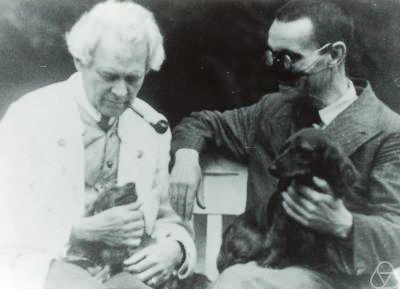

Henri Poincaré: The Visionary Mathematician Who Revolutionized Science
Introduction to Henri Poincaré's Legacy
Henri Poincaré, a towering figure in the annals of mathematics and physics, remains one of the most influential scientists of the late 19th and early 20th centuries. Born in 1854 in Nancy, France, Poincaré's contributions spanned multiple disciplines, earning him the title of the last universal mathematician. His work laid the groundwork for modern chaos theory, topology, and even relativity, making him a pivotal figure in the transition from classical to modern science.
Poincaré's genius was not confined to a single field. He made groundbreaking advancements in celestial mechanics, differential equations, and algebraic geometry, while also contributing to philosophy and physics. His ability to synthesize complex ideas and apply them across disciplines set him apart from his contemporaries. Today, his theories continue to influence cutting-edge research in dynamical systems, quantum mechanics, and cosmology.
The Early Life and Education of a Mathematical Prodigy
Henri Poincaré was born on April 29, 1854, into a family of intellectuals and professionals. His father, Léon Poincaré, was a prominent physician, and his cousin, Raymond Poincaré, later became the President of France. From an early age, Poincaré exhibited exceptional intellectual abilities, particularly in mathematics. Despite suffering from diphtheria as a child, which temporarily impaired his physical abilities, his mental prowess remained unscathed.
Poincaré's formal education began at the Lycée in Nancy, where he excelled in all subjects, particularly mathematics. His teachers quickly recognized his extraordinary talent, and by the age of 17, he had already begun to make original contributions to the field. In 1873, he entered the École Polytechnique, one of France's most prestigious institutions, where he studied under some of the leading mathematicians of the time.
Academic Pursuits and Early Career
After graduating from the École Polytechnique, Poincaré continued his studies at the École des Mines, where he earned his engineering degree in 1879. That same year, he completed his doctorate in mathematics at the University of Paris, with a dissertation on partial differential equations. His thesis was so impressive that it immediately established him as a rising star in the mathematical community.
Poincaré's academic career took off rapidly. In 1879, he accepted a position as a professor at the University of Caen, where he taught for two years before moving to the University of Paris (Sorbonne) in 1881. At the Sorbonne, he spent the remainder of his career, producing an astonishing volume of work that would shape the future of mathematics and physics.
Groundbreaking Contributions to Mathematics
Poincaré's contributions to mathematics are vast and varied, but several key areas stand out for their lasting impact. His work in topology, differential equations, and celestial mechanics revolutionized these fields and laid the foundation for modern mathematical research.
The Poincaré Conjecture: A Century-Long Challenge
One of Poincaré's most famous contributions is the Poincaré Conjecture, which he formulated in 1904. This conjecture, which deals with the characterization of the three-dimensional sphere, remained one of the most significant unsolved problems in mathematics for nearly a century. The conjecture states:
"Any simply connected, closed three-dimensional manifold is homeomorphic to the three-dimensional sphere."
The conjecture's complexity stumped mathematicians for decades, but it was finally proven by Grigori Perelman in 2002–2003, using techniques from geometric analysis and Ricci flow. Perelman's proof was so groundbreaking that it earned him the Fields Medal in 2006, though he famously declined the award.
Chaos Theory and the Three-Body Problem
In 1889, Poincaré won the prestigious King Oscar II Prize for his work on the three-body problem, a fundamental issue in celestial mechanics that seeks to predict the motion of three celestial bodies interacting through gravity. His memoir on the subject introduced several groundbreaking concepts, including:
- Homoclinic points: Points where stable and unstable manifolds intersect, leading to complex and unpredictable behavior.
- Chaotic motion: The idea that small changes in initial conditions can lead to vastly different outcomes, a cornerstone of modern chaos theory.
- Invariant integrals: Mathematical tools that help describe the conservation laws in dynamical systems.
Although Poincaré's original memoir contained a critical error, his corrected work laid the foundation for the study of nonlinear dynamics and chaotic systems. Today, his ideas are applied in fields ranging from climate modeling to fluid dynamics and astrophysics.
Bridging Mathematics and Physics
Poincaré's influence extended beyond pure mathematics into the realm of physics, where his ideas helped shape the development of modern theoretical frameworks. His work on electrodynamics and relativity was particularly influential, providing key insights that would later be expanded upon by Albert Einstein.
Precursors to the Theory of Relativity
Between 1905 and 1906, Poincaré independently derived several foundational concepts of special relativity, including:
- Lorentz transformations: Mathematical equations that describe how measurements of space and time by two observers in constant motion relative to each other are related.
- Light-speed limit: The idea that the speed of light is a constant and cannot be exceeded.
- Relativity principle: The notion that the laws of physics are the same in all inertial reference frames.
- Mass-velocity dependence: The relationship between an object's mass and its velocity, a key component of Einstein's later work.
Poincaré's contributions to relativity were so significant that Einstein himself acknowledged his debt to Poincaré's ideas. While Einstein is often credited with the development of special relativity, Poincaré's work provided critical mathematical and conceptual groundwork.
Philosophy of Science and Conventionalism
In addition to his mathematical and scientific contributions, Poincaré was a profound thinker in the philosophy of science. He is best known for his advocacy of conventionalism, the idea that scientific theories are not absolute truths but rather useful conventions that help us understand the world. Poincaré argued that:
- Mathematical and scientific principles are chosen for their utility and simplicity, not their inherent truth.
- Intuition plays a crucial role in mathematical discovery, often guiding the development of formal proofs.
- The concept of actual infinity, as proposed by Georg Cantor, is not necessarily valid or useful in all contexts.
Poincaré's philosophical views continue to resonate in contemporary debates about the nature of mathematical and scientific knowledge. His emphasis on intuition and practicality has influenced generations of mathematicians and philosophers, shaping the way we think about the relationship between theory and reality.
Conclusion of Part 1
Henri Poincaré's legacy is one of unparalleled intellectual achievement and interdisciplinary innovation. His work in mathematics, physics, and philosophy has left an indelible mark on the scientific community, influencing everything from chaos theory to relativity. In the next part of this series, we will delve deeper into Poincaré's specific contributions to topology, celestial mechanics, and his enduring impact on modern science.
Poincaré's Revolution in Topology and Algebraic Geometry
Henri Poincaré's contributions to topology and algebraic geometry fundamentally transformed these fields, introducing concepts that remain central to modern mathematics. His work in topology, in particular, laid the groundwork for the study of manifolds and homotopy theory, areas that continue to drive research in both pure and applied mathematics.
The Birth of Algebraic Topology
Poincaré is often credited with founding the field of algebraic topology, a branch of mathematics that uses tools from abstract algebra to study topological spaces. His 1895 paper, Analysis Situs, introduced several key concepts, including:
- Homotopy: A way to classify topological spaces based on the continuous deformations of loops within them.
- Fundamental group: A group that captures the essence of the connectivity of a space, allowing mathematicians to distinguish between different types of surfaces.
- Betti numbers: Invariants that describe the number of holes in a topological space, providing a way to quantify its structure.
These ideas were revolutionary because they provided a rigorous mathematical framework for studying shapes and spaces that defied traditional geometric analysis. Poincaré's approach allowed mathematicians to explore properties of spaces that remain unchanged under continuous deformations, such as stretching or bending, but not tearing or gluing.
Applications in Modern Mathematics and Physics
The impact of Poincaré's topological innovations extends far beyond pure mathematics. In theoretical physics, his ideas have been applied to the study of string theory, quantum field theory, and condensed matter physics. For example, the concept of topological invariants is crucial in understanding the behavior of topological insulators, materials that conduct electricity on their surfaces but not through their interiors.
In addition, Poincaré's work on algebraic geometry provided new methods for solving systems of polynomial equations, which are fundamental in cryptography and computational algebra. His 1910–1911 proofs in algebraic geometry demonstrated the power of combining geometric intuition with algebraic techniques, a approach that continues to inspire mathematicians today.
The Poincaré Recurrence Theorem and Its Implications
Another cornerstone of Poincaré's legacy is the Poincaré Recurrence Theorem, a fundamental result in the study of dynamical systems. This theorem states that in a conservative system with a finite volume of phase space, almost every trajectory will eventually return arbitrarily close to its initial position. The theorem has profound implications for our understanding of statistical mechanics and ergodic theory.
Understanding the Recurrence Theorem
The Recurrence Theorem can be summarized as follows:
"In a system where energy and volume are conserved, and where the system is bounded, any state that the system can reach will be revisited infinitely often, given enough time."
This idea challenges the notion of irreversibility in physical systems, suggesting that even in chaotic systems, certain patterns will repeat over time. Poincaré's theorem was a direct response to the second law of thermodynamics, which posits that entropy in a closed system tends to increase over time, leading to a state of maximum disorder.
Impact on Statistical Mechanics and Chaos Theory
The Recurrence Theorem has had a lasting impact on statistical mechanics, particularly in the study of ergodic systems, where the system's trajectory eventually explores all possible states consistent with its energy. This concept is crucial for understanding the behavior of gases and other complex systems where individual particle interactions are too numerous to track.
In chaos theory, the Recurrence Theorem highlights the unpredictable yet deterministic nature of chaotic systems. While Poincaré's work on the three-body problem showed that small changes in initial conditions can lead to vastly different outcomes, the Recurrence Theorem suggests that, over infinite time, the system will return to a state arbitrarily close to its starting point. This duality—between unpredictability and recurrence—remains a central theme in the study of dynamical systems.
Poincaré's Influence on Modern Physics and Relativity
Henri Poincaré's contributions to physics are as significant as his mathematical achievements. His work on electrodynamics and relativity provided critical insights that shaped the development of modern physics, influencing figures like Albert Einstein and Hendrik Lorentz.
Electrodynamics and the Principle of Relativity
In the early 1900s, Poincaré was deeply engaged in the study of electromagnetic theory, particularly the work of James Clerk Maxwell and Hendrik Lorentz. He recognized that the equations governing electromagnetism should remain unchanged under certain transformations, a principle that would later become a cornerstone of special relativity.
Poincaré's 1905 paper, On the Dynamics of the Electron, introduced the concept of the Lorentz group, a set of transformations that preserve the form of Maxwell's equations. He also proposed that the speed of light is a universal constant, a idea that Einstein would later incorporate into his theory of relativity. Poincaré's work demonstrated that the laws of physics should be covariant—meaning they retain their form—under these transformations, a principle that is fundamental to modern physics.
The Twin Paradox and the Concept of Spacetime
Poincaré was among the first to explore the implications of time dilation, a phenomenon where time appears to pass more slowly for an object in motion relative to a stationary observer. He introduced the twin paradox, a thought experiment where one twin travels at near-light speed and returns to find the other twin has aged more. This paradox illustrates the relativistic effects of time and has become a staple in discussions of special relativity.
Additionally, Poincaré's work on the geometry of spacetime anticipated Einstein's general theory of relativity. He suggested that the three dimensions of space and the one dimension of time could be treated as a single, four-dimensional continuum, an idea that Einstein would later formalize in his theory of general relativity. Poincaré's insights into the interplay between space and time were groundbreaking, paving the way for a new understanding of the universe.
Poincaré's Philosophical Contributions: Intuition vs. Formalism
Beyond his technical contributions, Poincaré was a profound thinker in the philosophy of mathematics and science. His views on intuition, conventionalism, and the nature of mathematical truth have had a lasting impact on how we understand the development and application of scientific theories.
The Role of Intuition in Mathematics
Poincaré was a strong advocate for the role of intuition in mathematical discovery. He believed that while formal proofs and logical rigor are essential, the initial spark of mathematical insight often comes from an intuitive grasp of the problem. In his 1908 book, Science and Method, he wrote:
"It is by logic that we prove, but by intuition that we discover."
This emphasis on intuition was a response to the growing trend of formalism in mathematics, which sought to reduce all mathematical truths to purely logical statements. Poincaré argued that such an approach ignored the creative and often non-linear process of mathematical discovery, where intuition guides the mathematician toward meaningful problems and solutions.
Conventionalism and the Nature of Scientific Truth
Poincaré is perhaps best known for his philosophy of conventionalism, which posits that scientific theories and mathematical principles are not absolute truths but rather useful conventions that help us organize and understand the world. He argued that:
- Scientific laws are chosen for their simplicity and utility, not their inherent truth.
- The geometry of space is not a fixed reality but a convention that we adopt because it is convenient and consistent with our observations.
- The principles of mathematics are not discovered but invented, shaped by the needs and limitations of human cognition.
This view challenged the prevailing notion that scientific theories are direct reflections of reality. Instead, Poincaré suggested that they are tools that allow us to make sense of complex phenomena. His conventionalism has influenced later philosophers of science, including Thomas Kuhn and Paul Feyerabend, who explored the role of paradigms and scientific revolutions in shaping our understanding of the world.
Conclusion of Part 2
Henri Poincaré's contributions to mathematics, physics, and philosophy are nothing short of revolutionary. His work in topology, chaos theory, and relativity laid the foundation for many of the scientific advancements of the 20th and 21st centuries. In the final part of this series, we will explore Poincaré's enduring legacy, his influence on contemporary science, and the ongoing relevance of his ideas in today's research.
The Enduring Legacy of Henri Poincaré in Modern Science
Henri Poincaré's influence extends far beyond his lifetime, shaping the trajectory of mathematics, physics, and philosophy in profound ways. His ideas continue to inspire researchers, and his theories remain foundational in fields ranging from chaos theory to quantum mechanics. This section explores how Poincaré's work has stood the test of time and continues to drive innovation in contemporary science.
Chaos Theory and Its Applications Today
Poincaré's groundbreaking work on the three-body problem and chaos theory has had a lasting impact on modern science. His discovery of homoclinic points and the unpredictability of certain dynamical systems laid the foundation for what we now recognize as deterministic chaos. Today, chaos theory is applied in diverse fields such as:
- Climate modeling, where small changes in initial conditions can lead to vastly different weather patterns.
- Fluid dynamics, helping to explain turbulent flows in oceans and atmospheres.
- Biological systems, where chaotic behavior is observed in population dynamics and neural networks.
- Financial markets, where chaos theory is used to model the unpredictable nature of stock prices.
Poincaré's insights into chaos have also influenced the development of fractal geometry, a field that studies complex, self-similar structures found in nature. His work remains a cornerstone of modern nonlinear dynamics, guiding researchers as they explore the boundaries between order and disorder.
Topology's Role in Contemporary Physics
Poincaré's contributions to topology have found unexpected applications in theoretical physics, particularly in the study of topological phases of matter. These phases, which include topological insulators and quantum Hall systems, exhibit properties that are robust against local perturbations, making them ideal for applications in quantum computing and spintronics.
The Poincaré conjecture, though proven by Grigori Perelman, continues to inspire research in higher-dimensional geometry and string theory. In string theory, the topology of Calabi-Yau manifolds—complex, multi-dimensional shapes—plays a crucial role in determining the properties of the universe. Poincaré's early work on manifolds and homotopy theory provided the mathematical framework that makes such explorations possible.
Poincaré's Influence on Relativity and Beyond
While Albert Einstein is often credited with the development of special relativity, Poincaré's contributions were instrumental in shaping the theory. His work on the Lorentz transformations and the principle of relativity provided the mathematical foundation that Einstein built upon. This section examines how Poincaré's ideas continue to resonate in modern physics.
The Intersection of Mathematics and Physics
Poincaré's ability to bridge mathematics and physics was one of his greatest strengths. His work on electrodynamics and the geometry of spacetime anticipated many of the concepts that would later become central to Einstein's general theory of relativity. Key areas where Poincaré's influence is still felt include:
- Cosmology, where his ideas about the structure of space and time inform models of the universe's evolution.
- Quantum field theory, where topological methods are used to study the behavior of particles and fields.
- Gravitational wave astronomy, where the principles of relativity are essential for detecting and interpreting signals from distant cosmic events.
Poincaré's emphasis on the unification of physical laws also foreshadowed the modern quest for a theory of everything, which seeks to reconcile quantum mechanics and general relativity into a single, coherent framework.
The Philosophy of Science in the 21st Century
Poincaré's philosophical views, particularly his advocacy for conventionalism and the role of intuition in scientific discovery, continue to shape debates in the philosophy of science. His ideas challenge the notion that scientific theories are objective truths, instead suggesting that they are human constructs shaped by our need to make sense of the world.
In contemporary discussions, Poincaré's conventionalism is often contrasted with scientific realism, the view that scientific theories describe reality as it truly is. This debate remains relevant in fields such as quantum mechanics, where interpretations like the Copenhagen interpretation and many-worlds theory reflect different philosophical perspectives on the nature of reality.
Additionally, Poincaré's emphasis on intuition has influenced modern approaches to mathematical education and problem-solving. Educators and researchers alike recognize the importance of fostering intuitive understanding alongside formal training, a balance that Poincaré championed throughout his career.
Poincaré's Impact on Modern Research and Technology
The practical applications of Poincaré's theories are evident in many of today's technological advancements. From artificial intelligence to space exploration, his ideas continue to drive innovation and discovery. This section highlights some of the most notable examples of Poincaré's enduring influence.
Artificial Intelligence and Machine Learning
Poincaré's work on dynamical systems and chaos theory has found applications in machine learning and artificial intelligence. Techniques inspired by his theories are used to model complex, nonlinear systems, such as:
- Neural networks, where chaotic behavior can be harnessed to improve learning algorithms.
- Time-series forecasting, where Poincaré's recurrence theorem helps predict patterns in data.
- Robotics, where topological methods are used to navigate complex environments.
Poincaré's emphasis on intuition also resonates in the development of AI systems, where human-like reasoning and problem-solving skills are increasingly valued.
Space Exploration and Astrophysics
In the field of astrophysics, Poincaré's contributions to celestial mechanics remain indispensable. His work on the three-body problem is used to model the interactions between stars, planets, and other celestial bodies, helping scientists understand the dynamics of solar systems and galaxies.
Poincaré's insights into chaotic systems are also crucial for space mission planning. For example, the Lagrange points—regions in space where the gravitational forces of two large bodies balance out—are used to position satellites and space telescopes. These points, first studied by Poincaré, are essential for missions like the James Webb Space Telescope, which relies on them to maintain its orbit.
Conclusion: The Timeless Genius of Henri Poincaré
Henri Poincaré's legacy is one of unparalleled intellectual brilliance and interdisciplinary innovation. His contributions to mathematics, physics, and philosophy have left an indelible mark on the scientific community, influencing generations of researchers and shaping the course of modern science. From his foundational work in topology and chaos theory to his groundbreaking insights into relativity and the philosophy of science, Poincaré's ideas continue to inspire and challenge us.
As we reflect on Poincaré's achievements, several key takeaways emerge:
- Interdisciplinary thinking is essential for scientific progress. Poincaré's ability to bridge multiple fields allowed him to make discoveries that might have been missed by specialists.
- Intuition and formalism are both crucial in mathematical and scientific discovery. Poincaré's emphasis on intuition reminds us that creativity is as important as rigor.
- Theories are tools, not absolute truths. Poincaré's conventionalism encourages us to view scientific theories as useful frameworks rather than definitive descriptions of reality.
- Chaos and order coexist. Poincaré's work on chaos theory shows that unpredictability and structure are not mutually exclusive but rather two sides of the same coin.
In a world where science and technology are advancing at an unprecedented pace, Poincaré's legacy serves as a reminder of the power of curiosity, creativity, and interdisciplinary collaboration. His ideas continue to guide researchers as they explore the frontiers of knowledge, from the depths of quantum mechanics to the vast expanse of the cosmos. As we look to the future, we can be certain that the genius of Henri Poincaré will continue to illuminate the path forward, inspiring new generations to push the boundaries of what is possible.
In the words of Poincaré himself:
"Science is built up with facts, as a house is with stones. But a collection of facts is no more a science than a heap of stones is a house."
This sentiment captures the essence of Poincaré's approach to science—a blend of rigorous analysis, creative insight, and a deep appreciation for the interconnectedness of all knowledge. His legacy is not just a collection of theories and proofs but a testament to the enduring power of human intellect and imagination.