Galileo Galilei: Pioniere della Scienza dell'Universo
Galileo Galilei è universalmente riconosciuto come il padre della scienza moderna. La sua rivoluzionaria insistenza su osservazioni empiriche e prove concrete, espresse nel motto "provare e riprovare", ha trasformato per sempre la nostra comprensione del cosmo. Questo articolo esplora la vita, le scoperte e l'eredità imperitura di un genio che ha sfidato i dogmi del suo tempo.
L'Uomo che Cambiò il Metodo della Scienza
Nato a Pisa nel 1564, Galileo rappresenta il punto di rottura tra il pensiero filosofico medievale e il moderno metodo scientifico sperimentale. Prima del suo lavoro, lo studio della natura, o filosofia naturale, si basava prevalentemente sull'autorità di testi antichi e su ragionamenti astratti.
Galileo introdusse un approccio radicalmente diverso, basato su tre pilastri fondamentali: osservazione diretta, sperimentazione rigorosa e descrizione matematica dei fenomeni. Questo metodo divenne la pietra angolare di ogni ricerca scientifica successiva.
L'insistenza di Galileo che "il libro della natura era scritto nel linguaggio della matematica" trasformò la filosofia naturale da un resconto verbale e qualitativo a uno matematico e quantitativo.
Contributi Fondamentali alla Scienza Moderna
L'opera di Galileo Galilei ha apportato contributi rivoluzionari in tre principali ambiti scientifici, ciascuno fondamentale per il progresso della conoscenza umana.
Il Metodo Scientifico Sperimentale
La sua eredità più profonda è l'affermazione del metodo sperimentale. Galileo sosteneva che le teorie sulla natura andavano verificate attraverso esperimenti e osservazioni, non semplicemente dedotte dalla logica o accettate per tradizione.
Questo approccio pose le basi per tutte le discipline scientifiche, separando definitivamente la scienza dalla filosofia e dalla teologia, e rendendo la verifica dei fatti l'arbitro ultimo della verità scientifica.
Le Leggi del Movimento e la Fisica
Prima dei suoi celebri studi astronomici, Galileo compì scoperte epocali in fisica. I suoi esperimenti sul moto dei corpi cambiarono la comprensione del movimento.
Formulò le prime leggi quantitative per la caduta libera dei gravi, dimostrando che nel vuoto tutti i corpi cadono con la stessa accelerazione, indipendentemente dalla loro massa. Studiò inoltre il moto dei proiettili, descrivendone la traiettoria parabolica, e gettò le basi per il principio d'inerzia. Questi lavori hanno costituito le fondamenta su cui Isaac Newton costruì le sue leggi del moto quasi un secolo dopo.
Scoperte Astronomiche Rivoluzionarie
Le osservazioni celesti di Galileo, rese possibili dal telescopio da lui perfezionato, fornirono le prime prove concrete a sostegno del modello eliocentrico proposto da Niccolò Copernico. Questo modello, che poneva il Sole al centro del sistema solare, sfidava la visione geocentrica tolemaica, dominante da oltre un millennio.
Le sue scoperte non furono semplici aggiunte all'astronomia, ma prove schiaccianti che cambiarono il paradigma scientifico e filosofico dell'epoca. Ecco le principali scoperte astronomiche di Galileo Galilei:
- Le fasi di Venere: Osservò che Venere presentava fasi complete, simili a quelle lunari, un fenomeno previsto dal modello copernicano ma impossibile in quello tolemaico dove Venere si muoveva sempre tra la Terra e il Sole.
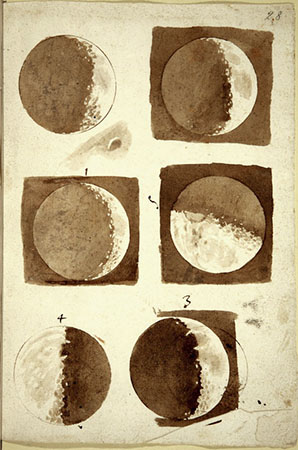
- Le montagne e i crateri lunari: Dimostrò che la superficie della Luna non era liscia e perfetta come si credeva, ma aspra e irregolare, simile a quella terrestre, infrangendo il dogma aristotelico della perfezione dei corpi celesti.
- Le macchie solari: Le sue osservazioni provarono che anche il Sole presentava imperfezioni e che ruotava su se stesso.
- La Via Lattea: Rivelò che la debole fascia luminosa nel cielo notturno non era una nebulosa, ma era composta da milioni di stelle densamente concentrate, invisibili a occhio nudo.
La Scoperta delle Lune di Giove
Il 7 gennaio 1610, puntando il suo telescopio verso Giove, Galileo fece una scoperta destinata a scuotere le fondamenta dell'astronomia. Osservò tre, e presto quattro, piccoli astri che cambiavano posizione notte dopo notte, orbitando attorno al pianeta gigante.
Queste lune di Giove (poi chiamate Io, Europa, Ganimede e Callisto o "lune galileiane") costituivano una prova schiacciante. Dimostravano infatti che non tutti i corpi celesti orbitavano attorno alla Terra. L'esistenza di un sistema planetario in miniatura attorno a Giove mostrava che la Terra non era il centro unico di tutti i movimenti cosmici.
Questa scoperta fu un colpo diretto alla cosmologia geocentrica e fornì un potente argomento a favore del modello copernicano, mostrando che la natura era più complessa e affascinante di quanto immaginato dalla dottrina tradizionale.

Galileo Galilei: The Pioneer of Science and Chronology
Galileo Galilei, often hailed as the father of modern science, revolutionized our understanding of the universe through his groundbreaking observations and experiments. His contributions not only advanced scientific knowledge but also reshaped the way we perceive time and history. This article explores Galileo's life, his pivotal role in the Scientific Revolution, and his enduring influence on scientific chronology.
Early Life and Education
Born in Pisa, Italy, in 1564, Galileo Galilei showed an early aptitude for mathematics and the natural sciences. He studied at the University of Pisa, where he initially pursued medicine but later shifted his focus to mathematics and physics. His early experiments with pendulums and falling objects laid the foundation for his future scientific endeavors.
Academic Career
Galileo's academic career began at the University of Pisa, where he taught mathematics. However, his unconventional ideas and methods often clashed with the traditional Aristotelian views dominant at the time. In 1592, he moved to the University of Padua, where he spent nearly two decades teaching and conducting research. This period was marked by significant discoveries and the development of his scientific methodology.
Scientific Contributions
Galileo's scientific contributions are vast and varied, encompassing astronomy, physics, and mathematics. His work not only challenged existing theories but also introduced new methods of inquiry that would become the cornerstone of modern science.
Telescopic Observations
In 1609, Galileo heard about the invention of the telescope and quickly built his own improved version. His telescopic observations revealed unprecedented details about the cosmos, including the moons of Jupiter, the phases of Venus, and the rugged surface of the Moon. These discoveries provided compelling evidence for the Copernican heliocentric model, which placed the Sun at the center of the solar system.
- Moons of Jupiter: Galileo discovered four moons orbiting Jupiter, now known as the Galilean moons. This finding challenged the geocentric view that all celestial bodies revolved around the Earth.
- Phases of Venus: His observations of Venus's phases supported the idea that Venus orbited the Sun, further validating the heliocentric model.
- Lunar Surface: Galileo's detailed sketches of the Moon's surface revealed mountains and craters, contradicting the Aristotelian belief in a perfect and unchanging celestial sphere.
Physics and Mechanics
Galileo's work in physics and mechanics was equally groundbreaking. He conducted experiments on the motion of objects, formulating the law of falling bodies and laying the groundwork for the concept of inertia. His book Two New Sciences, published in 1638, summarized his findings and established him as a pioneer in the field of mechanics.
"The book of nature is written in the language of mathematics."
Impact on Scientific Chronology
Galileo's discoveries had a profound impact on scientific chronology, marking a pivotal shift from ancient to modern scientific thought. His work provided key chronological markers that historians use to delineate the Scientific Revolution, a period of rapid scientific advancement in the 16th and 17th centuries.
Challenging Aristotelian Views
Before Galileo, the scientific community largely adhered to Aristotelian natural philosophy, which relied on logical reasoning rather than empirical evidence. Galileo's emphasis on observation and experimentation challenged this tradition, paving the way for a new era of scientific inquiry. His methods became the standard for future scientists, influencing the development of the scientific method.
Influence on Future Generations
Galileo's influence extended far beyond his lifetime. His work inspired subsequent generations of scientists, including Isaac Newton, who built upon Galileo's findings to develop the laws of motion and universal gravitation. The shift from Aristotelian to Galilean science marked a significant turning point in the history of science, reshaping our understanding of the natural world.
Conclusion
Galileo Galilei's contributions to science and chronology are unparalleled. His telescopic observations and experiments in physics challenged long-held beliefs and laid the foundation for modern scientific inquiry. As we continue to explore the universe and advance our understanding of the natural world, Galileo's legacy remains a testament to the power of observation, experimentation, and the relentless pursuit of knowledge.
In the next part of this article, we will delve deeper into Galileo's trial and condemnation by the Roman Inquisition, his later years under house arrest, and the enduring impact of his work on scientific institutions and historiography.
The Trial and Condemnation: A Turning Point in Scientific History
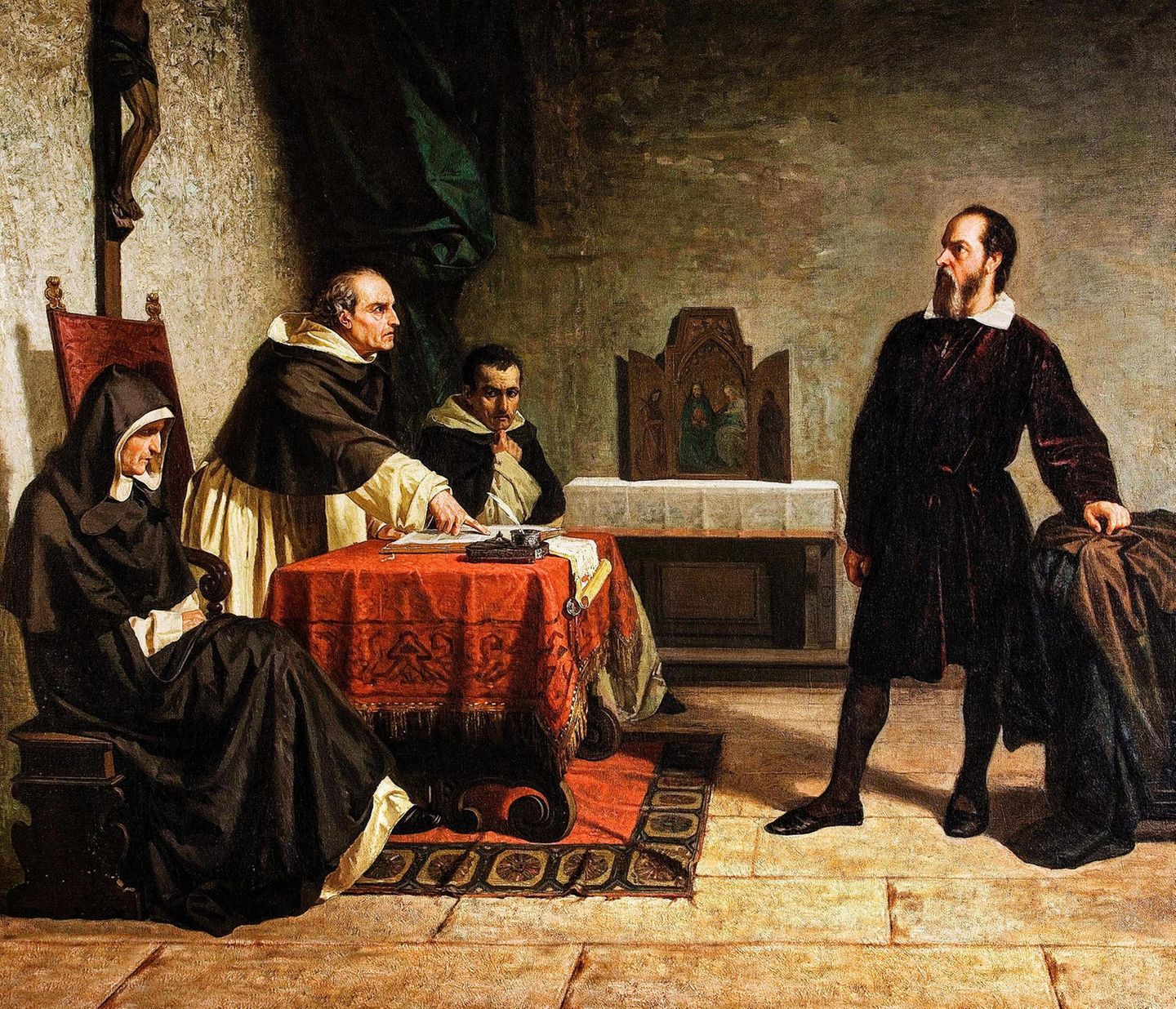
Galileo's advocacy for the heliocentric model brought him into direct conflict with the Catholic Church, which adhered to the geocentric view of the universe. In 1633, Galileo was tried by the Roman Inquisition and found "vehemently suspect of heresy." This trial marked a significant moment in the history of science, highlighting the tension between scientific discovery and religious doctrine.
The Context of the Trial
The Catholic Church's opposition to heliocentrism was rooted in its interpretation of Scripture, which appeared to support a geocentric universe. Galileo's Dialogue Concerning the Two Chief World Systems, published in 1632, presented a compelling case for heliocentrism but was seen as a direct challenge to Church authority. The Inquisition's condemnation of Galileo was not just a personal attack but a broader attempt to suppress scientific ideas that conflicted with religious teachings.
The Aftermath and House Arrest
Following his trial, Galileo was placed under house arrest for the remainder of his life. Despite this, he continued his scientific work, publishing Two New Sciences in 1638, a foundational text in the field of mechanics. His resilience and dedication to science, even in the face of persecution, have made him a symbol of the struggle for intellectual freedom.
"And yet it moves."
Galileo's Scientific Method: A Legacy of Empiricism
One of Galileo's most enduring contributions was his development of the scientific method. His emphasis on observation, experimentation, and mathematical analysis revolutionized the way scientific inquiry was conducted. This method became the gold standard for future generations of scientists, ensuring that his influence would extend far beyond his own discoveries.
Observation and Experimentation
Galileo's approach to science was rooted in direct observation and hands-on experimentation. Unlike his predecessors, who relied heavily on philosophical reasoning, Galileo believed that the natural world could only be understood through systematic observation. His experiments with falling objects and pendulums demonstrated the importance of empirical evidence in scientific inquiry.
- Falling Objects: Galileo's experiments showed that objects of different weights fall at the same rate, contradicting Aristotelian physics.
- Pendulum Motion: His studies on pendulums laid the groundwork for the development of accurate clocks.
- Telescopic Observations: His use of the telescope to study celestial bodies provided concrete evidence for the heliocentric model.
Mathematical Analysis
Galileo was a firm believer in the power of mathematics to describe the natural world. He famously stated that "the book of nature is written in the language of mathematics." His work in kinematics and the study of motion used mathematical principles to explain physical phenomena, setting a precedent for future scientific research.
Galileo's Influence on Modern Science and Chronology
Galileo's contributions had a lasting impact on both modern science and the way we understand the timeline of scientific progress. His work marked the beginning of the Scientific Revolution, a period that saw the rapid advancement of scientific knowledge and the establishment of new methods of inquiry.
Shaping the Scientific Revolution
The Scientific Revolution, spanning the 16th to 17th centuries, was characterized by a shift from Aristotelian natural philosophy to empirical science. Galileo's discoveries and methods played a crucial role in this transition. His emphasis on observation and experimentation influenced scientists like Isaac Newton and Johannes Kepler, who built upon his work to develop their own theories.
Chronological Markers in Scientific History
Galileo's life and work provide key chronological markers that historians use to delineate the progression of scientific thought. Some of the most significant dates include:
- 1609: Galileo builds his first telescope and begins his celestial observations.
- 1610: Publication of Sidereus Nuncius (The Starry Messenger), detailing his discoveries.
- 1632: Publication of Dialogue Concerning the Two Chief World Systems, leading to his trial.
- 1633: Galileo's trial and condemnation by the Roman Inquisition.
- 1638: Publication of Two New Sciences, summarizing his work in mechanics.
These dates serve as critical reference points in the history of science, illustrating the rapid pace of discovery and the challenges faced by early modern scientists.
Recent Scholarship and Re-evaluations
In recent decades, scholars have re-examined Galileo's life and work, providing new insights into his methods, his relationship with the Church, and his broader impact on science and society. This ongoing research has led to a more nuanced understanding of Galileo's legacy.
Nuanced Views on the Galileo Affair
Modern scholarship has moved beyond the simplistic narrative of "science vs. religion" to explore the complex political, social, and intellectual context of Galileo's trial. Historians now emphasize the role of personal rivalries, institutional politics, and the broader cultural climate of the time. This more nuanced view helps to explain why Galileo's ideas were met with such resistance and how his trial became a defining moment in the history of science.
Digital Humanities and Accessibility
The digitization of Galileo's manuscripts, instruments, and correspondence has opened new avenues for research. Museums and libraries around the world have made his works accessible online, allowing scholars and the public to explore his contributions in unprecedented detail. These digital resources have facilitated new studies of Galileo's methods, his network of correspondents, and the dissemination of his ideas across Europe.
"The history of science is not just about discoveries; it's about the people who made them and the world they lived in."
In the final part of this article, we will explore Galileo's enduring cultural impact, his representation in modern media, and the lessons his life offers for contemporary science and society.
Galileo's Enduring Cultural Legacy
Galileo's influence extends far beyond the realms of science and chronology, permeating culture, art, and public imagination for centuries. His story has become a symbol of the struggle between intellectual progress and societal resistance, ensuring his place in global cultural narratives.
Memorials and Museums
Worldwide, numerous memorials, statues, and institutions honor Galileo's contributions. The Galileo Museum in Florence, Italy, houses many of his original instruments, offering visitors a tangible connection to his groundbreaking work. Cities such as Galileo, California, and Galileo, Georgia, bear his name, reflecting his lasting impact.
- Florence's Galileo Museum: Houses telescopes, scientific instruments, and manuscripts.
- Moon Craters: A crater on the Moon is named after him, commemorating his celestial discoveries.
- International Recognition: Galileo is featured on currency and stamps in multiple countries.
Galileo in Modern Media and Education
Galileo's life and legacy are frequently explored in modern media, ensuring his ideas remain relevant to new generations. From films to educational curricula, his story continues to inspire and educate.
Film, Television, and Literature
Multiple films and TV productions have dramatized Galileo's life, often focusing on his clash with the Church. Notable examples include Galileo (1968), directed by Liliana Cavani, and the BBC series The Last Man in Europe. His name also appears in literature, symbolizing scientific inquiry and defiance.
"Galileo taught us to look up at the stars and not just accept what we are told."
Educational Importance
Galileo remains a cornerstone of science education worldwide. His methods and discoveries are taught in schools as foundational to the scientific method. Many educational institutions incorporate hands-on experiments inspired by his work, such as building simple telescopes or replicating his pendulum studies.
- Stem Programs: Galileo's emphasis on observation is a key component of modern STEM curricula.
- International Collaborations: Projects like the European Space Agency often reference his legacy.
- Public Lectures: Astronomers and historians regularly cite Galileo in public outreach events.
Lessons for Contemporary Science and Society
Galileo's life offers timeless lessons for today's scientific community and society. His dedication to evidence-based research, courage in the face of opposition, and interdisciplinary approach remain vital guides for modern scientists.
Advocacy for Evidence-Based Research
In an era of misinformation, Galileo's commitment to empirical evidence serves as a reminder of the importance of data-driven conclusions. His approach underscores the necessity of rigorous testing and peer review, principles that underpin contemporary scientific integrity.
Balancing Science and Ethics
Galileo's trial highlights the tension between scientific discovery and ethical or societal considerations. Modern scientists continue to grapple with similar challenges, such as the ethical implications of genetic engineering or artificial intelligence. Galileo's story encourages open dialogue between science and broader society.
- Ethical Guidelines: Many scientific bodies now prioritize ethics in research, a principle rooted in historical lessons.
- Public Engagement: Scientists increasingly emphasize communicating findings to the public, echoing Galileo's drive to share knowledge.
- Interdisciplinary Collaboration: Galileo's blending of astronomy, physics, and mathematics inspires today's collaborative research models.
Conclusion
Galileo Galilei stands as a towering figure in the annals of science, his contributions reshaping our understanding of the universe and the very nature of inquiry. From his telescopic discoveries to his unwavering defense of empirical evidence, Galileo's legacy endures in every scientific endeavor. His trial and subsequent house arrest remind us of the challenges faced by pioneers who challenge established norms.
Yet beyond the history books, Galileo's spirit lives on in museums, media, and classrooms. His emphasis on observation, experimentation, and mathematical analysis continues to guide scientists worldwide. As we confront new frontiers—from exploring exoplanets to unraveling genetic codes—Galileo's example remains a beacon of curiosity and courage.
In celebrating Galileo, we honor not just a brilliant mind, but a relentless advocate for the pursuit of truth. His story compels us to ask difficult questions, test assumptions, and embrace the unknown. In an ever-evolving world, Galileo's legacy is more relevant than ever, urging each generation to look up, question, and discover.
Galileo Galilei: Der Vater der modernen Wissenschaft
Einleitung: Ein Leben für die Wissenschaft
Galileo Galilei, geboren am 15. Februar 1564 in Pisa, Italien, gilt als einer der bedeutendsten Wissenschaftler der Geschichte. Seine bahnbrechenden Entdeckungen in den Bereichen Astronomie, Physik und Mathematik legten den Grundstein für die moderne Wissenschaft. Galileo war nicht nur ein brillanter Forscher, sondern auch ein mutiger Denker, der sich gegen die damaligen Dogmen der Kirche stellte. Sein Leben war geprägt von Leidenschaft für die Wahrheit und dem unermüdlichen Streben nach Wissen.
Frühe Jahre und Ausbildung
Galileo wurde als ältestes von sechs Kindern in eine verarmte Adelsfamilie geboren. Sein Vater, Vincenzo Galilei, war ein bekannter Musiker und Musiktheoretiker, der großen Wert auf Bildung legte. Schon früh zeigte Galileo ein außergewöhnliches Talent für Mathematik und Mechanik. Auf Wunsch seines Vaters begann er zunächst ein Medizinstudium an der Universität Pisa, doch seine Leidenschaft galt den Naturwissenschaften. Er wechselte schließlich zur Mathematik und Physik, wo er schnell auf sich aufmerksam machte.
Die Anfänge seiner wissenschaftlichen Karriere
Nach seinem Studium erhielt Galileo eine Stelle als Mathematikprofessor an der Universität Pisa. Hier begann er mit seinen ersten bahnbrechenden Experimenten. Eines seiner bekanntesten Experimente war der Fallversuch am Schiefen Turm von Pisa, bei dem er die Fallgesetze untersuchte. Obwohl dieses Experiment heute als Legende gilt, zeigt es Galileos innovative Herangehensweise an wissenschaftliche Fragen. Er war einer der ersten, der Experimente nutzte, um Theorien zu überprüfen, anstatt sich allein auf philosophische Spekulationen zu verlassen.
Die Erfindung des Teleskops und astronomische Entdeckungen
1609 erfuhr Galileo von der Erfindung des Teleskops in den Niederlanden. Er verbesserte das Design und baute sein eigenes Teleskop mit einer bis dahin unerreichten Vergrößerung. Mit diesem Instrument richtete er den Blick auf den Himmel und machte Entdeckungen, die das Weltbild seiner Zeit revolutionierten. Er beobachtete die Berge und Krater des Mondes, entdeckte die vier größten Monde des Jupiter und beobachtete die Phasen der Venus. Diese Beobachtungen widerlegten das geozentrische Weltbild des Ptolemäus und unterstützten das heliozentrische Modell von Nikolaus Kopernikus.
Konflikt mit der Kirche
Galileos Unterstützung des heliozentrischen Weltbilds brachte ihn in Konflikt mit der katholischen Kirche, die das geozentrische Modell als offizielle Lehre vertrat. 1616 wurde er von der Inquisition gewarnt, die kopernikanische Lehre nicht zu verbreiten. Doch Galileo setzte seine Forschungen fort und veröffentlichte 1632 sein bahnbrechendes Werk "Dialog über die zwei hauptsächlichen Weltsysteme". In diesem Werk verglich er das ptolemäische und das kopernikanische System, wobei er klar für Letzteres argumentierte. Dies führte zu einem Prozess vor der Inquisition, der mit seiner Verurteilung und lebenslangem Hausarrest endete.
Wissenschaftliche Beiträge jenseits der Astronomie
Neben seinen astronomischen Entdeckungen leistete Galileo bedeutende Beiträge zur Physik. Er formulierte die Grundlagen der Kinematik, untersuchte die Pendelbewegung und entwickelte das Prinzip der Relativität der Bewegung. Seine Arbeiten zur Fallgesetzen legten den Grundstein für Newtons spätere Formulierung der Bewegungsgesetze. Galileo war auch ein begabter Erfinder; er entwickelte unter anderem einen frühen Thermometer und einen militärischen Kompass.
Persönlichkeit und Vermächtnis
Galileo war bekannt für seinen scharfen Verstand, aber auch für seinen stolzen und manchmal streitbaren Charakter. Seine Schriften zeichnen sich durch klare Argumentation und beißenden Spott gegen seine Gegner aus. Trotz seiner Verurteilung durch die Kirche blieb er bis zu seinem Tod am 8. Januar 1642 ein gläubiger Katholik. Sein Vermächtnis ist immens: Er gilt als Vater der modernen experimentellen Wissenschaft und als einer der ersten, der Mathematik systematisch zur Beschreibung physikalischer Phänomene einsetzte. Seine Methode der Beobachtung, Experimentation und mathematischen Analyse wurde zum Standard der modernen Wissenschaft.
Galileo in der modernen Welt
Heute wird Galileo als Held der Wissenschaft gefeiert. Die katholische Kirche hat ihre Haltung zu ihm revidiert; 1992 entschuldigte sich Papst Johannes Paul II. für die Behandlung Galileos. Sein Name lebt in zahlreichen wissenschaftlichen Begriffen fort, vom "Galilei-Transformation" in der Physik bis zu den "Galileischen Monden" des Jupiter. Die NASA benannte eine Raumsonde nach ihm, die von 1989 bis 2003 den Jupiter und seine Monde erforschte. Galileo bleibt eine Ikone des wissenschaftlichen Fortschritts und des Mutes, für die Wahrheit einzustehen.
Galileo Galileis wissenschaftliche Methode und ihr Einfluss
Die Arbeitsweise Galileis markierte einen entscheidenden Wendepunkt in der Geschichte der Wissenschaft. Im Gegensatz zu vielen seiner Zeitgenossen verließ er sich nicht auf reine Spekulation oder Autoritäten, sondern auf systematische Beobachtung und mathematische Analyse. Diese methodische Herangehensweise, heute als "Galileische Methode" bekannt, wurde zum Grundprinzip der modernen Naturwissenschaften. Galileo war überzeugt, dass die Natur in der Sprache der Mathematik geschrieben sei, und bemühte sich, physikalische Phänomene quantitativ zu beschreiben.
Experimente zur Bewegung und Mechanik
Galileos Untersuchungen zur Bewegung gehören zu seinen wichtigsten Beiträgen zur Physik. Er widersprach der aristotelischen Vorstellung, dass schwere Körper schneller fallen als leichte, und führte systematische Experimente mit fallenden Körpern und schiefen Ebenen durch. Durch präzise Messungen erkannte er, dass alle Körper im Vakuum gleich schnell fallen würden – eine revolutionäre Erkenntnis. Seine Betonung der wiederholbaren Experimente setzte neue Standards für wissenschaftliche Beweisführung.
Der Dialog über die zwei Weltsysteme
In seinem berühmten Werk "Dialogo sopra i due massimi sistemi del mondo" (1632) präsentierte Galileo eine dramatische Debatte zwischen Vertretern des ptolemäischen und des kopernikanischen Systems. Das Buch war in einer für die damalige Zeit ungewöhnlich zugänglichen Sprache geschrieben, was zur Popularisierung seiner Ideen beitrug. Durch die literarische Form des Dialogs konnte Galileo geschickt Argumente präsentieren und gleichzeitig vorgeben, sich neutral zu verhalten – eine Taktik, die ihm später vor der Inquisition zum Verhängnis werden sollte.
Die letzten Jahre unter Hausarrest
Nach seiner Verurteilung 1633 verbrachte Galileo seine letzten Lebensjahre in Hausarrest, zunächst in Siena und später in seiner Villa in Arcetri bei Florenz. Trotz dieser Einschränkungen setzte er seine wissenschaftliche Arbeit fort. Er schrieb eines seiner wichtigsten Werke, "Discorsi e dimostrazioni matematiche intorno a due nuove scienze" (Unterredungen und mathematische Demonstrationen zu zwei neuen Wissenschaften), das 1638 in den protestantischen Niederlanden veröffentlicht wurde, da eine Publikation in Italien unmöglich war.
Pionierarbeit auf neuen Gebieten
In diesem Spätwerk legte Galileo die Grundlagen der heutigen Materialwissenschaft und der Kinetik. Er untersuchte die Festigkeit von Materialien und formulierte erste Prinzipien der Bewegung, die später von Newton weiterentwickelt wurden. Bemerkenswert ist, dass der Hausarrest ihn nicht daran hinderte, mit europäischen Wissenschaftlern zu korrespondieren und sogar Besuche von bedeutenden Gelehrten wie Thomas Hobbes und John Milton zu empfangen.
Zurückweisung der okkulten Qualitäten
Ein zentrales Anliegen Galileis war die Ablehnung der sogenannten "okkulten Qualitäten", die in der aristotelisch-scholastischen Tradition oft zur Erklärung natürlich
Der lange Weg zur Rehabilitierung
Galileos Konflikt mit der Kirche prägte auch die Jahrhunderte nach seinem Tod. Erst ab dem 18. Jahrhundert setzte eine langsame Neubewertung seines Werkes ein. Die katholische Kirche begann schrittweise, ihre Haltung zu revidieren: 1741 erlaubte Papst Benedikt XIV. die Veröffentlichung von Galileos gesammelten Werken. Im 19. Jahrhundert wurden erststimmen in der Kirche laut, die eine historische Fehleinschätzung Galileos zugstanden. Die vollständige Rehabilitation erfolgte jedoch erst 1992 durch Papst Johannes Paul II., der die Fehler der kirchlichen Behörden offiziell anerkannte.
Galileos Einfluss auf die Wissenschaftsphilosophie
Galileo revolutionierte nicht nur die praktische Wissenschaft, sondern auch die Erkenntnistheorie. Sein Ansatz, die Natur mit den Werkzeugen der Mathematik zu erforschen, begründete den modernen Empirismus. Er unterschied klar zwischen objektiv messbaren "Primärqualitäten" (wie Masse und Bewegung) und subjektiven "Sekundärqualitäten" (wie Farbe und Geschmack) – eine Unterscheidung, die John Locke später aufgriff. Diese methodische Trennung ermöglichte die Entwicklung einer quantitativen Naturwissenschaft.
Technische Erfindungen und praktische Anwendungen
Neben seinen theoretischen Arbeiten war Galileo ein produktiver Erfinder und technischer Berater. Sein thermoskopischer Apparat (eine frühe Form des Thermometers) führte zur Entwicklung präziser Temperaturmessungen. Der von ihm verbesserte Proportionalzirkel ("compasso geometrico e militare") fand breite Anwendung in Artillerie und Vermessungswesen. Für die venezianische Marine entwickelte er eine Methode zur genauen Bestimmung der geografischen Länge – ein Problem, das die Navigation bis ins 18. Jahrhundert beschäftigte.
Die Visualisierung des Unsichtbaren
Galileos Weiterentwicklung des Teleskops demonstrierte erstmals die Macht technischer Instrumente, neue Erkenntnisbereiche zu erschließen. Dieser Ansatz wurde grundlegend für die moderne Experimentalphysik. Seine detaillierten Zeichnungen der beobachteten Himmelsphänomene – etwa der Jupitermonde oder der Mondoberfläche – setzten neue Standards wissenschaftlicher Dokumentation. Diese Verbindung von Technik, Beobachtung und detaillierter Aufzeichnung wurde zum Modell späterer Forschung.
Der Mensch hinter dem Mythos
Jenseits des wissenschaftlichen Genies war Galileo eine äußerst komplexe Persönlichkeit. Seine erhaltenen Briefe zeigen einen Menschen mit scharfem Witz, aber auch mit großer Verletzlichkeit. Die uneheliche Geburt seiner drei Kinder mit Marina Gamba belastete sein Verhältnis zur Kirche zusätzlich. Seine Tochter Virginia (Schwester Maria Celeste) wurde eine wichtige emotionale Stütze während des Inquisitionsprozesses – ihre einfühlsamen Briefe an den Vater geben intime Einblicke in seine Persönlichkeit.
Finanzielle Nöte und Patronage
Trotz seiner Berühmtheit kämpfte Galileo ständig mit finanziellen Problemen. Die Suche nach Mäzenen bestimmte seinen beruflichen Werdegang – von den Medici in Florenz bis zum Papst in Rom. Sein gesellschaftlicher Aufstieg spiegelt das Spannungsfeld zwischen wissenschaftlicher Unabhängigkeit und den politischen Realitäten seiner Zeit. Die berühmte Widmung der Jupitermonde an seinen Gönner Cosimo II. de' Medici ("Mediceische Sterne") zeigt die strategische Verknüpfung von Wissenschaft und Macht in der frühen Neuzeit.
Das wissenschaftliche Erbe: Von Newton bis Einstein
Isaac Newton baute direkt auf Galileos Bewegungsexperimenten auf, als er seine drei Bewegungsgesetze formulierte. Albert Einstein nannte Galileo den "Vater der modernen Physik", dessen Relativitätsprinzip den Weg für die spezielle Relativitätstheorie ebnete. Auch die moderne Wissenschaftskritik des 20. Jahrhunderts – von Paul Feyerabend bis Thomas Kuhn – bezieht sich häufig auf den "Fall Galileo" als exemplarisches Beispiel für die Wechselwirkung zwischen Wissenschaft und Gesellschaft.
Wissenschaftskommunikation und Popularisierung
Galileo verstand als einer der ersten Gelehrten die Bedeutung verständlicher Wissenschaftskommunikation. Seine Schriften wechseln zwischen technischer Präzision und lebendiger Darstellung – viele waren in italienischer Volkssprache verfasst, um ein breiteres Publikum zu erreichen. Diese Tradition der Wissensvermittlung inspirierte spätere Wissenschaftspopularisatoren von Carl Sagan bis Stephen Hawking.
Galileo als kulturelles Symbol
In Literatur (Brechts "Leben des Galilei"), Musik (Philip Glass' "Galileo Galilei") und Film (Liliana Cavanis "Galileo") wurde sein Leben immer wieder neu interpretiert. Diese künstlerischen Auseinandersetzungen spiegeln anhaltende Fragen nach den Grenzen wissenschaftlicher Freiheit. Auch in der Popkultur erscheint sein Name häufig als Synonym für wissenschaftliche Rebellion – etwa in der Figur des "Dr. Galileo" in der Fernsehserie "Battlestar Galactica".
Eine ambivalente Ikone
Der moderne Mythos des einsamen Genies, das gegen die Autoritäten kämpft, vereinfacht Galileos komplexe Beziehung zur Macht. Tatsächlich war er zeitweise wissenschaftlicher Berater des Papstes und verlor dessen Gunst erst durch seinen polemischen Stil. Diese Ambivalenz zeigt, wie historische Figuren als Projektionsflächen für aktuelle Debatten dienen – sei es über Kirche und Staat oder Wissenschaft und Ethik.
Fazit: Ein Vermächtnis ohne Verfallsdatum
350 Jahre nach seinem Tod bleibt Galileos Werk erstaunlich aktuell. Seine Konflikte um Forschungseinschränkungen, Fake News (die damalige Gegenpropaganda gegen seine Teleskop-Beobachtungen) und die Rolle der Experten in der Gesellschaft wirken heute wieder hochmodern. Als Grenzgänger zwischen mittelalterlichem Denken und moderner Wissenschaft markiert Galileo den entscheidenden Übergang in ein neues Zeitalter der Erkenntnis. Sein gebrochenes, aber unbeugsames Leben erinnert uns daran, dass wissenschaftlicher Fortschritt stets mit kulturellen Auseinandersetzungen verbunden ist – ein Prozess, der bis heute andauert.
Galileos ewige Fragen
Die grundlegenden Fragen, die Galileo stellte – Wie können wir die Natur verstehen? Welche Rolle spielt der Mensch im Universum? Wie soll sich Wissenschaft zur Autorität verhalten? – bleiben aktuell in Zeiten von Klimawandel, künstlicher Intelligenz und gentechnischen Revolutionen. Seine historische Bedeutung liegt nicht nur in konkreten Entdeckungen, sondern im dauerhaften Modell eines fragenden, zweifelnden und unbequemen Geistes. Als Visionär, der einen neuen Himmel sah und eine neue Erde erwartete, fordert Galileo jede Generation neu heraus.