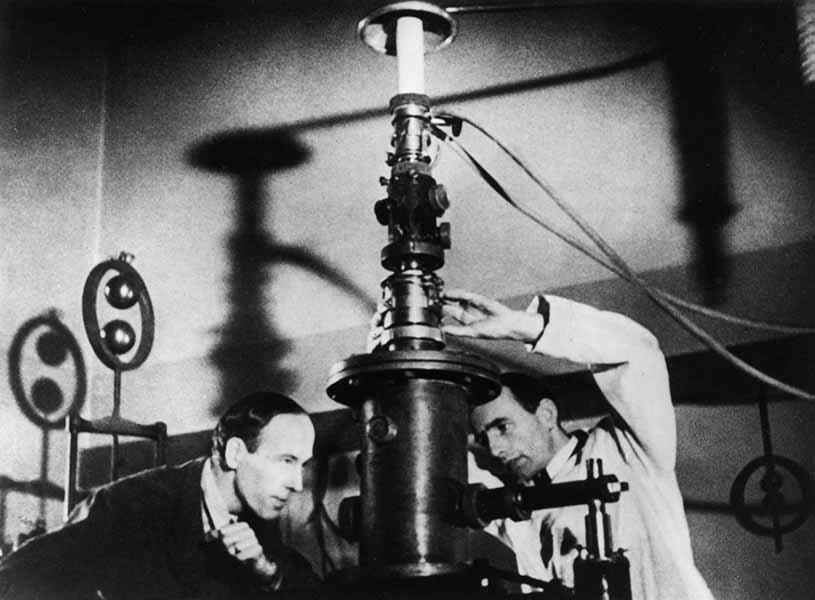
Ernst Ruska: The Visionary Scientist Behind Electron Microscopy
The Early Life and Education
Childhood and Initial Interests
Ernst Ruska was born on May 10, 1906, in Königsberg, Germany (now Kaliningrad, Russia). From a young age, he displayed a keen interest in mathematics and electronics, which laid the foundation for his future scientific career. His father, Wilhelm Ruska, was a physics teacher at the Albertina University in Königsberg, and this early exposure to academia sparked Ruska’s curiosity and passion for science.
Navigating Through Higher Education
Ruska enrolled at the University of Göttingen in 1924, intending to study mathematics and physics. However, during his time there, he developed a strong interest in electrical engineering and electronics. This shift towards electronics coincided with the burgeoning field of electrical engineering around the world, a field that would later become central to his groundbreaking work.
The Path to Research
Towards the end of his studies, Ruska’s focus narrowed to theoretical electrical engineering, leading him to switch universities. In 1928, he transferred to the Technical University of Berlin, where he completed his doctoral thesis under the guidance of Heinrich Kayser, a renowned experimental physicist. Kayser encouraged Ruska’s budding interests in the application of electromagnetic waves and their interactions with matter, particularly in generating images of objects using these waves.
The Development of Electron Microscopy
The Birth of Electron Optics
During his doctoral work and post-graduate research, Ruska began developing the foundations of electron optics, a field that would lead to revolutionizing our ability to view the nanoscale realm. Building upon the principles of classical optics, he sought to exploit the unique properties of electrons and their interaction with materials. He realized that if one could manipulate electron beams with sufficient precision, it might be possible to achieve much higher magnifications than what was possible with traditional optical microscopes.
The First Electron Microscope
In the mid-1930s, Ruska started working at the German firm Telefunken, collaborating with Manfred von Ardenne. Their initial efforts focused on improving the resolution of electron microscopes. The first significant milestone was achieved when Ruska designed and built an electron lens capable of producing an image of a metal surface with unprecedented clarity. This was a critical breakthrough because previous attempts had failed due to technical limitations and design issues.
Publications and Recognition
In 1933, Ruska published his seminal paper in Poggendorff's Annalen der Physik, detailing his development of electron lenses and the construction of the first electron microscope. This publication was pivotal, as it showcased not only the potential of electron microscopy but also the ingenuity behind its development. Shortly after, he joined Ernst Abbe Professorship at the Institute for X-ray Physics at the University of Göttingen, further advancing his research.
Innovative Contributions and Scientific Legacy
The Zeiss Collaboration
Ruska's collaboration with the Carl Zeiss company proved to be crucial. Zeiss provided financial support and manufacturing capabilities, which were essential for scaling up Ruska's designs into practical instruments. Under their joint venture, Zeiss introduced the first commercial electron microscope in 1939, the EM 101A, which became a cornerstone in scientific research across various fields.
Continued Improvement and Expansion
Throughout the 1940s and 1950s, Ruska continued to refine electron microscopy techniques. He tackled challenging problems like improving stability, enlarging the field of view, and enhancing resolution. These improvements were incremental yet transformative, paving the way for electron microscopy to become a ubiquitous tool in materials science, biology, and nanotechnology.
The Impact on Science and Industry
The development of electron microscopy by Ruska and his team had far-reaching implications. It not only allowed scientists to examine materials and biological samples with unparalleled detail but also opened new avenues for research in semiconductor technology, drug discovery, and understanding cellular structures. The ability to visualize molecules and atoms directly contributed to advancements in numerous industrial sectors, including electronics manufacturing and pharmaceuticals.
Award and Legacy
Nobel Prize and Honors
Despite his groundbreaking contributions, Ruska did not receive a Nobel Prize in his lifetime, although his work significantly influenced future Nobel laureates. His induction into the Panthéon des Découvertes (Hall of Fame of Discoveries) by the Académie des Sciences de Paris in 1990 was an acknowledgment of his lasting impact on scientific knowledge and technological advancement.
Enduring Legacy
As Ruska’s contributions to electron microscopy continue to be recognized and celebrated, his legacy serves as an inspiration for aspiring scientists and engineers. His relentless pursuit of scientific excellence and innovative thinking remains a testament to the power of curiosity and dedication in shaping the course of human progress.
Theoretical Foundations and Challenges
Theory vs. Practice
While Ruska’s practical innovations were immense, his theoretical insights were equally important. One of his key contributions was the introduction of a rigorous mathematical framework to describe the behavior of electron beams within microscopes. By applying principles from quantum mechanics and electromagnetism, he developed algorithms that explained how different elements could be isolated and distinguished within an image. This theoretical groundwork ensured that each advance in technology was grounded in solid physics, making electron microscopy both precise and reliable.
Hurdles and Overcoming Them
Despite his successes, Ruska encountered many challenges along the way. One major obstacle was the inherent nature of electrons themselves. Unlike visible light or X-rays, electrons have both wave-like and particle-like properties, known as wave-particle duality. This made them difficult to control and interpret. Ruska’s solution involved developing multi-zone lenses and more sophisticated deflection systems. These innovations allowed for greater control over the electron beam, enhancing the microscope's resolution beyond the limit set by classical optical theory.
The Role of Magnetism in Electron Microscopy
A critical component of Ruska’s electron lenses was based on magnetic fields. By bending electron beams with magnets, he could direct them towards specific areas of interest, much like using a lens in an optical microscope. However, the challenge lay in precisely controlling the magnetic fields to maintain constant curvature of the electron paths. Ruska worked meticulously to perfect these designs, often spending hours adjusting and recalibrating his equipment to achieve optimal performance.
The Evolution of Electron Microscopy Technology
Scanning Electron Microscope (SEM)
Another significant contribution by Ruska was the development of the Scanning Electron Microscope (SEM). Unlike the Transmission Electron Microscope (TEM), which passes electrons through a sample to generate an image, SEM scans a focused electron beam over the surface of a sample. This technique provided detailed surface information, which was particularly useful in studying electronic circuits and biological specimens.
The Role of Electron Energy Analysis
Beyond mere imaging, Ruska pushed the boundaries of electron microscopy by incorporating energy analysis capabilities. He introduced a device called an energy filter, which allowed scientists to analyze the energy distribution of electrons that passed through or interacted with a sample. This capability was instrumental in identifying various elements and compounds within microscopic samples, a feature that greatly enhanced the scientific utility of electron microscopy.
Adaptation and Application Across Disciplines
The applications of electron microscopy extended far beyond mere visualization. Researchers used Ruska’s techniques to study everything from the atomic structure of materials to the intricate details of cell membranes. In materials science, electron microscopy helped identify defects in semiconductors, paving the way for improved electronic devices. In biology, it offered unprecedented views of viral particles and bacteria, contributing significantly to medical research. These diverse applications underscored the versatility and importance of electron microscopy in modern science.
The Educational and Collaborative Impact
Educational Outreach
Ruska took an active role in training the next generation of scientists. He lectured at leading institutions and mentored countless students who went on to make their own mark in the field. His teaching emphasized hands-on experience and encouraged practical problem-solving, ensuring that the principles of electron microscopy were deeply ingrained in the minds of future researchers.
Collaborative Networks
Collaboration was also a hallmark of Ruska’s career. He worked closely with researchers from different disciplines and institutions, fostering a collaborative environment that spurred innovation. By inviting scientists to contribute to his projects and share their expertise, Ruska helped build a robust network of collaborators who continued to push the frontiers of scientific understanding.
The Establishment of Research Centers
To facilitate these collaborations and further his research goals, Ruska played a key role in the establishment of prominent research centers dedicated to electron microscopy. These centers served as hubs where scientists from various backgrounds could come together to advance the field. Through these centers, Ruska ensured that his work and the work of his colleagues would continue to have a profound impact on scientific research and technological development.
The Influence Beyond Science and Engineering
Technological Spin-offs
The technological innovations driven by Ruska’s research had profound effects far beyond the confines of academic laboratories. The principles behind electron microscopy led to the development of various other technologies, such as computerized tomography (CT), which has become essential in medical diagnostics. Further, the techniques developed for analyzing atomic structures inspired advancements in manufacturing processes and materials science, revolutionizing industries ranging from automotive to aerospace.
Public Awareness and Engagement
Beyond its scientific and practical impacts, Ruska’s work also raised public awareness about the capabilities of electron microscopy. Through exhibitions, articles, and public lectures, he explained the potential of these new tools to society at large. This engagement helped demystify cutting-edge science, inspiring public interest and support for ongoing research and technological development.
Long-Term Implications
The long-term implications of Ruska’s work extend well beyond his lifetime. Today, electron microscopy remains a fundamental tool in numerous scientific disciplines, driving innovations that continue to shape our understanding of the physical and biological worlds. From the development of new materials to the fight against diseases, the legacy of Ernst Ruska continues to influence and inspire future generations of scientists.
As we reflect on the extraordinary journey of Ernest Ruska, it is clear that his contributions go far beyond the confines of a single scientific discipline. His visionary approach, meticulous attention to detail, and unwavering commitment to pushing the boundaries of science have left an indelible mark on the landscape of modern technology and research.
The Last Years and Legacy
The Later Years and Recognition
Later in his career, Ruska faced some personal and professional challenges. Despite his significant contributions, he did not receive a Nobel Prize, a recognition that would have solidified his status as one of the greatest physicists of his time. Nonetheless, he continued to work and contribute to the field until the 1970s. Ruska retired from his professorship at the University of Regensburg in 1974 but remained deeply involved in ongoing research and development.
Continued Innovation and Mentoring
Even in retirement, Ruska remained passionate about mentoring younger scientists. He continued to advise and collaborate with researchers, ensuring that his expertise lived on long after his official retirement. His mentorship extended beyond technical guidance; he often shared philosophical insights and encouraged a broader perspective on the role of science in society.
Legacy Through Awards and Tributes
In 1968, Ruska was awarded the Otto Hahn Medal for his outstanding contributions to atomic physics. This recognition came late but was indicative of the growing appreciation for his work. In addition to the Otto Hahn Medal, Ruska was also honored by various institutions and societies. The Ernst Ruska Prize, established in 2000, is named in his honor and celebrates individuals who have made significant advancements in electron microscopy.
Influence on Modern Science and Society
Ruska’s work has had a lasting impact on modern science and society. The tools and techniques he developed continue to be foundational in a wide range of disciplines. Electron microscopy has become indispensable in fields such as materials science, biophysics, and nanotechnology, driving forward innovations that were unimaginable in Ruska’s era.
Conclusion
The Endless Frontier of Science
Ernst Ruska’s life and career exemplify the enduring power of scientific curiosity and innovation. His visionary ideas and tireless efforts paved the way for remarkable advances in microscopy and related technologies. Ruska’s legacy serves as a reminder of the possibilities that lie at the intersection of basic research and practical application.
Reflection on His Impact
As we look back on Ernst Ruska’s work, it becomes clear that his contributions have transcended the boundaries of microscopy. His approach to scientific inquiry, characterized by a deep commitment to understanding the fundamental principles underlying natural phenomena, continues to inspire researchers worldwide. Today, the tools and techniques that Ruska developed remain at the forefront of scientific exploration, driving us closer to a deeper understanding of the physical world.
Ultimately, Ernst Ruska’s legacy lies not just in his pioneering discoveries but in the spirit of inquiry and collaboration that he fostered. His work reminds us that every great discovery begins with a simple question—what if we could see the unseeable? Ruska’s enduring legacy stands as a testament to the transformative power of science.
Bio: Ernst Ruska (1906–1988) was a pioneering German physicist known for his fundamental contributions to the field of electron microscopy. His invention of the electron microscope revolutionized scientific research, enabling unprecedented detail in the visualization of nanoscale structures. Despite facing personal and professional challenges, Ruska remained steadfast in his pursuit of scientific truth and contributed tirelessly to the field until his passing.



Ernst Ruska: The Father of Electron Microscopy
Ernst Ruska, a pioneering German physicist, revolutionized the field of microscopy with his invention of the electron microscope. His groundbreaking work in the early 20th century laid the foundation for modern imaging technologies, enabling scientists to explore the microscopic world at unprecedented resolutions.
Early Life and Education
Born in 1906, Ernst Ruska showed an early aptitude for science and engineering. He pursued his studies at the Technical University of Munich and later at the Technische Hochschule Berlin, where he delved into high-voltage research and cathode-ray oscillograph calculations. His academic journey was marked by a keen interest in the behavior of electrons and their potential applications in imaging.
Academic Foundations
Ruska's early work was influenced by the theories of Hans Busch, who in 1926 proposed that magnetic fields could bundle electrons in a manner similar to how lenses focus light. This concept became a cornerstone of Ruska's later inventions. During his studies, he also collaborated with Max Knoll, a partnership that would prove instrumental in the development of the electron microscope.
The Invention of the Electron Microscope
The electron microscope was a monumental leap forward in imaging technology. Unlike traditional optical microscopes, which are limited by the wavelength of visible light, electron microscopes use beams of electrons to achieve far greater resolutions. This innovation allowed scientists to observe structures at the atomic level, opening new avenues in fields such as biology, materials science, and nanotechnology.
Key Milestones
On March 9, 1931, Ruska and Knoll achieved a significant breakthrough: the first two-stage electron-optical magnification using magnetic lenses. This milestone was built on Busch's earlier theories and marked the beginning of a new era in microscopy. By December 1933, Ruska's prototype had already surpassed the resolution capabilities of light microscopes, achieving a magnification of 12,000x.
- 1931: First two-stage electron-optical magnification
- 1933: Prototype exceeds light microscope resolution
- 1938–1939: First serial-production electron microscope developed at Siemens
Commercialization and Impact
With the assistance of Bodo von Borries, Ruska developed the first commercially viable electron microscope at Siemens. This instrument enabled atomic-scale imaging, revolutionizing scientific research and industrial applications. The ability to visualize structures at such minute scales had a profound impact on various disciplines, from biology to materials science.
Recognition and Legacy
Ernst Ruska's contributions to science were recognized with numerous accolades, culminating in the Nobel Prize in Physics in 1986. He shared this prestigious award with Gerd Binnig and Heinrich Rohrer for their work on scanning tunneling microscopy. Ruska's electron microscope, initially termed the "Übermikroskop," has left an indelible mark on the scientific community, spurring advancements in nanotechnology, virology, and beyond.
Preservation and Influence
The original electron microscope developed by Ruska is preserved at the Deutsches Museum in Munich, serving as a testament to his ingenuity. Modern electron microscopy continues to evolve, integrating high-performance computing and AI-enhanced image processing to achieve dynamic 3D reconstructions and sub-angstrom resolutions. Educational videos and resources from 2023 highlight the ongoing evolution of electron microscopy, from Ruska's early prototypes to advanced techniques like scanning electron microscopy (SEM) and transmission electron microscopy (TEM).
Technical Innovations and Advancements
The electron microscope operates on the principle of using electrons instead of light to illuminate specimens. This approach leverages the much shorter wavelength of electrons, approximately 100,000 times shorter than that of visible light, to achieve superior resolution. The electrons are focused using magnetic lenses, a concept derived from Busch's theories, and deflected by atoms within the specimen to create contrast.
Resolution and Magnification
The resolution capabilities of electron microscopes are truly remarkable. While traditional light microscopes are limited to resolutions of about 200 nanometers, electron microscopes can achieve resolutions as fine as 0.1 nanometers. This leap in resolution has enabled scientists to visualize structures at the atomic level, providing unprecedented insights into the fundamental building blocks of matter.
"The electron microscope has revolutionized our understanding of the microscopic world, enabling us to see what was previously invisible."
Early prototypes of the electron microscope achieved magnifications of up to 12,000x, a feat that was unthinkable with light microscopes. Modern electron microscopes can exceed magnifications of millions-fold, allowing for detailed observations of complex structures such as proteins, viruses, and nanomaterials.
Applications and Impact
The impact of the electron microscope extends across numerous scientific disciplines. In biology, it has enabled the visualization of cellular structures, viruses, and macromolecules, providing critical insights into biological processes. In materials science, electron microscopy has facilitated the study of crystalline structures, defects, and nanomaterials, driving advancements in technology and engineering.
- Biology: Visualization of cellular structures and macromolecules
- Materials Science: Study of crystalline structures and nanomaterials
- Nanotechnology: Exploration of atomic-scale structures and properties
The advent of techniques such as cryo-electron microscopy and aberration-corrected lenses has further expanded the capabilities of electron microscopy. These advancements have enabled the visualization of protein structures at sub-angstrom resolutions and the creation of dynamic 3D reconstructions, pushing the boundaries of scientific exploration.
Conclusion
Ernst Ruska's invention of the electron microscope has had a transformative impact on science and technology. His pioneering work has enabled researchers to explore the microscopic world at unprecedented levels of detail, driving advancements in fields ranging from biology to materials science. As electron microscopy continues to evolve, incorporating cutting-edge technologies such as AI and high-performance computing, Ruska's legacy remains a cornerstone of modern scientific discovery.
Ernst Ruska's Contributions to Modern Science
Ernst Ruska's groundbreaking work on the electron microscope not only revolutionized imaging technology but also had a profound impact on various scientific disciplines. His invention enabled researchers to explore the microscopic world with unprecedented clarity, leading to significant advancements in fields such as biology, materials science, and nanotechnology.
Advancements in Biology
The electron microscope has been instrumental in the field of biology, allowing scientists to visualize cellular structures, viruses, and macromolecules at the atomic level. This capability has provided critical insights into biological processes, enabling researchers to better understand the fundamental mechanisms of life.
- Cellular Structures: Detailed imaging of organelles and intracellular components
- Virology: Visualization of viral particles and their interactions with host cells
- Macromolecules: Study of complex biological molecules such as proteins and nucleic acids
One of the most significant contributions of electron microscopy to biology has been in the field of virology. The ability to visualize viral particles has been crucial in understanding viral structures, replication mechanisms, and interactions with host cells. This knowledge has been instrumental in the development of vaccines and antiviral therapies.
Impact on Materials Science
In the realm of materials science, the electron microscope has enabled researchers to study the properties and behaviors of materials at the atomic scale. This has led to the development of new materials with enhanced properties, as well as a deeper understanding of the fundamental principles governing material behavior.
- Crystalline Structures: Analysis of atomic arrangements and defects in crystals
- Nanomaterials: Exploration of the unique properties of materials at the nanoscale
- Material Properties: Investigation of mechanical, electrical, and thermal properties
The electron microscope has been particularly valuable in the study of nanomaterials. The ability to visualize and manipulate materials at the nanoscale has led to the development of novel materials with unique properties, such as enhanced strength, conductivity, and reactivity. These advancements have had a significant impact on industries ranging from electronics to medicine.
The Evolution of Electron Microscopy
Since the invention of the first electron microscope by Ernst Ruska and Max Knoll in 1931, the technology has undergone significant advancements. Modern electron microscopes incorporate cutting-edge technologies such as high-performance computing, AI-enhanced image processing, and advanced imaging techniques, enabling researchers to explore the microscopic world with unprecedented detail and precision.
From Static to Dynamic Imaging
Early electron microscopes were limited to static imaging, providing two-dimensional snapshots of specimens. However, modern electron microscopy has evolved to include dynamic imaging capabilities, allowing researchers to observe processes and interactions in real-time. This has been particularly valuable in the study of biological systems, where dynamic processes such as cellular interactions and molecular dynamics can be visualized.
- 3D Imaging: Reconstruction of three-dimensional structures from two-dimensional images
- Time-Resolved Imaging: Observation of processes and interactions in real-time
- Correlative Microscopy: Integration of multiple imaging techniques for comprehensive analysis
One of the most significant advancements in electron microscopy has been the development of 3D imaging techniques. By combining multiple two-dimensional images, researchers can reconstruct three-dimensional structures, providing a more comprehensive understanding of complex systems. This capability has been particularly valuable in the study of biological macromolecules and cellular structures.
Integration of High-Performance Computing
The integration of high-performance computing has been a game-changer in the field of electron microscopy. Advanced computational techniques enable researchers to process and analyze large datasets, extract meaningful information, and create detailed reconstructions of complex structures. This has led to significant advancements in fields such as structural biology, where the visualization of protein structures at atomic resolutions has been made possible.
- Image Processing: Enhancement and analysis of electron microscope images
- Data Analysis: Extraction of meaningful information from large datasets
- Simulation and Modeling: Prediction and visualization of complex systems
The use of AI-enhanced image processing has further expanded the capabilities of electron microscopy. Machine learning algorithms can automatically identify and classify features within images, enabling researchers to analyze large datasets with greater efficiency and accuracy. This has been particularly valuable in the study of complex biological systems, where the identification of specific structures and interactions can be challenging.
Ernst Ruska's Legacy and Influence
Ernst Ruska's invention of the electron microscope has had a lasting impact on the scientific community, spurring advancements in numerous fields and inspiring generations of researchers. His pioneering work has been recognized with numerous accolades, including the Nobel Prize in Physics in 1986, and his legacy continues to shape the future of scientific discovery.
Recognition and Awards
Throughout his career, Ernst Ruska received numerous awards and honors in recognition of his contributions to science. In addition to the Nobel Prize, he was awarded the Lasker Award in 1960 and the Paul Ehrlich and Ludwig Darmstaedter Prize in 1970. These accolades reflect the profound impact of his work on the scientific community and the broader world.
- Nobel Prize in Physics (1986)
- Lasker Award (1960)
- Paul Ehrlich and Ludwig Darmstaedter Prize (1970)
The Nobel Prize in Physics awarded to Ruska in 1986 was a testament to the transformative impact of his invention. The prize was shared with Gerd Binnig and Heinrich Rohrer for their work on scanning tunneling microscopy, highlighting the broader significance of advancements in imaging technology.
Influence on Future Generations
Ruska's work has inspired generations of scientists and engineers, encouraging them to push the boundaries of scientific discovery. His invention of the electron microscope has not only revolutionized imaging technology but also opened new avenues for exploration and innovation. Today, electron microscopy continues to evolve, incorporating cutting-edge technologies and driving advancements in fields ranging from biology to materials science.
- Education: Inspiring students and researchers to pursue careers in science and engineering
- Innovation: Encouraging the development of new technologies and techniques
- Collaboration: Fostering interdisciplinary research and cooperation
The influence of Ernst Ruska extends beyond his technical achievements. His commitment to scientific exploration and innovation has served as a model for future generations, encouraging them to pursue their own groundbreaking discoveries. The electron microscope, once a revolutionary invention, has become an indispensable tool in modern science, and its continued evolution is a testament to Ruska's enduring legacy.
The Future of Electron Microscopy
The field of electron microscopy continues to evolve, driven by advancements in technology and the ongoing pursuit of scientific discovery. Modern electron microscopes incorporate cutting-edge techniques such as cryo-electron microscopy, aberration-corrected lenses, and AI-enhanced image processing, enabling researchers to explore the microscopic world with unprecedented detail and precision.
Emerging Technologies
One of the most promising developments in electron microscopy is the advent of cryo-electron microscopy. This technique involves flash-freezing specimens to preserve their natural structures, allowing researchers to visualize biological macromolecules in their native states. This capability has been particularly valuable in the study of protein structures, enabling researchers to achieve sub-angstrom resolutions and gain insights into the fundamental mechanisms of biological processes.
- Cryo-Electron Microscopy: Visualization of biological macromolecules in their native states
- Aberration-Corrected Lenses: Enhancement of resolution and image quality
- AI-Enhanced Image Processing: Automatic identification and classification of features
The development of aberration-corrected lenses has also been a significant advancement in electron microscopy. These lenses correct for optical aberrations, enhancing the resolution and image quality of electron microscopes. This has enabled researchers to achieve unprecedented levels of detail, providing new insights into the structures and behaviors of materials at the atomic scale.
Applications in Nanotechnology
The field of nanotechnology has benefited greatly from the advancements in electron microscopy. The ability to visualize and manipulate materials at the nanoscale has led to the development of novel materials with unique properties, as well as a deeper understanding of the fundamental principles governing nanoscale phenomena. This has had a significant impact on industries ranging from electronics to medicine, driving innovations in areas such as nanomedicine, nanoelectronics, and nanomaterials.
- Nanomedicine: Development of targeted drug delivery systems and diagnostic tools
- Nanoelectronics: Creation of advanced electronic devices and components
- Nanomaterials: Exploration of materials with unique properties at the nanoscale
The future of electron microscopy holds great promise, with ongoing advancements in technology and technique driving new discoveries and innovations. As researchers continue to push the boundaries of what is possible, the legacy of Ernst Ruska and his groundbreaking invention will continue to inspire and shape the future of scientific exploration.
The Enduring Impact of Ernst Ruska's Electron Microscope
The electron microscope invented by Ernst Ruska has fundamentally transformed scientific research, enabling breakthroughs that were once unimaginable. From its humble beginnings in the 1930s to its modern iterations, this technology continues to push the boundaries of human knowledge, allowing scientists to explore the atomic and molecular worlds with remarkable precision.
Revolutionizing Scientific Research
The impact of the electron microscope on scientific research cannot be overstated. Before its invention, scientists were limited by the resolution of optical microscopes, which could only magnify objects up to about 2000x. Ruska's electron microscope shattered this barrier, achieving magnifications of 12,000x by 1933 and eventually reaching millions-fold magnification in modern systems. This leap in capability has unlocked new frontiers in fields such as biology, chemistry, and materials science.
- Biology: Enabled the visualization of viruses, cellular structures, and macromolecules
- Chemistry: Facilitated the study of molecular structures and chemical reactions at the atomic level
- Materials Science: Allowed for the analysis of crystalline structures, defects, and nanomaterials
One of the most significant contributions of the electron microscope has been in the field of virology. For the first time, scientists could visualize viral particles in intricate detail, leading to a deeper understanding of viral structures and their interactions with host cells. This knowledge has been crucial in the development of vaccines and antiviral therapies, ultimately saving countless lives.
Advancements in Medical Science
The electron microscope has played a pivotal role in advancing medical science. By enabling the visualization of cellular and sub-cellular structures, it has provided invaluable insights into the mechanisms of diseases and the development of targeted therapies. For example, the study of protein structures using electron microscopy has led to breakthroughs in understanding diseases such as Alzheimer's and Parkinson's.
- Disease Research: Visualization of pathogens and disease mechanisms
- Drug Development: Design of targeted therapies based on molecular structures
- Diagnostic Tools: Development of advanced imaging techniques for medical diagnostics
The advent of cryo-electron microscopy has further revolutionized medical research. This technique allows scientists to visualize biological macromolecules in their native states, providing unprecedented insights into their structures and functions. This capability has been instrumental in the development of new drugs and therapies, as well as in the understanding of complex biological processes.
Ernst Ruska's Influence on Modern Technology
Ernst Ruska's invention of the electron microscope has not only advanced scientific research but also had a profound impact on modern technology. The principles and techniques developed for electron microscopy have been applied to a wide range of technologies, from semiconductor manufacturing to nanotechnology. This section explores the various ways in which Ruska's work has shaped the technological landscape.
Semiconductor Industry
The semiconductor industry has greatly benefited from the advancements in electron microscopy. The ability to visualize and manipulate materials at the atomic scale has been crucial in the development of integrated circuits and other electronic components. Electron microscopy has enabled engineers to analyze the structure and properties of semiconductor materials, leading to the creation of more efficient and powerful electronic devices.
- Integrated Circuits: Analysis and optimization of semiconductor structures
- Material Characterization: Study of material properties and defects
- Quality Control: Inspection and testing of electronic components
The use of scanning electron microscopy (SEM) and transmission electron microscopy (TEM) has become standard practice in the semiconductor industry. These techniques allow for the detailed analysis of semiconductor materials, enabling engineers to identify and correct defects, optimize performance, and develop new technologies.
Nanotechnology
The field of nanotechnology has been particularly transformed by the advancements in electron microscopy. The ability to visualize and manipulate materials at the nanoscale has led to the development of novel materials with unique properties, as well as the creation of advanced nanodevices. Electron microscopy has been instrumental in the study of nanomaterials, enabling researchers to explore their structures, properties, and behaviors.
- Nanomaterials: Exploration of materials with unique properties at the nanoscale
- Nanodevices: Development of advanced devices and components
- Nanoelectronics: Creation of electronic devices at the nanoscale
The development of aberration-corrected lenses has further enhanced the capabilities of electron microscopy in nanotechnology. These lenses correct for optical aberrations, enabling researchers to achieve unprecedented levels of detail and precision. This has led to significant advancements in the study of nanomaterials and the development of nanodevices, driving innovations in fields such as nanoelectronics and nanomedicine.
Preserving Ernst Ruska's Legacy
The legacy of Ernst Ruska and his groundbreaking invention continues to inspire and shape the future of scientific discovery. His work has been preserved and celebrated in various ways, ensuring that his contributions to science and technology are remembered and appreciated by future generations.
Museums and Exhibitions
The original electron microscope developed by Ruska is preserved at the Deutsches Museum in Munich, serving as a testament to his ingenuity and innovation. This historic artifact is a reminder of the transformative impact of Ruska's work and the enduring legacy of his invention. Museums and exhibitions around the world continue to showcase the evolution of electron microscopy, highlighting its significance in the history of science and technology.
- Deutsches Museum: Preservation of the original electron microscope
- Science Museums: Exhibitions on the history and evolution of electron microscopy
- Educational Programs: Initiatives to inspire future generations of scientists and engineers
Educational programs and initiatives have been developed to inspire future generations of scientists and engineers. These programs aim to foster a deeper understanding of the principles and applications of electron microscopy, encouraging students to pursue careers in science and technology. By preserving and promoting Ruska's legacy, these initiatives ensure that his contributions continue to inspire and shape the future of scientific discovery.
Educational Resources and Outreach
The importance of educational resources and outreach in preserving Ernst Ruska's legacy cannot be overstated. Educational videos, online courses, and interactive exhibits have been developed to provide students and researchers with a comprehensive understanding of electron microscopy and its applications. These resources aim to inspire and engage the next generation of scientists, ensuring that Ruska's work continues to have a lasting impact.
- Online Courses: Comprehensive courses on electron microscopy and its applications
- Interactive Exhibits: Hands-on experiences to explore the principles of electron microscopy
- Educational Videos: Engaging content to inspire and educate students and researchers
One notable example of educational outreach is the series of videos produced in 2023, which highlight the evolution of electron microscopy from Ruska's early prototypes to advanced techniques such as scanning electron microscopy (SEM) and transmission electron microscopy (TEM). These videos provide a compelling overview of the history and significance of electron microscopy, inspiring students and researchers to explore the microscopic world.
Conclusion: The Lasting Legacy of Ernst Ruska
Ernst Ruska's invention of the electron microscope has had a profound and lasting impact on the scientific community. His pioneering work has enabled researchers to explore the microscopic world with unprecedented detail and precision, driving advancements in fields ranging from biology to materials science. The electron microscope has become an indispensable tool in modern science, and its continued evolution is a testament to Ruska's enduring legacy.
Key Takeaways
The key takeaways from Ernst Ruska's contributions to science and technology are as follows:
- Revolutionary Invention: The electron microscope shattered the resolution barriers of optical microscopes, achieving magnifications of millions-fold.
- Transformative Impact: Enabled breakthroughs in biology, chemistry, materials science, and medical research.
- Technological Advancements: Drove innovations in semiconductor manufacturing, nanotechnology, and advanced imaging techniques.
- Inspiration for Future Generations: Ruska's work continues to inspire and shape the future of scientific discovery.
The electron microscope has not only revolutionized scientific research but also had a profound impact on modern technology. From the development of advanced electronic devices to the exploration of nanomaterials, Ruska's invention has driven innovations that have transformed industries and improved lives. His legacy serves as a reminder of the power of scientific curiosity and the potential for groundbreaking discoveries to shape the future.
The Future of Electron Microscopy
The future of electron microscopy holds great promise, with ongoing advancements in technology and technique driving new discoveries and innovations. Modern electron microscopes incorporate cutting-edge technologies such as high-performance computing, AI-enhanced image processing, and advanced imaging techniques, enabling researchers to explore the microscopic world with unprecedented detail and precision.
- Cryo-Electron Microscopy: Visualization of biological macromolecules in their native states.
- Aberration-Corrected Lenses: Enhancement of resolution and image quality.
- AI-Enhanced Image Processing: Automatic identification and classification of features.
As researchers continue to push the boundaries of what is possible, the legacy of Ernst Ruska and his groundbreaking invention will continue to inspire and shape the future of scientific exploration. The electron microscope, once a revolutionary invention, has become an indispensable tool in modern science, and its continued evolution is a testament to Ruska's enduring impact on the world of science and technology.
In conclusion, Ernst Ruska's contributions to science and technology have left an indelible mark on the world. His invention of the electron microscope has revolutionized scientific research, driven technological advancements, and inspired generations of scientists and engineers. As we look to the future, the continued evolution of electron microscopy serves as a reminder of the power of innovation and the potential for groundbreaking discoveries to transform our understanding of the world.
Ernst Ruska: Ein Pionier der Elektronenmikroskopie
Einführung in das Leben und Werk von Ernst Ruska
Ernst Ruska, geboren am 25. Dezember 1906 in Heidelberg, ist bekannt als einer der führenden Köpfe hinter der Entwicklung des Elektronenmikroskops. Seine bahnbrechende Arbeit in der Physik und Elektronenoptik hat das Fundament für zahlreiche wissenschaftliche Fortschritte gelegt und bietet uns einen tieferen Einblick in die mikroskopische Welt. Ruska, der 1986 mit dem Nobelpreis für Physik geehrt wurde, ist ein Beispiel für Exzellenz und Innovationskraft in einem immer komplexer werdenden wissenschaftlichen Umfeld.
Frühe Jahre und Ausbildung
Ernst Ruska wuchs in einer Familie auf, die wie viele andere während der Umbruchszeit im frühen 20. Jahrhundert mit den Herausforderungen der industriellen Revolution konfrontiert war. Seine frühe Bildung erhielt er in Heidelberg und anschließend an der Technischen Hochschule München, wo er Elektrotechnik studierte. Dort entwickelte er bald eine tiefe Faszination für die Elektronenoptik, ein Forschungsbereich, der damals noch in den Kinderschuhen steckte. Die theoretischen Grundlagen, die er erarbeitete, bildeten die Grundlage für seine späteren Entdeckungen.
Bereits zu Beginn seiner akademischen Laufbahn kam Ruska in Kontakt mit anderen bedeutenden Wissenschaftlern seiner Zeit. Eine seiner wichtigsten Verbindungen war zu seinem Bruder Helmut Ruska, einem Mediziner, der später auch eine entscheidende Rolle bei der Anwendung der Elektronenmikroskopie in den Biowissenschaften spielen würde.
Der Durchbruch: Das erste Elektronenmikroskop
In den späten 1920er Jahren begann Ruska seine Zusammenarbeit mit Max Knoll, einem weiteren Pionier der Elektronenoptik. Gemeinsam arbeiteten sie an der Realisierung eines Elektronenmikroskops, das in der Lage sein sollte, weit höhere Vergrößerungen zu erzielen als jedes Lichtmikroskop. Die Herausforderung bestand darin, die Wellenlänge von Elektronen zu nutzen, die viel kürzer ist als die von sichtbarem Licht, was theoretisch eine weitaus höhere Auflösung ermöglichen würde.
1931 gelang ihnen der erste Durchbruch: Sie konstruierten das sogenannte "Transmissionselektronenmikroskop" (TEM), das in der Lage war, die Struktur von Objekten im nanometrischen Bereich abzubilden. Dies war ein Meilenstein in der Physik und Forschung, da es Wissenschaftlern erlaubte, die Welt auf einer bisher unvorstellbaren Skala zu betrachten und zu analysieren.
Herausforderungen und gesellschaftliche Einflüsse
Die 1930er Jahre waren in Deutschland von politischen und wirtschaftlichen Turbulenzen geprägt, die auch die wissenschaftliche Gemeinschaft vor große Herausforderungen stellten. Ruska selbst war zwar nicht direkt in politische Kontroversen involviert, aber das Umfeld, in dem er arbeitete, war von den Entwicklungen des Nationalsozialismus betroffen. Trotz dieser schwierigen Zeiten setzte er seine Forschungen unermüdlich fort und trieb die Entwicklung des Elektronenmikroskops kontinuierlich voran.
In dieser Phase seiner Karriere konnte Ruska seine Arbeit durch die Unterstützung von Unternehmen wie Siemens fortsetzen, die an den praktischen Anwendungen des Elektronenmikroskops interessiert waren. Diese Zusammenarbeit ermöglichte es ihm, am Aufbau eines Prototyps zu arbeiten, der zu kommerziellen Zwecken eingesetzt werden konnte, und führte schließlich zur Serienproduktion von Elektronenmikroskopen nach dem Zweiten Weltkrieg.
Die Bedeutung der Elektronenmikroskopie
Die Entwicklung des Elektronenmikroskops hatte weitreichende Auswirkungen auf zahlreiche wissenschaftliche Disziplinen. In den Biowissenschaften ermöglichte es die Untersuchung von Zellstrukturen und Viren mit bis dahin unerreichter Detailgenauigkeit. In der Materialwissenschaft leistete es wertvolle Dienste bei der Untersuchung der atomaren Struktur von Materialien, was wiederum bahnbrechende Entwicklungen in der Nanotechnologie und Halbleiterforschung begünstigte.
Ruska war sich der Tragweite seiner Entdeckung bewusst und schrieb zahlreiche Forschungsarbeiten und Artikel, um seine Erkenntnisse zu teilen. Sein Einsatz für die wissenschaftliche Bildung und Zusammenarbeit hat Generationen von Wissenschaftlern inspiriert und die Forschung im Bereich der Elektronenoptik erheblich vorangetrieben.
Langfristige Auswirkungen auf die Wissenschaft
Die Entdeckung von Ernst Ruska hat nicht nur die Wissenschaft seiner Zeit beeinflusst, sondern auch über die Jahrzehnte hinweg bleibende Spuren hinterlassen. Das Elektronenmikroskop ist ein zentrales Werkzeug in zahlreichen Bereichen der Forschung geworden, und seine Anwendungsmöglichkeiten haben sich stetig erweitert. Heute profitieren Forscher in Physik, Chemie, Biologie und vielen interdisziplinären Feldern von der Möglichkeit, Strukturen auf atomarer Ebene zu visualisieren und zu analysieren.
Ein bedeutender Fortschritt, der ohne das Elektronenmikroskop nicht möglich gewesen wäre, ist die Nanotechnologie. Diese Disziplin beschäftigt sich mit der Manipulation von Materie auf atomarer und molekularer Ebene und hat Anwendungen in Bereichen wie der Medizin, Elektronik und Umweltwissenschaften. Die Fähigkeit, die Struktur von Materialien auf solch kleinen Skalen zu sehen und zu verstehen, hat die Entwicklung von nanotechnologischen Innovationen entscheidend vorangetrieben.
Technologische Weiterentwicklungen und Innovationen
Seit den Anfängen der Elektronenmikroskopie hat sich die Technologie kontinuierlich weiterentwickelt. Heute gibt es verschiedene Typen von Elektronenmikroskopen, die spezifischen Bedürfnissen angepasst sind, wie beispielsweise Rasterelektronenmikroskope (REM) und Rastertransmissionselektronenmikroskope (STEM). Diese Instrumente bieten noch größere Auflösungen und erweitern die Möglichkeiten für Forschung und Entwicklung erheblich.
Ein Beispiel für eine solche Weiterentwicklung ist das Kryo-Elektronenmikroskop, das es ermöglicht, biologische Proben bei sehr niedrigen Temperaturen zu untersuchen und detaillierte Bilder von komplexen biomolekularen Strukturen wie Proteinen und Viren zu erzeugen. Diese Technologie hat die Strukturbiologie revolutioniert und bietet neue Chancen für die Entdeckung von Medikamenten und die Erforschung grundlegender biomolekularer Prozesse.
Darüber hinaus hat die Elektronenmikroskopie maßgeblich zur Entwicklung neuer Materialien beigetragen. In der Halbleiterindustrie zum Beispiel wird sie genutzt, um die Struktur von Transistoren und anderen Bauelementen auf der Nanoskala zu untersuchen, was für die Weiterentwicklung von Computern und elektronischen Geräten von entscheidender Bedeutung ist.
Ernst Ruskas Vermächtnis
Neben seinen wissenschaftlichen Beiträgen wird Ernst Ruska auch für sein Engagement in der Ausbildung und Förderung junger Wissenschaftler geschätzt. Er erkannte früh die Bedeutung der Zusammenarbeit und des Wissensaustauschs in der wissenschaftlichen Gemeinschaft und setzte sich für eine internationale Kooperation ein, um die Forschung im Bereich der Elektronenoptik zu fördern.
Ruska war ein Vorreiter, dessen Vision und Innovation die wissenschaftliche Welt nachhaltig geprägt haben. Seinem Sohn Helmut Ruska folgend, der ebenfalls in der Elektronenmikroskopie tätig war, hinterließ er der Nachwelt ein reiches wissenschaftliches Erbe, das in zahlreichen Anwendungen und Technologien weiterlebt, die auf seiner Pionierarbeit basieren.
Während seiner Karriere erhielt Ernst Ruska zahlreiche Auszeichnungen und Ehrungen, darunter 1986 den Nobelpreis für Physik. Diese Anerkennung verdeutlichte den immensen Einfluss, den seine Entdeckung auf die Wissenschaft und die Gesellschaft als Ganzes hatte. Der Nobelpreis belohnte nicht nur eine technologische Errungenschaft, sondern auch die unermüdliche Hingabe eines Wissenschaftlers, das Verständnis der Welt um uns herum zu vertiefen.
Forschungszentren und Institutionen
Heute tragen mehrere Forschungseinrichtungen und Zentren seinen Namen, was seinen anhaltenden Einfluss auf die Wissenschaftswelt unterstreicht. Diese Institutionen setzen sich zum Ziel, innovative Forschung und Entwicklung im Bereich der Mikroskopietechnologie zu fördern und interdisziplinäre Zusammenarbeit zu unterstützen.
Ein solches Beispiel ist das "Ernst Ruska-Centrum" in Jülich, das führend in der Elektronenmikroskopieforschung in Deutschland ist. Diese Einrichtung dient als Plattform für Wissenschaftler aus aller Welt, die in einer hochmodernen Umgebung arbeiten, um die Grenzen des Wissens zu erweitern und neue Perspektiven in verschiedenen wissenschaftlichen Bereichen zu eröffnen.
Ruska hat durch seine Pionierarbeit in der Elektronenmikroskopie nicht nur unsere Sicht auf die mikroskopische Welt verändert, sondern auch den Weg für zahlreiche weitere Durchbrüche auf verschiedensten Gebieten geebnet. Seine Vision und sein Erfindungsreichtum bleiben unvergessen und dienen bis heute als Inspiration für zukünftige Generationen von Wissenschaftlern.
Einfluss auf die moderne Forschung und Industrie
Ernst Ruskas Erfindung des Elektronenmikroskops hat weitreichende Auswirkungen gehabt, die weit über die Grundlagenforschung hinausgehen. In der heutigen industrialisierten Welt hat die Präzision und Vielseitigkeit dieser Technologie dazu geführt, dass sie in zahlreichen Industrien Anwendung findet. Von der Qualitätssicherung in der Fertigung bis zur Analyse von Materialien in der Luft- und Raumfahrtindustrie, die Elektronenmikroskopie spielt eine entscheidende Rolle bei der Entwicklung und Verbesserung von Produkten.
In der Medizintechnik hilft das Elektronenmikroskop bei der Entwicklung neuer Biomaterialien und Implantate, indem es die Struktur und Eigenschaften dieser Materialien auf mikroskopischer Ebene sichtbar macht. Diese Erkenntnisse tragen dazu bei, dass medizinische Geräte sicherer und effizienter werden und eröffnen neue Möglichkeiten für die regenerative Medizin und personalisierte Therapien.
Interdisziplinäre Zusammenschlüsse und Innovation
Die Elektronenmikroskopie hat auch die Zusammenarbeit zwischen verschiedenen wissenschaftlichen Disziplinen gefördert. Die Notwendigkeit, komplexe Daten zu interpretieren und neue Technologien zu entwickeln, hat zu einer stärkeren Zusammenarbeit zwischen Physikern, Chemikern, Biologen und Ingenieuren geführt. Diese interdisziplinäre Herangehensweise hat neue Forschungsfelder eröffnet, darunter die Quantenmaterialien und die Nanophotonik, die auf der Interaktion von Licht und Materie auf subatomarer Ebene basieren.
Darüber hinaus hat die Weiterentwicklung der Elektronenmikroskopie in den letzten Jahren zur Verbesserung von Umwelttechnologien beigetragen. Beispielsweise ermöglicht die genaue Analyse der Struktur von Katalysatoren, effizientere und umweltfreundlichere chemische Reaktionen zu entwickeln, die in der Energieproduktion und in der Reduzierung von Schadstoffemissionen eingesetzt werden können.
Bildung und Wissenstransfer
Ernst Ruskas Einfluss erstreckt sich auch auf den Bildungssektor. Die Elektronenmikroskopie ist mittlerweile ein fester Bestandteil der Hochschulausbildung in den Naturwissenschaften und der Ingenieurwissenschaften. Diese Technologie bietet den Studierenden nicht nur Einblicke in die abstrakten Konzepte der modernen Wissenschaft, sondern auch praktische Erfahrung im Umgang mit hochpräzisen Geräten und Datenanalyse.
Der Zugang zu hochmodernen Mikroskopieeinrichtungen an Universitäten und Forschungszentren hat eine neue Generation von Wissenschaftlern hervorgebracht, die in der Lage sind, innovative Projekte voranzutreiben und zur Lösung globaler Herausforderungen beizutragen. Das Engagement von Institutionen und Wissenschaftlern für den Wissenstransfer und die Weiterbildung ist ein wesentlicher Bestandteil von Ruskas Vermächtnis.
Ernst Ruskas zeitloser Einfluss
Ernst Ruska bleibt eine inspirierende Figur in der Geschichte der Wissenschaft. Seine bahnbrechenden Entdeckungen in der Elektronenoptik haben nicht nur das Verständnis der mikroskopischen Welt revolutioniert, sondern auch eine Fülle von technologischen Innovationen ermöglicht, die bis heute relevant sind. Sein Lebenswerk zeigt, wie wichtig es ist, wissenschaftliche Neugierde und Kreativität zu fördern, um die Grenzen des Wissens immer weiter zu verschieben.
Heute erinnern nicht nur Forschungseinrichtungen und wissenschaftliche Gemeinschaften an seinen Beitrag, sondern auch die vielen Wissenschaftler und Ingenieure, die täglich mit Elektronenmikroskopen arbeiten und damit das Vermächtnis eines bedeutenden Pioniers der Technologie bewahren und erweitern. Ernst Ruskas Vision hat zweifellos den Weg für zukünftige Entdeckungen geebnet und wird auch in den kommenden Jahrzehnten eine wesentliche Grundlage für wissenschaftliche und technologische Fortschritte bilden.