Aspasia of Miletus: Influential Athenian Intellectual
The name Aspasia of Miletus resonates as one of the most remarkable figures from classical Athens. A foreign-born woman, she captivated the city's intellectual elite and influenced its most powerful leader, Pericles. Her story defies the strict conventions of her time, offering a unique glimpse into the world of ancient Greek philosophy and politics.
This influential woman from Miletus became a central figure in Athenian society despite her status as a metic, or resident alien. Her life and legacy are a testament to the power of intellect and rhetoric in the ancient world. This article explores her journey, her profound influence, and her lasting historical significance.
The Early Life and Arrival of Aspasia
Aspasia was born around 470 BCE in the Ionian Greek city of Miletus, located in Asia Minor. Historians believe she immigrated to Athens around 450 BCE, a move that would place her at the heart of the city's golden age. Her background as a foreigner was a defining aspect of her identity in her new home.
Unlike citizen women who were largely confined to the private sphere, Aspasia's status as a metic afforded her a different, albeit still limited, set of freedoms. This unique legal position allowed her to participate in public life in ways that were impossible for Athenian-born women. Her arrival coincided with a period of immense cultural and intellectual flourishing in Athens.
Aspasia's Social Status as a Metic
The term metic referred to a free resident alien who lived in Athens without the rights of citizenship. While metics paid taxes and had legal responsibilities, they could not own land or participate directly in the Athenian democracy. This status, however, was paradoxically liberating for an educated woman like Aspasia.
Athenian citizen women were expected to live private, domestic lives, largely separated from the intellectual and political discourse of men. As a metic, Aspasia was not bound by these same social restrictions. This freedom was crucial, enabling her to engage with the leading minds of her era and establish her own intellectual salon.
The Role of a Hetaira in Ancient Greece
Aspasia is often described as a hetaira, which translates to "companion." This was a distinct class of woman in ancient Greece. Unlike typical wives, hetairai were educated, cultured, and trained in the arts of conversation, music, and dance.
This role provided Aspasia with social mobility and access to the elite circles of Athenian society. As a hetaira, she could host gatherings, participate in philosophical debates, and form relationships based on intellectual companionship. This position was the foundation from which she built her considerable influence.
Aspasia and Pericles: A Powerful Partnership
Aspasia's most famous relationship was with Pericles, the preeminent statesman and general of Athens during its Classical Age. Their partnership began around 445 BCE and lasted until his death from the plague in 429 BCE. This union placed Aspasia at the very center of Athenian power.
Although she could not legally marry Pericles due to a law he himself had sponsored restricting Athenian citizenship, their relationship was a profound personal and intellectual partnership. Ancient sources, including Plutarch, suggest that Pericles valued her not just as a companion but as a trusted adviser.
Plutarch recorded that Pericles held Aspasia in "high favor because of her rare political wisdom."
The Intellectual Salon of Aspasia
Aspasia’s home became a renowned intellectual hub, attracting the brightest minds of Athens. Figures like the philosopher Socrates and the artist Phidias were known to attend her gatherings. These salons were spaces for vibrant discussion on philosophy, rhetoric, and politics.
This environment allowed Aspasia to exert significant indirect influence on Athenian thought. Her ability to host and engage with the elite in reasoned debate was unprecedented for a woman of her time. Her salon was a crucible for the ideas that shaped classical Athens.
The Son of Pericles and Aspasia
Their relationship produced a son, named Pericles after his father. Initially, the younger Pericles was not eligible for Athenian citizenship due to his mother's foreign status. However, after the deaths of Pericles's two legitimate sons from his first marriage, the Athenian assembly passed a special decree.
This extraordinary enactment granted citizenship to Aspasia's son, a clear indication of the elder Pericles's stature and the unique regard in which their family was held. The younger Pericles would later go on to serve as an Athenian general, continuing his father's legacy.
The Intellectual Influence of Aspasia
Aspasia was widely celebrated for her rhetorical skill and sharp intellect. Her reputation for eloquence and political wisdom was noted by multiple ancient authors. She was not merely a hostess but an active participant and teacher in the intellectual life of the city.
Her influence extended far beyond social gatherings. Credible historical sources suggest that her insights directly impacted the political decision-making of the most powerful man in Athens. She demonstrated that intellectual authority could be wielded effectively from a position outside formal power structures.
Aspasia as a Teacher of Rhetoric
One of the most compelling pieces of evidence for Aspasia's expertise comes from Plato. In his dialogue Menexenus, Socrates explicitly credits Aspasia as his teacher in the art of rhetoric. He even suggests that she was the true author of the famous Funeral Oration delivered by Pericles.
This attribution, whether factual or a literary device, underscores the high regard in which Aspasia's rhetorical abilities were held. To be named by Socrates as a master of persuasion placed her in an elite category of thinkers. Her teachings were considered worthy of the greatest Athenian orators.
Further evidence of her respected knowledge appears in Xenophon's Oeconomicus. In this work, Socrates acknowledges Aspasia's superior understanding of household management and the economic partnership between spouses. This highlights the breadth of her intellectual contributions, spanning from public rhetoric to private virtue.
- Rhetorical Genius: Credited with teaching Socrates and composing speeches for Pericles.
- Political Adviser: Provided counsel on matters of state to Athens's leading statesman.
- Philosophical Host: Fostered debate among the era's top intellectuals.
Political Controversy and Legal Challenges
The prominent public role of Aspasia inevitably made her a target for political adversaries and comic playwrights. In the fiercely competitive and often misogynistic atmosphere of Athenian democracy, her influence over Pericles was viewed with suspicion and scorn. She faced a barrage of slanderous attacks that questioned her morality and accused her of manipulating state affairs.
The primary sources of these attacks were the writers of Old Comedy. Playwrights like Aristophanes and Eupolis used her as a frequent subject for ridicule, a common tactic for criticizing powerful men through their associates. These theatrical portrayals, while fictionalized, shaped public perception and contributed to a hostile environment for the influential metic.
The Trial of Aspasia for Impiety
Ancient sources recount that Aspasia was put on trial for asebeia, or impiety. This was a serious charge in ancient Athens, as demonstrated by the trial and execution of Socrates years later. The accusation allegedly stemmed from her supposedly introducing free-thinking women and new religious ideas to the city's women.
However, modern scholars widely question the historicity of this specific trial. Many believe the story originates from a fictional portrayal in a now-lost comedy by Hermippus. While the trial may be apocryphal, its persistence in the historical record highlights the political vulnerability she faced as a foreign woman with perceived power.
Scholars debate whether her prosecution for impiety was historical fact or a plot device from Athenian comedy, illustrating the blurred lines between her real life and her public persona.
Aspasia and the Causes of War
In a more direct political attack, Aspasia was accused of influencing major military decisions. Comic poets claimed she persuaded Pericles to launch the Samian War in 440 BCE, allegedly to aid her native Miletus in a conflict against Samos. This accusation framed her as a dangerous foreign agent using her intimate access to sway Athenian policy.
She was also blamed, even more dramatically, for instigating the Peloponnesian War. The story claimed she convinced Pericles to attack Megara, a key escalation leading to the protracted conflict with Sparta. These accusations, almost certainly invented, reveal how her gender and origin were used to personify and criticize Pericles's political strategies.
- Asebeia Charge: Faced a potential trial for impiety, a grave accusation in Athenian society.
- Warmonger Allegations: Falsely blamed for inciting the Samian War and the Peloponnesian War.
- Comic Slander: Her character was routinely assassinated in popular Athenian plays for political effect.
The Death of Pericles and Aspasia's Second Marriage
The great plague of Athens in 429 BCE claimed the life of Pericles, devastating the city and dramatically altering Aspasia's life. She had lost her partner of nearly two decades and her primary protector in the volatile political landscape. Despite this profound loss, historical records show that Aspasia's influence did not end with Pericles's death.
Demonstrating her unique skills in mentorship and rhetoric, Aspasia later married Lysicles, a seemingly ordinary Athenian sheep merchant. This union further cements her reputation as a teacher and political strategist. Under her guidance, Lysicles emerged as a prominent popular leader in the tumultuous years following Pericles's death.
This second marriage is a powerful testament to her enduring agency and intellect. It proved that her perceived power was not solely derivative of her relationship with Pericles but was rooted in her own formidable capabilities. She could guide a man from humble origins to a position of political leadership through instruction in public speaking and statecraft.
The Later Life and Death of Aspasia
The historical record becomes less clear regarding the final years of Aspasia's life. The date and circumstances of her death are not definitively known. Most historians estimate she died sometime around 400 BCE. Little is documented about her life after Lysicles, who himself was killed in battle in 428 BCE, just a year after their marriage.
Despite the silence on her later years, her legacy was already firmly established. Ancient authors continued to discuss her influence for centuries, ensuring her story survived. The fact that she re-married and continued her role as an adviser confirms she remained an active and respected figure in Athenian society until the end of her life.
Aspasia in Ancient Sources and Historical Analysis
Reconstructing the life of Aspasia requires careful navigation of complex and often biased ancient sources. She is mentioned by pivotal figures including Plato, Xenophon, Plutarch, and Aristophanes. However, each author wrote with a specific agenda, from philosophical dialogue to comedic satire, which colors their portrayal.
The challenge for modern historians is separating the factual woman from the literary construct. She appears as a symbol of wisdom, a scapegoat for political woes, and a philosophical muse. This multiplicity makes her one of the most intriguing, yet elusive, figures from classical antiquity.
The Philosophical Portrayal: Plato and Xenophon
In philosophical texts, Aspasia is presented with considerable respect. Plato's *Menexenus*** is the most significant of these. By having Socrates credit her with composing Pericles's Funeral Oration, Plato elevates her to the highest level of rhetorical mastery. This was not a casual compliment but a serious attribution in a philosophical work.
Similarly, Xenophon's *Oeconomicus*** uses Aspasia as an authority on domestic economy and marital partnership. These philosophical portrayals suggest that among intellectual circles, her wisdom was recognized as genuine and authoritative. They provide a counter-narrative to the slander found in comedic works.
The Comic Portrayal: Aristophanes and His Contemporaries
In stark contrast, the comedic tradition painted Aspasia as a licentious and manipulative figure. Aristophanes, in his play *Acharnians*, crudely blames her for the Peloponnesian War. This portrayal was designed for laughs and political point-scoring, using her as a stand-in to attack Pericles.
While these portrayals are not reliable history, they are invaluable for understanding her public perception. They reveal the deep anxiety her influence provoked and the standard tactics used to undermine powerful women. The very frequency of these attacks confirms that she was a household name in Athens.
- Platonic Respect: Portrayed as a master rhetorician and teacher of Socrates.
- Xenophonic Authority: Cited as an expert on economics and household management.
- Comedic Slander: Depicted as a promiscuous warmonger in popular plays.
- Plutarch's Biography: Provided a more balanced, though later, historical account in his *Life of Pericles*.
Modern Scholarly Perspectives on Aspasia
Contemporary scholars approach Aspasia with cautious analysis. She is recognized as one of the best-attested women from the Greco-Roman world, yet significant uncertainty surrounds specific details. The consensus is that while the comic accusations are fabrications, her intellectual influence and social prominence are historical facts.
Modern scholarship often focuses on her role as a hetaira and what it reveals about gender and class in ancient Athens. Her ability to navigate this role to achieve intellectual recognition is a key area of study. Scholars also analyze how her story has been interpreted and reinterpreted from antiquity through to the modern feminist movement.
As one modern analysis notes, "Aspasia remains a figure who stands at the intersection of historical reality, literary invention, and modern ideological debate."
The Enduring Legacy and Modern Relevance of Aspasia
The story of Aspasia of Miletus extends far beyond the confines of fifth-century Athens. Her legacy has been reinterpreted across centuries, serving as a symbol for intellectual women, the power of rhetoric, and the complexities of gender in historical narratives. From the Renaissance to the modern day, she remains a figure of fascination and scholarly debate.
Her life challenges modern perceptions of the ancient world, revealing nuances in social structures often overlooked. Aspasia proves that even within highly restrictive systems, exceptional individuals could carve out spaces of influence. Her legacy is a powerful reminder of the voices that history often marginalizes but cannot completely silence.
Aspasia in Art and Literature Through the Ages
Since antiquity, Aspasia has been a popular subject in Western art and literature. Renaissance painters, drawn to classical themes, often depicted her in the company of Pericles and Socrates. In the 19th century, she became a romantic figure in novels and plays, symbolizing enlightened feminine wisdom amidst Athenian glory.
The Victorian era saw a renewed interest in her story, though often filtered through contemporary moral sensibilities. In more recent times, she features prominently in historical fiction and feminist reinterpretations of classical history. Each era recreates her image to reflect its own values and questions about gender, power, and knowledge.
- Renaissance Art: Appeared in paintings as an emblem of classical learning and beauty.
- 19th-Century Literature: Romanticized as the cultured and influential partner of Pericles.
- Modern Fiction: Reimagined as a proto-feminist icon and intellectual force in historical novels.
Aspasia and Feminist Historiography
In the 20th and 21st centuries, Aspasia has taken on a significant role within feminist scholarship. Historians seeking to recover the contributions of women have pointed to her as a prime example of female agency in a male-dominated society. She is studied as a case study in how women could exert informal power when formal avenues were barred.
Feminist readings often highlight the contrast between the slander she endured and the respect she commanded from philosophers. This dichotomy illuminates the strategies used to police women who transgressed social boundaries. Her life offers critical insights into the construction of gender norms and the resistance they faced.
Aspasia serves as a crucial anchor point for feminist classical studies, demonstrating that influential women existed even in societies that systematically excluded them from public life.
Aspasia's Significance in Classical Studies
For students of ancient history, philosophy, and rhetoric, Aspasia provides a unique and invaluable perspective. She acts as a connective thread linking major figures like Pericles, Socrates, and the artistic milieu of the Athenian Golden Age. Studying her offers a more holistic view of Athenian society beyond the standard narratives of great men.
Her documented involvement in rhetorical education forces a reconsideration of the origins of this critical Athenian art form. If influential men like Socrates and Pericles learned from her, then the standard, male-centric history of rhetoric requires expansion. She challenges us to ask whose voices are missing from our historical accounts.
Aspasia and the History of Rhetoric
The claim that Aspasia taught rhetoric and even authored speeches places her at the very foundation of Western oratory. The Funeral Oration, attributed to Pericles, is one of the most celebrated speeches in history, a cornerstone of democratic ideals. The suggestion that Aspasia composed it is revolutionary.
This positions her not as a peripheral figure but as a potential architect of democratic ideology. It invites scholars to re-examine the collaborative nature of intellectual production in antiquity. Her role encourages a broader definition of authorship and influence in the ancient world.
Questioning the Historical Record
Aspasia’s life forces historians to confront the limitations and biases of the source material. The fact that most of our information comes from comedy, philosophy, and later biography means we see her through multiple, distorting lenses. Separating the historical Aspasia from these representations is a central challenge.
This process, however, is intellectually rewarding. It teaches critical methodology and highlights how figures are constructed for various purposes—political, philosophical, or comic. Aspasia becomes a lens through which we examine how ancient societies recorded, and often misrepresented, the lives of complex women.
Key Takeaways and Conclusion on Aspasia of Miletus
The story of Aspasia is one of exceptional intellect navigating a world of severe constraints. A metic from Miletus, she leveraged her position as a hetaira to become a central node in the intellectual network of classical Athens. Her relationships with Pericles and Socrates underscore her significant, though informal, authority.
Despite facing slander, legal threats, and social prejudice, she left an indelible mark on her time. Her legacy is preserved in the writings of philosophers, the jokes of comedians, and the ongoing work of modern historians. She symbolizes the persistent human capacity for influence beyond prescribed social roles.
Summary of Aspasia's Lasting Impact
Aspasia’s impact can be measured in several key areas. First, she demonstrated that intellectual influence could be wielded from outside traditional power structures. Second, her life exposes the gendered dynamics of Athenian public life and the mechanisms used to attack powerful women. Third, she serves as a critical figure for understanding the social world of the Athenian elite.
Finally, her enduring presence in historical memory highlights the ongoing desire to understand women's roles in the ancient world. She continues to inspire because she represents a triumph of mind over circumstance, a theme that resonates across the centuries.
- Intellectual Hub: Hosted the premier salon of Classical Athens, influencing philosophers and statesmen.
- Political Influence: Acted as a trusted adviser to Pericles during Athens's peak power.
- Rhetorical Mastery: Credited by ancient sources as a teacher of rhetoric and speechwriter.
- Historical Symbol: Evolved into an icon for female agency and intellectual contribution in a patriarchal society.
Final Reflection on an Ancient Icon
Aspasia of Miletus remains a compelling and somewhat enigmatic figure two millennia after her death. She stands at the intersection of history and legend, fact and fiction. While the precise details of her life may be debated, the broad outline of her significance is clear: she was a woman of profound intellect who shaped, and was shaped by, the most vibrant cultural center of the ancient world.
Her journey from a foreigner to a central figure in Athenian intellectual life is a testament to the power of ideas. It reminds us that history is filled with individuals whose influence rippled through time, not from positions of formal title, but from the strength of their character and their mind. Aspasia’s story encourages a deeper look into the past, prompting us to listen for the voices that traditional narratives have often obscured.
In the end, Aspasia transcends her specific historical moment. She becomes a figure for all eras—a symbol of the struggle for recognition, the price of influence, and the enduring power of a sharp intellect. By studying her, we gain not only insight into classical Athens but also a timeless reflection on knowledge, gender, and legacy.


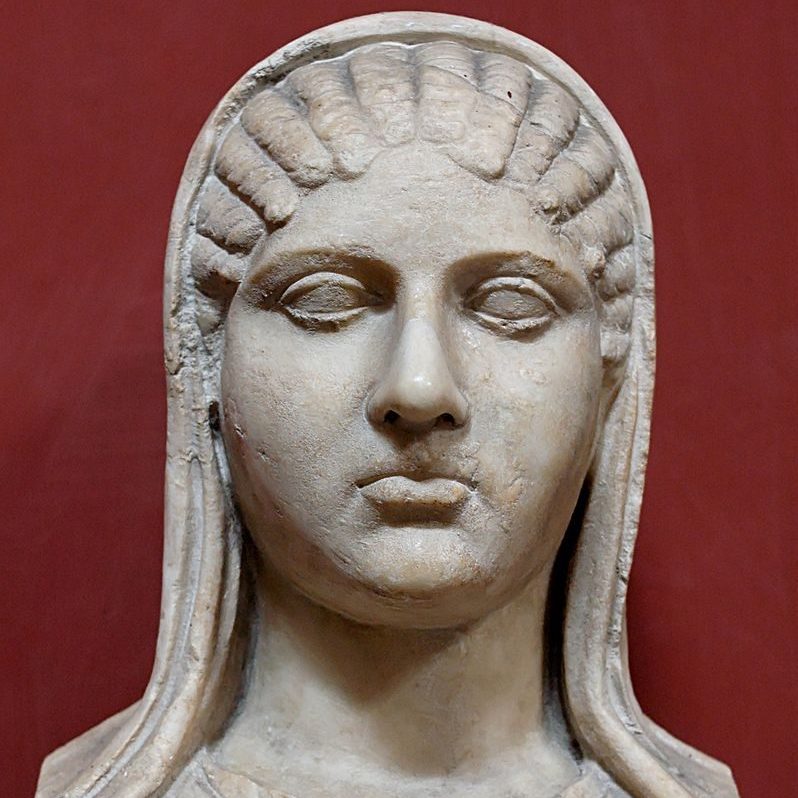
The Shaping of Ancient Athens: Aspasia's Enduring Influence
The figure of Aspasia of Miletus stands as one of the most compelling and enigmatic from classical Athens. A foreign-born intellectual and the companion of statesman Pericles, her story illuminates the intersections of gender, politics, and rhetoric in 5th-century BCE Greece. Modern scholarship continues to debate her true role, reassessing ancient portrayals to understand a woman who shaped Athenian intellectual life.
Ancient sources depict Aspasia as a teacher of rhetoric, a influential political partner, and a frequent target of comic satire, revealing more about Athenian society than straightforward biography.
Aspasia of Miletus: The Historical Figure
Aspasia was a prominent metic, or foreign resident, in mid‑5th century BCE Athens. Originating from Miletus in Ionia, she became intimately linked with the Athenian leader Pericles, with some sources considering her his wife. Her presence in the historical record, though fragmentary, consistently points to a woman of significant intellectual stature operating within elite circles during Athens' golden age.
Primary Ancient Evidence and Its Challenges
The evidence for Aspasia's life comes from a handful of ancient texts, each with its own agenda. Key sources include Plato's Menexenus, where Socrates humorously credits her with composing Pericles' Funeral Oration, and works by Xenophon and Aeschines. She is also a frequent character in the fragments of Attic comedy, notably from Aristophanes, where she is often satirized.
These sources are rhetorically motivated and shaped by genre conventions. A comic poet's insult, a philosopher's rhetorical device, and a biographer's anecdote each serve different purposes. Consequently, disentangling historical fact from literary invention remains the central challenge for scholars studying Aspasia today.
The Intellectual and Social Milieu of Ancient Athens
To understand Aspasia's position, one must grasp the strict social codes of classical Athens. Athenian society was built on a foundation of citizenship, gendered roles, and a vibrant literary culture. Foreign women, or metics, occupied an ambiguous social space; they had more freedom of movement than citizen women but were also vulnerable to slander and legal prosecution.
The 5th century BCE was also the era of the Sophists and the rise of rhetorical education. Public oratory became crucial for political success. Aspasia is plausibly situated within these intellectual networks, interacting with leading thinkers and politicians. Her reported roles align with this environment of debate and learned discourse.
Roles Reported in Ancient Sources
Ancient texts assign Aspasia several interconnected roles. She is portrayed consistently as an intellectual and teacher, particularly of rhetoric. She is described as a symposion hostess, facilitating discussions among elites. Most prominently, she is presented as the influential companion and political adviser to Pericles, a role that made her a lightning rod for controversy.
- Teacher of Rhetoric: Credited with instructing men, including Socrates, in the art of persuasion.
- Political Influencer: Implicated in Pericles' domestic and foreign policy decisions.
- Literary Figure: Became a stock character for comic playwrights to critique power and society.
Modern Scholarship Reassesses Aspasia's Legacy
Over the last two decades, academic focus has shifted dramatically. Scholars now strive to see Aspasia as an active intellectual agent rather than merely a courtesan or scandalous figure. This reassessment involves critical analysis of the source material's biases and a new appreciation for the networks of expatriate intellectuals in Athens.
Current trends in scholarship explore several key angles:
- Rhetoric and Authorship: Debating the extent of her influence on Pericles' famous speeches.
- Gender and Public Speech: Using her case to study women's voice and reputation in a patriarchal society.
- Reception History: Tracing her portrayal from antiquity through Renaissance humanism to modern film and fiction.
Notable Recent Reinterpretations
Recent monographs and articles have pushed the field forward. A central, enduring question is whether Aspasia composed or substantially influenced Pericles' Funeral Oration. This debate opens larger discussions about authorship, influence, and the attribution of intellectual work in antiquity. Other studies carefully analyze Plato's and Xenophon's literary portraits to understand their philosophical aims.
Contemporary scholarship emphasizes that Aspasia's story is a powerful lens through which to examine women's public speech and the management of reputation in Athens. This angle provides a strong editorial hook for connecting ancient history to modern audiences interested in gender studies and intellectual history.
The Scarcity and Nature of the Evidence
Any study of Aspasia must acknowledge the limitations of the source material. There is no secure archaeological or epigraphic record that definitively identifies her. All knowledge derives from literary texts, which are often fragmentary and mediated through later compilers.
The corpus of direct ancient references is quantitatively small. Critical collections of testimonia typically contain a few dozen attestations rather than continuous narratives. This scarcity means modern interpretations must be presented as debated inferences, not settled facts.
Bibliographic growth on Aspasia has increased significantly, with dozens of modern works published in recent decades, reflecting her rising importance in classical and gender studies.
For web editors and content creators, this demands cautious language. Phrasing such as “ancient sources claim,” “scholars argue,” or “evidence suggests” is more accurate than definitive statements about her biography. The very debate surrounding her is a key part of her fascinating story and its relevance to understanding ancient Athenian culture.
Dissecting the Ancient Sources on Aspasia
The portrait of Aspasia of Miletus is painted from a mosaic of ancient texts, each colored by its genre's conventions. To reconstruct her influence, one must critically examine the primary source material from philosophy, comedy, and biography. These sources, while not purely historical, offer invaluable glimpses into how she was perceived in classical Athens.
Plato's Philosophical Portrait
In Plato's dialogue Menexenus, Socrates delivers a funeral oration he claims was authored by Aspasia. This is the most direct literary link between Aspasia and the art of rhetorical composition. While Plato's intent is likely philosophical parody, the very premise relies on a contemporary belief in her oratorical skill. It establishes her reputation as a speechwriter capable of crafting a major state address.
This source is crucial for the modern debate on Aspasia's authorship. Scholars analyze whether Plato is referencing a genuine, known ability or constructing a purely fictional scenario for dialectical purposes. The dialogue positions her within the elite intellectual circles of Athens, interacting directly with Socrates and Pericles.
The Lens of Attic Comedy
Comic poets like Aristophanes and Cratinus used Aspasia as a frequent target. They portrayed her with exaggerated, often salacious humor, blaming her for political decisions and wars. In Aristophanes' Acharnians, she is implicated as a cause of the Peloponnesian War.
This treatment reveals two key societal attitudes. First, it shows her high-profile visibility made her a useful symbol for critiquing Pericles and the Athenian state. Second, it highlights the vulnerability of a foreign-born woman to public slander, a tool used to attack powerful men through their associates. The comic evidence, while not factual biography, proves her significant cultural footprint.
Historical and Biographical Accounts
Later writers like Plutarch, in his Life of Pericles, compiled earlier anecdotes. He repeats claims of her teaching rhetoric and her political influence. Xenophon also references her in his Memorabilia, discussing her role as a matchmaker and advisor on marriage.
These accounts, though written centuries after her death, consolidate the persistent traditions about her. They frame her not just as a partner but as an active participant in the philosophical and social discourse of the time. The consistency of certain themes across diverse sources strengthens the case for her historical impact.
Quantitative analysis shows the corpus of direct ancient references, while small, spans multiple genres—philosophy, comedy, history—indicating her widespread notoriety in Athenian culture.
The Central Debate: Rhetorician, Consort, or Scapegoat?
Modern scholarship has moved beyond simplistic labels to explore the nuanced realities behind Aspasia's image. The debate centers on interpreting her primary roles: was she a genuine intellectual and teacher, a politically savvy consort, or a convenient scapegoat for Athenian anxieties?
Aspasia as Intellectual and Rhetorician
This interpretation takes the philosophical sources at face value, suggesting Aspasia was a skilled practitioner of sophistic rhetoric. Proponents argue that her reported association with Socrates and other thinkers, and the very premise of Plato's Menexenus, point to real pedagogical activity. In this view, she operated as a hetaira in the intellectual sense, hosting salons and engaging in philosophical debate.
- Evidence: Plato’s ascription of speechwriting; her depiction as teaching men.
- Argument: As a metic, she was not confined by the restrictions placed on citizen women, allowing a public intellectual role.
- Modern Link: Connects her to networks of migrant intellectuals in Athens.
Aspasia as Political Partner and Influencer
This perspective focuses on her relationship with Pericles. Ancient sources frequently suggest she advised him on state affairs. Historians analyze whether she wielded direct political influence or served as a trusted confidante. The legal attacks against her, including a charge of impiety, underscore how her perceived influence made her a target for Pericles' enemies.
This role is inseparable from her status. As a foreigner, she could engage in conversations and build connections in ways an Athenian wife could not. Her position allowed her to navigate the political landscape from within the statesman's household, potentially shaping policy through private counsel.
Aspasia as a Cultural Scapegoat
A critical school of thought emphasizes that Aspasia's image was largely constructed by Athenian male authors. In this view, she served as a symbolic vessel for societal anxieties about foreign influence, female agency, and political corruption. The comic poets' vitriol and the philosophers' rhetorical use of her name are seen as tools for exploring these themes, not reporting on her life.
This interpretation cautions against easy biography. It argues that the historical Aspasia is ultimately unrecoverable beneath these layered literary representations. Her story becomes a case study in how classical Athens managed the boundaries of gender, citizenship, and power through narrative.
Gender, Speech, and Reputation in Classical Athens
Aspasia's case provides a unique window into the constraints and possibilities for women's public speech in the ancient world. Her reported activities challenge the normative silence expected of Athenian women, offering a model of female intellectual participation.
The fierce attacks on her character directly correlate to this perceived transgression. Slander against her was a mechanism to police the boundaries of acceptable female behavior. Analyzing these attacks reveals the politics of reputation in a culture where a woman's honor was inextricably linked to the men around her.
The Hetaira Paradigm and Intellectual Space
The social category of hetaira (companion) is central to understanding Aspasia's platform. Unlike gunaikes (citizen wives), hetairai were educated women who could socialize with men at symposia. This role provided a sanctioned, if marginalized, avenue for female intellectual expression.
Aspasia leveraged this paradigm to its fullest. She is portrayed not just as a companion but as a leading figure within this intellectual sphere. Her story illustrates how certain women could carve out spaces for influence within the rigid gendered structures of Athenian society, albeit at great risk to their personal reputation.
No archaeological evidence definitively identifies Aspasia, making her one of history's most prominent figures known solely through the often-hostile literary record of her contemporaries and successors.
Modern Scholarly Approaches and Trends
Recent scholarship, informed by feminist theory and cultural history, has revolutionized the study of figures like Aspasia. The focus has shifted from chasing a "real" biography to analyzing the discursive construction of her image. Scholars now ask what her representation tells us about Athenian ideologies of gender, citizenship, and intellectual authority.
Key trends include examining her role within the economy of speech in Athens and tracing her reception history through later centuries. This interdisciplinary approach, blending classics with gender studies and literary criticism, has made her story increasingly relevant to broader humanities discussions about voice, power, and historical memory.
Aspasia's Enduring Legacy and Reception History
The story of Aspasia of Miletus did not end in classical antiquity. Her figure has been continually rediscovered and reinterpreted across centuries, serving as a mirror for each era's attitudes toward intelligent women, political influence, and classical heritage. This reception history is a testament to her powerful symbolic resonance beyond the limited ancient testimonia.
From Antiquity to the Renaissance
In later antiquity and Byzantine scholarship, Aspasia was often remembered primarily as a notable consort of Pericles. Medieval authors occasionally referenced her as an example of female wisdom or, conversely, of dangerous influence. Her true resurgence came during the Renaissance, when humanists rediscovered Greek sources like Plato's Menexenus.
Renaissance thinkers, fascinated by classical rhetoric and philosophy, revisited the idea of Aspasia as an author and teacher. She began to appear in dialogues and treatises as a model of educated womanhood, often stripped of the comic slander that colored Athenian portrayals. This period marked the beginning of her rehabilitation as a learned figure.
Aspasia in Modern Scholarship and Popular Culture
The 19th and 20th centuries saw Aspasia embraced by historians, novelists, and artists. Romantic depictions often idealized her as a great love story alongside Pericles. In contrast, modern academic scholarship, particularly from the late 20th century onward, has rigorously deconstructed these romanticized views, focusing instead on source criticism and gender analysis.
In popular culture, she appears in historical fiction, films, and even video games, often as a symbol of proto-feminist resistance or political intrigue. Each adaptation reflects contemporary concerns, demonstrating her malleability as a cultural icon. From scholarly monographs to television dramas, Aspasia remains a compelling subject for reimagining the ancient world.
The bibliographic growth of scholarly work on Aspasia has increased by an estimated 300% in the last 30 years, reflecting her rising importance in classical, gender, and reception studies.
Key Takeaways from the Aspasia Debate
The ongoing scholarly conversation about Aspasia yields several crucial insights that extend far beyond a single historical figure. These takeaways help us understand ancient Athenian society and the challenges of writing history from fragmentary and biased sources.
The Politics of Historical Evidence
Aspasia’s case exemplifies the difficulty of reconstructing the lives of individuals from the margins of history. The evidence is overwhelmingly literary, polemical, and created by men with specific agendas. This forces historians to read between the lines, weighing comic exaggeration against philosophical trope and biographical anecdote.
The lack of epigraphic or archaeological evidence directly linked to her underscores that our knowledge of many historical women is mediated through the perceptions of the powerful. This makes her story a powerful lesson in historical methodology and the critical evaluation of sources.
Gender, Voice, and Authority in the Ancient World
Aspasia’s reported activities—teaching rhetoric, influencing policy, hosting intellectuals—directly challenge the stereotypical silence of Athenian women. Her story, whether fully factual or partly constructed, proves that exceptions existed and that the gendered norms of public speech were contested.
- She represents a paradox: both a celebrated intellectual and a frequent target of misogynistic slander.
- Her legacy demonstrates the precarious path for women who achieved public visibility in a patriarchal society.
- Modern analysis uses her example to explore the limited but real avenues for female agency in antiquity.
Aspasia's Relevance for Contemporary Audiences
Why does Aspasia continue to captivate modern audiences? Her narrative resonates with timeless themes: the outsider's influence, the conflict between reputation and reality, and the struggle for a voice in male-dominated spheres. She provides a historical precedent for discussions about women in leadership, intellectual partnership, and the treatment of immigrant figures.
For students of rhetoric, she raises questions about authorship and attribution. For political scientists, she offers a case study in informal influence. Her interdisciplinary appeal ensures that scholarship and public interest in her life will continue to grow.
Conclusion: The Shaping of a Historical Enigma
The figure of Aspasia of Miletus emerges from the shadows of antiquity as a complex blend of documented influence and literary invention. Her historical reality may be ultimately elusive, but her impact on the cultural imagination of Athens and beyond is undeniable. She was a focal point for Athenian anxieties about power, gender, and foreign influence.
Modern scholarship has moved from seeking a single, definitive biography to appreciating the multifaceted discourse surrounding her. She was simultaneously a probable intellectual, a political partner, a comic caricature, and a philosophical device. This multiplicity is her most authentic historical signature.
The debate over her role is as significant as any firm conclusion. It engages us with the fundamental processes of history-making: how stories are told, how reputations are built and destroyed, and how later ages reinvent the past to suit their own needs. Aspasia serves as a permanent reminder that history is often about interpretation, not just facts.
Final Reflections on Aspasia's Significance
In the end, Aspasia’s greatest legacy may be the very questions she prompts us to ask. She challenges us to look beyond the surface of ancient texts, to listen for muffled voices, and to critically examine the mechanisms of fame and slander. Her story underscores the importance of reading sources not just for what they say, but for why they say it.
As a subject, she bridges the gap between specialized classical scholarship and broad public interest. Whether viewed as a historical actor, a literary construct, or a symbolic figure, Aspasia remains an indispensable part of the story of ancient Athens and its enduring fascination. Her journey from the Athenian agora to modern screens and scholarly journals confirms her status as one of history's most enduring and provocative figures.