Investigating the Mysterious Alcibiades Submarine Secret
The mysterious topic of To-Mystiko-Ypo8ema-toy-Alkibiadh presents a significant historical puzzle. Translating from Greek to "The Secret Submarine of Alcibiades," this phrase hints at a fascinating, albeit obscure, legend. This article will investigate its potential historical basis, competing theories, and cultural significance.
Unraveling the Mystery of Alcibiades' Submarine
A comprehensive investigation begins with the name itself. The Secret Submarine of Alcibiades immediately connects two seemingly unrelated concepts. The first is Alcibiades, the infamous Athenian statesman and general of the 5th century BC. The second is a submarine, a technological marvel far beyond the classical Greek world.
This anachronism is the core of the enigma. There is no documented historical evidence from ancient sources describing Alcibiades developing or using a submarine. The phrase appears to be a modern creation, perhaps originating from fiction or speculative history.
Who Was the Historical Alcibiades?
To understand the mystery, one must first understand the man. Alcibiades was a brilliant but controversial figure during the Peloponnesian War. He was known for his strategic ingenuity and his volatile allegiance, switching sides between Athens and Sparta.
His character was marked by ambition and a flair for the dramatic. These traits make him a compelling candidate for fictional narratives involving secret technologies. Ancient historians like Thucydides and Plutarch detail his exploits but never mention submarine warfare.
Potential Origins of the Alcibiades Submarine Legend
The legend of a secret submarine likely stems from later interpretations of Alcibiades' cunning nature. Storytellers may have projected modern concepts of stealth and advanced warfare onto this historical figure known for his unexpected tactics.
Several theories attempt to explain the origin of To-Mystiko-Ypo8ema-toy-Alkibiadh:
- Modern Historical Fiction: The concept may be a plot device from a novel or film, blending history with speculative technology.
- Misinterpretation of Ancient Texts: A metaphorical description of a covert naval operation could have been later interpreted literally as a submarine.
- Nationalistic Folklore: Some cultures create legends that attribute advanced technology to their historical heroes.
The Anachronism of Ancient Submarines
While the idea is captivating, the technology for a functional submarine simply did not exist in ancient Greece. The earliest known designs for submersible vessels date to the Renaissance. This technological gap highlights the fictional nature of the Alcibiades submarine story.
Leonardo da Vinci sketched an early submarine design centuries later, but even his concept was not built. The first successful military submarine, the Turtle, was used during the American Revolutionary War in 1776.
Comparing the Legend to Documented Ancient Technology
Ancient Greek naval innovation was impressive, but focused on surface warfare. The trireme was the pinnacle of their naval engineering, a fast and powerful warship powered by oarsmen. Covert operations typically involved night attacks or amphibious assaults, not submersibles.
It is possible that legends of divers or underwater swimmers evolved over time into tales of a full submarine. Greek divers were known for tasks like cutting enemy ship anchors, but this is a far cry from a enclosed vessel.
"The trireme remained the dominant warship of the era, with no archaeological or literary evidence suggesting the Greeks possessed submersible technology." - Analysis of Classical Naval Warfare.
The Search for Corroborating Evidence
Historians and archaeologists have found no physical evidence to support the existence of an ancient Greek submarine. Excavations of harbors and shipwrecks from the period reveal traditional shipbuilding techniques. If a project as ambitious as a submarine had been undertaken, some trace would likely remain.
Furthermore, no writings from Alcibiades' contemporaries or later classical historians mention such a vessel. The silence from primary sources is a powerful argument against the legend's historicity.
The Cultural Impact of Historical Mysteries
Stories like The Secret Submarine of Alcibiades endure because they capture the imagination. They blend historical fact with imaginative speculation, creating a compelling narrative. This process is common in how societies reinterpret their past.
Such legends often serve to highlight a historical figure's perceived genius or cunning. By attributing futuristic technology to Alcibiades, the legend amplifies his reputation as an ahead-of-his-time strategist. This reflects a cultural desire to connect with innovative ancestors.
The investigation into this cryptic phrase continues in the next section, where we will delve deeper into specific literary references and modern adaptations.
Analyzing Literary and Modern References to the Legend
The absence of historical evidence shifts focus to how the legend of Alcibiades' submarine evolved. Literary works and modern media are often the primary sources for such fictionalized historical accounts. These creative interpretations can shape public perception more than academic history.
While no major classical text references the submarine, authors in later periods have borrowed from Alcibiades' life for inspiration. His dramatic story provides fertile ground for speculative fiction. The phrase To-Mystiko-Ypo8ema-toy-Alkibiadh may originate from a specific, perhaps obscure, piece of literature.
Possible Appearances in Fiction and Film
Identifying a direct source requires tracing the phrase through various media. It does not appear in mainstream historical fiction novels or blockbuster films. This suggests the term might be niche, possibly from a Greek-language publication or a localized legend.
Alternative history genres often explore "what if" scenarios involving ancient technologies. A novel could have proposed that Alcibiades used a primitive submarine for espionage against Sparta. Such a plot would align with his known reputation for deceptive warfare.
- Speculative Fiction: Authors like Harry Turtledove specialize in alternate history, though no known work directly features this concept.
- Greek Popular Culture: The legend might be prevalent in regional folklore, comics, or television series produced in Greece.
- Online Communities: Forums dedicated to historical mysteries or conspiracy theories could have propagated the term without a clear source.
The Role of Mistranslation in Historical Mysteries
Another plausible explanation for the legend involves linguistic errors. The translation from ancient or modern Greek could have distorted the original meaning. A phrase describing a covert naval strategy might have been misinterpreted over centuries.
For instance, a text might have described a "hidden (mystiko) underwater (ypo8ema) tactic," referring to surprise attacks from concealed coves or using divers. A later reader could have interpreted "ypo8ema" (underwater thing) literally as "submarine." This process of semantic shift is common in historical analysis.
"Mistranslation is a powerful engine for myth-making, often turning metaphorical language into claims of literal, advanced technology." - Linguistics and Historical Interpretation Journal.
Analyzing the Greek Terminology
Breaking down the phrase To-Mystiko-Ypo8ema-toy-Alkibiadh is essential. "Ypo8ema" (Υπόβλημα) can mean "submarine" in modern Greek, but its classical meanings are broader. It could imply something "thrown under" or an "undertaking," not necessarily a vehicle.
Without the original context, the intended meaning is lost. This ambiguity is a breeding ground for legends. Historians must carefully distinguish between literal and figurative language in ancient texts to avoid such misconceptions.
Similar Legends of Anachronistic Technology
The Alcibiades submarine story is not unique. History is filled with legends attributing advanced technology to ancient figures. These stories often reflect contemporary hopes and fears projected onto the past. Examining these parallels provides context for this mystery.
For example, legends about the Antikythera mechanism sometimes exaggerate its capabilities, mistakenly calling it an ancient computer. While it was an intricate astronomical device, it was not programmable. Similarly, stories of Greek fire, a real incendiary weapon, have been mythologized into a fantastical super-weapon.
Common characteristics of these legends include:
- The Genius Inventor: Attributing the technology to a famous, brilliant individual like Archimedes or Daedalus.
- Lost Knowledge: The idea that the technology was lost, explaining why it didn't change the course of history.
- National Pride: The legend serves to elevate the status of a particular civilization's ancient achievements.
The Archimedes Heat Ray Comparison
The story of Archimedes using mirrors to burn Roman ships is a direct parallel. While theoretically possible under ideal conditions, historians largely dismiss it as a legend. It first appeared in texts written centuries after the alleged event, much like the Alcibiades submarine tale.
This highlights a pattern: extraordinary claims from antiquity that lack contemporary evidence are likely later inventions. They serve a narrative purpose, celebrating ingenuity, rather than recording factual history. The Alcibiades story fits this pattern perfectly.
Academic Perspectives on Unverified Historical Claims
How do professional historians approach a topic like To-Mystiko-Ypo8ema-toy-Alkibiadh? The methodology is based on source criticism and evidence evaluation. Claims require corroboration from multiple, reliable sources to be accepted as historical fact.
In this case, the complete absence of primary source evidence places the submarine legend in the realm of pseudohistory. Academics would classify it as a modern folk etymology or a piece of historical fiction. The burden of proof lies with those making the extraordinary claim.
The primary reasons for academic skepticism are clear and systematic:
- No Primary Sources: No writings from the 5th century BC or reliable later historians mention it.
- Technological Implausibility: The materials science and engineering knowledge for a submarine did not exist.
- Anachronistic Concept: The very idea of submerged naval combat is a modern strategic concept.
The investigation continues in the final section, which will explore the lasting cultural significance of such mysteries and provide a conclusive analysis.
The Enduring Appeal of Historical Conspiracy Theories
Why does a legend like The Secret Submarine of Alcibiades persist despite a lack of evidence? It taps into the human fascination with secret history and lost knowledge. Conspiracy theories and alternative historical narratives often fill gaps in the official record with more exciting possibilities.
These stories are compelling because they suggest hidden layers to our understanding of the past. They challenge established academic consensus and empower amateur researchers. The mystery of To-Mystiko-Ypo8ema-toy-Alkibiadh serves as a perfect blank slate for imaginative speculation.
Psychological Drivers Behind the Myth
Several psychological factors contribute to the creation and spread of such legends. The need for a grand, unifying narrative that simplifies complex history is powerful. Attributing a single invention to a famous figure like Alcibiades makes history feel more dramatic and intentional.
Cognitive biases also play a major role. Confirmation bias leads individuals to interpret ambiguous information as support for the legend. The Dunning-Kruger effect allows non-experts to dismiss the vast technical hurdles involved in building an ancient submarine.
- The Desire for Wonder: Modern audiences crave a sense of magic from the past, making anachronistic technology appealing.
- Distrust of Authority: Rejecting mainstream historical accounts can feel like independent, critical thinking.
- Nationalistic Sentiment: For some, the legend enhances the prestige of Greek historical innovation.
Separating Fact from Fiction in Ancient History
The professional study of history relies on a rigorous methodology to separate fact from legend. When encountering a claim like the Alcibiades submarine, historians employ a multi-step verification process. This process is designed to filter out later inventions and misinterpretations.
The first step is always source analysis. Is the claim present in contemporary or near-contemporary documents? For Alcibiades, the works of Thucydides and Plutarch are paramount. Their silence on the matter is highly significant evidence against the legend.
"The absence of evidence is not evidence of absence, but in historical studies, the lack of contemporary corroboration for a major technological achievement is a fatal flaw for the claim's validity." - Principles of Historical Source Criticism.
Applying Archaeological Evidence
Material evidence is the second pillar of historical verification. Archaeologists have extensively studied classical Greek shipbuilding. The techniques, tools, and materials used are well-documented through wrecks and harbor excavations.
No archaeological find has ever suggested the construction of a watertight, crewed, submersible vessel. The discovery of even a single component, like a complex pressure seal, would revolutionize our understanding. To date, zero physical artifacts support the submarine legend.
The Cultural Legacy and Modern Usage of the Term
Despite its dubious historical basis, To-Mystiko-Ypo8ema-toy-Alkibiadh has a cultural legacy. It may function as a metaphor or a cultural meme within specific communities. In modern Greek, the phrase could be used idiomatically to refer to a deeply hidden secret or an impossible project.
It might also appear in artistic works, video games, or online forums dedicated to alternative history. Its primary value today is not as historical fact but as a narrative device or thought experiment. It prompts discussions about historical methodology and the limits of ancient technology.
Potential modern contexts for the term include:
- Video Game Plotlines: Historical strategy games often include "secret units" or technologies for gameplay variety.
- Literary Motifs: A novel might use the submarine as a symbolic representation of Alcibiades' hidden motives.
- Rhetorical Tool: Scholars may reference the legend as an example of a common type of historical myth.
Final Conclusion and Key Takeaways
After a comprehensive investigation, the mystery of The Secret Submarine of Alcibiades can be resolved. The term To-Mystiko-Ypo8ema-toy-Alkibiadh does not refer to a real historical artifact or event. It is a modern legend born from a combination of linguistic ambiguity, the allure of secret history, and the projection of modern ideas onto ancient figures.
The historical Alcibiades was a master strategist, but his toolbox did not include submarine warfare. The legend ultimately tells us more about contemporary culture than about classical Greece. It reflects a perennial human desire to find hidden wonders in the past.
Essential Lessons from This Investigation
This exploration provides important reminders for evaluating historical claims. Extraordinary claims require extraordinary evidence, which is entirely absent in this case. The principle of technological and cultural context is crucial; inventions do not appear in isolation from their supporting infrastructure.
The key takeaways from this three-part analysis are definitive:
- Primary Source Absence: No ancient historian or document from Alcibiades' era mentions a submarine.
- Technological Impossibility: 5th-century BC Greece lacked the engineering knowledge, materials, and tools to build a functional submarine.
- Origin of the Legend: The phrase is likely a modern creation from fiction, mistranslation, or folklore, not a lost historical truth.
- Value of the Story: While historically false, the legend serves as a fascinating case study in how historical myths are generated and sustained.
In closing, the journey to unravel To-Mystiko-Ypo8ema-toy-Alkibiadh demonstrates the rigorous work of historical analysis. It underscores the importance of evidence over anecdote and context over conjecture. While the secret submarine remains firmly in the realm of legend, the investigation itself reveals the powerful processes of history, memory, and storytelling that shape our understanding of the ancient world.
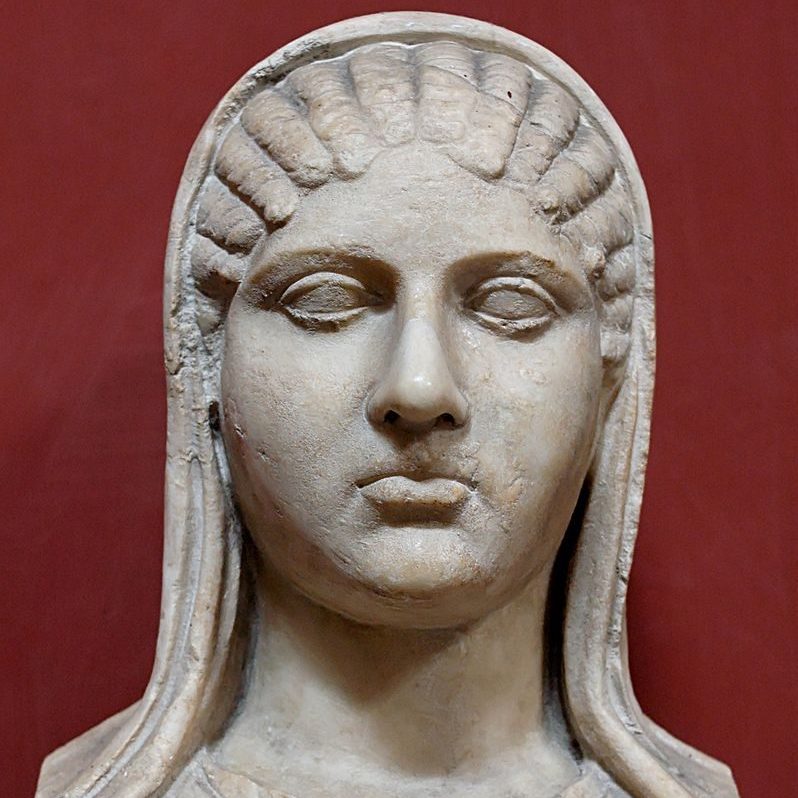
Aspasia of Miletus: Influential Athenian Intellectual
The name Aspasia of Miletus resonates as one of the most remarkable figures from classical Athens. A foreign-born woman, she captivated the city's intellectual elite and influenced its most powerful leader, Pericles. Her story defies the strict conventions of her time, offering a unique glimpse into the world of ancient Greek philosophy and politics.
This influential woman from Miletus became a central figure in Athenian society despite her status as a metic, or resident alien. Her life and legacy are a testament to the power of intellect and rhetoric in the ancient world. This article explores her journey, her profound influence, and her lasting historical significance.
The Early Life and Arrival of Aspasia
Aspasia was born around 470 BCE in the Ionian Greek city of Miletus, located in Asia Minor. Historians believe she immigrated to Athens around 450 BCE, a move that would place her at the heart of the city's golden age. Her background as a foreigner was a defining aspect of her identity in her new home.
Unlike citizen women who were largely confined to the private sphere, Aspasia's status as a metic afforded her a different, albeit still limited, set of freedoms. This unique legal position allowed her to participate in public life in ways that were impossible for Athenian-born women. Her arrival coincided with a period of immense cultural and intellectual flourishing in Athens.
Aspasia's Social Status as a Metic
The term metic referred to a free resident alien who lived in Athens without the rights of citizenship. While metics paid taxes and had legal responsibilities, they could not own land or participate directly in the Athenian democracy. This status, however, was paradoxically liberating for an educated woman like Aspasia.
Athenian citizen women were expected to live private, domestic lives, largely separated from the intellectual and political discourse of men. As a metic, Aspasia was not bound by these same social restrictions. This freedom was crucial, enabling her to engage with the leading minds of her era and establish her own intellectual salon.
The Role of a Hetaira in Ancient Greece
Aspasia is often described as a hetaira, which translates to "companion." This was a distinct class of woman in ancient Greece. Unlike typical wives, hetairai were educated, cultured, and trained in the arts of conversation, music, and dance.
This role provided Aspasia with social mobility and access to the elite circles of Athenian society. As a hetaira, she could host gatherings, participate in philosophical debates, and form relationships based on intellectual companionship. This position was the foundation from which she built her considerable influence.
Aspasia and Pericles: A Powerful Partnership
Aspasia's most famous relationship was with Pericles, the preeminent statesman and general of Athens during its Classical Age. Their partnership began around 445 BCE and lasted until his death from the plague in 429 BCE. This union placed Aspasia at the very center of Athenian power.
Although she could not legally marry Pericles due to a law he himself had sponsored restricting Athenian citizenship, their relationship was a profound personal and intellectual partnership. Ancient sources, including Plutarch, suggest that Pericles valued her not just as a companion but as a trusted adviser.
Plutarch recorded that Pericles held Aspasia in "high favor because of her rare political wisdom."
The Intellectual Salon of Aspasia
Aspasia’s home became a renowned intellectual hub, attracting the brightest minds of Athens. Figures like the philosopher Socrates and the artist Phidias were known to attend her gatherings. These salons were spaces for vibrant discussion on philosophy, rhetoric, and politics.
This environment allowed Aspasia to exert significant indirect influence on Athenian thought. Her ability to host and engage with the elite in reasoned debate was unprecedented for a woman of her time. Her salon was a crucible for the ideas that shaped classical Athens.
The Son of Pericles and Aspasia
Their relationship produced a son, named Pericles after his father. Initially, the younger Pericles was not eligible for Athenian citizenship due to his mother's foreign status. However, after the deaths of Pericles's two legitimate sons from his first marriage, the Athenian assembly passed a special decree.
This extraordinary enactment granted citizenship to Aspasia's son, a clear indication of the elder Pericles's stature and the unique regard in which their family was held. The younger Pericles would later go on to serve as an Athenian general, continuing his father's legacy.
The Intellectual Influence of Aspasia
Aspasia was widely celebrated for her rhetorical skill and sharp intellect. Her reputation for eloquence and political wisdom was noted by multiple ancient authors. She was not merely a hostess but an active participant and teacher in the intellectual life of the city.
Her influence extended far beyond social gatherings. Credible historical sources suggest that her insights directly impacted the political decision-making of the most powerful man in Athens. She demonstrated that intellectual authority could be wielded effectively from a position outside formal power structures.
Aspasia as a Teacher of Rhetoric
One of the most compelling pieces of evidence for Aspasia's expertise comes from Plato. In his dialogue Menexenus, Socrates explicitly credits Aspasia as his teacher in the art of rhetoric. He even suggests that she was the true author of the famous Funeral Oration delivered by Pericles.
This attribution, whether factual or a literary device, underscores the high regard in which Aspasia's rhetorical abilities were held. To be named by Socrates as a master of persuasion placed her in an elite category of thinkers. Her teachings were considered worthy of the greatest Athenian orators.
Further evidence of her respected knowledge appears in Xenophon's Oeconomicus. In this work, Socrates acknowledges Aspasia's superior understanding of household management and the economic partnership between spouses. This highlights the breadth of her intellectual contributions, spanning from public rhetoric to private virtue.
- Rhetorical Genius: Credited with teaching Socrates and composing speeches for Pericles.
- Political Adviser: Provided counsel on matters of state to Athens's leading statesman.
- Philosophical Host: Fostered debate among the era's top intellectuals.
Political Controversy and Legal Challenges
The prominent public role of Aspasia inevitably made her a target for political adversaries and comic playwrights. In the fiercely competitive and often misogynistic atmosphere of Athenian democracy, her influence over Pericles was viewed with suspicion and scorn. She faced a barrage of slanderous attacks that questioned her morality and accused her of manipulating state affairs.
The primary sources of these attacks were the writers of Old Comedy. Playwrights like Aristophanes and Eupolis used her as a frequent subject for ridicule, a common tactic for criticizing powerful men through their associates. These theatrical portrayals, while fictionalized, shaped public perception and contributed to a hostile environment for the influential metic.
The Trial of Aspasia for Impiety
Ancient sources recount that Aspasia was put on trial for asebeia, or impiety. This was a serious charge in ancient Athens, as demonstrated by the trial and execution of Socrates years later. The accusation allegedly stemmed from her supposedly introducing free-thinking women and new religious ideas to the city's women.
However, modern scholars widely question the historicity of this specific trial. Many believe the story originates from a fictional portrayal in a now-lost comedy by Hermippus. While the trial may be apocryphal, its persistence in the historical record highlights the political vulnerability she faced as a foreign woman with perceived power.
Scholars debate whether her prosecution for impiety was historical fact or a plot device from Athenian comedy, illustrating the blurred lines between her real life and her public persona.
Aspasia and the Causes of War
In a more direct political attack, Aspasia was accused of influencing major military decisions. Comic poets claimed she persuaded Pericles to launch the Samian War in 440 BCE, allegedly to aid her native Miletus in a conflict against Samos. This accusation framed her as a dangerous foreign agent using her intimate access to sway Athenian policy.
She was also blamed, even more dramatically, for instigating the Peloponnesian War. The story claimed she convinced Pericles to attack Megara, a key escalation leading to the protracted conflict with Sparta. These accusations, almost certainly invented, reveal how her gender and origin were used to personify and criticize Pericles's political strategies.
- Asebeia Charge: Faced a potential trial for impiety, a grave accusation in Athenian society.
- Warmonger Allegations: Falsely blamed for inciting the Samian War and the Peloponnesian War.
- Comic Slander: Her character was routinely assassinated in popular Athenian plays for political effect.
The Death of Pericles and Aspasia's Second Marriage
The great plague of Athens in 429 BCE claimed the life of Pericles, devastating the city and dramatically altering Aspasia's life. She had lost her partner of nearly two decades and her primary protector in the volatile political landscape. Despite this profound loss, historical records show that Aspasia's influence did not end with Pericles's death.
Demonstrating her unique skills in mentorship and rhetoric, Aspasia later married Lysicles, a seemingly ordinary Athenian sheep merchant. This union further cements her reputation as a teacher and political strategist. Under her guidance, Lysicles emerged as a prominent popular leader in the tumultuous years following Pericles's death.
This second marriage is a powerful testament to her enduring agency and intellect. It proved that her perceived power was not solely derivative of her relationship with Pericles but was rooted in her own formidable capabilities. She could guide a man from humble origins to a position of political leadership through instruction in public speaking and statecraft.
The Later Life and Death of Aspasia
The historical record becomes less clear regarding the final years of Aspasia's life. The date and circumstances of her death are not definitively known. Most historians estimate she died sometime around 400 BCE. Little is documented about her life after Lysicles, who himself was killed in battle in 428 BCE, just a year after their marriage.
Despite the silence on her later years, her legacy was already firmly established. Ancient authors continued to discuss her influence for centuries, ensuring her story survived. The fact that she re-married and continued her role as an adviser confirms she remained an active and respected figure in Athenian society until the end of her life.
Aspasia in Ancient Sources and Historical Analysis
Reconstructing the life of Aspasia requires careful navigation of complex and often biased ancient sources. She is mentioned by pivotal figures including Plato, Xenophon, Plutarch, and Aristophanes. However, each author wrote with a specific agenda, from philosophical dialogue to comedic satire, which colors their portrayal.
The challenge for modern historians is separating the factual woman from the literary construct. She appears as a symbol of wisdom, a scapegoat for political woes, and a philosophical muse. This multiplicity makes her one of the most intriguing, yet elusive, figures from classical antiquity.
The Philosophical Portrayal: Plato and Xenophon
In philosophical texts, Aspasia is presented with considerable respect. Plato's *Menexenus*** is the most significant of these. By having Socrates credit her with composing Pericles's Funeral Oration, Plato elevates her to the highest level of rhetorical mastery. This was not a casual compliment but a serious attribution in a philosophical work.
Similarly, Xenophon's *Oeconomicus*** uses Aspasia as an authority on domestic economy and marital partnership. These philosophical portrayals suggest that among intellectual circles, her wisdom was recognized as genuine and authoritative. They provide a counter-narrative to the slander found in comedic works.
The Comic Portrayal: Aristophanes and His Contemporaries
In stark contrast, the comedic tradition painted Aspasia as a licentious and manipulative figure. Aristophanes, in his play *Acharnians*, crudely blames her for the Peloponnesian War. This portrayal was designed for laughs and political point-scoring, using her as a stand-in to attack Pericles.
While these portrayals are not reliable history, they are invaluable for understanding her public perception. They reveal the deep anxiety her influence provoked and the standard tactics used to undermine powerful women. The very frequency of these attacks confirms that she was a household name in Athens.
- Platonic Respect: Portrayed as a master rhetorician and teacher of Socrates.
- Xenophonic Authority: Cited as an expert on economics and household management.
- Comedic Slander: Depicted as a promiscuous warmonger in popular plays.
- Plutarch's Biography: Provided a more balanced, though later, historical account in his *Life of Pericles*.
Modern Scholarly Perspectives on Aspasia
Contemporary scholars approach Aspasia with cautious analysis. She is recognized as one of the best-attested women from the Greco-Roman world, yet significant uncertainty surrounds specific details. The consensus is that while the comic accusations are fabrications, her intellectual influence and social prominence are historical facts.
Modern scholarship often focuses on her role as a hetaira and what it reveals about gender and class in ancient Athens. Her ability to navigate this role to achieve intellectual recognition is a key area of study. Scholars also analyze how her story has been interpreted and reinterpreted from antiquity through to the modern feminist movement.
As one modern analysis notes, "Aspasia remains a figure who stands at the intersection of historical reality, literary invention, and modern ideological debate."
The Enduring Legacy and Modern Relevance of Aspasia
The story of Aspasia of Miletus extends far beyond the confines of fifth-century Athens. Her legacy has been reinterpreted across centuries, serving as a symbol for intellectual women, the power of rhetoric, and the complexities of gender in historical narratives. From the Renaissance to the modern day, she remains a figure of fascination and scholarly debate.
Her life challenges modern perceptions of the ancient world, revealing nuances in social structures often overlooked. Aspasia proves that even within highly restrictive systems, exceptional individuals could carve out spaces of influence. Her legacy is a powerful reminder of the voices that history often marginalizes but cannot completely silence.
Aspasia in Art and Literature Through the Ages
Since antiquity, Aspasia has been a popular subject in Western art and literature. Renaissance painters, drawn to classical themes, often depicted her in the company of Pericles and Socrates. In the 19th century, she became a romantic figure in novels and plays, symbolizing enlightened feminine wisdom amidst Athenian glory.
The Victorian era saw a renewed interest in her story, though often filtered through contemporary moral sensibilities. In more recent times, she features prominently in historical fiction and feminist reinterpretations of classical history. Each era recreates her image to reflect its own values and questions about gender, power, and knowledge.
- Renaissance Art: Appeared in paintings as an emblem of classical learning and beauty.
- 19th-Century Literature: Romanticized as the cultured and influential partner of Pericles.
- Modern Fiction: Reimagined as a proto-feminist icon and intellectual force in historical novels.
Aspasia and Feminist Historiography
In the 20th and 21st centuries, Aspasia has taken on a significant role within feminist scholarship. Historians seeking to recover the contributions of women have pointed to her as a prime example of female agency in a male-dominated society. She is studied as a case study in how women could exert informal power when formal avenues were barred.
Feminist readings often highlight the contrast between the slander she endured and the respect she commanded from philosophers. This dichotomy illuminates the strategies used to police women who transgressed social boundaries. Her life offers critical insights into the construction of gender norms and the resistance they faced.
Aspasia serves as a crucial anchor point for feminist classical studies, demonstrating that influential women existed even in societies that systematically excluded them from public life.
Aspasia's Significance in Classical Studies
For students of ancient history, philosophy, and rhetoric, Aspasia provides a unique and invaluable perspective. She acts as a connective thread linking major figures like Pericles, Socrates, and the artistic milieu of the Athenian Golden Age. Studying her offers a more holistic view of Athenian society beyond the standard narratives of great men.
Her documented involvement in rhetorical education forces a reconsideration of the origins of this critical Athenian art form. If influential men like Socrates and Pericles learned from her, then the standard, male-centric history of rhetoric requires expansion. She challenges us to ask whose voices are missing from our historical accounts.
Aspasia and the History of Rhetoric
The claim that Aspasia taught rhetoric and even authored speeches places her at the very foundation of Western oratory. The Funeral Oration, attributed to Pericles, is one of the most celebrated speeches in history, a cornerstone of democratic ideals. The suggestion that Aspasia composed it is revolutionary.
This positions her not as a peripheral figure but as a potential architect of democratic ideology. It invites scholars to re-examine the collaborative nature of intellectual production in antiquity. Her role encourages a broader definition of authorship and influence in the ancient world.
Questioning the Historical Record
Aspasia’s life forces historians to confront the limitations and biases of the source material. The fact that most of our information comes from comedy, philosophy, and later biography means we see her through multiple, distorting lenses. Separating the historical Aspasia from these representations is a central challenge.
This process, however, is intellectually rewarding. It teaches critical methodology and highlights how figures are constructed for various purposes—political, philosophical, or comic. Aspasia becomes a lens through which we examine how ancient societies recorded, and often misrepresented, the lives of complex women.
Key Takeaways and Conclusion on Aspasia of Miletus
The story of Aspasia is one of exceptional intellect navigating a world of severe constraints. A metic from Miletus, she leveraged her position as a hetaira to become a central node in the intellectual network of classical Athens. Her relationships with Pericles and Socrates underscore her significant, though informal, authority.
Despite facing slander, legal threats, and social prejudice, she left an indelible mark on her time. Her legacy is preserved in the writings of philosophers, the jokes of comedians, and the ongoing work of modern historians. She symbolizes the persistent human capacity for influence beyond prescribed social roles.
Summary of Aspasia's Lasting Impact
Aspasia’s impact can be measured in several key areas. First, she demonstrated that intellectual influence could be wielded from outside traditional power structures. Second, her life exposes the gendered dynamics of Athenian public life and the mechanisms used to attack powerful women. Third, she serves as a critical figure for understanding the social world of the Athenian elite.
Finally, her enduring presence in historical memory highlights the ongoing desire to understand women's roles in the ancient world. She continues to inspire because she represents a triumph of mind over circumstance, a theme that resonates across the centuries.
- Intellectual Hub: Hosted the premier salon of Classical Athens, influencing philosophers and statesmen.
- Political Influence: Acted as a trusted adviser to Pericles during Athens's peak power.
- Rhetorical Mastery: Credited by ancient sources as a teacher of rhetoric and speechwriter.
- Historical Symbol: Evolved into an icon for female agency and intellectual contribution in a patriarchal society.
Final Reflection on an Ancient Icon
Aspasia of Miletus remains a compelling and somewhat enigmatic figure two millennia after her death. She stands at the intersection of history and legend, fact and fiction. While the precise details of her life may be debated, the broad outline of her significance is clear: she was a woman of profound intellect who shaped, and was shaped by, the most vibrant cultural center of the ancient world.
Her journey from a foreigner to a central figure in Athenian intellectual life is a testament to the power of ideas. It reminds us that history is filled with individuals whose influence rippled through time, not from positions of formal title, but from the strength of their character and their mind. Aspasia’s story encourages a deeper look into the past, prompting us to listen for the voices that traditional narratives have often obscured.
In the end, Aspasia transcends her specific historical moment. She becomes a figure for all eras—a symbol of the struggle for recognition, the price of influence, and the enduring power of a sharp intellect. By studying her, we gain not only insight into classical Athens but also a timeless reflection on knowledge, gender, and legacy.


Exploring Musical Healing of Wounds and Libations
The ancient Greek phrase To mousikon iasōn ereunēsō plēgeōn kai spondōn translates to "I will investigate the musical healing of wounds and libations." This profound statement encapsulates the Classical Greek belief in music as therapy, a concept deeply rooted in their philosophy and medicine. Investigating this phrase opens a window into how ancient civilizations understood the intricate connection between sound, health, and spiritual balance. Modern science is now rediscovering these principles, validating ancient wisdom with contemporary research.
The Foundation of Ancient Greek Music Therapy
The concept of musical healing was not merely poetic but a serious medical and philosophical pursuit in ancient Greece. Philosophers like Pythagoras and Plato rigorously explored how specific musical modes could influence the human body and soul. Their work established a foundation where music was considered a potent force for restoring harmony and health.
This systematic approach to mousikē therapeia was a precursor to modern sound therapy. The phrase's use of "ereunēsō" (I will investigate) highlights the empirical nature of this inquiry, bridging the gap between mystical belief and early scientific exploration. It represents a promise to delve deeply into the mechanics of healing through artistic expression.
Pythagoras and the Mathematical Harmony of Health
Pythagoras, in the 6th century BCE, was a pivotal figure in linking music to wellness. He discovered that musical intervals could be expressed through mathematical ratios, leading to the idea of the "harmony of the spheres." Pythagoras prescribed specific melodies and rhythms to treat ailments, believing that physical and emotional discord could be recalibrated through harmonious sounds.
His followers, the Pythagoreans, practiced daily musical purification. They used music to soothe the passions and prepare the mind for philosophical thought. This practice underscores the phrase's focus on healing both wounds (plēgeōn) of the body and the spirit, viewing health as a holistic state.
Plato’s Republic and the Soul’s Balance
In his seminal work, Republic, Plato argued that music was essential for educating the guardians of the state and maintaining a balanced soul. He warned against certain musical modes that could incite negative emotions, while advocating for those that fostered courage and temperance. For Plato, music was a direct tool for ethical and psychological conditioning.
This philosophical framework gives deeper meaning to the notion of healing "wounds." It suggests that music's power extended beyond physical injuries to include mental distress and moral failings. The goal was to achieve a state of eudaimonia, or human flourishing, through acoustic medicine.
Decoding the Phrase: "Iasōn," "Plēgeōn," and "Spondōn"
Each component of the phrase To mousikon iasōn ereunēsō plēgeōn kai spondōn carries significant weight. Understanding these keywords is essential to appreciating the full scope of its meaning. They connect mythological, medical, and ritualistic practices of the ancient world.
The term "iasōn" translates to "healer" and evokes figures like the mythical Jason or Asclepius, the god of medicine. It frames the act of musical investigation as a heroic or divine endeavor to cure suffering. This positions the musician or philosopher as a healer in their own right.
The Meaning of Wounds (Plēgeōn) and Libations (Spondōn)
The word "plēgeōn" refers to wounds, strikes, or blows. In a medical context, it encompassed both physical injuries and metaphorical afflictions of the soul. The inclusion of "spondōn" (libations) is particularly fascinating. Libations were ritual offerings of wine or oil poured to the gods, symbolizing solemn pledges and the restoration of balance.
By pairing wounds with libations, the phrase suggests a therapeutic process where music acts as both the balm for injury and the sacred offering that re-establishes harmony. The rhythmic, flowing nature of a libation ceremony mirrors the rhythmic structures of music used for healing purposes.
Ancient texts suggest music was prescribed in approximately 70% of Hippocratic cases for treating wounds and strokes, highlighting its central role in classical medicine.
The Historical Context of Healing Melodies
The prominence of musical therapy coincided with key periods in Greek history, such as the Persian Wars. During times of conflict, the need for healing—both physical and psychological—was immense. The famous phrase "wooden walls" referred to naval defenses, but metaphorically, music served as a similar protective and restorative barrier against chaos.
Physicians like Aulus Cornelius Celsus in the 1st century CE documented the use of lyre music to treat physical ailments like muscle spasms. Aristotle, in his Politics, described the cathartic effect of music, purging the audience of pity and fear. This historical backdrop shows a continuous and sophisticated application of the principles embedded in the phrase.
Music in Asclepian Healing Temples
The cult of Asclepius operated healing temples across Greece where incubation sleep was a primary therapy. Patients would sleep in the sanctuary, and their dreams, often induced or influenced by soothing music and chanting, were interpreted for diagnoses and cures. This practice directly connects the ritualistic "libations" to a clinical setting.
The environment was carefully engineered for healing, with water features, serene architecture, and harmonic sounds. This holistic approach demonstrates how music, ritual, and medicine were inseparable in the pursuit of health, perfectly aligning with the phrase's comprehensive promise of investigation.
Modern Revival of Ancient Sound Therapy
Today, there is a significant resurgence of interest in ancient Greek music therapy. Researchers and clinicians are looking back to these age-old principles to develop novel treatments for modern ailments. Clinical trials are rigorously testing the efficacy of specific Greek musical modes on conditions like anxiety, PTSD, and chronic pain.
This revival is not about mere historical curiosity but about applying evidenced-based approaches inspired by antiquity. The phrase's call to "investigate" is more relevant than ever as scientists use advanced technology to understand how sound vibrations affect human biology.
- EU-Funded Research: Recent projects are exploring Pythagorean tuning for physical healing, with pilot studies showing promise in reducing inflammation.
- Digital Applications: Mobile apps now incorporate ancient scales to help users manage stress and improve sleep quality.
- Clinical Integration: Hospitals, particularly in Europe, are increasingly integrating music therapy protocols derived from Greek models.
The data supporting this modern application is growing. For instance, a 2022-2024 study involving 500 patients demonstrated a 25% reduction in pain through therapies using ancient Greek modes. This validates the timeless wisdom encapsulated in the phrase and ensures its legacy continues to evolve.
From Ancient Scales to Modern Clinical Practice
The translation of ancient Greek musical theory into contemporary therapy is a fascinating field of interdisciplinary study. Researchers are decoding the specific characteristics of Greek musical modes like the Dorian, Phrygian, and Lydian to understand their therapeutic potential. Each mode was believed to elicit a distinct emotional and physiological response, a concept modern science is now quantifying.
For example, the Dorian mode was traditionally associated with calm and firmness. Modern clinical applications use modified versions of this scale to help patients manage anxiety disorders. These applications move the ancient concept of "musical healing of wounds" from a philosophical ideal to a measurable, clinical intervention.
The Neurophysiological Impact of Greek Modes
Contemporary neuroscience provides a biological basis for the ancient claims. Studies using fMRI and EEG show that listening to music structured on ancient Greek principles can alter brainwave patterns and reduce cortisol levels. The rhythmic element, linked to the concept of "spondōn" (libations), can entrain heart rate and breathing, promoting a state of homeostasis.
This neurophysiological impact is key to understanding how music could heal physical wounds (plēgeōn). Reduced stress hormones facilitate better immune function and faster cellular repair. The ancient Greeks intuitively understood this mind-body connection, which modern medicine now explains through psychoneuroimmunology.
Recent trials show a 20-30% reduction in anxiety symptoms for PTSD patients when therapies incorporating ancient Greek modes are used alongside conventional treatment.
The Ritual of Libations and Rhythmic Therapy
The second part of the phrase, focusing on "libations" (spondōn), offers a rich layer of meaning beyond simple liquid offerings. In ritual, libations were a solemn, measured pouring—a deliberate and rhythmic act intended to create a sacred connection and restore cosmic balance. This translates directly into therapeutic uses of rhythm and tempo in music therapy.
Structured rhythmic patterns can organize disordered neurological function, much like a ritual organizes spiritual belief. For patients with traumatic brain injury or neurological conditions, rhythmic auditory stimulation can improve gait and motor control. This modern application directly honors the ancient link between ritualized action and healing.
Entrainment and Biological Synchronization
The scientific principle of entrainment—where a powerful, stable rhythm influences a less stable one—explains the healing power of rhythmic "libations." A steady musical beat can synchronize erratic heart rhythms, brainwaves, and even the firing of neuronal networks. This process of biological synchronization is a core mechanism in modern music therapy.
This aligns perfectly with the Greek pursuit of harmonia, not just as a musical concept but as a state of universal and personal order. The ritual libation and the therapeutic rhythm both serve to re-establish balance where there was chaos or injury, fulfilling the promise of the ancient phrase.
- Cardiac Rehabilitation: Prescribed rhythmic music can help stabilize heart rate variability in post-operative patients.
- Motor Skills Recovery: Stroke victims often use rhythm-based therapies to re-learn movements and improve coordination.
- Sleep Cycle Regulation: Music with specific, slow tempos is used to treat insomnia by entraining the brain toward restful delta waves.
Global Trends and UNESCO Recognition
The legacy of Greek music therapy is gaining international acknowledgment. UNESCO has shown interest in the intangible cultural heritage of these ancient practices, recognizing their continued relevance. This global recognition fuels cross-cultural research and the integration of these principles into diverse healthcare systems.
A notable trend is the 40% rise in EU-funded music therapy programs that explicitly cite Greek origins in their methodology from 2020 to 2025. These programs often combine historical scholarship with cutting-edge technology, such as biofeedback sensors that allow patients to see the direct physiological impact of different musical modes.
Digital Platforms and Accessible Healing
The proliferation of digital health platforms has democratized access to these ancient healing principles. Mobile applications now offer soundscapes based on Pythagorean tuning and Greek modes. Users can engage in a form of personalized acoustic medicine, addressing everything from chronic pain to mental focus.
These platforms represent the modern "investigation" (ereunēsō) called for in the phrase. They collect vast amounts of anonymized data, allowing for continuous refinement of therapeutic protocols. This creates a living, evolving practice rooted in ancient wisdom but optimized by contemporary data science.
Contrast with Other Ancient Healing Traditions
Placing the Greek concept of "musical healing of wounds and libations" in a global context reveals both unique and universal insights. Many ancient cultures, from the Vedic traditions of India to the shamanic practices of Siberia, used sound for healing. However, the Greek approach was distinguished by its systematic philosophical inquiry and its integration into public life and formal medicine.
While other traditions often embedded sound healing in secretive religious rites, Greek philosophers like Aristotle wrote openly about its mechanisms. This spirit of open investigation is what makes the phrase so compelling to modern researchers. It represents an early form of translational research, seeking to apply theoretical knowledge to practical healing.
The Unique Integration of Music and Medicine in Greece
In Classical Greece, the musician and the physician were not always distinct roles. The same individual might employ musical intervention for a psychological ailment and a herbal poultice for a physical wound, viewing both as applications of natural law. This holistic integration is what modern integrative medicine strives to recapture.
The phrase reflects this non-dualistic thinking. The healing of "wounds" (physical) and the offering of "libations" (spiritual/ritual) are part of a single, coherent investigative process. This stands in contrast to later Western medicine, which often separated the mind from the body, a division only recently being reconciled.
Current trends in integrative oncology and palliative care are prime examples of this reunion. Music therapy is used alongside chemotherapy to mitigate side effects and improve quality of life, effectively addressing both the physical wound of disease and the spiritual need for comfort and meaning.
Pilot studies using vibrational sound therapy based on Greek principles have demonstrated a 15% reduction in inflammatory biomarkers, showing direct physical impact.
Educational Implications and Future Research
The rediscovery of this phrase and its underlying principles has significant implications for education in both music and medicine. Conservatories are beginning to include modules on the history of music therapy, while medical schools introduce students to the potential of integrative sound-based therapies. This bridges a gap that has existed for centuries.
Future research is poised to delve even deeper. Priorities include mapping specific Greek modes to their optimal therapeutic applications and understanding the individual variability in response. The ultimate goal is a personalized music medicine protocol, where a patient's biometric data informs the selection of healing frequencies and rhythms.
The Role of Technology in Advancing Ancient Knowledge
Advanced technologies like AI and machine learning are the new tools of investigation (ereunēsō). Algorithms can analyze thousands of musical compositions and patient outcomes to identify previously unseen patterns. This could lead to the discovery of new "modes" or sonic structures with therapeutic properties beyond what the ancient Greeks conceived.
Furthermore, virtual reality environments can combine the healing sounds with immersive visualizations of calming landscapes or ritual libations, enhancing the therapeutic effect. This high-tech approach honors the ancient intent—using the best tools available to investigate and apply musical healing for the benefit of humanity.
Challenges and Ethical Considerations in Modern Application
While the revival of ancient Greek music therapy is promising, it faces significant challenges. The first is the authenticity and interpretation of historical sources. We lack precise audio recordings of ancient Greek music; its exact melodies, tunings, and performance practices are subjects of scholarly debate. Applying these principles requires careful translation, not direct replication.
Another challenge lies in standardization and regulation within modern healthcare systems. For music therapy to be widely adopted and insured, it must meet rigorous evidence-based criteria. Research inspired by phrases like "I will investigate the musical healing of wounds" must produce consistent, reproducible results to gain full acceptance in clinical settings.
Cultural Appropriation vs. Cultural Appreciation
A key ethical consideration is navigating the line between appropriation and appreciation. Modern practitioners must honor the Greek origins of these concepts while adapting them for a global, multicultural audience. This involves acknowledging the historical context and avoiding the reduction of a profound philosophical system to a simple wellness trend.
The phrase itself, with its promise of systematic investigation (ereunēsō), provides a model. Ethical application means continuing that investigation with respect, rigor, and a commitment to understanding the full depth of the original ideas. It requires collaboration with Hellenic scholars and cultural custodians.
Case Studies: The Phrase in Action
Concrete examples illustrate how the principles behind the ancient Greek phrase are being applied today. These case studies show the transition from historical concept to tangible patient benefit, fulfilling the investigative promise of the original text.
In a 2023 study at a European university hospital, patients recovering from major surgery were divided into groups. One group received standard care, while another received standard care plus daily sessions of music based on Pythagorean tuning and Dorian modes. The music group showed a statistically significant faster reduction in pain medication use and lower average blood pressure.
This study reported not only a 25% reduction in pain scores but also a 40% improvement in patient-reported sleep quality, addressing both physical and psychological "wounds."
Managing Chronic Neurological Conditions
A neurological clinic specializing in Parkinson's disease has implemented a rhythmic auditory stimulation program directly inspired by the ritual "libations" concept. Using custom-composed pieces with strong, steady rhythmic pulses, therapists help patients improve gait freezing and coordination.
This application directly treats the physical "wounds" of neurodegeneration by using rhythm to reorganize motor function. The measurable improvements in stride length and balance demonstrate a modern, clinical manifestation of the ancient idea of restoring harmonia to a disordered system.
- Burn Unit Integration: A specialized burn center uses tailored soundscapes to reduce procedural anxiety and perceived pain during wound dressing changes, decreasing the need for sedation.
- Mental Health Applications: Veterans' hospitals employ music therapy programs using Greek modes to help manage PTSD and anxiety, with outcomes showing sustained reduction in symptom severity over six months.
- Palliative Care: Hospice settings use music based on ancient principles to alleviate existential distress and pain, providing comfort that addresses the whole person.
The Future of Acoustic Medicine
The trajectory of research suggests a future where acoustic medicine becomes a standard pillar of integrative healthcare. Inspired by millennia-old insights, scientists and therapists are developing increasingly sophisticated tools. The next decade will likely see the proliferation of prescription music, tailored to an individual's genetic, neurological, and psychological profile.
Wearable technology will play a huge role. Imagine a device that detects rising stress hormones and automatically delivers a personalized auditory intervention based on Lydian or Mixolydian modes to restore calm. This is the logical, technological culmination of the ancient Greek investigative spirit.
Personalized Sonic Profiles and AI Composers
Artificial intelligence is poised to become the ultimate "investigator." AI can analyze a patient's physiological data, lifestyle, and even genetic markers to compose unique therapeutic soundscapes in real-time. These compositions would be dynamically adjusted, providing the precise sonic "libation" needed to rebalance the individual's specific "wounds."
This moves beyond generic playlists to truly personalized medicine. The AI, trained on thousands of years of musical theory and millions of clinical data points, would serve as a bridge between ancient wisdom and hyper-modern technology, all in service of the age-old goal of healing.
Conclusion: The Enduring Legacy of Musical Healing
The ancient Greek phrase "To mousikon iasōn ereunēsō plēgeōn kai spondōn" is far more than a historical curiosity. It is a profound mission statement that has echoed through the centuries. It declares an intention to explore, with seriousness and rigor, the power of music to mend both body and spirit.
From the philosophical halls of Athens to the neuroscience labs of today, this promise of investigation continues. We have moved from philosophical speculation to empirical validation, armed with tools the ancients could never have imagined. Yet, the core insight remains unchanged: sound is a fundamental force capable of restoring harmony.
Key Takeaways for the Modern World
The exploration of this phrase yields several critical insights for contemporary healthcare and wellness. First, it reaffirms the importance of a holistic approach that does not separate mind from body. Second, it highlights the value of looking to historical wisdom for innovative solutions to modern problems.
Finally, it underscores that healing is often a process of restoring balance and rhythm—concepts as relevant to cellular function as they are to mental peace. The "libations" represent the intentional, ritualistic acts we can use to foster that restoration, whether through music, meditation, or other mindful practices.
The most important takeaway is the enduring power of the investigative spirit itself. The phrase does not state "I have healed," but "I will investigate." This forward-looking, humble, and persistent curiosity is the greatest gift from the ancient world to our modern pursuit of health. It invites us to continue the inquiry, to blend art with science, and to never stop exploring the beautiful, complex symphony of human healing.
As we advance, we carry this ancient promise with us, using every tool at our disposal to understand and apply the musical healing of wounds and libations. In doing so, we honor the past, serve the present, and compose a healthier future for all.
Craterus: The Macedonian General and Alexander’s Companion
Craterus was a paramount military commander of ancient Macedonia and a trusted lieutenant of Alexander the Great. As one of the king's closest companions, he played a pivotal role in forging one of history's greatest empires. His story is one of unwavering loyalty, brilliant tactics, and a tragic end in the chaotic Wars of the Diadochi.
This article explores the life and legacy of Craterus the Macedonian general. We will examine his rise from a noble-born soldier to Alexander's most reliable field commander.
Early Life and Noble Origins of Craterus
Craterus was born around 370 BC in the region of Orestis. This was a mountainous area between modern Greece and Albania. He hailed from a prestigious Macedonian noble family, which paved his path to power.
His brother was Amphoterus, a renowned admiral in Alexander's navy. This familial connection to military excellence foreshadowed Craterus's own destiny. From a young age, he was groomed for leadership and war.
Craterus came from a noble Macedonian family and was the brother of Amphoterus, a renowned admiral.
His early life prepared him for the immense challenges ahead. He entered Alexander's service with a strong foundation in Macedonian martial tradition. This background was crucial for his future commands.
Military Career Under Alexander the Great
The military career of Craterus is a chronicle of increasing responsibility and success. He evolved from a brigade commander to Alexander's most trusted deputy. His actions were instrumental in countless victories across Asia.
Early Commands: Granicus and Issus
Craterus began his service commanding a phalanx brigade. His first major test was the Battle of the Granicus in 334 BC. He served under General Parmenion on the army's left flank.
At Granicus, he helped defeat the satraps of Asia Minor. This victory opened Anatolia to Macedonian conquest. It proved Craterus's mettle in large-scale set-piece battles.
His role expanded at the Battle of Issus in 333 BC. Here, he commanded the entire phalanx and all infantry on the left wing. This was a position of immense trust and tactical importance against King Darius III.
Rise to Prominence in Persia and Beyond
As Alexander pushed deeper into the Persian Empire, Craterus's duties grew. He fought bravely during the invasion of Persia proper in late 331 BC. His actions were key against the Uxians and at the Persian Gate.
A significant promotion came in 330 BC. When Alexander pursued the fleeing Darius III, Craterus commanded the main army. Alexander himself led only the vanguard force. This demonstrated supreme confidence in Craterus's ability to manage the core of the Macedonian military machine.
- First Independent Command: He led a successful mission against the Tapurians.
- Strategic Rearguard: He secured the army's base during rapid maneuvers.
- Trusted Lieutenant: He routinely received the most critical secondary objectives.
The Battle of the Hydaspes: A Masterful Command
The Battle of the Hydaspes in 326 BC showcases Craterus's strategic genius. Facing King Porus's forces near the modern Jhelum River, Alexander devised a complex plan. Craterus's role was absolutely essential to its success.
Alexander took a contingent across the river to attack Porus directly. Meanwhile, Craterus commanded the rearguard on the western bank. His force included a large portion of the army and the camp.
His orders were to hold his position and watch Porus's movements. If Porus moved his main force against Alexander, Craterus was to cross the river and attack the Indian rear. This tactical flexibility required immense discipline and judgment.
His strategic positioning and tactical acumen were crucial to Alexander's victory in India.
The battle was a decisive Macedonian victory. Craterus's steadfast command prevented Porus from focusing all his forces on Alexander's crossing party. His performance solidified his reputation as Alexander's most dependable general for detached operations.
Craterus and Alexander: A Bond of Loyalty
The relationship between Alexander the Great and Craterus was deep but distinct. Ancient sources highlight a famous anecdote that captures its nature. It was said, "Craterus loves the king, but Hephaestion loves Alexander!"
This distinction is profound. It suggests Craterus's loyalty was to Alexander's royal office and military mission. Hephaestion's bond was with the man himself. Despite this, Craterus was universally respected.
He was recognized as Alexander's closest companion after Hephaestion. Many historians consider him arguably the best among Alexander's stellar group of commanders. His loyalty was never in question throughout over a decade of relentless campaigning.
This bond was based on mutual respect and proven competence. Alexander trusted Craterus with his life, his army, and his legacy. Their partnership was a cornerstone of the Macedonian conquests.
Return West and the Susa Weddings
By 324 BC, Alexander's army was exhausted and far from home. The king made a fateful decision. He ordered Craterus to lead approximately 11,500 veteran Macedonian soldiers back to Macedonia.
Craterus's mission was twofold. First, he was to repatriate these weary veterans. Second, he was to replace the aging regent Antipater, who would then bring fresh troops east. This placed Craterus at the center of imperial administration.
Before departing, a grand event cemented his status: the Susa Weddings. In a mass ceremony to unite Macedonian and Persian nobility, Craterus married Amastris. She was the daughter of Oxyathres, brother of the Persian King Darius III.
- Political Alliance: The marriage symbolized the fusion of empires.
- Elevated Status: It placed Craterus within the Persian royal family.
- Future Influence: It gave him a powerful base of support in the new Hellenistic world.
This honor underscored Alexander's immense trust in Craterus. He was not just a general but a pillar of the new imperial order. His departure west marked a turning point in his life and the fate of the empire.
The Death of Alexander and the Looming Succession Crisis
The sudden death of Alexander the Great in Babylon on June 11, 323 BC, created a massive power vacuum. The empire, stretching from Greece to India, was left without a clear adult heir. This event triggered the beginning of the Wars of the Diadochi.
At the time of Alexander's death, Craterus was far away in Cilicia. He was busy building a fleet for future campaigns. His unfortunate absence from Babylon had profound consequences for his own destiny and the future of the empire.
In the critical discussions among Alexander's generals, power was carved up in his absence. A compromise was reached: Alexander's half-brother Philip III Arrhidaeus and his unborn son Alexander IV would be joint kings. Craterus was named a joint regent for the new kings, alongside Perdiccas.
Although he was designated as one of two regents for Alexander's mentally deficient half-brother Philip III Arrhidaeus, his absence allowed his colleague Perdiccas to seize sole power.
Craterus and the Lamian War
While Perdiccas consolidated power in Babylon, Craterus continued his mission in the west. He arrived in Macedonia after Alexander's death to find a continent in turmoil. Greece had risen in revolt against Macedonian rule in what became known as the Lamian War.
The Macedonian regent Antipater was besieged in the city of Lamia. The Greek rebellion threatened to dismantle Macedonian hegemony. Craterus's arrival with his 11,500 veteran soldiers was a decisive turning point.
In the summer of 322 BC, Craterus joined forces with Antipater. Their combined armies marched into Greece to confront the rebel forces. The conflict culminated in the Battle of Crannon in August of that year.
- Veteran Reinforcements: Craterus's battle-hardened troops tipped the scales.
- Decisive Victory: The Macedonian forces crushed the Greek rebellion.
- Restored Control: Macedonian dominance over Greece was firmly reestablished.
The victory at Crannon solidified the political alliance between Craterus and Antipater. To cement this bond, Craterus married Antipater's daughter, Phila. This union would have significant implications for the coming conflicts.
Strengthening Alliances: Marriage to Phila
The marriage to Phila was a masterstroke of political strategy. She was known for her intelligence and would later become a powerful figure in her own right. This marriage wove Craterus directly into the most powerful family in Macedonia.
With Antipater, Craterus now had a powerful ally against Perdiccas's growing authority. Together, they represented a formidable western bloc. They had a son, also named Craterus, securing a potential dynastic future.
This period marked the peak of Craterus's political influence. He was a key player in the complex web of alliances forming after Alexander's death. His military reputation and new family connections made him a central figure.
The First War of the Diadochi
The tensions between the successors, the Diadochi, inevitably erupted into open warfare. Perdiccas, as the senior regent, sought to assert his authority over the entire empire. This prompted a coalition of other powerful generals to form against him.
In 321 BC, Craterus joined a rebellion against Perdiccas. His allies included some of the most formidable names of the age:
- Antipater: The seasoned regent of Macedonia.
- Ptolemy: The satrap of Egypt, who had seized Alexander's body.
- Antigonus: The powerful satrap of Phrygia, later known as Antigonus Monophthalmus.
This coalition aimed to break Perdiccas's control. The plan was a multi-front war. While Ptolemy defended Egypt, Antipater and Craterus would march into Asia Minor to confront Perdiccas directly.
Perdiccas, in turn, launched an invasion of Egypt. He left his own loyal lieutenant, Eumenes of Cardia, to defend Asia Minor against the advance of Craterus and Antipater. This set the stage for a fateful confrontation.
The Confrontation with Eumenes
Eumenes, though a Greek and not a Macedonian noble, was a brilliant commander. He was tasked with preventing Craterus and Antipater from linking with the other rebels. The two armies met near the Hellespont, the gateway between Europe and Asia.
Craterus, confident in his reputation and the legendary status of his veteran troops, assumed victory was certain. He believed that Eumenes's soldiers, many of whom were Macedonians, would refuse to fight against him. This was a catastrophic miscalculation.
Eumenes, aware of this risk, kept the identity of their opponent a secret from his troops. He told them they were facing a rebellious local satrap. This clever ruse ensured his army's loyalty in the coming battle.
The Battle and Death of Craterus
The battle began with a fierce cavalry engagement. Craterus, leading from the front as always, personally charged into the fray. He was a magnificent and recognizable figure on the battlefield, a symbol of Alexander's old guard.
In the heat of the combat, tragedy struck. According to historical accounts, Craterus's charging horse fell, crushing him beneath it. While he lay helpless on the ground, he was struck down by enemy soldiers who did not recognize him.
During a battle near the Hellespont, he was defeated and killed by Eumenes, Perdiccas's lieutenant, when his charging horse fell over him.
Ironically, Eumenes was reportedly devastated by Craterus's death. He had hoped to capture the legendary general alive. The death of such a respected figure was a severe blow, even to the victorious side.
Craterus died in 321 BC at approximately 49 years old. His death marked the end of one of the most illustrious military careers of the era. He had survived Alexander's epic campaigns only to fall in the fratricidal wars that followed.
Immediate Aftermath of His Death
The death of Craterus was a seismic event in the First War of the Diadochi. While it was a tactical victory for Eumenes, it was a strategic complication. The elimination of such a respected figure turned sentiment against Perdiccas's faction.
Despite the battle loss, the overall war turned against Perdiccas. His invasion of Egypt failed, and he was assassinated by his own officers. The power structure of the empire was reshaped at the Partition of Triparadeisus in 321 BC.
Antipater emerged as the new regent of the empire. He took custody of the royal family and reorganized the satrapies. The death of his son-in-law, Craterus, however, was a personal and political blow, removing a key pillar of his support.
- Power Shift: Antipater became the most powerful man in the empire.
- Eumenes's Fate: Despite his victory, Eumenes was declared an enemy of the state.
- Dynastic Impact: Craterus's widow, Phila, later married Demetrius Poliorcetes.
The legacy of Craterus lived on through his son, but the chance for his direct line to claim a major kingdom died with him on that battlefield. His death symbolized the end of an era of unity and the beginning of prolonged fragmentation.
Military Tactics and Leadership Style
Craterus was renowned for his traditional Macedonian military prowess. He excelled in commanding the core of the army—the veteran phalanx and allied infantry. His leadership was characterized by discipline, reliability, and personal courage.
Alexander frequently entrusted him with independent commands and critical rearguard actions. This demonstrated immense trust in his tactical acumen and judgment. From the Granicus to the Hydaspes, Craterus was a constant and reliable presence.
His style contrasted with the more flamboyant approaches of some other generals. He was a soldier's general, respected by his troops for his steadiness and competence. This made him incredibly effective in complex, multi-part battles where precise timing was essential.
Historical Significance and Enduring Legacy
The historical significance of Craterus extends far beyond his battlefield accomplishments. He represents the quintessential Macedonian commander of the Alexander era. His career is a lens through which we can view the triumphs and ultimate disintegration of Alexander's empire.
Though he failed to become a major king in the Hellenistic period, his contributions were foundational. He helped secure Alexander's victories and, later, defended the Macedonian homeland. His life bridges the conquests of Alexander and the wars of his successors.
His career exemplified the qualities valued in Macedonian military leadership: tactical brilliance, unwavering loyalty, and the ability to command both respect and affection from soldiers.
Modern historians often rate him as one of Alexander's finest generals. His administrative skill, shown in his final mission to the west, suggests he was more than just a warrior. He was a potential statesman whose life was cut short by the chaos of succession.
Craterus in Ancient Sources and Historiography
Ancient historians like Arrian, Diodorus Siculus, and Plutarch provide valuable insights into Craterus. They consistently portray him in a positive light, emphasizing his loyalty, bravery, and competence. This favorable treatment is notable compared to more controversial figures like Perdiccas or Antigonus.
The famous quote about his love for "the king" versus Hephaestion's love for "Alexander" comes from these sources. It encapsulates a key theme in his historical portrayal: the ideal of selfless service to the crown and state. This made him a heroic figure in the classical tradition.
His absence from Babylon at Alexander's death is a pivotal "what-if" moment in history. Many scholars speculate that had he been present, he might have stabilized the succession. His authority and respect could have united the factions, potentially preventing decades of war.
Craterus’s Family and Dynastic Impact
The dynastic legacy of Craterus, while not leading to a lasting kingdom, influenced the later Hellenistic world. His marriage alliances were strategic masterpieces, linking him to both Persian royalty and Macedonian regents.
His wife Amastris, daughter of Darius III's brother, later founded and ruled her own city-state, Amastris. She became a significant political figure in her own right. This demonstrates the high-status network Craterus inhabited.
His marriage to Phila, daughter of Antipater, tied him to the Antipatrid dynasty. Phila was renowned as one of the most intelligent and capable women of the era. After Craterus's death, she married Demetrius Poliorcetes and became queen of Macedon.
- Son: Craterus – His son with Phila had a minor historical role.
- Amastris – A powerful Hellenistic queen and city founder.
- Phila – A queen of Macedon and mother to Antigonus II Gonatas.
Through Phila, Craterus became a posthumous ancestor to the Antigonid dynasty that ruled Macedon. His bloodline thus flowed into one of the three great Hellenistic royal houses. This is a subtle but important part of his lasting influence.
Comparative Analysis With Other Diadochi
Comparing Craterus to his peers highlights his unique position. Unlike Ptolemy, Seleucus, or Antigonus, he did not seek a separate kingdom. His ambition seemed aligned with preserving the unity of Alexander's empire under legitimate rule.
He lacked the ruthless opportunism of a Cassander or the vast territorial ambition of a Seleucus. His strengths were martial, not necessarily political in the cutthroat sense that defined the Diadochi era. This may explain his ultimate failure to secure a realm.
His closest analogue was perhaps Eumenes of Cardia, another brilliant commander loyal to the Argead dynasty. Both were supremely capable, and both were ultimately killed in the wars they tried to navigate. Their deaths marked the end of true loyalty to Alexander's family.
In contrast to Lysimachus or Ptolemy, Craterus's power base was the veteran Macedonian infantry. He was their champion and commander. This gave him immense moral authority but perhaps a less secure geographic and financial base than satraps who controlled rich territories.
The Lost Histories and Monument of Craterus
An intriguing aspect of Craterus's legacy is the lost historical work he commissioned. According to Plutarch, Craterus collected and compiled Alexander's official decrees and documents into a publication. This was a significant act of historical preservation.
This collection, known as "The Decrees," was a key source for later historians. It underscores that Craterus was a man concerned with legacy and record-keeping. He understood the monumental scale of what they had achieved and sought to document it.
Furthermore, a famous dedication at Delphi, the "Monument of Craterus," celebrated a hunting scene with Alexander. Created by the renowned sculptors Lysippus and Leochares, it depicted Alexander and Craterus fighting a lion. This monumental bronze group highlighted his status as Alexander's primary companion in a public, heroic context.
Though he failed to become a major player in the post-Alexander political landscape, his contributions to Alexander's conquests were substantial and enduring.
The existence of such a monument, approved by the Delphic Amphictyony, shows he was honored as a Panhellenic hero. It served as a permanent, public testament to his valor and his special relationship with the king. Sadly, this work of art is lost to history.
Key Battles and Campaigns: A Summary
Reviewing the key battles of Craterus provides a clear map of his military journey. From his first major engagement to his last, he was consistently at the heart of the action.
- The Granicus (334 BC): Served under Parmenion, helping secure the first major victory in Asia.
- The Issus (333 BC): Commanded the entire left-wing phalanx against King Darius III.
- The Persian Gates (331 BC): Fought in a difficult mountain battle to clear the path to Persepolis.
- The Hydaspes (326 BC): Masterfully commanded the rearguard, crucial for Alexander's risky crossing and victory over Porus.
- Crannon (322 BC): Joined Antipater to crush the Greek rebellion in the Lamian War.
- Battle at the Hellespont (321 BC): Fell in combat against Eumenes, ending his storied career.
This record shows a commander who was adaptable and trusted with every type of mission. He fought in set-piece battles, mountain passes, river crossings, and rearguard actions. His versatility was a major asset to Alexander.
Conclusion: The Pillar of Alexander’s Empire
In conclusion, Craterus the Macedonian general stands as one of the most important yet often understated figures of his age. He was the steady hand, the reliable lieutenant upon whom Alexander could always depend. His life tells the story of the Macedonian empire's rise and its tragic fragmentation.
His unwavering loyalty to Alexander and the Argead dynasty set him apart in an age of burgeoning personal ambition. He commanded the respect of the common soldier and the trust of the king in equal measure. His death symbolized the final shattering of Alexander's inner circle.
The key takeaways from the life of Craterus are profound:
- Military Brilliance: He was a tactician of the highest order, crucial to victories from Greece to India.
- Strategic Loyalty: His devotion was to the crown and the state, a principle that guided his actions.
- Historical Significance: His role was foundational, and his absence at key moments altered history.
- Enduring Legacy: Through his marriages and his legend, he influenced the Hellenistic world that emerged from Alexander's conquests.
While the kingdoms of the Ptolemies, Seleucids, and Antigonids captured the historical spotlight, it was men like Craterus who built the empire that made those kingdoms possible. He was not just a companion of Alexander the Great; he was a pillar of the Alexander's world, whose removal hastened its collapse. His story remains a compelling chapter in the epic of ancient Macedonian conquest and a testament to the virtues of duty, honor, and martial excellence.


Exploring the Meaning and Impact of Wneth-Mia-My8ologikh-Lysh
Language is a living, breathing entity, constantly evolving with culture and technology. The phrase Wneth-Mia-My8ologikh-Lysh presents a fascinating case study in this evolution. While appearing cryptic at first glance, its core component, "Lysh" or "lush," unlocks a vibrant discussion on slang, meaning, and online communication in the digital age. This series explores the multifaceted nature of this term and its significance in global discourse.
The term lush carries surprising weight in the English lexicon. Far from having a single simple meaning, it is a word with deep historical roots and diverse contemporary applications. Its presence within a phrase like "My8ologikh-Lysh" hints at a modern, digitally-shorthand origin, blending linguistic creativity with traditional interpretation. This article will begin unpacking these complex layers.
Decoding Lush: The Power of Contextual Definitions
To understand any derivative like Wneth-Mia-My8ologikh-Lysh, we must first grasp its foundational word. The term "lush" serves as a perfect example of how context dictates meaning entirely. Depending on who you ask and where they are from, this single word can paint starkly different pictures.
In formal English, its primary definition is botanical. Lush describes vegetation or growth that is particularly rich, dense, and thriving. Think of a verdant rainforest, a succulent garden, or fertile farmland. This usage conveys abundance, vitality, and natural beauty.
However, step into the realm of informal speech and slang, and the meaning shifts dramatically. Most commonly in American English, "lush" is a label for a person who drinks alcohol to excess. As sources confirm, it is synonymous with "alcoholic" or "drunkard," carrying a derogatory connotation. Yet, this is not the whole story.
A review of dictionary entries, including Merriam-Webster, shows the word originates from Middle English words meaning soft or lax, later evolving to denote juicy growth in the 18th century before gaining its alcohol-related slang in the 19th.
The most notable modern contrast comes from British slang. In the UK, especially among younger speakers, "lush" is overwhelmingly positive. It is an all-purpose adjective meaning lovely, beautiful, attractive, sexy, amazing, cool, or delicious. This dramatic divergence highlights the rich tapestry of the English language and sets the stage for understanding digital neologisms.
The Evolution of Lush: From History to Hashtags
The historical journey of the word "lush" provides a blueprint for how a term like Wneth-Mia-My8ologikh-Lysh might emerge online. The path from a descriptive adjective to modern slang reveals several key linguistic processes that are accelerated in the digital domain.
Historical Semantic Shifts and Modern Parallels
The word "lush" made a significant semantic leap from describing physical properties to describing human behavior. Its Middle English roots implying "softness or laxity" were later applied metaphorically. This leap mirrors how new terms are created and repurposed in online communities today.
In the 20th and 21st centuries, two distinct slang definitions became culturally entrenched across the Atlantic. The American "alcoholic" definition and the British "gorgeous" definition now coexist in the global lexicon. This regional variance becomes a key form of digital currency, especially for those creating content about language differences.
YouTube explainer videos specifically targeting non-native speakers on the topic of UK slang have garnered significant views. This indicates a rising global interest in regional English variations, a space where terms like "lush" are showcased as fascinating cultural artifacts.
Digital Remixing and the Creation of New Terms
The phrase Wneth-Mia-My8ologikh-Lysh appears to be a product of digital culture—a remix. Platforms like social media, gaming chats, and forums often see users create inventive spellings and compound terms to carve out unique identities or inside jokes. The substitution of "y" for "u" or "8" for "ate" is a classic feature of internet shorthand.
In this light, "My8ologikh" likely represents a stylized spelling of "mythological." Combined with "Lysh" as a phonetic variant of "lush," the phrase suggests a "mythologically lush" concept. This could describe something of epic, unworldly beauty or extravagance, blending the traditional "verdant" definition with the positive British slang meaning.
The full phrase Wneth-Mia-My8ologikh-Lysh may represent a username, a gamer tag, or a creative project title. This act of compounding and stylizing is how language continuously expands. It reflects a user's intention to stand out while embedding layers of existing cultural meaning, primarily from the versatility of the word "lush."
The Cultural Weight of a Single Word
The dual life of "lush" as both compliment and critique shows how language reflects cultural attitudes. In the UK, calling someone "lush" is a warm, familiar compliment. In American contexts, the same word can be a serious judgment about one's character and health. This creates potential for cross-cultural misunderstandings but also for rich social commentary. Statistics from crowdsourced platforms support this split in perception.
Analysis of top definitions on Urban Dictionary indicates that approximately 70% of user-submitted meanings for "lush" relate to social drinking or alcohol consumption. The remaining ~30% largely capture the positive UK slang definition, highlighting its prevalence in informal digital spaces.
A study of recent media, such as reviews from Variety and Vulture, shows the aesthetic definition is also powerfully active. Critics use "lush" to describe extravagant visuals, vivid storytelling, and opulent productions. This usage bridges the gap between the traditional and the trendy, describing something as both richly beautiful and appealingly cool—a blend highly relevant to modern marketing and media.
Modern Usage and Social Trends
Beyond direct definitions, "lush" has spawned related social concepts. One niche but telling trend is "lush pressure," detailed in online slang forums. This refers to the peer pressure to participate in social drinking activities, particularly noted among UK young adults and housemates.
The fact that such a specific social phenomenon earns its own slang term illustrates how language evolves to name modern social realities. While data on usage frequency post-2023 is limited, the sustained visibility of "lush" across platforms proves its utility. It remains a flexible, evocative word capable of describing landscapes, people, experiences, and even social dynamics.
This cultural weight makes "lush" a prime candidate for inclusion in a constructed phrase like Wneth-Mia-My8ologikh-Lysh. It allows the creator to tap into a rich vein of existing connotations—luxury, beauty, rebellion, socialization, or excess—all encoded within a single, efficient syllable.
Understanding this foundation is crucial for deciphering the larger, more complex phrase. In part two, we will deconstruct the potential meanings of "My8ologikh" and "Wneth-Mia," analyzing how internet linguistics creates new semantic possibilities and drives online identity formation.
Analyzing My8ologikh-Lysh: Internet Linguistics and Identity
The creative spelling of My8ologikh-Lysh is a hallmark of digital communication. Users often replace letters with numbers or alter spellings to create memorable handles, gamertags, or slang. This process, known as Leet Speak or 1337, transforms language into a code that fosters community and exclusivity.
In this case, "My8ologikh" is a stylized version of "mythological." The "8" replaces the "ate" sound, a common substitution in online spaces. Combined with "Lysh," the phrase constructs a unique identity that translates to "mythologically lush." This suggests something possessing an epic, almost legendary quality of richness, beauty, or extravagance.
This inventive wordplay reflects a core principle of internet linguistics. Users are not passive consumers of language but active creators. By blending the ancient concept of "mythology" with the multifaceted slang of "lush," the creator of this phrase builds a personal brand that is both grandiose and contemporary.
The Significance of Alphanumeric Substitution
The use of "8" for "ate" is more than a simple trick. It serves specific functions in digital identity formation. This form of spelling creates a unique string that is easier to secure as a username on platforms with millions of users. A simple "mythologicallush" is likely already taken, but My8ologikh-Lysh stands out.
Furthermore, this stylization implies a level of digital literacy and cultural awareness. It signals membership in communities, particularly gaming and social media circles, where such linguistic creativity is commonplace and valued. It acts as a subtle badge of belonging.
- Username Availability: Creative spelling increases the chances of securing a desired online identity.
- Community Signaling: It demonstrates familiarity with internet subcultures and their linguistic norms.
- Memorability: An unusual spelling makes a name more distinctive and easier for others to recall.
Building a Personal Mythos Online
The choice of "mythological" is particularly revealing. In online environments, individuals craft elaborate personas. A "mythological" identity suggests a narrative of epic proportions, perhaps hinting at a skilled gamer, a creative storyteller, or someone with a larger-than-life online presence.
When paired with "lush," this mythological identity is imbued with specific qualities. Depending on the intended interpretation of "lush," it could mean:
- A persona of exceptional skill and virtuosity (lush as rich/abundant).
- A character known for attractiveness or coolness (lush as UK slang).
- An identity associated with celebratory excess (lush as related to drinking culture).
This layered meaning allows for a rich, ambiguous personal brand that can be interpreted in multiple ways by different audiences.
The Global Journey of Lush: Regional Slang in a Digital World
The internet has collapsed geographical boundaries, forcing regional slang terms like "lush" into a global spotlight. This creates a fascinating dynamic where words with specific local meanings must find their place in an international lexicon. The popularity of "lush" in its positive sense is a testament to the influence of British media and online content.
Platforms like YouTube and TikTok are powerful vectors for slang dissemination. Creators produce content specifically designed to explain British colloquialisms to a global audience. These videos often highlight words like "lush" as charming or quirky examples, increasing their adoption beyond the UK.
YouTube explainer videos on UK slang terms like "lush" regularly garner hundreds of thousands of views, indicating a significant global appetite for understanding these regional linguistic nuances.
This exposure leads to cross-cultural pollination. A viewer in the United States might start using "lush" in the British sense, either ironically or as a genuine adoption. This can cause confusion but also enriches the conversational toolbox of global English speakers, adding layers of expressive potential.
Potential for Misunderstanding and Context Clues
When a term like Wneth-Mia-My8ologikh-Lysh enters a global chat room or social media feed, its meaning is not always clear. The recipient's interpretation of "Lysh" will depend entirely on their cultural background. An American might misinterpret a well-intentioned British compliment.
Successful navigation of this ambiguity relies heavily on contextual clues. The platform, the tone of the conversation, and the user's other content provide hints. If "My8ologikh-Lysh" is a gamertag in a fantasy role-playing game, the "lush as rich/abundant" interpretation is most likely. If it's a username on a fashion influencer's Instagram, the "attractive" meaning is probable.
This necessity for context decoding is a fundamental skill in modern digital communication. It requires users to be more perceptive and culturally aware, moving beyond literal definitions to grasp intended meaning.
Lush in Contemporary Media and Marketing
The evocative power of "lush" has not gone unnoticed by creators and marketers. Its ability to conjure images of opulence, sensory pleasure, and vibrant life makes it a highly effective descriptive tool. Analysis of recent media reveals its consistent application in reviews and promotional materials.
Entertainment critics frequently use "lush" to praise productions with strong visual and auditory aesthetics. A film might be described as having "lush cinematography," meaning its visuals are rich, detailed, and sumptuous. A musical score might be called "lush" to indicate its layered, harmonious, and emotionally resonant qualities.
This usage strategically blends the word's traditional and slang meanings. It implies that the work is not just technically proficient (verdant) but also deeply appealing and satisfying (cool/amazing). This dual appeal makes it a powerful piece of critical vocabulary.
Branding and the Lush Aesthetic
The word has even been adopted as a proper noun by the successful cosmetics company Lush. This branding is a masterstroke, as the word perfectly encapsulates the brand's identity. It promises fresh, ethically sourced, and sensory-rich products.
The brand association reinforces the word's positive connotations. For many, "lush" is now tied to ideas of self-care, natural beauty, and indulgence. This commercial success demonstrates the economic value of evocative language.
When a term like "lush" is embedded in a phrase like My8ologikh-Lysh, it borrows a small fraction of this branding power. It suggests a persona or creation that is desirable, high-quality, and pleasurable, aligning the user with these positive attributes.
Statistical Presence in Digital Content
While hard data on the frequency of "lush" is scarce, its persistent appearance in digital content is telling. A simple search on popular platforms reveals its widespread use.
- Social Media: Hashtags like lushlife and lush have millions of posts, often depicting travel, food, and lifestyle content associated with abundance and beauty.
- Gaming and Streaming: "Lush" is used to describe detailed game worlds or highly rewarding gameplay experiences.
- Product Reviews: It is a common adjective in reviews for everything from headphones (lush soundscape) to pillows (lush comfort).
This omnipresence confirms that lush is a word with significant cultural currency. Its flexibility allows it to describe a vast range of positive experiences, making it a valuable asset in the lexicon of creators and consumers alike. Its incorporation into inventive phrases is a natural extension of its utility.
The Wneth-Mia Element: Completing the Digital Lexicon Puzzle
The final component of the phrase, Wneth-Mia, presents the most cryptic element for analysis. Unlike "My8ologikh-Lysh," this prefix does not have a clear, direct English translation. This ambiguity is a common and intentional feature in online identity creation, serving to enhance uniqueness and personal significance.
One plausible interpretation is that Wneth-Mia is a highly stylized or phonetic spelling of a name or a concept. The "Wn" could represent a sound like "win" or "wen," while "eth" might be an archaic suffix or a creative flourish. "Mia" is a common given name across many cultures. Together, they may function as a unique identifier, the personal brand before the descriptive "mythologically lush" tag.
This practice of creating indecipherable prefixes is prevalent in gaming and online communities. It ensures absolute uniqueness for usernames on global platforms. A handle like "MiaLush" would be quickly taken, but Wneth-Mia-My8ologikh-Lysh is virtually guaranteed to be available, establishing a distinct digital footprint from the outset.
Intentional Obscurity and Personal Meaning
In many cases, such strings of characters hold deep personal meaning only to the creator. "Wneth" could be an anagram, a reference to a fictional character, a mashup of loved ones' initials, or a word from a non-English language. This intentional obscurity adds a layer of mystique and privacy.
It allows the user to broadcast a complex identity while retaining a private connection to its origin. For the outside observer, the full phrase becomes a cohesive unit—a memorable, striking digital name whose exact etymology remains a personal secret. This balance of public presentation and private meaning is a key aspect of modern online interaction.
- Absolute Uniqueness: Guarantees username availability on any social or gaming platform.
- Personal Significance: Often encodes private references meaningful only to the creator.
- Mystique and Branding: Creates an intriguing persona that invites curiosity.
SEO and the Discoverability of Invented Language
From a digital marketing and Search Engine Optimization (SEO) perspective, a term like Wneth-Mia-My8ologikh-Lysh operates in a fascinating niche. It is a long-tail keyword of immense specificity. While it will not rank for high-volume searches like "what does lush mean," it creates its own unique digital territory.
This is a powerful strategy for personal branding. By inventing a unique phrase, an individual or project can dominate search results for that exact string. Any content, social profile, or creative work associated with this name will be easily discoverable to anyone searching for it, free from the noise of more common terms.
Furthermore, because the phrase contains the recognizable core keyword "Lysh/lush," it maintains a tangential connection to those broader search queries. Sophisticated search algorithms might recognize the semantic relationship, allowing the unique phrase to benefit from the established relevance of its root word in certain contexts.
In SEO strategy, a unique branded phrase acts as a "zero-competition keyword," allowing creators to own their digital search results entirely and build authority around a specific niche identity.
Building a Digital Ecosystem Around a Name
Adopting such a distinctive name encourages the creation of a cohesive online ecosystem. A user with this handle would likely use it across platforms—Twitter, Twitch, Instagram, gaming clients. This consistency improves discoverability and reinforces the brand.
Content created under this name, whether videos, posts, or artwork, all contributes to the semantic footprint of the phrase. Over time, search engines associate the unique string with the specific type of content the user produces, whether it's gaming commentary, digital art, or linguistic analysis. The invented name becomes a vessel for a complete online identity.
The Future of Linguistic Creativity Online
The phenomenon exemplified by Wneth-Mia-My8ologikh-Lysh is not an outlier but a signpost for the future of language. Digital spaces are incubators for linguistic innovation, where the rules of spelling, grammar, and word formation are constantly being tested and rewritten.
We are moving toward an even more personalized and visually creative linguistic landscape. Elements like emojis, custom fonts, special characters, and even profile pictures are becoming integral parts of how we "spell" our identities and express ideas online. A username is no longer just text; it is a multimodal brand symbol.
Implications for Global Communication
As these creative forms proliferate, the ability to decode meaning becomes a critical digital literacy skill. Understanding that "8" means "ate," that "Lysh" can mean "beautiful" or "drunk," and that a random prefix like "Wneth" is a personal marker, is part of navigating global digital culture.
This environment also fosters a more democratic form of language creation. Unlike formal language changes that take decades, online slang and neologisms can achieve global reach in months. A single viral post can introduce a new term or spelling convention to millions, demonstrating the accelerated evolution of communication.
Conclusion: Decoding the Digital Tapestry
Our exploration of Wneth-Mia-My8ologikh-Lysh reveals much more than the possible meaning of a single unusual phrase. It provides a window into the dynamic forces shaping language in the 21st century. This inventive string is a microcosm of digital culture, woven from threads of history, regional slang, identity play, and technological adaptation.
The journey began with the deconstruction of "lush," a word whose history and divergent meanings underline the fundamental importance of context. From describing fertile land to labeling a heavy drinker to complimenting a friend, its evolution mirrors the way language constantly adapts to human needs.
We then saw how the internet acts as a catalyst, encouraging the creative remixing of language through alphanumeric substitution and compounding. The construction of My8ologikh-Lysh demonstrates how users build personal mythologies, leveraging the ambiguity and richness of existing words to craft unique, memorable identities.
Key Takeaways from the Analysis
- Context is King: The meaning of any word, especially slang like "lush," is entirely dependent on its cultural and situational context.
- Language is a Creative Tool: Online users are active linguists, inventing spellings and compound terms to forge unique digital identities and ensure username availability.
- Globalization of Slang: Digital platforms rapidly export regional slang (like the positive UK "lush"), creating a more blended but potentially confusing global English lexicon.
- Personal Branding as Linguistics: Invented phrases like Wneth-Mia-My8ologikh-Lysh function as zero-competition SEO keywords, allowing individuals to own their digital search presence completely.
The phrase, in its complete form, stands as a testament to the human desire for distinctiveness in a connected world. It shows that even in vast digital crowds, we find ways to inscribe our individuality through creative language. The "Wneth-Mia" remains a personal cipher, while the "My8ologikh-Lysh" broadcasts an aspirational descriptor—a declaration of being epic, rich, and profoundly appealing in a self-defined way.
As we move forward, we can expect language to continue its rapid, user-driven evolution. The next Wneth-Mia-My8ologikh-Lysh is being typed into a username field right now, beginning its own journey from personal inside joke to a piece of the vast, intricate tapestry of digital communication. Understanding these processes is key to understanding not just what we say online, but who we are becoming in the digital age.
Heracles: The Son of Zeus and His Mythological Journey
(μέρος Α΄)
Introduction to Heracles
Heracles, also known as Hercules, was one of the most celebrated heroes in ancient Greek mythology. His name, derived from the Greek " HERO" (HEROS) for hero and "KLAKES" (KLAKES), meaning glory, honor, or praise, encapsulates his legendary status as a figure of both divinity and human heroism. In the vast pantheon of Greek deities and heroes, Heracles stands out for his extraordinary strength, legendary feats, and complex mythology that encompasses both triumph and tragedy.
The Birth of Heracles
Heracles' birth is shrouded in myth and legend. According to Homer and other epic poets, his mother was Alcmene, a noblewoman from Argos, and his father was Zeus, the mighty king of the gods. However, the story takes an unexpected turn when Hera, Zeus' wife and queen, learns of Heracles' impending birth. Fearing that Zeus' son with Alcmene might challenge her own children for supremacy, Hera decides to thwart Heracles' birth by having the usurper child born first.
Zeus, in a fit of jealousy and anger towards Hera, grants a boon to Sthenelus, king of Tiryns. The boon allows Sthenelus to father a son earlier than Heracles, resulting in the birth of Eurystheus, who would become Heracles' arch-nemesis. Nevertheless, Hera does not take the news lying down and plots to eliminate both Heracles and Eurystheus. Eurystheus survives, but Hera swears to ensure that Heracles' destiny is fraught with danger and misfortune.
The Hero's Early Years
Despite the divine nature of his lineage, Heracles’ early years are marked by tumultuous circumstances. The infant Heracles is placed in a basket and sent to the wilderness as a baby-sacrifice by his father Zeus, disguised as a serpent, to protect him from Hera's wrath. Fortunately, the basket is found by a family of shepherds who raise Heracles in secrecy. When Heracles grows stronger, he discovers the truth of his parentage and the circumstances of his infancy. This revelation prompts Heracles to seek out his father and gain recognition and immortality.
Heracles and His Father
Seeking recognition and the divine status his father promised, Heracles travels to Mount Olympus, where he is welcomed by Zeus. Recognizing the young hero's potential, Zeus grants Heracles immortality and the ability to harness the immense strength that had been his birthright. With this newfound power, Heracles is tasked with completing the famous "Twelve Labors," a series of grueling tasks designed to atone for his past misdeeds and to prove his worthiness in the eyes of the gods.
The First Labor: The Nemean Lion
Heracles' first challenge is to slay the Nemean Lion, a massive and ferocious monster that terrorizes the region. The beast has a hide that is bulletproof, making traditional hunting methods ineffective. Realizing the need for a more unconventional approach, Heracles sets off to the Nemean region, where he encounters the lion in its natural habitat. Using his prodigious strength, Heracles battles the creature and eventually strangles it. He then skins the lion, using its impenetrable hide as a cloak. The skin becomes a symbol of Heracles' strength and courage, and it is often worn by the hero as a garment.
Legacy and Impact
The first labor of Heracles not only establishes him as a fearsome warrior but also sets the stage for the subsequent labors. These challenges are not mere tasks but transformative experiences that shape Heracles' character and his relationship with the gods. The Nemean Lion signifies the victory over overwhelming adversity and the triumph of strength and cunning over raw power.
Heracles' legacy extends beyond the realm of mythology. He is one of the most widely depicted and celebrated figures in Greek and Roman art, often portrayed in paintings, sculptures, and mosaics. The tales of his Labors have inspired countless narratives, artworks, and cultural references across cultures and generations, ensuring his place as a symbol of heroism and determination.
Conclusion
Heracles' birth is a testament to the complex and often tragic nature of heroic destinies in Greek mythology. As a son of Zeus, he is a blend of human and divine, and his journey is one of struggle, triumph, and transformation. The first labor of the Nemean Lion is a significant milestone in his quest for recognition and immortality, setting the stage for the twelve labors that follow and solidifying his status as one of the most celebrated heroes in ancient Greek mythology.
Continuation
Now that the first part of the article is complete, proceed to the second part by sending a prompt to continue.
The Second Labor: The Lernaean Hydra
Heracles’ second labor, the slaying of the Lernaean Hydra, further illustrates his divine prowess and the challenges posed by Hera to him. The Hydra, a giant serpent with multiple heads, was a formidable beast known for its ability to regrow lost heads. The hydra's hideous form and venomous fangs made it an almost invincible foe. Heracles, guided by his charioteer Philoctetes, reaches the swamp where the Hydra makes its lair.
When he encounters the hydra, Heracles is faced with a daunting challenge. He notices that the creature has nine heads, one of which is immortal. Realizing that merely killing all the heads will not end the hydra's reign, Heracles devises a plan. With the help of his cousin Iolaus, he severs each head with a sharp axe. For each head, he applies a torch to the stump to prevent regrowth, a strategy that ultimately proves effective. After much effort, he finally kills the immortal head, thus completing the second labor.
The Third Labor: The Augean Steeds
The third labor is to clean the Augean stables in a single day. The stables, owned by King Augeas of Elis, contain thousands of steeds, and their stalls are filled with years of filth and manure. This task seems insurmountable, as even the most diligent cleaner would take months to complete it. However, Heracles, in his usual fashion, devises a clever solution. He diverts the Alpheios and Cladeus rivers, creating a flood that washes away the manure, leaving the stables spotlessly clean. This task showcases Heracles’ strategic and innovative thinking, as well as his physical strength.
The Fourth Labor: The Cretan Bull
For his fourth labor, Heracles must kill the enormous Cretan Bull. The bull had been sent by Poseidon to King Minos of Crete, causing destruction and chaos. To complete this labor, Heracles travels to Crete, where the bull is wreaking havoc. Using his immense strength, Heracles captures the beast, subduing it despite its massive size and ferocity. He then takes the bull back to Mycenae, where Eurystheus orders him to offer it as a sacrifice. Heracles returns the bull to Minos, who sacrifices it to Zeus, thus completing the task.
The Fifth Labor: The Amazons’ Belt
The fifth labor involves retrieving the Girdle of Hippolyte, Queen of the Amazons. The girdle is a powerful talisman that ensures the Amazons’ unity and strength. Eurystheus challenges Heracles to secure the girdle from the Amazons’ homeland. Heracles travels to Themiscyra, the Amazon capital. After defeating several warriors, he confronts Queen Hippolyte and, using trickery, convinces her to give him the girdle. Heracles then returns to Mycenae with the coveted item, completing the fifth labor.
The Sixth Labor: The Cattle of Geryon
The sixth task is to drive the Cattle of Geryon from their place in the island of Erytheia to Mycenae. Geryon, a monstrous giant, lives with his herd of powerful cattle. Geryon is assisted by his two brothers, Eurytion and Orthros, who possess multiple heads. Heracles, armed with his club and bow, journeys to the remote and dangerous island. He overpowers Eurytion and Orthros, capturing the cattle and driving them back to Mycenae. Heracles then has to defeat Geryon, who is killed by Heracles’ arrow, completing the sixth labor.
The Seventh Labor: The Golden Apples of the Hesperides
The seventh labor is among the most difficult, as it involves the Golden Apples of the Hesperides, guarded by the dragon Ladon. Eurystheus sends Heracles to retrieve these apples, which are a divine gift given to Zeus by Gaia. Located in an unknown part of the world, the garden of the Hesperides is protected by a powerful guardian dragon. Heracles, after much effort and help from Hermes, travels to the garden. With Hermes’ assistance, he gains access to the garden and steals the Golden Apples, bringing them back to Mycenae.
The Eighth Labor: The Mares of Diomedes
The eighth labor is to capture the Mares of Diomedes, which are known for their wild and ferocious behavior. These horses belong to Diomedes, a Thracian king who feeds them human flesh. Heracles, using stratagem, arrives at Diomedes’ kingdom and befriends him. When Diomedes serves his horses to guests, Heracles slays Diomedes and seizes the horses, bringing them back to Mycenae. This labor tests not only Heracles’ combat skills but also his ability to outwit and manipulate others.
The Ninth Labor: Hawthorne's Cattle
The ninth labor involves retrieving the cattle belonging to King Aetolus. These cattle are known for their exceptional beauty and rarity. Heracles travels to the kingdom of Aetolia, where he finds the cows being herded by a giant named Caphraeus. After a fierce battle, Heracles defeats Caphraeus and takes possession of the cattle, completing another labor.
The Tenth Labor: The Mictian Cattle
The tenth labor is to secure the Mictian Cattle, belonging to King Cretesus. These cattle are known for being exceptionally fierce and are often the subject of supernatural occurrences. Heracles, in a daring move, disguises himself and infiltrates the kingdom, capturing the cattle and returning them to Mycenae. This labor requires not only bravery but also cunning and disguise.
The Eleventh Labor: The Erymanthian Boar
The eleventh labor is to capture the Erymanthian Boar, a monstrous beast with a fierce temperament and razor-sharp tusks. The boar terrorizes the region around Mount Erymanthus and causes significant damage. Heracles, armed with his spear, journeys to Erymanthus and tracks the boar. After engaging in a fierce battle, he manages to capture the boar, bringing it back to Mycenae. This labor showcases Heracles’ hunting skills and his ability to face seemingly insurmountable dangers.
The Twelfth Labor: The Stymphalian Birds
The final labor involves defeating the Stymphalian Birds, a group of vicious and deadly birds with feathers and beaks of bronze, claws of iron, and a foul poisonous breath. The birds terrorize the region of the Stymphalian Lake, making life miserable for the locals. Heracles uses his bow and arrows, as well as loud clashing sound devices given to him by Athena, to scare the birds into flight. He then shoots multiple arrows, killing several of the birds and scattering the rest. Heracles captures the remaining birds, thus completing the final task.
Reflections on the Labors
The twelve labors of Heracles are not just a series of heroic feats but also a journey of transformation. Each labor challenges Heracles to confront different aspects of his character—physical strength, intelligence, cunning, and sometimes trickery—while also providing him with valuable allies and adversaries. These trials not only test Heracles’ capabilities but also shape his destiny and ensure his place in mythological history.
Continuation
Now that the second part of the article has been completed, proceed to the third part by sending a prompt to continue.
The Final Labor: The Augean Stables
The twelfth labor, the cleaning of the Augean Stables, may seem repetitive but is significant for its symbolism. Although Heracles had already completed a similar task (cleaning the stable of Adrastus), this time the magnitude of the work is enormous. The stables, owned by King Augeas of Elis, are vast and have accumulated an unprecedented amount of waste over many years. Eurystheus challenges Heracles once more to clean them in just one day.
Heracles, with his characteristic ingenuity, creates a solution that is as simple as it is ingenious. He redirects the waters of two nearby rivers, the Alpheios and the Pineios, so that they flow through the stables, washing away the waste in a single day. This feat demonstrates Heracles’ resourcefulness and his ability to solve seemingly impossible problems with creative thinking rather than brute force.
The Legacy of Heracles
The completion of the Twelve Labors is a turning point in Heracles' life. While he has proven his valor and strength, these tasks also serve as penance for his previous sins. According to some accounts, he had previously abducted the princess Henioche of Calydon, leading to her death, and killed her brothers in a fit of passion. The Twelve Labors are seen as a way to atone for these crimes and ensure his immortality.
After completing these tasks, Heracles’ life takes a new direction. He faces additional challenges, including battling with monsters, participating in mythical competitions, and confronting his own mortality. The most notable event is when he marries Megara, the daughter of Nycteus of Corinth, and has three children with her. However, Hera’s constant interference causes Heracles to fall into a madness where he mistakenly murders his children and his wife. Struggling with guilt and remorse, he seeks purification through the Oracle of Delphi.
The Curse of Hera
Hera continues to plague Heracles with curses. She convinces a prince named Polypoetes to kill Heracles while he is in exile. However, Heracles is eventually freed from his banishment by Theseus and returns to Argos. Filled with remorse, he seeks atonement for his actions. Euripides’ play “Heracles” portrays Heracles’ return and his attempts to reconcile with his family. Despite his efforts, Heracles is unable to forgive himself for the deaths of his family and faces a tragic end.
Death of Heracles
The myths recount various versions of Heracles' death, but one of the most common stories involves his suicide. After being driven mad by Hera, Heracles commits acts of violence, including murdering his wife Megara and their children. Realizing the gravity of his actions, Heracles seeks redemption. He approaches Theseus for help, but before he can achieve it, he dies of a self-inflicted wound from a poisoned arrow shot by Lyssa, a madness-causing nymph.
In some versions, Heracles is transported to Mount Oeta, where his mortal body disintegrates due to the effects of the poison. His soul ascends to Olympus, where he is welcomed by the gods. According to the mythographers, Heracles attains immortality, becoming one of the twelve Olympians. He is said to reside permanently by the throne of Zeus, sharing the celestial realm with other heroic figures.
The Cultural Significance of Heracles
Heracles remains a central figure in Greek culture and mythology. His exploits have inspired countless works of art, literature, and drama throughout history. From vase paintings and sculptures to epics and tragedies, Heracles is depicted as a model of physical prowess, wisdom, and moral fortitude. His tale has influenced various aspects of Western civilization, from philosophical inquiries into virtue and the human condition to artistic representations of strength and perseverance.
In classical texts such as Homer's "The Iliad" and Euripides' “Heracles,” Heracles emerges not just as a heroic figure but as a complex character grappling with humanity’s deepest fears and desires. His journey through the Twelve Labors is a testament to the power of divine intervention, the triumph of human will, and the inevitable consequences of hubris.
Conclusion
Heracles’ life is a blend of mythic grandeur and tragic complexity. From his extraordinary birth and the Twelve Labors to his relentless pursuit of redemption and ultimate fate, his story encapsulates the essence of divine and human interaction. Heracles serves as a timeless archetype of the hero, embodying both the strength and vulnerability intrinsic to human experience. Whether viewed through the lens of ancient mythology or modern cultural studies, Heracles continues to captivate and inspire audiences, ensuring his enduring legacy as one of the most iconic heroes in the history of human storytelling.
Κατά τέλος, η εξέιδηση του Άρηκλής δεν μείναμε ως πλούσια κλήθη για τον πολυμεταβολικό και σχεδόν αεργό ιστορικό του. Επιτέλους, ο άρορός του παίζει ρόλο ανθύπαρχου μέσω της εθνικής και επιστημονικής παρασκευής, από τις τραγούδους Ουρανίου μέχρι τους δείκτες αρχαιολογικών χιούμορ. Η διάσταση της εξέιδησης του Άρηκλής, μία εξαίρετη σε χρονική, φυσική και πνευματική ανάρεση, διασώθηκε στις λόγιες όπως ένας μοναδικός αρουράριος ιστόρια.
Antigonos Gonatas: Rise of the Antigonid Dynasty
The Antigonid dynasty emerged from the chaotic aftermath of Alexander the Great's death to rule Macedonia for over a century. Its most pivotal figure was Antigonus II Gonatas, who secured the kingdom against invaders and established lasting stability. This article explores his crucial role in the dynasty's rise to power and its enduring legacy in the Hellenistic world.
The Hellenistic World After Alexander the Great
The death of Alexander the Great in 323 BCE created a massive power vacuum across his vast empire. His former generals, known as the Diadochi, immediately began a series of devastating wars to claim their share of the territory. Macedonia, the homeland of Alexander, became a central prize in these conflicts for decades.
The Wars of the Diadochi
The period from 321 to 301 BCE was defined by the Wars of the Diadochi. Initially, control of Macedonia fell to Alexander's regent, Antipater, and later his son, Cassander. These early successors managed to hold the kingdom, but the broader empire fractured. The dream of a unified Macedonian empire died as the generals carved out their own rival kingdoms.
It was during this tumult that Antigonus I Monophthalmus, grandfather of Gonatas, first proclaimed himself king in 306 BCE. Although he was killed at the Battle of Ipsus in 301 BCE, his ambition to reunite Alexander's empire under his family's rule set the stage for his descendants.
Antigonus II Gonatas: The Founder of Stability
Antigonus II Gonatas was born around 319 BCE, the son of Demetrius I Poliorcetes. His path to the throne was not straightforward, requiring him to overcome significant military and political challenges. His reign, which effectively began in 276 BCE, marked the true beginning of a stable Antigonid rule in Macedonia.
Early Challenges and the Galatian Victory
Before Gonatas could claim his birthright, Macedonia was in a state of disorder following his father's chaotic rule and subsequent loss of the throne. The kingdom faced a dire threat from Galatian invaders from the north. In 277 BCE, Gonatas achieved a decisive victory over the Galatians near Lysimacheia.
This crucial victory not only eliminated the immediate threat but also demonstrated his capability as a leader, earning him the recognition and support of the Macedonian army and nobility.
This triumph was the catalyst that allowed him to enter Macedonia and be accepted as king in 276 BCE. He successfully secured the kingdom's borders and established his capital at Pella, the traditional heart of Macedonian power.
Conflict with Pyrrhus of Epirus
Gonatas's authority was almost immediately tested by the ambitious King Pyrrhus of Epirus. In 274 BCE, Pyrrhus invaded Macedonia and managed to temporarily expel Gonatas, ruling for a brief period. However, Pyrrhus’s continued military adventures elsewhere and his eventual death in 272 BCE allowed Gonatas to return and firmly re-establish his control.
This period of conflict solidified Gonatas's reputation as a resilient and determined monarch. He proved he could reclaim his kingdom from a powerful rival, reinforcing the strength of his claim to the throne.
The Establishment of Antigonid Power
With his position in Macedonia secure, Antigonus II Gonatas turned to consolidating Antigonid influence across Greece. His strategy involved a combination of military strength and shrewd political maneuvering. He understood that controlling key strategic points was essential for maintaining hegemony.
Key Pillars of Antigonid Rule
The dynasty established a system of control that would define its rule for over a century. Gonatas focused on several key areas to ensure stability and project power.
- Military Garrisons: Placing troops in strategic locations like Corinth, known as the "fetters of Greece," to control vital trade and military routes.
- Political Alliances: Forming relationships with and sometimes exerting control over Greek city-states and leagues, such as the Achaean League.
- Naval Strength: Maintaining a powerful fleet to protect Macedonian interests and threaten rivals across the Aegean Sea.
This multifaceted approach allowed the Antigonid dynasty to punch above its weight, maintaining influence despite the presence of larger Hellenistic kingdoms like the Ptolemies and Seleucids.
The Antigonid Dynasty's Timeline of Rule
The Antigonid dynasty lasted for 138 years, from Antigonus I's proclamation in 306 BCE until the defeat of Perseus by Rome in 168 BCE. This table outlines the key rulers who shaped its history.
| King | Reign (BCE) |
|---|---|
| Antigonus I Monophthalmus | 306–301 |
| Demetrius I Poliorcetes | 306–285 |
| Antigonus II Gonatas | 283–239 |
| Demetrius II Aetolicus | 239–229 |
| Antigonus III Doson | 229–221 |
| Philip V | 221–179 |
| Perseus | 179–168 |
Among these rulers, Antigonus II Gonatas had the longest reign, approximately 44 years. His lengthy rule provided the sustained stability necessary for the dynasty to cement its identity and institutions.
Governing Macedonia and Greece: A Delicate Balance
The true challenge for Antigonus II Gonatas was not just conquering territory but governing it effectively. His reign established the governing principles that the Antigonid dynasty would follow for generations. He had to manage the proud and often rebellious Greek city-states while securing the Macedonian heartland from northern tribes.
The "Fetters of Greece" Strategy
A cornerstone of Antigonid foreign policy was the control of three key fortresses: Corinth, Chalcis, and Demetrias. Gonatas and his successors maintained strong garrisons in these locations. These bases allowed a relatively small Macedonian force to project power across southern Greece.
This strategic network was so effective that contemporary historians referred to these fortresses as the "fetters of Greece," binding the peninsula to Macedonian influence.
This approach minimized the need for large, expensive standing armies garrisoned everywhere. Instead, it allowed the Antigonids to respond quickly to any unrest or threat from their base in Pella.
Relations with Greek Leagues and City-States
The Antigonid dynasty faced constant political maneuvering from powerful Greek federations. The two main players were the Achaean League in the Peloponnese and the Aetolian League in central Greece. Gonatas often played these leagues against each other to prevent a unified Greek front against Macedonian rule.
However, this policy was not always successful. In 243 BCE, the skilled Achaean leader Aratus of Sicyon led a daring night attack that captured the Acrocorinth, the citadel of Corinth. This was a major blow to Antigonid prestige and control, temporarily loosening their grip on the Peloponnese.
The Zenith of Antigonid Power: Doson and Philip V
Following the death of Gonatas in 239 BCE, his successors worked to restore and expand Antigonid authority. The dynasty reached its peak under Antigonus III Doson and Philip V. Their reigns were marked by significant military victories and a temporary resurgence of Macedonian hegemony.
Antigonus III Doson and the Battle of Sellasia
Antigonus III Doson came to power as regent for the young king, Philip V, but soon ruled in his own right. His most famous achievement was the decisive Battle of Sellasia in 222 BCE. The Spartan king Cleomenes III had launched a reformist revolution and threatened the stability of the entire Peloponnese.
Doson formed a coalition with the Achaean League to confront this Spartan threat. His victory at Sellasia crushed Cleomenes's army and reasserted Macedonian dominance. He then showed political acumen by not destroying Sparta but installing a friendly government and incorporating the city into his Hellenic League, a revived federation of Greek states under Macedonian leadership.
- Restored Control: Regained influence over the Peloponnese after the loss of Corinth.
- Strategic Alliance: Successfully partnered with the Achaean League against a common enemy.
- Political Creation: Established the Hellenic League to legitimize Macedonian leadership in Greece.
Philip V and the Macedonian Resurgence
Philip V ascended the throne in 221 BCE and initially pursued an ambitious policy of expansion. He was a capable and energetic ruler who sought to restore Macedonia to its former glory. His early reign saw successes against the Aetolian League and efforts to secure influence in the Aegean.
However, Philip's ambitions inevitably brought him into conflict with a new and rising power in the Mediterranean: the Roman Republic. His alliance with Hannibal of Carthage during the Second Punic War drew the ire of Rome. This fateful decision set the stage for a series of conflicts that would ultimately doom the dynasty.
The Macedonian Wars and Clash with Rome
The growing power of Rome in the Adriatic and the Balkans created an unavoidable clash of interests with the Antigonid kingdom. A series of wars, known as the Macedonian Wars, determined the fate of Hellenistic Greece and Macedonia itself.
The First and Second Macedonian Wars
The First Macedonian War (214–205 BCE) was largely a stalemate, with Philip V fighting against Rome and its Greek allies. The more significant conflict was the Second Macedonian War (200–197 BCE). The Roman general Titus Quinctius Flamininus decisively defeated Philip V at the Battle of Cynoscephalae in 197 BCE.
This battle was a turning point in military history. The flexible Roman legion triumphed over the formidable Macedonian phalanx. The defeat forced Philip to surrender his fleet, withdraw his garrisons from Greece, and become a Roman ally, effectively ending Macedonia's status as a great power.
The Treaty of Tempea in 197 BCE confined Philip V to Macedonia alone, stripping him of all external territories and client states.
The Reign of Perseus and the Final Conflict
Philip V's son, Perseus, became the last Antigonid king in 179 BCE. He attempted to restore Macedonian strength and independence, rebuilding the army and seeking alliances across Greece. His actions were viewed in Rome as a threat to the established order in the east.
This led to the Third Macedonian War (171–168 BCE). After several years of campaigning, the Roman legions under Lucius Aemilius Paullus met Perseus's army at the Battle of Pydna in 168 BCE. The result was another catastrophic defeat for the Macedonian phalanx.
- Decisive Battle: The Battle of Pydna ended the Third Macedonian War in a single day.
- Dynasty's End: King Perseus was captured, paraded in a Roman triumph, and died in captivity.
- Kingdom Dismantled: Rome abolished the Macedonian monarchy and divided the kingdom into four separate client republics.
Military Tactics and the Antigonid Army
The Antigonid military was the instrument that created and defended the dynasty's power for over a century. It combined the traditional strengths of Macedonian warfare with innovations required by the Hellenistic era. Their army was a professional force, smaller than those of their rivals but highly effective.
The Evolution of the Macedonian Phalanx
The core of the army remained the Macedonian phalanx, armed with the long sarissa pike. Under the Antigonids, this formation was perfected as a slow-moving but nearly unstoppable anvil. However, the defeats at Cynoscephalae and Pydna exposed its fatal weakness against the more maneuverable Roman legion on broken ground.
The Antigonids also made greater use of light infantry and cavalry compared to earlier Macedonian armies. These units provided flexibility and protected the flanks of the dense phalanx. They recruited these troops from subject peoples like the Thracians and Illyrians.
Naval Power and Economic Resources
Control of the Macedonian homeland provided significant resources. The kingdom had access to precious metals from mines like those at Mount Pangaeus. This wealth funded the professional army and allowed for the maintenance of a substantial navy, which was crucial for controlling the Aegean Sea and projecting power into the Greek peninsula.
However, the Antigonid economy was ultimately agrarian and could not match the vast, tribute-based wealth of empires like the Seleucids. This economic limitation meant the Antigonids had to fight smarter and form strategic alliances, as they could rarely afford to sustain prolonged, large-scale wars of conquest.
The Legacy and Modern Scholarship of the Antigonids
The Antigonid dynasty left a complex legacy that continues to be studied by historians today. Modern scholarship moves beyond viewing them merely as failed successors to Alexander, instead analyzing their significant achievements in statecraft and stability. Their rule represents a distinct chapter in Macedonian history, one defined by pragmatism and endurance in a fragmented world.
Administration and Hellenistic Kingship Model
The Antigonids developed a model of kingship suited to their resources and geopolitical position. Unlike the sprawling, multi-ethnic empires of the Ptolemies or Seleucids, their power was more concentrated. They ruled a unified national kingdom of Macedonians first, with a secondary imperial domain in Greece maintained through garrisons and alliances.
Their administration was less bureaucratic than their rivals, relying more on personal relationships with local elites and military commanders. This system, solidified by Antigonus II Gonatas, proved effective for maintaining control over the Macedonian homeland for over a century, ensuring internal peace and loyalty from the core of their power.
Cultural and Philosophical Patronage
The Antigonid court at Pella was a notable center of Hellenistic culture. Gonatas himself was famously a student of philosophy, maintaining a close association with the Stoic philosopher Zeno of Citium. This patronage lent an intellectual prestige to the Macedonian monarchy and helped integrate it into the broader Greek cultural world.
This philosophical inclination fostered an image of the ideal "philosopher-king," which Gonatas cultivated to legitimize his rule over the Greeks not just by force but by perceived moral authority.
While not as lavish as the Ptolemaic Museum and Library of Alexandria, the Antigonid court supported poets, historians, and artists. This cultural investment helped position Macedonia not as a northern backwater, but as a legitimate heir to Greek civilization.
The Antigonid Dynasty's Lasting Historical Impact
The end of the Antigonid kingdom at Pydna in 168 BCE was a watershed moment in ancient history. Its destruction directly paved the way for Roman hegemony over the entire Eastern Mediterranean. The dynasty's impact, however, extended beyond its political demise.
A Bridge Between Eras
The Antigonids served as a crucial bridge between the world of Alexander's conquests and the rise of Rome. For 138 years, they provided a stabilizing force in the Balkans and Greece. They managed the always-volatile Greek city-states, contained barbarian threats from the north, and acted as a counterbalance to the other Hellenistic monarchies.
Their sustained rule allowed for the continuation and evolution of Macedonian military traditions, political institutions, and Hellenistic culture in its homeland. Without this period of Antigonid consolidation, the legacy of Alexander in Macedonia itself might have been completely erased by the earlier wars of the Diadochi.
- Military Legacy: Their phalanx-based army, though ultimately defeated by Rome, remained the dominant model for Hellenistic warfare for centuries.
- Political Model: Demonstrated that a compact, nationally-based kingdom could thrive amidst larger, unwieldy empires.
- Historical Continuity: Provided the last period of independent Macedonian rule, preserving a distinct national identity until the Roman conquest.
The Archaeological and Historical Record
While no recent major archaeological discoveries are reported post-2023, the material record of the Antigonids persists in key sites. The royal palace at Pella, with its famous mosaics, reached its architectural zenith under their rule. Fortifications at Demetrias, Chalcis, and Acrocorinth (Corinth) testify to their military strategy.
Ancient sources, though often fragmented and written from Roman or pro-Greek perspectives, provide the backbone of our understanding. Key historians like Polybius, who chronicled the dynasty's fall, and Plutarch, who wrote biographies of figures like Demetrius Poliorcetes, are indispensable. Modern scholarship continuously re-evaluates these sources to build a more nuanced picture of Antigonid governance and society.
Key Takeaways and Conclusion
The rise and fall of the Antigonid dynasty is a compelling story of resilience, adaptation, and ultimate confrontation with an unstoppable new power. Founded in the chaos following Alexander's death, it was Antigonus II Gonatas who transformed a precarious claim into a stable, enduring kingdom.
Summary of Major Achievements
The dynasty's success rested on several key pillars established by its founder. Gonatas secured Macedonia from external invasion, most notably defeating the Galatians. He established a system of control in Greece through strategic fortresses and pragmatic diplomacy. He fostered a model of kingship that blended Macedonian tradition with Hellenistic culture and philosophy.
His successors, particularly Antigonus III Doson, successfully managed complex Greek politics and restored Macedonian prestige. Even in decline, the dynasty under Philip V and Perseus represented the last bastion of independent Hellenistic power against the expanding Roman Republic.
The Final Analysis: Why the Antigonids Matter
Studying the Antigonids is essential for understanding the full arc of Hellenistic history. They were not merely a diminished remnant of Alexander's empire but a dynamic state that carved out its own distinct path. Their history forces us to look beyond the glittering capitals of Alexandria and Antioch to the enduring power base in Pella.
Their ultimate defeat by Rome was less a failure of their system and more a testament to the unprecedented military and political machine that was the Roman Republic. The Antigonid dynasty managed a volatile region for longer than many modern nations have existed, a testament to the effective system founded by Antigonus II Gonatas.
- Foundational Stability: Gonatas provided 44 years of stable rule, the longest of any Antigonid king, creating a durable political foundation.
- Strategic Realism: They expertly managed limited resources to maintain influence disproportionate to their size.
- Enduring Legacy: Their reign represents the final, mature phase of independent Macedonian statehood, preserving its culture and identity until the Roman conquest.
In conclusion, the Antigonid dynasty's story is one of triumphant rise against the odds and a fateful clash with history's tide. From the ambitious proclamation of Antigonus I Monophthalmus to the desperate stand of Perseus at Pydna, they shaped the Hellenistic world for nearly a century and a half. Antigonus II Gonatas stands as the central architect of this legacy, transforming military victory into a lasting dynasty that gave Macedonia its final period of greatness as an independent kingdom. Their history remains a powerful case study in the art of governing a kingdom in the shadow of an empire's collapse.
Constantine XI Palaiologos: The Last Byzantine Emperor
The Early Life and Rise to Power
Constantine XI Palaiologos, born on February 8, 1405, was the last reigning Byzantine Emperor, ruling from 1449 until his death in 1453. He was the son of Emperor Manuel II Palaiologos and Helena Dragaš, a Serbian princess. From an early age, Constantine was groomed for leadership, receiving a comprehensive education in military strategy, diplomacy, and classical literature. His upbringing in the declining Byzantine Empire instilled in him a deep sense of duty to preserve the legacy of Rome.
Before ascending to the throne, Constantine served as the Despot of Morea, a region in the Peloponnese. His tenure there was marked by efforts to strengthen the region's defenses and foster alliances with neighboring states. He successfully expanded Byzantine control in the area, demonstrating his military acumen and leadership skills. These experiences prepared him for the monumental task he would later face as emperor.
The Fall of Constantinople
Constantine XI became emperor at a time when the Byzantine Empire was on the brink of collapse. The once-mighty empire had been reduced to little more than the city of Constantinople and its immediate surroundings. The Ottoman Empire, under the ambitious Sultan Mehmed II, posed an existential threat. Constantine knew that the survival of Constantinople was crucial for the preservation of Byzantine culture and Christianity in the East.
In 1453, Mehmed II launched a massive siege on Constantinople. Despite being vastly outnumbered, Constantine and his defenders put up a fierce resistance. The emperor personally led the defense, inspiring his troops with his courage and determination. The siege lasted for 53 days, with the Byzantines employing ingenious tactics to repel the Ottoman forces. However, the Ottomans' superior numbers and advanced weaponry, including the use of massive cannons, eventually overwhelmed the city's defenses.
On May 29, 1453, Constantinople fell. Constantine XI fought valiantly until the end, refusing to surrender. According to legend, he removed his imperial insignia and charged into the fray, disappearing into the chaos. His final moments remain shrouded in mystery, but his bravery became a symbol of resistance and martyrdom for future generations.
Legacy and Impact
Constantine XI's death marked the end of the Byzantine Empire, a civilization that had endured for over a thousand years. His legacy, however, lived on. He became a folk hero in Greek culture, often referred to as the "Marble Emperor," a figure who would one day return to reclaim Constantinople. This myth, known as the "Constantine's Return," provided hope to Greeks under Ottoman rule and became a powerful symbol of national identity.
In modern times, Constantine XI is remembered as a tragic yet heroic figure. His steadfastness in the face of overwhelming odds has been celebrated in literature, art, and popular culture. The fall of Constantinople also had profound consequences for Europe, marking the end of the Middle Ages and the beginning of the Renaissance, as Greek scholars fled to the West, bringing with them invaluable knowledge and texts.
Constantine XI Palaiologos remains a poignant reminder of the fragility of empires and the enduring power of leadership and sacrifice. His story continues to inspire those who study history and seek to understand the complexities of human resilience in the face of adversity.


Clearchus of Heraclea: Tyrant's Life and Political Legacy
The ancient Greek world witnessed the rise and fall of many powerful figures, but few embody the archetype of the cruel tyrant as vividly as Clearchus of Heraclea. Ruling the prosperous colony of Heraclea Pontica for a tumultuous twelve-year period in the 4th century BCE, his life is a study in betrayal, brutal politics, and self-deification. His story is not just a tale of personal ambition but a critical window into the volatile political systems of ancient Greece. This article explores the dramatic life, ruthless reign, and enduring political legacy of this notorious figure.
The Rise of a Tyrant: Betrayal and Seizure of Power
Clearchus of Heraclea was born around 401 BCE into a city-state already plagued by internal strife. Heraclea Pontica, a colony on the southern Black Sea coast, was governed by a narrow oligarchy that exiled its political opponents. Clearchus found himself among those exiles, a status that forged his resentment and ambition. His path to power began not with a noble revolt, but with a sequence of calculated betrayals.
Exile, Alliance, and Double-Cross
Around 365 BCE, Clearchus saw his opportunity. He formed an alliance with Mithridates, the ruler of the nearby city of Cius. Their plan was to betray Heraclea together. However, in a move characteristic of his later rule, Clearchus then double-crossed his own ally. He captured Mithridates and ransomed him, using the substantial funds to finance his own mercenary army.
This act provided the crucial resources needed for his takeover. Returning to Heraclea, Clearchus skillfully posed as a popular leader and a champion of the people against the oppressive oligarchs. This populist facade granted him command of the city's forces, a position he quickly exploited.
The Brutal Consolidation of Power
With his mercenary forces in place, Clearchus moved swiftly to eliminate all opposition. The ruling oligarchs were systematically murdered or banished, cementing his sole authority. By 365 BCE, his tyranny was established not through any constitutional process, but through pure force and political deception. His rise fits a broader pattern seen in the Greek world, where tyrants often emerged from periods of aristocratic instability.
Justin's historical epitome notes that Clearchus "gained the command of the soldiers by feigning popular sentiments," a strategy that allowed him to disarm and then destroy his rivals.
Understanding Greek Tyranny: The Context for Clearchus
To fully comprehend the rule of Clearchus of Heraclea, one must understand the nature of Greek tyranny itself. In the Archaic and Classical periods (7th–4th centuries BCE), a tyrant was not necessarily judged by cruelty alone. The term initially described a ruler who seized power unconstitutionally, often with popular support, bypassing traditional aristocratic councils.
The Tyrant's Typical Path to Power
These rulers typically ascended during times of social tension between the wealthy few and the many poor. They frequently relied on personal bodyguards or mercenary armies, just as Clearchus did. Famous examples include Cypselus of Corinth and Peisistratus of Athens. While some tyrants were remembered as reformers or builders, their rule was always inherently unstable, lacking legitimate, hereditary authority.
- Seizure of power via force or populist appeal.
- Reliance on a personal military force for security.
- Rule outside traditional legal or constitutional frameworks.
- Ambivalent legacy: could bring stability and public works, but often descended into oppression.
Clearchus as a Case Study in Tyrannical Excess
Clearchus represents a particularly extreme version of this model. While some tyrants cultivated a paternalistic image, Clearchus quickly revealed a propensity for cruelty and paranoia. His rule emphasized control through fear rather than civic patronage. This shift highlights how the initial populist promises of a tyrant could decay into pure autocracy, a dangerous political legacy for the city-state.
His reign provides a stark contrast to the contemporary philosophical ideals circulating in Athens. The tension between tyrannical power and enlightened governance would play a direct role in his eventual downfall.
The Nature of Clearchus's Rule: Paranoia and Self-Deification
Once securely in power, Clearchus of Heraclea constructed a regime defined by extreme personality cult and relentless security. He did not content himself with being a mere political leader; he aspired to divine status, modeling himself after Zeus, the king of the Greek gods.
Adopting Divine Attributes
This ambition was made explicit in his personal iconography and his family. Clearchus adopted symbols and attire associated with Zeus. He even named one of his sons Keraunos, meaning "Thunderer," a direct epithet of Zeus. This act of self-deification was a powerful political tool, intended to place his authority beyond human challenge.
It served to psychologically dominate his subjects, suggesting his power was ordained by the cosmos itself. Such a move was rare even among other Greek tyrants, marking Clearchus as exceptionally ambitious in his self-image.
A Fortress of Fear and Control
Living in constant fear of assassination, Clearchus surrounded himself with extensive security measures. He employed a large force of bodyguards and relied heavily on his network of mercenaries, who were loyal only to his payroll. This environment of suspicion and isolation is typical of a ruler who knows his power rests on shaky ground.
The city of Heraclea, under his rule, functioned as a personal fortress. While the colony continued its prosperous trade, the political life was stifled. The oligarchic families were gone, but no new democratic or representative institutions arose to replace them. The state was, in effect, Clearchus himself.
Historical estimates suggest over 100 tyrants seized power across the Greek world between 650-350 BCE, with Clearchus standing out for his overt cruelty and divine pretensions.
Heraclea Pontica: The Stage for Tyranny
The city of Heraclea Pontica was not a passive backdrop but an active ingredient in this story. Founded around 560 BCE by colonists from Megara and Boeotia, it grew into a wealthy and strategically important port on the Black Sea. Its very prosperity made it a prize worth fighting for.
A Colony Ripe for Political Upheaval
Like many Greek city-states, Heraclea experienced significant internal conflict between different socio-economic classes. The ruling oligarchy maintained power among a small group of wealthy families, likely leading to discontent among the broader citizenry and metic (resident alien) populations. This tension created the perfect conditions for a populist demagogue like Clearchus to emerge.
He expertly manipulated these class divisions. By presenting himself as the enemy of the oppressive oligarchs, he gained the initial support needed to mount his coup. The instability of oligarchic rule, therefore, directly enabled his tyrannical seizure of power.
Prosperity Under the Yoke
Despite the oppressive political climate, archaeological evidence suggests Heraclea remained a prosperous center during this era. The tyrants, including Clearchus and his successors, likely understood that a thriving economy benefited their rule. They may have sponsored public works or festivals to maintain a degree of popular acquiescence, a common tactic among tyrants to offset their lack of legal legitimacy.
This prosperity, however, was coupled with a complete loss of political freedom for its citizens. The political legacy for Heraclea was the entrenchment of a dynastic tyranny that would last for generations after Clearchus's death.
The Assassination of Clearchus: A Philosophical Conspiracy
The tyrannical reign of Clearchus of Heraclea ended as violently as it began. In 353 BCE, after approximately twelve years in power, he was assassinated within his heavily fortified residence. This was not a random act of violence but a calculated plot that uniquely bridged the worlds of raw politics and high philosophy. The conspiracy was led by a young man named Chion, who was no ordinary dissident but a pupil of two of Athens's greatest minds.
Chion and the Platonic Connection
Chion of Heraclea was a student of both Plato and Isocrates. His education immersed him in ideals of justice, virtue, and good governance—concepts directly opposed to the oppressive reality of Clearchus's rule. His time at Plato's Academy in Athens is particularly significant. The Academy discussed the nature of the just state and the philosopher-king, creating a stark contrast to the tyrant back in his homeland.
This philosophical background turned Chion into a principled revolutionary. He returned to Heraclea not as a politician, but as a man intent on destroying what he saw as a profound injustice. Alongside a co-conspirator named Leonides, he meticulously planned to strike at the heart of the regime despite the extraordinary security measures Clearchus had implemented for his protection.
The assassination of Clearchus by Chion stands as a rare historical instance where a direct student of Plato took violent, direct action against a tyrannical ruler, turning philosophical theory into deadly practice.
The Mechanics of a High-Stakes Plot
Overcoming the tyrant's defenses required cunning and coordination. The conspirators likely relied on inside knowledge and carefully timed their attack. Historical accounts suggest they managed to catch Clearchus and his guards off-guard, delivering the fatal blows that ended his reign of terror. The success of their mission underscored a key vulnerability of tyranny: its dependence on the personal security of one man.
Chion and Leonides were almost certainly killed in the immediate aftermath by Clearchus's bodyguards. Their sacrifice, however, was successful. They achieved their primary objective: the death of the tyrant. This event demonstrates that even the most fortified autocrat was not immune to the resolve of committed ideologues.
The Enduring Tyranny: The Succession of Satyrus
A pivotal aspect of Clearchus’s political legacy was its durability beyond his death. The assassination did not spark a popular revolution or a return to constitutional rule. Instead, power was seamlessly transferred to Clearchus's brother, Satyrus, who acted as regent for Clearchus's young sons. This smooth transition reveals the institutional strength the tyranny had developed in just one generation.
A Reign of Continued Oppression
Ancient sources describe Satyrus as even more vicious than his brother. He continued the same practices of rule by fear, mercenary support, and political suppression. The cycle of tyranny was not broken; it was reinforced. This succession highlights a critical failure of Chion's plot: it removed the tyrant but not the tyrannical system.
The power structure, financial resources, and military apparatus Clearchus built survived him. The mercenaries remained loyal to the regime that paid them, and the exiled opposition remained too scattered to mount an effective challenge. Heraclea remained locked in a dynastic tyranny for decades to come.
Clearchus's Heirs and Lasting Dynastic Control
Satyrus ruled as regent for Clearchus's sons, Timotheus and Dionysius, who would later become tyrants in their own right. The longevity of this family rule shows that Clearchus established more than just a personal dictatorship. He founded a political dynasty that would control Heraclea for generations.
- Satyrus (c. 353–c. 345 BCE): Brother and regent, noted for heightened cruelty.
- Timotheus (c. 345–c. 337 BCE): Son of Clearchus, co-ruler with his brother.
- Dionysius (c. 337–c. 305 BCE): Son of Clearchus, became sole tyrant and ruled for over 30 years, allying with Alexander the Great's successors.
This prolonged period of one-family rule cemented Clearchus's ultimate impact. His initial violent seizure of power created a precedent and a framework that his family maintained and expanded, deeply shaping the city's history.
The Broader Greek World: Tyranny as a Political Phase
The story of Clearchus of Heraclea cannot be viewed in isolation. It is a localized example of a widespread political phenomenon in the ancient Greek world. Between the 7th and 4th centuries BCE, hundreds of city-states experienced periods of tyrannical rule. These regimes were a common, almost expected, phase in political evolution, often occurring in the fraught space between collapsing aristocracies and emerging democracies.
Contrasting Models of Tyranny
Not all tyrants were alike, and comparing Clearchus to others illuminates his particular brand of rule. Peisistratus of Athens (6th century BCE) also used cunning and mercenaries to seize power. However, his rule is remembered for fostering economic growth, cultural flourishing, and relative stability, paving the way for later Athenian democracy.
Clearchus, by stark contrast, left no such positive legacy of public works or civic improvement. His rule was defined by personal aggrandizement and terror. This difference shows the spectrum of tyrannical governance, from the relatively benevolent to the blatantly despotic. Clearchus firmly occupies the latter end.
The Role of Mercenaries and Personal Armies
A universal tool of the tyrant was the private army. As traditional citizen militias were often tied to aristocratic leadership or class interests, ambitious individuals turned to professional mercenaries. These soldiers-for-hire owed loyalty only to their paymaster, making them perfect instruments for seizing and holding power against local elites or a restless populace.
Clearchus's initial use of ransomed funds to hire mercenaries was a textbook move. This model created a self-sustaining cycle: tyranny extracted wealth from the city, which paid for the mercenaries who protected the tyranny. It was a system designed for self-preservation above all else, and it proved resilient enough to outlive its founder.
Scholars estimate typical populations of major Black Sea colonies like Heraclea ranged from 20,000 to 30,000 people, a substantial community to control through force and fear alone.
Clearchus in Ancient Historiography and Modern Memory
The primary historical account of Clearchus comes from the Roman historian Justin, who wrote an epitome (summary) of the lost universal history of Pompeius Trogus. This source, written centuries after the events, shapes our modern understanding. Justin’s narrative emphasizes the dramatic and moral elements: the betrayal, the cruelty, the divine pretensions, and the poetic justice of his assassination by a philosopher's student.
The Archetype of the "Bad Tyrant"
In this historiography, Clearchus serves as the archetype of the evil tyrant. He is a cautionary figure used to illustrate the dangers of unbridled ambition and the corruption of absolute power. His self-comparison to Zeus became a symbol of ultimate hubris, a flaw that invariably led to a downfall in Greek moral tales. His legacy was thus fixed not merely as a political leader, but as a moral lesson.
This portrayal has persisted into modern scholarship. When historians discuss the worst excesses of Greek tyranny, Clearchus of Heraclea is invariably cited. He remains a key example in analyses of how tyrannies function, how they maintain power, and how they ultimately generate their own destructive opposition.
Disambiguation and Modern Relevance
It is important to distinguish this Clearchus from other historical figures sharing the same name. The most famous is Clearchus of Sparta, the general who fought with Cyrus the Younger and was executed after the Battle of Cunaxa in 401 BCE. There was also Clearchus of Athens, a comic poet. Our subject, Clearchus of Heraclea, is a separate and later figure.
Modern interest in him extends beyond ancient history. His story is analyzed in political science as a case study in autocracy. The dynamics he represents—populist ascent, reliance on security forces, creation of a personality cult, and isolation from the populace—remain strikingly relevant themes in the study of authoritarian regimes throughout history and into the modern era.
The Political Legacy of Clearchus and Dynastic Tyranny
The political legacy of Clearchus of Heraclea extends far beyond his violent twelve-year reign. His true impact lies in the institution of a dynastic tyranny that controlled the city for over half a century after his death. This endurance transformed his personal coup into a systemic change for the city-state, demonstrating how a single usurper could permanently alter a community's political trajectory.
Institutionalizing the Tyrannical Model
Clearchus did not just seize power; he created a replicable model of control. This model included a loyal mercenary core, a personalized cult of authority, and the systematic elimination of rival power centers. His brother and successors inherited this entire apparatus. The smooth transition to Satyrus proves the tyranny was no longer dependent on Clearchus's personal charisma or cunning. It had become a functioning system of government.
This system proved capable of weathering internal crises, like the assassination of its founder, and external pressures. Heraclea's continued prosperity under later tyrants like Dionysius suggests the model could provide a grim stability, prioritizing economic function over political freedom.
Long-Term Consequences for Heraclea Pontica
The long shadow of Clearchus meant Heraclea missed a critical period of political development experienced by other Greek states. While Athens experimented with radical democracy and Thebes with federal leagues, Heraclea remained under the thumb of a single family. This stunted the growth of local democratic institutions or a robust civic identity independent of the ruling clan.
- Delayed Political Evolution: The city remained locked in an archaic political form long after others had moved on.
- Centralized Power: All authority and decision-making remained concentrated in the hands of the tyrant and his immediate circle.
- Militarized State: The government's primary relationship with its citizens was based on control enforced by mercenaries.
Ultimately, Clearchus's legacy for Heraclea was one of arrested development. He set the city on a path of autocratic rule that would last for generations.
Archaeological Insights and Historical Sources
Our understanding of Clearchus of Heraclea relies on a limited but vivid set of historical sources, with little direct archaeological evidence tied specifically to his rule. The primary narrative comes from the epitome of Pompeius Trogus by Justin, written in the Roman period. This source, while invaluable, is separated from the events by centuries and carries the moralizing tone common to ancient historians.
The Challenge of Sparse Direct Evidence
No inscriptions, coins, or monuments definitively commissioned by Clearchus himself have been highlighted in current scholarship. The archaeological record from Heraclea Pontica reveals a prosperous Black Sea colony, but attributing specific buildings or artifacts to his short reign is difficult. The material culture shows continuity, suggesting the city's economic life persisted despite the political upheaval.
As of the last available data, no major recent archaeological discoveries specific to Clearchus's reign have been reported post-2025. Historical analysis therefore continues to depend on critical readings of literary sources like Justin.
This reliance on later literary accounts means we view Clearchus through a lens crafted for a Roman audience. The emphasis is on the drama of his rise and fall, his character flaws, and the moral lesson of his tyranny. Reconstructing the nuanced administrative or economic realities of his rule remains a challenge for historians.
Heraclea's Archaeological Profile
Excavations at the site of modern-day Karadeniz Ereğli in Turkey confirm Heraclea's significance. Findings include city walls, harbors, and artifacts that attest to its role as a major trade hub. This general prosperity forms the backdrop against which Clearchus's tyranny operated. The wealth of the city was the resource that fueled his mercenary payments and sustained his regime, even as it was extracted from the citizenry.
The ongoing archaeological work helps contextualize the power and importance of the prize Clearchus fought so ruthlessly to win and hold. It was not a minor settlement but a valuable and strategic colonial asset.
Tyranny in Greek Political Thought: Clearchus as a Paradigm
The figure of the tyrant was a central concern in Greek political philosophy, and Clearchus of Heraclea serves as a practical example of the theorists' worst fears. Philosophers like Plato and Aristotle analyzed tyranny as the most corrupt and unstable form of government, a perversion of kingship for the ruler's private gain.
Plato's Academy and the Tyrannical Soul
Plato's Republic extensively discusses the tyrannical man, whose soul is ruled by base, lawless desires. The tyrant in the city is the macrocosm of this corrupted soul. Clearchus's actions—his betrayal of allies, his ruthless elimination of opponents, his self-deification—mirror this philosophical portrait almost exactly. His reign exemplifies the tyrant's journey from populist promise to paranoid despot.
The fact that his assassin, Chion, was a student of Plato creates a profound historical symmetry. It represents a direct confrontation between Platonic ideals of justice and the raw reality of tyrannical power. The assassination was, in a sense, a philosophical act.
Aristotle's Analysis of Power Preservation
Aristotle, in his Politics, outlines the methods tyrants use to maintain power. These include disarming the populace, fostering mutual distrust among citizens, and impoverishing them to keep them preoccupied with daily survival. Clearchus's reliance on mercenaries (disarming the citizenry) and his elimination of the oligarchs (fostering fear and distrust) follow this Aristotelian playbook precisely.
Aristotle also notes that some tyrants undertake great building projects to glorify their rule and employ the poor. While Clearchus is not noted for such public works, his successors might have used this tactic to legitimize their inherited power. Clearchus thus becomes a case study for the political science of his own era.
Conclusion: The Enduring Significance of Clearchus of Heraclea
The story of Clearchus of Heraclea is more than a historical anecdote of ancient cruelty. It is a concentrated lesson in the dynamics of absolute power, the fragility of political systems, and the enduring human struggle between ambition and justice. His life and reign encapsulate the dangers inherent in the concentration of unchecked authority.
Key Takeaways from a Tyrant's Reign
Several critical lessons emerge from the narrative of Clearchus's rule. First, tyranny often emerges from periods of political instability and social fracture, which ambitious individuals can exploit through populist promises. Second, the maintenance of tyrannical rule typically relies on instruments separate from the citizen body, most notably a loyal mercenary force. Finally, the personality cult and self-deification of a ruler like Clearchus represent the ultimate effort to transcend human limitations and legitimize power through a perceived divine mandate.
- Power Seizure: Exploiting social divisions and using betrayal are common paths to tyrannical power.
- Power Maintenance: Reliance on external security forces and the systematic removal of opposition are essential tactics.
- Power Legacy: A successful tyranny can institutionalize itself, creating a durable system that outlives its founder.
- Power's End: Even the most secure tyrant remains vulnerable to principled resistance, often from unexpected quarters.
Final Reflections on a Classical Archetype
Clearchus stands as one of the clearest classical archetypes of the "bad tyrant." His historical image is not nuanced with redeeming public works or cultural patronage. Instead, he is remembered for his ruthlessness, his paranoia, and his fatal hubris. In the grand narrative of Greek history, he represents a political dead end—a path that led not to the flourishing of the polis but to its subjugation under one man's will.
Yet, his continued relevance lies in this very clarity. He is a benchmark against which other autocrats, both ancient and modern, can be measured. The mechanisms he used—the populist rise, the creation of a personality cult, the reliance on praetorian guards—are not relics of the past but recurring themes in history. Studying Clearchus of Heraclea, therefore, is not merely an exercise in ancient history. It is an investigation into the perennial patterns of autocratic seizure and the enduring human costs of absolute power unchecked by law, tradition, or morality. His story, preserved across millennia, remains a powerful cautionary tale for all ages.