Bernard d'Espagnat, Pionnier de la Philosophie des Sciences
An Introduction to Bernard d'Espagnat and His Legacy
Bernard d'Espagnat est une figure marquante en philosophie et sciences de la nature. Né le 30 janvier 1929 à Lyon, France, il a consacré sa carrière scientifique et philosophique à explorer les frontières entre la physique et la réalité perçue. Son travail a été fondamental dans la compréhension des bases de l'interprétation scientifique et des aspects subtils de la théorie quantique.
D'origines modestes, Bernard d'Espagnat obtient son diplôme de mathématiques en 1951 et intègre ensuite Écully-Lyon II pour poursuivre ses études de philosophie et de physique. Il est profondément influencé par les travaux de Niels Bohr et Werner Heisenberg, mais il se pose également des questions fondamentales sur la nature même des concepts en physique contemporaine.
En 1957, alors qu'il est still un chercheur dans les laboratoires de recherche de l'École Normale Supérieure, d'Espagnat fait ses premiers pas en philosophie avec "L'idéalisme et la physico-chimie", publiée en 1958. Cet ouvrage marque le début de sa réflexion sur l'interprétation de l'état quantique et sur ce que nous pouvons dire de la réalité physique.
Les Fondements de l'Interprétation Quantique
La physique quantique, avec ses énigmes et paradoxes non résolus, a été l'autre grand sujet central de son travail tout au long de sa vie académique. En 1976, il publie "Aspects de la vérité et de l'explication", une analyse approfondie de l'interprétation de la théorie quantique et des implications philosophiques qui en découlent.
L'une des idées centrales de Bernard d'Espagnat est l'idée d'indépendance subjective du monde. Il soutient fermement que notre expérience et nos perception ne sont pas des copies fidèles mais plutôt des projets subjectifs sur notre environment. Cette opinion conteste la réaliste traditionnelle, qui soutient qu'il existe un monde réel indépendamment de notre perception.
Un autre concept marquant introduit par Bernard d'Espagnat, appelé dualité physique-rationnelle, vise à illustrer qu'il y a des limites à la logique pure et aux concepts traditionnels lorsqu'ils sont appliqués à l'univers quantique. Cette thèse est largement explorée dans son livre "Pensées sur la Nature".
Le Paradoxe de la Conscience
La prise de conscience du rôle de la mesure et de la conscience dans la formulation de l'état quantique est l'une des avancées les plus significatives du travail de Bernard d'Espagnat. Dans son essai "Réalité et conscience", il explique comment ce paradoxe pourrait être considéré comme une preuve de ce qu'il appelle le "paradoxe d'Einstein-Bohr".
Ce paradoxe expose le caractère intrinsèque incertain et probabiliste des résultats de la mesure en physique quantique. D'Espagnat suggère que cette nature probabiliste et subjective de l'état quantique pourrait suggérer que la conscience elle-même joue un rôle crucial dans la définition de la réalité.
L'Imaginaire de la Réalité
Dans son livre "Imaginer la Réalité", publié en 2003, Bernard d'Espagnat étudie en détail ces idées. Il argumente que notre conception classique de la réalité est un "imaginaire" construit à partir de nos perceptions, et qu'il existe une réalité sous-jacente qui dépasse nos perceptions. Cette réalité, dit-il, nous échappe complètement à cause de notre subjectivité et de notre ignorance.
D'Espagnat propose que la théorie quantique ne nous permet pas seulement de comprendre l'univers, mais également de révéler quelque chose de notre façon de penser le monde. Il soutient que l'examen critique de l'interprétation quantique peut aider à révéler des aspects profonds de notre existence humaine et de notre perception du monde.
L'Impact de Bernard d'Espagnat
Bernard d'Espagnat n'a pas seulement contribué à la physique et à la philosophie, mais son travail a aussi influencé des domaines variés tels que la métaphysique, la religion et la cognition. Ses idées sur la nature de la réalité ont été discutées par des scientifiques et des penseurs du monde entier et ont inspiré des dizaines d'ouvrages et de discussions académiques.
Son dernier livre, "Réalité sans observer : une enquête philosophique" (2014), a été salué pour sa clarté et sa profondeur. L'ouvrage s'attache à clarifier certains des concepts complexes et contenter les critiques qui ont souligné la difficulté à appréhender complètement ses idées.
Legacy and Recognition
Malgré les controverses et les difficultés de sa vision, Bernard d'Espagnat est réciproquement respecté et reconnu par les scientifiques et les philosophes. Sa carrière est ponctuée par diverses distinctions honorifiques, notamment le prix Max Planck de l'Association Internationale des Philosophies des Sciences en 1985.
Il a continué à publier et enseigner jusqu'à la fin de sa vie, établissant un dialogue permanent entre science et philosophie. Sa vision unifiante de la réalité continue de susciter de nombreux débats et discussions dans les cercles universitaires et philosophiques.
En conclusion, Bernard d'Espagnat, avec son talent indéniable pour la réflexion critique et sa passion pour l'exploration des limites de notre compréhension scientifique, demeure une source d'inspiration pour nombre de chercheurs et philosophes actuels.
Exploring the Boundaries of Reality: The Role of Measurement and Consciousness
La contribution de Bernard d'Espagnat à notre compréhension de la réalité quantique va bien au-delà des questions théoriques. Il a également cherché à établir comment nos propres mesures et perceptions peuvent influencer notre compréhension de l'univers. Dans son œuvre "Paradoxe de la Connaissance", publiée en 2007, il aborde l'idée que la mesure elle-même peut modifier l'état quantique d'une particule, ce qu'on appelle le "paradoxe d'Einstein-Bohr". Cette notion conteste radicalement l'idée classique que les résultats de la mesure sont déterminés indépendamment de qui effectue la mesure.
L'une des contributions majeures de d'Espagnat est l'introduction du concept de "réalité subjective". Selon lui, lorsque nous mesurons un système quantique, nous ne sommes pas simplement enregistrant une information préexistante ; nous influençons l'état du système. Cela soulève des questions profondes sur la nature de la réalité elle-même et sur la façon dont elle est perçue.
Une autre idée importante développée par Bernard d'Espagnat est celle de la "conscience comme observateur". Selon lui, le processus de mesure ne serait pas complet sans la présence de celui qui effectue la mesure. La conscience joue donc un rôle crucial dans la formation de la réalité que nous percevons. Cette perspective est décrite dans son essai de 1995, "Conscience et causalité".
Cette approche n'est pas sans controverse, car elle remet en question les notions classiques de réalité objective. Les opposants affirment que la causalité classique est pertinente même dans le contexte quantique. D'espagnat répond qu'en considérant la conscience comme un aspect fondamental de la réalité, on peut mieux comprendre certains phénoménas non résolus dans la physique quantique.
Philosophical Implications and Debates
Les thèses de Bernard d'Espagnat ont généré de nombreux débats philosophiques et scientifiques. Un de ses argumentations les plus controversées est celle de la "non-localité", qui est au cœur de la controverse Einstein-Podolsky-Rosen (EPR) et de la théorie d'entrelacement quantique.
D'Espagnat soutient que l'entrelacement quantique implique une sorte de connection instantanée entre des particules éloignées, une idée qui remet en question la causalité locale et le positivisme scientifique traditionnel. Cette idée soulève la question de savoir si la réalité physique est déterminée uniquement par des conditions locales, ou si il y a un lien plus profond ou instantané entre les systèmes physiques.
Reactions and Critiques
Bien que nombre de ses idées aient été mal comprises ou rejetées par des scientifiques conservateurs, Bernard d'Espagnat a également suscité des échanges constructifs qui alimentent toujours des recherches actuelles. Sa thèse sur la "réalité subjective" a été étudiée et discutée dans le cadre des recherches sur la conscience et les systèmes de croyances. Certaines recherches en neurosciences et psychologie ont trouvé inspiration dans ses travaux, montrant comment la conscience influence notre perception de la réalité.
Un des critiques les plus significatifs provenait des défenseurs stricts de la causalité locale. Pour ces scientifiques, d'Espagnat avait tendance à exagérer la portée de l'entrelacement quantique et à négliger les explications localistes. Cependant, cela a également stimulé des recherches plus approfondies sur la relation entre les particules quantiques et la non-localité.
Influence on Modern Philosophy and Science
Le travail de Bernard d'Espagnat a eu un impact durable sur plusieurs domaines de la philosophie contemporaine et des sciences. Ses idées sur la nature de la réalité et la relation entre la conscience et la mesure ont influencé des chercheurs en métaphysique, en philosophie de la science, et en physique quantique.
Il a également fourni une base solide pour les discussions sur la nature de la théorie de la réalité et la possibilité d'une réalité objective. C'est une discussion qui reste d'actualité en raison de la complexité des problèmes énoncés par la physique quantique, qui continuent à défi nos conceptions traditionnelles de ce que nous pouvons dire de la réalité objective.
Enfin, la contribution de Bernard d'Espagnat à la compréhension de la réalité quantique et à la discussion sur les limites de notre compréhension est un exemple exemplaire du dialogue entre la physique et la philosophie. Sa vision unique de la réalité a contribué à réorienter les perspectives des chercheurs dans les deux directions, encouragant un dialogue constant entre la science et la philosophie pour mieux comprendre notre place dans le cosmos.
Conclusion
Bernard d'Espagnat a apporté une dimension philosophique profonde et critique à notre compréhension de la physique quantique et de la réalité elle-même. En mettant en lumière les limites de notre représentation classique de la réalité et en soulignant le rôle crucial de la conscience et de la mesure dans la formulation de la réalité quantique, il a initié un engagement philosophique et scientifique continu au cœur même de la physique moderne.
Sa vision continue d'influencer les chercheurs et philosophe dans l'espoir d'élucider davantage les mystères de l'univers quantique et de mieux comprendre la nature subjective de la réalité.
Legacy and Impact on Contemporary Thought
Bernard d'Espagnat’s legacy extends far beyond the realms of physics and philosophy, influencing fields as diverse as neuroscience, quantum computing, and even metaphysics. His work has inspired a new generation of scientists and philosophers who continue to explore and question the boundaries of our understanding of reality.
One of the key areas influenced by d'Espagnat's ideas is quantum computing. The principles he elucidated on the role of consciousness and measurement in quantum mechanics provide a foundation for developing theories about how quantum systems can be better understood and manipulated. For instance, his work on the subjectivity of reality and the importance of the observer has led researchers to consider the potential of using human decision-making processes in quantum algorithms. This intersection of philosophy and quantum technology could have profound implications for the future of artificial intelligence and computational models.
In neuroscience, d'Espagnat’s ideas have sparked interest in the role of consciousness in brain function. His notion of the subjectivity of reality suggests that our perception and cognitive processing might play a more active role in shaping our experience of the world than previously thought. This view is supported by findings in neuroscience that show how our subjective experiences and expectations can influence physiological responses and decision-making. The dualistic approach he advocates for, where the brain and the observer are considered interdependent, parallels modern theories in neuroscience such as Integrated Information Theory (IIT), which emphasizes the role of consciousness in neural interactions.
Moreover, his contributions have led to interdisciplinary dialogues between neuroscience and philosophy. Neuroscientists like Giulio Tononi, one of the leading proponents of IIT, have engaged with d’Espagnat’s ideas, highlighting the ways in which their models can be seen as complementary to his philosophical insights. This exchange helps bridge the gap between empirical data and theoretical perspectives, fostering a holistic understanding of consciousness and reality.
Religion and spirituality also find resonance in d'Espagnat’s work. His ideas challenge traditional views of causality and objective reality, prompting scholars to reconsider the nature of divinity and human existence. In his later works, such as "Réalité Sans Observateur: Une Enquête Philosophique," he explores how quantum mechanics supports certain theological perspectives, particularly those that emphasize the interconnectedness of all things. This has led to ongoing discussions among physicists, theologians, and philosophers about the spiritual relevance of scientific discoveries.
Furthermore, d'Espagnat’s ideas have inspired critical debates around the interpretation of quantum mechanics and the foundations of quantum theory. Scientists like Anton Zeilinger and Nirmal Chandra Srinivasan have built upon his work to explore the philosophical implications of quantum phenomena. Their experiments and theories often draw heavily from d'Espagnat’s conceptual framework, leading to a reevaluation of the role of subjectivity in physical measurements and observations.
In addition to these academic developments, d'Espangnat’s philosophy has had a broader impact on popular culture, particularly in literature and film. Authors and directors have incorporated his ideas into their works, reflecting his influence on public discourse about the nature of reality. For example, the novel "The Quantum Thief" by Hannu Rajaniemi draws heavily from the idea of non-locality and the role of consciousness in quantum mechanics. Similarly, films like "Interstellar" explore themes of non-local connections and the impact of human observation on cosmic events.
The Future of Research
Looking ahead, the research inspired by Bernard d'Espagnat’s work is likely to continue uncovering new insights into the nature of reality and our place within it. The ongoing exploration of quantum entanglement, non-locality, and the role of consciousness in quantum mechanics promises to deepen our understanding of the fundamental aspects of the universe.
Future studies may focus on advancing technologies capable of manipulating quantum states in light of the subjective observer framework. Experiments aimed at testing the limits of local realism further align with d’Espagnat’s hypothesis, pushing the boundaries of what we believe possible within our scientific and philosophical understanding.
Educationally, d'Espagnat's ideas are increasingly being integrated into university curricula, providing students with a comprehensive perspective on the interplay between science and philosophy. Courses that explore the philosophical implications of quantum mechanics, such as "Quantum Physics and Philosophy," are gaining traction, offering students a deeper sense of the philosophical underpinnings of contemporary scientific research.
Personal Reflections
Despite his achievements, d'Espagnat remained deeply humble and reflective throughout his life. In interviews and personal correspondences, he often expressed a sense of wonder and curiosity about the cosmos, recognizing the vast complexity and beauty of existence. His personal journey from a young mathematician to a distinguished philosopher underscores the transformative power of intellectual inquiry and continuous learning.
In summary, Bernard d'Espagnat left a lasting imprint on both the academic and popular discourses surrounding the nature of reality. His work continues to inspire new generations of thinkers, challenging them to consider the full extent of the philosophical and empirical frameworks that shape our understanding of the universe. As we continue to explore the frontiers of quantum mechanics and beyond, d'Espagnat’s legacy will undoubtedly remain a beacon for those seeking to unravel the mysteries of the cosmos and our place within it.
Anaximander: The First True Scientific Mind
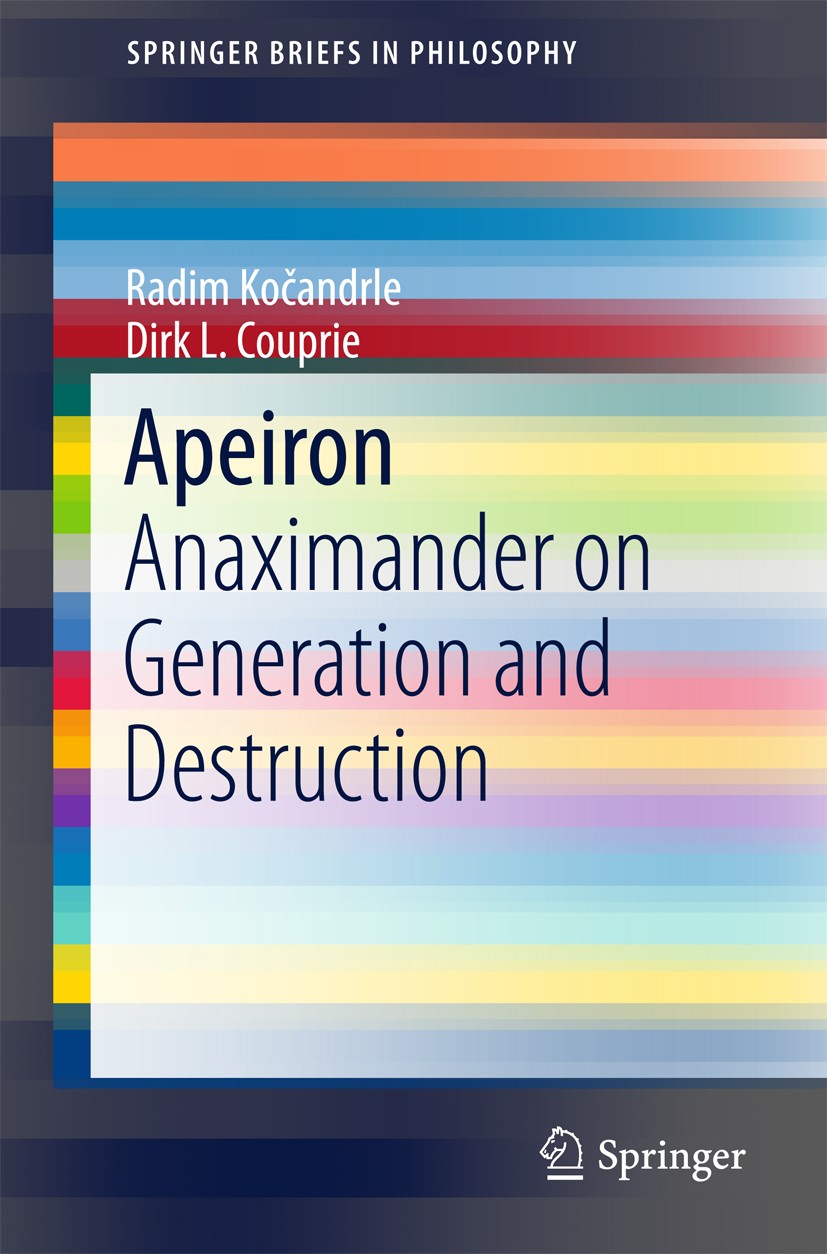
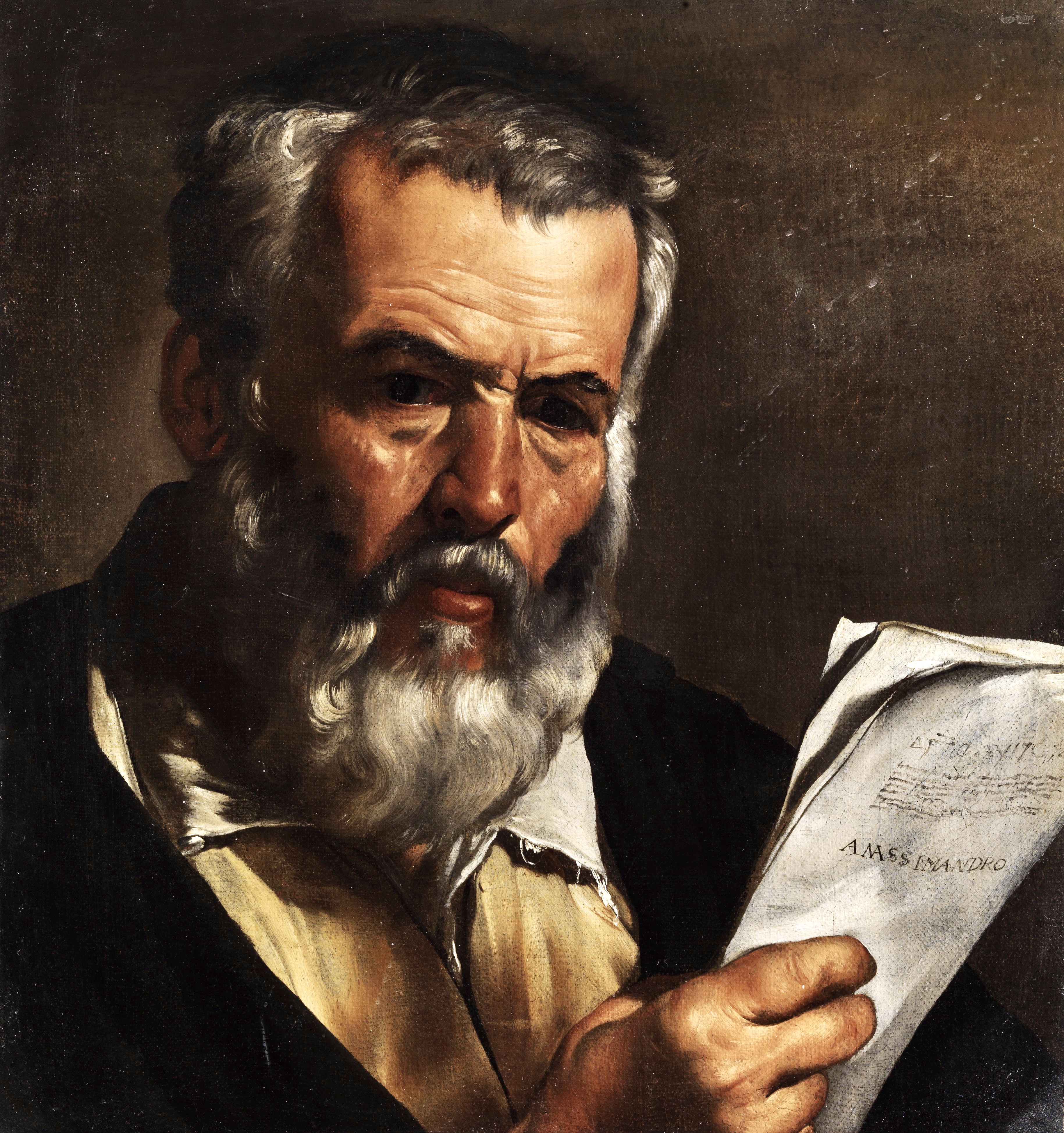
Anaximander was a revolutionary pre-Socratic Greek philosopher whose innovative ideas laid the groundwork for Western science and philosophy. A pupil of Thales and a native of Miletus, he is credited with authoring the first known prose work on nature. His seminal concept of the apeiron, or the boundless, marked a critical departure from mythological explanations of the cosmos.
Who Was Anaximander? A Philosophical Pioneer
Anaximander of Miletus lived from approximately 610 to 546 BCE, over 2,600 years ago. He was the successor to Thales as the head of the influential Milesian school of thought. This position established him as a central figure in the early Greek intellectual tradition, mentoring future thinkers like Anaximenes.
His most significant written contribution was a book, now lost, titled On Nature. This work is considered the first philosophical treatise written in prose rather than verse. Only a single, precious fragment of his writing survives today, but it was enough to secure his legacy.
Early Life and the Milesian Context
Miletus, a thriving Greek city-state on the coast of modern-day Turkey, was a hub of trade and cultural exchange. This vibrant environment fostered a spirit of inquiry that challenged traditional mythological worldviews. Anaximander was born into this dynamic setting, where rational speculation about the natural world was beginning to flourish.
As a prominent citizen, Anaximander was also politically active. He reportedly led a colony-founding expedition to Apollonia on the Black Sea. This demonstrates that his intellectual pursuits were coupled with practical leadership and a deep engagement with the civic life of his time.
The Groundbreaking Concept of the Apeiron
Anaximander's most profound contribution to metaphysics was his introduction of the apeiron. This term translates to "the boundless" or "the indefinite," representing an eternal, limitless substance from which everything in the universe originates and to which it ultimately returns.
This was a radical departure from his teacher Thales, who proposed that water was the fundamental principle of all things. Anaximander argued that the primary substance must be something without definite qualities to avoid being corrupted by its opposites.
Why the Apeiron Was Revolutionary
The apeiron concept was a monumental leap in abstract thought. Instead of attributing the cosmos's origin to a familiar element like water or air, Anaximander posited an abstract philosophical principle. His reasoning was rooted in a sense of cosmic justice.
He believed that for the world to exist in a balanced state, its origin must be neutral and unlimited. The apeiron was subject to eternal motion, which initiated the process of creation by separating hot from cold and dry from wet, giving rise to the world as we know it.
Anaximander's Cosmic Model: A Universe Without Gods
Anaximander constructed the first comprehensive mechanical model of the universe that did not rely on divine intervention. He envisioned a cosmos governed by natural laws, a revolutionary idea for his time. His model was bold, systematic, and based on rational observation.
He famously proposed that the Earth was a short, squat cylinder, floating freely in space. This idea was astonishing because it removed the need for the Earth to be supported by anything, such as water, air, or a giant deity.
The Free-Floating Earth and Celestial Bodies
Anaximander's Earth was a cylinder with a flat, habitable top surface. He correctly deduced that it remained suspended because it was equidistant from all other points in the cosmos, requiring no physical support. This was a primitive but insightful application of the principle of sufficient reason.
His celestial model was equally ingenious. He described the sun, moon, and stars as fiery rings surrounded by mist, with holes or vents through which their fire shone. Eclipses and phases were explained by the opening and closing of these vents, offering a naturalistic alternative to myths about monsters devouring the celestial bodies.
Scientific and Cartographic Innovations
Beyond theoretical cosmology, Anaximander was a practical innovator. He is credited with creating the first known world map, which depicted the known lands of the world surrounded by a cosmic ocean. This map, though crude, represented a systematic attempt to understand geography.
He also introduced the gnomon, a simple sundial, to the Greek world. This instrument allowed him to make precise astronomical observations, such as determining the solstices and equinoxes.
The Gnomon and Early Timekeeping
The gnomon was a vertical rod whose shadow length changed throughout the day and year. By carefully tracking these shadows, Anaximander could mark the changing seasons and the passing of time with unprecedented accuracy.
This tool was not just for timekeeping; it provided empirical data that supported his cosmological theories. His measurements of celestial cycles were a crucial step toward a scientific understanding of astronomy, moving beyond mere speculation to evidence-based inquiry.
Anaximander's Radical Map of the World
The creation of the first known world map stands as one of Anaximander's most tangible achievements. While his original map is lost, historical accounts describe it as a significant leap in human understanding of geography. It represented the inhabited world, or oikoumene, as a circular landmass surrounded by the world ocean.
This map was a direct visual manifestation of his cosmological and geographical theories. It provided a systematic framework for navigation and thought, moving geography away from mythological tales and toward a rational, observational discipline.
The Structure and Influence of His Map
Anaximander's map was likely inscribed on a bronze tablet or similar durable material. The known continents of Europe and Asia were depicted, with the Mediterranean Sea at its center. This pioneering effort established a tradition of mapmaking that would be refined by later Greek thinkers like Hecataeus and Ptolemy.
The map's importance lies not in its accuracy by modern standards, but in its conceptual boldness. It was an attempt to order the chaotic world of human experience into a single, comprehensible image based on logical deduction and reported travel.
Proto-Evolutionary Thought: Life from the Waters
One of Anaximander's most astonishingly prescient ideas was his theory on the origin of life. He proposed a form of proto-evolution, suggesting that all terrestrial life, including humans, originated in the water. His reasoning was based on the observation of the lengthy helplessness of human infants.
Anaximander held that humans first arose from a different kind of animal, specifically a fish-like creature. He reasoned that since human babies require prolonged care, the first humans could not have survived on land initially.
He hypothesized that life began in a wet, primeval state. The first living creatures were encased in thorny bark, developing in the oceans or marshes. As these creatures adapted and grew, they eventually moved onto land, shedding their protective coverings.
A Biological Vision Ahead of Its Time
This theory is a remarkable early example of biological speculation. While not evolution by natural selection, it was a naturalistic explanation for the diversity of life. It completely bypassed creation myths involving gods molding humans from clay.
He specifically suggested that humans developed from fish-like creatures, which nurtured them until they could survive independently on land. This idea, found in the writings of later commentators, shows a mind trying to solve the puzzle of human origins through cause and effect, not divine fiat.
Astronomical Measurements and Distances
Anaximander did not stop at qualitative descriptions of the cosmos; he attempted to quantify it. He assigned numerical dimensions and distances to celestial bodies, making him one of the first to apply mathematical principles to astronomy. His figures, though wildly inaccurate, established a methodology.
He conceived of the universe as a series of concentric rings or wheels. According to later reconstructions based on doxographical sources, he estimated the distances of these celestial rings from the Earth.
- The Stars: He placed the ring of stars closest to Earth, at a distance of 9 times the Earth's diameter.
- The Moon: The lunar ring was farther out, at 19 times the Earth's diameter.
- The Sun: The solar ring was the most distant, at 27 times the Earth's diameter.
Geometry of the Heavens
These numbers reveal a geometric approach to the cosmos. The Earth's diameter served as his fundamental unit of cosmic measurement. Furthermore, he described the Sun and Moon as rings of fire, one solar diameter thick, enclosed in mist with a single vent.
The sizes of these rings were also estimated. He is said to have calculated the solar ring as being 27 or 28 times the size of the Earth. This attempt to scale the universe, however imperfect, was a crucial step toward the mathematical astronomy of later Greeks like Aristarchus and Ptolemy.
The Enduring Legacy of the Milesian School
Anaximander was a central pillar of the Milesian school, a group of thinkers from Miletus dedicated to natural philosophy. This school, founded by Thales and advanced by Anaximander and Anaximenes, represents the very dawn of Western scientific thought.
Their collective project was to identify the single underlying substance or principle (arche) of the cosmos. Where Thales proposed water, and Anaximenes would later propose air, Anaximander posited the more abstract and innovative apeiron.
From Myth to Logos: A Philosophical Revolution
The fundamental shift pioneered by the Milesians, and exemplified by Anaximander, was the move from mythos (myth) to logos (reason). They sought explanations rooted in observable nature and logical consistency, rather than in the capricious wills of anthropomorphic gods.
This intellectual revolution created the foundation for all subsequent philosophy and science. By asking "What is the world made of?" and "How did it come to be?", they established the core questions that would drive inquiry for millennia. Anaximander's synthesis of cosmology, geography, and biology from a single rational framework was unprecedented.
Surviving Evidence and Historical Transmission
A critical challenge in studying Anaximander is the scarcity of primary sources. His major work, On Nature, is completely lost. Our knowledge of his ideas comes entirely from doxographical reports—summaries and quotations by later ancient authors.
The single surviving verbatim fragment, concerning the apeiron and cosmic justice, was preserved by the 4th-century CE philosopher Themistius. Most other information comes from Aristotle and his student Theophrastus, who discussed Anaximander's theories, albeit often through the lens of their own philosophical concerns.
The Challenge of Fragmentary Philosophy
This fragmentary transmission means modern scholars must carefully reconstruct his thought. They analyze reports from sources like Simplicius, Hippolytus, and Aetius. Each report must be weighed for potential bias or misinterpretation.
Despite these challenges, a coherent picture of a brilliant and systematic thinker emerges. The consistency of the reports across different ancient sources confirms Anaximander's stature as a major and original intellect. He is universally acknowledged as the first Greek to publish a written philosophical treatise.
Modern Reassessment and Scholarly Trends
Contemporary scholarship continues to reassess Anaximander's place in history. Modern historians of science, like Andrew Gregory in his 2016 work Anaximander: A Re-assessment, argue for viewing his ideas as a tightly interconnected system. They emphasize the observational basis of his theories.
Current trends highlight his role not just as a philosopher, but as a true instigator of the scientific method. His use of the gnomon for measurement, his creation of a map based on gathered information, and his mechanistic cosmic model all point toward an empirical mindset.
Anaximander in Popular Understanding
Beyond academia, Anaximander's story resonates in popular science media. Documentaries and online video essays frequently highlight his ambition to explain the entire universe through reason alone. His ideas are celebrated as milestones in humanity's long journey toward a rational comprehension of nature.
His proto-evolutionary theory is often singled out as a stunning anticipation of modern biology. Similarly, his free-floating Earth and attempts at cosmic measurement are seen as courageous first steps toward the astronomy we know today. He remains a powerful symbol of human curiosity and intellectual courage.
Anaximander's attempt to calculate cosmic proportions marks a pivotal moment in the history of science. He established a methodological precedent for quantifying nature rather than accepting mythological proportions. While his numbers were speculative, the attempt itself demonstrates a commitment to making cosmology a measurable discipline.
He envisioned the universe as a harmonious system governed by mathematical ratios. This geometric framing of the cosmos opened the door for future thinkers like Pythagoras to explore the mathematical underpinnings of reality. His work established that the heavens were not chaotic but could be understood through rational inquiry and measurement.
The Mechanics of the Cosmos
Detailed reconstructions suggest Anaximander assigned specific dimensions to celestial rings. The Earth's diameter served as his fundamental unit:
- The celestial sphere of stars was 9 Earth diameters away
- The Moon's ring was located 18 Earth diameters distant
- The Sun occupied the outermost ring at 27 Earth diameters
His model featured celestial bodies as fiery rings encased in mist with breathing holes. Eclipses and phases occurred when these vents opened or closed, providing a naturalistic alternative to mythological explanations involving divine creatures.
Enduring Significance Across Millennia
Anaximander's influence spans more than 2,600 years of intellectual history. His ideas created foundational concepts that continue to shape modern thought across multiple disciplines including cosmology, geography, and evolutionary biology.
Contemporary scholars emphasize how his approach established core principles of scientific inquiry: seeking natural explanations, using empirical observation, and building systematic models of complex phenomena. His work represents the crucial transition from mythological thinking to rational investigation of nature.
Modern Scientific Echoes
Remarkable parallels exist between Anaximander's ideas and modern scientific concepts:
- His free-floating Earth anticipates Newton's principle of inertia
- The apeiron resembles modern concepts of quantum fields
- His proto-evolutionary theory presages Darwinian natural selection
- The cosmic justice governing elements finds echoes in conservation laws
These connections highlight how his philosophical framework contained seeds that would eventually blossom into full scientific theories millennia later.
Conclusion: The First Scientist
Anaximander merits recognition as humanity's first true scientist. While Thales began the process of natural philosophy, Anaximander systematized it across multiple domains. His integrated approach to cosmology, geography, and biology demonstrates a comprehensive scientific mindset that sought to explain diverse phenomena through unifying principles.
His most enduring legacy lies in establishing the fundamental methods of scientific inquiry: observation, hypothesis formation, logical reasoning, and model building. The Milesian school he helped lead created the intellectual foundation upon which Western science and philosophy would develop for centuries.
Timeless Relevance
Anaximander's story remains profoundly relevant today. In an age of specialized knowledge, his example reminds us of the power of interdisciplinary thinking. His ability to connect cosmic principles with earthly phenomena, biological origins with celestial mechanics, exemplifies the kind of synthetic intelligence needed to address complex modern challenges.
His vision of a universe governed by natural laws rather than capricious gods established the essential precondition for all scientific progress. The rational commitment to understanding reality through observation and reason represents his greatest gift to subsequent generations.
Anaximander taught us to see the universe as comprehensible, measurable, and governed by principles accessible to human reason. This fundamental insight launched humanity's greatest intellectual adventure.
From his cosmic measurements to his biological speculations, Anaximander demonstrated extraordinary intellectual courage in pushing beyond conventional explanations. His work stands as a permanent monument to human curiosity and our enduring quest to understand our place in the cosmos.