
Explore Any Narratives
Discover and contribute to detailed historical accounts and cultural stories. Share your knowledge and engage with enthusiasts worldwide.



A man discovers his wife has been dead for years, the victim of his own dissociative identity disorder. A detective hunting a serial killer realizes he is the killer. A seemingly harmless old man in a nursing home confesses he is, in fact, Keyser Söze. These moments don't just surprise us. They rewire the entire film we just watched in a matter of seconds, forcing an immediate and total reinterpretation of every scene, every line of dialogue, every glance. The plot twist is cinema's ultimate sleight of hand. And for a device that feels so ubiquitous, its true nature is one of the medium's best-kept secrets.
It is a statistical anomaly. A comprehensive analysis of 26,710 films by researcher Stephen Follows revealed that only 3.7% contain a legitimate, story-defining plot twist. For every Fight Club or The Sixth Sense, there are two dozen straightforward narratives. Yet, since the turn of the millennium, the twist has evolved from a rare trick into a central pillar of ambitious filmmaking. Its surge in prevalence tells a story about us—about how our brains process stories, our desire to be deceived, and the increasing sophistication demanded by audiences who have seen it all.
The history of the twist is not a steady climb. It is a flatline that suddenly spiked. For decades, from the silent era through the golden age of Hollywood, the definitive plot twist was a genuine rarity. Films concluded with clarity, not contradiction. The shift began in the 1960s, a decade of cultural upheaval that demanded narrative upheaval to match. Alfred Hitchcock’s Psycho (1960) didn't just kill its star halfway through; it dismantled audience expectation itself. This planted a seed that grew slowly, waiting for the cultural and technological conditions to make the twist not just possible, but necessary.
What constitutes a twist? It is more than a surprise. A car chase is a surprise. A twist is a foundational betrayal, a revelation that the story's bedrock is made of sand. The data shows a clear evolution in the tools filmmakers use to achieve this. For much of the 20th century, the dominant form was the concealed identity or cover-up. The butler did it. The hero was in disguise. The government was lying. These twists operated on a factual level, swapping one objective truth for another.
The mechanics were often literal: staged events, fake deaths, hidden documents. These devices have not vanished, but their primacy has. "The staged event, as a central twist mechanism, has seen a sharp decline since its peak in mid-century cinema," the data indicates. It feels too contrived for a modern audience, a piece of stagecraft rather than psychology. The fake death persists—from Sherlock Holmes to Superman—but rarely serves as the narrative's core revelation anymore. It has become a beat within a story, not the story's purpose.
According to the narrative analytics research, "Twists that 'unravel the mind' have gained significant ground among contemporary filmmakers." This is the critical pivot. The battlefield has moved from the external world to the internal psyche.
Consider the modern archetype. In M. Night Shyamalan's Split (2016), the twist isn't that Kevin has multiple personalities; it's that his final, monstrous alter is not the end, but a bridge into a larger, shared cinematic universe. The twist expands outward. In Barbarian (2022), the narrative pivots violently from a tense Airbnb horror story to a surreal tale involving a hidden cavern and a feral creature. The location itself is the twist, upending genre and logic simultaneously.
This evolution reflects a fundamental change in the contract between filmmaker and viewer. We are no longer passive consumers of a fixed reality. We are active participants in constructing a narrative's truth, often based on faulty or deliberately misleading information. The twist is the moment the blueprint is shown to be a forgery.
The most potent tool in the modern twist arsenal is perspective. It is no longer about what is true, but whose truth we have been following. Rian Johnson's Glass Onion: A Knives Out Mystery (2022) executes this with surgical precision. The film's first half presents a seemingly straightforward sequence of events during a tech billionaire's getaway. Then, it rewinds. It replays the same chronological period from a radically different point of view, exposing lies, hidden alliances, and true motives. The facts of the timeline don't change. Our understanding of every character's action within it is completely inverted.
This technique does more than surprise. It accuses. It tells the audience, "You trusted the narrator I gave you. That was your first mistake." It turns viewing into a game of epistemological vigilance. We are trained to look for the crack in the perspective, knowing the entire story may be sitting on a fragile, single point of view. This approach has roots in classics like Rashomon (1950), but its mainstream adoption marks a new level of narrative ambition in popular cinema.
Analysis of screenplay language patterns supports this, showing that strong directional plot movement coexists with "cyclical patterns where language returns to earlier thematic elements." The twist is the point where the cycle snaps shut, linking the end back to the beginning with a new, shocking circuit.
The language of the script itself holds clues. The data suggests that twists are not random explosions in a narrative but are woven into its very architecture. The dialogue and scene descriptions build in a direction, but they also echo themselves, planting subtle repetitions that only make sense in retrospect. The "aha" moment is, in fact, a "so that's why" moment. The twist was always there, speaking in a language we couldn't decipher until the final key was provided.
This structural integration is why the cheapest twists feel insulting and the greatest feel inevitable. A deus ex machina ending pulled from nowhere is a failure of craft. A twist that makes the film's opening scene resonate with tragic irony is a triumph. It transforms the film from a sequence of events into a coherent, closed loop. The end rewrites the beginning, and the only way to fully understand the story is to immediately watch it again, armed with the terrible, glorious truth.
We are now in the era of the psychological twist, the perspectival pivot, the narrative rug-pull. The simple reveal of a hidden fact is no longer enough. The twist must now dismantle a reality it spent 90 minutes convincing us was solid. It must unravel the mind—of the character, and of the viewer. This shift didn't happen in a vacuum. It is a direct response to an audience saturated with stories, one that views predicting the ending as a sport. The challenge for the 21st-century filmmaker is not to hide a secret, but to build a maze so compelling we don't realize we're in one until the walls suddenly change shape.
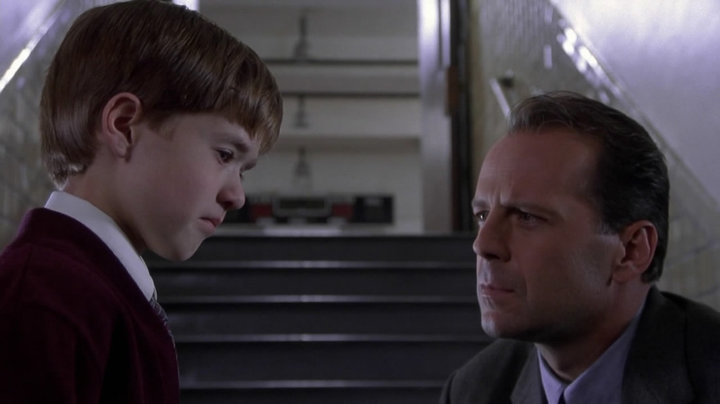
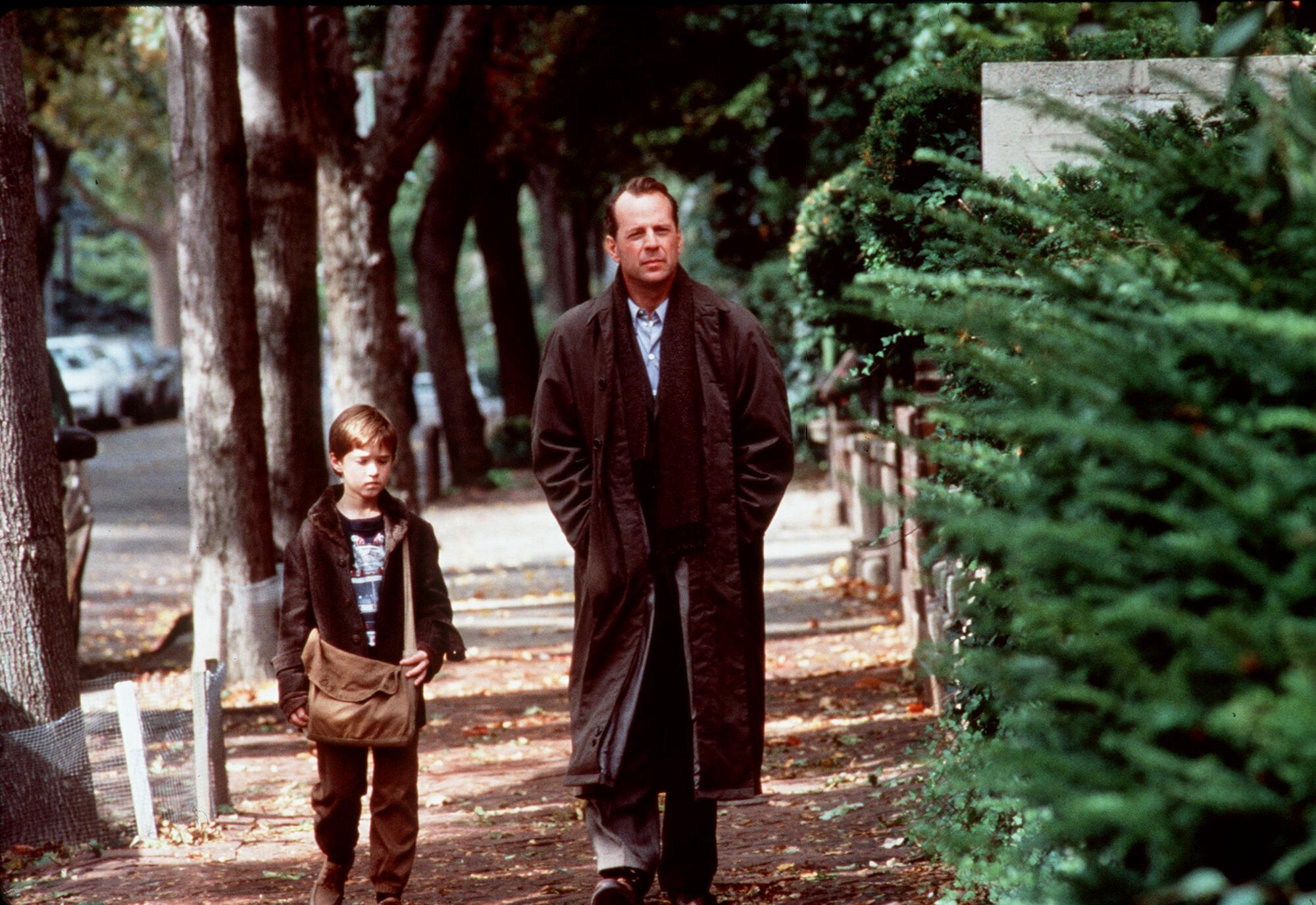
1999 was a fault line. In a single calendar year, two films redefined the commercial and artistic potential of the narrative twist, proving it could be both a cultural juggernaut and an Oscar contender. Their financial and critical trajectories, however, mapped two very different paths to success. M. Night Shyamalan's The Sixth Sense operated with the precision of a Swiss watch. Every detail—the averted gaze, the red motif, the chilling temperature drop—was a deliberate clue pointing to the devastating truth: Bruce Willis's Dr. Malcolm Crowe was a ghost, a spectral figure haunting his own story. The film’s box office was supernatural in its own right. From a $40 million budget, it conjured a staggering $672.8 million worldwide, a return on investment that made studio executives see dead people—of the dollar-sign variety. It earned six Academy Award nominations, including Best Picture, and won Shyamalan a statue for Best Screenplay.
"When it comes to the greatest movie plot twists of all time, there is only one film that can take the top spot." — CBR, ranking The Sixth Sense 1
Shyamalan’s meticulous craft extended to the color palette, desaturating the scenes featuring Crowe to subtly sever him from the world of the living. He weaponized audience assumption. We see a therapist helping a troubled boy; we never question the therapist's own corporeal reality. The twist works because it is emotionally coherent, transforming a ghost story into a profound meditation on unresolved grief and letting go. Its cultural imprint was immediate and permanent, embedding the line “I see dead people” into the global lexicon.
Released just seven weeks later, David Fincher’s Fight Club offered a twist of a more corrosive, anarchic nature. The revelation that the Narrator and Tyler Durden were fractured halves of the same psyche was a bomb thrown at the soul of consumer capitalism. Audiences, however, were not ready. Its opening weekend of $11.35 million on a $63 million budget was anemic, and its total global haul of $101 million was deemed a disappointment. It garnered a single Oscar nomination, for Sound Effects Editing. The critical reception was divided, with a Rotten Tomatoes score of 79% but a middling Metacritic average of 67.
Yet, Fight Club’s failure was a kind of germination. Its twist didn’t just surprise; it diagnosed a societal sickness. The film’s brutal practical effects—Brad Pitt broke his hand during a fight scene, requiring on-set adjustments—mirrored its narrative brutality. It was a twist that demanded you re-examine not just the film, but your own life, your own IKEA catalogues, your own spiritual emptiness. The Sixth Sense made you gasp. Fight Club made you complicit.
"Fight Club has one of the best endings of all time, thanks to one carefully planned twist." — CBR review
Here lies the critical dichotomy. One twist is elegant, airtight, and ultimately comforting in its closure. The other is messy, philosophically violent, and deliberately unsettling. Their legacies have inverse trajectories. The Sixth Sense cemented Shyamalan’s reputation as the "twist director," a burden that arguably constrained his later career. Fight Club’s commercial stumble fueled its ascent as a cult classic, then a canonical text, its anti-consumerist mantra spawning memes and its structure influencing everything from superhero films to advertising. Its 25th anniversary re-release in 2024 was not a nostalgia trip but a reconfirmation of its enduring relevance.
David Fincher bookended the 1990s with two twists that functioned as brutal narrative punctuation marks. If Fight Club (1999) was a psychological implosion, Se7en (1995) was a meticulously orchestrated moral trap. The finale, where the box’s contents are revealed to be Detective Mills’ wife’s head, completing John Doe’s seven-deadly-sins masterpiece with “envy” and “wrath,” is not a twist that recontextualizes the past. It obliterates the future. There is no third-act victory, no cathartic arrest. There is only the devastating completion of a madman’s design and the utter ruin of the hero. The film’s financial success, pulling in $327.3 million worldwide, proved that mainstream audiences would accept an ending of unremitting darkness if it was earned.
Fincher fought the studio for that darkness, for the constant rain-slicked gloom of the unnamed city. He shot Kevin Spacey’s scenes first to preserve the character’s ominous mystery on set. The twist works because it is the horrific, logical conclusion of the film’s own grim theology. It’s a narrative trapdoor that opens straight to hell. The “What’s in the box?” line became a viral meme, but its power is in its horrific simplicity. It is the moment the detective story genre breaks, incapable of containing such nihilism.
Compare this to the twist in The Usual Suspects (1995). Bryan Singer’s film is all elegant, deceptive construction. The revelation that the meek, limping Verbal Kint is the mythical crime lord Keyser Söze is a magic trick of storytelling. The entire narrative is a fabrication, spun from the details in a police office bulletin board. It won Spacey his first Oscar for Best Supporting Actor and claimed Best Original Screenplay. With a minuscule $6 million budget, its $81.1 million global gross was a spectacular return.
"Kint Is Soze." — No Film School, on the iconic reveal
Yet, viewed from 2026, the twist of The Usual Suspects feels more like a brilliant parlor game than a profound statement. Its genius is structural, not emotional. It dazzles the intellect but leaves the heart cold. Its famous line, “The greatest trick the devil ever pulled was convincing the world he didn’t exist,” was borrowed for The Dark Knight, but Christopher Nolan grafted it onto a character, the Joker, who embodied chaotic philosophy. Söze is a phantom, a plot device. The film’s legacy is the “unreliable narrator” trope, a tool used to greater emotional effect in later works like Gone Girl. Does a twist need emotional weight to be great, or is intellectual astonishment enough? The Usual Suspects forces that question.
Stephen Follows’ 2023 analysis, which found only 3.7% of films contain a true plot twist, is a crucial corrective to our perception. We remember the landmarks, not the vast, untwisted plains between them. The surge post-2000 is directly attributable to the one-two punch of 1999. Shyamalan became an industry, a brand synonymous with the “gotcha” ending, for better and worse. The data shows a clear evolution from external reveals (hidden wills, secret relatives) to internal, psychological upheavals. This is the era of the unraveling mind.
But mastery invites mimicry, and mimicry breeds fatigue. The worst twists feel like contractual obligations, slapped onto a script because a producer demanded a “Shyamalan ending.” They are the ones that violate internal logic, that introduce new information from the void, that treat the audience with contempt. The difference between a twist and a cheat is integrity. A great twist makes the film feel more complete. A bad one makes it feel like a different, worse film has just hijacked the final reel.
Streaming has further complicated the calculus. A series like WandaVision (2021) executed a mid-season reality-flip twist that was purely cinematic in scope, but it played out over living room screens, dissected in real-time on social media. The communal “gasp” of a theater is fragmented into a million individual clicks and theory videos. The twist must now be not only surprising but also “spoiler-proof” in a way that The Sixth Sense never had to be. The announcement of a graphic novel adaptation of Fight Club in 2025 or the 30th anniversary 4K restoration of Se7en speaks to a desire to re-capture that singular, unspoiled experience in an age of infinite digital reproduction.
"I wanted the audience to feel like they were in on the secret with Cole." — M. Night Shyamalan, from a 1999 Sight & Sound interview
This environment places a new burden on the filmmaker. The tools are all known. The color grading tricks, the perspective shifts, the rules of misdirection—they are part of the audience’s literacy now. The twist in a film like Barbarian works precisely because it defies categorization, leaping from one horror subgenre to another with reckless abandon. It’s a twist on the concept of a twist itself. Similarly, Rian Johnson’s Glass Onion uses the rewind-and-reveal not as a shock tactic but as a systematic dismantling of privilege and ego. The surprise is secondary to the satirical indictment.
So where does this leave the future of the cinematic swerve? The data suggests it will remain a minority sport, but its influence is disproportionate. A successful twist generates conversation, re-watches, and cultural staying power that a straightforward narrative struggles to match. The 25th anniversary screening of The Sixth Sense at Sundance in 2024 or the continued streaming presence of these classics on platforms like Max, Hulu, and Netflix confirms their enduring value. But the next revolution will not come from perfecting the “who” or the “what.” It will come from redefining the “why.” The twist must be more than a clever outcome; it must be the inevitable, searing expression of the film’s central idea. It must hurt. It must heal. It must change everything, and make us wonder how we ever saw it any other way. The alternative is just a puzzle with a missing piece, a solved mystery that leaves us feeling empty, wondering what all the fuss was ever about.
The plot twist’s significance has metastasized beyond the cinema screen. It is no longer merely a narrative device; it is a cultural operating system, a default mode for processing information in an era defined by revelation, conspiracy, and the dismantling of perceived truths. The twist teaches skepticism. It trains audiences to question perspective, to look for the hidden pattern, to understand that the first draft of any story is usually a lie. This has profound implications far outside the multiplex. The structure of a modern political scandal, the rollout of a tech product, the narrative arc of a celebrity downfall—all now frequently follow the beats of a thriller building toward a shocking reveal. We have become a twist-hungry society.
This narrative literacy reshapes entire genres. The superhero film, once a bastion of moral clarity, now routinely pivots on betrayal and hidden identity. The true-crime documentary series is engineered around mid-episode revelations that flip the suspect pool. The twist’s legacy is its grammar, which has been absorbed into television, literature, video games, and even marketing. The “Shyamalan ending” entered the lexicon not just as praise but as a template, a set of audience expectations that creators must now either fulfill or deliberately subvert. The success of a film like Knives Out (2019) and its sequel is entirely predicated on an audience sophisticated in the language of misdirection, eager to play the game.
"The shift toward psychological and perspective-based twists reflects broader industry trends toward more sophisticated narrative techniques that reward attentive viewing." — Stephen Follows, film data researcher
Economically, a successful twist is a perpetual motion machine for a film’s afterlife. It mandates a second viewing. It fuels discussion, theory-crafting, and debate across social media platforms, extending the film’s cultural shelf life far beyond its theatrical run. The 30th anniversary restoration of The Usual Suspects in 2025 or the continued analysis of Fight Club’s twist in 2026 aren’t about nostalgia; they’re about re-interrogation. Each new generation tests the twist’s integrity against their own evolving sensibilities. Does it hold up? The answer determines whether the film remains a classic or becomes a curious relic.
For all its power, the plot twist carries a built-in existential risk. It is a high-wire act without a net. When it fails, it doesn’t just produce a dull ending; it actively annihilates the goodwill a film has built. The primary criticism is one of emotional betrayal. A twist that is clever but hollow—that reconfigures the plot like a chess puzzle but leaves the characters as mere pawns—feels like a con. It prioritizes intellectual surprise over human truth. This was the core of the backlash against later Shyamalan films like The Village (2004), where the period-piece reveal was seen by many as a gimmick that invalidated the film’s emotional core. The twist became the point, and the story suffered for it.
A more insidious flaw is the twist that relies on withholding essential information from the audience in a way that violates the film’s own internal logic. This isn’t clever misdirection; it’s bad faith. It breaks the contract of watching, which is to follow the clues the filmmaker provides. If the crucial clue is deliberately and unfairly obscured, the resulting “shock” is just frustration in a mask. The twist must feel earned, not bestowed from a place of narrative omniscience. Furthermore, the sheer proliferation of twists has led to a kind of narrative arms race, where extremity often substitutes for coherence. The desire to “out-twist” what came before can push stories into absurdity, sacrificing character and theme at the altar of sheer astonishment.
There’s also the problem of spoiler culture, a direct byproduct of the twist’s dominance. The marketing for films like Glass Onion or the intense secrecy around projects like Avengers: Endgame (2019) turns the viewing experience into a minefield. The fear of having the twist revealed can overshadow the joy of the film itself. This creates a paradoxical tension: the twist is the film’s most valuable asset and its greatest vulnerability. In protecting it, studios can sometimes market a film into a corner, unable to discuss its actual themes for fear of giving the game away. The twist, meant to be a liberation, becomes a prison.
So what comes after the mind-bender? The data and the cultural trajectory point not toward abandonment, but toward integration and hybridization. The standalone, third-act shock is becoming one tool among many, rather than the entire toolbox. Look at the slate for late 2026 and early 2027. The announced projects from directors like Rian Johnson and producers leaning into “elevated genre” suggest a move toward sustained narrative uncertainty, where perspective is fluid for the entire runtime, not just overturned at the end. The twist is being stretched, elongated, and woven into the fabric of the story’s DNA.
Upcoming events will test this evolution. The 2027 film festival circuit, particularly Sundance and Cannes, will be a bellwether for independent filmmakers pushing against twist conventions. More immediately, the planned 2027 retrospective of 1990s thriller cinema at the Museum of the Moving Image in New York isn’t just a look back; it’s a forensic examination of the moment the modern twist was codified, providing a baseline against which to measure current innovations. The continued expansion into streaming will also dictate form. A limited series has eight hours to lay a trap, not 110 minutes. The twist in that context becomes a slower, more psychological burn—a gradual unraveling rather than a sudden snap.
The most promising path forward is hinted at in films like Everything Everywhere All at Once (2022), where the narrative “twists” are multiversal expansions of character, not contractions of plot. The revelation is emotional and existential, not merely factual. The future belongs not to the question of “who?” or “what?” but to “who else could I be?” and “what other world is possible?” The twist will shed its skin as a mere surprise and re-emerge as a mechanism for profound character revelation and philosophical exploration. It will challenge identity, not just disguise it.
The man in the chair, the detective at the crime scene, the patient talking to his therapist—we now approach them all with a conditioned doubt. The cinema taught us that. It taught us to look for the crack in the reflection, to listen for the echo of a lie in a truthful statement, to understand that the most compelling stories are often the ones we get wrong until the very last moment. That final, silent beat before the truth lands is where we live now, in the space between what we believe and what is. It is a dangerous, exhilarating way to watch a film. It is an even more dangerous way to live.
Your personal space to curate, organize, and share knowledge with the world.
Discover and contribute to detailed historical accounts and cultural stories. Share your knowledge and engage with enthusiasts worldwide.
Connect with others who share your interests. Create and participate in themed boards about any topic you have in mind.
Contribute your knowledge and insights. Create engaging content and participate in meaningful discussions across multiple languages.
Already have an account? Sign in here
Comments