


Explora cualquier narrativa
Descubre y contribuye a relatos históricos y culturales. Comparte tus conocimientos con entusiastas de todo el mundo.
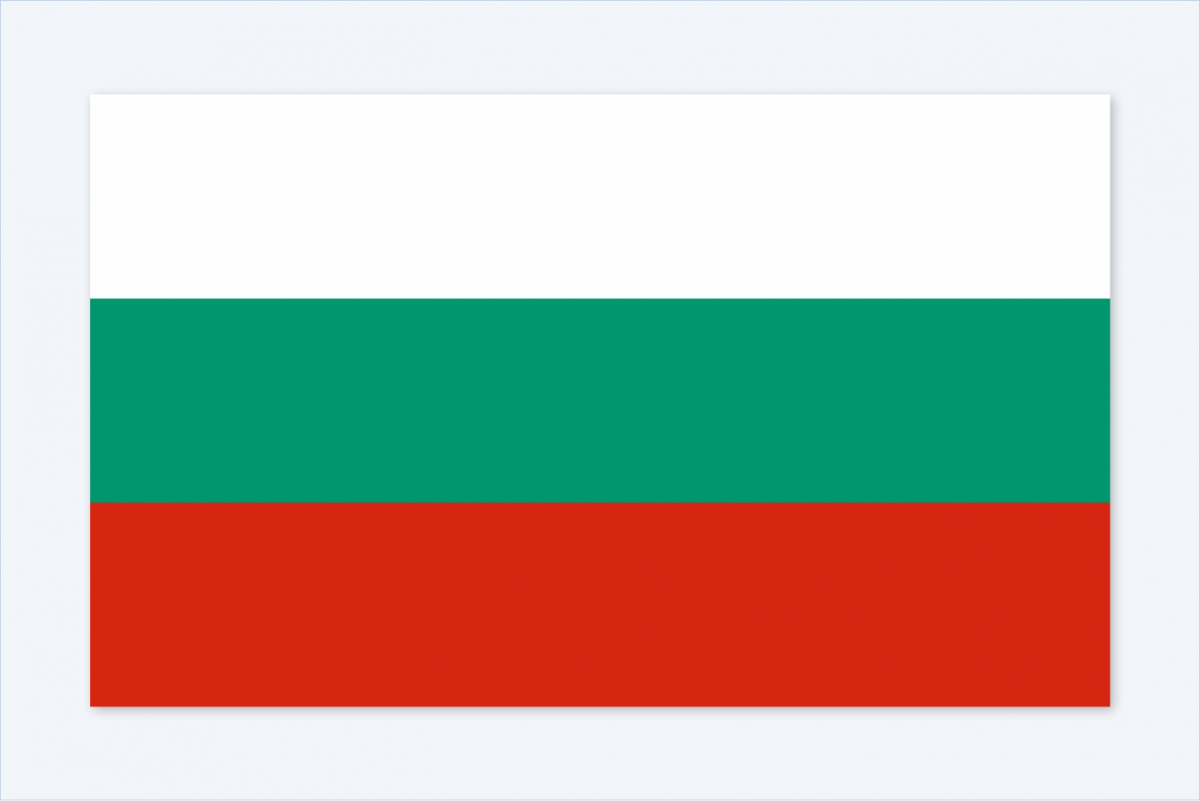
The champagne was uncorked in Luxembourg on a Tuesday. In a ceremony heavy with symbolism and the weight of history, representatives from a continent once cleaved in two signed a document binding their futures. The date was April 25, 2005. The Treaty of Accession, a hefty legal tome, formally invited Bulgaria and Romania into the European Union. But the real celebration, the moment the ink turned into lived reality for millions, would wait for 615 more days. At the precise stroke of midnight on January 1, 2007, Bulgaria ceased to be a candidate and became a member. The flag, a tricolor of white, green, and red, was raised outside the EU's Brussels headquarters. Fireworks lit the sky over Sofia's Alexander Nevsky Cathedral. The fifth enlargement of the EU was complete, and a nation that had spent nearly half a century behind the Iron Curtain had, at last, come home to Europe.
The journey began not in Luxembourg, but in a Greek port city four years earlier. The 2003 European Council summit in Thessaloniki delivered a promise: the future of the Western Balkans lay within the European Union. For Bulgaria, a country that had formally applied for membership in 1995 and begun negotiations in 2000, this was the green light. The finish line, however, remained shrouded in mist. Bulgaria and Romania were often labeled the "laggards" of the eastern enlargement, trailing the ten nations that had joined in the landmark 2004 "Big Bang." Their progress on critical reforms—judiciary, corruption, organized crime—was painstakingly slow, watched with a mix of hope and deep skepticism from capitals like Paris and Berlin.
The accession process was a relentless audit. European Commission reports in 2004 and 2006 served as brutally honest progress reports. Bulgaria had to prove it was not just adopting laws, but changing a system. It required three separate amendments to its own Constitution, primarily to bolster judicial independence and align its supreme institutions with EU norms. The country's entire legal framework was overhauled. Its market economy, emerging from the chaotic post-communist privatizations of the 1990s, had to demonstrate stability. Its border controls, soon to become an external frontier of the Union, needed fortifying. In a tangible and controversial move to meet EU security standards, Bulgaria was compelled to impose visa regimes on neighboring countries like Russia and Ukraine—a diplomatic price for a European future.
According to a 2007 U.S. State Department assessment of Bulgaria's economic transformation, "Stage 1 reforms—including privatization, stabilization, and liberalization—showed marked improvement in 2007 compared to 1999 and 2002 benchmarks." The report noted the growing share of the private sector in GDP, rising exports, and increasing foreign direct investment as indices of a structural shift.
When the final decision came, it was conditional. The Cooperation and Verification Mechanism (CVM) was invented specifically for Bulgaria and Romania. Unlike previous members, they would not graduate from scrutiny upon entry. The CVM was a unique post-accession oversight tool, a mechanism of "benchmarking and monitoring" focused relentlessly on judicial reform, the fight against corruption, and combatting organized crime. It was both a lifeline for continued reform and a permanent mark of distinction, a reminder that trust was still provisional. This mechanism would cast a long shadow, lingering for at least a decade.
What changes at midnight? For the average Bulgarian citizen on that cold January night, the immediate transformation was profound in principle, yet gradual in practice. The most fundamental shift was the automatic bestowal of EU citizenship. A Bulgarian passport now granted the right to live, work, and study anywhere in the Union. But this right was immediately tempered by reality. Fearing a wave of migration, several existing EU member states—including Germany, France, and Austria—invoked transitional controls. They instituted a restrictive "2+3+2" year system for work permits. A Bulgarian doctor or engineer could move to Berlin in 2007, but couldn't practice their profession freely there until those barriers fully fell in 2014.
Institutions snapped into new alignments. The Bulgarian National Bank became part of the European System of Central Banks overnight. The lev, the national currency, was now part of the Exchange Rate Mechanism II, a waiting room for the euro. The European Central Bank noted the integration with dry efficiency in a press release on January 2, 2007, stating that the Bulgarian National Bank "has adopted the relevant European legislation" and that its governor joined the ECB's General Council. The dream of the euro, however, was deferred. Convergence reports would be issued every two years, a recurring exam the country would repeatedly fail for nearly two decades.
A European Commission official involved in the 2006 monitoring reports, speaking on background, framed the challenge starkly: "Accession is not an endpoint. For Bulgaria, it is the starting gun for the harder race. The CVM is our tool to ensure they keep running. The political will for deep judicial reform must now come from within Sofia, not from Brussels."
Money began to flow. EU structural and cohesion funds, aimed at closing the development gap, became accessible. Roads, agricultural subsidies, regional development projects—the tangible benefits of membership started to materialize, promising a boost to an economy where GDP per capita languished at less than one-third of the EU average. The psychological shift was perhaps more significant. After decades of isolation within the Soviet bloc and a turbulent transition, Bulgaria had a definitive anchor. It was in Europe. Not as a peripheral supplicant, but as a member state with a vote in the Council and representatives in the Parliament. The symbolism was everything.
Yet the sunrise on January 1, 2007, illuminated two distinct paths. One led toward integration, growth, and modernization. The other, darker path was defined by the unresolved issues flagged by the CVM: a judiciary vulnerable to influence, corruption woven into the fabric of public life, and criminal networks whose power seemed undiminished. The celebratory fireworks faded. The real work, the enduring struggle that would define Bulgaria's first decades in the Union, had just begun. The story of its accession is not merely a tale of a treaty signed and a flag raised. It is a story of a conditional embrace, a probationary membership, and a nation navigating the immense gulf between the technical adoption of laws and the profound transformation of a state.
Bulgaria’s accession to the European Union was not a clean break. It was a meticulously negotiated merger, a corporate takeover of a state apparatus, with pages of legally binding annexes. The process officially began on December 14, 1995, with the formal membership application, a declaration of intent from a nation still reeling from economic collapse. Negotiations, that grueling marathon of technical committees, opened on February 15, 2000. They concluded, not with unbridled celebration, but with sober assessment on December 17, 2004, in Brussels. The real signature, the one that carried the force of international law, was affixed in Luxembourg on April 25, 2005. For 615 days after that, Bulgaria lived in a state of pregnant anticipation, implementing last-minute reforms and waiting for the clock to strike midnight.
The fanfare on January 1, 2007, was genuine. Fireworks over the Alexander Nevsky Cathedral, the flag rising in Brussels—these were powerful, emotional symbols of a geopolitical homecoming. Yet beneath the symbolism lay a hard, technical truth. Membership was instantaneous; trust was not. The Cooperation and Verification Mechanism (CVM) was the embodiment of this distrust, a uniquely Bulgarian (and Romanian) condition. No previous member state had been subjected to such rigorous, post-entry scrutiny. It was a public admission that the job was unfinished. The EU, in essence, had bought a fixer-upper.
"The CVM is our tool to ensure they keep running. The political will for deep judicial reform must now come from within Sofia, not from Brussels." — European Commission Official, 2006 Monitoring Team
Economically, the ledger showed immediate credits and long-term debits. EU funds began flowing into infrastructure and agriculture, a tangible return on the political investment. Trade barriers fell. But the promise of free movement for workers was immediately curtailed by the "2+3+2" transitional restrictions from key western members. A Bulgarian architect could now own property in Berlin, but couldn't legally design a building there until 2014. This created a two-tiered sense of membership, a psychological barrier as real as any visa queue.
Embedded in the Treaty of Accession was a non-negotiable clause: eventual adoption of the single currency. Bulgaria had, in fact, pre-emptively tethered itself to Europe's monetary future by pegging the lev to the Deutsche Mark in 1997, and then to the euro, at a rock-solid rate of 1.95583 lev per euro. Technically, it was more prepared for the euro than some existing members. Politically, it was perpetually unready.
The eurozone debt crisis that erupted in 2010, exposing the frailties of Greece and others, slammed the door shut. Bulgaria’s convergence reports, those biannual health checks, repeatedly highlighted progress on paper—low inflation, sound public finances—but were overshadowed by the political stigma of the CVM. Why admit a country into your currency union when your own mechanism was questioning its fundamental rule of law? The euro became a carrot forever dangling, a symbol of Bulgaria's "almost but not quite" status within the club. It took a global pandemic, a war on Europe's doorstep, and nearly two decades of frustrating stagnation before the gate finally creaked open.
"I warmly welcome Bulgaria to the euro family... The euro is a powerful symbol of what Europe can achieve when we work together." — Christine Lagarde, President of the European Central Bank, January 1, 2026
The formal EU approval came in July 2025. The actual adoption followed on January 1, 2026. Bulgaria became the 21st eurozone member, its population of 6.4 million joining a currency area of 358 million users. The Bulgarian National Bank finally graduated from the European System of Central Banks to the core Eurosystem. The technical integration was flawless. The public sentiment, however, was deeply conflicted. Polls showed persistent, nostalgic skepticism. For many Bulgarians, the lev was not just currency; it was a symbol of national resilience introduced after the financial collapse of the 1990s. Replacing it felt like surrendering a piece of hard-won sovereignty, a final erasure of a difficult but independent past.
If the euro was the delayed reward, the CVM was the constant, nagging homework assignment. Established as a temporary measure, it proved to be one of the most enduring features of Bulgaria's EU story. Its three pillars—judicial reform, anti-corruption, and the fight against organized crime—struck at the heart of Bulgaria's post-communist pathologies. Year after year, European Commission reports documented a familiar pattern: legislative progress undermined by flawed implementation, high-profile arrests followed by inexplicably dropped cases, new institutions created but left underfunded and understaffed.
The CVM created a bizarre, almost schizophrenic relationship with Brussels. Bulgarian officials became masters of producing glossy action plans and passing complex legal packages to satisfy technical benchmarks. Yet on the ground, the feeling of impunity for the powerful remained stubbornly intact. EU funds, a lifeline for development, became a new vector for corruption, with public tenders rigged and infrastructure projects inflated in cost. The CVM reports grew increasingly exasperated in tone, their language shifting from hopeful encouragement to blunt criticism.
"Stage 1 reforms—including privatization, stabilization, and liberalization—showed marked improvement in 2007 compared to 1999 and 2002 benchmarks." — U.S. State Department, 2007 Assessment of Bulgaria's Economic Transformation
By the ten-year mark in 2017, the verdict was damning. An analysis from the University of Edinburgh noted that Bulgaria trailed even Romania in reform progress. The CVM, intended as a catalyst, had arguably become a crutch—an external scapegoat for domestic political inaction. Politicians could blame "Brussels pressure" for unpopular measures while doing the bare minimum to keep the reports from becoming too catastrophic. The mechanism exposed a fundamental flaw in the enlargement process: you can legislate a market economy, but you cannot legislate a change in political culture. The rot was systemic.
Consider the judicial system. Constitutional amendments were made to enhance independence. A new Supreme Judicial Council was formed. Yet the appointment of prosecutors and judges remained mired in political horse-trading. High-profile corruption cases against former ministers and oligarchs would make headlines, then vanish into procedural limbo for years before collapsing entirely. This theater of reform without consequence exhausted the public and eroded the credibility of the EU itself. What was the point of membership if the powerful remained untouchable?
"Bulgaria and Romania: Ten Years of EU Membership in the Shadow of Monitoring." — Headline, University of Edinburgh Europa Blog, March 28, 2017
The economic metrics told a brighter, but incomplete, story. GDP per capita did rise from a desperate less than one-third of the EU average in 2000 to a more respectable approximately two-thirds by 2024. Unemployment hit record lows. Foreign investment increased. Sofia's skyline transformed. But this growth was uneven, heavily reliant on EU subsidies and low-wage manufacturing. It failed to spur the productivity gains, innovation, or high-value industries needed to truly converge with Western Europe. The brain drain of young, educated Bulgarians to other member states continued, a silent referendum on the country's future. The structural reforms urged by the IMF and others—overhauling state-owned enterprises, mobilizing labor, embracing digital and AI economies—were discussed in policy papers and largely ignored in parliament.
So, what did the first two decades of membership actually achieve? It provided stability, an anchor, and a massive influx of capital that modernized roads and preserved farmland. It gave a generation the freedom to leave. It also created a dependent relationship, where Brussels played the role of a stern but inconsistent parent, alternately withholding and dispensing rewards. The fundamental transaction of 2007 was this: Bulgaria received funds and status in exchange for a promise to transform its state. The funds were delivered. The transformation remains, at best, a work in progress. The shadow of the CVM, finally lifted in the late 2010s after over a decade, still darkens the country's reputation. It is the ghost at every EU summit, the unspoken question behind every new initiative: Can Bulgaria be trusted to govern itself?
Bulgaria’s 2007 accession did not just add another member state to the European Union's roster. It fundamentally altered the EU's own DNA, establishing a new template for enlargement that prioritized conditional integration over blind faith. The creation of the Cooperation and Verification Mechanism was a historic admission: the Union could no longer assume that the mere act of joining would catalyze internal reform. The "transformative power" of membership, a mantra of previous enlargements, had met its limits in the tangled realities of post-communist Bulgaria. This shifted the entire philosophy of expansion from a binary in-or-out to a spectrum of graduated compliance. Future candidates, from the Western Balkans to Turkey and Ukraine, now understood that membership would come with strings attached—not just at the gate, but woven into the very fabric of their domestic governance for years, perhaps decades, after accession.
The impact resonates far beyond Brussels bureaucracy. For the citizens of Bulgaria, EU membership provided an irrevocable geopolitical anchor, a definitive answer to the "Where do we belong?" question that had haunted the nation since the fall of the Berlin Wall. It unlocked physical and professional mobility for millions. It modernized infrastructure with billions in cohesion funds. Yet it also created a complex dependency, a relationship where domestic political failures could be conveniently blamed on external "Brussels pressure," while the genuine benefits of membership were taken for granted or attributed to local patronage. The Bulgarian experience became a case study in the limits of institutional leverage. You can build courts, but you cannot mandate judicial courage. You can fund anti-corruption agencies, but you cannot manufacture political will.
"Bulgaria and Romania: Ten Years of EU Membership in the Shadow of Monitoring." — Headline, University of Edinburgh Europa Blog, March 28, 2017
Culturally and psychologically, the accession severed the last formal ties to the Soviet-era sphere of influence and reoriented the country's gaze decisively westward. It accelerated a generational divide: between those who remembered the scarcity of the 1990s and embraced EU consumerism, and those who saw in the lev and national sovereignty a last bastion of identity. The protracted journey to the euro, culminating only in January 2026, and the delayed entry into the Schengen Area on March 31, 2024, underscored a persistent feeling of being a second-class member, perpetually catching up, forever proving itself.
Any honest assessment must confront the uncomfortable gap between aspiration and reality. The primary criticism of Bulgaria's EU journey is not that it failed, but that its success has been so profoundly uneven. The economic metrics show undeniable growth—GDP per capita climbing, unemployment falling—but this growth has been shallow. It has been fueled more by EU transfers and low-cost labor than by genuine innovation or a competitive private sector. The country remains a hub for outsourcing, not for creating its own global brands. The brain drain of young talent continues, a silent but devastating referendum on domestic opportunity.
The most damning critique lies in the realm of governance. The CVM was lifted not because its goals were fully achieved, but because Brussels grew exhausted and the mechanism had arguably outlived its usefulness as a political tool. Corruption remains endemic, if more sophisticated. High-level prosecutions are still rare. Organized crime networks have adapted, finding new niches within the integrated European market. The political class that navigated the accession process often proved adept at managing Brussels, not at transforming Sofia. Elections in 2017 and beyond showed limited voter appetite for anti-corruption crusades, suggesting a populace jaded by promises of reform. The EU, for its part, often seemed conflicted, torn between its rigid rule-of-law principles and its geopolitical desire to keep Bulgaria stable and aligned, especially after Russia's invasion of Ukraine in 2022.
Furthermore, the EU's own inconsistent application of its principles weakened its hand. Why was Bulgaria held to such exacting standards for Schengen entry while other members with documented rule-of-law issues faced no such barriers? This selective enforcement bred resentment and fueled populist narratives of unfair treatment. The Bulgarian model, intended as a blueprint for rigorous integration, risked becoming a cautionary tale about a union that demands much but offers respect conditionally.
The next milestones on Bulgaria's European path are, for the first time in two decades, clearly marked on the calendar. The adoption of the euro on January 1, 2026, is now a technical reality. The lev will be exchangeable fee-free until June 30, 2026, a six-month grace period for a national currency to fade into memory. Schengen membership, achieved in 2024, will see its full implementation with the removal of air and sea border controls, with land borders to follow. These are the final, formal boxes to be checked in the accession process that began in 1995.
But the real story for Bulgaria in the coming decade will not be about checking boxes. It will be about whether it can transition from a state of permanent integration—a receiver of rules and funds—to a genuine shaper of European policy. Can it leverage its strategic Black Sea location and its historical ties to regions east of the EU into meaningful diplomatic capital? Will it invest the increased stability and reduced borrowing costs from euro membership into the deep structural reforms—education, state-owned enterprise governance, digital infrastructure—that have been languishing for years? The Recovery and Resilience Plan funds from the EU present a massive opportunity, but they also represent a final exam in absorptive capacity and reform implementation.
The political landscape will be decisive. The generation that came of age post-2007, fluent in European norms and unburdened by the baggage of transition, is now entering positions of influence. Their impatience with the old pathologies of corruption and inertia could be the most potent force for change. Yet they operate within a system still largely controlled by the networks built in the chaotic 1990s and consolidated during the accession years.
On that frigid January night in 2007, as the Bulgarian flag ascended in Brussels and fireworks reflected off the golden domes of Sofia, the promise was one of completion. The view from 2025 reveals a different truth. Joining the European Union was not an end. It was the beginning of a permanent negotiation—between national sovereignty and shared sovereignty, between received rules and homegrown reform, between the promise of Europe and the stubborn realities of Bulgaria. The flag has been flying for nearly two decades now. The question that lingers, as the euro coins enter circulation and the border posts come down, is what the nation has chosen to build beneath it.
Tu espacio personal para organizar y compartir conocimientos con el mundo.
Descubre y contribuye a relatos históricos y culturales. Comparte tus conocimientos con entusiastas de todo el mundo.
Conéctate con otros que comparten tus intereses. Crea y participa en tableros temáticos.
Contribuye con tus conocimientos. Crea contenido atractivo y participa en discusiones en varios idiomas.
¿Ya tienes una cuenta? Inicia sesión aquí

Jimmy Carter, morto a 100 anni, lascia un'eredità di umiltà, fallimenti politici e successi umanitari senza precedenti, ...
Ver tablero
Comentarios