
Explore Any Narratives
Discover and contribute to detailed historical accounts and cultural stories. Share your knowledge and engage with enthusiasts worldwide.
The Internet Computer (ICP) is a groundbreaking Layer-1 blockchain platform developed by the DFINITY Foundation. It aims to redefine the internet by enabling web-speed, decentralized applications and hosting entire websites and services on-chain. Often referred to as the "World Computer", ICP presents a serverless alternative to traditional Big Tech cloud infrastructure, promising a future where the internet is truly decentralized.
The Internet Computer is not just another blockchain. It is a comprehensive decentralized computing platform designed to run entire web services—front-end, logic, and storage—directly on a public blockchain. Unlike conventional blockchains that focus primarily on financial transactions or decentralized finance (DeFi), ICP aims to decentralize the entire internet stack, challenging the dominance of centralized cloud providers like Amazon Web Services (AWS) and Google Cloud.
At its core, ICP leverages canister smart contracts, which are stateful WebAssembly modules capable of serving web content directly to users. This innovative approach eliminates the need for traditional web hosting, offering a fully on-chain experience that is both scalable and efficient.
One of ICP’s most significant technological advancements is its use of chain-key cryptography. This novel cryptographic technique enables fast finality and single public key verification across multiple subnets. Unlike traditional blockchains that suffer from slow transaction speeds and high latency, ICP’s chain-key design ensures near-instant finality, making it suitable for real-time web applications.
According to DFINITY’s technical documentation, ICP achieves finality times in seconds, a remarkable feat compared to other blockchains that may take minutes or even hours to confirm transactions. This speed is crucial for delivering a web-like user experience without compromising decentralization.
ICP’s scalability is powered by its subnet architecture, a chain-of-chains model that allows the network to scale horizontally. Each subnet operates as an independent blockchain, capable of processing transactions and hosting canister smart contracts. This modular design enables ICP to handle high throughput while maintaining decentralization.
Recent upgrades have significantly enhanced ICP’s storage capacity. Reports indicate that per-subnet storage has doubled to 2 TiB, with the network comprising dozens of subnets and an aggregate storage capacity reaching tens of terabytes. For example, community analyses cite figures such as ~94 TiB across 47 subnets, highlighting the platform’s ability to support large-scale, data-intensive applications.
At the heart of ICP’s functionality are canister smart contracts. These are stateful, scalable modules written in WebAssembly, capable of executing complex logic and serving dynamic web content. Unlike traditional smart contracts that are often limited to simple transactions, canisters can host entire applications, including front-end interfaces, back-end logic, and data storage.
This innovation allows developers to build fully decentralized applications (dApps) that run entirely on-chain. From social media platforms to enterprise-grade software, canisters provide the flexibility and power needed to create next-generation web services without relying on centralized infrastructure.
DFINITY’s mission with the Internet Computer is to decentralize the entire internet stack. This means moving beyond just decentralized finance or payments and instead focusing on hosting entire web services—including front-end interfaces, back-end logic, and data storage—on a public blockchain. By doing so, ICP aims to reduce reliance on centralized cloud providers, offering a more open, secure, and censorship-resistant alternative.
The platform’s architecture is designed to support web-speed performance, ensuring that decentralized applications can compete with their centralized counterparts in terms of user experience and functionality. This is achieved through a combination of chain-key cryptography, subnet scalability, and canister smart contracts, all working together to create a seamless, high-performance environment for developers and users alike.
One of the most compelling aspects of ICP is its potential to disrupt the cloud computing industry. Today, a handful of tech giants—Amazon, Google, and Microsoft—dominate the cloud infrastructure market, controlling vast amounts of data and exerting significant influence over the internet. ICP’s serverless architecture offers a decentralized alternative, allowing developers to build and deploy applications without relying on these centralized providers.
By leveraging on-chain storage and computation, ICP eliminates many of the vulnerabilities associated with centralized cloud services, such as data breaches, censorship, and single points of failure. This shift not only enhances security but also promotes greater innovation and competition in the tech industry, empowering developers to create applications that are truly owned and controlled by their users.
A critical component of ICP’s design is its on-chain governance system, known as the Network Nervous System (NNS). The NNS is a decentralized autonomous organization (DAO) that allows token holders to vote on proposals and upgrades, ensuring that the platform evolves in a transparent and community-driven manner.
However, the NNS has faced scrutiny regarding voter participation and centralization. Community analyses have noted that voter turnout in NNS proposals hovers around 27%, raising questions about the level of engagement and the distribution of influence within the network. While the NNS is designed to be fully decentralized, some critics argue that DFINITY’s early involvement in the project has led to perceived centralization of decision-making power.
Despite these challenges, the NNS remains a pioneering example of on-chain governance, offering a framework for decentralized decision-making that could serve as a model for other blockchain projects. As ICP continues to grow, the effectiveness of the NNS in fostering true decentralization will be a key factor in its long-term success.
One of the most exciting developments in ICP’s evolution is its focus on artificial intelligence (AI). DFINITY’s 2025 roadmap introduces a vision for a “Self-Writing Internet”, where AI plays a central role in creating and updating applications. This initiative, often referred to as Caffeine or Caffeine AI, aims to enable developers to perform AI inference and data processing directly on-chain, reducing dependence on centralized APIs.
The integration of AI into ICP’s ecosystem is designed to make application development more accessible, even to non-technical users. By leveraging conversational interfaces and AI-driven tools, DFINITY envisions a future where anyone can generate and deploy decentralized applications with minimal coding knowledge. This could significantly lower the barrier to entry for developers and accelerate the adoption of decentralized technologies.
In addition to AI integration, DFINITY is placing a strong emphasis on improving the developer experience. The 2025 roadmap includes numerous upgrades to the command-line interface (CLI) and toolchain, aimed at simplifying the process of building and deploying applications on ICP. These improvements are part of a broader effort to attract mainstream developers beyond the crypto community, making it easier for them to transition to decentralized platforms.
Key features of the roadmap include:
ICP’s push into on-chain AI positions it as a direct competitor to both traditional Web2 cloud providers and other blockchain projects exploring decentralized AI solutions. By enabling AI models to run as smart contracts on its network, ICP aims to provide a fully decentralized alternative to centralized AI services, offering greater transparency, security, and user control.
Early evidence of this vision can be seen in hackathon projects and community-driven initiatives, where developers have created practical applications—such as mapping tools, document generators, and agent-based systems—using ICP’s AI capabilities. These projects serve as proof-of-concept for the platform’s potential to support a wide range of AI-driven use cases, from enterprise solutions to consumer-facing applications.
The Internet Computer represents a bold and ambitious vision for the future of the web. By combining decentralized infrastructure with cutting-edge cryptography and AI integration, DFINITY is positioning ICP as a transformative platform capable of challenging the dominance of centralized cloud providers.
As ICP continues to evolve, its success will depend on several key factors, including developer adoption, governance transparency, and the feasibility of on-chain AI. With its 2025 roadmap setting an ambitious course, the Internet Computer is poised to play a pivotal role in shaping the next generation of decentralized applications and services.
In the next part of this series, we will delve deeper into ICP’s technical architecture, explore its real-world use cases, and examine the challenges and opportunities that lie ahead for this revolutionary platform.
Chain-key cryptography is the cornerstone of ICP’s ability to deliver web-speed performance while maintaining decentralization. Unlike traditional blockchains that rely on slower consensus mechanisms, ICP’s chain-key technology enables instant finality and single public key verification across its subnet architecture. This means transactions and smart contract executions are confirmed in seconds, making ICP one of the fastest blockchain platforms available today.
The cryptographic protocol also allows for secure and efficient cross-subnet communication, ensuring that data and computations can flow seamlessly across the network. This is critical for supporting complex, multi-component applications that require high throughput and low latency. By eliminating the need for multiple confirmations and reducing transaction delays, chain-key cryptography positions ICP as a viable alternative to centralized cloud services.
ICP’s subnet architecture is designed to scale horizontally, allowing the network to expand its capacity by adding more subnets as demand grows. Each subnet operates as an independent blockchain, capable of processing transactions and hosting canister smart contracts. This modular approach ensures that ICP can handle high volumes of traffic without sacrificing performance or decentralization.
Recent upgrades have significantly enhanced ICP’s storage and computational capabilities. For instance, per-subnet storage has been doubled to 2 TiB, with the network now comprising dozens of subnets and an aggregate storage capacity exceeding 94 TiB. This expansion enables developers to build data-intensive applications, such as decentralized social media platforms, enterprise databases, and AI-driven services, all running entirely on-chain.
At the heart of ICP’s functionality are canister smart contracts, which are stateful WebAssembly modules capable of executing complex logic and serving dynamic web content. Unlike traditional smart contracts, which are often limited to simple transactions, canisters can host entire applications, including front-end interfaces, back-end logic, and data storage. This makes them uniquely suited for building fully decentralized applications (dApps) that rival the functionality of centralized web services.
Canisters are designed to be scalable and interoperable, allowing developers to create modular applications that can interact seamlessly with other canisters across the network. This interoperability is facilitated by ICP’s chain-key cryptography, which ensures secure and efficient communication between different parts of the network. As a result, developers can build sophisticated, multi-component applications that leverage the full power of decentralized computing.
One of the most promising use cases for ICP is in the realm of decentralized social media. Traditional social media platforms are centralized, meaning they are controlled by a single entity that can censor content, sell user data, or manipulate algorithms. ICP’s on-chain infrastructure provides an alternative, allowing developers to create social media platforms that are censorship-resistant, user-owned, and transparent.
For example, a decentralized social media application built on ICP could store all user data and content on-chain, ensuring that posts, images, and videos are permanently recorded and immutable. Users would have full control over their data, and the platform’s governance could be managed through a decentralized autonomous organization (DAO), giving the community a say in how the platform evolves.
ICP’s scalability and performance make it an ideal platform for enterprise-grade decentralized applications. Businesses can leverage ICP to build secure, transparent, and efficient systems for supply chain management, financial services, and data analytics. By running these applications on-chain, companies can reduce their reliance on centralized cloud providers, lowering costs and enhancing security.
For instance, a decentralized supply chain management system on ICP could track the movement of goods in real-time, with all data stored immutably on the blockchain. This would provide greater transparency and accountability, reducing the risk of fraud and counterfeiting. Similarly, financial institutions could use ICP to build decentralized lending platforms or cross-border payment systems that operate without intermediaries, lowering transaction fees and increasing efficiency.
ICP’s integration of on-chain AI opens up new possibilities for decentralized machine learning and data processing. By running AI models as smart contracts, developers can create applications that perform real-time inference and analysis without relying on centralized APIs. This is particularly valuable for industries that require high levels of data privacy and security, such as healthcare, finance, and government.
For example, a decentralized healthcare application on ICP could use AI to analyze patient data and provide personalized treatment recommendations, all while ensuring that sensitive information remains encrypted and secure. Similarly, financial institutions could deploy AI-driven fraud detection systems that operate entirely on-chain, reducing the risk of data breaches and unauthorized access.
While ICP’s Network Nervous System (NNS) is designed to be a fully decentralized governance model, it has faced criticism regarding voter participation and centralization. Community analyses have noted that voter turnout in NNS proposals is around 27%, raising concerns about the level of engagement and the distribution of influence within the network. Some critics argue that DFINITY’s early involvement in the project has led to perceived centralization of decision-making power.
To address these concerns, DFINITY has emphasized the importance of transparency and community involvement in the governance process. The NNS is continually evolving, with new features and improvements aimed at increasing participation and ensuring that decisions are made in a fair and decentralized manner. As ICP matures, the effectiveness of the NNS in fostering true decentralization will be a key factor in its long-term success.
One of the biggest challenges facing ICP is developer adoption. While the platform offers powerful tools and capabilities, attracting developers from the broader tech community remains a priority. DFINITY’s 2025 roadmap includes numerous initiatives aimed at improving the developer experience, such as CLI and toolchain reforms, as well as efforts to lower the barrier to entry for non-technical users.
To accelerate ecosystem growth, DFINITY has also focused on hackathons, grants, and educational programs to encourage innovation and attract new talent. Early success stories, such as hackathon projects demonstrating AI-driven applications and decentralized social media platforms, provide compelling evidence of ICP’s potential. As more developers join the ecosystem, the platform’s utility and adoption are expected to grow exponentially.
ICP’s push into on-chain AI positions it as a direct competitor to both traditional Web2 cloud providers and other blockchain projects exploring decentralized AI solutions. By enabling AI models to run as smart contracts, ICP offers a fully decentralized alternative to centralized AI services, providing greater transparency, security, and user control.
However, the feasibility of running large-scale AI models entirely on-chain remains a challenge. Issues such as model size, inference latency, and computational costs must be addressed to ensure that ICP can support meaningful AI workloads. DFINITY is actively working on solutions to these challenges, including optimizations to its subnet architecture and the development of specialized AI-focused tools.
As ICP continues to evolve, partnerships and integrations will play a crucial role in its growth. DFINITY has already begun collaborating with enterprise partners, academic institutions, and other blockchain projects to expand the platform’s reach and utility. These partnerships are expected to drive real-world adoption and demonstrate ICP’s potential to disrupt traditional industries.
For example, integrations with decentralized finance (DeFi) platforms could enable new financial products and services that leverage ICP’s scalability and security. Similarly, partnerships with AI research organizations could accelerate the development of on-chain machine learning tools, further solidifying ICP’s position as a leader in decentralized AI.
DFINITY’s 2025 roadmap includes numerous upgrades aimed at enhancing ICP’s performance and scalability. Key initiatives include:
These upgrades are expected to further improve ICP’s speed, efficiency, and usability, making it an even more attractive platform for developers and enterprises alike.
The ultimate goal for ICP is mainstream adoption, where decentralized applications become the norm rather than the exception. To achieve this, DFINITY is focusing on education, outreach, and user-friendly tools that make it easier for developers and businesses to transition to decentralized platforms.
As ICP’s ecosystem grows, we can expect to see a wider range of applications, from decentralized social media to enterprise-grade AI services, all running on a platform that is secure, scalable, and truly decentralized. With its ambitious roadmap and commitment to innovation, the Internet Computer is well-positioned to play a pivotal role in shaping the future of the web.
In the final part of this series, we will explore ICP’s tokenomics, economic model, and the role of the ICP token in the platform’s ecosystem. We will also examine the challenges and opportunities that lie ahead as ICP continues its journey toward becoming the “World Computer”.
The ICP token is the native cryptocurrency of the Internet Computer, serving multiple critical functions within the ecosystem. Primarily, it is used for governance, transaction fees, and rewarding network participants. Unlike many other cryptocurrencies that focus solely on speculative trading, ICP is designed to be a utility token that drives the platform’s decentralized economy.
One of the most important roles of the ICP token is its use in the Network Nervous System (NNS). Token holders can stake their ICP to participate in governance, voting on proposals that shape the future of the platform. This staking mechanism not only incentivizes community engagement but also helps secure the network by aligning the interests of participants with the long-term success of ICP.
ICP is also used to pay for transaction fees and computational resources on the network. When developers deploy canister smart contracts or users interact with decentralized applications, a small amount of ICP is required to cover the cost of computation and storage. These fees are then distributed to node providers who maintain the network’s infrastructure, ensuring that the system remains decentralized and economically sustainable.
The economic model of ICP is designed to be deflationary in the long run, with a portion of transaction fees being burned to reduce the overall supply of tokens. This mechanism helps maintain the value of ICP over time, providing an incentive for holders to participate in the network rather than simply speculating on price movements.
Despite its innovative design, ICP’s tokenomics have faced criticism, particularly in the early days of the project. The initial token distribution was concentrated among a small number of investors and the DFINITY Foundation, leading to concerns about centralization and market manipulation. Additionally, the volatility of the ICP token has been a point of contention, with significant price fluctuations impacting both developers and investors.
To address these challenges, DFINITY has taken steps to increase transparency and decentralize the distribution of ICP. Initiatives such as community grants, developer incentives, and staking rewards are aimed at broadening participation and ensuring that the token’s value is driven by real-world utility rather than speculative trading.
The Internet Computer stands out in the crowded field of Layer-1 blockchains due to its unique focus on decentralized computing rather than just financial transactions. While platforms like Ethereum and Solana are primarily designed for DeFi and smart contracts, ICP is built to host entire web services, including front-end interfaces, back-end logic, and data storage. This makes it a direct competitor to centralized cloud providers like AWS and Google Cloud.
Key differentiators that set ICP apart include:
While ICP is designed to be a self-contained computing platform, interoperability with other blockchains is crucial for its long-term success. DFINITY has recognized this need and is actively working on solutions to enable cross-chain communication. For example, ICP’s chain-key cryptography can facilitate secure interactions with other blockchains, allowing developers to build applications that leverage the strengths of multiple platforms.
One potential use case for interoperability is the integration of ICP with Ethereum or other DeFi-focused blockchains. This could enable the creation of hybrid applications that combine ICP’s decentralized computing capabilities with the financial infrastructure of other networks. Such integrations would not only expand ICP’s utility but also attract developers from across the blockchain ecosystem.
Despite its technological advancements, the Internet Computer faces several challenges on its path to mainstream adoption. One of the most significant barriers is developer familiarity. Many developers are accustomed to building applications on centralized cloud platforms or other blockchains like Ethereum. Transitioning to ICP requires learning new tools, frameworks, and paradigms, which can be a steep learning curve.
To address this, DFINITY has prioritized developer onboarding through initiatives such as:
ICP’s integration of on-chain AI is one of its most ambitious and potentially transformative features. By enabling AI models to run as smart contracts, ICP aims to create a decentralized alternative to centralized AI services. This could democratize access to AI, allowing developers to build applications that leverage machine learning without relying on Big Tech APIs.
However, the feasibility of running large-scale AI models entirely on-chain remains a challenge. Issues such as computational costs, model size, and inference latency must be addressed to ensure that ICP can support meaningful AI workloads. DFINITY is actively researching solutions, including optimizations to its subnet architecture and the development of specialized AI tools.
As with any blockchain project, regulatory compliance is a critical factor for ICP’s long-term success. The platform’s focus on decentralized computing and AI raises unique legal and ethical questions, particularly around data privacy, security, and governance. DFINITY has emphasized its commitment to working with regulators and ensuring that ICP complies with global standards.
One area of particular interest is the Network Nervous System (NNS), which operates as a decentralized autonomous organization (DAO). Regulators are still grappling with how to classify and oversee DAOs, and ICP’s governance model may face scrutiny as the platform grows. DFINITY’s proactive approach to transparency and compliance will be essential in navigating these challenges.
The Internet Computer represents a bold and ambitious vision for the future of the web. By combining decentralized infrastructure with cutting-edge cryptography and AI integration, DFINITY is positioning ICP as a transformative platform capable of challenging the dominance of centralized cloud providers. The platform’s unique features—such as chain-key cryptography, canister smart contracts, and subnet architecture—set it apart from other blockchains and make it a compelling alternative for developers and enterprises alike.
However, ICP’s journey is not without challenges. Developer adoption, governance transparency, and regulatory compliance are all critical factors that will determine its long-term success. DFINITY’s commitment to addressing these issues, as evidenced by its 2025 roadmap and ongoing upgrades, demonstrates a clear focus on building a platform that is not only technologically advanced but also sustainable and community-driven.
As the Internet Computer continues to evolve, its potential to reshape the internet as we know it becomes increasingly apparent. From decentralized social media to enterprise-grade AI applications, ICP offers a glimpse into a future where the web is open, secure, and truly decentralized. With its innovative technology and ambitious roadmap, the Internet Computer is poised to play a pivotal role in the next generation of the internet—one that is built by and for its users.
In this new era of decentralized computing, the Internet Computer stands as a testament to the power of blockchain technology to transform not just finance, but the entire digital landscape. As developers, businesses, and users alike embrace this vision, ICP has the potential to become the “World Computer” it aspires to be—a platform that redefines what is possible on the web and empowers individuals to take control of their digital future.


Your personal space to curate, organize, and share knowledge with the world.
Discover and contribute to detailed historical accounts and cultural stories. Share your knowledge and engage with enthusiasts worldwide.
Connect with others who share your interests. Create and participate in themed boards about any topic you have in mind.
Contribute your knowledge and insights. Create engaging content and participate in meaningful discussions across multiple languages.
Already have an account? Sign in here
Discover the unique strengths of Tezos, the self-amending blockchain. Explore its innovative governance, secure consensu...
View Board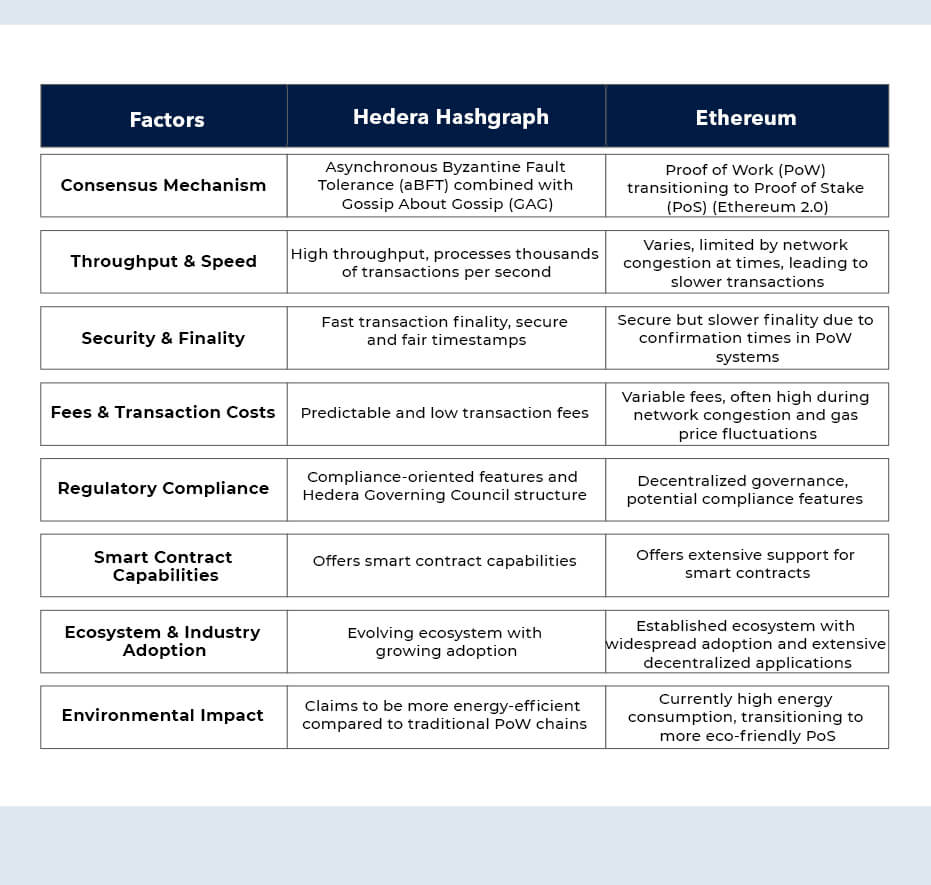
Hedera Hashgraph revolutionizes blockchain technology with high throughput, low latency, and robust security, offering a...
View Board
Ethereum revolutionizes blockchain with decentralized applications, smart contracts and DeFi, facing challenges like sca...
View Board
Discover the exciting world of PancakeSwap and its role in the DeFi revolution. This comprehensive guide explores how th...
View Board
Dive into the world of decentralized finance with our comprehensive guide on SushiSwap's evolution and impact. Discover ...
View BoardExplore the revolutionary role of Balancer in DeFi, a sophisticated Automated Market Maker offering unmatched liquidity ...
View Board
Polkadot: The Future of Interoperable Blockchain Introduction to Polkadot Polkadot is a groundbreaking multi-chain bloc...
View BoardExplore the transformative power of Chainlink as it bridges blockchain technology with real-world data through decentral...
View Board
Dfinity's Internet Computer (ICP) offers ~2s finality, 4GB storage, and seamless Bitcoin & Ethereum integration. Explore...
View Board
IOTA revolutionizes blockchain with Tangle technology, offering zero transaction fees, scalability, and decentralization...
View Board
Explore the transformative role of Aave in decentralized finance (DeFi) as it redefines traditional lending and borrowin...
View Board
Descubre cómo Chainlink resuelve el "problema del oráculo" conectando contratos inteligentes con datos del mundo real de...
View Board
Explore the in-depth world of DigiByte with our comprehensive guide, diving into its unique features, technological inno...
View Board
Explore the fascinating world of crypto tokens with our comprehensive guide. Discover the functionality, types, and sign...
View Board
Discover how DeFi revolutionizes finance with blockchain tech—open, transparent, and accessible to all. Learn core mecha...
View Board
Descubra como o Chainlink revoluciona blockchains com oráculos descentralizados, conectando smart contracts a dados reai...
View Board
Polkadot (DOT) — инновационный мультицепочечный протокол для Web3, решающий проблемы взаимодействия и масштабируемости. ...
View Board
Discover the groundbreaking impact of Theta, a revolutionary blockchain-based platform transforming video streaming. Exp...
View Board
Last news about Crypto Week from 28/04/2025 to 04/05/2025
View Board
Learn how to buy cryptocurrency confidently with this comprehensive guide. Discover key steps including choosing exchang...
View Board
Comments