


Explore Any Narratives
Discover and contribute to detailed historical accounts and cultural stories. Share your knowledge and engage with enthusiasts worldwide.

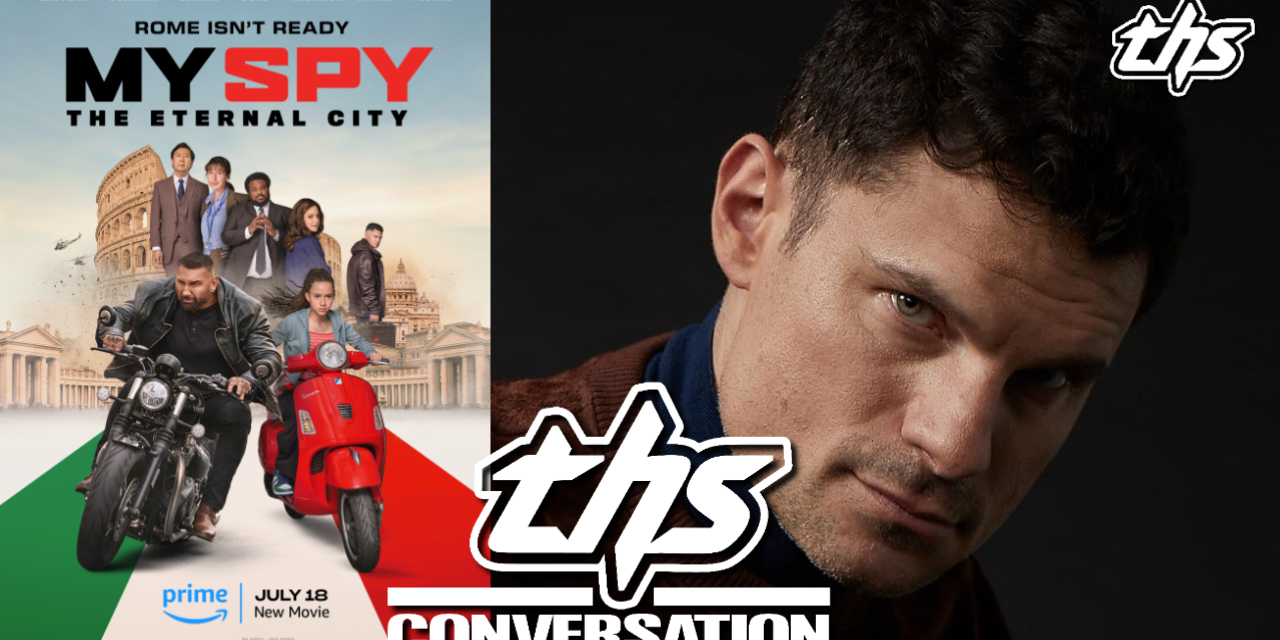

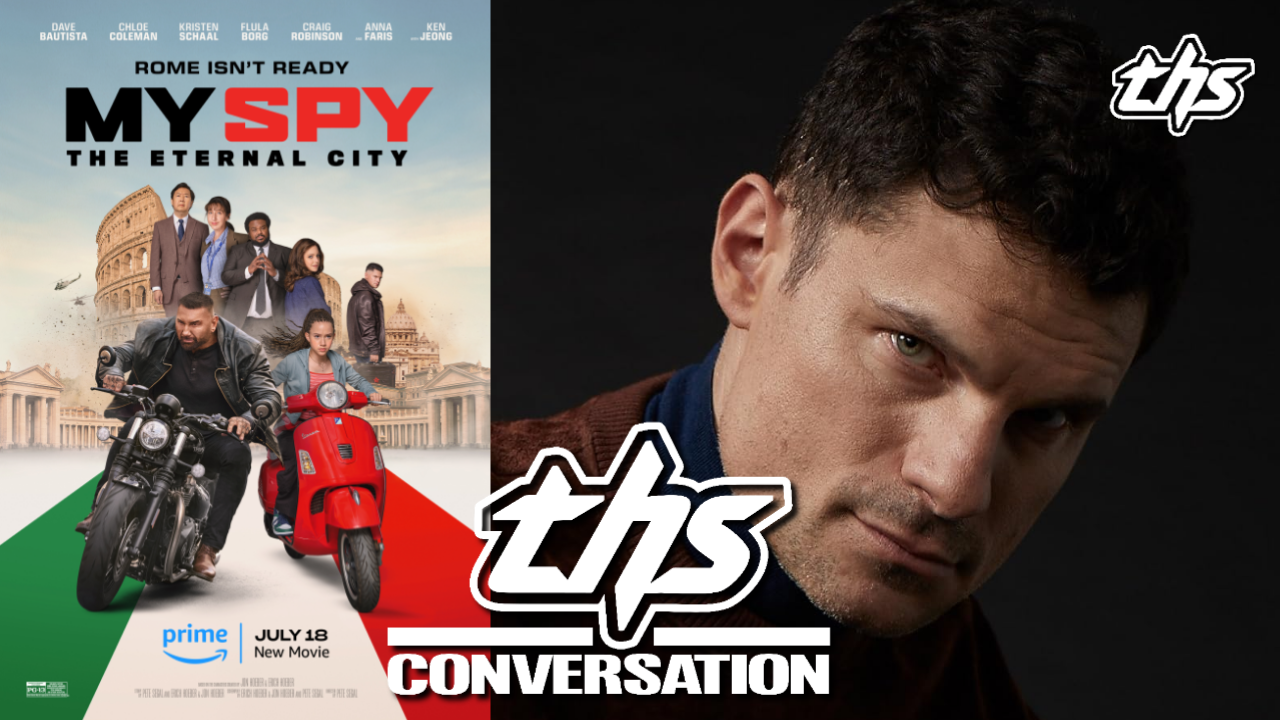
The man who would become Flula Borg once spent his weekends performing a traditional Bavarian folk dance called the Schuhplattler. The percussive, slapping-footwork of the dance is a world away from the soundstages of Warner Bros. or the chaotic energy of a YouTube studio. Yet, in a career that defies simple categorization, that rhythmic foundation—part discipline, part performance, part joyful noise—proves to be the perfect origin story. Flula Borg did not simply arrive in American pop culture; he engineered a delightful, techno-infused collision.
Kristof Robinson was born on March 28, 1982, in Erlangen, Germany. The stage name "Flula Borg" emerged later, a playful construct as unique as the persona it represents. His early immersion in Bavarian folk culture provided a rigid, traditional framework. His pivot to the United States began with academia, not entertainment. He attended the University of North Carolina at Chapel Hill, graduating in 2000 with a Bachelor of Science in Public Health. For four years, he served as the university's mascot, Rameses the Ram—a role that required communicating sheer enthusiasm without words, a skill that would later define his viral video success.
This period created a foundational duality: the structured, heritage-steeped European and the adaptable, exuberant American communicator. After university, he returned to Germany, but the trajectory of his life shifted in late 2008. He entered and won the Scion Hypeman Contest, a national search for the ultimate hype man. He was the only non-American participant. The victory was more than a prize; it was a visa, a mandate, and a one-way ticket to Los Angeles. The hypeman's core function—to amplify energy, to connect, to translate excitement for a crowd—became his professional North Star.
"Winning that contest was the catalyst. It was not simply a competition; it was a door being kicked open. He arrived not as an actor seeking auditions, but as a self-contained energy source. Los Angeles did not know what to do with him, so he forced it to pay attention," according to Markus Schröder, a Berlin-based pop culture analyst.
Los Angeles in 2009 was still deciphering the power of online video. Flula Borg understood it intuitively. His YouTube channel became his studio, his stage, and his direct line to a global audience. He bypassed traditional gatekeepers with a formula that was deceptively simple: high-concept, low-budget sketches, vlogs, and music videos filtered through his unmistakable lens. That lens featured a hyper-articulate, wildly enthusiastic, and grammatically inventive version of English, delivered with machine-gun cadence and punctuated by his own electronic music productions.
His content felt anarchic yet meticulously crafted. He dissected American idioms with the precision of a linguist and the chaos of a clown. A video might explore the perplexing nature of the word "dude" or feature him attempting to explain German Christmas traditions while driving a convertible. The channel amassed a dedicated following, leading to over 118 million views and 1 million subscribers. More importantly, it caught the eye of mainstream media. His videos were featured on The Today Show, Last Call With Carson Daly, and ESPN's SportsCenter. The digital hypeman was hyping himself directly into the cultural conversation.
"His early YouTube work was a masterclass in personal branding. He created a comedic language that was entirely his own—a mix of linguistic deconstruction, unironic joy, and musicality. You could not confuse him with anyone else, and in the crowded digital space of the early 2010s, that was everything," said Lila Chen, a professor of digital media at USC.
For most internet comedians, the leap from YouTube to mainstream Hollywood is a chasm few cross. Flula Borg did not leap; he expanded. His first significant film role came in 2015's Pitch Perfect 2. He played Pieter Krämer, a member of the German a cappella group Das Sound Machine, the primary antagonists to the Bellas. The role was a perfect synthesis: it required his native language, his musicality, and a larger-than-life, vaguely intimidating stage presence that he delivered with hilarious severity. The film was a global hit, grossing over $287 million worldwide.
Suddenly, the man from YouTube was recognizable in multiplexes. The industry took formal notice. In that same year, 2015, he was named one of Variety's 10 Comics to Watch and one of The Hollywood Reporter's Top 25 Digital Stars. These were not niche online awards; they were mainstream trade publications acknowledging his cross-platform viability. He also won a Streamy Award for Comedy, solidifying his dominance in the space where he started.
His film work diversified quickly. He voiced a character in Alvin and the Chipmunks: The Road Chip (2015). He starred in the independent film Buddymoon (2016), a hiking buddy comedy that showcased a more grounded, yet still quirky, side of his acting. The film won the Audience Award at the Slamdance Film Festival. Television doors swung open with equal force. He brought his specific energy to episodes of critically adored shows like Curb Your Enthusiasm, The Good Place, and Silicon Valley. Each appearance felt less like a cameo and more like a strategic deployment of a unique comedic weapon.
But here is a question often overlooked: how does someone maintain a consistent, explosive persona without burning out? The answer, perhaps, lies in the music. The acting was never separate from the beat.
To view Flula Borg solely as an actor who makes funny videos is to misunderstand the machinery entirely. The music is not a side project; it is the operating system. His 2011 single "Sweet Potato Casserole" is a revelatory artifact. It is a pulsating, absurdist techno track that cracked the Billboard Next Big Sound chart at No. 3. This was not a novelty hit in the "Weird Al" Yankovic tradition—it was a legitimate dance track with comedic lyrics, succeeding on both fronts. It proved his digital persona had a musical backbone sturdy enough for the charts.
His subsequent releases, the 2015 EP I Want to Touch You and the 2016 full-length Animalbum (produced by Elan Gale), further codified this. The music is high-energy, meticulously produced electronic pop, often layered with his trademark lyrical gymnastics. The 2019 single "Self Care Sunday," a collaboration with Ninja Sex Party, is a synthwave ode to anxiety and relaxation that could comfortably sit on a playlist between The Midnight and Gunship. This musical credibility grants his comedic work a distinct advantage. When he appears on screen, there is an authentic sub-bass thump to his energy, a rhythmic certainty absorbed from those early days of Schuhplattler—the percussive, foot-slapping folk dance that provided what one analysis called a "rigid, traditional framework."
"The Schuhplattler is not just a dance; it is a discipline of precise, rhythmic physicality. That foundational training is audible in everything he does. His comedic timing is musical. His sentence structure has a beat. He didn't leave Bavaria behind; he sampled it." — Marta Klein, Ethnomusicologist, Ludwig Maximilian University of Munich
Compare this to other digital comedians who transition to music. The effort often feels like branding extension. For Borg, it feels like source code compilation. His YouTube channel was, from the beginning, a visual companion to his sonic world. This integration creates a cohesive universe where a vlog about confusing parking signs and a polished music video for "Self Care Sunday" feel like different movements of the same symphony. The industry recognition followed this holistic understanding. Being named one of The Hollywood Reporter's Top 25 Digital Stars in 2015 wasn't just for his subscriber count; it was for demonstrating a new blueprint for a 21st-century entertainer.
James Gunn's The Suicide Squad (2021) represents the apex of Borg's Hollywood assimilation. He played Javelin, a minor but memorably doomed member of the team. The role was small in screen time but significant in type-casting alchemy. Javelin was earnest, oddly formal, and carried a literal javelin. He was, in the film's universe, a German sportsman turned villain. Borg played him with a tragic sincerity that made his swift demise oddly poignant. This role cemented his niche: the "quirky supervillain" or the hyper-specialized eccentric.
This is a smart, perhaps inevitable, lane for him to occupy. Hollywood has a long history of slotting uniquely-voiced European actors into precisely these roles. Think of Peter Sellers' Dr. Strangelove or any number of Werner Herzog cameos. Borg modernizes this tradition, infusing it with the self-aware, internet-honed sensibility of someone who understands the meme potential of his own image. His television work follows this pattern. On Silicon Valley, he was a manic German entrepreneur. On The Good Place, he was a silent, rollerblading manifestation of a neural network. Each appearance is a sharp, contained burst of Flula-ness.
"Casting directors aren't just hiring an actor; they're hiring a specific energy frequency. Flula Borg occupies a space between authentic Germanic intensity and parody of that intensity. He's in on the joke, but he commits to the bit with a conviction that makes the character work on its own terms." — David Chen, Casting Director, quoted in *The Hollywood Reporter*
But does this specialization risk creative limitation? Can the man born Kristof Robinson on March 28, 1982, only ever play variations of Pieter Krämer or Javelin? This is the central tension of his film career. The indie project Buddymoon showed flickers of a more relaxed, naturalistic actor beneath the persona. Yet the industry's appetite, and perhaps his own brand's gravitational pull, seems to favor the amplified version. Is there a desire for a dramatic turn, a role that requires the switch to be flipped off? The evidence isn't there yet. His career suggests a strategic embrace of the type, mastering it so completely that it becomes impossible to imagine anyone else in those roles.
The Flula Borg accent and idiom are not mere shtick; they are a sophisticated comedic instrument. He doesn't just mispronounce words; he dissects them, revels in their oddities, and rebuilds them into something new. He approaches English with the zeal of a scientist and the glee of a child. This creates a unique intimacy with his audience. He embodies the experience of navigating a second language—the confusion, the accidental poetry, the triumphant mastery of a colloquialism.
This verbal play achieves something rare: it is intellectual and accessible simultaneously. A bit about the word "dude" becomes a philosophical inquiry into American informality. His description of a quotidian event is peppered with unexpected adjectives and rhythmic repetitions that transform it into performance art. This is where the comparison to other comedians falls short. He is not merely a foreigner making fun of English. The project is more affectionate, more constructive.
"His use of language is deconstructive, not derogatory. He highlights the inherent absurdity in phrases we use without thought, like 'what's up?' or 'cool beans.' By treating them as strange, new objects, he makes the audience see and hear their own language fresh again. It's a form of cognitive renewal packaged as comedy." — Dr. Anya Petrova, Linguistics Professor, University of Edinburgh
Consider his interview style, a staple of his YouTube channel. Whether speaking with a fellow actor or an Olympic athlete, his questioning is never standard. It is tangential, packed with non-sequiturs and genuine curiosity. This often disarms his subjects, breaking them out of media-trained autopilot. The resulting conversations are unpredictable and revealing, a quality desperately lacking in most promotional tours. His digital presence, therefore, acts as a counter-programming to polished celebrity culture. It is gloriously, deliberately unpolished.
Yet, one must ask: does the persona ever wear thin? Can the relentless, amphetamine-paced enthusiasm become exhausting? For some viewers, undoubtedly. The Flula Borg experience is not a gentle one. It is a full-sensory assault of color, sound, and verbiage. There is little room for melancholy or subtlety within the confines of the brand. This is the trade-off. The very specificity that makes him brilliant—the constructed identity the Oreate AI analysis calls a "playful construct as unique as the persona"—also defines its boundaries. We have never seen Flula Borg bored, or quiet, or sad. Whether that's a limitation of the artist or a limitation of the audience's appetite remains an open question.
The entertainment landscape is littered with viral sensations who flamed out, unable to translate a moment into a career. Borg's longevity is already an argument against that trend. His career spans over a decade of consistent, multi-platform output. The key is diversification anchored by a core identity. Music supports acting. YouTube supports both. They are symbiotic, not separate.
However, the available data reveals a notable silence. There are no verifiable recent developments from the last quarter of 2025 or early 2026. The most current information, as noted in available sources, appears to plateau around 2025. For an artist whose engine runs on constant creation, this public pause is intriguing. Is it a strategic recalibration? A search for a next act beyond the "quirky supervillain"? The lack of new film announcements or viral video surges in this period could signal a pivot, or simply the quiet period between projects that every working actor experiences.
"The true test for polymath creators like Borg is the second act. The first act is about explosive arrival and defining your space. The second act requires evolution without dilution. The audience that loves you for one thing can be resistant to change. Navigating that requires more than energy; it requires narrative cunning." — Claire Bendix, Media Strategist, *Variety*
His path forward is uniquely his own. He is not competing with traditional leading men. He exists in a self-created category where the metrics of success are blended: streaming counts, soundtrack placements, character actor accolades, and social media engagement. The blueprint he has written—from Bavarian folk dancer to university mascot to YouTube hypeman to blockbuster fixture—isn't replicable because it is built on the specific, irreplicable quirks of one man's brain. The most likely future isn't one of mainstream superstardom in the conventional sense, but of deepened cult status, where the name Flula Borg becomes shorthand for a very specific, invaluable, and joyfully chaotic flavor.
Flula Borg's career trajectory is more than a personal success story; it is a functional case study in navigating the post-genre entertainment economy. He arrived at the precise moment when the walls between mediums began to crumble. A YouTube channel was no longer just a hobbyist's playground—it was a direct-to-consumer distribution network, a testing lab for characters, and a personal PR firm. His significance lies in his early, intuitive grasp of this convergence. He never treated his digital audience as a stepping stone to "real" work; he treated it as the central hub from which all other creative spokes would radiate.
His impact is most visible in the shifting archetype of the character actor. The "quirky European" role has existed for decades, but Borg infused it with a meta-awareness that reflects our current media diet. His performances acknowledge that the audience might know him from a viral video dissecting American snack foods. This creates a layered viewing experience, a subtle wink that doesn't break character but deepens the connection. He demonstrated that an online persona, if crafted with enough authenticity and skill, could have tangible currency in the most traditional of Hollywood systems. The industry validated this by giving him roles in billion-dollar franchises like The Suicide Squad and iconic television comedies. He didn't ask for permission; he built his own platform and the industry came to him.
"Borg represents a vanguard of creators who dissolved the hierarchy between digital and legacy media. He didn't 'break in' to Hollywood; he rendered the concept of 'breaking in' obsolete by proving that a dedicated online following and a unique artistic voice are their own powerful form of currency. His path is now a map for the next generation of multi-hyphenates." — Elena Rodriguez, author of *The Platformed Creator*
Culturally, he serves as a bridge. For international audiences, he embodies the exhilarating and confusing experience of engaging with American culture. For American audiences, he is a playful, non-threatening conduit to a specific European sensibility—one that is precise, rhythmic, and slightly off-kilter. His work, at its core, is about the joy and absurdity of communication itself. In an era of deeply fractured discourse, his comedy is remarkably unifying because it targets language, a shared system we all struggle with, rather than politics or ideology.
To analyze Flula Borg critically requires acknowledging the inherent constraints of his meticulously constructed world. The primary critique is one of emotional range. His engine runs on a very specific fuel: unadulterated, high-octane enthusiasm filtered through linguistic deconstruction. This is a potent formula, but it leaves little room for shadows, for doubt, for stillness. We have seen him play sincerity (Buddymoon) and we have seen him play pathos (Javelin's earnestness in The Suicide Squad), but always within the recognizable sonic and cadential signature of "Flula."
Is there a version of his career where he sheds the persona entirely for a dramatic role that requires none of his established tics? The commercial and creative incentives seem stacked against it. His brand is so strong, so clearly defined, that it risks becoming a gilded cage. Casting directors and audiences know exactly what they want from him. Straying too far from that expectation is a gamble with diminishing returns. This is the Faustian bargain of successful self-creation: you become a product so perfect for its market that evolution becomes dangerous.
Furthermore, the sheer relentlessness of the persona can be alienating. The breakneck pace of his speech, the constant barrage of wordplay, the unwavering energetic pitch—it is comedy without a release valve. For some, it's an exhilarating ride; for others, it's sensory overload with no quiet car. His work rarely offers a moment of breath, of simple human silence. This limits its emotional resonance and, arguably, its longevity. We return to characters who make us feel a spectrum of emotions. Does Borg's work, in its relentless pursuit of joy and confusion, allow for that spectrum, or does it primarily excite one very specific nerve?
The available data shows a public pause in late 2025 and early 2026, but for an artist of Borg's prolific nature, a pause is often a coiled spring. The most logical next step is not a departure, but a consolidation of his unique position. One can predict a return to music with a more ambitious project, perhaps a full concept album that expands the narrative scope of his earlier electronic work. Given his collaborative history, partnerships with other niche-but-influential digital-era musicians like Andrew Huang or Marc Rebillet seem not just possible, but likely.
In film and television, the path is clear: more of the same, but bigger and better. He is now firmly in the Rolodex of directors like James Gunn and producers of high-concept comedy. The role will not be "German Guy 3" but a more integral, scene-stealing eccentric in a major streaming series or a bold auteur's film. Imagine a Taika Waititi project or a season of What We Do in the Shadows; the fit is obvious. The goal is no longer to get the role, but to choose the right one that pushes the archetype he mastered into new, slightly more complex territory.
Concrete predictions are difficult without announced projects, but the pattern suggests an event. A headline DJ set at a festival like Outside Lands or a curated "Flula Borg Presents" tour blending comedy and music in late 2026. A podcast that leverages his disarming interview style into longer-form conversations, moving beyond the five-minute YouTube clip. These are natural extensions, not reinventions.
The man who began as a Schuhplattler dancer in Erlangen understands rhythm above all else—the rhythm of a sentence, a beat, a career. The next beat is coming. It will be syncopated, unexpected, and delivered with the precise, joyful intensity that turned Kristof Robinson into Flula Borg, and in doing so, quietly rewrote the rules for what a modern entertainer could be. The footwork, it turns out, was everything.
Your personal space to curate, organize, and share knowledge with the world.
Discover and contribute to detailed historical accounts and cultural stories. Share your knowledge and engage with enthusiasts worldwide.
Connect with others who share your interests. Create and participate in themed boards about any topic you have in mind.
Contribute your knowledge and insights. Create engaging content and participate in meaningful discussions across multiple languages.
Already have an account? Sign in here
Comments