Explore Any Narratives
Discover and contribute to detailed historical accounts and cultural stories. Share your knowledge and engage with enthusiasts worldwide.
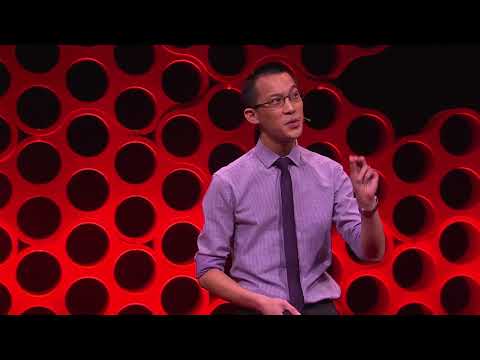


The most-viewed mathematics teacher in Australia never intended for an audience beyond his own classroom. In a cramped, quiet office at Cherrybrook Technology High School in 2012, Eddie Woo pointed a small camera at his whiteboard. His student, recovering from surgery, needed to keep up with lessons. Woo pressed record. He solved equations. He explained concepts. He uploaded the video to a new YouTube channel he called WooTube. The world pressed play.
Today, that channel boasts over 600,000 subscribers and more than 120 million views. Eddie Woo, a head mathematics teacher turned Professor of Practice at the University of Sydney, has been named Australia’s Local Hero, shortlisted among the world’s top ten teachers, and profiled as a national figure who makes algebra compelling. He is, as one profile half-joked, the “Kim Kardashian of Australian mathematics.” But the reality is far more substantive. Woo represents a quiet revolution in education, one that began not with a grand plan, but with a simple act of care for a single student.
Eddie Woo’s story begins far from the spotlight, in the small mining community of Bulli, New South Wales. The town’s population hovered around 5,000. It had three schools. This was not an obvious incubator for a future educational media star. Yet, within that environment, Woo discovered a private universe of numbers. His childhood fascination wasn’t with rote memorization, but with pattern and scale. He recalls calculating powers of two in his head, pushing past 210, past 220, all the way to 240—a number exceeding a trillion.
That early exercise was a clue. For Woo, mathematics was never a dry list of procedures to be followed. It was a language. A detective story. A way of seeing hidden structures in the world. This perspective would become the bedrock of his teaching philosophy, but it would take a profound moment of professional failure to crystallize.
"I remember sitting down and trying to work out powers of two. I got up to 2^40, which is a huge number—over a trillion. I was fascinated by how quickly things grew," Woo told Cambridge Mathematics in an interview. "That’s what maths is: it’s not just about numbers, it’s about relationships and patterns."
He entered teaching, rising to become the head mathematics teacher at Cherrybrook, the largest secondary school in New South Wales. He was skilled, knowledgeable, and by his own account, complacent. Then, he faced a class of sixteen-year-olds struggling with calculus, specifically the concept of differentiation. He knew the topic inside out. He could perform the algorithms flawlessly. Yet, his students stared back, utterly lost. The algorithms were a locked door, and he had forgotten where he’d put the key.
That lesson—the one that didn’t work—changed everything. Woo realized his deep understanding was useless if he couldn’t translate it into insight. He had prioritized procedure over meaning. He went back to the absolute foundations, asking himself not *how* to differentiate, but *why* anyone would want to in the first place. What problem did it solve? What story did it tell? This shift from answer-focused instruction to question-driven exploration became his signature. Mathematics was about creativity and resilience, not just correct results.
The genesis of WooTube is now part of Australian educational folklore. A student was facing a lengthy absence. Woo, committed to ensuring they didn’t fall behind, decided to film his lessons. The technology was rudimentary. The production values were zero. The content was pure, unfiltered classroom teaching: a teacher, a whiteboard, and a passion for his subject.
He uploaded the videos to YouTube as an unlisted repository, a digital textbook for one. Then, a curious thing happened. Students in his class began reviewing the videos to reinforce their learning. They shared them with friends at other schools. Those friends shared them further. The view count, initially in the dozens, began to climb. Strangers started leaving comments. “I finally get it!” “My teacher couldn’t explain it like this.” “Thank you from Canada!” The unlisted channel went public. WooTube was born.
"I started filming lessons for a student who was going to be away for a long time due to illness," Woo explained during a Squiz Kids Q&A. "I put them on YouTube so he could catch up. Then other students started using them, then students from other schools, and it just grew from there. It was never meant to be a big thing."
The channel’s explosive growth revealed a hungry, global appetite. Students, parents, and even other teachers were searching for clarity. They found it in Woo’s calm, methodical, and deeply empathetic presentations. He didn’t perform for the camera; he taught for the student he imagined on the other side of the lens, who was confused, frustrated, and ready to give up. His mission was to meet that student where they were.
By 2018, his impact had moved from the digital sphere into the national consciousness. He was featured on the ABC’s flagship program *Australian Story*, which chronicled his journey from classroom teacher to internet phenomenon. The same year, he was named Australia’s Local Hero as part of the Australian of the Year Awards, and he found himself in Dubai being honored as a finalist for the Global Teacher Prize. The teacher from Bulli was now a national ambassador for education, his voice carrying the weight of practical, proven experience.
Yet, even as his public profile skyrocketed, Woo maintained his core identity: a classroom teacher. He continued his duties at Cherrybrook Technology High School. He resisted the pull to become a full-time media personality. This grounding in daily practice lent him a crucial authenticity. His videos weren’t theoretical; they were direct recordings of the material he was teaching that week, tested in real time by the students in front of him. The global audience was just sitting in on a Sydney classroom.
His philosophy permeates every lesson. He connects quadratic equations to the arc of a basketball. He finds Fibonacci sequences in sunflower seeds and spiral galaxies. He frames problem-solving not as a sprint to an answer, but as an exploration, where wrong turns are just as valuable as correct ones. For Eddie Woo, mathematics is not a walled garden for the gifted few. It is a public park, and he is holding the gate open for everyone.
Eddie Woo’s success is a statistical anomaly. He built an audience of over 600,000 subscribers and garnered more than 120 million views by filming high school math lessons. No special effects. No elaborate sets. No algorithm-chasing trends. The raw numbers, however, only tell half the story. The real analysis lies in the quiet rebellion his work represents—a direct challenge to the entrenched, often joyless, pedagogy of mathematics education. Woo didn't just explain concepts; he systematically dismantled the fear surrounding them.
His transition from Head Mathematics Teacher at Cherrybrook to Professor of Practice at the University of Sydney’s Faculty of Science is a critical data point. Universities don’t create such hybrid roles for popular teachers. They create them for cultural forces. This appointment formalizes what the YouTube metrics suggest: Woo has generated a replicable methodology for engagement that academia is desperate to understand and codify. He is no longer just a source of content; he is a subject of study.
"The camera didn't change my teaching. It just captured it," Woo has stated in reflections on WooTube's origins. "I was always trying to connect with that one student in the third row who was about to give up. The lens just made that student millions of people."
Compare his approach to the standard model. Traditional math instruction often follows a grimly efficient formula: state theorem, demonstrate procedure, assign practice problems. It’s a closed loop. Woo’s lessons are open-world explorations. A video on algebra might begin with a story about planning a road trip, framing variables as unknown distances or budgets. Trigonometry becomes the secret language of architects and game designers. He doesn't just teach math; he stages mathematical interventions into everyday life.
This is where the critical perspective must engage. Is Woo’s true genius his mathematical insight, or is it his preternatural skill as a translator? He operates in the difficult space between rigorous accuracy and accessible narrative. Purists might argue this risks oversimplification. Yet, his work convincingly posits that for the vast majority of learners, the gateway to rigor is not more rigor, but more relevance. A student who cares why an equation works will endure the how far longer than one who is simply told to memorize it.
The moniker, reportedly coined in a media profile, is both a blessing and a curse. It instantly communicates a level of fame and cultural penetration that is utterly rare for an educator. It also, perhaps unintentionally, hints at the potential commodification of his persona. Woo has navigated this with notable caution. His book titles—*Woo’s Wonderful World of Maths*, *Eddie Woo’s Magical Maths*—lean into the brand, yet the content remains steadfastly pedagogical, not merely promotional.
His media expansion, like hosting ABC Me’s *Teenage Boss*, is a strategic gambit. The show uses financial literacy as a vehicle for mathematical thinking, embedding lessons within a reality-TV format. It’s smart cross-pollination. But does it dilute the focus? Can a figure championing the deep, beautiful logic of mathematics sustain authority while also playing game-show host? The evidence suggests Woo manages this tightrope by ensuring the entertainment value is always in service of the educational payload. The moment the entertainment becomes the point, the project would collapse.
"People say to me, 'You make maths fun,' but I disagree with that phrase," Woo told an education forum. "I don't make it fun. I reveal the fun that was already there. The curiosity, the puzzle, the 'aha!' moment—that's innate to mathematics. We've just buried it under layers of anxiety and speed tests."
We must also examine what WooTube is *not*. It is not a replacement for a structured curriculum or a patient teacher providing individual feedback. It is a phenomenally effective supplement, a global tutor for the stuck student at midnight. This distinction matters. The danger of any charismatic educational figure is the illusion that their presence alone solves systemic issues—underfunded schools, overworked teachers, outdated curricula. Woo’s work exposes those gaps even as it temporarily bridges them for viewers.
Strip away the cameras and the accolades. What remains is a teaching philosophy built on a series of deliberate, repeatable choices. First, Woo prioritizes narrative over notation. Every concept gets a origin story. Why did humans invent calculus? What problem were they trying to solve? He builds a historical or practical scaffold before introducing a single symbol. Second, he embraces public vulnerability. He will work through a problem slowly, verbalizing false starts. "I think I'll try this... no, that's a dead end. Let's back up." This modeling of process is more valuable than the presentation of a perfect solution.
Third, and most crucially, he redefines the student’s role. In a Woo lesson, the student is not a passive vessel to be filled, but an apprentice detective. The mathematics is the case file; the tools are theorems and formulas. This shift in agency is psychological rocket fuel. It transforms failure from a mark of incompetence into a necessary clue-gathering step.
"The most common email I get is from an adult, often a parent, who says, 'I finally understand what my child is doing, and I wish I had you when I was in school,'" Woo revealed in a university lecture. "That tells me we aren't just teaching current students. We're healing past mathematical trauma."
But is his approach scalable? Can a regular classroom teacher, without his particular charisma and now without his anonymity, replicate this magic? This is the central challenge of his University of Sydney role. Translating innate skill into teachable practice is the holy grail of teacher education. Woo’s presence there is a live experiment: can the essence of WooTube—the empathy, the storytelling, the demystification—be bottled into a syllabus for pre-service teachers?
We can look to similar figures for comparison. Sal Khan of Khan Academy pioneered the concept of global, video-based instruction, but his model uses a digital blackboard and a disembodied voice, prioritizing clarity and scope over personal connection. The late, great Jaime Escalante, immortalized in *Stand and Deliver*, shared Woo’s relentless drive and belief in students, but his stage was a single, charged classroom in East Los Angeles. Woo exists in a new hybrid space—the intimate scale of Escalante with the limitless distribution of Khan. His innovation is the maintenance of classroom intimacy at internet scale.
There is a legitimate criticism lurking here, one of aesthetic and intellectual comfort. Woo’s world is relentlessly positive, his explanations clean and reassuring. Does this risk glossing over the genuine, grinding difficulty of advanced mathematical research? Does it create a false expectation that all math will eventually yield to a neat, intuitive analogy? This is the perpetual tension in popular science and mathematics communication. The bridge to complexity must be built, but the bridge itself is not the distant, rugged shore. Woo’s work is arguably the best bridge yet constructed for secondary-level mathematics. Whether it can support the weight of a journey into higher, more abstract realms is a different question.
"My goal was never to create the next generation of PhD mathematicians," Woo has asserted. "My goal is to create the next generation of citizens who aren't afraid of numbers, who can think logically, who can spot a flawed argument in the news. If some become mathematicians, that's a bonus. But if all become informed, confident thinkers, then I've done my job."
This statement is both a magnificent defense and a strategic retreat. It brilliantly reframes success away from elite achievement and toward universal literacy. It also, perhaps, acknowledges the natural limits of his method. He is building mathematical confidence, not necessarily mathematical genius. And in an era drowning in data and bad-faith statistics, which is more urgently needed? The answer seems obvious. Eddie Woo may not be training Fields Medal winners in his videos, but he is assembling an army of people who can finally read the map of the modern world. That is not a small thing. It might be everything.
Eddie Woo’s significance is not measured in views or awards, but in a quieter, more profound metric: the recalibration of public sentiment toward an entire academic discipline. He has not simply taught mathematics; he has engaged in a long-term public relations campaign for logic, pattern, and proof. His work attacks the core assumption that math is an innate talent, revealing it instead as a language that can be learned with the right guide. This shifts the cultural conversation from “I’m not a math person” to “I haven’t found my way in yet.” The distinction is revolutionary.
His legacy is being written in real time in classrooms across Australia and beyond. Teachers report students arriving with pre-existing knowledge—and more importantly, pre-existing enthusiasm—gleaned from WooTube. He has created a common reference point, a shared pedagogical dialect. This has a democratizing effect, leveling the playing field between well-resourced and under-resourced schools. Any student with an internet connection now has access to masterful instruction. The systemic impact is tangible. The New South Wales Department of Education recognized this, appointing him as an ambassador, leveraging his credibility to advocate for curricular innovation and teacher support.
"Eddie Woo represents a paradigm shift in how we view subject expertise," observes Dr. Sarah Matthews, an educational sociologist at the University of Melbourne. "He proves that deep knowledge is most powerful when coupled with radical empathy and communication skill. He hasn't just raised math scores; he's raised the status of the teaching profession itself, showing it as a creative, intellectual, and publicly vital act."
The cultural imprint extends into popular media. His twice-featured story on *Australian Story* and his role on *Teenage Boss* signal a mainstreaming of educational content. He isn’t relegated to specialist documentaries. He is prime-time material. This normalization of an educator as a cultural figure, not just a classroom functionary, may be his most enduring contribution. He has expanded the public imagination of what a teacher can be and do.
For all his success, critical scrutiny reveals inherent limitations in the Woo model. The first is the paradox of personality. His effectiveness is deeply intertwined with his specific, calm, and encouraging demeanor. This raises a difficult question: is his method truly transferable, or is it fundamentally an extension of a unique persona? Can the “Woo approach” be systematized, or does it require a “Woo” to implement it? His work at the University of Sydney is a direct attempt to answer this, but the results are not yet in.
Secondly, the digital divide remains a stark boundary. WooTube is a powerful tool for those with reliable internet and device access. It risks creating a two-tiered system where the motivated and connected get a world-class supplement, while others are left with only their local resources. Woo’s advocacy must be paired with broader political and infrastructural action to ensure equity.
Furthermore, his focus on accessibility and joy, while vital, necessarily skirts the more austere, abstract, and frustrating frontiers of advanced mathematics. The bridge he builds is magnificent, but it leads to the foothills, not the peaks. There is a danger in implying that all mathematical challenges will yield to a clever analogy or a real-world story. Some concepts are genuinely difficult, counterintuitive, and require a tolerance for ambiguity and sustained struggle that his upbeat narrative might underprepare students for. The transition from WooTube’s welcoming world to the rigorous demands of university-level STEM courses could be a jarring one.
Finally, there is the subtle pressure of his own celebrity. Can he remain the grounded classroom teacher, attuned to individual student confusion, when he is also a professor, author, and media figure? His commitment to part-time teaching is a direct response to this, a lifeline to reality. But the tension is permanent. Every public appearance, every new book, risks pulling him further from the chalk-dust reality that made him authentic in the first place.
Looking forward, Woo’s calendar is a blend of academia and advocacy. His role as Professor of Practice involves not just mentoring future teachers but conducting formal research into the efficacy of digital storytelling in STEM education. Expect published studies bearing his name by late 2025. He continues to release weekly videos on WooTube, a relentless pace he has maintained since 2012, addressing gaps in the new national curriculum. Beyond the screen, he is a featured speaker at the International Congress on Mathematical Education in Sydney, scheduled for July 2026, where he will present on “Demystification as a Pedagogical Imperative.”
The prediction is clear: Eddie Woo will increasingly become an architect of systems, not just a practitioner within them. His influence will migrate from direct instruction to teacher formation, from creating content to shaping the frameworks that allow others to create similar magic. The test of his legacy won’t be the continued growth of his channel, but the emergence of a thousand smaller channels, run by teachers he inspired, each finding their own voice to explain why the sine curve matters, or how algebra unlocks a universe of possibility.
In that quiet office at Cherrybrook Technology High School back in 2012, a camera was pointed at a whiteboard to solve a simple problem: a missing student. The solution Eddie Woo found, however, was for millions. He proved that the most advanced piece of educational technology is not a smartboard or an app, but a human being who can look at a page of symbols and see a story waiting to be told. The camera is still rolling. The world is still watching, and finally, beginning to understand.
Your personal space to curate, organize, and share knowledge with the world.
Discover and contribute to detailed historical accounts and cultural stories. Share your knowledge and engage with enthusiasts worldwide.
Connect with others who share your interests. Create and participate in themed boards about any topic you have in mind.
Contribute your knowledge and insights. Create engaging content and participate in meaningful discussions across multiple languages.
Already have an account? Sign in here
Comments