The Evolution and Impact of Ethereum: Revolutionizing the Blockchain Landscape
Ethereum, often described as the second-largest by market capitalization after Bitcoin and one of the most influential projects in the cryptocurrency world, has had a profound impact on the blockchain and decentralized finance (DeFi) landscapes. Since its launch in 2015, Ethereum has continually evolved, serving not just as a platform for digital assets but also as a foundational technology that powers decentralized applications (DApps), digital identity verification systems, and even entire economies.
The Genesis of Ethereum
Ethereum was created by Vitalik Buterin, a Russian-Canadian programmer, and co-founder of Bitcoin Magazine. Originally intended to be a platform for executing code using a smart contract-based system, Ethereum offered a scalable solution for running decentralized applications on a secure network. Unlike Bitcoin, which primarily functions as a store of value and medium of exchange, Ethereum introduced the concept of programmable blockchain, enabling developers to build and deploy custom applications directly on the blockchain.
The initial release of Ethereum came with substantial challenges, including scalability issues and transaction confirmations that sometimes took several minutes. Over time, the Ethereum Foundation, which manages the project, has worked to address these concerns through various updates and upgrades.
The Role of Smart Contracts
A cornerstone of Ethereum's innovative design is the concept of smart contracts—self-executing contracts with the terms of the agreement directly written into code on the blockchain. These contracts operate under predetermined rules stored on the Ethereum network, allowing them to automatically execute when conditions are met without intermediaries. This feature has been a driving force behind the decentralization revolution.
Smart contracts have numerous applications beyond financial transactions. They can facilitate anything from automating insurance claims, voting systems, and supply chain management to managing digital assets such as NFTs (Non-Fungible Tokens). NFTs on Ethereum allow creators to grant ownership and provenance to unique items, such as art pieces or collectibles, ensuring authenticity and traceability.
Beyond Initial Coin Offering (ICO) and Decentralized Finance (DeFi)
In the early days, Ethereum gained notoriety for its role in facilitating Initial Coin Offerings (ICOs). ICOs allowed new blockchain projects to raise funds directly from investors by issuing tokens in exchange for ether (the native cryptocurrency of Ethereum). However, while ICOs were initially praised for their potential to democratize financial services, they also faced significant challenges, including regulatory scrutiny and security vulnerabilities that led to notable scams.
Despite these early issues, Ethereum's core strengths in smart contract capability and decentralization paved the way for the emergence of DeFi. DeFi applications built on Ethereum provide financial services such as lending, borrowing, and trading without the need for traditional banks or financial intermediaries.
Key DeFi protocols like Uniswap, Compound, and Aave have redefined the decentralized finance space, offering users direct access to a wide range of financial tools. These platforms utilize Ethereum’s gas fees mechanism to manage transaction costs and security, allowing for near-instantaneous and low-cost operations even during periods of high network activity.
Challenges and Innovations
Ethereum faces several challenges as it continues to scale and adapt to evolving market demands. One primary issue is transaction scalability, as Ethereum’s blockchain struggles to handle a large volume of transactions in a timely manner. To address this, Ethereum has implemented major upgrades such as the Casper protocol to transition to proof-of-stake consensus, reducing energy consumption and improving efficiency. Additionally, initiatives like Optimistic Rollups and Validium promise to enhance transaction throughput while maintaining security and reliability.
User experience remains another critical aspect of Ethereum’s growth. High gas fees remain a significant barrier for some users, especially in periods of network congestion. Efforts such as the development of Layer 2 solutions aim to offload transactions off the main blockchain, thereby reducing fees and increasing throughput.
The security of Ethereum is another focus area, with the ongoing transition to a proof-of-stake consensus mechanism designed to improve both security and sustainability. The move away from energy-intensive proof-of-work is not only beneficial for the environment but also aims to prevent attacks that could compromise the network.
Funding and Funding Sources
Funding for Ethereum development and community activities comes from multiple sources. Notably, Ethereum is open source and relies significantly on community contributions. However, there is also funding derived from institutional investors, venture capitalists, and non-profit organizations dedicated to advancing the blockchain ecosystem.
The Ethereum Foundation plays a crucial role in managing these funds and facilitating development. Projects like GETH (Go implementation of the Ethereum Virtual Machine) and Parity (Rust implementation) receive support for their continued development, ensuring the longevity and robustness of the Ethereum network.
Additionally, numerous grants programs and crowdfunding initiatives have emerged to support innovative projects on the Ethereum network. These programs encourage a diverse range of ideas and applications, fostering creativity and innovation within the DeFi and broader blockchain communities.
Roadmap and Future Outlook
Ethereum’s roadmap for the future is ambitious, encompassing several major updates and improvements aimed at enhancing performance, expanding functionality, and increasing user adoption. The Ethereum 2.0 upgrade, officially launched in December 2022, marked a significant milestone by transitioning parts of the network to a proof-of-stake model. Additional components of ETH 2.0 include shard chains and increased security features, all designed to boost transaction processing capacity.
Much of the ongoing work revolves around scaling solutions, with Layer 2 protocols like Polygon (formerly Matic Network) playing a vital role in offloading transaction volumes from the mainchain. These Layer 2 networks offer solutions that maintain the decentralized spirit of Ethereum while providing users with faster and cheaper transaction capabilities.
Looking ahead, Ethereum plans to address long-standing issues such as energy efficiency and environmental impact. The continued evolution of proof-of-stake and other innovative consensus mechanisms will play a crucial role in achieving these goals. Moreover, ethical considerations regarding privacy, data protection, and accessibility will increasingly shape future developments on the platform.
The broader outlook for Ethereum is one of continued growth and transformation. As more businesses, governments, and individuals adopt blockchain technology, the role of Ethereum as a leading platform for innovation and development is expected to expand further. With a vibrant community and strong commitment to ongoing improvement, Ethereum stands poised to drive transformative change across multiple industries and sectors.
Decentralized Applications (DApps) and the Future of Web3
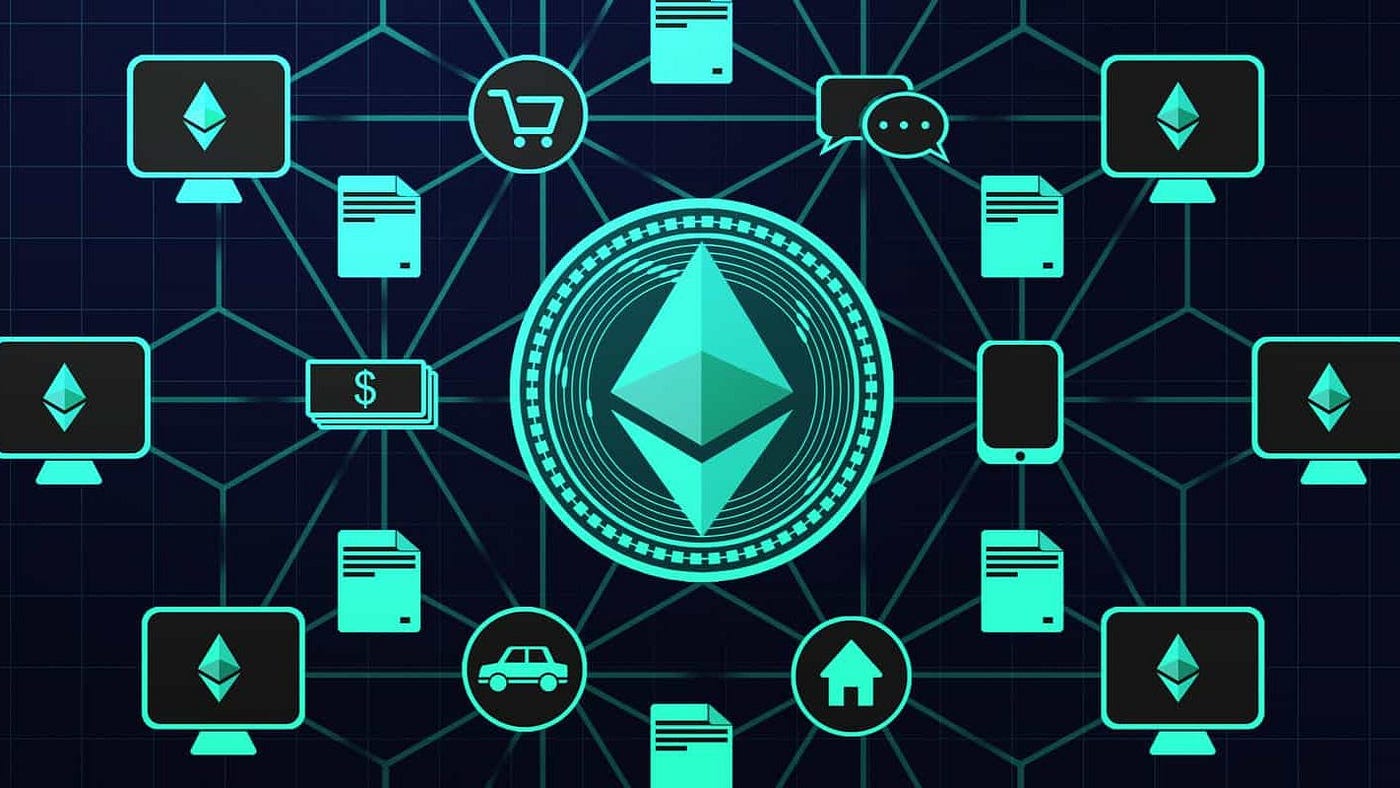
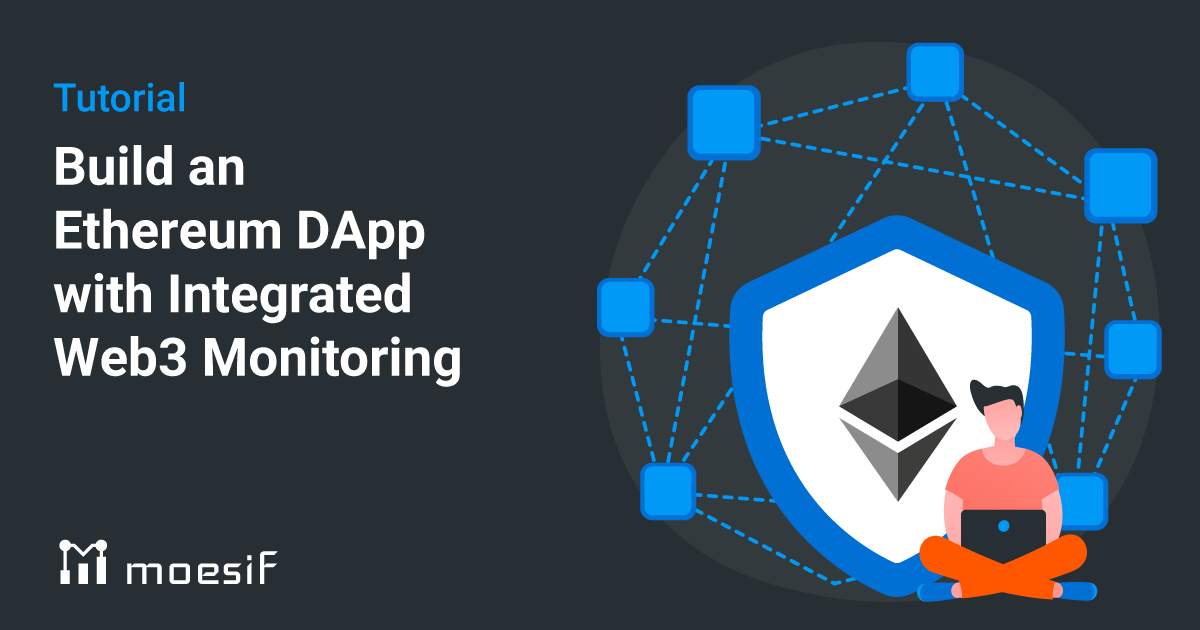
The concept of decentralized applications (DApps) has emerged as a cornerstone of Ethereum's potential to transform industries and transform the internet itself. DApps, built on blockchain technology, operate without a central authority and are transparent, secure, and censorship-resistant. By leveraging smart contracts, DApps can automate processes, store data, and execute actions in a secure and reliable manner.
One of the most notable DApps on Ethereum is Augur, a decentralized oracle and prediction market platform. Augur allows users to place bets on the outcome of future events, providing insights into market sentiments and trends. Another prominent DApp, MakerDAO, is a decentralized autonomous organization (DAO) that enables users to collateralize assets to mint stablecoins, such as DAI. This system ensures that collateral can back the value of the stablecoin, reducing risk and enhancing trust among users.
The development and use of DApps on Ethereum have sparked a broader discussion about the future of the internet, often referred to as Web3. Web3 refers to a vision where data, value, and control are distributed rather than controlled by a central entity. This concept challenges traditional models of the internet, offering a more equitable and decentralized infrastructure.
Another significant aspect of Web3 is the integration of decentralized identity verification systems. These systems provide a secure and transparent way for individuals to manage their digital identities. Projects like uPort and Civic are working on solutions that use Ethereum to verify and manage user identities without the need for centralized authorities. This not only enhances privacy but also simplifies the process of authentication for applications and services.
Challenges and Regulatory Considerations
While DApps and Web3 offer exciting opportunities, they also face significant challenges, including regulatory scrutiny and legal frameworks. Governments and financial institutions are grappling with the implications of decentralized systems, recognizing both their potential benefits and risks. In many jurisdictions, DApps and related technologies are subject to varying degrees of regulation, which can impact their adoption and usability.
Regulatory challenges are particularly evident in the financial sector, where DApps and DeFi platforms must navigate complex legal landscapes. For instance, the Securities and Exchange Commission (SEC) in the United States has taken a firm stance on regulating certain DeFi projects as securities, leading to a significant shift in the industry. These regulations, while necessary, can also stifle innovation and limit user access in some regions.
To address these challenges, industry players and regulators are collaborating to develop frameworks that balance innovation and security. Initiatives like self-regulatory organizations (SROs) and industry consortia are emerging to provide guidelines and best practices for developers and users. These collaborative efforts aim to create a more harmonious ecosystem where DApps and DeFi can thrive while adhering to legal and ethical standards.
Environmental Impact and Sustainability
The environmental impact of blockchain technology, particularly Ethereum’s proof-of-work consensus mechanism, has become a significant concern. The energy-intensive process of securing the network has led to extensive criticism regarding its carbon footprint. While proof-of-stake (PoS) consensus mechanisms offer a more sustainable approach, the transition from proof-of-work (PoW) to PoS has not been without controversy.
The Ethereum community and developers are exploring various solutions to reduce the environmental impact of the network. One promising approach is the concept of "sharding," which involves dividing the Ethereum blockchain into smaller, interconnected segments called "shards." Each shard can handle a portion of the network's transactions, significantly increasing throughput while reducing the energy consumption required to secure the entire network.
Another solution is the integration of external proof-of-stake validators, which allow validators to securely and efficiently verify transactions without relying on expensive mining hardware. These solutions aim to strike a balance between security, scalability, and environmental sustainability, ensuring that Ethereum can continue to support a wide range of applications while minimizing its ecological footprint.
Impact on Industries and Markets
The impact of Ethereum and DApps extends well beyond the blockchain community, affecting various industries and financial markets. In the real estate sector, smart contracts can facilitate property transactions, automating the process of verifying ownership, registering transfers, and managing contracts. This not only reduces the need for intermediaries but also provides a more transparent and efficient system for stakeholders.
Supply chain management stands to benefit greatly from decentralized technologies. By incorporating smart contracts and blockchain-based systems, supply chain operations can become more transparent and secure. This helps in tracking the movement of goods, ensuring authenticity, and preventing counterfeiting. Companies like Provenance and VeChain are already implementing such solutions, enhancing trust and reducing fraud in the global supply chain.
The impact on financial markets is particularly pronounced. Beyond DeFi, Ethereum supports the issuance and trading of digital assets, including securities, tokens, and futures. This opens up new opportunities for investors to access markets that were previously off-limits due to regulatory barriers. Digital asset exchanges and marketplaces built on Ethereum provide a platform for trading these assets, facilitating liquidity and market participation.
Conclusion
Ethereum has emerged as a pivotal force in the blockchain universe, offering a platform for decentralized innovation and transformative applications. From enabling DApps and DeFi to revolutionizing industries and markets, Ethereum’s potential is vast and ever-evolving. As the platform continues to address challenges and integrate new technologies, it holds the promise of shaping a more decentralized and equitable future.
While regulatory hurdles, environmental concerns, and technological limitations persist, the momentum behind Ethereum and its ecosystem remains strong. With ongoing developments and collaborations, Ethereum is likely to become an integral part of the global digital infrastructure, driving change and creating new opportunities for individuals and organizations alike.
Community and Governance Structures
At the heart of Ethereum's success lies its active and engaged community. The decentralized nature of the project means that governance decisions often involve broad participation from stakeholders, rather than being made by a single entity. This democratic structure is achieved through various mechanisms, including proposals on decentralized platforms such as Augur and MakerDAO.
Ethereum’s governance is currently managed through on-chain and off-chain channels. On-chain proposals refer to the process where users can make changes to the protocol through formal proposals that require sufficient support to pass. These proposals are voted on by token holders via special smart contracts, ensuring transparency and inclusivity in decision-making.
Off-chain governance, on the other hand, involves discussions and debates on forums like Ethereum Stack Exchange and Ethereum Foundation’s GitHub repository. These discussions guide future developments and help shape the direction of the ecosystem. The community plays a crucial role in identifying and prioritizing the needs of the network, contributing to its continuous evolution.
Partnerships and Collaboration
Ethereum has formed numerous partnerships and collaborations to enhance its ecosystem and reach new markets. Working closely with tech giants, startups, and academic institutions, Ethereum has expanded its influence in various sectors. Some notable partnerships include:
- Geth and Parity: Ethereum clients developed by Geth and Parity offer different programming interfaces and optimizations, catering to diverse developer communities.
- Polygon (formerly Matic Network): Polygon acts as a Layer 2 solution, increasing Ethereum’s transaction throughput while maintaining security and decentralized characteristics. This partnership aims to solve scalability issues and reduce transaction fees.
- Microsoft: Microsoft partners with Ethereum to promote blockchain adoption in enterprise environments. This collaboration brings together Microsoft’s cloud services and Ethereum’s decentralized technology to enhance business productivity and security.
- Nasdaq: Nasdaq and Ethereum have collaborated to explore how blockchain can improve financial markets and ensure transparency and efficiency. Their joint efforts have resulted in pilot projects and workshops focused on integrating Ethereum into stock exchanges.
These partnerships reflect Ethereum’s strategy of fostering a robust and interconnected ecosystem that supports a wide range of applications and use cases.
Challenges Ahead: Scaling and Security
As Ethereum continues to grow in popularity and adoption, scaling and security remain critical challenges. The network’s ability to handle large volumes of transactions efficiently and securely is essential for widespread acceptance and integration into mainstream industries.
Scalability concerns have driven the development of various Layer 2 solutions, such as state channels, rollups, and optimistic rollups. These technologies allow for the offloading of transactions and computations to secondary layers, while maintaining the security guarantees of the main Ethereum blockchain. By reducing contention on the mainchain, Layer 2 solutions aim to drastically lower transaction fees and enhance user experience.
Security is another key issue, particularly given the increasing value of assets stored and transacted on the Ethereum network. Ensuring the robustness of smart contracts and protecting against vulnerabilities is paramount. Ongoing efforts include rigorous audits, bug bounties, and the establishment of safety mechanisms to mitigate risks.
The emergence of zk-SNARKs (Zero-Knowledge Succinct Non-Absurd Arguments of Knowledge) presents a promising approach to enhancing security and privacy. These cryptographic proofs allow for the verification of transactions without revealing sensitive information, thereby enhancing the confidentiality of interactions on the blockchain.
Future Prospects: Quantum Computing and Beyond
The horizon for Ethereum continues to expand as researchers and developers explore advanced cryptographic techniques and quantum computing. Quantum computing has the potential to break current cryptographic schemes, necessitating the development of post-quantum cryptographic protocols. Ethereum is actively involved in researching and implementing these solutions to ensure the network remains secure in the face of future computational threats.
In addition to cryptography, Ethereum is exploring the integration of machine learning and artificial intelligence (AI) to enhance its functionality. AI can be leveraged to automate complex processes, improve smart contract performance, and enable more sophisticated applications. For example, AI-driven analytics can provide valuable insights into market trends and user behavior, helping to optimize DApp performance and user engagement.
Conclusion
Ethereum has come a long way since its inception, evolving from a simple platform to a multifaceted ecosystem with a broad range of uses and applications. From decentralized finance and smart contracts to digital identities and supply chain management, Ethereum continues to push the boundaries of what is possible with blockchain technology.
Despite facing challenges such as regulatory hurdles, environmental impacts, and scalability issues, Ethereum shows no signs of slowing down. Its resilient community, ongoing innovations, and strategic partnerships signal a bright future for the platform. As emerging technologies like quantum computing and AI continue to integrate with blockchain, Ethereum is positioned to play a central role in shaping the landscape of decentralized applications and web3.
As the world increasingly seeks more decentralized and transparent systems, Ethereum remains a beacon of innovation, driving the next wave of technological and societal progress.




















Comments