Roger Penrose: A Pioneering Mind in Mathematics and Physics
Introduction
British mathematician and physicist Sir Roger Penrose is a towering figure in the realm of theoretical science. Born on August 30, 1931, in Colchester, England, Penrose has made groundbreaking contributions to the fields of cosmology, general relativity, and quantum mechanics. His work often blends complex mathematical theory with profound physical insights, making him a revered and influential scientist.
Penrose's journey into scientific research began at the young age of 16 when he enrolled as a student at University College, London. He quickly demonstrated a prodigious talent for mathematics, and in 1955, he earned a first-class honours degree in mathematics at the same university. His academic pursuits were further enhanced by his fascination with the visual arts, an interest he developed through drawing. This duality of mathematical rigor and artistic sensibility would become hallmarks of his scientific approach, allowing him to conceptualize and articulate complex ideas in innovative ways.
Following his undergraduate studies, Penrose continued his academic journey at St John's College, Cambridge. It was here that he began to delve into the complexities of general relativity and quantum physics. His PhD research, supervised by renowned physicist Paul Dirac, focused on the theoretical aspects of black holes and the structure of spacetime. This period marked the beginning of his lifelong exploration into the nature of the universe and the intricate relationships between mathematics and physics.
Early Contributions to Physics
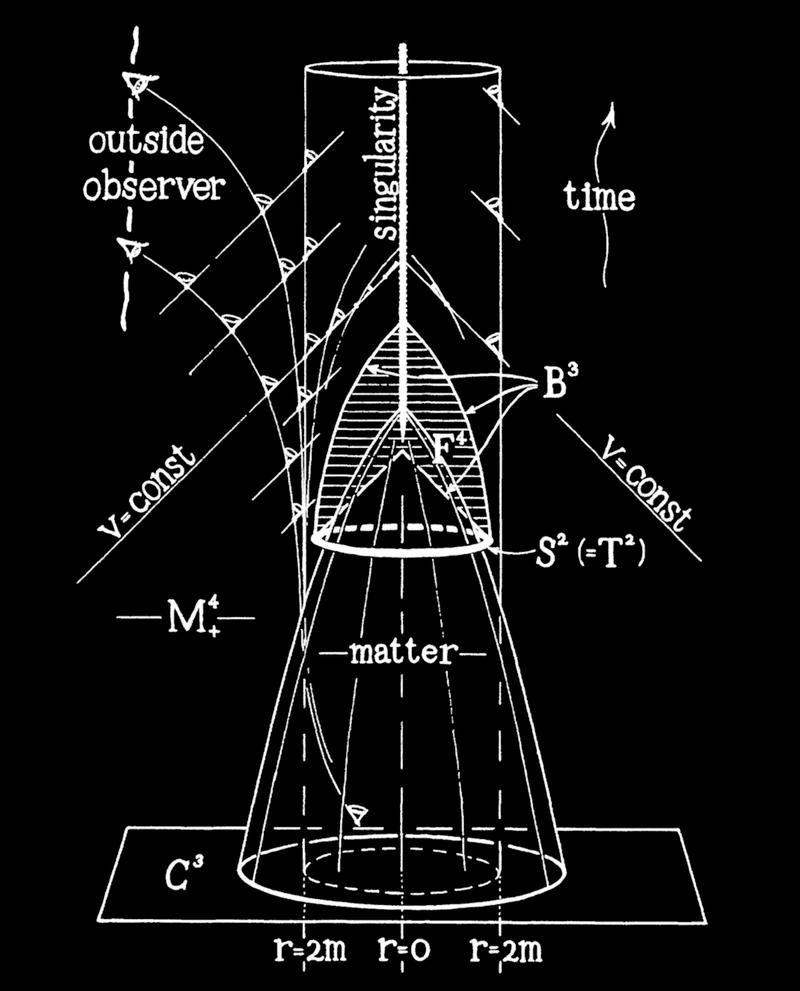
Penrose's early work in physics began to take shape in the late 1950s and early 1960s. One of his seminal contributions was his doctoral thesis, which introduced the concept of a singularity in gravitational collapse, now known as the Penrose-Hawking singularity theorem. This theorem provided a rigorous mathematical framework that helped to understand the conditions under which singularities could form in the universe, leading to the formation of black holes. The theorem also contributed to the development of the modern theory of general relativity.
Another notable achievement during this period was the Penrose diagram, a graphical representation that simplifies the description of the causal structure of spacetime. This tool has become an indispensable part of theoretical cosmology and has significantly aided in elucidating the intricate dynamics of space and time. The Penrose diagram's utility extends beyond relativity, finding applications in quantum field theory and high-energy physics as well.
Mathematical Innovations and Theorems
Penrose's contributions to mathematical theory were numerous and far-reaching. One of his most significant contributions was the introduction of twistor theory. Twistor theory is a geometric approach to solving problems in quantum field theory and general relativity. It provides an alternative perspective to four-dimensional spacetime by mapping it to a six-dimensional space, known as twistor space. This theory has been instrumental in the development of new mathematical techniques and has opened up new avenues for understanding the structure of space and time.
Another pivotal contribution was the Penrose diagram of the Schwarzschild spacetime, which provided a clearer picture of the properties of black holes. This work helped to resolve some of the longstanding controversies in the field and provided a solid basis for further research. Penrose's work on twistor theory and the Penrose diagram of Schwarzschild spacetime continue to be relevant in contemporary research, influencing the direction of modern theoretical physics.
Philosophical and Artistic Influences
Penrose's approach to science is deeply intertwined with his philosophical and artistic interests. His fascination with the visual arts has had a profound influence on his scientific endeavors. For instance, his development of the Penrose tiling, a set of aperiodic tilings, is a perfect example of how his artistic and scientific interests complement each other. Penrose tiling is a pattern of tiles that can cover a plane but in a non-repeating way, and it has found applications in various fields, from crystallography to computer graphics.
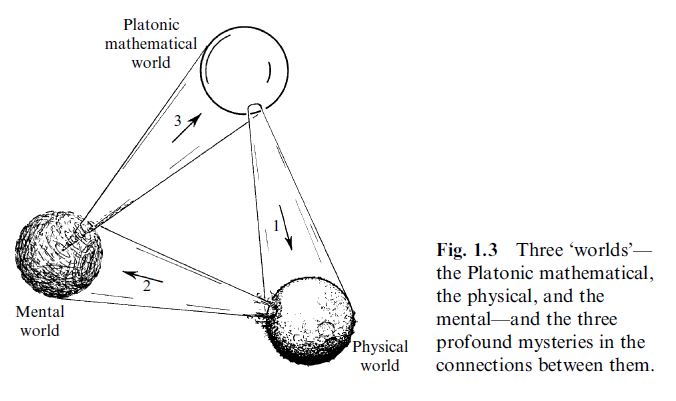
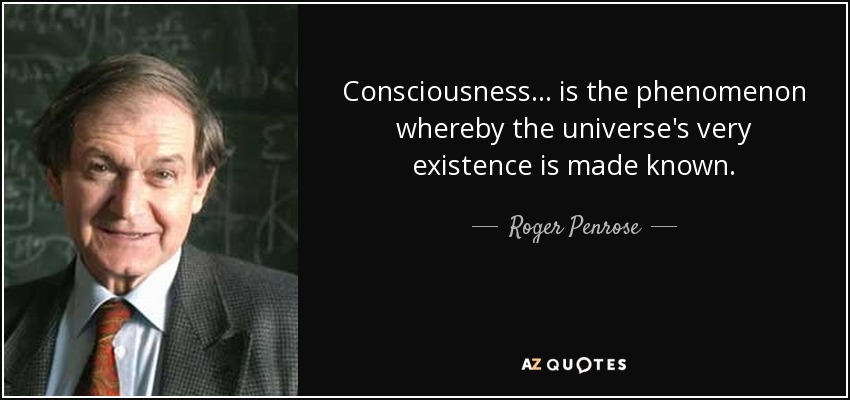
Penrose's tiling not only showcases his ability to blend art and mathematics but also highlights his belief in the deep connection between beauty and scientific truth. This connection is evident in his book "The Emperor's New Mind," where he explores the relationship between computational processes and human consciousness. In this work, Penrose argues that the human brain transcends computational processes and that there are fundamental aspects of consciousness that are not algorithmic. This philosophical stance has sparked considerable debate in the fields of neuroscience and artificial intelligence.
In addition to his groundbreaking mathematical and scientific contributions, Penrose is also known for his work in popularizing science. He has written several books and articles that are aimed at a general audience, making complex scientific ideas accessible to the broader public. This commitment to education and outreach has made him a well-respected figure in the scientific community and beyond.
Legacy and Impact
Roger Penrose's legacy extends far beyond his individual contributions to science. He has inspired a generation of scientists and mathematicians, and his interdisciplinary approach has opened up new avenues of research. The Penrose-Hawking singularity theorem, twistor theory, and the Penrose tiling are just a few examples of how his work has shaped the trajectory of modern physics and mathematics.
Penrose's contributions to science are also marked by his ability to bridge the gap between abstract mathematical concepts and real-world phenomena. His work on black holes, for instance, not only advanced theoretical knowledge but also influenced practical applications in astrophysics and cosmology. Moreover, his philosophical explorations into the nature of consciousness have sparked important discussions in the field of neuroscience, highlighting the interdisciplinary nature of his research.
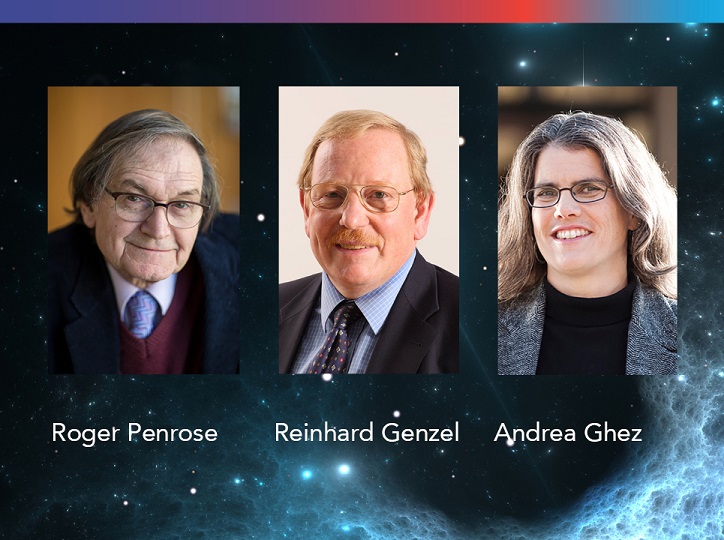
As a recipient of numerous awards and honors, including the Nobel Prize in Physics in 2020 (awarded to Penrose and Reinhard Genzel for their discoveries about active galactic nuclei), Penrose stands as a testament to the importance of rigorous mathematical and physical inquiry in understanding the universe. His work continues to influence and inspire, making him one of the most influential scientists of the 20th and early 21st centuries.
In the next section, we will delve deeper into the specific contributions Penrose made to cosmology and discuss the significance of his work in the context of current scientific research.
Contributions to Cosmology
The Penrose Singularity Theorem and Black Hole Formation
Perhaps one of Penrose's most celebrated contributions to cosmology is his development of the Penrose singularity theorem, published in collaboration with Stephen Hawking in 1970. The theorem states that under certain reasonable physical conditions, any physically realistic Model of a collapsing star will result in the formation of a singularity—a region of spacetime where the curvature becomes infinite—and ultimately a black hole.
This revolutionary insight reshaped the understanding of black holes in astrophysics. Prior to Penrose's work, while black holes were theorized, their existence was still speculative. The singularity theorem provided mathematical rigor to the concept, offering a clear prediction that black holes are inevitable outcomes of gravitational collapse in sufficiently dense stars. Consequently, Penrose’s work has had a profound impact on the study of general relativity and cosmology, solidifying the theoretical framework for black hole physics.
The Cosmic Censorship Hypothesis
Beyond the mathematical proofs, Penrose proposed the Cosmic Censorship Hypothesis (CCH) in the 1960s. This hypothesis posits that any singularity resulting from gravitational collapse is typically hidden behind event horizons and thus not easily observable from outside the system. In simpler terms, it suggests that cosmic singularities remain concealed from our direct view. Although not proven, the CCH remains a central conjecture in the field, guiding much of the contemporary research into the nature of black holes and singularities.
The Role of Spacetime Singularities
The concept of spacetime singularities has been a cornerstone of Penrose's theories. These points in spacetime where the curvature becomes infinite pose significant challenges for our understanding of the physical laws that govern the universe. Penrose's rigorous analysis of these singularities has led to deeper insights into the behavior of spacetime geometry near black holes.
A particularly notable application of Penrose’s theory is the understanding of the singularity at the center of a rotating black hole, known as a Kerr black hole. Penrose's work on these black holes has provided crucial insights into the extreme conditions that exist inside them, contributing to our understanding of rotational effects on gravity and spacetime curvature.
Quantum Mechanics and the Weyl Curvature Hypothesis
Penrose’s work in quantum mechanics is also significant. In his book "The Road to Reality," he delves into the connections between quantum theory and general relativity, suggesting that the ultimate resolution of the quantum state of the universe should reveal a form of symmetry in the Weyl curvature tensor. This tensor describes the pure gravitational waves that are not traceless and is central to many aspects of spacetime structure.
The Weyl Curvature Hypothesis (WCH)
The Weyl Curvature Hypothesis proposes that, at the very beginning of the universe, the Weyl curvature should vanish, implying a state of minimum entropy and maximum homogeneity. According to this hypothesis, the initial vanishing of Weyl curvature would indicate that the universe started in a highly symmetrical state, which gradually evolved into its observed complex structures.
The WCH is closely tied to the notion of a conformally flat initial condition, which suggests a smooth and symmetric Big Bang. Although speculative, the hypothesis remains an interesting point of research and serves as a unifying principle in theoretical cosmology, attempting to reconcile classical general relativity with quantum mechanics.
Theoretical Physics and Mathematical Models
Penrose's contributions extend beyond purely observational cosmology, venturing into the realm of theoretical physics and mathematical modeling. These models have provided new ways to address some of the most intractable problems in physics.
The Twistor Theory
One of Penrose's most innovative contributions to physics is his development of twistor theory. In the 1960s and 1970s, Penrose worked on transforming the complex equations of quantum field theory into a more manageable form using a geometric framework known as twistor space. This theory allows for a new way of describing spacetime events, providing a powerful tool for understanding the propagation of massless particles like photons and gravitons.
Conformal Geometry
Penrose's work also includes the application of conformal geometry to solve problems in general relativity. Conformal geometry deals with transformations that preserve angles but not necessarily lengths, making it particularly useful in studying the large-scale structure of spacetime. Penrose has used this approach to develop mETHods for analyzing the asymptotic structure of spacetime near infinity, which has implications for understanding the behavior of gravitational waves and cosmic censorship.
The Spinor Formalism
Penrose’s spinorial formalism is another significant development in theoretical physics. Spinor spaces provide a natural language for describing spacetime rotations and symmetries, making them invaluable in formulating equations in relativity and quantum mechanics. Penrose’s spinor calculus has facilitated the study of spinor fields and their interactions, contributing to the development of spin foam models, which are used in modern approaches to quantum gravity.
The combination of these theoretical tools has not only advanced the field of mathematical physics but has also provided new insights into cosmological phenomena, gravitational collapse, and quantum field theory. Penrose’s work has shown that by combining abstract mathematical concepts with physical intuition, profound discoveries can be made in understanding the fundamental nature of the universe.
Publications and Legacy
Penrose’s work has been widely disseminated through numerous publications and lectures. Some of his most influential books include "The Emperor’s New Mind" and "The Road to Reality." These works not only provide deep insights into cutting-edge scientific ideas but also communicate the beauty and complexity of theoretical physics to a broader audience.
"The Emperor's New Mind" explores the relationship between computation and human thought, and whether the human mind operates fundamentally differently from a Turing machine. Penrose argues that consciousness is non-algorithmic and cannot be fully captured by computational processes. This provocative stance has sparked extensive debate in philosophy and artificial intelligence, highlighting Penrose’s role in questioning the limits of conventional scientific approaches.
"The Road to Reality" is a monumental text covering the mathematical foundations of modern physics. Written for a more general audience, it serves as both an introduction to and a comprehensive treatise on the subject. This book has become a standard reference for students and professionals alike, reflecting Penrose’s ability to distill complex ideas into accessible and engaging narratives.
In addition to his scholarly works, Penrose is known for delivering lectures and giving public talks. His talks often focus on the interplay between mathematics and physics, emphasizing the need for a holistic approach to understanding the universe. Through his various publications and public appearances, Penrose has played a crucial role in popularizing scientific thinking and has inspired countless students and scientists.
Recognition and Awards
Penrose’s contributions to science have been widely recognized and honored over the years. Several awards and honors highlight his significant impact:
- Nobel Prize in Physics (2020): Alongside Reinhard Genzel, Penrose was awarded the Nobel Prize in Physics for the discovery of the first black hole candidate and for providing a robust mathematical framework for black hole formation, thus validating his singularity theorems and the Penrose-Hawking singularity theorem.
- Wolf Prize in Physics: In 1988, Penrose received the Wolf Prize in Physics for his work on black holes and singularities in the general theory of relativity.
- Royal Medal: In 1985, Penrose was awarded the Royal Medal of the Royal Society for his distinguished contribution to mathematics and physics, specifically for his work on twistors and the analysis of singularities in black holes.
These accolades underscore the transformative nature of Penrose’s work and the respect he commands within the scientific community. The impact of his research continues to Ripple through the fields of mathematics, physics, and cosmology, ensuring that his name will remain synonymous with groundbreaking scientific inquiry.
Current Research and Future Directions
Twistor Theory and Modern Physics
Penrose’s twistor theory continues to influence current research in theoretical physics. While it initially seemed to be a niche approach, recent advancements have brought attention back to twistor theory due to its potential to unify different areas of physics, particularly quantum field theory and general relativity. Current efforts aim to apply twistor methods to tackle long-standing problems such as the quantization of gravity and the unification of general relativity with quantum mechanics.
Recent developments in string theory and loop quantum gravity have also seen the application of twistor ideas, leading to new conjectures and models. Penrose himself has been involved in these areas, contributing to the development of so-called “twistor diagrams” that offer a novel perspective on scattering amplitudes in Yang-Mills theory. This work has not only advanced our understanding of gauge theories but also provided new insights into the structure of spacetime at the Planck scale.
The Quantum Interpretation and Consciousness
Penrose’s work in the intersection of quantum mechanics and consciousness continues to be a focal point of his current research. In addition to "The Emperor’s New Mind," Penrose's latest book, "Fashion Faith Fashion: The Perennial Philosophy" (co-authored with Stuart Hameroff), explores the idea that consciousness arises from quantum gravity effects in the brain's microtubules. This proposal, often referred to as Orchestrated Objective Reduction (Orch-OR), suggests that quantum coherence and quantum computing capabilities of microtubules could play a role in the phenomenon of consciousness. While controversial, this hypothesis remains a topic of active debate and experimental investigation.
Penrose and Hameroff propose that quantum effects in the brain can maintain quantum states over macroscopic distances via an objective reduction process, mediated by the Planck-scale granularities of spacetime. This mechanism, if validated, could explain why consciousness is non-computational and why it might not be reducible to mere algorithms or classical information processing. This interdisciplinary approach combines insights from quantum physics, neuroscience, and philosophy, offering a unique perspective on the nature of conscious experience.
The Search for Gravitational Waves and Cosmological Dynamics
Penrose’s contributions to the detection and interpretation of gravitational waves have also been significant. He has been involved in the theoretical underpinnings of gravitational wave astronomy, using his expertise in general relativity to help predict and interpret the signals detected by the LIGO and Virgo collaborations. His work has helped to refine models of compact object coalescence, such as neutron star mergers, and to better understand their observational signatures.
In recent years, Penrose has collaborated with experimentalists to propose new methods for detecting gravitational waves and to refine our understanding of the cosmological dynamics underlying these events. For instance, his work on conformal cyclic cosmology (CCC) offers a novel vision of the universe’s cyclic nature. In CCC, Penrose proposes that the universe goes through a series of epochs, each ending with a big crunch singularity followed by a new big bang. This cyclic scenario challenges traditional Big Bang cosmology and opens up new avenues for cosmological research.
Penrose's proposals have led to discussions around the possibility of observational tests, such as the search for evidence of conformal symmetries in the cosmic microwave background radiation. While these ideas remain speculative, they continue to inspire theoretical debates and guide future observational efforts in gravitational physics and cosmology.
Impact on Education and Outreach
Beyond his research, Penrose has been a prolific educator and writer, making complex scientific ideas accessible to a wide audience. His books, lectures, and public engagements have played a critical role in inspiring the next generation of scientists and mathematicians.
Lectures and Seminars
Penrose has delivered numerous public lectures and seminars that explore both the technical details of his research and the broader philosophical and cultural implications of scientific progress. These talks often cover topics ranging from the mathematical foundations of modern physics to the mysteries of the universe’s origins and ends. By breaking down complex ideas into understandable concepts, Penrose has helped demystify the frontiers of science for non-specialists.
Schools and Seminars
His involvement in educational initiatives has extended to the creation and support of schools dedicated to training the next generation of physicists and mathematicians. For instance, the Centre of Theoretical Sciences at the University of Edinburgh, where Penrose had a visiting position, has been instrumental in fostering a collaborative and innovative environment for cutting-edge research.
The Penrose Lectures
The annual Penrose lectures at the Isaac Newton Institute, hosted by the University of Cambridge, aim to bring world-class researchers to the forefront of current scientific issues. These lectures are not only valuable for their content but also for the inspiration they provide to young researchers and scholars. Penrose’s participation in these lectures underscores his commitment to the dissemination of knowledge and the promotion of interdisciplinary dialogue.
Conclusion
Roger Penrose’s legacy is one of relentless innovation and profound impact on our understanding of the universe. From his early contributions to the mathematical foundations of general relativity to his current work on quantum gravity and cosmology, Penrose has consistently pushed the boundaries of what is known. His interdisciplinary approach to science, blending mathematical rigor with philosophical and artistic insights, has enriched our understanding of the universe and its mysteries.
As we continue to explore the frontiers of theoretical physics and cosmology, Penrose’s ideas and methodologies will undoubtedly continue to guide and inspire future generations of scientists. Whether through his mathematical breakthroughs or his philosophical explorations, Penrose’s work remains a vital part of the ongoing quest to comprehend the deepest questions of the universe.
Through his research, his books, and his enduring engagement with the scientific community, Penrose has not only advanced the frontiers of theoretical science but has also made these frontiers more accessible and intellectually engaging. His contributions ensure that his name will be forever associated with the most significant advances in modern science.
As we look to the future, the influence of Penrose’s work will likely continue to shape the trajectory of theoretical physics and cosmology. His legacy serves as a reminder of the power of interdisciplinary inquiry, the importance of mathematical precision, and the profound impact of a curious and visionary mind.










Comments