Michael Faraday: The Unsung Hero of Electricity
Michael Faraday is one of the most influential scientists of the nineteenth century, known for his pioneering contributions to the fields of electromagnetism and electrochemistry. Despite coming from a humble background, Faraday's relentless curiosity and dedication to scientific inquiry propelled him to the forefront of scientific discovery. This article delves into the life and work of Michael Faraday, exploring the impact of his contributions on the modern world and the lessons that can be drawn from his legacy.
Early Life and Education
Michael Faraday was born on September 22, 1791, in Newington Butts, Surrey, England. His father, James Faraday, was a blacksmith, and their modest home provided Faraday with a stable environment to grow and develop his talents. Like many children of his time, Michael received little formal education. However, he had a natural curiosity for science and would often spend his free time reading scientific treatises and conducting simple experiments.
Apprenticeship and Early Career
Faraday’s formal scientific training began when he entered the laboratory of bookbinder and publisher George Rocque in 1805. It was here that his skills in reading and copywriting thrived, but his true passion for science was ignited. In 1812, a turning point came when Faraday applied to work in the laboratory of famous chemist Hans Christian Ørsted, an application he wrote by candlelight and submitted the morning after his interview.
In 1813, Faraday began an apprenticeship with Sir Humphry Davy, the newly appointed President of the Royal Society. This was a significant opportunity for Faraday, providing him with exposure to cutting-edge scientific research and access to a wide array of chemicals and experimental equipment. During his time as an apprentice, Faraday was responsible for recording the results of Davy's experiments. He meticulously documented every detail, and his notes would later prove invaluable.
Experiments and Scientific Discoveries
One of the most notable experiments conducted by Faraday was his study of electrolysis. In a series of experiments reported in 1821, Faraday discovered that the amount of a substance produced at an electrode is directly proportional to the quantity of electricity passed through the electrolyte. This observation, known as Faraday's laws of electrolysis, laid the foundation for the modern understanding of electrochemistry and paved the way for numerous advancements in the field.
Faraday’s work with electromagnetism was equally influential. In 1831, he made the groundbreaking discovery that a changing electromagnetic field can induce an electric current in a conductor. This phenomenon, known as electromagnetic induction, directly led to the development of the electric generator and transformer. Faraday demonstrated this concept in his famous "Faraday disk," which produced an electric current as a result of a rotating copper disk placed in a magnetic field. This experiment not only confirmed the phenomenon but also set the stage for the widespread application of electricity in the coming decades.
The Influence of Michael Faraday
The impact of Michael Faraday's work cannot be overstated. His discoveries in electromagnetism and electrochemistry have had a profound effect on modern technology. The principles he elucidated are fundamental to the operation of everyday devices such as generators, transformers, and even the smartphones we use today. Faraday's research has been foundational for the development of electric power systems, communication technologies, and even medical advancements involving electrical stimulation.
Awards and Recognition
Despite his significant contributions, Faraday did not receive the recognition typically afforded to scientists of his era. He was elected a Fellow of the Royal Society in 1824 and later served as its President from 1848 until his death in 1869. He was also awarded the Copley Medal, one of the highest honors in the field of science, in 1831 for his discovery of electromagnetism. However, his lack of formal education and his working-class background often kept him outside the academic establishment, which was dominated by the upper classes and the aristocracy.
Legacy and Modern Relevance
The legacy of Michael Faraday extends far beyond his scientific discoveries. He embodies the spirit of persistent inquiry and the belief that knowledge can be pursued without the constraints of traditional education. Faraday’s life story is a testament to the power of perseverance and the importance of curiosity in scientific inquiry.
Faraday’s work continues to influence modern science and technology. His principles underpin the design of many contemporary devices, from electric vehicles to renewable energy systems. His legacy is not only in his contributions to science but also in the inspiration he provides to those who pursue scientific endeavors, demonstrating that anyone can contribute significantly to the advancement of human knowledge with passion and determination.
In conclusion, Michael Faraday’s life and work represent a blend of innovation, perseverance, and dedication. His contributions to the understanding of electromagnetism and electrochemistry have had a lasting impact on the world, and his legacy serves as an inspirational guide for future generations of scientists and researchers.
Education and Early Work
Although Faraday's formal education was limited, he had a voracious appetite for learning. In 1816, he was fortunate enough to secure the position as director of the Royal Institution's laboratory, which allowed him to delve deeper into scientific research. It was here that Faraday's career truly began to flourish, and he would become a renowned experimental scientist.
During his tenure at the Royal Institution, Faraday conducted numerous experiments and published his findings. His work often focused on chemical compounds and their properties, and he made significant contributions to the field of electrochemistry. One of his most noted experiments was the electrolysis of potassium and sodium compounds, which led to the discovery of the elements sodium and potassium. This work was pivotal in the development of the periodic table and our understanding of chemical elements.
Public Lectures and Lectures on Chemistry
Faraday was also an exceptional communicator, and his ability to deliver engaging lectures was legendary. In 1826, he began the famous "Christmas Lectures," a series of lectures designed to educate the general public about recent discoveries in science. These lectures were not just entertaining but also highly educational, and they quickly gained a significant following. Today, the Christmas Lectures are still held at the Royal Institution and continue to inspire young minds to pursue scientific inquiry.
Faraday's most famous set of lectures is the "Faraday Lecture," which was given to the British Association for the Advancement of Science. In these talks, Faraday presented a series of lectures titled "Papers on the Chemical History of Combustion and Its Relation to Atmospheric Changes" in 1839. These lectures were a testament to his profound understanding of chemistry and how it relates to the environment and the world around us.
Challenging the Establishment
Faraday's work frequently challenged the scientific establishment. In the early 1800s, the prevailing theories on electricity and magnetism were often based on vortices and other somewhat vague concepts. Faraday, however, approached these topics with rigorous experiments and precise measurements. In 1821, he published a series of papers that challenged the prevailing views on electricity by introducing a more mechanistic understanding of electrodynamic force.
One of Faraday's groundbreaking experiments involved the construction of a dynamo, which he built with William Henry. This experiment demonstrated that rotating a copper disc within a magnetic field produced an electric current. This was a clear demonstration of electromagnetic induction, which he would later formalize into Faraday's laws. These laws explained how a change in magnetic flux through a conductor could generate an electromotive force, leading to the development of the electric generator.
Contributions to Science Education
Faraday's work extended beyond scientific research to science education. He believed that science should be accessible to everyone and not just confined to academic circles. This belief led him to develop a series of public lectures, which were aimed at educating the general public about the wonders of science. These lectures were not only popular but also provided a platform for him to share his insights and discoveries.
Faraday's dedication to education is perhaps best exemplified by his involvement in the formation of the Institute of Chemistry and his work with the Royal Society. He was instrumental in establishing the Chemical Society, which later became the Royal Society of Chemistry, and he served as the Society's president from 1857 to 1868. His work in these organizations helped to establish a strong foundation for scientific research and education in England.
Personal Life and Health Concerns
Despite his scientific achievements, Faraday faced several health challenges throughout his life. He had a weak constitution and suffered from a chronic heart condition, which limited his physical exertion. Despite these health issues, Faraday remained committed to his work and continued to engage in scientific research and public lectures well into his later years.
Faraday never married and spent much of his later life in the company of his close friend and associate, Henry Bucke. Bucke was a physician and a member of the Royal Society, and his influence on Faraday's personal and professional life was significant. Faraday's close relationships with his colleagues and friends served as a source of support and inspiration throughout his career.
Later Career and Legacy
By the mid-1850s, Faraday had achieved the pinnacle of scientific recognition. He was elected as a fellow of the Royal Society in 1824 and was subsequently named its President in 1848. His election to these prominent positions was a testament to the respect and admiration he garnered within the scientific community and the public at large.
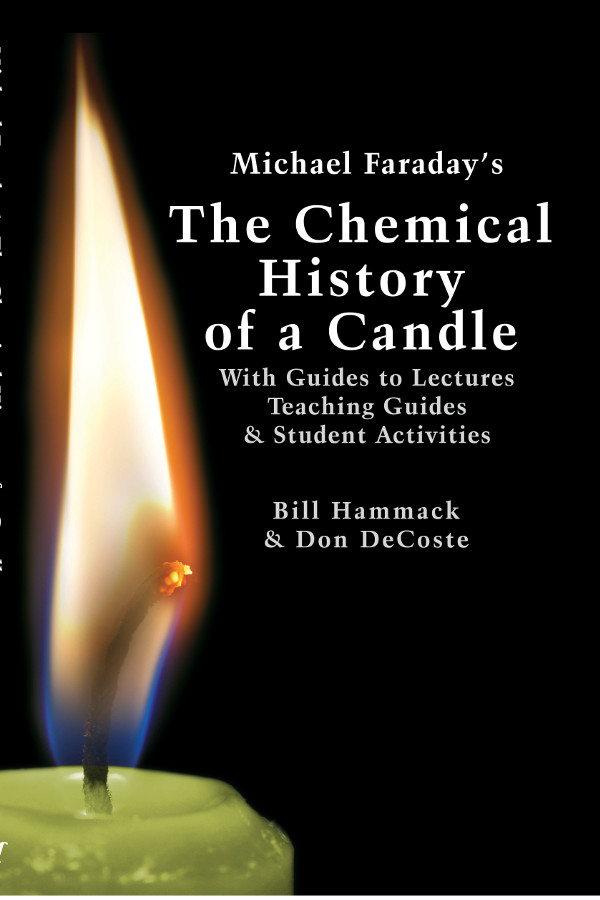
Faraday's later years were marked by his continuing contributions to science. In 1850, he presented a series of lectures on the "Chemical History of a Candle" during the Royal Institution's Christmas Lectures. These lectures, delivered to a young audience, were both engaging and informative, and they further demonstrated his ability to communicate complex scientific ideas clearly and effectively.
Faraday's contributions to science were not limited to just his research and lectures. He was also involved in the standardization of electrical units. In 1861, the British Association for the Advancement of Science proposed the use of the ohm as a unit of electrical resistance, a unit that is now fundamental in the study of electricity. This was a direct result of Faraday's pioneering work in the field.
Health and Death
Faraday's health continued to decline in his later years, and in 1838, he was forced to take an extended leave from the Royal Institution. However, he remained engaged in scientific activities and continued to correspond with colleagues. His last significant public appearance was a lecture on "Heat" at the Royal Society in 1862.
On August 25, 1867, Michael Faraday passed away peacefully at his home in Hampton Court. His death was a loss not only to the scientific community but to the world at large. His contributions to science have ensured his legacy continues to influence modern research and technology.
Michael Faraday's life and work have had a profound impact on the scientific community and beyond. His dedication to understanding the fundamental principles of electricity and magnetism paved the way for many technological advancements. He is truly a deserving recipient of the accolades and recognition he has received posthumously. Faraday's story is one of resilience, curiosity, and a relentless pursuit of knowledge, and it continues to inspire generations of scientists and researchers.
The Recognition and Legacy Posthumously
Much of Michael Faraday's recognition and legacy only became evident after his death. In 1869, the Royal Society posthumously awarded Faraday the Copley Medal, recognizing his significant contributions to science. This award was a迟到的认可, 但远不足以补偿他在生前遭受的忽视。此外,Faraday还在1873年被追授皇家奖章,这是英国王室对他在科学领域的杰出贡献的正式表彰。
Faraday’s name has since become synonymous with pioneering scientific research and education. His legacy is celebrated in various ways, including the Michael Faraday Centre for Science Education, the Faraday Institute for Science and Religion, and several educational institutions bearing his name. Moreover, the Royal Society of Chemistry maintains the Michael Faraday Prize, which honors individuals who have made significant contributions to public engagement with chemistry.
Influence on Modern Science and Technology
Faraday’s work has had a lasting impact on modern science and technology. His discoveries have been foundational for the development of various technologies, from electricity generation and transmission to the advancement of medical treatments. The principles he established in electrochemistry and electromagnetism continue to be crucial in fields such as renewable energy, telecommunications, and electronics.
For instance, the electric generator, which converts mechanical energy into electrical energy, is based on Faraday’s principle of electromagnetic induction. This principle is essential in modern power plants and is used extensively in everyday devices like solar panels and wind turbines. Similarly, Faraday’s research on electrolysis has led to significant advancements in the purification and separation of chemical substances, which have applications in industries such as pharmaceuticals and materials science.
Contemporary Applications
Faraday’s work continues to be relevant in contemporary scientific research. Researchers at universities and laboratories around the world use his principles to push the boundaries of scientific knowledge. For example, modern physicists utilize Faraday’s laws of induction to develop new forms of energy storage and conversion technologies. Additionally, his work on the conservation of mass and energy has inspired ongoing research in particle physics and quantum mechanics.
In the realm of medical science, Faraday’s insights have led to breakthroughs in the development of electrical stimulators used in therapy. Technologies like the pacemaker, which uses electrical impulses to regulate heartbeats, are direct descendants of Faraday’s original experiments with electromagnetism. These devices improve the quality of life for millions of patients worldwide.
Conclusion and Final Thoughts
Michael Faraday’s life and work exemplify the power of persistence, curiosity, and dedication in the pursuit of scientific knowledge. Despite his modest beginnings and lack of formal education, he rose to become one of the most influential scientists in history. His experiments and discoveries revolutionized our understanding of electricity and magnetism, and his work continues to shape modern science and technology.
Faraday’s legacy transcends the realms of science and technology. His ability to communicate complex ideas to both professionals and the general public sets a benchmark for effective science communication. His story serves as an inspiring example of what can be achieved through hard work, intellectual curiosity, and perseverance.
As we continue to build upon Faraday’s foundational discoveries, we should remember the man behind the science. His contribution to the scientific community and humanity as a whole is immeasurable, and he stands as a testament to the enduring impact of human ingenuity and creativity.
Michael Faraday remains an enduring symbol of the transformative power of scientific discovery and the importance of continuous exploration and innovation. His legacy inspires us to pursue knowledge with the same fervor and dedication he exhibited throughout his lifetime.
His story is both a reminder of the past and a call to action for the future. In a world increasingly reliant on science and technology, Faraday’s example serves as a powerful encouragement to never stop questioning, experimenting, and pushing the boundaries of human understanding.
In conclusion, Michael Faraday’s contributions to science, particularly in the fields of electromagnetism and electrochemistry, have left an indelible mark on modern society. His life and work continue to inspire and influence scientists, engineers, and innovators around the globe, ensuring his legacy remains vibrant and relevant for generations to come.
Michael Faraday was more than just a scientist; he was a visionary whose insights and discoveries opened new paths for human advancement. His enduring influence serves as a reminder that the quest for knowledge and understanding is a noble and ongoing endeavor, worthy of our deepest commitment and pursuit.
The legacy of Michael Faraday reminds us of the profound impact that a single individual can have on the course of human progress. As we stand on the shoulders of giants like Faraday, we are reminded that the future of science is bright and full of infinite possibilities.
















Comments