Max Delbrück: Pioneering the Molecular Biology Era
Introduction
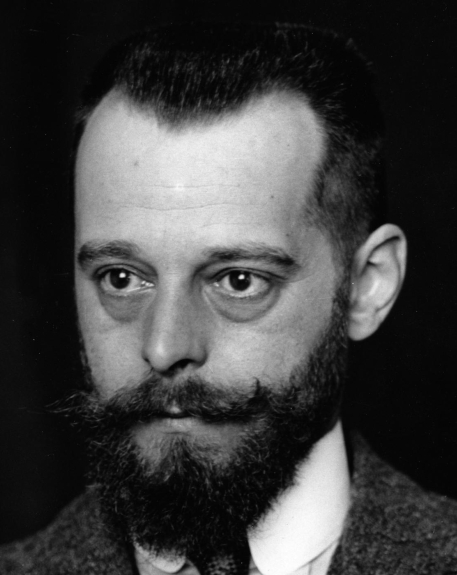
Max Delbrück (1900-1981) stands as a pivotal figure in molecular biology, whose contributions have shaped the foundation of modern scientific research. Born on July 30, 1900, in Berlin, Germany, Delbrück's background in physics and his unique approach to scientific inquiry paved the way for groundbreaking discoveries in biology. This article delves into the life, scientific legacy, and lasting impact of Max Delbrück on the molecular biology field.
Early Life and Education
Max Delbrück's journey into science was influenced by the intellectual and cultural environment of early 20th century Germany. He showed an early aptitude for mathematics and physics, attending the University of Göttingen from 1920 to 1922, where he studied under the renowned physicist Werner Heisenberg. Delbrück's time at Göttingen laid the groundwork for the interdisciplinary approach that would define his later scientific endeavors.
Transition to Biology
After his initial training in physics, Delbrück decided to transition into the field of biology. His move was partly inspired by the works of physicists on the structure of atoms and how these principles could be applied to understanding biological processes. In 1926, he earned his doctoral degree in biology from the University of Göttingen with a thesis on the inheritance of resistance in microorganisms, marking the beginning of his exploration in molecular biology.
National Academy of Germany and Early Career
Delbrück's early work brought him to the National Academy of Germany, where he engaged in research focusing on the mechanisms of heredity. His work attracted the attention of the academic community, and he began to collaborate with other prominent scientists at the time. Delbrück's initial contributions to the field included studies on the mechanisms of bacterial growth and division, which laid important groundwork for the understanding of genetic material.
Interdisciplinary Approach
Delbrück's interdisciplinary perspective was a hallmark of his career. He saw biology as a field that could benefit from the methodologies and theoretical frameworks developed in physics. His approach was to view biological systems through the lens of physical principles, a strategy that would prove to be highly influential in the emerging field of molecular biology.
Key Discoveries
One of Delbrück's most significant contributions came in 1930 when he and his colleagues established the existence of genetic material as DNA through experiments involving bacteriophages. This discovery was a critical milestone, as it provided empirical evidence that DNA, rather than protein, was the hereditary material. Delbrück's work in this area was foundational to the eventual elucidation of the structure of DNA by James Watson and Francis Crick in 1953.
Impact on the Scientific Community
Delbrück's work influenced a generation of scientists who were drawn to the emerging field of molecular biology. His approach of applying physical principles to biological systems inspired many to explore the molecular basis of life. Delbrück's influence extended beyond his immediate research. He played a crucial role in establishing the Molecular Biology Unit at the California Institute of Technology, which became a focal point for cutting-edge research in the 1950s and 1960s.
Role at Caltech
After his initial forays into biology at the National Academy of Germany, Delbrück moved to the United States in 1947 to take up a professorship at the California Institute of Technology (Caltech). At Caltech, he co-founded the molecular biology unit, which brought together physicists, chemists, and biologists with a common interest in the molecular basis of life. This collaboration fostered a new era of interdisciplinary research, leading to significant advances in understanding genetic material and its functions.
Teaching and Mentoring
Delbrück was not only a researcher but also an effective educator and mentor. He encouraged young scientists to think independently and to approach problems from a molecular perspective. This mentorship played a critical role in nurturing the next generation of scientists who would go on to make their own contributions to molecular biology. Some of his notable students include Salvador Luria, Alfred Hershey, and Aaron Klug, all of whom would make significant discoveries in the field.
Key Discoveries and Collaborations
Delbrück's early work on bacteriophages was instrumental in establishing the field of phage biology. His experiments with T2 bacteriophages, which infect Escherichia coli, demonstrated the concept of genetic recombination and the stability of genetic traits in viruses. These studies provided a foundation for future research into the mechanisms of DNA replication and genetic transfer.
One of his most celebrated collaborations was with Alfred Hershey, who was Delbrück's postdoctoral student. Together, they conducted seminal experiments that conclusively demonstrated that DNA is the hereditary material. Their work involved labeling phage DNA with radioactive phosphorus, which allowed them to track the inheritance of genetic information. These findings were instrumental in the broader scientific community and helped to solidify geneticists' understanding of DNA as the hereditary material.
Delbrück's experiments with bacteriophages also led to the development of experimental techniques such as plaque assays, which allow for the visualization and quantification of phage infections on bacterial colonies. These techniques remain essential tools in virology and microbiology, providing a clear and direct means of studying the molecular processes involved in infection and genetic transfer.
Scientific Legacy and Recognition
Delbrück's contributions to molecular biology were recognized with numerous awards and honors. In 1969, he was awarded the Nobel Prize in Physiology or Medicine along with Alfred Hershey and Salvador Luria for their discoveries concerning the replication of viruses and the genetic structure of bacteria. This recognition underscored the importance of interdisciplinary research and the profound impact it can have on scientific understanding.
Delbrück's influence extended beyond his own research and recognition. He was a key figure in the development of the molecular biology program at Caltech, which became a model for similar initiatives worldwide. The establishment of the Molecular Biology Unit at Caltech in 1954 was a seminal event, bringing together leading scientists from diverse fields and fostering an environment of cross-disciplinary collaboration. This initiative not only advanced the field of molecular biology but also had a lasting impact on the structure of scientific research and education.
Interdisciplinary Approach and Influence
Delbrück's interdisciplinary approach was not just a methodological tool but a philosophical stance that challenged the traditional boundaries between physics and biology. His belief that physical principles could explain biological phenomena paved the way for modern molecular biology. Delbrück saw biology as a quantitative science and believed in the importance of mathematical and physical concepts in understanding biological systems.
His influence on the next generation of scientists was profound. Many of his students and colleagues, such as James Watson and Francis Crick, went on to make groundbreaking discoveries. Watson and Crick's elucidation of the double helix structure of DNA in 1953 was a direct result of the foundational work done by Delbrück and his colleagues. These discoveries not only advanced our understanding of genetics but also had far-reaching implications for fields such as biotechnology, medicine, and bioinformatics.
Impact on the Scientific Community
Delbrück's work and approach had a significant impact on the scientific community. He helped to establish the use of mathematical and physical models in biology, which became a standard approach in the field. For example, Delbrück’s use of statistical methods to analyze the random distribution of genetic traits in populations paved the way for the development of population genetics. His influence extended to the way genetic data was analyzed and interpreted, fostering a culture of rigorous scientific inquiry and evidence-based research.
Delbrück also inspired a new generation of scientists to think creatively and to cross traditional disciplinary boundaries. His belief in the importance of interdisciplinary research was ahead of its time and has since become a cornerstone of modern scientific practice. His students and colleagues were encouraged to question established paradigms and to approach problems from multiple angles, leading to innovative solutions and breakthroughs in various fields of science.
Legacy and Influence
The legacy of Max Delbrück continues to shape the field of molecular biology. His interdisciplinary approach to science remains a valuable methodology that encourages collaboration and innovation. Delbrück's emphasis on the importance of rigorous scientific inquiry, empirical evidence, and the application of physical principles to biological problems has influenced generations of scientists.
Today, molecular biology continues to be at the forefront of scientific research, with fields such as genomics, bioinformatics, and biotechnology thriving in part due to the foundational work of Delbrück and his contemporaries. His contributions to the field were not only scientific but also philosophical, challenging us to think critically about the fundamental nature of life and the role of science in understanding it.
Conclusion
Max Delbrück was a visionary scientist whose interdisciplinary approach to scientific inquiry revolutionized the field of molecular biology. His work on phage biology, his contributions to our understanding of DNA as the hereditary material, and his establishment of the Molecular Biology Unit at Caltech have had a lasting impact on the scientific community. Delbrück's legacy is a testament to the power of interdisciplinary research and the importance of fostering environments that encourage collaboration and innovation. His pioneering work continues to inspire new generations of scientists to think critically and to push the boundaries of scientific knowledge.
Closing Remarks on Max Delbrück
Max Delbrück's life and work spanned several transformative decades in the history of science. From his early years as a physicist to his late-life recognition as a towering figure in molecular biology, Delbrück exemplifies the power of a multidisciplinary approach to scientific inquiry. His contributions have not only reshaped the landscape of molecular biology but have profoundly influenced the way we understand the fundamental principles of life itself.
Final Reflections and Lasting Impact
Delbrück's legacy extends far beyond the scientific community. His work on genetic material and genetic processes has applications in medicine, bioengineering, and biotechnology. The technologies and concepts he introduced have been integral to the development of genetic diagnostics, gene therapies, and personalized medicine. His ideas about the integration of physical and biological sciences continue to inform modern research, emphasizing the interconnectedness of different scientific disciplines.
The interdisciplinary approach championed by Delbrück has become a cornerstone of contemporary scientific research. His emphasis on rigor, empirical evidence, and the application of quantitative methods has laid the foundation for precision biology and personalized healthcare. The methodologies and principles he established continue to drive advancements in fields such as biotechnology, genomics, and computational biology.
Recognition and Tributes
Max Delbrück's contributions to molecular biology were acknowledged and celebrated worldwide. His Nobel Prize award in 1969 cemented his status as one of the most significant scientists of the 20th century. The recognition did not come lightly; it was a testament to the groundbreaking nature of his work and its enduring impact on the field. Delbrück's influence is reflected in the numerous awards, honors, and tributes presented to him and his students over the years, including the Lasker Awards and the National Medal of Science.
Today, Caltech's Molecular Biology Unit carries on Delbrück's legacy, attracting top scientists and researchers from around the world. The institution remains a hub for cutting-edge research and innovation, embodying the spirit of interdisciplinary collaboration that Delbrück championed.
Awarding Delbrück's Mentorship
Delbrück's mentorship was as influential as his scientific achievements. His ability to inspire, challenge, and guide his students was a key factor in their success. Many of his students went on to make monumental contributions to molecular biology, including James Watson and Francis Crick, whose discovery of the double helix structure of DNA revolutionized the field. Delbrück’s approach to education and mentorship not only produced Nobel laureates but also instilled in his students a deep passion for scientific inquiry and discovery.
Memorial and Commemoration
In honor of Max Delbrück, his name is commemorated in several prestigious institutions and societies. The Max Delbrück Center for Molecular Medicine (MDC) in Berlin, founded in his honor, continues his legacy of interdisciplinary research and excellence in biomedical science. Similarly, Caltech maintains a strong connection to Delbrück through its ongoing research and educational programs centered around molecular biology.
Conclusion
In conclusion, Max Delbrück's contributions to molecular biology extend far beyond the boundaries of his lifetime. His interdisciplinary approach to scientific inquiry, his groundbreaking experiments with bacteriophages, and his role in establishing the Molecular Biology Unit at Caltech have left an indelible mark on science. Delbrück's legacy serves as a powerful reminder of the importance of combining diverse perspectives and methodologies in pushing the frontiers of knowledge. As we continue to face new challenges in biomedical science, his vision and approach remain as relevant today as they were during his lifetime.
Bibliography
While a full bibliography is beyond the scope of this article, some key works and references that provide a deeper exploration of Max Delbrück's life and scientific contributions include:
- Delbrück M. "The origins of molecular biology." New York: Dover Publications, Inc.; 1990.
- Luria S, Delbrück M. "Mutations of bacteria from viral sensitivity to viral resistance." Genetics 19: 411, 1933.
- Crick FHC, Delbrück M. "Molecular population genetics of neutral alleles." Nature 218: 1037–1039, 1968.
These sources offer invaluable insights into the breadth and depth of Delbrück's scientific endeavors and the legacy he has left behind.
End of Article












Comments