Max Born: Theoretical Physicist and Nobel Laureate
The Early Life and Background
Max Born was one of the most influential theoretical physicists of the twentieth century. Born on August 11, 1882, in Breslau (now Wrocław, Poland), Born grew up in a scholarly environment. His father, Gustav Born, was a professor of zoology at the University of Breslau, and his grandfather was a famous anatomist who conducted important studies on the development of the mammalian skull. This academic heritage left a lasting impact on young Max.
Born received his early education at the Johanneum Gymnasium in Breslau, where he excelled academically. He showed particular interest in mathematics and physics, leading him to pursue these subjects at the University of Breslau. In 1904, at the age of 21, he completed his Abitur (graduation exam).
Following his graduation, Born initially considered a career in engineering but was drawn towards academia due to his fascination with physics. In 1905, he went to Munich as a Ph.D. student under Arnold Sommerfeld, a prominent physicist of the time. Born's early work focused on the application of group theory to atomic structure, a field in which he would later make significant contributions.
Research and Career Advancement
In 1907, Born obtained his Ph.D. with his thesis on "Atomic Structure and Spectral Lines" (Über ein mathematisches Verfahren zur Bestimmung der Atomspektallinien). This dissertation showcased his mathematical skills and laid the groundwork for his future research. After completing his Ph.D., Born held several academic positions, including a teaching position at Göttingen University and a research fellowship in Brussels.
In 1912, he became a research assistant under Ernest Rutherford at Cambridge University. This period was crucial for Born as it exposed him to the cutting-edge experiments being conducted at Rutherford’s laboratory, particularly the alpha-particle scattering experiment, which provided insights into the structure of the atom.
Back in Germany in 1913, Born secured a faculty position at the University of Frankfurt am Main, where he began to build his reputation as a leading physicist. During World War I, Born served as a medical orderly in the German Army while maintaining a correspondence with Niels Bohr, discussing various theories and concepts in quantum mechanics.
After the war, Born moved to the University of Göttingen, one of the top institutions for mathematical and theoretical physics. He remained there until 1931 when he was appointed professor of theoretical physics at St Andrew’s University, Scotland. In 1936, he returned to Göttingen once again before accepting a professorship at the University of Oxford in 1946. Throughout his career, Born made significant contributions to many areas of physics, particularly in the field of quantum mechanics.
The Discovery of the Born Rule
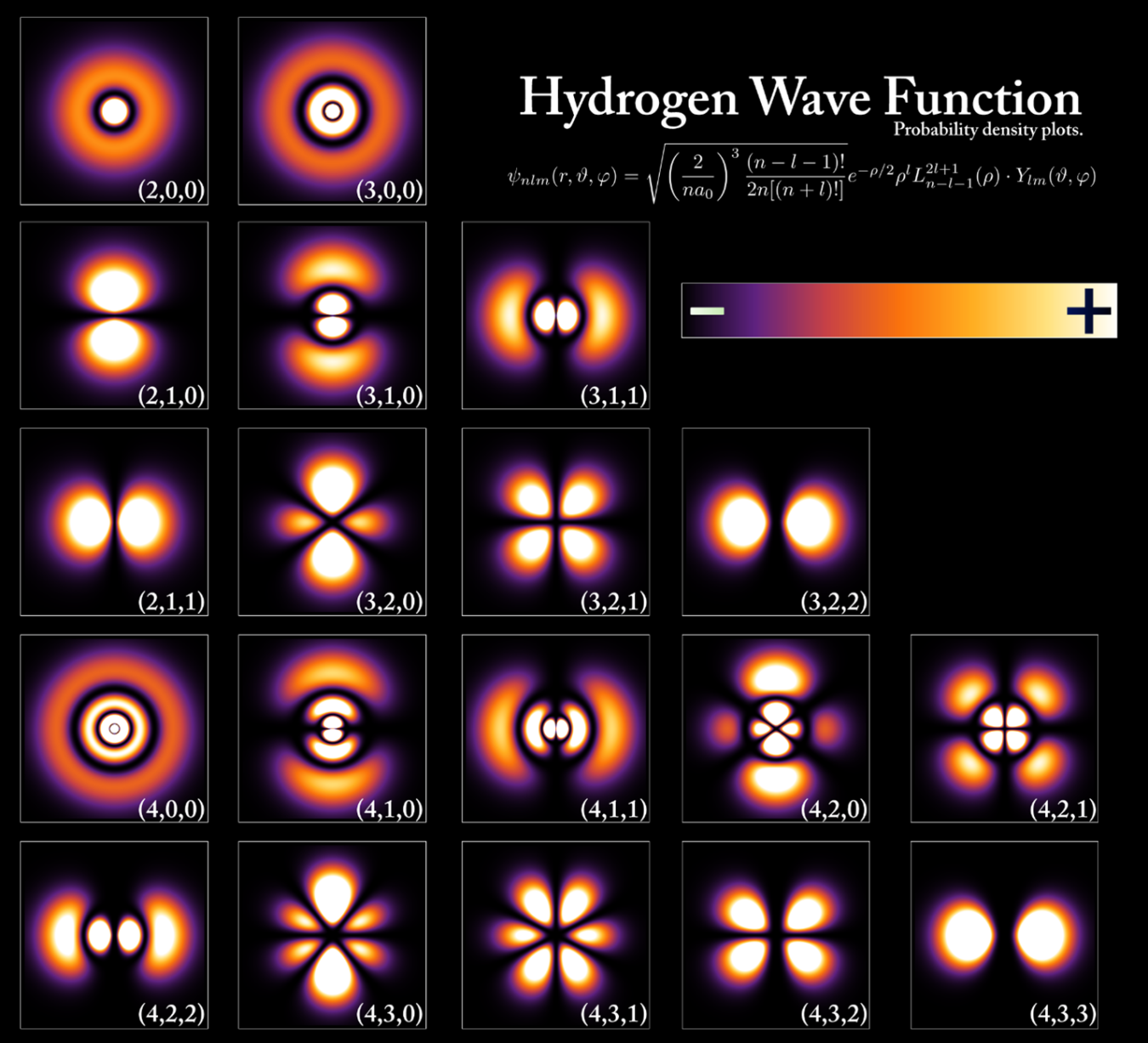
One of Born’s most significant contributions to theoretical physics came in the form of what is now known as the Born rule. This rule, which was developed alongside other physicists such as Werner Heisenberg and Niels Bohr, provides a statistical interpretation of quantum mechanics. In 1926, Born proposed that the square of the absolute value of the wave function (the probability amplitude) gives the probability density for finding a particle in a given state. This principle, known as the Born rule, revolutionized how quantum physicists approached problems in the field.
Born demonstrated his new insight through practical applications. For example, he used the rule to explain the behavior of electrons in crystals, contributing to our understanding of solid-state physics. His work was further validated by experiments showing that the predictions made using his rule aligned perfectly with experimental observations.
Born’s contributions were not limited to quantum mechanics alone. He also made valuable contributions to statistical mechanics, electrodynamics, and optics. His work on the stability of the universe and theories on superconductivity were groundbreaking. Through his collaboration with other prominent scientists, Born helped establish the foundational principles of modern physics.
Award and Recognition
For his pioneering work, Born was awarded the Nobel Prize in Physics in 1954, along with Walther Bothe. The Nobel Committee recognized his contributions "for the development of the statistical interpretation of the quantum theory." This award cemented his legacy as one of the giants of theoretical physics.
Born’s influence extended far beyond his scientific accomplishments. He was a respected mentor to numerous students, including Wolfgang Pauli and Emil Konopinski. Many of his students went on to become renowned scientists themselves, carrying forward his ideas and methods.
Born’s work and his Nobel Prize were particularly significant during a tumultuous period. After Hitler came to power in Germany, Born faced challenges both personal and professional. His Jewish background made him a target of the Nazis, and he decided to emigrate to England in 1933. This move allowed him to continue his work and escape the dangers posed by the regime. In 1939, he returned to Germany briefly, but the increasing danger forced him to leave permanently, eventually settling back in England with his family in 1940.
Throughout his life, Born remained committed to science and education. He authored several influential books and papers that have stood the test of time. His ability to bridge the gap between theoretical concepts and experimental verification has left an indelible mark on the field of physics.
Legacy
Max Born’s legacy extends beyond his contributions to theoretical physics. He played a crucial role in the advancement of science during some of its most transformative periods. His work on quantum mechanics laid the groundwork for the development of technologies such as semiconductors, which are integral to today’s electronic devices.
Born’s influence also extended into popular culture. His name and concepts appear in various scientific and cultural references, reflecting his enduring impact. His personal story, marked by political upheaval and exile, serves as an inspiring tale of resilience and dedication to knowledge.
Max Born’s life and work exemplify the pursuit of truth and the relentless search for understanding, demonstrating the profound impact of individual researchers on the progress of science.
Teaching and Mentorship
One of Born's significant legacies lies in his teaching and mentoring. At Göttingen University, he was known for his dedication to both teaching and research. His classes attracted students from all over the world, and he was praised for his ability to explain complex theoretical concepts in an accessible manner. Born's approach to education was holistic, combining rigorous scientific methods with clear pedagogical strategies. He emphasized the importance of foundational knowledge alongside critical thinking and innovation, shaping a new generation of physicists.
Among his notable students were Wolfgang Pauli, who would go on to win the Nobel Prize in Physics in 1945 for his work on the structure of atomic nuclei, and Emil Konopinski, a key figure in the development of the hydrogen bomb. Born's mentoring extended beyond the classroom, as he provided guidance to students during their research and beyond, fostering a network of scientific inquiry and collaboration.
Born's impact on his students was profound. Many of them credited him with shaping their understanding of physics and encouraging them to pursue their own interests and innovations. His influence extended to future generations of scientists, contributing to the continued development of physics as a field.
Publications and Research
Born's prolific output includes a wide range of publications covering various aspects of theoretical physics. Some of his most significant works include "On the Stability of the Theory of Relativity" (1915), "Quantum Mechanics and the Theory of Electrons" (1925), and "The Elements of Quantum Mechanics" (1950). His book "Quantenmechanik der Stoffe" (1933) remains a classic text in the field and continues to be referenced by students and researchers.
Born was particularly known for his contributions to the development of the concept of wave functions and the interpretation of quantum mechanics. His work in this area not only clarified the probabilistic nature of quantum phenomena but also provided a framework for understanding complex systems at the quantum level. These contributions were instrumental in the advancement of quantum physics and have had a lasting impact on the field.
Beyond these publications, Born also made significant contributions to the theory of relativity, statistical mechanics, and solid-state physics. His work on relativity helped to refine theoretical models that could explain the behavior of particles at high velocities. In statistical mechanics, he developed methods that allowed for a more accurate description of macroscopic properties based on microscopic interactions. His contributions to solid-state physics contributed to our understanding of the electronic and magnetic properties of materials, which has important applications in modern electronics and technology.
Experiences during World War II and Post-World War II Era
During World War II, Born's experiences were as varied as they were significant. As a refugee from Nazi Germany, he faced both personal and professional challenges. On the personal side, he had to adapt to a new life in England, leaving behind his wife and family. Professionally, he was keenly aware of the potential applications of his work to military and technological advancements, especially in the context of the atomic bomb. Despite these pressures, he continued his research and made important contributions, particularly in the development of radar and the electromagnetic spectrum.
One of Born's most notable contributions during this period was his work on the photoelectric effect, which further refined our understanding of quantum mechanics. In 1949, he published a series of papers on the subject, which provided a more accurate description of the interaction between light and electrons. This work was essential for the development of technologies that use the photoelectric effect, such as solar panels and photodiodes.
After the war, Born returned to his academic career with renewed vigor. He worked at the University of St. Andrews in Scotland from 1936 to 1939 and then at the University of Oxford from 1946 until his retirement. At Oxford, he continued to mentor students and collaborate with other leading physicists. His presence at Oxford was particularly beneficial to young researchers, who benefited from his wisdom and expertise.
Personal Life and Later Years
Max Born lived a life that was both intellectually and personally fulfilling. He married Hedwig Ehrenberg in 1911, and they had five children together. Unfortunately, their marriage faced significant challenges during World War II, and in 1944, Born separated from Hedwig. He later married Ina Hertel in 1946, who continued to be his companion until his death in 1970.
Despite the personal upheavals, Born remained committed to his work and his students. He continued to write and publish until the end of his life, leaving behind a rich body of work that has stood the test of time. His later writings focused on the philosophy of science and the ethical implications of scientific research.
Born was also known for his philosophical insights and his ability to communicate complex ideas in a clear and accessible manner. His lectures at Göttingen were popular not just because of the depth of his knowledge but also because of his engaging teaching style. He believed in the power of education to shape society and worked tirelessly to promote scientific literacy and understanding.
Legacy and Final Years
Max Born's legacy extends beyond his scientific achievements. His contributions to the understanding of quantum mechanics and his efforts in mentoring and teaching have had a lasting impact on the field of physics. Born's work on the interpretation of quantum mechanics provided a foundational understanding that is still relevant today. His rule for the probability interpretation of quantum mechanics, now known as the Born rule, is a cornerstone of modern quantum physics.
Born's impact on the world of physics is recognized through the numerous awards and honors he received. Besides the Nobel Prize, he was awarded the Max Planck Medal by the German Physical Society (1933) and the Gold Medal of the Royal Society of London (1952). Despite facing numerous challenges, including the threat of the Nazi regime, his determination to continue his research and share his knowledge never wavered.
Max Born passed away on January 5, 1970, in Edinburgh, Scotland. His legacy continues through his writings, his teaching, and the many achievements of the scientists he mentored. Today, he is remembered as a towering figure in the history of physics, whose work has been foundational to the development of modern scientific thought and technology.
Interdisciplinary Impact and Public Role
Beyond his immediate field of physics, Born's work had a broader impact across various disciplines. His contributions to quantum mechanics had far-reaching implications in chemistry, particularly in understanding chemical bonding and molecular structures. The principles he elucidated were instrumental in developing computational chemistry methods, which are now widely used in pharmaceuticals, materials science, and biochemistry.
Born’s interdisciplinary approach extended to collaborations with chemists. He worked closely with Linus Pauling and others on the development of molecular orbital theory, which describes the behavior of electrons in molecules. His insights into the physical structure of matter provided a crucial bridge between physics and chemistry, enhancing our understanding of chemical reactions and processes.
Born’s work also influenced the field of biology, particularly the study of molecular biology. The principles of wave mechanics he developed were applied to understand the structural properties of biological macromolecules such as DNA and RNA. This work laid the groundwork for the discovery and analysis of the double-helix structure of DNA, which became crucial for the advancement of genetic research and biotechnology.
Born's research on the stability of the atomic structure and the behavior of subatomic particles also had indirect impacts on other fields such as astrophysics and cosmology. His theoretical models helped explain the dynamics of galaxies and the behavior of matter under extreme conditions, contributing to our understanding of the universe's large-scale structure.
Philosophical Insights and Ethical Concerns
Beyond his scientific achievements, Born was also deeply engaged with the philosophical implications of his work. He believed that science was not merely a collection of facts but a method for understanding the world. In his later years, he wrote extensively on the philosophy of science and the ethical dimensions of scientific research.
In his book "Natural Science and Philosophy" (1962), Born emphasized the need for scientists to consider the broader implications of their work. He argued that scientific discoveries should be guided by ethical considerations to ensure that they serve the greater good. This stance was particularly salient given the technological and societal changes brought about by his contemporaries like Heisenberg and Bohr.
Moreover, Born's reflections on the role of chance and determinism in the universe reflected a broader debate in scientific philosophy. He was among the first to explore the concept that quantum mechanics introduces a fundamental element of randomness, challenging deterministic views of the universe. His work on this topic contributed to the ongoing discussion about the nature of reality and the limits of scientific predictability.
Conclusion
Max Born's impact on modern physics and beyond cannot be overstated. His pioneering work in quantum mechanics provided the theoretical foundation for much of contemporary technological progress, from semiconductors to advanced computing. His contributions extended well beyond the realm of pure science, influencing chemistry, biology, and even astrophysics.
Born was not just a scientist; he was a philosopher and an educator who believed in the transformative power of scientific inquiry. His commitment to ethical considerations and his belief in the interconnectedness of different fields of study made him a unique and influential figure in the history of science.
Today, his legacy lives on through the ongoing developments in quantum technology and through the scientists he inspired. Born’s work continues to guide future generations of researchers and remind us of the importance of exploring the unknown with a balanced and philosophically informed perspective.
In conclusion, Max Born was more than a great physicist; he was a philosopher of science, a mentor, and a public intellectual. His legacy endures through the scientific community and beyond, inspiring new generations to push the boundaries of human knowledge.










Comments