Hermann Staudinger: Pioneering Research in Macromolecular Chemistry
Life and Early Career
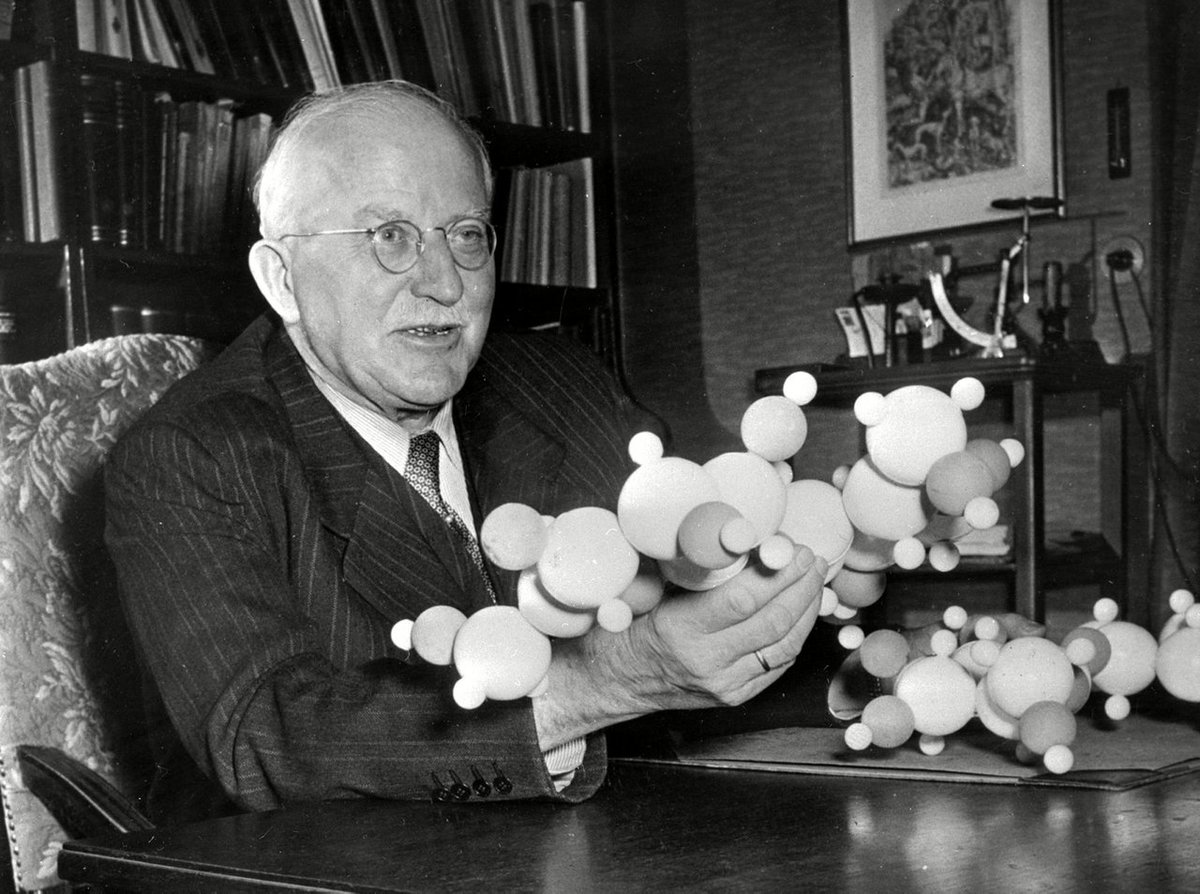
Hermann Staudinger, born on April 19, 1881, in Riezlern, Austria, was a groundbreaking organic chemist who laid the foundations of macromolecular science. His exceptional scientific contributions led to him being awarded the Nobel Prize in Chemistry in 1953, which he shared with polystyrene pioneer Karl Ziegler. Staudinger's lifelong dedication to the study of large molecules, initially met with skepticism, eventually revolutionized the field of polymer chemistry.
Staudinger grew up in a family deeply rooted in engineering; his father ran a textile plant. This environment instilled in him a practical understanding of technology from an early age, which later proved invaluable in his chemical research. After completing his secondary education, Staudinger enrolled at the University of Innsbruck in 1900 to study chemistry and mathematics. Here, he laid the groundwork for his future academic endeavors.
His studies were not without challenges. At that time, the prevailing belief among chemists was that there was a hard limit to molecule size, known as the high molecular weight problem. Many doubted the existence of long-chain molecules because they lacked the empirical evidence needed to support such theories. Nevertheless, Staudinger believed in the potential of these large molecules and pursued his ideas with unwavering conviction.
In 1905, Staudinger earned his doctorate from the University of Berlin with a dissertation entitled "Studies on Indigo," under the supervision of Emil Fisher, a leading figure in the field of organic chemistry. This experience marked the beginning of his formal training in chemistry. Subsequently, he worked at several universities, including the University of Strasbourg (1907-1914) and the Swiss Federal Institute of Technology Zurich (1914-1920), where he conducted pioneering research into the behavior of large molecules.
The Concept of Polymers
Staudinger's breakthrough came while he was a professor at the Swiss Federal Institute of Technology Zurich. In 1920, during a lecture for one of his students, Hans Baeyer, Staudinger suggested that large molecules could be built up from repeated units or monomers. He hypothesized that these macromolecules had a vast array of potential applications, ranging from synthetic polymers like rubber and plastics to more complex materials with unique properties.
This concept was revolutionary because it fundamentally changed how chemists viewed the nature of materials. Prior to Staudinger’s proposal, molecules were considered to be rigid and finite structures, with each atom having a fixed place in a limited-sized chain. Through his research, Staudinger demonstrated that large molecules could exist and possess a wide range of properties due to their extended structure. His work opened up new avenues for the synthesis of novel polymers with specific characteristics tailored for various industrial applications.
To support his theory, Staudinger conducted experiments involving the analysis of macromolecules using ultracentrifuges. These instruments allowed precise measurements of molecular weights, providing irrefutable evidence for the existence of long-chain molecules. Over time, this experimental work solidified the scientific community's understanding of macromolecules.
Staudinger's theoretical framework and experimental techniques paved the way for numerous advancements in polymer chemistry. His hypothesis on macromolecules sparked extensive research into polymerization processes, enabling chemists to develop new methods for synthesizing polymers with desired properties. The discovery had profound implications for industries ranging from manufacturing and construction to healthcare and electronics.
Although the initial reception of Staudinger’s ideas was lukewarm, his persistence and rigorous experimentation ultimately won over even his skeptics. His vision of macromolecules not only revolutionized the field of polymer chemistry but also spurred advancements in related disciplines such as materials science and biochemistry.
Pioneering Contributions
Staudinger's work on macromolecules was far-reaching, encompassing a wide range of topics that expanded our understanding of material science. One area of significant contribution was the development of polymerization reactions. Through careful experimentation, Staudinger elucidated mechanisms for both addition and condensation polymerizations, providing chemists with tools to create polymers with diverse functionalities.
Addition polymerization involves the linkage of monomer units via chemical bonds between double or triple carbon-carbon bonds. Staudinger demonstrated that under appropriate conditions, simple molecules like ethylene could polymerize to form long chains of polyethylene. These findings were crucial for the development of plastic products such as films, bottles, and fibers.
Condensation polymerization, on the other hand, involves reactions where two or more molecules react with the elimination of small molecules like water or methanol. Staudinger's research showed that polyesters and polyamides could be synthesized through this mechanism. These compounds have applications in textiles, coatings, and adhesives.
Staudinger's insights extended beyond just the synthesis of polymers. He also made significant contributions to the understanding of the physical properties of macromolecules. Through his meticulous studies, he discovered that macromolecules could exhibit unique behaviors, such as entanglements and phase transitions, leading to phenomena like elasticity and viscosity.
The application of these discoveries was immense. For instance, the ability to produce synthetic rubber with elasticity similar to natural rubber transformed the tire industry, drastically reducing dependence on natural latex imports. Other industries, including packaging, textiles, and pharmaceuticals, also benefited from the enhanced understanding of polymer behavior.
Staudinger's interdisciplinary approach further distinguished his work. By integrating concepts from physics, engineering, and biology, he created a comprehensive framework for studying polymers. His research bridged gaps between traditional silos of chemistry, leading to more holistic solutions in material design.
Throughout his career, Staudinger maintained a relentless pursuit of knowledge. He collaborated extensively with other scientists and engineers, fostering a collaborative scientific community essential for advancing the field. These collaborations resulted in numerous publications and patents, cementing his legacy as a trailblazer in macromolecular chemistry.
Innovative Experimental Techniques
As Staudinger delved deeper into his research, he developed innovative experimental techniques to validate his hypotheses about macromolecules. One such method involved the use of ultracentrifugation, which allowed him to measure the molecular weights of polymers with unprecedented accuracy. By applying centrifugal forces, these devices could separate macromolecules based on their sizes, providing concrete evidence for their existence.
Another critical technique Staudinger employed was fractionation by solvent extraction. This method involved dissolving polymers in solvents with different polarities and gradually removing them to isolate fractions of varying molecular weights. This procedure helped refine his understanding of polymer structure and confirmed the presence of long-chain molecules.
Staudinger also utilized chromatography to analyze the components of polymers. Chromatographic separation techniques allowed him to identify and quantify the monomer units that comprised the macromolecules, further supporting his theory. These experiments provided tangible proof that large molecules could indeed be constructed from smaller monomers, laying the groundwork for the systematic exploration of polymer chemistry.
Moreover, Staudinger's work on rheology—a field concerned with the flow of deformable materials—was instrumental in understanding the physical properties of macromolecules. Rheological studies involved measuring the viscosity and elasticity of polymer solutions and melts, which revealed the unique behaviors of these molecules under various conditions.
Impact on Industrial Applications
The implications of Staudinger’s discoveries extended far beyond academic settings. They had transformative effects on various industrial processes, particularly in the production of synthetic polymers. One of the most notable outcomes was the creation of synthetic rubbers, which became crucial in World War II due to the disruption of natural rubber supplies from Asia.
During the war, many countries focused on developing synthetic alternatives to natural rubber. American companies like DuPont developed neoprene, a flexible synthetic rubber made from chloroprene, and other companies produced butyl rubber. German companies, influenced by Staudinger's theories, also developed similar materials to meet industrial demands.
Post-war, the development of synthetic polymers continued to boom. Companies worldwide began exploring new forms of polymerization and synthesis methods, leading to the proliferation of plastic products across various industries. Polyethylene, nylon, polyesters, and many other materials became staple commodities that reshaped everyday life.
The advent of plastic bags, disposable containers, and durable industrial components all benefited from Staudinger’s research. These innovations not only enhanced manufacturing efficiency but also provided more sustainable alternatives compared to earlier products. For instance, the development of high-strength fiber-reinforced composites has dramatically improved the performance of aerospace and automotive parts.
Furthermore, Staudinger's work laid the foundation for biocompatible polymers, which are now widely used in medical applications. Bioresorbable sutures, drug delivery systems, and artificial implants have all been developed thanks to the principles established by Staudinger. The field of biomaterials continues to advance, driven by ongoing innovations in polymer science.
Recognition and Legacy
Staudinger's groundbreaking work did not go unnoticed by the scientific community. In recognition of his contributions to chemistry, he received numerous awards and honors throughout his career. Most notably, he was awarded the Nobel Prize in Chemistry in 1953, alongside Karl Ziegler for their discoveries in the area of high-molecular-weight compounds. This accolade cemented his status as one of the giants in the field of organic chemistry.
Staudinger also held several prestigious positions during his lifetime. In 1920, he became a full professor at the Swiss Federal Institute of Technology Zurich, where he would spend over three decades conducting groundbreaking research. Later in his career, he accepted a position at the University of Freiburg (1953-1966) and served as its rector from 1956 to 1961. These roles provided him platforms to mentor the next generation of chemists, ensuring that his vision lived on.
The impact of Staudinger's work extends beyond individual recognition. His theories and experiments formed the bedrock upon which an entire field of study was built. Thousands of chemists around the world followed in his footsteps, pushing the boundaries of what was possible with polymers. Today, macromolecular chemistry is a vibrant discipline with applications in areas ranging from nanotechnology to renewable energy.
Staudinger's legacy is not limited to science alone. His dedication to rigorous experimentation and his willingness to challenge prevailing paradigms have inspired countless researchers. His approach to tackling complex problems by combining theoretical insights with practical solutions remains an exemplary model for scientists today.
Awards and Honors
Beyond the Nobel Prize, Staudinger accumulated a substantial list of accolades that underscored his standing in the scientific community. In addition to the Nobel Prize, he received the Max Planck Medal (1952), the Faraday Medal (1955), and the Davy Medal (1962). These awards not only recognized his outstanding contributions but also highlighted his impact on both the theoretical and applied aspects of chemistry.
Staudinger's leadership and mentorship were also widely acknowledged. He played a pivotal role in fostering an environment conducive to innovation, nurturing a culture of inquiry and collaboration. Many of his students went on to make significant strides in their respective fields, carrying forward the torch of macromolecular research.
Staudinger's influence extended to international organizations as well. He was elected a foreign member of the Royal Society (1949) and served as a member of the German National Academy of Sciences Leopoldina. These memberships attested to his global reputation in the sciences and underscored his contributions to the advancement of knowledge on a global scale.
Moreover, Staudinger's impact was also felt through his public lectures and writings. Despite his retiring personality, he found ways to communicate complex scientific ideas to a broader audience. His popular scientific writing and public talks helped bridge the gap between academia and society, inspiring both experts and laypeople alike.
Conclusion
Hermann Staudinger's journey from a skeptical environment to becoming a pioneering figure in macromolecular chemistry exemplifies the power of persistent scientific inquiry. His bold hypotheses and rigorous experimental methods paved the way for significant advancements in polymer science, impacting industries across the globe. His legacy continues to inspire chemists and materials scientists, ensuring that the importance of understanding and manipulating large molecules endures.
As we reflect on Staudinger's contributions, it becomes clear that his work represents not just a turning point but an entire era of chemical innovation. His dedication to challenging conventional wisdom and his commitment to evidence-based research laid the foundation for modern polymer chemistry, shaping the world we live in today.
Modern Relevance and Future Directions
Today, the foundational principles established by Staudinger continue to be relevant, driving new discoveries and technological advancements. Polymer science, once seen as a niche field, has become an integral part of contemporary research. Innovations in nanotechnology, biomedicine, and sustainable materials have all been influenced by Staudinger’s initial insights into macromolecular chemistry.
In nanotechnology, the control over molecular structure at the nanoscale has enabled the development of advanced materials with tailored properties. These materials find applications in electronics, where nanofabrication techniques rely heavily on precise manipulation of macromolecules. Similarly, in biotechnology, the integration of polymers into biomedical devices and therapies owes much to the principles pioneered by Staudinger.
The sustainability crisis has also seen the emergence of eco-friendly polymers. Research into biodegradable polymers that can replace conventional plastics is a direct result of the fundamental understanding of macromolecular chemistry. Bioplastics, derived from renewable resources, promise to reduce environmental impacts by providing sustainable alternatives to petrochemical-derived plastics.
Moreover, advances in computational chemistry now allow researchers to simulate and predict the behavior of complex macromolecules. Molecular dynamics simulations and quantum mechanical calculations have become essential tools for designing new polymers and understanding their properties. These techniques, built on the theoretical underpinnings established by Staudinger, are pushing the boundaries of what is achievable in material science.
Applications in Industry
The applications of macromolecular chemistry extend far beyond academic research. Industries such as pharmaceuticals, aerospace, and automotive have leveraged Staudinger’s discoveries to develop cutting-edge products. In the pharmaceutical sector, biodegradable polymers are used in drug delivery systems that control the release of medications over time. These systems can improve therapeutic efficacy and minimize side effects.
In the aerospace and automotive industries, lightweight yet strong materials are crucial for reducing fuel consumption and improving safety. Advanced composite materials, composed of reinforced polymers, offer the required strength-to-weight ratio. Staudinger’s insights into the behavior of macromolecules under stress conditions help engineers design safer and more efficient vehicles.
The textile industry has also benefitted significantly from macromolecular research. The development of smart fabrics that respond to environmental stimuli, such as temperature or moisture, relies on the understanding of macromolecular interactions. These materials are not only functional but also sustainable, offering alternatives to traditional materials that may be harmful to the environment.
Innovation in Sustainable Materials
Sustainability is a key focus area in the development of new polymers. Researchers are increasingly looking to natural and renewable sources for producing biopolymers. Plant-based materials, such as cellulose, starch, and lignin, offer viable alternatives to petrochemical plastics. By optimizing these natural polymers and developing new synthesis methods, scientists aim to create materials that are both eco-friendly and performant.
Innovations in green chemistry are also driven by Staudinger's legacy. The principle of using less toxic and less hazardous substances in the synthesis of polymers is a direct outcome of his emphasis on rigorous experimentation and evidence-based research. Green materials, characterized by minimal waste and recyclability, align with the growing demand for environmentally responsible practices.
Furthermore, the development of new polymers for energy applications is another emerging area. Organic solar cells, for instance, rely on the manipulation of macromolecules to harvest sunlight efficiently. Staudinger's insights into polymer behavior under various conditions inspire new strategies for optimizing these devices, potentially revolutionizing renewable energy solutions.
Conclusion
Hermann Staudinger's contributions to macromolecular chemistry have had a lasting impact on almost every aspect of materials science and technology. From synthetic rubbers and plastics to advanced biodegradable materials and sustainable energy solutions, his foundational work continues to drive innovation and inspire future generations of scientists.
As we stand on the shoulders of his giants, it is evident that the journey of exploring macromolecules is far from over. New challenges continue to emerge, from developing more efficient polymers to addressing the environmental impact of materials. Staudinger's legacy serves as a reminder of the importance of persistent questioning and rigorous investigation in advancing our scientific knowledge.
Through his visionary ideas and relentless pursuit of understanding, Hermann Staudinger has left an immeasurable mark on the field of chemistry. His work not only paved the way for countless applications but also shaped our understanding of the molecular world. As we continue to push the boundaries of what is possible with polymers, we honor his legacy by building upon his foundational discoveries.









Comments