Henri Lebesgue: The Mathematician Who Revolutionized the Understanding of Integration
Introduction to Henri Lebesgue
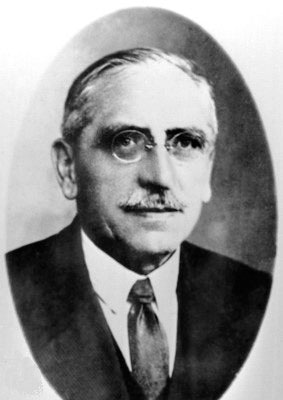
Henri Léon Lebesgue, a French mathematician born on June 28, 1875, in Beau-caillou, France, is best known for his work on measure theory and integration. His contributions fundamentally reshaped the field of analysis and had profound implications for the development of modern mathematics. The Lebesgue integral, a powerful new concept in calculus, provides a more general framework for dealing with the notion of integration, and it has been instrumental in numerous theoretical and applied mathematical advancements.
The Early Life and Educational Background of Henri Lebesgue
Lebesgue came from a modest background. His father, Émile Lebesgue, was a tanner, and his mother, Marie Lafoix, came from a family of tanners and farmers. Despite the family's modest means, Lebesgue was exposed to a scholarly environment from an early age. His parents were keenly interested in education, and Lebesgue attended the Lycée Hoche in Versailles, a prestigious preparatory school, where he developed a keen interest in mathematics.
From 1893 to 1897, Lebesgue studied at École Normale Supérieure, one of the most prestigious institutions in France for mathematical and scientific education. This institution offered a rigorous and stimulating environment that nurtured his early mathematical talents and laid the foundation for his future work. At the École Normale Supérieure, he was taught by prominent mathematicians such as Émile Picard and Émile Ley-busq, who were instrumental in shaping his mathematical worldview.
A Research Career in Mathematics
After completing his studies at the École Normale Supérieure, Lebesgue joined the Faculty of Sciences in Rennes as an assistant professor in 1899. During his time there, he began to publish his first significant work, which was in the field of mathematics. His first publication came in 1900, and it was on the subject of the integration of discontinuous functions, a topic that would later become a cornerstone of his career.
In 1902, Lebesgue transferred to the Sorbonne, where he became a professor of mathematics. This move was significant in his career trajectory, as it afforded him access to a broader academic community and a more dynamic research environment. While at the Sorbonne, he was also able to complete his doctoral thesis, which was titled "Intégrale, longueur, aire," and was published in 1904.
The doctoral thesis by Lebesgue is considered to be the starting point of the modern theory of integration. It was a groundbreaking work that introduced the new concept of integration, which Lebesgue referred to as "integral" but which became known as the "Lebesgue integral." This concept extended the traditional methods of integration and provided a rigorous theory for dealing with a wide range of functions, including those that were not Riemann integrable.
The Impact of Lebesgue's Work on Integration
One of the key contributions of Lebesgue's work on integration is the concept of measure. In his groundbreaking paper, "Sur les intégrales singulières" (1904), Lebesgue introduced the notion of measure, which is a way to assign a size or mass to subsets of a space. This concept of measure is fundamental in many areas of mathematics, especially in real analysis and probability theory.
The traditional notion of integration, as developed by Bernhard Riemann, is based on the idea of partitioning a function into small segments and summing these segments to approximate the area under the curve. However, this method has limitations, especially when dealing with functions that are highly discontinuous or irregular. The Lebesgue integral, on the other hand, is based on the idea of measuring the "mass" of subsets of the function's domain, and it provides a rigorous and more general framework for integration.
Lebesgue's integral is more robust because it can handle a broader class of functions, including those that are not absolutely continuous or of bounded variation. This means that the Lebesgue integral can be applied to a wider range of mathematical problems, including those in physics, engineering, and statistics. For instance, the Lebesgue integral allows for a precise analysis of the Brownian motion, a stochastic process named after the botanist Robert Brown, which describes the random motion of particles suspended in a fluid.
Lebesgue's Research Interests and Contributions
Lebesgue's early work focused on the theory of integration. He introduced the concept of measure and developed the Lebesgue integral, which is a major extension of the Riemann integral. The Lebesgue integral is capable of integrating a broader class of functions, including those that are discontinuous or have a more complex structure. This made it possible to solve problems that were beyond the reach of the traditional Riemann integral, thereby expanding the boundaries of integration theory.
In addition to his work on integration, Lebesgue made significant contributions to the theory of functions. He introduced the concept of measurability in a function, which is fundamental for the study of functions in measure theory. The Lebesgue measurability condition ensures that a function can be meaningfully integrated, providing a rigorous framework for the analysis of functions under integration.
Lebesgue also extended the concept of measure to higher-dimensional spaces, which he referred to as "measure" in higher dimensions. This extension is crucial for the development of the theory of Lebesgue spaces, which are Banach spaces of measurable functions. Lebesgue spaces, denoted as \( L^p \) spaces, play a central role in functional analysis and are widely used in the study of partial differential equations and harmonic analysis.
Another significant contribution of Lebesgue was his work on the convergence of sequences of functions. Lebesgue's theorem on the convergence of sequences of integrable functions, also known as the dominated convergence theorem (DCT), is a fundamental result in measure theory. DCT states that if a sequence of measurable functions converges pointwise to a function and is dominated by an integrable function, then the limit function is integrable and the limit of the integrals of the functions is the integral of the limit function. This theorem is essential for the study of convergence in measure and is widely used in probability theory and functional analysis.
The Role of Henri Lebesgue in Mathematical Research
Henri Lebesgue played a significant role in the development and dissemination of the Lebesgue integral. His work was not confined to theoretical contributions; he also contributed to practical applications, ensuring that the new theory could be applied to solve real-world problems. For example, the Lebesgue integral has been instrumental in the development of Fourier analysis and probability theory, which have wide-ranging applications in physics, engineering, and economics.
Lebesgue's research was often characterized by a deep curiosity and a desire to understand the underlying principles of mathematical concepts. This approach made his work influential and accessible to other mathematicians. His methods and ideas were not only groundbreaking but also inspiring, leading to further developments in the field and the emergence of a new generation of mathematicians who continued to build upon his work. Lebesgue's research not only expanded the horizons of integration theory but also paved the way for the development of modern analysis and its applications in various scientific and technological fields.
Lebesgue's Personal Life and Interests
Henri Lebesgue's contributions to mathematics are not the only aspect that makes him noteworthy. His personal life and interests also provide a glimpse into his character and the inspiration behind his work. Despite his rigorous and demanding research, Lebesgue found time for leisure and enjoyed outdoor activities. He was known to be a passionate hiker and enjoyed the natural beauty of Brittany, a region in western France. His appreciation for nature and its mathematical representations found its way into his work, as he often found inspiration in the patterns and structures found in the natural world.
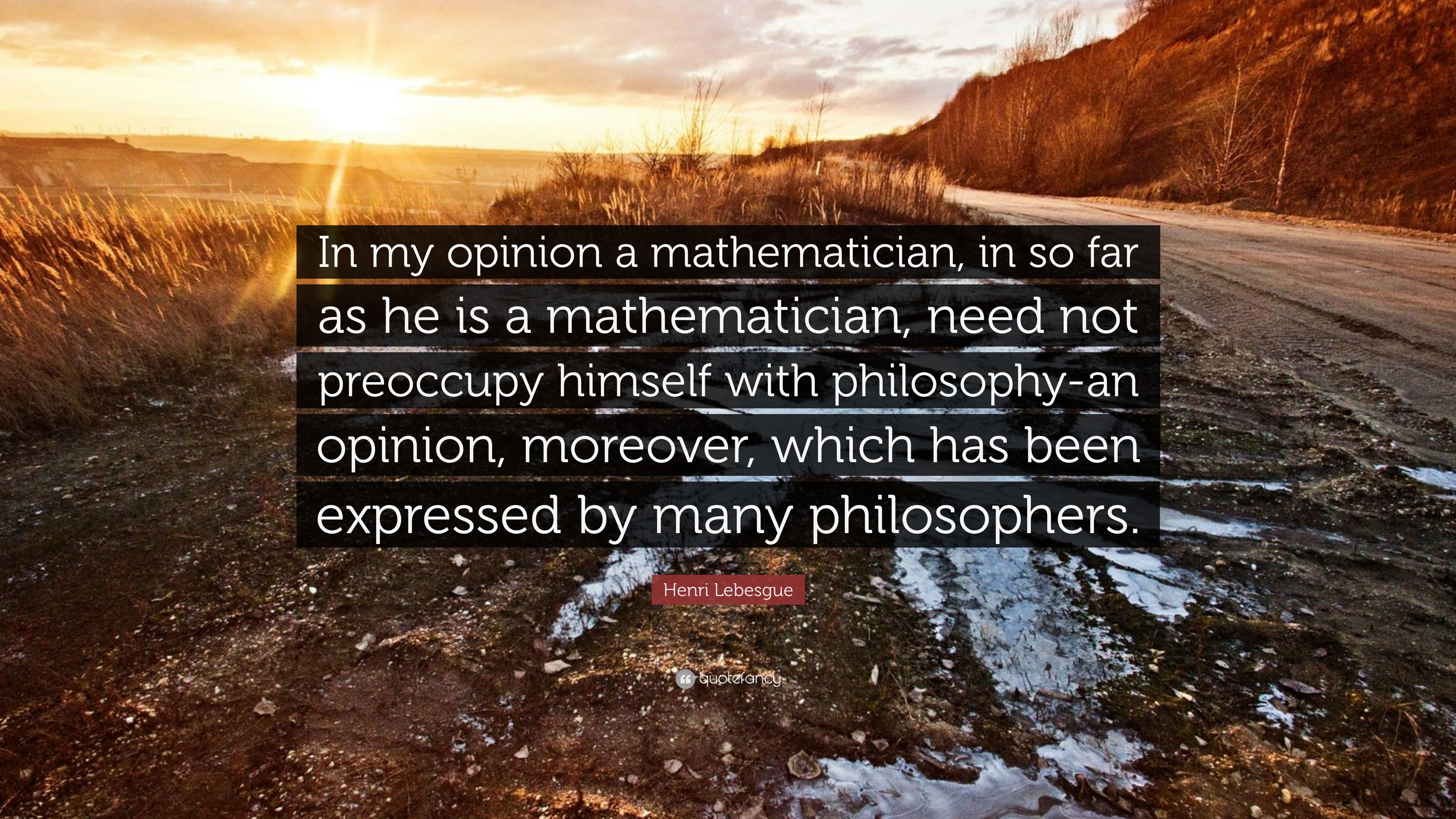
Beyond mathematics, Lebesgue was interested in literature and philosophy. He was known to be a voracious reader and enjoyed discussing intellectual and philosophical topics with his colleagues. These interests not only enriched his personal life but also provided him with a broader perspective, which in turn influenced his mathematical thinking. Lebesgue's ability to connect different fields of knowledge and find beauty in the interconnectedness of concepts reflected in his approach to mathematics, making his contributions not only groundbreaking but also deeply insightful.
During his life, Lebesgue married Yvonne Mahut on June 21, 1907, in Boulogne Billancourt. Despite his demanding career and the rigorous nature of his work, he was known to be a family man, maintaining a balance between his professional and personal life. His wife and their children brought joy and stability to his life, making them an important support system in his daily routine.
Lebesgue lived a relatively quiet and reserved life, known for his humility and dedication. He was a respected figure in the mathematical community, appreciated for his contributions and his character. His work and life exemplify the beauty of mathematics as a pursuit that transcends the boundaries of science, touching upon the realms of philosophy and human experience.
Henri Lebesgue's work and legacy continue to influence the field of mathematics. The Lebesgue integral remains a cornerstone of modern analysis, and his contributions to the theory of functions and measure theory have had a profound impact on the development of mathematics and its applications. His research not only advanced the field but also demonstrated the profound connection between mathematical concepts and the natural world, highlighting the elegance and beauty inherent in mathematical theory.
Conclusion
Henri Lebesgue's life and work provide a compelling narrative of a mathematician who dared to push the boundaries of mathematical knowledge. His contributions to the theory of integration and his innovative approach to understanding and representing functions have left an indelible mark on the field of mathematics. Lebesgue's legacy continues to inspire mathematicians and researchers, and his work remains a testament to the power of human intellect in the pursuit of mathematical truth.
The Spread and Impact of Lebesgue's Theory
Henri Lebesgue's theories spread quickly through the mathematical community, thanks to several factors, including the publication of his works in prestigious journals and the active support of prominent mathematicians. The foundational papers and articles on measure theory and the Lebesgue integral were published in top-tier journals such as Comptes Rendus de l'Académie des Sciences de Paris and Mathematische Annalen. These publications attracted the attention of mathematicians around the world and provided a solid base for further research.
The impact of Lebesgue's work was not limited to pure mathematics; it also had significant implications for applied mathematics, particularly in areas such as physics and engineering. For instance, the Lebesgue integral was adopted in the theory of partial differential equations (PDEs), allowing mathematicians to model more complex physical phenomena. In probability theory, Lebesgue's methods provided a robust framework for integrating over sample spaces, enabling the development of measure-theoretic probability (or "Lebesgue probability").
One notable application of the Lebesgue integral was in the analysis of Brownian motion, a stochastic process that describes the random movement of particles suspended in fluids. Brownian motion is critical in various scientific disciplines, from statistical mechanics to financial models. Through the use of Lebesgue integration, probabilists and physicists could more accurately describe and analyze these processes, leading to advancements in both theoretical and applied sciences.
Jouons and Measure Theory: A Collaboration
Lebesgue's work on measure theory also garnered recognition through collaborations and interactions with other notable mathematicians. One significant collaboration was with André Denjoy, who was also working on related topics around the same time. Their joint efforts led to the development of the Denjoy–Saks theorem, which further enriched the field of measure theory.
Another important collaborator was Paul Jouanson, under whom Lebesgue obtained his habilitation, the qualification required to teach as a university professor in France. Jouanson introduced Lebesgue to Henri Lebesgue himself, and their professional relationship was beneficial for the development of measure theory. Jouanson's encouragement and guidance were crucial in nurturing Lebesgue's early career, and their interactions helped establish Lebesgue as a leading figure in the French mathematical community. Jouanson recognized Lebesgue's potential and supported him throughout his academic journey.
Lebesgue's Other Contributions
While Lebesgue's work on integration and measure theory stands out as his most notable achievements, he made several other valuable contributions to mathematics. For example, Lebesgue's decomposition theorem, known as the Radon–Nikodym theorem, provided a way to decompose one measure with respect to another. Although Radon later proved the theorem independently, Lebesgue's contributions to measure theory remain significant. Furthermore, he introduced the concept of outer measure, which allowed for the extension of measure to more general sets than those that were Lebesgue measurable.
Lebesgue was also interested in the approximation of functions. He worked on the construction of functions with specific properties, such as those that are nowhere differentiable but still integrable. These functions, known as "monsters" or pathological examples, challenged conventional wisdom and stimulated further inquiry into the nature of functions and their behavior.
Legacy and Recognition
Henri Lebesgue's influence on the field of mathematics was profound and enduring. He received numerous honors and recognitions during his lifetime, including memberships in prestigious academic societies. In 1922, he was elected to the Académie des Sciences, a high honor that recognized his significant contributions to mathematics. This election highlighted the respect and admiration his peers had for his work.
Lebesgue's contributions were not only acknowledged in France but also internationally. His work inspired mathematicians worldwide, leading to the establishment of various research centers and conferences dedicated to his theories. The International Conference on Measure Theory and Its Applications, held periodically, is one such example. These gatherings fostered ongoing research and collaboration, driving the advancement of measure theory and related fields.
His Later Years and Final Days
As Henri Lebesgue reached his later years, he maintained his passion for mathematics and continued to contribute to the field. However, his health began to decline. In 1941, Lebesgue suffered a stroke that severely impacted his health, and he was confined to his apartment thereafter. Despite his illness, he continued to engage in mathematical discussions and maintain correspondence with colleagues.
On July 27, 1941, Henri Lebesgue passed away in his Parisian apartment. His death marked the end of an era in mathematics, but his legacy endured. The impact of his work on integration and measure theory continues to shape contemporary mathematical thought and practice. His theories have been refined and built upon by generations of mathematicians, ensuring that his name remains synonymous with the advancement of analysis and modern mathematics.
Lebesgue's contributions went beyond mere technical advancements; they also transformed the landscape of mathematical thought, challenging preconceived notions and opening up new avenues of exploration. His work on integration and measure theory, among other contributions, continues to inspire mathematicians and researchers, influencing countless students and scholars. The Lebesgue integral, a cornerstone of mathematical analysis, serves as a testament to his genius and the enduring relevance of his innovations.
Tribute to Henri Lebesgue
The legacy of Henri Lebesgue extends beyond the abstract realm of mathematics. He was not just a mathematician but a person deeply committed to the pursuit of knowledge and truth. His dedication to rigorous and innovative thinking laid the groundwork for the modern understanding of integration and measure. Lebesgue’s life and work serve as an inspiring example of how intellectual curiosity and perseverance can lead to groundbreaking discoveries that shape the future of a discipline.
Today, the Lebesgue Institute and the Lebesgue Center in Nancy, established in his honor, continue to promote research and education in his field. These institutions serve as a living tribute to Henri Lebesgue, carrying forward the spirit of inquiry and innovation that he embodied. By studying Lebesgue's work and life, we honor him and build upon the foundation he created, ensuring that his contributions continue to influence generations of mathematicians.
In conclusion, Henri Lebesgue's life and contributions to mathematics were nothing short of extraordinary. His work on integration and measure theory not only reshaped the field but also demonstrated the power of innovative mathematical thinking. His legacy lives on, continuing to inspire and guide the mathematical community in its quest for deeper understanding and greater insights.
The Legacy of Measure Theory and Lebesgue's Integral
The legacy of Henri Lebesgue's contributions to measure theory and integrals is profound and far-reaching. His foundational work has become a cornerstone of modern analysis, influencing not only pure mathematics but also numerous applied fields. The Lebesgue integral, in particular, has been instrumental in the development of functional analysis, probability theory, and various branches of physics and engineering.
One of the primary applications of the Lebesgue integral is in the theory of function spaces. The Lebesgue spaces, denoted as \( L^p \) spaces, provide a rigorous framework for studying functions with respect to different norms. These spaces are Banach spaces and Hilbert spaces, depending on the value of \( p \), and they play a central role in the study of partial differential equations (PDEs). For instance, the Sobolev spaces, which are generalizations of \( L^p \) spaces and include derivatives of functions, are crucial for the analysis of PDEs and variational methods in partial differential equations. The Lebesgue spaces have also been essential in harmonic analysis, a branch of mathematics that studies the representation of functions or signals as the superposition of basic waves.
Lebesgue's Theorem and Its Implications
Lebesgue's Dominated Convergence Theorem (DCT) is one of the most powerful and widely used results in measure theory. The DCT states that if a sequence of measurable functions \( \{f_n\} \) converges pointwise to a function \( f \) and is dominated by an integrable function \( g \), then \( f \) is integrable and the limit of the integrals of \( f_n \) is the integral of \( f \). This theorem is fundamental in the study of convergence in measure and has numerous applications in various areas of mathematics, including probability theory, functional analysis, and mathematical physics.
The DCT has been instrumental in the development of functional analysis, where it is used to establish the convergence of sequences of operators and to prove theorems about operator norms. It also plays a crucial role in the study of convergence in probability theory, particularly in the law of large numbers and the central limit theorem. The DCT ensures that under certain conditions, the limit of the integrals is well-defined and the convergence is stable, which is essential for rigorous mathematical proofs and theoretical results.
The Lebesgue Measure and Its Applications
The concept of Lebesgue measure is fundamental in many areas of mathematics. It extends the notion of length, area, and volume to more general sets, including those that are not Lebesgue measurable under the traditional Riemann measure. This extension has been invaluable in various fields, particularly in the study of fractals and geometric measure theory. The Lebesgue measure is also used in the construction of probability spaces, which are essential for stochastic processes and the theory of random variables.
In probability theory, the Lebesgue integral provides a rigorous framework for defining expectations and other measures of central tendency. The use of Lebesgue integration in probability theory has led to the development of measure-theoretic probability, which offers a more general and flexible approach to the study of random variables and stochastic processes. This theory has important applications in finance, economics, and other fields where stochastic models are used to describe and analyze complex systems.
The Impact on Other Mathematical Fields
The Lebesgue integral and measure theory have had a significant impact on other mathematical fields beyond probability and analysis. In harmonic analysis, the Lebesgue spaces and the Lebesgue integral are used to study the properties of functions and signals, such as Fourier series and wavelets. The theory of wavelets, which has applications in signal processing, image compression, and data analysis, heavily relies on the Lebesgue integral for its rigorous mathematical foundation.
Moreover, the Lebesgue integral has been instrumental in the development of stochastic calculus, which is used to model and analyze systems that exhibit random behavior. In stochastic calculus, the Itô integral, which is based on the Lebesgue integral, is used to define integrals with respect to Brownian motion. This has been crucial in applications such as financial modeling and the analysis of random processes in engineering and physics.
Education and Outreach
Henri Lebesgue's influence extended beyond research and publications; he was also an influential teacher and mentor. His teaching methods emphasized rigor and clarity, and he was known for his ability to convey complex mathematical concepts in an understandable manner. Many of his students went on to become prominent mathematicians themselves, and his teaching style and approach continue to inspire educators and students in the field of mathematics.
Lebesgue's contributions to education are not limited to his direct teaching; he also wrote several influential texts and articles that have become standard references in the study of analysis and measure theory. His books, such as "Leçons sur l'intégration et la recherche des fonctions primitives," have been instrumental in introducing students and researchers to the concepts of Lebesgue integration and measure theory. These texts continue to be used in university curricula and serve as a foundation for further study in analysis and probability.
Public Recognition and Honors
Henri Lebesgue received numerous honors and recognitions throughout his career, reflecting the high regard in which his work was held. In addition to his election to the Académie des Sciences, he was also awarded the Prix Bordin in 1910 for his work on the calculus of variations. This prestigious award is given for outstanding contributions to mathematics, and Lebesgue’s work was deemed to be of the highest quality in the field.
Lebesgue was also honored with the Prix Foch in 1913, which was awarded for his contributions to the development of the theory of integration. This recognition further cemented his status as a leading mathematician and his impact on the field. His work was not only recognized in France but also internationally, and he was sought after for his insights and contributions to mathematics.
Conclusion and Final Reflections
Henri Lebesgue's legacy is a testament to the power of innovative mathematical thinking and the importance of rigorous theoretical foundations. His work on the Lebesgue integral and measure theory has profoundly influenced modern mathematics, and his contributions continue to shape the field. The Lebesgue integral is a cornerstone of analysis, providing a robust framework for the study of functions and integrals that was previously beyond the reach of the Riemann integral.
Beyond the technical advancements, Lebesgue's life and work are a reminder of the importance of curiosity, perseverance, and dedication in the pursuit of mathematical truth. His contributions have inspired generations of mathematicians to build upon his foundations, and his legacy continues to inspire new discoveries and innovations.
As we reflect on Henri Lebesgue's life and work, we are reminded of the beauty and elegance of mathematics. His research not only advanced the field but also demonstrated the profound connection between mathematics and the natural world. Lebesgue's legacy endures, and his work continues to shape the future of mathematics, ensuring that his contributions will be remembered for generations to come.

















Comments