



Epaminondas: The Visionary Leader of Thebes
In the annals of ancient history, the mention of legendary military leaders often evokes names like Alexander the Great or Julius Caesar. Yet, standing nearly forgotten in the shadows of such luminaries is Epaminondas—a leader whose strategies and reforms reshaped the Greek world in the 4th century BCE. As a visionary statesman and military tactician, Epaminondas carved a path for Thebes, challenging the hegemony of Sparta and altering the course of Greek history.
The Rise of Thebes and Epaminondas
The city-state of Thebes, nestled in the region of Boeotia, Greece, was once an overshadowed player in the affairs of the Greek world. However, this began to change in the early 4th century BCE, as internal reforms and external pressures pushed Thebes toward a more prominent role. Epaminondas emerged from the depths of this transformation, his charismatic leadership and innovative strategies catapulting him to the forefront of Theban politics and military exploits.
Born around 418 BCE, Epaminondas was not of noble birth, yet his intelligence and charisma quickly distinguished him among his peers. He forged a reputation through his dedication to learning, particularly in philosophy and the military arts, which would later underpin his success as both a strategist and leader. His military prowess and deep-seated moral convictions became the cornerstone of his leadership style, steering Thebes into a period of remarkable, albeit short-lived, supremacy.
The Battle of Leuctra: A Turning Point
Epaminondas's most celebrated military achievement was the Battle of Leuctra in 371 BCE. Before this transformative engagement, the militaristic power of Sparta loomed large over the Greek city-states, having maintained dominance for several decades. Despite being outnumbered, Epaminondas led the Theban troops with an innovative battle formation—a tactic that played a crucial role in reshaping Greek warfare and redefining Theban might.
The traditional phalanx formation, typically employed by Greek armies, saw infantry lines of equal strength across the battlefield. However, Epaminondas devised a novel approach by massing his troops into a deeper, more robust column on one wing of the line. This concentrated force attacked the Spartan right, effectively neutralizing their famed hoplites. The result was a decisive Theban victory, one that shattered the myth of Spartan invincibility and marked the beginning of Theban ascendancy.
Epaminondas: A Statesman and Reformer
Beyond his military successes, Epaminondas was a visionary statesman who sought to create a balance of power within the Greek world. His profound understanding of both politics and human nature was evident in his approach to governance and reform. Following the Battle of Leuctra, Epaminondas sought to maintain Thebes's newfound power through alliances and diplomacy rather than sheer force alone.
One of his most significant political moves was the establishment of the Arcadian League, a confederation of city-states in the Peloponnese region. This strategic alliance served to counterbalance Spartan influence and prevent any single power from dominating the Greek peninsula. Epaminondas's vision extended to the socioeconomic structure of Thebes as well. He endorsed policies that fostered greater equality and redistributed land to bolster the Theban economy and population.
Legacy and Influence
The legacy of Epaminondas is both monumental and tragic. While his innovative tactics and strategic brilliance elevated Thebes to new heights, his untimely death in 362 BCE at the Battle of Mantinea precipitated the decline of Theban power. Despite this, his influence on military strategy endured, inspiring future tacticians with his creative military formations and maneuvers.
Epaminondas's impact extended beyond military reforms; his dream of a balanced power structure lingered well into the Hellenistic period. The fragmentation of Greek city-states left room for the eventual rise of Macedonian power under Philip II, who adopted several of Epaminondas's strategies and principles. Although Epaminondas's Thebes did not survive as a dominant power, the ripples of his ingenuity were felt throughout subsequent European military history.
In the tapestry of Greek history, Epaminondas stands as a testament to the power of innovation and vision. His leadership not only reshaped Theban fortunes but also left an indelible mark on the course of Greek and indeed world history—a mark that redefined warfare and set the stage for future generations of military leaders and strategists. As history unfolds, the lessons of Epaminondas remind us of the profound impact of courage, intellect, and a commitment to reform in an ever-changing world.
Military Innovations of Epaminondas
The military innovations introduced by Epaminondas at the Battle of Leuctra proved to be more than just a fleeting change in tactics; they heralded a new era of strategic thinking that would influence military leaders for generations. The concept of deploying troops in an uneven line, with particular strength at decisive points, was revolutionary. This tactic, known as the oblique order, was instrumental in his victory over the Spartans and later echoed in the strategies of commanders like Philip II of Macedon and even Frederick the Great of Prussia in the 18th century.
The oblique formation allowed Epaminondas to break the rigid structure of traditional phalanx warfare, which typically involved evenly matched forces clashing along a straightforward line of engagement. By concentrating his forces on the enemy's weak point and simultaneously utilizing lighter troops to harass and confuse enemy flanks, he introduced a level of fluidity and adaptability that had been lacking in Hellenic battles. This approach not only leveraged the uneven terrain to Theban advantage but also capitalized on disarray in enemy ranks, demonstrating Epaminondas's deep understanding of battlefield dynamics.
Theban Society Under Epaminondas
While military might and battlefield acumen were essential aspects of Epaminondas's leadership, his vision for Thebes also extended into societal improvements and civic reforms. As a state striving to secure newfound hegemony, internal cohesion was crucial, and Epaminondas worked tirelessly to foster unity and prosperity in Theban society.
One of his noteworthy endeavors was the redistribution of land ownership. Land, in ancient Greek society, was not just an economic asset but a symbol of status and power. By redistributing large estates previously dominated by aristocratic elites, Epaminondas aimed to diminish social hierarchies and engender a more equitable society. This policy helped broaden the economic base of Thebes, empowering more citizens to contribute to their polis and military efforts.
Moreover, the economic policies implemented during his leadership underscored his commitment to the welfare of Thebans at large. By supporting trade and local craftsmanship, Epaminondas created an environment conducive to growth and innovation. This economic upliftment ensured a steady supply of resources necessary for both sustaining military campaigns and advancing civic infrastructure, thus aligning Theban prosperity with its military ambitions.
The Diplomatic Maneuvering of Epaminondas
Epaminondas's diplomatic skills were as formidable as his military acumen. Recognizing that perpetual warfare was unsustainable, he sought alliances that could secure Theban interests while promoting regional stability. His efforts in forming the Arcadian League were characteristic of his strategic diplomatic vision, aimed at offsetting Spartan power while promoting a more unified Peloponnese.
In an era characterized by constant conflict between city-states, Epaminondas stood out as a leader eager to explore peaceful coexistence and mutual benefit. He advocated for treaties and alliances that not only strengthened Thebes but also fostered networks of support among other Greek city-states. By doing so, he paved the way for cooperative approaches to governance, seeking to stabilize the Greek world through diplomacy as much as through military strength.
One key alliance, with the city-state of Athens, was particularly significant. Despite traditional rivalries, Epaminondas was able to craft diplomatic initiatives that saw Thebes and Athens working together at various junctures, a striking testament to his ability to transcend entrenched enmities for the greater good of regional stability.
Critiques and Counterpoints
Despite his many contributions, Epaminondas was not without his critics, both during his life and in subsequent historical analyses. Some contemporary commentators and later historians argue that his policies, while innovative, were ultimately too ambitious given the volatile nature of Greek politics. The radical redistribution of land and power, for instance, while intended to foster equality, in fact led to dissent and instability following his death.
Additionally, his untimely death at the Battle of Mantinea, where he fell in battle although leading Thebes to another tactical success, left a power vacuum that Thebes struggled to fill. Without his guiding vision and leadership, Theban ascendancy quickly waned, demonstrating both the brilliance and the limitations of Epaminondas's impact. His inability to cement long-term stability or ensure a succession of equally capable leaders resulted in a rapid decline in Theban influence and foiled his broader plans for a balanced Greek world.
Though his strategies and political maneuvers were praised, the absence of a lasting institutional structure meant that much of his work unraveled swiftly. Critics point to this as a cautionary tale illustrating the need for robust systems alongside visionary leadership. Nevertheless, his legacy, rich with both triumphs and lessons in governance, continues to engage historians and inspire military strategists to this day.
Despite these debates, the contributions of Epaminondas remain a testament to his extraordinariness as a leader—a man whose military brilliance and visionary outlook momentarily brought Thebes to the zenith of its power and influence within the Greek world. As we reflect on his life and legacy, Epaminondas emerges as a complex figure, whose ambition and revolutionary ideas characterize a pivotal era in ancient history.
The Mantinean Campaign and Epaminondas's Final Acts
The culmination of Epaminondas's military career and life came during the Mantinean Campaign, which occurred in 362 BCE. This conflict was not just another battle for Thebes but a testament to Epaminondas's tenacity and strategic prowess. The political landscape was fraught with tension, as power struggles among neighboring city-states reached a boiling point. Determined to solidify Theban dominance and secure a lasting peace accord, Epaminondas launched a campaign targeting Sparta and its allies, effectively placing Thebes at the epicenter of a potential regional realignment.
Epaminondas's arrival at Mantinea signaled his persistent ambition to alter Greek geopolitics definitively. Utilizing innovative tactics once more, he crafted a strategy that involved feints and misdirection, aiming to split the forces of his adversaries. His foresight and ability to anticipate enemy movements underscored his unparalleled prowess on the battlefield. However, despite achieving tactical victories, this campaign would turn tragically personal.
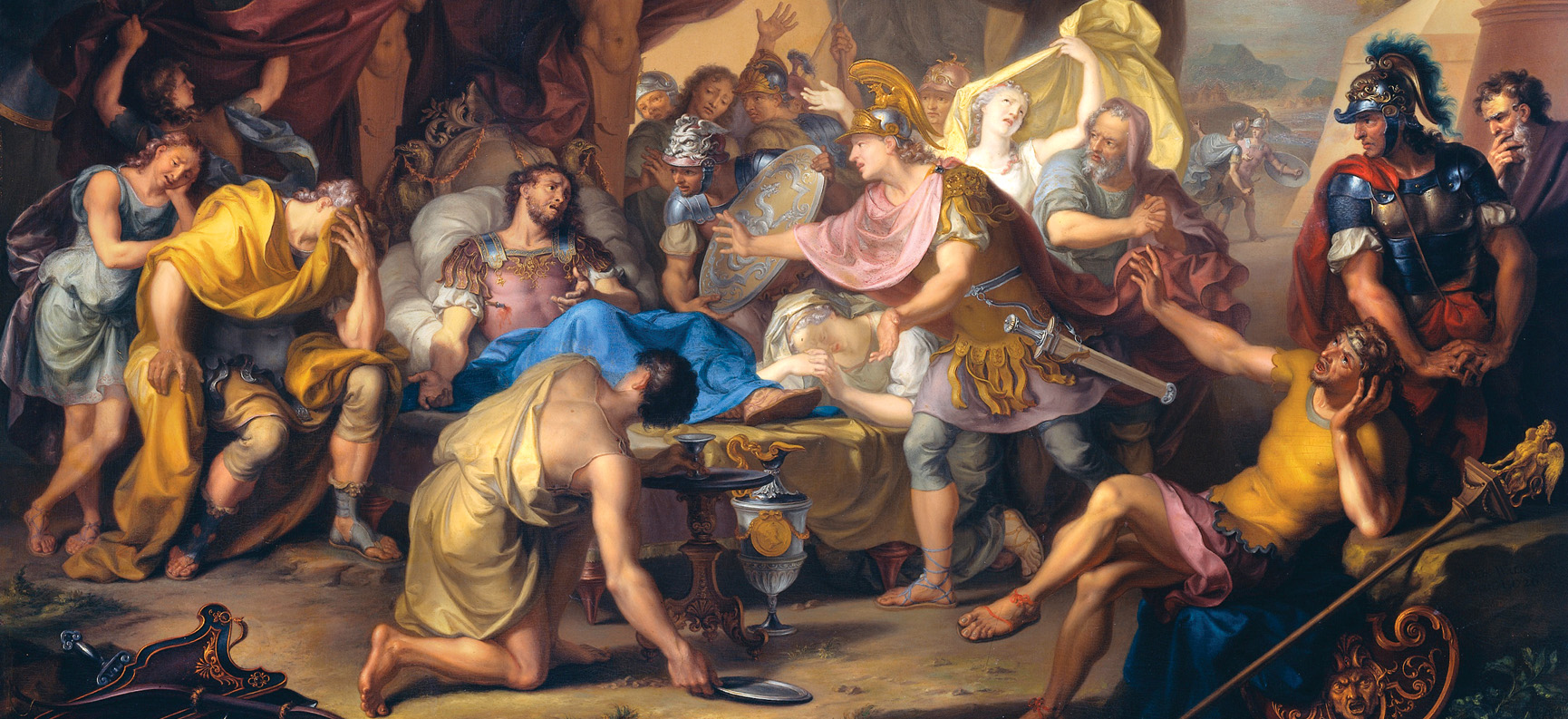
During the climax of the battle, Epaminondas was struck down by a spear. Even in his final moments, his thoughts were with Thebes; he famously ordered his men not to announce his death until assured of their victory. The Thebans won the battle, but it was a pyrrhic victory, his death casting a long shadow over the future of Theban hegemony.
The Immediate Aftermath of Epaminondas's Death
The death of Epaminondas had profound implications, both immediately and in the resultant power dynamics throughout Greece. Following his demise, the centralized leadership he had embodied dissipated, and Theban influence rapidly declined. The absence of his guiding hand and cohesive vision left a gaping leadership void that no successor could effectively fill. The political and societal reforms he courageously championed were left vulnerable, suffering without the powerful stewardship that had enforced them.
This unraveling of Thebes allowed Sparta to recover from its earlier defeats and weakened the structures Epaminondas had painstakingly built. The anticipated equilibrium within the Greek world, where one city-state did not monopolize power, remained unfulfilled. Moreover, the chaos of succession and the collapse of meaningful leadership precipitated external threats, eventually ushering in an era characterized by Macedonian ascendancy under Philip II, who keenly noted the strategic innovations pioneered by Epaminondas.
Long-term Influence and Philosophical Legacy
The legacy of Epaminondas endures not only through his strategic innovations but as an icon of principled leadership. His commitment to societal equity, military reform, and diplomatic tact embodies an enduring archetype of statesmanship. For subsequent generations of military strategists and political theorists, Epaminondas represents a profound combination of intellectual breadth and martial acuity.
The tactical concepts he introduced, such as the oblique approach, were foundational to Philip II's development of the Macedonian phalanx, which expanded upon Epaminondas's principles of flexibility and concentration of force. Furthermore, Epaminondas's endeavor to balance and check power foreshadowed later political theories advocating for equilibrium among rival state powers—an idea that resonates with modern political thought about stable governance systems.
Philosophically, Epaminondas's reflections on leadership and responsibility have also survived. His friendships and dialogs with philosophers of his time, like the Pythagorean Lysis, suggest that Epaminondas understood the synthesis of strategic thinking with ethical consideration—an approach that argues for the judicious wielding of power combined with moral integrity, a concept that has inspired statesmen across eras.
Conclusion: A Visionary in His Time
Epaminondas's life and legacy encapsulate the dichotomy inherent in many great historical figures: a man of grand vision whose reality was cut short by life's ephemeral nature. His innovative military tactics changed the face of warfare, while his reforms aimed at social equity and balance left an indelible impression that defined Theban society even after its political prominence waned. His visionary leadership, although temporarily successful on the battlefield, could not overcome the entrenched societal fractures that were re-exposed following his death.
Despite the ephemeral nature of Thebes's power, the lessons of Epaminondas remain clear. His career serves as an influential study in the balance of military might with governance, vision with pragmatism, and ambition with ethical responsibility. As we evaluate his legacy, it becomes apparent that true greatness in leadership consists not merely in triumphs on the battlefield or political arena but also in the foresight and moral fortitude to aim for a future that benefits all, a principle just as applicable to today's leaders as it was in the ancient world.
Thus, while the temporal realms of his influence may have dissipated after Mantinea, the philosophical and tactical legacies of Epaminondas continue to echo, reminding us of the enduring power of innovative vision and ethical leadership in shaping the course of history.


Comments