


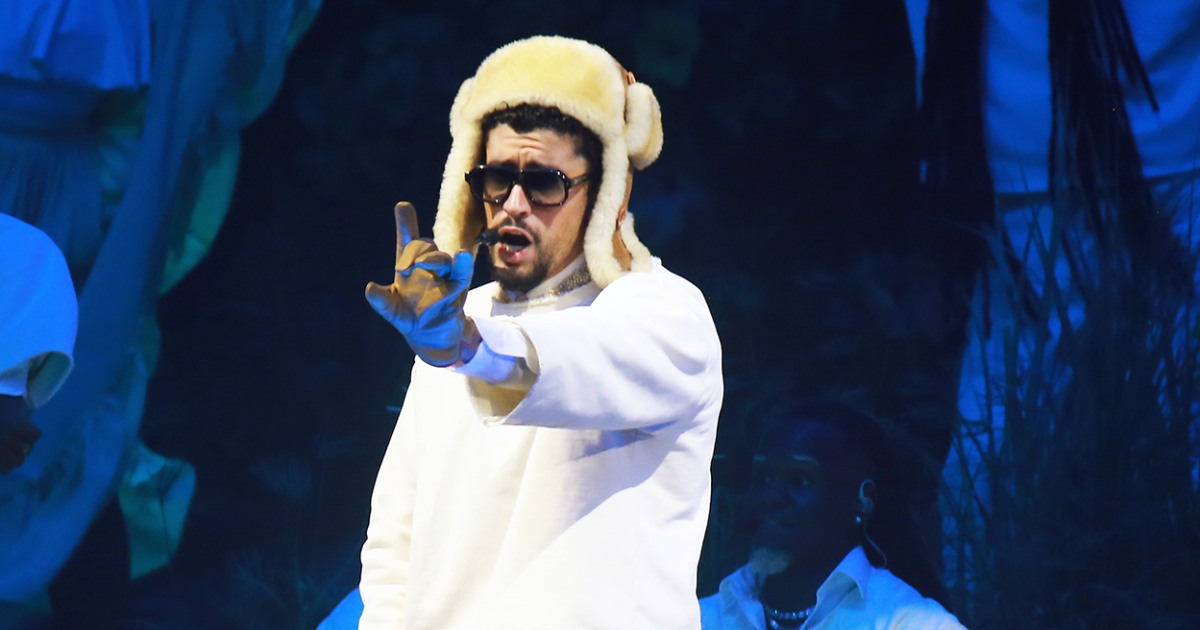


Bad Bunny vs. Taylor Swift: The Unseen Engine of a Streaming War
The number flashed across hundreds of millions of smartphone screens on December 2, 2025: 19.8 billion. That was the count, a staggering river of digital listens, that crowned Bad Bunny as Spotify’s most-streamed global artist of the year. In the carefully curated universe of Spotify Wrapped, this single metric triggered a cultural reset. It dethroned Taylor Swift, ending a two-year reign defined by her own historic streaming numbers and the fervor of the Eras Tour. The headline framed it as a battle: the Puerto Rican reggaeton globalist against the American pop titan. But the real story is about the two distinct galaxies of fandom, strategy, and identity that these artists represent—and what their duel atop the streaming charts reveals about the sound of the future.
The Architect of a Global Mood
Bad Bunny, born Benito Antonio Martínez Ocasio in Almirante Sur, Puerto Rico, did not emerge from a traditional pop star pipeline. He worked bagging groceries in a supermarket. His early tracks were uploaded to SoundCloud, a digital wild west far from Nashville studios or major label A&R meetings. His persona, el Conejo Malo, was forged in the kinetic, DIY heat of Latin trap. By 2025, he had evolved from a genre disruptor into something broader: an architect of global mood. His winning album, Debí Tirar Más Fotos (I Should Have Taken More Pictures), signaled a pivot. Its title hinted at nostalgia, a softer introspection woven into the perreo-ready beats. This wasn't just club music; it was a diary entry with a dembow rhythm.
His victory was a reclamation. He had previously owned the Spotify global crown for three consecutive years from 2020 to 2022. That streak was broken by the Swiftian phenomenon. His return to the summit in 2025, powered by a new album and a relentless touring schedule that crisscrosses hemispheres, proves his first reign was no fluke. It is a systemic shift. He operates in Spanish, yet his appeal is borderless. His concerts are linguistic melting pots, where lyrics in Spanish are shouted back at him by crowds from Las Vegas to Madrid. This challenges a long-held music industry axiom: that English is the mandatory passport to global domination.
“Bad Bunny’s success is a data-driven confirmation of a cultural reality we’ve seen building for years,” says Carlos Pérez, a music industry analyst for SoundEdge Data. “The streaming generation is polyglot. They aren't seeking out ‘Latin music’ as a niche. They are seeking out Bad Bunny, who happens to make music in Spanish. The algorithm doesn't care about language; it cares about engagement. And his engagement is monstrous.”
Personal details humanize the streaming giant. He is famously private off-stage, yet his public persona is flamboyant, challenging masculine norms with skirts and painted nails, and advocating for Puerto Rican sovereignty. He is a paradox: a megastar who critiques the very fame machine that elevates him. This authenticity is his fuel. Fans don’t just stream his music; they stream his identity. When he headlines the Super Bowl Halftime Show in February 2026, it will not be an invitation for him to enter the American mainstream. It will be the American mainstream formally entering his world.
The Master of the Ecosystem
Taylor Swift’s relationship with streaming platforms is more complex, a calculated dance of strategy and reward. Recall her famous withdrawal of her catalog from Spotify in 2014, a protest against the devaluation of music. Her return was not a surrender but a renegotiation of terms. She has since mastered the streaming era by treating it as one node in a vast, interconnected ecosystem. A new album is not just a collection of songs; it is an event with cryptic clues, multiple vinyl variants, companion films, and a touring spectacle so massive it reshapes local economies.
In 2024, she set a seemingly unmatchable bar: 26.6 billion global streams on Spotify alone. Her reign in 2023 and 2024 was built on the dual engines of the Midnights album cycle and the Eras Tour, a cultural hurricane that made every city it hit a Swiftie pilgrimage site. The tour’s setlist, a marathon spanning her entire career, acted as a sustained driver for her entire discography on streaming services. To listen to Swift is to participate in a shared narrative, a saga of reinvention and reclamation that her fans help write.
“Swift’s operation is vertically integrated,” notes Lydia Chen, a professor of media studies at UCLA. “She creates a universe. The streaming numbers are a byproduct of that universe’s gravity, not the sole objective. While Bad Bunny’s appeal is cultural and atmospheric, Swift’s is narrative and relational. Her fans are archivists and analysts. Each stream is a vote in an ongoing story.”
Her second-place global finish in 2025 is less a defeat and more a testament to the sheer, unsustainable altitude of her previous peak. Notably, she remained the top-streamed artist in the United States, a bastion of her most fervent support. This split—global victor versus domestic champion—illustrates the fascinating fork in their paths. Swift’s power is concentrated, deep, and narrative-driven. Bad Bunny’s is diffuse, wide, and rooted in rhythmic identity. One asks for your dedication. The other captures your momentum.
The Wrapped Mirror
Spotify Wrapped itself is a character in this drama. In 2025, it became a more aggressive mirror. A record 250 million users engaged with their personalized data stories, spending a collective 65 hours inside the feature—a staggering metric of cultural participation. The new “Listening Age” feature, which estimates a user’s age based on their musical habits, playfully underscored the generational divides at play. The viral sharing of these digital trophies, with 575 million shares by December 3, turned personal taste into public performance.
This is the arena where the battle is perceived. The crowning of a top artist is the headline, but the undercard tells a richer story. Lady Gaga and Bruno Mars’ “Die With a Smile” was the top global song. The KPop Demon Hunters soundtrack landed at number two for albums. The U.S. top song was Kendrick Lamar’s “Luther” featuring SZA. This fragmentation is key. Bad Bunny didn’t win because the world listens only to him. He won because, in a landscape of infinite choice, he is the single most common denominator across a planet of disparate playlists. His victory is a victory of scale over niche, of a sound that functions as both folk music and a global pop lexicon.
The hook is set. The numbers are public. But what does this shift truly mean for the music industry, for the definition of a global star, and for the artists themselves? This is more than a chart footnote. It is a map of new worlds.
The Fourth Ring: Bad Bunny’s 2025 Blueprint
On December 3, 2025, Spotify Wrapped dropped like a digital New Year’s Eve ball. The numbers were definitive: 19.8 billion streams. Bad Bunny wasn’t just leading the pack; he was rewriting the rules of the race. His fourth top-artist crown—delivered in person during a Dominican Republic tour stop—wasn’t a trophy. It was a coronation. The ring, a now-traditional Spotify gesture, symbolized more than metrics. It marked a shift in global power.
His weapon in 2025 was DeBÍ TiRAR MáS FOToS, released August 2025. The album, a 16-track mosaic of reggaeton, trap, and introspective ballads, became Sony Music Entertainment’s biggest revenue project in Q2 2025. It wasn’t just streamed; it was devoured. 7.7 billion streams later, it stood atop the year’s album chart, a rare feat for a non-English record. The album’s centerpiece, “Sapo Concho,” wasn’t just a song. It was a character, a persona Bad Bunny had cultivated across music videos and live performances, embodying Puerto Rico’s streetwise humor and resilience. The accompanying short film, produced with Stillz and A1 Productions, turned the album into a cinematic event, further blurring the line between music and visual storytelling.
“This isn’t an editorial choice, but one earned entirely by listeners. Wrapped reflects our users’ listening habits, and every stream, playlist addition, and fan moment contributes.” — Spotify Newsroom, December 3, 2025
His summer residency in San Juan, Puerto Rico, sold out instantly. The economic impact was measurable in the hundreds of millions, a testament to his ability to turn a concert series into a citywide festival. The finale, streamed globally on Prime Video, drew over 11 million viewers. This wasn’t just a show; it was a cultural export, a live broadcast of Puerto Rican pride and sonic innovation. The residency’s success underscored a critical point: Bad Bunny’s dominance isn’t just digital. It’s physical, communal, and economically transformative.
The Grammy Gambit
The critical establishment took notice. DeBÍ TiRAR MáS FOToS earned six Grammy nominations for the 2026 ceremony, including a historic first: a Spanish-language album nominated in all three of the “Big Four” categories—Album, Record, and Song of the Year. This wasn’t just a nod to his popularity. It was an acknowledgment of his artistic ambition. The album’s lead single, “DtMF,” blended reggaeton’s signature dembow rhythm with a melancholic synth line, a sonic representation of the album’s duality—celebration and reflection.
Yet, the Grammy nominations also revealed a lingering tension. Despite his global streaming supremacy, Bad Bunny remains an outsider in the traditional awards circuit. His music, while critically acclaimed, is often relegated to the “Latin” categories, a classification that feels increasingly outdated in a world where his streams outpace those of many English-language nominees. The question lingers: Will the Grammys fully embrace an artist who doesn’t fit neatly into their historical frameworks?
“Spanish-language music is reaching fans everywhere. Regional genres are moving onto the global stage. The borders are gone.” — Spotify Newsroom, December 3, 2025
His cultural impact extends beyond charts. He is a symbol of Puerto Rican resilience, a voice for the island’s sovereignty, and a challenge to gender norms in a genre often criticized for its machismo. His influence is political as much as it is musical. When he speaks, it’s not just about music; it’s about identity, representation, and the power of language. In a world where streaming platforms are the new gatekeepers, Bad Bunny’s success is a reminder that the gates are wide open—for those who can command the algorithm and the audience.
Taylor Swift: The Ecosystem Under Pressure
Taylor Swift’s 2025 was, by any measure, a triumph. Her twelfth studio album, The Life of a Showgirl, released in the fall, debuted to massive numbers. It was a return to the narrative-driven songwriting that defined her early career, but with the polished production of her later work. The album’s lead single, “The Alchemy,” became an instant fan favorite, a track that blended her signature storytelling with a synth-pop edge. Yet, for all its strengths, the album didn’t quite reach the cultural saturation of Midnights or Folklore. It was excellent, but not explosive.
Her global streaming numbers, while still staggering, dipped slightly from 2024’s 26.6 billion to a still-dominant but second-place 19.5 billion in 2025. The Eras Tour, now in its second year, remained a juggernaut, but the novelty had worn off slightly. The tour’s setlist, once a revelation, became a familiar script. The surprise songs, a highlight of the early shows, lost some of their spontaneity as the tour stretched into its second year. Swift’s challenge in 2025 wasn’t quality; it was sustainability. How do you maintain the momentum of a cultural phenomenon?
“Over 70,000 artists uploaded Clips to Spotify in 2025 for fan engagement.” — Spotify Newsroom, December 3, 2025
Her strategy has always been about control. She controls her masters, her touring, her merchandise, and her narrative. But in the streaming era, control is an illusion. The algorithm doesn’t care about carefully crafted narratives or surprise albums. It cares about engagement, and in 2025, Bad Bunny’s engagement was unstoppable. Swift’s fans are loyal, but Bad Bunny’s are legion. They don’t just stream his music; they live it. They dance to it, they meme it, they make it part of their daily lives. That’s a level of cultural penetration that even Swift’s most dedicated fans can’t match.
The U.S. Stronghold
In the United States, Swift remained untouchable. She was the top-streamed artist, a testament to her deep roots in American pop culture. Her music is the soundtrack to millions of lives, a constant presence on radio, in movies, and at weddings. But the U.S. is just one market, and in the global streaming economy, it’s no longer the only one that matters. Bad Bunny’s victory is a sign of the times: the center of gravity in music is shifting. It’s no longer enough to dominate at home; you have to conquer the world.
Swift’s challenge in the coming years will be to expand her global footprint without diluting the intimacy that defines her music. She can’t just be an American star; she has to be a global one. That means more international collaborations, more tours outside the U.S., and a willingness to engage with cultures beyond her own. It’s a tall order, but if anyone can do it, it’s Swift. She’s reinvented herself before, and she can do it again.
“Bad Bunny’s success highlights Spanish-language music’s global dominance, carrying Puerto Rico’s sound to fans around the world.” — Harper’s Bazaar, 2025
The battle between Bad Bunny and Taylor Swift isn’t just about who gets the most streams. It’s about the future of music itself. Will it be defined by the intimacy of storytelling or the universality of rhythm? By the control of narratives or the chaos of algorithms? By the familiar or the foreign? The answer, as always, is somewhere in between. But for now, the crown belongs to Bad Bunny. And he’s not giving it up without a fight.
The Shore of a New Ocean
Spotify's double-sided screen in 2025—one side Bad Bunny, the other Taylor Swift—was more than a graphic. It was a dividing line separating distinct empires built from the same digital substrate. Understanding this isn't about fan allegiance; it’s about a tectonic shift in the music industry's geography. Bad Bunny’s fourth title signals the collapse of the old radio-charted monoculture. A Spanish-language record as the year's top album would have been unthinkable a decade ago. Now, it’s a quarterly report fact. This matters because it fundamentally rewires how artists conceive of their audience and how record labels allocate their resources. The "global crossover" is a dead concept. Bad Bunny didn’t crossover; he built a stadium on the other side, and the world came to him.
The implications ripple outwards. Touring strategies now prioritize Mexico City and São Paulo with the same fervor as New York and London. Marketing campaigns are built for TikTok sounds in multiple languages. A&R scouts are as likely to be mining Colombian trap scenes as they are Nashville songwriting rounds. Bad Bunny’s victory isn’t a fluke; it’s a market correction. It validates the vast, commercially ravenous audience for non-Anglophone music that the industry had long treated as a secondary concern.
"What Bad Bunny’s 2025 proves is that we’ve exited the era of global pop ambassadors and entered the era of global pop localism. He is not translating his culture for a broader market; he is making his local culture the global standard. That changes everything about production, promotion, and profit." — Anita Vela, Music Economist, Berklee College of Music
For Swift, the significance is different but equally profound. Her continued U.S. dominance, even in a "down" year globally, underscores the immense, self-sustaining power of a deeply narrative-driven, artist-controlled ecosystem. Her model is a blueprint for longevity and brand equity in an age of fleeting virality. The battle between these two models—Swift’s depth-first empire versus Bad Bunny’s breadth-first dominion—is the central business story of modern music.
The Cracks in the Streaming Crown
Celebrating this streaming supremacy requires a hard look at its inherent flaws. The sheer volume of Bad Bunny’s streams—19.8 billion—is a breathtaking statistic that also obfuscates a troubling reality for the average musician. The per-stream payout from Spotify remains microscopic, a fraction of a cent. An artist with a million streams might earn enough for a modest grocery run, while the billions funneled to the apex reflect an economy of radical inequality. Bad Bunny’s real revenue comes from touring, endorsements, and merchandise; the streams are merely the engine of visibility. This system works magnificently for the top 0.1% and fails nearly everyone else.
Furthermore, the "listener-driven" narrative Spotify promotes is a clever half-truth. While streams are indeed user-generated, the platform's algorithm is an invisible kingmaker. Its autoplay features, personalized playlists like "Radio" and "Discover Weekly," and its homepage curation create a powerful feedback loop. A song placed on a major playlist can generate hundreds of millions of streams, effectively programming listener taste. There’s a circular logic at play: Spotify says it reflects user habits, but its tools profoundly shape those very habits. Does Bad Bunny top the chart because the world independently craves his music, or because the algorithm, recognizing his engagement metrics, pushes him relentlessly to billions of potential listeners? The answer is both, and that ambiguity is the algorithm's power.
Critically, both artists face questions of saturation. For Bad Bunny, the challenge is maintaining artistic edge amid such colossal commercial demand. Can the "Sapo Concho" character remain subversive when it's sponsored by a global beverage brand? For Swift, the risk is a fanbase so devoted it risks becoming an echo chamber, insulating her from the kind of external creative pressures that often forge an artist's best work.
The road ahead is paved with specific dates and high-stakes gambits. All eyes turn to February 8, 2026—Super Bowl LVIII at Levi's Stadium in Santa Clara, California. Bad Bunny’s co-headlining halftime performance is the single biggest stage in American entertainment. This isn't just a gig; it's a ratification of his new status. He will perform for an audience of over 100 million, many of whom may not know a word of Spanish. His setlist will be a statement: will he cater to a perceived mainstream with his biggest crossovers, or will he deliver a full-throated, Spanish-language reggaeton manifesto? Bet on the latter.
Swift’s calendar is a blank slate after the final Eras Tour date, and that silence is deafening. Industry whispers point to a deliberate pause, a strategic retreat to write and record. The pressure for her next move is immense. It must reassert her global primacy without appearing reactive. A pivot into film directing or a deeper theatrical foray seems plausible, leveraging her storytelling prowess into new mediums. The era of biennial album cycles may be over for her; the next phase will likely be more deliberate, less predictable.
By the time Spotify Wrapped unfolds again in December 2026, the landscape may have shifted once more. A resurgent Drake, a new K-pop powerhouse, or a left-field viral star could disrupt the hierarchy. But the paradigm set in 2025 is enduring. The throne is no longer in a fixed location. It moves with the rhythm of the world. The stream counts will reset to zero, the algorithms will churn anew, and two distinct blueprints for global dominance—one built on a shared story, the other on a shared beat—will continue their silent, billion-stream war. The victor gets a digital ring. The rest of us get the soundtrack.








Comments