Arthur Stanley Eddington: The Pioneering Astronomer and Physicist
Introduction
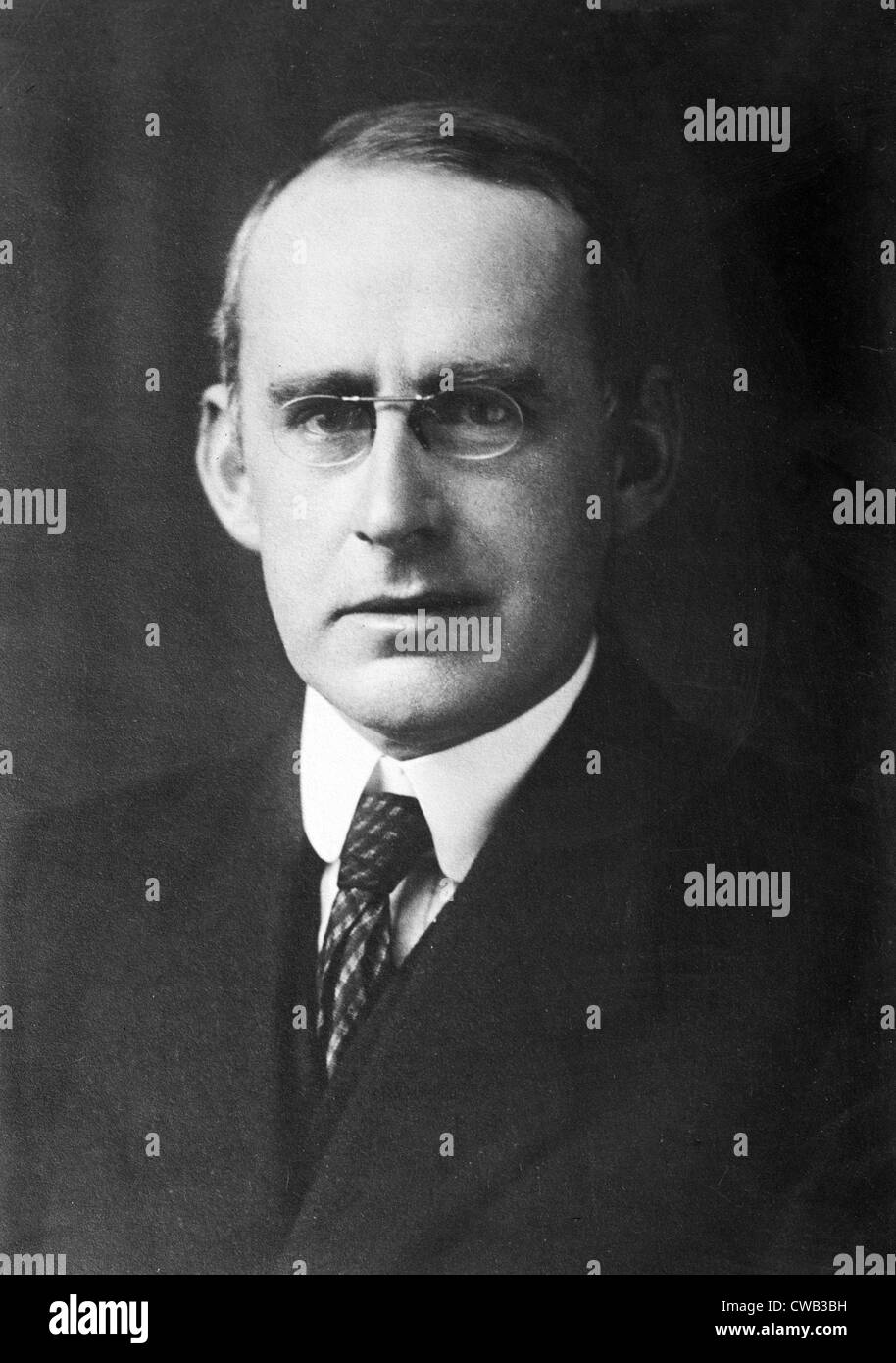
Arthur Stanley Eddington (1882-1944) was one of the most influential scientists of the early 20th century, best known for his contributions to astrophysics, quantum physics, and relativity. Born in Kendal, a small town in Cumbria, England, Eddington embarked on a journey that would see him become a leading figure in the scientific community and an inspiring figure to generations of scientists. His work significantly advanced our understanding of stars and their processes. This article delves into Eddington's remarkable life and groundbreaking research.
Early Life and Education
Eddington was born on February 22, 1882, to Joseph Eddington, a headmaster at a local school, and Sarah Ann Hodgkinson. Growing up, he was not particularly interested in science or mathematics but found himself more attracted to literature. However, this changed during his early studies at St. John's College, Cambridge, where he encountered the field of natural sciences and found it fascinating.
He pursued further education in mathematics and graduated in 1905 as third Wrangler in the Mathematical Tripos Examination, a prestigious test. Despite his academic success, Eddington initially intended to teach at a school rather than pursue an academic career. However, his teaching position at Sherborne School was terminated due to his opposition to the controversial exclusion of Jewish students. This incident prompted him to take up the position of天文学者和物理学家,艾萨克·爱丁顿(1882-1944)是早期20世纪最具影响力的科学家之一,最著名的是他在天体物理学、量子物理学和相对论方面的贡献。他出生于英格兰坎布里亚郡的一座小镇肯达尔。爱丁顿从小并不特别感兴趣于科学或数学,而是更倾向于文学。直到他在剑桥大学圣约翰学院学习时遇到了自然科学,发现了对这门学科的兴趣。他以数学专业毕业,并获得第三名的优异成绩参加数学三试。
在剑桥大学进一步深造后,爱丁顿逐渐转向了研究天文学和物理学的方向。尽管他的学术成就显著,他最初的目标只是成为一名学校的教师。然而,在谢伯恩学校的教学职位由于反对排除犹太学生而终止后,这促使他接受了剑桥天文台天文学研究员的职位。从此,在剑桥天文台的研究经历开启了他科学研究的新篇章。
Astronomy Research and Discoveries
At Cambridge, Eddington became deeply involved in the study of spectroscopy, which involves the analysis of light from celestial bodies to understand their chemical composition and physical properties. His work laid down foundational knowledge in the field and led to significant advancements in our understanding of star composition and evolution.
One of his key discoveries involved the measurement of stellar parallaxes. Stellar parallax is the apparent shift in the position of a star when observed from different points in Earth’s orbit around the Sun. By accurately measuring these shifts using spectrometers, Eddington contributed to refining the distance estimates for distant stars.
Another critical area of Eddington's research focused on the structure and behavior of stars. He formulated theories on stellar radiation and stellar structure that have remained influential to this day. His work on stellar atmospheres was pioneering, helping us comprehend how stars generate energy through fusion reactions deep within their cores.
During World War I, Eddington served as a meteorologist in the Royal Naval Air Service. This experience further honed his skills in observing and analyzing atmospheric phenomena, which proved beneficial in his future scientific endeavors, particularly in understanding the dynamics of celestial bodies.
Relativity and Quantum Physics
Eddington was one of the earliest physicists to apply Einstein’s theory of general relativity to astronomical observations. His work was crucial in interpreting the bending of light around massive objects, famously verified during a solar eclipse in 1919. This observation provided the first experimental confirmation of Einstein's predictions and brought him international recognition. His efforts demonstrated how the laws of physics can be tested and confirmed through astronomical observations.
In addition to relativity, Eddington made significant contributions to quantum mechanics. Although he did not fully accept the Copenhagen interpretation that gained widespread acceptance during his lifetime, he was instrumental in promoting the importance of quantum theory in explaining atomic structures and spectral lines observed in celestial objects.
Legacy and Recognition
Eddington's contributions in both astronomy and theoretical physics had a profound impact on the scientific community. He was elected a Fellow of the Royal Society in 1914, and later served as its president from 1930 to 1935. His leadership in the Royal Society highlighted his standing as one of the leading figures in British science during that era.
Among Eddington's numerous accolades, he received the Royal Medal in 1916 and was knighted in 1930. He also authored several popular books, such as "The Internal Constitution of the Stars" and "Relativity Theory of Elementary Phenomena," which made complex scientific ideas accessible to a broader audience.
Despite his considerable achievements, Eddington faced criticism for certain aspects of his work. Specifically, his interpretation of quantum mechanics and philosophical approach often drew controversy. Nevertheless, his legacy continues to influence modern physics, particularly in the fields of astrophysics, cosmology, and mathematical physics.
Eddington died on November 22, 1944, leaving behind a legacy that encompasses not only his scientific work but also his contributions to popularizing science among the general public. As a pioneer of 20th-century science, his ideas and discoveries continue to shape our understanding of the universe.
Social and Cultural Impact
Eddington's contributions extended beyond the laboratory and academia, influencing popular culture and public perception of science. He was renowned for his ability to communicate complex scientific concepts in an engaging way, making him a go-to figure for disseminating scientific knowledge to the general public. In his popular book "Space, Time and Gravitation: An Outline of the General Relativity Theory," published in 1920, Eddington provided a comprehensive overview of Einstein's revolutionary theory of general relativity. This book, written in accessible language, helped demystify complex scientific ideas, turning it into a household topic.
His influence reached even beyond academia. During his time lecturing at Cambridge, Eddington regularly attracted large audiences who were eager to learn about the latest advances in physics and astronomy. These lectures were pivotal in spreading scientific literacy and enthusiasm among the population. He frequently spoke about the implications of relativity for everyday life, emphasizing how the principles of general relativity could be observed in our daily experiences, thus demystifying these concepts for non-scientists.
Eddington's popularity as a public figure was further emphasized when he participated in the 1919 expeditions to observe the total solar eclipse in Brazil and Príncipe Island to confirm Einstein's predictions of gravitational lensing. These expeditions, funded by the Royal Society and the Royal Astronomical Society, were a significant moment in the history of science. The successful confirmation of Einstein's theories through these observations cemented Eddington's status as a scientific icon and further enhanced public interest in physics and astronomy.
Education and Advocacy
Eddington's dedication to education was evident in his role as a professor at various institutions. Beyond his tenure at Cambridge, he held professorships at Kings College London and Imperial College London, where he taught both undergraduate and postgraduate students. His lectures and publications were characterized by clarity, precision, and an intuitive grasp of complex concepts, making him a respected educator and mentor. He encouraged his students to adopt a curious mindset, fostering a culture of inquiry and exploration that persists in these institutions even today.
One of Eddington's most memorable contributions to education was his establishment of the Institute of Astronomy at Cambridge. This institution, founded in 1924, has been a cornerstone of astronomical research and teaching in the United Kingdom ever since. Eddington envisioned it as a center for advanced study and research, ensuring that future generations of scientists could build upon the foundation he and his contemporaries had laid.
Furthermore, his advocacy for science in society was unparalleled. Eddington served on multiple committees and boards dedicated to promoting scientific education and research. As a member of the Science Advisory Committee, he worked tirelessly to ensure that science was integrated into national educational policies and curricula. His efforts helped establish standards for scientific teaching and research, which continue to be relevant in modern times.
Interests and Personal Life
Apart from his scientific pursuits, Eddington was also known for his interests in music, philosophy, and literature. He was a proficient pianist, playing classical and jazz music. His musical talents were often showcased during social gatherings, adding a cultural dimension to his scientific persona.
Philosophically, Eddington was fascinated by the interface between science and metaphysics. He wrote extensively about the nature of reality and the relationship between the tangible and the intangible. In his book "Science and the Modern World," published in 1927, Eddington explored the philosophical implications of scientific development, suggesting that science could offer insights into the fundamental nature of existence. This interdisciplinary approach allowed him to provide a holistic view of the world, blending scientific rigor with metaphysical speculations.
Literarily, Eddington had a keen interest in poetry and literature. Many of his writings reveal a deep appreciation for literature and its ability to convey complex ideas and emotions. His poem "On the Nature of Things, Which Are Not Our Own" reflects his philosophical musings on the relationship between humans and the natural world, capturing both the beauty and complexity of the cosmos.
Legacy and Influence
Eddington's legacy endures not only in his scientific contributions but also in the way he influenced subsequent generations of scientists and thinkers. His work paved the way for advancements in astrophysics, cosmology, and quantum physics. For instance, his theoretical models on stellar structure and function continue to inform our understanding of stellar evolution and stellar nucleosynthesis.
Moreover, Eddington's advocacy for clear communication and accessible science has left a lasting impact. Scientists today continue to strive for simplicity and clarity in their explanations and publications, following his lead in making complex ideas understandable for a lay audience. His emphasis on the importance of public engagement and education in scientific endeavors underscores the ongoing relevance of his work.
Eddington's interdisciplinary approach to science and his commitment to bridging the gap between science and public understanding have inspired countless researchers and educators. His influence extends to his promotion of scientific curiosity among the general public and his efforts to integrate science into the educational system. The Institute of Astronomy, established by Eddington, remains a beacon for scientific excellence and continues to foster a generation of scientists who strive for both depth and breadth in their research.
In conclusion, Arthur Stanley Eddington was a multifaceted individual whose influence spanned beyond the realm of science. His contributions to astrophysics, his advocacy for science education, and his interdisciplinary approach have left an indelible mark on the scientific community and beyond. His legacy continues to inspire new generations to explore the mysteries of the universe with the same enthusiasm and rigor he championed throughout his illustrious career.
Interdisciplinary Contributions and Interests
Beyond his scientific and educational efforts, Eddington's work was characterized by its interdisciplinary nature. His interests extended into philosophy, literature, and music, reflecting a broad intellectual curiosity that enriched his scientific contributions. As a proponent of the interplay between different fields, Eddington believed that science, philosophy, and art should inform each other.
One of Eddington's notable philosophical works was his book "The Nature of the Physical World," published in 1927. In this treatise, he explored the philosophical implications of modern physics, particularly quantum mechanics and relativity. Eddington argued that these theories necessitated a re-evaluation of traditional metaphysical beliefs about the nature of time, space, and causality. He posited that the scientific method, with its empirical basis and mathematical rigor, offered new insights into the very fabric of reality.
In his essay "The Rejection of Hypothesis" and his book "The Internal Constitution of the Stars," Eddington discussed the relationship between scientific hypotheses and empirical evidence. He emphasized the importance of maintaining a balance between theoretical predictions and observational data, advocating for a pragmatic approach to scientific inquiry. This philosophy influenced not only his work but also the broader scientific community, encouraging a rigorous and evidence-based approach to scientific research.
Eddington was also a noted author, contributing to both scientific literature and general readership. His writings include "The Relativistic Universe," "The Mathematical Theory of Relativity," and "The Fundamental Theory." These works are characterized by their clarity and accessibility, demonstrating his ability to explain complex scientific concepts in a manner that was both accurate and engaging. His book "The Internal Constitution of the Stars" is particularly noted for its detailed explanations of stellar structure and evolution, making it a seminal text in the field of astrophysics.
Philosophical Musings and Public Engagement
Throughout his career, Eddington frequently engaged with philosophical questions, particularly those concerning the nature of reality and the relationship between the observer and the observed. His essay "The Nature of the Physical World" explores these themes in depth, presenting a view that modern physics reveals a universe that is fundamentally probabilistic and interconnected. Eddington argued that the laws of physics reflect a deep harmony and elegance in the workings of the cosmos, a perspective that resonates with both scientists and non-scientists alike.
Eddington's philosophical musings are also reflected in his personal correspondence and lectures. For example, in his lecture "Stars and Atoms," he discussed the parallels between the structure of atoms and stars, highlighting the underlying unity in the physical universe. His insights into the interconnectedness of natural phenomena have inspired countless scientists and philosophers to consider the broader implications of scientific theories.
The Legacy of a Scientific Icon
Eddington's legacy is best understood not just through his scientific accomplishments, but also through the indelible mark he left on the scientific community and public discourse. His contributions have been recognized worldwide, with numerous awards, lectures, and papers bearing his name. One such honor is the Eddington Medal, awarded annually by the Royal Astronomical Society to recognize contributions to the study of the Sun and related areas.
In his personal life, Eddington maintained a strong sense of philanthropy and public service. He was actively involved in charitable organizations and was deeply committed to the welfare of children, founding the Eddington Children's Home in 1920. His support for child welfare was driven by his belief in the importance of nurturing young minds and ensuring they received the best educational opportunities.
Final Reflections
As we reflect on the life and work of Arthur Stanley Eddington, it becomes clear that his influence extends far beyond the scope of his scientific discoveries. His ability to bridge the gap between complex scientific theories and everyday human experience has made him a timeless figure in the annals of science. His interdisciplinary approach, philosophical insights, and public advocacy continue to resonate with scientists, philosophers, and the general public alike.
Today, Eddington's legacy serves as a reminder of the enduring importance of science in shaping our understanding of the universe. His work on stellar evolution, quantum theory, and relativity remains foundational in contemporary astrophysics and physics. More importantly, his commitment to clear communication, public engagement, and social service provides a model for future generations of scientists and educators.
In conclusion, Arthur Stanley Eddington stands as a testament to the power of interdisciplinary thought and the importance of bridging knowledge from different domains. His life and work continue to inspire and educate, offering a glimpse into the vast and mysterious cosmos that he so tirelessly sought to understand.
Through his scientific endeavors, educational initiatives, and public engagements, Eddington left a lasting imprint on the scientific landscape and beyond. His legacy is a reminder that science, when combined with a deep sense of curiosity, humanity, and service, can lead to profound discoveries and lasting impacts on society.
Arthur Stanley Eddington was more than just a brilliant scientist; he was a visionary who enriched both the scientific and cultural tapestry of the 20th century. His contributions continue to influence our understanding of the universe, and his spirit of inquiry and public service offers a compelling example for the generations to come.












Comments