Armand Hippolyte Louis Fizeau: Pioneering French Physicist and Astronomer
The Early Life and Education of Armand Fizeau
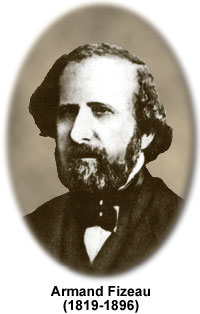
Armand Hippolyte Louis Fizeau was born on August 23, 1819, in Châtenay (now part of Montmartre), Paris, France. His father, Claude Fizayeau, was a physician who practiced at the Hotel-Dieu hospital in Paris, and his mother was Rose Lefèbvre. Despite coming from a modest background, Fizeau showed early signs of intellectual brilliance, which became evident during his childhood.
A Career Path in Physics and Astronomical Discoveries
Fizayeau pursued his primary education at Lycee Charlemagne, graduating in 1839. His academic prowess did not go unnoticed; he demonstrated exceptional skills in both mathematics and physics, which led him towards academia. In 1841, Fizeau started working as an assistant at the Paris Observatory under Leon Foucault. It was here that he began to delve into precision measurements, particularly in the realm of optics and astronomy, laying down the foundation for several groundbreaking discoveries.
Contributions in Optics and the Speed of Light
The Fizeau Experiment: Measuring the Speed of Light
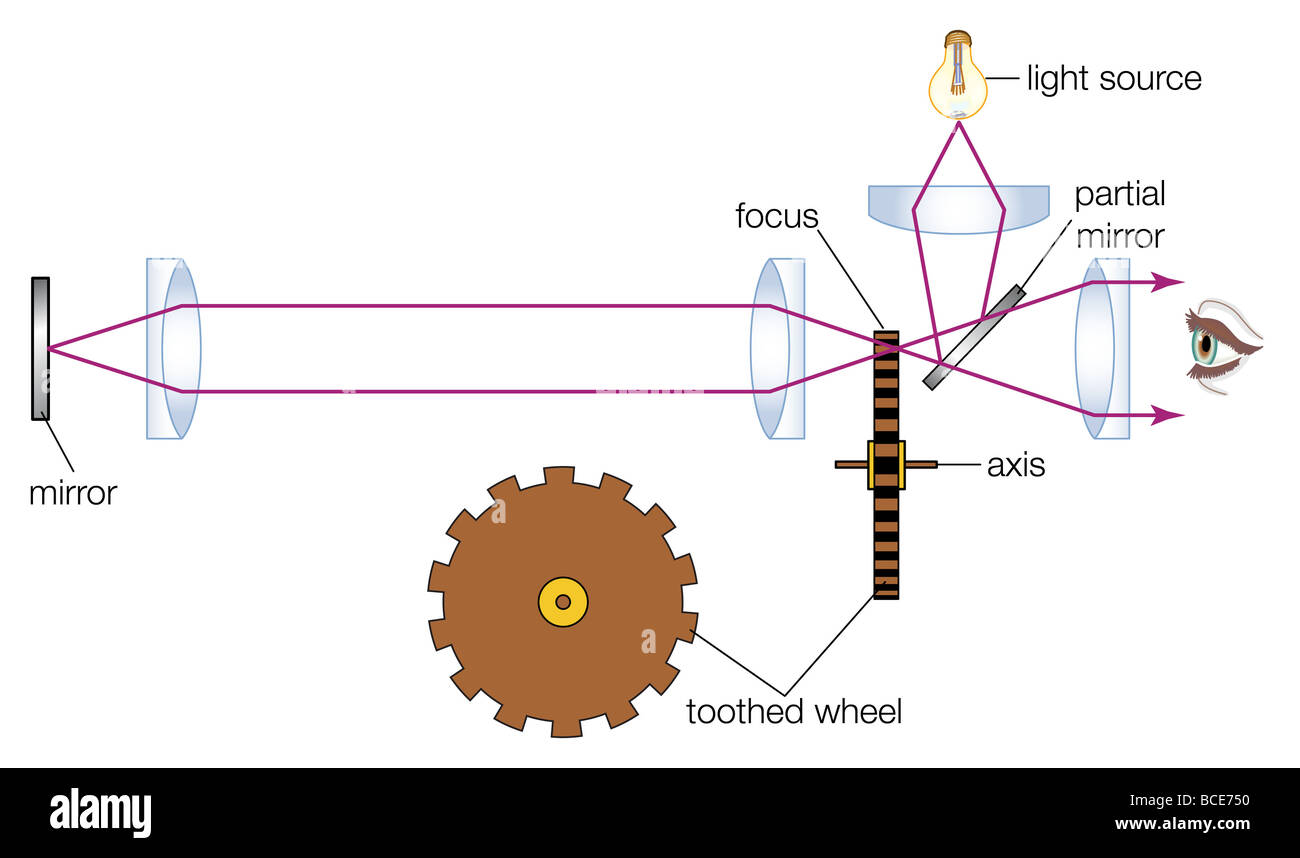
In one of his most famous works, Fizeau conducted what is known as the "Fizeau experiment" to measure the speed of light through moving water. This experiment not only provided a more accurate measurement of the speed of light but also confirmed the wave theory of light. Here's how the experiment worked:
- Setup: A beam of light was directed towards a mirror placed some kilometers away.
- Water Wheel: Between the light source and the mirror, a rapidly rotating glass disk with holes was placed. The disk was constructed such that holes would move in time with the rotation rate.
- Data Collection: When the holes in the disc were aligned with the beam of light passing through, the light would travel to the mirror, reflect back, pass through another hole, and reach the photometer. Adjusting the rotation rate allowed for precise measurement of the speed of light when the hole alignment was just right to block the returning light.
Fizeau's first result, published in 1851, gave a value of 315,000 km/s, which was much closer to the modern value of approximately 299,792 km/s. This experiment significantly improved upon the previous estimates made by Pierre-Simon Laplace and Jean-Bernard Fourier, providing new insights into the nature of light propagation.
Explorations in Refractive Indices
Fizeau- Foucault Apparatus: Measuring Refractive Indices
Fizeau's contributions to physics extended beyond simply measuring the speed of light. He also developed the "Fizeau-Foucault apparatus," which was used to determine refractive indices of various materials accurately. Using this apparatus, he was able to measure the refractive index of diamond, obtaining a value of 2.42 in 1847. This was one of the most precise measurements of its time.
The apparatus consisted of a series of prisms and a lens system. By carefully adjusting the position of the lenses and measuring the resulting path lengths, Fizeau could calculate the refractive index of different substances with high precision. This method revolutionized the way scientists approached the measurement of refractive indices, paving the way for further advancements in optics.
Scientific Instruments and Innovations
Bright-Line Spectroscope
Another significant contribution Fizeau made to spectroscopy was the development of the bright-line spectroscope. This innovation, introduced in the late 1850s, allowed for more precise separation and identification of spectral lines. Unlike earlier spectrometers, Fizeau's design produced brighter and clearer spectra, making it easier for astronomers to analyze the composition of stars and other celestial bodies.
The bright-line spectroscope was based on a prism system that separated the white light into its constituent colors, followed by a diffraction grating that produced a sharper and more defined spectrum. This tool greatly enhanced the accuracy and reliability of astronomical measurements, enabling a better understanding of the fundamental properties of matter and energy.
Legacy and Recognition
Fizeau's work had a profound impact on the scientific community. His discoveries in optics and his innovations in instruments played crucial roles in advancing the field. His methodologies and apparatuses became standards used in research institutions worldwide.
Throughout his career, Fizeau received numerous accolades. In 1853, he was elected to the Academie des Sciences, becoming a full member, a testament to his contributions to science. Later, he was awarded the Rumford Medal by the Royal Society for his distinguished work on the speed of light, further highlighting his influence in the scientific world.
Conclusion
Armand H. L. Fizeau was not merely a pioneer in the field of physics but an innovator who left an indelible mark on scientific discourse. His experiments, inventions, and discoveries continue to influence contemporary research in optics, astronomy, and spectroscopy. Future generations of scientists stand on the shoulders of giants like Fizeau, who dared to question conventional wisdom and boldly explore the mysteries of the universe.
Further Contributions to Physics and Astronomy
Following his groundbreaking work on the speed of light, Fizeau made significant contributions to the field of physics through his research on heat conduction. In a series of experiments conducted in 1866, he measured the rate at which heat travels through a metal rod. Fizeau found that heat conducted along the rod traveled at about one-third the speed of light, offering another confirmation of the wave nature of heat. This discovery expanded the understanding of thermal phenomena, providing a more comprehensive framework for thermal physics.
Fizeau also contributed to the field of magnetism. In 1883, he published a paper describing a method to measure the magnetic field produced by a current-carrying wire. This technique involved using a magnetic needle placed in a circuit and measuring the deflection caused by the magnetic field. Fizeau's work in this area laid the groundwork for further studies in electromagnetic theory. His contributions were particularly significant in the context of understanding the relationship between electrical currents and magnetic fields, which are fundamental concepts in modern physics.
Collaborations and Collaborators
Throughout his career, Fizeau collaborated with several notable scientists, including Jean-Claude Biot, Claude Pouillet, and Hippolyte Fizeau (his brother). His collaborations enhanced the scope and impact of his research. One of his closest collaborators was Jean-Claude Biot, a prominent French physicist who shared Fizeau's interest in precision experiments. Through their joint work, they made significant contributions to the study of light and electricity, advancing the methodologies and techniques used in these fields.
Teaching and Mentorship
In addition to his experimental work, Fizeau played a critical role in the academic community as a teacher and mentor. In 1863, he was appointed as a professor at the Ecole Polytechnique, where he taught physics. His lectures and teaching approach were highly regarded, and he inspired many of his students to pursue careers in science. One of his notable students was Pierre Curie, the future Nobel laureate who would go on to make significant contributions to the field of physics, particularly in the discovery of radioactivity.
Publications and Scholarly Contributions
Fizeau was a prolific author who published numerous papers and books that detailed his experimental methods, findings, and theoretical insights. His book, "Traité de Physique," published in 1874, is a comprehensive work that covers a wide range of topics in physics, including mechanics, heat, and sound. The book reflects Fizeau's deep understanding of the principles of physics and serves as a valuable resource for students and researchers.
In addition to "Traité de Physique," Fizeau published several other significant works, such as "Le Système du Monde" in 1876, which delved into the structure and evolution of the universe. These publications not only disseminated knowledge but also established Fizeau as a respected authority in his field.
Nobel Prize Nomination
Fizeau's contributions were recognized by his peers, and his name has been associated with several important physical units. In 1881, he was nominated for the Nobel Prize in Physics, which at the time was not yet awarded. Although he did not win the prize, his nomination highlights the high regard in which he was held within the scientific community. The metric unit of velocity, the Fizeau, is named after him, honoring his groundbreaking research on the speed of light.
Legacy and Impact on Science Education2>
Fizeau's legacy extends beyond his specific contributions to science. His emphasis on precise experimentation and rigorous data analysis has had a lasting impact on science education and research methodologies. The scientific community continues to benefit from the standardized techniques and experimental approaches pioneered by Fizeau, ensuring that today's research builds upon a robust foundation of well-tested methods.
Final Years and Legacy2>
Armand H. L. Fizeau led a life characterized by intellectual curiosity and relentless pursuit of scientific truth. After retiring from the Academie des Sciences in 1885, he remained active in scientific discourse until his death on October 18, 1896, in Bougival, France. His contributions to science have stood the test of time, and his legacy continues to inspire new generations of scientists.
Through his pioneering work in optics, thermodynamics, and magnetism, Fizeau played a crucial role in shaping the modern understanding of physical phenomena. His meticulous experiments, innovative instruments, and dedication to scientific inquiry have cemented his place as one of the most impactful scientists in the history of physics. Fizeau's enduring influence serves as a testament to the power of scientific exploration and the importance of precision in scientific research.
Modern Relevance of Fizeau's Work
Even today, the legacy of Armand Fizeau remains relevant in modern scientific research. His methods and findings have not only served as a basis for contemporary experiments but also continue to inspire new areas of inquiry in physics. For example, the principles he established in the Fizeau experiment are still used in sophisticated optical instruments such as interferometers, which are crucial in precision measurements and medical diagnostics.
Moreover, Fizeau's contributions to the measurement of the speed of light have been foundational in the development of modern time standardization. The use of optical fibers and laser technology, which owe much to the principles he elucidated, are critical in the global synchronization of time and the precise calibration of communication systems. In the realm of quantum physics, the precision methods Fizeau pioneered continue to influence the development of quantum sensors and metrology.
Influence on Modern Physics
The work of Fizeau has had a ripple effect on various subfields of modern physics. His experiments on the speed of light and refraction indices have inspired researchers to develop and refine more advanced techniques for measuring physical constants. For instance, the use of modern laser spectroscopy, a direct descendant of Fizeau's spectroscope, has enabled the accurate determination of atomic and molecular structures, contributing to our understanding of chemical bonds and quantum phenomena.
Moreover, Fizeau's emphasis on precision and reliability has influenced the design of experimental setups in contemporary physics. Modern scientists often use principles derived from Fizeau's work to test hypotheses and validate theories. The meticulousness and rigor required in scientific experimentation, as exemplified by Fizeau, remain essential components of scientific progress.
Public Outreach and Popular Science
While Fizeau's primary contributions were in the realm of experimental physics, his work also extended to public outreach and popular science. He was a vocal advocate for the importance of science in everyday life and regularly contributed to scientific journals and publications. His efforts to make complex scientific concepts accessible to the general public contributed to the broader acceptance and understanding of scientific principles.
Fizeau's public lectures and writings helped popularize the wonders of modern physics. His book "Traité de Physique" was not only a scholarly work but also a popularized explanation of physical phenomena, making it accessible to a wider audience. This approach has inspired generations of scientists to communicate and disseminate their findings effectively, contributing to the broader dissemination of scientific knowledge.
Honors and Memorials2>
To honor Armand Fizeau's contributions, several memorials have been established in his name. The Fizeau Medal, which is awarded by the French National Academy of Sciences, recognizes outstanding contributions to the physical sciences. Additionally, the city of Châtenay, where he was born, has a street named after him, a nod to the importance of his scientific legacy to the community where he first explored his intellectual prowess.
Conclusion2>
In reflection, Armand H. L. Fizeau stands as a testament to the enduring impact of dedicated scientific inquiry. His pioneering work in optics, thermodynamics, and magnetism has not only advanced the field of physics but also influenced numerous other scientific disciplines. Fizeau's legacy is a reminder of the importance of precision and innovation in scientific research. As the scientific community continues to build upon the foundation laid by Fizeau, his contributions remain a source of inspiration and a vital part of the scientific heritage.
Fizeau's contributions to science serve as a model for future scientists, emphasizing the value of rigorous experimentation and the importance of precision in the scientific enterprise. His work continues to inform and inspire new generations of scientists, ensuring that the legacy of Armand H. L. Fizeau endures in the annals of scientific history.








Comments