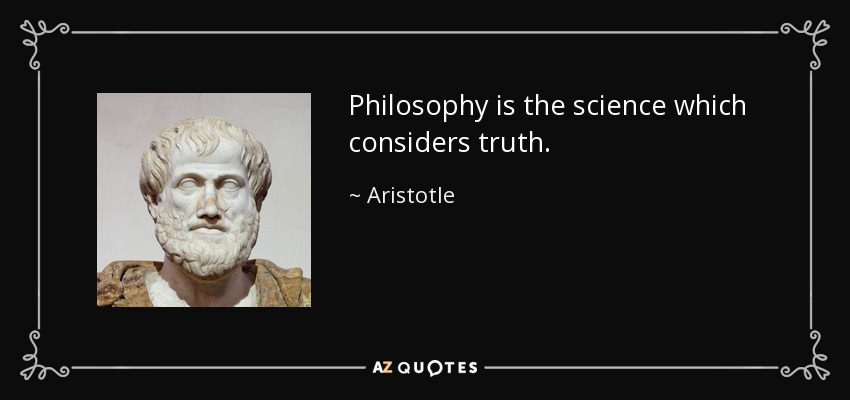
Aristotle: The Father of Western Philosophy
Aristotle, born in 384 BCE in the Macedonian city of Stagira, was a polymath whose impact on Western thought is unmatched. His contributions to philosophy, science, politics, and ethics have been profound and enduring, influencing countless thinkers and shaping the way we understand the world around us.
Early Life and Education
Aristotle was born during a period known as the Hellenistic era, a time of great cultural and intellectual ferment. His father, Nicomachus, who was the personal physician to King Amintas III of Macedon, provided Aristotle with an early exposure to the field of medicine, which later informed his philosophical and scientific inquiry.
At the age of seventeen, Aristotle was sent to study in Athens at the Academy, the renowned school founded by Plato. There, Aristotle immersed himself in the intellectual community, engaging with the ideas of his teachers and fellow students. Although a pupil of Plato, Aristotle was not a mere follower and often disagreed with the older philosopher’s doctrines, particularly his more mystical and metaphysical tendencies.
Key Philosophical Influences
Aristotle's philosophy is a product of his extensive and varied education, which ranged from metaphysics and ontology to logic and politics. Among the most significant influences on his thought were the Pre-Socratic philosophers (like Thales and Parmenides) and the works of Plato. Aristotle’s approach to philosophy was characterized by empirical observation and logical analysis, a method that was more systematic and less abstract than that of his teacher.
In his works, Aristotle discusses several key themes, including the nature of reality, the structure of the cosmos, and the principles of logic and ethics. His ideas on causality and the hierarchical order of the universe were groundbreaking and have had a lasting impact on the way we think about the world.
Contributions to Philosophy
Aristotle's contributions to philosophy are numerous and diverse. In metaphysics, he developed a comprehensive system of logic and categories that has influenced Western philosophy to this day. His works include Categories, On Interpretation, and Metaphysics, which laid the foundation for the scientific method and the study of logic.
One of Aristotle's most famous works, the Nicomachean Ethics, is a treatise on the nature of virtue and happiness. In this work, Aristotle explores the concept of eudaimonia, or flourishing, which he links to the fulfillment of one's potential. He argues that the virtuous life is the path to eudaimonia, and that this virtue is not only moral but also intellectual and social.
Scientific Contributions
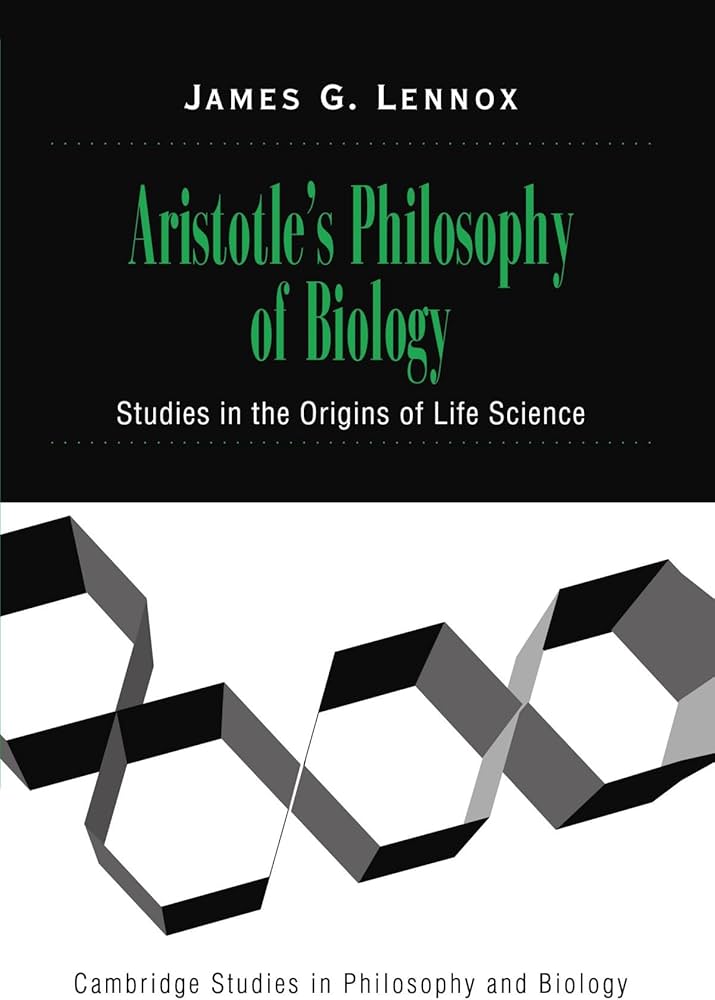
Aristotle’s impact on the sciences is equally significant. His approach to natural philosophy was highly observational and empirical, distinguishing him from the theoretical approach of Plato. In his scientific works, such as Aristotle’s Parts of Animals and On the Generation of Animals, he provided detailed descriptions of biological processes and the characteristics of living beings.
Aristotle classified living things into categories, a method that influenced taxonomy and biology for centuries. He also made observations in meteorology, zoology, and botany, and his works remain foundational in the history of these sciences. His theories on the elements and the structure of the universe, while later disproven, were a crucial step in the development of scientific thought.
Political Thought
Aristotle’s political philosophy is encapsulated in his work Politics and Ethics. He argues that the ideal form of government is a constitutional republic or a form of aristocracy, where the best are in charge. Aristotle believed that political institutions should be designed to protect the interests of the whole community, not just the ruling class.
In his analysis of different forms of government, Aristotle distinguished among monarchy, oligarchy, and tyranny, as well as the more democratic forms of government. His discussion of the balance between virtue and power, and the importance of ethical conduct among leaders, has had a lasting impact on political science and theory.
Teaching and Legacy
Aristotle’s most lasting legacy is his influence on education and the curriculum. His method of teaching, which involved detailed discussions and practical exercises, set the model for higher education in the Western world. In his school, the Lyceum, Aristotle encouraged his students to think critically and to engage in empirical research, a method that has become a cornerstone of modern education.
His works were heavily criticized and even banned by some in his own time, but by the 18th century, they were rediscovered and celebrated. Today, Aristotle’s ideas continue to be studied and debated, and his works remain essential reading for scholars in philosophy, science, and politics.
The influence of Aristotle is evident in the works of countless subsequent thinkers, from Galileo and Darwin to modern philosophers like Martha Nussbaum and Alasdair MacIntyre. His methods of inquiry, his commitment to empirical evidence, and his holistic approach to knowledge continue to shape the way we think about the world and ourselves.
Conclusion
Aristotle is not just a philosopher; he is a cultural touchstone, an intellectual cornerstone, and a guiding light for anyone seeking to understand the complexities of the human condition. His works, his methods, and his legacy have made him a central figure in Western civilization, and his ideas continue to inspire and challenge us today.
Philosophy of Nature and Cosmology
Aristotle’s philosophy of nature and cosmology is a complex and nuanced framework that attempts to explain the workings of the physical world. One of his most influential theories is the concept of the four elements—earth, water, air, and fire—which he believed composed all matter in the terrestrial world. Each element was associated with specific properties such as weight, heat, and shape. For example, earth was the heaviest and was associated with stability and solid form, whereas fire was the lightest and was related to heat and extension.
Aristotle’s cosmological views were grounded in a teleological perspective, where every entity has a purpose or final cause that explains its existence. This perspective led him to develop a hierarchical structure of the cosmos, with Earth at the center surrounded by concentric spheres containing the celestial bodies: the Moon, Sun, planets, and stars. This view, known as the “Celestial Spheres,” was based on the belief that the heavens moved in perfect circular orbits with eternal, unchanging motion. Aristotle further argued that there must be an unmoved mover, often identified with God, that initiated and sustained the motion of the celestial spheres.
Ethics and Politics: The Golden Mean
Aristotle’s ethical and political thought is encapsulated in his works Nicomachean Ethics and Poetics. Central to his ethical theory is the concept of the golden mean, which posits that virtue lies midway between two extremes of character traits. For instance, courage is the golden mean between excessive fear and excessive recklessness. This idea emphasizes a balanced and moderate approach to life rather than extremes.
In his Politics, Aristotle distinguishes between various forms of government—the rule of one (monarchy), few (oligarchy), many (democracy), and the best (aristocracy)—and discusses their strengths and weaknesses. He argues that the optimal form of government is one that balances the interests of all citizens and promotes the common good. Aristotle also emphasizes the importance of education and citizenship, suggesting that citizens should be educated in both virtues and practical skills to contribute effectively to society.
Criticism and Controversies
Aristotle’s ideas, while groundbreaking, were not without criticism. During his lifetime, some of his contemporaries saw him as a threat to established beliefs, particularly those of Plato. However, it was after his death that his theories faced more significant challenges. Ptolemy’s model of the universe, which retained the notion of celestial spheres, eventually gave way to more accurate models proposed by figures like Nicolaus Copernicus and later Isaac Newton.
Moreover, Aristotle’s views on slavery, hierarchy, and the subjugation of women have been widely criticized. His assertion that some individuals were naturally suited for servitude has been heavily condemned by contemporary scholars. These critiques highlight the historical context and limitations of Aristotle’s thought, reminding us that even great minds can hold problematic beliefs.
Impact on Later Thinkers
Despite the challenges, Aristotle’s ideas continued to influence later thinkers across various disciplines. In medieval Europe, during the Scholastic period, his works were studied in universities, and his teachings permeated theological, legal, and political thought. Thomas Aquinas, who synthesized Aristotelian thought with Christian doctrine, exemplified the impact of Aristotle on medieval philosophy.
During the Renaissance, humanists like Petrarch and Savonarola were influenced by Aristotle’s emphasis on empirical observation and logical analysis. This renewed interest in Greek texts contributed to the broader revival of classical learning. By the Enlightenment, thinkers like Gottfried Wilhelm Leibniz and Immanuel Kant continued to draw from Aristotelian traditions, albeit in a modified and critical manner.
Aristotle’s influence extends beyond philosophy and science into fields such as literature and aesthetics. His Poetics, which examines the structure and effects of drama, remains a seminal work in literary theory. Authors like Sophocles and Shakespeare are said to have adhered to the principles of tragic form outlined by Aristotle.
Conclusion
In conclusion, Aristotle’s legacy is multifaceted and enduring. From his pioneering scientific methods and classifications to his profound contributions to ethics and politics, his ideas have shaped Western thought in fundamental ways. Despite facing criticism and evolving alongside new discoveries and perspectives, his influence remains profound. His holistic approach to understanding the world continues to inspire and challenge contemporary scholars and thinkers alike.
The study of Aristotle’s works provides not only insights into the past but also valuable lessons for the present and future. Whether through his systematic approach to logic and categorization, his ethical theories, or his contributions to the sciences, Aristotle stands as a towering figure in the intellectual landscape of humanity.
Preservation and Transmission of Works
Aristotle’s works were not widely known for a period after his death. Many of his writings were lost or destroyed, and his works as we know them today are largely thanks to Julius Pollux, a 3rd-century CE grammarian, and other Byzantine scholars. The Corpus Aristotelicum includes around 16 works that are believed to be from Aristotle’s original writings, although the authenticity of some of these works has been questioned by contemporary scholars. These works cover everything from logic and metaphysics to biology and political thought, reflecting the breadth of Aristotle’s intellectual endeavors.
The rediscovery of Aristotle’s works during the Renaissance was a key factor in the revival of classical learning. Humanists like Erasmus and Petrarch were instrumental in translating Greek texts into Latin, making Aristotle’s ideas accessible to a wider audience. This renaissance of interest in Aristotle’s works was part of the larger intellectual movement known as the Renaissance, which sought to return to the classical wisdom of ancient Greece and Rome.
Morality and Virtue
Aristotle’s theories on morality and virtue are grounded in his broader framework of practical philosophy. He defines virtue as a mean between two extremes and argues that ethical behavior arises from habit and practice. Virtue, for Aristotle, is not just a moral concept but also involves the exercise of reason and the cultivation of character. This concept of virtue is closely linked to his notion of eudaimonia, or flourishing, which he sees as the highest form of human happiness.
One of Aristotle’s most famous ethical concepts is the golden mean, which posits that virtue lies in the middle ground between excess and deficiency. For example, courage is a mean between recklessness (excess) and cowardice (deficiency). This balanced approach to ethics has been influential in both Western and Eastern traditions, with thinkers like Confucius and Mencius drawing on similar ideas.
Political and Social Thought
Aristotle’s political thought is often seen as a precursor to modern democratic theory. He emphasizes the importance of participation in civic life and the role of education in shaping good citizens. His concept of aristocracy, where leaders are chosen based on their virtue and knowledge, has been interpreted as a form of meritocracy—a concept that remains central to democratic societies.
Aristotle believed that the ideal form of government was a mixed government that balanced the interests of different groups within society. This mixed government included elements of aristocracy, democracy, and other forms. His ideas on distributive justice, the rule of law, and the protection of individual rights have had a lasting impact on political philosophy and the establishment of democratic institutions.
Scientific Contributions
Aristotle’s contributions to science were significant and diverse. In biology, he made detailed observations of animals and plants, developing a form of systematics that laid the groundwork for future biological classification. His works on zoology, botany, and embryology, such as the Historia Animalium and Historia Plantarum, were influential and were the basis for the work of later scientists like Aristotle of Ascalon and Theophrastus (Aristotle’s successor at the Lyceum).
Apart from biology, Aristotle’s writings on astronomy, meteorology, and meteorology also reflect his empirical approach to understanding the natural world. His views on matter and form, as well as his theories on causality and explanation, were foundational to the development of scientific thought.
Later Influence on Thinkers
Aristotle’s ideas have been adapted and reinterpreted by numerous thinkers throughout history. During the Enlightenment, thinkers like Voltaire and John Locke incorporated Aristotelian concepts into their political philosophies. Voltaire, for instance, used Aristotle’s ideas to advocate for the rule of law and the protection of individual rights. Similarly, John Locke’s theories on natural rights and government were influenced by Aristotle’s emphasis on human rationality and virtue.
In modern philosophy, Aristotle’s ethics and politics continue to be relevant. Contemporary figures like Martha Nussbaum and Alasdair MacIntyre have used Aristotelian concepts to explore contemporary moral and political issues. Nussbaum, in particular, has argued that Aristotelian concepts of virtue and flourishing can provide a framework for understanding contemporary ethical dilemmas.
Assessment and Legacy
When evaluating Aristotle’s legacy, it is important to recognize both his enduring contributions and the limitations of his ideas. His systematic approach to knowledge and his insistence on empirical evidence have been influential in shaping the methods of scientific inquiry. However, his views on slavery, gender, and social hierarchy have been widely criticized and often challenged by contemporary thinkers.
Despite these criticisms, Aristotle’s works remain essential reading for scholars and students. His comprehensive system of logic and his explorations of the nature of reality, ethics, and politics continue to inspire and challenge intellectual discourse. His ideas have been subject to constant revision and reinterpretation, and they continue to be relevant in a wide range of fields, from philosophy to biology.
Aristotle’s influence is evident in the continued study and analysis of his works, as well as in the ongoing debate surrounding his ideas. His contributions to Western thought are not only a testament to his intellectual prowess but also a reminder of the dynamic and evolving nature of human knowledge.
From his early education at Plato’s Academy to his extensive works on philosophy, science, and politics, Aristotle has left an indelible mark on the history of Western civilization. His ideas continue to shape our understanding of the world and ourselves, making him a figure of immense importance in the annals of human thought.
In conclusion, Aristotle’s legacy is one of unparalleled influence and enduring relevance. His systematic approach to knowledge, his empirical methods, and his comprehensive theories have stood the test of time, shaping the way we think and live. His ideas continue to inspire new generations of scholars and thinkers, and his works remain a cornerstone of Western intellectual tradition.









Comments