Albert Einstein: A Revolutionary Mind and Life-Changing Theories
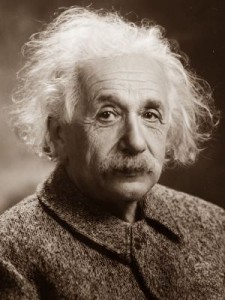
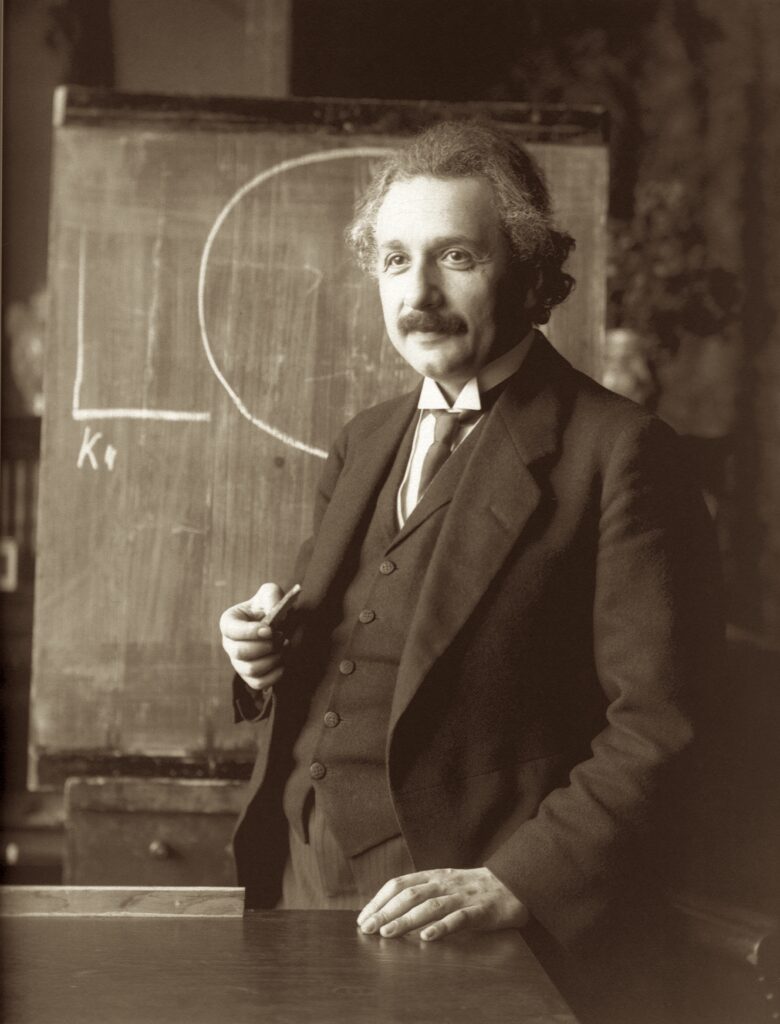
Albert Einstein, the renowned physicist and one of the most influential scientists in history, is best known for his groundbreaking theories and his contributions to the understanding of the universe. Born on March 14, 1879, in Ulm, Germany, Einstein's life and career have left an indelible mark on the world of science, philosophy, and culture.
Early Life and Education
Paul and Hedwig Einstein, a Jewish couple, brought their son Albert into the world in a small town in southwest Germany. From a young age, Einstein displayed a keen interest in science and mathematics, which would later shape his life's work. Although his parents were not particularly supportive of his intellectual pursuits, Einstein's older sister, Maja, and his uncle Jakob played crucial roles in nurturing his curiosity.
Einstein completed his secondary schooling at the Aarau Cantonal School in Switzerland. It was during this time that he first encountered the ideas of theoretical physics and was significantly influenced by the works of James Clerk Maxwell and others. The lack of formal structure in his education allowed him to focus more on his own interests, such as advanced physics, which laid the foundation for his future scientific endeavors.
Professional Career
Upon completing his secondary education, Einstein entered the Swiss Federal Institute of Technology (ETH) in Zurich, where he studied mathematics and physics. However, his academic life was not without its challenges. Einstein struggled with the rigidity of the university's requirements and was often at odds with the strict curriculum. Despite these obstacles, he continued to excel and even graduated in 1900.
Post-graduation, Einstein faced a series of disappointments. He could not find stable employment in academia, and his attempts to secure a teaching position were repeatedly denied. In 1902, he obtained a position as a technical expert at the Swiss Patent Office in Bern, a role that would provide him with the stability and freedom to pursue his scientific interests. During his time at the patent office, Einstein would work on his theories in his spare time, a period that later became known as the Annus Mirabilis (Miracle Year).
The Annus Mirabilis and Early Achievements
From 1905 to 1907, Einstein published four papers that reshaped the field of physics. The first, "On a Heuristic Viewpoint Concerning the Production and Transformation of Light," introduced the concept of photons, thus laying the groundwork for quantum theory. The second paper, "Does the Inertia of a Body Depend on its Energy Content?," introduced the famous equation E=mc2, which explains the relationship between mass and energy. The third paper, "On the Movement of Small Particles Suspended in a Stationary Liquid," provided experimental evidence for the theory of Brownian motion and confirmed the existence of molecules. The final paper, "Outline of a Generalized Theory of Relativity and of a Theory of Gravitation," was the precursor to his theory of general relativity.
These papers not only established Einstein as a leading figure in the field of physics, but they also marked the beginning of a new era in scientific understanding. The impact of these contributions can still be felt today in the fields of quantum mechanics, particle physics, and cosmology.
General Relativity and Beyond
Albert Einstein's most famous and controversial work came in 1915 with the publication of his theory of general relativity. This theory was a significant departure from Newtonian physics, offering an entirely new framework for understanding the behavior of gravity and the fabric of space-time. Einstein's theory predicted that massive objects cause the space around them to curve, which in turn influences the motion of other objects. This theory not only explained the deflection of light by the sun during a solar eclipse but also predicted the existence of black holes and gravitational waves, both of which were confirmed by later experiments.
Einstein's work on general relativity had profound implications. It not only redefined our understanding of the universe but also spurred further developments in the field of astrophysics. The discovery of black holes, confirmed by observations and theoretical models, provided new insights into the universe's structure and the behavior of matter at extreme conditions.
However, his theory also faced criticism and controversy. Some of his colleagues, including Niels Bohr and other early quantum theorists, criticized the deterministic nature of general relativity, as it suggested a clear path of events without the randomness inherent in quantum mechanics. Despite these criticisms, general relativity remains a cornerstone of modern physics, validated by observational and experimental evidence.
Public Life and Legacy
Albert Einstein's public life was no less significant than his contributions to theoretical physics. He was a vocal advocate for peace and social justice, using his famous status to speak out against war, racism, and anti-Semitism. During World War II, he famously wrote to President Franklin D. Roosevelt about the potential for nuclear weapons, leading to the development of the Manhattan Project and the atomic bomb.
Following the end of the war, Einstein continued to be a prominent public figure, speaking out on a variety of issues and engaging with the public on matters of science and society. He was awarded the Nobel Prize in Physics in 1921 for his services to the advancement of theoretical physics, primarily in recognition of his work on the theory of Brownian motion and his explanation of the photoelectric effect.
Albert Einstein's legacy lives on through his contributions to science and his continued influence on culture. His personal life, filled with love, loss, and triumph, provides a fascinating glimpse into the mind of one of the greatest scientists of the 20th century. His theories continue to inspire and challenge scientists, students, and researchers, ensuring that his legacy will endure for generations to come.
Personal Life and Relationships
Albert Einstein's personal life was marked by several significant relationships, each leaving its own mark on his work and the course of his life. One of the most notable was his marriage to Mileva Maric, who was his former classmate and collaborator during his years at ETH. They met in 1897 when Mileva enrolled at the polytechnic school in Zurich. Einstein and Mileva developed a strong professional bond, as evidenced by her involvement in his research, but their relationship was not without its ups and downs.
Their marriage in 1903 was initially a happy one, but it soon began to falter due to various personal and professional reasons. Mileva supported Einstein financially while he worked at the patent office, and she bore his two sons, Hans and Eduard. However, their marriage ended in divorce in 1919, partly due to Einstein's romantic involvement with another woman, Elsa Lowenthal, whom he married in 1919. Elsa, who cared for Einstein in his later years and provided him with emotional support, proved to be a stabilizing influence on his life.
Absent his first wife, Mileva, and estranged from Elsa, Einstein's later personal life was defined by his deep commitment to his sons and his scientific endeavors. Hans Albert followed in his father's footsteps and became a renowned engineer, while Eduard, who suffered from schizophrenia, was a source of considerable sadness for Einstein throughout his life. In his later years, Einstein dedicated much of his time to his children and his research, maintaining a relatively secluded lifestyle away from public scrutiny.
Challenges and Setbacks
Despite his monumental successes, Einstein faced significant challenges throughout his career. His theory of general relativity was met with skepticism and criticism initially, particularly from some of his peers. Notably, the eminent physicist Paul Ehrenfest raised doubts about Einstein's approach to space-time, and there was much debate about his equations and their implications.
The political climate of the early 20th century also posed serious threats to Einstein's work and his personal safety. Following the outbreak of World War I, Einstein found himself in a difficult position, as his pacifistic views and Jewish identity made him a target in certain circles. He chose to remain in Switzerland, where he could continue his research without direct risk, despite the increasing hostility towards Jews in Europe.
During the rise of Nazism in Germany, Einstein faced even greater persecution. His German citizenship was revoked in 1933 by Adolf Hitler and the Nazi regime, and he was branded as a "cultural Bolshevik" (i.e., a cultural communist). Einstein's wife Elsa encouraged him to leave Germany immediately, and he accepted a teaching position at the Institute for Advanced Study in Princeton, New Jersey, in 1933. This move away from Europe marked a significant chapter in his life and career, as he continued his influential work in a new environment.
Later Years and Final Contributions
In his later years, Albert Einstein became increasingly concerned with applying his scientific knowledge to solve societal problems. He became deeply involved with civil rights and pacifism. Among his many contributions were signing the Einstein-Szilard letter in 1939, which prompted President FDR to initiate the Manhattan Project. This act of responsibility and foresight underscores Einstein's commitment not just to scientific inquiry but to the ethical application of scientific knowledge.
Einstein's health deteriorated in the latter half of the 20th century, and he spent his final years working on his unified field theory, an attempt to combine all fundamental forces in nature into a single cohesive framework. Though he did not succeed in this endeavor, his tireless pursuit of such a goal reflects the ongoing quest for a grand unification theory that continues to inspire physicists today.
Famous Quotes and Influence on Culture
Albert Einstein's legacy extends beyond the confines of the scientific community into popular culture and everyday discourse. Some of his more famous quotes reflect his wisdom and wit:
- "Imagination is more important than knowledge. For knowledge is limited, whereas imagination embraces the entire world."
- "The difference between what we see and what exists is hidden in the depths of impenetrable darkness."
- "Not everything that counts can be counted, and not everything that can be counted counts."
- "Everything should be made as simple as possible, but not simpler."
- "The intuitive mind is a sacred gift and the rational mind is a faithful servant. We have created a society that honors the servant and has forgotten the gift."
Such statements not only resonate within the scientific community but also capture the essence of human thought and creativity. Einstein's ability to convey complex scientific concepts in easily understandable terms has made him a household name synonymous with genius and wisdom.
Through his life and work, Albert Einstein has left an enduring legacy that continues to inspire and challenge humanity. From his revolutionary theories that transformed our understanding of the universe to his profound insights into human nature, Einstein's influence is felt in countless fields beyond physics. His life serves as a testament to the power of persistent inquiry, ethical responsibility, and the enduring importance of seeking truth and wisdom.
Legacy and Impact on Modern Physics
Albert Einstein's legacy in modern physics is vast and multifaceted. His theories and discoveries have not only paved the way for numerous advancements in the field but have also sparked continued research and exploration. One of the most significant aspects of Einstein's influence is the validation and expansion of general relativity, which continues to be tested and refined by contemporary scientists.
General relativity has been corroborated by various experiments and observational data, including the measurement of the Shapiro delay (the change in signal travel time due to the sun's gravitational field), the bending of light near massive objects (known as gravitational lensing), and the detection of gravitational waves. The Laser Interferometer Gravitational-Wave Observatory (LIGO) directly detected these ripples in space-time caused by massive accelerating masses, confirming a key prediction of general relativity. These findings have opened up new avenues for astronomy, leading to the discovery of neutron stars, black holes, and pulsars.
Einstein's theory of special relativity, which introduced the concept of time dilation and length contraction, has also had profound implications. This theory challenges our traditional notions of time and space and has led to the development of technologies such as GPS, which must account for the relativistic effects to maintain accuracy. Relativistic corrections ensure that GPS satellites operate correctly despite traveling at considerable speeds relative to Earth's surface.
Furthermore, Einstein's contributions have laid the groundwork for the ongoing search for a theory of everything (TOE), a unified framework that would combine all fundamental forces—gravity, electromagnetism, strong nuclear force, and weak nuclear force—into a single cohesive theory. While a complete TOE has yet to be discovered, string theory and loop quantum gravity are among the leading candidates in this quest, with Einstein's insights and methods providing critical frameworks and methodologies for future exploration.
Interdisciplinary Applications and Cultural Influence
Albert Einstein's influence extends far beyond the boundaries of physics into other disciplines as well. His theories and quotes have inspired countless philosophers, artists, and cultural figures. The concept of "E=mc²" has become a symbol of the interconnectivity and complexity of life, often appearing in literature, music, art, and even popular media.
In philosophy, Einstein's work on relativity has been used to question the nature of reality, time, and causality. Thinkers like John Searle and others have drawn upon Einstein's ideas to explore the limitations of perception and the nature of subjective experience.
His contributions have also influenced the field of philosophy of science. Einstein's insistence on empirical evidence and his rejection of certain philosophical dogmas paved the way for a more rigorous and empirical scientific method. His work highlighted the importance of experimentation and observation in validating or refuting scientific theories, a principle that continues to guide scientific practice.
Educational Impact and Public Engagement
Albert Einstein's commitment to public education and his ability to explain complex ideas in simple terms have significantly impacted the field of education. His emphasis on curiosity, critical thinking, and the pursuit of knowledge has inspired generations of students and educators alike. Schools and educational programs often draw upon his quotes and ideas to instill a love for learning and encourage students to question and explore the world around them.
Scholarly journals and popular books frequently reference Einstein's work and theories, making complex concepts accessible to a broader audience. His autobiography "Autobiographical Notes," and his correspondence with various thinkers and scientists have provided valuable insights into his thought process and the development of his theories. Educational institutions and museums often feature exhibits and lectures on Einstein's life and work, fostering a deeper understanding and appreciation of his contributions to science.
Priorities for the Future
As the field of physics continues to evolve, there are several priorities and open questions that researchers are currently addressing. One of the most pressing concerns is the search for dark matter and dark energy, which account for a significant portion of the universe's total mass-energy content. Experiments such as the Large Hadron Collider (LHC) at CERN aim to uncover the fundamental particles and forces that govern the universe at the smallest scales.
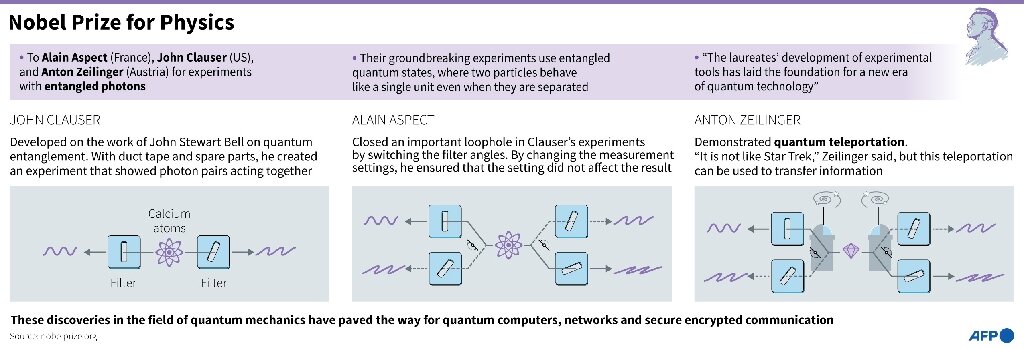
Another area of intense research is the development of quantum computing and quantum information theory. Einstein's work on entanglement and superposition forms the basis of these emerging fields, which hold the promise of solving complex computational problems and revolutionizing communication technologies.
Finally, there is the ongoing effort to reconcile quantum mechanics and general relativity, a major unsolved problem in modern physics. While Einstein's theories have been extraordinarily successful in their respective domains, the two frameworks are fundamentally incompatible, suggesting that a deeper, more comprehensive understanding of the universe may still lie ahead.
In conclusion, Albert Einstein's legacy is a testament to the power of curiosity, the importance of empirical evidence, and the far-reaching impact of scientific discovery. His life and work continue to inspire and challenge us, both in the realm of scientific inquiry and in the broader context of human thought and culture.
Albert Einstein's contributions have left an indelible mark on the scientific community and beyond. His relentless pursuit of truth, combined with his profound insights and captivating personality, ensured that his ideas and legacy would endure long after his passing. As the field of physics and our understanding of the universe continue to evolve, Einstein's pioneering work remains central to our quest for knowledge and understanding.














Comments