Euripides: A Towering Dramatist of Ancient Greece
Introduction to Euripides: The Controversial Genius
Euripides, one of the three great tragedians of ancient Athens, remains a figure of enduring fascination and debate. Alongside Aeschylus and Sophocles, he shaped the foundations of Western drama. Born around 484 BCE and active until his death in 406 BCE, Euripides crafted plays that challenged conventions, explored human psychology, and questioned traditional myths. His works, such as Medea, Hippolytus, and The Bacchae, continue to resonate with modern audiences, blending psychological realism with timeless ethical dilemmas.
The Life and Times of Euripides
Euripides lived during a turbulent era in Athenian history. His career coincided with the Peloponnesian War (431–404 BCE), a conflict that reshaped the Greek world. The war’s devastation, combined with the plague of Athens in the 430s BCE, influenced his dramatic themes, often reflecting the anxieties and moral ambiguities of his time. Unlike his contemporaries, Euripides was known for his skeptical view of the gods and his willingness to depict flawed, complex characters.
Key Milestones in Euripides' Career
- Early Life and Education: Born in Salamis, Euripides received a traditional Athenian education, studying philosophy and rhetoric.
- Dramatic Debut: He began competing in the City Dionysia, Athens’ premier dramatic festival, around 455 BCE.
- Later Years and Legacy: Despite limited success in competitions during his lifetime, Euripides’ reputation grew posthumously, influencing later generations of playwrights and thinkers.
Surviving Works and Themes
Of the approximately 92 plays attributed to Euripides, only 18–19 survive in substantial form. These works are celebrated for their innovative storytelling and deep exploration of human emotions. Some of his most famous tragedies include:
Notable Plays by Euripides
- Medea: A harrowing tale of betrayal and revenge, featuring one of literature’s most complex female protagonists.
- Hippolytus: A tragedy centered on themes of chastity, false accusations, and divine intervention.
- The Bacchae: A late masterpiece exploring the conflict between rational order and ecstatic religious fervor.
- Electra: A reimagining of the myth of Electra and Orestes, emphasizing psychological depth.
- Trojan Women: A powerful anti-war play depicting the suffering of women in the aftermath of the Trojan War.
Themes and Innovations
Euripides’ plays are distinguished by several key themes and stylistic innovations:
- Psychological Realism: His characters often exhibit deep emotional complexity, making them relatable to modern audiences.
- Strong Female Characters: Women in Euripides’ plays, such as Medea and Helen, are often portrayed as intelligent, resilient, and morally ambiguous.
- Skepticism Toward Myth: Euripides frequently questioned traditional religious and mythological narratives, introducing a critical perspective.
- Social and Ethical Questions: His works tackle issues like justice, gender roles, and the consequences of war, reflecting the intellectual climate of 5th-century Athens.
Reception and Reputation in Antiquity
Euripides’ contemporaries had mixed reactions to his work. While some admired his boldness and innovation, others criticized him for what they perceived as impiety and subversion of traditional values. The comedian Aristophanes famously satirized Euripides in plays like The Frogs, mocking his unconventional approach to tragedy. Philosophers such as Plato and Aristotle also commented on his techniques, often with a critical eye.
Ancient Criticism and Praise
Despite the criticism, Euripides’ influence was undeniable. His plays were widely performed and studied, and his reputation grew in the centuries following his death. Ancient scholars and playwrights frequently referenced his works, ensuring their preservation and continued relevance.
Modern Scholarship and Performance
In recent decades, scholarship on Euripides has evolved significantly. Modern researchers have shifted focus from purely literary analysis to performance-centered approaches, examining how his plays were staged and received in ancient Athens. Key trends in contemporary Euripidean studies include:
Current Trends in Euripidean Scholarship
- Performance Studies: Scholars now emphasize the role of staging, music, and audience interaction in Euripides’ plays.
- Gender and Reception Studies: Feminist and gender-theory frameworks have shed new light on Euripides’ portrayal of women.
- Political Readings: Researchers explore connections between Euripides’ works and the political turmoil of his time, particularly the Peloponnesian War.
- Digital Humanities: Computational tools and digital databases have enabled new forms of textual analysis, from stylometry to intertextual studies.
These trends reflect a broader movement in classical studies toward interdisciplinary and comparative approaches, linking ancient texts to modern cultural and intellectual contexts.
Conclusion: The Enduring Legacy of Euripides
Euripides’ contributions to drama and literature are immeasurable. His plays, with their psychological depth and social critique, continue to inspire adaptations and scholarly debate. As modern audiences grapple with themes of justice, gender, and war, Euripides’ works remain as relevant as ever. In the next section, we will delve deeper into his stylistic innovations, his influence on later dramatists, and the ongoing debates surrounding his authorship and legacy.
Stylistic Innovations: How Euripides Redefined Greek Tragedy
Euripides is often credited with revolutionizing the structure and style of Greek tragedy. Unlike his predecessors, he introduced elements that made his plays more accessible and emotionally resonant. His innovations included:
Colloquial Language and Realistic Dialogue
Euripides broke from the formal, elevated language of earlier tragedians by incorporating colloquial speech into his plays. This shift made his characters feel more human and relatable. For example, in Medea, the protagonist’s passionate monologues reflect the raw emotions of a woman scorned, using language that would have struck contemporary audiences as strikingly modern.
The Role of the Prologue
Another hallmark of Euripides’ style is his use of prologues to provide background information. Unlike Aeschylus and Sophocles, who often began their plays in medias res, Euripides frequently opened with a monologue or dialogue that set the stage for the unfolding drama. This technique helped audiences grasp complex myths and character motivations from the outset.
Deus Ex Machina: A Controversial Device
Euripides is also known for his use of the deus ex machina, a plot device where a god intervenes to resolve the story. While some critics argue that this technique undermines dramatic tension, others see it as a way to highlight the arbitrary nature of divine justice. Plays like Medea and Hippolytus employ this device to shocking effect, reinforcing Euripides’ themes of fate and human helplessness.
The Political and Social Context of Euripides’ Plays
The late 5th century BCE was a period of immense upheaval in Athens. The Peloponnesian War, the plague, and political instability shaped the city’s cultural landscape, and Euripides’ works reflect these tensions. His plays often explore themes of war, exile, and social injustice, resonating with the anxieties of his contemporaries.
War and Its Aftermath
Plays like Trojan Women and Hecuba depict the devastating consequences of war, particularly for women and children. These works are not just tragedies but also anti-war statements, highlighting the suffering of those caught in the crossfire of political conflicts. Euripides’ portrayal of war’s brutality was likely influenced by the realities of the Peloponnesian War, which saw Athens’ power and morale decline.
Gender and Agency in Euripides’ Works
Euripides’ female characters are among the most compelling in ancient literature. Women like Medea, Phaedra, and Helen are not passive victims but complex figures who challenge societal norms. Scholars have debated whether Euripides was a feminist ahead of his time or simply a keen observer of human nature. Regardless, his portrayal of women has made his plays a focal point for gender studies in classical scholarship.
Religion and Skepticism
Euripides’ relationship with religion was ambivalent. While his plays are steeped in mythological themes, they often question the justice and morality of the gods. In The Bacchae, for instance, the god Dionysus is both a figure of divine power and a symbol of irrational, destructive forces. This skepticism toward traditional religious beliefs may have contributed to the mixed reception of his works in antiquity.
Modern Adaptations and Global Influence
Euripides’ plays have transcended their ancient origins to become staples of modern theater. Directors and playwrights around the world continue to reinterpret his works, often using them to comment on contemporary issues. Some notable examples include:
Notable Modern Productions
- Medea in Contemporary Theater: Modern adaptations of Medea have explored themes of feminism, immigration, and revenge. For example, a 2014 production by the National Theatre in London reimagined Medea as a refugee, highlighting the play’s relevance to modern geopolitical crises.
- The Bacchae in Film and Opera: The Bacchae has inspired numerous adaptations, including a 1961 film by Jean Cocteau and a 2016 opera by composer Harrison Birtwistle. These works emphasize the play’s themes of ecstasy, repression, and divine punishment.
- Trojan Women and Anti-War Theater: Productions of Trojan Women have been staged in war-torn regions, from Sarajevo in the 1990s to Syria in the 2010s, underscoring its universal message about the cost of war.
Euripides in Popular Culture
Beyond the stage, Euripides’ influence extends to literature, film, and even psychology. His characters have inspired novels, such as Christa Wolf’s Medea: A Modern Retelling, and films like Pier Paolo Pasolini’s Medea (1969). The term "Medea complex" has even entered psychological discourse, referring to the extreme actions of mothers who harm their children.
Debates and Controversies in Euripidean Scholarship
Despite centuries of study, Euripides’ works continue to spark debate among scholars. Key areas of contention include:
Authorship and Chronology
Scholars still debate the exact chronology of Euripides’ plays and the authorship of certain works. For example, Rhesus, a play traditionally attributed to Euripides, is now widely believed to be the work of a later playwright. Stylometric analysis and philological research have been instrumental in these debates, though consensus remains elusive.
Interpretations of Key Plays
Plays like Medea and The Bacchae have been subject to vastly different interpretations. Some critics view Medea as a feminist heroine, while others see her as a monstrous figure. Similarly, The Bacchae has been read as both a celebration of Dionysian ecstasy and a cautionary tale about the dangers of religious fanaticism. These differing perspectives reflect the richness and ambiguity of Euripides’ writing.
The Role of the Chorus
Euripides’ use of the chorus has also been a point of discussion. Unlike Aeschylus, who gave the chorus a central role, Euripides often reduced its importance, focusing instead on individual characters. This shift has led some scholars to argue that Euripides was more interested in psychological drama than in the communal aspects of tragedy.
Digital Humanities and the Future of Euripidean Studies
The rise of digital humanities has opened new avenues for studying Euripides’ works. Projects like the Perseus Digital Library and the Thesaurus Linguae Graecae have made his texts more accessible than ever, allowing scholars to analyze them in unprecedented detail.
Stylometry and Authorship Studies
Computational tools have enabled researchers to conduct stylometric analyses of Euripides’ plays, comparing them to other ancient texts to determine authorship and chronology. These methods have provided new insights into the evolution of his style and the possible collaborations or revisions in his works.
Digital Editions and Online Commentaries
Digital editions of Euripides’ plays, complete with annotations and translations, have democratized access to his works. Platforms like the Loeb Classical Library and Oxford Classical Texts offer searchable, interactive versions of his texts, making them invaluable resources for students and scholars alike.
The Future of Euripidean Research
As technology continues to advance, the study of Euripides is likely to become even more interdisciplinary. Future research may integrate virtual reality reconstructions of ancient theaters, AI-driven textual analysis, and global reception studies to further illuminate his enduring legacy.
Conclusion: Why Euripides Matters Today
Euripides’ plays are more than just relics of ancient Greece; they are living texts that continue to challenge and inspire. His exploration of human psychology, his skepticism toward authority, and his compassion for the marginalized make his works timeless. In an era marked by political upheaval, social inequality, and existential questions, Euripides’ voice remains as relevant as ever.
In the final section of this article, we will explore Euripides’ influence on later dramatists, his legacy in modern literature and theater, and the ongoing efforts to preserve and reinterpret his works for future generations.
Euripides’ Influence on Later Dramatists and Literature
Euripides’ impact on Western drama is profound, shaping the works of playwrights across centuries. His innovative techniques and thematic depth have left an indelible mark on literature, from ancient Rome to modern theater.
Roman Adaptations and Renaissance Revivals
Roman playwrights, including Seneca the Younger, drew heavily from Euripides’ works. Seneca’s tragedies, such as Medea and Phaedra, echo Euripides’ psychological intensity and dramatic structure. During the Renaissance, Euripides experienced a revival as scholars rediscovered classical texts. His plays were translated and performed across Europe, influencing figures like William Shakespeare, who borrowed elements from Euripides’ tragedies for works like Titus Andronicus and Hamlet.
Modern Playwrights and Euripidean Themes
In the 20th and 21st centuries, playwrights such as Eugene O’Neill, Jean-Paul Sartre, and Tony Harrison have reimagined Euripides’ themes for contemporary audiences. O’Neill’s Mourning Becomes Electra transposes the Oresteia myth to post-Civil War America, while Sartre’s The Flies reinterprets Electra through an existentialist lens. These adaptations demonstrate Euripides’ enduring relevance in exploring human conflict and moral ambiguity.
The Legacy of Euripides in Modern Theater and Film
Euripides’ plays have found new life in modern theater and film, where directors use his works to address contemporary issues. His themes of war, gender, and justice resonate deeply in today’s global landscape.
Contemporary Stage Productions
Modern productions of Euripides’ plays often emphasize their political and social dimensions. For example:
- Medea in the MeToo Era: Recent productions, such as those by the Almeida Theatre (2015) and National Theatre (2019), have framed Medea’s story as a critique of patriarchal oppression, aligning her with modern feminist movements.
- The Bacchae and Religious Extremism: Directors like Robert Icke have staged The Bacchae as a commentary on religious fanaticism and the clash between rationality and ecstasy.
- Trojan Women and Refugee Crises: Productions in Europe and the Middle East have used Trojan Women to highlight the plight of refugees, drawing parallels between ancient and modern displacement.
Euripides on Screen
Film adaptations of Euripides’ works have brought his stories to wider audiences. Notable examples include:
- Pier Paolo Pasolini’s Medea (1969): Starring Maria Callas, this film presents Medea as a primordial force of nature, emphasizing her foreignness and otherness.
- Michael Cacoyannis’ The Trojan Women (1971): This adaptation, featuring Katharine Hepburn, captures the play’s anti-war message with stark, emotional intensity.
- Modern Retellings: Films like The Killing of a Sacred Deer (2017) draw inspiration from Euripides’ themes of sacrifice and divine punishment, demonstrating his influence on contemporary cinema.
Euripides in Education and Academic Research
Euripides’ works are staples in classical studies and theater programs worldwide. His plays are taught not only for their literary merit but also for their insights into ancient Greek society and their relevance to modern ethical dilemmas.
Teaching Euripides in Universities
In academic settings, Euripides’ plays are often used to explore:
- Ancient Greek Society: His works provide a window into Athenian politics, religion, and gender roles during the 5th century BCE.
- Literary and Dramatic Techniques: Students analyze his use of irony, character development, and plot structure, comparing his methods to those of Aeschylus and Sophocles.
- Modern Adaptations: Courses often include comparative studies of ancient texts and their contemporary retellings, highlighting the enduring appeal of Euripidean themes.
Key Academic Debates
Scholars continue to debate several aspects of Euripides’ works, including:
- Historical Accuracy: How much of Euripides’ portrayal of myths and events reflects historical reality versus dramatic license?
- Philosophical Influences: To what extent did Euripides engage with the ideas of contemporary philosophers like Socrates and the Sophists?
- Reception in Antiquity: Why did Euripides face criticism in his lifetime, and how did his reputation evolve in later centuries?
The Global Reach of Euripides’ Works
Euripides’ influence extends far beyond the Western world. His plays have been translated and performed in diverse cultural contexts, from Asia to Africa, demonstrating their universal appeal.
Euripides in Non-Western Theater
In countries like Japan, India, and Nigeria, Euripides’ plays have been adapted to reflect local traditions and contemporary issues:
- Japanese Noh and Kabuki: Adaptations of Medea and Hecuba have been staged in traditional Japanese theatrical forms, blending Greek tragedy with Asian aesthetics.
- Indian Theater: Playwrights like Girish Karnad have reimagined Euripides’ themes in the context of Indian mythology and social struggles.
- African Adaptations: In post-colonial Africa, Euripides’ plays have been used to explore themes of resistance, exile, and cultural identity.
Translations and Accessibility
The availability of Euripides’ works in multiple languages has contributed to their global reach. Modern translations, such as those by Robert Fagles and Anne Carson, have made his plays accessible to new generations of readers and theatergoers. Digital platforms like Project Gutenberg and Google Books offer free access to his texts, further democratizing his legacy.
Preserving Euripides’ Legacy for Future Generations
Efforts to preserve and promote Euripides’ works ensure that his contributions to drama and literature endure. These initiatives include:
Archival and Digital Preservation
Institutions like the British Library, the Library of Congress, and the Perseus Digital Library house manuscripts and digital copies of Euripides’ plays. These resources are invaluable for scholars and enthusiasts seeking to study his works in their original and translated forms.
Theater Festivals and Performances
Annual festivals, such as the Athens Epidaurus Festival and the Edinburgh International Festival, regularly feature productions of Euripides’ plays. These events celebrate his legacy while introducing his works to new audiences.
Educational Outreach
Programs like the Oxford University Classics Outreach and the National Endowment for the Humanities in the U.S. promote the study of Euripides in schools and universities. Workshops, lectures, and public readings help foster a deeper appreciation for his contributions to world literature.
Conclusion: The Timeless Relevance of Euripides
Euripides’ legacy as a towering dramatist of ancient Greece is firmly established, but his influence extends far beyond antiquity. His plays, with their psychological depth, social critique, and innovative storytelling, continue to captivate and challenge audiences worldwide. From the stages of Athens to modern theaters and cinemas, Euripides’ works remain a testament to the enduring power of drama to explore the human condition.
Key takeaways from Euripides’ life and works include:
- Innovation in Drama: His use of colloquial language, prologues, and psychological realism redefined Greek tragedy.
- Exploration of Complex Themes: Euripides tackled issues of gender, war, religion, and justice with unparalleled depth.
- Global Influence: His plays have inspired countless adaptations, from Renaissance theater to modern film and global performances.
- Enduring Relevance: In an era of political and social upheaval, Euripides’ themes resonate as strongly as ever, offering insights into the human experience.
As we continue to grapple with questions of morality, power, and identity, Euripides’ voice remains a guiding light. His works remind us that the struggles and triumphs of ancient Greece are not so different from our own, and that the power of storytelling transcends time and culture. Whether on the stage, in the classroom, or through the pages of a book, Euripides’ legacy endures, inviting each new generation to engage with his timeless tales.
The Dawn of Civilization and the Invention of Writing
In the tapestry of human history, few innovations have had as profound an impact on civilization as the invention of writing. This remarkable human endeavor transcended the spoken word, allowing communication to leap across both time and space, securing knowledge for generations and transforming the collective consciousness of our species.
Writing is not merely a process of recording, but an intellectual enterprise that underpins the development of complex societies. Its origins trace back to ancient times and, with it, the seeds of human progress were sown. The earliest forms of writing were born out of practical necessity, emerging independently in various regions of the world, each serving the unique needs of its people.
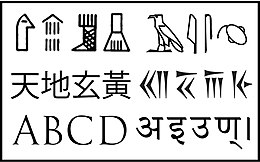
The first verifiable and complex writing system came into existence about 5,200 years ago, in Mesopotamia, present-day Iraq. This was the illustrious cuneiform script, developed by the Sumerians, a people whose sophisticated society demanded a means of documenting transactions, events, and ideas. Initially, pictograms were inscribed onto clay tablets, serving as visual symbols of trade items or commodities. However, pictograms could not effectively convey abstract concepts or nuances of Sumerian language.
The leap from pictograms to cuneiform was a significant intellectual leap. Over time, these symbols evolved, became more abstract, and were streamlined into a series of wedge-shaped marks made with a reed stylus. This evolution from pictorial representations to abstract signs marked the true inception of writing, capable of reflecting the full range of the spoken language.
Concurrent to the Sumerian achievement, in ancient Egypt, a civilization synonymous with enigma and splendor, hieroglyphs began to decorate the walls of majestic tombs and temples approximately around 3200 BCE. This ornate system comprised both logograms and phonetic glyphs – symbols that represented sounds similar to the concept of our modern alphabet. Like their Sumerian contemporaries, the ancient Egyptians sought to immortalize their records, beliefs, and stories. Their writing medium of choice, however, was the papyrus scroll, derived from the pith of the papyrus plant native to the Nile Delta.
The implications of writing’s birth were manifold. It allowed for accurate record-keeping, vital for trade and the management of surplus goods. But perhaps more importantly, it enabled the codification of laws, the writing down of religious doctrines, as well as the creation of literature. Each of these transformations contributed to the centralization of power, the rise of bureaucratic states, and the expansion of intellectual horizons.
Across seas, yet another script was developing. The ancient Chinese carved pictograms onto bones and shells – known today as Oracle Bone Script – around 1200 BCE. Though not as old as Sumerian or Egyptian scripts, Chinese characters symbolize one of the writing systems that have remained in continuous use, evolving into the modern characters gracing countless texts in East Asia today.
In Mesoamerica, a region devoid of contact with Eastern Hemisphere civilizations, the Maya developed their own script around the 3rd century BCE. Their glyphs, carved in stone or written in codices, stand as a testament to the human innate urge to record and convey complex ideas without an antecedent or influence from other writing traditions.
As writing spread and cultures intermingled, the process of simplification and adaptation continued. The Phoenicians, expert seafarers, and traders of the ancient Mediterranean, developed an alphabetic system around 1050 BCE. Composed of a mere twenty-two characters, this script would prove critical in the proliferation of literacy, as it significantly reduced the number of symbols a learner had to master.
The inception of writing marked a turning point—a Schism from the prehistoric to the historic age. It clad the fleeting spoken word in the armor of permanence, allowing human thought to endure beyond the confines of mortality. Over succeeding millennia, writing would diverge and coalesce into the plethora of scripts used today, each with its story, each a chapter in the grand narrative of human history.
The Evolution of Writing: From Scrolls to Silicon
As civilizations advanced and engaged in broader exchanges of culture, knowledge, and commodities, the nature of writing systems evolved to meet new demands for compatibility and efficiency. The Phoenician alphabet, a model of simplicity, birthed numerous descendants. Among the most influential was Ancient Greek, which, notably, added vowels to the consonant-only Phoenician script, transforming it into a tool capable of representing the spoken word with unparalleled precision.
The Greeks passed their alphabetic writing system to the Romans, who refined it into the Latin alphabet, the direct ancestor of the script you are reading now. The Latin script spread throughout Europe and, later, to the Americas, Africa, and other parts of the world through the elaborative processes of colonization and globalization. Its dominance in many ways mirrored the spread of Western influence, leaving an indelible mark on global communication.
Parallel to the linear evolution of the alphabet, East Asian script continued to mature, reinforcing the connection between writing and identity. Chinese characters, with their rich intricacies, encapsulated philosophical and poetic depths. These logograms—a symbol representing a word or phrase—became the foundation for other writing systems in neighboring cultures, such as Japanese and Korean, demonstrating the ability of writing to both adapt to and shape different languages and societies.
The growth of writing technology also shifted through millennia. The invention of paper by the Chinese, during the early 2nd century BCE, dramatically changed the portability and dissemination of written knowledge. Then came the printing press in the 15th century, an innovation by Johannes Gutenberg which revolutionized the production of texts. This democratized learning in unprecedented ways, paving the way for the Renaissance, the Scientific Revolution, and the Enlightenment. People could now access a wealth of information that had previously been limited to a select few.
Languages and scripts that thrived captured not just the words, but the cultural essence of their people. Writing systems like the Arabic script, which excelled not only in its linguistic purpose but also in its artistic expression, spread with the reach of Islam and are still used by hundreds of millions today. The Cyrillic alphabet, derived from the Greek and developed in the First Bulgarian Empire, enabled the Slavic peoples to transcribe their languages, which has continued into modern times.
In every script and in every language—ancient or modern—writing played and continues to play a crucial role in the administration of societies, the dissemination of ideologies, and the sharing of human experience. Laws, religious texts, poetry, and historic accounts could be reproduced and passed down, allowing cultures a deeper sense of identity and continuity. The works of Homer, the teachings of Confucius, the tales of Scheherazade, and the theories of Galileo are but a few examples of how writing has allowed individual thought to ripple across centuries.
Yet, the story of writing is still unfolding. The digital age presents a new chapter, marked by the instantaneous transfer of information and the creation of novel forms of writing, like computer code, which runs the underpinnings of our modern world. The internet has created a global platform that connects writing systems, languages, and cultures in real time, redefining the way we communicate and store knowledge.
In reflecting upon the long history of writing, one observes a force that not only encapsulates the essence of eras past but continues to shape the trajectory of human advancement. Writing has been a catalyst for the development of what we might call “collective intelligence”—a shared brainpower, expanding and deepening with each generation's contributions.
From the cuneiform inscriptions of ancient Mesopotamia to the hyperlinked texts of the World Wide Web, the story of writing is one of a ceaseless quest to communicate and understand, and—fundamentally—a desire to endure. Through this ability to encode and preserve human thought, writing has become the scaffold upon which civilization is built. It is a mirror reflecting our deepest aspirations and a map guiding the explorers of tomorrow's unknown. As long as humanity has something to say, writing will continue to chart the course of our collective journey, etching the story of our species into the annals of time.