Erwin Schrödinger: Mastering Quantum Theory and More
The Early Life and Academic Journey
The Austrian physicist Erwin Schrödinger, born on August 12, 1887, in Vienna, Austria, was one of the key figures in the development of quantum mechanics. Despite coming from a family with little formal scientific education, his early curiosity and intellectual prowess laid the groundwork for his later groundbreaking achievements. Schrödinger’s father, Rudolf Eugen Schrödinger, was a school inspector, while his mother, Karolina Ettersburger, came from a family of teachers and journalists, further influencing his academic inclinations.
Showcasing his talent from an early age, Schrödinger excelled academically, particularly in mathematics and physics. He graduated from high school in 1906 and went on to study mathematics at the University of Vienna. There, he was exposed to the intellectual rigor and dynamic research environment that would shape his future career.
Schroedinger's academic journey continued through his doctoral studies under Friedrich Hasenöhrl, a renowned theoretical physicist. Under Hasenöhrl's guidance, he developed a strong foundation in physics and mathematics. Schrödinger's early work focused on electrodynamics, where he showed great aptitude in solving complex problems and formulating mathematical models. His dissertation, submitted in 1910, was on the theory of special relativity and electromagnetic radiation, demonstrating his early genius in the field.
Contributions to Relativistic Electrodynamics
During his time as a university lecturer, Schrödinger continued his research into relativistic electrodynamics. His work in this area laid the foundations for what would later become a major focus of his career. In his 1916 paper "The Time-Dependent Representation of Wave Mechanics," Schrödinger introduced wave equations that described the motion of particles in a way that was consistent with both wave and particle theories, marking a significant shift in the understanding of quantum particles.
This research also led to the introduction of the concept of 'Schrödinger's equation,' a partial differential equation that describes how the quantum state of a physical system changes over time. While it was initially not widely recognized, his contributions to relativistic electrodynamics were crucial to the broader developments in quantum mechanics that followed.
The Concept of Wave Mechanics
In 1925, Schrödinger published a series of papers that would fundamentally transform the field of quantum mechanics. These papers, collectively known as the "Annalen der Physik" series, outlined his development of wave mechanics. Unlike Werner Heisenberg's matrix mechanics, Schrödinger's approach used a continuous wave picture to describe quantum states, which provided a more intuitive and visual representation for many physicists.
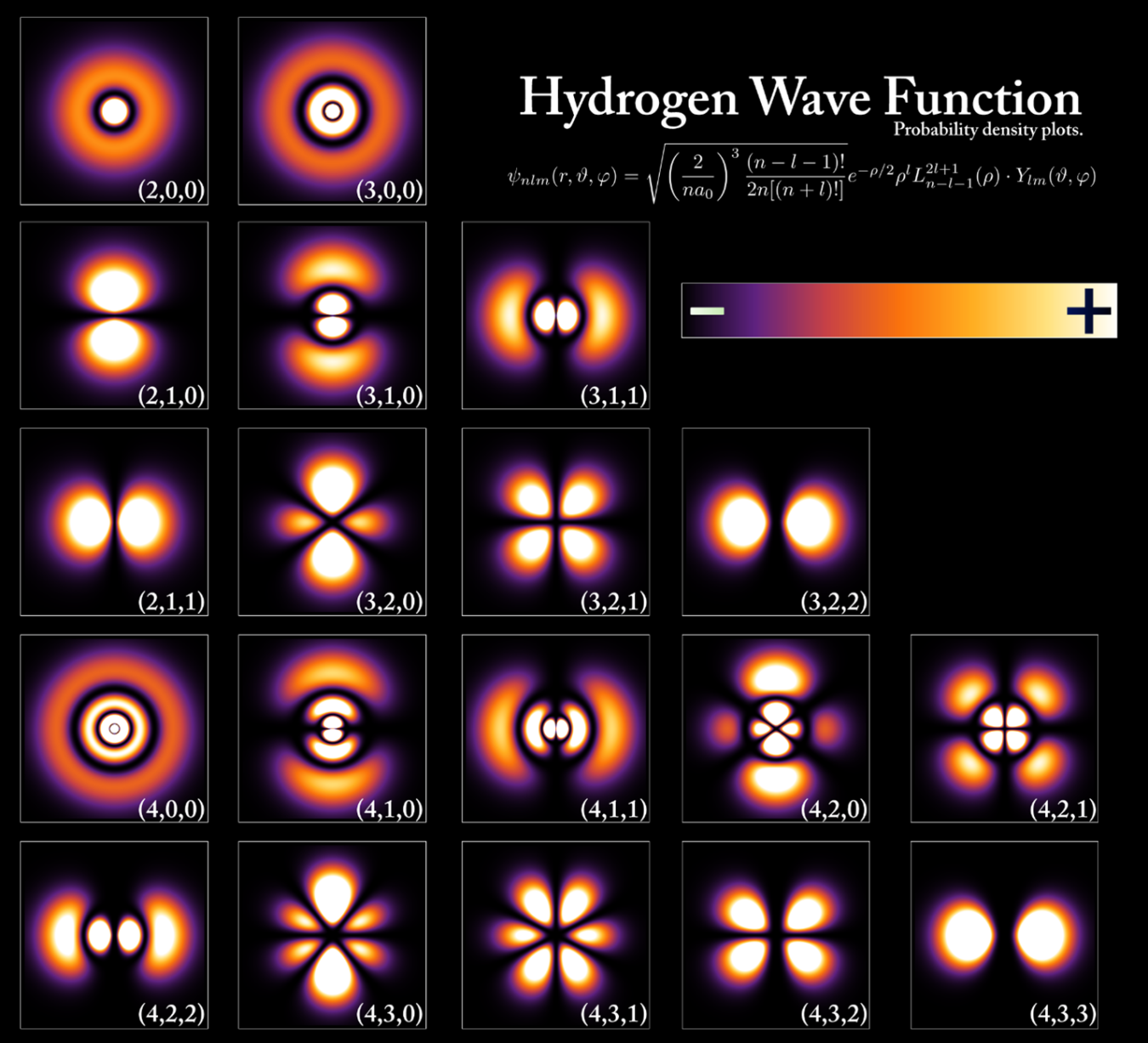
The concept of wave functions, denoted \(\psi\), became central to Schrödinger's work. A wave function is a mathematical description of the quantum state of a system, and its square (\(\psi^2\)) gives the probability density of finding a particle at a specific location. This interpretation of quantum mechanics provided a clearer, more visualizable framework compared to the more abstract matrix mechanics, and quickly gained popularity among many physicists.
A particularly notable application of wave mechanics came in the form of the Schrödinger equation, which describes how the quantum state of a physical system changes over time. Formally, the Schrödinger equation is given by:
\[i\hbar \frac{\partial}{\partial t}\psi = \hat{H}\psi\]
where \(i\) is the imaginary unit, \(\hbar\) is the reduced Planck constant, \(t\) is time, \(\psi\) is the wave function, and \(\hat{H}\) is the Hamiltonian operator representing the total energy of the system.
Schrodinger himself noted that his wave mechanics theory could not explain the fine structure of the hydrogen spectrum, which was accurately described by Heisenberg's matrix mechanics. However, his approach eventually led to the development of more advanced theories that reconciled these differences, thus solidifying his reputation as a pioneer in modern physics.
Other Scientific Contributions
Beyond his work in quantum mechanics, Schrödinger made noteworthy contributions to other fields of physics. He delved into biophysics, exploring the nature of life from a physical perspective. One of his most intriguing and provocative theories is the “What is Life?” lecture delivered in 1943, which proposed that the fundamental unit of biological organization could be explained via the statistical mechanics of macromolecules.
In 1944, Schrödinger published a book titled “What is Life?,” where he suggested that the genetic material of organisms could be based on simple physical laws. He hypothesized that living systems could be understood in terms of their thermodynamic properties, specifically the ability to maintain a stable internal environment (homeostasis), which contradicts the tendency in non-living systems toward increased entropy or disorder.
Another notable contribution was his collaboration with mathematician Herman Weyl on the geometry of space-time. Schrödinger applied Weyl's ideas to develop non-Riemannian geometries, which contributed to the development of general relativity. Although his work did not directly lead to new experimental results, it highlighted the potential of interdisciplinary approaches in theoretical physics.
The Famous Schrödinger's Cat Thought Experiment
No discussion of Erwin Schrödinger can be complete without mentioning his famous thought experiment, Schrödinger's Cat. Introduced in 1935 as part of a critique of quantum mechanics, the experiment posited a scenario where a cat confined within an opaque box could simultaneously be alive and dead if placed in a superposition state alongside a radioactive atom and a vial of poison gas.
The thought experiment challenges the intuitive notion that a system in the real world must exist in only one of its possible states at any given moment. According to quantum mechanics, until the box is opened and the state is observed, the cat could be in both states at once, a concept famously encapsulated in the phrase “Until a physicist looks inside the box to check the cat’s status, the cat is simultaneously alive and dead.”
This paradox raises profound questions about the interpretation of quantum mechanics and the nature of observation, leading to ongoing debates about the measurement problem in quantum physics. Schrödinger's cat became a powerful tool for illustrating the seemingly absurd implications of the superposition principle, sparking widespread interest and discussion in the scientific community.
The Later Years and Legacy
Despite his remarkable contributions to science and philosophy, Schrödinger experienced periods of personal struggle and controversy. His marriage to Annemarie Frankau dissolved in 1942, and he moved to Dublin to take up the position of Director of the Institute for Theoretical Physics at the School of Theoretical Physics, part of the Dublin Institute for Advanced Studies. Here, he conducted his famous experiments and thought experiments, contributing significantly to the evolution of modern physics.
In his later years, Schrödinger also engaged in philosophical discussions about the role of physics in the larger context of human knowledge and society. His works, such as “Mind and Matter” and “Nature and the Greeks,” delve into the relationship between physical laws and the nature of consciousness, challenging readers to consider deeper questions about the universe and our place within it.
Schrödinger remained active in his scientific pursuits until his death on January 4, 1961, in Vienna. His legacy endures in the formative theories and concepts named after him, such as Schrödinger's equation and Schrödinger's cat. These contributions have had a lasting impact on not only theoretical physics but also broader fields that explore the intersection between science and philosophy.
Influences on Schrödinger's Work and Personal Life
Schrodinger's academic career was influenced by a variety of factors, including his interactions with prominent scientists of his time. Albert Einstein, a fellow physicist whose work on relativity greatly influenced Schrodinger’s early research, was a lifelong friend and mentor. Their correspondence and collaborative efforts often focused on deepening and explaining the principles of quantum mechanics.
Throughout his life, Schrödinger maintained an active intellectual network that extended beyond physics. His conversations with philosophers like Bertrand Russell and Martin Heidegger played a significant role in shaping his views on the nature of reality and the relationship between science and philosophy. These debates helped Schrödinger formulate his thoughts on the inherent randomness and complexity of the natural world.
A Controversial Figure and Public Engagement
Erwin Schrödinger was not only a renowned scientist but also a public figure who engaged deeply with the broader implications of his work. His 1944 book, “What is Life?,” was a direct response to the philosophical inquiries of biologists and chemists during the early days of molecular biology. In this book, Schrödinger speculated on the nature of genetics and the possibility of information storage in cells, drawing parallels between the stability of life and the principles of quantum mechanics.
Despite his accolades, Schrödinger faced criticism and controversy throughout his career. His views on quantum mechanics sometimes diverged from those of the Copenhagen Interpretation, which was championed by Niels Bohr and Werner Heisenberg. This disagreement led to heated debates and, in some circles, Schrödinger was considered a renegade for challenging established doctrines. Nevertheless, his innovative approach to wave mechanics and his thought-provoking experiments, such as Schrödinger's cat, continue to fascinate and challenge scientists and philosophers alike.
Award and Recognition
Schrödinger received numerous awards and honors for his contributions to science. He was elected a corresponding member of the German Academy of Natural Sciences Leopoldina in 1926 and later became a full member in 1945. In 1933, he was awarded the Max Planck Medal by the German Physical Society, which recognized his significant contributions to theoretical physics. During World War II, he was appointed Commander of the Order of the White Eagle by the Nazis in 1940, a controversial honor due to his Jewish heritage and left-wing political views. After the war, he refused to accept the medal, symbolizing his opposition to the Nazi regime.
His contributions were so esteemed that in 1949, he was awarded the Nobel Prize in Physics along with Paul Dirac. However, Schrödinger had passed away before the award ceremony; he died on January 4, 1961, shortly after his nomination. Nevertheless, the Nobel honor stands as a testament to his enduring influence on the field of quantum mechanics.
Legacy and Cultural Impact
The legacy of Erwin Schrödinger extends far beyond the technical advancements he made in physics. His thought experiments, such as Schrödinger's cat, have permeated popular culture, appearing in books, films, and television shows as a metaphor for uncertainty and unpredictability. This cultural impact underscores the universal appeal of his work and its relevance in contemporary discourse.
Moreover, Schrödinger’s philosophical writings have inspired numerous discussions on the relationship between science and ethics, particularly in the realms of genetics and environmental science. His work continues to be studied in academic circles, not just for its technical merit but also for its profound philosophical insights.
Conclusion
Erwin Schrödinger’s contributions to physics are immeasurable. From his early work on relativistic electrodynamics to his revolutionary theories in quantum mechanics, Schrödinger’s intellect and vision reshaped the landscape of modern physics. His legacy includes not only fundamental scientific discoveries but also a rich philosophical dialogue that continues to inspire scientists, philosophers, and thinkers around the world.
The enduring fascination with Schrödinger’s cat and other thought experiments reflects the profound impact of his work. As we continue to explore the boundaries of quantum mechanics and the nature of reality itself, Schrödinger’s insights remain a cornerstone of scientific inquiry and a valuable resource for understanding the complexities of our world.
Further Developments and Impact
The impact of Schrödinger's work has been far-reaching, influencing not only the field of quantum mechanics but also various other scientific disciplines. His ideas have been adapted and expanded upon by generations of physicists and scholars, pushing the boundaries of our understanding of the microscopic world.
In recent decades, the principles of quantum mechanics, first articulated by Schrödinger and others, have found practical applications in areas such as quantum computing, cryptography, and precision measurements. Quantum computers exploit the superposition and entanglement phenomena described by Schrödinger's equation to perform complex calculations exponentially faster than traditional computers.
For example, Schrodinger's wave concept paved the way for quantum optics, a field that has led to breakthroughs in laser technology, atom trapping, and quantum teleportation. These technologies have a wide range of applications, from medical imaging to secure communication networks. The theoretical framework developed by Schrödinger has also played a crucial role in advancing our understanding of condensed matter physics, where quantum effects are crucial for explaining phenomena like superconductivity and quantum Hall effect.
Interdisciplinary Applications
The interdisciplinary nature of Schrödinger's work has inspired collaborations across different scientific fields, fostering a holistic approach to understanding the natural world. His ideas have been applied to the study of molecular biology, ecology, and even economics, where they offer new perspectives on complex systems and emergent behaviors.
In molecular biology, Schrödinger's insights on the informational content of DNA have led to a deeper understanding of genetic processes and evolutionary mechanisms. His concept of a self-reproducing molecular machine has influenced the field of synthetic biology, where researchers are designing artificial molecules and organisms to perform specific functions. This work holds promise for developing novel medical treatments, biosensors, and bioenergy sources.
Influence on Philosophy and Popular Culture
Schrödinger's contributions have also transcended the realm of scientific discourse, leaving a significant mark on philosophy and popular culture. The thought experiment known as Schrödinger's cat, for instance, has become a cultural icon, appearing in countless books, movies, and online media. It serves as a powerful illustration of the counterintuitive nature of quantum mechanics and the challenges posed by interpreting its implications.
Philosophers have extensively debated the implications of quantum mechanics on our understanding of reality and consciousness. Questions abound regarding the nature of time, free will, and observer bias. Schrödinger's work has encouraged a reevaluation of deterministic views of the universe, fostering a more open-minded and inclusive scientific dialogue.
Modern Relevance and Future Directions
The ongoing relevance of Schrödinger's ideas underscores the enduring importance of his work. As we navigate the complexities of the 21st century, from climate change to technological disruptions, his insights continue to provide valuable tools for addressing these challenges.
Looking ahead, there are several frontier areas where Schrödinger's legacy will likely play a significant role. For instance, the study of black holes and the quest for a theory of everything are poised to benefit from the deeper understanding of spacetime and quantum phenomena. Moreover, as we strive to build sustainable and resilient societies, Schrödinger's approach to understanding complex systems and emergent properties could offer valuable insights.
Conclusion
In conclusion, the contributions of Erwin Schrödinger to the field of physics, and by extension, the broader scientific community, are nothing short of transformative. From his foundational work in quantum mechanics to his thought-provoking philosophical writings and culturally impactful thought experiments, Schrödinger’s legacy continues to influence and inspire us.
As we delve deeper into the mysteries of the universe and tackle the complex challenges of our world, Schrödinger’s insights remain a beacon of innovation and curiosity. His work serves as a reminder of the power of interdisciplinary thinking and the importance of questioning our assumptions about the nature of reality.
Simon Tofield: Illustrator Behind the Feline Charm
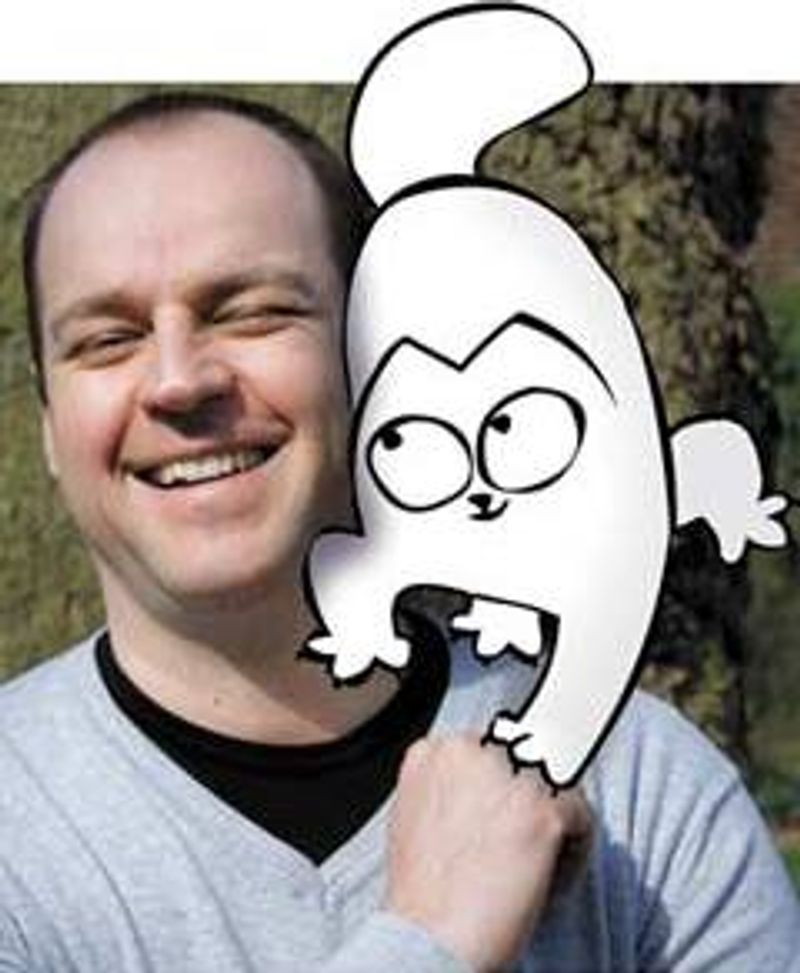
Simon Tofield is a name that most likely resonates with cat lovers around the world. He is the creative genius behind "Simon's Cat," a series of animated films, books, and comics starring the mischievous feline character that has won over audiences globally. This British animator and illustrator has brought an unparalleled charm to the world of cartoons through his simple yet expressive drawings that capture the quintessential nature of cats.
The Early Life and Inspiration
Born in 1971 in the serene English countryside, Tofield displayed a palpable talent for drawing from a young age. Growing up, he was inspired by the lush rural surroundings and animals, particularly cats, that he often watched with astonishment. His passion for storytelling through visuals deepened as he transitioned into adulthood. Tofield pursued this calling by studying graphic design and animation in college, where his ability to bring sketches to life began to truly flourish.
Simon's Cat: The Birth of an Internet Sensation
The inception of "Simon's Cat" occurred quite serendipitously. In 2008, Tofield created a short animated film called "Cat Man Do" as a way to learn a new animation program. Little did he know, this endearing depiction of a cat waking up its owner for breakfast would be a viral hit, amassing millions of views on YouTube. The simple black-and-white animation perfectly encapsulated the playful and often frustrating nature of cats, resonating with pet lovers worldwide.
The Art of Simplicity
One of the hallmarks of Simon Tofield's work is its simplicity. The cat, with its round eyes and elongated tail, is crafted with minimalistic lines that convey a deep range of emotions. This style allows viewers to instantly connect with the character's antics and personality. Tofield's work is a testament to the power of simplicity in art—how expression and relatability can be achieved without overcomplicating the visuals. His ability to capture the essence of feline behavior with a few strokes of the pen has made Simon's Cat iconic in the animation world.
From YouTube to Books and Beyond
Capitalizing on the viral success of his animations, Tofield expanded the "Simon's Cat" universe into books, which have become bestsellers. The first book, simply titled "Simon's Cat," was published in October 2009 and featured a collection of illustrations that further explored the daily life of the mischievous feline. The success of the book led to sequels and translations in over 20 languages, proving that Simon's Cat has universal appeal.
A Pioneer in Web Animation
At a time when internet content was starting to redefine how audiences consumed media, Simon Tofield became a pioneer in the realm of web-based animation. His success was not solely due to the quality of his work but also due to the strategic use of evolving digital platforms. YouTube served as the perfect medium to distribute and monetize his creations, paving the way for aspiring animators globally. Tofield's journey reflects the power of the internet in democratizing content creation and reaching global audiences with relative ease.
In the next part of this article, we’ll delve deeper into Simon Tofield’s influences, collaborations, and the impact his work has had on fans and aspiring artists alike.