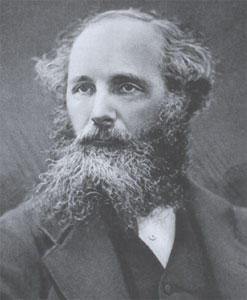
Louis Néel: The Nobel Laureate Who Revolutionized Magnetism Research
Introduction
French physicist Louis Néel, born on July 10, 1903, and passing away on October 6, 2000, is best known for his groundbreaking work in magnetism, particularly for discovering antiferromagnetism. This discovery significantly advanced the field of condensed matter physics and earned him the Nobel Prize in Physics in 1970. His contributions not only enriched scientific knowledge but also paved the way for practical applications in various technological fields.
Childhood and Early Education
Néel’s interest in science was evident even at a young age. Born in Marseille, France, he grew up during a period marked by significant political upheavals, including the First World War. Despite the challenging circumstances, Néel excelled academically. He studied mathematics and physics at the École Normale Supérieure de Paris, where he laid the foundations for a career that would span multiple decades and continents.
While still a student, Néel was influenced by the work of notable scientists such as Marie Curie and Henri Poincaré, figures who embodied both brilliance and integrity. These early influences helped shape his passion for physics and his commitment to scientific integrity throughout his career.
Academic Career and Early Research
Néel obtained his Ph.D. in 1929 under the supervision of André Mercier at the Collège de France in Paris. His dissertation focused on crystallography and spectroscopy, two disciplines that would later become central to his research. Following his graduation, Néel joined the CNRS (National Centre for Scientific Research) as a scientist, where he began conducting research in magnetic materials.
In the late 1930s, Néel was appointed as a professor of physics at the University of Grenoble. It was during this time that he became increasingly intrigued by magnetic phenomena. His early research involved understanding the behavior of magnetic fields in different substances and how they interacted with each other.
The Discovery of Antiferromagnetism
Néel’s most pivotal contribution to science came with his discovery of antiferromagnetism. This phenomenon involves the alignment of magnetic moments in opposite directions in a lattice structure, leading to a cancellation of the bulk magnetization. The concept was revolutionary because it explained how certain substances could maintain their magnetic properties without exhibiting permanent magnetism.
Néel published his findings in a series of papers, the most influential being “Antiferromagnetic Structure of Iron Oxydes,” which appeared in the journal Nature in 1936. In these papers, he presented evidence for the existence of antiferromagnetism in iron oxydes and described the theoretical framework that could explain these observations. This work laid the groundwork for modern-day solid-state physics and materials science.
Contributions Beyond Antiferromagnetism
Beyond antiferromagnetism, Néel made significant contributions to other areas of physics and materials science. His work on domain structures—regions within a magnetic material where the magnetic moments point in the same direction—was crucial for understanding the behavior of materials at the microscopic level. This research provided a deeper insight into how magnetic fields could affect the properties of materials.
In addition, Néel’s investigations into the effects of temperature variations on magnetic materials were groundbreaking. He demonstrated that the behavior of magnetic domains could change dramatically with temperature, leading to phenomena such as phase transitions and hysteresis. These insights are essential for developing new technologies and materials.
Nobel Prize Recognition
Despite his prolific contributions, it wasn’t until the 1960s that Néel received widespread recognition for his work. In 1968, he was elected to the Académie des Sciences, France’s highest honor for scientists. Ten years later, he was awarded the Nobel Prize in Physics “for his fundamental work in ferromagnetism and antiferromagnetism.” Alongside his colleague Peter Debye, Néel’s prize highlighted the significance of their collaborative research on magnetic substances.
The Nobel Committee acknowledged Néel’s discovery of antiferromagnetism as one of the most important advances in physical sciences. His work opened up a new area of study and paved the way for numerous technological advancements, from data storage systems to the development of new high-temperature superconductors.
In the next segment, we will delve further into Néel’s post-Nobel career and legacy, including his educational efforts and ongoing impact on the scientific community.
Post-Nobel Career and Legacy
Following his receipt of the Nobel Prize in Physics, Néel continued to be active and influential in the scientific community. His role as a mentor and educator was no less significant than his contributions to research. He held several positions at prestigious institutions, including the Laboratory of Solid State Physics at the Centre de Recherches sur les Solides (CRNS-CNRS-Grenoble) and later became a member of the Institut d’Electronique Fondamentale at Université Paris-Sud.
Néel’s influence extended beyond academic circles. He was involved in the establishment and development of various scientific organizations and societies, including the French Society of Physics and the International Union of Pure and Applied Physics. His leadership in these organizations contributed to setting research agendas and fostering collaborations between researchers worldwide.
One of Néel’s most notable contributions after the Nobel Prize was his work on domain walls and domain boundary motion in ferromagnetic materials. These studies provided a better understanding of how magnetic domains could move within a material under the influence of an external magnetic field. This knowledge has been instrumental in developing magnetic recording devices and data storage technologies.
Néel’s research on magnetic hysteresis also had far-reaching implications. Hysteresis, a phenomenon where the magnetization of a material lags behind the applied magnetic field, is critical for the functioning of many electronic devices. Understanding this process allowed for the development of magnetic memories and sensors, among other applications.
Educational Contributions
Néel was deeply committed to educating future generations of physicists and scientists. At the University of Grenoble, he established the first laboratory dedicated to solid-state physics, where he trained numerous students and postdoctoral fellows. Many of these individuals went on to make significant contributions in their own right, carrying forward the legacy of innovation and discovery initiated by Néel.
One of his notable educational initiatives was the creation of the Doctoral School of Physics in Grenoble, which fostered interdisciplinary research and collaboration among scientists specializing in different aspects of physics. His teaching approach emphasized the importance of rigorous theoretical foundations combined with experimental verification, ensuring that his students were well-prepared to contribute meaningfully to scientific advancement.
Impact on Technology and Society
Néel’s research was not just confined to academic theory; it had practical applications that transformed various industries. The principles he elucidated have found extensive use in the electronics industry, particularly in the production of magnetic recording media. Modern hard drives, MP3 players, and other electronic devices rely heavily on the materials and technologies developed based on Néel’s groundbreaking discoveries.
Beyond consumer electronics, Néel’s work has also influenced the development of new materials for information technology and communication infrastructure. For instance, the understanding of antiferromagnetism has led to the development of spintronic devices, which utilize the intrinsic quantum mechanical properties of electrons to perform information processing tasks more efficiently.
In addition, Néel’s research on magnetic materials has been instrumental in advancing medical imaging technologies. Magnetic Resonance Imaging (MRI), a commonly used diagnostic tool in hospitals, utilizes principles derived from his work on nuclear magnetic resonance. The ability to visualize internal body structures with high precision relies on the understanding of magnetic properties that Néel contributed to.
Legacy and Honors
Néel was awarded numerous honors throughout his career, reflecting the significance of his contributions to science. Besides the Nobel Prize, he received the Franklin Medal and the Prix Max Planck from the French Academy of Sciences. He was also elected to the National Academy of Sciences in the United States, an extraordinary achievement that underscores his global influence in the field of physics.
His legacy is not just about the awards and recognitions; it lies in the foundational knowledge he imparted and the new fields and technologies he inspired. Today, the term “Néel temperature,” named after him, refers to the temperature above which a material loses its ferromagnetism or antiferromagnetism. This parameter is crucial for material scientists and engineers working in various industrial sectors.
A fitting tribute to Néel’s lifelong dedication to science is the Louis Néel Institute of Grenoble, which continues to push the boundaries of solid-state physics and materials science. Established in his honor, the institute carries out cutting-edge research and educates the next generation of scientists, ensuring that his legacy lives on.
Néel’s life and work exemplify the enduring impact of a single visionary on the scientific landscape. His contributions to magnetism and his profound insights into material properties have left an indelible mark on our understanding of the world around us. As we continue to build upon the foundations he laid, his name remains synonymous with excellence and innovation in the realm of scientific discovery.
Personal Life and Legacy
Despite a busy career and numerous accolades, Néel remained dedicated to his personal life and family. He married Marguerite Goudier in 1932, and they had two children together. His wife also played a significant role in his life, supporting his scientific endeavors and accompanying him on many international conferences and research trips.
Néel was known for his modesty and humor, which helped him navigate the sometimes complex world of academic and scientific diplomacy. He was a natural educator and communicator, able to explain complex concepts with clarity and simplicity. This quality made him a favorite among students and colleagues alike.
One of Néel’s greatest legacies is his ability to inspire and mentor. Many of his students and postdoctoral fellows have gone on to hold prominent positions in academia and industry. His method of teaching and his open-minded approach to science nurtured a generation of scientists who continue to push the boundaries of our understanding of physical phenomena.
Néel’s contributions to science and society were recognized through various honors and recognitions. In 1973, he was awarded the Max Planck Medal by the International Union of Pure and Applied Physics, and in 1976, he received the Franklin Medal from the Franklin Institute. His work was so influential that the French government made him a Commander of the Légion d'Honneur, a high honor that recognized his significant contributions to the field of science for the betterment of society.
Impact on the Scientific Community
The impact of Néel’s work is multifaceted and far-reaching. His discovery of antiferromagnetism and his contributions to the understanding of magnetic domains and hysteresis opened up new avenues of research and applications in various scientific fields. The principles he elucidated have not only advanced our understanding of the microscopic world but have also had practical applications in numerous industries.
One of the most significant impacts of Néel’s discoveries is in the field of information technology. His work on magnetic materials has enabled the development of more efficient and reliable storage devices, contributing to the rapid progress in computer science and telecommunications. The principles of magnetism he studied have also led to the development of new materials with unique magnetic properties, which are being explored for their potential in quantum computing and other advanced technologies.
In addition to these technological advancements, Néel’s work has had an educational impact that extends beyond the classroom. His books and lectures have served as essential resources for students and researchers, providing a solid foundation for future generations. His texts on magnetism remain referenced and studied, contributing to the ongoing advancement of the field.
Memorial and Legacy Fund
To honor Néel’s contributions, a number of memorials and foundations have been established. The Louis Néel Institute for Magnetism, located in Grenoble, continues to conduct cutting-edge research and education in the field of magnetism. Named in his honor, this institution carries on his legacy by advancing the frontiers of knowledge in solid-state physics and materials science.
A more personal tribute comes in the form of the Louis Néel Legacy Fund, which supports research and educational initiatives in the fields of physics and material sciences. This fund ensures that Néel’s vision and passion for scientific exploration continue to inspire and support future scientists.
Conclusion
Louis Néel’s life and work have left an indelible mark on the world of science. From his early days as a student to his later years as a renowned scientist and educator, Néel’s contributions have shaped the way we understand and utilize the properties of matter. His pioneering work on antiferromagnetism and his insights into the behavior of magnetic materials have opened up new avenues of research and development.
Through his educational efforts and his influence on the scientific community, Néel has ensured that the principles he discovered continue to inspire and inform the next generation of scientists. His legacy is not just about the accolades he received but about the lasting impact of his contributions to our understanding of the physical world and their applications in technology and society.
As we look back on Néel’s life, we are reminded of the importance of curiosity, dedication, and collaboration in the pursuit of scientific knowledge. Louis Néel’s story is a testament to the power of human curiosity and the transformative impact of scientific discovery.
Néel’s life and contributions were a testament to the enduring pursuit of knowledge and the potential of scientific research to benefit humankind. Through his visionary work and unwavering dedication, Louis Néel has left a legacy that continues to inspire and guide scientific inquiry in the modern era.
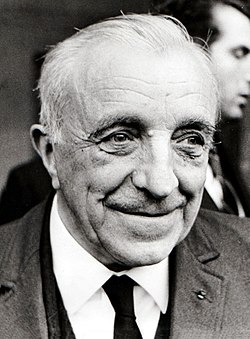
Michael Faraday: The Father of Electromagnetic Technology
The story of Michael Faraday is one of brilliant discovery rising from humble beginnings. This English physicist and chemist fundamentally transformed our modern world. His pioneering work in electromagnetism and electrochemistry created the foundation for our electrified society.
Despite having almost no formal education, Faraday became one of history's most influential experimental scientists. He discovered the principles behind the electric motor, generator, and transformer. His insights into the nature of electricity and magnetism illuminate every facet of contemporary technology.
The Humble Origins of a Scientific Genius
Michael Faraday was born in 1791 in Newington, Surrey, England. His family belonged to the Sandemanian Christian sect, and his father was a blacksmith. The Faraday family lived in poverty, which meant young Michael received only the most basic formal schooling.
At the age of fourteen, Faraday began a crucial seven-year apprenticeship. He worked for a London bookbinder and bookseller named George Riebau. This period, rather than limiting him, became the foundation of his self-directed education.
Self-Education Through Bookbinding
Faraday's work binding books gave him unparalleled access to knowledge. He read voraciously, consuming many of the scientific texts that passed through the shop. He was particularly inspired by Jane Marcet’s "Conversations on Chemistry."
This intense self-study sparked a lifelong passion for science. Faraday began to conduct simple chemical experiments himself. He also attended public lectures, meticulously taking notes and illustrating his own diagrams to deepen his understanding.
Faraday's rise from bookbinder's apprentice to world-renowned scientist is a powerful testament to self-education and determination.
The Pivotal Mentorship of Humphry Davy
A defining moment came when Faraday attended lectures by Sir Humphry Davy at the Royal Institution. He presented Davy with a 300-page bound book of notes from these lectures. This impressive work led to Faraday securing a position as Davy's chemical assistant in 1813.
This mentorship was the gateway to Faraday's professional scientific career. He assisted Davy on a grand tour of Europe, interacting with leading scientists. Within a few years, Faraday’s own experimental genius began to eclipse that of his teacher.
Faraday's Pioneering Discoveries in Electromagnetism
The early 19th century was a period of intense curiosity about the relationship between electricity and magnetism. In 1820, Hans Christian Ørsted discovered that an electric current could deflect a magnetic compass needle. This breakthrough, showing a link between the two forces, electrified the scientific community.
Michael Faraday, with his brilliant experimental mind, immediately saw the profound implications. He set out to explore and demonstrate this new phenomenon of electromagnetism through tangible invention.
Inventing the First Electric Motor (1821)
In 1821, Faraday constructed the first device to produce continuous electromagnetic motion. His experiment involved a mercury-filled trough with a magnet and a free-hanging wire.
When he passed an electric current through the wire, it rotated continuously around the magnet. Conversely, the magnet would rotate around the wire if the setup was reversed. This was the world's first demonstration of electromagnetic rotation.
- Foundation of Motor Technology: This simple apparatus proved that electrical energy could be converted into continuous mechanical motion.
- Principle of the Electric Motor: It established the core principle behind every electric motor in use today, from industrial machines to household appliances.
The Monumental Discovery of Electromagnetic Induction (1831)
Faraday's most famous and impactful discovery came a decade later. He hypothesized that if electricity could create magnetism, then magnetism should be able to create electricity. After years of experimentation, he proved this correct in 1831.
Using his "induction ring"—two coils of wire wrapped around an iron ring—Faraday observed a fleeting current in one coil only when he turned on or off the current in the other. He had discovered that a changing magnetic field induces an electric current.
This principle of electromagnetic induction is arguably his greatest contribution to science and engineering. It is the fundamental operating principle behind generators and transformers.
Creating the First Electric Generator
Later in 1831, Faraday refined his discovery into a device that produced a continuous electric current. He rotated a copper disc between the poles of a horseshoe magnet.
This simple action generated a small, direct electric current. This device, known as the Faraday disc, was the world's first primitive electric generator. It demonstrated the practical conversion of mechanical energy into electrical energy.
- Induction Ring (Transformer): Demonstrated induced currents from a changing magnetic field.
- Faraday Disc (Generator): Showed how continuous mechanical motion could generate a steady electric current.
Revolutionizing Chemistry and Electrochemistry
While renowned for physics, Faraday made equally groundbreaking contributions to chemistry. His experimental work bridged disciplines, leading to foundational laws and terminology we still use today.
In 1825, Faraday isolated and described benzene from oil gas. This discovery of benzene was a major contribution to organic chemistry. He also produced the first known compounds of carbon and chlorine.
The Laws of Electrolysis
In the early 1830s, Faraday established the quantitative laws governing electrolysis. These Faraday's laws of electrolysis connected electricity directly to chemical change.
- First Law: The mass of a substance altered at an electrode is directly proportional to the quantity of electricity passed through the electrolyte.
- Second Law: The masses of different substances deposited by the same quantity of electricity are proportional to their chemical equivalent weights.
These laws provided crucial evidence for the particulate nature of electricity and matter, foreshadowing the later discovery of the electron.
Coining Essential Scientific Terminology
Faraday worked with scholar William Whewell to develop a clear nomenclature for electrochemistry. They introduced new terms based on Greek words.
This effort gave science essential words like electrode, cathode, anode, ion, and electrolyte. This standardized language allowed scientists worldwide to communicate clearly about electrochemical processes.
Faraday's Discovery of Diamagnetism and Magneto-Optics
Michael Faraday’s insatiable curiosity extended beyond his work with electricity. In 1845, he turned his attention to how different materials interact with magnetic fields. His investigations led to the discovery of a subtle but universal phenomenon known as diamagnetism.
Faraday found that all materials exhibit a weak repulsion when placed in a strong magnetic field. This was a revolutionary idea, as it suggested that magnetism was a property of all matter, not just metals like iron. He demonstrated this using a powerful electromagnet and meticulously observing the behavior of various substances.
Unveiling the Faraday Effect
During the same period of intense research, Faraday made another landmark discovery. He found that a magnetic field could influence the properties of light. This magneto-optical phenomenon became known as the Faraday Effect.
Specifically, Faraday demonstrated that a magnetic field could rotate the plane of polarization of light passing through certain materials. This established a fundamental link between light (optics) and electromagnetism. The Faraday Effect provided crucial evidence for James Clerk Maxwell's later theory that light is an electromagnetic wave.
- Diamagnetism: A weak repulsion from a magnetic field exhibited by all materials.
- Faraday Effect: The rotation of light's polarization plane by a magnetic field.
- Interconnected Forces: These discoveries strengthened the concept of unified physical forces.
Contributions to Materials Science and Technology
Faraday’s experimental genius was not confined to abstract principles. He made numerous practical contributions that propelled the Industrial Revolution forward. His work had direct applications in metallurgy, glassmaking, and chemical engineering.
He conducted extensive research on steel alloys, systematically studying how different compositions affected their properties. This work was foundational for the emerging fields of scientific metallurgy and metallography. It transformed metalworking from a craft into a science-based engineering discipline.
Pioneering Work in Low-Temperature Physics
Faraday was the first scientist to successfully liquefy several gases previously thought to be permanent. Using a combination of pressure and cooling, he achieved the liquefaction of chlorine, ammonia, carbon dioxide, and others.
By 1845, he had managed to liquefy nearly 20 different gases. This pioneering work in cryogenics opened up the entire field of low-temperature physics. His methods laid the groundwork for later technologies like refrigeration and the liquefaction of air.
Faraday's ability to liquefy 'permanent' gases demonstrated his exceptional skill in experimental design and manipulation of matter.
Innovations in Optical Glass
At the request of the Royal Institution and the Royal Society, Faraday spent years researching and improving the quality of optical glass. His goal was to produce glass with a very high refractive index for use in advanced telescopes and microscopes.
Although the project did not yield immediate commercial success, Faraday's meticulous work produced samples of exceptional quality. His research advanced the understanding of glassmaking and contributed to the future development of high-quality lenses for scientific instruments.
Scientific Methodology and Communication
Faraday’s success was rooted in his rigorous and imaginative experimental approach. He was a master of designing simple, elegant experiments that yielded profound insights. His laboratory notebooks are legendary for their detail, clarity, and thoughtful progression of ideas.
Unlike some theorists of his era, Faraday believed that experimental evidence was paramount. He trusted the results of his meticulous experiments over prevailing scientific doctrines. This commitment to empirical data allowed him to make discoveries that challenged established thinking.
The Celebrated Christmas Lectures
Michael Faraday was deeply committed to public understanding of science. He believed in sharing the wonder of discovery with everyone, especially young people. This passion led him to inaugurate the Royal Institution's famous Christmas Lectures in 1825.
Faraday himself delivered the lecture series 19 times, with his 1860 lectures on "The Chemical History of a Candle" becoming his most famous. His ability to explain complex ideas with simple, engaging demonstrations made him a brilliant science communicator. This tradition continues to inspire young scientists to this day.
- Experimental Rigor: Meticulous note-taking and reproducible results.
- Public Engagement: A pioneer in making science accessible to the public.
- Clear Communication: Used simple language and vivid demonstrations to explain complex concepts.
Relationship with the Scientific Community
Faraday’s rise to prominence was not without its challenges. Early in his career, some in the scientific establishment viewed him with skepticism due to his lack of formal education. His mentor, Sir Humphry Davy, even opposed his election to the Royal Society for a time.
However, the sheer weight and brilliance of his discoveries eventually earned him universal respect. He maintained correspondence with leading scientists across Europe and became a central figure in the scientific community. Despite receiving numerous honors, Faraday remained a modest man dedicated to his work.
Personal Life and Religious Beliefs
In 1821, Michael Faraday married Sarah Barnard, whom he had met through his Sandemanian church. Their marriage was a long and happy partnership, though they had no children. Sarah provided a stable and supportive home life, which allowed Faraday to dedicate himself fully to his research at the Royal Institution.
The couple lived in a house provided by the Royal Institution, where Faraday spent most of his adult life working. His personal life was characterized by simplicity, integrity, and a deep commitment to his faith and his scientific work.
The Influence of Sandemanianism
Faraday’s strong Christian faith as a member of the Sandemanian church profoundly shaped his worldview and approach to science. The Sandemanians emphasized a literal interpretation of the Bible, humility, and the unity of nature as God's creation.
This belief in a harmonious, law-abiding universe drove Faraday’s search for the fundamental laws governing nature. His religious convictions fostered a sense of wonder and reverence for the natural world he sought to understand. He saw his scientific work as a way to uncover the glory of God's creation.
Faraday's faith provided the philosophical foundation for his belief in a universe governed by consistent, discoverable natural laws.
Later Years and Declining Health
By the 1840s, the immense strain of decades of intensive laboratory work began to affect Faraday’s health. He suffered from memory loss and other symptoms likely related to prolonged exposure to mercury and other toxic chemicals used in his experiments.
His mental faculties declined significantly in his final years, forcing him to reduce his scientific activities. Despite his illness, he continued to advise and inspire younger scientists until his death in 1867 at the age of 75. He was buried in Highgate Cemetery in London, leaving behind a legacy that would power the modern world.
Enduring Legacy and Scientific Honors
The impact of Michael Faradays work is immeasurable. His discoveries did not remain abstract laboratory curiosities. They became the foundational principles for the Second Industrial Revolution. These principles directly enabled the electrification of the world.
Faradays conceptualization of the electromagnetic field was perhaps his most profound intellectual contribution. He rejected the idea of "action at a distance" and instead proposed that charged objects and magnets created an invisible "field" in the space around them. This revolutionary idea of field theory changed the course of theoretical physics.
Units of Measurement in Faraday's Honor
The scientific community has immortalized Faradays name in the fundamental units of physics. Two key units bear his name, ensuring his legacy in every physics laboratory and textbook worldwide.
- The Farad (F): This is the SI unit of electrical capacitance. It measures a capacitor's ability to store an electric charge. One farad is a very large unit, so capacitance is typically measured in microfarads or picofarads.
- The Faraday Constant (F): This is a fundamental physical constant representing the magnitude of electric charge per mole of electrons. Its value is approximately 96,485 coulombs per mole. This constant is crucial in electrochemistry, linking the microscopic world of atoms to measurable electric current.
The Direct Line to Modern Technology
Every major electrical device in the modern world owes a debt to Faradays pioneering experiments. His work provided the theoretical and practical bedrock for technologies that define contemporary life.
The electric motor, derived from his 1821 electromagnetic rotation experiment, powers everything from kitchen appliances and power tools to electric vehicles and industrial machinery. The principle of electromagnetic induction underpins the entire global electrical power grid.
From Induction Ring to Global Grid
Faradays "induction ring" was the first electric transformer. Today, massive transformers step voltage up for efficient long-distance transmission and step it down for safe residential and commercial use. Without this invention, the safe and efficient distribution of electrical power over continents would be impossible.
His Faraday disc was the first electrical generator (dynamo). All modern power generation—whether from coal, nuclear, hydroelectric, or wind turbines—relies on the same core principle. These generators convert mechanical energy into electrical energy through electromagnetic induction.
The entire infrastructure of our electrified civilization—power plants, transformers, transmission lines, and motors—is a monument to Faradays discoveries.
Faraday's Influence on Later Scientists
Michael Faradows ideas directly inspired the next generation of great theoretical physicists. His concept of lines of force and electromagnetic fields was the crucial precursor to one of the greatest syntheses in scientific history.
Inspiring James Clerk Maxwell's Equations
The Scottish physicist James Clerk Maxwell meticulously formalized Faradays experimental results and field concepts into a precise mathematical framework. In the 1860s, Maxwell formulated his famous set of four equations that unified electricity, magnetism, and light.
Maxwell’s equations, which stemmed directly from Faradays work, predicted the existence of radio waves. This prediction was confirmed by Heinrich Hertz in 1887, leading directly to the development of radio, television, radar, and all wireless communication. Albert Einstein kept portraits of both Faraday and Maxwell in his study, acknowledging their foundational role.
A Model of the Experimental Scientist
Beyond his specific discoveries, Faraday established a new standard for the experimental scientist. He demonstrated that profound truth could be uncovered through meticulous observation and ingenious experimentation, even without advanced mathematics.
His career became an inspirational model for countless future inventors and researchers. It proved that curiosity, perseverance, and hands-on investigation could overcome a lack of formal education and privileged background. Scientists like Thomas Edison explicitly followed in Faradays experimental tradition.
Commemorations and Lasting Recognition
Faraday’s legacy is celebrated in numerous ways beyond scientific units. His name and image adorn institutions, awards, and public spaces, serving as a constant reminder of his contributions.
The iconic Faraday Building in London houses telecommunications operations. The Royal Society of London awards the prestigious Michael Faraday Prize and Lecture for excellence in communicating science to the UK public. His portrait has appeared on British currency, including the Bank of England £20 note.
The Royal Institution and Faraday's Laboratory
Perhaps the most significant physical monument is the Royal Institution in London's Mayfair. Faraday lived and worked there for most of his life. His original basement laboratory and a reconstruction of his magnetic laboratory have been preserved.
This site is a place of scientific pilgrimage. Visitors can stand in the very space where electromagnetic induction was first demonstrated. The Royal Institution continues its mission of scientific research and public communication, a dual legacy firmly rooted in Faradays own life's work.
- Faraday Museum: Located at the Royal Institution, it houses many of his original apparatuses.
- Faraday Effect: A standard laboratory experiment in physics courses worldwide.
- Statues and Memorials: Found in cities like London and Edinburgh, honoring his memory.
Final Summary: The Father of the Electromagnetic Age
Michael Faraday’s journey from bookbinder’s apprentice to scientific colossus remains one of history's most remarkable stories. His lack of formal training did not hinder him. Instead, it fostered a unique, intuitive approach to nature that prized direct experiment over abstract theory.
His key discoveries are the pillars of our technological world. He gave humanity the electric motor, the generator, the transformer, and the laws of electrolysis. He revealed the connections between light and magnetism and demonstrated that all matter responds to magnetic force.
Core Takeaways from Faraday's Life and Work
The enduring lessons from Faraday’s career extend far beyond his specific inventions. They offer timeless insights into the process of discovery itself.
First, he exemplified the power of relentless curiosity and hands-on experimentation. He trusted what his experiments revealed, even when it contradicted established wisdom. Second, he proved that genius is not dependent on privilege or formal education. Third, he demonstrated that communicating science to the public is a vital responsibility of the scientist.
Finally, his deep religious faith and humility coexisted perfectly with rigorous scientific inquiry. He saw the discovery of natural laws as a way to understand the mind of the Creator. This unity of purpose drove him to seek the fundamental harmony of the physical world.
Faraday did not merely discover isolated facts; he revealed the interconnectedness of natural forces, providing the blueprint for the modern world.
The Unbroken Chain of Discovery
Faraday’s legacy is not frozen in the 19th century. It is a living, evolving foundation. Every advancement in electrical engineering, power systems, communications technology, and electrochemistry builds upon his work. The ongoing revolutions in renewable energy and electric transportation are direct descendants of his discoveries on electromagnetic induction and motor technology.
In an age increasingly defined by sophisticated technology, Faraday’s story reminds us of the profound power of simple ideas. His apparatuses were often strikingly simple, yet they unlocked universe-altering truths. He showed that the deepest mysteries of nature could be revealed through ingenuity, careful observation, and an unwavering belief in the order of the natural world.
The glow of every light bulb, the hum of every motor, and the vast, invisible network of our global communications system stand as a continuous tribute to Michael Faraday. His mind illuminated the fundamental principles that power our civilization, securing his place forever as the true father of the electromagnetic age.
In conclusion, Michael Faraday rose from obscurity to fundamentally shape our technological world through his groundbreaking discoveries in electromagnetism. His legacy is a powerful reminder that curiosity and perseverance can overcome any barrier. Let his story inspire us to pursue our own questions with relentless determination.
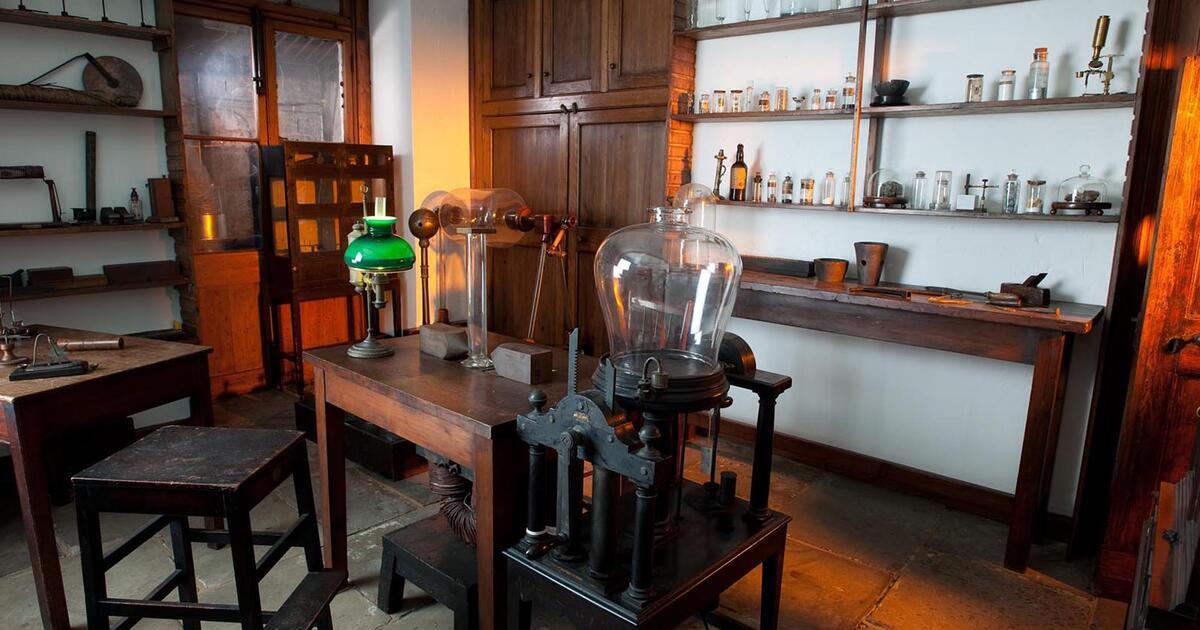


James Clerk Maxwell: The Man Who Unified Electricity and Magnetism
A Life of Innovation and Discovery
James Clerk Maxwell (1831–1879) is often referred to as one of the greatest scientists of his age, hailed for his contributions to physics, particularly in the fields of electromagnetism and fluid dynamics. Born on June 13, 1831, in Edinburgh, Scotland, Maxwell grew up to become a pioneer in understanding the fundamental principles governing light, heat, and electricity. His work laid the foundation for many technologies we use today, such as electric motors, generators, and wireless communications.
Maxwell's early years were marked by intellectual curiosity and academic excellence. He entered Edinburgh Academy at the age of eight, where he showed exceptional aptitude in mathematics and science. At the age of sixteen, he enrolled at Trinity College, Cambridge, where he excelled academically and became a member of the prestigious secret society, the Cambridge Apostles. Despite his brilliance, Maxwell struggled with personal demons, including severe depression, which affected him throughout his life.
During his time at Cambridge, Maxwell began to make groundbreaking discoveries that would change the course of physics. His early work involved the study of Saturn’s rings, contributing to the understanding of how particles behave in space. It was during this period that he also began to explore the nature of light and the relationships between electric and magnetic forces.
The Birth of Electromagnetism
Maxwell's most significant contribution to science came in the 1850s when he formulated the electromagnetic field theory that unified electricity and magnetism under a single mathematical framework. Before Maxwell, these two phenomena were considered separate and unrelated. Through his meticulous analysis of the experimental data of Faraday and others, Maxwell discovered that electricity and magnetism were not independent but interconnected aspects of a unified force.
In 1862, Maxwell published the first of his four equations, which collectively describe the behavior of electromagnetic fields. These are now known as Maxwell's Equations. Each equation represents a critical piece of the puzzle that describes how electric and magnetic fields interact with each other and with matter. The elegance and simplicity of these equations are a testament to Maxwell's genius.
The first equation, called Gauss's law for electric fields, states that electric flux out of a closed surface is proportional to the charge contained inside. The second equation, known as Gauss's law for magnetic fields, reveals that there are no isolated magnetic charges (magnetic monopoles). The third equation, Ampère's Law modified by Maxwell, relates electric currents and time-varying magnetic fields. Finally, the fourth equation, Faraday's Law, demonstrates that a changing magnetic field induces an electric current.
These equations collectively predict the propagation of electromagnetic waves, which travel through space at the speed of light. This was a revolutionary discovery because it implied that visible light itself was an electromagnetic wave—a fact that had profound implications for understanding the nature of light.
Maxwell's Work Beyond Electromagnetism
Maxwell's influence extended beyond electromagnetism. In his book "Theory of Heat" (1871), he introduced statistical mechanics and developed the concept of the kinetic theory of gases. Maxwell's analysis of the distribution of molecular speeds in gases led to what is now known as the Maxwell-Boltzmann distribution. This work played a crucial role in the development of quantum mechanics and statistical physics.
Maxwell's career also saw him become a professor at King's College London in 1865. Here, he continued his research into various areas of physics, including the viscosity of fluids and the theory of color. His insights into fluid dynamics were so advanced that they remain relevant today. Maxwell's equation for the viscosity of fluids, derived while studying the flow of water, provided a deeper understanding of how fluids behave under different conditions.
Legacy and Impact on Modern Physics
Maxwell's work has had a lasting impact on modern physics. The unification of electricity and magnetism that he proposed in Maxwell's Equations laid the groundwork for the development of quantum electrodynamics, which remains one of the most successful theories in all of physics. The discovery that light behaves according to the laws of electromagnetism paved the way for innovations in communication and energy transfer. Today, Maxwell's Equations form the backbone of much of our technology, from telecommunications to energy production.
Maxwell's contributions extended beyond his technical achievements. He was a committed educator and writer, making complex scientific concepts accessible to a broader audience through his books and lectures. Maxwell wrote “Matter and Memory” in 1875, where he explored the relationship between the physical world and human consciousness. Although the book has been criticized for its speculative nature, it showcases Maxwell's interest in the broader implications of scientific discoveries.
Tragically, Maxwell's life was cut short due to a sudden heart attack. He died on November 5, 1879, at the age of 48, leaving behind a legacy that continues to inspire scientists and thinkers around the world. His work stands as a testament to the power of human curiosity and the potential for fundamental scientific insights to shape our understanding of the universe.
A Final Thought
James Clerk Maxwell's life and work represent the essence of a true scientific genius. His ability to synthesize diverse areas of knowledge and his profound impact on our scientific understanding make him one of history’s most important figures. Though much of his work has been built upon and expanded since his time, his foundational contributions continue to reverberate through modern physics and technology, reminding us of the enduring power of scientific inquiry and innovation.
The Personal Struggles and Legacy of Maxwell
Despite his profound scientific achievements, Maxwell's personal life was marked by significant challenges, including severe depression and poor health. His struggles with these issues likely influenced his work, particularly his interest in the behavior of fluids and the kinetic theory of gases. Maxwell's research into the viscosity of fluids, for instance, drew upon his understanding of fluid dynamics, a subject he had studied meticulously in an attempt to make sense of the chaotic nature of his own life.
Maxwell's depression was so severe that it affected his professional work and personal relationships. During one of his depressions, he even attempted to resign from his academic position, a move that, while unsuccessful, underscores the depth of his struggles. His ability to transcend these personal challenges and produce groundbreaking scientific work is a testament to his resilience and intellectual prowess.
Maxwell's contributions to the field of mathematics and physics were not limited to his published works. He also made significant contributions to the development of vector calculus, a branch of mathematics that plays a crucial role in understanding various physical phenomena. Maxwell's work on vector analysis, while not explicitly published during his lifetime, was widely recognized and built upon by future generations of mathematicians and physicists.
In addition to his scientific work, Maxwell was also an accomplished writer. His ability to explain complex scientific concepts in a clear and accessible manner made him a valued teacher and communicator. This skill was particularly evident in his book, "Treatise on Electricity and Magnetism" (1873), which remains a seminal work in the field of electromagnetism. The treatise is renowned for its rigorous mathematical approach and its comprehensibility, making it a valuable resource for both students and professionals.
Maxwell's legacy extends beyond his scientific contributions. He is remembered not only for his innovative research but also for his character and integrity. His dedication to the truth and his willingness to challenge existing scientific paradigms have inspired countless scientists and thinkers. Maxwell's personal letters and private writings, which have been preserved and studied, provide a glimpse into the mind of a great scientist and the challenges he faced in his personal life.
One of the most significant aspects of Maxwell's legacy is his influence on subsequent generations of scientists. The foundation he laid with his equations and theories continues to be a cornerstone of modern physics. His work has not only shaped the way we understand the universe but has also paved the way for numerous technological advancements.
In the years following Maxwell's death, many of his former students and colleagues sought to honor his memory. They founded institutes and scholarships in his name, ensuring that his contributions would be remembered and celebrated. The James Clerk Maxwell Foundation, established in 1973, is one such institution dedicated to advancing the understanding of modern physics. This foundation continues to support research and education, carrying on Maxwell's legacy.
Maxwell in Popular Culture and Remembrance
Maxwell's legacy has also permeated popular culture. He is often the subject of biographies, documentaries, and educational materials aimed at both scholars and the general public. The James Clerk Maxwell Building, which houses the School of Mathematics and Physics at the University of Edinburgh, is perhaps the most prominent example of these tributes. The building serves as a physical monument to Maxwell's contributions and stands as a focal point for ongoing research and education in physics.
Beyond academia, Maxwell's name is recognized in various academic and professional settings. The Maxwell Institute for Mathematical Sciences, a collaboration between the universities of Edinburgh and Heriot-Watt, continues his legacy by fostering interdisciplinary research and innovation. Additionally, the Maxwell Group, a leading provider of geoscience consulting services, has adopted the name Maxwell in recognition of his contributions to the understanding of fluid dynamics and other areas of physics.
Maxwell's influence extends to the broader scientific community as well. The James Clerk Maxwell Foundation regularly organizes events and conferences that honor his work and promote scientific innovation. These gatherings bring together scientists, students, and enthusiasts from around the world to discuss the latest developments in physics and share their insights.
Maxwell in the 21st Century
In the 21st century, Maxwell's legacy continues to inspire new generations of scientists. His work on electromagnetic theory has been expanded and applied to a wide range of modern technologies, from wireless communication to medical imaging. The principles he outlined continue to guide the design of electronic devices and systems, making his contributions more relevant than ever.
Maxwell's insights into the behavior of fluids have found practical applications in the development of advanced technologies such as aerodynamics, hydrodynamics, and fluid mechanics. His work on the kinetic theory of gases has influenced the fields of atmospheric science and thermodynamics, highlighting the ongoing relevance of his theories.
Maxwell's personal story and the challenges he faced have also resonated with modern audiences. His struggle with depression and his ability to overcome personal obstacles to achieve scientific greatness serve as an inspiring narrative. The story of James Clerk Maxwell is often cited in discussions about the complexities of the human mind and the importance of mental health support in the scientific community.
In conclusion, James Clerk Maxwell's contributions to physics continue to shape the way we understand the universe. His foundational work in electromagnetism and his advancements in mathematical theory have had a lasting impact on science, technology, and education. As we continue to explore the frontiers of knowledge, Maxwell's legacy reminds us of the importance of both intellectual curiosity and emotional resilience in the pursuit of scientific discovery.
Modern Applications and Continued Influence
Today, Maxwell's theories continue to find application in a wide range of modern technologies. For instance, the principles of electromagnetic theory are essential in the design and operation of wireless communication systems, including smartphones, Wi-Fi routers, and satellite communications. Maxwell's equations describe how electromagnetic waves propagate and interact with matter, making them indispensable for the development and optimization of these technologies.
In the realm of medical imaging, the principles developed by Maxwell have enabled the creation of technologies like MRI (Magnetic Resonance Imaging) and PET (Positron Emission Tomography). Both of these techniques rely on the properties of electromagnetic radiation to visualize internal structures within the human body. Maxwell's work underpins the fundamental understanding of how these imaging techniques function, contributing to significant advancements in diagnostics and treatment planning.
Maxwell's impact on the field of information technology cannot be overstated. His theories form the basis for the development of electronic circuits and semiconductors. Understanding the behavior of electric and magnetic fields is crucial for the design and functionality of modern chips and transistors. This understanding has led to the miniaturization of electronic devices, allowing for the creation of powerful computers and other high-tech gadgets that are ubiquitous in today's digital world.
In the area of renewable energy, Maxwell's work on the behavior of electromagnetic fields has been instrumental in the design of electric motors and generators. Modern wind turbines, which convert the kinetic energy of wind into electrical energy, rely on the principles laid down by Maxwell. Similarly, solar panels that harness the sun's energy to generate electricity depend on a thorough understanding of the interactions between light and matter, a topic closely related to Maxwell's electromagnetic theory.
Maxwell's legacy extends beyond engineering and technology. His contributions to the field of fluid dynamics have had far-reaching consequences in the areas of meteorology and climatology. The study of atmospheric and oceanic flows relies heavily on the principles of fluid dynamics, which Maxwell himself contributed to significantly. Understanding these flows is crucial for weather forecasting, climate modeling, and predicting natural disasters like hurricanes and storms.
Moreover, Maxwell's ideas have influenced the way scientists approach complex systems. His emphasis on the interconnectedness of electricity and magnetism has inspired researchers to seek out similar relationships in other areas of physics and beyond. Concepts like quantum entanglement, for example, demonstrate a deep interconnectedness at the smallest scales of existence, echoing the unity Maxwell described in his field theories.
In recent years, Maxwell's work has also found applications in bioengineering and biophysics. Scientists have used Maxwell's equations to understand the behavior of biological tissues and cells, which can be modeled using electrical and magnetic properties. This interdisciplinary approach has led to new insights in fields such as neuron signaling and cell membrane dynamics.
Maxwell's influence is not limited to his specific equations or theories. His approach to problem-solving and his willingness to integrate disparate fields of study have set a precedent for modern scientific research. The interdisciplinary nature of his work has encouraged a more holistic view of natural phenomena, influencing the way scientists across different disciplines work together.
The enduring relevance of Maxwell's legacy can be seen in the ongoing efforts to integrate his theories into new forms of energy storage and transmission. Researchers are exploring ways to optimize the efficiency of electric vehicles and smart grids, which rely on a deep understanding of electromagnetic principles. By extending Maxwell's ideas into novel applications, scientists hope to address pressing challenges like energy consumption and environmental sustainability.
Moreover, Maxwell's pioneering work on the statistical nature of physical processes has paved the way for advances in theoretical physics and astrophysics. His statistical mechanical approach to describing the behavior of gases has been extended to understand the behavior of stars, galaxies, and even the very fabric of the universe. The field of cosmology, which studies the origin and evolution of the cosmos, relies on principles that were fundamentally shaped by Maxwell's foundational work.
Maxwell's contributions to physics have also left an indelible mark on education. His clear and insightful explanations of complex concepts continue to influence textbooks and teaching methods in science and mathematics. Educators around the world still reference Maxwell's work to illustrate the beauty and complexity of natural phenomena.
In conclusion, James Clerk Maxwell's legacy spans centuries and continues to permeate every aspect of modern science and technology. From the design of wireless communication networks to the development of renewable energy solutions, Maxwell's theories provide the underlying principles that enable and inform today's technological advancements. As new challenges arise, his foundational work remains a vital source of inspiration and guidance, reminding us of the enduring power of scientific inquiry and the interconnectedness of the natural world.
:max_bytes(150000):strip_icc()/GettyImages-525524956-5c739b2846e0fb0001076317.jpg)