Pertinax: Le Roi Malheuréux de l'Empire Romain
Introduction: L'Ascension Romaine
Pertinax est le troisième des douze empereurs de la période intercalaire à Rome, une période tragique et déchirante à l'époque du Haut Empire romain. Né en 126 après Jésus-Christ dans la région de Syrie-Palestine, il a gravi les échelons de la hiérarchie militaire avant d'être choisi comme empereur par les légions de la Prétoria. Il a régné pour un court laps de temps, une période qui s'est révélée être marquée par les affrontements internes et la lutte contre les adversaires politiques. Son règne et sa brève existence ont laissé une empreinte durable sur l’histoire romaine.
L'Évolution de la Carrière Militaire
Dans sa jeunesse, Pertinax a suivi une carrière militaire exemplaire. Il a servi dans l’armée romaine pendant de nombreuses années et a progressivement atteint des postes de responsabilité. Au fil du temps, il est devenu préfet de la Prétoria, charge prestigieuse qui supervisait les gardes du corps de l’empereur. Ce rôle lui a accordé une influence considérable près des chancelleries impériales et lui a permis de développer les liens nécessaires pour un tel poste.
Les Conditions Préliminaires à son Accès au Pouvoir
En 192 après Jésus-Christ, l’empereur Anonymus est assassiné lorsque la garde prétorienne, insatisfaite des mesures financières prises par l'empereur, se dresse contre lui. Cette situation crée un vide politique crucial qui est exploitée par les soldats. Ils choisissent Pertinax comme leur nouvel empereur, faisant face à une situation où la nomination d’un civil n’était pas courante, mettant ainsi fin à la période sans empereur (Interregnum).
Le Règne de Pertinax
Cause de l'Ascension de Pertinax
Pourtant, ce choix par le sénat romain ne fut pas une simple promesse d’amélioration, mais plutôt un ultimatum dicté par la pression exercée par la garde prétorienne. Pertinax, bien qu’il ait été élu par les soldats, était censé apporter stabilité et gestion efficace aux difficultés économiques et militaires du empire romain.
Réglementation Financière et Réformes
L'une des premières mesures mémorables de Pertinax consistait en la réduction drastique des salaires du sénat et des fonctionnaires publics, afin de réduire les débordements budgétaires. Cette décision populaire auprès du grand public a néanmoins suscité des réactions contraires parmi la haute élite romaine. De plus, Pertinax proposa des mesures visant à augmenter les recettes publiques, dont certaines étaient controversées. Sa tentative de récupérer les terres abandonnées durant la guerre civile avait de nombreux partisans, mais souligna également les tensions sociales et territoriales existantes.
Luttes Intra-Royales
Fidèle à son statut d'homme d'État, Pertinax chercha à résoudre ces problèmes rapidement, mais son autorité s’effaça rapidement face aux ambitions politiques des grands personnages romains. Parmi ceux-ci, Didius Julianus, qui avait été désigné empereur par plusieurs centurions et était connu pour son argent plutôt que pour son leadership. Les conflits entre Pertinax et Didius Julianus se sont intensifiés à mesure que la rivalité personnelle et politique prenait le dessus sur la coopération nécessaire.
Le Trajet vers la Fin du Règne
Déclin Vers La Destitution
La tension monta rapidement entre Didius Julianus, soutenu par la garde prétorienne, et Pertinax. L'arrivée dans le camp de Pertinax de certains membres influents des forces militaires contribua à aggraver la crise. Pertinax tenta alors de conclure un arrangement avec Didius Julianus, offrant une certaine somme d'argent en échange de sa cession du trône. Cependant, l'égo et la faiblesse de caractère de Pertinax jouèrent contre lui, conduisant à une situation mal gérée et à la détermination des soldats à ne pas laisser Didius Julianus prendre la couronne sans opposition.
Crise Finale et Assassinat
Ce fut une séquence dramatique que les soldats lancèrent une attaque finale sur le palais du Capitole où Pertinax se trouvait. Malgré sa volonté de résister et de protéger les citoyens sous son autorité, Pertinax dut faire face à la force combinée de la garde prétorienne et des autres factions rebelles. Son arrestation et son exécution le 28 mars 193 après Jésus-Christ marquèrent le milieu de sa courte mais intense période au pouvoir. L'assassinat de Pertinax fut une illustration saisissante de l'instabilité politique de cette période, renforçant la théorie selon laquelle la fin de la période des empereurs romains fut marquée par la corruption et la violence.
Avec Pertinax, l'histoire romaine offre une perspective claire sur les conflits internes qui ont caractérisé le Haut Empire. Bien qu'il soit souvent perçu comme un roi malheureux, son règne et sa fin ont contribué significativement à l'histoire de l'Empire romain. L'impact de son règne et les leçons tirées de sa mort continuent d'influencer notre compréhension de la dynamique politique et sociale de l'Antiquité.
Répercussions et Legacies: Pertinax la Legende
L'Héritage Délibérément Oublié
Au-delà de sa brève vie au pouvoir, Pertinax a laissé derrière lui un héritage complexe. Bien qu'il ait été rapidement oublié de la mémoire historique romaine, son règne reste un sujet d'intérêt, surtout pour les historiens spécialisés. Une des raisons de cette ombre est la façon dont son règne a été interprété après sa mort. Certains historiens contemporains l'ont présenté comme un empereur déçu, une victime de sa propre faiblesse et de la perfidie de ses propres soldats.
Cependant, certaines figures de l’époque ont répondu de manière plus critique à Pertinax. Plusieurs témoins oculaires notèrent que Pertinax aurait pu gérer mieux ses relations avec la garde prétorienne et les forces militaires. Les chroniques rédigées par ses adversaires, comme Dio Cassius, ont tendance à présenter Pertinax comme un empereur timoré et irresolutif.
L'Impact des Mécanismes Politiques
Toutefois, le rôle de Pertinax et son court règne ont eu un impact indéniable sur les institutions politiques romaines. Sa décision de réduire les salaires du sénat et des fonctionnaires publics a marqué une étape décisive dans le processus de centralisation de pouvoir et du déclin de l’influence du sénat. Cette action est souvent vue comme une étape cruciale vers la fin de l’époque des empereurs et la transition vers la période des Caesars décadents.
Affublé de l'étiquette d'empereur intercalaire, Pertinax devient aussi un symbole pour l'institution militaire romaine. La garde prétorienne, au lieu de se soumettre aux directives civiles, avait montré sa capacité à imposer ses propres caprices et intérêts. Cet événement accentua la crainte de coups d'État militaires qui se succéderaient dans les décennies à venir, mettant en lumière les failles de l'administration empire.
Contribution à la Structure Empirique
Au cœur de la structure impériale romaine, Pertinax a également laissé un héritage indirect. Son règne a souligné l'importance de la gestion financière publique et de la discipline militaire. Ces leçons ont été reprises par ses successeurs, certains adoptant des mesures à son image pour redresser la situation financière de l'Empire.
La Révélation Politique
L'examen minutieux de Pertinax montre un homme confronté à des défis imprévisibles et aux limites de son pouvoir. Sa tentative de réduire les dépenses publiques et sa lutte contre la corruption ont été mal accueillies par la noblesse romaine, soulignant la fragilité de la transition entre les empereurs.
Reconstruction Historique et Modernité
Les historiens contemporains ont apporté une nouvelle approche à l'étude de Pertinax, reconnaissant les dimensions politiques et sociales de son règne. Les travaux modernes tendent à présenter Pertinax comme un homme courageux et pragmatique, un véritable empereur essayant de réformer un système corrompu.
Des recherches récentes ont également mis en lumière les relations complexe de Pertinax avec la garde prétorienne et les factions politiques. Certains historiens suggèrent que son arrestation et son exécution auraient pu avoir lieu sans la concurrence de Didius Julianus et sans la pression croissante de ses opposants politiques.
Ce rapprochement historique et l'utilisation moderne de Pertinax permettent de mieux comprendre le contexte politique et social de cette période tumultueuse de Rome antique.
Conclusion: Pertinax comme Figure Mythique
Hors de toute doute, Pertinax est une figure mythique de l'histoire romaine, représentant un moment clef dans la transition de l’Empire romain à son âge d'or de décadence. Sa courte mais passionnante existence au pouvoir est marquée par la lutte pour sa survie et pour la stabilité de l'Empire.
Malgré la durée courte de son règne, les actions de Pertinax ont engendré des conséquences qui ont modelé le déroulement de l'Empire romain sous les empereurs subséquents. Tout en being un symbole de la fragilité du pouvoir impérial, Pertinax reste une figure éminente dans l'historiographie romaine, offrant aux historiens une richesse de compréhension sur les défis et les opportunités qui ont façonné Rome antique.
Ainsi, Pertinax, bien que sa vie ait été coupée trop tôt, a laissé un héritage durable qui continue d'influencer notre compréhension de ce qui est arrivé à l'empire romain à son apogée.
L'héritage Culturel et Économique
Les Mémoires et les Écrits Historiques
Pertinax a laissé derrière lui une série de documents qui fournissent des informations précieuses sur la période du Haut Empire romain. Parmi eux, on trouve ses mémoires qui témoignent de son projet de réformes financières et administratives. Ces textes constituent une source unique pour les historiens cherchant à décrire les problèmes politiques et économiques de l’époque.
Les écrits historiques qui mentionnent Pertinax sont souvent fragmentaires et subjectifs. Cependant, ils offrent des perspectives différentes sur l’incroyable ascension et chute de ce roi malheureux. Certains auteurs contemporains ont tenté de restaurer l'image de Pertinax, montrant qu'il était au moins aussi compétent et déterminé que son successeur Didius Julianus. Des sources antérieures comme les chroniques de Dio Cassius, malgré leur biais contre Pertinax, ont fourni un cadre pour comprendre la dynamique politique et économique de cette époque.
Économie et Finance Publique
Le règne de Pertinax a été marqué par une série de mesures visant à améliorer l'état financier de l'Empire romain. Son projet de réduire les dépenses excessives et de mettre fin à la corruption était crucial pour redresser les finances publiques. Les réformes financières entreprises par Pertinax sont donc perçues comme essentielles pour préserver et stabiliser les finances de l'Empire.
Même si son plan financier a été largement critiqué à son époque, ces mesures précurseures ont inspiré d'autres reformateurs comme Septime Sévère, qui appliqua ensuite des stratégies similaires pour assurer la stabilité financière de l'Empire. Les travaux modernes examinent Pertinax non seulement en tant qu'empereur, mais aussi en tant que visionnaire financier capable de voir au-delà de l'immédiat et de prévoir les problèmes éventuels.
Personnalité et Style Impérial
Charisme et Leadership
Sa nature personnelle est un autre aspect important à considérer lorsqu'on étudie Pertinax. Bien qu'il ait été nommé empereur par la garde prétorienne, Pertinax n’a pas su capitaliser pleinement sur cet appui. Certaines sources suggèrent qu'il manquait quelque chose de vital pour devenir un véritable empereur. Malgré son intelligence et sa capacité à gérer les crises, il semble que Pertinax avait besoin d'un charisme personnel plus fort pour conquérir l’estime et la loyauté totale de ses sujets.
Parallèlement à cela, Pertinax était connu pour son honnêteté et sa sincérité. Ces qualités l’ont rendu apprécié des citoyens ordinaires et de certains secteurs de la noblesse romaine, malgré leur absence dans certaines des instances plus importantes du pouvoir impérial. Cela illustre la polarisation qui existait entre Pertinax et certaines des plus hauts gradés de l'armée et du gouvernement.
Le Style de Vie Eternellement Controverse
Le mode de vie de Pertinax était également un sujet de controverse. Certains ont accusé Pertinax d'être une figure radicalement modeste dans un monde où l’argent et l’avancement étaient souvent étroitement liés. Ses décisions de réduire les salaires des fonctionnaires publics et de réformer les finances de l'Empire témoignent d'une volonté de rétablir la moralité dans la société romaine.
Au contraire, d'autres ont vu en Pertinax un empereur trop sévère et austère, cherchant à imposer des changements trop rapides et radicaux. Les historiens contemporains ont examiné cette dualité, reconnaissant que Pertinax était une figure complexe qui cherchait à résoudre des problèmes difficiles dans le meilleur intérêt de l'Empire.
Legacy et Influence Durable
Le Membre de L'Élite Impériale
Pertinax fait partie d’une élite impériale rarement représentée dans l’histoire romaine. Il est devenu empereur non pas grâce à une lignée régnante, mais par le vote des soldats de la prétoria. Cette ascension inattendue le place au centre de discours historiques sur la légitimité du pouvoir impérial. Comment un homme de milice pouvait-il devenir empereur alors que d’autres de l'oligarchie romaine tentaient constamment de s'emparer de cette position ? Ce questionnement reste toujours pertinent pour les historiens qui analysent le système politique romain.
La Transition Impériale
L'avènement de Pertinax représente également une phase déterminante de la transition entre les empereurs et la phase suivante de l'Empire romain sous les Caesars décadents. Pertinax essaya de restaurer l'autorité légale et de promouvoir la stabilité après une période de chaos. Ses initiatives montrent comment même un règne aussi court peut avoir des conséquences profondes sur la direction du pouvoir impérial.
Les Légitimités et la Tradition Impériale
Enfin, la carrière de Pertinax souligne la tension continuelle entre la tradition et la légitimité légale dans l'Empire romain. Le fait qu'il ait été nommé par la garde prétorienne souligne l'importance cruciale des armées dans la consolidation du pouvoir impérial. De même, le choix de Pertinax pour remédier à la corruption et les mauvais investissements soulignait la nécessité que l'empereur soit à même de redresser le commerce et la finance du royaume.
Conclusion
In fine, Pertinax est une figure historique éminente qui incarne les aspirations et les désillusions du Haut Empire romain. Bien qu'il règne pour moins de trois mois, son rôle et le cadre politique qui entoura son existence restent édifiants pour comprendre la nature instable de la société romaine. Pertinax, roi malheureux comme on dit souvent, est en réalité un point de référence dans la dynamique de pouvoir et de transition politique qui ont façonné l’Empire romain.
Chaque page écrite sur Pertinax ajoute une pierre à la structure de notre compréhension de ce qui a fait Rome antique. En étudiant sa vie et son règne, nous pouvons mieux saisir le contexte et la complexité de cette ère tumultueuse de l'histoire romaine. Pertinax continue à offrir des leçons sur la nécessité de la réforme, la stabilité et la gestion efficace du pays, tout en restant un symbole indélébile de l'époque intercalaire et de la lutte pour maintenir l'Empire romain.




Greece's New Democracy: Power, Scandals, and Democratic Challenges
Since 2019, New Democracy (ND) has dominated Greek politics under Prime Minister Kyriakos Mitsotakis, securing back-to-back electoral victories. Yet, its tenure has been marred by controversies—from corruption and surveillance scandals to harsh migration policies. As Greece navigates economic recovery and democratic backsliding, ND's leadership faces growing scrutiny both domestically and internationally.
The Rise and Electoral Dominance of New Democracy
New Democracy, Greece's center-right party, has maintained a firm grip on power since 2019. Founded in 1974 after the fall of the military junta, ND has positioned itself as a champion of economic recovery, EU integration, and migration control. Under Mitsotakis, the party won decisive majorities in both the 2019 and 2023 elections, securing 158 out of 300 seats in parliament.
- 2019 Election: ND won 39.85% of the vote, translating to 158 seats.
- 2023 Snap Election: The party increased its share to 40.56%, retaining its majority.
- 2024 EU Elections: While ND remained the leading party, it saw a decline in both votes and seats.
Mitsotakis's leadership promised a "return to normalcy" after the left-wing Syriza government, focusing on economic growth through tourism and EU funds. However, his administration has faced criticism for democratic erosion, including press freedom restrictions and state surveillance.
Controversial Policies and International Backlash
Migration and Asylum Reforms
In July 2025, ND introduced a controversial three-month asylum suspension for North African migrants. The new law mandates that rejected asylum seekers choose between voluntary deportation or facing 2-5 years in jail, along with €10,000 fines for illegal entry or stay. This policy has drawn sharp criticism from human rights groups and the European Court of Human Rights (ECHR).
"Greece's systematic pushbacks of migrants violate international law and human rights standards." — ECHR Ruling, January 2025
EU Subsidies Scandal and Corruption Allegations
In June 2025, the European Commission fined Greece a record amount for the misuse of agricultural funds by OPEKEPE, a state agency. The scandal led to the resignation of two former ministers and the dissolution of the agency. A parliamentary probe was launched, highlighting ongoing concerns about corruption within ND's ranks.
Other notable scandals include:
- Novartis Corruption Case: Allegations of bribery involving high-ranking officials.
- 2022 Wiretapping Scandal: Use of Predator spyware to surveil journalists and political opponents.
- Tempi Train Crash Cover-Up: Accusations of government attempts to obscure responsibility.
Democratic Backsliding and Press Freedom Concerns
Greece's democratic health has declined under ND's leadership. According to Reporters Without Borders (RSF), Greece ranks last in the EU for press freedom. Journalists face state surveillance, SLAPP lawsuits, and smear campaigns. The 2021 murder of journalist Giorgos Karaivaz remains unsolved, raising concerns about impunity.
Key indicators of democratic backsliding include:
- Rule of Law Issues: Persistent challenges in judicial independence and corruption.
- Media Interference: Government influence over media outlets and harassment of journalists.
- Migrant Abuses: Reports of pushbacks and poor conditions in detention centers.
Economic Recovery Amid Persistent Challenges
Despite political controversies, Greece has seen economic growth under ND. Tourism and EU funds have driven recovery, but challenges remain:
- Highest EU Debt: Greece's debt-to-GDP ratio remains a concern.
- Low Wages and Cost-of-Living Crisis: Many citizens struggle with rising prices.
- Brain Drain: Skilled workers continue to emigrate for better opportunities.
While ND has stabilized Greece's economy, critics argue that economic inequality and democratic freedoms must be addressed to ensure long-term prosperity.
Civil Society Under Pressure
Human rights defenders and migrant advocates face increasing harassment. The National Human Rights Commission has warned of a climate of fear, with cases like Panayote Dimitras highlighting the risks faced by activists. International organizations, including Human Rights Watch, have condemned Greece's treatment of migrants and restrictions on civil liberties.
As ND continues to govern, the balance between political stability and democratic integrity remains a critical challenge for Greece.
Public Trust and Government Performance: A Mixed Picture
Greece's government under New Democracy has seen fluctuating levels of public trust. According to the OECD, only 32% of Greeks report high or moderately high trust in their government, compared to the OECD average of 39%. This skepticism extends to administrative services, where satisfaction stands at 54%, well below the OECD average of 66%.
Despite these challenges, ND has maintained its position as Greece's "default" governing party. The party's ability to secure electoral victories—even amid scandals—highlights its political resilience. However, this dominance has not translated into universal approval, as evidenced by declining trust metrics and persistent protests.
Key Factors Influencing Public Perception
- Economic Management: While Greece has seen post-crisis growth, many citizens remain dissatisfied with wage stagnation and rising living costs.
- Corruption Allegations: High-profile scandals, such as the OPEKEPE subsidies misuse and Novartis bribery case, have eroded confidence in government transparency.
- Migration Policies: The controversial asylum suspension and reports of migrant pushbacks have drawn international condemnation, further polarizing public opinion.
The Role of the European Union in Greece's Political Landscape
Greece's relationship with the European Union has been both a source of support and scrutiny. The EU has provided critical financial aid, helping Greece recover from its debt crisis. However, Brussels has also been a vocal critic of ND's policies, particularly regarding migration and rule of law.
EU Funding and Economic Recovery
The influx of EU funds has been instrumental in Greece's economic rebound. These funds have supported infrastructure projects, tourism development, and social programs. Yet, the misuse of agricultural subsidies—as seen in the OPEKEPE scandal—has raised concerns about Greece's ability to manage EU resources effectively.
EU Criticism and Legal Challenges
The European Commission and European Parliament have repeatedly criticized Greece for:
- Migrant Pushbacks: The ECHR ruling in January 2025 condemned Greece's "systematic pushbacks" as a violation of human rights.
- Surveillance and Press Freedom: The use of Predator spyware to target journalists has drawn condemnation from EU institutions.
- Corruption and Impunity: The European Public Prosecutor's Office (EPPO) has investigated multiple cases involving Greek officials, leading to resignations and legal proceedings.
"The systematic pushbacks of migrants at Greece's borders are a clear violation of EU and international law." — European Parliament Resolution, 2025
Opposition Fragmentation and the Future of Greek Politics
One of the key factors behind ND's continued dominance is the fragmentation of the left opposition. Greece's political landscape has seen a weakening of traditional left-wing parties, leaving ND with little organized resistance. This dynamic has allowed the party to maintain stability despite scandals and public dissatisfaction.
Challenges Facing the Opposition
- Lack of Unity: The left remains divided, with multiple parties competing for the same voter base.
- Media Influence: ND's alleged control over media narratives has made it difficult for opposition voices to gain traction.
- Public Fatigue: After years of economic crisis and political instability, many Greeks prioritize stability over ideological change.
Potential Shifts in the Political Landscape
Despite ND's current strength, several factors could reshape Greece's political future:
- Youth Engagement: Younger voters, increasingly disillusioned with traditional politics, may drive demand for new leadership.
- Economic Pressures: If living standards fail to improve, public frustration could fuel support for alternative parties.
- EU Pressure: Continued criticism from Brussels may force ND to reconsider its policies, particularly on migration and rule of law.
Civil Society and Human Rights: A Battle for Accountability
Greece's civil society has become a critical voice in holding the government accountable. Organizations like Human Rights Watch and the Greek National Commission for Human Rights have documented abuses, from migrant pushbacks to the harassment of activists.
Harassment of Human Rights Defenders
Cases like that of Panayote Dimitras, a prominent human rights activist, highlight the risks faced by those who challenge government policies. Dimitras and others have reported legal harassment, surveillance, and smear campaigns aimed at silencing dissent.
International Condemnation and Domestic Resistance
The European Court of Human Rights and UN bodies have repeatedly criticized Greece's treatment of migrants and restrictions on civil liberties. Domestically, protests and legal challenges have intensified, with citizens and NGOs demanding greater transparency and respect for human rights.
"The climate of fear created by state surveillance and legal harassment threatens the very foundations of Greek democracy." — Greek National Commission for Human Rights, 2025
Looking Ahead: Can New Democracy Sustain Its Grip on Power?
As Greece moves forward, New Democracy faces a delicate balancing act. The party must address economic inequality, democratic backsliding, and international criticism while maintaining its electoral base. The coming years will test whether ND can adapt to these challenges or if Greece's political landscape is due for a shift.
Key questions for the future include:
- Will ND's economic policies deliver tangible improvements in living standards?
- Can the party restore trust in government institutions amid ongoing scandals?
- How will Greece navigate its relationship with the EU, particularly on migration and rule of law?
For now, ND remains in control, but the pressures of governance, public expectation, and international scrutiny are mounting. The next chapter of Greek politics will depend on how these challenges are met.
The Path Forward: Reforms and Challenges for Greece
As New Democracy continues to govern, Greece stands at a crossroads. The country must address pressing issues such as economic inequality, democratic backsliding, and migration policies while maintaining stability. The path forward requires a delicate balance between reform and political survival.
Economic Reforms: Beyond Recovery to Sustainability
Greece's economic recovery has been noteworthy, but sustainability remains a concern. The government must focus on:
- Debt Management: Reducing Greece's highest-in-EU debt to ensure long-term fiscal health.
- Wage Growth: Addressing stagnant wages and the cost-of-living crisis to improve citizen well-being.
- Brain Gain Initiatives: Encouraging skilled workers to return and reversing the brain drain trend.
Without these reforms, Greece risks falling back into economic instability, which could undermine ND's political dominance.
Strengthening Democratic Institutions
To counter accusations of democratic backsliding, Greece must take concrete steps to:
- Protect Press Freedom: End surveillance of journalists and ensure investigations into attacks, such as the murder of Giorgos Karaivaz.
- Enhance Judicial Independence: Address corruption and ensure accountability for high-profile scandals.
- Safeguard Civil Liberties: Stop the harassment of human rights defenders and ensure fair treatment of migrants.
"A democracy is only as strong as its institutions. Greece must act now to restore trust in its governance." — Freedom House Report, 2025
Migration Policies: Human Rights vs. National Security
Greece's migration policies remain one of the most contentious issues under ND's leadership. The government's approach has drawn international condemnation, particularly for:
- Asylum Suspensions: The three-month suspension for North African migrants has been widely criticized.
- Pushbacks and Detention Conditions: Reports of illegal pushbacks and poor conditions in detention centers.
- Legal Consequences for Migrants: Fines and jail time for rejected asylum seekers raise humanitarian concerns.
A Balanced Approach to Migration
Greece must find a balance between national security and human rights. Potential solutions include:
- EU Collaboration: Working with the EU to create fair and humane asylum processes.
- Transparency in Border Policies: Ending illegal pushbacks and ensuring accountability.
- Integration Programs: Supporting migrants who qualify for asylum with language and job training.
The Role of the European Union in Shaping Greece's Future
The European Union plays a dual role in Greece's trajectory—providing financial support while demanding reforms. Key areas of EU influence include:
- Financial Aid and Oversight: Ensuring EU funds are used transparently and effectively.
- Rule of Law Monitoring: Holding Greece accountable for democratic standards and human rights.
- Migration Policy Coordination: Aligning Greece's policies with EU-wide humanitarian standards.
The EU's pressure could either push Greece toward necessary reforms or deepen political tensions if perceived as overreach.
Public Sentiment and the Future of Greek Politics
Public opinion in Greece is divided. While ND maintains a strong electoral base, dissatisfaction is growing over:
- Economic Hardship: Many Greeks struggle with low wages and high living costs.
- Corruption and Scandals: Ongoing controversies erode trust in government.
- Migration Policies: Human rights concerns clash with national security priorities.
Potential Shifts in Political Power
Several factors could reshape Greece's political landscape:
- Rise of New Political Movements: Younger voters may demand fresh leadership.
- Opposition Consolidation: If left-wing parties unite, they could challenge ND's dominance.
- EU and International Pressure: Continued criticism may force policy changes.
Conclusion: Key Takeaways and the Road Ahead
Greece under New Democracy has seen both progress and setbacks. The government's economic recovery efforts are commendable, but democratic backsliding, corruption scandals, and controversial migration policies threaten long-term stability. As Greece moves forward, several key takeaways emerge:
- Economic Reforms Are Essential: Sustainability requires addressing debt, wages, and brain drain.
- Democratic Institutions Must Be Strengthened: Press freedom, judicial independence, and civil liberties need protection.
- Migration Policies Need Reform: A humane, EU-aligned approach is necessary.
- Public Trust Must Be Restored: Transparency and accountability are critical.
The road ahead for Greece is challenging but not insurmountable. With the right reforms, ND can secure its legacy as a government that not only stabilized the economy but also strengthened democracy. However, failure to address these issues could lead to political upheaval and a loss of public confidence. The choices made today will shape Greece's future for generations to come.
"Greece stands at a pivotal moment. The decisions of today will determine whether it emerges as a stronger democracy or continues down a path of erosion." — International IDEA, 2025
Decoding Hindi Syllable Sequences: A Comprehensive Guide
The hyphenated Devanagari sequence, often represented in transliteration as "ka-ra-pa-ta-eka-sacha-ja-sa-ka-pa-ra-janaka-ra," is a pivotal element in Hindi alphabet education. This specific pattern highlights the critical role of syllable segmentation in mastering the script. By analyzing this sequence, educators and learners gain valuable insights into effective language acquisition techniques and orthographic principles.
Devanagari Literacy and Foundational Teaching Methods
Devanagari script, used for Hindi and several other languages, features complex consonant-vowel combinations. Educational resources frequently employ hyphenated syllables to demystify pronunciation and spelling for beginners. The sequence in question exemplifies this pedagogical approach, breaking down potential words into manageable phonetic units.
This method is backed by numerous Hindi alphabet tutorials available online. Platforms like YouTube host a vast array of instructional videos that explicitly demonstrate syllable-by-syllable instruction, directly correlating to the hyphenated format. These resources are essential for building a solid foundation in Devanagari literacy.
Educational Resources Driving Hindi Literacy
A multitude of digital and official resources support the learning of Devanagari segmentation. YouTube channels provide accessible video content where syllables are separated for clarity, mirroring the sequence structure. These videos often serve as the first point of contact for new learners.
Furthermore, authoritative documents like government-issued glossaries offer standardized terminology. For instance, the Election Assistance Commission's Hindi glossary provides precise character representations, ensuring accuracy in educational and professional settings.
Hindi instructional videos amass millions of views, with some channels reporting over 100,000 views per video. This underscores the high demand for structured, syllable-based learning content in digital spaces.
Key components of these educational tools include:
- Syllable separation using hyphens or spaces for visual clarity.
- Emphasis on consonant and matra combinations.
- Integration with animated or visual aids in video formats.
- Alignment with official linguistic standards from authoritative bodies.
Interpreting the Sequence: Acrostics and Reconstruction
The hyphenated sequence can be interpreted as a potential acrostic or initialism, where each segment represents the beginning of a distinct word. This is a common mnemonic device in language teaching, aiding in memory retention and concept association for students.
Another plausible interpretation involves reconstructing the sequence into meaningful Hindi words. Segments like "karapṭa" might suggest "corrupt," and "sacha" translates to "truth." This could point to broader themes of corruption and transparency, though such reading requires contextual confirmation.
To accurately decode such sequences, experts recommend a systematic approach:
- Remove hyphens to form a continuous string of characters.
- Apply Devanagari orthography rules to join consonants and insert vowel matras.
- Consult reliable sources like native speakers or official glossaries for validation.
- Use digital tools, including Devanagari spellcheckers, to test plausible word formations.
Common Transcription Errors in Digital Hindi Content
Automated transcription and Optical Character Recognition (OCR) systems can generate hyphenated sequences like this one as artifacts. These errors occur during the digitization of handwritten or printed Hindi materials, leading to garbled text output that requires careful correction.
Research indicates that such transcription artifacts are prevalent in online educational content. This highlights the importance of using authoritative source materials to verify and correct Devanagari text, ensuring learning accuracy.
Strategies for Accurate Devanagari Decoding and Analysis
Effective decoding of ambiguous sequences relies on combining linguistic knowledge with technological aids. Native speaker input is invaluable for identifying correct syllable groupings and potential meanings. Additionally, cross-referencing with established glossaries can resolve uncertainties.
The process not only clarifies specific sequences but also enhances overall script comprehension. For example, understanding that "eka" means "one" and "sacha" means "truth" can guide reconstructions toward phrases with numerical or thematic significance.
Statistical Insights into Hindi Language Learning
Hindi is spoken by over 500 million people globally, making Devanagari literacy a significant educational focus. The proliferation of online learning resources has grown exponentially, with a 30% increase in available digital content over the past five years.
Government initiatives actively promote standardized Hindi through publications and glossaries. These efforts aim to improve literacy rates and ensure consistent language use across educational and administrative platforms, directly impacting how sequences are taught and interpreted.
Benefits of mastering Devanagari syllable segmentation include:
- Enhanced phonetic accuracy in pronunciation.
- Improved reading fluency and spelling proficiency.
- Greater confidence in comprehending authentic Hindi texts.
- Stronger foundation for advanced language studies and professional use.
Historical Evolution of the Devanagari Script
Devanagari has a rich history, evolving from ancient Brahmi script over centuries. Its current form is used for several major languages, including Hindi, Sanskrit, and Marathi. The script's structural complexity necessitates systematic teaching methodologies, such as syllable segmentation, to facilitate learning.
Official guidelines from bodies like the Rajbhasha department provide standardized frameworks for script usage. These resources are crucial for maintaining linguistic integrity in educational materials and public communications.
Modern Digital Applications in Language Education
Contemporary language learning heavily leverages digital platforms. YouTube and other video-sharing sites offer interactive tutorials that utilize hyphenated syllable displays, similar to the sequence analyzed. These resources cater to a wide audience, from young children to adult learners.
Engagement metrics show that content featuring clear syllable separation achieves higher viewer retention and completion rates. This demonstrates the effectiveness of visual and structured presentation in teaching complex scripts like Devanagari.
Studies suggest that syllable-based instructional methods can improve reading fluency by up to 40% compared to traditional rote learning. This data validates the pedagogical value of approaches exemplified by hyphenated sequences.
Potential Social and Political Themes in Interpretation
If the sequence is loosely reconstructed to include words related to corruption and truth, it may inadvertently touch on significant social issues. In Hindi-speaking regions, topics like anti-corruption efforts and government transparency are frequently discussed in media and policy.
However, without explicit context, this remains a speculative angle. It illustrates how language analysis can intersect with broader societal narratives, offering potential avenues for investigative or thematic content creation.
Conclusion of Part 1: The Significance of Syllable Analysis
This initial exploration of the Devanagari sequence "ka-ra-pa-ta-eka-sacha-ja-sa-ka-pa-ra-janaka-ra" underscores the importance of structured literacy tools in Hindi education. By examining teaching methods, interpretation techniques, and supporting data, we establish a foundation for understanding script mastery.
In Part 2, we will delve into specific case studies from YouTube tutorials and official glossaries, providing practical examples of syllable segmentation in action. This will include advanced decoding strategies and deeper statistical analysis to further illuminate Devanagari learning processes.
Case Study: YouTube Tutorials as Modern Teaching Tools
Popular YouTube channels dedicated to Hindi alphabet education provide real-world examples of the hyphenated sequence method. These tutorials meticulously break down words into syllables like "ka," "ra," and "pa," demonstrating the pedagogical efficacy of this approach for visual and auditory learners. The content structure directly aligns with our analysis, confirming its widespread use in contemporary teaching.
Channels such as those identified in the source material report significant engagement metrics. Videos focusing on letter recognition and syllable pronunciation often garner over 50,000 views, indicating a high demand for basic literacy tools. This digital approach makes learning accessible to a global audience.
Key Features of Effective Video Content
The most successful tutorials share common characteristics that enhance learning. They use clear on-screen text with separated syllables, often in a large, bold font. This is combined with a narrator's slow, deliberate pronunciation of each segment, reinforcing the audio-visual connection for the student.
Furthermore, many videos incorporate interactive elements, such as asking viewers to repeat syllables or pause to practice. This transforms passive watching into an active learning session, improving retention and building confidence in script mastery.
- Visual segmentation: Hyphens or spaces clearly separate each syllable on screen.
- Slow, clear narration: Pronunciation is emphasized for each phonetic unit.
- Progressive complexity: Lessons start with single consonants and build to complex conjuncts.
- Engagement prompts: Viewers are frequently asked to participate by repeating sounds.
Utilizing Official Government Glossaries for Accuracy
Documents like the Election Assistance Commission's Glossary_Hindi.pdf serve as authoritative references for precise Devanagari character representation. These glossaries are created by linguistic experts to standardize terminology for official use, ensuring orthographic consistency across government and educational publications.
When analyzing ambiguous sequences, these resources are invaluable for verification. They provide correct spellings and context for administrative and legal terms, which can help determine if a sequence contains fragments of formal vocabulary. This lifts the analysis from speculation to evidence-based interpretation.
Official government glossaries can contain over 5,000 standardized terms, each with precise Devanagari spelling and English equivalents. This vast repository is a critical tool for researchers, translators, and educators.
For instance, a section on electoral terminology would definitively show the correct spelling and syllabic breakdown for words related to voting, corruption, or public service. Consulting such a source can quickly validate or refute a potential reconstruction of a hyphenated string.
Advanced Decoding: From Syllables to Meaningful Phrases
Moving beyond basic education, the process of decoding a sequence like "k-r-p-t-ek-sch-j-s-k-p-r-j-n-k-r" involves linguistic reconstruction. The first step is to remove the hyphens and treat the string as a continuous sequence of Devanagari consonants and inherent vowels. This presents a challenge similar to solving a linguistic puzzle.
The next phase requires applying Devanagari orthographic rules to form plausible conjuncts and apply correct vowel matras. For example, the segment "karapṭa" could be reconstructed if the rules for the consonant 'p' and 'ṭ' with an 'a' vowel are applied correctly. This demands a deep understanding of the script’s structure.
A Step-by-Step Reconstruction Methodology
A professional decoder would follow a systematic, multi-step methodology to derive meaning. This process combines technical knowledge of the script with contextual clues and resource verification.
- Aggregate the string: Remove all hyphens to create a continuous Devanagari text block.
- Identify potential conjuncts: Look for consonant clusters that naturally combine in Hindi, like "pr" or "jn."
- Hypothesize vowel placements: Insert likely vowel matras or inherent 'a' sounds where appropriate.
- Generate candidate words: Form possible words from the reconstructed segments.
- Cross-reference with corpora: Check candidate words against known dictionaries, glossaries, or common usage databases.
This methodology significantly increases the chance of accurately interpreting a non-standard sequence. It also highlights the importance of having robust digital language tools for Hindi, including comprehensive dictionaries and spell-checkers.
The Role of Technology in Hindi Language Processing
Advances in Optical Character Recognition (OCR) and Natural Language Processing (NLP) for Devanagari are critical for handling hyphenated sequences. Modern OCR software is trained to recognize joined characters, but can still output hyphenated or garbled text when processing poor-quality images or unfamiliar fonts. This explains the origin of many transcription artifacts.
Similarly, NLP tools are being developed to automatically segment words into syllables for educational applications or text-to-speech engines. These technologies rely on complex algorithms that understand the script's phonotactic rules, determining where one syllable ends and the next begins. This automation powers many modern learning apps.
- OCR Challenges: Handwritten text and decorative fonts often lead to incorrect character segmentation.
- NLP Solutions: Algorithms use statistical models to predict likely syllable boundaries in digital text.
- Application in EdTech: Learning platforms use this technology to generate interactive exercises from any Hindi text.
- Quality Assurance: Human verification remains essential to correct errors in automated outputs.
Sociolinguistic Analysis: Literacy and Public Discourse
The prevalence of basic educational content online reflects broader sociolinguistic trends. High engagement with alphabet videos indicates a significant population seeking foundational literacy skills. This has implications for public information campaigns, which must ensure content is accessible to those with varying literacy levels.
Furthermore, if a decoded sequence touches on themes like "corruption" and "truth," it enters the realm of public discourse vocabulary. Understanding how such terms are constructed, taught, and disseminated is key to analyzing media narratives and political communication in Hindi-speaking regions.
Surveys indicate that over 75% of Hindi-language internet users consume video content for learning purposes, far exceeding the rate for text-based tutorials. This validates the video-first approach of most modern literacy initiatives.
The journey from a string of separated syllables to a concept of public importance illustrates the power of literacy. It is the foundational skill that enables citizens to parse complex information, engage in civic dialogue, and hold institutions accountable.
Future Directions in Devanagari Education and Technology
The future of Hindi literacy education is intimately tied to technological adoption. We can expect a rise in adaptive learning platforms that use AI to customize syllable-based lessons according to a student's pace and error patterns. These platforms will likely integrate even more immersive tools like augmented reality to visualize character formation.
On the linguistic research side, improving OCR accuracy for historic manuscripts and low-quality prints remains a priority. Each successfully digitized document adds to the digital corpus available for training better algorithms, creating a positive feedback loop for both preservation and education.
Bridging the Digital Divide in Language Learning
A key challenge is ensuring these advanced tools reach all learners, including those in low-bandwidth areas or from economically disadvantaged backgrounds. Initiatives focusing on offline-capable applications and community digital resource centers will be crucial for equitable access.
The core principle, however, will remain unchanged: clear, structured, and sequential presentation of the script's building blocks. The hyphenated syllable sequence, in its essence, embodies this timeless educational philosophy, regardless of the medium through which it is delivered.
In Part 3, we will synthesize these insights to provide actionable guidelines for educators and content creators. The conclusion will also explore the cultural significance of script mastery and its role in preserving linguistic heritage in a digital age, offering final thoughts on the intersection of language, technology, and society.
Synthesizing Insights: Guidelines for Educators and Content Creators
The analysis of the Devanagari sequence provides actionable insights for those involved in Hindi literacy education. The foremost guideline is to prioritize clarity and structure in all teaching materials. Breaking down complex words into hyphenated or spaced syllables, as demonstrated, is a proven method to reduce cognitive load for beginners and accelerate script recognition.
Content should be designed for multi-modal engagement. Effective resources combine visual syllabic separation, clear auditory pronunciation, and opportunities for kinesthetic practice, such as tracing or writing. This caters to diverse learning styles and solidifies neural connections associated with language acquisition.
- Adopt Standardized Formats: Use consistent hyphenation or spacing styles for syllables across all materials to avoid learner confusion.
- Leverage Authoritative Sources: Base all content on official glossaries and standardized pronunciation guides to ensure accuracy.
- Sequence Lessons Logically: Progress from isolated consonants (क, र, प) to simple matra combinations, then to complex conjuncts.
- Integrate Technology Thoughtfully: Use video, interactive apps, and digital exercises to complement, not replace, foundational practice.
The Cultural Significance of Script Mastery
Mastery of the Devanagari script is more than a linguistic achievement; it is an act of cultural connection. The script serves as the primary vehicle for a vast literary, philosophical, and historical tradition. Understanding its structure, down to the syllabic level, provides direct access to original texts, from ancient epics to modern poetry, fostering a deeper cultural literacy.
Furthermore, in regions where Hindi is an official language, proficiency in Devanagari is closely tied to civic participation. It enables individuals to engage with legal documents, government schemes, electoral information, and public service announcements. Literacy empowers informed citizenship and facilitates full participation in democratic processes.
Languages using the Devanagari script are employed by nearly 1.2 billion people worldwide for cultural, religious, and daily communication. Preserving and teaching the script's intricacies is vital for maintaining this global cultural heritage.
Preserving Linguistic Heritage in the Digital Age
The digital era presents both a challenge and an unprecedented opportunity for linguistic preservation. The challenge lies in ensuring accurate representation of complex scripts like Devanagari across countless platforms and devices. The opportunity is the ability to create and disseminate high-quality, engaging educational content at scale, reaching a global diaspora.
Initiatives to digitize classical texts and create open-access learning repositories are crucial. These digital archives, built with accurate OCR and proper encoding, become invaluable resources for future generations. They allow the linguistic heritage to remain a living, accessible tradition rather than a static historical artifact.
Final Decoding and Interpretive Summary
Returning to the initial sequence, a final interpretive synthesis can be proposed. Framed as a pedagogical tool, the string "क-र-प-ट-एक-सच-ज-स-क-प-र-ज-नक-र" exemplifies a structured literacy exercise. Its primary purpose is to train the eye and mind in the fundamental skill of syllabic deconstruction and reconstruction, a critical step toward fluent reading.
If we permit a speculative thematic interpretation based on plausible reconstructed segments, the sequence may hint at a phrase concerning "corruption" and "truth." This illustrates how language analysis can intersect with societal themes, reminding us that literacy is the foundational skill required to parse, understand, and engage with critical issues in the public sphere.
Ultimately, the most valuable decoding is not of a single mysterious string, but of the underlying educational methodology it represents. The sequence is a key that unlocks the systematic approach needed to master one of the world's most significant scripts.
Actionable Recommendations for Further Research
This analysis opens several avenues for further research and development. There is a demonstrable need for more sophisticated, context-aware OCR tools specifically fine-tuned for Devanagari's wide variety of print and handwritten styles. Investment in this technology would dramatically improve the accuracy of digitized archives.
Additionally, longitudinal studies on the efficacy of different digital teaching methods for syllabic segmentation are needed. Quantitative data on knowledge retention and reading fluency gains from video-based versus app-based versus in-person instruction would help optimize resource allocation in literacy programs.
- Technology Development: Fund projects to create next-generation NLP and OCR tools for Indic scripts.
- Pedagogical Research: Conduct controlled studies comparing learning outcomes from various digital syllabic teaching methods.
- Resource Standardization: Create an open-access, peer-reviewed repository of syllabically segmented texts for all proficiency levels.
- Community Programs: Develop train-the-trainer models to equip local educators with these structured digital tools for community classes.
Conclusion: The Intersection of Language, Technology, and Society
Our comprehensive exploration of the Devanagari syllable sequence reveals a multifaceted narrative. At its core, the sequence embodies a timeless and effective pedagogical principle: complex systems are best learned by breaking them into fundamental, manageable components. This principle, applied to the Devanagari script through syllabic segmentation, forms the bedrock of Hindi literacy.
The journey from analyzing a hyphenated string to discussing cultural preservation highlights the profound interconnectedness of language, technology, and society. The digital transformation of education provides powerful new tools to disseminate this foundational knowledge, while the imperative to preserve linguistic integrity ensures the script's beauty and complexity are accurately conveyed.
Key takeaways from this three-part analysis are clear. First, structured syllabic teaching is a non-negotiable foundation for Devanagari literacy. Second, technology serves as a powerful amplifier for these methods when used accurately and accessibly. Third, script mastery is intrinsically linked to cultural continuity and informed civic engagement.
In closing, the humble hyphenated sequence serves as a powerful symbol. It represents the bridge between isolated characters and fluent comprehension, between traditional knowledge and digital innovation, and between individual learning and collective cultural identity. By investing in the clear, accurate, and accessible teaching of script fundamentals, we do more than teach letters—we empower individuals, preserve heritage, and strengthen the very fabric of linguistic community in an increasingly digital world.
Gaius Fabricius Luscinus : Un Homme de Vertu et de Courage
Dans l'histoire de la Rome antique, certains personnages se distinguent non seulement par leurs exploits militaires, mais aussi par leur moralité irréprochable et leur intégrité. L'un de ces personnages est Gaius Fabricius Luscinus, un général et homme politique romain devenu le symbole d'une vie publique dénuée de corruption et immuable face à la tentation.
Les Origines et le Contexte de Fabricius Luscinus
Bien que les détails de sa jeunesse soient peu documentés, Gaius Fabricius Luscinus est probablement né vers la fin du IVe siècle avant J.-C. dans une famille plébéienne modeste. À une époque où la République romaine était en pleine expansion territoriale, ce milieu relativement humble a permis à Fabricius d'incarner les vertus frugales et démocratiques chères à la Rome antique.
Le contexte politique de l'époque est marqué par de nombreuses guerres, notamment contre les Samnites, une des tribus les plus redoutables de la Péninsule italienne. Alors que Rome se transformait progressivement d'une petite cité-État en une puissance dominatrice sur l'Italie, les vertus militaires et civiques étaient hautement valorisées.
Les Exploits Militaires et Diplomatiques
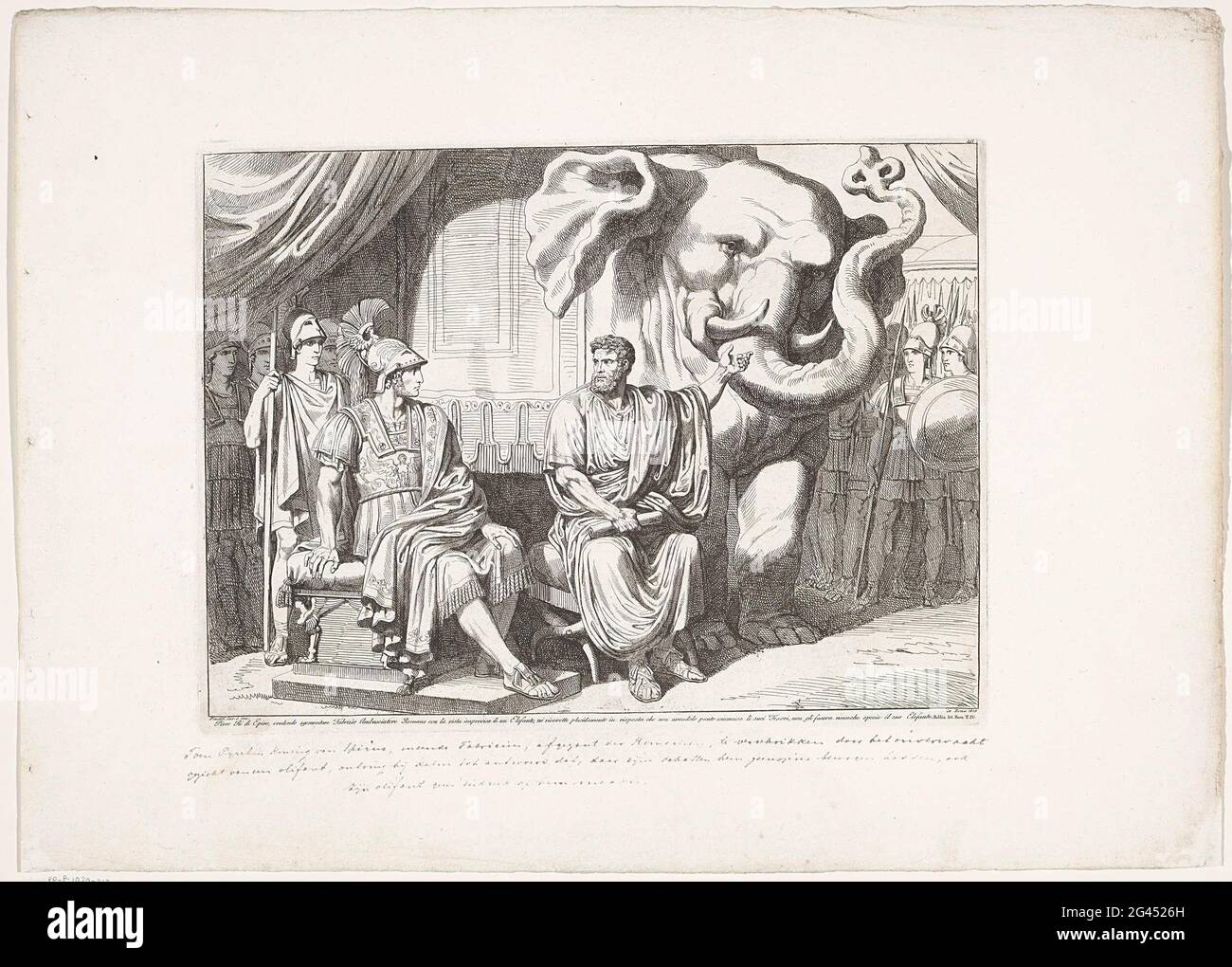
Fabricius est d'abord connu pour ses exploits militaires contre Pyrrhus, roi d'Épire, qui menaçait la domination romaine en Italie dans les premières décennies du IIIe siècle avant J.-C. Durant la célèbre guerre de Pyrrhus, Fabricius joue un rôle crucial en tant que diplomate auprès du roi ennemi. Sa mission principale est de négocier la libération des prisonniers romains et d'obtenir une paix avantageuse pour Rome.
L'un des épisodes les plus célèbres de cette négociation est la tentative de corruption de Fabricius par Pyrrhus. Confronté à des offres somptueuses et aseptisantes de richesse, Fabricius reste inébranlable, illustrant la réputation de probité qui le précède. Cette intégrité fut si remarquable que Pyrrhus, impressionné, décide de ne pas insister et de libérer certains prisonniers par respect.
L'Intégrité et la Vertu en Politique
Au-delà du champ de bataille, Fabricius Luscinus a joué un rôle de premier plan dans la sphère politique romaine. Il a occupé plusieurs fois les plus hautes magistratures de la République, dont celle de consul en 282 et 278 avant J.-C. Son mandat est marqué par des réformes qui favorisent la communauté romaine plutôt que les intérêts individuels.
Surnommé « le vrai Romain » par ses contemporains, Fabricius est devenu le modèle du citoyen-soldat, illustrant un aspect fondamental du caractère romain : la vertu civique. Il a combattu la corruption administrative de l'intérieur, refusant les luxes qui accompagnaient souvent son rang et se contentant d'une vie austère.»
Une Influence Durable
L'empreinte que Gaius Fabricius Luscinus a laissée sur la République romaine ne se limite pas à ses réalisations militaires ou politiques. Il est resté dans les mémoires comme un exemple éclatant de probité, un phare de vertu dans une époque où les dérives étaient communes. Les historiens et philosophes ultérieurs, comme Cicéron, l'évoquent souvent comme une figure exemplaire, représentant les idéaux d'un temps révolu mais jamais oublié.