God of War: A Mythological Epic Reimagined
The Origins of a Legend
God of War is one of the most iconic video game franchises in history, blending brutal combat with deep storytelling and mythological lore. The series began in 2005 with the release of the first God of War on PlayStation 2, introducing players to Kratos, a Spartan warrior who becomes the titular "God of War" after a tragic and violent journey through Greek mythology. The game's success spawned multiple sequels, spin-offs, and a 2018 soft reboot that shifted the setting to Norse mythology.
Kratos, the protagonist, is a complex character—once a ruthless killer driven by vengeance, he evolves into a more introspective figure struggling with fatherhood and redemption. His journey spans multiple games, each expanding on his backstory and the world around him. The original trilogy—God of War (2005), God of War II (2007), and God of War III (2010)—focuses on Kratos' war against the Olympian gods, culminating in the destruction of Greece.
The Evolution of Gameplay
One of the defining features of the God of War series is its visceral combat system. The early games emphasized fast-paced, combo-driven action, with Kratos wielding the Blades of Chaos—chained weapons that allow for fluid, brutal attacks. The combat was praised for its responsiveness and cinematic flair, often incorporating quick-time events to execute devastating finishing moves.
With the 2018 reboot, the gameplay underwent a significant transformation. The camera shifted to an over-the-shoulder perspective, making combat more intimate and strategic. Kratos now wields the Leviathan Axe, a weapon with a throwing mechanic that adds depth to battles. The game also introduced RPG elements, such as upgradable armor and skills, allowing players to tailor Kratos' abilities to their playstyle.
The Mythology Behind the Games
God of War's rich storytelling is deeply rooted in mythology. The original trilogy explores Greek myths, featuring gods like Zeus, Poseidon, and Hades, as well as legendary creatures such as Medusa and the Hydra. The games often reinterpret these myths, presenting them through Kratos' vengeful perspective.
The 2018 installment shifts to Norse mythology, introducing figures like Odin, Thor, and Freya. The game's portrayal of these gods and realms is both respectful and inventive, weaving Kratos into the existing lore in a way that feels organic. The relationship between Kratos and his son, Atreus, is central to the story, adding emotional weight to their journey through the Nine Realms.
The Impact of God of War
God of War has left an indelible mark on gaming. The series is known for its cinematic presentation, with sweeping camera angles and orchestral scores that enhance the epic scale of the story. The 2018 game, in particular, received widespread acclaim for its narrative depth, character development, and technical achievements, winning multiple Game of the Year awards.
Beyond its critical success, God of War has influenced other action-adventure games, setting a benchmark for storytelling and combat mechanics. The franchise's ability to reinvent itself while staying true to its core themes—rage, redemption, and the consequences of power—ensures its enduring popularity.
What Lies Ahead
With the release of God of War Ragnarök in 2022, the Norse saga continues, promising even greater challenges and revelations for Kratos and Atreus. The future of the franchise remains bright, with potential for further exploration of other mythologies or new directions for Kratos' story.
As we await the next chapter, the legacy of God of War stands as a testament to the power of video games as a storytelling medium—one that can blend myth, action, and emotion into an unforgettable experience.
The Complex Character of Kratos
Kratos stands as one of gaming's most fascinating protagonists – a character whose journey from mindless rage to reluctant wisdom has captivated players for nearly two decades. His transformation is unparalleled in video game narratives, making him far more than just another angry video game hero. Initially introduced as a Spartan warrior serving the gods, Kratos' backstory reveals a man tricked into killing his own family, an act that fuels his violent quest for vengeance against the Olympians.
What makes Kratos particularly compelling is how his character evolves across the franchise. In the early games, he's essentially a force of nature – a spitting, roaring instrument of destruction with little nuance. However, as the series progresses, particularly in the Norse saga, we see a far more complex individual emerging. The man who once slaughtered entire pantheons now struggles with patience as he teaches his son to hunt. The warrior who reveled in brutality now tries (with mixed success) to control his legendary temper.
Fatherhood and Redemption
The introduction of Atreus in the 2018 reboot fundamentally changes how we view Kratos. No longer just the Ghost of Sparta, he's now a father attempting – often clumsily – to raise his son while grappling with his own violent past. This dynamic creates some of the most powerful moments in the series. When Atreus learns of his father's history, we see Kratos not as the monster of Greek legend, but as a man weighed down by unimaginable grief and regret.
Santa Monica Studio's brilliant writing ensures these moments land with emotional impact. One particularly poignant scene shows Kratos retrieving the Blades of Chaos – his signature weapons from the Greek games. Where once he wielded them with fury, now he holds them with resignation, a grim reminder of deeds he can never truly escape. The weapons literally burn his arms as he uses them, symbolizing how his past continues to cause him pain.
The Norse Mythology Connection
The shift from Greek to Norse mythology in God of War (2018) breathed new life into the franchise. While the Greek games focused primarily on Kratos' war against the gods, the Norse saga explores different themes through its mythological framework. The game introduces us to a stunning interpretation of the Nine Realms, each meticulously designed to reflect authentic Norse cosmology while adding the series' distinctive dark fantasy aesthetic.
Key figures from Norse myth are reimagined in fascinating ways. The All-Father Odin is hinted at as a manipulative schemer long before we meet him. Thor appears not as a heroic figure, but as a brutal executioner weighed down by his own bloody legacy. The world serpent Jörmungandr is rendered with awe-inspiring scale and given unexpected depth through his connection to Atreus.
Cultural Representation and Respect
What sets God of War's approach to mythology apart is its combination of creative liberty and genuine respect for source material. While taking creative license with the myths (as all adaptations must), the development team consulted experts in Norse culture to ensure their interpretations remained grounded. Runes and artifacts found throughout the game world often contain authentic Norse poetry and inscriptions, rewarding players who take time to explore.
The voice acting further elevates the material, with particularly notable performances from Jeremy Davies as the tragic Baldur and Alastair Duncan as the sardonic dwarven blacksmith Brok. The writing manages to balance the mythic grandeur with surprising moments of humor and warmth, particularly in the interactions between Kratos, Atreus, and their dwarf allies.
Combat Evolution and Game Design
The reimagined combat system in the 2018 title represents one of the franchise's most significant evolutions. While maintaining the series' signature intensity, the new mechanics force players to think more strategically. The Leviathan Axe, with its throw-and-recall mechanic inspired by Thor's Mjölnir, offers satisfying physicality in every swing and return. The shield becomes an active defensive tool rather than just a passive block.
God of War also introduces RPG elements that add welcome depth. The armor and upgrade systems encourage exploration, as the best gear is often discovered through thorough exploration or challenging side content. This design philosophy carries into "Muspelheim" and "Niflheim," two optional realms that test players' combat mastery and persistence with unique challenges and rewards.
The Technical Achievement
From a technical perspective, the 2018 God of War is breathtaking. The seamless camera work, with no loading screens or cuts throughout the entire journey, creates an unprecedented sense of immersion. This single-shot technique wasn't just a stylistic choice – it forced the developers to invent new technical solutions to problems like area transitions and boss fight introductions.
The game's lighting and texture work set new standards for the PlayStation hardware, particularly in how it renders natural environments. The Lake of Nine serves as a stunning centerpiece, dynamically changing as players progress through the story. Environmental puzzles show careful attention to real-world physics and mythology, such as the magical shrines that demonstrate the dwarves' reality-altering craftsmanship.
The Art of Storytelling
God of War represents a maturation of video game storytelling, demonstrating how interactive narratives can achieve dramatic depth matching the best of cinema and literature. The relationship between Kratos and Atreus unfolds organically, with gameplay reinforcing narrative themes. When Atreus' behavior changes after a major story reveal, these changes affect not just cutscenes, but moment-to-moment gameplay and dialogue.
The writing excels at showing rather than telling. We learn about Kratos' past not through exposition, but through careful environmental details and subtle conversations. The world itself becomes a narrative device, with murals and artifacts hinting at deeper histories and future events. This rewards observant players while maintaining natural pacing.
Looking ahead to the upcoming Ragnarök, the foundation laid by this installment promises even richer storytelling possibilities, with numerous unanswered questions about the Norse gods' true natures and Kratos' ultimate fate awaiting resolution.
The Legacy of God of War
As we reflect on the God of War series, it's clear that its impact extends far beyond the realm of video games. The franchise has become a cultural phenomenon, influencing not only other game developers but also how mainstream audiences perceive video game storytelling. The 2018 reboot in particular marked a turning point for the industry, proving that action games could deliver deep, emotionally resonant narratives without sacrificing their core gameplay appeal.
What makes God of War's success even more remarkable is how it managed to reinvent itself while staying true to its roots. The transition from Greek to Norse mythology could have been jarring, but the developers at Santa Monica Studio executed it with masterful precision. They maintained the series' signature combat intensity while introducing new mechanics that made the gameplay feel fresh and innovative. This delicate balance between innovation and tradition is what keeps the franchise relevant after nearly two decades.
The Future of the Franchise
With the release of God of War Ragnarök, fans are left wondering what the future holds for Kratos and the world of God of War. The Norse saga appears to be reaching its conclusion, but the possibilities for future stories are endless. Some speculate that the series might explore other mythologies next - perhaps Egyptian, Celtic, or even Japanese. Others believe the focus might shift to Atreus as the new protagonist, allowing players to experience the world through a different perspective.
One thing is certain: the creative team has demonstrated an uncanny ability to surprise players while respecting the essence of what makes God of War special. Whether through new settings, characters, or gameplay innovations, the franchise has proven it can evolve without losing its identity. The potential for future installments is limited only by the imagination of the developers, and if history is any indication, they're likely to continue pushing boundaries in exciting new directions.
The Cultural Impact of God of War
Beyond its commercial success, God of War has left an indelible mark on popular culture. The series has inspired countless discussions about video games as an art form, with its cinematic presentation and mature storytelling challenging traditional notions of what games can achieve. The 2018 installment in particular was praised for its nuanced portrayal of masculinity and fatherhood, offering a more thoughtful take on these themes than typically seen in action games.
The franchise has also influenced other media, with references appearing in television shows, movies, and even academic discussions about mythology and storytelling. Kratos himself has become one of gaming's most recognizable icons, appearing in merchandise, theme park attractions, and even inspiring cosplay and fan art worldwide. The series' music, composed by Bear McCreary, has been performed by orchestras around the globe, further cementing its cultural significance.
Lessons from God of War
For game developers, God of War offers valuable lessons about creative risk-taking and storytelling. The series demonstrates how to successfully reboot a franchise without alienating longtime fans, how to integrate gameplay and narrative seamlessly, and how to create characters that evolve meaningfully over time. The attention to detail in world-building and the respect for source material while still allowing creative freedom are particularly noteworthy aspects that other developers have sought to emulate.
For players, the series provides a masterclass in game design and emotional engagement. The way it balances intense action with quiet character moments, the clever use of camera work to enhance immersion, and the rewarding sense of progression all contribute to an experience that feels both epic and personal. These elements combine to create games that resonate on multiple levels, appealing to both casual players and those seeking deeper narrative experiences.
Final Thoughts
As we conclude our exploration of the God of War series, it's clear that this is more than just a collection of video games. It's a landmark achievement in interactive entertainment, a testament to the power of storytelling in games, and a shining example of how to evolve a franchise while maintaining its core identity. From its humble beginnings on the PlayStation 2 to its current status as one of gaming's most prestigious franchises, God of War has consistently pushed boundaries and exceeded expectations.
The journey of Kratos - from a rage-filled warrior to a more complex, introspective character - mirrors the evolution of the series itself. Both have grown more sophisticated over time, embracing nuance and depth while never losing sight of what made them special in the first place. As we look forward to future installments, one thing remains certain: the God of War series will continue to set standards for action-adventure games, proving that with the right combination of vision, talent, and passion, video games can be as compelling and meaningful as any other art form.
Whether you're a longtime fan or new to the series, the world of God of War offers an experience unlike any other in gaming. Its perfect blend of brutal combat, emotional storytelling, and breathtaking world-building creates a journey that stays with players long after the credits roll. As the franchise continues to evolve, one can only imagine what new heights it will reach in the years to come.


Bayonetta 2: A Thrilling Fusion of Style and Action
Bayonetta 2: A Thrilling Fusion of Style and Action
Released as a Wii U exclusive in 2014, Bayonetta 2 has since captivated audiences with its dazzling fusion of high-octane action, over-the-top style, and deeply engaging storytelling. Developed by PlatinumGames and published by Nintendo, this sequel to the original Bayonetta expands upon its predecessor's successful formula, offering an exhilarating experience that continues to resonate with new and returning players alike.
The Story Continues
Set in a fantastical world blending elements of dark fantasy and contemporary aesthetics, Bayonetta 2 follows the titular character, Bayonetta, as she embarks on a quest to rescue her friend, Jeanne, from the clutches of Inferno. The story picks up shortly after the events of the first game, weaving a narrative that delves deeper into Bayonetta's personal battles as well as her mysterious origins. What truly stands out, however, is how the game manages to balance its intricate plot with the frenetic action sequences that players have grown to love.
Gameplay: A Symphony of Combat
One of the cornerstones of the Bayonetta series is its refined combat system, and Bayonetta 2 elevates this aspect to new heights. The game's combat mechanics are a masterclass in precision and fluidity, allowing players to string together explosive combos and maneuvers with effortless grace. Bayonetta's arsenal is an eclectic mix of weapons, each offering unique styles and advantages that cater to various playstyles. From swift pistols to devastating scythes, the choice is expansive, ensuring every battle feels fresh and engaging.
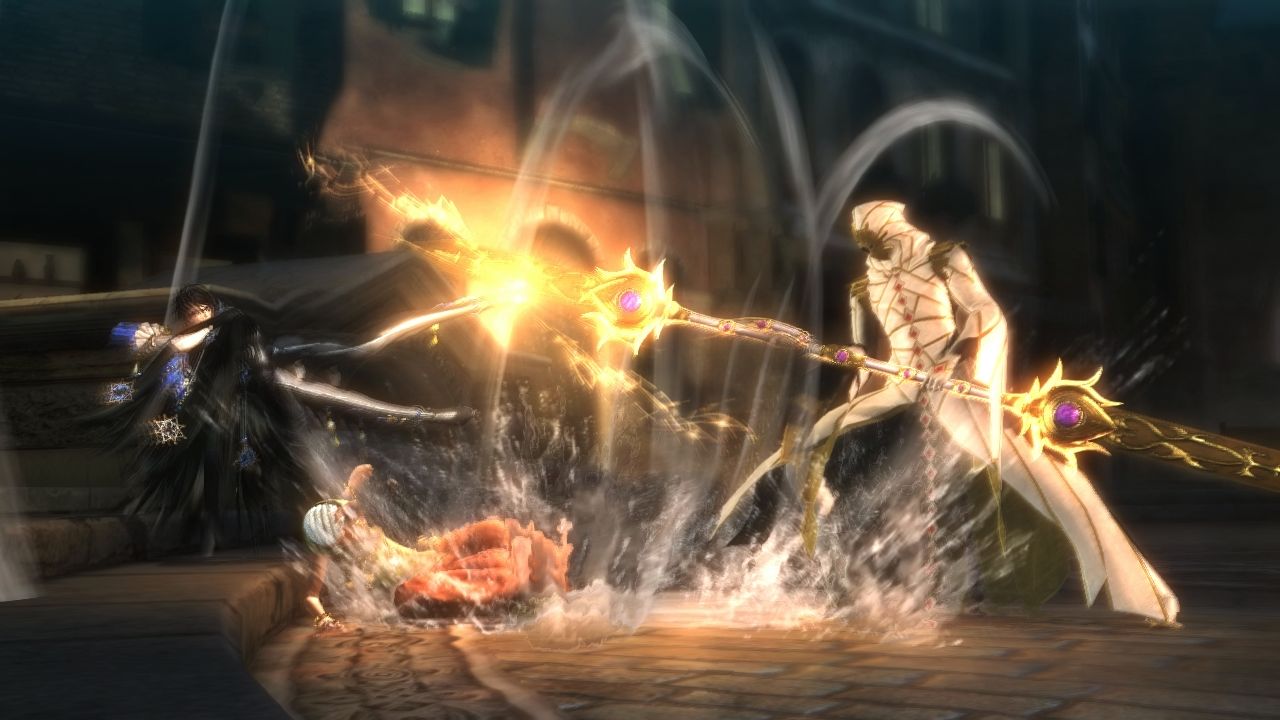
The introduction of Umbra Climax further enhances combat by amplifying Bayonetta's magical abilities, unleashing even more powerful attacks in dramatic displays of energy and destruction. This mechanic not only adds a strategic layer to the battles but also augments the visual spectacle that has become synonymous with the series.
Aesthetic Excellence
The visual design of Bayonetta 2 is a standout aspect of the game, delivering a blend of art styles that is both unique and captivating. The character designs are intricately detailed, encapsulating the quirky charm and flamboyance that the series is known for. Bayonetta herself remains a focal point, her design exuding a striking mix of power and elegance.
Environmental artistry in the game is equally impressive, with diverse settings ranging from majestic paradises to grim, hellish landscapes. This juxtaposition of beauty and madness is rendered with meticulous care, showcasing the developers' keen eye for detail and creativity.
Critical Acclaim and Reception
Upon its release, Bayonetta 2 received widespread critical acclaim, with praise directed at its refined gameplay, engaging narrative, and stunning visual presentation. Many critics and players lauded its ability to improve upon the formula set by its predecessor while offering a fresh and exhilarating experience. The game's successful performance on the Wii U paved the way for a subsequent release on the Nintendo Switch, extending its reach to a broader audience.
This acclaim has cemented Bayonetta 2's status as a quintessential entry within the action genre, continuing to enjoy a dedicated fanbase and serving as a benchmark for future action titles.
Conclusion: An Unrivaled Action Experience
In summary, Bayonetta 2 stands as a testament to the power of bold, imaginative game design. Its perfect blend of narrative intrigue, exhilarating gameplay, and stunning artistry has made it a darling among both critics and players. As an action title, it not only pushes the envelope of what's possible within its genre but does so with a confidence and flair that defines the series. Whether you're a longtime fan or a newcomer to Bayonetta's world, this sequel offers an adventure that's not to be missed.
The Soundtrack: A Sonic Masterpiece
A key component of Bayonetta 2's visceral allure is its dynamic and exhilarating soundtrack. Composed primarily by Takahiro Izutani, Masami Ueda, and others, the music seamlessly blends different genres to complement the game’s diverse settings and action-packed sequences. The soundtrack fluctuates between upbeat tunes that drive combat intensity to hauntingly beautiful orchestral scores that underscore the game’s more somber moments. A standout track, "Tomorrow Is Mine," captures Bayonetta's unapologetic ferocity and fearless spirit, perfectly aligning with the game’s thematic essence.
The attention to musical detail accentuates the game’s atmosphere, enhancing both the tension and triumph experienced by the player. By integrating elements of jazz, classical, and pop, the soundtrack not only enriches the gaming experience but stands as a memorable companion to Bayonetta’s fantastical adventure.
Character Development and Voice Acting
In addition to its mesmerizing gameplay and narrative, Bayonetta 2 excels in character development, breathing life into its eclectic cast through excellent voice acting and writing. Hellena Taylor's portrayal of Bayonetta remains iconic, capturing the character’s sardonic wit and formidable presence with aplomb. The relationship between Bayonetta and Jeanne is explored more deeply in this sequel, adding layers to their complex history and friendship. Supporting characters, such as the enigmatic Loki and the ever-eccentric Rodin, are woven beautifully into the tale, each bringing their unique flair to the narrative.
This ensemble of well-crafted characters is bolstered by stellar voice performances that lend authenticity and charisma to the game's vibrant universe. The seamless manner in which the dialogue and interactions integrate into the gameplay demonstrates the developers' commitment to storytelling excellence.
Exploration and Replayability
While the core of Bayonetta 2 lies in its thrilling combat, the game also encourages exploration and discovery. Hidden across its richly detailed worlds are collectibles and challenges that reward players with additional lore, costumes, and bonuses. Unlockables such as new weapons and character costumes not only provide a sense of accomplishment but also allow for a personalization that adds to the game's replayability.
The inclusion of multiple difficulty settings and the option to revisit earlier levels ensures that Bayonetta 2 remains engaging long after the main narrative concludes. Whether it's striving for higher ranks in combat or uncovering secret treasures, players are invited to dive back into the game for more rewarding discoveries.
Multiplayer Mode and Co-op Play
Expanding upon the solo experience, Bayonetta 2 offers a compelling multiplayer mode known as “Tag Climax.” This feature enables two players to team up, either locally or online, to tackle increasingly challenging enemy waves. Each battle in “Tag Climax” is structured around a bet placed on the outcome, where players can earn in-game currency depending on their performance and the level of difficulty chosen.
“Tag Climax” adds a unique spin to the traditional gameplay, inviting players to collaborate or compete as they aim for glory against daunting opponents. This cooperative feature is a welcomed addition, fostering community interaction and providing an alternative way to experience Bayonetta's world.
The Impact of Bayonetta 2 on the Gaming Industry
Bayonetta 2 not only captivated its audience but also made significant waves in the gaming industry. Despite being a sequel, it set a new benchmark for action games, showcasing how a high level of polish, creativity, and self-awareness could enhance the genre. The seamless integration of gameplay, narrative, and visual artistry has influenced a host of subsequent titles, inspiring game developers to strive for equally holistic and engaging experiences.
Furthermore, the success of Bayonetta 2 on multiple platforms highlighted the growing demand for unique, story-driven games on diverse consoles and sparked calls for greater cross-platform collaborations. This watershed moment continues to influence the industry, underlining the importance of cross-platform accessibility and innovation in game development.
Legacy and Future Prospects
As the years pass, Bayonetta 2 remains a beloved title within the gaming community, often heralded as an exemplary model of action game excellence. Its success paved the way for the eagerly anticipated continuation of Bayonetta's saga with future titles. As fans await new adventures, the legacy of Bayonetta 2 persists, inspiring conversations about the blend of narrative depth and action-packed gameplay that can define a game’s impact.
In conclusion, Bayonetta 2 is more than just a sequel; it is a masterful blend of style, story, and action that has left an indelible mark on its genre. Its contributions to gaming continue to be celebrated, ensuring that Bayonetta’s iconic silhouette remains a fixture on the horizon of the gaming landscape.