Archimedes: The Greatest Scientist of Ancient Greece
Archimedes of Syracuse, often referred to as O-Arximhdhs-O-Megalos-Episthmonas-ths-Arxaias-Elladas (the great scientist of ancient Greece), remains one of history’s most influential mathematicians and engineers. Born around 287 BCE and dying in 212/211 BCE, his groundbreaking work in geometry, physics, and mechanical engineering laid the foundation for modern science. This article explores his life, major contributions, and enduring legacy.
Early Life and Historical Context
Archimedes was born in Syracuse, a thriving Hellenistic city-state on the island of Sicily. His father, Phidias, was an astronomer, which likely influenced his early interest in mathematics and science. Syracuse was a hub of intellectual activity, connected to centers like Alexandria, where scholars such as Euclid had already made significant advancements in geometry.
Little is known about Archimedes’ early education, but it is believed he studied in Alexandria under the successors of Euclid. This exposure to the Alexandrian school of thought shaped his analytical approach, blending rigorous geometric proofs with innovative mechanical reasoning.
Major Mathematical Contributions
Geometry and Calculus Precursors
Archimedes made foundational advances in geometry, particularly in calculating areas and volumes. His work on the area of a circle, the surface area and volume of a sphere, and the area under a parabola were revolutionary. He used the method of exhaustion, an early form of integral calculus, to approximate these values with remarkable precision.
One of his most famous achievements was proving that the volume of a sphere is two-thirds the volume of the smallest cylinder that can contain it. This discovery was so significant that Archimedes reportedly requested a sphere and cylinder to be inscribed on his tombstone.
Infinite Series and Numerical Approximations
Archimedes also pioneered the use of infinite series to approximate mathematical constants. He calculated the value of pi (π) by inscribing and circumscribing polygons around a circle, achieving an approximation between 3.1408 and 3.1429. This method demonstrated his deep understanding of limits and convergence, concepts central to modern calculus.
"Give me a place to stand, and I will move the Earth." — Archimedes, illustrating the power of levers.
Breakthroughs in Physics and Engineering
The Archimedes Principle
Archimedes’ work in hydrostatics led to the discovery of the Archimedes Principle, which states that the buoyant force on an object submerged in fluid is equal to the weight of the fluid displaced. This principle is fundamental to the study of fluid mechanics and has practical applications in shipbuilding and engineering.
The famous story of Archimedes running naked through the streets shouting "Eureka!" ("I have found it!") illustrates his moment of insight while solving a problem posed by King Hiero II of Syracuse. The king suspected his gold crown was adulterated with silver, and Archimedes used the principle of buoyancy to determine the crown’s purity.
Mechanical Inventions
Archimedes designed several mechanical devices that showcased his engineering genius. Among his most notable inventions are:
- Archimedes’ Screw: A device for raising water, still used today in irrigation and wastewater treatment.
- Compound Pulleys: Systems that allowed sailors to lift heavy objects with minimal effort, demonstrating his mastery of lever principles.
- War Machines: During the Siege of Syracuse, Archimedes reportedly designed catapults and claw-like devices to defend the city against Roman forces.
While some accounts of his war machines are likely exaggerated, they highlight his reputation as a brilliant inventor. His work on centers of gravity and levers further solidified his legacy in physics.
Legacy and Influence
Impact on Later Scientists
Archimedes’ writings influenced generations of scientists and mathematicians. His methods anticipated the development of integral calculus by nearly 2,000 years, inspiring later thinkers such as Galileo Galilei and Isaac Newton. The Archimedes Palimpsest, a medieval manuscript containing his treatises, was rediscovered in the 20th century, providing further insights into his genius.
Modern Recognition
Today, Archimedes is celebrated as a symbol of scientific innovation. Museums worldwide, including the British Museum and institutions in Sicily, showcase artifacts and exhibitions dedicated to his life and work. Digital projects and STEM education initiatives continue to use his principles to engage students in mathematics and engineering.
In the next section, we will delve deeper into Archimedes’ surviving works, his method of discovery, and the ongoing scholarly research that keeps his legacy alive.
Surviving Works and Their Significance
Archimedes’ treatises have survived through centuries, primarily in Greek manuscripts and later translations. His works provide profound insights into his mathematical genius and innovative methods. Below are some of his most influential surviving texts:
On the Sphere and Cylinder
This two-volume treatise is one of Archimedes’ most celebrated works. In it, he proves geometric theorems related to the surface area and volume of a sphere and its circumscribed cylinder. His discovery that the surface area of a sphere is four times that of its great circle and that the volume of a sphere is two-thirds the volume of its circumscribed cylinder remains a cornerstone of geometry.
Archimedes’ approach in this work demonstrates his use of the method of exhaustion, a precursor to integral calculus, to derive these results with rigorous precision.
On Floating Bodies
In this treatise, Archimedes establishes the principles of hydrostatics and buoyancy. He explains why objects float or sink and introduces the concept now known as the Archimedes Principle. This work is divided into two books:
- Book I: Focuses on the equilibrium of floating bodies and the conditions under which they remain stable.
- Book II: Examines the stability of parabolic segments, demonstrating his ability to apply geometric principles to physical problems.
This treatise not only advanced the understanding of fluid mechanics but also had practical applications in ship design and engineering.
The Method of Mechanical Theorems
Also known simply as The Method, this work reveals Archimedes’ unique approach to discovery. He used mechanical reasoning to intuit mathematical truths, which he later proved through geometric methods. The treatise was lost for centuries and only rediscovered in the 20th century through the Archimedes Palimpsest.
In The Method, Archimedes describes how he used the concept of centers of gravity and balancing weights to derive formulas for areas and volumes. This work provides a rare glimpse into his creative process, showing how he blended physical intuition with mathematical rigor.
Archimedes’ Influence on Modern Science
Anticipating Calculus
Archimedes’ methods for calculating areas and volumes were revolutionary. His use of the method of exhaustion involved approximating shapes with polygons and other figures, a technique that foreshadowed integral calculus. Mathematicians like Isaac Newton and Gottfried Wilhelm Leibniz built upon these ideas to develop modern calculus in the 17th century.
For example, Archimedes’ calculation of the area under a parabola using an infinite series of triangles is remarkably similar to the methods used in integral calculus today. His work demonstrated that complex problems could be solved through systematic approximation and logical reasoning.
Inspiring Engineering Innovations
Archimedes’ inventions have had a lasting impact on engineering and technology. His Archimedes’ Screw, designed to lift water, is still used in various forms today, particularly in irrigation systems and wastewater treatment plants. This device exemplifies his ability to apply mathematical principles to solve practical problems.
His work on levers and pulleys also revolutionized mechanical engineering. The principle of the lever, famously illustrated by his statement, "Give me a place to stand, and I will move the Earth," is fundamental to modern machinery and structural engineering.
Recent Discoveries and Scholarly Research
The Archimedes Palimpsest
One of the most significant discoveries in recent decades is the Archimedes Palimpsest, a medieval manuscript that contains previously unknown works by Archimedes. This palimpsest, a parchment that was reused and written over, was uncovered in the early 20th century and has since been the subject of extensive study.
Using advanced imaging techniques, scholars have revealed hidden texts, including The Method and Stomachion, a treatise on combinatorics. These discoveries have provided new insights into Archimedes’ methods and expanded our understanding of his contributions to mathematics.
Digital Editions and Translations
Modern technology has made Archimedes’ works more accessible than ever. Digital projects, such as those by universities and museums, offer high-resolution images of manuscripts, annotated translations, and interactive tools that allow scholars and enthusiasts to explore his treatises in detail.
These digital resources have democratized access to Archimedes’ writings, enabling a broader audience to appreciate his genius. Online platforms also facilitate collaborative research, allowing experts from around the world to study and interpret his works collectively.
Experimental Archaeology
Recent efforts in experimental archaeology have sought to reconstruct Archimedes’ inventions based on historical descriptions. Researchers and engineers have built models of his war machines, screw pumps, and other devices to test their feasibility and effectiveness.
These reconstructions not only validate historical accounts but also provide practical demonstrations of Archimedes’ engineering prowess. They offer valuable insights into the technological capabilities of the ancient world and highlight the ingenuity of Archimedes’ designs.
Debunking Myths and Clarifying Legacies
Separating Fact from Fiction
While Archimedes’ reputation as a genius is well-deserved, some popular accounts of his life and inventions have been exaggerated or misattributed. For instance, the extent of his involvement in designing war machines during the Siege of Syracuse is debated among historians. Accounts by Plutarch and Livy describe devices like the "Archimedes Claw" and "heat rays," but these may be more legendary than factual.
Scholars emphasize the importance of relying on contemporary sources and archaeological evidence to separate myth from reality. While Archimedes undoubtedly contributed to Syracuse’s defenses, the exact nature of his inventions remains a subject of ongoing research.
The Enduring Symbol of Scientific Innovation
Despite the myths surrounding his life, Archimedes’ legacy as a pioneer in mathematics and engineering is undisputed. His work continues to inspire scientists, mathematicians, and engineers, serving as a testament to the power of human ingenuity.
Modern educational initiatives often use Archimedes’ principles to teach STEM concepts, demonstrating the timeless relevance of his discoveries. From calculating the area of a circle to understanding the principles of buoyancy, his methods remain fundamental to scientific education.
In the final section, we will explore Archimedes’ lasting impact on education, his representation in popular culture, and the ongoing efforts to preserve and promote his legacy.
Archimedes in Education and Modern STEM
Teaching Archimedes’ Principles in Schools
Archimedes’ discoveries are fundamental to modern STEM education. His principles are frequently used to teach key concepts in mathematics, physics, and engineering. For example, the Archimedes Principle is a staple in physics curricula, helping students understand buoyancy and fluid dynamics.
Educators often employ hands-on experiments, such as measuring the displacement of water to determine an object’s volume, to illustrate these concepts. These interactive methods make abstract ideas tangible and engaging for students of all ages.
Archimedes in University Curricula
At the university level, Archimedes’ work is studied in courses on the history of mathematics and classical mechanics. His treatises, such as On the Sphere and Cylinder and The Method, are analyzed for their mathematical rigor and innovative approaches.
Students of engineering and applied physics also explore Archimedes’ inventions, such as the Archimedes’ Screw and his work on levers and pulleys. These studies highlight the practical applications of his theoretical discoveries, bridging the gap between ancient wisdom and modern technology.
Archimedes in Popular Culture and Media
Representations in Film and Literature
Archimedes’ life and achievements have inspired numerous works of film, literature, and television. His story is often portrayed as a tale of genius and innovation, capturing the imagination of audiences worldwide.
In literature, Archimedes appears in historical novels and biographies that explore his contributions to science and his role in the defense of Syracuse. Films and documentaries, such as those produced by the BBC and PBS, often feature dramatic reenactments of his discoveries and inventions, bringing his story to life for modern viewers.
Archimedes in Art and Monuments
Archimedes’ legacy is also commemorated in art and public monuments. His famous request to have a sphere and cylinder inscribed on his tombstone has been depicted in various artistic works, symbolizing his geometric achievements.
In Syracuse, statues and plaques honor his memory, and museums showcase replicas of his inventions. These tributes serve as reminders of his enduring impact on science and engineering, inspiring future generations to pursue knowledge and innovation.
The Archimedes Legacy: Preservation and Promotion
Museum Exhibitions and Public Outreach
Museums around the world, including the British Museum and institutions in Sicily, feature exhibitions dedicated to Archimedes. These displays often include interactive models of his inventions, allowing visitors to engage with his ideas firsthand.
Public outreach programs, such as science festivals and educational workshops, further promote Archimedes’ legacy. These initiatives aim to make his work accessible to a broader audience, fostering an appreciation for the history of science and its relevance to modern life.
Digital Resources and Online Learning
The digital age has expanded access to Archimedes’ works through online platforms and educational websites. Digital editions of his treatises, complete with annotations and translations, are now available to scholars and enthusiasts alike.
Interactive tools, such as simulations and virtual reconstructions of his inventions, provide dynamic ways to explore his contributions. These resources enhance learning and research, ensuring that Archimedes’ legacy continues to inspire innovation in the digital era.
Conclusion: The Enduring Genius of Archimedes
Archimedes of Syracuse, known as O-Arximhdhs-O-Megalos-Episthmonas-ths-Arxaias-Elladas, stands as one of the greatest scientists of ancient Greece. His groundbreaking work in mathematics, physics, and engineering laid the foundation for modern science and continues to influence education and technology today.
From his pioneering use of the method of exhaustion to his discovery of the Archimedes Principle, his contributions have shaped our understanding of the natural world. His inventions, such as the Archimedes’ Screw and his work on levers and pulleys, demonstrate his ability to apply theoretical knowledge to practical problems.
Modern scholarship, digital resources, and educational initiatives ensure that Archimedes’ legacy remains vibrant and relevant. As we continue to explore his treatises and reconstruct his inventions, we gain deeper insights into his genius and its impact on contemporary science.
Archimedes’ story is a testament to the power of human curiosity and innovation. His life and work remind us that the pursuit of knowledge transcends time, inspiring generations to push the boundaries of what is possible. In the words of Archimedes himself, "Give me a place to stand, and I will move the Earth." This spirit of determination and discovery continues to resonate, making Archimedes a timeless symbol of scientific achievement.
Titanfall 2 : Un Chef-d'œuvre Incontournable
Titanfall 2, développé par Respawn Entertainment et publié par Electronic Arts, est un jeu de tir à la première personne qui a réussi à marquer les esprits depuis sa sortie en octobre 2016. Bien que le premier Titanfall ait posé des bases solides en matière de jeu multijoueur dynamique, c'est véritablement avec Titanfall 2 que la franchise a atteint de nouveaux sommets grâce à une campagne solo immersive et un gameplay multijoueur amélioré.
Une Campagne Solo Captivante
C'est sans doute la campagne solo de Titanfall 2 qui a le plus surpris les joueurs et les critiques. Contrairement à son prédécesseur, Titanfall 2 propose une aventure solo bien conçue, centrée sur l'histoire du soldat Jack Cooper et de son Titan BT-7274. Ce duo improbable se retrouve au cœur d'une intrigue intense, où la loyauté et l'amitié sont mises à l'épreuve.
La campagne se démarque par son design de niveau ingénieux et varié, mêlant séquences de plateformes, combats effrénés et résolutions créatives de puzzles. Chaque mission propose un nouveau défi, que ce soit par l'introduction de mécanismes innovants ou des environnements surprenants. Ce mix parfaitement équilibré entre action et narration fait de la campagne de Titanfall 2 l'une des plus mémorables de la décennie.
Un Multijoueur Dynamique et Intense
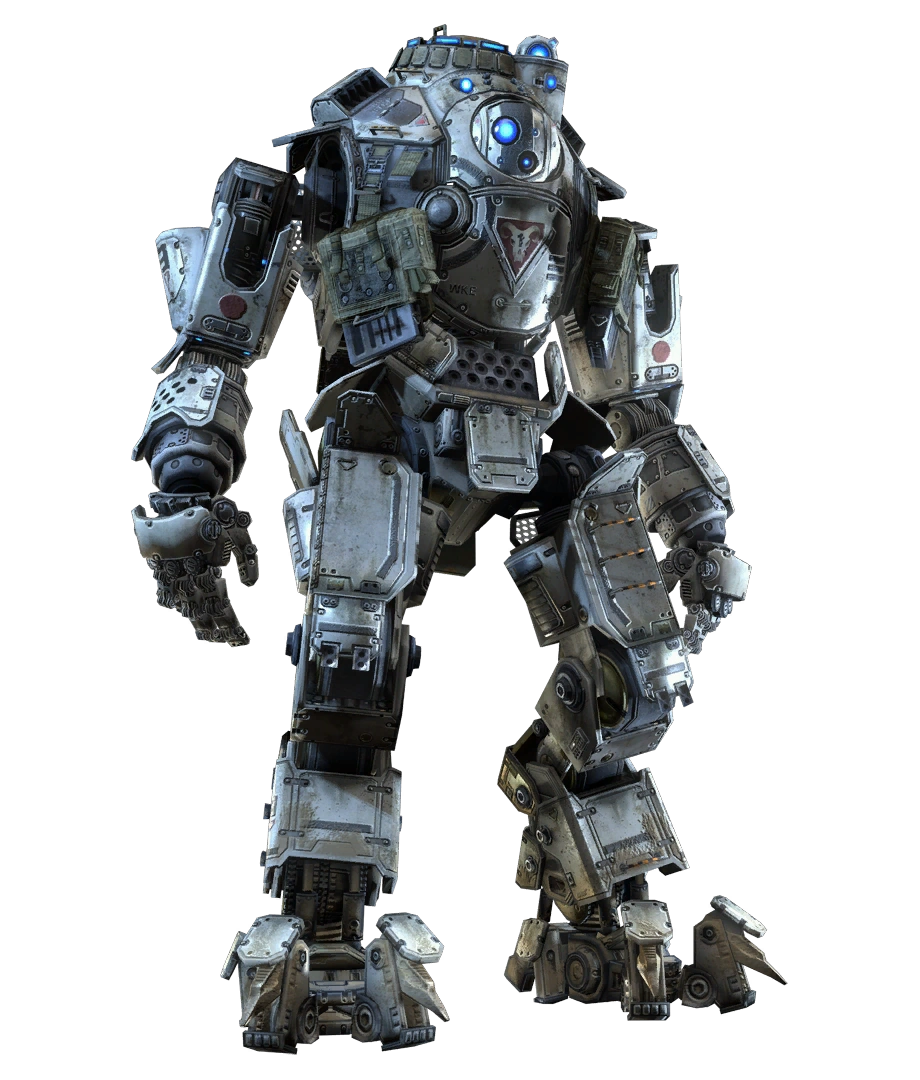
Titanfall 2 ne se contente pas d’offrir une expérience solo exceptionnelle : son multijoueur continue de briller par sa fluidité et son rythme effréné. Le jeu intègre brillamment les Titans - ces gigantesques robots combattants - à une jouabilité équilibrée et accessible. Le système de mouvements, avec le sprint mural et les doubles sauts, offre aux joueurs une liberté de déplacement sans précédent.
Les différents modes de jeu, comme Attrition, Capture the Flag et Last Titan Standing, apportent des expériences diversifiées qui maintiennent l'engouement des joueurs. Les Loadouts personnalisables et la progression des armes ajoutent une couche stratégique, permettant à chaque joueur de trouver son propre style de jeu et de le peaufiner au fil du temps.
Un Univers Immersif et Soigné
Visuellement, Titanfall 2 est un régal. Les graphismes détaillés et variés plongent les joueurs dans une multitude de décors, allant des jungles luxuriantes aux complexes industriels futuristes. L’attention aux détails va de pair avec une bande son immersive qui complète parfaitement l’action frénétique du jeu.
L'univers de Titanfall 2 est enrichi par une qualité technique irréprochable, témoignant du dévouement de Respawn Entertainment pour offrir un produit final abouti. Le jeu bénéficie d'une optimisation qui favorise une expérience fluide, sans ralentissements notables, sur toutes les plateformes disponibles.
En somme, Titanfall 2 représente un parfait équilibre entre innovation et maîtrise technique, consolidant sa place parmi les classiques du jeu de tir moderne. C'est un titre qui continue d'attirer une base de fans fidèle grâce à son gameplay solide et son univers profondément immersif.


Xenoblade Chronicles 2 : Un Voyage Épique à Travers Alrest
Xenoblade Chronicles 2 est un jeu de rôle (RPG) acclamé développé par Monolith Soft et publié par Nintendo pour la Nintendo Switch. Sorti en décembre 2017, ce jeu entraîne les joueurs dans un vaste monde ouvert rempli de paysages à couper le souffle, de personnages riches et d'une intrigue palpitante. Premièrement, examinons de plus près l'univers fascinant et les mécaniques de jeu qui ont captivé tant de fans à travers le monde.
Un Monde à Explorer : Alrest et ses Titans
L'histoire de Xenoblade Chronicles 2 se déroule à Alrest, un monde composé de vastes océans de nuages dominés par d'énormes créatures appelées Titans. Ces Titans servent de terres flottantes pour les peuples de ce monde. Chaque Titan possède des caractéristiques uniques, créant une diversité environnementale qui pousse les joueurs à vouloir explorer chaque recoin de cet univers intrigant.
Les joueurs prennent le contrôle de Rex, un jeune récupérateur qui rêve de découvrir l'Élysium, une terre mythique supposée être le paradis ultime pour l'humanité. Pendant une mission, Rex rencontre Pyra, une Blade mystérieuse possédant le pouvoir de l'Égide. Leur rencontre déclenche une aventure épique remplie de mystère, de danger et d'alliances inattendues.
Un Jalousage de Combats Stratégiques
Le système de combat dans Xenoblade Chronicles 2 est à la fois complexe et gratifiant. Les joueurs contrôlent un groupe de personnages, chacun possédant son propre ensemble de compétences et de Blades, ces dernières étant des entités spirituelles fournissant des capacités spéciales au personnage avec lequel elles sont liées. Chaque Blade a sa propre classe, comme Tank, Healer, et Attacker, qui influence grandement le déroulement des batailles.
La stratégie est au cœur du système de combat, les joueurs devant planifier soigneusement l'utilisation des arts de combat et des combos entre les membres de leur équipe. Cela ajoute une profondeur tactique qui peut être personnalisée et optimisée pour vaincre les ennemis les plus coriaces du jeu. Les combats se déroulent en temps réel, ce qui exige une réflexion rapide et une adaptation continue de la part des joueurs pour exploiter les faiblesses des adversaires.
Un Univers Vaste et Interconnecté
Outre les combats, l'exploration joue un rôle central dans Xenoblade Chronicles 2. Les joueurs sont encouragés à interagir avec le vaste monde ouvert, découvrir des lieux cachés, mener des quêtes secondaires et nouer des relations avec divers PNJ (personnages non jouables). Chaque zone du jeu offre de nouvelles surprises et défis, rendant le voyage à travers Alrest à la fois enrichissant et captivant.
Les graphismes du jeu, bien que stylisés, ajoutent un charme unique à chaque région, des forêts luxuriantes de Gormott aux paysages glacés du Tantal. La bande-son, composée par Yasunori Mitsuda, complète l'expérience immersive et émotionnelle du jeu, transportant les joueurs dans cet univers vibrant.
Avec son mélange d'histoire captivante, de personnages mémorables et de mécaniques de jeu innovantes, Xenoblade Chronicles 2 continue de s'imposer comme un titre incontournable pour tous les amateurs de RPG sur Nintendo Switch.