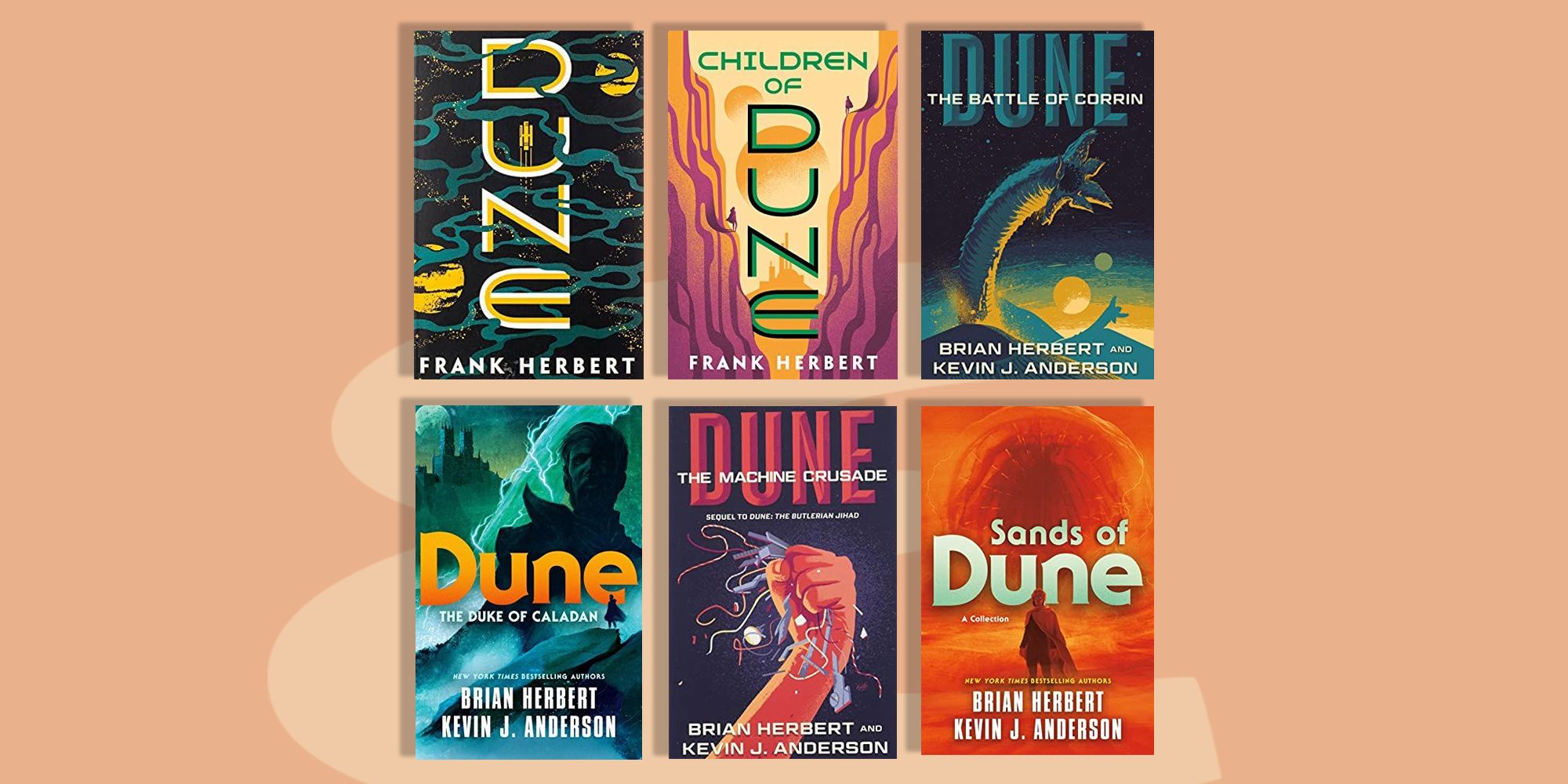
La Saga Dune de Frank Herbert : un Univers sans Frontières
Plongeons dans l'univers complexe et fascinant de la série de science-fiction "Dune" de Frank Herbert, un chef d'œuvre qui a marqué le genre par son ampleur et sa vision profonde de l'écologie, de la politique, et de la nature humaine.
Au cœur du vingt et unième siècle, une œuvre littéraire émerge qui définira la science-fiction comme jamais auparavant : la saga Dune. Publiée pour la première fois en 1965, l'épopée imaginée par Frank Herbert s'impose rapidement comme un pilier du genre. Au fil de six romans originaux, l'auteur américain construit un univers d'une richesse inouïe, explorant des thèmes variés tels que l'écologie, le pouvoir, la religion, l'évolution humaine et la lutte contre le destin.
L'univers de Dune est lointain et pourtant intemporel, situé quelque part dans un futur distant où l'humanité a essaimé à travers un vaste empire interstellaire. Cet empire est régi par un fragile équilibre de pouvoir entre la Maison Impériale Corrino, les nobles Maisons du Landsraad, et la mystérieuse confrérie du Bene Gesserit – une secte de femmes exerçant une influence considérable à tous les niveaux de la société.
Central à l'intrigue de la saga est la planète désertique Arrakis, surnommée Dune. C'est là que l'on trouve l’Épice, ou melange, une substance procurant des dons de prescience et prolongeant la vie, rendant ainsi le voyage interstellaire possible. Ce précieux produit est l'élément le plus convoité de l'univers, générant conflits et conspirations interminables pour le contrôle de sa source.
Le premier roman, également intitulé "Dune", nous introduit dans le conflit implacable qui enveloppe la planète Arakis. La famille Atreides, sous le commandement du Duc Leto, se voit attribuer la gestion d’Arrakis, succédant ainsi à leurs rivaux, les Harkonnens. Mais au-delà des machinations et des trahisons qui émanent d’une rivalité ancestrale, se dessinent les prémices d’un combat beaucoup plus vaste entre liberté et oppression, porté par le jeune Paul Atreides, dont le destin entrelacé à celui d’Arrakis le mènera à devenir Muad'Dib, le chef d'une révolte qui va bouleverser l'ordre de l'univers tout entier.
Frank Herbert, avec une plume d’orfèvre, structure son récit autour de personnages complexes porteurs de philosophies profondes. La dynamique politique de Dune est inspirée des œuvres machiavéliques et rudyardkiplingesques, où la ruse et la stratégie dépassent souvent le simple combat physique. De plus, l'importance de l'écologie dans l'œuvre de Herbert est révolutionnaire pour son époque, la préservation de l'écosystème d'Arrakis étant indissociable de la survie même de ses habitants et de la production de l’Épice.
Nourri de son expérience en tant que journaliste et de ses connaissances en biologie et en psychologie, Herbert façonne un récit où chaque détail a son importance. Les interactions humaines sont au cœur de l'histoire, où des figures telles que Lady Jessica, mère de Paul et membre du Bene Gesserit, ou le Baron Vladimir Harkonnen, incarnent la dualité et la complexité inhérente à la condition humaine.
"La saga Dune" de Frank Herbert s'étend bien au-delà de ses pages pour influencer toute une génération de créateurs et s'imposer dans la pop culture. Cette épopée, en équilibre entre le mythe et la philosophie, la science et la spiritualité, reste une invitation sans cesse renouvelée à explorer ce que signifie être humain dans un cosmos où chaque grain de sable peut être l'épicentre d'une révolution.
À travers des concepts aussi fascinants que les Kwisatz Haderach — un être capable de franchir les barrières de l'espace et du temps — et des institutions comme le CHOAM, Herbert interroge la notion de pouvoir et d’économie dans une ère spatiale. L'entrelacement des intrigues politiques, respectant une cohérence d'une précision horlogère, nous révèle un tableau où chaque acteur, de l'assassin à l'empereur, joue un rôle crucial dans la danse fragile de la destinée.Continuant l'Odysée de l'épice : la Profondeur de la Saga Dune
À mesure que la saga Dune progresse, des couches supplémentaires de complexité se dévoilent, révélant une histoire qui transgresse le simple cadre du récit d'aventure pour se plonger dans des questionnements philosophiques et existentiels. Frank Herbert pousse les lecteurs à contempler des idées de déterminisme vs libre arbitre, de manipulation génétique, et de la quête incessante du pouvoir.
Le deuxième roman, "Le Messie de Dune", nous confronte aux conséquences du pouvoir absolu lorsque Paul Atreides devient l'empereur de l'univers connu. La saga prend alors un tournant introspectif, scrutant le fardeau du messianisme et les pièges de la vénération. Avec un empire construit sur des prophéties réalisées, Paul doit naviguer dans les sinuosités du leadership et l'impact de ses visions sur l'avenir de sa lignée et l'équilibre de l'univers.
"L'Empereur-Dieu de Dune", le quatrième tome, est peut-être le plus philosophique de la série. Herbert y introduit l'Empereur Leto II, fils de Paul, à la tête d'une transformation radicale et controversée. Hybride homme-sable, ce personnage emblématique représente une allégorie de la fusion et du compromis, incarnant l'idée que la survie de l'humanité pourrait nécessiter l'abandon de certains aspects de son humanité même.
Les questionnements autour de la religion sont également un thème prévalent. Herbert montre comment le culte et le mythe peuvent être façonnés et utilisés comme des outils de contrôle politique. À travers le Bene Gesserit et d'autres acteurs clés, il expose les dangers d'une ferveur religieuse aveugle et de la manipulation des masses par des dogmes soigneusement construits.
Le traitement des femmes dans Dune mérite également une attention toute particulière. Si certaines critiques pointent du doigt une évidente structure patriarcale, le Bene Gesserit, un ordre féminin aux capacités exceptionnelles, met en lumière la puissance et l'influence féminine dans cet univers. Les Révérende Mères, avec leur contrôle des "Voies Intérieures" et leur planification séculaire, posent un regard critique sur le rôle du genre et la distribution du pouvoir.
Au-delà du récit, la saga Dune est aussi une œuvre prémonitoire concernant les questions environnementales durables. Les préoccupations écologiques sont personnifiées par la figure de l'écologiste impérial Kynes et les Fremen, habitants autochtones d'Arrakis, dont la culture s'est adaptée pour survivre dans un environnement hostile. Leur rêve de transformer Arrakis en un monde vivable est une métaphore poignante pour notre propre lutte contre les changements climatiques.
Herbert étend également son exploration à la nature de la conscience et à la capacité humaine à transcender ses limitations. L'évolution de la conscience chez les personnages comme Paul Atreides et son fils Leto reflète la recherche d'une compréhension ultime de l'univers qui les entoure et leur propre essence. Cette quête d'ascension personnelle se retrouve dans des tomes ultérieurs comme "Les Hérétiques de Dune" et "La Maison des Mères", où la lutte pour le contrôle de l'évolution future de l'humanité devient centrale.
La saga Dune, malgré ses récits épiques de batailles et de conquêtes, est au fond une réflexion sur l'équilibre délicat entre le progrès et la préservation. Elle pose des questions éternelles sur la nature du progrès : à quel prix, et pour quelle finalité ? Dans ce sens, Herbert crée une œuvre non seulement divertissante, mais profondément éducative, invitant à la méditation sur les conséquences à long terme de nos actions individuelles et collectives.
On ne peut ignorer l'héritage durable de Dune, qui se perpétue bien au-delà des livres. Ses adaptations cinématographiques et télévisuelles, ses jeux vidéo et jeux de plateau, ainsi que de nombreux hommages dans d'autres œuvres de fiction, attestent de son impact indélébile sur la culture populaire et la science-fiction.
En somme, la saga Dune de Frank Herbert demeure un phare dans l'océan de la littérature de science-fiction, un trésor inestimable qui continue de fasciner, d'inspirer et de provoquer la réflexion, entretenant la flamme d'un avenir où les limites de l'imagination restent aussi vastes et inexplorées que l'espace lui-même.


The Legacy of Dune: Frank Herbert's Magnum Opus
In the annals of science fiction, few works have cast as vast and enduring a shadow as Frank Herbert's "Dune." Spanning six novels written by Herbert himself and a plethora of others penned posthumously by his son Brian Herbert and co-author Kevin J. Anderson, the Dune saga has woven an intricate tapestry of politics, religion, ecology, and human evolution, setting a benchmark for world-building in speculative fiction. At its heart, the series tells the tale of the desert planet Arrakis, known as Dune, the only source of the most valuable substance in the universe—the spice melange. This mystical substance extends life, enhances mental abilities, and is crucial for space navigation, marking it as the cornerstone of an interstellar empire.
Frank Herbert's vision was first realized with the publication of "Dune" in 1965, after a conceptual gestation period that began with an article about the Oregon Dunes. What emerged was far greater than just an ecological study; it was the genesis of a universe that would capture the imaginations of millions. With a nuanced narrative that touches equally on intricate human emotion and grand-scale societal structures, Herbert struck a chord that resonates to this day. Dune's depth is such that it can be read as an adventure story, a political treatise, a mystical journey, or a commentary on the human condition. At its simplest, it's the story of young Paul Atreides, heir to the dukedom of a powerful family, whose life is thrown into turmoil when they are betrayed upon their arrival on Arrakis.
The political complexity of the Dune universe is one of its hallmark features. Houses battle for power in a feudal society overseen by an Emperor while secretive organizations like the Bene Gesserit and the Spacing Guild pursue their own age-long goals. Each faction is meticulously crafted, with distinct philosophies, practices, and long-term plans, adding layers of depth to the narrative. Herbert’s universe is a chessboard of power, with each move having far-reaching implications, reflected in the meticulously plotted books that followed.
In the ecology of Dune, Herbert explored the relationship between the environment and the people it shapes. Arrakis is a parched wasteland, yet it is also a place of fierce beauty and delicate ecosystems that form around the precious spice. The indigenous Fremen, adapted to the harsh life of the deep desert, embody a profound connection with their surroundings, becoming central to the intricate dance of survival and power on the planet. Their culture, fraught with traditions and rituals, evolves from their adaptation to scarcity and their spiritual reverence for Dune’s sands. This exploration of ecological systems and their impact on culture and politics was far ahead of its time, predating many of the contemporary conversations surrounding environmentalism and sustainability.
The Dune series also dives deep into the realm of philosophy and religion. The concept of the Kwisatz Haderach—a messianic figure with extraordinary powers—runs through the lifeblood of the saga. Intrinsically tied to the sprawling history of its world, the narrative touches on topics of determinism, free will, and the pitfalls of prescience. Herbert adeptly weaves human psychology and the allure and dangers of prophecy into a narrative that questions the very nature of power and leadership.
Perhaps one of the most profound contributions of Dune to science fiction, and to literature as a whole, is its treatment of the hero’s journey. Rather than glorifying Paul Atreides as an infallible hero, Herbert presents a nuanced, introspective protagonist who is deeply wary of his own legend. This deconstruction of the mythic figure challenges readers' perceptions of what it means to be a hero and draws attention to the often-misunderstood nature of charismatic leaders.
Frank Herbert's Dune is not just a masterful tale of adventure in a far-off universe; it is a multifaceted examination of human psychology, governance, ecology, and faith. In its weaving of these complex threads, it achieves a tapestry of thought and imagination that few other works have matched. The Dune saga stands as a monumental testament to the power of speculative fiction to encompass the breadth of human experience, inspiring readers and writers alike as they journey across the shifting sands of Arrakis.Continuing the Exploration: The Evolution of the Dune Saga
As readers move beyond the original "Dune," they are taken on an expansive journey through successive tomes—"Dune Messiah," "Children of Dune," "God Emperor of Dune," "Heretics of Dune," and "Chapterhouse: Dune." Each novel delves deeper into the evolving political landscape of the Dune universe, the continual reshaping of its societies, and the far-reaching consequences of Paul Atreides's actions. With the introduction of new characters and the redefinition of old ones, Herbert illustrates how the passage of time and the weight of history impact individuals and civilizations.
"Dune Messiah" picks up where the first book left off, with Paul Atreides, now Emperor and the fabled Mahdi, grappling with the consequences of his ascension and the religious jihad that has been unleashed in his name. The narrative, denser and more introspective, examines the burdens of leadership and the corrupting influence of absolute power. Here, the once-noble path of the hero becomes entangled with tragedy and turmoil, as prescience is not only an asset but a prison of inevitability.
"Children of Dune" further complicates this legacy, focusing on Paul's children and the empire they inherit—an empire still in flux and rife with internal strife. It's in this third book that themes of transformation are deftly explored, not just of the individual but of society and the course of civilization itself. The evolving dynastic saga begins to resemble mythic tales of old, where the line between human and divine blurs in the face of extraordinary circumstances.
With "God Emperor of Dune," Herbert leaps thousands of years into the future to present one of the most enigmatic figures in the series: Leto II, Paul Atreides's son and the God Emperor. In fusing with the sandworms of Dune to extend his life indefinitely, Leto II embodies the paradox of a ruler who is both oppressor and protector. Through his absolute rule, he enforces peace but at the cost of humanity's dynamic spirit. This installment is particularly noted for its exploration of themes such as authoritarianism, human stagnation, and the sacrifices made in the name of future prosperity.
The succeeding novels, "Heretics of Dune" and "Chapterhouse: Dune," leap forward again to a time when the God Emperor's once monolithic reign is but a distant memory. These books delve into the struggles that arise from the scattering of humanity across the universe and the re-emergence of forgotten powers. The Bene Gesserit, the Tleilaxu, and other factions now contend with emergent forces and ideologies, each attempting to steer humanity's path. The narrative continues to challenge conventions of the genre, immersing readers in a complex interplay of survival, adaptation, and the continual quest for power and understanding.
Throughout the series, Herbert's writing style evolves with the storyline. The dialogue, rich with philosophical underpinnings and political double entendres, compels readers to consider not just the actions but the motivations and the ethical implications of each decision. Herbert's use of intricate environmental and psychological detail builds a world so immersive that the very sands of Dune seem to sift through the pages.
The cultural impact of Herbert's magnum opus is undeniable. The Dune saga has inspired a vast array of derivative works, including films, television series, videogames, and a series of prequels and sequels co-written by Kevin J. Anderson and Brian Herbert, expanding the lore and timeline of the Dune universe even farther. The iconic 1984 film adaptation by David Lynch, while polarizing, introduced the visual and thematic richness of Dune to a wider audience. The more recent adaptation by Denis Villeneuve in 2021 reignited interest in the series and brought Herbert's vision to life with modern special effects and a renewed sense of epic grandeur.
Frank Herbert's legacy, much like the perpetual sands of Dune, is ever-shifting. Each new adaptation, each re-read, reveals new layers to the complexities of the narrative, the intricacies of the characters, and the depth of the themes that reside within the saga. Herbert's intricate tapestry demands contemplation and respect for its forethought and its profound gaze into the human spirit. The Dune saga does not merely stand as a column in the pantheon of science fiction; it is the bedrock upon which much of modern science fiction is built. Future generations of readers and dreamers will continue to find in its pages a source of endless fascination and inspiration, a reminder that the stories we tell have the power to transcend time and transform our understanding of the universe and ourselves.