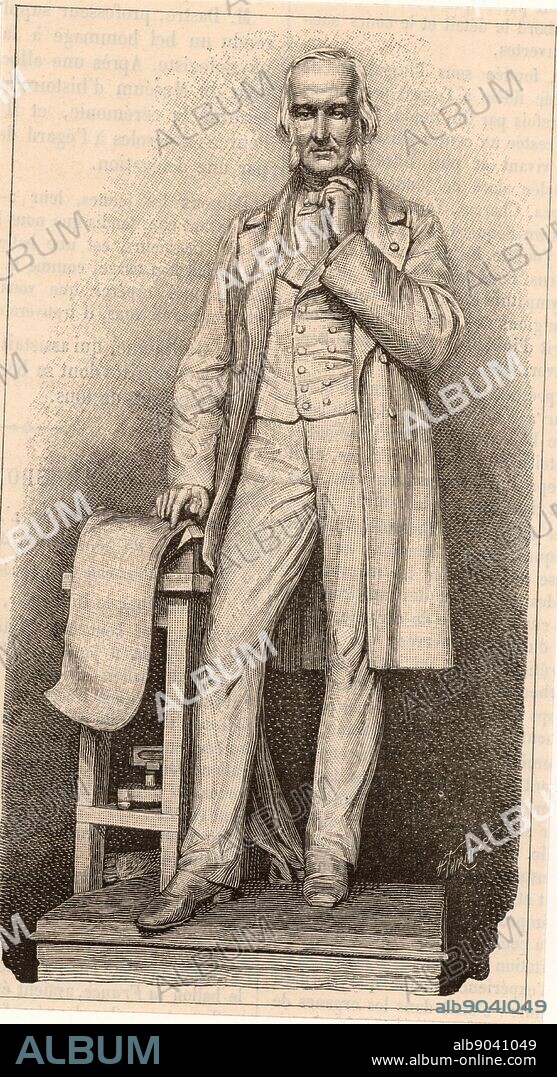
Claude Bernard: Pioneer of Experimental Medicine
Claude Bernard, a name synonymous with the adventure of discovery in the realm of physiology,
was born on July 12, 1813, in the small village of Saint-Julien, France. Today, Bernard is
celebrated as one of the most significant figures in scientific history, not merely for his
groundbreaking contributions to medicine but also for his pioneering methods that
revolutionized the way scientific investigations are conducted. His insistence on observation,
experimentation, and logical thinking forms the bedrock of modern scientific research.
Early Life and Education
From a young age, Bernard showed an innate curiosity about the world around him.
Initially, he pursued an interest in literature, producing a comedy titled “La Rose du
Rhône.” However, the play's lackluster reception nudged him towards the medical field.
He later enrolled in the prestigious Collège de la Charité in Lyons, where he commenced
his formal training in medicine. Despite early financial struggles, Bernard's dedication
and resilience shone through, paving the way to the Paris Faculty of Medicine.
Revolutionizing Physiology
Claude Bernard's career as a physician and physiologist can hardly be overemphasized.
In the 19th century, medical science saw a transition from mere speculative theories to
experimental, evidence-based research thanks in large part to Bernard's methodology. He
fervently believed that conclusions about physiological processes must stem from empirical
observations and controlled experiments, as opposed to solely relying on philosophical debate.
One of Bernard’s most influential works involved studies on the functions of the pancreas
and liver. Before his time, the pancreas's role in digestion was largely misunderstood.
Through meticulous experimentation, he illuminated its function in secreting digestive enzymes,
a critical leap forward in understanding the digestive system. Equally remarkable was his
work on the liver, where he discovered glycogenesis—the process by which the liver
converts excess sugar into glycogen for storage, establishing an understanding of future
metabolic pathways.
The Milieu Intérieur
Perhaps Bernard’s most enduring legacy is the concept of the "milieu intérieur" or "internal
environment." He postulated that the stability of the internal environment is essential for
free and independent life. This revolutionary idea laid the foundation for the concept of
homeostasis—the body's ability to maintain a stable internal condition despite external changes,
a cornerstone of physiology and medicine today.
Bernard's insights into the mechanics of the internal environment led him to challenge
prevailing medical theories and practices. His persistent research on vascular dynamics
demonstrated the essential balance and complex interactions within the animal body.
Through these insightful conclusions, Bernard was able to transcend beyond his contemporaries,
charting a path that others would follow.
Bernard's experiments with curare, a plant-derived alkaloid used as a muscle relaxant,
further illustrated his experimental prowess. By elucidating its mechanism, he not only
deepened the understanding of neuromuscular function but also established methodologies
that laid groundwork for pharmacology.
His methodological rigor and emphasis on using the experimental method challenged the
status quo of medical interventions. Bernard proposed methods that required hypotheses
to be verified through experiments, emphasizing repeatability and objectivity. This
insistence on scientific rigor catalyzed advancements across numerous medical fields,
underscoring the universal applicability of Bernard’s principles beyond physiology.
Beyond Science
Beyond his role as a scientist, Bernard was a respected educator, holding a chair in
General Physiology at the Collège de France and later being appointed to the faculty at
the Museum of Natural History in Paris. His students benefitted immensely from his passion
for scientific inquiry and his tireless quest to illuminate the natural mechanisms underpinning
human health and disease. Bernard’s drive was fueled by a philosophical belief in the
unification of science and reason, maintaining that every scientific endeavor should be rooted
in skepticism until empirical proof is provided.