Jean-Baptiste Biot: Un Pioniere della Scienza
Introduzione alla Vita di Jean-Baptiste Biot
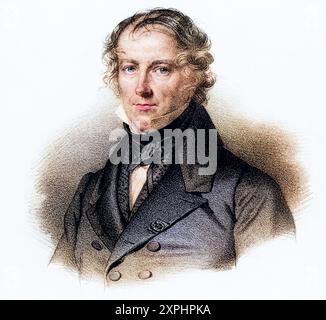
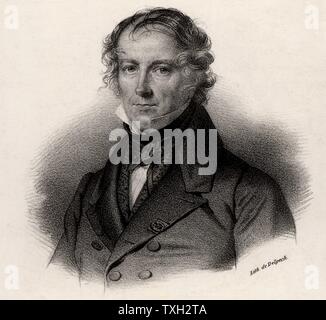
Jean-Baptiste Biot, nato il 21 aprile 1774 a Parigi, è stato uno dei più influenti scienziati francesi del XIX secolo. La sua vasta carriera ha spaziato tra numerose discipline scientifiche, compresa la fisica, la chimica e l’astronomia. Conosciuto soprattutto per i suoi contributi fondamentali nei campi dell'ottica e del magnetismo, Biot ha lasciato un'impronta indelebile nella storia della scienza. La sua vita e le sue opere sono testimonianza di un'incredibile dedizione al progresso scientifico.
I Primi Anni e l’Istruzione di Biot
Fin da giovane, Biot mostrò un vivace interesse per le scienze. Studiò al prestigioso Collège Louis-le-Grand a Parigi, dove si distinse per il suo impegno e la sua brillantezza accademica. La rivoluzione francese scoppiò durante i suoi anni formativi, influenzando profondamente il suo pensiero e le sue aspirazioni. Dopo aver completato la sua educazione iniziale, si iscrisse all'École Polytechnique, che all'epoca stava emergendo come uno degli istituti più avanzati per la formazione scientifica in Francia.
Il Debutto Accademico e le Prime Scoperte
Alla fine del periodo di formazione, Biot iniziò la sua carriera accademica nel 1797 come professore di matematica all'École Centrale des Quatre-Nations. Poco tempo dopo, fu nominato professore presso il Collège de France, dove continuò a sviluppare le sue idee innovative. Fu durante questi primi anni che iniziò i suoi studi sull’ottica, un campo che avrebbe definito gran parte della sua carriera.
Una delle sue prime e più note scoperte fu l’effetto di rotazione del piano della polarizzazione della luce quando attraversa un mezzo ottico attivo, noto oggi come l'effetto Biot. Questa ricerca ebbe un'immensa rilevanza per lo sviluppo successivo delle scienze ottiche e aprì la strada alla comprensione della polarizzazione della luce.
Contributi al Magnetismo e Altri Lavori Scientifici
Oltre al suo lavoro sull'ottica, Biot si dedicò anche al magnetismo, campo in cui collaborò con Félix Savart. Insieme, svilupparono la legge di Biot-Savart, una formula che calcola il campo magnetico generato da un filo conduttore rettilineo che trasporta una corrente elettrica. Questa legge rimane fondamentale per il mondo dell'elettromagnetismo e ha avuto un impatto duraturo sulla comprensione delle interazioni magnetiche.
Durante la sua carriera, Biot effettuò anche importanti studi in meteorologia, geologia e chimica. Era un instancabile esploratore della conoscenza scientifica e viaggiò ampiamente, tra cui un viaggio in Lapponia con François Arago nel 1806 per misurare con maggiore precisione un meridiano terrestre. Queste misurazioni furono cruciali per la definizione più accurata del metro, una delle unità fondamentali del Sistema Internazionale di Unità.
Conclusione della Prima Parte
Jean-Baptiste Biot fu molto più di un semplice scienziato del suo tempo; fu un pioniere che plasmò il pensiero scientifico attraverso scoperte innovative e pionieristiche. Dalla fisica all'astronomia, i suoi contributi continuano a influenzare le discipline scientifiche contemporanee. Ma non è tutto: Biot era anche un abile scrittore e comunicatore, contribuendo a divulgare la scienza attraverso numerosi saggi e articoli che hanno reso la conoscenza scientifica accessibile a un pubblico più ampio.
Nella prossima parte del nostro articolo, esploreremo più a fondo le sue altre imprese e il suo impatto nel campo dell'astronomia, oltre al suo approccio alla comunicazione scientifica, un aspetto spesso trascurato nella sua carriera. Questo ci offrirà una visione ancora più completa di questo grande pensatore e della sua eredità imperitura.
L'Astronomia e il Contributo di Biot alle Scienze Celesti
Jean-Baptiste Biot ha giocato un ruolo fondamentale anche nel campo dell'astronomia, disciplina in cui le sue osservazioni e teorie hanno fornito conoscenze cruciali. Uno dei suoi primi incarichi in astronomia fu la missione per osservare l'eclissi solare del 1804, evento durante il quale dimostrò le sue eccezionali capacità di osservazione e deduzione. I suoi studi non si limitarono però solo ai fenomeni osservabili nel cielo, ma si estese anche all'analisi della composizione e della struttura degli oggetti celesti.
Un altro contributo significativo di Biot all'astronomia si ritrova nel suo lavoro sulle meteore. Nel 1803, Biot fu uno dei primi scienziati a studiare sistematicamente la pioggia di meteore che cadde nei pressi di L'Aigle, in Francia. Quell'avvenimento permise di confutare la teoria dominante dell'epoca, che considerava le meteore come fenomeni atmosferici, dimostrando invece la loro origine extraterrestre. Biot così gettò le basi per lo studio moderno delle meteore e dei meteoriti, contribuendo in maniera decisiva a comprendere meglio questi corpi celesti.
La Comunicazione Scientifica e il Ruolo di Biot nella Divulgazione
Biot non era solo un fine sperimentatore, ma anche un abile comunicatore. Credeva fermamente nell'importanza della divulgazione scientifica e si dedicò a rendere la scienza comprensibile e accessibile a un pubblico più vasto. Scrisse numerosi articoli e saggi, molti dei quali vennero pubblicati nei più influenti giornali scientifici e accademici della sua epoca. Questi scritti non solo documentavano le sue scoperte, ma spesso esploravano nuovi concetti teorici e sfide nella comprensione scientifica, gettando le basi per ulteriori ricerche.
Nel suo libro "Traité de Physique", Biot cercò di condensare e strutturare le conoscenze fisiche del suo tempo, rendendole fruibili anche a chi fosse al di fuori della cerchia accademica più ristretta. Questo approccio innovativo alla comunicazione scientifica gli valse il rispetto di molti dei suoi contemporanei ed elevò il suo status non solo come scienziato, ma anche come educatore.
L'Impatto Duraturo di Biot Nelle Scienze e Nella Società
I risultati di Jean-Baptiste Biot hanno lasciato un'eredità duratura non solo nel campo della scienza, ma anche nella società del suo tempo e oltre. Le sue leggi e teorie continuano a essere insegnate nelle scuole e nelle università di tutto il mondo, dimostrando l'attualità e la rilevanza delle sue scoperte. La costante citazione della legge di Biot-Savart nei manuali di fisica è un esempio eloquente dell'influenza duratura del suo lavoro.
In aggiunta ai suoi successi scientifici, Biot fu premiato con numerosi riconoscimenti prestigiosi, come l'appartenenza all'Accademia delle Scienze di Francia e altre società scientifiche di primaria importanza. La sua integrità intellettuale e la passione per la scienza fecero di lui un modello per le future generazioni di scienziati.
Conclusione della Seconda Parte
Jean-Baptiste Biot non era solo un uomo di scienza, ma un vero e proprio architetto del sapere, capace di gettare ponti fra mondi teorici e pratici. La sua abilità nel trasmettere la conoscenza, combinata alla determinazione nel condividere le sue scoperte, hanno fatto di lui non solo un pioniere, ma anche un educatore visionario. Nella terza e ultima parte del nostro articolo, analizzeremo le connessioni tra la vita di Biot e il contesto storico e culturale della sua epoca, nonché come il suo lavoro abbia influenzato lo sviluppo delle moderne discipline scientifiche.
Il Contesto Storico e Culturale dell’Epoca di Biot
Jean-Baptiste Biot visse durante un periodo di immense trasformazioni sociali e scientifiche. La Rivoluzione Francese, con i suoi ideali di libertà, uguaglianza e fratellanza, lasciò un'impronta indelebile sulla società e sugli intellettuali dell’epoca. Questo contesto storico ebbe un impatto profondo su Biot, influenzandone sia il pensiero che le modalità di ricerca. Egli operò nel pieno del periodo post-rivoluzionario, quando la Francia cercava di consolidare i suoi progressi scientifici e tecnologici in un contesto di rapidi cambiamenti politici e sociali.
Le istituzioni scientifiche francesi, come l'Académie des Sciences e l'École Polytechnique, giocavano un ruolo fondamentale nello sviluppo e nella diffusione delle conoscenze, creando una fertile rete di scambio intellettuale. Biot divenne presto una figura centrale in questo panorama, contribuendo a plasmare il futuro della scienza attraverso le sue ricerche e il suo coinvolgimento attivo nelle società scientifiche.
L’Eredità di Jean-Baptiste Biot nel XXI Secolo
L'influenza di Jean-Baptiste Biot continua a essere percepita anche nel XXI secolo. Le sue leggi e scoperte fungono da fondamenta per molti degli sviluppi tecnologici e scientifici attuali. Per esempio, il suo lavoro sul magnetismo è essenziale per la comprensione moderna di molti dispositivi elettronici e sistemi di comunicazione che utilizziamo quotidianamente. Biot contribuì a estabelecer le basi teoriche per settori innovativi come la fotonica e l'ottica applicata, che sono oggi cruciali per lo sviluppo di tecnologie avanzate quali le telecomunicazioni in fibra ottica e i laser.
Il metodo scientifico di Biot, basato su osservazioni rigorose e sperimentazioni sistematiche, ha ispirato generazioni di scienziati a seguire un approccio simile nella loro ricerca. La sua dedizione al miglioramento della precisione scientifica e alla diffusione della conoscenza ha fatto di lui un modello di virtù accademica ed etica per molti nel campo delle scienze.
Riflessioni Finali su Biot e la Scienza Moderna
Biot fu non solo un innovatore ma anche un simbolo della curiosità inesauribile e della ricerca instancabile che caratterizzano il progresso umano. Il suo lavoro ci ricorda l'importanza della collaborazione interdisciplinare e della divulgazione scientifica nella costruzione di un sapere comune che possa guidare le future generazioni. L'eredità di Biot vive in ogni scienziato che si approccia con mente aperta al mistero dell'universo, con la volontà di esplorare territori sconosciuti e di condividere le proprie scoperte con l'umanità.
Jean-Baptiste Biot rimarrà per sempre un simbolo della ricerca della verità scientifica, un testimone dell’idea che la conoscenza è una forza che unisce attraverso le diversità culturali e storiche. Egli è un esempio luminoso di come la scienza possa servirsi non solo per comprendere il mondo che ci circonda, ma anche per migliorarlo per le generazioni a venire.
Conclusione dell'Articolo
Nella vita e nel lavoro di Jean-Baptiste Biot, troviamo una narrazione avvincente di passione, scoperta e insegnamento. La vastità dei suoi contributi continua a risuonare nel mondo scientifico e nei settori tecnologici moderni, facendo di lui una figura centrale nel vasto arazzo della storia della scienza. La sua eredità ci invita a riflettere su come possiamo continuare a esplorare e condividere la conoscenza nel modo più inclusivo e avanzato possibile, mantenendo vivo il suo spirito di innovazione e scoperta.

Jean-Baptiste Biot: The Polymath Who Shaped Science
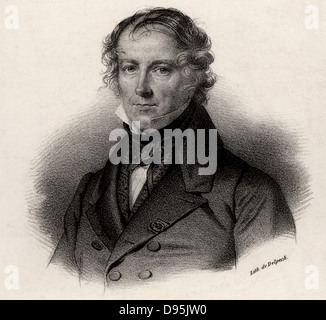
In the annals of scientific achievement, few figures loom as large yet remain as understated as Jean-Baptiste Biot. Born on April 21, 1774, in Paris, Biot carved a unique niche for himself at the cusp of the Enlightenment and the burgeoning scientific revolutions of the 19th century. This polymath's explorations encompassed fields as diverse as physics, astronomy, and chemistry, and his contributions continue to resonate in contemporary scientific discourse.
A Scholarly Journey Begins
Jean-Baptiste Biot's early academic prowess was evident from his youth. He entered the prestigious École Polytechnique in 1794, where his intellectual rigor thrived amidst France's finest minds. Under the patronage of eminent scientists like Pierre-Simon Laplace, Biot sharpened his analytical skills, preparing to delve into the mysteries of the natural world. This academic preparation proved invaluable as Biot embarked on what would become a distinguished career.
His initial studies focused on optics, a branch of physics that captivated the scientific community during the early 19th century. Biot's interest in light phenomena, particularly the refraction and polarization of light, laid the groundwork for his future groundbreaking research. At a time when the wave and particle theories of light were fiercely debated, Biot's work added clarity to the understanding of light's behavior, establishing himself as a formidable figure in optics.
Biot's Magnetic Influence
In addition to his work in optics, Biot made significant strides in the field of magnetism, another area where his legacy remains profound. In 1804, together with his colleague Félix Savart, Biot formulated the Biot-Savart Law. This fundamental principal quantitatively describes the magnetic field generated by an electric current, a seminal concept still taught in physics courses worldwide.
The Biot-Savart Law was pivotal in elucidating the relationship between electricity and magnetism, effectively laying a cornerstone for the later development of electromagnetic theory. Alongside contemporaries like André-Marie Ampère and Michael Faraday, Biot's contributions helped substantiate the intertwined nature of electric and magnetic forces, an understanding that would eventually culminate in James Clerk Maxwell's comprehensive electromagnetic theory.
A Celestial Voyage
Biot's insatiable curiosity transcended earthly phenomena, leading him to the stars. His 1806 expedition to the Canary Islands with astronomer François Arago marked the beginning of his ventures into the realm of celestial physics. There, Biot carried out extensive observations of the Earth's atmosphere and the influence of the islands' volcanic activity, contributing to the burgeoning field of atmospheric science.
However, Biot's most notable astronomical journey was his expedition to Lapland in 1808. The purpose of this arduous trip was to measure the Earth's meridian arc—a venture crucial for refining geographical maps and understanding the planet's shape. Biot's meticulous observations helped confirm the Earth's oblate shape, providing essential data that aligned with Isaac Newton's predictions. This expedition not only showcased Biot's observational acumen but also his commitment to advancing empirical science.
Biot's Chemical Exploration
While Jean-Baptiste Biot is best remembered for his contributions to physics and astronomy, his ventures into chemistry were equally impactful. His exploration of optical activity—the ability of certain substances to rotate the plane of polarized light—stands as his most notable chemical work. His 1815 discovery fundamentally expanded the understanding of molecular chemistry, paving the way for future research into chirality and stereochemistry.
Biot's investigations into optical activity also illuminated the molecular structures of organic compounds, heralding a new era in organic chemistry. The implications of his research were profound, influencing subsequent studies on biochemical processes and the development of critical industries such as pharmaceuticals.
Jean-Baptiste Biot's illustrious career was a testament to his multidisciplinary brilliance and enduring devotion to advancing scientific knowledge. Whether through his foundational contributions to electromagnetism, revolutionary exploration of optics, or ground-breaking discoveries in chemistry, Biot's legacy is deeply woven into the fabric of modern science. As we reflect on his life, his passion for inquiry serves as a guiding beacon for those who seek to unravel the universe's mysteries.
Biot's Scientific Influence and Recognition
Jean-Baptiste Biot's profound impact was widely recognized during his lifetime, earning him numerous accolades and positions of prominence within the scientific community. In 1803, he was elected to the French Academy of Sciences, a testament to his status as one of the leading scientists of his era. This appointment marked the beginning of a longstanding affiliation with the institution, where he was instrumental in shaping its directives and fostering scientific inquiry.
Biot's accomplishments did not go unnoticed beyond the borders of France. His scientific prowess and pioneering research garnered him international acclaim. In 1815, he was elected a Foreign Member of the Royal Swedish Academy of Sciences, one of the many honorary memberships he would receive throughout his career. His election as a Fellow of the Royal Society of London in 1815 further underscored his standing as a preeminent scientist who transcended national boundaries.
The French government, recognizing his contributions and dedication, appointed Biot to various prestigious roles. In 1820, he was appointed professor of experimental physics at the Collège de France, a position he held for many years. Biot’s involvement in education and mentorship proved invaluable in nurturing the next generation of scientists, sending ripples into the future of scientific understanding.
A Legacy of Writing and Communication
However, Biot's legacy extends beyond his experimental and observational acumen; he was also a prolific writer who sought to disseminate scientific knowledge to a broader audience. His passion for bridging the gap between complex scientific theories and public understanding is evident in the numerous books and articles he authored throughout his life.
One of Biot's most celebrated works is "Traité de Physique Expérimentale et Mathématique" (Treatise on Experimental and Mathematical Physics), published in 1816. This comprehensive text was instrumental in popularizing contemporary scientific knowledge, covering various topics from mechanics to optics and magnetism. Biot's clear and engaging writing style made advanced scientific concepts accessible, inspiring countless students and enthusiasts to explore the sciences further.
Biot's commitment to science education was not limited to academic publications. He was an advocate for public scientific literacy, often contributing to popular science journals and delivering lectures aimed at engaging the broader public. His efforts helped foster a culture of intellectual curiosity and enthusiasm for scientific inquiry, making science more approachable and less esoteric for the layperson.
Biot's Role in the Meteorology and Geophysics
Jean-Baptiste Biot's contributions also extended into the domains of meteorology and geophysics. His meticulous observations during travels and scientific expeditions added significant value to these fields. During his time in the Canary Islands and Lapland, Biot's studies of atmospheric phenomena contributed to an emerging understanding of weather patterns and geological dynamics, setting foundations for what would eventually evolve into modern meteorology and geophysical science.
Biot's interest in the Earth's geomagnetic forces led to insightful observations about the planet's magnetic properties. His investigations of terrestrial magnetism underscored the importance of magnetic observation networks, which have since become crucial for understanding Earth's magnetic field and its variations. These studies were pivotal for navigation and exploration, influencing maritime practices and enhancing the accuracy of cartography in an age dependent on sea travel.
The Personal Side of Jean-Baptiste Biot
While Jean-Baptiste Biot's professional life was undeniably illustrious, his personal life was marked by the same intellectual curiosity and dedication. He was known for his humility, often eschewing the limelight despite his remarkable accomplishments. Biot's personal correspondence with other scientists of his time reveals a collaborative spirit and eagerness to exchange ideas, highlighting his belief in the collective advancement of knowledge over individual accolades.
Biot was a family man, committed to maintaining a harmonious balance between his personal and professional lives. His son Édouard Biot would follow in his footsteps, pursuing a career as a Sinologist and civil engineer. This legacy of intellectual pursuit within the Biot family underscores the nurturing environment Jean-Baptiste Biot fostered, one that prized curiosity and education.
An Enduring Legacy
Jean-Baptiste Biot's passing in 1862 marked the end of an era, yet his influence endures in the sciences today. His findings, particularly in optics and electromagnetism, remain integral components of scientific curricula globally. By empirically validating theoretical frameworks and expanding the horizons of scientific understanding, Biot set the stage for numerous scientific revolutions in the centuries that followed his own prolific career.
In summary, Jean-Baptiste Biot's indelible mark on science is characterized by his multifaceted contributions across various disciplines, his dedication to education and communication, and his role as a bridge between theoretical exploration and practical application. His work not only advanced the scientific frontiers of his time but also laid a foundation that continues to support modern scientific inquiry. Such a legacy highlights the lasting impact of a mind deeply committed to exploration and understanding, inspiring scientists and thinkers for generations to come.
Exploring the Biot-Savart Legacy in Modern Physics
The Biot-Savart Law, one of Jean-Baptiste Biot's hallmark contributions, remains foundational in today's scientific landscape. This law provides a means to calculate the magnetic field produced by a current-carrying conductor, an essential principle for understanding the behaviors of electrical circuits and devices. Its practical applications are vast, ranging from the development of electrical motors and transformers to advancements in medical imaging technologies like Magnetic Resonance Imaging (MRI).
The enduring relevance of the Biot-Savart Law in modern physics underscores Biot's foresight in recognizing the interdependent nature of electric and magnetic forces, a realization that culminated in the unification of electromagnetism. This scientific achievement was carried forward by the work of James Clerk Maxwell, whose equations unified electricity, magnetism, and optics into a cohesive theory. Biot's early insights were a critical stepping stone in this monumental synthesis.
Biot's Impact on Chemistry and Crystal Science
Jean-Baptiste Biot's work on optical rotation and molecular chirality laid significant groundwork in chemistry, particularly in understanding organic compounds. His investigations into how certain substances affect polarized light provided key insights into molecular structure and handedness (chirality), an aspect that has profound implications in various scientific and industrial fields, including pharmaceuticals.
Biot's pioneering research in optical rotation also had important consequences for the field of crystallography. By examining how crystals and other substances interact with light, he contributed foundational knowledge that helped develop techniques for determining the structure of compounds. This exploration of molecular symmetry and interaction with light led to advances in understanding protein structures and complex biochemical processes, which are vital to biochemistry and molecular biology today.
Influence on Scientific Exploration and Education
Jean-Baptiste Biot's devotion to scientific progress extended to advocacy for systematic data collection and global scientific cooperation. His belief in structured scientific observation is evident in his efforts to standardize data collection methods, which he argued were essential for achieving robust scientific conclusions. He actively participated in establishing scientific societies and encouraged collaboration among scientists across disciplines and borders, setting a precedent that enhanced the global scientific community's connectivity.
Biot's career as an educator at the Collège de France further enriched his legacy. By mentoring budding scientists and fostering exploration, Biot contributed to cultivating a generation that would continue to expand the scientific frontiers he helped establish. His pedagogical influence ensured that his methodologies and principles remained integral to scientific training, impacting fields as diverse as physics, chemistry, and engineering.
Pioneering International Scientific Collaborations
Recognizing the importance of international collaboration, Biot played a pivotal role in an era that saw the nascent stages of global scientific partnerships. He was among the early proponents of collaborative expeditions, such as those organized to observe astronomical phenomena like solar eclipses and planetary transits, events that required coordinated efforts from scientists worldwide.
His international perspective was instrumental in encouraging cross-border scientific communication, which facilitated a broader exchange of ideas and findings. By breaking the isolationist tendencies of scientific inquiry of his time, Biot laid the groundwork for modern international scientific organizations, influencing the collective approach to addressing global scientific challenges.
Jean-Baptiste Biot: A Timeless Catalyst for Discovery
Reflecting on Jean-Baptiste Biot's legacy, it becomes evident that his influence transcended the boundaries of any single scientific discipline. His breadth of inquiry and depth of impact made him a true luminary, whose vision encompassed the interconnected landscape of science. Biot's life was a testament to the power of curiosity, dedication, and the belief in knowledge as a service to humanity.
Today, Biot's work serves as a reminder of the importance of maintaining a diversified scientific perspective. His legacy champions the integration of varying fields, demonstrating that breakthroughs often occur at the intersections of established domains. This integrative approach, coupled with his commitment to education and collaboration, remains a source of inspiration for modern scientists.
In honoring Jean-Baptiste Biot, we celebrate a legacy that underscores the timeless pursuit of understanding the natural world. His life's work and explorations unveil a journey marked by relentless inquiry, shaping a path along which hundreds of discoveries have traveled and evolved. To explore the realms of science is to walk in the footsteps of giants like Biot, whose groundbreaking achievements continue to illuminate our understanding of the universe.
