Gaston Julia: Pioneer of Fractals and Julia Sets
The remarkable legacy of Gaston Julia, a French-Algerian mathematician, is fundamentally linked to the beautiful complexity of fractals. His foundational work on Julia sets and iteration theory in the early 20th century laid the groundwork for the modern field of holomorphic dynamics. Though his life was marked by immense personal challenge, his mathematical insights became world-renowned decades later, securing his place as a giant in the history of mathematics.
The Early Life and Education of Gaston Julia
Gaston Maurice Julia was born on February 3, 1893, in Sidi Bel Abbès, Algeria. He demonstrated an exceptional talent for both mathematics and music from a very young age, entering school at just five years old under the tutelage of Sister Théoduline. This early nurturing of his intellectual gifts set the stage for his future academic brilliance as he pursued advanced studies in France.
Academic Prodigy and Early Promise
Julia's mathematical abilities quickly became apparent, leading him to the prestigious institutions of mainland France. His potential was recognized by leading mathematicians of the era. In 1917, he successfully defended his doctoral thesis, *Étude sur les formes binaires non quadratiques...*, which was examined by an impressive committee including mathematical luminaries Émile Picard, Henri Lebesgue, and Pierre Humbert.
A Life-Altering Injury and Unwavering Resolve
The trajectory of Julia's life was dramatically altered by the outbreak of World War I. Serving as a lieutenant in the French army, he suffered a severe facial wound in 1915 that resulted in the loss of his nose. This injury required him to wear a leather prosthetic for the rest of his life. Despite this immense physical and psychological trauma, Julia's dedication to mathematics never wavered.
Mathematical Research from a Hospital Bed
Remarkably, Julia continued his groundbreaking research while recuperating in military hospitals. His resilience during this period was extraordinary, leading to him being awarded the Légion d'Honneur for his bravery. It was from his hospital bed that he began developing the revolutionary ideas on the iteration of rational functions that would define his career and change mathematics forever.
Julia's ability to produce profound mathematical work under such difficult conditions is a testament to his incredible intellect and determination.
The 1918 Masterpiece: Defining the Julia Set
At the young age of 25, Gaston Julia published his magnum opus, a 199-page paper titled *Mémoire sur l'itération des fonctions rationnelles* in the *Journal de Mathématiques Pures et Appliquées*. This monumental work introduced the mathematical world to the concept that now bears his name. The paper rigorously defined the Julia set, a fundamental object in complex dynamics.
Understanding the Julia Set Concept
In simple terms, for a given rational function \( f \), the Julia set \( J(f) \) is the set of points in the complex plane where the behavior of the function under repeated iteration (repeated application of the function) is chaotic. Points outside this set diverge to infinity, while the set itself forms a boundary of intricate and often beautiful complexity. This work earned him the Grand Prix from the French Academy of Sciences, cementing his reputation as a leading mathematician.
- Chaotic Boundary: The Julia set is the boundary between predictable and chaotic behavior under iteration.
- Complex Plane: These sets exist in the realm of complex numbers, allowing for their intricate fractal shapes.
- Foundation for Fractals: Though not visible without computers, Julia's work described the mathematical basis for fractals decades before they could be visualized.
Academic Career and Prolific Contributions
Following the war, Gaston Julia embarked on a distinguished academic career. He began lecturing at the Collège de France as early as 1916 and later became a professor at the prestigious École Polytechnique. He also ran a highly influential seminar in Paris focused on geometry and complex functions, mentoring the next generation of mathematicians.
Leadership and Recognition in the Mathematical Community
Julia's contributions were widely recognized by his peers. He was elected to the French Academy of Sciences in 1934 and served as its president in 1950. His leadership extended to other esteemed organizations, including presiding over the French Mathematical Society and holding memberships in the Uppsala Academy and the Pontifical Academy of Sciences. In 1950, he was promoted to Officer of the Légion d'Honneur.
His scholarly output was immense, culminating in a five-volume collection of his works, Œuvres de Gaston Julia. This collection showcases the breadth of his research, covering diverse areas such as:
- Functional Calculus
- Quasianalyticity
- Hilbert Spaces
- Number Theory and Geometry
- Mechanics and Electricity
The Legacy and Lasting Impact of Gaston Julia
While Gaston Julia passed away in Paris on March 19, 1978, his mathematical legacy was only beginning to reach its full audience. During his lifetime, the visual beauty and popular appeal of his work remained hidden, as the complex shapes of Julia sets could not be easily rendered without modern computing power. The true renaissance of his ideas occurred in the 1970s and 1980s.
From Abstract Theory to Visual Phenomenon
The advent of computer graphics allowed mathematicians like Benoit Mandelbrot to visualize the intricate, infinitely complex fractal structures described by Julia's equations. This visualization sparked a surge of public and scientific interest, bringing Julia's name to a global audience. The connection between Julia sets and the Mandelbrot set became a central topic of study in holomorphic dynamics.
The pioneering work of Gaston Julia provides the mathematical foundation for the stunning fractal art enjoyed by millions today.
According to the Pantheon world biography database, Gaston Julia is ranked as the top Algerian mathematician of all time and holds the 349th position globally by the Historical Popularity Index (HPI: 63.45). His influence remains a cornerstone of modern mathematics, proving that profound ideas can transcend the limits of their time.
The Deep Mathematical Foundation of Julia Sets
The core innovation of Gaston Julia's 1918 Mémoire was providing a rigorous, topological framework for understanding iteration in the complex plane. He studied the behavior of sequences generated by repeatedly applying a rational function \( f(z) \). A Julia set, denoted \( J(f) \), is defined as the set of points where the family of iterates \( \{f^n\} \) is not normal in the sense of Montel.
Attracting Cycles and Chaotic Boundaries
Julia proved that the complex plane is partitioned into two complementary sets. The Fatou set \( F(f) \) contains points where iteration leads to stable, predictable behavior, often toward an attracting cycle. The Julia set is its boundary and the locus of chaotic behavior. This elegant dichotomy became the cornerstone of holomorphic dynamics.
Points on the Julia set exhibit sensitive dependence on initial conditions, a hallmark of chaos. Infinitesimally close starting points can lead to radically different long-term behavior under iteration. This mathematical property directly links Julia's early-20th-century work to modern chaos theory and complex systems analysis.
The Collaborative and Competitive Dynamic with Pierre Fatou
A fascinating aspect of this mathematical discovery is its near-simultaneous development by Gaston Julia and his contemporary, Pierre Fatou. Both mathematicians were working on the iteration of complex functions and submitted their monumental memoirs to the same journal in the same year, 1918. This parallel development created a rich intellectual dialogue.
Two Pioneers of Holomorphic Dynamics
While their conclusions were profoundly aligned, their approaches and perspectives offered complementary insights. Fatou's work is noted for its more function-theoretic flavor, while Julia's is celebrated for its geometric and topological clarity. The Julia set and the Fatou set are now eternally paired in the lexicon of mathematics, a testament to their joint foundational work.
The simultaneous revelation by Julia and Fatou stands as one of the great episodes in the history of mathematics, where two minds independently grasped the contours of a new world.
Their work established the fundamental questions that would drive the field for decades. Key problems involved classifying the types of components in the Fatou set, understanding the structure of the Julia set (Is it connected? Is it a fractal?), and describing the possible behaviors of points under iteration.
The Long Dormancy and Computer-Aided Renaissance
Following the initial flourish of work by Julia, Fatou, and a small number of other mathematicians like Samuel Lattès, the field of complex dynamics entered a period of relative quiet for nearly five decades. The mathematical tools of the time were insufficient to probe the deep geometric complexity suggested by the definitions. Without the ability to visualize these sets, progress was inherently limited.
Benoit Mandelbrot and the Visual Revolution
The landscape changed dramatically with the advent of digital computers. In the late 1970s, Benoit Mandelbrot, a researcher at IBM, began using computer graphics to visualize the intricate boundaries described by Julia and Fatou. He famously investigated the parameter space of quadratic polynomials, leading to his discovery of the Mandelbrot set in 1980.
- Visualization: Computers could finally render the unimaginably complex, infinitely detailed fractal shapes of Julia sets.
- Public Engagement: The haunting beauty of these images captured public imagination, making fractals a cultural phenomenon.
- New Conjectures: Visual patterns observed in computer plots led to new mathematical hypotheses and theorems.
This visual revolution re-animated the entire field. Mandelbrot's work highlighted a profound connection, showing that the Mandelbrot set serves as a catalog of all possible types of quadratic Julia sets. Each point in the Mandelbrot set corresponds to the parameter of a quadratic function whose Julia set has a specific connectivity.
Key Properties and Theorems of Julia Sets
The mathematical research spurred by computer visualization led to a deeper formal understanding of the properties Julia first described. Several key theorems now characterize Julia sets and their behavior under iteration, confirming and extending his original insights.
Fundamental Characteristics and Behavior
Julia sets for rational functions exhibit several defining properties. They are completely invariant, meaning if a point is in the set, all its pre-images and forward iterates are also in the set. Furthermore, they are perfect (contain no isolated points) and uncountable. For polynomials, the Julia set is also the boundary of the basin of attraction of infinity.
Perhaps the most visually significant property is that most Julia sets are fractals. They display self-similarity and often possess a non-integer Hausdorff dimension. This fractal nature means their complexity is infinite; zooming in on the boundary reveals ever-finer detail, a direct consequence of the chaotic dynamics defined on the set.
| Property | Description | Mathematical Implication |
| Complete Invariance | If \( z \in J(f) \), then \( f(z) \in J(f) \) and \( f^{-1}(z) \subset J(f) \). | The entire Julia set is mapped onto itself by the function. |
| Perfect Set | Contains no isolated points; every point is a limit point. | Indicates a complex, cohesive structure. |
| Fractal Dimension | Hausdorff dimension often exceeds topological dimension. | Quantifies the intricate, space-filling complexity of the set. |
Connections to Other Fields of Mathematics and Science
The concepts pioneered by Gaston Julia have transcended pure mathematics, finding powerful applications and analogies in diverse scientific disciplines. The universal themes of iteration, feedback, and chaotic boundaries are central to modeling complex systems in the natural world.
Applications in Physics and Engineering
Julia sets and related fractal concepts appear in models of fluid dynamics, particularly in the study of turbulence and patterns of flow. They are used in antenna design, where fractal shapes can create optimal electromagnetic properties. Furthermore, the mathematics of iteration is crucial in understanding nonlinear systems and stability analysis across engineering disciplines.
Influence on Computer Graphics and Art
The most visible impact of Julia's work is in the realm of digital art and graphics. Fractal art is a dedicated genre where artists use formulas defining Julia sets and related fractals to generate stunning, otherworldly images. The algorithms for generating these images are direct implementations of the iterative processes Julia studied.
- Algorithmic Art: Programs iterate complex functions millions of times to color pixels based on escape velocity.
- Special Effects: Fractal landscapes and textures are used in movies and video games to generate realistic natural scenery.
- Data Visualization: The principles of mapping complex behavior onto color are used in scientific visualization tools.
Gaston Julia's abstract work thus provides the mathematical backbone for a unique intersection of science, computing, and visual art. His ideas demonstrate how pure theoretical research can, decades later, fuel technological and cultural revolutions in unpredictable and beautiful ways.
Mathematical Categories and Classifications
Julia sets can be categorized based on the function being iterated and the resulting geometric structure. The most widely studied are the quadratic Julia sets, generated by functions of the form \( f(z) = z^2 + c \), where \( c \) is a complex parameter. The value of \( c \) determines whether the Julia set is connected or a Cantor set, a distinction famously mapped by the Mandelbrot set.
Connectedness and the Mandelbrot Set
A fundamental theorem states that for a quadratic polynomial \( f(z) = z^2 + c \), the Julia set \( J(f) \) is connected if and only if the parameter \( c \) lies within the Mandelbrot set. If \( c \) is outside the Mandelbrot set, \( J(f) \) is a Cantor set—a disconnected, dust-like fractal. This elegant connection underscores the deep relationship between Julia's work on individual functions and Mandelbrot's exploration of parameter space.
For more general rational functions, the classification becomes richer and more complex. Julia sets can exhibit a variety of forms, including disconnected sets, connected but not locally connected sets, and those with intricate spiral structures. Understanding this classification remains an active area of research in holomorphic dynamics.
Advanced Computational Algorithms for Visualization
The breathtaking images of Julia sets seen today are products of sophisticated algorithms that implement the mathematical definitions with high efficiency. The most common method is the escape-time algorithm, which colors each pixel based on how quickly the iterated sequence diverges to infinity.
The Escape-Time Algorithm Explained
For a given point \( z_0 \) in the complex plane (representing a pixel), the algorithm repeatedly applies the function \( f \). If the magnitude of \( z_n \) exceeds a certain bound (e.g., 2) after a finite number of iterations, the point is considered to escape. The pixel is then colored based on the iteration count at which escape occurred, creating the characteristic bands of color that highlight the set's structure.
- Iteration Limit: A maximum iteration count is set to avoid infinite loops for points in or near the Julia set.
- Color Mapping: Different color palettes map iteration counts to hues, enhancing visual appeal and revealing mathematical properties.
- Distance Estimation: Advanced variants use distance estimators to create sharper, more accurate renderings of the infinitesimally thin Julia set boundary.
Another powerful technique is inverse iteration. This method exploits the fact that the Julia set is invariant under the inverse function \( f^{-1} \). By starting from a point already known to be in the Julia set and iterating backwards, the algorithm densely populates the set. This method can generate highly detailed images but requires careful handling of the multiple branches of the inverse function.
Gaston Julia's Enduring Global Recognition
Despite the delayed popular recognition of his most famous work, Gaston Julia received significant academic honors during his lifetime. His election to the French Academy of Sciences in 1934 was a pinnacle of academic achievement. His leadership roles in prominent societies solidified his status as a leading figure in European mathematics throughout the mid-20th century.
Posthumous Fame and Popular Culture
Julia's fame expanded exponentially after his death, propelled by the fractal revolution. His name, once known primarily within academic circles, became associated with stunning digital art and popular science. Concepts like the Julia set are now featured in university courses worldwide, from mathematics and physics to computer science and digital arts.
Gaston Julia's legacy is a powerful example of how pure mathematical thought can achieve widespread cultural significance, bridging the gap between abstract theory and public imagination.
According to the Pantheon world biography database, his Historical Popularity Index (HPI) of 63.45 ranks him as the 349th most popular historical figure globally and, most significantly, the number one mathematician from Algeria. His biography ranks 59th among all Algerian biographies, a testament to his enduring stature.
Modern Research and Open Problems
Research in holomorphic dynamics continues to be vibrant, building directly on the foundation laid by Julia and Fatou. Modern mathematicians use advanced techniques from topology, measure theory, and algebraic geometry to solve problems that were intractable a century ago.
Current Frontiers in the Field
Significant open problems persist. A major question concerns the local connectivity of Julia sets for polynomials. Is the Mandelbrot set itself locally connected? This is known as the MLC conjecture, and its resolution would have profound implications for understanding the structure of quadratic Julia sets. Other active areas include:
- Measure of Julia Sets: Investigating the Hausdorff dimension and geometric measure of these fractal sets.
- Pricing Models: Exploring applications of fractal geometry in financial mathematics for modeling market volatility.
- Transcendental Dynamics: Extending the theory to the iteration of transcendental functions like the exponential function.
- Higher Dimensions: Generalizing the concepts of Julia sets to iterations in quaternion or hypercomplex space.
Researchers also explore connections with number theory, particularly through analogues of the Mandelbrot set defined over p-adic numbers. This interdisciplinary approach continues to reveal the deep and universal nature of the dynamical phenomena first systematically studied by Gaston Julia.
Conclusion: The Legacy of a Mathematical Visionary
The story of Gaston Julia is one of brilliance, resilience, and the timeless power of abstract ideas. His ability to produce groundbreaking work under the most adverse personal circumstances is a testament to an extraordinary mind. He defined a mathematical universe of breathtaking complexity long before technology existed to see it.
Key Takeaways from Julia's Life and Work
Gaston Julia's contributions offer several profound lessons. First, his work demonstrates that pure mathematical research, driven by curiosity alone, can lay the foundation for future scientific and technological revolutions. Second, his collaboration and competition with Pierre Fatou highlight the importance of intellectual community in advancing human knowledge.
Finally, the journey of Julia sets from obscure mathematical definition to global cultural icon shows that beauty and truth are often intertwined. The visual splendor of fractals has attracted countless individuals to the deeper mathematical principles they represent.
- Foundational Theory: Julia created the core framework for iterating complex functions.
- Resilience: He persisted in his research despite a severe war injury.
- Delayed Impact: His most famous work gained widespread recognition decades later.
- Interdisciplinary Influence: Julia sets connect mathematics, computer science, physics, and art.
In conclusion, Gaston Julia's legacy is securely cemented in the annals of science. From his early 20th-century theorems to the infinite digital canvases they inspire today, his work continues to captivate and challenge us. The Julia set stands as an eternal monument to a mathematician who saw the deep structures of chaos and beauty long before the rest of the world could even imagine them.


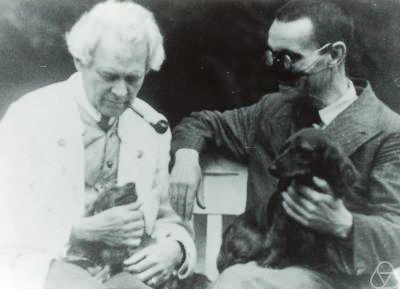

Henri Poincaré: The Father of Modern Mathematics
Introduction to Henri Poincaré
Henri Poincaré, born in 1854 in Nancy, France, is often referred to as the "father of modern mathematics." His profound contributions span across a variety of fields, including the theory of differential equations, topology, and chaos theory. His work has had a lasting impact on both theoretical and applied sciences, making him a pivotal figure in the 20th-century scientific landscape.
Early Life and Education
Henri Poincaré was born on April 29, 1854, in Nancy. His family was distinguished: his father, Léon Poincaré, was a professor of medicine at the University of Nancy. At a young age, Poincaré showed great promise in mathematics, but he was also fascinated by literature and philosophy. He attended the Lycée Louis-le-Grand in Paris from 1869 to 1872, where his mathematical talent was recognized by his teacher Jacques Hadamard. Poincaré entered the École Polytechnique in 1872 and later studied at the École des Mines for his engineering degree.
Academic Career and Research
In 1879, Poincaré received his doctorate in mathematics from the Faculty of Sciences at the University of Paris. His doctoral dissertation was titled "Sur la solution du problème de trois corps," which dealt with the three-body problem in celestial mechanics. This work laid the foundation for his future research. In 1881, he was appointed to a teaching position at the University of Paris, and in 1886, he became a professor of theoretical astronomy at the University of Paris and the Sorbonne.
The Three-Body Problem and Beyond
One of Poincaré's most significant contributions was his work on the three-body problem. This problem challenges mathematicians to predict the motion of three celestial bodies under their mutual gravitational attraction. The complexity of the problem had puzzled mathematicians for centuries. Poincaré's analysis of the problem in his doctoral dissertation revealed the limitations of analytical methods in solving such problems. While he could not find a general solution, he did discover that the problem could lead to chaotic behavior in the universe. This insight was crucial in the development of chaos theory decades later.
Poincaré's Theorem and the Poincaré Conjecture
In his work "Les Méthodes nouvelles de la mécanique céleste," published in four volumes between 1892 and 1896, Poincaré outlined a new approach to solving the n-body problem, introducing what is now known as Poincaré's Theorem. This theorem highlights the inherent complexity and unpredictability of certain systems, challenging the traditional views of determinism in physics. Poincaré's methods also led to the development of new areas of mathematics, such as topology, where he made groundbreaking contributions.
Topology and Its Impact
Topology is the study of qualitative properties of space that are preserved under continuous deformations, such as stretching and bending. One of Poincaré's most famous contributions to topology is known as the Poincaré Conjecture. In 1904, he posed the conjecture that every simply connected, closed 3-manifold is homeomorphic to the 3-sphere. This conjecture remained unproven for many years and was one of the Clay Mathematics Institute's seven Millennium Prize Problems, each carrying a prize of one million dollars. The conjecture was finally solved by Grigori Perelman in 2003, making it a significant achievement in the field of mathematics.
Chaos Theory and Dynamical Systems
Building on his work with the three-body problem, Poincaré explored the concept of chaos, which refers to the highly sensitive dependence on initial conditions in complex systems. His findings in this area laid the groundwork for modern chaos theory. The Poincaré map is a powerful tool in the study of dynamical systems, and it allows one to visualize the behavior of a system over time. Poincaré's work in this field has influenced not only mathematics but also physics, meteorology, and engineering.
Mathematical Writings and Publications
Throughout his career, Poincaré wrote numerous articles and books, which were widely read and influential. His writings are known for their clarity and rigor, making complex concepts accessible to a broader audience. Some of his notable works include "Les Méthodes nouvelles de la mécanique céleste," "Science and Method," and "Calcul des probabilités." These publications helped to disseminate his ideas and furthered the development of mathematics and science.
Legacy and Recognition
Henri Poincaré's legacy extends far beyond his contributions to mathematics. His work has had a profound influence on various scientific disciplines, and he is remembered as a visionary and a pioneer. The Henri Poincaré Institute in Paris, a mathematics and physics research center, is named in his honor to preserve his legacy and continue his groundbreaking research. Poincaré was also a member of the Académie des Sciences, where he served as its secretary for many years.
Conclusion
Henri Poincaré's contributions to mathematics and science are vast and varied. His work on the three-body problem, his development of topology, and his pioneering research in chaos theory have made him a legend in the scientific community. Despite the challenges he faced in his lifetime, Poincaré's legacy remains a testament to his intellect and vision. His ideas continue to inspire new generations of mathematicians and scientists, making him a true icon in the realm of modern science.
Interdisciplinary Influence and Personal Life
While Poincaré is primarily recognized for his contributions to mathematics, his interdisciplinary influence extended into other fields such as physics, philosophy, and science education. He collaborated with physicist Henri Becquerel on problems related to radiation and electromagnetism, and his insights had significant implications for the emerging field of quantum physics. Poincaré's ability to integrate different branches of science and mathematics underscored his holistic approach to understanding the universe.
Despite his prolific output of scholarly work, Poincaré's personal life was marked by tragedy and hardship. His marriage to Louise Pollalis in 1881 brought him joy, though the couple's relationship was characterized by periods of separation due to Poincaré's extensive travel for academic conferences and meetings. Tragically, Louise died from appendicitis in 1910, and Poincaré's grief was profound. Despite his personal struggles, he continued to produce groundbreaking research and write insightful essays until his untimely death.
Nobel Prizes and Honors
Throughout his career, Poincaré received numerous honors and recognitions for his contributions to mathematics and science. Although he never won a Nobel Prize, his extensive body of work was acknowledged through various accolades, including the Prix Poncelet from the French Academy of Sciences. Despite the lack of a formal award from the Nobel Committee, Poincaré's influence was so profound that he remains one of the most celebrated figures in the history of science.
Scientific Communication and Public Engagement
Poincaré was a skilled communicator and believed in the importance of accessible scientific dialogue. His ability to explain complex mathematical concepts in clear, concise language made him a respected public intellectual. He contributed regularly to popular science journals and wrote extensively on topics ranging from the nature of mathematics to the philosophical implications of his discoveries. His book "Science and Hypothesis" (1902) and "The Value of Science" (1905) remain seminal texts in the philosophy of science.
Education Reforms and Pedagogical Innovations
In recognition of his commitment to education, Poincaré became involved in the reform of the French education system. He advocated for the integration of practical applications in mathematics education and emphasized the importance of rigorous problem-solving skills. His pedagogical innovations influenced teaching methodologies and curricula in schools and universities, fostering a more engaged and comprehensive mathematical education.
Collaborations and Scientific Networks
Henri Poincaré was not a solitary thinker; he maintained active collaborations with leading scientists and academics of his time. He corresponded extensively with figures such as Hermann Minkowski, Albert Einstein, and Émile Borel, engaging in discussions that pushed the boundaries of knowledge. His network of scientific collaborators and the exchange of ideas among them contributed significantly to the advancement of mathematical and physical sciences during the late 19th and early 20th centuries.
Challenges and Controversies
Despite his monumental achievements, Poincaré faced some criticism and controversies during his career. Some of his contemporaries debated the validity of his work, particularly regarding the nature of space and time. However, these criticisms ultimately strengthened his resolve and fueled his dedication to scientific inquiry. His resilience in the face of skepticism is a testament to his determination and intellectual fortitude.
Impact on Future Generations
Poincaré's legacy lies not only in his specific contributions but in the broader cultural and intellectual climate he helped to shape. His work paved the way for the development of modern mathematical and physical theories, inspiring countless scientists and mathematicians who followed in his footsteps. The Henri Poincaré Institute in Paris continues to serve as a place of cutting-edge research, ensuring that his ideas and methods remain relevant and influential in contemporary science.
Conclusion
In summary, Henri Poincaré's contributions to mathematics, science, and education have left an indelible mark on human knowledge. His innovative methods, interdisciplinary vision, and enduring influence continue to resonate in modern scientific discourse. Poincaré's legacy serves as a reminder of the transformative power of intellectual curiosity and the interconnectedness of diverse fields of study.
Legacy and Modern Applications
The legacy of Henri Poincaré extends far beyond the theoretical constructs he introduced. His work on the three-body problem and his analysis of the three-dimensional manifolds have modern applications in fields ranging from astrophysics to computer science. The Poincaré map, for instance, is widely used in the study of complex dynamical systems, including weather patterns and electronic circuits. His insights into chaos theory have become crucial for understanding unpredictable behaviors in various natural and technological systems.
One of the most direct modern applications of Poincaré’s work is in the field of topological data analysis (TDA). TDA is a relatively new field that leverages topological concepts to analyze and visualize data. Researchers use TDA to extract meaningful information from large and complex datasets, such as those found in neuroscience, biology, and engineering. Poincaré’s foundational work in topology provides the theoretical framework for these advanced techniques.
Education and Popularization of Science
Poincaré's contributions to education and popularization of science are equally noteworthy. His books and articles not only contributed to the advancement of scientific knowledge but also helped to popularize complex concepts among a broader audience. His ability to explain mathematical concepts in a way that was both rigorous and accessible made him a role model for educators and scientists. The legacy of his pedagogical approach continues to influence educational practices worldwide, emphasizing the importance of clear and engaging communication in scientific education.
Modern Research and Continuation of His Work
Researchers today are still inspired and guided by Poincaré's work. His emphasis on the importance of rigorous problem-solving and innovative mathematical techniques continues to be a guiding principle in mathematical research. The Henri Poincaré Institute in Paris, named in his honor, remains a hub for cutting-edge research in mathematics and theoretical physics. The institute not only fosters new research but also organizes international conferences and workshops, continuing Poincaré's legacy of interdisciplinary collaboration and global scientific discourse.
Impact on Society and Culture
The impact of Henri Poincaré extends beyond the scientific community into society and culture at large. His work has influenced not only scientific thought but also the broader cultural discourse on the nature of the universe and human understanding. Poincaré's emphasis on the interconnectedness and complexity of natural phenomena resonates with contemporary discussions on sustainability, environmental science, and the complexity of social systems.
The Poincaré Institute at the University of Strasbourg also serves as a testament to his enduring legacy. This institute brings together mathematicians, physicists, and engineers to address contemporary challenges in science and technology. The institute's research encompasses a wide range of areas, including mathematical physics, computational mathematics, and applied mathematics, all of which are significantly influenced by Poincaré's original contributions.
Conclusion
In conclusion, the legacy of Henri Poincaré is multifaceted and far-reaching. His contributions to mathematics, science, and education have not only shaped the landscape of modern scientific research but have also influenced broader cultural and social debates. The ongoing relevance of his work in diverse fields underscores the enduring impact of his ideas on our understanding of the universe and our place within it. As we continue to explore and innovate, Poincaré remains a beacon of intellectual excellence and a testament to the power of human curiosity and ingenuity.
Henri Poincaré's legacy continues to inspire and guide us in our quest for knowledge and understanding of the world around us.