Julius Caesar: The Rise of Rome's Greatest Dictator
Introduction to Julius Caesar
Julius Caesar remains one of history's most influential figures. Born in 100 BCE, he transformed the Roman Republic through military conquests, political reforms, and ultimately, his assassination. His legacy shaped Western civilization, making him a timeless subject of study.
Early Life and Political Beginnings
Caesar was born into a patrician family in Rome's Suburra district. His early life was marked by political turmoil, including his refusal to divorce his wife, Cornelia, which led to exile. This defiance set the stage for his future ambition.
Key Early Milestones
- Born July 12 or 13, 100 BCE
- Elected pontifex maximus (63 BCE)
- Formed the First Triumvirate (60 BCE) with Pompey and Crassus
The Gallic Wars: Expanding Rome's Empire
From 58 to 50 BCE, Caesar led the Gallic Wars, conquering modern-day France, Belgium, and parts of Germany. His campaigns were documented in Commentarii de Bello Gallico, a masterpiece of military strategy and propaganda.
Major Battles and Achievements
- Defeated the Helvetii (58 BCE)
- Conquered Vercingetorix at Alesia (52 BCE)
- Invaded Britain (55–54 BCE)
The Civil War and Rise to Power
In 49 BCE, Caesar famously crossed the Rubicon, declaring war on the Roman Senate. His victory at Pharsalus (48 BCE) solidified his dominance, leading to his appointment as dictator for life in 45 BCE.
Key Events in the Civil War
- Crossed the Rubicon with Legio XIII Gemina
- Defeated Pompey at Pharsalus
- Pompey's death in Egypt (48 BCE)
Reforms and Legacy
As dictator, Caesar enacted sweeping reforms, including the Julian calendar and land redistribution. His policies laid the foundation for the Roman Empire, but his growing power alarmed the Senate, leading to his assassination.
Notable Reforms
- Introduced the Julian calendar (365.25 days)
- Expanded the Senate to 900 members
- Granted citizenship to provinces
The Assassination and Aftermath
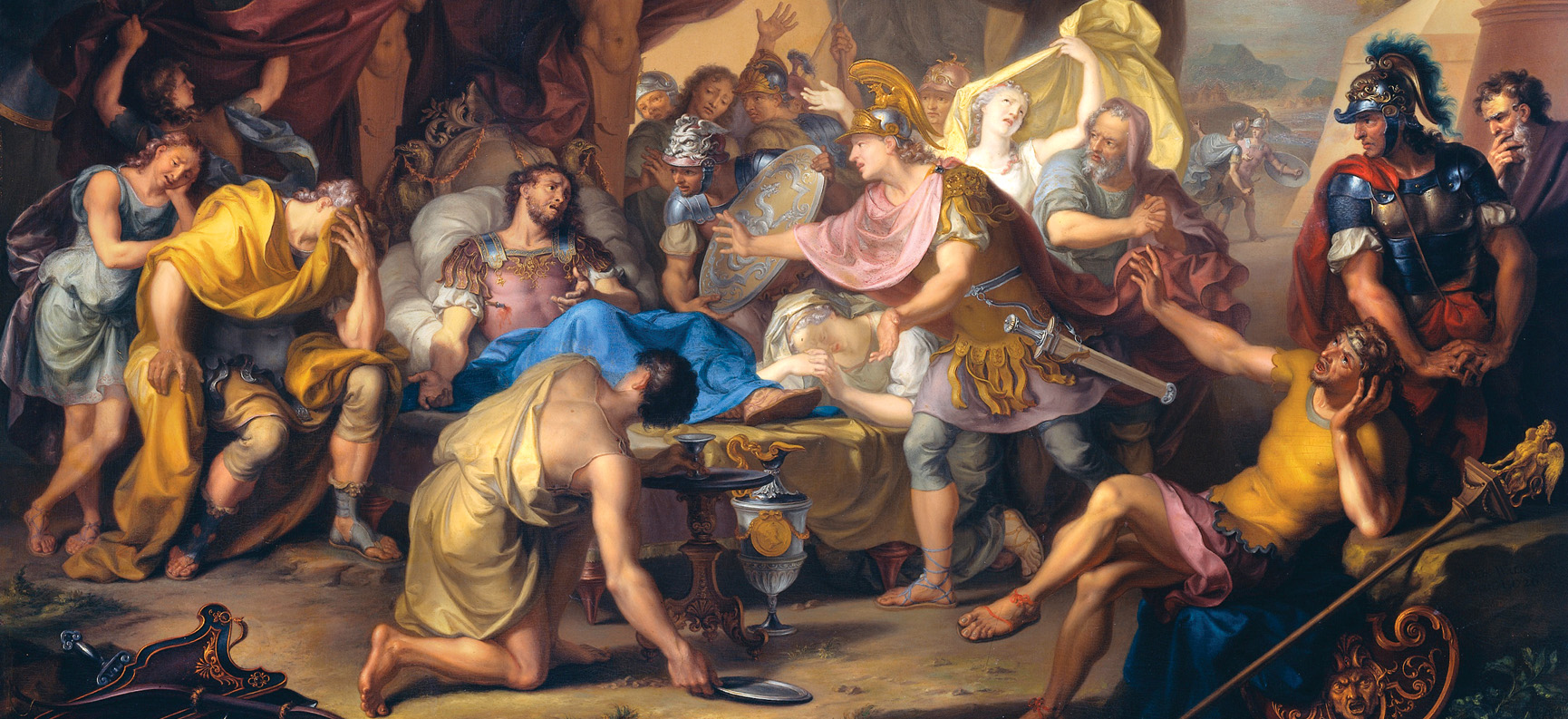
On the Ides of March (44 BCE), Caesar was stabbed 23 times by senators led by Brutus and Cassius. His death triggered further civil wars, ultimately leading to the rise of Octavian (Augustus) and the Roman Empire.
Key Conspirators
- Brutus
- Cassius
- Over 60 senators involved
Conclusion of Part 1
Julius Caesar's life was a blend of military genius, political cunning, and reformist vision. His actions reshaped Rome and left an indelible mark on history. In Part 2, we will explore his personal life, relationships, and the cultural impact of his reign.
Personal Life and Relationships
Beyond his military and political achievements, Julius Caesar had a complex personal life that influenced his career. His relationships, particularly with women, played significant roles in his rise to power and eventual downfall.
Marriages and Alliances
- Cornelia (married 84 BCE) – His first wife, whose death in 69 BCE deeply affected him.
- Pompeia (married 67 BCE) – Divorced in 62 BCE due to political scandal.
- Calpurnia (married 59 BCE) – His third and final wife, who remained loyal until his death.
Affair with Cleopatra
One of Caesar's most famous relationships was with Cleopatra VII of Egypt. Their alliance began in 48 BCE and resulted in the birth of Caesarion, who Caesar acknowledged as his son. This relationship strengthened Rome's influence in Egypt but also fueled political opposition.
Cultural and Political Impact
Caesar's influence extended beyond his lifetime, shaping Roman culture, politics, and even language. His name became synonymous with power, and his reforms laid the groundwork for the Roman Empire.
Legacy in Roman Politics
- The title "Caesar" became an imperial designation, used by subsequent Roman emperors.
- His assassination led to the Second Triumvirate and the rise of Augustus.
- The Julian calendar remained in use for over 1,600 years.
Influence on Literature and Art
Caesar's life has been immortalized in literature, most notably in Shakespeare's Julius Caesar. His military campaigns and political strategies continue to be studied in modern leadership and warfare courses.
Military Strategies and Tactics
Caesar was a master tactician, known for his innovative battlefield strategies. His campaigns in Gaul and his civil war victories demonstrated his ability to adapt and outmaneuver opponents.
Key Military Innovations
- Speed and Mobility – Caesar's legions moved swiftly, often surprising enemies.
- Engineering Prowess – Built bridges and fortifications to secure victories.
- Psychological Warfare – Used propaganda and fear to weaken opponents.
Notable Battles
- Battle of Alesia (52 BCE) – Defeated Vercingetorix, securing Gaul.
- Battle of Pharsalus (48 BCE) – Crushed Pompey's forces, ending the civil war.
- Invasion of Britain (55–54 BCE) – First Roman expeditions to the island.
Controversies and Criticisms
Despite his achievements, Caesar faced criticism for his ambition and methods. His actions often blurred the line between statesmanship and tyranny.
Political Opposition
- Senators feared his monarchical ambitions.
- His land redistribution policies alienated the elite.
- Assassination was justified by conspirators as "saving the Republic."
Modern Debates
Historians continue to debate Caesar's legacy. Some view him as a visionary reformer, while others see him as a ruthless dictator. His life remains a case study in leadership and power.
Conclusion of Part 2
Julius Caesar's personal life, cultural impact, and military genius solidified his place in history. His relationships, reforms, and controversies shaped Rome's transition from Republic to Empire. In Part 3, we will explore his assassination's aftermath and his enduring legacy.
The Assassination: The Ides of March
The assassination of Julius Caesar on March 15, 44 BCE remains one of history's most infamous political murders. The conspiracy, led by senators Brutus and Cassius, marked the end of Caesar's rule and the beginning of Rome's imperial era.
The Conspiracy and Motives
- Senators feared Caesar's growing power and monarchical tendencies.
- His appointment as dictator for life was seen as a threat to the Republic.
- Over 60 senators participated, stabbing him 23 times.
The Aftermath of the Assassination
Caesar's death plunged Rome into chaos. The conspirators failed to restore the Republic, instead triggering another civil war. His adopted heir, Octavian (Augustus), emerged victorious, becoming Rome's first emperor.
Caesar's Enduring Legacy
Despite his violent end, Caesar's influence persisted. His reforms, military conquests, and political strategies shaped Rome's future and left a lasting impact on Western civilization.
Political and Administrative Reforms
- Introduced the Julian calendar, a precursor to the modern calendar.
- Expanded Roman citizenship, strengthening provincial loyalty.
- Redistributed land to veterans, easing social tensions.
Military and Territorial Expansion
Caesar's conquests expanded Rome's territory by 500,000 square kilometers. His campaigns in Gaul and Britain secured Rome's dominance in Europe, setting the stage for the empire's growth.
Caesar in Modern Culture
Julius Caesar's life continues to captivate modern audiences. His story has been retold in literature, film, and political discourse, cementing his place as a cultural icon.
Literary and Theatrical Influence
- Shakespeare's Julius Caesar remains a cornerstone of Western literature.
- Modern adaptations explore themes of power, betrayal, and ambition.
- Historical novels and documentaries keep his legacy alive.
Political Analogies and References
Caesar's name is often invoked in discussions of leadership and authoritarianism. Phrases like "crossing the Rubicon" symbolize irreversible decisions, while his rise and fall serve as cautionary tales.
Conclusion: The Man Who Changed Rome Forever
Julius Caesar's life was a blend of ambition, genius, and controversy. From his early political maneuvers to his military conquests and eventual assassination, he reshaped Rome's destiny. His reforms laid the foundation for the Roman Empire, and his legacy endures in modern culture and politics.
As we reflect on his story, one thing is clear: Julius Caesar was not just a man of his time but a figure whose influence transcends centuries. His name remains synonymous with power, strategy, and the enduring struggle between republic and empire.
Constantine the Great: The Visionary Emperor Who Shaped History
Introduction: The Rise of a Legendary Leader
Constantine the Great, born Flavius Valerius Constantinus, stands as one of the most influential figures in world history. His reign marked a pivotal turning point for the Roman Empire, setting the stage for the rise of Christianity and the transformation of European civilization. Born in Naissus (modern-day Niš, Serbia) around AD 272, Constantine emerged from the turbulent period known as the Crisis of the Third Century to become the sole ruler of the Roman Empire.
This first part of our exploration will examine Constantine's early life, his path to power, and the military campaigns that established his dominance. We'll also explore the famous vision that changed the course of religious history and examine his political reforms that reshaped the empire's administration.
Early Life and the Tetrarchy System
Constantine was born to Constantius Chlorus, a Roman officer who would later become one of the four rulers in Diocletian's Tetrarchy system, and Helena, a woman of humble origins who would later be venerated as Saint Helena. Growing up in the imperial court, Constantine received a thorough education in Latin, Greek, and military strategy. His early years were spent in the eastern part of the empire, where he witnessed firsthand the workings of Diocletian's government.
The Tetrarchy system, established by Diocletian in 293, divided imperial power among four rulers: two senior Augusti and two junior Caesares. This system aimed to provide better governance for the vast empire and ensure smooth succession. Constantine's father Constantius became one of the Caesars, ruling the western provinces of Gaul and Britain.
Constantine's Path to Power
When Constantius died in 306 while campaigning in Britain, the army immediately proclaimed Constantine as Augustus. This act violated the Tetrarchy's succession rules, leading to years of conflict among rival claimants. Constantine initially accepted the lesser title of Caesar to maintain peace but gradually consolidated his power through military victories and political alliances.
One of Constantine's most significant early achievements was his campaign against the Franks in 306-307, where he demonstrated his military prowess. He then strengthened his position by marrying Fausta, daughter of the senior Augustus Maximian, in 307. This marriage alliance connected him to the imperial family and provided legitimacy to his rule.
The Battle of the Milvian Bridge and the Christian Vision
The turning point in Constantine's career came in 312 at the Battle of the Milvian Bridge against his rival Maxentius. According to Christian sources, Constantine had a vision before the battle where he saw a cross in the sky with the words "In hoc signo vinces" ("In this sign, you shall conquer"). He ordered his soldiers to paint the Chi-Rho symbol (☧) on their shields and emerged victorious against overwhelming odds.
This victory made Constantine the sole ruler of the Western Roman Empire and marked the beginning of his support for Christianity. While the exact nature of his conversion remains debated among historians, the Edict of Milan in 313, which he issued jointly with Licinius, granted religious tolerance throughout the empire and ended the persecution of Christians.
Consolidation of Power and Administrative Reforms
After defeating Licinius in 324, Constantine became the sole ruler of the entire Roman Empire. He immediately set about implementing significant reforms that would transform the empire's structure:
- He established a new capital at Byzantium, which he renamed Constantinople (modern-day Istanbul)
- He reorganized the military, creating mobile field armies and separating military and civilian administration
- He reformed the currency with the introduction of the gold solidus
- He restructured provincial administration, increasing the number of provinces and creating the diocesan system
These reforms strengthened the empire's governance and laid the foundation for what would later become the Byzantine Empire.
Constantine and Christianity
Constantine's relationship with Christianity was complex and evolved throughout his reign. While he never made Christianity the official state religion, he gave it significant privileges and actively supported the Church. He:
- Funded the construction of important churches, including the original St. Peter's Basilica in Rome
- Exempted clergy from taxation and civic duties
- Intervened in theological disputes, convening the First Council of Nicaea in 325
- Promoted Christians to high offices in his administration
At the same time, Constantine maintained some traditional Roman religious practices and was only baptized on his deathbed, a common practice at the time among those who feared post-baptismal sin.
Legacy of the First Christian Emperor
By the time of his death in 337, Constantine had transformed the Roman Empire in fundamental ways. His reign marked the transition from classical antiquity to the medieval period and set the stage for the Byzantine Empire. The city he founded, Constantinople, would remain a center of power for over a thousand years.
Constantine's support for Christianity had profound consequences for European history, making the religion a dominant force in Western civilization. His political and military reforms helped stabilize the empire during a period of crisis, though some historians argue they also contributed to the eventual division between East and West.
This concludes our first part on Constantine the Great. In the next section, we will explore in greater depth his religious policies, the founding of Constantinople, and his complex personal life and family relationships that would shape the empire's future after his death.
The Religious Transformation: Constantine's Christian Policies
Constantine's approach to Christianity was neither immediate nor absolute. His policies represented a gradual shift that balanced imperial tradition with the growing influence of the Christian faith. Following the Edict of Milan in 313, Constantine implemented measures that deeply altered the religious landscape of the empire:
- He returned confiscated Christian property seized during previous persecutions
- Granted tax exemptions and financial support to Christian clergy
- Gave bishops judicial authority within their communities
- Established Sunday as an official day of rest in 321
- Banned certain pagan practices while maintaining the title of Pontifex Maximus
This calculated approach allowed Christianity to flourish while preventing immediate upheaval of traditional Roman religion. Constantine's personal faith remains complex—he continued to use ambiguous religious language in official documents and maintained elements of solar monotheism (Sol Invictus) in his imagery.
The First Council of Nicaea (325 AD)
Constantine's most significant religious intervention came with the Arian controversy regarding the nature of Christ. To settle the dispute, he convened the First Ecumenical Council at Nicaea:
- Brought together approximately 300 bishops from across the empire
- Personally inaugurated the council, though not baptized himself
- Resulted in the Nicene Creed establishing orthodox doctrine
- Created a precedent for imperial involvement in church affairs
The council demonstrated Constantine's desire for religious unity as a stabilizing force and established the framework for Christian orthodoxy that would endure for centuries.
The New Rome: Founding of Constantinople
In 324, Constantine began his most ambitious project—the transformation of the ancient Greek city Byzantium into a new imperial capital. Officially dedicated on May 11, 330, Constantinople was designed as:
- A strategically located capital at the crossroads of Europe and Asia
- A Christian alternative to pagan Rome with churches instead of temples
- A fortress city with expanded walls and natural defenses
- A center of culture and learning with imported artworks and scholars
Urban Planning and Symbolism
Constantine's architects employed sophisticated urban design to create a city that would rival and eventually surpass Rome:
- Laid out the city on seven hills like Rome, with fourteen districts
- Created the monumental Mese, a colonnaded main street
- Erected the Milion as the symbolic center of the empire's road network
- Constructed the Great Palace complex as the imperial residence
The city's Christian character was emphasized through prominent churches and the absence of pagan temples, though some traditional civic structures were maintained for practical purposes.
Military Reforms and Frontier Defense
Recognizing the empire's security challenges, Constantine reshaped Rome's military structure:
| Reform | Description | Impact |
|---|---|---|
| Field Armies | Created mobile strike forces (comitatenses) | Allowed rapid response to border threats |
| Border Forces | Strengthened limitanei frontier troops | Provided static defense of imperial borders |
| New Units | Introduced cavalry-heavy formations | Countered growing threat from mounted enemies |
These reforms maintained imperial security but also had long-term consequences, including increased military spending and greater separation between civilian and military authority.
Constantine's Family Dynamics
The imperial household was both Constantine's greatest strength and his tragic weakness. His marriage to Fausta produced five children who would play crucial roles in his succession plans. However, multiple family crises marked his reign:
The Crisis of 326
This pivotal year saw the execution of Constantine's eldest son Crispus and shortly after, his wife Fausta under mysterious circumstances:
- Crispus had been a successful general and heir apparent
- Ancient sources suggest Fausta may have falsely accused Crispus
- The scandal necessitated rewriting Constantine's succession plans
- Three surviving sons (Constantine II, Constantius II, Constans) became new heirs
The Imperial Succession
Constantine developed an ambitious plan to divide power while maintaining dynastic unity:
- Appointed his sons as Caesars during his lifetime
- Created a network of cousins to administer provinces
- Established Constantinople as neutral territory under Senate control
- This complex system quickly collapsed after his death in 337
Legal and Social Reforms
Constantine's legal enactments reflected both traditional Roman values and Christian influence:
| Area | Reform | Significance |
|---|---|---|
| Slavery | Restricted separation of slave families | Reflected Christian ethics |
| Marriage | Strict penalties for adultery | Moral legislation |
| Crime | Crucifixion abolished | Symbolic Christian reform |
| Wills | Recognized validity of Christian wills | Legal status for Christian practice |
While these reforms improved conditions for some, Constantine also enacted harsh penalties, including branding and amputation, for certain offenses.
Preparing for the Next Part
In this second part, we've examined Constantine's complex religious policies, the monumental founding of Constantinople, critical military reforms, and fascinating family dynamics. As we conclude this section, we've laid the groundwork for understanding how Constantine's reign fundamentally transformed the Roman world.
Our third and final installment will explore Constantine's final years, his baptism and death, the immediate aftermath of his reign, and the lasting impact of his rule on Western civilization. We'll examine how his successors managed—or failed to maintain—his vision and how modern historians assess his complex legacy.
The Final Years and Legacy of Constantine the Great
The Road to Baptism and Death
In his later years, Constantine prepared for what he believed would be his most important transition - the passage from earthly power to eternal salvation. Following contemporary Christian practice that feared post-baptismal sin, he postponed his baptism until he fell seriously ill near the end of his life. This final act occurred in 337 at the suburban villa of Ancyrona near Nicomedia when:
- He was baptized by the Arian bishop Eusebius of Nicomedia
- Chose to be clothed in white baptismal robes rather than his imperial purple
- Reportedly refused to wear his imperial insignia afterward
- Died shortly thereafter on May 22, 337, at approximately age 65
The Imperial Succession and Family Conflict
Constantine's carefully planned succession quickly unraveled after his death. The empire became embroiled in a bloody transition period that revealed the fragility of his dynastic vision:
| Successor | Territory | Fate |
|---|---|---|
| Constantine II | Gaul, Britain, Spain | Killed in 340 invading Constans' territory |
| Constantius II | Eastern provinces | Became sole emperor by 353 |
| Constans | Italy, Africa | Assassinated in 350 |
The power struggle extended to Constantine's extended family, with most male relatives murdered within months of his death in a purge likely ordered by Constantius II. This tragic outcome contrasted sharply with Constantine's hopes for dynastic continuity.
The Milvian Bridge Legacy: Christianity's Imperial Future
Constantine's support for Christianity set in motion changes that would far outlive his empire:
- The Christian church gained legal status and eventually became the state religion under Theodosius I
- Ecclesiastical structures mirrored imperial administration
- Christian theology became intertwined with Roman imperial ideology
- The bishop of Rome (the Pope) gained increasing political authority
The Donation of Constantine Controversy
Centuries after his death, an eighth-century document called the "Donation of Constantine" purported to record Constantine giving temporal power over Rome and the western empire to Pope Sylvester I. While proved a medieval forgery in the 15th century, it:
- Influenced papal claims to political authority throughout the Middle Ages
- Became a key document in church-state conflicts
- Demonstrated Constantine's lasting symbolic importance to the Catholic Church
Constantinople: The Enduring City
Constantine's "New Rome" outlasted the Western Roman Empire by nearly a thousand years, becoming:
- The capital of the Byzantine Empire until 1453
- A bulwark against eastern invasions of Europe
- The center of Orthodox Christianity
- A cosmopolitan hub of commerce, culture, and learning
Even after its fall to the Ottomans, the city (renamed Istanbul) remained a major world capital, maintaining elements of Constantine's urban design into modern times.
Military and Administrative Aftermath
Constantine's reforms established patterns that defined later Byzantine governance:
| Reform | Long-term Impact |
|---|---|
| Separate military commands | Became standard in medieval European states |
| Mobile field armies | Precursor to later Byzantine tagmata forces |
| Gold solidus currency | Remained stable for 700 years |
| Regional prefectures | Influenced medieval administrative divisions |
Historical Assessment and Modern Views
Historians continue to debate Constantine's legacy:
The Christian Hero Narrative
Traditional Christian historiography views Constantine as:
- The emperor who ended persecution
- A divinely inspired leader
- The founder of Christian Europe
The Pragmatic Politician Interpretation
Modern secular scholarship often emphasizes:
- His manipulation of religion for political unity
- The continuities with earlier imperial systems
- His military and administrative skills
The Ambiguous Legacy
Most contemporary historians recognize:
- Both genuine faith and political calculation in his policies
- His central role in Europe's Christianization
- The unintended consequences of his reforms
Constantine in Art and Culture
The first Christian emperor became an enduring cultural symbol:
Medieval Depictions
- Featured in Byzantine mosaics and manuscripts
- Central to Crusader ideology
- Subject of medieval romance literature
Renaissance and Baroque Art
- The Vision of Constantine became popular subject
- Depicted in Raphael's "The Baptism of Constantine"
- Sculptures in major European churches
Modern Representations
- Appears in films and television series
- Subject of historical novels
- Inspiration for Christian political movements
Conclusion: The Architect of a New World
Constantine the Great stands as one of history's pivotal figures whose decisions fundamentally altered the course of Western civilization. By combining Roman imperial tradition with Christian faith, military prowess with administrative genius, and dynastic ambition with strategic vision, he created a synthesis that would endure for centuries. Though his immediate successors failed to maintain his vision perfectly, the foundations he laid—the Christian Roman Empire, the city of Constantinople, and new models of governance—shaped medieval Europe and influence our world today.
From the Roman persecutions to the edicts of tolerance, from the old Rome to the new, from pagan empire to Christian state, Constantine presided over one of history's great transitions. His life reminds us that individual leaders can indeed change the world, though often in ways more complex than they could foresee. Whether viewed as saint, opportunist, or simply as one of Rome's greatest emperors, Constantine's impact on religion, politics, and culture remains undeniable more than sixteen centuries after his death.


Epaminondas: The Visionary Leader of Thebes
In the annals of ancient history, the mention of legendary military leaders often evokes names like Alexander the Great or Julius Caesar. Yet, standing nearly forgotten in the shadows of such luminaries is Epaminondas—a leader whose strategies and reforms reshaped the Greek world in the 4th century BCE. As a visionary statesman and military tactician, Epaminondas carved a path for Thebes, challenging the hegemony of Sparta and altering the course of Greek history.
The Rise of Thebes and Epaminondas
The city-state of Thebes, nestled in the region of Boeotia, Greece, was once an overshadowed player in the affairs of the Greek world. However, this began to change in the early 4th century BCE, as internal reforms and external pressures pushed Thebes toward a more prominent role. Epaminondas emerged from the depths of this transformation, his charismatic leadership and innovative strategies catapulting him to the forefront of Theban politics and military exploits.
Born around 418 BCE, Epaminondas was not of noble birth, yet his intelligence and charisma quickly distinguished him among his peers. He forged a reputation through his dedication to learning, particularly in philosophy and the military arts, which would later underpin his success as both a strategist and leader. His military prowess and deep-seated moral convictions became the cornerstone of his leadership style, steering Thebes into a period of remarkable, albeit short-lived, supremacy.
The Battle of Leuctra: A Turning Point
Epaminondas's most celebrated military achievement was the Battle of Leuctra in 371 BCE. Before this transformative engagement, the militaristic power of Sparta loomed large over the Greek city-states, having maintained dominance for several decades. Despite being outnumbered, Epaminondas led the Theban troops with an innovative battle formation—a tactic that played a crucial role in reshaping Greek warfare and redefining Theban might.
The traditional phalanx formation, typically employed by Greek armies, saw infantry lines of equal strength across the battlefield. However, Epaminondas devised a novel approach by massing his troops into a deeper, more robust column on one wing of the line. This concentrated force attacked the Spartan right, effectively neutralizing their famed hoplites. The result was a decisive Theban victory, one that shattered the myth of Spartan invincibility and marked the beginning of Theban ascendancy.
Epaminondas: A Statesman and Reformer
Beyond his military successes, Epaminondas was a visionary statesman who sought to create a balance of power within the Greek world. His profound understanding of both politics and human nature was evident in his approach to governance and reform. Following the Battle of Leuctra, Epaminondas sought to maintain Thebes's newfound power through alliances and diplomacy rather than sheer force alone.
One of his most significant political moves was the establishment of the Arcadian League, a confederation of city-states in the Peloponnese region. This strategic alliance served to counterbalance Spartan influence and prevent any single power from dominating the Greek peninsula. Epaminondas's vision extended to the socioeconomic structure of Thebes as well. He endorsed policies that fostered greater equality and redistributed land to bolster the Theban economy and population.
Legacy and Influence
The legacy of Epaminondas is both monumental and tragic. While his innovative tactics and strategic brilliance elevated Thebes to new heights, his untimely death in 362 BCE at the Battle of Mantinea precipitated the decline of Theban power. Despite this, his influence on military strategy endured, inspiring future tacticians with his creative military formations and maneuvers.
Epaminondas's impact extended beyond military reforms; his dream of a balanced power structure lingered well into the Hellenistic period. The fragmentation of Greek city-states left room for the eventual rise of Macedonian power under Philip II, who adopted several of Epaminondas's strategies and principles. Although Epaminondas's Thebes did not survive as a dominant power, the ripples of his ingenuity were felt throughout subsequent European military history.
In the tapestry of Greek history, Epaminondas stands as a testament to the power of innovation and vision. His leadership not only reshaped Theban fortunes but also left an indelible mark on the course of Greek and indeed world history—a mark that redefined warfare and set the stage for future generations of military leaders and strategists. As history unfolds, the lessons of Epaminondas remind us of the profound impact of courage, intellect, and a commitment to reform in an ever-changing world.
Military Innovations of Epaminondas
The military innovations introduced by Epaminondas at the Battle of Leuctra proved to be more than just a fleeting change in tactics; they heralded a new era of strategic thinking that would influence military leaders for generations. The concept of deploying troops in an uneven line, with particular strength at decisive points, was revolutionary. This tactic, known as the oblique order, was instrumental in his victory over the Spartans and later echoed in the strategies of commanders like Philip II of Macedon and even Frederick the Great of Prussia in the 18th century.
The oblique formation allowed Epaminondas to break the rigid structure of traditional phalanx warfare, which typically involved evenly matched forces clashing along a straightforward line of engagement. By concentrating his forces on the enemy's weak point and simultaneously utilizing lighter troops to harass and confuse enemy flanks, he introduced a level of fluidity and adaptability that had been lacking in Hellenic battles. This approach not only leveraged the uneven terrain to Theban advantage but also capitalized on disarray in enemy ranks, demonstrating Epaminondas's deep understanding of battlefield dynamics.
Theban Society Under Epaminondas
While military might and battlefield acumen were essential aspects of Epaminondas's leadership, his vision for Thebes also extended into societal improvements and civic reforms. As a state striving to secure newfound hegemony, internal cohesion was crucial, and Epaminondas worked tirelessly to foster unity and prosperity in Theban society.
One of his noteworthy endeavors was the redistribution of land ownership. Land, in ancient Greek society, was not just an economic asset but a symbol of status and power. By redistributing large estates previously dominated by aristocratic elites, Epaminondas aimed to diminish social hierarchies and engender a more equitable society. This policy helped broaden the economic base of Thebes, empowering more citizens to contribute to their polis and military efforts.
Moreover, the economic policies implemented during his leadership underscored his commitment to the welfare of Thebans at large. By supporting trade and local craftsmanship, Epaminondas created an environment conducive to growth and innovation. This economic upliftment ensured a steady supply of resources necessary for both sustaining military campaigns and advancing civic infrastructure, thus aligning Theban prosperity with its military ambitions.
The Diplomatic Maneuvering of Epaminondas
Epaminondas's diplomatic skills were as formidable as his military acumen. Recognizing that perpetual warfare was unsustainable, he sought alliances that could secure Theban interests while promoting regional stability. His efforts in forming the Arcadian League were characteristic of his strategic diplomatic vision, aimed at offsetting Spartan power while promoting a more unified Peloponnese.
In an era characterized by constant conflict between city-states, Epaminondas stood out as a leader eager to explore peaceful coexistence and mutual benefit. He advocated for treaties and alliances that not only strengthened Thebes but also fostered networks of support among other Greek city-states. By doing so, he paved the way for cooperative approaches to governance, seeking to stabilize the Greek world through diplomacy as much as through military strength.
One key alliance, with the city-state of Athens, was particularly significant. Despite traditional rivalries, Epaminondas was able to craft diplomatic initiatives that saw Thebes and Athens working together at various junctures, a striking testament to his ability to transcend entrenched enmities for the greater good of regional stability.
Critiques and Counterpoints
Despite his many contributions, Epaminondas was not without his critics, both during his life and in subsequent historical analyses. Some contemporary commentators and later historians argue that his policies, while innovative, were ultimately too ambitious given the volatile nature of Greek politics. The radical redistribution of land and power, for instance, while intended to foster equality, in fact led to dissent and instability following his death.
Additionally, his untimely death at the Battle of Mantinea, where he fell in battle although leading Thebes to another tactical success, left a power vacuum that Thebes struggled to fill. Without his guiding vision and leadership, Theban ascendancy quickly waned, demonstrating both the brilliance and the limitations of Epaminondas's impact. His inability to cement long-term stability or ensure a succession of equally capable leaders resulted in a rapid decline in Theban influence and foiled his broader plans for a balanced Greek world.
Though his strategies and political maneuvers were praised, the absence of a lasting institutional structure meant that much of his work unraveled swiftly. Critics point to this as a cautionary tale illustrating the need for robust systems alongside visionary leadership. Nevertheless, his legacy, rich with both triumphs and lessons in governance, continues to engage historians and inspire military strategists to this day.
Despite these debates, the contributions of Epaminondas remain a testament to his extraordinariness as a leader—a man whose military brilliance and visionary outlook momentarily brought Thebes to the zenith of its power and influence within the Greek world. As we reflect on his life and legacy, Epaminondas emerges as a complex figure, whose ambition and revolutionary ideas characterize a pivotal era in ancient history.
The Mantinean Campaign and Epaminondas's Final Acts
The culmination of Epaminondas's military career and life came during the Mantinean Campaign, which occurred in 362 BCE. This conflict was not just another battle for Thebes but a testament to Epaminondas's tenacity and strategic prowess. The political landscape was fraught with tension, as power struggles among neighboring city-states reached a boiling point. Determined to solidify Theban dominance and secure a lasting peace accord, Epaminondas launched a campaign targeting Sparta and its allies, effectively placing Thebes at the epicenter of a potential regional realignment.
Epaminondas's arrival at Mantinea signaled his persistent ambition to alter Greek geopolitics definitively. Utilizing innovative tactics once more, he crafted a strategy that involved feints and misdirection, aiming to split the forces of his adversaries. His foresight and ability to anticipate enemy movements underscored his unparalleled prowess on the battlefield. However, despite achieving tactical victories, this campaign would turn tragically personal.
During the climax of the battle, Epaminondas was struck down by a spear. Even in his final moments, his thoughts were with Thebes; he famously ordered his men not to announce his death until assured of their victory. The Thebans won the battle, but it was a pyrrhic victory, his death casting a long shadow over the future of Theban hegemony.
The Immediate Aftermath of Epaminondas's Death
The death of Epaminondas had profound implications, both immediately and in the resultant power dynamics throughout Greece. Following his demise, the centralized leadership he had embodied dissipated, and Theban influence rapidly declined. The absence of his guiding hand and cohesive vision left a gaping leadership void that no successor could effectively fill. The political and societal reforms he courageously championed were left vulnerable, suffering without the powerful stewardship that had enforced them.
This unraveling of Thebes allowed Sparta to recover from its earlier defeats and weakened the structures Epaminondas had painstakingly built. The anticipated equilibrium within the Greek world, where one city-state did not monopolize power, remained unfulfilled. Moreover, the chaos of succession and the collapse of meaningful leadership precipitated external threats, eventually ushering in an era characterized by Macedonian ascendancy under Philip II, who keenly noted the strategic innovations pioneered by Epaminondas.
Long-term Influence and Philosophical Legacy
The legacy of Epaminondas endures not only through his strategic innovations but as an icon of principled leadership. His commitment to societal equity, military reform, and diplomatic tact embodies an enduring archetype of statesmanship. For subsequent generations of military strategists and political theorists, Epaminondas represents a profound combination of intellectual breadth and martial acuity.
The tactical concepts he introduced, such as the oblique approach, were foundational to Philip II's development of the Macedonian phalanx, which expanded upon Epaminondas's principles of flexibility and concentration of force. Furthermore, Epaminondas's endeavor to balance and check power foreshadowed later political theories advocating for equilibrium among rival state powers—an idea that resonates with modern political thought about stable governance systems.
Philosophically, Epaminondas's reflections on leadership and responsibility have also survived. His friendships and dialogs with philosophers of his time, like the Pythagorean Lysis, suggest that Epaminondas understood the synthesis of strategic thinking with ethical consideration—an approach that argues for the judicious wielding of power combined with moral integrity, a concept that has inspired statesmen across eras.
Conclusion: A Visionary in His Time
Epaminondas's life and legacy encapsulate the dichotomy inherent in many great historical figures: a man of grand vision whose reality was cut short by life's ephemeral nature. His innovative military tactics changed the face of warfare, while his reforms aimed at social equity and balance left an indelible impression that defined Theban society even after its political prominence waned. His visionary leadership, although temporarily successful on the battlefield, could not overcome the entrenched societal fractures that were re-exposed following his death.
Despite the ephemeral nature of Thebes's power, the lessons of Epaminondas remain clear. His career serves as an influential study in the balance of military might with governance, vision with pragmatism, and ambition with ethical responsibility. As we evaluate his legacy, it becomes apparent that true greatness in leadership consists not merely in triumphs on the battlefield or political arena but also in the foresight and moral fortitude to aim for a future that benefits all, a principle just as applicable to today's leaders as it was in the ancient world.
Thus, while the temporal realms of his influence may have dissipated after Mantinea, the philosophical and tactical legacies of Epaminondas continue to echo, reminding us of the enduring power of innovative vision and ethical leadership in shaping the course of history.