The Last of Us Part II: A Geek’s Perspective
The year 2020 not only marked the outbreak of a global pandemic but also witnessed the release of a game that would stand as a testament to what narrative-driven video games can achieve. The Last of Us Part II (TLOU2) is a critical and commercial juggernaut that has left an indelible mark on the gaming industry. Developed by Naughty Dog, this sequel follows Ellie, a young woman seeking justice in a brutal, post-apocalyptic world.
A Trip Down Memory Lane
The Last of Us (TLOU), the predecessor of TLOU2, introduced gamers to a devastated world ravaged by a fungal infection, turning the survivors into roving bands of desperate individuals. The original game, released in 2013, was a masterpiece of storytelling and gameplay. It captivated audiences with its intricate plot, deep characters, and cinematic moments. However, it was clear from the outset that there was more to the story, more to explore with Ellie and Joel. This led to the creation of The Last of Us Part II, which aimed to delve deeper into the complexities of their relationship and Ellie’s psychological journey.
Technical Marvels
TLOU2 is a technical marvel, pushing the boundaries of what the PlayStation 4 could do. Naughty Dog’s expertise is evident in every frame, from the immersive environments that envelop you in a world of decay and survival to the highly detailed character models that bring Ellie and the other cast members to life. The game’s stunning visuals, achieved through advanced animation and cutting-edge motion capture technology, make every moment feel real. Each character's movements believably convey their emotions and reactions, making for a truly engaging experience.
Narrative Depth and Emotion
One of the game’s defining qualities is its powerful storytelling. Directed by Neil Druckmann and co-written with Halley Wegryn Gross, the narrative is a complex tapestry of revenge, morality, and emotional turmoil. Ellie grapples with her past and the weight of her actions, while the supporting characters add depth and nuance to the storyline. From the intense action sequences to the subtle psychological battles, every aspect of the narrative is crafted to elicit a range of emotions from frustration to empathy, joy, and sorrow.
Neil Druckmann’s directorial touch is evident throughout the game. His ability to craft a compelling and unpredictable narrative is a key factor in TLOU2’s success. The game doesn’t shy away from exploring moral ambiguity and the darker aspects of human nature. This willingness to confront difficult topics and controversial elements makes TLOU2 a thought-provoking experience that challenges players to engage with complex themes.
The Controversies
While TLOU2 is widely hailed as one of the greatest video games ever made, it also sparked significant debate and controversy. Some players felt that certain narrative choices felt forced or exploitative, particularly concerning Ellie’s relationships and the plot developments. These criticisms were understandable, given the sensitive subject matter and intense emotional content. The backlash, however, only served to highlight the game’s audacity and its willingness to tackle mature themes with authenticity.
Award Wins Galore
The accolades that TLOU2 garnered upon its release were nothing short of astonishing. The game received widespread critical acclaim and multiple award wins in nearly every major category. At the The Game Awards 2020, TLOU2 won Game of the Year, securing its place as one of the most highly regarded games of the year. Beyond that, it took home honors for Best Game Direction and Best Narrative, cementing its status as a masterpiece of modern storytelling.
The Golden Joystick Awards 2020 saw TLOU2 dominate with wins in all six categories it was nominated for, including Ultimate Game of the Year, Best Audio, Best Storytelling, Best Visual Design, PlayStation Game of the Year, and Ultimate Game of the Year again. This comprehensive sweep of awards underscores the game’s impact on both the narrative and technical aspects of gaming.
In addition to these prestigious recognitions, TLOU2 also picked up accolades at the NAVGTR Awards, where it received 24 nominations (the most in the show’s history) and won 8 awards. Its soundtrack, composed by Gustavo Santaolalla and Mac Quayle, also received critical praise and awards, showcasing the game’s attention to detail in every element of its production.
The sheer scope of TLOU2’s reception, spanning multiple categories and years, cements its legacy as one of the most celebrated video games of its generation. Its cultural impact cannot be overstated; it set new standards for narrative complexity and emotional authenticity, influencing the way stories are told in video games.
In conclusion, The Last of Us Part II is much more than a simple follow-up to a beloved game. It is a landmark in gaming that pushes the boundaries of what is possible, both technically and narratively. Its rich characters, evocative storytelling, and unflinching exploration of complex themes have made it a standout title that will undoubtedly shape the future of video games. Stay tuned for the next segment, where we’ll dive deeper into its lasting impact and legacy.
The Last of Us Part II: Legacy and Cultural Impact
Despite its controversies, The Last of Us Part II (TLOU2) has had a profound and lasting impact on the gaming industry. Its narrative approach and technical achievements have influenced countless developers and players alike. The game’s unflinching portrayal of dark themes, moral ambiguity, and emotional depth has set a new standard for what video games can achieve in terms of storytelling.
Lasting Influence on Storytelling
The narrative complexity of TLOU2 has had a ripple effect on the gaming community. Many developers have been inspired to push the boundaries of their storytelling in similar ways, incorporating more nuanced and adult themes. The game’s willingness to confront uncomfortable topics has encouraged other game creators to take risks and explore the depths of human emotion. Titles like Bloodborne and Elden Ring have embraced horror and darkness, drawing inspiration from TLOU2’s raw and honest approach to narrative design.
Much of the praise for TLOU2 comes from its ability to weave a compelling story around its characters. Games like Assassin’s Creed Valhalla and Falcom’s Disgaea series have benefited from the lessons learned from TLOU2’s focus on character development and emotional depth. The game’s emphasis on the psychological aspects of its characters has influenced how developers approach player engagement and emotional investment.
Technical Innovation and Pushing Boundaries
TLOU2’s technical innovations have also set a benchmark for future titles. The game pushed the PlayStation 4 hardware to its absolute limits, creating a visually stunning and immersive world. Other games like Sekiro: Shadows Die Twice and Dishonored 2 have showcased similar levels of graphical complexity and technical prowess. These games have learned from TLOU2’s mastery of environmental storytelling, intricate cutscenes, and dynamic cinematics.
Moreover, TLOU2’s use of motion capture and character animation has become a template for modern action-adventure games. Titles like Hellblade: Senua’s Sacrifice and The Witcher 3: Wild Hunt have incorporated advanced motion capture techniques to enhance their character performances. The game’s realistic interactions and emotional granularity have paved the way for a more lifelike portrayal of characters in video games.
Cultural Significance
The cultural impact of TLOU2 extends beyond its immediate audience. The game has sparked discussions about the ethics of storytelling in interactive media and the responsibility that developers have when portraying sensitive topics. This conversation has grown into debates about trigger warnings and player consent in games. The success of TLOU2 has also led to increased scrutiny of the content and themes in video games, driving the industry towards more thoughtful and inclusive storytelling.
The lasting influence of TLOU2 is evident in the rise of narrative-focused games that prioritize character development and emotional depth. Games like Kitchen and That Dragon, Cancer have taken inspiration from TLOU2’s innovative approaches to storytelling, exploring the human condition in new and compelling ways. The game’s success in blending action and narrative has led to a broader acceptance of narrative richness in gameplay.
The Legacy of Naughty Dog
The Last of Us Part II has solidified Naughty Dog’s reputation as a leading developer of high-quality storytelling and cinematic experiences. Its success has elevated the studio to a level of artistic respect that few other game developers can claim. Titles like Uncharted 4: A Thief’s End, The Last of Us: Part I, and Horizon Zero Dawn have followed in TLOU2’s footsteps, continuing to set new standards in terms of narrative complexity and technical excellence.
The game’s achievement has also driven more investment in narrative-driven titles within the industry. Publishers are increasingly recognizing the commercial value and critical acclaim that come with games that prioritize story and character development over purely gameplay-driven mechanics. This trend is likely to continue, as more developers seek to emulate the success of TLOU2.
Future Projections and Adaptations
The success of TLOU2 has led to significant interest in adapting the story for other forms of media. Netflix’s television series adaptation of the game’s franchise is a prime example. This adaptation will expand the story and introduce new narrative elements, further cementing the game’s place in popular culture. Fans and critics alike are eagerly awaiting the TV series, which promises to delve even deeper into the complex characters and themes explored in the game.
Other potential adaptations include animated films and comics, each bringing unique perspectives to the already rich narrative. These extensions will help to broaden the audience and deepen the immersion for existing fans. The successful adaptation of TLOU2 into other formats is likely to inspire more cross-platform storytelling, where games, TV shows, and other media work together to create a cohesive and engaging experience for the audience.
In conclusion, The Last of Us Part II remains a pivotal game in the landscape of narrative-driven video games. Its technical prowess, emotional depth, and cultural impact continue to influence the industry. As more developers strive to replicate its success, we can expect to see a continued evolution in the way stories are told within the medium of video games. Stay tuned for the final segment, where we explore the technical details and behind-the-scenes development of TLOU2.
The Technical Details and Behind-the-Scenes Development
The success of The Last of Us Part II (TLOU2) is not limited to its storytelling and emotional depth. Behind the scenes, the game represents a technical landmark that pushed the boundaries of what could be achieved on the PlayStation 4. The development process involved a combination of innovative design choices and state-of-the-art technology, contributing to the game’s immersive experience.
Innovative Animation and Motion Capture
A significant factor in TLOU2’s technical achievements is its advanced use of animation and motion capture. Naughty Dog employed cutting-edge motion capture technology to ensure that every character’s movements felt natural and emotive. This technique is particularly crucial during intense action sequences and emotionally charged moments, ensuring that every gesture and facial expression adds to the overall narrative impact.
Gustavo Santaolalla and Mac Quayle’s scores, composed and performed for the game, are also noteworthy. Their atmospheric and emotionally charged music enhances the game’s emotional depth and helps transport players to the world of the game. The soundtrack’s impeccable timing and emotive quality contribute significantly to the game’s ability to evoke specific feelings and reactions from players.
Environmental Design and Visual Complexity
The game’s environments are meticulously designed to provide a rich and immersive setting. Naughty Dog’s artists and designers focused on creating detailed, photorealistic environments that enhance the player’s sense of presence in the world. The game’s level design is both functional and aesthetically pleasing, seamlessly blending gameplay with narrative cues. For instance, the environments in areas like Jackson, Wyoming, are intricately detailed, reflecting the decay and post-apocalyptic feel of the world.
The game’s visual complexity is another notable feature. Every frame of TLOU2 is meticulously crafted, with attention paid to lighting, texturing, and special effects. The lighting system, for example, is designed to enhance the game’s atmosphere. Dramatic lighting changes and atmospheric effects help to emphasize key moments and create a sense of urgency and tension. These technical advancements contribute to the immersive experience and the overall emotional impact of the game.
Advanced Technology and Creative Processes
Naughty Dog’s technical team played a pivotal role in developing the innovative features of TLOU2. The game benefits from a range of advanced technologies, including improved character rendering, enhanced AI systems, and sophisticated physics engines. These technical advancements allowed for more fluid and responsive gameplay, ensuring that every action felt authentic and impactful.
The creative processes behind TLOU2 were also groundbreaking. Neil Druckmann and his team took a collaborative approach, involving a wide range of contributors from writers to artists and designers. This interdisciplinary collaboration helped to create a cohesive and compelling narrative that stood out from other games in the genre. The game benefited from the input of expert consultants, including psychologists and historians, to ensure that the story and characters felt realistic and authentic.
Challenges and Solutions
The development of TLOU2 was not without its challenges. One of the primary challenges was balancing the technical requirements of creating a visually stunning game with the need to deliver a smooth and engaging gameplay experience. To address this, the team employed various strategies, including optimizing the game’s performance and carefully managing the game’s resources.
Another challenge was maintaining the emotional consistency of the characters throughout the game. To overcome this, the team implemented a rigorous testing process, involving multiple rounds of playtesting to ensure that every decision made contributed to the overarching narrative. This ensured that the character arcs remained coherent and that the emotional journey of the player remained consistent.
Behind-the-Scenes Insights
Insights into the development process offer a glimpse into the dedication and creativity that went into creating TLOU2. One notable detail is the extensive use of motion capture technology. To capture Ellie’s emotions and movements effectively, the team used high-end motion capture facilities and trained actors to perform elaborate scenes with precision. The result is a performance that feels deeply personal and authentic, enhancing the overall experience.
The game’s cutscenes, which are numerous and impactful, required meticulous planning and execution. Each cutscene was storyboarded and then shot using motion capture technology to ensure seamless integration into the game. The team worked tirelessly to refine these sequences, often revising them multiple times to maintain consistency and emotional resonance.
Conclusion
Ultimately, the success of The Last of Us Part II lies in its masterful blend of technical innovation, compelling storytelling, and emotional depth. TLOU2 stands as a testament to what is possible in narrative-driven video games, setting a new standard for the industry. Its technical achievements and creative processes serve as a blueprint for other developers looking to create similarly rich and immersive experiences.
The legacy of TLOU2 is multifaceted. It has influenced the industry in numerous ways, inspiring both developers and players to push the boundaries of what can be achieved in video games. Its cultural impact continues to resonate, as it remains a landmark title that will be remembered for years to come. For those who have experienced TLOU2, its impact is undeniable—a true milestone in the evolution of storytelling in video games.



Fritz Haber: A Chemist Whose Work Changed the World
The Rise of a Scientist
Fritz Haber was born on December 9, 1868, in Barmen, Germany (now part of Wuppertal), to a Jewish family. From an early age, Haber displayed great interest and aptitude in chemistry. His family moved to Karlsruhe in 1876, where he attended school. It was here, under the supervision of chemistry teacher Adolf Naumann, that Haber's love for chemistry truly blossomed.
A Pioneering Inventor
After completing his secondary education, Haber enrolled at the ETH Zurich, where he studied chemistry. In 1891, upon his graduation, he moved to Germany to further his research. Haber's contributions to science were innovative and far-reaching. He is perhaps best known for his development of the Haber-Bosch process, which revolutionized the production of ammonia from nitrogen and hydrogen gases. This discovery was critical not only for agricultural but also for the chemical industry and the production of explosives.
The Chemical Bond Between Nitrogen and Hydrogen
Nitrogen, the most abundant element in the atmosphere, is essential for plant growth. However, atmospheric nitrogen is largely bound in inert triple bonds, making it unusable for plants. By developing a method to break these bonds and convert nitrogen into ammonia, Haber made it possible to fix atmospheric nitrogen into usable forms for agriculture. This breakthrough had profound implications: it significantly increased crop yields, supporting global population growth and enhancing food security.
Academic Achievements and Controversies
In academia, Haber rapidly rose through the ranks. He began working at the Rhine-Weser Polytechnic School in Kiel in 1894 and soon thereafter became a privatdozent, or associate professor, in 1895. In 1905, he moved to the Technical University of Karlsruhe, where he conducted groundbreaking research on hydrogenation and cyanolysis.
Despite his contributions to science, Haber faced significant controversy. His work on chlorine gas during World War I was particularly contentious. When German forces used chlorine gas in chemical warfare against Allied troops, Haber was criticized for his invention. Nevertheless, his efforts to develop a gas mask to protect soldiers and his leadership in establishing chemical defense measures earned him praise.
The Role of Chemistry in Warfare
Haber's involvement in chemical warfare was a turning point in his scientific career. During World War I, he took charge of the development of chemical weapons for the German army. His initial justification for this work was its potential to end the war quickly, thus saving lives. However, his actions led to profound moral dilemmas regarding the application of scientific knowledge in warfare.
Despite personal reservations, Haber remained committed to his role. After the war, he sought ways to alleviate some of the humanitarian suffering caused by his inventions through his work on treating mustard gas injuries and developing methods to remove poison gases from the battlefield.
Recognition and Legacy
Haber's contributions did not go unrecognized. In 1918, he was appointed director of the Kaiser Wilhelm Institute for Physical Chemistry and Electrochemistry in Berlin-Kiel, a post he held until 1933. In 1918, he was awarded the Nobel Prize in Chemistry "for his synthesis of ammonia from its elements." This recognition acknowledged his groundbreaking work and its long-term benefits to humanity.
Through his scientific achievements, Haber left a lasting legacy. His invention of the Haber-Bosch process transformed modern agriculture, allowing for unprecedented production of fertilizers. However, his role in chemical warfare also left a complex legacy that continues to be debated and reevaluated to this day.
As Fritz Haber's life story unfolds, it highlights the complex interplay between scientific innovation, ethical considerations, and societal impact. His pioneering work remains a testament to the power of chemistry to address some of the world's most pressing challenges.
The Impact on Society and Industry
The Haber-Bosch process quickly became a cornerstone of modern agriculture. Prior to its invention, the natural fixation of nitrogen required specific conditions found mainly in leguminous plants. This meant that conventional farming practices were limited in their ability to produce large quantities of food. With the ability to artificially transform atmospheric nitrogen into ammonia, the limitations of traditional soil fertility were overcome.
The process of nitrogen fixation enabled the rapid industrialization and expansion of agriculture globally. Farmers could now use synthetic fertilizers to enhance soil fertility, leading to unprecedented increases in crop yields. This not only supported population growth but also helped feed a rapidly expanding human population. According to estimates, about half of the protein consumed by humans today is due to nitrogen inputs from the Haber-Bosch process.
The economic and social implications were profound. The increase in food production allowed for more efficient land use and contributed to urbanization and industrial development. Additionally, the demand for nitrogen fertilizers spurred further advancements in chemical manufacturing and logistics. The process became a vital component of the Green Revolution, which significantly increased crop productivity in developing countries.
Ethical Dilemmas and Moral Controversies
Beyond its scientific and agricultural impact, Haber's work in chemical warfare introduced a new dimension to ethical debates in science. His development of the Haber-Bosch process was seen as a positive advancement for humanity, yet his contributions to military technology during World War I posed serious ethical questions.
Haber's invention of chlorine gas as a weapon was a pivotal moment. The use of chemical weapons during the war caused immense suffering and death among soldiers and civilians alike. Despite his efforts to mitigate the impact of poison gases, such as developing gas masks and devising methods to remove poison gases from the battlefield, his dual role as a scientist and a military chemist created significant moral conflicts.
In the years following the war, Haber faced intense criticism from the public and even some members of his own scientific community. His dedication to serving his country during the war complicated his legacy. Many were left questioning the moral boundaries of scientific discoveries and their applications.
Haber's response to this criticism was multifaceted. He emphasized the potential of his inventions to save lives and prevent prolonged wars. However, his public statements often appeared ambiguous and at times seemed to justify his involvement in chemical warfare. This ambiguity ultimately contributed to a complex and often contradictory legacy.
Later Years and Personal Life
After the war, Haber continued his scientific work but faced increasing public scrutiny. His personal life was also marked by tragedy and conflict. In 1919, his wife Clara died while attempting to set fire to herself in protest over her husband’s involvement in chemical warfare. Her suicide deeply affected Haber, adding to his feelings of guilt and distress.
Despite his personal turmoil, Haber remained dedicated to scientific advancement. He continued to make significant contributions to chemistry, including his work on hydrogenation reactions, which were crucial for the production of fatty acids and oils used in soap and margarine production.
Throughout his later years, Haber grappled with the ethical implications of his work. He attempted to focus on peaceful applications of his discoveries, emphasizing their importance for societal progress. However, the shadow of his wartime activities persisted, influencing both his professional and personal life.
In 1933, with the rise of the Nazi regime, Haber, who was of Jewish ancestry, found himself in a precarious position. Fearing for his safety and that of his family, he attempted to emigrate to the United States but passed away in Basel, Switzerland, on January 29, 1934, after a series of heart attacks.
His passing marked the end of an era but left behind a rich legacy of scientific innovation mixed with ethical ambiguity. Haber's life and work continue to be subjects of extensive academic and popular interest, offering valuable insights into the dual nature of scientific discovery and its potential impacts on society.
Evaluation and Reflection
Reflecting on Fritz Haber's life, one sees a figure of immense scientific achievement and complexity. His Haber-Bosch process has had a transformative effect on agriculture and industry, impacting billions of people worldwide. But his involvement in chemical warfare brought him profound ethical challenges and personal despair.
Haber's story serves as a cautionary tale about the ethical responsibilities that accompany scientific discoveries. While his contributions to humanity are undeniable, his personal struggles highlight the potential for scientific advancements to have both beneficial and detrimental effects.
The legacy of Fritz Haber today is one of enduring reflection. As we continue to benefit from his chemical innovations, it is essential to also consider the broader implications and ethical questions they pose. Fritz Haber's journey provides a nuanced perspective on the intricate relationship between science and society, urging us to carefully weigh the potential consequences of our technological advancements.
Moral Reflections and Scientific Responsibility
The enduring relevance of Fritz Haber's legacy lies in the broader discussions it sparks about scientific responsibility and morality. As societies increasingly rely on technological advancements, the example of Haber underscores the need for scientists to critically evaluate the potential societal and ethical impacts of their work.
From a contemporary perspective, the Haber-Bosch process stands out not just as a technical triumph but as a case study in the dual-use nature of scientific discoveries. The process has been central to addressing global food security, but it also highlights the risks associated with technologies that have both civilian and military applications. This duality necessitates careful consideration and regulation to ensure that scientific progress aligns with ethical values.
Efforts to address the dual-use challenge have gained momentum since Haber's time. Organizations like the International Council for Science (ICSU) and the International Union of Pure and Applied Chemistry (IUPAC) have developed guidelines and standards to help researchers navigate ethical dilemmas. These initiatives aim to promote responsible research and innovation by fostering open dialogue and international collaboration.
Public engagement and education play critical roles in shaping societal responses to scientific advancements. Initiatives like science communication programs in schools and public forums can help raise awareness about the ethical dimensions of scientific research. By involving the broader public in these discussions, scientists can better understand the concerns and expectations of society, thereby fostering trust and confidence in scientific endeavors.
Moreover, interdisciplinary approaches have become essential in addressing the multidimensional implications of scientific discoveries. Collaboration between ethicists, policymakers, and scientists can help develop frameworks that balance the benefits of technological advancements with the need for ethical considerations. This collaborative framework can guide researchers in making informed decisions that promote both innovation and social welfare.
Another key aspect is the need for transparency and accountability in scientific research. Publishing studies and sharing data openly can help build trust and enable peer review processes to identify potential ethical issues. Institutions and funding agencies can support this openness by implementing policies that reward scientists for responsible conduct of research.
The legacy of Fritz Haber has inspired ongoing debates about the roles and responsibilities of scientists in society. His story serves as a reminder that scientific progress is not just about technical mastery but also about upholding ethical standards. As new technologies emerge, such as genetically modified organisms (GMOs), artificial intelligence, and synthetic biology, the relevance of Haber’s lessons becomes even more pronounced.
In conclusion, Fritz Haber's life and work offer a complex and multifaceted narrative that encapsulates the tensions inherent in scientific advancement. His inventions have had a profoundly positive impact on global food security, yet his involvement in chemical warfare highlights the potential drawbacks of such breakthroughs. Today, as we strive to harness the power of science for the betterment of humanity, it is essential to learn from Haber’s story and approach scientific research with a strong ethical framework. Only through a balanced and responsible approach can we ensure that scientific progress truly benefits society as a whole.
Fritz Haber remains a symbol of scientific ingenuity and moral complexity, reminding us that the quest for knowledge must always be guided by a commitment to ethics and a deep understanding of the human consequences of our actions.


Welcome to the Intrigue of Among Us: A Comprehensive Guide
The phenomenon that is Among Us has captured the imaginations of players around the world since its release. This game, initially known as Codename: Among Us, was developed by InnerSloth and released on August 14, 2018. Its unique blend of social deduction and strategic thinking has made it a go-to choice for multiplayer entertainment.
The Basics of Among Us
At its core, Among Us is a cooperative and competitive party game where players are divided into two groups: crewmates and imposters. The crewmates aim to repair various systems on a space station while identifying the imposters who are trying to sabotage them. The imposters, conversely, wish to remain undiscovered long enough to kill three crewmates, after which they win. The game features a mix of hidden roles, secret objectives, and misdirection, creating a suspenseful and unpredictable experience.
Gameplay and Mechanics
Joining a Game
Players can access Among Us through various platforms, including Steam, Nintendo Switch, mobile devices, and web browsers. Upon joining a game, all players are randomly assigned roles. The roles can be customized, but typically include:
- Crewmate: The majority of players are given this role, tasked with repairing systems and completing their designated duties to ensure the ship's smooth operation.
- Imposter: Players assuming this role have the goal of remaining anonymous while sabotaging the ship and murdering crewmates before being exposed.
- Role Assignments: Certain roles like the Engineer, Scientist, Security Officer, etc., can also be assigned to give players additional abilities or goals.
- Hidden Roles: Some random players may be given secret identities, often imposter-like, which they must uncover and exploit.
- Misinformation Roles: Some players might have skills that give them an ability to mislead others, such as the Informant who can secretly reveal crewmate actions.
Real-Time Communication
The communication style in Among Us relies mainly on voice chat and visual indicators. Crewmates must work together using voice chat to complete tasks assigned by the Captain or designated roles. They use the in-game interface to report system statuses and make decisions through voting mechanisms. For instance, the crew must collectively vote to eject someone they believe is an imposter, based on evidence and intuition. The imposter communicates stealthily to avoid suspicion, making misdirection one of the key strategies.
Game Modes and Variations
Beyond the basic gameplay, Among Us offers several modes and variations, which provide endless replayability:
- Classic Mode: The fundamental and most popular mode, centered around the balance between cooperative play and the hunt for imposters.
- Quick Play Games: These games are shorter and allow for quick matches without the need for in-depth strategy sessions.
- Custom Games: Players can create and join custom games with specific rules and settings, including custom role pools and objectives, allowing for unique gaming experiences.
- Official Role Packs: InnerSloth periodically releases updates with new roles and themes, keeping the gameplay fresh and exciting.
- In-Game Events: Special events and challenges are regularly held, offering both fun and competitive play.
Evolving Tensions and Strategies
Tension and Suspicion
The psychological aspect of Among Us is deeply rooted in maintaining a healthy level of suspicion among crewmates. Players learn early on that trust is a double-edged sword – too much trust can lead to disaster, while too little can result in alienation and unnecessary conflicts. The game masterfully balances the tension by ensuring that not everyone is equally adept at identifying imposters. This creates a dynamic where skilled players are essential to the survival of the team.
Teamwork and Coordination
Effective teamwork and coordination are crucial for crewmates to succeed. Tasks like repairs and completing various objectives require close collaboration. Players must communicate their progress clearly and provide actionable information to other team members. Miscommunication or lack of coordination can quickly unravel even the most solid teams. Consequently, developing strong teamwork skills is a cornerstone of competitive play.
Strategic Play
Advanced players employ a variety of strategic techniques to stay ahead of the game. These strategies include:
- Task Allocation: Efficiently distributing tasks and responsibilities helps maximize output and prevent burnout among team members.
- Suspicion Management: Crewmates use various methods to gauge each other’s reliability, such as noting patterns of behavior, observing chat logs, or using the in-game reports. Successful players can manipulate this process to build or break trust strategically.
- Role Exploitation: Players take advantage of unique role abilities to gain an edge, such as the Security Officer's ability to lock doors or the Repairman’s power to fix systems.
- Voting Dynamics: Understanding voting patterns and manipulating them is critical for both crews and imps. Knowing when to vote and what votes to ignore can influence the game’s outcome significantly.
- Psychological Manipulation: Imposters often rely on psychological warfare to mislead their targets, playing with their minds to ensure they remain undetected until it's too late.
Community and Culture
Online Presence
The Among Us community is vibrant and active, with numerous online forums, channels, and dedicated websites contributing to the game's growth and evolution. Players can share tips, strategies, and personal stories, fostering a sense of camaraderie and shared experience. Many popular YouTube creators have hosted Among Us streams, bringing the game mainstream attention and encouraging new players to join the fun.
Competitive Scene
The competitive scene for Among Us has grown immensely over the years. Competitive players participate in tournaments and events, showcasing their proficiency in a structured environment. These competitions range from LAN parties to online tournaments, offering cash prizes and recognition. Organizations like Among Us Champions hold regular events that attract top players from around the world, driving innovation and skill refinement in the game.
Modding Community
The modding community is another significant contributor to Among Us's longevity and popularity. Modders create custom roles, themes, and mods that expand the game’s potential beyond its original scope. These modifications often introduce new gameplay mechanics and objectives, such as mini-games, new characters, or altered environments, providing a richer and more diverse set of experiences.
In summary, Among Us has evolved far beyond its initial concept, becoming a multi-layered platform that offers deep strategic gameplay balanced against the thrill of human interaction. Whether you're joining a casual game session with friends or competing in high-stakes tournaments, the game continues to captivate audiences with its engaging mix of cooperation and deception. Stay tuned for the next part of our guide where we'll delve deeper into advanced tactics and tips for surviving as either a crewmate or an imposter.
Advanced Tactics and Tips
Surviving as a Crewmate
If you find yourself on the Crewmate side, there are several strategies you can adopt to increase your chances of winning. Here are some advanced tactics that can help you navigate the game effectively:
Effective Communication
Clear and concise communication is vital for Crewmates to perform tasks and coordinate their efforts. Utilize in-game features like the Report Desk and the Chat Log effectively. For instance:
- Report Desks: Use the Report Desk to assign tasks to crewmates and monitor their progress. This tool helps keep track of ongoing repairs and ensures that everyone remains informed.
- Chat Logs: Regularly check the Chat Log to stay updated on recent conversations and understand any patterns or hints about imposters.
- Voting: Participate actively in voting sessions. Voting is crucial; if you suspect someone is an imposter, it's important to act decisively and vote out suspicious players. However, use your judgment wisely, as false accusations can lead to mistrust within the team.
Strategic Use of Roles
Certain roles can provide significant advantages during the game. Effective use of these roles can significantly impact the Crewmate's chances of victory:
- Engineer: The Engineer can lock doors, which can prevent imps from sneaking around undetected. Use this ability judiciously to protect high-risk areas or when the imposter is actively moving.
- Resupply Officer: The Resupply Officer can give out resources that can be useful in various ways, such as tools or emergency kits. Ensure that the crew has the necessary supplies to undertake critical tasks effectively.
- Scientist: The Scientist can test items, revealing whether they are functional or defective. This knowledge can be invaluable in troubleshooting issues with systems.
- Medic: The Medic can heal injured crewmates, providing a life-line in case of sabotage or accidents. Make sure the Medic stays in good health to keep the crew fighting fit.
Mindgames and Deception
While Crewmates should generally focus on completing tasks and maintaining a clear conscience, subtle mind games can sometimes be necessary for survival:
- Feigning Knowledge: Occasionally feigning knowledge about certain systems or areas can distract imps and maintain team morale.
- Tactics and Lies: Use tactics to spread misinformation without being obvious. For example, make false reports or suggest tasks that might confuse the imposter.
- Building Trust: Focus on building trust with the majority of the crew through consistent hard work and transparent behavior.
Surviving as an Imposter
Playing as an Imposter requires a different set of skills and strategies compared to Crewmates. Here are some advanced tactics to maximize your chances of success:
Disguise and Misdirection
Being an Imposter involves a lot of disguise and misdirection to hide your true intentions:
- Blend In: Use your ability to blend into the group by participating in tasks honestly. This makes it harder for Crewmates to identify you as the imposter.
- Manipulate Reports: Occasionally sabotage systems or tasks, but don’t do it too frequently. Random reports can throw off Crewmates and make it difficult for them to pinpoint you.
- Stealth: Stay out of the way during key moments. When crewmates are reporting on their efforts, be discreet and try to avoid drawing attention.
Voting Manipulation
Manipulating voting dynamics is a critical skill for Impostors:
- Voice Chat Strategy: Use voice chat strategically to sow discord among Crewmates. Hint at the presence of imps without outright accusing anyone to create confusion.
- Decoys: Create decoys by subtly influencing crewmates to vote against someone less suspicious. This can buy you time and avoid immediate detection.
- Evidence Manipulation: If you manage to sabotage a system successfully, use the opportunity to gather evidence that can frame Crewmates. This might lead them to question someone else rather than you.
Psychological Warfare
Effective Impostors rely heavily on psychological warfare to maintain their cover:
- Fake Concern: Show concern for the Crewmate’s well-being. This can create sympathy and make your misdeeds seem accidental.
- Diversion: Use diversionary tactics to distract from your true goals. For example, suggest that something minor is more critical than the real issues at hand.
- Flattery and Guilt: Use flattery to garner sympathy or guilt from Crewmates. This can make it harder for honest crewmates to call you out.
Tips for All Players
No matter which side you choose, here are some general tips that can enhance your overall gameplay experience:
- Patience: Success in Among Us often comes down to waiting for the right moment to act. Patience allows you to gather more information and strategize more effectively.
- Adaptability: Be prepared to adapt your strategies based on the game’s unfolding events. Flexibility is key in reacting to new information or sudden changes in the game state.
- Awareness: Always be aware of who is speaking in voice chat and what they are saying. This can provide valuable insights into the current state of the game.
- Trust but Verify: Always maintain a healthy dose of skepticism when interacting with teammates. Even the most seemingly trustworthy crewmate could have ulterior motives.
- Learn from Mistakes: Reflect on your actions and the outcomes of previous games. Understanding where you went wrong can help you improve and become a better player.
Conclusion
Among Us is a game that rewards both strategic thinking and social deduction. It is not only entertaining but also provides endless opportunities for learning and improvement. Whether you are a seasoned veteran or new to the game, there is always something new to discover and master. As the game continues to evolve with new content and updates, staying adaptable and embracing the challenge will keep the experience fresh and exciting.
Join us in the next part where we will explore the latest updates, new features, and future outlook for Among Us, ensuring you stay ahead of the curve in this ever-evolving digital playground!
Latest Updates and Future Outlook
As Among Us has continued to grow in popularity, the development team, InnerSloth, has been constantly updating the game to add new features, roles, and improvements. These updates have not only enhanced the gameplay experience but also kept the game fresh and engaging for players of all skill levels.
New Roles and Hidden Roles
One of the most exciting aspects of Among Us is the periodic introduction of new roles, both for Crewmates and Imposters. These new roles often introduce unique abilities and strategies that can dramatically change the gameplay dynamics:
- New Crewmate Roles: These roles provide new ways to contribute to the game's objectives. For example, the Doctor has the ability to save crewmates from death, while the Cleaner can perform additional repairs. Each new role adds a new layer of complexity to gameplay and requires players to adapt their strategies accordingly.
- Hidden Roles: Hidden roles are secret identities given to a few unlucky Crewmates or Imposters. These roles often have the potential to dramatically alter the course of the game. For instance, the Informant can reveal hidden roles, while the Janitor can secretly move objects. These roles add an element of surprise and challenge, making each game unique.
Game Mechanics and Balance
InnerSloth has made several adjustments to the game mechanics to ensure a fair and enjoyable experience. These changes include:
- Imbalance Fixes: The developers have worked to address any imbalances in the game. For example, issues with the Engineer's ability to lock doors were reworked to prevent easy imposter escapes or to slow them down, ensuring that the Crewmates can still have a fighting chance.
- Timing Adjustments: Changes to the timing of certain events, such as voting intervals and the duration of game rounds, have been made to maintain a good balance between tension and gameplay flow.
- Performance Enhancements: With the growth in player numbers, InnerSloth has made significant efforts to optimize the game's performance. This includes reducing lag and improving stability, ensuring that players have a smooth and enjoyable experience regardless of their device or connection speed.
Community Feedback and Continuous Improvement
InnerSloth values the input and feedback of the Among Us community. By incorporating this feedback into their development process, the game developers are able to make informed decisions and create features that address the needs and wishes of their players:
- Player Suggestions: The community often suggests new features or improvements. InnerSloth actively listens to these suggestions and works to incorporate them when possible. This collaborative approach fosters a sense of ownership among players, leading to a more engaged and loyal community.
- Player Testing: InnerSloth conducts regular testing sessions with player feedback to ensure that new updates are well-received and work as intended. Players are often involved in beta tests and focus groups to provide their input, ensuring that the updates meet the expectations of the community.
- Regular Updates: InnerSloth regularly releases updates, often multiple times a year. These updates not only introduce new features and roles but also address player concerns and bug fixes, keeping the game fresh and bug-free.
Competitive Play and Esports
The competitive scene for Among Us continues to evolve, with players and teams pushing the boundaries of what is possible. Several initiatives have emerged to support and grow the competitive community:
- Tournaments and Events: Regular tournaments and events are held to showcase the top talent in the Among Us community. Events like Among Us Champions, Among Us Masters, and other local and international events provide a platform for players to compete and be recognized.
- Esports Organizations: Esports organizations are beginning to recognize the potential of Among Us and are investing in the community. Teams can now focus on training, strategy development, and player management, leading to more professional and organized competition.
- Esports Sponsorships: Corporate sponsorships and financial backing are helping to legitimize Among Us as a competitive sport. This not only provides financial support but also raises the profile of the game, attracting a broader audience and fostering growth.
Future Development and Roadmap
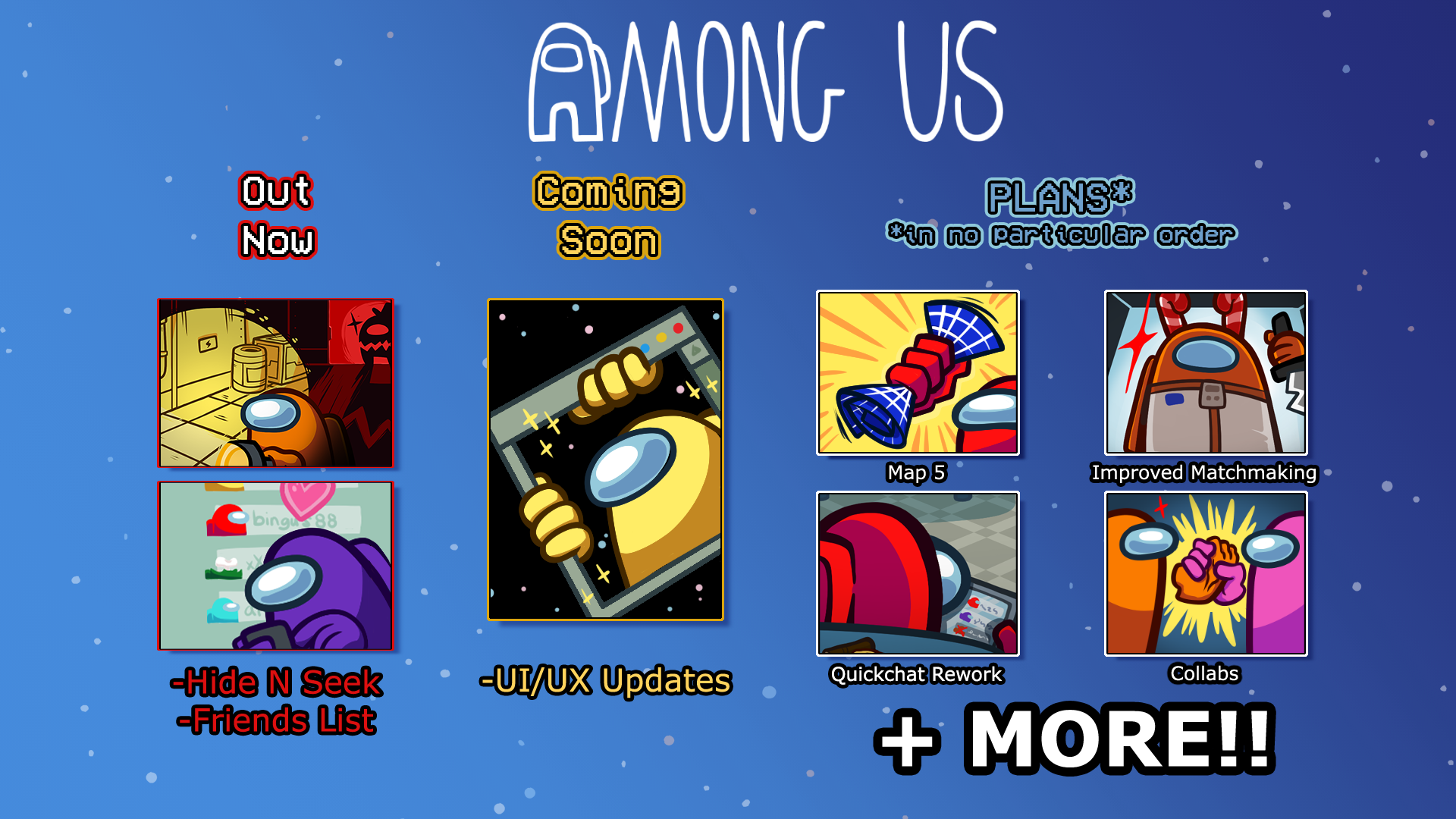
InnerSloth has already announced plans for several future updates and features. Here are some highlights from their roadmap:
- New Locations and Environments: Future updates will introduce new locations and environments, each with its unique set of challenges and gameplay mechanics. For example, an Arctic or a jungle setting could offer new opportunities for both cooperative and competitive play.
- Multilingual Support: InnerSloth is committed to expanding multilingual support, providing more players with the ability to enjoy the game in their native language. This expansion will help make Among Us more accessible to a global audience.
- Improved Voice Chat: The team is working on enhancing the voice chat system to ensure better clarity and performance, especially in high-lag scenarios. This will improve communication and coordination among players.
- Enhanced Social Features: New social features are being developed to allow for more interactive and engaging multiplayer experiences. These features could include mini-games, in-game events, and more ways to interact with other players.
Conclusion
The journey of Among Us has been one of constant evolution and growth. From its initial release to its current status as a cultural phenomenon, the game has continually adapted to meet the changing preferences and demands of its player base. With new roles, features, and improvements on the horizon, the future looks promising for Among Us.
Whether you are a casual player or a competitive enthusiast, There is always something new to explore and discover in this ever-evolving digital realm. Stay tuned for future updates and join the community to experience the magic of Among Us firsthand.


The Evolution of Queer Cinema: A Journey Through Time
In recent decades, the world of cinema has witnessed a significant shift, particularly in how LGBTQ+ stories and characters are portrayed on screen. This evolution can be seen as a fundamental part of the broader social movement advocating for LGBTQ+ rights. One of the most notable aspects of this shift is the rise of queer cinema movements that have brought greater visibility and authenticity to LGBTQ+ experiences.
A Historical Overview
The roots of queer cinema can be traced back to the early days of filmmaking. As early as the 1920s, avant-garde film directors like Oscar Wilde’s protege, Frank Wedekind, began exploring themes of sexuality and gender fluidity in their work. However, these films were often met with censorship and condemnation, reflecting the societal attitudes and legal restrictions of the time.
The 1950s and '60s saw the emergence of more experimental and underground films that dared to explore themes of same-sex desire and gender identity. Films like "The Children's Hour" (1961) and "Victim" (1961) tackled homophobia and discrimination in society but were still constrained by the conservative norms of the period.
The Stonewall Uprising and Its Impact
The Stonewall riots in New York City in 1969 marked a turning point for the LGBTQ+ community, inspiring a new era of activism and visibility. As the Gay Liberation Movement picked up steam in the following years, filmmakers began to take inspiration from this new wave of social and political activism. This era saw the emergence of pioneering filmmakers like Marsha P. Johnson and Sylvia Rivera, known for their advocacy and performance art, which also influenced the aesthetics and themes in queer cinema.
By the late 1970s and early 1980s, independent filmmakers began to create works that were more explicitly queer and gay, such as "Poet's Daughter," "Fireworks," and "Boys on the Side." These films not only provided representation but also challenged mainstream narratives and broke down barriers within the industry.
The AIDS Crisis and Its Aftermath
The onset of the AIDS crisis in the 1980s had a profound impact on both the LGBTQ+ community and its cultural expression through cinema. Filmmakers responded to this tragedy with works that explored themes of resilience, loss, and resistance. Notable films include "Philadelphia" (1993) and "Trembling Before G-d" (1994), which addressed the realities faced by people living with AIDS and the stigma associated with it.
These films helped to raise awareness and foster empathy among audiences, contributing to a more inclusive and sensitive portrayal of LGBTQ+ characters. However, the representation of LGBTQ+ individuals during this period was often limited to the contexts of illness or struggle, which sometimes reflected a lack of diversity and depth in storytelling.
The Rise of Queer Cinema Festivals
As queer films gained momentum, so did the proliferation of LGBTQ+-focused film festivals. The first official gay and lesbian film festival, the New York Film Festival, was launched in 1978, followed by others such as the Chicago Gay Film Festival (established in 1988) and Outfest (launched in 1986). These events not only showcased films but also provided platforms for filmmakers and audiences to discuss and celebrate LGBTQ+ cinema.
The establishment of these festivals contributed significantly to the growth and development of queer cinema. They offered support networks, mentorship programs, and opportunities for emerging filmmakers to gain exposure and recognition. Moreover, these gatherings fostered a sense of community and solidarity among filmmakers and fans, creating a vibrant and interconnected network within the LGBTQ+ community.
Challenging Representations and Pushing Boundaries
From the 1990s onwards, queer cinema continued to challenge traditional representations and push the boundaries of storytelling. With the advent of more liberal cultural and political climates, filmmakers had the freedom to explore more complex and nuanced portrayals of LGBTQ+ identities. Works such as "But I’m a Cheerleader" (1999), "The Celluloid Closet" (1995), and "Temptation" (1998) delved into topics like transgender experiences, bisexuality, and non-binary identities.
The success of these films not only broadened the scope of LGBTQ+ representation but also paved the way for future generations of filmmakers to explore even more intricate and diverse themes. The late 1990s and early 2000s also saw a rise in critically acclaimed queer films, such as "Brokeback Mountain" (2005), which won multiple Academy Awards and sparked important discussions about LGBTQ+ relationships and societal acceptance.
Furthermore, the increasing representation of queer characters in mainstream Hollywood films began to challenge the long-standing stereotype of homosexual characters as mere tokens or sidekick roles. Films like "Kinsey" (2004), based on the life of sexologist Alfred Kinsey, and "Milk" (2008), starring Sean Penn as California's first elected openly gay politician Harvey Milk, brought complex and historically significant figures to the forefront of cinematic narrative, further solidifying the importance of authentic representation.
Modern Queer Cinema Movements
The early 2000s also saw the emergence of a generation of filmmakers who were explicitly queer and sought to create their own narratives and artistic expressions. Directors like Todd Haynes, who directed groundbreaking films such as "Far from Heaven" (2002) and "Carol" (2015), and Gus Van Sant with “Milk” and “Elephant” (2003), brought fresh perspectives to queer cinema, blending personal stories with broader social commentary.
Another landmark period came with the advent of digital tools and online platforms. This era enabled independent filmmakers to create and distribute their work more easily, fostering a new wave of LGBTQ+ voices that previously might have struggled to find outlets for their creations. Filmmakers like John Akomfrah, whose work often explores themes of identity and diaspora, gained international recognition through these mediums.
Additionally, streaming services and social media have played pivotal roles in democratizing the process of film distribution and consumption. Platforms like Netflix, Amazon Prime, and YouTube have hosted numerous queer films and series that would otherwise have been overlooked by traditional distributors. Shows like "Sense8," "Transparent," and "Pose" have garnered significant critical acclaim and popular attention, helping to establish a new norm in contemporary television and challenging stereotypes.
This period has seen a diversification of stories and genres within queer cinema, with the representation of trans and non-binary individuals, people of color, and other underrepresented groups gaining prominence. Films like "Moonlight" (2016), "Juno" (2007), and "Get Out" (2017) have not only garnered critical praise and commercial success but have also sparked broader conversations around identity, race, and representation in the context of LGBTQ+ issues.
Moreover, the visibility of LGBTQ+ characters and stories on screens has contributed to a more inclusive and representative media landscape. However, the journey towards full equality and accurate representation is far from over. Ongoing challenges, including the persistence of anti-LGBTQ+ legislation, discrimination, and limited funding for independent filmmakers, continue to impact the industry.
To truly capture the essence of modern queer cinema movements, it is essential to recognize the intersectionality of identities and the myriad ways in which queer stories can be told. This multifaceted approach ensures that the narratives reflect the rich tapestry of human experience while striving towards a more equitable and accepting society.
Representation and Authenticity in Modern Queer Cinema
The emphasis on authenticity has become a hallmark of contemporary queer cinema. Directors and writers are increasingly drawing on their own experiences and backgrounds to craft narratives that resonate deeply with their audiences. This authenticity is not just limited to the experiences of LGBTQ+ individuals; it extends to the broader social, cultural, and political contexts that shape these identities. Films like "The Miseducation of Cameron Post" (2018), directed by Spencer Susser, and "The Half of It" (2020), directed by Alice Wu, exemplify this trend by portraying young queer characters navigating complex relationships and coming-of-age challenges with depth and nuance.
One of the key aspects driving the authenticity movement in queer cinema is the involvement of LGBTQ+ filmmakers themselves. Directors like Ryan Murphy ("American Horror Story," " Pose"), Yance Lee ("Heaven is forReal" and "The Black Cake"), and Jordan Vogt-Roberts ("Kumiko, the Treasure Hunter") bring firsthand knowledge and lived experiences to their work, lending their productions a unique authenticity. This approach has resulted in films that feel more real and relatable, resonating with a diverse audience of LGBTQ+ viewers and allies alike.
The growing acceptance of queer content in mainstream media has also contributed to the expansion of queer voices. Studio films starring well-known actors addressing LGBTQ+ themes have gained traction, such as "Call Me By Your Name" (2017), directed by Luca Guadagnino, and "Love, Simon" (2018), directed by Greg Berlanti. These high-profile releases have not only increased visibility but also provided financial support and creative freedom for both filmmakers and LGBTQ+ actors. This increased investment in queer content has led to more resources being allocated towards telling more diverse and compelling stories, thereby enriching the genre as a whole.
Challenges and Controversies
Despite the progress made, the path forward for queer cinema is not without challenges. One ongoing issue is the need for more consistent and accurate representation across all facets of the industry. While there has been significant improvement in the past few decades, films and TV shows often fall short in terms of fully capturing the complexity of LGBTQ+ identities. Common tropes and stereotypes still persist, leading to superficial portrayals that fail to do justice to the richness of real-life experiences.
Controversies within the industry have also emerged, particularly around instances of tokenism and exploitation. For example, films and shows that include queer characters solely to appeal to a specific audience segment rather than because those characters are integral to the story can be divisive. When done poorly, they can reinforce stereotypes and perpetuate harmful narratives. This has prompted a call for more thoughtful and intentional representation, where queer characters serve a purpose beyond mere inclusion or marketability.
Funding is another significant hurdle. Independent filmmakers, who are often at the forefront of innovative and boundary-pushing work, frequently struggle to secure adequate financing for their projects. Limited budgets can lead to subpar production values and hinder the ability to tell comprehensive and engaging stories. Despite efforts from foundations, grants, and crowdfunding platforms, finding reliable financing remains a challenge, often restricting the reach and impact of independent queer films.
The Future of Queer Cinema
While challenges remain, the future of queer cinema holds promise. Advances in technology and the evolving global landscape of media consumption present new possibilities for diverse storytelling. Virtual reality, augmented reality, and interactive storytelling formats offer avenues for immersive and dynamic narratives that can transcend traditional film and television boundaries.
The global nature of the internet and streaming platforms has democratized access to queer films, making them available to a wider audience. As these platforms continue to innovate, there is potential for even greater visibility and engagement with queer stories. This global reach also fosters cross-cultural collaborations, allowing filmmakers from different parts of the world to share their unique perspectives and experiences.
Ultimately, the continued evolution of queer cinema is tied to ongoing efforts in education, advocacy, and community building. Workshops, conferences, and educational initiatives aimed at promoting diversity and inclusion in the film industry can play a crucial role. These efforts help ensure that filmmakers and producers are equipped with the tools and knowledge needed to create authentic, meaningful, and impactful stories.
Moreover, the support of LGBTQ+ communities themselves remains vital. By supporting queer filmmakers financially and critically, these communities help to sustain and expand the genre. As the industry continues to evolve, the goal must be to create a space where all voices are heard and valued, ensuring that queer cinema remains a powerful tool for social change and cultural understanding.
Conclusion
The journey of queer cinema is one of resilience, growth, and transformation. From its early experimental phases to today’s vibrant landscape, this movement has witnessed remarkable progress. As we look to the future, the challenges and opportunities that lie ahead provide a roadmap for continued evolution and expansion. By embracing the complexity and diversity of queer experiences and stories, we can forge a new era in cinema where representation and authenticity reign supreme.
Future Prospects and Emerging Trends
The landscape of queer cinema continues to evolve, driven by technological advancements and shifting societal norms. Streaming platforms and social media have become indispensable tools for filmmakers, providing them with platforms to reach broader and more diverse audiences. These technologies have democratized access to storytelling, allowing independent creators to produce and distribute their works without the constraints of traditional funding and distribution channels.
Moreover, the global reach of streaming services has facilitated the sharing of queer perspectives from around the world. Films and series produced in countries with more progressive attitudes towards LGBTQ+ rights have reached audiences beyond their borders, sparking conversations and fostering understanding. For instance, South Korean films like "Love, Hate & Other Filters" and "Crash Landing on You" have included queer subplots, albeit in more subtle ways. Such international collaborations and cross-cultural exchanges are enriching the global queer cinematic landscape.
Technological innovations, such as virtual reality (VR) and augmented reality (AR), are beginning to transform how queer stories are told. VR films and interactive experiences can create deeply immersive environments that allow viewers to engage more fully with the narrative. AR technologies can overlay digital elements onto physical spaces, providing novel and engaging ways to tell stories. These technologies open up new possibilities for storytelling and audience interaction, enhancing the emotional connection between the viewer and the content.
Social Media and Audience Engagement
Social media platforms play a critical role in promoting and amplifying queer content. These platforms enable filmmakers to build communities and engage with audiences in real-time. Instagram, TikTok, and Twitter are particularly influential, offering spaces for creators to share previews, behind-the-scenes content, and audience reactions. This direct engagement helps to galvanize support and builds a loyal fanbase. Platforms like Patreon and Kickstarter also provide alternative funding mechanisms, empowering filmmakers to create independent and authentic works without relying on traditional studios.
Beyond promotion, social media serves as a platform for discussion and debate. Online forums, hashtags, and community groups allow viewers to share their thoughts and experiences, fostering a sense of solidarity and inclusivity. This collaborative spirit is vital for sustaining queer cinema, as it encourages a dialogue that goes beyond mere entertainment. Social media also amplifies marginalized voices, bringing attention to smaller films and filmmakers who might otherwise go unnoticed in more traditional settings.
Queer Cinema in the Context of Intersectionality
The future of queer cinema cannot be fully understood without considering the principle of intersectionality. Queer individuals often overlap with other marginalized identities, such as race, ethnicity, socioeconomic status, and religion. This intersectionality enriches the narratives and experiences being portrayed, creating a more holistic portrayal of LGBTQ+ lives. Films that address these intersections—such as "The Death of Richard III" (2016), which explores the complexities of a non-binary identity in a predominantly straight community, or "The Farewell" (2019), which highlights the struggles of Chinese-American families—are crucial in depicting the multifaceted nature of queer existence.
Intersectional storytelling brings a new dimension to queer cinema, challenging homogenized representations and promoting a more diverse range of perspectives. It ensures that LGBTQ+ stories are not isolated but are embedded within a broader context, reflecting the lived realities of a more inclusive spectrum of individuals. By weaving together these various threads, filmmakers can create richer, more nuanced narratives that resonate with a wider audience.
Criticisms and Controversies
While the evolution of queer cinema has been remarkable, it has not been without criticism and controversy. Some have argued that certain films and characters remain too reliant on tropes or fall into shallow caricatures. Critics point out that true representation requires more than surface-level diversity; it necessitates substantive storytelling and genuine authenticity. This ongoing critique underscores the need for continuous self-reflection and improvement within the industry.
Another area of concern is the commodification of queer narratives. Commercial interests sometimes drive the production and marketing of certain films, potentially at the expense of deeper storytelling. This can result in tokenistic efforts that prioritize marketability over substance. To address this, there is a growing call for more inclusive production processes and a commitment to authentic storytelling regardless of box office potential.
Additionally, debates around the appropriate representation of marginalized and vulnerable groups in film continue. Issues such as misrepresentation and stereotyping remain contentious, highlighting the need for ongoing dialogue and collaboration with the queer community. Ensuring that these stories are handled with care and respect is paramount to maintaining the integrity and impact of queer cinema.
Community Support and Advocacy
The support and advocacy of queer communities are foundational to the continued growth and success of queer cinema. Community organizations, festivals, and grassroots movements remain crucial in providing a supportive infrastructure that nurtures new talent and supports established filmmakers. These groups offer resources, networking opportunities, and platforms for showcasing their work, helping to bridge the gap between aspiring creators and broader audiences.
Moreover, these communities serve as a safety net, offering guidance and encouragement during challenging times. They also engage in advocacy efforts to promote LGBTQ+ rights both within the industry and in society at large. By leveraging these networks, filmmakers can build a foundation of support that sustains their creative endeavors and promotes the broader goals of social and cultural change.
Conclusion
The evolution of queer cinema represents a complex and multifaceted journey of growth, transformation, and expansion. From its early struggles for visibility to its current prominence and influence, queer cinema has played a significant role in shaping public perceptions and advancing social justice. While challenges remain, the future looks promising, driven by technological innovation, global reach, and the unwavering commitment of filmmakers and communities to tell authentic and diverse stories.
As queer cinema continues to evolve, it must remain committed to authenticity, intersectionality, and inclusivity. By embracing these principles, filmmakers can contribute to building a richer, more compassionate, and equitable world. The future of queer cinema is bright, offering endless possibilities for exploration, creativity, and connection.



Spartacus: The Rebel Gladiator Who Defied Rome
Introduction: The Legend of Spartacus
Few figures in ancient history have captured the imagination as powerfully as Spartacus, the Thracian gladiator who led the most famous slave revolt against the Roman Republic. His story is one of defiance, resilience, and the unyielding quest for freedom. While much about his early life remains shrouded in mystery, Spartacus's rebellion between 73 and 71 BCE shook the foundations of Rome, challenging the might of an empire built on the backs of enslaved people.
The Early Life of Spartacus
Spartacus was born around 111 BCE in Thrace, a region spanning parts of modern-day Bulgaria, Greece, and Turkey. The details of his early years are scarce, but historians believe he may have been a member of the Maedi tribe, a Thracian people known for their warrior culture. Some sources suggest he served as an auxiliary soldier in the Roman army before being enslaved. His military training would later prove invaluable during the rebellion.
Captured and sold into slavery, Spartacus was brought to the Italian peninsula, where he was forced to train as a gladiator at the ludus (gladiator school) of Gnaeus Lentulus Batiatus in Capua. Capua was renowned for its gladiatorial training facilities, where enslaved men were brutally conditioned to fight for public entertainment. It was here that Spartacus would meet the men who would become his closest allies in the uprising.
The Spark of Rebellion
In 73 BCE, Spartacus and about 70 fellow gladiators orchestrated a daring escape from the ludus. Using kitchen implements as makeshift weapons, they overwhelmed their guards and fled to the slopes of Mount Vesuvius. As word of their escape spread, hundreds of enslaved people from the surrounding countryside flocked to join them. What began as a small-scale breakout soon escalated into a full-fledged rebellion that would challenge Rome's dominance.
The rebels initially relied on hit-and-run tactics, taking advantage of the rough terrain to ambush Roman forces sent to quell the uprising. Their early victories against local militias and even trained Roman soldiers shocked the Republic and boosted the morale of the rebel army, which grew to include thousands of escaped slaves, including many women and children.
The Growth of the Slave Army
As Spartacus's forces swelled in numbers, they demonstrated surprising military discipline and strategy. The former gladiator proved to be a natural leader, organizing his diverse followers into an effective fighting force. While the Roman Senate initially viewed the rebellion as mere banditry requiring police action, the insurgents' continued success forced them to take the threat more seriously.
The rebel army established a semi-permanent camp in southern Italy, launching raids on Roman settlements for supplies. Spartacus implemented a policy of sharing plunder equally among his followers and treating captured Roman citizens with relative mercy, which helped sustain and grow his movement. His forces grew to an estimated 70,000 people at their peak, including not just slaves but also impoverished free citizens disillusioned with Roman rule.
Roman Reactions and Early Battles
Rome first dispatched praetor Gaius Claudius Glaber with about 3,000 poorly trained militia to eliminate the rebellion. Glaber attempted to besiege the rebels on Mount Vesuvius by blocking the only known path down the mountain. However, Spartacus ordered his men to weave ropes from vines and scale down steep cliffs to attack the Romans from behind, achieving complete surprise and routing Glaber's forces.
This stunning victory brought more recruits to the rebel cause and demonstrated Spartacus's tactical genius. The Senate then sent praetor Publius Varinius with two legions, but Spartacus outmaneuvered them as well, capturing Varinius's lictors (an honor guard) and even the praetor's horse—a humiliating blow to Roman prestige.
The Crisis Deepens for Rome
By 72 BCE, the slave rebellion had grown too large to ignore. The Senate, now seriously alarmed, dispatched two consular armies under Lucius Gellius Publicola and Gnaeus Cornelius Lentulus Clodianus. Around this time, internal divisions emerged within the rebel ranks. Spartacus's second-in-command, Crixus, a Gaul, broke away with a portion of the army but was defeated by Publicola at Mount Garganus in Apulia.
Despite this setback, Spartacus continued to win battles against the Romans, defeating both consular armies in turn. His forces moved north toward the Alps, possibly intending to disperse to their homelands. However, for reasons lost to history, they turned back south, a decision that would ultimately prove fatal to the rebellion.
This first part of Spartacus's story captures the dramatic rise of an enslaved gladiator to the leader of a massive rebellion that threatened the very heart of Rome. From his mysterious origins to his early victories against Roman forces, Spartacus demonstrated leadership and tactical skill that kept his movement alive much longer than anyone expected.
The Height of Spartacus's Rebellion
By the winter of 72 BCE, Spartacus and his rebel army had become a serious threat to Rome’s stability. Having defeated multiple Roman forces, their ranks had swelled to include runaway slaves, deserters, and even some impoverished freemen disillusioned with the Republic. Estimates suggest their numbers ranged from 70,000 to 120,000 at their peak, though exact figures remain debated among historians.
The March North and the Decision to Turn Back
After his victories over the consular armies, Spartacus led his forces north toward the Alps, suggesting he may have intended for his followers to cross into Gaul and Thrace, dispersing to freedom. Some historians argue that his goal was not to overthrow Rome but to allow his people to escape Roman control. However, for reasons still unclear, the rebels abruptly turned back south toward Italy. Several theories attempt to explain this fateful decision:
- Lack of supplies: Moving such a massive group across the Alps would have been logistically challenging.
- New recruits unwilling to leave Italy: Many among the rebels were Italian-born slaves who may not have wanted to abandon their homeland.
- A change in strategy: Spartacus may have considered an assault on Rome itself, emboldened by his recent victories.
Whatever the reason, this decision marked a critical turning point in the rebellion. Rome, now recognizing the severity of the threat, would no longer underestimate Spartacus.
The Senate Calls Upon Crassus
In response to the rebels' resurgence, the Roman Senate took drastic action. The failed campaigns of previous generals had embarrassed Rome, and public unrest grew as Spartacus’s forces pillaged the countryside. The Senate appointed Marcus Licinius Crassus, one of Rome’s wealthiest and most politically ambitious men, to lead the war effort. Crassus, eager to prove himself as a military leader, took command of eight legions—roughly 40,000 trained soldiers—and pursued Spartacus with brutal efficiency.
Crassus instituted harsh discipline among his troops, reviving the ancient punishment of decimation—executing every tenth man in units that fled from battle—to restore order and morale. His legions engaged the rebels in several skirmishes, gradually pushing them toward the southern tip of Italy. By late 72 BCE, Spartacus had retreated to the region of Bruttium (modern Calabria), where he attempted to negotiate with Cilician pirates for passage to Sicily. According to some accounts, the pirates took payment from the rebels but abandoned them, leaving Spartacus trapped.
The Final Campaign and Betrayal
With Crassus’s forces closing in from the north and the sea offering no escape, Spartacus prepared for a final stand. In a desperate move, he led his army back north, hoping to break through Crassus’s defenses. However, another Roman force—returning from Spain under the command of Pompey the Great—began moving toward the conflict, threatening to encircle the rebels.
The Senate, eager to avoid further embarrassment, had also recalled general Lucius Licinius Lucullus from Macedon, though he would arrive too late to affect the outcome. Sensing the inevitable, some of Spartacus’s followers split from the main force, attempting independent escapes. These smaller groups were swiftly crushed by Crassus’s legions.
By early 71 BCE, the remaining rebels were cornered near the Silarus River (modern Sele River). Spartacus, realizing the hopelessness of the situation, reportedly killed his own horse to show his men that he would stand and fight alongside them, rather than attempt to flee. The final battle was a brutal massacre. Despite fierce resistance, the outnumbered and outmatched rebels were slaughtered. Spartacus himself died in battle, though his body was never found—leading to later legends that he escaped.
The Aftermath and Brutal Reprisals
Crassus’s vengeance was swift and merciless. Thousands of captured rebels were crucified along the Appian Way, the major road leading from Capua to Rome, as a grisly warning to other would-be insurgents. Their bodies were left to rot for miles—a terrifying display of Rome’s power.
Pompey and Crassus both claimed credit for ending the rebellion. Pompey, who intercepted fleeing rebels, declared in letters to the Senate that he had "completed the war" despite Crassus having fought the decisive battle. This rivalry between the two generals would later fuel their political ambitions, shaping Rome’s future.
The Legacy of the Rebellion
Though the revolt was ultimately crushed, Spartacus’s rebellion had far-reaching consequences:
- Military reforms: Rome realized the vulnerabilities of its militia-based system and shifted toward professional armies.
- Slave policies: While slavery remained central to the Roman economy, some slaveholders adopted less brutal treatment to avoid further uprisings.
- Gladiatorial regulations: Fearing another revolt, Rome imposed stricter controls on gladiator schools.
- Political careers of Crassus and Pompey: Both leveraged their success to dominate Roman politics, eventually joining Julius Caesar in the First Triumvirate.
The rebellion also left a lasting cultural impact—not just in Rome but throughout history. Spartacus became a symbol of resistance, inspiring future revolts and artistic depictions. His name would echo in later slave uprisings and revolutionary movements from Haiti to modern revolutions.
The Mystery of Spartacus’s Fate
Roman historians like Plutarch and Appian record that Spartacus fell in battle, but the lack of a recovered body allowed myths to flourish. Some legends claimed he survived, escaping into obscurity. Others suggested his loyal followers secretly buried him to deny Rome the satisfaction of displaying his corpse. This uncertainty only deepened his mythic status, transforming him from a historical figure into a timeless emblem of defiance.
This second part of Spartacus’s story traces the rebellion’s climax and tragic end. From his strategic retreats to the brutal final battle, Spartacus fought against overwhelming odds, securing his place in history not just as a gladiator, but as a leader who challenged an empire.
The Myth and Legacy of Spartacus
Spartacus in Ancient Sources
The historical record of Spartacus comes primarily from Roman historians who wrote decades or even centuries after the revolt. The most detailed accounts appear in the works of Plutarch (in his Life of Crassus) and Appian, with additional references in Florus, Sallust, and Cicero. These accounts present conflicting details about key events and motivations, forcing modern historians to carefully evaluate these sources through archaeological and contextual evidence.
Tacitus notably omitted Spartacus from his major works, possibly considering the revolt unworthy of inclusion alongside more "dignified" Roman defeats. This selective memory reflects how Roman elites struggled to reconcile their embarrassment at being defeated by slaves with their need to document military history faithfully.
The Changing Perception Through History
Medieval and Renaissance Views
During the Middle Ages, Spartacus largely faded from Western historical consciousness as classical texts remained preserved mainly in monastic libraries. When Renaissance humanists rediscovered ancient sources, they tended to view Spartacus through Roman perspectives—as a dangerous rebel whose example should be avoided.
18th and 19th Century Romanticism
The Enlightenment and Romantic periods dramatically rehabilitated Spartacus's image. Enlightenment thinkers like Voltaire praised him as a freedom fighter against tyranny. The French Revolution (1789-1799) adopted Spartacus as a revolutionary symbol—Georges-Jacques Danton reportedly called him "the first revolutionary leader."
Karl Marx listed Spartacus as one of his heroes, and the early Communist movement embraced him as a proletarian rebel. The short-lived Spartacist League (1916-1919) in Germany took his name directly, seeking to overthrow the Weimar Republic through workers' revolution.
Spartacus in Modern Culture
Literature and Theater
Spartacus became a popular subject for 19th century novels and plays. Raffaello Giovagnoli's 1874 historical novel "Spartaco" helped shape modern perceptions. Howard Fast's 1951 novel (written while the author was imprisoned for Communist sympathies) portrayed Spartacus as a proto-socialist revolutionary and became the basis for the famous 1960 film.
Film and Television Representations
The 1960 Stanley Kubrick film "Spartacus," starring Kirk Douglas, cemented the gladiator's place in popular culture. Though historically inaccurate (including the famous "I'm Spartacus!" scene never recorded in ancient sources), it powerfully conveyed themes of freedom and resistance. The 2004 TV miniseries and Starz's 2010-2013 series introduced new generations to Spartacus while taking greater liberties with historical facts.
Sports and Symbols
Several modern sports teams bear Spartacus's name, particularly in Eastern Europe. The most famous is FC Spartak Moscow, founded originally by Soviet trade unions in 1922. The Spartakiad was a Soviet alternative to the "bourgeois" Olympic Games from 1928-1937.
Archaeological Evidence and Historical Research
Few archaeological traces directly document the rebellion, partly because Roman authorities deliberately erased evidence of their embarrassing defeats. However:
- Excavations at Pompeii (frozen in time by Vesuvius just 12 years after the revolt) reveal graffiti possibly referencing the rebellion
- Recent surveys in southern Italy have identified potential battle sites through lead sling bullets and weapon fragments
- Capuan gladiator barracks excavations provide context for Spartacus's early life
Modern historians continue debating key questions:
- The rebels' organizational structure and decision-making processes
- Actual numbers involved at various rebellion stages
- Whether Spartacus truly sought to abolish Roman slavery or just escape it
- Possible connections to contemporaneous Roman political factions
Comparative Historical Perspectives
Spartacus's revolt was neither the first nor last major slave uprising in antiquity. Notable comparisons include:
| Revolt | Period | Location | Outcome |
|---|---|---|---|
| First Sicilian Slave War | 135-132 BCE | Sicily | Crushed by Rome |
| Second Sicilian Slave War | 104-100 BCE | Sicily | Crushed by Rome |
| Spartacus's Revolt | 73-71 BCE | Italy | Crushed by Rome |
| Zanj Rebellion | 869-883 CE | Mesopotamia | Temporary success |
What made Spartacus unique was the rebellion's duration (nearly 3 years), proximity to Rome, and demonstrated military skill against professional legions.
Lessons and Controversies
Freedom vs. Revolution
Modern scholars debate whether Spartacus aimed to overthrow Roman society or simply win freedom for his followers. The lack of evidence about his ultimate goals allows for multiple interpretations across the political spectrum.
Violence and Justice
The rebellion's brutal suppression—with 6,000 crucifixions—raises ethical questions about Rome's use of terror tactics against slave populations. Some historians argue this deterrence strategy actually prolonged slavery by making resistance seem hopeless.
Leadership and Mythmaking
How much of Spartacus's legend reflects historical reality versus later romanticization remains contested. The real man disappears behind layers of cultural reinterpretation serving contemporary agendas.
Conclusion: Why Spartacus Endures
Two thousand years after his death, Spartacus remains one of history's most resonant symbols because his story encapsulates universal human struggles:
- The individual versus oppressive systems
- The power of collective action against injustice
- The tension between hope and despair
- The transformative potential of courageous leadership
From ancient chronicles to Hollywood films, communist manifestos to video games (including the popular "Spartacus Legends" fighting game), each generation has reinterpreted Spartacus to reflect its own values and battles. This very malleability ensures his legend will continue evolving while maintaining its core appeal—the slave who defied an empire and, in losing, won immortality.
The historical Spartacus may have died on the battlefield at Silarus River, but the idea of Spartacus—the archetypal rebel fighting for human dignity—survives all attempts to crucify his memory. That is perhaps the greatest irony of all: Rome sought to erase his legacy through terror, yet made him immortal through defeat.