Cassiodorus: Preservation of Ancient Knowledge
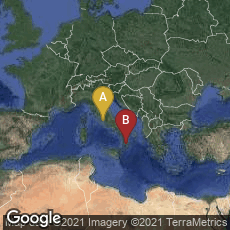
Cassiodorus, born Magnus Aurelius Cassiodorus Senator around 485 CE, stands as a pivotal figure bridging the Roman Empire and early medieval Christianity. As a statesman, scholar, and monk, he preserved classical texts and shaped Christian education. His legacy remains vital in understanding the transition from antiquity to the Middle Ages.
Early Life and Political Career
Cassiodorus was born in Scyllacium, modern-day Squillace in Calabria, to a prominent senatorial family. His ancestors defended Rome against Vandal invasions, setting the stage for his influential career.
Key Political Roles
- Quaestor (c. 507): Served as Theodoric the Great's legal secretary.
- Consul (514): Held high office in Rome during Ostrogothic rule.
- Praetorian Prefect (533–538): Functioned as prime minister, overseeing taxes and justice.
His career spanned three Ostrogothic rulers, navigating tensions between Catholic Romans and Arian Goths. His writings promoted Gothic rule as a continuation of Roman traditions.
Literary and Scholarly Contributions
Cassiodorus authored several influential works, including the Variae, a collection of official letters. These texts justified Ostrogothic governance while maintaining Roman administrative practices.
Major Works
- Variae: 12 books containing approximately 468 letters guiding policy.
- Institutiones: Divided liberal arts into trivium and quadrivium, endorsing Dionysius Exiguus' calendar reforms.
- Historia Gothorum: Now lost, known through later summaries.
"Cassiodorus sought to harmonize Greek-Latin learning with Christian doctrine, creating a framework for medieval education."
Foundation of Vivarium Monastery
After retiring around 540 CE, Cassiodorus established the Vivarium monastery near Calabria. This center became a hub for copying classical and Christian texts, ensuring their survival.
Vivarium's Impact
- Housed approximately 40 monks dedicated to scholarly work.
- Produced estimates of 500+ manuscripts, preserving works by Aristotle and Plato.
- Influenced later Benedictine monasticism, despite no direct link to St. Benedict.
The scriptorium at Vivarium became a model for knowledge preservation during the so-called Dark Ages.
Cassiodorus as a Transmitter of Antiquity
Cassiodorus earned the title “transmitter of antiquity” by ensuring classical knowledge survived the upheavals of the early medieval period. His Vivarium monastery became a beacon of learning, preserving texts that might otherwise have been lost.
Preservation Through Manuscript Copying
- The scriptorium at Vivarium produced an estimated 500+ manuscripts, including works by Aristotle and Plato.
- Monks copied both Christian scriptures and pagan classics, creating a bridge between eras.
- These efforts influenced later Benedictine monasticism, despite no direct connection to St. Benedict.
His Institutiones guided medieval education by organizing learning into the trivium and quadrivium, a framework still echoed in classical Christian schools today.
Enduring Influence on Liberal Arts
Cassiodorus’s educational model shaped the seven liberal arts schema that dominated medieval universities. His emphasis on structured learning resonated during the Carolingian Renaissance in the 12th century.
“Cassiodorus’s Institutiones provided a roadmap for integrating classical learning with Christian theology, influencing scholars for centuries.”
Cultural Diplomacy and Religious Conversion
Between the fall of the Western Roman Empire in 476 CE and the rise of Byzantine power, Cassiodorus balanced complex political and religious tensions. His career spanned three Ostrogothic rulers, each with differing agendas.
Navigating Roman-Gothic Tensions
- He promoted Gothic rule as a continuation of Roman governance through the Variae.
- His policies sought harmony between Catholic Romans and Arian Goths, mitigating conflict.
- Cassiodorus converted to Christianity at the peak of his career, aligning his scholarly work with faith.
This delicate diplomacy helped stabilize Italy during a period of frequent warfare and cultural transition.
Bridging Greek and Latin Traditions
Cassiodorus’s writings referenced broader historical contexts, including Sasanian Persia and its kings. His Chronica demonstrated a keen interest in connecting diverse cultures and eras.
- He facilitated the transfer of Greek philosophical texts into Latin-speaking circles.
- His works served as a vital link between classical antiquity and early medieval scholarship.
Modern Scholarship and Digital Preservation
Contemporary interest in Cassiodorus focuses on his role in preserving knowledge and his relevance to modern education. Digital initiatives have revitalized studies of his texts and legacy.
Digital Editions and Classical Education
- Projects now offer digital editions of the Variae and Institutiones for use in classical Christian schools.
- These resources revive the liberal arts curriculum he championed, emphasizing grammar, rhetoric, and logic.
Scholars analyze how Cassiodorus’s administrative practices influenced tax systems and cultural diplomacy, linking history with economics.
Vivarium’s Legacy in the “Dark Ages” Narrative
Modern analyses challenge the notion of a knowledge vacuum during the so-called Dark Ages. The Vivarium model demonstrates sustained intellectual activity.
- Researchers examine the scriptorium’s methods for medieval knowledge preservation.
- Interdisciplinary studies connect Cassiodorus’s work to fields like economic history and manuscript studies.
“The Vivarium stands as a testament to Cassiodorus’s vision: a monastery where faith and learning coexisted, safeguarding antiquity for future generations.”
Ongoing Exhibitions and Curatorial Work
Institutions like the University of Missouri highlight Cassiodorus through manuscript fragments, showcasing his enduring impact. These exhibitions underline ongoing efforts to curate and interpret his legacy.
- Permanent collections feature manuscript fragments from his era, offering tangible links to the past.
- Academic conferences increasingly address Cassiodorus’s role in early medieval education.
Enduring Legacy in Medieval and Modern Thought
Cassiodorus’s influence extended far beyond his lifetime, shaping medieval education and inspiring scholars across centuries. His vision for preserving knowledge remains a cornerstone of intellectual history.
Medieval Educational Frameworks
- His liberal arts schema became the foundation of medieval university curricula.
- The Carolingian Renaissance in the 12th century cited Cassiodorus as a key authority.
- Monastic schools adopted his emphasis on integrating classical texts with Christian theology.
By organizing learning into the trivium and quadrivium, Cassiodorus created a structured approach that endured for generations.
Renaissance Revival and Digital Initiatives
During the Renaissance, humanists rediscovered Cassiodorus’s works, recognizing their value in reviving ancient learning. Today, digital projects continue this tradition.
- Digital editions of the Institutiones and Variae are now accessible to scholars worldwide.
- Academic databases analyze his administrative records to explore economic history and governance.
“Cassiodorus’s Vivarium was not just a monastery—it was a think tank for preserving civilization’s most precious texts.”
Conclusion: Cassiodorus’s Legacy as a Bridge Between Eras
Cassiodorus stands as a vital link between the classical Roman world and the emerging medieval Christian era. His statesmanship, scholarship, and monastic vision ensured that antiquity’s wisdom survived.
Key Takeaways
- Lifespan: Active for over a century, from c. 485–585 CE.
- Major Offices: Quaestor, Consul, and Praetorian Prefect under Ostrogothic rule.
- Key Works: Variae (468 letters), Institutiones, and Expositio Psalmorum.
- Vivarium Impact: Housed ~40 monks and preserved an estimated 500+ manuscripts.
Through political acumen and scholarly dedication, Cassiodorus fortified the transmission of knowledge. His legacy endures in modern classrooms, digital archives, and the enduring belief that education bridges past and future.
“Cassiodorus taught us that to save tomorrow, we must first preserve yesterday.”
As we navigate our own era of rapid change, his example reminds us that safeguarding wisdom—whether on parchment or pixel—is a timeless act of courage and hope.
In conclusion, Cassiodorus's life and work exemplify the crucial role of preserving knowledge during times of transition. His efforts as a statesman, scholar, and monk ensured that classical texts and Christian education would endure, shaping the course of history. As we reflect on his legacy, let us consider how we, too, can safeguard and pass on the wisdom of the past to future generations.
Cassiodorus and the Evolution of Monastic Libraries
Cassiodorus’s Vivarium monastery not only preserved texts but also pioneered the concept of the monastic library as an organized, systematic repository of knowledge. Unlike earlier collections, which were often disorganized or focused solely on religious texts, Vivarium’s library was meticulously cataloged and included a wide range of secular and sacred works. This innovation set a precedent for medieval libraries, influencing institutions such as the Library of Monte Cassino and the Scriptorium of Bobbio. By emphasizing the importance of both preservation and accessibility, Cassiod



Theodorus of Cyrene: The Enigmatic Mathematician of Ancient Greece
Introduction to Theodorus of Cyrene
Theodorus of Cyrene was an ancient Greek mathematician who lived during the 5th century BCE. Though much of his life remains shrouded in mystery, his contributions to mathematics, particularly in the field of geometry, have secured his place in history. A teacher of the renowned philosopher Plato, Theodorus played a pivotal role in shaping early Greek mathematical thought. His work on irrational numbers and the spiral that bears his name demonstrates his keen intellect and innovative thinking.
Cyrene, his birthplace, was a prosperous Greek colony in North Africa (modern-day Libya), known for its intellectual vibrancy. Theodorus' legacy, though fragmentary, offers a fascinating glimpse into the early development of mathematical theory and its intersection with philosophy.
Historical Context: The World of Theodorus
To understand Theodorus' significance, one must consider the intellectual milieu of ancient Greece during his time. The 5th century BCE was a period of immense cultural and scientific growth, often referred to as the Golden Age of Greece. Cities like Athens and Cyrene were hubs of learning, where mathematicians, philosophers, and scientists debated and expanded human knowledge.
Theodorus was a contemporary of prominent figures like Socrates and Hippocrates of Chios, working in an era when mathematics was transitioning from practical applications to theoretical exploration. The Pythagorean school, which had a strong influence on Theodorus, had already begun investigating the properties of numbers and geometric shapes, laying the groundwork for further discoveries.
Theodorus and the Spiral
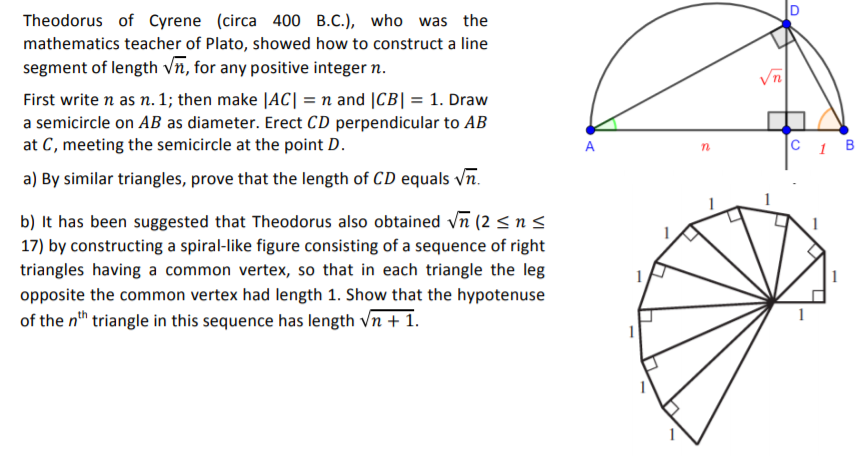
One of Theodorus' most famous contributions is the "Spiral of Theodorus," a geometric construction that demonstrates the sequential creation of right-angled triangles with hypotenuse lengths equal to the square roots of consecutive integers. This spiral, also known as the "Square Root Spiral," visually represents irrational numbers—a concept that was revolutionary at the time.
The spiral begins with an isosceles right triangle with legs of length 1. Subsequent triangles are added, each with one leg along the hypotenuse of the previous triangle and the other leg of length 1. The result is a visually striking figure that grows outward while maintaining a distinct mathematical pattern. This construction not only provided a way to visualize irrational numbers but also showcased Theodorus' ingenuity in geometric reasoning.
Contributions to the Theory of Irrational Numbers
Theodorus is often credited with advancing the understanding of irrational numbers, particularly through his work on square roots. According to Plato's dialogue "Theaetetus," Theodorus demonstrated the irrationality of the square roots of non-square integers from 3 up to 17. This was a significant step forward, as the concept of irrational numbers challenged the Pythagorean belief that all quantities could be expressed as ratios of integers.
His method of proving irrationality, though not fully detailed in historical records, likely involved geometric arguments similar to the classic proof of the irrationality of √2. Theodorus' work paved the way for later mathematicians, such as Eudoxus, to develop more rigorous theories of irrational magnitudes.
Teaching Plato and Philosophical Connections
Theodorus' influence extended beyond mathematics into philosophy, primarily through his relationship with Plato. In "Theaetetus," Plato portrays Theodorus as a respected teacher who engaged in conversations with Socrates and his students. This dialogue suggests that Theodorus was not only a mathematician but also a thinker deeply interested in epistemology and the nature of knowledge.
Plato's portrayal of Theodorus highlights the interdisciplinary nature of ancient Greek scholarship, where mathematics and philosophy were closely intertwined. Theodorus' mathematical insights likely informed Platonic ideas about the abstract nature of reality and the importance of mathematical forms.
Legacy and Later Interpretations
Despite the scarcity of surviving records, Theodorus' work has inspired mathematicians and scholars for centuries. The Spiral of Theodorus, in particular, continues to be a subject of study in both mathematics and art due to its aesthetic appeal and mathematical properties. Modern mathematicians have explored generalizations of the spiral, extending its principles to higher dimensions and more complex constructions.
Theodorus' contributions also underscore the collaborative and cumulative nature of mathematical progress. His investigations into irrational numbers built upon earlier Pythagorean discoveries and, in turn, influenced later developments in Greek mathematics. This interconnectedness reflects the enduring value of theoretical inquiry and the shared pursuit of knowledge across generations.
Theodorus’ Mathematical Methods and Techniques
Theodorus of Cyrene was renowned not only for his discoveries but also for his innovative methods in mathematics. Unlike many of his contemporaries, who relied heavily on verbal explanations and abstract reasoning, Theodorus may have employed visual and geometric demonstrations to illustrate mathematical concepts. His approach to proving the irrationality of square roots, for instance, likely involved constructing geometric figures—a technique that predates modern algebraic proofs.
Historians and mathematicians have attempted to reconstruct his methods based on references in Plato’s *Theaetetus*. One plausible reconstruction suggests that Theodorus used *anthyphairesis* (a Euclidean algorithm for ratios) to demonstrate irrationality. By systematically comparing magnitudes through reciprocal subtraction, he could show that certain lengths—such as √3 or √5—could not be expressed as simple ratios of whole numbers. This method aligns with the geometric tradition of ancient Greek mathematics, where proofs were often grounded in spatial reasoning rather than symbolic manipulation.
Theodorus and Pythagorean Influence
Theodorus’ work was deeply influenced by Pythagorean mathematics, though he also refined and challenged some of their doctrines. The Pythagoreans believed that all numbers could be expressed as ratios of integers, but the discovery of irrational magnitudes (such as the diagonal of a unit square) unsettled this worldview. Theodorus extended these investigations, moving beyond the well-known case of √2 to explore higher roots.
His insistence on demonstrating irrationality up to √17—rather than stopping at an earlier number—suggests a deliberate effort to establish a broader pattern. Some speculate that he may have encountered difficulties beyond √17, either due to increasing complexity or limitations in his methodology. Alternatively, he might have concluded that the pattern held universally, making further demonstrations unnecessary. Regardless, Theodorus’ willingness to push beyond established norms highlights his empirical rigor and intellectual independence.
The Spiral of Theodorus: Geometry and Artistic Legacy
The Spiral of Theodorus is more than just a mathematical curiosity; it represents a harmonious blend of logic and aesthetics. The spiral’s incremental growth, where each new triangle is built upon the hypotenuse of the previous one, creates a visually pleasing logarithmic spiral. This construction bridges arithmetic progression (adding unit legs) with geometric growth (expanding hypotenuse lengths).
In modern times, the spiral has been studied for its fractal-like properties and its connection to the distribution of prime numbers. Mathematicians have also explored variations, such as altering the angle between segments or using different starting dimensions. Artistic reinterpretations of the spiral appear in sculpture, digital art, and even architectural designs, demonstrating its enduring appeal as a symbol of mathematical beauty.
Theodorus’ Role in the Platonic Academy
Though Theodorus predates the formal establishment of Plato’s Academy, his teachings influenced its intellectual environment. Plato’s inclusion of Theodorus in *Theaetetus* underscores the mathematician’s reputation as both a scholar and a mentor. The dialogue portrays Theodorus as a figure who encouraged dialectical inquiry—aligning with Plato’s emphasis on collaborative learning.
Some scholars argue that Theodorus’ geometric methods may have inspired Plato’s concept of the “Divided Line,” where mathematical reasoning serves as a bridge between the physical and abstract realms. Whether directly or indirectly, Theodorus’ emphasis on systematic proof and visual reasoning resonated with Platonic metaphysics, reinforcing the interplay between mathematics and philosophy.
Lost Works and Speculations
No surviving texts authored by Theodorus exist today, leaving historians to piece together his contributions from secondhand accounts. Plato’s dialogues provide the most substantial references, but later commentators, such as Proclus and Iamblichus, also mention Theodorus in passing. These fragments suggest he may have written treatises on arithmetic, geometry, or even astronomy, though their contents remain speculative.
One intriguing possibility is that Theodorus compiled a “manual” of geometric constructions, possibly including compass-and-straightedge techniques for approximating irrational lengths. Such a work would have been invaluable to practitioners of *logistica* (applied calculation) and *theoretic arithmetic* (number theory). The absence of these texts leaves a frustrating gap in our understanding of his full impact.
Theodorus vs. Later Mathematicians
Theodorus’ contributions can be contrasted with those of later mathematicians like Eudoxus and Euclid. While Eudoxus developed a more general theory of proportions to handle irrational magnitudes, and Euclid systematized geometric knowledge in the *Elements*, Theodorus operated in an earlier, more exploratory phase. His work lacked the formal axiomatic structure of Euclid but showcased creative problem-solving that laid the groundwork for future rigor.
For example, Euclid’s proof of the irrationality of √2 (*Elements*, Book X) employs a reductio ad absurdum argument that may have evolved from Theodorus’ geometric demonstrations. Yet unlike Euclid, Theodorus likely relied on specific case-by-case constructions rather than universal proofs—a reflection of the developmental stage of Greek mathematics in the 5th century BCE.
Cultural Depictions and Modern Recognition
Despite his obscurity compared to figures like Euclid or Archimedes, Theodorus has occasionally been celebrated in literature and popular science. His spiral features in modern mathematics education as a tool for teaching irrational numbers, and his legacy is acknowledged in academic circles studying classical Greek mathematical thought.
Fictionalized accounts, such as historical novels set in ancient Greece, sometimes portray Theodorus as a “bridge” between Pythagoras and Plato—a figure embodying the transition from mystical numerology to deductive proof. While these depictions take artistic liberties, they reflect the fascination with his role in shaping early theoretical mathematics.
Unanswered Questions and Ongoing Research
Several mysteries surround Theodorus’ life and work. Why did he stop at √17? Did he travel to Athens, or did his interactions with Socrates occur in Cyrene? How did his North African origins influence his intellectual perspective? These questions remain open, but ongoing research in the history of mathematics continues to reassess his contributions.
Recent scholarship has explored the potential influence of Egyptian or Mesopotamian mathematics on his methods, given Cyrene’s geographic position as a crossroads of cultures. Others analyze the linguistic nuances in Plato’s dialogues to deduce Theodorus’ pedagogical style. Each new interpretation adds depth to our understanding of this enigmatic mathematician.
To be continued...
Theodorus’ Influence on the Development of Mathematics
The lasting impact of Theodorus of Cyrene extends far beyond his immediate contributions. While his name may not be as widely recognized as other mathematical luminaries, his work created essential stepping stones that facilitated later breakthroughs. Theodorus represents a crucial transition point between the mystical numerology of the Pythagoreans and the rigorous proof-based mathematics that would dominate Greek thought after Euclid. His willingness to confront the uncomfortable truth of irrational numbers helped shift mathematics from dogmatic belief to logical exploration.
Several key areas of mathematics trace their roots, at least partially, to Theodorus' investigations:
- The foundations of number theory
- The geometric representation of irrational quantities
- Early methods of mathematical proof
- The visualization of complex mathematical concepts
His spiral construction in particular has inspired modern mathematicians to explore its fractal properties and connections to number theory, revealing hidden depths to what might have originally been conceived as a simple teaching tool.
Theodorus in the History of Science Timeline
When we place Theodorus within the broader context of scientific development, his significance becomes even clearer. Living in the 5th century BCE, he occupies what we might call the "pre-Euclidean" period of Greek mathematics - a time when fundamental concepts were being discovered and defined. Consider the intellectual lineage:
1. Thales of Miletus (c. 624–546 BCE) - Introduced geometry to Greece
2. Pythagoras (c. 570–495 BCE) - Developed mathematical philosophy
3. Theodorus of Cyrene (c. 465–398 BCE) - Advanced irrational numbers
4. Eudoxus (c. 408–355 BCE) - Created theory of proportions
5. Euclid (c. 300 BCE) - Systematized geometry in Elements
This lineage shows Theodorus as a crucial link between the pioneering work of Pythagoras and the more sophisticated mathematics that followed. Without his contributions, the development of Greek mathematics - and thus Western mathematics as a whole - might have taken a different course.
Reconstructing Theodorus: Challenges for Historians
The fragmentary nature of evidence about Theodorus presents significant challenges for historians of mathematics. Unlike more famous figures whose works survived intact, Theodorus exists primarily in references from later writers, most notably Plato. This creates several persistent questions about his work and methods.
One major challenge involves distinguishing Theodorus' original contributions from those of his student Theaetetus, who Plato suggests may have generalized Theodorus' work on irrationals. Some scholars argue that important proofs attributed to Theodorus may actually represent Theaetetus' extensions of his teacher's ideas. The precise boundaries between their work may never be fully resolved.
The absence of Theodorus' own writings forces historians to employ several strategies of reconstruction:
- Close reading of Plato's dialogues
- Comparison with mathematical practices of his contemporaries
- Analysis of later commentators like Proclus
- Examination of archaeological evidence from Cyrene
Each of these approaches offers partial insights, but none provide a complete picture of Theodorus' mathematical practice. This has led to ongoing debates among historians about the nature and scope of his work.
Theodorus as a Teacher and Mentor
The available evidence suggests that Theodorus was not just an original thinker but also an influential educator. Plato's depiction in *Theaetetus* portrays him as a teacher willing to engage young students in serious mathematical discourse, a relative novelty in an era when advanced mathematics was often kept within exclusive circles.
Several aspects of Theodorus' pedagogical approach can be inferred:
1. He appears to have emphasized geometric demonstration over abstract reasoning
2. His spiral construction suggests a hands-on approach to mathematical concepts
3. He encouraged students to think through problems methodically
4. He was willing to challenge orthodox beliefs (like Pythagorean number theory)
This teaching style likely influenced Plato's approach to education at the Academy, particularly in its early years. Theodorus represents an important early example of a mathematician who saw teaching as integral to the development of mathematical knowledge, not merely as its transmission.
Mathematical Concepts Attributed to Theodorus
Beyond the spiral and irrational numbers, several other mathematical ideas have been associated with Theodorus, though with varying degrees of certainty. These possible contributions include:
1. Early Work on Square Roots: Theodorus may have developed systematic methods for approximating square roots, possibly building on earlier Babylonian techniques but giving them geometric foundations.
2. Constructible Numbers: His spiral essentially demonstrates the geometric construction of square roots, anticipating later Greek work on constructible numbers with compass and straightedge.
3. Prime Number Analysis: Some scholars suggest Theodorus may have noticed patterns in the irrationality of square roots related to prime numbers, though clear evidence is lacking.
4. Geometric Algebra: His approach to mathematics may have included early forms of geometric algebra, where algebraic relationships are expressed through geometric constructions.
While we cannot be certain how far Theodorus developed these concepts, their appearance in later Greek mathematics suggests he may have played a significant role in their early formulation.
Theodorus' Philosophical Implications
Theodorus' mathematical discoveries carried profound philosophical consequences that resonated through Greek thought. His demonstration of irrational numbers challenged fundamental assumptions about the nature of reality:
1. It undermined Pythagorean number mysticism by showing mathematical truths that defied whole-number ratios
2. It suggested that mathematical reality couldn't always be expressed in simple, rational terms
3. It raised questions about the relationship between discrete numbers and continuous magnitudes
4. It hinted at a mathematical universe more complex than previously imagined
These implications likely influenced Plato's own philosophical development, particularly his theory of forms. The existence of irrational magnitudes provided concrete evidence that perfect mathematical forms might differ substantially from physical appearances.
Theodorus' work also contributed to emerging distinctions between different types of mathematical knowledge:
- Practical arithmetic/computation
- Theoretical number studies
- Abstract geometric reasoning
- Proof methods and demonstration techniques
This differentiation would become crucial for the subsequent development of both mathematics and philosophy in the Hellenistic world.
Theodorus' Modern Relevance
While Theodorus lived over two millennia ago, his work remains surprisingly relevant to modern mathematics and education:
1. His spiral has become a teaching tool for introducing irrational numbers
2. His approach to geometric construction anticipates modern visual mathematics
3. His work with irrationals connects to current number theory research
4. His interdisciplinary approach (math and philosophy) mirrors modern STEM education
In our digital age, Theodorus' spiral has found new life in computer-generated art and algorithmic visualizations. Mathematicians continue to study its properties, finding new patterns and applications that Theodorus himself could never have imagined.
Final Assessment: Theodorus' Place in History
Theodorus of Cyrene occupies a unique and important position in the history of mathematics. Though less famous than his student Plato or his predecessor Pythagoras, his contributions were crucial in shaping the trajectory of mathematical thought. By bridging the gap between early Greek mathematics and the more systematic approaches that followed, Theodorus helped transform mathematics from a collection of observations into a discipline built on proof and logical structure.
His most significant achievements include:
- Advancing the understanding of irrational numbers
- Developing innovative geometric constructions (the spiral)
- Helping transition mathematical thought from mysticism to logic
- Influencing generations of mathematicians and philosophers
- Establishing teaching methods that emphasized understanding over memorization
While many details of his life and work remain lost to history, Theodorus' legacy endures in the fundamental concepts of mathematics that we still teach and explore today. In the grand narrative of mathematical discovery, he represents a crucial inflection point - the moment when Greek mathematics began its transformation from practical reckoning to theoretical science.
As we continue to uncover and reinterpret the fragments of ancient mathematical history, Theodorus' contributions remind us of the cumulative nature of mathematical knowledge. Each discovery builds upon those that came before, creating an unbroken chain of human intellectual achievement stretching back to thinkers like Theodorus and beyond. His story encourages us to value not just the famous names of history, but also the important transitional figures who helped lay the foundations for future breakthroughs.



Miles McKenna: A Trailblazer in LGBTQ+ Advocacy and Digital Storytelling
Introduction
Miles McKenna is a name that resonates with many young people, particularly those within the LGBTQ+ community. Known for his vibrant personality, candid storytelling, and unwavering advocacy, McKenna has carved out a unique space in the digital world. From his early days on YouTube to his work as an actor and activist, McKenna has consistently used his platform to uplift marginalized voices and inspire others to embrace their authentic selves. This article delves into McKenna's journey, exploring his rise to fame, his contributions to LGBTQ+ representation, and the impact he continues to have on his audience.
Early Life and Background
Born on June 10, 1996, in Massachusetts, Miles McKenna grew up in a supportive family that encouraged his creativity and self-expression. From a young age, McKenna showed a keen interest in the arts, particularly acting and filmmaking. However, like many LGBTQ+ youth, he also faced challenges related to his identity. McKenna came out as gay at the age of 14, a pivotal moment that would later shape his advocacy work. His experiences navigating adolescence as a queer individual provided him with a unique perspective, one that he would eventually share with millions through his online platforms.
Rise to Fame on YouTube
McKenna's journey to digital stardom began in 2013 when he launched his YouTube channel, "MilesChronicles." Initially, his content revolved around lifestyle vlogs, challenges, and comedic sketches. However, it wasn't long before McKenna began incorporating more personal and introspective videos, including discussions about his LGBTQ+ identity. His candidness and relatability quickly garnered a loyal following. One of his most notable early videos, "Coming Out," resonated deeply with viewers, offering a heartfelt account of his own coming-out experience and providing solace to others going through similar struggles.
As his channel grew, McKenna expanded his content to include educational videos about LGBTQ+ issues, mental health, and self-acceptance. His ability to blend humor with serious topics made his content accessible to a wide audience, further solidifying his status as a beloved digital creator. By 2016, McKenna had amassed hundreds of thousands of subscribers, and his influence within the LGBTQ+ community continued to grow.
Breaking Barriers in Mainstream Media
McKenna's success on YouTube opened doors to opportunities in mainstream media. In 2017, he joined the cast of the popular YouTube Red series "Foursome," where he played the character Logan. This role marked McKenna's first foray into scripted television, showcasing his versatility as a performer. His portrayal of Logan, a confident and openly gay high school student, was praised for its authenticity and representation of LGBTQ+ youth.
Beyond acting, McKenna has also made appearances on various talk shows and panels, where he discusses LGBTQ+ rights and the importance of representation in media. His ability to articulate complex issues in an engaging manner has made him a sought-after speaker, further amplifying his impact. McKenna's work in mainstream media has not only elevated his career but also provided greater visibility for LGBTQ+ individuals in entertainment.
Advocacy and Activism
At the core of McKenna's work is his unwavering commitment to LGBTQ+ advocacy. He has used his platform to raise awareness about issues such as bullying, mental health, and the importance of safe spaces for queer youth. McKenna frequently collaborates with organizations like The Trevor Project and GLAAD, leveraging his influence to support their missions. His advocacy extends beyond social media, as he actively participates in campaigns and events aimed at promoting equality and acceptance.
One of McKenna's most impactful initiatives is his "Queer Kid Stuff" series, where he creates content specifically tailored for young LGBTQ+ audiences. These videos provide age-appropriate explanations of queer identities and experiences, helping to foster understanding and inclusivity from an early age. McKenna's dedication to educating and empowering queer youth has earned him widespread recognition and admiration.
Personal Growth and Evolution
Over the years, McKenna has been open about his personal growth and the evolution of his identity. In 2019, he publicly came out as non-binary, sharing his journey of self-discovery with his audience. This revelation was met with an outpouring of support, further cementing McKenna's role as a beacon of hope for those navigating their own identities. His willingness to share his vulnerabilities and triumphs has created a sense of community among his followers, many of whom view him as a role model.
McKenna's journey is a testament to the power of authenticity. By embracing his true self and sharing his story, he has inspired countless individuals to do the same. His impact extends far beyond the digital realm, as he continues to challenge societal norms and advocate for a more inclusive world.
Conclusion of the First Part
Miles McKenna's journey from a small-town kid to a prominent LGBTQ+ advocate and digital creator is nothing short of inspiring. Through his candid storytelling, educational content, and unwavering activism, he has touched the lives of millions. As we move forward, McKenna's influence is sure to grow, paving the way for greater representation and acceptance in media and beyond. Stay tuned for the second part of this article, where we will delve deeper into McKenna's creative projects, collaborations, and future aspirations.
Creative Projects and Collaborations
Miles McKenna’s creative endeavors extend far beyond his early YouTube content. Over the years, he has ventured into various projects that showcase his range as an artist, advocate, and storyteller. One of his most significant collaborations was with the LGBTQ+ organization GLAAD, where he participated in campaigns aimed at increasing queer representation in media. His partnership with GLAAD included creating impactful video content that highlighted queer narratives, further amplifying his voice in the fight for equality.
In 2018, McKenna co-created and starred in the YouTube Originals series "Mind Frame," a mental health-themed show that explored topics like anxiety, depression, and self-care. The series was praised for its raw honesty and educational value, offering young viewers tools to navigate their mental health challenges. McKenna’s involvement in "Mind Frame" underscored his commitment to addressing issues that disproportionately affect LGBTQ+ youth, including higher rates of mental health struggles due to discrimination and lack of acceptance.
Entrepreneurship and Merchandise
McKenna has also channeled his creativity into entrepreneurship, launching merchandise lines that reflect his brand of positivity and self-expression. His online store features clothing and accessories adorned with empowering slogans like "Be Yourself" and "Queer Kid Stuff," providing fans with tangible ways to support his work while celebrating their identities. The success of his merchandise demonstrates the strong connection McKenna has built with his audience, who eagerly embrace products that align with his message of authenticity.
Beyond merchandise, McKenna has explored other creative outlets, including writing. In 2019, he authored a chapter for the book "Here and Queer," a guide for LGBTQ+ teens navigating identity, relationships, and self-acceptance. His contribution added another layer to his advocacy, offering personal anecdotes and advice to young readers. The book was well-received, further establishing McKenna as a trusted voice in the queer community.
Impact on LGBTQ+ Representation
Miles McKenna’s influence on LGBTQ+ representation in digital media cannot be overstated. At a time when queer content was still scarce on platforms like YouTube, McKenna’s willingness to share his experiences provided much-needed visibility. His early videos about coming out, dating, and self-discovery became lifelines for young queer people who felt isolated or unseen. McKenna’s authenticity helped normalize LGBTQ+ identities in online spaces, paving the way for other creators to share their stories.
Championing Intersectional Narratives
What sets McKenna apart is his dedication to intersectionality. He frequently addresses how race, gender, and sexuality intersect, advocating for inclusivity within the LGBTQ+ community itself. By highlighting the experiences of queer people of color, transgender individuals, and other marginalized groups, McKenna ensures that his advocacy is inclusive and representative of the diverse spectrum of queer identities. This approach has resonated deeply with his audience, many of whom see their own multifaceted identities reflected in his work.
His advocacy also extends to challenging harmful stereotypes in media. McKenna has spoken out against the trope of the "tragic queer character" in TV and film, advocating for more nuanced and positive portrayals of LGBTQ+ individuals. Through collaborations with media watchdogs and LGBTQ+ organizations, he has pushed for systemic change in how queer stories are told, both online and in mainstream entertainment.
Beyond the Screen: Public Speaking and Workshops
McKenna’s influence isn’t confined to digital platforms. He frequently participates in public speaking engagements, from school assemblies to Pride events, where he shares his story and advocates for LGBTQ+ rights. His speeches often focus on the power of self-acceptance, the importance of safe spaces, and the need for allyship. McKenna’s ability to connect with live audiences—whether teenagers in a high school gym or attendees at a national conference—demonstrates his versatility as a communicator and activist.
Mentorship and Community Building
One of McKenna’s most impactful roles is that of a mentor. Through workshops and online initiatives, he provides guidance to young LGBTQ+ creators looking to share their own stories. Programs like "Queer Creator Camp," which he co-founded, offer resources and support for emerging queer voices in digital media. McKenna understands the transformative power of mentorship, having navigated the challenges of being a young creator himself. By paying it forward, he helps cultivate the next generation of LGBTQ+ advocates and storytellers.
His dedication to community building is evident in his interactive approach with fans. Whether through Q&A livestreams, social media interactions, or fan meet-ups, McKenna prioritizes fostering genuine connections. This accessibility has solidified his reputation as a creator who truly cares about his audience, making his work even more impactful.
Challenges and Resilience
Despite his success, McKenna has been candid about the obstacles he’s faced—both personally and professionally. Navigating online fame as a queer person comes with unique pressures, including harassment and the expectation to be a "perfect" representative of the LGBTQ+ community. McKenna has spoken openly about the toll this can take, emphasizing the importance of setting boundaries and prioritizing mental health.
Overcoming Burnout
In 2020, McKenna took a brief hiatus from content creation, citing burnout and the need for self-care. His transparency about this decision was a powerful reminder that activism and creativity require balance. Fans supported his step back, illustrating the mutual respect between McKenna and his audience. When he returned, his content reflected a renewed focus on sustainability, showcasing a healthier approach to digital activism.
Looking Ahead: Future Aspirations
As McKenna continues to evolve, so do his ambitions. He has expressed interest in expanding into traditional acting roles, particularly in projects that center queer narratives. With his charisma and on-screen experience, McKenna is poised to make an even bigger splash in television and film. He’s also hinted at potential book projects, which could further amplify his advocacy through a new medium.
Continuing the Fight for Equality
Above all, McKenna remains committed to LGBTQ+ advocacy. Whether through digital content, public speaking, or grassroots activism, his mission is unwavering: to create a world where queer youth can thrive unapologetically. As societal conversations around gender and sexuality progress, McKenna’s voice will undoubtedly remain vital in shaping an inclusive future.
Stay tuned for the final part of this article, where we’ll explore McKenna’s global influence, memorable milestones, and the enduring legacy he’s building for generations to come.
ammed to be a young person writing in English, I'll craft the final part of the article about Miles McKenna with fresh insights and engaging content.Global Influence and Cultural Impact
Miles McKenna's influence has transcended national borders, making him a truly global advocate for LGBTQ+ rights. His digital content reaches audiences in countries where queer identities remain marginalized, providing a lifeline to those who lack local support systems. International fans often credit McKenna's videos with helping them understand their own identities, demonstrating the universal power of authentic representation. This global reach has positioned McKenna as an important figure in the worldwide movement for queer liberation.
Breaking Language Barriers
What makes McKenna's international impact particularly remarkable is how his message resonates across language and cultural differences. While primarily creating content in English, the emotional honesty and visual storytelling in his videos make them accessible to non-English speakers. Fan translations of his content have appeared in Spanish, Portuguese, and several other languages, further expanding his reach. This organic spread of his message highlights the universal need for queer role models and the hunger for positive LGBTQ+ representation worldwide.
Memorable Milestones and Career Highlights
McKenna's career has been marked by numerous significant achievements that have cemented his status as a cultural force. His 2018 TEDx Talk about queer identity and digital activism stands out as a pivotal moment, bringing his message to an influential new audience. The talk, titled "Queer Kids Deserve Better," showcased McKenna's ability to articulate complex social issues with clarity and passion, earning widespread acclaim from both LGBTQ+ advocates and mainstream audiences.
Collaborations with Major Brands
McKenna's influence has attracted partnerships with major brands that align with his values. His work with companies like Converse and American Eagle on LGBTQ+ initiatives demonstrates how corporate America is recognizing the importance of authentic queer voices. These collaborations have allowed McKenna to bring his message to broader audiences while maintaining his commitment to ethical representation. Notably, he's been selective about brand partnerships, ensuring they genuinely support the LGBTQ+ community rather than simply capitalizing on Pride Month marketing opportunities.
The Evolution of Digital Activism
McKenna's career offers a fascinating case study in the evolution of digital activism. When he began creating content, LGBTQ+ representation on YouTube was still relatively scarce. Over the years, he's witnessed and contributed to significant changes in how queer identities are portrayed online. His early videos helped pave the way for today's more diverse digital landscape, where LGBTQ+ creators can build careers centered around authentic self-expression.
Navigating Platform Changes
Throughout his career, McKenna has adeptly navigated the constantly shifting terrain of digital platforms. From YouTube algorithm changes to emerging social media trends, he's demonstrated remarkable adaptability while staying true to his core message. His ability to evolve with the digital landscape while maintaining his authentic voice serves as a model for aspiring creators. This adaptability has been particularly crucial as social media platforms increasingly grapple with content moderation policies affecting LGBTQ+ creators.
Personal Philosophy and Core Values
At the heart of McKenna's work lies a simple but powerful philosophy: everyone deserves to feel seen, heard, and valued exactly as they are. This belief informs every aspect of his content creation and activism. Unlike some influencers who chase viral trends, McKenna has remained steadfast in his commitment to creating meaningful content that makes a difference in people's lives. This authenticity has earned him deep trust from his audience and positioned him as a reliable source of guidance for LGBTQ+ youth.
The Importance of Joy in Activism
One of McKenna's most refreshing qualities is his ability to balance serious advocacy with unapologetic joy. While addressing important issues, he consistently makes space for celebration, humor, and lightheartedness. This approach makes his activism more accessible and sustainable, demonstrating that fighting for change doesn't have to mean sacrificing happiness. His content often features dance breaks, silly challenges, and moments of pure fun alongside more serious discussions - a balance that reflects the full spectrum of queer experience.
Legacy and Future Generations
As McKenna's career continues to evolve, his legacy is already taking shape. He's inspired countless young people to embrace their identities and use their voices for change. Many current LGBTQ+ creators cite McKenna as a primary influence, creating a ripple effect that extends his impact far beyond his own content. The generation of queer youth growing up with McKenna's work will carry forward the lessons they've learned from him, ensuring his influence endures for years to come.
Mentoring the Next Wave of Creators
Recognizing the importance of paying it forward, McKenna has increasingly taken on mentorship roles for emerging LGBTQ+ creators. Through workshops, collaborative projects, and informal guidance, he's helping shape the next generation of digital activists. This commitment to mentorship ensures that the values he's championed - authenticity, inclusivity, and joyful resistance - will continue to flourish in digital spaces long into the future.
Final Reflections
Miles McKenna's journey from a Massachusetts teenager to an internationally recognized advocate illustrates the transformative power of digital platforms when combined with authentic storytelling. His work has changed countless lives by providing representation, education, and hope to LGBTQ+ individuals around the world. As digital media continues to evolve, McKenna's example serves as both inspiration and roadmap for how to create meaningful content that makes a difference.
Looking ahead, McKenna's influence shows no signs of waning. Whether through traditional media, digital platforms, or grassroots activism, he remains committed to creating a world where queer youth can thrive. His story is still being written, and the most exciting chapters may yet be to come. For now, we can celebrate the profound impact he's already made - and look forward to the continued growth of this remarkable voice for change.
Constantine the Great: The Visionary Emperor Who Shaped History
Introduction: The Rise of a Legendary Leader
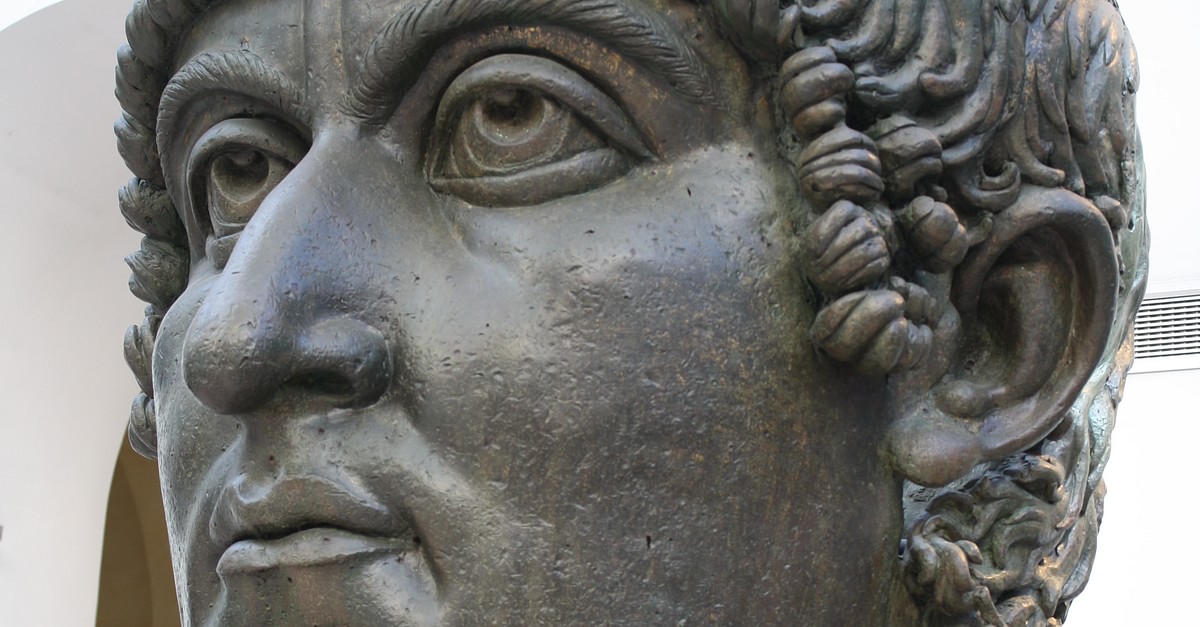
Constantine the Great, born Flavius Valerius Constantinus, stands as one of the most influential figures in world history. His reign marked a pivotal turning point for the Roman Empire, setting the stage for the rise of Christianity and the transformation of European civilization. Born in Naissus (modern-day Niš, Serbia) around AD 272, Constantine emerged from the turbulent period known as the Crisis of the Third Century to become the sole ruler of the Roman Empire.
This first part of our exploration will examine Constantine's early life, his path to power, and the military campaigns that established his dominance. We'll also explore the famous vision that changed the course of religious history and examine his political reforms that reshaped the empire's administration.
Early Life and the Tetrarchy System
Constantine was born to Constantius Chlorus, a Roman officer who would later become one of the four rulers in Diocletian's Tetrarchy system, and Helena, a woman of humble origins who would later be venerated as Saint Helena. Growing up in the imperial court, Constantine received a thorough education in Latin, Greek, and military strategy. His early years were spent in the eastern part of the empire, where he witnessed firsthand the workings of Diocletian's government.
The Tetrarchy system, established by Diocletian in 293, divided imperial power among four rulers: two senior Augusti and two junior Caesares. This system aimed to provide better governance for the vast empire and ensure smooth succession. Constantine's father Constantius became one of the Caesars, ruling the western provinces of Gaul and Britain.
Constantine's Path to Power
When Constantius died in 306 while campaigning in Britain, the army immediately proclaimed Constantine as Augustus. This act violated the Tetrarchy's succession rules, leading to years of conflict among rival claimants. Constantine initially accepted the lesser title of Caesar to maintain peace but gradually consolidated his power through military victories and political alliances.
One of Constantine's most significant early achievements was his campaign against the Franks in 306-307, where he demonstrated his military prowess. He then strengthened his position by marrying Fausta, daughter of the senior Augustus Maximian, in 307. This marriage alliance connected him to the imperial family and provided legitimacy to his rule.
The Battle of the Milvian Bridge and the Christian Vision
The turning point in Constantine's career came in 312 at the Battle of the Milvian Bridge against his rival Maxentius. According to Christian sources, Constantine had a vision before the battle where he saw a cross in the sky with the words "In hoc signo vinces" ("In this sign, you shall conquer"). He ordered his soldiers to paint the Chi-Rho symbol (☧) on their shields and emerged victorious against overwhelming odds.
This victory made Constantine the sole ruler of the Western Roman Empire and marked the beginning of his support for Christianity. While the exact nature of his conversion remains debated among historians, the Edict of Milan in 313, which he issued jointly with Licinius, granted religious tolerance throughout the empire and ended the persecution of Christians.
Consolidation of Power and Administrative Reforms
After defeating Licinius in 324, Constantine became the sole ruler of the entire Roman Empire. He immediately set about implementing significant reforms that would transform the empire's structure:
- He established a new capital at Byzantium, which he renamed Constantinople (modern-day Istanbul)
- He reorganized the military, creating mobile field armies and separating military and civilian administration
- He reformed the currency with the introduction of the gold solidus
- He restructured provincial administration, increasing the number of provinces and creating the diocesan system
These reforms strengthened the empire's governance and laid the foundation for what would later become the Byzantine Empire.
Constantine and Christianity
Constantine's relationship with Christianity was complex and evolved throughout his reign. While he never made Christianity the official state religion, he gave it significant privileges and actively supported the Church. He:
- Funded the construction of important churches, including the original St. Peter's Basilica in Rome
- Exempted clergy from taxation and civic duties
- Intervened in theological disputes, convening the First Council of Nicaea in 325
- Promoted Christians to high offices in his administration
At the same time, Constantine maintained some traditional Roman religious practices and was only baptized on his deathbed, a common practice at the time among those who feared post-baptismal sin.
Legacy of the First Christian Emperor
By the time of his death in 337, Constantine had transformed the Roman Empire in fundamental ways. His reign marked the transition from classical antiquity to the medieval period and set the stage for the Byzantine Empire. The city he founded, Constantinople, would remain a center of power for over a thousand years.
Constantine's support for Christianity had profound consequences for European history, making the religion a dominant force in Western civilization. His political and military reforms helped stabilize the empire during a period of crisis, though some historians argue they also contributed to the eventual division between East and West.
This concludes our first part on Constantine the Great. In the next section, we will explore in greater depth his religious policies, the founding of Constantinople, and his complex personal life and family relationships that would shape the empire's future after his death.
The Religious Transformation: Constantine's Christian Policies
Constantine's approach to Christianity was neither immediate nor absolute. His policies represented a gradual shift that balanced imperial tradition with the growing influence of the Christian faith. Following the Edict of Milan in 313, Constantine implemented measures that deeply altered the religious landscape of the empire:
- He returned confiscated Christian property seized during previous persecutions
- Granted tax exemptions and financial support to Christian clergy
- Gave bishops judicial authority within their communities
- Established Sunday as an official day of rest in 321
- Banned certain pagan practices while maintaining the title of Pontifex Maximus
This calculated approach allowed Christianity to flourish while preventing immediate upheaval of traditional Roman religion. Constantine's personal faith remains complex—he continued to use ambiguous religious language in official documents and maintained elements of solar monotheism (Sol Invictus) in his imagery.
The First Council of Nicaea (325 AD)
Constantine's most significant religious intervention came with the Arian controversy regarding the nature of Christ. To settle the dispute, he convened the First Ecumenical Council at Nicaea:
- Brought together approximately 300 bishops from across the empire
- Personally inaugurated the council, though not baptized himself
- Resulted in the Nicene Creed establishing orthodox doctrine
- Created a precedent for imperial involvement in church affairs
The council demonstrated Constantine's desire for religious unity as a stabilizing force and established the framework for Christian orthodoxy that would endure for centuries.
The New Rome: Founding of Constantinople
In 324, Constantine began his most ambitious project—the transformation of the ancient Greek city Byzantium into a new imperial capital. Officially dedicated on May 11, 330, Constantinople was designed as:
- A strategically located capital at the crossroads of Europe and Asia
- A Christian alternative to pagan Rome with churches instead of temples
- A fortress city with expanded walls and natural defenses
- A center of culture and learning with imported artworks and scholars
Urban Planning and Symbolism
Constantine's architects employed sophisticated urban design to create a city that would rival and eventually surpass Rome:
- Laid out the city on seven hills like Rome, with fourteen districts
- Created the monumental Mese, a colonnaded main street
- Erected the Milion as the symbolic center of the empire's road network
- Constructed the Great Palace complex as the imperial residence
The city's Christian character was emphasized through prominent churches and the absence of pagan temples, though some traditional civic structures were maintained for practical purposes.
Military Reforms and Frontier Defense
Recognizing the empire's security challenges, Constantine reshaped Rome's military structure:
| Reform | Description | Impact |
|---|---|---|
| Field Armies | Created mobile strike forces (comitatenses) | Allowed rapid response to border threats |
| Border Forces | Strengthened limitanei frontier troops | Provided static defense of imperial borders |
| New Units | Introduced cavalry-heavy formations | Countered growing threat from mounted enemies |
These reforms maintained imperial security but also had long-term consequences, including increased military spending and greater separation between civilian and military authority.
Constantine's Family Dynamics
The imperial household was both Constantine's greatest strength and his tragic weakness. His marriage to Fausta produced five children who would play crucial roles in his succession plans. However, multiple family crises marked his reign:
The Crisis of 326
This pivotal year saw the execution of Constantine's eldest son Crispus and shortly after, his wife Fausta under mysterious circumstances:
- Crispus had been a successful general and heir apparent
- Ancient sources suggest Fausta may have falsely accused Crispus
- The scandal necessitated rewriting Constantine's succession plans
- Three surviving sons (Constantine II, Constantius II, Constans) became new heirs
The Imperial Succession
Constantine developed an ambitious plan to divide power while maintaining dynastic unity:
- Appointed his sons as Caesars during his lifetime
- Created a network of cousins to administer provinces
- Established Constantinople as neutral territory under Senate control
- This complex system quickly collapsed after his death in 337
Legal and Social Reforms
Constantine's legal enactments reflected both traditional Roman values and Christian influence:
| Area | Reform | Significance |
|---|---|---|
| Slavery | Restricted separation of slave families | Reflected Christian ethics |
| Marriage | Strict penalties for adultery | Moral legislation |
| Crime | Crucifixion abolished | Symbolic Christian reform |
| Wills | Recognized validity of Christian wills | Legal status for Christian practice |
While these reforms improved conditions for some, Constantine also enacted harsh penalties, including branding and amputation, for certain offenses.
Preparing for the Next Part
In this second part, we've examined Constantine's complex religious policies, the monumental founding of Constantinople, critical military reforms, and fascinating family dynamics. As we conclude this section, we've laid the groundwork for understanding how Constantine's reign fundamentally transformed the Roman world.
Our third and final installment will explore Constantine's final years, his baptism and death, the immediate aftermath of his reign, and the lasting impact of his rule on Western civilization. We'll examine how his successors managed—or failed to maintain—his vision and how modern historians assess his complex legacy.
The Final Years and Legacy of Constantine the Great
The Road to Baptism and Death
In his later years, Constantine prepared for what he believed would be his most important transition - the passage from earthly power to eternal salvation. Following contemporary Christian practice that feared post-baptismal sin, he postponed his baptism until he fell seriously ill near the end of his life. This final act occurred in 337 at the suburban villa of Ancyrona near Nicomedia when:
- He was baptized by the Arian bishop Eusebius of Nicomedia
- Chose to be clothed in white baptismal robes rather than his imperial purple
- Reportedly refused to wear his imperial insignia afterward
- Died shortly thereafter on May 22, 337, at approximately age 65
The Imperial Succession and Family Conflict
Constantine's carefully planned succession quickly unraveled after his death. The empire became embroiled in a bloody transition period that revealed the fragility of his dynastic vision:
| Successor | Territory | Fate |
|---|---|---|
| Constantine II | Gaul, Britain, Spain | Killed in 340 invading Constans' territory |
| Constantius II | Eastern provinces | Became sole emperor by 353 |
| Constans | Italy, Africa | Assassinated in 350 |
The power struggle extended to Constantine's extended family, with most male relatives murdered within months of his death in a purge likely ordered by Constantius II. This tragic outcome contrasted sharply with Constantine's hopes for dynastic continuity.
The Milvian Bridge Legacy: Christianity's Imperial Future
Constantine's support for Christianity set in motion changes that would far outlive his empire:
- The Christian church gained legal status and eventually became the state religion under Theodosius I
- Ecclesiastical structures mirrored imperial administration
- Christian theology became intertwined with Roman imperial ideology
- The bishop of Rome (the Pope) gained increasing political authority
The Donation of Constantine Controversy
Centuries after his death, an eighth-century document called the "Donation of Constantine" purported to record Constantine giving temporal power over Rome and the western empire to Pope Sylvester I. While proved a medieval forgery in the 15th century, it:
- Influenced papal claims to political authority throughout the Middle Ages
- Became a key document in church-state conflicts
- Demonstrated Constantine's lasting symbolic importance to the Catholic Church
Constantinople: The Enduring City
Constantine's "New Rome" outlasted the Western Roman Empire by nearly a thousand years, becoming:
- The capital of the Byzantine Empire until 1453
- A bulwark against eastern invasions of Europe
- The center of Orthodox Christianity
- A cosmopolitan hub of commerce, culture, and learning
Even after its fall to the Ottomans, the city (renamed Istanbul) remained a major world capital, maintaining elements of Constantine's urban design into modern times.
Military and Administrative Aftermath
Constantine's reforms established patterns that defined later Byzantine governance:
| Reform | Long-term Impact |
|---|---|
| Separate military commands | Became standard in medieval European states |
| Mobile field armies | Precursor to later Byzantine tagmata forces |
| Gold solidus currency | Remained stable for 700 years |
| Regional prefectures | Influenced medieval administrative divisions |
Historical Assessment and Modern Views
Historians continue to debate Constantine's legacy:
The Christian Hero Narrative
Traditional Christian historiography views Constantine as:
- The emperor who ended persecution
- A divinely inspired leader
- The founder of Christian Europe
The Pragmatic Politician Interpretation
Modern secular scholarship often emphasizes:
- His manipulation of religion for political unity
- The continuities with earlier imperial systems
- His military and administrative skills
The Ambiguous Legacy
Most contemporary historians recognize:
- Both genuine faith and political calculation in his policies
- His central role in Europe's Christianization
- The unintended consequences of his reforms
Constantine in Art and Culture
The first Christian emperor became an enduring cultural symbol:
Medieval Depictions
- Featured in Byzantine mosaics and manuscripts
- Central to Crusader ideology
- Subject of medieval romance literature
Renaissance and Baroque Art
- The Vision of Constantine became popular subject
- Depicted in Raphael's "The Baptism of Constantine"
- Sculptures in major European churches
Modern Representations
- Appears in films and television series
- Subject of historical novels
- Inspiration for Christian political movements
Conclusion: The Architect of a New World
Constantine the Great stands as one of history's pivotal figures whose decisions fundamentally altered the course of Western civilization. By combining Roman imperial tradition with Christian faith, military prowess with administrative genius, and dynastic ambition with strategic vision, he created a synthesis that would endure for centuries. Though his immediate successors failed to maintain his vision perfectly, the foundations he laid—the Christian Roman Empire, the city of Constantinople, and new models of governance—shaped medieval Europe and influence our world today.
From the Roman persecutions to the edicts of tolerance, from the old Rome to the new, from pagan empire to Christian state, Constantine presided over one of history's great transitions. His life reminds us that individual leaders can indeed change the world, though often in ways more complex than they could foresee. Whether viewed as saint, opportunist, or simply as one of Rome's greatest emperors, Constantine's impact on religion, politics, and culture remains undeniable more than sixteen centuries after his death.


Theophrastus: The Father of Botany and His Enduring Legacy
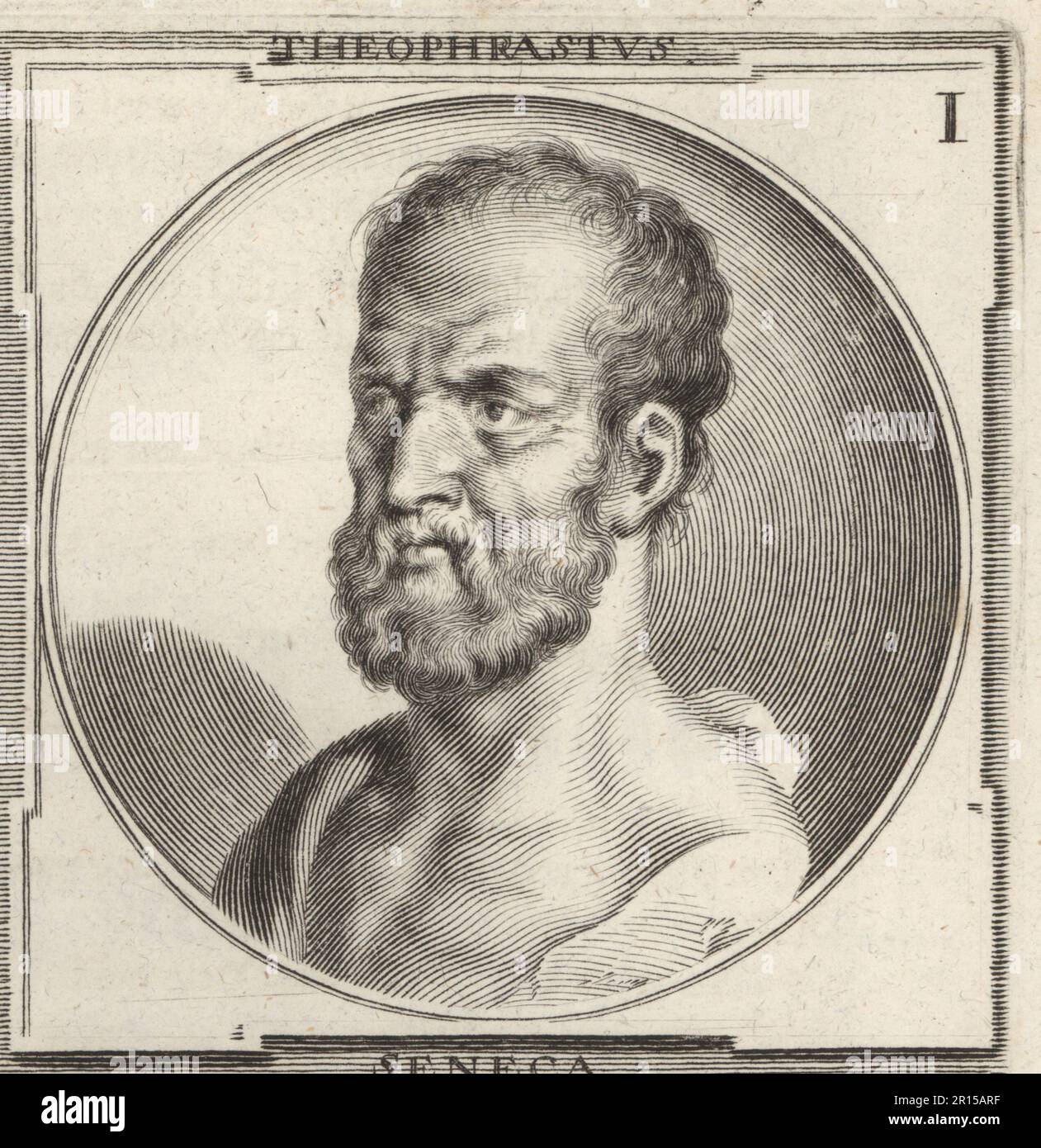
The annals of ancient philosophy are adorned by many luminous figures whose contributions have shaped the sinews of modern sciences and humanities. Among these illustrious personalities, Theophrastus stands as a titan, best known for his groundbreaking work in botany and his influential role in developing the philosophical doctrines of his predecessor, Aristotle. Born around 371 BCE in Eresos on the Greek island of Lesbos, Theophrastus was not only a devoted student of Aristotle but also a formidable scholar in his own right. His life and work serve as one of the earliest foundations upon which contemporary botanical sciences are built.
Early Life and Education
The history of Theophrastus can be seen as a testament to the virtues of intellectual curiosity and academic pursuit. Initially named Tyrtamus, he was later bestowed the name Theophrastus by Aristotle, a title translated as “divine expression,” which indicated the profound respect and admiration his teacher held for him. This renaming signaled the start of a formidable journey marked by intellectual achievements and scholarly dedication.
Theophrastus first studied under Alcippus in Lesbos, where he likely encountered early teachings in rhetoric and natural sciences, setting the stage for his later educational pursuits. Eventually, Theophrastus moved to Athens, the epicenter of ancient Greek learning, where he fell under the tutelage of Plato at the Academy. However, it was his experiences under Aristotle at the Lyceum that truly defined his scholarly endeavors. His relationship with Aristotle was not merely that of student and teacher, but also of a deep philosophical collaboration, which significantly influenced Theophrastus's future works.
Contributions to Botany
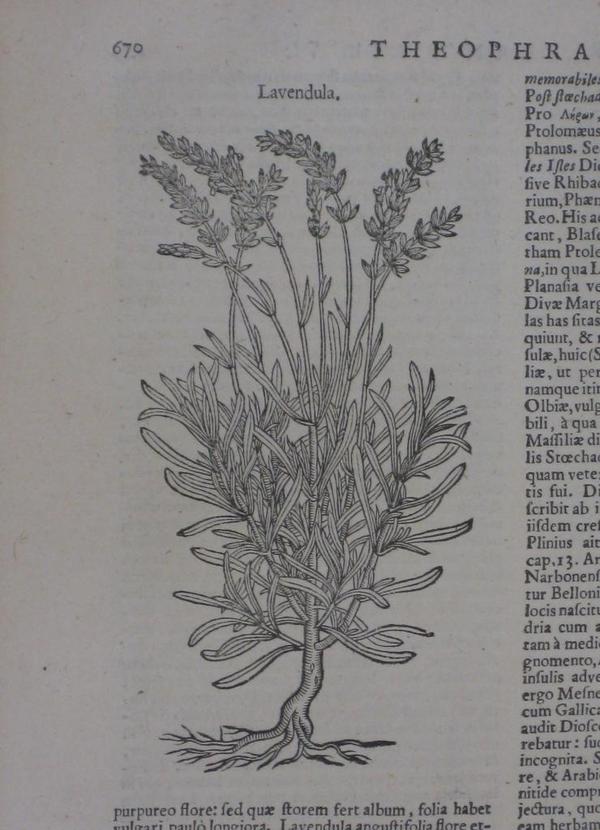
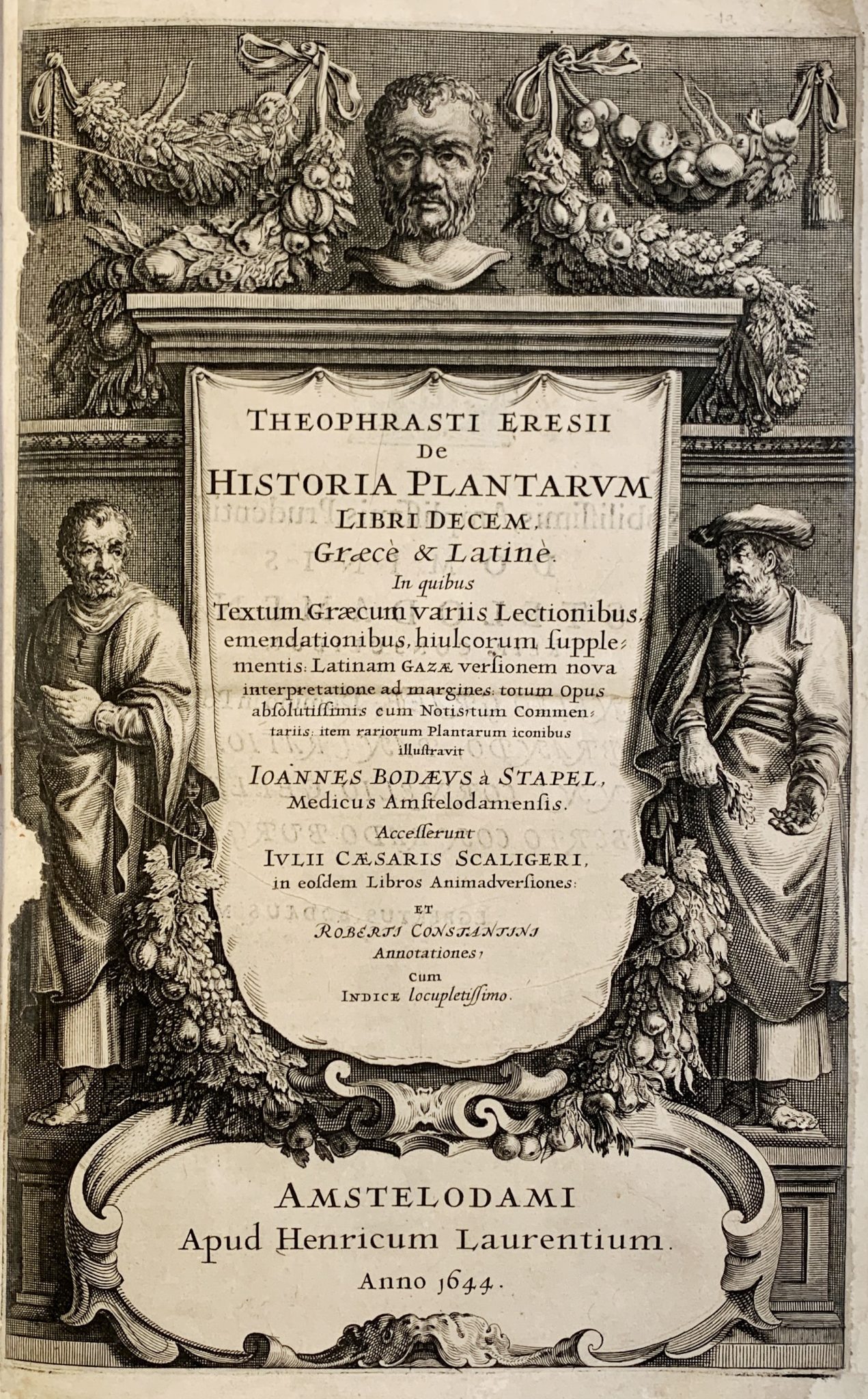
Theophrastus is often heralded as the "Father of Botany" due to his pioneering efforts in the study of plants. His works "Historia Plantarum" and "De Causis Plantarum" remain seminal texts in botanical literature. In "Historia Plantarum," Theophrastus endeavored to classify and describe plants with an unprecedented level of detail and scientific rigor. This comprehensive work categorized plants based on their reproductive structures, growth forms, and habitats, which laid the groundwork for future botanical classification systems.
"De Causis Plantarum" expounded on plant growth and reproduction, focusing on factors such as climate, soil conditions, and plant care. Theophrastus detailed phenomena like seed germination and various plant diseases, demonstrating an advanced understanding of ecological principles. His work sought to explain the underlying causes of observed plant behaviors, which highlighted his methodical approach to scientific inquiry long before the advent of modern experimental techniques.
Theophrastus's botanical studies were ground-breaking for his time, using empirical observation as a foundation for theory development. This methodology reflected the Aristotelian emphasis on empirical evidence and rational analysis, a hallmark of the Lyceum. His botanical inquiries not only served horticultural purposes in ancient Greece but also provided critical insights into the relationships between living organisms and their environments—a conceptual precursor to modern ecological thought.
Philosophical Works and Influence
While Theophrastus is predominantly celebrated for his contributions to botany, his achievements in philosophy are equally noteworthy. Succeeding Aristotle as the head of the Lyceum, Theophrastus played a crucial role in preserving and expanding the Peripatetic school of philosophy. His philosophical oeuvre, although less preserved than his naturalistic writings, included substantial commentary on logic, ethics, metaphysics, and epistemology.
Theophrastus's philosophical writings reflected his commitment to the principles of reason and scientific examination. In "Characters," one of his most accessible works, he presented a series of engaging sketches of moral types that have influenced literature and psychology. This work examined human behaviors and moral characteristics through vivid and often humorous portrayals, contributing significantly to the understanding of personality and ethics.
Furthermore, Theophrastus's logical treatises built upon and refined Aristotle's existing frameworks. He expanded on theories of propositional logic, which would later underpin medieval scholasticism and substantially influence the development of Western philosophy. Though much of his philosophical work has been lost to history, the surviving fragments indicate a thinker deeply committed to exploring the range of human thought and experience.
Conclusion: Legacy and Continuing Impact
Theophrastus’s intellectual passions were inextricably linked to his desire to understand the natural world and human experience. His endeavors not only served as a vehicle for ancient knowledge dissemination but also as a bridge to modern scientific inquiry. While primarily recognized for his botanical contributions, the legacy of Theophrastus spans various fields, leaving an indelible mark on natural sciences and philosophical discourse alike.
His work exemplifies the synergy of observation, classification, and critical analysis—a trinity that continues to fuel the expansion of human understanding today. The impact of Theophrastus reaches far beyond antiquity, underpinning a wide array of knowledge that has evolved yet still respects its ancient roots. As we continue to explore and redefine our relationship with both the natural and human worlds, the teachings of Theophrastus remain ever-relevant, a testament to the enduring quest for wisdom and insight.
Theophrastus’s Methodology and Scientific Approach
To fully appreciate Theophrastus's contributions, one must delve into the methodological approaches that set him apart from his contemporaries. At a time when myth and speculation often dominated explanations of the natural world, Theophrastus adhered to a systematic framework of observation and categorization, echoing the scientific ethos that Aristotle imparted.
Theophrastus's approach was comprehensive; he meticulously observed plants and their various life processes, recording minute details about their forms, functions, and interactions with the environment. Such meticulousness reflects a proto-scientific approach, forming the antecedents of structured scientific inquiry. This empirical focus was revolutionary, offering insights into botanical diversity and plant physiology that were unparalleled at the time.
His works in "Historia Plantarum" provide vivid accounts of approximately 500 plant species. The descriptions go beyond mere identification—he also detailed practical applications of plants, be it for medicinal, nutritional, or utilitarian purposes. This practical dimension highlights Theophrastus's intention to not only seek knowledge but also apply it for societal benefit.
Theophrastus distinguished himself as a keen investigator of causality in natural phenomena. For instance, in "De Causis Plantarum," he explored the reasons behind variations in plant growth, delving into aspects such as seed viability, soil fertility, and climatic impact. These studies reflect an early understanding of what we now term ecological principles, including concepts of habitat specificity and environmental adaptation. By endeavoring to understand the causes behind natural occurrences, Theophrastus laid early groundwork for cause-and-effect reasoning—a cornerstone of modern scientific methodology.
Influence on Medicine and Agriculture
Beyond botany, Theophrastus made notable contributions to medicine and agriculture, influencing practices well into future generations. His documentation of plant properties in "Historia Plantarum" included detailed notes on medicinal uses, some of which align with findings in contemporary phytotherapy. He categorized plants based on their therapeutic potential, recognizing their roles in treating specific ailments and conditions—an insight that foreshadowed the link between botany and pharmacy.
Theophrastus's works are replete with references to the cultivation of plants, underscoring their significance to agricultural development in ancient societies. His insights into the optimal cultivation conditions and methods for different species highlighted an early understanding of agricultural science. For example, he detailed crop rotation and soil preparation techniques, showcasing an awareness of sustainable agricultural practices that align closely with modern agronomic principles.
The emphasis on sustainable interaction with the environment was evident in his agricultural recommendations, which prioritized ecological balance and environmental stewardship. This forward-thinking stance is an early precursor to the principles of sustainability, emphasizing the harmonious coexistence of humanity with its natural surroundings.
Continuing Relevance in Modern Times
Though separated from our contemporary world by millennia, Theophrastus's ideas resonate with modern scientific exploration. His integration of observational detail, classification, and practical application laid the foundation for scientific taxonomies that endure today. Contemporary botany, ecology, and even pharmacology still benefit from his pioneering insights, bearing witness to his enduring legacy.
The scientific rigor he espoused encourages a continued appreciation for empirical research, exemplifying the principles behind evidence-based practice. In a world increasingly concerned with environmental sustainability and climate change, Theophrastus's methodologies can inspire current and future generations of scientists and ecologists to pursue interdisciplinary approaches, combining ancient wisdom with cutting-edge technology.
Theophrastus’s contributions extend beyond academia—inspiring cultural appreciation for nature, evident in art, literature, and environmental activism. By providing a detailed account of plant biodiversity and ecological interrelations, he helped instill a sense of stewardship and reverence for nature, principles that are vital in addressing today’s ecological challenges.
Theophrastus as a Peripatetic Philosopher
As much as Theophrastus was a man of science, his endeavors in philosophy, especially within the framework of the Peripatetic school, are crucial to understanding his comprehensive intellectual landscape. The Peripatetic tradition, established by Aristotle and continued by Theophrastus, advocated a holistic approach to knowledge, integrating logic, ethics, and natural sciences.
Theophrastus’s philosophical writings, though less voluminous than his naturalistic work, extend the Peripatetic principles to broader inquiries about human behavior and ethics. “Characters,” his insightful exploration into human nature, gives a phenomenological account of personality types and moral dispositions. By painting vivid sketches of human behavior, Theophrastus not only provided commentary on ethical and social phenomena but also contributed to the intersection of philosophy and psychology.
This philosophical legacy remains potent; his observations about human behavior foreshadow modern psychological classification systems and ethical discussions. Theophrastus’s ability to discern and categorize human character traits complements his botanical interests, collectively showcasing the application of systematic inquiry across disparate domains of knowledge.
Cultural and Scholarly Recognition
Theophrastus's contributions have been acknowledged and celebrated throughout history. During the Renaissance, a period marked by the revival of classical knowledge, scholars revisited his works, recognizing their depth and relevance. His treatises were translated and disseminated, influencing botanical thought during this pivotal time of scientific revitalization.
In contemporary scholarship, Theophrastus is often cited as a prominent figure who bridged the worlds of ancient and modern scientific thought. Despite the passage of time, his works continue to feature prominently in discussions surrounding the evolution of natural sciences, emphasizing the critical importance of historical knowledge in present contexts.
Theophrastus's Influence on Subsequent Generations
The legacy of Theophrastus extends well beyond his era, having laid intellectual foundations utilized by countless scholars in the centuries that followed. His emphasis on empirical observation and classification served as a crucial reference point during the Middle Ages and the Renaissance when scholars began re-engaging with classical texts. This resurgence in interest saw Theophrastus's botanical and philosophical works translated into Latin, ensuring their accessibility within the scholarly community and sowing the seeds for the scientific revolution that would later unfold.
Theophrastus's approach to empirical investigation and systematic classification greatly influenced Renaissance thinkers such as Andrea Cesalpino, who is credited with developing the discipline of botany beyond its classical roots. Furthermore, his explorations of plant physiology anticipated the modern science of plant biology, shaping the practices of botanists across Europe. His insights into the natural world, conveyed through his methodological rigor, continued to inspire curiosity and critical thinking among natural historians for centuries.
Theophrastus and the Philosophy of Science
The framework established by Theophrastus did not merely impact the natural sciences but also seeded the philosophical landscape concerning how science is understood and practiced. His integration of empirical evidence with theoretical exposition reflected an evolving philosophy of science that persists in academic discourse today. Theophrastus’s approach argued for a seamless blend of observational data and rational interpretation, a methodology now fundamental to scientific practice across disciplines.
This philosophical orientation bolstered the perception of science as an epistemological endeavor—a continuous quest for knowledge through observation and reasoned analysis—informing both Western and non-Western scientific traditions. Theophrastus’s work underscores a historical perspective on the philosophy of science, reminding contemporary practitioners of the iterative nature of scientific progress and the need to continually revisit and refine foundational theories in light of new evidence.
His intellectual pursuits also point to the value of interdisciplinary study, as Theophrastus transcended the boundaries of botany to engage with philosophy, ethics, and logic. This cross-disciplinary approach is increasingly recognized in contemporary academia as essential for addressing complex global challenges, such as climate change and biodiversity conservation, which require holistic solutions that draw on multiple fields of expertise.
Theophrastus and Modern Environmental Consciousness
In our modern era, marked by an intensified focus on environmental awareness and sustainability, Theophrastus's insights gain renewed relevance. His close observations of plant life cycles, ecological relationships, and environmental factors resonate with current efforts to understand and mitigate the impacts of human activities on ecosystems. By emphasizing the interdependence between plants and their surroundings, Theophrastus's work champions an early ethos of environmental stewardship—a concept that aligns with contemporary ecological ethics.
The scope of Theophrastus's research, which advocated for a holistic view of the natural world, encourages today's scientists and policymakers to consider ecological interconnections when crafting environmental regulations and conservation strategies. His work harkens to the necessity of preserving biodiversity and maintaining ecological balance—issues that are critical amidst today's global environmental crises.
Furthermore, Theophrastus’s philosophy facilitates an appreciation for the intrinsic value of plants, recognizing them as vital components of the biosphere, not merely resources for human exploitation. This perspective is mirrored in current movements advocating for the recognition of plant rights and the ethical treatment of all life forms. His teachings echo the sentiment that humanity must coexist harmoniously with nature, a principle of paramount importance in safeguarding the planet for future generations.
Reflections on Theophrastus’s Timeless Legacy
Reflecting on the contributions of Theophrastus reveals an individual whose intellectual vigor and pioneering spirit yielded profound insights into the natural and philosophical worlds. His works demonstrate a harmonious fusion of empirical observation, systematic classification, and rational theory—principles that remain foundational in guiding scientific inquiry today. Through his enduring legacy, Theophrastus continues to ignite the curiosity and imagination of scholars, showcasing the timeless nature of his insights.
As we navigate the complexities of the modern age, the teachings of Theophrastus inspire a return to fundamental aspects of observation and understanding. By embracing the methodologies he championed, today’s scientists and philosophers can draw valuable lessons on the importance of interdisciplinary approaches and environmental consciousness, vital for advancing knowledge and shaping a sustainable future.
In sum, Theophrastus holds a hallowed place in the pantheon of great thinkers, his life and works emblematic of a perennial quest for wisdom. His intellectual endeavors provide a salient reminder of humanity's intrinsic connection to the natural realm and each other—a lesson as vital today as it was during his own time in ancient Greece.
The legacy of Theophrastus endures as a beacon for scientific exploration and ethical contemplation, inviting each new generation to build upon his foundations and continue the pursuit of knowledge and understanding, ever mindful of our shared duty to the world around us.