The Allure of Dystopian Film Themes
Dystopian films have long fascinated audiences with their potent blend of bleak social commentary, imaginative storytelling, and relentless examination of the human condition. These films transport viewers to alternative realities—often reflecting anxieties of the present and fears for the future—while compelling them to question the world's status quo. From the dazzling neon-lit alleys of "Blade Runner" to the barren wastelands of "Mad Max," the continued popularity of dystopian narratives begs the question: what is it about these themes that captivate us so?
At the heart of many dystopian films lies a vivid exploration of authoritarian control and loss of freedom. These stories frequently center on societies grappling with oppressive regimes that wield advanced surveillance, propaganda, and mass compliance. Consider George Orwell's seminal "1984," a novel adapted into film multiple times. The sheer weight of a totalitarian state, where every element of life is under scrutiny, speaks to deep-seated fears of losing individuality and autonomy—a recurring theme underscored by endless variations across the genre.
Another critical aspect of dystopian films is their portrayal of technological advancement as both promise and peril. In many narratives, technology becomes a vehicle for domination and dehumanization. For example, in "The Matrix," humanity is enslaved by a sophisticated artificial intelligence, blurring the lines between virtual and actual realities. This theme speaks to the modern-day apprehension concerning our rapidly evolving technological landscape, questioning the ethical boundaries of AI, bioengineering, and surveillance—making viewers ponder if the convenience technology provides is worth the potential cost.
Environmental degradation is yet another theme often explored in dystopian films. The looming threat of climate change and resource scarcity is manifested in stark depictions of devastated ecosystems and collapsing societal structures. Films like "Snowpiercer" and "Children of Men" starkly portray a world teetering on the brink of collapse, raising urgent questions about sustainability, ecological responsibility, and the social implications of environmental neglect.
The specter of social inequality runs rife through dystopian narratives, often revealing extreme class stratification and economic disparity. In "Elysium," for instance, the wealthiest live on a luxury space station, while the rest of humanity toils in poverty on a desolate Earth. These films hold a mirror to our current society, reflecting growing concerns about wealth distribution and the societal gap between the privileged elite and struggling masses.
Finally, dystopian films often delve into the essence of human identity and morality under pressure. In worlds where societal norms have broken down, characters face harrowing decisions that challenge their integrity and compassion. "The Road," adapted from Cormac McCarthy's novel, presents a desolate landscape where survival often comes at the expense of morality, leading viewers to question what it means to be human when humanity itself is under siege.
Despite—or perhaps because of—the grim themes they tackle, dystopian films provide catharsis. They allow audiences to confront unspoken fears and question the systems in place, ultimately offering a unique space for reflection and, at times, a flicker of hope amidst the despair. As we continue to reckon with the complexities of an ever-evolving world, the dystopian genre remains an essential conduit for exploring our darkest anxieties and most profound questions about society's future pathway.

The Fascinating World of Bo Burnham
Bo Burnham is a name synonymous with creativity, authenticity, and the kind of innovation that redefines the boundaries of comedy and performance art. Emerging as a major force in the entertainment industry, Burnham has carved a unique niche for himself, blending humor with insightful commentary on society's complexities. His journey from YouTube sensation to respected filmmaker and stand-up comedian is a testament to his multifaceted talent and relentless pursuit of artistic evolution.
Early Beginnings: Rise to Fame
Bo Burnham's journey to fame began quite unconventionally in the mid-2000s, amidst the burgeoning social media landscape. Born on August 21, 1990, in Hamilton, Massachusetts, Burnham started sharing comedic songs on YouTube while still a teenager. His videos quickly garnered millions of views, resonating with audiences for their clever wordplay and satirical take on everyday life. His knack for self-deprecating humor, infused with sharp wit, quickly earned him a devoted following.
His breakout moment arrived with the viral hit "My Whole Family..." which showcased his ability to address personal and broader themes in a clever, catchy manner. This early success catapulted Burnham into the limelight, ultimately leading to a recording deal with Comedy Central Records and the release of his first comedy special "Bo Burnham: Words, Words, Words" in 2010.
The Evolution of a Performer
While his roots are firmly planted in comedy, Burnham has consistently pushed the envelope, evolving his craft to explore new artistic territories. His subsequent specials, notably "what." in 2013 and "Make Happy" in 2016, delved deeper into existential themes, often dissecting the nuances of performance itself. Burnham's use of multimedia elements, staging, and music set his shows apart, establishing his reputation as an innovative performer who could deftly balance humor with introspection.
Beyond stand-up, Burnham ventured into filmmaking with "Eighth Grade" in 2018, marking his directorial debut. The film, a poignant exploration of adolescence in the digital age, received critical acclaim for its authentic portrayal of teenage struggles and anxieties. "Eighth Grade" showcased Burnham’s ability to transcend comedy, weaving humor within the fabric of dramatic storytelling.
The Impact of "Inside"
In 2021, Burnham released "Inside," a Netflix special created during the COVID-19 pandemic. The innovative production, filmed entirely within the confines of a single room, offered a raw, unfiltered look at the artist's psyche. "Inside" not only highlighted Burnham’s ability to create under isolating circumstances but also resonated deeply with audiences coping with similar anxieties and uncertainties.
The special was both a critical and commercial success, praised for its originality and emotional depth. Songs like "Comedy," "Welcome to the Internet," and "All Eyes on Me" became cultural touchstones, each a testament to Burnham's unique ability to blend laughter with poignant reflection.
Bo Burnham’s journey from a young YouTube sensation to a respected and influential figure in the entertainment world is nothing short of remarkable. His constant evolution as an artist ensures that he remains one of the most intriguing and compelling voices of his generation.



Surrealism in Film: A Cinematic Odyssey
Surrealism has long been a compelling force in the world of cinema, presenting audiences with a uniquely imaginative canvas that challenges the boundaries of reality and the constructs of the mind. Emerging in the early 20th century as a cultural movement, surrealism sought to explore the dreamlike and the irrational, evoking the unconscious mind's potential through bizarre and often illogical scenes. In film, these artistic principles became a transformative vehicle, enabling filmmakers to provide viewers with experiences that transcend conventional storytelling.
The Origins of Surrealism in Cinema
The marriage of surrealism and cinema can be traced back to the advent of the surrealist movement itself. Born in the art circles of 1920s Paris, surrealism sought to unleash creative potential by tapping into the unconscious mind. Cinema, with its visual and temporal qualities, emerged as the perfect medium for capturing the surrealist ethos.
In 1929, the release of "Un Chien Andalou," directed by Luis Buñuel and co-written with Salvador Dalí, became a landmark moment for surrealism in film. The film's shocking imagery and non-linear narrative structure broke away from traditional cinematic practices, leaving audiences both bewildered and fascinated. It marked the entry of surrealism into the realm of films not just as an artistic experiment but as a legitimate narrative form.
Defining Features of Surrealist Cinema
Surrealist films are characterized by their dreamlike sequences, unusual imagery, and a departure from logical plot progression. These films often emphasize the absurd and the fantastic, creating a visual and emotional landscape that blurs the lines between reality and fantasy. Elements such as dream sequences, symbolism, and visual distortions are commonly employed to evoke feelings of confusion and wonder.
Filmmakers utilize surrealism to dive into the psyche, often exploring themes of identity, desire, fear, and memory. These films may appear disjointed at first glance, as they prioritize mood and atmosphere over plot coherence. It is this emphasis on texture and tone that compels audiences to engage not only visually but also intellectually, inviting personal interpretations of what is seen.
Influential Icons of Surrealist Cinema
Many filmmakers have embraced surrealism, leaving indelible marks on the art form. Luis Buñuel's works, such as "The Discreet Charm of the Bourgeoisie" and "The Exterminating Angel," continue to intrigue with their provocative and unexpected narratives. Jean Cocteau is another pioneering figure; films like "The Blood of a Poet" blend poetry and surrealism, challenging cinematic norms and exploring the interconnection between art and reality.
In the latter half of the 20th century, David Lynch emerged as a modern torchbearer of surrealist cinema. Renowned for films like "Eraserhead," "Blue Velvet," and the cult television series "Twin Peaks," Lynch's work revels in the uncanny, leaving audiences in a state of perpetual ambiguity. His distinctive style, infused with surreal and often disturbing imagery, continues to captivate cinephiles and influence filmmakers across genres.
The Impact of Surrealism on Modern Cinema
Surrealism's influence on contemporary cinema can be seen in various forms and genres. Directors such as Terry Gilliam and Charlie Kaufman perpetuate the surrealist legacy with films that mix fantasy with reality, pushing narrative boundaries to evoke introspection and wonder. Visual storytelling has flourished due to this legacy, enabling filmmakers to create worlds that are at once bizarre and beautiful.
As technology advances, the ability to craft surreal visuals continues to expand, allowing filmmakers to explore new dimensions of the unreal. Digital effects, in conjunction with traditional surrealist techniques, provide a rich playground for depicting the abstract and the extraordinary. This continuous evolution ensures that surrealist cinema remains a significant and vibrant aspect of film culture, inviting audiences to journey beyond the ordinary into realms of the surreal.



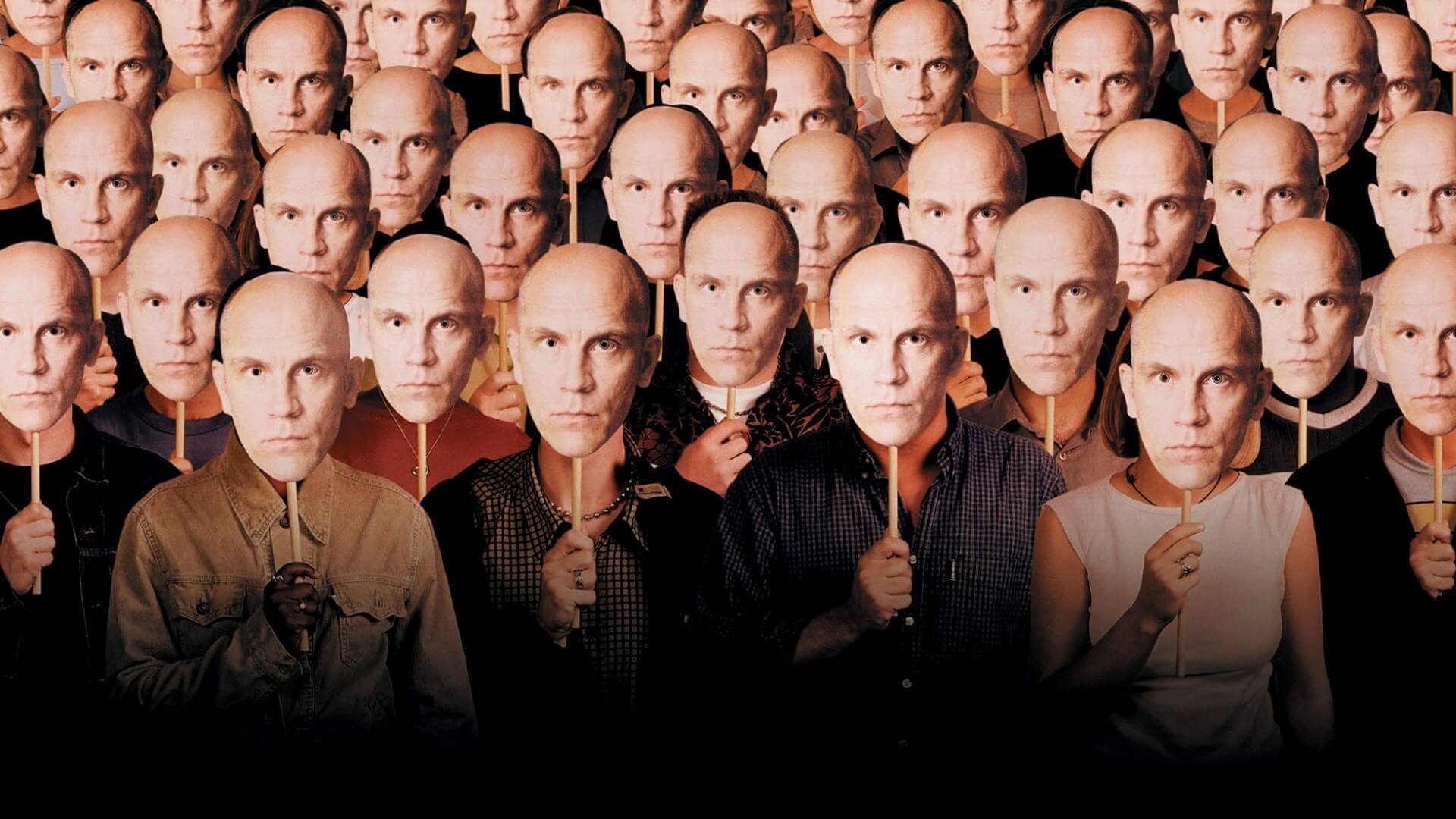
Exploring the Cosmos with Outer Wilds: A Journey into the Unknown
Released in 2019 by Mobius Digital, Outer Wilds is an interstellar exploration game that captivates players with its wondrous depiction of space exploration. It received widespread acclaim for its innovative approach to storytelling and gameplay, where players are both explorers and detectives unraveling the mysteries of a fantastical solar system. This introspective journey is characterized by its open-world nature, lack of conventional missions, and the persistent tick of time that underscores the player's every decision.
The Premise: A Solar System Trapped in a Time Loop
At its core, Outer Wilds is about curiosity and discovery. Players are tasked with investigating a whimsical, yet mysterious solar system trapped in a 22-minute time loop before the inescapable supernova termination. This concept forms the foundational enigma of the game, challenging players to piece together the story of an ancient civilization, the Nomai, who were also obsessed with the mysteries of the cosmos.
The incessant loop acts not as a limitation but as a canvas, inviting players to dive into the depths of each celestial body. During each cycle, the game encourages curiosity-driven exploration, driven less by objectives and more by the organic desire to uncover secrets scattered across the cosmic neighborhood. Whether navigating the sandy planets or plummeting to the mysterious depths of giant gas orbs, players relish the unpredictable nature of each discovery.
Innovative Game Mechanics
Unlike traditional RPGs and adventure games, Outer Wilds eschews linear progression and scripted puzzles. Instead, it offers a sandbox world where the only currency is knowledge. As players acquire more information about the universe, they unlock paths previously unknown, adjusting and reconfiguring strategies based on past experiences. The game demands a balance between planning and adaptability, with the latter being vital as players often find themselves tested by the game’s physical tour de force, gravity.
Piloting your spacecraft demands precision and patience, as players grapple with realistic physics that emulate the challenges of zero-gravity space travel. A moment's carelessness can lead to catastrophic crashes, lost progression, and intriguing detours. Nonetheless, each failure is laced with promise; it holds the potential for deeper insight and renewed tactics in the next loop.
Visual and Acoustic Beauty
Outer Wilds enchants players not only through its gameplay mechanics but also by its painstakingly crafted audiovisual landscape. The visual experience is a testament to the beauty of space, rendered with colorful, cartoonish textures that seem to embody both the micro and macrocosmic scale of the universe. This visual feast is complemented by a masterful score, orchestrated by Andrew Prahlow, which evokes a sense of awe and wonder, reinforced with acoustic textures that immerse players in the tranquil yet mysterious ethos of the game.
As players soar past distant planets, traverse colossal geological formations, and decipher enigmatic ruins, the music dynamically interacts with each moment, blending melancholic melodies with moments of serenity. It underscores the game’s ethos, where exploration is not just a physical journey but an emotional and intellectual voyage.
A Stalwart Story of Mystery and Reflection
What truly sets Outer Wilds apart from contemporaries is its narrative depth and existential thread. The stories players uncover piece together a complex mythos involving ancient aliens, cosmic phenomena, and the profound questions of life’s significance. As insights compound, players are drawn into contemplative reflections on life, purpose, and the universe’s unfathomable expanse.
The profound melancholy and beauty of the storyline marry with the game’s mechanical design, making each revelation and discovery a pivotal point of introspection. Outer Wilds becomes an exploration of both the external universe and the internal dimensions of curiosity and understanding.


Krakow: A Journey Through Time
Located in the heart of Europe, Krakow stands as a beacon of cultural and historical significance. This Polish city, known as the country's former royal capital, offers a unique tapestry of stories that span over a thousand years. From its famed medieval streets to its enduring architecture, Krakow is a city that captivates all who wander through its corridors.
The Historical Legacy of Krakow
Krakow's roots extend deep into history, as one of Poland's oldest cities first documented in the 9th century. It was in the year 965, however, that Krakow began to emerge as a vital trade hub. With its strategic position on the Vistula River, the city flourished, attracting merchants, traders, and artisans from across Europe. By the 11th century, Krakow became the heart of the Polish kingdom, a status it retained for nearly five centuries.
In 1364, Krakow further cemented its position as an intellectual center with the establishment of the Jagiellonian University, one of the oldest universities in the world. This institution not only promoted education but also fostered a climate of scholarly exchange that nurtured figures such as Copernicus and Jan Kochanowski. The intellectual vibrancy of Krakow has ensured its continued relevance on the cultural map of Europe.
Architectural Marvels
Wawel Castle stands as a testament to Krakow's royal past, perched majestically on Wawel Hill overlooking the city. This sprawling complex, once home to Polish monarchs, showcases an exquisite blend of Gothic, Renaissance, and Baroque architectural styles. The castle's iconic Cathedral is the final resting place of many Polish kings and heroes, linking it indelibly with the nation's narrative.
Another jewel in Krakow's crown is the Main Market Square (Rynek Główny), the largest medieval market square in Europe. The square retains its historical layout, with landmarks such as the Cloth Hall and the Town Hall Tower punctuating its expansive space. The Cloth Hall, a Renaissance-era trading outpost, continues to buzz with activity, offering local handicrafts and goods to visitors from around the world.
Cultural Vibrancy
The cultural dynamism of Krakow is evident in its many museums, galleries, and festivals. The National Museum, with its extensive collection of Polish art, complements the city's vibrant cultural scene, where both traditional and contemporary arts flourish. Krakow's theaters and music venues regularly host performances that range from classical to avant-garde, reflecting the city's diverse artistic palette.
In 1978, the same year the historic center of Krakow was designated a UNESCO World Heritage Site, the city welcomed a new era of cultural significance. This recognition not only validated Krakow's historical importance but also revitalized its role as a cultural and educational beacon for future generations.