Ptolemy: The Ancient Scholar Who Mapped the Heavens and the Earth
Introduction
Claudius Ptolemy, commonly known simply as Ptolemy, was one of the most influential scholars of the ancient world. A mathematician, astronomer, geographer, and astrologer, his works shaped scientific thought for over a millennium. Living in Alexandria during the 2nd century CE, Ptolemy synthesized and expanded upon the knowledge of his predecessors, creating comprehensive systems that dominated European and Islamic scholarship until the Renaissance. His contributions to astronomy, geography, and the understanding of the cosmos left an indelible mark on history.
Life and Historical Context
Little is known about Ptolemy’s personal life, but historical evidence suggests he was active between 127 and 168 CE. Alexandria, then part of Roman Egypt, was a thriving center of learning, home to the famed Library of Alexandria, which housed countless scrolls of ancient wisdom. Ptolemy benefited from this intellectual environment, drawing from Greek, Babylonian, and Egyptian sources to develop his theories.
His name, Claudius Ptolemaeus, indicates Roman citizenship, possibly granted to his family by Emperor Claudius or Nero. Though his ethnicity remains uncertain—whether Greek, Egyptian, or a mix—his works were written in Greek, the scholarly language of the time.
Ptolemy’s Astronomical Contributions
Ptolemy’s most famous work, the AlmagestMathematike Syntaxis), became the cornerstone of astronomy for centuries. In it, he synthesized the ideas of earlier astronomers like Hipparchus and introduced a sophisticated mathematical model of the universe.
The Ptolemaic System
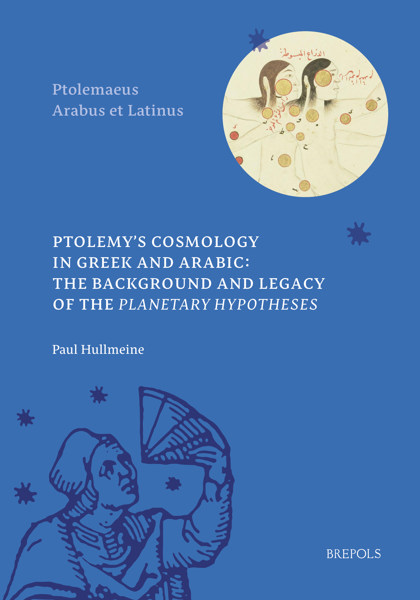
Ptolemy’s geocentric model placed Earth at the center of the universe, with the Sun, Moon, planets, and stars orbiting around it in complex paths. To explain the irregular movements of planets (such as retrograde motion), he introduced mathematical concepts like epicycles—small circles within larger orbits—and eccentric orbits. While his system was later challenged by Copernicus’ heliocentric model, it provided remarkably accurate predictions for its time.
Star Catalog and Constellations
In the Almagest, Ptolemy also compiled a star catalog, listing over 1,000 stars with their positions and magnitudes. Many of the 48 constellations he described are still recognized today in modern astronomy.
Ptolemy’s Geographical Legacy
Beyond astronomy, Ptolemy made lasting contributions to geography through his work Geographia. This treatise compiled extensive knowledge about the known world, combining maps with coordinates based on latitude and longitude—a revolutionary concept at the time.
Mapping the World
Ptolemy’s maps, though flawed by modern standards due to limited exploration, provided the most detailed geographical reference of the ancient world. He estimated Earth’s size, though his calculations were smaller than Eratosthenes’ earlier (and more accurate) measurements. Despite errors, his methodology laid the groundwork for later cartographers.
Influence on Exploration
Centuries later, during the Age of Discovery, Ptolemy’s Geographia regained prominence. Explorers like Columbus relied on his maps, though some inaccuracies—such as an underestimated Earth circumference—may have influenced voyages based on miscalculations.
Ptolemy and Astrology
Ptolemy also contributed to astrology with his work Tetrabiblos ("Four Books"). While modern science dismisses astrology, in antiquity, it was considered a legitimate field of study. Ptolemy sought to systematize astrological practices, linking celestial movements to human affairs in a structured way.
The Role of Astrology in Antiquity
Unlike modern horoscopes, Ptolemy’s approach was more deterministic, emphasizing celestial influences on climate, geography, and broad human tendencies rather than personal fate. His work remained a key astrological reference well into the Renaissance.
Criticism and Legacy
While Ptolemy’s models were groundbreaking, they were not without flaws. His geocentric system, though mathematically elegant, was fundamentally incorrect. Later astronomers like Copernicus and Galileo would dismantle it, leading to the Scientific Revolution.
Yet, Ptolemy’s genius lay in his ability to synthesize and refine existing knowledge. His works preserved and transmitted ancient wisdom to future generations, bridging gaps between civilizations. Even when his theories were superseded, his methodological rigor inspired later scientists.
Conclusion (Part 1)
Ptolemy stands as a towering figure in the history of science, blending meticulous observation with mathematical precision. His geocentric model and maps may no longer hold scientific weight, but his contributions laid essential groundwork for astronomy, geography, and even early astrology. In the next part, we will delve deeper into the technical aspects of his astronomical models, their historical reception, and how later scholars built upon—or challenged—his ideas. Stay tuned as we continue exploring the enduring legacy of Claudius Ptolemy.
The Technical Brilliance of Ptolemy’s Astronomical Models
Ptolemy’s geocentric model was not merely a philosophical assertion but a meticulously crafted mathematical system designed to explain and predict celestial phenomena. His use of epicycles, deferents, and equants demonstrated a sophisticated understanding of geometry and trigonometry, allowing him to account for the irregularities in planetary motion that had puzzled earlier astronomers.
Epicycles and Deferents
At the heart of Ptolemy’s model were two principal components: the deferent, a large circular orbit around the Earth, and the epicycle, a smaller circle on which the planet moved while simultaneously revolving around the deferent. This dual-motion concept elegantly explained why planets sometimes appeared to move backward (retrograde motion) when observed from Earth. Though later proven unnecessary in a heliocentric framework, this system was remarkably accurate for its time.
The Equant Controversy
One of Ptolemy’s more controversial innovations was the equant point, a mathematical adjustment that allowed planets to move at varying speeds along their orbits. Instead of moving uniformly around the center of the deferent, a planet’s angular speed appeared constant when measured from the equant—a point offset from Earth. While this preserved the principle of uniform circular motion (sacred in ancient Greek astronomy), it also introduced asymmetry, troubling later astronomers like Copernicus, who sought a more harmonious celestial mechanics.
Ptolemy vs. Earlier Greek Astronomers
Ptolemy was indebted to earlier astronomers, particularly Hipparchus of Nicaea (2nd century BCE), whose lost works likely inspired much of the Almagest. However, Ptolemy refined and expanded these ideas with greater precision, incorporating Babylonian eclipse records and improving star catalogs. His work was less about radical innovation and more about consolidation—turning raw observational data into a cohesive, predictive framework.
Aristotle’s Influence
Ptolemy’s cosmology also embraced Aristotelian physics, which posited that celestial bodies were embedded in nested crystalline spheres. While Ptolemy’s mathematical models did not strictly depend on this physical structure, his alignment with Aristotle helped his system gain philosophical legitimacy in medieval Europe.
Transmission and Influence in the Islamic World
Ptolemy’s works did not fade after antiquity. Instead, they were preserved, translated, and enhanced by scholars in the Islamic Golden Age. The Almagest (from the Arabic al-Majisti) became a foundational text for astronomers like Al-Battani and Ibn al-Haytham, who refined his planetary tables and critiqued his equant model.
Critiques and Improvements
Islamic astronomers noticed discrepancies in Ptolemy’s predictions, particularly in Mercury’s orbit. In the 13th century, Nasir al-Din al-Tusi developed the Tusi couple, a mathematical device to generate linear motion from circular motions, which later influenced Copernicus. Meanwhile, Ibn al-Shatir’s 14th-century models replaced Ptolemy’s equant with epicycles that adhered more closely to uniform circular motion—anticipating elements of Copernican theory.
Ptolemy’s Geography: Achievements and Errors
Returning to Ptolemy’s Geographia, his ambition was nothing short of mapping the entire oikoumene (inhabited world). Using latitude and longitude coordinates, he plotted locations from the British Isles to Southeast Asia—though with gaps and distortions due to limited traveler accounts and instrumental precision.
Key Features of Geographia
1. Coordinate System: Ptolemy’s grid of latitudes and longitudes was revolutionary, though his prime meridian (passing through the Canary Islands) and exaggerated landmass sizes (e.g., Sri Lanka) led to errors.
2. Projection Techniques: He proposed methods to represent the spherical Earth on flat maps, foreshadowing modern cartography. Unfortunately, his underestimation of Earth’s circumference (based on Posidonius’ flawed calculations) persisted for centuries.
The Silk Road and Beyond
Ptolemy’s references to the Silk Road and lands east of Persia reveal the limits of Greco-Roman geographical knowledge. His “Serica” (China) and “Sinae” (unknown eastern regions) were vague, yet his work tantalized Renaissance explorers seeking routes to Asia.
Ptolemaic Astrology in Depth
The Tetrabiblos positioned astrology as a “science” of probabilistic influences rather than absolute fate. Ptolemy argued that celestial configurations affected tides, weather, and national destinies—aligning with Aristotle’s notion of celestial “sublunar” influences.
The Four Elements and Zodiac
Ptolemy correlated planetary positions with the four classical elements (fire, earth, air, water) and zodiac signs. For example:
- Saturn governed cold and melancholy (earth/water).
- Mars ruled heat and aggression (fire).
His system became standard in medieval and Renaissance astrology, despite criticism from skeptics like Cicero.
Medieval Europe: Ptolemy’s Renaissance
After centuries of neglect in Europe (where much Greek science was lost), Ptolemy’s works re-entered Latin scholarship via Arabic translations in the 12th century. The Almagest became a university staple, and geocentric cosmology was enshrined in Catholic doctrine—partly thanks to theologians like Thomas Aquinas, who reconciled Ptolemy with Christian theology.
Challenges from Within
Even before Copernicus, cracks appeared in the Ptolemaic system. The Alfonsine Tables (13th century), based on Ptolemy, revealed inaccuracies in planetary positions. Astronomers like Peurbach and Regiomontanus attempted revisions, but the model’s complexity grew untenable.
Conclusion (Part 2)
Ptolemy’s legacy is a paradox: his models were both brilliant and fundamentally flawed, yet they propelled scientific inquiry forward. Islamic scholars refined his astronomy, while European explorers grappled with his geography. In the next installment, we’ll explore how the Copernican Revolution dismantled Ptolemy’s cosmos—and why his influence persisted long after heliocentrism’s triumph.
The Copernican Revolution: Challenging Ptolemy’s Universe
When Nicolaus Copernicus published De revolutionibus orbium coelestium in 1543, he initiated one of history's most profound scientific revolutions. His heliocentric model didn't just rearrange the cosmos - it fundamentally challenged the Ptolemaic system that had dominated Western astronomy for nearly 1,400 years. Yet interestingly, Copernicus himself remained deeply indebted to Ptolemy's methods, retaining epicycles (though fewer) and uniform circular motion in his own calculations.
Why Ptolemy Couldn't Be Ignored
The transition from geocentrism to heliocentrism wasn't simply about Earth's position but represented a complete rethinking of celestial mechanics. However:
- Copernicus still needed Ptolemy's mathematical framework to make his model work
- Many of the same observational data (often Ptolemy's own) were used
- The initial heliocentric models were no more accurate than Ptolemy's at predicting planetary positions
Tycho Brahe's Compromise
The Danish astronomer Tycho Brahe (1546-1601) proposed an intriguing geo-heliocentric hybrid that:
1. Kept Earth stationary at the center
2. Had other planets orbit the Sun
3. Used Ptolemaic-level precision in measurements
This system gained temporary favor as it avoided conflict with Scripture while incorporating Copernican elements.
Galileo's Telescope: The Final Blow
Galileo Galilei's celestial observations in 1609-1610 provided the smoking gun against Ptolemaic cosmology:
- Jupiter's moons proved not everything orbited Earth
- Venus' phases matched Copernican predictions
- Lunar mountains contradicted perfect celestial spheres
The Church's Dilemma
While Galileo's discoveries supported heliocentrism, the Catholic Church had formally adopted Ptolemy's system as doctrinal truth after Aquinas' synthesis. This led to:
- The 1616 condemnation of Copernicanism
- Galileo's famous trial in 1633
It would take until 1822 for the Church to accept heliocentrism officially.
Kepler's Breakthrough: Beyond Ptolemy's Circles
Johannes Kepler's laws of planetary motion (1609-1619) finally explained celestial mechanics without Ptolemy's complex devices:
1. Elliptical orbits replaced epicycles
2. Planets sweep equal areas in equal times
3. The period-distance relationship provided physical explanations
Remarkably, Kepler initially tried to preserve circular motion, showing how deeply rooted Ptolemy's influence remained in astronomical thought.
Legacy in the Enlightenment and Beyond
Even after being scientifically superseded, Ptolemy's work continued to influence scholarship:
- Isaac Newton studied the Almagest
- 18th-century astronomers referenced his star catalog
- Modern historians still analyze his observational techniques
The Ptolemaic Revival in Scholarship
Recent scholarship has reassessed Ptolemy's contributions more fairly:
- Recognizing his observational accuracy given limited instruments
- Appreciating his mathematical ingenuity
- Understanding his role in preserving ancient knowledge
Ptolemy's Enduring Influence on Geography
While Ptolemy's astronomical models were replaced, his geographical framework proved more durable:
- The latitude/longitude system remains fundamental
- His map projections influenced Renaissance cartography
- Modern digital mapping owes conceptual debts to his coordinate system
Rediscovery of the Geographia
The 15th-century rediscovery of Ptolemy's Geographia had immediate impacts:
- Printed editions with maps influenced Christopher Columbus
- Inspired new exploration of Africa and Asia
- Standardized place names across Europe
Ptolemy in Modern Science and Culture
Ptolemy's name and concepts persist in surprising ways:
- The Ptolemaic system appears in planetariums as an educational tool
- "Ptolemaic" describes any outdated but once-dominant paradigm
- Features on the Moon and Mars bear his name
Historical Lessons from Ptolemy's Story
Ptolemy's legacy offers valuable insights about scientific progress:
1. Even "wrong" theories can drive knowledge forward
2. Scientific revolutions don't happen in jumps but through cumulative steps
3. Methodology often outlasts specific conclusions
Conclusion: The Timeless Scholar
Claudius Ptolemy represents both the power and limits of human understanding. For over a millennium, his vision of an Earth-centered cosmos organized the way civilizations saw their place in the universe. While modern science has proven his astronomical models incorrect, we must recognize:
- His work preserved crucial knowledge through the Dark Ages
- His methods laid foundations for the Scientific Revolution
- His geographical system transformed how we conceive space
The very fact that we still study Ptolemy today - not just as historical curiosity but as a milestone in human thought - testifies to his unique position in the story of science. In an age of satellites and space telescopes, we stand on the shoulders of this Alexandrian giant who first sought to map both the earth and heavens with mathematical precision. His legacy reminds us that scientific truth is always evolving, and that today's certainties may become tomorrow's historical footnotes.


Philolaus: A Visionary of the Ancient Greek Philosophical Landscape
The tapestry of ancient Greek philosophy is woven with the thoughts and doctrines of numerous intellectuals whose work has significantly shaped the contours of Western thought. Among these profound thinkers is Philolaus of Croton—a Pre-Socratic philosopher whose contributions laid foundational stones for both philosophical inquiry and scientific understanding. Through his revolutionary ideas and exploration of cosmology, Philolaus stands as a beacon of intellectual curiosity in antiquity.
Life and Background
Philolaus was born around 470 BCE in Croton, a city in Magna Graecia, present-day southern Italy. Croton was not only a hub of political and social activity, but it was also an epicenter of intellectual endeavor, thanks, in no small part, to the presence of the Pythagorean School, founded by the enigmatic Pythagoras. While very little is known about Philolaus's personal life, his affiliation with this school is well-documented. The punishment of the Pythagoreans, led by political rivals, eventually forced many members, including Philolaus, into exile. This exile played a crucial role in spreading their philosophical and scientific doctrines beyond the confines of Magna Graecia.
Philolaus eventually settled in Thebes, a thriving city of culture and scholarship, where his ideas flourished. His work reflected the rigor and mysticism typical of the Pythagorean tradition, yet Philolaus also distinguished himself by introducing transformative theories that diverged from his contemporaries.
Philolaus's Philosophical Contributions
Much of Philolaus's reputation as a philosopher stems from his unique approaches to understanding the cosmos and mathematics. He is credited with being one of the first to articulate that the universe is founded on numerical principles—a fundamental Pythagorean belief. However, his treatment of numbers went beyond mere abstraction; Philolaus proposed that numbers and numerical patterns are intrinsic to physical and metaphysical reality alike.
Numerical Foundations of the Universe
Philolaus built upon the Pythagorean notion that numbers are the essence of all things. He posited that the cosmos could be comprehended through harmonious numerical relationships, suggesting that these relationships were not arbitrarily imposed but were inherent to the structure and order of the universe. Unlike Pythagoras, who leaned heavily toward numerical mysticism, Philolaus applied this concept in seeking rational explanations for natural phenomena, thereby bridging mystical and empirical thinking.
His extension of these numerical ideas into cosmology was truly revolutionary. By conceiving of the cosmos as a well-ordered structure governed by numerical harmony, he set the stage for subsequent astronomical and philosophical inquiry.
Cosmological Insights
Philolaus's most compelling and perhaps audacious contribution was his vision of the cosmos. He challenged the prevailing geocentric model, which placed the Earth at the center of the universe. Instead, Philolaus suggested that a central fire—an undefined cosmic entity—occupied this pivotal position. According to Philolaus, the Earth, Sun, Moon, and planets revolved around this central fire. This proposition foreshadowed later heliocentric models and set the stage for future astronomical exploration.
The term "central fire" is open to interpretation, and scholars have long debated whether Philolaus envisioned a literal fiery body or if it was a symbol representing the unity and balance inherent in the universe. Despite these ambiguities, Philolaus's cosmos was an ordered one—a dynamic system in which celestial bodies moved in precise, predictable patterns reflecting the harmonious interplay of numerical relationships.
The Influence of Philolaus
The legacy of Philolaus is predominantly seen in the way his work influenced contemporaneous and later thinkers. His departure from orthodox Pythagorean thought marked an evolution in philosophical discourse, and his cosmological vision directly impacted astronomical theories that eventually culminated in the heliocentric models of Copernicus and others millennia later.
Philolaus's exploration of numbers as a conduit to understanding reality further underscored the shift toward empirical observation and rationalism. Philosophers and mathematicians alike found inspiration in his work, and his influence can be traced through the strands of philosophical inquiry that stretch far beyond his era.
However, it is essential to note that much of his work survives only in fragments and secondhand accounts. His sole attributed work, often referred to as "On Nature," alongside other writings, was eventually absorbed into the broader corpus of Pythagorean literature. Yet, even through fragmentary sources, the brilliance of Philolaus's mind shines through, continuously inviting reflection and study.
As we delve deeper into Philolaus's philosophy and the enduring impact of his theories, it becomes clear that his work transcends the boundaries of time—not just as a collection of abstract ideas, but as a catalyst for centuries of human inquiry. In the next segment, we will explore further the nuances of his thought and its enduring legacy in subsequent philosophical and scientific traditions.
The Harmony of Opposites: Understanding Philolaus's Doctrine
Philolaus's contributions to philosophy extended beyond his cosmological insights and into the realm of metaphysics, where he explored the nature of reality through a unique lens. A central theme in his philosophical inquiry was the harmony of opposites—a concept that underscores the intrinsic order and balance found in the universe. This doctrine was not merely an abstract principle but a reflection of the Pythagorean belief in harmony, proportion, and balance as fundamental forces.
Fundamentals of the Doctrine
Philolaus posited that everything in the universe is composed of two primary elements: the Limiters and the Unlimiteds. The Limiters were viewed as the defining, fixed principles that impose structure and order, while the Unlimiteds represented the amorphous, indefinite aspects requiring organization and form. It is through the interplay between these two that reality is crafted—a harmonious blend where order arises from chaos, and structure emerges from the formless.
The application of this doctrine extended beyond mere philosophical postulation. For Philolaus, everything from natural phenomena to musical harmony could be understood through this binary opposition. Musical scales, for instance, manifest harmony by balancing opposing forces within intervals, creating a unified whole that resonates with the listener. This tangible expression of harmony in music serves as an exemplar of the metaphysical principles Philolaus espoused.
The Impact on Science and Mathematics
The notion of harmony was not confined to philosophical speculation; it also deeply influenced scientific and mathematical progress. Philolaus believed that understanding numerical relationships in music could provide insights into the nature of the cosmos. This connection between music and cosmic order was emblematic of the Pythagorean School's efforts to merge mathematical precision with metaphysical inquiry.
Philolaus’s reflection on harmony and balance offered a philosophical framework that later influenced scientific methodologies. By proposing that the natural world—while appearing chaotic—could be understood through systematic observation and analysis, he laid the groundwork for the empirical methods that would blossom in later scientific traditions.
Moreover, Philolaus's influence on mathematics can be seen in the subsequent development of harmonic theory and ratio analysis—areas that have remained relevant throughout centuries of musical and mathematical innovation. These contributions underscore Philolaus’s role in steering philosophical discourse toward empirical methods grounded in numerical analysis.
Philolaus in Cultural and Historical Context
To fully appreciate Philolaus's work, it is essential to understand the cultural and historical context in which he lived. The 5th century BCE was a period of vibrant intellectual activity in the Greek world. It was an era that witnessed the burgeoning of new ideas and philosophical schools, each aiming to unravel the complexities of the natural world and human existence.
Within this milieu, the Pythagorean School emerged as a critical force in the development of scientific and philosophical thought. While Pythagoras himself left no written records, the ideas cultivated within the school shaped the discourse on mathematics, philosophy, and the sciences. Philolaus, as a prominent figure within this tradition, absorbed and disseminated these teachings, augmenting them with his original insights.
The persecution of the Pythagoreans demonstrated the volatility of philosophical pursuits in the ancient world. The political unrest that led to the dispersal of Philolaus and his peers underscores the challenges intellectuals faced. Yet, paradoxically, it was this very adversity that facilitated the spread of Pythagorean thought across the Hellenic world, positioning figures like Philolaus as ambassadors of philosophical rigor and inquiry.
Legacy and Influence on Future Generations
The intellectual audacity of Philolaus—illustrated through his embrace of harmony, cosmology, and metaphysics—continued to resonate through the corridors of time, influencing subsequent generations of philosophers and scientists. Despite the fragmentary nature of his surviving works, Philolaus’s theories helped shape the trajectory of Western intellectual history.
The Pythagorean emphasis on numerical principles informed the development of Greek mathematics, which laid the groundwork for subsequent innovation in geometry and arithmetic. Philolaus's cosmic model, while incomplete and speculative by modern standards, hinted at a universe governed by systematic laws and patterns—a significant step toward the scientific revolution that would unfold millennia later.
Moreover, his ideas on the harmony of opposites found echoes in later philosophical traditions. Concepts paralleling Philolaus's dualism can be detected in the dialectical methods of Plato and the metaphysical inquiries of Aristotle. Even in the medieval era, the harmony of opposites served as a metaphor for understanding divine and natural order.
Philolaus’s intellectual legacy is perhaps most evident in the way his work challenged and inspired critical engagement with the natural world. His efforts to systematize and rationalize the universal order not only highlighted the potentials and limits of philosophy but also encouraged an ongoing quest for knowledge—an endeavor that remains at the heart of human inquiry.
Concluding this segment of our exploration, the enduring impact of Philolaus underscores the timeless nature of philosophical and scientific pursuit. As we venture into the final part of this article, we will examine how Philolaus's thought has been adapted and reconsidered by modern scholars, and how his legacy continues to inform contemporary debates around cosmology, mathematics, and philosophy.
Modern Interpretations and Re-evaluations
The enigmatic nature of Philolaus's philosophy has invited modern scholars to delve into the remnants of his work, seeking to piece together a clearer picture of his contributions and their implications. In doing so, researchers have grappled with the challenges posed by the limited and fragmentary sources available, often relying on later interpretations to shed light on his original ideas.
Philolaus's numerical cosmology, for instance, is re-examined through the lens of contemporary understanding of mathematics and physics. While his model of a central fire diverges from the heliocentric views that are scientifically validated today, it reflects an early effort to understand astronomical phenomena through logical and systematic thought. This anticipation of later scientific models illustrates how Philolaus, much like other pre-Socratic philosophers, operated on the cusp of empirical inquiry—a pursuit that continues to define scientific exploration.
Philolaus in Contemporary Philosophy
Besides scientific interests, Philolaus's focus on harmony and the interplay of opposites finds resonance in contemporary philosophical discussions. In aesthetics, for example, the notion of harmony as a balance of conflicting elements remains central to theories of beauty and design. This thematic continuity demonstrates the enduring relevance of Philolaus's insights.
Furthermore, his vision of a universe rooted in balance and unity invites philosophical contemplation on issues of sustainability and environmental harmony in today's world. By interpreting natural phenomena as an interplay of opposing forces seeking equilibrium, Philolaus offers a conceptual framework applicable to modern ecological and ethical considerations.
Philosophers examining the nature of knowledge and reality might also find Philolaus's integration of mysticism and rationality instructive. His approach exemplifies an epistemological quest that embraces both abstract speculation and a drive for empirical understanding, challenging the boundaries between these domains—a dynamic that resonates in ongoing debates about the nature of science and philosophy.
Philolaus's Continued Impact on Cosmological Thought
As cosmology advances with cutting-edge technology and thought, the echoes of Philolaus's work continue to linger. His belief in the orderly, numerical configuration of the universe can be seen in modern physics, particularly in theories that explore complex mathematical frameworks, such as string theory and quantum mechanics. These contemporary fields embody a search for underlying structures and patterns that govern physical reality, paralleling Philolaus's vision.
In teaching disciplines like mathematics and astronomy, Philolaus's contributions spark interest and discussion, highlighting the historical evolution of scientific ideas. Educational curricula often incorporate his insights to demonstrate the progress and continuity of human thought from antiquity to the present. By understanding where our scientific models originated, students can better appreciate the iterative and explorative nature of scientific inquiry.
Philolaus's influence is also visible in philosophy of science, where the role of abstraction and deduction in scientific method is critically analyzed. His use of numerical relationships as a means to explain natural phenomena suggests a proto-scientific approach that reveals the foundational influence of philosophical thought on empirical investigation.
Reflecting on the Timelessness of Philolaus
The tapestry of Philolaus's philosophy, intricately woven with themes of harmony, balance, and numerical order, confirms his stature as a pivotal figure in ancient intellectual discourse. Despite the millennia separating us from his time, his work provides profound insights into the nature of reality, encouraging a never-ending pursuit of knowledge.
In revisiting Philolaus’s doctrines, we find a reminder of the perennial quest for understanding that characterizes both ancient and modern exploration. His courage to step beyond established norms and envision a universe not yet understood underscores the importance of innovation and skepticism in scholarly endeavors. Philolaus’s willingness to question the status quo and propose radical ideas encourages us to maintain an open, inquisitive mindset in our own explorations.
The legacy of Philolaus traverses the boundaries of science and philosophy, illustrating how foundational ideas continue to inspire and challenge contemporary thinking. His work not only bridges the gap between mystical speculation and empirical inquiry but also sparks a dialogue that spans centuries, fostering collaboration across diverse fields of study.
As we draw this exploration to a close, the narrative of Philolaus reminds us of the transformative power of ideas and the enduring impact of intellectual courage. His lifelong dedication to understanding the complex symphony of the universe inspires ongoing reflection and engagement, embodying the spirit of inquiry that propels humanity forward into the unknown.