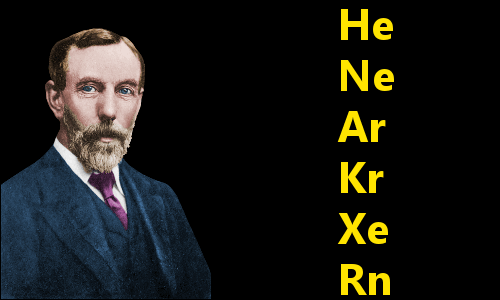
William Ramsay: Unveiling the Secrets of the Noble Gases
William Ramsay, a Scottish chemist whose groundbreaking work at the close of the 19th century led to a major expansion of the periodic table, is celebrated as a pioneer in the study of gases. His work in discovering a group of new elements, collectively known as the noble gases, played a crucial role in advancing the scientific understanding of chemical elements and the nature of the atmosphere.
Early Life and Education
William Ramsay was born on October 2, 1852, in Glasgow, Scotland, into a family that valued education and intellectual pursuit. His father, William Ramsay Sr., was a civil engineer, and his mother, Catherine Robertson, ensured that Ramsay's early education was well-rounded and rigorous. Ramsay attended the Glasgow Academy and later pursued chemistry at the University of Glasgow. With a burgeoning curiosity and determination, Ramsay moved to the University of Tübingen in Germany, where he completed his doctoral studies under the mentorship of the renowned organic chemist, Wilhelm Rudolph Fittig.
Professional Career and Breakthroughs
After completing his doctoral studies, Ramsay returned to Scotland and began his professional career as a chemistry lecturer at the Anderson College in Glasgow. He later moved to the University College, Bristol, and eventually joined University College London (UCL) as a professor of chemistry. It was here, at UCL, that Ramsay would spend much of his career and conduct the research that would make him a pivotal figure in the field of chemistry.
Ramsay’s most remarkable contributions came in the late 19th century when he embarked on a series of experiments with the intent of isolating and identifying new gases present in the Earth's atmosphere. His first significant success came in 1894, when Ramsay, in collaboration with English physicist Lord Rayleigh, discovered argon. Their discovery challenged the prevailing scientific understanding, which posited that the atmosphere consisted purely of nitrogen and oxygen.
In 1895, Ramsay continued his groundbreaking work by isolating helium from the mineral cleveite. Helium was previously known to exist solely within the Sun, identified through spectral analysis, but Ramsay demonstrated its presence on Earth. His findings signaled the existence of a new group of elements with distinct properties that had not yet been incorporated into the periodic table.
The Discovery of the Noble Gases
The period following Ramsay's identification of argon and helium witnessed an explosion of scientific curiosity and activity aimed at understanding these mysterious gases. Ramsay’s determination and perseverance led to the discovery of three more gases: neon, krypton, and xenon. By 1898, Ramsay had effectively added a new group of elements, which came to be known as the noble gases, filling an entire previously unoccupied group in the periodic table.
The term “noble gases” reflects their characteristic lack of chemical reactivity, a feature that distinguishes them from most other chemical elements. Ramsay’s discovery underscored the importance of studying seemingly inert elements for further understanding of atomic behavior and chemistry.
Ramsay’s work did not go unnoticed. In 1904, he was awarded the Nobel Prize in Chemistry for his discovery of the noble gases, receiving recognition from his peers for advancing chemical science significantly. His work laid the foundation for subsequent research in chemistry and laid the groundwork for other scientists to explore the applications of these gases, including their use in lighting and refrigeration technologies.
Ramsay's legacy extends beyond his scientific accomplishments. His work illustrated the importance of collaboration, innovation, and persistence in scientific endeavors. His thorough approach to experimentation and willingness to question established norms made him a model for future generations of scientists. Even today, Ramsay’s pioneering spirit continues to inspire researchers as they probe deeper into the mysteries of the elements that comprise our universe.
The Impact of Ramsay's Discoveries
The discovery of noble gases had far-reaching implications, not only reshaping the periodic table but also influencing various fields of science and technology. William Ramsay's work, which elucidated the presence of these inert elements, provided a crucial understanding of the chemical stability that could be harnessed in different ways. His identification of argon, helium, neon, krypton, and xenon expanded the known elemental universe and enriched the field of spectroscopy. Noble gases were found to emit distinct spectral lines when excited, making them valuable in the study of atomic structure and the development of new scientific instrumentation.
Moreover, Ramsay's discoveries revealed that noble gases occupied their own unique group in the periodic table—Group 18. This finding necessitated a revision of the periodic law, compelling scientists to reevaluate the organization and relationships of elements based on their atomic structure and properties. By introducing this entirely new category, Ramsay had not only uncovered unseen constituents of Earth's atmosphere but also provided an experimental challenge that stimulated further research into the nature of atoms and molecules.
Technological and Industrial Applications
Ramsay's contributions to chemistry soon found diverse applications that permeated everyday life and advanced industrial development. The noble gases, once thought to be scientifically inert, became central to numerous technological innovations. For instance, neon, with its striking luminescence, revolutionized the advertising industry. Its bright glow, produced by electrical discharges, allowed for the creation of eye-catching neon signs that became iconic symbols of modern cities.
Helium, while infamous initially only for its unreactive nature, has served as a crucial component in various fields. Its low boiling point makes it indispensable as a coolant in cryogenics, such as maintaining the supercooled environments necessary for superconductors and in MRI machines. The non-flammable nature of helium also makes it preferable for use in airships and balloons.
Moreover, xenon found usage in high-intensity lighting products, such as photographic flashes and cinema projection, exploiting its capability to emit intense white light upon excitation. Krypton, in turn, became an element of choice for certain types of lighting and in insulation technologies due to its low thermal conductivity.
Ramsay's Lifelong Legacy
In addition to his landmark discoveries, Ramsay was known for his dedication to education and the dissemination of scientific knowledge. Throughout his career, he contributed to the scientific community not only as a researcher but also as an educator and mentor to young chemists. Ramsay possessed a keen ability to discern potential in unexamined hypotheses and drive his students toward innovation.
His influence extended beyond the laboratory, with Ramsay actively involved in promoting science to the public and participating in several scientific organizations. He served as president of the Chemical Society and was a Fellow of the Royal Society, one of the highest honors afforded to scientists in the United Kingdom. His commitment to advancing scientific inquiry was recognized through numerous awards and accolades, further cementing his reputation as a patriarch of modern chemistry.
William Ramsay's work continues to resonate long after his death in 1916. His foresight and discovery laid down a legacy of exploration and discovery that scientists build upon to this day. The noble gases remain an integral part of scientific study, inspiring ongoing research into their properties and potential applications. Whether enabling cutting-edge research in physics, chemistry, or engineering, Ramsay's legacy is a testament to the transformative power of scientific curiosity.
As we look towards the future, the narrative of William Ramsay serves as a reminder of the importance of questioning the familiar, pursuing the unknown, and remaining steadfast in the quest for greater understanding. The invisible threads Ramsay revealed have woven themselves into the fabric of contemporary science, offering a glowing testament to the potential hidden within the uncharted and unexpected.
Challenges and Controversies
Throughout his career, William Ramsay faced numerous challenges and controversies. The scientific community of the late 19th and early 20th centuries was marked by intense debate and skepticism, particularly in the face of groundbreaking discoveries such as those proposed by Ramsay. The introduction of an entirely new group of elements—noble gases—required other scientists to reconsider longstanding chemical principles and frameworks.
One significant controversy arose regarding Ramsay's collaboration with Lord Rayleigh in the discovery of argon. Some contemporaries questioned the validity of their findings, suspecting that the properties attributed to argon could be artifacts resulting from experimental error or impurity. Ramsay, devoted to rigor and authenticity, meticulously defended his results by conducting a series of replication experiments, ultimately convincing the scientific community of the legitimacy of the discovery.
Furthermore, the reception of helium as a terrestrial element also faced initial resistance. While previously identified in the solar spectrum, the assertion that it naturally existed on Earth required a paradigm shift for many scientists. Nevertheless, Ramsay's tenacity and commitment to empirical evidence continued to validate his claims, bridging the gap between theoretical prediction and empirical reality.
Ramsay's Influence on Modern Science
William Ramsay's influence extends far beyond the discoveries of the noble gases. His rigorous scientific methodology and penchant for innovative exploration inspired a new generation of chemists and physicists. By illustrating the existence of elements that required no chemical reactions, Ramsay highlighted the importance of understanding atomic structure in its own right.
The inclusion of the noble gases in the periodic table also contributed to the development of quantum mechanics and atomic theory. These fields explore the energy states of electrons around the atomic nucleus, drawing on the characteristics of the noble gases to provide insights into electron configurations and atomic stability. Ramsay’s work thus laid the groundwork for future advances that would revolutionize both theoretical and applied sciences.
The ripples of Ramsay’s research have been felt in technological innovations and are visible in various practical applications that shape modern infrastructure. From telecommunications to medicine, the noble gases continue to be integral in technologies ranging from fiber optic systems to sophisticated imaging methods—innovations that Ramsay could only dream of in his time.
Engaging with the Legacy of Nobility in Science
The legacy of William Ramsay serves as a dynamic example of how scientific inquiry can transcend the boundaries of the known and delve into the complexities of nature. His discoveries have provided essential clues about chemical inertia and reactivity, revealing deeper truths about the elements that sustain and shape our world. Yet, the noble gases themselves coyly hint at the remaining mysteries of the universe, an endeavor in which Ramsay believed fervently until the end of his life.
Educational establishments continue to honor Ramsay’s legacy by engaging students in the study of chemistry through the prisms of history and innovation. By understanding the lineage of discovery—one element, one experiment at a time—scientists in training are inspired to pursue answers to their own unasked questions. The spirit of Ramsay endures in each laboratory where conventional elements are reconsidered, and in each classroom where creative minds approach the periodic table anew.
In sum, William Ramsay’s contribution to the scientific world is a testament to the perseverance of discovery and the allure of the unknown. His narrative is a reminder that groundbreaking work often emerges from embracing uncertainty and fostering a diligent curiosity. The noble gases, once obscure and enigmatic, now shine brightly in the constellation of chemical understanding thanks to Ramsay’s pioneering efforts. As we continue exploring the elements, guided by the curiosity and rigor that Ramsay championed, we are reminded that each discovery is but a chapter in the ever-evolving story of science.

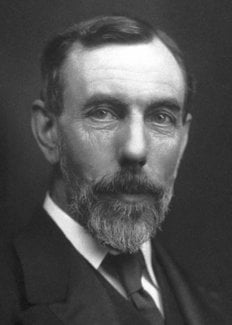

Louis Paul Cailletet: The Pioneering Scientist Who Brought Gases Down to Earth
Introduction
In the annals of scientific history, there are individuals whose pioneering work has profoundly shaped our understanding of the natural world. Among these influential figures is Louis Paul Cailletet, a French physicist and engineer whose groundbreaking experiments with gases significantly advanced the fields of thermodynamics and cryogenics. Cailletet's contributions to science during the 19th century opened the doors to a deeper comprehension of gases and their properties, laying the groundwork for numerous technological advancements that followed.
Early Life and Education
Louis Paul Cailletet was born on September 21, 1832, in Châtillon-sur-Seine, a quaint town nestled in the Burgundy region of France. Raised in a family with an industrial background—his father being a prominent iron master—Cailletet was exposed to the world of metallurgy and engineering from an early age. This environment fostered a natural curiosity and aptitude for scientific inquiry, which he carried with him throughout his life.
His formal education began at the prestigious Lycée Henri-IV in Paris. Following his secondary education, he pursued further studies in engineering, eventually enrolling at the École Centrale des Arts et Manufactures, one of France's leading engineering institutions. It was here that Cailletet honed his skills, learning the intricacies of physics, chemistry, and mechanics, which would serve as the foundation for his future scientific endeavors.
A World of Gases
Cailletet's passion for physics and his technical proficiency led him to focus his research on gases—a relatively underexplored field at the time. The scientific community had long been fascinated by gases, but understanding their behavior, particularly under extreme conditions, remained a considerable challenge. Cailletet aimed to explore these mysteries through experimentation, thus embarking on a journey that would see him overcome many scientific obstacles.
In the late 19th century, the concept of liquefying gases was novel and groundbreaking. Many scientists believed it was impossible to condense permanent gases such as oxygen and nitrogen. However, Cailletet was determined to challenge these assumptions and demonstrate that gases typically perceived as immutable could indeed be transformed into liquids.
The Breakthrough: Liquefaction of Oxygen
One of the most significant moments in Cailletet's career occurred in 1877 when he successfully liquefied oxygen—a feat that had eluded scientists for years. Cailletet's approach involved an innovative method of compressing the gas while simultaneously cooling it to extremely low temperatures. By subjecting oxygen to this combined process within a specially designed apparatus, he achieved an unprecedented scientific breakthrough.
On December 2, 1877, Cailletet reported observing droplets of liquefied oxygen in his laboratory in Paris. This landmark experiment not only validated his theoretical predictions but also shattered long-standing assumptions about the nature of permanent gases. His success was quickly corroborated by other scientists, marking the beginning of a new era in the study of gases.
Cailletet's method laid the groundwork for further advancements in cryogenics—the science of producing and maintaining low temperatures—and provided a crucial underpinning for future research in calorimetry and gas behavior.
Impact on Science and Technology
The implications of Cailletet's work extended far beyond academic circles, influencing a wide range of practical applications. The ability to liquefy gases such as oxygen and nitrogen proved invaluable in various industries, including medicine, where it facilitated the development of modern anesthetics and medical gases.
The burgeoning field of aerodynamics also benefited from Cailletet's contributions, as understanding the behavior of gases under different states became essential in the design and testing of aircraft. Additionally, cryogenics found applications in food preservation and the storage of biological materials, paving the way for techniques that are still in use today.
Recognition and Legacy
In acknowledgment of his accomplishments and pioneering spirit, Louis Paul Cailletet received numerous accolades during his lifetime. Among these were the prestigious Montyon Prize from the French Academy of Sciences and the Légion d'Honneur, reflecting both his scientific achievements and his contributions to French industry.
Cailletet's legacy is enshrined in the ongoing exploration and application of cryogenics, as well as in the continued study of thermodynamics and materials science. By transforming our understanding of gases, he not only expanded the horizons of scientific inquiry but also catalyzed innovation across multiple sectors. His seminal experiments have left an indelible mark on the scientific landscape, underscoring the profound impact that one dedicated individual can have on the world.
Louis Paul Cailletet's story is a testament to the spirit of discovery and the relentless pursuit of knowledge. As we reflect on his contributions, it becomes clear that his work set the stage for future scientific advances, forever altering our perception of the physical universe.
The Scientific Rivalry: Cailletet and Pictet
Amidst the excitement following Cailletet's groundbreaking success with the liquefaction of oxygen, a fascinating episode unfolded in the scientific community, showcasing both the competitive and collaborative spirit inherent in scientific discovery. The same year that Cailletet achieved his breakthrough, another scientist, Raoul Pictet of Switzerland, claimed to have attained similar results using a different method. This simultaneous revelation added a layer of intrigue and rivalry to the narrative of scientific achievement.
Pictet employed a distinct approach to liquefy oxygen, using a combination of carbonic acid release and then sudden decompression to achieve the necessary conditions for liquefaction. His results were announced just days after Cailletet’s, leading to a remarkable convergence in scientific literature. Both methods were remarkable for their ingenuity, and their almost simultaneous success in demonstrating the liquefaction of oxygen highlighted the creative problem-solving and innovation driving the scientific community of the time.
The rivalry between Cailletet and Pictet was largely amicable. It underscored the era's fervent pursuit of knowledge and the spirit of collective advancement. The achievements of both scientists are often regarded as complementary contributions to our understanding of gases, and their concurrent successes led to further interest and investment in cryogenic research.
Beyond Oxygen: Expanding the Study of Gases
Having established the feasibility of liquefying oxygen, Cailletet turned his attention to other gases thought to be "permanent" in their gaseous state. His relentless curiosity and methodical approach led him to explore a range of gases, including nitrogen, hydrogen, and carbon monoxide. By applying his proven methods of extreme pressure and temperature manipulation, Cailletet achieved breakthroughs in these areas too, further confirming his status as a leader in the field of cryogenics.
Through his continued efforts, Cailletet was instrumental in refining the scientific understanding of the laws governing gas behavior. His work helped solidify the principles of thermodynamics and provided empirical evidence supporting theoretical models of gas compression, expansion, and phase transitions. Each step forward attracted the attention of scientists across Europe, spurring research in diverse fields such as astrophysics, meteorology, and chemical engineering.
Innovative Apparatus and Techniques
Central to Cailletet's successes were the innovative tools and technologies he developed to facilitate his experiments. His apparatus for liquefying gases incorporated not only mechanical brilliance but also scientific precision. The devices he engineered allowed for precise control over pressure conditions and temperatures, ensuring the reproducibility and accuracy of his results.
One notable device was the high-pressure chamber he designed, crafted to withstand the immense forces encountered during the compression of gases. Such an invention was crucial for conducting safe and effective experiments, reducing hazards associated with operating under extreme pressures. It set the stage for future advancements in engineering high-pressure equipment, benefiting a variety of industrial and scientific applications.
Cailletet's commitment to improving experimental methodology underscores his role not just as a scientist, but as an innovator adept at bridging theory with practical application. His forward-thinking approaches underscored the potential for lab-based discoveries to translate into real-world solutions and technological progress.
Influence on Future Scientists
The ramifications of Cailletet's work resonated far beyond his own experiments. Future scientific giants—such as Heike Kamerlingh Onnes, who later discovered superconductivity, and James Dewar, who invented the vacuum flask—found inspiration in Cailletet's successes and methods. These scientists built upon his foundational work in cryogenics to further explore the intricate behavior of materials at low temperatures.
The paradigm shift initiated by Cailletet in the understanding of phase transitions and material properties at cryogenic temperatures fostered an environment ripe for breakthroughs in both theoretical and applied physics. His liquefaction of gases directly influenced the work of subsequent generations, enabling scientists to probe deeper into the mysteries of the universe, from subatomic particles to the vastness of cosmic phenomena.
Legacy and Enduring Impact
Louis Paul Cailletet's scientific endeavors transcended the boundaries of 19th-century physics, forging pathways that continue to influence contemporary research and innovation. His name is often celebrated in lectures, textbooks, and scientific discussions, serving as a reminder of the pioneering spirit that defines scientific advancement. The methods and principles he developed continue to inform modern techniques in fields such as quantum mechanics, materials science, and environmental science.
Beyond his immediate scientific contributions, Cailletet's legacy is reflected in the spirit of curiosity and rigorous experimentation he championed. As technology continues to evolve, the foundations laid by Cailletet persist in our ongoing quest to decipher the mysteries of the physical world. His story is a testament to the power of creativity, dedication, and perseverance in advancing human understanding and improving our quality of life.
In summary, Louis Paul Cailletet was far more than an experimenter of physical phenomena; he was a visionary whose work consistently pushed the boundaries of what was considered possible in the scientific explorations of his time. His contributions to the comprehension and manipulation of gases paved the way for numerous technological advancements and scientific inquiries, leaving an indelible mark on both the fields of physics and engineering.
Cailletet's Role in Industrial Advancement
While Louis Paul Cailletet is predominantly celebrated for his scientific contributions, it's essential to recognize how his work influenced industrial advancements. By transforming gases into liquids, he inadvertently catalyzed innovations across multiple sectors. His methods were crucial for industries that required the storage and transport of gases in a form that was more manageable and economical.
The liquefaction of gases, enabled by Cailletet's techniques, revolutionized the metal industry by facilitating safer and more efficient processes. Liquid oxygen, for instance, found its use as an oxidizing agent in steel production, improving the efficiency and outcome of metallurgical processes. Similarly, the ability to store gases in a liquid state simplified their transportation and broadened their industrial applications, thereby boosting the capability of chemical industries to produce fertilizers, fuels, and other essential compounds.
Furthermore, industrial cryogenics made significant strides as a result of Cailletet's pioneering efforts, impacting sectors ranging from space exploration to refrigeration. Liquefied gases became vital in space rocket technology, enabling enhanced propulsion systems crucial for sending humans and satellites into space. The evolution of refrigeration and air conditioning technologies owes much to advancements in understanding gas behavior, ensuring food preservation and comfort in varying climates.
Educational and Public Influence
In addition to his technical legacies, Cailletet's work inspired a deeper public appreciation and understanding of science. During his time, scientific achievement was beginning to capture the public's imagination, with societies eager to promote scientific literacy and curiosity among general audiences. Cailletet, through his lectures and demonstrations, played a role in demystifying complex scientific principles and sharing the tangible benefits of scientific inquiry.
He worked tirelessly to communicate his discoveries beyond academia, engaging with scientific societies and the general public through lectures and publications. His efforts not only highlighted the importance of scientific research but also underscored its potential to drive social and industrial progress.
By doing so, Cailletet contributed to the burgeoning movement for popular science education. His ability to distill complex concepts into relatable narratives catalyzed interest in the sciences, encouraging future generations to explore and pursue careers in scientific disciplines. This public engagement laid the groundwork for a society more informed and supportive of scientific research and technological innovation.
Challenges and Resilience in Research
Despite the accolades and recognition, Cailletet's journey was fraught with challenges and setbacks typical of groundbreaking research. The transition from theoretical predictions to practical experimentation often entailed overcoming substantial technical difficulties and unanticipated failures.
Nonetheless, Cailletet’s resilience and unwavering dedication were instrumental in surmounting these obstacles. He exemplified the practice of engaging iteratively with scientific challenges—an approach dictated by the scientific method, where hypotheses are rigorously tested and refined through experimentation. This persistence not only defined his career but also served as a model of scientific rigor and determination for future researchers.
His ability to troubleshoot experimental issues, adapt existing methodologies, and innovate new techniques was a testament to the flexible and responsive mindset needed to pioneer new scientific frontiers. It highlighted the iterative nature of scientific progress, where failures serve as stepping stones to future successes.
Recognition Beyond His Time
While Cailletet received honors during his lifetime, his contributions have continued to gain recognition well beyond his era. Today, his work is often cited in discussions of early cryogenics and the development of methods to manipulate the states of matter. Institutions and scholars frequently revisit his work, acknowledging the foresight and technical skill he brought to the scientific community.
Educational curricula and museums dedicated to the history of science often feature Cailletet’s breakthroughs, ensuring that his legacy endures not only in academic and industrial contexts but also in cultural and educational spheres. This posthumous acknowledgment reflects the ongoing importance of his pioneering work in understanding fundamental physical processes.
The Broader Impact of Cailletet's Legacy
Louis Paul Cailletet's legacy encompasses more than just his scientific achievements; it represents a paradigm shift in our approach to exploring the natural world. His innovative methods and relentless pursuit of knowledge exemplify the boundless possibilities that arise when a curious mind meets scientific rigor.
Cailletet’s work laid the intellectual and technical groundwork necessary for continued exploration into the thermodynamic properties of gases—a field that has expanded to include research into superconductivity, quantum mechanics, and molecular biology. His legacy invites us to consider the transformative power of science, encouraging inquisitiveness and persistence in the pursuit of innovation and understanding.
Ultimately, Cailletet’s story is one of curiosity and courage, a narrative that continues to inspire scientists striving to unlock the mysteries of the universe through determination and innovation. It is a reminder of the value of scientific inquiry in enhancing both technological capabilities and the collective knowledge of humankind. Through Louis Paul Cailletet's journey, we are reminded of the profound impact that individual contributions can have on the wider tapestry of scientific and industrial progress, urging current and future innovators to push the boundaries of possibility in the relentless quest for discovery.


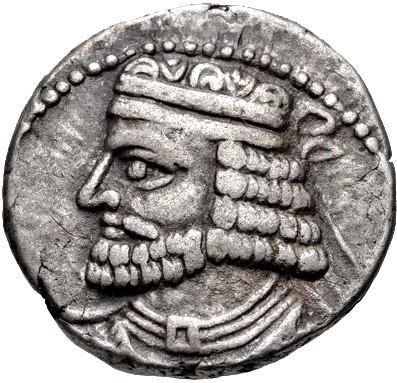
Vologases I of Parthia: A Reigning Monarch in a Time of Transformation
The tapestry of ancient history is woven with tales of empires and monarchs, each adding threads of power and influence that eventually fade into time's vastness. Among these illustrious figures, Vologases I of Parthia stands as a significant monarch. Reigning during the 1st century AD, Vologases I's rule encapsulated a period of considerable transformation, not only within the Parthian Empire but also in the broader geopolitical landscapes of the Near East and beyond. Yet, despite the evident turmoil and change of his era, Vologases I is often a figure overshadowed by his more prominently recognized contemporaries. This article endeavors to retrace the footprints of his reign and unravel the intricacies of his influence.
A Royal Lineage and Ascension to the Throne
Vologases I, assumed to have ascended the throne around 51 AD, was a member of the Arsacid dynasty, the ruling house of the Parthian Empire. He was the son of Vonones II, a king of Parthia whose short tenure left many questions around the stability and strength of the kingdom. The Arsacid dynasty, under which Parthia reached its zenith, was often seen as a balancing act between resisting Roman encroachment and asserting dominance over neighboring territories. Vologases inherited this blend of opportunity and challenge, a testament to the fraught path ahead as he carved out his place in history.
His rise was not without its trials; internal strife and familial conflict were hurdles he had to overcome. Given the patterns of succession commonly marred by dispute within the Arsacid lineage, his position was potentially contested by family members or aristocratic factions, revealing the deep-rooted complexities associated with kingship in Parthia. Yet Vologases I managed, through sheer determination and strategic acumen, to establish control and reinforce dynastic stability.
Political Strategies and Diplomatic Intrigues
Vologases I's approach to governance reflected his astute understanding of the necessity for both consolidation of power within and external diplomatic engagements. One of his notable strategies included reinforcing the relationship with Roman adversaries, while simultaneously asserting hegemony over contentious regions. His tenure witnessed sporadic conflicts with Rome, most notably an ongoing tug-of-war over the Kingdom of Armenia. This kingdom, strategically located between the two powerhouses, was often a focal point for territorial disputes.
Vologases I famously placed his brother, Tiridates I, as the king of Armenia, a move that strained tensions but showcased his influence. This plan of securing Armenia under Parthian influence initially provoked Roman ire, leading to military confrontations. However, through skillful negotiation and a determination to bypass prolonged warfare, Vologases's diplomacy culminated in Rome conceding to a degree of Parthian oversight in Armenia, allowing Tiridates I to remain king under Roman sanction. This delicate balance underscored Vologases's nuanced diplomatic skills and strategic foresight.
Internal Reforms and Cultural Flourishing
Internally, Vologases I's reign was marked by his dedication to cultural and administrative enhancements. His initiatives mirror a monarch deeply invested in the prosperity and intellectual expansion of his realm. A particularly insightful aspect of his rule was the support he extended to Zoroastrianism, the dominant religion in the empire. He recognized the role religion played in unifying diverse ethnic groups within his empire, and this patronage aimed at fostering social cohesion and ensuring royal authority through divine right.
Further reflecting his commitment to legacy and learning, Vologases I was instrumental in establishing the city of Vologesias near Ctesiphon, intended as a cultural and educational nucleus. This initiative illustrated his vision of leaving a mark not only as a ruler in terms of territorial extent but also as a champion of cultural advancement.
The reign of Vologases I also saw efforts to codify and organize administrative mechanisms, likely aiming for a more centralized form of governance that could streamline imperial control across a vast expanse. Establishing a responsive and cohesive administrative setup was crucial, considering the various ethnicities, cultures, and languages that his empire encompassed. His policies in administration were precursors to some of the future efficiencies that later Parthian rulers would build upon.
Conclusion
As we conclude this initial exploration into the life and reign of Vologases I of Parthia, it is unmistakable that his legacy is one of complexity. His reign came to symbolize a time where the clash of empires and cultures necessitated deft political navigation and visionary reforms. Vologases's narrative, steeped in diplomatic maneuvering and cultural patronage, remains an essential chapter in understanding how ancient monarchs navigated the intricate web of governance. As we continue our delve into his reign, more layers of his impact on Parthia and surrounding regions will be elucidated.
Military Challenges and Strategic Triumphs
While Vologases I was a ruler with a keen sense of diplomacy, his reign was undeniably defined by military challenges and consequential triumphs. The geopolitical climate of his era was dynamic and perilous, with Rome and Parthia frequently vying for supremacy over territories like Armenia and Mesopotamia. Vologases's endeavor to maneuver through these territorial wars called for strategic ingenuity in both defense and offense.
One of the most significant episodes during Vologases I's reign was his confrontation with the Roman Empire over the control of Armenia. The struggle underscored Parthia's unwillingness to relinquish its influence in the Armenian highlands, a region critical for its strategic position that served as a buffer between two great empires. Vologases's decision to install his brother, Tiridates I, on the Armenian throne was a proactive measure aimed at consolidating Parthian presence—but it inevitably provoked the Romans, leading to direct military engagement.
The Roman response, led by Emperor Nero, was swift and tactical, dispatching a formidable force under Gnaeus Domitius Corbulo. This Roman commander, renowned for his strategic prowess, made significant headway into Armenian territory, initially proving Roman martial capability. However, Vologases I showed his military acumen by adopting a strategy of attrition rather than direct confrontation, eventually enabling him to put together a peace treaty favorable to his intentions. The diplomatically orchestrated compromise recognized Tiridates not only as a ruler sanctioned by Rome but also as a representative of Parthian will, solidifying Parthian influence without a protracted conflict.
Economic Policies and Trade Expansion
Vologases I's governance was not solely marked by military engagements; he also harbored ambitions to usher an era of economic prosperity within his realm. The Parthian Empire under his reign was strategically perched along the Silk Road, the burgeoning trade route that connected the East and West, facilitating the exchange of goods, culture, and ideas. Vologases grasped the immense potential these trade routes offered and allocated resources to not only secure them but also leverage them into engines of economic growth.
The expansion and maintenance of such trade networks were accompanied by policies that favored the flow of goods while safeguarding the empire’s economic interests. The thriving trade brought diverse goods, including silk, spices, and precious stones, that enriched Parthian markets and filled the royal coffers. Vologases I invested in infrastructure that supported this economic enterprise, such as roads and caravanserais, ensuring that the Parthian kingdom remained a vital hub in these cultural and commercial exchanges.
Moreover, his policies indicated an understanding of the broader implications of economic prosperity—not just wealth accumulation but also fostering a sense of interconnectedness within the empire, bridging different ethnic groups and encouraging intercultural dialogue. His reign illustrated a keen awareness that a stable and prosperous internal economy could serve as formidable leverage in diplomatic negotiations and enhance the empire’s geopolitical standing.
Legacy and Historical Interpretation
The legacy of Vologases I remains multifaceted, reflecting both the successes and complications inherent in navigating an empire's destiny through turbulent times. The historical sources that capture his reign, often Roman or Eastern accounts with varying degrees of bias, paint the portrait of a pragmatist who understood the balance of external pressures and internal needs. This necessitated a nuanced interpretation of his actions, seeing them as responses to both opportunities and dangers presented by his geopolitical context.
Vologases I’s reign laid foundational stones for future generations of Parthian rulers, illustrating how leadership and strategic innovation could extend beyond mere territorial gains to embrace cultural patronage, economic might, and diplomacy. These components of his legacy permitted the Arsacid dynasty not only to endure but to thrive amid the crescendos and decrescendos of ancient Near Eastern politics.
As scholars consider his impact, there is a growing appreciation for how Vologases I’s strategies prefigured later diplomatic traditions. His ability to negotiate a nuanced sovereignty over Armenia, transforming potential military disaster into diplomatic strength, serves as a testament to his shrewdness. The legacy of Vologases thus rests not purely in military conquests but in the lasting stability and subtle power shifts he orchestrated through his reign.
Conclusion: Vologases I’s Enduring Influence
As we delve deeper into the narrative of Vologases I, the intricate details of his strategies, reforms, and military engagements reveal a ruler adept at navigating the complexities of empire stewardship. His reign emerged not only as a period of political and military challenges but also as a time of economic prosperity and cultural rejuvenation, adding a unique chapter to the Parthian saga.
With Vologases I's initiatives in place, the groundwork was laid for a resilient empire. This resilience was exemplified not just in holding back the Roman advances but in creating a vibrant and interconnected Parthian world. The enduring influence of Vologases I is indeed a testimony to his vision and strategic foresight, ensuring that Parthia maintained its significant role in ancient history. As we move forward, we will continue to explore how his actions shaped and defined the succeeding chapters of the Parthian narrative and beyond.
Religious Patronage and Cultural Contributions
The reign of Vologases I was also significant for its religious and cultural dimensions, which served to consolidate his authority and ensure the cohesion of his diverse empire. Vologases I's support for Zoroastrianism, the dominant religious tradition of the Parthian Empire, played a central role in his strategy to unify the various ethnic and cultural groups under Parthian sway. His patronage of Zoroastrianism wasn't merely an expression of personal faith but a calculated decision to enhance the legitimacy and divine sanction of his rule.
By supporting the establishment of religious infrastructure such as temples and by fostering the organized priesthood, Vologases I reinforced the societal structures that underpinned his authority. This support for religious institutions also served as a counterbalance to the influence of the Greek and Hellenistic cultural elements that had previously permeated the region. Vologases championed a Parthian cultural renaissance that not only elevated Zoroastrian practices but also celebrated the resurgence of local traditions and art forms.
Under Vologases I's reign, the Parthian Empire saw the flourish of artistic expression and architectural innovation. These cultural contributions are visible in the archeological remnants of cities and religious sites, where Parthian art blended local styles with influences borrowed from the various cultures represented along the Silk Road. This cultural synthesis manifested in artworks and architectural designs that highlighted Parthia's status as a melting pot of ancient civilizations.
Architectural Innovations
Among the prominent outcomes of Vologases I's cultural policies was the urban development that marked his reign. The foundation of new cities and the enhancement of existing ones provided tangible expressions of royal power and cultural patronage. The most notable of these was the establishment of Vologesias near Ctesiphon, envisioned as a vital cultural and intellectual hub. It not only served as a center for trade and commerce but also as a symbolic representation of Parthian resilience and sophistication.
Vologesias's construction reflected architectural innovations that accommodated both functionality and aesthetic appeal, serving multiple roles as commercial centers, military bases, and spaces of cultural gathering. The city underscored Vologases I's intention to create enduring monuments that celebrated Parthian identity and showcased the empire's grandeur to allies and adversaries alike. The integration of socio-economic centers within these urban landscapes laid a framework for successive rulers to build upon.
The deliberate planning and architectural feats achieved during this period demonstrated Vologases's ambition of legacy-building, one that transcended his military and political successes. His urban design also considered the facilitation of caravan movements, further entrenching Parthia’s role as a strategic node within the Silk Road network.
Furthering the Arsacid Dynasty’s Legacies
Vologases I’s reign was a critical juncture in ensuring the continuity and durability of the Arsacid Dynasty. His leadership choices—encompassing military strategy, diplomacy, support for religious and cultural institutions, and urban development—were crucial in reinforcing the internal structure and external perception of Parthian strength. Vologases's era provided a template for future generations of the Arsacid dynasty, balancing heritage with inevitable adaptation under external pressures.
The stability achieved during his reign offered a platform for his successors to further leverage and maintain Parthia's status as a formidable political player. Indeed, the Parthian Empire, with its unique position bridging East and West, required astute rulers capable of multi-faceted governance. Vologases I's adaptation to the political realities of his time allowed the Arsacid dynasty to continue guiding the Parthian course through fluctuations in fortune and regional developments.
His descendants emulated and expanded upon the structures he established, contributing to Parthia's prolonged prominence. While not all strategies would retain their efficacy in evolving circumstances, the core tenets of his reign—a focus on diplomacy, cultural patronage, and economic vitality—remained relevant throughout the empire’s history.
The Enduring Impression of Vologases I
To summarize, Vologases I of Parthia emerges from the historical shadows as a complex figure adept at balancing the multifarious demands of kingship in a tumultuous era. His reign was one characterized by significant challenges, both external and internal, and his responses left an enduring impression on the Parthian empire and its legacy.
His approach to governance—merging robust military strategies, diplomatic negotiations, economic expansion, religious patronage, and cultural flourishing—provides a comprehensive picture of an innovative ruler who sought to maintain and expand his empire's influence. The coherent integration of these strategies speaks volumes of his forward-thinking leadership and strategic insight, ensuring his place not only in Parthian annals but also within the expanse of ancient history.
As historians continue to dissect the complexities of his reign, Vologases I is increasingly seen as a seminal figure who fostered the conditions necessary for Parthia's sustained vibrancy and relevance on the ancient world stage. Such a narrative of Vologases I invites us to rethink the legacy of lesser-documented monarchs whose contributions, although understated, indelibly shaped history's course. Through his nuanced blend of politics, culture, and economics, Vologases I's legacy accentuates the multifaceted challenges and triumphs imbued within the art of ancient rulership.